Shownotes
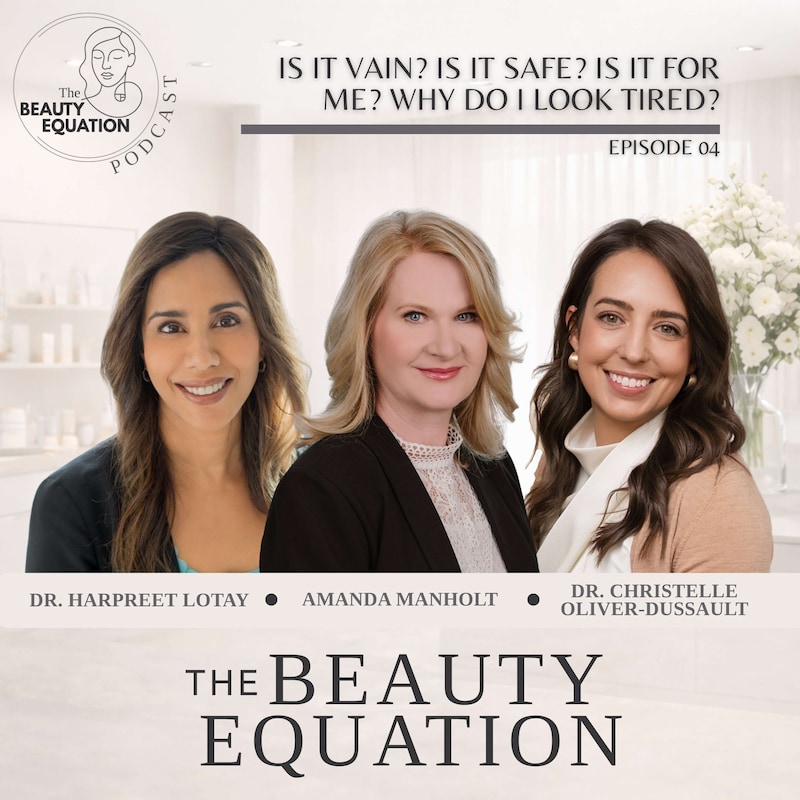
In this episode of The Beauty Equation Podcast, Dr. Christelle Oliver-Dussault, Dr. Harpreet Lotay, and Amanda Manholt explore what it really means to age gracefully. They unpack the societal pressures women face around beauty standards, the value of patient-centered consultations, and how cultural perspectives shape choices about aging. The conversation emphasizes vitality, health, and self-perception over appearance alone, highlighting a holistic approach to aging that honors both personal experience and individuality.
About the Hosts:
Dr. Harpreet Lotay is a family physician specializing in aesthetic medicine. She is the founder of Sona MD in Kamloops, BC, and serves as Chief Medical Officer at Bios Wellness Clinics. Known for her artistic approach and comprehensive non-surgical treatments, Dr. Lotay combines medical expertise with an eye for natural results. She is also an educator, a national trainer and holds academic appointments where she shares her knowledge in clinical dermatology and aesthetics. You can get in touch with her on Instagram @hlotaymd
Dr. Christelle Oliver-Dussault is a family physician specializing in aesthetic medicine, women’s health, and psycho-education. She brings a holistic, whole-person perspective to her clinical work, blending science with a deep understanding of the mind-body connection.
She is also the founder of Reclaim The Pink Within, a movement that empowers women to rediscover themselves during life’s most transformative stages. In addition, she is passionate about medical education and mentors the next generation of family physicians through her work with the department of Family Medicine at the University of British Columbia.
You can connect with her on Instagram @drchristellemd
Amanda Manholt is a clinic manager, patient consultant, and co-host of The Beauty Equation Podcast. With over 30 years of experience in beauty, aesthetics, and leadership, she has guided patients and teams alike toward confidence, growth, and empowerment. Known for her ability to connect with people and simplify the often-overwhelming world of aesthetics, Amanda brings a warm, practical, and relatable perspective to every conversation. You can find her on Instagram @crowsfeetandconfidence.
Websites
https://www.getyourpinkbackproject.com/
Disclaimer: The Beauty Equation is for informational purposes only and not medical advice. This podcast does not create a doctor–patient relationship. Always consult a qualified healthcare provider before making medical or aesthetic decisions. Information may change as the field evolves.
Thanks for listening!
Thanks so much for listening to our podcast! If you enjoyed this episode and think that others could benefit from listening, please share it using the social media buttons on this page.
Do you have some feedback or questions about this episode? Leave a comment in the section below!
Subscribe to the podcast
If you would like to get automatic updates of new podcast episodes, you can subscribe to the podcast on Apple Podcasts or on your favourite podcast app.
Leave us an Apple Podcasts review
Ratings and reviews from our listeners are extremely valuable to us and greatly appreciated. They help our podcast rank higher on Apple Podcasts, which exposes our show to more awesome listeners like you. If you have a minute, please leave an honest review.
Transcripts
I think when I think about aging gracefully, to me,
Speaker:kind of aligns with being as healthy as we can and
Speaker:as vital as we can at any age. So for me, and this
Speaker:is just my own personal bias, I would rather see somebody
Speaker:lose volume and have lines, gray hair, but have
Speaker:beautiful skin. To your point, like to see that, because to me,
Speaker:that looks radiant and healthy. When I think about
Speaker:somebody that has had volume restored and done those sort
Speaker:of immediate things, but their skin looks like, I'm sorry, a paper bag
Speaker:that's been rolled up into a ball and then smoothed out again, my
Speaker:bias doesn't feel like that is graceful aging.
Speaker:I feel like you've got things that are not aligned.
Speaker:Welcome back to the beauty equation. I'm Dr. Christelle Oliver Dussault.
Speaker:And I'm Dr. Harpreet Lotte. And I'm Amanda Manholt.
Speaker:Today we're going to be diving into a phrase that we've all heard before, and
Speaker:we've probably rolled our eyes at, I want to age gracefully.
Speaker:But what does that even mean? Literally have that
Speaker:in a consult today. Sorry. Before we go into that, though, there was
Speaker:two things that we forgot to touch on the last episodes,
Speaker:so I wanted to bring them up. So the first is, some of you may
Speaker:have seen our logo and may have noticed a particular
Speaker:sequence within the logo, if you are a math nerd, like
Speaker:my best friend is. And that was the first thing she noticed and. And said,
Speaker:I am so happy that you guys put that in there. Harpreet, do you want
Speaker:to tell the audience a little bit about what we've hidden into our logo
Speaker:and why we decided to do that? Yeah, it's the Fibonacci
Speaker:sequence. So it's a universal
Speaker:mathematical ratio and sequence that you find in
Speaker:nature and all over if you look for it. And
Speaker:it's, you know, it's something that resonates with human
Speaker:beings, and we view that as beautiful. And when you start
Speaker:breaking down facial balance, facial beauty,
Speaker:you'll find that sequence in that. You'll find it in
Speaker:many other beautiful things. And
Speaker:it's often referred to as the golden ratio as well. So,
Speaker:you know, we thought that was quite relevant. And it's always
Speaker:resonated with me. In fact, when I opened up our clinic,
Speaker:Sona, you know, sona means gold in a Northern
Speaker:Indian language and that, you know, references the
Speaker:Fibonacci sequence, and we find gold beautiful. And so
Speaker:this was a nice little time in when we were looking for a logo. So.
Speaker:Yeah, thanks. And in case anyone was wondering or had noticed, It. That's why we
Speaker:did that. For now, let's dive into today's topic. Amanda, why don't you
Speaker:start with that consult that you had today and that conversation you had?
Speaker:Yeah, it's. It comes up so often because, you know, women come
Speaker:to see us, and they'll often see myself first,
Speaker:and many times, many times they have yet
Speaker:to have put their toe into the medical aesthetics world.
Speaker:And there just always seems to be a little bit of apprehension, a little bit
Speaker:of nervousness, a little bit of shyness when they first sit down with me. And
Speaker:I think maybe they're wondering, like, am I in the right place?
Speaker:Am I the kind of person that does this? You know, what am I even
Speaker:doing? And really, I love
Speaker:those conversations. It's just an opportunity to explore and to, you
Speaker:know, to get to know what it is that's on their mind, what they'd like
Speaker:to see. And so often it comes
Speaker:up that, look, I'm not trying to look like I'm 20.
Speaker:I just. I want to age gracefully. And it feels like
Speaker:this phrase that we lean on
Speaker:when we don't know how to say what we want, but we know
Speaker:we don't want to not look like ourselves. It's fascinating
Speaker:to me. I think it's a phrase that you actually hear
Speaker:used by women, but also I'm going to say almost
Speaker:against women, too, because it's so nebulous and so
Speaker:sort of fine line. Ish, that as a woman
Speaker:out there, how do you toe that line without crossing the
Speaker:line? And, you know, what does crossing the line mean?
Speaker:You know, this idea of graceful aging. You know,
Speaker:you're either look too young or too old
Speaker:or too unkempt. I don't even know what that means, you know,
Speaker:So I feel sometimes it's almost used
Speaker:against us. But then we use that same verbiage to express that
Speaker:we're. We're doing the right thing, whatever that means, you know?
Speaker:Yeah. And I think a lot of the time we want to age
Speaker:gracefully so that we remain seen in the public
Speaker:eye. I. And don't seem like we've let ourself go
Speaker:or don't matter anymore, because in
Speaker:Western culture, we do have a bit of an ageist culture
Speaker:where the maturity isn't valued like it
Speaker:is in other cultures. Isn't valued. And you.
Speaker:So we try to mimic that with the way that we look.
Speaker:Yeah, yeah. And. And one of the things I'll often say is,
Speaker:well, I find it interesting because
Speaker:I can remember my grandmother saying something to that effect.
Speaker:And I Just feel like we have different tools
Speaker:now. But I think that's the importance of the
Speaker:consult really, is trying to
Speaker:get to what aging
Speaker:gracefully means for that particular person in front of you. Right.
Speaker:And I think that's what I love the most about what I
Speaker:get to do. Yeah. You've probably noticed this, Dr. Lotte,
Speaker:the aesthetic norm and what is deemed beautiful,
Speaker:that. That changes over centuries, millennia. But we've really
Speaker:noticed it even in the last 10, 20 years, how quickly that
Speaker:shifts. Yeah. How have you found that
Speaker:in your practice in terms of what people are seeking
Speaker:or the conversations that you're having with them? Well, I think
Speaker:people have always really sought to stay themselves.
Speaker:I think that's been a constant. Although, you know, lately in the
Speaker:Instagram age, there's been more focus on looking like, you
Speaker:know, a famous celebrity, let's just say. And
Speaker:aspects of our face have become the thing that
Speaker:you go get, like, I'm gonna go get the lips, et cetera. So
Speaker:that's a relatively recent thing, but, you know, I've been
Speaker:practicing medical aesthetics for over 20 years now, and
Speaker:I think the who came to us always wanted to
Speaker:look like themselves. But our understanding of aesthetics and
Speaker:facial. Facial aging and how we use the
Speaker:tools we have has changed
Speaker:enormously. I mean, think back to, you know, 1950s,
Speaker:30s. I mean, people did things. It's not like they
Speaker:didn't do things. They had poor tools. You know, people were using
Speaker:silicone, you know, or. Or,
Speaker:like cow collagen, you know, which gives a very high inflammatory
Speaker:react. And. And so our tools have changed. So has
Speaker:our understanding. And so now we can meet the needs of those
Speaker:people who are still coming to us saying, I want to look fresh,
Speaker:I want to look relevant. I don't want to look angry, I don't want to
Speaker:look tired, but please don't make me look like someone else.
Speaker:Right. Yeah. And I think that's something that we've always
Speaker:tried to do, but the more we learn
Speaker:about the anatomy and the physiology, the
Speaker:better we can guide them. I also. I always remember because I
Speaker:did this, and I think my generation did. We all had the very
Speaker:skinny, skinny eyebrows in the 2000s. Well, I did that, too, girl.
Speaker:Yeah. And you're not alone. Yeah. And it took a
Speaker:good while for them to grow back. And I know a lot of
Speaker:women my age still feel like their eyebrows haven't grown back.
Speaker:But that applies to the treatments people are getting,
Speaker:because when you think about, say, you mentioned the lips, like, Russian lips are this
Speaker:big trend, but that doesn't Stop. Suit every frame.
Speaker:Some people were naturally meant to have larger lips based on their
Speaker:bone structure and their. Their muscular anatomy, and it
Speaker:looks really good. Others should never have lips that big. It just
Speaker:doesn't fit the frame. And I think that's where we have
Speaker:a lot of. A lot of responsibility. If someone comes in with a photo to
Speaker:be like, you know, this is how I want to enhance this part
Speaker:of my appearance. You have to have that conversation,
Speaker:okay, I understand where you want to go, but that might not fit.
Speaker:And trying to guide them and give them advice so that they
Speaker:don't, you know, end up looking in the mirror and then having that shock of,
Speaker:oh, wait, no, that. That's not what I wanted. So I think one
Speaker:aspect of grace is that things look harmonious. Right,
Speaker:exactly. And. And it fits. So I think that could be considered
Speaker:one aspect of it for sure. Yeah. Which comes, you know, when you think
Speaker:about facial harmony, the Fibonacci, all
Speaker:of that. It's so. It's so fun to look and be able to
Speaker:understand and. And look at a face
Speaker:and kind of suss it out and realize,
Speaker:okay, actually it's the chin
Speaker:or it's, you know, the temples, something like that. It's a lot of these
Speaker:really subtle things. The other thing that's always said is,
Speaker:make me look better, but don't make it obvious and
Speaker:don't make me look weird. Right. And I'm like,
Speaker:okay, here you go, docs. So here's, you know, Mrs. Smith,
Speaker:and she wants to look great and age gracefully,
Speaker:but nobody should know she's done anything,
Speaker:you know, So I don't know if that's something you can talk to,
Speaker:talk about. You're both so skilled
Speaker:at that. I think it's really hard to make someone look done,
Speaker:like, when you see and notice work. Like, especially if I think about people
Speaker:who come in and get fillers. Like, I want to get a little bit of
Speaker:enhancement, but I don't want people to realize.
Speaker:I am often shocked when I see work and I can
Speaker:notice, like, people who aren't in our industry can notice it. And I'm like,
Speaker:how much product was used to achieve that? Oh, I think
Speaker:it's easy to make somebody look weird. I think it's easy
Speaker:to be a. Little bit in the wrong spot. Fair enough.
Speaker:Anatomically, doesn't belong there, for sure.
Speaker:I think the challenge when people make that statement is that subtlety means
Speaker:different things to different people, just like grace. And, you know,
Speaker:it may be subtle changes in a particular feature that
Speaker:they super identify with. Let's take like
Speaker:a cleft chin. Right. Or a little dimple that people have in
Speaker:the chin. You know, I. If you were to inject that
Speaker:with a very little product, you could create a very subtle change
Speaker:that nobody would notice, but it would be so obvious to the
Speaker:person and make them feel, not look like themselves.
Speaker:So I think that the. That's one aspect
Speaker:of aesthetic medicine that we often don't talk about. It's not just about
Speaker:injecting. It's also about understanding
Speaker:visual perception of your patient. And
Speaker:that involves, like art, visual skill, noticing you
Speaker:noticing, but then being able to talk to the person and
Speaker:understanding what they're telling you and helping them notice what
Speaker:they notice. Right. So it's this, it's. It's interesting.
Speaker:I find that where the photos come in so handy, especially like before and
Speaker:after, sometimes they'll notice something at the follow up that wasn't there
Speaker:and they didn't think that was there initially. Always been
Speaker:there all along. But now that the first issue that they came in to
Speaker:discuss has been tweaked and their eye
Speaker:now leans in on something else. Well, and I think,
Speaker:Christelle, to your comment about how you find it difficult for
Speaker:people to look like you think, how much
Speaker:product must they have used to look weird? I think it just speaks to the
Speaker:fact that your eye is so good and you are
Speaker:very thoughtful about what you use and where. Thank
Speaker:you. Right. Yeah. There's people out there that
Speaker:unfortunately, whether don't have the skill or they
Speaker:don't recognize or don't take the time to assess the
Speaker:face. Yeah. And I think that's where it goes sideways.
Speaker:Yeah. And I think that takes time. I've definitely noticed that
Speaker:with the years of injecting, the
Speaker:style of injecting. My style of injecting has changed and I've tweaked and I've
Speaker:learned along the way, like you would in any industry.
Speaker:For sure. For sure. And things do change.
Speaker:To your point. We had thin eyebrows in the
Speaker:90s, and now that's not a thing. Eyebrows
Speaker:kind of can grow back, so that's a good thing. And I think the perception
Speaker:is that some of the things that we do in aesthetics you can easily reverse.
Speaker:That's not the case. We can get into that some other time. But
Speaker:the thing is that cultures change, our cultural
Speaker:expectations change. And the shame
Speaker:around aesthetics I find interesting because I think back
Speaker:to the 1960s or 50s where
Speaker:coloring your hair was super taboo. It's true.
Speaker:So l' Oreal had to do all this marketing and all this
Speaker:cultural shifting to get people to feel okay
Speaker:about using dye on their hair. So
Speaker:these things change. And I think as a physician, and I'm sure for you too,
Speaker:Christel, it's about maintaining
Speaker:patient safety and then understanding the
Speaker:patient. So you're always treating them through their values, not
Speaker:yours. So, you know, we don't practice patriarchal medicine and
Speaker:aesthetic medicine. It's mostly women. And we,
Speaker:you know, we. We try to keep that patient centered in our
Speaker:plans, I think. Yeah. Because it's funny, because
Speaker:we will sometimes. I've noticed I'll sometimes see someone and
Speaker:before we even talk to them, I have an idea
Speaker:of what the treatment plan should be. But that often changes after
Speaker:the conversation when you start to understand their goals. And
Speaker:particularly. And I think, Amanda, you did this with me. When I first started
Speaker:going to the clinic, I sat in a few of your consultations, and I thought
Speaker:it was such a good thing to do. You sit down at the patient,
Speaker:you show them their photos, and then you show certain parts of the face
Speaker:and you ask them, tell me what you like, what you see, what
Speaker:resonates with you. Now tell me what you feel
Speaker:doesn't align with the way you see yourself
Speaker:or has changed and makes you feel sad or
Speaker:angry. And I've incorporated that since, and it
Speaker:opens up such a wonderful conversation with people
Speaker:and really helps you understand their perspective. Yeah.
Speaker:And that's the beautiful thing about what we do, I think,
Speaker:is allowing people the space and the safety to
Speaker:explore how they're feeling about things. Right.
Speaker:Do you find that women feel pressured
Speaker:to look or age in a certain way when they come
Speaker:into you? Oh, heck, yes.
Speaker:Yeah. Where do you even start with that conversation? Just look at our
Speaker:culture. Just look at our tv, our Instagram.
Speaker:There's so much pressure. I think the. The most
Speaker:upsetting thing is the younger ones coming in now with AI
Speaker:images. Yeah. Like that's an episode
Speaker:where they. Or. Or these. I'm sorry, I. I think they're
Speaker:odd. These. This request to have. No, these round
Speaker:lips with their natural anatomy sort of distorted or.
Speaker:No, nasal. I've got, you know, 30 year olds going, oh, my God, my
Speaker:nasolabial folds. And I'm thinking, where.
Speaker:But when you're blowing everything out with the filter. Beautiful cheeks. Enjoy
Speaker:them before they start to go. Yeah, honey,
Speaker:life hasn't begun to kick you yet. But it's because we're.
Speaker:They're looking at everything through filters. So
Speaker:that's one change, I think. Yeah. And the pressure I feel is
Speaker:ever increasing as our technology Improves. As our
Speaker:tools improve, so does the pressure, I think, to.
Speaker:To go even beyond that. You know, I'll
Speaker:bring up the Kardashian mom. Yeah. You
Speaker:know, who at 70, looks like she's 30.
Speaker:And, you know, the first thing that came to my mind is, like, when
Speaker:does it stop? Like, when do we get to not have the
Speaker:pressure to be a certain way? Because all of these
Speaker:sort of standards are becoming increasingly
Speaker:more difficult to achieve without some sort of
Speaker:intervention. Right. Like, look at the Golden
Speaker:Girls. Yeah. I know that they look different. They were my
Speaker:age, right? Yeah. I think they all had
Speaker:facelifts, though. I'm just saying, because I started watching it again, and I was like,
Speaker:okay, if I can just get past the hair. You know, they had
Speaker:pretty decent jawlines,
Speaker:so, you know, they were doing things. Well, they were doing things. But the
Speaker:standard's different, right? Totally. Yeah. And I think if we just
Speaker:stick to Hollywood, we're going to have a very distorted view of
Speaker:what's normal and achievable. And if you
Speaker:travel and look around the world, there are lots of places
Speaker:where the aesthetic practice is completely different.
Speaker:And you're seeing women walking around with their gray hair. They have a
Speaker:few fine lines, but their skin is really healthy. And you can tell
Speaker:because. Had something like, to a trained eye, you can tell they've had something
Speaker:done, but it's so subtle that you really wouldn't know.
Speaker:And I have to say, I'm. I have a good few friends or hairdressers, and
Speaker:they're getting more and more requests to blend in their
Speaker:grays and go natural. And I'm really. I'm really liking that.
Speaker:I'm gonna do it. Translate into the
Speaker:aesthetic field if with this movement
Speaker:to age more naturally and
Speaker:maintain features and have some lines and some. Something that
Speaker:shows that you've gained a certain maturity.
Speaker:That's a great question. I can see that, too. I think
Speaker:the one thing that won't change is people will always want to
Speaker:not look tired and not look angry and not
Speaker:have. And unfortunately, those impressions start
Speaker:to happen as just a result of normal physiologic aging.
Speaker:That won't change. But I'm super interested in. In seeing
Speaker:how that embrace of
Speaker:age with, like, the gray hair and stuff, how that will translate. Yeah,
Speaker:for sure. I think when I think about aging
Speaker:gracefully, to me, kind of aligns
Speaker:with being as healthy as we can and as vital as we
Speaker:can at any age. So for me,
Speaker:and this is just my own personal bias, I would rather see
Speaker:somebody lose volume and have lines Gray
Speaker:hair, but have beautiful skin.
Speaker:To your point. Like to see that, because to me, that it
Speaker:looks radiant and healthy.
Speaker:When I think about somebody that, you know, has had volume
Speaker:restored and. And done those sort of
Speaker:immediate things, but their skin looks like, I'm sorry, a paper bag that's
Speaker:been rolled up into a ball and then smoothed out again. My bias
Speaker:doesn't feel like that is graceful aging. I feel
Speaker:like you've got things that are not aligned.
Speaker:Yeah. So, you know, when we talk about, okay, well,
Speaker:what is aging, right? It isn't just wrinkles or brown spots. It's
Speaker:wrinkles. It's brown spots. It's loss of volume, all of those things.
Speaker:And so keeping things in the same decade.
Speaker:Right? Yeah. The hands, you know, the hands are dead giveaway
Speaker:friends. Yeah. Hands and tirkultash. Yes. I'm so glad
Speaker:you said that word, because I call it decollete.
Speaker:Harvey, what does aging gracefully mean to you? Oh,
Speaker:I think the same thing is remaining vital. So it's a holistic
Speaker:idea around how you approach the world, you know,
Speaker:with a youthful attitude, a youthful
Speaker:mental state, good nutrition so that your skin and
Speaker:your physically, you're healthy
Speaker:and then vibrant skin.
Speaker:I'm going to let my hair grow gray or salt and pepper. So
Speaker:I'm on that bandwagon. So
Speaker:that's what it means to me. And I think the thing that I don't like
Speaker:on my own face is sagginess.
Speaker:Yeah. The effects. Yeah. Yeah. So. So
Speaker:those are my little, you know, those are my
Speaker:little things that I. I think that I would like to do
Speaker:as I age. Yeah. How about you, Christo?
Speaker:I think vitality is probably the best way. Amanda, you hit the nail on the
Speaker:head is just yet remaining
Speaker:alive inside and out and feeling
Speaker:healthy on the inside, healthy on the outside.
Speaker:And that ties into that whole mind, body approach. And then just
Speaker:giving your body and your skin the nutrient that it needs.
Speaker:And oftentimes I find
Speaker:people become more beautiful as you get to know them because you
Speaker:get to see that inner light shine through. And that's how I kind of.
Speaker:That's how I approach aging, is that you want to.
Speaker:That everything that you've learned and gained over the
Speaker:year shines through. I love that. Yeah, I love
Speaker:that. So on that note, aging
Speaker:gracefully, what does it mean? I think we've come up with Vitality will be
Speaker:our theme word for the day. If you have
Speaker:any thoughts on what aging gracefully means to you, send us an email
Speaker:at info at. @thebeauty equation.com
Speaker:we'd love to hear your thoughts on what you think aging gracefully means. And we
Speaker:will share. Yeah. And, or if you're watching this on YouTube, you can put it
Speaker:in the comments. Oh, yeah, I think that would be really. I, I would love
Speaker:to know what people. Yeah. I don't know. Maybe I'm totally nuts,
Speaker:right? Yeah. But, yeah. So sure. Yeah. Yeah,
Speaker:share either on the comments below on YouTube or on
Speaker:the podcast channel, or just send us an email. I'm the one who, who's usually
Speaker:looking at those. And next episode, we will be talking about
Speaker:is it vain? Is it safe? Is it for me, something we
Speaker:touched on a little bit today. And if you have any questions,
Speaker:we will try to get through to those. Until next time. Until next time.
Speaker:Bye for now.


