Shownotes
Lifestyle is a Plan podcast is for agency founders who are done with the growth hustle, and want profitability over pressure instead.
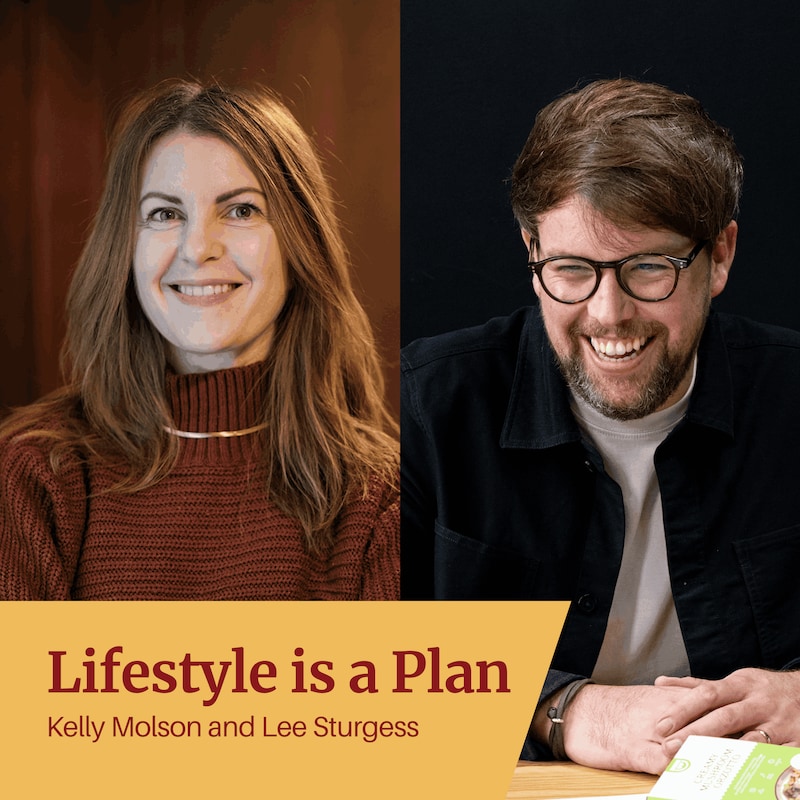
In this episode of Lifestyle is a Plan, Kelly Molson is joined by Lee Sturgess, founder of Polar.
Over more than a decade, Lee has reimagined what an agency can be. Not the conveyor belt model of endless projects, but a one-brand-at-a-time approach: deeply immersive, collaborative, and designed to create real commercial impact. That ethos has taken Polar into boardrooms in London, Nashville, Monaco, Dubai and Barcelona, partnering with founders, CEOs and marketing teams to transform brands at pivotal moments.
Alongside leading Polar, Lee serves as a Non-Executive Director and advisor to a number of ambitious businesses. Whether guiding a SaaS product, shaping a luxury lifestyle brand or steering a global player through a rebrand, his role is to bring clarity, creative direction and a steady hand at key stages of growth.
Lee Sturgess didn’t follow a traditional agency route. Fresh out of uni he made a choice, to build an agency over joining one. 13 years later Polar is an Essex based but internationally acclaimed branding studio, who really do things differently.
On the pod today we’re flying the flag for Essex lifestyle agencies, and discussing how a change in model has improved profits by nearly 100%.
You’ll discover:
- Essex to the US - how Lee has carved out Polar’s international visibility
- Strategies for emulating the creativity and standards of major hubs within a regional setting
- The huge benefits a change in model can bring if you’re brave enough
- How saying "no" and maintaining a demand-driven model can make an agency more sought after
- How to step back and lead from the front, by empowering your team
- Why you should look outside of the norm when it comes to networking
- The importance of ignoring industry noise to keep laser focused on your ‘own lane’
- The most important piece of advice Lee would give to every founder
Guest details
Website: www.polar.agency
LinkedIn: linkedin.com/in/lee-sturgess
Podcast recommendations:
Brought to you by:
Lifestyle is a Plan is brought to you by me, Kelly Molson - an agency advisor on a mission to support solo founders build the agency they want. I’m here to show the agency world that ‘lifestyle agency’ is not a cop out. It’s the future of our industry’s sustainable growth.
You can join my Lifestyle is a Plan newsletter at kellymolson.co.uk
Subscribe wherever you get your podcasts, leave a glowing review and share it with your founder friends.
Edited by Steve Folland stevefolland.com
Transcripts
Kelly Molson
Hey, I'm Kelly. How are you doing? Welcome to Lifestyle is a Plan, a podcast for founders who are done with the growth hustle.
Kelly Molson
I'll be chatting to creative founders, agency advisors, and all kinds of brilliant people, sharing real stories and practical tools to help you design an agency that supports your life, not takes it over. You'll learn about unconventional agency models, incredible lifestyle agencies, and the choices that you have to build your agency exactly on your terms.
Kelly Molson
Lee Sturgess didn't follow a traditional agency route. Fresh out of uni, he made a choice to build an agency over joining one. Thirteen years later, Polar is an Essex-based but internationally acclaimed branding studio who really do things differently. On the pod today, we're flying the flag for those Essex lifestyle agencies and discussing how a change in model has improved profits by nearly 100%. Are you ready? So let's go.
Kelly Molson
Lee, welcome to the podcast.
Less Sturgess
Thank you for having me.
Kelly Molson
I've got a couple of little icebreakers for you. I want to know, if you were in a soap, what soap character would you be?
Less Sturgess
Oh, God, you've thrown me with that one.
Kelly Molson
laughs
Less Sturgess
I'll be honest with you, I haven't watched-
Kelly Molson
Ohhh.
Less Sturgess
I haven't watched a soap for 10 years. chuckles
Kelly Molson
Okay.
Less Sturgess
I guess if I could give you an answer, I would say probably the quiet character that tries to look out for everyone, but hides in the background a lot of the time.
Kelly Molson
Okay. You are the good guy. You are the good guy, Lee.
Less Sturgess
Well, I wouldn't quite describe it as that, but both laughing
Kelly Molson
Okay. All right. Well, when you were at school, what did you think that you would grow up and be?
Less Sturgess
Creativity was always something I was interested in. I guess product design was the focus whilst I was at school, but strangely, I always had this view that I'd be an archeologist, from being six all the way to probably year eight or nine, I suppose. Mainly because my dad had this fascination in geography, and I've kind of carried that on in a way. So yeah, archeologist turned designer. laughs
Kelly Molson
I love that. Were you dinosaur-obsessed when you were a kid, then?
Less Sturgess
Yeah, that's kind of where it stemmed from in all honesty. Yeah. A bit of science, a bit of planet, and a bit of dinosaurs.
Kelly Molson
I was also dinosaur-obsessed, and I really liked gemstones and stuff, and I also had this vision of me, that's what I would do. I'd basically discover things under the earth and dig them out, and that would be my job. chuckles That did not happen.
Less Sturgess
To some extent, I guess I always had this view of I didn't want to have maybe a job that kept me in the same place. And when you watch any kind of documentary of that nature, people are always all around the world in different places, different environments, and I guess that that might have been the attraction of it to some degree, as much as the nerdy kind of side to it as well.
Kelly Molson
But that is not where you ended up, as an archeologist.
Less Sturgess
No.
Kelly Molson
You ended up as an agency founder. How did you get to the point of being the founder of Polar?
Less Sturgess
So yeah, going right back, I kind of followed the traditional route. College, found my love for design and graphic design there, and then went off to university. Kind of actually picked the wrong course when I went to university. The first couple of years, as much as I don't want to negatively speak down to the course, it didn't push anyone. It wasn't very commercially focused. It was a lot of theory, which in hindsight is a good thing to know, but actually, the relevancy of that to the industry and how quickly the industry moves, I didn't find necessarily that exciting.
Less Sturgess
So I kind of followed the flow of that course, was able to quite effectively read the kind of criteria to get good grades, deliver on that, and then the rest of my time that I actually had there, I kind of founded, strangely, a freelance agency at that stage, where I went around local businesses and just offered my services as a student for free to rebrand their cafes, print their menus, all sorts of really small stuff. But I think it gave me a really early insight as to actually the impact that design has on business.
Less Sturgess
And I then continued with that mindset and throughout the two years at that university course, I used my summers as opportunities to go and intern. I spent some time at a really good little studio near Boreham in Chelmsford with Andy Gowers, someone that gave me the first little bit of experience that showed me what was possible. And I'm really grateful for Andy for that, even to this day, and try and do the same thing now where I actually create those opportunities for people at the start of that journey.
Less Sturgess
Beyond that, then went into London, went into some bigger agencies, some more established environments in terms of team size, so 40, 50 people plus. And that really is where I actually fell out of love with the industry. I found that the big agency environment, although exciting projects and quite fast-paced, it was kind of at the detriment of people a little bit. And actually, what I found, I learnt a lot about myself. You kind of have this picture of what you want to be and what you want to achieve and where you think you have to be to achieve it. And I realised then that actually, you know what? Having the relationships with the people I work with and the clients that I work with means more to me than the money or the title of being in London.
Less Sturgess
So I kind of soaked up those opportunities nonetheless and came back to Chelmsford kind of two years later. And whilst working at a ski shop Saturdays and Sundays, started Polar with literally nothing. I had my old university laptop, 100 quid that I'd set aside for some business cards, and a hosting package on what was called Weebly back then. Yeah, got myself going and kind of used the experience that I did have to just go out in the world again. I literally just started to talk to people, build relationships, have conversations, do some work that wasn't paid for, in all honesty. I did a lot of stuff where I knew that I had to qualify what I could deliver to then start creating an income from it, and I needed a good portfolio and some good testimonials from people to actually... You know, who's this kind of 21-year-old with zero experience and no career before to just come along and say they can rebrand our business?
Less Sturgess
So it was a bit of a baptism of fire. But I believed then, and I still believe now, that I was still a really, for the investment that those early clients made, there was a really good and dedicated kind of service and return that I gave them. And that's kind of where it all started. It was all around the people. It was who do I want to work with? Who do I think is onto something in terms of their brand or their business or their proposition, how they are perceived as a kind of something that people would want to use or buy, and then how could I help improve that? How could I make their lives easier or better? So, yeah.
Kelly Molson
There was a couple of things that you said. I really loved where you said that while you were a student, you actively went out and pursued looking for work and stuff, because I think having that commercial experience at a really young point, a really early stage in your career, must have been really key for then going out and starting your own agency. There's something... I can remember back to being at uni and having outsiders come in and give us projects and give us briefs to do that weren't just your college work. And the way that you approach that is often completely different than the project work itself. You've got to have those conversations. You've got to have that understanding and that commercial aspect. So that must have been a really key part of where it took you.
Less Sturgess
Yeah. That was wild because I think when you're at university, you kind of have this perception of big agency projects and kind of global eyes on something. But actually, then you meet a cafe owner who month to month is making their living, surviving, trying to create something for their future, and you realize that's where all the small margins are so, so important. And actually, I think that's kind of what inspired me, like getting some signage or ad campaign or even just a literal ad in a local press article could have such an impact on a small business. And I really kind of thrived on that. It's a bit like the more I make you, the more I'll probably get in return.
Less Sturgess
So it kind of is a... And I think sometimes agencies and creatives forget that part. It is about being creative, and it is about innovating, but it is also about you're serving a purpose for someone, and you're trying to create revenue or profit or improvement of someone's kind of life. And when you focus on it that way, I think you're so much more invested in the work that you do, and you kind of set aside your personal convictions, and you just focus on actually what gets the result for the client. And I think early days, that was like I had a bit of a juxtaposition. I've got lecturers telling me one thing about how you go about doing it, and then I've got actual people paying me, not very much, but paying me. And I think that exposure to the two sides actually kind of probably fast-tracked me a lot more than I thought.
Kelly Molson
From my view on that, it would have solidified your commercial understanding of the sector far greater than you would have had you not had that experience, which I think is really, really critical.
Less Sturgess
Yeah. I agree. And then kind of one of the points to mention as well is that after these two kind of London agency experiences, I then had an opportunity through my second university because I decided to spend my third year somewhere else. laughs So I went to LCC, London College of Communication, which is under the UAL kind of umbrella. And yeah, that was a stark difference to what I was used to, where you are kind of pressured and drilled, and I felt like that was the environment that I wanted to be in.
Less Sturgess
And I would say I thrived much more in that environment. I liked the pressure of it, like they had external briefs, and they put you under pressure. All the things that I expected I got. And off the back of doing fairly well in that course, I was introduced to someone at Manchester United to go into their kind of creative marketing team on like a... It was a paid internship. At that point, I was very much a rugby fan and like-
Kelly Molson
laughs
Less Sturgess
... probably looked a bit silly walking into Manchester United as a rugby fan and having very little knowledge of actually the Manchester United brand. But from that point to now, I'm now an avid supporter, so something about it changed me. That's probably, in a way, it plays a subtle role in kind of what I'm all about now because the way that business, it's a football club, but the way it was run and the commercial nature in how they applied design, I found that the fast-paced nature of that environment and the opportunities that they were creating, again, it qualified for me actually that rather than everything has to be super creative and we have to be breaking the mold all the time, it was actually quite simple things delivered really well in sequence actually create a big commercial opportunity.
Less Sturgess
And I loved that. It was like, you come in now at 8:30, and by 5:00, you've got to have all this stuff done, and it could equate to all this opportunity. So yeah, I had the chance to stay there, but I decided after, I think it was three months, that I'd kind of got everything I needed. I'd already registered the limited company, and I was like, "You know what? I've just got to do it." So yeah, the rest is history.
Kelly Molson
You took the chance. As a Tottenham fan, we aren't going to be discussing football on this podcast this year, so we're just going to gloss over.
Less Sturgess
It's probably best for you not to, really.
Kelly Molson
It really is.
Less Sturgess
laughs
Kelly Molson
But I do want to talk about you coming out of London, and coming out of Manchester, and actually coming back to Essex, because it's exactly what I did.
Kelly Molson
I just want to talk about regional agencies for a moment, because I think regional agencies are bloody brilliant. You know me. We know each other well. We're both from Essex. It's the motherland. I'm a great believer in doing things on your doorstep. One, for the benefit of the community that you live in, and the businesses that are thriving there, and the people that live in them. But two, also for the ease of doing something for yourself, right? And creating an environment that, and an agency that works for you and your personal benefit, and also for your teams as well.
Kelly Molson
So you came back to Essex and started to grow out what Polar has developed into now, which is a phenomenally successful brand agency. What have been the pros and cons of doing that, and how have you adapted to being a very Essex-based regional agency?
Less Sturgess
Yeah. So I suppose, I'm Chelmsford born and bred, so I have an affinity to Essex. I've always been a bit of a believer that actually there's a lot of great stuff that's going on here, and that it almost frustrates me when people say, "London's the answer. You have to go to London if you want to really achieve anything." It kind of bugs me. And sometimes when things bug you, you actually kind of strive to overcome them and prove people wrong. So yeah. I guess I had that taste for London, although it's only a small segment. I'm not putting London down at all. But it kind of raised my eyebrows to the fact that I could come back and try and emulate the environment, the levels, and the creativity that is in London, but bring that back home.
Less Sturgess
e of my business plan back in:Less Sturgess
And I think one of the biggest things that led me to come back, actually, was, as much as it's changed more recently, access to space and lower overhead costs of starting a business in Essex. I think there was a lot more opportunity, there was a lot more support. The council, in particular, had a lot of programs that helped businesses in their very infancy to actually get off the ground, and they all played a part, essentially, in helping me get started.
Less Sturgess
From a negative perspective, I've always felt that there is an attraction to London for creative people. If you're willing to put up with the commute, you will always probably want to go there for the industry, which I completely understand, and if you want the lifestyle and the energy of London, I get that. But in terms of the people part, I've always felt that if you can emulate that environment of London, and you can create a portfolio and a client base, and move forward in a way that the work is really attractive, I think it kind of changes people's perception of the need to actually go to London.
Less Sturgess
So I guess one of my biggest challenges with all of that was actually how do I balance this? I want to be perceived as more local, but I also don't want to be perceived as more local. So from a team perspective, it's always been a case of try and secure the best talent in the local area, people that can probably drive to the studio, and give them an environment that kind of elevates them and gives them opportunity, and allows them to still work on the kind of projects that they would've been working on in London.
Kelly Molson
Yeah. No, it's such a similar story to my own agency. One thing I always thought about was, as a kind of regional agency, I felt like we had to prove ourselves a little bit harder, so we had to work a bit harder. So we worked with global brands, but we were outside of London, so it was slightly more difficult, and we couldn't be quite as agile about just popping in to see them. But we also had far less impressive offices. But then also, you weren't paying or being charged the privilege for us to have those really impressive offices. So there was loads of pros and cons, but ultimately, it came back to what did we want our lives to look like? Did we want to be commuting two hours into London every day? No. Did we want to do a 20-minute car journey? Yeah. Or did we want to be able to walk or whatever that looked like. So you've got to work all of that stuff out for yourself.
Kelly Molson
You said something earlier about that first line on that business plan was internationally renowned brand agency. You have achieved that, right? How long has Polar been in existence now?
Less Sturgess
2013, so it's going to be 13 years in September.
Kelly Molson
Okay.
Less Sturgess
Which makes me feel old. laughs
Kelly Molson
laughs We're not talking about age on this podcast either. But you have achieved that. What is phenomenally impressive about Polar is that you have a ream of international clients now, and you've rapidly expanded into the US market, which has been amazing. Can you tell us a little bit about that?
Less Sturgess
Yeah. I suppose from day one, I never had this perception of local. As much as I was going to establish locally, my view was that the client base could always be as broad as it needs to be. And I think I've always worked on this basis of having five key milestones every five years. So I map out five things I want to achieve, and I give myself five years to actually achieve them. And in the first five years of Polar, I said to myself, the line actually in the business plan is that I had a client in California. Basically, I had this massive dream of, I had friends in corporate jobs that were getting flown all around the world and seeing and experiencing different places, different conferences, et cetera. And I thought, "You know what? I want a slice of that." So I just had this mindset, really, of that, if that's going to happen, if a client is going to invest in us coming to them and understanding what they do and then commissioning us to do the work, there's a certain level of expectation, quality, and service that we have to bring ourselves up to, to be able to achieve that.
Less Sturgess
en I think it was probably in:Kelly Molson
Damn it.
Less Sturgess
Everything was done online. But it was still, I think from being exposed to a completely different perspective, culture, people, how they go about business, how they go about marketing, that was phenomenal to be able to have done that. And, I say this to my team quite a lot, everything you do in business, you have to give a little first to gain a lot back in the future. So in all of these opportunities, I suppose that I've had, I've probably been guilty of actually sacrificing margin and profits on those first projects while still over-delivering, because what it actually creates is this perfect reason to justify your position in that market or place.
Less Sturgess
And that one project led to another bigger project, which led to another bigger project, and we find that quite often, as we work in different sectors or different geographies, by actually over-delivering and not being afraid to do so, you do create these bigger opportunities and chances to see more of the world. So the US has been really prominent for us over the last two or three years. We're very fortunate to work with the people that we work with there. But we've also got a client in Hong Kong, we've got a client in Switzerland, we've got a client in Spain, a little bit closer to home. But they've, again, all come off the basis of not narrowing down our geography, by not having that local mindset of we have to be Essex's best or the UK's best. It's kind of like the geography doesn't really matter. For me, what matters is the location of the studio and the team I build around that. That geography is important. But from a client perspective, they care about the impact of the work you do, not necessarily where you are. And it's finding the like-minded clients that believe that too. And the UK creative scene is one of the best, if not the best in the world. So yeah, championing that perspective overseas as well is a big thing.
Kelly Molson
Something that you said in that conversation was around the over-servicing. And it's really interesting because I think over-servicing is very frowned upon in the industry, because we shouldn't over-service our clients because you shouldn't give them stuff that they're not paying for, et cetera.
Kelly Molson
But I think what I hear in that is, and I do know Polar well, so this is lived experience. But as an agency, you do things quite differently. You've essentially leaned into that for your entire repositioning, which has happened recently. So one of the statements that you make is about avoiding the obvious, and I think that kind of runs through the way that you operate from a model perspective, the way that you approach projects, the way that you often approach relationships as well, and I really respect that, that you don't do what everybody else does. Can you just tell us a little bit about the repositioning and the model that you work to and what you've done differently?
Less Sturgess
So yeah, thanks, I suppose. I guess from my view, I always say, I found myself in this environment, so I'm not really molded by previous experience. I've met a lot of people along the way and other founders that have used their previous experience, right or wrongly, to define what they do next. My perspective has always been to never really stand still, learn constantly, and I'm a bit like, you know this, I'm a bit scared sometimes when I feel like I'm not learning.
Less Sturgess
So in terms of understanding how to position and how to be different, I suppose avoiding the obvious is the fact that I'm not even aware of really what's going on anywhere else. I just focus very heavily on what we're doing and how we do it, and how we better that for the clients that we work with. So a lot of what I try and listen to actually is not necessarily the hum from the rest of the industry. It's really important, and I love the industry that I'm in, but I try and not let that bias how I would do it or how I think that agency should run. And I think that would be something that I massively championed for other agency owners is just make your own lane, focus on the thing that you really believe in. And when you do believe in it, that really does translate.
Less Sturgess
And I think, there was probably a period, probably three years ago, where we were really, really busy, and we've always been really, really busy, but we kind of realized that we were busy with a lot of the wrong type of work. I was on sales calls all day, every day. We had lots and lots of really cool projects, but they were all quite small, and we loved doing them, and all those clients, they were really valuable journeys, and I think we had real impact in the work that we did. But I think for me, it was actually a case of, we need to find ourselves in a world where we're winning on both sides, which is to kind of do less, for more, and create more impact off the back of that. And I think that, again, that works both sides. We wanted more space to be creative and create that impact. But we also wanted clients that had a little bit more wiggle room in terms of their budget and their ambition.
Less Sturgess
ID spell and into up to about:Less Sturgess
And I think, I said, I'm a big believer in what you say you need to do. So we decided two years ago that we were going to basically bring our operating model down to this kind of one at a time mentality, which was backed by kind of activation retained brands. So our model now, as of probably the last... So we launched it officially just before Christmas, but probably for the last nine months we've been operating this way, which is we'll only ever have one brand or one web project on at once, which is super hard to do because you're like, you have to find the right type of projects, and they have to be of the right size, and you also have to keep them super streamlined and aligned with schedule, and you have to have the right type of client that buys into that. And also that we needed to make sure we had a layer of security, really, in the form of retainers.
Less Sturgess
Before, two years ago, we had none. It was very much a project-by-project approach, and I know a lot of agencies run that way. And for me personally, it was quite a stressful environment to feel like you're always chasing and you're always kind of in sales mode. And although I liked meeting people, you kind of found yourself in this environment of you're forcing something. As much as you want to create value, you're forcing it. And I think all of those things combined led to this big, significant change. And it was absolutely terrifying when you start saying no to people, and you start saying, "This is the fee. Take it or leave it." Not quite as bluntly as that, but you have to kind of live by what you say, and the impact of it has been absolutely transformational.
Less Sturgess
I don't know.... Like, to say no, but be met with a kind of opinion of that you're almost sought after because you've said no to someone, I started to experience that, and actually, it kind of set this alarm bell off in my mind that actually, this way of working and this kind of demand model is actually really powerful. We're not available at the drop of a hat, and we are super dedicated for the people that then book us in. So I guess from a client perspective, you get maximum attention, maximum efficiency, because for us it's about getting the project in, doing it as well as we can throughout the schedule, and then delivering it.
Less Sturgess
So all of those kind of fundamental challenges that I think the industry has faced with floating projects, stagnating projects, budgets spiraling out of control, being promised a big team, and then one person delivers it within the wider team. We fixed all of those perceptions from a client perspective and actually said, "Well, you know what? Come and meet us. There's only eight of us, but when you walk in the room, we all know who you are because we're all just working on the same project for you." And really, that has flipped everything on its head, and we're nearly 100% up on margin from last year. We've got a really solid lead funnel, and the reality is we don't need to chase the work anymore.
Less Sturgess
We haven't touched on the fact that kind of lifestyle question mark. For me, Polar's never been about massive scale, or ego, or money, or anything like that. It's always been find something you really enjoy, and I think I've probably based the model heavily on being able to enjoy it, but also creating that environment for clients and my team in particular to enjoy that too. So yeah, this new model is very new, but it's proven very successful in the last nine months.
Kelly Molson
It really aligns to the Daniel Priestley kind of Oversubscribed model, doesn't it? In terms of almost like you're creating a wait list effect where actually your service... And I guess it aligns with the luxury clients that you have. You do work in that kind of luxury brand bracket. Your service now aligns with their luxury expectations, that sole attention, everybody knowing you, you knowing them. It just feels like it's all come together so beautifully. And this kind of wait list approach is if somebody wants that, if that's the service that aligns with their expectations, actually they're going to wait for that, right?
Less Sturgess
Yeah, exactly. I think it kind of takes the pressure and the pace out of process, and I think it brings you back to that point of creativity and kind of commercial focus. You're taking all the noise out. You're giving yourself a period of time to put all these heads and all this experience together and actually deliver something whilst working really closely with a set of people on the client side that actually what we've found is you kind of... not only do you embed yourself in that business, but you actually kind of create friends at the same time. Which is like to be able to go to work and service clients and feel like you're on that kind of wavelength is such a wonderful thing to be able to do.
Kelly Molson
You've created a really great environment for your team as well. You touched on the lifestyle aspect there about creating something that really aligns with the values that you have and what you want to build in the world. But you've also created that model for the team that you have, too. Your team, they don't need to commute into London to get the creativity and do the things that they want to do and work on these phenomenal brands.
Kelly Molson
I'm really interested to know because you've made a step, I don't want to say a step back because I don't think any founder ever fully steps back chuckles from the day-to-day, but you have to a certain extent. But how have you kind of facilitated doing that with the team that you have? Because you said you're a team of eight, right? So it's not a huge agency, but actually you're not kind of in the day-to-day too much at the moment.
Less Sturgess
I suppose the view for me has always been every hire I've ever made has always been to bring someone in that's better than me at something. So, whether that's creative, ops, marketing, whatever it's been, bring people in that are better than me, and I think in having that mindset, I've kind of had a lot of faith in people. And from my perspective as a founder and as a good leader, leadership is all about creating a forum. That's my view. You create an environment that you can push someone in and then nurture them and support them, and they excel and do amazing things and do stuff that they told you they'd never be able to do, and you see them absolutely fly doing it.
Less Sturgess
And I think in the last year or so, a lot of my team have overcome a lot of their personal challenges or bad experiences of the past. And actually, I had a point where I looked around at that group and said, "You know what? These people are more than capable of delivering without me." It's not to say that I've stepped back at all. I'm still intrinsically involved every single day, but I think what it actually allowed me to do is... I read "The E-Myth" very early in my career, and that says, "Work on the business, not in it." And I haven't taken myself out fully. Of course, I haven't done that. But I have focused much more on how can I add to Polar? How can I improve that? How can I live by what I say, and how can I listen and learn from the people around me to constantly improve?
Less Sturgess
That's been super refreshing, and I think Jess has been my longest-serving member of the team, and she's now just moved into Head Of Agency in the last six months. And I mean, she's already delivering better than I would've done in that role. And I knew she always would. I knew she always would. But I think a lot of this just comes down to having faith in those people and giving them the opportunity to be able to prove it, both to themselves and to the external world.
Less Sturgess
And I think it's not a simple journey to be able to do that, but the best thing you can do is create the forum, expose people to those experiences, and not lock them away for yourself as a founder. I think sometimes you're a little bit guilty of holding it all really close and not letting anyone have any of it, and it's not about that actually. I've always found take the risk, give someone the chance. If they make a little error, just support them in fixing that next time, and they get better and better as they move on.
Kelly Molson
Mm-hmm.
Less Sturgess
So yeah, now I'm fortunate enough to be in a position where, I guess my role has probably shifted more to being managing director rather than founder, creative director, and it's allowed me to explore the right type of client for Polar next, and what Polar wants to do next, and the type of work that we want to create, and the partnerships alongside that. So yeah, there's some really exciting things that are happening for Polar in terms of project size and kind of, yeah, industry.
Less Sturgess
But then alongside that, avenues and opportunities that kind of open us up and expose us to quite different things, which I'd have never had the chance to try and do if my team hadn't done such a brilliant job of stepping up in the roles that they have stepped up into.
Kelly Molson
So by bringing them on, not only have you kind of helped them carve out the roles that are perfect for them, but you've done it for yourself as well. So you get now to spend time doing what you enjoy for the agency, and I guess a big part of that is kind of the business development, seeing where Polar goes, being the leader, and bringing the team along on that journey, but actually being able to lead that journey from the front rather than being kind of stuck in the weeds.
Less Sturgess
Yeah, 100%.
Kelly Molson
Amazing. What's next for Polar? So where do you go from here?
Less Sturgess
chuckles I think, the next step for us really is to focus down on the... I think we've always been a little bit held back in terms of we've been fortunate enough to have clients come to us. Our marketing has always been fairly successful in people coming forward to us. But I think there's a lot of industries that we haven't exposed ourselves to yet, and I think as a group, we've never niched, so we've always had this mindset of like we're open to a challenge. It's more the mindset and the attitude and the vision of the people that we work with. When that aligns, that's when projects tend to really succeed.
Less Sturgess
So I think the next step for Polar really is to qualify probably another level of client, another kind of client type that we want to work with, and actually go out and find that and kind of build those relationships and kind of, yeah, as much as our model's changed, kind of flip that approach again and put ourselves in spaces that we've probably not been in before, and try and just do much of the same kind of work, but for maybe slightly different people in different environments and different categories that we've not worked in yet.
Less Sturgess
I don't necessarily think that means bigger or more prominent. I think we've always enjoyed working with brands that are on the edge of breaking into a new... where I feel like we're trying to break into a new level, I suppose, in terms of what we offer and deliver. We like working with other brands that are at that point. Maybe they're the wild card in their space. Maybe they've got some unique way of doing things, and that's kind of who we're looking for. So we have this unique opportunity in the next six to 12 months, where we don't actually need to win loads of work. We don't actually have to burden ourselves with very much. We've got some time to think about who those people are that we want to work with and who really believe in us and, yeah, want to come along for the ride, I suppose.
Kelly Molson
As I'm listening to what you're saying, and like I said, Lee and I do know each other quite well, but I always really enjoy that level of calmness that you bring to a conversation. There's a really considered way that you think about things and the way that you say things, but it also runs through how you operate the agency. You're very reflective as a person, and I think that shows in what the next steps for the agency are and the fact that you are now just kind of taking your foot off the pedal, taking some time to evaluate where you're at, and then understand what it is that goes forward. There's always forward. You're always moving forward, but it's done in a really considered way. There doesn't feel like there's this air of panic that you often get a sense of in agencies. Do you know what I mean?
Less Sturgess
Yeah. I guess, I think sometimes when things are done at pace, they're done wrong, and sometimes actually taking a bit more time to consider it and getting a broader view of other people's opinions. I've always been a big believer of I make a judgment of what I feel we need to do next, and I'll always open that up to my team and some of my clients. I'm fortunate enough to have clients that I run ideas by. If your agency suddenly did this or started to do that, what would be your perception of that? So some of my weird and quirky ideas. I think if you create an open conversation, you can kind of have that better judgment really. So yeah. I don't know if I come across as calm or not, but both laughing
Kelly Molson
I think you definitely do. Thank you for coming on and sharing about Polar today. I really appreciate it. There's a couple of things that are going to live in my head rent-free for a while, and I really loved what you said earlier around geography doesn't matter if you understand people's challenges, I think that sits up here.
Kelly Molson
And also, that piece of advice that you would give to other agencies about staying in your lane, I think is absolutely critical. Set where you're going, set your direction, and just keep laser focused on that and don't let the noise distract you from it. You can do what you want in your way. It doesn't have to be what everybody else's way is.
Less Sturgess
Yeah, totally agree.
Kelly Molson
Are you a podcast listener? Because I keep asking this question to people, and they're like: "I don't really listen to podcasts." So I ask my guests for a podcast recommendation for our audience that is something that's inspiring or our agency audience would find valuable in some way. But then loads of people keep going: "Yeah, I don't listen to podcasts." It's so annoying. laughs
Less Sturgess
I don't listen to podcasts.
Kelly Molson
laughs
Less Sturgess
I'm sorry. But when I have, like I listened to Daniel Priestley's one off the back of your recommendation, and I'd 100% recommend that for other agency owners. Yeah, I'm probably really guilty of just a few. Louis Theroux is probably one of the only ones that I've followed, and I think my perspective when you ask me that question is actually, I wouldn't be hyper-focused on just the business or agency world. The thing I like about Louis Theroux is that he kind of focuses in on these weird niches and the quirk of it all, and actually the thing that keeps me inspired is when you learn about different categories and unusual people with unusual perspectives, and it kind of gives you a broader perspective of the world. So yeah, that would be my take.
Kelly Molson
That's a great answer. This is what I hope from people when I ask them about the podcast, because I don't want them to come out and necessarily recommend other agency podcasts. I want to understand how you understand the world and what things kind of inspire you or keep you focused on and keep you learning. That's an absolutely perfect example.
Kelly Molson
Thank you. This is a really valuable episode. I know that you do a lot of good work about inspiring other kind of up-and-coming founders, especially locally within the Essex space as well. So keep doing what you're doing. I know that you're also really comfortable if people want to reach out and contact you and ask questions and stuff. So I'll put all of your details in the show notes.
Less Sturgess
Yeah. I would definitely say on that point, getting my final word in, I would say I'm a really big believer of the industry needs to look after the industry, and clients choose who they want to work with, whether you're a competitor or another agency in the same space or not. It's the client's choice. So yeah, I'm all ears to other people that want to reach out and have conversations and share challenges and kind of grow together, particularly in Essex, but everywhere. Anyone that wants to put our heads together, I'm always up for that.
Kelly Molson
Nice. On that note, thank you. It's been a pleasure.
Kelly Molson
Thanks for listening. I'd really love to know what you think. If you've enjoyed this episode, then there's a few ways that you can support it. Subscribe wherever you get your podcasts, leave a glowing review, and share it with your founder friends. You can even sign up for my Lifestyle is a Plan newsletter at kellymolson.co.uk. This podcast is hosted by me, Kelly Molson, and edited by the excellent Steve Folland. Have a brilliant week.
