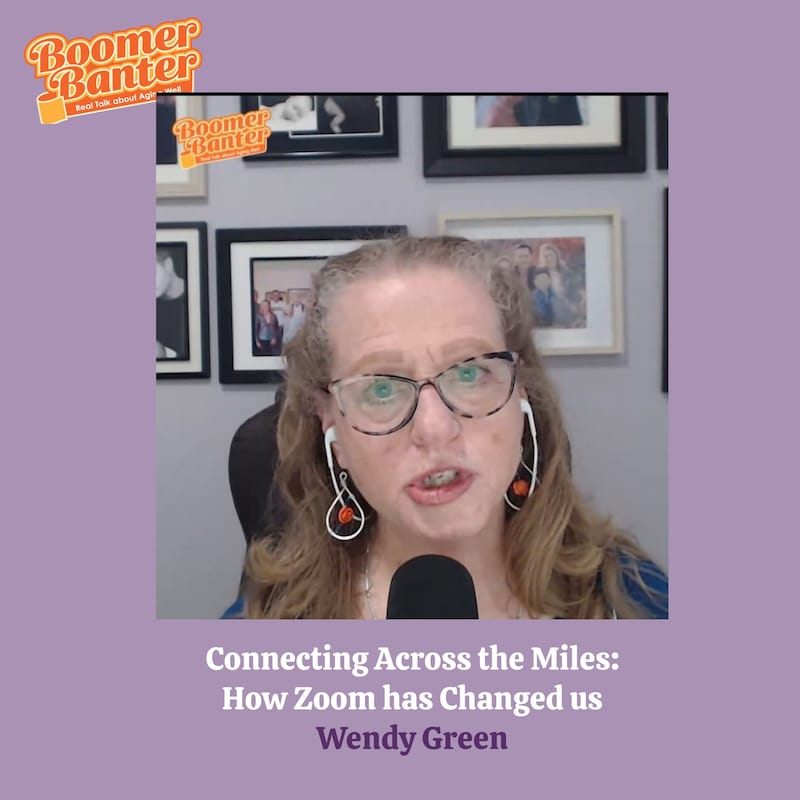
Shownotes
Today’s chat is all about the ups and downs of sheltering in place, and boy, do I have stories to share!
So, I was all set to have my high school friend join us, but life had other plans when he and his wife got hit by COVID-19. Thankfully, they’re recovering at home, but that left me flying solo today. No worries though! I’m excited to pick up where we left off last week, diving into how this whole experience has changed us. It’s a chance to reflect on the silver linings we’ve discovered while being stuck at home. I mean, who knew we could learn so much about ourselves just by staying put?
I’m ready to spill my own tea about what I’ve learned during this time! From being laid off to rethinking my path in life at 66, I realized it’s not just about finding any job. It’s about feeling fulfilled and relevant. I’ve had some lightbulb moments about how I want to contribute and make a difference, which is what I’ve always been passionate about. Plus, I’ve been connecting with my family and friends more than ever through Zoom, which has brought some much-needed joy into my life. It’s amazing how technology can keep us together, even when we’re apart.
Now it’s your turn! I want to hear your stories too. What lessons have you learned during this shelter-in-place saga? Have you taken up gardening like me, or maybe you’ve started cooking more? Let’s share our experiences and keep this conversation going. It’s all about building a supportive community, and I can’t wait to see what you all have to say!
This podcast uses the following third-party services for analysis:
OP3 - https://op3.dev/privacy
Transcripts
Foreign.
Speaker A:Hey, Kathy, thanks for letting me know you're here.
Speaker A:Just waiting a couple minutes.
Speaker A:This should be an interesting show up.
Speaker A:There's Mom.
Speaker A:Hello, Mom.
Speaker A:It's good to have loyal people.
Speaker A:We have a couple of minutes before we're starting, and I just thought it would be nice to kind of get on a little early since I don't have a guest today and just check in with y'.
Speaker A:All.
Speaker A:I'm glad you're feeling a little better, Kathy, Let me know.
Speaker A:Can you hear me?
Speaker A:I'm sure you all can hear me, but just thumbs up or something that you can hear me.
Speaker A:Judy, Yay.
Speaker A:Thank you.
Speaker A:Loud and clear.
Speaker A:Thank you, my friend.
Speaker A:This is the 13th episode of hey Boomer.
Speaker A:And this was supposed to be an interview with a friend of mine from high school, actually, who is now a volunteer public affairs spokesperson for the American Red Cross.
Speaker A:Unfortunately, he and his wife both tested positive for COVID 19, and really feel awful.
Speaker A:The good news is they are still home.
Speaker A:And he, he told me this morning that he feels like they are improving, although they're still running a fever.
Speaker A:They still have the cough, but, and he said it's, it's miserable, just horrible illness.
Speaker A:But so far they are able to be home and not in the hospital.
Speaker A:And we will get to reschedule him.
Speaker A:But meanwhile, so Saturday, I started to think, okay, so what are we going to do without a guest?
Speaker A:And the conversation with Matt Potts last week about unintended positives was so engaging that I thought, well, maybe we can continue that and talk about how has sheltering in place changed you and what have you learned because of it and what have you learned about yourself?
Speaker A:So that's kind of, kind of where I am taking this today.
Speaker A:I wanted to quickly mention the buy me a cup of coffee.
Speaker A:This is a way that listeners can support what I'm doing here on hey Boomer and help me continue to bring the guests that we get.
Speaker A:We have such a great lineup.
Speaker A:I'm actually have guests lined up all the way through the end of August, which is very exciting.
Speaker A:And so as we're growing the audience and, and getting enough members in this community to get sponsors.
Speaker A:Meanwhile, if you want to buy me a cup of coffee, that would be wonderful.
Speaker A:And to do that, it's $5 for one cup.
Speaker A:If you want to support, become like a member, they call it, it's $50.
Speaker A:And that gives you the opportunity to me do a call out for your company or an organization that you're part of or some advocation, anything that you're really excited and interested about we can do it as a sponsor call out, which is what I am going to do right now.
Speaker A:So I'm going to talk about the CART Fund.
Speaker A:And this is a call out because of my friend Elizabeth Lyon, who did a very generous buy me a cup of coffee donation.
Speaker A:And CART is CART stands for Coins for Alzheimer's Research Trust.
Speaker A:And it is a organization where all of the funding for this organization, all of the funding that is raised goes directly to researchers for Alzheimer's.
Speaker A:And these are typically the smaller researchers who are doing cutting edge research, but they're not quite big enough to be part of the National Health Institutes or the WHO and or other organizations that might be funding larger research.
Speaker A:So the CART Fund helps to fund those that research and then as the programs develop and they get more information and they become, they get findings that seem to be really relevant, then they get better situated to get NIH funding and that kind of thing.
Speaker A:So CART typically is it started by a Rotarian here in South Carolina.
Speaker A:And what happens is at the Rotary meetings we take loose change and we put it in a little cup and this loose change is collected.
Speaker A:And hundreds of thousands of dollars have been raised this way.
Speaker A:But as you all know, since March, most Rotary clubs have not been meeting in person.
Speaker A:The fundraising has gone way down.
Speaker A:And this website that's on the screen here, cartfund.org cart donations will allow you to contribute to the CART Fund and help researchers with their Alzheimer's research.
Speaker A:Thanks Elizabeth, for that sponsorship.
Speaker A:Because this is a conversation today, even more of a conversation, but it's a conversation with you and me.
Speaker A:And so I am really hopeful that you will participate with your comments and share with me me some of your learnings and even some of the opportunities and challenges that you have encountered and grown from during sheltering in place.
Speaker A:And I will share my story and my learnings with you.
Speaker A:I mean there's a lot of things I've learned, but I'm going to just talk about some of it and then as you share, then when I finish my story will be able to share some of your stories.
Speaker A:So please let's keep this as interactive as possible.
Speaker A:Start entering your stuff in the comments and I will start to tell you what sheltering at home and not going in for work has meant to me.
Speaker A:And I can tell you exactly when all of this started.
Speaker A:So I had gone to Panama City Beach, Florida with my son and his family.
Speaker A:We for their spring break and it was mid March and we were starting to become aware of what was Going on with the coronavirus, we knew enough that we should be social distancing.
Speaker A:So we were at an Airbnb.
Speaker A:We knew that we had to hand sanitize and wash our hands about everything.
Speaker A:And my son kept telling me, stop touching your face.
Speaker A:So we were aware of it, but we had no idea how it was going to take over.
Speaker A:On March 19, I drove home from there.
Speaker A:And on March 23, I got laid off from my work because of COVID Because the work situation had.
Speaker A:Well, they had closed.
Speaker A:Basically, we were working with kids, and so there was no work.
Speaker A:So it made sense that we would close that office.
Speaker A:So at 66, I started to think about, well, okay, you know, what, what's next?
Speaker A:Because I had experienced a layoff about three or four years ago when my company was.
Speaker A:And I knew how difficult.
Speaker A:And, you know, here's the interesting thing, right?
Speaker A:So as a coach, a life coach transitions coach.
Speaker A:I had been taught that head trash, you know, telling yourself something will.
Speaker A:Will prevent you from moving forward.
Speaker A:When people would talk to me about, you know, ageism and, well, I can't find that job that I really want now because people won't hire me.
Speaker A:I'm over 65.
Speaker A:I used to think, you know, that's.
Speaker A:That's negative thinking.
Speaker A:That's just something you're telling yourself.
Speaker A:And then I experienced it, and, you know, all the positive thinking in the world doesn't change that.
Speaker A:There is definitely.
Speaker A:It is harder to find what I would call meaningful, fulfilling work, right?
Speaker A:So you can find a job, but to find that meaningful, fulfilling work that makes you excited about getting up every morning, that becomes much more difficult.
Speaker A:And then to find something where you are used to being paid at a certain level, and suddenly that's not happening either.
Speaker A:So I started to think about, okay, what do I want at this point in my life?
Speaker A:So what I thought about was really not so much what kind of work I wanted, but how I wanted to feel.
Speaker A:And how I wanted to feel was relevant.
Speaker A:I wanted to feel like what I did made a difference.
Speaker A:That's always been super important to me.
Speaker A:And feeling relevant, making a difference, feeling like there was a purpose, there was a reason for getting up in the morning.
Speaker A:I remember talking to a bunch of friends over the last few years, baby boomer friends, and they were starting to creep in.
Speaker A:This idea of, well, I'd like to do that, but I'm too old or, well, maybe I'll go back to, yeah, but I'm too old, or, yeah, but, you know, physically, I don't feel like I have the energy to do that anymore.
Speaker A:And so all that stuff was holding us back.
Speaker A:And I decided that my.
Speaker A:That the baby boomers, we had this whole identity with this youth culture, and we were having a struggle of kind of reconciling.
Speaker A:Well, you know, yeah, there's a few more aches and pains, and maybe we are not as fast as we once were, but we still have so much to give, to contribute, to help, to help us feel relevant, and we can.
Speaker A:We can grasp that and be part of that.
Speaker A:So I started to reconcile with that.
Speaker A:Then I also heard that people had been telling me over the last few years that I was really good on camera.
Speaker A:Now, my dad had an advertising agency when I was growing up.
Speaker A:We started with on camera stuff pretty young.
Speaker A:We used to do orange juice commercials for one of his clients.
Speaker A:So I wasn't.
Speaker A:I was comfortable in front of the camera.
Speaker A:And then in the last few years, I have been a spokesperson for one of the.
Speaker A:For the major fundraising events that my Rotary Club does.
Speaker A:And so particularly my mother.
Speaker A:Thank you, mom.
Speaker A:She would say, you should be, you know, on the news.
Speaker A:You should be a broadcaster.
Speaker A:And I did the typical mom, I'm 65, I'm 66.
Speaker A:No one's going to hire me to be a broadcaster.
Speaker A:But now I had this opportunity.
Speaker A:Now I could say, well, let me combine those skills of being on camera with this need to feel relevant and contribute and to help others in my generation feel like they could also be relevant and contribute by listening to other people's stories and hearing some of the things that are exciting them and hopefully sharing some of that excitement with the people that are listening and that become part of this hey Boomer.
Speaker A:Community.
Speaker A:That's how this all started.
Speaker A:I launched hey boomer on April 13th.
Speaker A:It took me a little while to figure out the technology and what pieces I needed to pull together.
Speaker A:Try and get a few eat.
Speaker A:Thank you, Doris, for being the first guest.
Speaker A:But it has been probably one of the most satisfying things that I have ever done.
Speaker A:I love it.
Speaker A:I love engaging with y'.
Speaker A:All.
Speaker A:I love the guests that are coming on.
Speaker A:It has allowed me to meet people that I would never have met.
Speaker A:And just for you, so.
Speaker A:So you guys know, I'm going to have somebody on from the UK who reached out to me.
Speaker A:We're going to have somebody on from Australia who has reached out.
Speaker A:So it's like, there's no way I would have found these people and talked to these people.
Speaker A:So that's super exciting.
Speaker A:And then the stories that we're getting and Sharing with y', all.
Speaker A:I just think that's even more exciting.
Speaker A:It has also been a huge learning opportunity for me, learning more about social media.
Speaker A:I used Facebook mostly to look at pictures of my kids and see some happy thoughts.
Speaker A:I'm learning now some about how to market this on Facebook and how to try and get more awareness to what we're doing.
Speaker A:Also my interviewing skills, I have had some nice feedback, some from some people that have worked with a lot of presenters.
Speaker A:And so that's been very useful and helpful and listening skills, you know, so when you are interviewing somebody or having a conversation with somebody, it's super important to listen to what they're saying and respond in a way that shows them that they were heard and you progress the conversation with a question.
Speaker A:That has really helped me get better at that.
Speaker A:This has been great in that sense.
Speaker A:It's also bolstered my self confidence.
Speaker A:I know that when I was doing my job that I got laid off from, I was frustrated with it.
Speaker A:I didn't feel fulfilled and I didn't feel like I was making the contribution that I wanted to make.
Speaker A:And so now the days go by because I'm learning and I'm engaging and I'm, you know, I can't wait to get up in the morning to do this and to talk to y' all and to look for more guests and, you know, build the program.
Speaker A:So that has been very exciting and awesome for me.
Speaker A:So that's a big way that sheltering at home has changed me and what I've learned, I've also connected more.
Speaker A:Like my mom, we talk every day.
Speaker A:And I know she appreciates that and I appreciate that.
Speaker A:And, you know, we've had a lot of zoom conversations with friends and family all over the world that we would not normally have been connecting with on a regular basis.
Speaker A:So that's been great, too.
Speaker A:So now I want to hear from you what you have learned and how it has changed you.
Speaker A:And I see that Kathy says she's become a better listener.
Speaker A:Realizing people don't feel the same about many things and she might feel differently about them.
Speaker A:Oh, that's huge.
Speaker A:Become more open to listening and respecting other people's perspectives on a variety of things, topics, issues, etc.
Speaker A:That are impacting our recent days, weeks and months.
Speaker A:That's huge, Kathy.
Speaker A:And that.
Speaker A:That kind of goes along with this listening.
Speaker A:Yeah, that kind of goes along with the listening skills.
Speaker A:So, you know, if somebody is sharing something with you, Kathy, and you don't agree with them, I'm curious as to how you have been able to open yourself to listening to that without just reacting or responding.
Speaker A:And it, it is a lot about respect.
Speaker A:Yeah.
Speaker A:So thank you for that.
Speaker A:But if you want to answer that question, that would be great.
Speaker A:And I'm looking to see if anybody else has some ideas of how they want to share what they've learned or how they've changed since we started sheltering at home back in March.
Speaker A:So, Doris, thank you.
Speaker A:Doris says she agrees that we're connecting more and better across the miles.
Speaker A:And has Zoom made a big difference to others?
Speaker A:I know Zoom has made a huge difference to me.
Speaker A:I was able to speak to this woman in Australia using Zoom.
Speaker A:They are 13 and a half hours ahead of us.
Speaker A:So, like, I talked to her at 7:30 at night.
Speaker A:It was 9 o' clock the next morning, her time.
Speaker A:And we sat there like we were in the same room using Zoom.
Speaker A:It was amazing.
Speaker A:It's, it's great technology.
Speaker A:Who else has found some personal insights or growth like working out more time in your garden?
Speaker A:That is something that I have also done, spent more time in my garden.
Speaker A:I have sunflowers coming up, which is really fun.
Speaker A:Oh, Heidi had a conversation with an artist in the Netherlands over the weekend.
Speaker A:Wow, that's cool.
Speaker A:I want to hear more about that.
Speaker A:She used either Zoom or Facebook for that.
Speaker A:And Kathy, thank you.
Speaker A:I know you're not feeling great today, but thank you for writing.
Speaker A:Kathy says respect has played a big part in her actions authored.
Speaker A:She says.
Speaker A:I've often had fired back with my opinions, but I think seeing all the strife out there to be listened to, maybe we should use.
Speaker A:Maybe I should use my two ears better and close my mouth for a time.
Speaker A:Thanks, Kathy.
Speaker A:It's so easy to get triggered and you know, when somebody says something that we disagree with, to just jump right in and kind of defend our position or our point of view.
Speaker A:And if we can just say, tell me more about that.
Speaker A:Why do you feel that way?
Speaker A:It really does kind of de escalate things and helps with the conversation.
Speaker A:And Dara says, I think I've always had an appreciation for our retired circumstances, but in these times we are reminded every day of good, good health, pensions, et cetera.
Speaker A:Pension is nice.
Speaker A:All right, Mom.
Speaker A:She says, welcome.
Speaker A:I've learned I don't need things to feel satisfied.
Speaker A:That's awesome.
Speaker A:I've become more creative about home projects, even learned to cook and enjoy it, which my kids would be amazed at.
Speaker A:Yes, that's true, Mom.
Speaker A:And she's reading serious books that she never had time for.
Speaker A:Like history of our country.
Speaker A:I know she has read about so many of the early presidents and you know, in some ways I think it has and I don't want to put words in your mouth, but in some ways I think it has helped her with a perspective that, you know, some of these problems that we're seeing today, different and the same.
Speaker A:There always been different points of view and different personalities.
Speaker A:And if we follow Kathy's advice to listen more and be respectful.
Speaker A:Ah, Bruce.
Speaker A:Bruce says Zoom and other apps like it have brought people together.
Speaker A:More family interaction with members distributed around the U.S. hold on.
Speaker A:Went away first college over Zoom for a birthday.
Speaker A:Oh yeah, I remember you mentioned that.
Speaker A:That was, I bet that was fun.
Speaker A:Now we'll get together on each person's birthday.
Speaker A:Important human connections when we can't due to Covid or distancing.
Speaker A:So true.
Speaker A:I mean we may miss our hugs and our face to face, you know, interactions, those of us especially who are huggers.
Speaker A:But to totally cut out interaction is not healthy.
Speaker A:And so I'm glad you're getting all that other.
Speaker A:Bruce.
Speaker A:That's awesome.
Speaker A:See Doris, one question we ask us.
Speaker A:What more can or should we be doing to help others?
Speaker A:What do you think, Doris?
Speaker A:What can you do or do or should?
Speaker A:I don't like the word should, but what can you do or what do you want to do to help others, I guess is the question.
Speaker A:And Judy said, I think that zooming opens new doors for discovering your personality, how aggressive or quiet you are, among others.
Speaker A:Oh, good point.
Speaker A:So right, because on Zoom, everybody's talking and so are you like trying to charge in there and get your voice heard or are you willing to kind of sit back and be the one that's listening and kind of taking in everything?
Speaker A:Yeah, good point, Judy.
Speaker A:Thanks.
Speaker A:And Doris, she goes for one who runs around a lot.
Speaker A:You do, Doris.
Speaker A:She has enjoyed the quality time at home and I think we are finding that we are more creative and resilient than we may have given ourselves credit for.
Speaker A:To find ways to stay active and involved at home.
Speaker A:So it is, it's, that's a nice learning to realize that we don't have to be constantly doing, doing, doing.
Speaker A:We can be human beings instead of human doings.
Speaker A:Calling others who are self isolating is so gratefully received.
Speaker A:That is so true, Mom.
Speaker A:Thanks for sharing that.
Speaker A:I know I always have this like running list in my head of people to call.
Speaker A:I try to call, try.
Speaker A:You just call when you have a minute or two.
Speaker A:It doesn't have to take a long Time just to let somebody know you're thinking about them.
Speaker A:That's a really nice, nice reminder.
Speaker A:Thanks.
Speaker A:Some great learnings in this community.
Speaker A:I'll tell you what this.
Speaker A:Hey, Boomer community.
Speaker A:Oh, Heidi.
Speaker A:One more thing, Heidi.
Speaker A:She says, anytime I read history, it brings me a lot of patience.
Speaker A:I realize we've been here before and this too shall pass.
Speaker A:I live life one day at a time.
Speaker A:Sometimes break it down to minutes, always looking for the joyful moments and walking calmly through the challenges.
Speaker A:That's beautiful, Heidi.
Speaker A:Thank you.
Speaker A:You should make that into a memory.
Speaker A:And it is important to stay connected.
Speaker A:And Dar says she doesn't like the word should either, but looking for ways to ease the shelter in place for others every day.
Speaker A:So how are you doing that?
Speaker A:Does.
Speaker A:Does.
Speaker A:I mean, you know, with the zoom, with the phone calls, are there other ways?
Speaker A:I'm going to have a ton of tomatoes here real soon, so if anybody would like some tomatoes, I can certainly set up a delivery or leave some on the front porch that you can come get.
Speaker A:There's lots of ways.
Speaker A:We just have to be creative.
Speaker A:In fact, this was fun.
Speaker A:I was talking to my granddaughter the other day, and I said, why don't we have a grandchild grandma book club?
Speaker A:And I said, you pick the book, you know, and then we can read it individually and then get together on Zoom or something like this and talk about it.
Speaker A:So it's a way to stay connected because they're not here.
Speaker A:But it was just an idea so we can get creative, come up with ideas.
Speaker A:So they started to say, thank you all.
Speaker A:Hey, Boomer is so meaningful to me.
Speaker A:Just love that we are building this community and that we are coming together to support each other and to feel like you still have a voice in this world and we are still relevant, active, intelligent human beings.
Speaker A:Please share this with whomever you want to.
Speaker A:And, you know, let's keep building this community because I think that's going to be great for all of us.
Speaker A:Let me tell you about my guest for next week.
Speaker A:His name is Ken Dolan Del Vecchio.
Speaker A:Ken is a licensed family therapist, an author, a speaker, and a corporate health and wellness leader.
Speaker A:He has experience in the arena of personal, family, organizational, and community empowerment.
Speaker A:He wrote a book called Simple Habits of Exceptional but Not Perfect Parents, which I'm sure we all are exceptional parents.
Speaker A:We're going to be talking about parenting, focusing more on being parents and with adult children.
Speaker A:There will be some of the discussion that will might cover some of the younger kids because we all have grandkids.
Speaker A:Also.
Speaker A:And our kids have kids and, you know, so how do you navigate that?
Speaker A:How do you parent and not parent your adult children?
Speaker A:How are you a friend and a.
Speaker A:A role model and a guide?
Speaker A:So it should be a very interesting conversation.
Speaker A:Ken is a very personable, well spoken individual.
Speaker A:I think you all will enjoy him.
Speaker A:So please be sure and invite your friends to that.
Speaker A:And I just wanted to let you know that when I am not broadcasting, I am also working with individuals and I'm working with them on helping them navigate transitions, helping them to meet unmet goals, and helping them embrace change in their life.
Speaker A:So I have a Facebook page called Act Life Coaching and if anybody is interested in that, you can message me on hey Boomer.
Speaker A:Or you can message me on Act Life Coaching.
Speaker A:So thank you all for playing today.
Speaker A:We all have stories to share and let's keep sharing our stories.
Speaker A:Let's keep building this community and have a wonderful rest of your day.
Speaker A:My name is Wendy Green and this has been hey Boomer.



