Shownotes
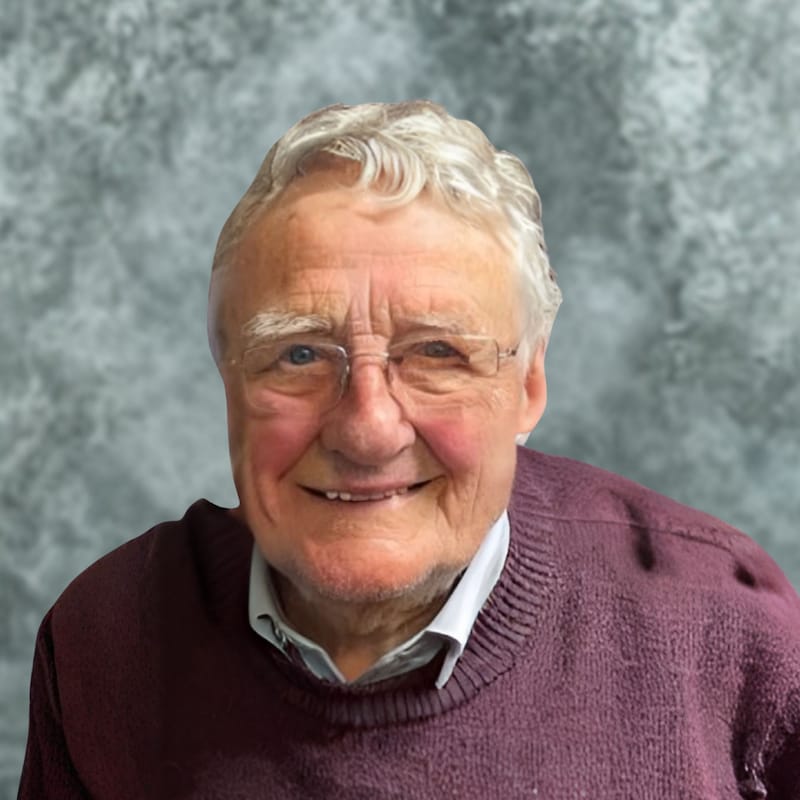
Rev. Harold Good—Protestant minister, contemporary of Desmond Tutu, and key figure in Northern Ireland’s peace process—reflects on what it means to pastor through division. Having played a pivotal role in bringing Catholics and Protestants to the same table, Rev. Good shares hard-won wisdom for our polarized age, inviting us all to lead pastorally with courage, compassion, and the hope of reconciliation.
Mentioned in this episode:
In a world of division, your support fuels peace, courage, and connection. Help us keep going. Donate Now.
Transcripts
I think one of the most important lectures I ever attended was when
Speaker:our teacher said to us when you come across somebody who takes a different
Speaker:position than you or somebody who wants to pick a fight with you,
Speaker:don't see it as an invitation to World War iii.
Speaker:See it as a pastoral opportunity.
Speaker:And I am always so grateful for that particular lesson because I
Speaker:found that you can disarm people, even the most aggressive people by
Speaker:being pastoral in your response.
Speaker:Welcome back to the Mending Divides podcast.
Speaker:I'm Jer
Speaker:Swigart.
Speaker:Today we're honored to be joined by Reverend Dr. Harold Good from
Speaker:Northern Ireland, pastor, author and peacemaker who helped guide his nation
Speaker:through one of the most entrenched conflicts of the 20th century.
Speaker:The troubles.
Speaker:Dr. Good's story is not just history.
Speaker:It's a living testimony of what it means to stand in the rubble
Speaker:of violence and dare to believe in the possibility of peace.
Speaker:As our own nation feels increasingly fractured by ideological and political
Speaker:divides, Harold's wisdom and experience offer a roadmap for how we too
Speaker:can become Everyday Peacemakers.
Speaker:Let's dive right into the conversation.
Speaker:Harold, I think that you have lived the story that seems to be unfolding
Speaker:in our own country in the United States, and where it was sectarian
Speaker:violence in Northern Ireland.
Speaker:it's ideological violence in our own.
Speaker:However, it's becoming more and more seasoned with religious fervor.
Speaker:we're
Speaker:Yeah.
Speaker:to this and some of the commentary on Charlie Kirk's assassination,
Speaker:and is this person a martyr?
Speaker:And that's very religious language.
Speaker:That's not just political language.
Speaker:And, and of course, we're in over here, we're in a space
Speaker:of reciprocal assassinations.
Speaker:the right and the left are trading violence, lethal violence.
Speaker:And this is something that you've lived this story and within it.
Speaker:Made some really significant decisions around how you're gonna follow Jesus.
Speaker:And some of that had to do with your role as a Pastor Harold, but I think
Speaker:it has a lot more to do with you being a person of faith and recognizing that
Speaker:as the neighborhood burned around you, Jesus compels us toward the pain with
Speaker:the tools to heal rather than to win.
Speaker:And so, I wanted to have this conversation with you because we need your guidance.
Speaker:we need we need your word, we need your story and your voice.
Speaker:And of course, I'm sitting next to The book that you wrote which you
Speaker:actually tell so much of the story.
Speaker:In Good Time it's called, and Friends Who Are Listening In, I compel you
Speaker:to get In Good Time by Harold Good.
Speaker:It needs to be in the library of reconcilers on this planet, but it
Speaker:tells the story of of much of your formation and how you showed up as a
Speaker:reconciler in the midst of the troubles.
Speaker:but I wonder for those of us who are listening in, who are unfamiliar
Speaker:with the story that you lived can you take us back to what was happening in
Speaker:those, the early days of the troubles, especially as you began to pay attention
Speaker:to the acceleration of violence?
Speaker:What was happening around you and how did that begin to invite you,
Speaker:not to walk away from it, but to walk toward it as a peacemaker?
Speaker:What was happening?
Speaker:I returned from a period of study In the United States in 1968, and my
Speaker:appointment was right into the midst of the inner city of Belfast where
Speaker:things were just beginning to erupt.
Speaker:Northern Ireland was very influenced by what was happening
Speaker:on your continent at that time.
Speaker:The civil rights struggle in the US uh, have said how Just before I left America,
Speaker:I heard Joan Baez sing, we shall overcome.
Speaker:And when I got back to Northern Ireland, there she was on a
Speaker:platform singing We Shall Overcome.
Speaker:And the whole civil rights movement, the legitimate cry for the
Speaker:rights of a minority at that time
Speaker:. That was resisted by the established traditional unionist, loyalist
Speaker:Protestants in inverted commas community.
Speaker:And so you got this confrontation between two cultures two aspirations
Speaker:two creeds all intertwined.
Speaker:Now we live in a world where what's happening in one place impacts
Speaker:Yeah.
Speaker:overnight, on another.
Speaker:And we're seeing that at the moment, aren't we?
Speaker:Yeah.
Speaker:the restlessness around the world.
Speaker:Mm-hmm.
Speaker:I find myself almost as an innocent abroad in the midst of that.
Speaker:But I would have to say that my four years in the States had unconsciously
Speaker:more than consciously been preparing me,
Speaker:Hmm,
Speaker:For a ministry in a community that was not at ease with itself.
Speaker:Where there was increasing fracture and which because of the resistance,
Speaker:to the legitimate cry of the people who were marginalized, that broke
Speaker:out then into, well, people feel that they are not being heard.
Speaker:Yeah.
Speaker:Violence is the language, sadly, to which they will so often resort,
Speaker:and that's what's happening here.
Speaker:Mm-hmm.
Speaker:And then counter violence.
Speaker:And so, I found myself in the midst of this.
Speaker:And for me as a pastor, those situations, you have to stay somewhere
Speaker:in the middle of all of that to stay detached from one or the other.
Speaker:So that if you want to have a ministry within a fractured society, you need
Speaker:to be very sure that you are uh, and I think this is where we learn from Jesus.
Speaker:He lived in a fractured and divided society, but did not get involved
Speaker:in taking this side or that side.
Speaker:He just took the side of what was right.
Speaker:Yeah.
Speaker:I agree with that.
Speaker:And yet I see in the US right now, there's a lot of side taking, happening
Speaker:between not just pastors, but congregants.
Speaker:there are different understandings of Jesus that are surfacing and a Jesus
Speaker:who is in defense of my perspective, or a Jesus who justifies my behavior
Speaker:in pursuit of the world that I want.
Speaker:and so, I see a lot of side-taking, a lot of tribalism happening within
Speaker:the US American Christian community.
Speaker:Here you were in Northern Ireland where you're, Catholics and Protestants, that
Speaker:was more of the divide in that space.
Speaker:what did holding.
Speaker:a more pro-human approach.
Speaker:what did not taking sides look like for you in that time?
Speaker:Well, yeah, I hear what you're saying.
Speaker:'cause there comes a time when you have to, you're going to follow Jesus.
Speaker:You have to take his side,
Speaker:his side very often, is gonna put you in opposition to others,
Speaker:even others who claim his name.
Speaker:And that's, that is always very difficult.
Speaker:when you find yourself in conflict with people who claim that
Speaker:they also are following Jesus.
Speaker:Right.
Speaker:and where do you find the language where you find the way of
Speaker:trying to break through that?
Speaker:Very often an impasse.
Speaker:Mm-hmm.
Speaker:and I swear, I often say we've part of our problem is we in our situation
Speaker:people got confused between the kingdom of God and the United Kingdom.
Speaker:So, you, when you try to interpret your theology in political terms
Speaker:and that has to be confronted when that is, when clearly contradiction,
Speaker:Mm-hmm.
Speaker:to the way of Christ.
Speaker:So in the midst of that I think I would find myself in my preaching,
Speaker:having to challenge some of what I knew to be a distortion,
Speaker:of faith.
Speaker:A distortion within your own congregation.
Speaker:They would've been listening to other people and, and reveal
Speaker:their other strong voices.
Speaker:And I found unapologetically that I had to challenge that kind of distortion,
Speaker:Mm.
Speaker:Or not, not
Speaker:in a way where I could open conversations with people, not
Speaker:sort of saying, this is, but.
Speaker:challenging people in the context of a gospel interpretation, and
Speaker:inviting them into a conversation.
Speaker:hmm.
Speaker:And a lot of what I would've done, some of it would be from the pulpit, but
Speaker:a lot of it would be on the streets
Speaker:Mm-hmm.
Speaker:when people would confront you on the street.
Speaker:Yeah.
Speaker:found myself almost like a street preacher
Speaker:Yeah.
Speaker:You know what, you know, that's not what Jesus would say.
Speaker:And so,
Speaker:but again, mostly through relationships.
Speaker:As I say, a lot of it was at firesides.
Speaker:kitchen tables.
Speaker:Sometimes on the street when you'd meet people on the corner and, constantly
Speaker:trying to reaffirm that my role was there was not to take a political position.
Speaker:For example you know, the, the, the debate, are we going to
Speaker:find ourselves outta the United Kingdom and into United Ireland?
Speaker:Mm-hmm.
Speaker:And I would have to help people think through, is there actually, is there
Speaker:a theological problem with this?
Speaker:And if so, what is it?
Speaker:Let's talk about that.
Speaker:And at the end of the day, you find yourself talking about territory
Speaker:rather than theology and culture.
Speaker:Culture more than creed
Speaker:Hmm.
Speaker:having to help people to see the distinction between culture and
Speaker:creed and territory and theology.
Speaker:Oh, that's so good.
Speaker:That is so good, Harold.
Speaker:I I see that I see that in spades here, conversations that should
Speaker:be theological are territorial,
Speaker:Yeah, yeah,
Speaker:I think this moment in time is demonstrating for us how easy it is to
Speaker:be seduced into a kingdom of this world,
Speaker:yeah.
Speaker:Orientation rather than a king Kingdom of God orientation.
Speaker:You
Speaker:yes, yes.
Speaker:for these things to be confused.
Speaker:yeah.
Speaker:so much of what you just said, I think is dynamic.
Speaker:What I think is unique is that as a pastor in that time, as a Protestant minister a
Speaker:Methodist minister in the Shank Hill, and for those of you who are listening, and
Speaker:that is in the epicenter of the troubles I think it would've been easy for you to
Speaker:understand your place as in the pulpit.
Speaker:Yet what you just said was, happened in the pulpit and in the pulpit.
Speaker:You're talking to your own people.
Speaker:Right.
Speaker:But it also happened in the streets and next to fires.
Speaker:Talk to us about that.
Speaker:I think that we need more pastors, to use the pulpit well, but also make
Speaker:sure that what's happening in the pulpit is seasoned by what's happening
Speaker:in the streets and around fires.
Speaker:So talk to us about how did you use these spaces?
Speaker:How did you find yourself there?
Speaker:Was it accidental?
Speaker:Was it intentional?
Speaker:What did you do around the fire?
Speaker:Yeah.
Speaker:and how did that then inform your leadership of your congregation?
Speaker:Gotta say, I think it was more accidental and intentional.
Speaker:I mean, you, your life is laid out for you.
Speaker:11 o'clock on a Sunday, on seven o'clock on a Sunday evening, you,
Speaker:you, you have a responsibility to conduct worship and to preach.
Speaker:And those days we would've had a morning service and an evening service.
Speaker:Hmm.
Speaker:And so the evening service would've been generally more people who were
Speaker:more faith driven and would've been wanting to maybe probe more deeply.
Speaker:It'd be more like a study opportunity and where you could
Speaker:really, like Sunday morning tended to be all things to everybody, all
Speaker:families, all ages and all of that.
Speaker:But I found that very often, the Sunday evenings when you had people who in
Speaker:a quieter and it'd be entirely an adult congregation in the evenings.
Speaker:I treated almost like a, a Bible study.
Speaker:let's look more in depth at some of the things that were happening this week.
Speaker:Hmm.
Speaker:Let's look and see what is Jesus saying to us about this week?
Speaker:Not what I'm saying, not what I think, but what is he saying to us?
Speaker:And I found that prompted very, very very important conversations.
Speaker:And sometimes those conversations would be followed up during the week,
Speaker:maybe when you're visiting a home.
Speaker:I put a lot of importance on home visits in my ministry.
Speaker:It's the kind of thing that seems to have gone outta fashion here.
Speaker:But, you know, in those days you could knock on door, people say,
Speaker:ah, come on in, take cup of tea.
Speaker:And I found in those conversations where we didn't have an audience,
Speaker:so people could be honest with me and I could be honest with them.
Speaker:and sometimes it'd be, you were saying on Sunday morning, something
Speaker:that I really had problem with.
Speaker:Tell me, you know, I, and off you go.
Speaker:Or sometimes I would be approached maybe by journalists and they would
Speaker:want to do an interview with you on television or in the papers.
Speaker:Mm-hmm.
Speaker:And that would reach a wider audience, but maybe.
Speaker:You'd be walking down the street and somebody say, Hey, com'ere.
Speaker:You know, what did you mean by what you were saying the other day?
Speaker:That was ridiculous, you know, on earth,
Speaker:Yeah.
Speaker:you know, and so opens up a conversation.
Speaker:So that's what I mean about conversations at firesides, on the street corner
Speaker:Mm-hmm.
Speaker:within the context of worship.
Speaker:But totally being true, having to be true to your understanding of the gospel.
Speaker:You know, I would never have said, you know, if you're asking me, I think...
Speaker:I'll be saying, let's, you know,
Speaker:let's look at what this means within a biblical context
Speaker:and, you know, and people find that very difficult to contradict
Speaker:if you can give a biblical
Speaker:basis for whoa for where you're coming from.
Speaker:Now, it doesn't mean I was preachy all the time at all.
Speaker:'cause sometimes when you're with people who don't have anything
Speaker:understanding of scripture or who don't have any interest in it, and who
Speaker:would actually be quite, dismissive you had to use a different vocabulary.
Speaker:But you could be interpreting the gospel in more secular language.
Speaker:And I think that is important as well.
Speaker:I think that the idea of challenge in a way that opens up conversation is
Speaker:a critical life skill for all of us.
Speaker:I, the who are listening in, some of us are pastors but the
Speaker:vast majority of us are not.
Speaker:And I think we're looking for skills, I think conversational
Speaker:Peacemaking skills to be able to find our way back into relationship
Speaker:with people with whom we disagree.
Speaker:One of the things that you just said, or even the stories that you just told
Speaker:or the people would come to you and just say, I flat out disagree with you.
Speaker:Or, what were you talking about?
Speaker:What did you mean when you said,
Speaker:Yeah.
Speaker:Yeah.
Speaker:I, it takes a kind of relational and conversational resilience.
Speaker:And what, by that I mean, thick skin?
Speaker:Soft heart.
Speaker:To be able to be challenged by another person's critique and actually stay in
Speaker:the conversation, it seems that like.
Speaker:Some of your challenge, the whole impulse behind it was to provoke conversation
Speaker:and often provoke it with people who might see it a little bit differently.
Speaker:How, how, how is that not intimidating to you when someone came at you and
Speaker:said, I disagree with what you had to say, what was going on inside of you
Speaker:and how did you use that as a moment to actually build a relationship
Speaker:rather than fracture it further?
Speaker:I think one of the most important lectures I ever attended
Speaker:was when I was in seminary.
Speaker:Our teacher in pastoral studies.
Speaker:He said to us when you come across somebody who takes a different
Speaker:position than you or somebody who wants to pick a fight with you,
Speaker:don't see it as an invitation to World War iii.
Speaker:Hmm.
Speaker:See it as a pastoral opportunity.
Speaker:See it as a pastoral opportunity.
Speaker:And I am always so grateful for that particular lesson because I found that you
Speaker:can disarm people even the most aggressive people by being pastoral in your response.
Speaker:I don't mean that you're sort of saying that you're gonna lie under
Speaker:it and say, oh, that doesn't matter.
Speaker:But letting them know that you're taking them seriously,
Speaker:Mm mm.
Speaker:you want them then to take you seriously.
Speaker:I take you seriously, it's an invitation asking you to take me seriously so that
Speaker:our conversation could be an honest one.
Speaker:Mm-hmm.
Speaker:And I'm going to respect,
Speaker:where you're coming from and your right to say what you think.
Speaker:and
Speaker:All I'm asking in return is that you also hear me out.
Speaker:Yeah.
Speaker:Yeah.
Speaker:You know, it, it can be a long, slow process because you might be only
Speaker:having those conversations one or two or three people in a day or in a week.
Speaker:But I, I, I found that if I came at it in a pastoral way with people.
Speaker:Understanding, I mean,
Speaker:You very often find that it's actually not you they're having
Speaker:issue with, but you're the fall guy.
Speaker:you're the person they can unload their anger.
Speaker:very often I would find when somebody took a very different position from me, and
Speaker:was angry with me because of something I had said or a position that I took.
Speaker:Very often you find this person was a hurting person.
Speaker:Yeah.
Speaker:There had been something in their family or in their situ... i, I
Speaker:think of somebody who had lost a very close loved one through violence.
Speaker:And here am I talking about, forgiveness and grace and they're saying, but
Speaker:you didn't lose anybody, did you?
Speaker:And I didn't.
Speaker:And I had to sit and say, you know, you've made me think.
Speaker:I have to try and think my way into where you are at.
Speaker:Mm-hmm.
Speaker:And this kind of
Speaker:conversation which brought you into a relationship with people
Speaker:rather than confrontation.
Speaker:Hmm.
Speaker:And where people would say, I don't agree with you.
Speaker:I don't agree with you, but I hear what you're saying.
Speaker:Yeah.
Speaker:Yeah.
Speaker:and you know, and I can remember one night when I was the police had
Speaker:asked me, they'd given me a megaphone
Speaker:Hmm.
Speaker:and they said because it, it was a very tense situation.
Speaker:It was all the potential of a hugely dangerous physical confrontation
Speaker:between people from our side of the road
Speaker:Mm-hmm.
Speaker:with people on the other side, on the Falls Road.
Speaker:And they were at a barrier and the police had made a, a cordon
Speaker:and tried to hold the crowd back.
Speaker:And they said to me, would you speak to these people?
Speaker:So I got up and gave me the megaphone and I started to try
Speaker:and plead with the, the crowd.
Speaker:And there was one woman in the crowd who was very angry with me
Speaker:because of something I had said, and, that she thought I was betraying,
Speaker:the, the Protestant faith and all of that.
Speaker:And she started screaming and shouting at me about the fact that I had taken an
Speaker:initiative to build a relationship with the Catholic priest, and she shouted,
Speaker:there's a man who was, you know, and he's all chatting up the priests and
Speaker:you know, you couldn't trust him.
Speaker:Don't listen to a word he is saying.
Speaker:And I could see a, a lynching, a verbal lynching if not a physical one coming off.
Speaker:There was a man stepped out of the crowd.
Speaker:He'd been involved in some very violent, from the loyalist side.
Speaker:And he had told me about these, and he and I had sat at his fireside, literally
Speaker:on more than one occasion, and I thought he had never heard me, but he stood
Speaker:up, he said, give me that megaphone.
Speaker:And I handed him the megaphone, And
Speaker:Well.
Speaker:he stood up and he appealed to the crowd.
Speaker:Look, you know, and he saved my skin that night.
Speaker:He was the most unlikely person that I could have thought of to
Speaker:come to my help in that situation.
Speaker:And he interpreted to the crowd what I'd been trying to say to him.
Speaker:And, and he'd been involved in some very violent things himself,
Speaker:and I had challenged him on these.
Speaker:But there he was.
Speaker:It's because he and I had built a relationship.
Speaker:It wasn't that he was agreeing with me, but he came to my defense to
Speaker:protect me, which in one part was he was saying, I actually don't
Speaker:agree with this guy, but I respect
Speaker:his integrity.
Speaker:This isn't the way to to deal with these situations, and the
Speaker:crowd dispersed at his request.
Speaker:I couldn't have dispersed them, but he did on my behalf.
Speaker:Wow, wow.
Speaker:that, that's incredible.
Speaker:Harold, what I'm finding in the, the first segment of this conversation
Speaker:so far is we're actually spending quite a lot of time talking about what
Speaker:Peacemaking looked like within your own constituency, within your own crowd and
Speaker:what it means to navigate disagreement and have conversational resilience.
Speaker:And like the fact that you had, you had put in the time.
Speaker:Around the fire with this gentleman to the point at which he didn't see
Speaker:it like you saw it, but there was enough relationship where he was
Speaker:willing to risk his own safety, to defend yours and to protect yours.
Speaker:That's the stuff.
Speaker:and then there's this whole other side that you just opened up where
Speaker:there was a widening fracture, in your neighborhood, not just in your country,
Speaker:in your neighborhood a sectarian fracture between Protestants and Catholics.
Speaker:And I wonder what was it for you, Harold, where you began to recognize, yes, I
Speaker:need to do Peacemaking work within my own community, but part of Peacemaking
Speaker:and peace building also looks like me being in real relationships with people
Speaker:on the other side of the fracture.
Speaker:what was that realization like and how did you go about building that
Speaker:relationship with that Catholic priest?
Speaker:I think it was, things had got so bad between the community that I was serving.
Speaker:And there were, it was a very short physical distance between
Speaker:the Schenkel Road and the Catholic Falls Road community.
Speaker:Very short, physical distance,
Speaker:And for those of us who haven't been there, we're talking hundreds of meters.
Speaker:Yeah.
Speaker:But yeah,
Speaker:this is, this is
Speaker:yes,
Speaker:miles
Speaker:no we're about half a mile or so, you know, people used to say
Speaker:it, a stone's throw, literally it
Speaker:Yeah.
Speaker:But things were getting very bad and so I remember thinking, we've no
Speaker:conversation or communication between the clergy on our side of the road
Speaker:Hmm.
Speaker:and the clergy and the Falls Road, the Catholic side.
Speaker:No communication.
Speaker:It wasn't because we as clergy were an antagonistic necessarily.
Speaker:We just didn't know each other.
Speaker:And so I remember, I made contact with the priest in St. Peters, called McMurphy
Speaker:and you can't be more Irish than that.
Speaker:And he said come on over, so I went over to his place and we good chat.
Speaker:And we related very comfortably and very well, and found he
Speaker:had the same concerns as I had.
Speaker:So we decided I would bring some clergy from my side of the road and he would
Speaker:bring some from his side of the road.
Speaker:And we had a very good meeting.
Speaker:It was the first time there had been any kind of a crossover meeting.
Speaker:Hmm.
Speaker:And at the end of the meeting we said, you know what we need
Speaker:to bring some of our lay people.
Speaker:So we decided we'd, each next time we'd meet, we'd bring three
Speaker:from each of our congregations.
Speaker:Then somebody said, but where could we meet?
Speaker:Our lot won't come over to your place and your lot won't come over to our place.
Speaker:Where could we meet?
Speaker:And this is interesting what's going on at the moment?
Speaker:I remembered getting a phone call from a member of the Jewish community
Speaker:Who, who had said to me, we we would like to do something to be
Speaker:helpful, but we don't know what to do because we are neither, we
Speaker:are not seen as one or the other.
Speaker:Yeah.
Speaker:But he said, if there's anything we could ever do, you think, let me know.
Speaker:So I slipped out of the room and I phoned this gentleman and I said,
Speaker:we look, we need a place to meet.
Speaker:Hmm.
Speaker:A neutral place.
Speaker:We come to the synagogue, he said, of course you can.
Speaker:So we had our next meeting where we brought people from our churches to
Speaker:the synagogue, where at that time they wouldn't have been ready to
Speaker:go to either one side or the other.
Speaker:And I think it's a supreme irony that it took the Jews to
Speaker:bring the Christians together.
Speaker:And and they did.
Speaker:And we we met there on more than one occasion.
Speaker:But that began, it broke down the wall of partition, if you like.
Speaker:Hmm.
Speaker:And so we were able to keep a relationship with each other.
Speaker:And I remember it wasn't long after that that there was a terrible night when
Speaker:Catholic families were burned out of their homes in a place called Bombay Street.
Speaker:It was a terrible, terrible event.
Speaker:And the families were being sheltered and looked after in a Catholic school
Speaker:up in the other end of the west Belfast.
Speaker:And I went up and just
Speaker:Brought the the sadness of our people.
Speaker:'cause by congregation generally would've been very
Speaker:Hmm.
Speaker:sad about this.
Speaker:And they they, you don't said, anyway, I said, there, is there anything you need?
Speaker:And they said, well, you need things for babies and we need this, or we need that.
Speaker:And I met Sunday morning, the next day was Sunday.
Speaker:And I went up my pulpit and I asked, I said, you know,
Speaker:I've been up to this place.
Speaker:But I took the liberty of going in your name to bring the sympathy of
Speaker:the Methodist people . And I asked her, I said, anything I need, and they
Speaker:told me this, that, and the other.
Speaker:And I said, I'm going to go up again next couple of days if any
Speaker:of you had any of these things that you'd like to leave at the church,
Speaker:and I'll take them in your name.
Speaker:And I had the car full.
Speaker:Is that right?
Speaker:and I had some people going outta church.
Speaker:And they were a working class congregation.
Speaker:They weren't wealthy people, but to put money in my hand and said, well, we
Speaker:don't have any of those things you're looking for, but maybe that would help.
Speaker:And for me it was incredible and very moving, and it was very
Speaker:moving both ways to go up into that Catholic school and bring these
Speaker:gifts and the thoughts and prayers.
Speaker:Now, that's not rocket science.
Speaker:Yeah.
Speaker:that doesn't take courage.
Speaker:That's just instinctively thinking, what would Jesus do in a situation like this?
Speaker:What would he have us do?
Speaker:You don't have to have a PhD in theology to understand that's
Speaker:an obedience, that what we claim to be and who we claim to be.
Speaker:There were some of my friends would've thought, gosh, you know, that was very
Speaker:courageous and I find if you, again in the context of the relationships
Speaker:that you build up with people and the trust and they realize you don't have
Speaker:any ulterior motive in doing this.
Speaker:This is doing what?
Speaker:You know, what is right.
Speaker:Yeah.
Speaker:and so I'm not putting this out as a oh, and I had the secret 'cause there
Speaker:were others doing the same thing.
Speaker:Yes,
Speaker:and, and, and many of us were doing it together, which was important.
Speaker:Very important.
Speaker:I think but part of what I hear in that story, Harold, is, It may not have
Speaker:required courage, courage probably looked like that time when you were standing
Speaker:with a bullhorn and people were getting.
Speaker:yeah.
Speaker:up or courage maybe looked like when you walked from your space into
Speaker:a Catholic space, knowing that's probably not the safest thing that
Speaker:you can do, but it's worth it for the sake of building relationship.
Speaker:But in the context of relationship, this wasn't courage to go up and express
Speaker:your grief and to bring supplies.
Speaker:You were just simply accessing compassion.
Speaker:that's just a deeply human thing to do, especially when we're in
Speaker:relationship with one another.
Speaker:And,
Speaker:Yeah.
Speaker:and I wonder that, that moment right there that you speak of, I, I can only imagine
Speaker:that was contagious among your people.
Speaker:Yeah.
Speaker:Because once you access and begin to unleash compassion, I think
Speaker:it becomes like a contagion and it starts to overtake people.
Speaker:I what happened for your people your congregation in the aftermath of that
Speaker:act of compassion and generosity?
Speaker:Well, I think people just would've said, well, I'm glad you did that in our name.
Speaker:Hmm.
Speaker:This is who we are.
Speaker:who we are.
Speaker:That's the thing we'd like to do it.
Speaker:We didn't quite know how to do it, but you did it for us here.
Speaker:You helped us to, you were the channel.
Speaker:And so that it's hard to know.
Speaker:I mean, all I'm saying is that if you instinctively thought, the problem with
Speaker:many of us here, is we're always wondering what will other people think about what
Speaker:we're going to say or what will other people think about what we're going to do.
Speaker:But people were saying, well, I wouldn't get away with that.
Speaker:Or if I said that, oh, and there were some of the clergy in some of the churches
Speaker:here who found a huge opposition to like, I think of one man who had to move.
Speaker:Yeah.
Speaker:No doubt.
Speaker:No doubt.
Speaker:There were clergy who were punished by their people
Speaker:yeah,
Speaker:for, for courage and compassion.
Speaker:yeah.
Speaker:Mm-hmm.
Speaker:Now we come from a tradition which is perhaps a bit more open than others.
Speaker:Hmm.
Speaker:I mean, some of the traditions here.
Speaker:I think for example, of the people who in parts of the Presbyterian world,
Speaker:where they are still the descendants of the settler people
Speaker:and you know what that's about in your country, the conflict between
Speaker:indigenous people and settler people.
Speaker:Yeah.
Speaker:And where we've had people who are the descendants of the settler people that
Speaker:could affect theology and understanding of how you relate to the people around you.
Speaker:Harold, I like the parallel that I would draw would be like the white
Speaker:militia movement, or even a little bit,
Speaker:yeah,
Speaker:Maybe a little bit closer to home.
Speaker:This phenomenon that some are referring to as Christian nationalism.
Speaker:This,
Speaker:yeah,
Speaker:this understanding of the fusion between partisan politics and
Speaker:the Christian religion that is deeply tied to manifest destiny,
Speaker:yeah.
Speaker:and the settler orientation around a God who is for them
Speaker:regardless of the cost of others.
Speaker:I remember I sometimes tell the story.
Speaker:I I used to go to St. Thomas' university in Houston.
Speaker:Hmm.
Speaker:I remember the first time Father Alec Reed and myself, were invited to go
Speaker:out to this University of St. Thomas where they had an Irish study center.
Speaker:And we were staying in a lovely apartment on the campus.
Speaker:And we were having our breakfast on the first morning, and I was trying to
Speaker:think, what am I going to say now and how am I going to explain something
Speaker:of our situation and our history and our context and to blah, blah blah.
Speaker:So, and I was sitting there, and I happened to notice the milk carton.
Speaker:And I'm fascinated by the brand on the milk carton , the promised land dairies.
Speaker:Hmm.
Speaker:That's fascinating.
Speaker:The promised land dairy.
Speaker:And then I, looked at it, more closely.
Speaker:And there underneath from Deuteronomy this is the land God gave us.
Speaker:And I took us into the class that I was speaking to, as was saying, you
Speaker:have, we have all the same challenge of trying to understand, where we, where we
Speaker:come from and where we find ourselves.
Speaker:And I said that milk carton could just as easily be on a table
Speaker:Yeah.
Speaker:where I come from.
Speaker:Yep.
Speaker:'cause there are people there, people where I come from who believe
Speaker:this is the land that God gave us.
Speaker:And you think of South Africa, you think of other places around the world people
Speaker:who believe that God has placed them in these places and given them this land,
Speaker:and that gives them license to live in a particular way and to whatever about
Speaker:anybody else in those geographical areas.
Speaker:And we have that within our culture.
Speaker:And it's a very strong element within our culture.
Speaker:And that influences people's political thinking
Speaker:Yep.
Speaker:as well as their theological thinking.
Speaker:Yeah.
Speaker:if you really believe this is the land God gave you, you, you may
Speaker:not even give much time to God.
Speaker:But if you think that this is land He gave you, then that legitimizes your position.
Speaker:And that has to be challenged.
Speaker:That has to be challenged.
Speaker:And that's where like, I, I want to go there next in this conversation,
Speaker:Harold, because I think we're in a space over here where, folk are
Speaker:just writing those people off.
Speaker:Whether I'm conservative, I'm writing off those liberal people, or I'm
Speaker:a liberal person and I'm writing off those conservative people.
Speaker:And I think on both sides there's malformed versions of Christianity that
Speaker:want to place God on our own sides.
Speaker:And and
Speaker:Create God in our image,
Speaker:exactly
Speaker:Right, right.
Speaker:and there is a societal atrophy of friend making, or even just conversation across
Speaker:that fracture or across that divide.
Speaker:And one of the parts of your story that I admire so much.
Speaker:Is that you refused to distance yourself from people who hold theology
Speaker:that claimed Jesus that was very different than yours, or had a desire
Speaker:for a future for the country that was maybe very different than yours.
Speaker:Rather than refusing to meet with these people and dehumanize them and other
Speaker:them from your side of the fracture, you utilized your table as as an opportunity
Speaker:to bring people together to form uncommon friendships with your ideological others.
Speaker:And I wonder if you could talk to us a little bit about the power of the table.
Speaker:How did you use the table, and scones and tea?
Speaker:How did you use that to bring people together?
Speaker:And what did that begin to do in you and what did you see it begin to do in others?
Speaker:I remember we used to, some of us, I wasn't alone in these efforts.
Speaker:I remember saying we need begin to talk with people who
Speaker:think differently than we do.
Speaker:As Protestant clergy.
Speaker:We need to talk with people in the IRA, the Republican movement.
Speaker:And we found, interestingly enough, an open door.
Speaker:Hmm.
Speaker:They were willing to come and meet with us, and we would meet
Speaker:around the table, meet with tea and scones, and get on to disarm.
Speaker:And I remember at the same time there were others who were very confrontational.
Speaker:They were going to bring people into the room as we had tried to do, but
Speaker:they were gonna bring people into the room to let them know what we thought
Speaker:of them, of what they should do.
Speaker:And I remember going to one of these meetings and I could remember fingers
Speaker:waving, if only you would do this.
Speaker:If only you, if only you, you.
Speaker:And I thought, I'm not going back to those meetings.
Speaker:Hmm.
Speaker:That was where it started.
Speaker:And that was where we then said, that's not the way we'd come around
Speaker:the table and meet in that kind of atmosphere rather than in the.
Speaker:the the lecture theater.
Speaker:Mm-hmm.
Speaker:And we began then to get some trust.
Speaker:In fact, we found after a little while, instead of us asking them
Speaker:would they come and meet us, they would phone me and say, we'd like to
Speaker:talk over something with you folks.
Speaker:Can we come you be free tomorrow afternoon?
Speaker:You know?
Speaker:And we'd say, of course . And so they would come and be, they
Speaker:would take the initiative after we had taken the initiative.
Speaker:And those were very important conversations,
Speaker:Hmm.
Speaker:Because there was a trust that had developed.
Speaker:Now, they wouldn't have phoned us if they hadn't had reason to trust us.
Speaker:They weren't coming into this kind of
Speaker:Yeah.
Speaker:confrontation.
Speaker:And then, we came to the more difficult thing.
Speaker:We've already established this trust.
Speaker:We've already got this conversation going.
Speaker:A much bigger challenge was for us to bring people from our own
Speaker:Protestant side of the community
Speaker:into conversations with people from the Republican nationalist side, because
Speaker:within the psyche of the people from within the Protestant loyalist community
Speaker:to talk to your perceived enemy is to give credence to their positions.
Speaker:To,
Speaker:Yes.
Speaker:to even suggest that you could have a conversation.
Speaker:But that was a huge challenge.
Speaker:Mm-hmm.
Speaker:I can remember I tell the story for Gerry Adams, who was a, the
Speaker:leader of the Republican movement.
Speaker:I, I had been speaking in a Catholic church.
Speaker:I'd been making suggestions as to how we could become reconciled.
Speaker:And there was a question and answer session.
Speaker:There was lady said Reverend Good you won't remember me, but I remember you.
Speaker:Hmm.
Speaker:I said, oh, really?
Speaker:Yeah.
Speaker:She said, when we were put out of our house by the Protestants,
Speaker:you took us into your church.
Speaker:Looked after us until we were rehoused.
Speaker:She said, for 40 years, I have carried bitterness in my heart for what
Speaker:happened to us when we lost our home.
Speaker:But she said, tonight, I'm gonna let it go.
Speaker:Hmm.
Speaker:I'm gonna let it go.
Speaker:Then there was a young man who came to me a few minutes later whose
Speaker:wife had been killed in an IRA bomb.
Speaker:And he said to me, Gerry Adams was at the back of the church.
Speaker:I have to make my peace with Gerry Adams.
Speaker:Hmm.
Speaker:And he said, should I go and speak to him?
Speaker:And I said, not here.
Speaker:There are people around with cameras and there'd be, be a journalist and he would
Speaker:grab you and that wouldn't be, I said I.
Speaker:If you're up to our, he's up for it, why not come to my table and
Speaker:i'll pour the tea and you guys can do the talking.
Speaker:Wow.
Speaker:And they became reconciled to each other.
Speaker:Yeah.
Speaker:One who had lost his beautiful wife to,
Speaker:Hmm.
Speaker:An IRA bomber whose coffin was carried by Gerry Adams
Speaker:Wow.
Speaker:carried the coffin of the man who had killed his wife.
Speaker:And then they sat and now I can only give credit to the Holy Spirit.
Speaker:Yeah.
Speaker:I can take no credit for that.
Speaker:yeah,
Speaker:All I can take credit for is pouring tea.
Speaker:Yeah.
Speaker:Harold, that, like, that's what strikes me about some of your superpower as
Speaker:a peace builder in my view is um,
Speaker:That could.
Speaker:Yeah, because after long, long, long, long time building a trust in the light,
Speaker:both of the relationship with both those people, you know, as I say, then
Speaker:yeah,
Speaker:I pour the tea,
Speaker:you
Speaker:but
Speaker:tea,
Speaker:but the spirits
Speaker:takes over.
Speaker:And that's like, as people of faith, I think the greatest, most liberating
Speaker:news is that there is no force more committed to repair than the
Speaker:spirit of the resurrected Christ.
Speaker:Yeah.
Speaker:And we get to be a part of it.
Speaker:Right.
Speaker:and in your case it's the, you knew the significance of a table
Speaker:outside of the view of cameras.
Speaker:You knew the power of hot tea your wife's delicious peace scones set the
Speaker:conditions for reconciliation to happen.
Speaker:The other thing that I wanna just draw out though, is the amount of time that
Speaker:it takes to build the kind of trust where Gerry Adams, who was a very
Speaker:significant political leader would accept that invitation to come to your table.
Speaker:and I think we live in this moment where we just, we offer an attempt or two at
Speaker:kindness or at relationship, and maybe it's rejected or maybe it doesn't go as
Speaker:far as we want it to, and then we bail.
Speaker:Like we give up, we
Speaker:stop
Speaker:fact, the pace of growing trust, which is critical to the work of
Speaker:reconciliation, is far slower than any of us are comfortable with.
Speaker:Help us understand how you went about building trust.
Speaker:Like what's your, not like in a prescriptive way, although
Speaker:it sounds like that in my question, but how did you do it?
Speaker:how did you become efficient or effective at building trust?
Speaker:There's some people who would say it was naivety,
Speaker:Hmm.
Speaker:you know what I mean?
Speaker:Yeah.
Speaker:That because I, I honestly wouldn't die in a ditch for either causes that
Speaker:these folks... I would say I'm a very content citizen of the United Kingdom.
Speaker:But I wouldn't die in the ditch to preserve the union against all other odds.
Speaker:I'm a very contented Irish man as well.
Speaker:That's my DNA also . So, you know, some people say, well, you
Speaker:don't stand for anything, do you?
Speaker:Because I, I don't.
Speaker:This isn't for my emphasis.
Speaker:It is not for my loyalties or in either of these political camps.
Speaker:And so people would may saying, you're a bit of an innocent abroad, aren't you?
Speaker:You're naive.
Speaker:You wander in and out of these places.
Speaker:I had a, a aunt who used to get very impatient with me, and she said,
Speaker:you're neither one thing nor the other.
Speaker:That I say, well, I think that's not a bad place for a pastor to be.
Speaker:That story about Gerry Adams and the the young man, who lost his wife.
Speaker:Two days after that I came home and there was a little tree on my doorstep
Speaker:Hmm.
Speaker:with a card attached.
Speaker:And it was a thank you from Gerry Adams thanking me for
Speaker:having facilitated this things.
Speaker:Now, Gerry Adams hobby is planting trees.
Speaker:Ah.
Speaker:He has a big glass house where he cultivates plants and he had
Speaker:picked out this little tree and it's out there in my garden.
Speaker:I call it my peace tree.
Speaker:Yeah.
Speaker:my peace tree,
Speaker:Wow.
Speaker:Wow.
Speaker:Hmm.
Speaker:comes up with his way of saying thank you.
Speaker:'cause it meant it was important to him that he was able to engage with this man
Speaker:who was a victim of partly of his making.
Speaker:Mm-hmm.
Speaker:Mm-hmm.
Speaker:So what I'm saying is people will say, gosh, you're naive,
Speaker:aren't you thinking that?
Speaker:well,
Speaker:I'm happy to be naive.
Speaker:It's if that's how people see it,
Speaker:Yeah.
Speaker:and, it's intentional, bipartisan.
Speaker:It's not that I sort of, let myself drift into these situations.
Speaker:It's very intentional.
Speaker:Because I can't be easily identified as this or that
Speaker:Yeah, yeah,
Speaker:I can forgiven for, not because they think I'm naive
Speaker:yeah,
Speaker:and I, I don't try to dissuade them.
Speaker:yeah.
Speaker:your naivete greased the skids for
Speaker:repair to happen.
Speaker:Yeah.
Speaker:let me just ask you one, one last question.
Speaker:in this conversation.
Speaker:you're speaking to a community of people who recognize that we are
Speaker:seeking to follow Jesus in the midst of a country that's addicted to
Speaker:conflict that's consumed by violence.
Speaker:And it seems as though we're careening toward a sheer
Speaker:cliff right now as a society.
Speaker:I have lots of conversations with followers of Jesus who
Speaker:want to be a part of repair.
Speaker:They want to do the work of peace building, hope is wilting toward despair.
Speaker:And I wonder what it, what would you say, and especially for you, I guess, as you
Speaker:were living this story and moments for you when you felt fatigued or overwhelmed
Speaker:or when hope was wilting what did you do?
Speaker:What would you say to a community of people who are living now a reality that
Speaker:you're familiar with in this regard?
Speaker:I'll Answer your question more specifically within the context of
Speaker:explaining how way back in the early seventies, I was invited to a World
Speaker:Council of Churches event in Bangkok.
Speaker:I was only a young kid at that time and I loved to travel.
Speaker:And so I accepted the invitation to go to Bangkok, the World Council of
Speaker:churches you know, the big body of people.
Speaker:And they had this very important event in Bangkok.
Speaker:And they invited myself and a young woman, a Roman Catholic young woman.
Speaker:They invited us to come and explain to this body something of
Speaker:what was happening in Belfast at that time from her perspective.
Speaker:So you have a catholic in the Legion of Mary and my perspective as a
Speaker:young Protestant minister that was very interesting, very challenging.
Speaker:But I can remember the first night we were there, we were in small groups and there
Speaker:was a little black priest in the group.
Speaker:We were all telling each other who we were.
Speaker:And he was very recognizable at later years, but not at that particular night.
Speaker:Desmond Tutu, he just were sitting there in the group and
Speaker:we were saying, I'm Harold.
Speaker:And he was saying, I'm Desmond.
Speaker:And we weren't to know in the years that went by.
Speaker:But there were two things that happened at that conference.
Speaker:Two things I brought home from me at that conference that
Speaker:were hugely important for me.
Speaker:One was.
Speaker:An address that was given by a politician from Angola
Speaker:who had been a freedom fighter, a terrorist in the struggle in Angola, but
Speaker:who was now a minister in the government.
Speaker:Hmm.
Speaker:And that I said myself, here's a guy who's, who's been a terrorist and
Speaker:he's now a minister in the government.
Speaker:And he was trying to help us see something of the journey that he had made.
Speaker:Hmm.
Speaker:when I came back I was interviewed by journalists here about the
Speaker:experience and there was a big headline among the local papers.
Speaker:Methodist minister says, we've got to bring the terrorists to the table.
Speaker:Hmm.
Speaker:And that's really where that probably began for me.
Speaker:I was so, affected by this man.
Speaker:And I came back and without thinking, I said to this journalist,
Speaker:I said, I was saying, we've got to bring people to our table,
Speaker:Yeah.
Speaker:we can't leave them out.
Speaker:And that was way back in 1973, I think it was, you know, way back then.
Speaker:And I never thought for a moment that one day I'd be bringing them to my table
Speaker:before they went to the other table.
Speaker:But anyway, that, that's the first thing.
Speaker:Then there was a, the closing address was given by theologian Jürgen Moltmann
Speaker:Mm.
Speaker:may know that name.
Speaker:Mm-hmm.
Speaker:And I remember his final sentence and he spoke, and I can't remember
Speaker:anything else he said, but I do remember his last, he looked at us.
Speaker:He just, he said, whatever else.
Speaker:Never, ever forget, never, ever forget that Jesus can take the
Speaker:inevitability out of history.
Speaker:And those two worth that whole journey to Bangkok bringing people to the table
Speaker:and never, ever forget that Jesus could take the inevitability out of history.
Speaker:And I've hung onto that.
Speaker:When everybody is saying there's no change, nothing happened,
Speaker:nothing will ever be different.
Speaker:So I, I can take no credit for a lot of what I had done because
Speaker:I was hugely influenced by those two speakers at that conference.
Speaker:Hmm.
Speaker:And I had no idea that journey was going to be so important in my own journey,
Speaker:Mm-hmm.
Speaker:on the one hand, facing the reality of these people who were doing
Speaker:dreadful things to each other and to our world and to our country.
Speaker:But not writing them off,
Speaker:saying Nothing will ever change is all hopeless.
Speaker:There's nothing Jesus can take if we allow him, can take the
Speaker:inevitability out of our history.
Speaker:And I would say those two things have been very much a part of my, of my life.
Speaker:And, influence upon my ministry and I and talk about America.
Speaker:I mean, I grieve, I grieve deeply because we had four very special
Speaker:years in the United States.
Speaker:Learned a great deal, learned a lot in the classroom.
Speaker:And I owe great deal to those who helped us in that, on that journey
Speaker:in our own thinking as young pastors.
Speaker:But I also built up some very wonderful friendships.
Speaker:We still have frequent conversations with our friends in America and we grieve
Speaker:for what's happening in your country.
Speaker:We we really do grieve you know, and the way it's it's taking.
Speaker:Yeah.
Speaker:Well, if you come to the US my friend, there's,
Speaker:I.
Speaker:there are hundreds of us that would gladly sit in a room and learn more.
Speaker:you've been, your life is is marked by the courageous, costly,
Speaker:creative love of Jesus, Harold.
Speaker:And, thanks be to God that those seeds that dropped in Bangkok one day.
Speaker:Shaped your life and your love and your leadership.
Speaker:And, and I want you to know that they have, as you've told
Speaker:me, those stories, those seeds have dropped in my life as well.
Speaker:And I know for we who are listening in, those seeds have now dropped,
Speaker:hopefully into the fertile soils of our souls and God that you would
Speaker:germinate them bring them to life for the sake of repair in this place.
Speaker:And so, thank you, Harold, for the gift of your time.
Speaker:Bless you.
Speaker:Thank you very much.
Speaker:Thank you my friend.
Speaker:I hope you found as much encouragement in Harold Good's words as I did.
Speaker:See, his story reminds us that even in the midst of deep division, trust
Speaker:can be built, relationships can be restored, and peace is always possible.
Speaker:If reconciliation was possible in Northern Ireland, it's
Speaker:certainly possible here as well.
Speaker:Thanks for listening to the Mending Divides podcast.
Speaker:If this conversation stirred something in you, share it with a friend
Speaker:and keep leaning into the work of Peacemaking right where you are.
Speaker:Until next time, may we become people who mend divides and
Speaker:embody peace in a dividing world.

