Shownotes
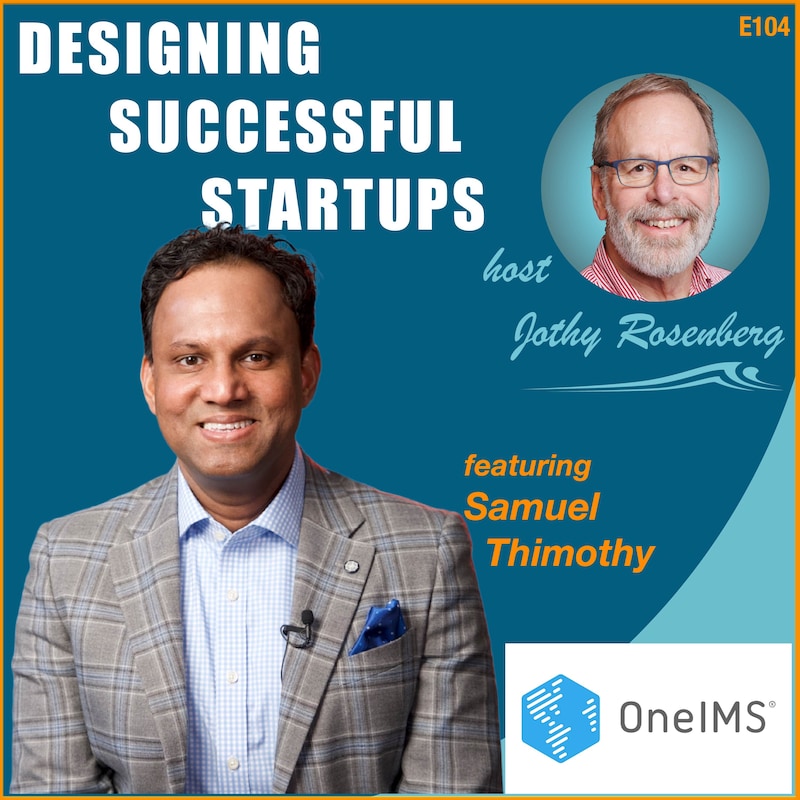
Samuel Thimothy
Bio
Samuel Thimothy is a knowledgeable expert in online marketing, demand generation and sales with over 15 years of experience. He helps businesses develop and execute marketing strategies that improve their lead generation efforts and drive business growth. Samuel is dedicated to helping clients achieve their goals and continually set the bar higher.
Currently, he serves as the Chief Growth Officer for OneIMS, an inbound marketing agency. He has also co-founded Clickx, the digital marketing intelligence platform that eliminates blind spots for brand marketers and agencies.
Intro
The salient focus of our discourse centers around the principle that "acquisition plus retention equals growth," a lesson underscored by our guest, Samuel Thimothy, co-founder of OneIMS. Samuel recounts the genesis of his entrepreneurial journey, which commenced in a modest spare bedroom, alongside his brother, as they navigated the complexities of establishing a marketing agency from the ground up. Through perseverance and a commitment to learning from early missteps, they forged a framework for success that propelled their clients, including a notable chemical manufacturing company, from obscurity to acquisition by a $14 billion enterprise. Samuel's narrative serves as a testament to the importance of discipline in focusing on core competencies rather than succumbing to the temptation of being everything to everyone. Ultimately, this episode offers invaluable insights for entrepreneurs seeking to cultivate sustainable growth in their ventures.
Conversation
The dialogue unfolds with a compelling introduction of Samuel Thimothy, co-founder of OneIMS, a notable marketing agency. Samuel recounts the inception of their venture, which began in a modest spare bedroom, driven by the aspirations of two college students. This narrative serves as a prelude to the profound insights Samuel shares regarding the critical elements of business growth. He elucidates the fundamental equation: acquisition plus retention equals growth, a principle that emerged from their own experiences. Samuel reflects on the challenges they faced in the early years, particularly the perilous decision to cater to every request that came their way. This led to operational chaos and nearly crippled their business. Through their trials, they developed a systematic approach to customer acquisition and retention, which they have since employed successfully across numerous clients, including a notable transformation of a chemical manufacturing company that ultimately attracted the attention of a $14 billion corporation.
Takeaways
- Acquisition and retention are critical components for sustainable growth in business operations.
- The early challenges faced by entrepreneurs can often stem from attempting to cater to every client's request.
- A focused marketing strategy is essential to avoid the pitfalls of being everything to everyone.
- Success in business requires a systematic approach to attracting and retaining customers over time.
- B2B Growth & Inbound Marketing | Demand Generation | OneIMS
- Samuel Thimothy - OneIMS | LinkedIn
- Who Says You Can't Startup | Full Bundle | Incorrigible Entrepreneur - My new online course for startup founders called Who Says You Can't Startup!
- Jothy's TEDx talk - On why those with disabilities tend to overachieve
- Our YouTube channel
- Designing Successful Startups — Jothy Rosenberg | Author | Speaker | Podcaster - Site with all podcasts
- Tech Startup Toolkit book
- Please leave us a review
Transcripts
Hello.
Jothy Rosenberg:Please meet today's guest, Samuel Thimothy.
Samuel Thimothy:Acquisition plus retention equals growth. We learned that through the hard way, right?
Because in the early days we were trying to figure out, how do I acquire customers, how do I retain and grow those accounts over time?
Jothy Rosenberg:What if I told you that one.
Jothy Rosenberg:Of the most successful marketing agencies in.
Jothy Rosenberg:The Midwest started in a spare bedroom run by two college kids and who didn't even know that websites were supposed to drive business? Today's guest is Samuel Timothy, co founder of OneIMS.
ther started their company in:Along the way, they helped a chemical manufacturing company go from obscurity to being acquired by a $14 billion giant and built a framework for growth that they've now repeated with hundreds of clients. But here's what makes Samuel's story valuable for you. He made a critical mistake early on that nearly buried them. They said yes to everything.
Logo design. Sure. Custom e commerce platform, why not? And it almost destroyed them. In this episode, Samuel shares the exact framework that turned things around.
Acquisition plus retention equals growth. And explains why. As an immigrant entrepreneur, he operates from a place of gratitude that transforms obstacles into opportunities.
If you've ever felt like you're putting out fires every day instead of building your business, this one's for you.
Jothy Rosenberg:And hello, Samuel. Welcome to the podcast.
Samuel Thimothy:Yes, I'm excited. Thanks for, thanks for having me on.
Jothy Rosenberg:Absolutely. Hey, tell us where you're originally from and where you live now.
Samuel Thimothy:I'm originally from South India, Kerala. Moved here when I was in my teenage years and have been living in the Chicagoland area ever since.
Jothy Rosenberg:And a bunch of your family lives nearby, right?
Samuel Thimothy:Yeah, I have my parents and my sister lives nearby and my brother decided to pack his bag and move to Florida of all places. So he has a team in one of our offices, also based in Naples, Florida.
Jothy Rosenberg:That's sort of the next, the next, next thing. So you guys are our partners. You started this, this company together. So you must really like working together. Must really like each other.
Samuel Thimothy: Yeah. So come January:So we've started our business in a spare bedroom in our parents home house in six kind of the first week of January and we were trying to. Two college kids trying to figure out how to, what to do next with life. And that's kind of the inception of this business.
Jothy Rosenberg:This company that you're, you're referring to is called one ims. What does that stand for?
Samuel Thimothy:Yeah, one IMS stands for One integrated marketing solutions. It was originally called Timothy Design Corp. We were just a design shop and then we just gradually became more of a marketing agency.
I wouldn't say we had like this big market, you know, big business strategy and wrote down this business plan of what we were going to do.
It's just one thing led to the other and ended up realizing the biggest need that we were filling in the, in the market was actually helping companies with their marketing, not with the design.
Like we thought we were just a design shop helping with business cause branding, websites and those sort of things, but then just gradually evolved into the marketing agency we are today.
Jothy Rosenberg:So you were really young when you started this. So what was the driving force?
You just really wanted to create your own company or was there a really specific marketing problem that you decided needed to be solved and you knew how to solve it?
Samuel Thimothy:Yeah, so both of us. I have a computer science degree.
s, right, early:So it was becoming very difficult to find a job that was part of the driver. And then my brother also finished a business degrees.
The environments that we were in now, also just the fact that we were college kids and pretty naive and didn't know what to do with our future. And that's kind of the beginning reason for it.
But as far as the need that we saw, we had a lot of people that are entrepreneur minded people in the Chicagoland area looking for help with websites, building websites, helping with their branding, helping them get up and running with a business online. That was kind of what led us to doing that.
We were already kind of doing design work during college years, so people kind of knew we had skills in that area. So that kind of naturally led us to getting into the design business.
But I think the questions that we kept on asking, hey, you built us a beautiful website, but it doesn't drive business. And then we're like, oh, so website is supposed to drive business? We didn't really know that. We thought it was just a pretty brochure.
So then we had to research and discover, oh, there's ways of driving traffic to the website. So that's the early days of us getting into the Google Adsense and Google adwords. That was actually our way of driving traffic to customer websites.
And then we constantly get people who tell us, okay, I think whatever you're doing is driving Business, but we can say for sure is what you do. So then we had to solve for the attribution problem. How do we measure that? What we're doing is what drives them.
The conversions, which was phone calls or form submissions.
So we started patching up third party tools to track phone calls, form submissions, which led to us building a secondary business, which you probably interviewed my brother around that topic, which was Click X which was a reporting and attribution tool set that we built. That also evolved a lot over the last 20 or so years. But one thing led to the other.
So it wasn't like we woke up one day where we're going to be a marketing agency.
We were trying to solve for a business problem that each time when we met a customer that asked for it and then people were willing to pay us for whatever we were offering them on how to solve it. So that's, that's what I would say was our way of becoming a company that we are today.
Jothy Rosenberg:What would you say your biggest challenge right. In the first couple of years was?
Samuel Thimothy:I think it was also just heavily dependent on referrals because we didn't really had a good marketing strategy on how to attract customers. So we were just completely word of mouth.
So it was more of like a feast or famine sort of a mode in the early years where we're trying to figure out, well, one month we're super busy, we have no time to even get up to breathe, and next month we're like, where's the next paycheck is going to come from? Sort of a scenario. I think that was our biggest hurdle and I think it's the hardest part an entrepreneur has to go through. Right.
Once you determine like, okay, you want to start a business, but if you don't know how to consistently get customers, that becomes your, your, your biggest challenge to overcome. It doesn't matter. It doesn't matter how great your service is. It doesn't matter how amazing your output and product and quality or all of that.
If you don't have customers standing in line to buy from, you don't matter. It's just a, it's just a hobby.
Jothy Rosenberg:Yeah.
You know, we kind of got in this current company of mine, we kind of got fooled because we got an, a great lighthouse customer right away when we first got started. And so great, in fact, that just immediately just to work with us, they paid us $1.5 million.
So we just were, we thought we've died and gone to heaven and this is just amazing. And they worked with us for two years and we figured out product market. Well, we actually got minimum viable product.
We didn't really have product market fit yet because we didn't have like customers two and three. And then things, things went haywire for us. And it's a long story. I don't want to go into it now.
But you know, from then on it was like struggling to find customers.
And now, and that was, that was the sign of real problem for this, this particular company, you know, and it's any company, just like you said, you have to figure out how to get a steady stream of customers.
Samuel Thimothy:And solving for that problem that we have, we actually built our own framework and that's bec that became kind of our, our, our guiding principle that we implemented for customers. So if I can take a minute to explain it, we built a framework that we call our growth formula framework.
It's acquisition plus retention equals growth. We learned that through the hard way, right?
Because in the early days we were trying to figure out how do I acquire customers, how do I retain and grow those accounts over time so I can grow. When most businesses, they struggle with, they sometimes are good at delivering the first service.
If they get a customer, they know how to do a first service, but they haven't figured out how do they continue to add value so that they would have a reason to pay you on a recurring basis, right?
So we figured those two combination out and then we figured out, okay, if I can figure out a systematic way to create interest for the product or service that I offer from a very specific narrow set of customers or audience that I want to get in front of. And then I keep adding value for that business by offering something that they are willing to exchange money for, then I can retain them long term.
And then there's a bunch of other frameworks that we implemented for retention, expansion reviews, referrals.
There's a lot of things that we implemented, but that framework is what we ended up then kind of almost trademarking it and then implementing for customers. And that became kind of our marketing agency that we are today.
Jothy Rosenberg:Sorry for the interruption, but in addition to the podcast, you might also be interested in the online program I've created for startup founders called who says you can't start up in it? I've tried to capture everything I've learned in the course of founding and running nine startups over 37 years.
It's four courses, each one about 15 video lessons plus over 130 downloadable resources across all four courses.
Jothy Rosenberg:Each course individually is only $375.
Jothy Rosenberg:The QR code will take you where you can learn more. Now back to the podcast. There's no startup that's more than a few minutes old that hasn't had a mistake or a failure or whatever you want to call it.
So over all these years you've probably had your share of mistakes. What would you say is one that taught you like the most important lesson in business?
Samuel Thimothy:Yeah, I think the biggest mistake that we've made early days, right? We're just trying to make money. Then you try to be everything to everyone.
So someone comes to you for a logo design, you become the branding and logo guy. Someone comes to you for a website, you're the website guy. Someone comes and say, build an e commerce store.
For example, we had one company that was a refurbishing of printing equipments. So they came to us with a like your scenario, a very hefty check. And they said, we have a lot of money.
We want to build an ebay for printing equipments. We're going to pre sell machines at people's print shops that trying to get rid of it.
We're going to have it listed on our website, then we're going to sell it from our website and then the get shipped out of whatever the printing shop it's sitting at. And we built a shopping cart completely built with auction, auctioning capabilities and everything else.
Because somebody said, hey, I want to pay you to go build something custom. That was our biggest mistake because people were willing to pay for all kinds of random marketing related services.
We just thought, okay, we just need to meet the need. Let's find somebody else who can do that job. Let's just try to get that money.
But that was the mistake that I think cost us the biggest headache, the sleepless nights and all the frustrations that came along with it. Because all day every day we're just trying to put out fire from all these different problems we caused ourselves.
So I would say that is the biggest lesson or I guess the mistake that led us to the company that we are today.
Jothy Rosenberg:Well, what was, what's the story about client success? A particular client success that made you guys sort of go, aha, we're onto something very big.
Samuel Thimothy:Yeah. So early on I said that we got into Google Ads and figured out how to offer Google Ads as a service to drive traffic to customers.
That led us to figuring out that we have we can also drive organic traffic to the client websites if we figure out how to optimize for the right keywords. So we got on the content Marketing and SEO wagon Very, very early on in our life just because of the physical location of our company.
We're based in Chicago. We had a lot of manufacturing companies in the Chicago area. So we often say we took companies from obscurity to market dominance.
There's plenty of stories I could share. One particular one is one of our companies.
It's actually a chemical manufacturing company made epoxy flooring solutions for commercial industrial applications. So they're not using it for garage floors or anything like that. Their customers are hospitals, large industrial industrial facilities.
Like manufacturing facilities where there's chemicals that falls on the ground or slip resistance is an important use case. They made those kind of custom flooring. We helped create content and optimize their website for very rapidly able to drive traffic for them.
Most of their sale came from contractors coming to them and saying, hey, I need this much flooring. Give me a quote and give me the material.
But the biggest problem they had was they had no control over their sales because they were at the mercy of the contractor coming to them with opportunities. They said, this is our problem. We cannot grow because we are. We don't know which contractor is going to call us tomorrow with a job.
So then we realized, okay, we have to change this game. We have to change this paradigm. We have to figure out how do we attract potential buyers that come to you first asking for the flooring options.
Then you determine which contractor you give the job to to the ones that has the best capabilities and has the track record of using your product and getting the best, you know, installation experience for your end customer. So we created a content strategy that drove a lot of traffic and then we system systematized it.
A lead conversion and routing of those leads for them. So if they get a 50,000 or more installation job in Iowa, they had three or four contracts that was perfectly suited for doing that job.
They will route the leads to them. Once they give them these leads, after a few months, they can ask like, well, how? I gave you 17 leads. You only gave me one job.
What happened to the other 16 of them? So if you see contractors that were just saying, oh, I don't know, I went with another cheaper option.
Then they stopped giving those contractors leads. So they were able to control the lead flow. They were able to control their destiny.
So that company became extremely successful and was acquired by a $14 billion giant in the market. Just came and gobbled up that company because they were like very visible on from what we've done for them.
So that was just one example of A manufacturing company.
So we were able to repeat that process for so many other smaller, mid sized manufacturing companies that were kind of trying to do the very same thing. So I would say that was one of our founding moment where we saw, okay, we got something that is really valuable for businesses.
Jothy Rosenberg:So over the years you've probably developed some core principles.
I mean, you, you started off, you know, really young and so you, you probably didn't have a core set yet, but, but you know, 20 years later, you must have a guiding set of core principles for how you run your business.
Samuel Thimothy:Mm.
Jothy Rosenberg:Can you describe those? Can you share those?
Samuel Thimothy:I mean, principles in the form of like our value system for our company or. Yeah, yeah, yeah. I mean we say people, passion, performance, those are kind of core three things that we.
We're a people business where even though we're tech enabled consulting company that focus on sales and marketing for organization, everything is delivered using people, right? So we say at the forefront of it, we are people that are adding value for organizations. Right.
Both when we create value for our customers, we're also creating economic value for our own team and our organization. And we think, you know, passion is an important part of what we do. If we don't care about the companies that we're trying to help, we can't serve.
For example, out of college I worked at Coca Cola, but I never really enjoyed sugar water. So I kind of felt like I was doing the best job I can by promoting this sugar water to the rest of the world.
And I didn't really have so much passion in it, so I had to get out of that.
Jothy Rosenberg:And.
Samuel Thimothy:But in, in the marketing world, I find so much joy in helping an organization go from obscurity to market dominance.
Finding their business challenges all the issues that they're running into in their sales and marketing and coming up with a solution on how to help them go from where they are to where they're trying to go to. So there's a level of passion that drives what we do. So it's not a job as an I get to do this right? And then performance.
I often tell our team, look, we never got fired from a company. It's the only reason we ever gotten eliminated is because we didn't do our job right. We didn't produce the value.
If I'm getting them 10x the value of what they pay me, I will never get fired. And I often say the contract is not about retaining your customer. It doesn't matter.
Customers can find a way to get out of the contract if they if you, if they can show you that you didn't deliver on the promise that you made. So people bash in performance. If I cannot produce the positive ROI that the customer is expecting, it doesn't matter. They will get rid of me.
So those are kind of the core principles I would say we use to operate our business on a day to day basis.
Jothy Rosenberg:How big is the company? How many people?
Samuel Thimothy:We are about 50. We're a distributed team right now across the globe.
We had, our primary office was in Chicago and then my brother decided to move to Florida and then we started hiring during COVID people outside of the Chicago market because we were no longer confined in that one physical location. So we have team members in Colorado, in Connecticut, in Texas, obviously in Florida and Tennessee.
So we just kind of became a distributed team after Covid.
Jothy Rosenberg:I know you don't both have the title CEO, but are you both really kind of like co CEOs? You're both running the company.
Samuel Thimothy:So I oversee the One Image brand and my brother runs the Click X brand. So we've kind of have divide and conquer model. Never really.
I don't know, I think when you're in front of a customer and you're also doing a little bit of sales conversation and stuff like that, having a CEO title didn't make a lot of sense to me. And so that's why I'm more of like a chief Growth officer, because that's my primary responsibility as a, as a leader of this organization.
I'm also sitting in a, in front of companies that are looking for growth and that's where I focus my attention on. At the end of the day, just title is just a title. You have a core function that you're trying to fill.
Jothy Rosenberg:Right. And so do you have a.
Are you always meeting on Zoom or do you have a place where you also have a fair number of your staff that you can meet with in person?
Samuel Thimothy:In Florida we do. In Chicago, we became more of a remote team just because nobody wanted to go back to our downtown office.
After Covid, part of the team members, they kind of moved away to other states just because they were able to. So that reason we have like more of a virtual environment where we can meet clients in the downtown office.
But for the most part our clients are kind of distributor as well. So we do a lot of Zoom meeting or will it make the trip to their offices, traveling around the country as needed.
Jothy Rosenberg:Your brother got out of town because he couldn't stand the cold, cold and.
Samuel Thimothy:Also poor policies of Chicago, which we certainly need to have a separate podcast to talk about that.
Jothy Rosenberg:So, you know, one of the things that I've experienced myself and I talk to people about who are entrepreneurs is that you learn a lot about yourself when you're doing this. What have you learned about yourself?
Samuel Thimothy:I think I learned early days impatience was a problem. I think later on in life you realize like a lot of things that doesn't, they don't go as the way that you planned.
You can because you as an entrepreneur, it's your baby, you're going to work a lot longer hours, you're going to put a lot more effort. But your team members, they have a life.
They, they're going to put a certain amount of energy and resource into whatever their responsibilities are, but they're just going to call it quit at the end of the day. They got to go back to their, you know, their personal life and whatever else. So I think just learning to be to show grace to your team members.
Meanwhile you're still having patience to see things through.
I think, you know, when it was just my brother and I, we just, you know, pulled all nighters to get websites launched and get things done because we made a commitment. We had to stand by that word and we did it. Oftentimes we got, we've lost money in the process, but we've done it.
But then later on we couldn't put that same level of pressure on our team members to do the same type of work that my brother and I did. So that was kind of a big lesson learning and it's still a lesson sometimes because you want certain things done super fast.
And we're still, Even though we're 20 years, we're still operate like what Amazon says day one added to it. We, we just don't know, right? Like anything could just happen tomorrow and change a lot of things in the landscape.
And we're seeing that happening pretty rapidly with AI innovation as well.
Jothy Rosenberg:Is there any way in which you're still using your computer science background?
Samuel Thimothy:You know, I'm glad that I didn't actually have to stay in that space. You know, I would kill myself if I have to do debugging codes and looking at errors and figuring out why certain function didn't work.
But I think the logical things of going and solving problems, I certainly think this is, this is one another, another area, right where like there's a people, thinkers and doers. Sometimes you kind of have to do both as an entrepreneur you have to think and do at the same time.
There are certain problems and I Am like, okay, it took me 30 seconds to come up with a solution. Why didn't this individual who came up with a problem couldn't solve that, right?
So I don't know if that is the training or years of, 20 years of actually just being in the field and doing so many things, or is it the prior experience of going through a engineering program like computer science that gave me that skill? I don't know, but I would say I'm not coding, but I certainly have some sort of a logical mind to solve problems.
Jothy Rosenberg:Hi.
Jothy Rosenberg:The podcast you are listening to is a companion to my recent book, Tech Startup Toolkit how to Launch Strong and Exit Big. This is the book I wish I'd had as I was founding and running eight startups over 35 years.
I tell the unvarnished truth about what went right and especially about what went wrong. You could get it from all the usual booksellers. I hope you like it. It's a true labor of love. Now back to the show.
I have a computer science background too, and I think I, I think. Well, I agree with you first of all, that it's a mindset, a way of thinking.
But I like even doing the podcast where I'm doing all the post production myself because I love doing it.
Jothy Rosenberg:Mm.
Jothy Rosenberg:And I'm writing scripts and doing stuff in Python and, and so, you know, it's, it's, it's not exactly what I was doing as a computer science, you know, PhD student back at Duke, but it's still, I think there's still a little bit of that in there. It's kind of, it's kind of funny.
And, and I, and I enjoy using the tools to, to, you know, sort of put all this together and, and seeing how efficient I can get at the, you know, the whole post production process. For example.
Samuel Thimothy:Yeah, I mean, I think if you have the desire and the interest for it, I think it's good. I, on the other hand, technical problems talls my performance.
So when I'm like, for example, like there's so many things that we have configured in our HubSpot.
Instance when a lead comes in, the way that it gets routed, the way that certain pre intro emails get sent out, a meeting gets created, you know, sent booked and a deal gets created and a bunch of other things happens. So like there's certain things don't work.
I can technically go to a workflow and try to go through all the logical ifs and if and then statements and figure out myself, but I would just go crazy trying to go through why it didn't happen a certain way it was supposed to happen. So we have team members that I would just call and say, hey, John, can you figure out why this.
Does this didn't work or why all of a sudden this decided to act this way? I think what I have come to realize is, yes, could I solve it? I can. But is it the best use of my time, Right. To do that? Right.
Could I just share my big picture strategy or what I have in my mind somebody else who actually enjoys tinkering with that technology, Let them go have their fun and solve it. So I come to realize that, and I just kind of delegated some of those responsibility. And even I have my own podcast. I have a cadence.
I have someone else that does the outreach on my behalf, gets meetings on my calendar, and I just show up and click the record button on Riverside, and then they get notified that there was a recording get done.
And they will follow the process on, you know, post production, recording, sending them notification when the episode was done and published and everything else. And even just trying to get me to approve the episode is a hurdle because I oftentimes don't have the time to go and watch a full episode.
So I'll be like, hey, is there anything you found that was a good. That we need to trim? And if so, trim it. If not, just go with it. Right. So I think. I don't know.
And I think it's just me finding, you know, like, what do they say? Like the. Your zone of genius. Right. Like, there are areas that I enjoy. Problem solving for clients, marketing challenges.
Those are things that I actually enjoy. But sitting there and tinkering with technology is not one that I. I would call enjoyable.
Jothy Rosenberg:Well, I have to partition my life, you see, so over. If I'm doing Dover work, I can delegate, but when I'm doing the podcast, there's only one person I can delegate to, and that's me. Yeah. Yeah.
I don't have a staff or a company, you know, around the podcast.
Jothy Rosenberg:It's.
Jothy Rosenberg:Yeah, it's a labor of love that I'm doing. You know, I. I just. Last week I recorded episode number 100.
Jothy Rosenberg:Wow.
Samuel Thimothy:So congrats.
Jothy Rosenberg:It. It's. And it's, you know, just a hundred people telling their stories.
Samuel Thimothy:Yeah.
Jothy Rosenberg:About what went right and what went wrong and whatnot for.
Jothy Rosenberg:For them.
Samuel Thimothy:That's impressive because most podcasters start, but they don't keep moving.
Jothy Rosenberg:That's what I keep hearing. And. And someone from your team told me that a podcast that gets past a Hundred episodes is in the top 1/2 of 1% of all podcasts.
Samuel Thimothy:Yeah, because most people kind of give up after a while because they don't get the momentum. They're not getting guests or they're not getting the traction. And obviously they went into with the wrong intention. Sometimes they think it's.
They can quickly monetize it. Like those are all the. The wrong reason to be in it. But I do a podcast, it's called Coffee with Closers, where I interview entrepreneurs.
And I've been doing, since I was doing about, you know, 24 episodes a year, but I've kind of cut it down a little bit just because it was becoming a little bit more of a taxing on my time. But my goal was not to make money. My goal was to build relationships. So kind of like these conversations I've.
I was able to connect with CEOs of companies that I would never get an opportunity if it was a pure sales outreach. But if I invite them to be a guest on my show, I was just trying to build relationship. That's all I cared about.
So I have so many more doors and axes that I never had. I never had to use those. Those axes, but I have relationship and, and I'm able to text them when I have a question or something like that.
So that's how I decided to do the podcast. And I just continue to build them, but not. Not looking for a million sub downloads or, or a massive sponsorship opportunity.
Jothy Rosenberg:Yeah, I have no intention of monetizing, really is trying to build this, you know, very substantial reservoir of good information.
And the reward that's coming back is that I don't have to work very hard to find guests because the word of mouth is starting to work really well and the listenership, slash viewership is, is steadily climbing. So it's great and it's so much fun. Hey, I have one more really important question for you.
So in my mind, grit is described, would be described as resilience, sort of stick to itedness, courage, fortitude, words like that. And I believe, and my experience is that all startup founders exhibit those traits. And so I want to ask you, where does your grit come from?
Samuel Thimothy:I think I'm an immigrant. So when you're brought into a country of opportunity and you've given a chance once in a lifetime, you can't take it for granted.
So I think I come from a perspective of I have an opportunity. I have to be a good steward of this opportunity and do the best I can in supporting my family.
And obviously Supporting people that work for us and delivering on the promises to our customers. So I think that's where I operate out of. Operate out of a gratitude, a heart of gratitude, I would say.
I think we're in the month of Thanksgiving and I even keep reminding my own children about it.
So I think if you have such an attitude, you will do wonders in your life because I think you will see every opportunity as a learning lesson, not an obstacle. And you'll figure out how do I overcome this so I can get to that ultimate purpose that I have in life.
So I would say that's where I'm probably operating from.
Jothy Rosenberg:That's a good one. I mean, I hear lots of different answers to this, but that's a, that's a good one. How many kids do you have?
Samuel Thimothy:I have five children.
Jothy Rosenberg:Are any of them in the range of four to nine?
Samuel Thimothy:Almost all of them are, except one is 13 and one is one. So yes, very far apart. But I have five children. By God's grace.
Jothy Rosenberg:That is fantastic and a lot of fun. I'm sure it's a lot of fun. I think for a second I might have heard the. Have heard the one year old in the background.
Samuel Thimothy:Very likely she's always calling dad out throughout the day.
Jothy Rosenberg:So.
Samuel Thimothy:And that's one, that's one good thing came out of COVID was when I had an office in downtown Chicago, I would leave home at 6 in the morning and didn't leave office at 6 o' clock until 6 because the traffic was horrible. So I wouldn't come home for more than 12, 14 hours a day. And so I didn't really see the early years of my first few children.
So after having Covid, I think I started working from home so I was able to spend more time with my children and, and being around them. Right.
Even if you're not always sitting down to talk with them, you're always running into them and talking to them and giving them a hug and doing all of that. So I think that's one blessing that came out of COVID Yeah.
Jothy Rosenberg:And you never want to give that up again.
Samuel Thimothy:No, not at all.
Jothy Rosenberg:Well, thank you very much for being on. This has been fun and interesting and I think valuable to our listeners. So thank you.
Samuel Thimothy:Appreciate the opportunity. Thank you so much.
Jothy Rosenberg:And now for your toolkit takeaway. Toolkit number one, stop being everything to everyone.
When customers wave money at you for random services outside your core, it's tempting to say yes, but don't. Samuel learned the hard way that chasing every dollar leads to sleepless. Nights and constant firefighting.
Jothy Rosenberg:Pick your lane and own it.
Jothy Rosenberg:Toolkit Number two Remember that acquisition plus retention equals growth. Most founders obsess over getting new customers, but forget to systematize how they keep and grow those accounts.
If you're not adding ongoing value that customers will pay for on a recurring basis, you don't have a business. You have a treadmill. Toolkit Number three Control your lead flow. Control your destiny.
Samuel's client was at the mercy of contractors, bringing them random opportunities.
Once they flipped the script and attracted buyers directly, they controlled which contractors got the work and eventually got acquired for their market dominance. Don't wait for business to come to you.
Now go audit your customer list and ask yourself, am I trying to be everything to everyone, or am I building something focused on that I can scale? And that is our show with Samuel. The show notes contain useful resources and links.
Please follow and rate us@podchaser.com designingsuccessful startups. Also, please share and like us on your social media channels. This is Jothy Rosenberg saying TTFN Tata for now.

