Shownotes
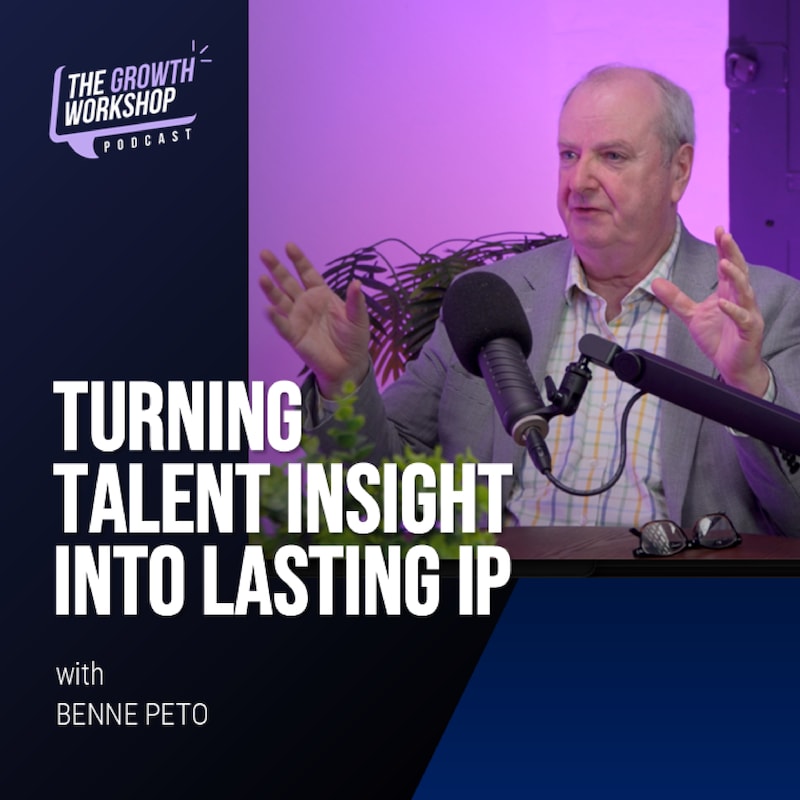
The final part of our wide-ranging talk with Benne Peto shifts from program design to operating model: how to win senior and middle-management support, how leadership capability differs from practitioner capability, and how the profile becomes organizational IP for recruitment, succession and continuous improvement. It ends with a strong closing message on why targeted development outperforms well-meaning but average programs.
Transcripts
Hello, and welcome to the Growth Workshop Podcast.
Matt Best:In this podcast, we'll be hearing from other industry leaders to get their
Matt Best:thoughts and perspectives on what growth looks like in modern business.
Matt Best:This podcast is aimed at leaders from exec all the way down to line managers.
Matt Best:Welcome to part three of three.
Matt Best:Yeah, we talked a little bit about what You know, what's changed, even as a
Matt Best:result of this and what you've seen, play out, Benne, as a result of this program?
Matt Best:So as a, as someone who's, really experienced in this space, and again,
Matt Best:coming right back to the beginning, your, commercial mindset, at its core, what
Matt Best:advice would you be giving to CPOs and CROs who are now thinking, "You know what?
Matt Best:I've got to, I've got to unlock this organic growth within my business"?
Benne Peto:Yeah.
Benne Peto:first and foremost, you've got to get the commercial senior
Benne Peto:management team on board, right?
Benne Peto:So I was really, lucky.
Benne Peto:I partnered with the head of FP, Emma Sterland, and we, we
Benne Peto:developed it together really, yeah?
Benne Peto:So right from the off when you're, starting to develop your
Benne Peto:ideas, bring your commercial lead on the journey from day one.
Benne Peto:I've been thinking, I saw the podcast, should we go and do, let's go and meet.
Benne Peto:And so I would say don't do it by yourself, yeah?
Benne Peto:draw in your commercial partners as early as possible, bouncing ar-
Benne Peto:around ideas and develop it together.
Benne Peto:Go on that journey genuinely together.
Benne Peto:Don't develop something yourself and go off and then present
Benne Peto:them with something, right?
Benne Peto:Because, that's hard work.
Benne Peto:Develop it with them, bring them on the journey, invite them to that, to
Benne Peto:experience the learning that you would go through in terms of meeting with SBR,
Benne Peto:thinking about how you might approach this, and really understanding the benefit
Benne Peto:that it can bring the organization.
Benne Peto:That, that's got to be your fundamental approach.
Matt Best:Yeah.
Matt Best:And you mentioned the senior leadership team there, but obviously we all
Matt Best:know that middle management layer-
Benne Peto:Yeah
Benne Peto:… Matt Best: is a really critical part of it, too.
Benne Peto:And, I guess there's a piece in here around, what's the importance of,
Benne Peto:understanding and how do you help the leaders to be prepared for this?
Benne Peto:Because, again, let's take a, a seasoned leader in the wealth management space,
Benne Peto:maybe probably still has their own book of business, still out there as
Benne Peto:a practitioner, bit, on the si- you know- Yeah … it's the bit on the side
Benne Peto:that's the, sort of the leadership part and, then all of a sudden it's hang on
Benne Peto:a minute, you're gonna assess my team, it's gonna be this, it's gonna be that.
Benne Peto:You're gonna tell me, you're gonna tell me who's the high performer-
Benne Peto:yeah … and who's got the potential?
Benne Peto:Yeah.
Benne Peto:Like, how do you take the leaders on this journey?
Benne Peto:Oh, I think it's absolutely essential.
Benne Peto:And, so I, think our learnings were, in a lot of wealth managers you have,
Benne Peto:players coa- player coach leaders.
Benne Peto:Yeah, so they're, they've got their own clients as well, yeah, as well as leading
Benne Peto:a team, and that can really help you.
Benne Peto:Yeah.
Benne Peto:Because first of all, they're still, got their own clients, so when you're
Benne Peto:talking about this development, you're going to naturally get their buy-in,
Benne Peto:and they're probably going to be a bit more open to it, so that's great.
Benne Peto:and they need that development too.
Benne Peto:So you need to put them through the program, get them to experience
Benne Peto:it, but, in the, same way you would your high performers, yeah?
Benne Peto:Because you're saying, "We re- we know you're really, good at this.
Benne Peto:You're probably not gonna need to learn anything.
Benne Peto:But we want you to be in this program, experiencing it and influencing it,"
Benne Peto:and actually they do still develop.
Benne Peto:But it … As leaders, we needed to also coach them- in how they coach their
Benne Peto:teams- Yeah … within this program.
Benne Peto:So actually, they needed a, a- another piece of development, which SBR was
Benne Peto:really great at, which is how do I lead, how do I coach, my practitioner
Benne Peto:team to, deliver- and really take the development into their day-to-day role?
Matt Best:Yeah.
Matt Best:And, the challenge that exists in, wealth management in particular, but
Matt Best:also in lots of other businesses, is what you just described as the, as the
Matt Best:player-coach, or the player-manager.
Matt Best:That and, as in w- talking to a guest earlier on today about this, of,
Matt Best:people get promoted sometimes because of their tenure in the business- Yes
Matt Best:or their performance level.
Matt Best:how much of this, and we think about this framework, we've been talking
Matt Best:about this framework in the context of individual practitioners, but
Matt Best:how much of this is, it feels, super relevant for leaders too, right?
Matt Best:Yeah, Absolutely.
Matt Best:In terms of recognizing those critical capabilities.
Benne Peto:Yeah.
Benne Peto:So you've got this,
Benne Peto:this is where it's a bit more complex for leaders because you've got their
Benne Peto:profile as a practitioner, and if they've been promoted, they probably were a high
Benne Peto:potential, high performing practitioner.
Benne Peto:Great.
Benne Peto:But often we see that those people aren't always good leaders.
Benne Peto:So understanding their profile as a leader, I think is another interesting
Benne Peto:question in terms of getting that insight.
Benne Peto:So you've got, what does a great practitioner look like
Benne Peto:in terms of their profile?
Benne Peto:And then you've got, what does a great leader look like?
Benne Peto:And not all leaders, not all player managers have that second, profile.
Benne Peto:That's not always their sweet spot.
Bill Bauer:it is in no way a given.
Benne Peto:No.
Bill Bauer:you might get lucky sometimes- but you're being, y- you're not being,
Bill Bauer:you're good, you're being lucky.
Bill Bauer:and it's abs- absolutely right.
Bill Bauer:And again, just thinking about that preference thing, looking back over my,
Bill Bauer:what laughably might be described as a career, I, I remember talking to a very
Bill Bauer:senior sales guy that I worked with based in Houston, Texas, and he drawled at me
Bill Bauer:on one occasion when I said to him, "Oh, why didn't you do X or Y and, move up?"
Bill Bauer:And he said, "I have never wanted to be an adult babysitter." There
Bill Bauer:are some people whose preferences do not lie in that direction.
Bill Bauer:Now, in his case, he recognized it, and he made a very successful career
Bill Bauer:as an individual contributor, but he would've been miserable as a manager.
Bill Bauer:And fortunately, he had the insight to know he would've been miserable
Bill Bauer:as a man- as a manager, and so he resisted being, moved up, right?
Bill Bauer:But there are lots of people who don't, for whatever reason, either they don't
Bill Bauer:have the insight or they don't have the choice or whatever, and they end up
Bill Bauer:being squeezed into a role which f- their preferences do not suit them for at all.
Bill Bauer:And,
Bill Bauer:this is the kind of great, sales leadership tra- trap, is taking good first
Bill Bauer:line practi- good, individual contributors and turning them into mi- miserable, and
Bill Bauer:not very good first line m- leaders, which is a- tr- a kind of a, a repeated tragedy.
Benne Peto:Yeah.
Benne Peto:And again, the, sort of personality profiling- Absolutely … that,
Benne Peto:SBR is able to do, you can identify you, you know who your- Absolutely
Benne Peto:… high-performing leaders are.
Benne Peto:You can do the profiling, and you can identify what those traits
Benne Peto:are that makes it easier for them to perform highly in that role.
Benne Peto:That's right.
Benne Peto:So that helps you think about the development and, h- understand how you can
Benne Peto:support the leaders that you've already got, and also look at your practitioner,
Benne Peto:cohort and go, "Okay, we, thought this person, you know- May be good as a
Benne Peto:leader in the future, and actually if you look at their profile, yes, they're
Benne Peto:a high-performing practitioner, but also they've got the traits- Absolutely
Benne Peto:that we've seen lead to good leaders in this organization.
Matt Best:Yeah.
Matt Best:And that just helps with your, with all of the career pathway conversations-
Bill Bauer:All of the succession planning Yeah.
Benne Peto:All of
Bill Bauer:it.
Benne Peto:Yeah.
Benne Peto:Yeah.
Benne Peto:Yeah, absolutely.
Benne Peto:And again, that nine-box grid, when you're talking about leadership, future
Benne Peto:potential in leadership, yeah, it's different to future potential in terms of
Benne Peto:high performance as a prac- practitioner.
Benne Peto:as an individual contributor.
Benne Peto:Yeah, Absolutely.
Benne Peto:you've got those two lenses that you need to look at, yeah?
Benne Peto:And two types of development that you need to undertake.
Bill Bauer:Yeah.
Bill Bauer:Yeah.
Bill Bauer:And as a, cru- crudely, and again, Benne, you'll know this only too
Bill Bauer:well, crudely speaking, we find that the first line of sales leadership
Bill Bauer:is chronically underinvested.
Bill Bauer:So it's pretty obvious that you should be putting some money into developing
Bill Bauer:your first-line people because, they, we need them to make the numbers,
Bill Bauer:and, executive education tends to be well invested in because that's
Bill Bauer:us investing in ourselves, right?
Bill Bauer:The ones in the it's the, it's those first line, who, d- are
Bill Bauer:chronically underinvested in.
Bill Bauer:And, partly I think it is because there isn't a good understanding
Bill Bauer:of what it is they need.
Bill Bauer:What is it that they need?
Bill Bauer:we've- We don't really, we haven't done the work to understand what
Bill Bauer:the capabilities are that make those individuals successful.
Bill Bauer:Yeah.
Bill Bauer:we, need to apply exactly the same level of rigor to the sales
Bill Bauer:leadership community as we do to individual contributors, because they
Bill Bauer:are actually so pivotal to success.
Matt Best:Yeah.
Benne Peto:Yeah.
Matt Best:Yeah, yeah.
Matt Best:So Benne, once you've established those, those core competencies and
Matt Best:capabilities for your team, and that profile, if you like, how is
Matt Best:it that you then look to embed that in your business for the long term?
Benne Peto:first of all, you shouldn't look at this as a
Benne Peto:program or, a project, right?
Benne Peto:So this development, this insight, it should be part of your continuous
Benne Peto:improvement of your people, right?
Benne Peto:So it's the way in which you do business.
Benne Peto:Yeah.
Benne Peto:So really think about sustaining it, how you sustain it when you start it, so it,
Benne Peto:y- it doesn't become one of these fads.
Benne Peto:Yeah.
Benne Peto:And Emma Sterland was really, focused on that in terms of I want this
Benne Peto:to last, yeah, rather than just be another program or a project.
Benne Peto:So I think start with that in mind.
Benne Peto:But also, one of the things that we haven't touched on- is
Benne Peto:once you have that profile, you can use it in your recruitment.
Benne Peto:Really, important.
Benne Peto:Yeah, so it's not just insight in terms of who you've got within the organization,
Benne Peto:but when you're looking at your graduate intake, yeah, who don't have a lot of
Benne Peto:experience, yeah, the profiling can be really useful there in terms of recruiting
Benne Peto:the right people who are more likely to succeed in five and 10 years' time.
Benne Peto:So that's really important.
Benne Peto:And also looking at those people who have got some experience, yeah-
Benne Peto:but are not completely proven.
Benne Peto:Again, you can really use your profiling there as part of that
Benne Peto:recruitment process to help identify those that are more likely to be
Benne Peto:successful in your organization.
Benne Peto:May have been successful elsewhere, but again, your profile, it's your IP, it's
Benne Peto:specific to the context that you have in your business, your clients, your culture.
Benne Peto:So really understanding how a practitioner is going to perform
Benne Peto:within your business, I think that's gold dust, and you definitely
Benne Peto:need to leverage it in that way.
Matt Best:Yeah, I think that's a fantastic point.
Matt Best:And, Bella, I don't know if you've got anything you'd like to
Bill Bauer:add on to that?
Bill Bauer:No, I think that's exactly right, and I, think, you mentioned the
Bill Bauer:sort of two different cases.
Bill Bauer:One where you've got people who at, the very beginning of their careers
Bill Bauer:who don't, as it were, have a lot of capability that you can assess because
Bill Bauer:they, still haven't developed that.
Bill Bauer:But you can absolutely look at their preferences, their
Bill Bauer:personality traits, and see whether they're likely to be a good fit.
Bill Bauer:And then, as you say, kind of people slightly later on who you may be
Bill Bauer:recruiting and who are existing players, it… that you do get both pieces
Bill Bauer:of insight, which is very valuable.
Bill Bauer:So y- one of the ways I like to think about this is that, when we go
Bill Bauer:running through a selection process with candidates, we're not just trying
Bill Bauer:to decide who joins and who doesn't.
Bill Bauer:We're trying to work out for the people who join, what's the development
Bill Bauer:pathway that we're giving them at the point where they start, so that we,
Bill Bauer:know which of the capabilities which drive success they are already good
Bill Bauer:at, and which ones actually do need to be developed, so we can give them and
Bill Bauer:their leader a real pathway to get them up the ramp quickly and successfully.
Bill Bauer:Because, getting them thr- up the ramp, across the famous valley
Bill Bauer:of despair, is really important.
Bill Bauer:We know how expensive it is if we can't do that.
Bill Bauer:So yeah, it, helps us with both of those kind of use cases,
Bill Bauer:if I can, use it like that.
Benne Peto:Yeah.
Benne Peto:Yeah, and we all know that, wealth management and most businesses,
Benne Peto:exist within a world that is, really competitive in terms of the best talent.
Benne Peto:So if you can identify Who is that best talent for, you?
Benne Peto:And also have a development program that has a fantastic reputation- Yeah
Benne Peto:… where, you're selling it into them, they can see that they're going to get
Benne Peto:developed, be that a graduate or someone that say, a few years into their career.
Benne Peto:That's going to be a real point of difference for you to attract that talent
Benne Peto:into your business via your competitors.
Benne Peto:it's always very, competitive with talent.
Benne Peto:So this is part of your proposition to that talent in the marketplace, and
Benne Peto:hopefully you'll win the day as a result.
Matt Best:Yeah.
Matt Best:Yeah.
Matt Best:I just wanna kind of land that point again, Benne, that you mentioned there,
Matt Best:which is, that profile is your IP.
Benne Peto:Yes.
Matt Best:that's the, blueprint to which you want to recruit against.
Matt Best:Yes.
Matt Best:That's the blueprint to which you wanna build your b- that you
Matt Best:wanna build your business on.
Benne Peto:Yeah.
Benne Peto:and you own it, Yeah.
Benne Peto:So I think sometimes with these sorts of programs you can work with, some
Benne Peto:sort of consultancies who keep the IP in a way, which is really strange.
Benne Peto:you you have that insight to use, as a business, and I
Benne Peto:think that's really, important.
Benne Peto:You have that data, yeah?
Benne Peto:Yeah.
Benne Peto:And therefore, with that ownership becomes that responsibility to use
Benne Peto:it in the right way, and also keep developing that insight over time.
Benne Peto:Yeah.
Benne Peto:Okay?
Benne Peto:So organizations change over time, client needs change over time.
Benne Peto:Yeah?
Benne Peto:People change over time.
Benne Peto:So that insight, that data will evolve and become, richer, yeah, more data-centric-
Benne Peto:as you move through- Yeah … the organization's growth phase, yeah?
Benne Peto:So it's about keeping it alive, refreshing it, always leveraging it, and using
Benne Peto:it to inform your decision-making.
Matt Best:Oh, yeah, that's such an important point in
Matt Best:terms of keeping it alive.
Matt Best:we think about how the landscape has changed in the past 6, 12, 18 months
Matt Best:with s- things like the advent of AI.
Matt Best:Yeah.
Matt Best:You think about the competencies and capabilities, perhaps less so in a wealth,
Matt Best:management context, although that's, it's, it's doing a lot to transform
Matt Best:that industry too, but there'll be some industries where the shape of the role-
Benne Peto:Yeah
Benne Peto:… Matt Best: and the shape of what's required will have
Benne Peto:changed dramatically- Yeah
Benne Peto:in that short space of time.
Benne Peto:So recognizing that you've got to update that profile and keep your IP alive as if
Benne Peto:it were a product that you were selling-
Benne Peto:Yeah, absolutely
Benne Peto:… Matt Best: is key.
Benne Peto:yeah.
Benne Peto:Yeah, and as you said, I think with the onset of AI and how
Benne Peto:that's going to influence any role in the business, but also, most
Benne Peto:importantly, client-facing roles.
Benne Peto:Yeah.
Benne Peto:how is that going to influence?
Benne Peto:We, none of us really know that yet, and therefore, the change that we're
Benne Peto:facing into the evolution of those roles is, potentially going to speed up
Benne Peto:in the coming years, without a doubt.
Benne Peto:So refreshing that data, thinking in a different way about what, what,
Benne Peto:is underpinning high performance may be slightly different- Yeah
Benne Peto:in the future.
Benne Peto:yeah.
Benne Peto:Yeah.
Benne Peto:we don't know.
Benne Peto:Yeah, But you can redo it.
Benne Peto:Yeah?
Benne Peto:Yeah.
Benne Peto:Yeah.
Benne Peto:You can.
Benne Peto:So this is why this insight is, it's incredibly important that you own that
Benne Peto:data, that you're always using it, and you're thinking about how you're keeping
Benne Peto:it up to date, how you're keeping it relevant, whether the profiles that are
Benne Peto:leading to high performance are changing, and whether the capability profile
Benne Peto:of those people is changing as well.
Benne Peto:And with the onset of, AI, I would imagine that we're facing into something
Benne Peto:that could evolve quite quickly.
Matt Best:Yeah, and quite dramatically.
Benne Peto:Yeah.
Matt Best:So as we near the end of our discussion today, Benne, I guess there's
Matt Best:a w- what we like and what the au- we, what we know our audience likes- Yeah
Matt Best:from this podcast is, what are those key things that they can think
Matt Best:about, that they can take away?
Matt Best:We've d- we've unpacked a whole bunch of stuff here today.
Matt Best:Yeah.
Matt Best:the importance of taking a data-led approach, the importance of taking
Matt Best:the commercial team on the journey when you're making any kind of change
Matt Best:or wanted to make any kind of change, in behaviors, and having developed
Matt Best:development plans that are, aligned to the needs of the different people across
Matt Best:your organization based on not just their performance but also their potential.
Matt Best:Yeah.
Matt Best:I'm not gonna ask you to pick one of those things, but if you were if
Matt Best:you were, if you were talking to, the, CPOs who are listening to this,
Matt Best:what are you, what … Who, haven't taken this approach in the past, what
Matt Best:piece of advice would you give them?
Matt Best:What would be the, what would be the sort of the, mic drop moment for you today that
Matt Best:says, "If you don't do anything, do this"?
Benne Peto:I think my l- key learning is seeing the real difference you can
Benne Peto:make by really targeting the development that you undertake and who you develop.
Benne Peto:I- it was embarrassing for me that it took me so long to realise that and
Benne Peto:just get that result because it's, it isn't rocket science, but I had,
Benne Peto:I think before that, taken a more vanilla approach at, best intended.
Benne Peto:I'd never wanted to roll something out that had been average, yeah?
Benne Peto:So I did things that were best intended, but probably what everyone
Benne Peto:else has been doing, and that didn't lead, embarrassingly to great results.
Benne Peto:And you can get great results, and I think that, it was a bit, it was a moment to be
Benne Peto:celebrated, but also it was a moment of sort of personal insight and embarrassment
Benne Peto:that I hadn't got there quicker.
Benne Peto:it'd taken me I don't know how many years, I'm not gonna disclose.
Benne Peto:But you know how many years it took me to get there.
Benne Peto:But I just thought, "Look, Benne, it wasn't rocket science. Come on." And,
Benne Peto:and actually when I saw the results,
Benne Peto:really, staggering, the sort of results that I'd been searching for and looking
Benne Peto:for probably all of my career and every CPO would love to have, and to be able
Benne Peto:to deliver for and with a business.
Benne Peto:Y- you can do it.
Benne Peto:I really promise you, you can do it if you take a more rigorous,
Benne Peto:analytical, and targeted approach.
Benne Peto:the results will come.
Matt Best:I love that, and I think, when you say you're, slightly
Matt Best:embarrassed and it's not rocket science, a lot of the really great stuff
Matt Best:isn't rocket science- Yeah, it isn't
Matt Best:but doesn't mean everyone's doing it, right?
Matt Best:Yeah.
Benne Peto:No, exactly.
Benne Peto:It's yeah.
Benne Peto:But, that's it.
Benne Peto:It's light bulb moment- Yeah … and, sort of 101 of, CPO and development, but I'd
Benne Peto:managed to miss it for most of my career.
Benne Peto:But what I would say in my defense is that I haven't been alone in that.
Matt Best:No, exactly.
Benne Peto:Yeah.
Benne Peto:No, exactly.
Benne Peto:Safety in numbers, but
Matt Best:Safety in numbers
Benne Peto:I just wish I'd got there earlier.
Benne Peto:Yeah.
Matt Best:There's still, yeah, still plenty of time left.
Matt Best:Yeah, brilliant.
Matt Best:Benne, thank you so much for joining us on the podcast.
Matt Best:behalf of Bill and I, think it's been fantastic.
Matt Best:Absolutely, as always.
Matt Best:Really great insight.
Matt Best:and, yeah, I think I'm sure the audience will enjoy listening
Matt Best:to, everything you have to share.
Benne Peto:Th- thank you.
Benne Peto:Really been fun.
Benne Peto:Thanks.
Matt Best:Brilliant.
Matt Best:Thank you.
Matt Best:For more insights, make sure you subscribe, and if you enjoy the journey,
Matt Best:don't forget to leave us a review.
Matt Best:Your feedback fuels our growth.
Matt Best:Until next time, keep up that forward-thinking mindset.
Matt Best:Goodbye.



