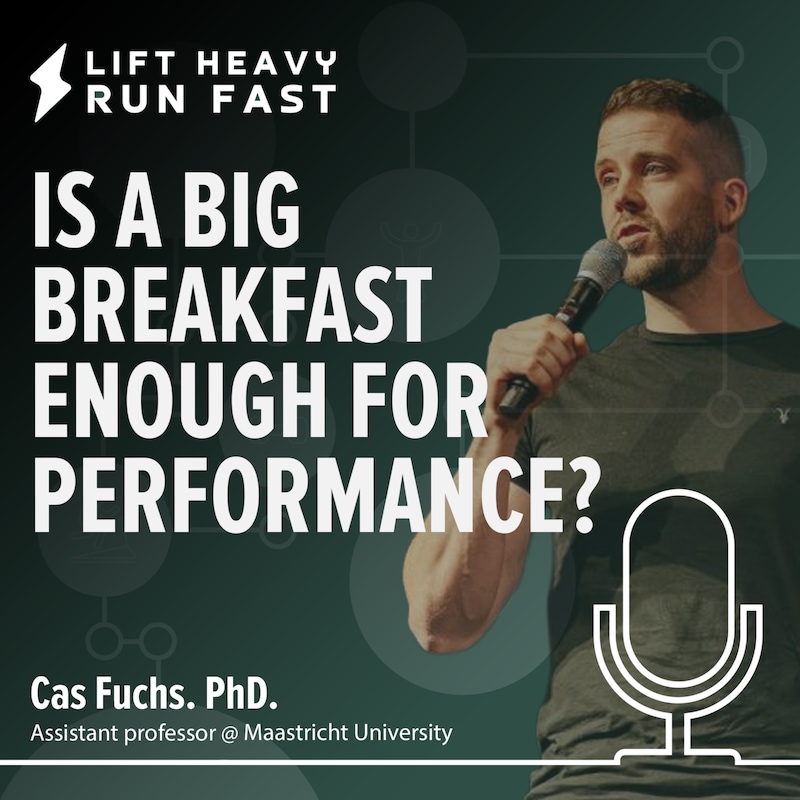
Why doesn’t a big carb-heavy breakfast rapidly restore glycogen — even in well-trained endurance athletes?
In this episode, we sit down with Cas Fuchs (Assistant Professor at Maastricht University) to break down his latest research on muscle and liver glycogen restoration, carbohydrate timing, and what endurance athletes think is happening after a hard session… versus what the data actually shows.
Cas recently published new work demonstrating that a substantial carbohydrate-rich breakfast after an overnight fast did not fully replenish muscle or liver glycogen within three hours in trained cyclists — a finding that challenges common assumptions in endurance nutrition.
We dive into the physiology behind glycogen recovery, the differences between muscle vs liver glycogen, why the famous “90-minute threshold” matters so much for performance, and what this means for athletes training on back-to-back days — from recreational runners to Tour de France pros.
If you’re preparing for an ultra, long cycling event, or simply want to recover faster and perform better, this episode will change the way you think about fueling.
Topics we cover:
Why 90 minutes is a critical threshold for performance and fueling
What happens when athletes skip carbs after training
Muscle vs liver glycogen: why they recover differently
What elite cycling teams do in tight recovery windows
How much (and which) carbohydrate you actually need for optimal recovery
Practical takeaways for endurance athletes and coaches
Links:
Research from Cas Fuchs
Cas Fuchs Instagram
Instagram van Jeroen van der Mark
👉 Coaching 1-1 for hybrid athletes
👉 YouTube: Lift Heavy Run Fast