Shownotes
About the Show:
"The most sustainable garment is the one that's already in your closet, right?"
– Robin Wallis Atkinson
This episode of I Am Northwest Arkansas® is part of a special series supported by the Walton Family Foundation. Through its Home Region Program, the Foundation is investing in the people and ideas shaping the future of Northwest Arkansas — from housing and entrepreneurship to transportation, sustainability, and leadership.
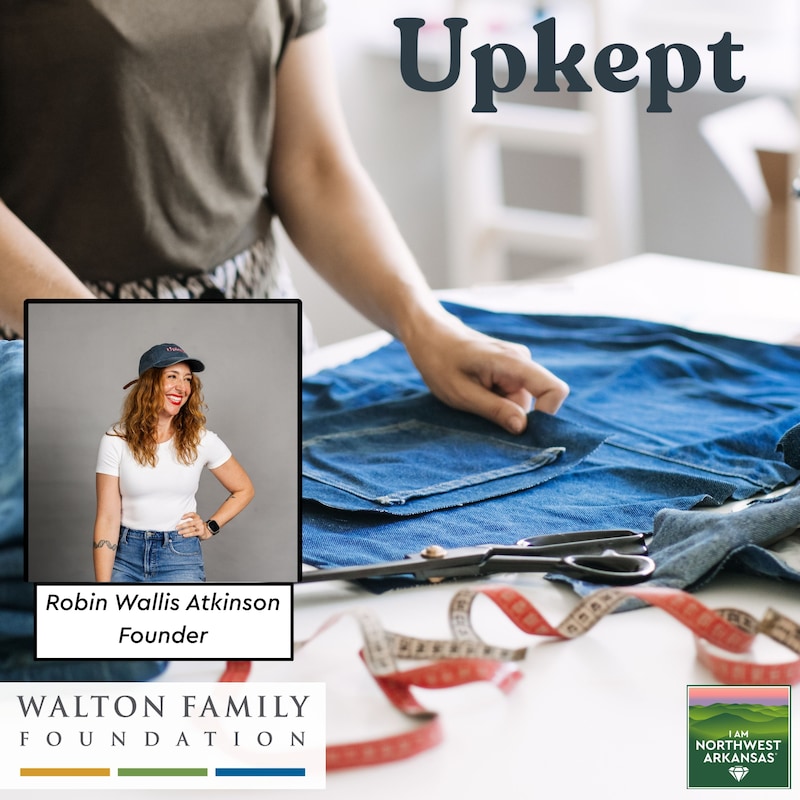
In this episode, host Randy Wilburn sits down with Robin Wallis Atkinson, artist, entrepreneur, and founder & CEO of Upkept.io. Together, they dive into the growing challenges of fast fashion, the decline of garment repair skills, and how Upkept is using technology and creativity to make clothing repair simple, accessible, and climate-friendly for everyone.
Robin shares her journey from painter and curator to revitalizing Northwest Arkansas Fashion Week — always searching for what’s missing in the local creative ecosystem. That journey led her to realize how few opportunities exist for people to engage with sustainable fashion or find skilled repair services. With Upkept, she’s changing that — building a future where people can keep their favorite clothes longer, save money, and reduce textile waste.
Perfect for anyone passionate about sustainability, innovation, and creative problem-solving — especially those who love seeing new ideas take root right here in Northwest Arkansas.
Key Takeaways:
- Repair Revolution: Fast fashion has made it harder to repair clothes, but Upkept aims to make fixing garments as simple as buying new ones.
- Value What You Own: Repairing clothes you love saves money and the planet—think cost-per-wear and sentimental value!
- Skilled Trades Matter: The tailoring industry is shrinking, with few young people learning sewing skills. Upkept focuses on training and upholding high-quality standards for repairs.
- Technology Meets Tradition: Upkept’s platform uses images and (soon) AI to make repairs easy and transparent, letting customers know costs up front.
- Community and Creativity: Northwest Arkansas’s creative network, entrepreneurial spirit, and focus on supply chain logistics have helped shape Upkept’s growth.
- Wider Impact: Better repair services can help slow down the fast fashion cycle and dramatically cut the amount of clothing going to landfills.
All this and more on this episode of the I Am Northwest Arkansas® podcast.
Important Links and Mentions on the Show*
- Website: Upkept
- Upkept on LinkedIn
- Upkept on Instagram
- Upkept on Facebook
- Connect with Robin Wallis Atkinson on, LinkedIn
- Walton Family Foundation’s Home Region Program – Episode Sponsor
Sponsors: This episode is part of a special series supported by the Walton Family Foundation’s Home Region Program, which helps grow work and entrepreneurship, transportation, housing, and community leadership in Northwest Arkansas.
This episode is sponsored by*
Signature Bank of Arkansas "Community Banking at its Best!"
*Note: some of the resources mentioned may be affiliate links. This means we get paid a commission (at no extra cost to you) if you use that link to make a purchase.
Connect more with I am Northwest Arkansas:
- Grab our Newsletter
- Email Us at hello@iamnorthwestarkansas.com
- Connect With Our Facebook Page
- Connect With Us on Threads
- Connect With Our Instagram
- Connect With Our LinkedIn Page
- Join The Facebook Group
- Connect with our Fearless Host, Randy Wilburn on LinkedIn
Thank you for listening to this I am Northwest Arkansas podcast episode. We showcase businesses, culture, entrepreneurship, and life in the Ozarks.
Consider donating to our production team to keep this podcast running smoothly. Donate to I Am Northwest Arkansas
Mentioned in this episode:
FindItNWA.com
🎧 This episode is brought to you by FindItNWA.com – the hyper-local business directory made for Northwest Arkansas. From local eats to trusted pros, it’s the go-to spot for discovering what’s great nearby. 📣 Are you a business owner? Get listed today and connect with thousands of locals looking for what you offer. 👉 Visit FindItNWA.com to explore or join now.
Transcripts
Hey folks. Welcome to another special episode of I Am
Speaker:Northwest Arkansas, part of our five part series supported by the
Speaker:Walton Family Foundation. In this series, we're shining a light on
Speaker:the people and projects shaping the future of our region,
Speaker:from housing and transportation to entrepreneurship and
Speaker:leadership. Today we're joined by Robin Wallis
Speaker:Atkinson, an artist, innovator and founder of
Speaker:Upkept IO. Robin is no stranger to Northwest
Speaker:Arkansas's creative landscape, and in this conversation we
Speaker:explore how design, technology and community
Speaker:come together in her work and why empowering
Speaker:creative professionals is so essential to our region's
Speaker:growth. Let's get into it.
Speaker:It's time for another episode of I Am Northwest
Speaker:Arkansas, the podcast covering the intersection of
Speaker:culture, entrepreneurship and life in general here in the
Speaker:Ozarks. Whether you are considering a move to this area
Speaker:or trying to learn more about the place you call home, we've got
Speaker:something special for you. Here's our host,
Speaker:Randy Wilbur. Fashion is
Speaker:one of the most wasteful industries on the planet, with
Speaker:85% of textiles ending up in landfills each year.
Speaker:Even though nearly all of them could be reused or recycled
Speaker:in the US Repairing clothes has all but disappeared
Speaker:from mainstream culture. But what if repair could be just as
Speaker:easy, convenient and stylish as buying something
Speaker:new? My guest today, Robin Wallis Atkinson, is the
Speaker:founder and CEO of upkept, a new digital platform
Speaker:that makes garment repair and alterations seamless,
Speaker:climate friendly and accessible. We'll talk about her journey from
Speaker:the creative world to tech enabled sustainability, why
Speaker:now is the right moment for a repair revolution, and how
Speaker:she hopes to change the way we all think about the
Speaker:clothes in our closet. Without further ado, Robin
Speaker:Wallis Atkinson, welcome to the podcast. Thank you so
Speaker:much for having me. I am thrilled to be here. Absolutely. Well,
Speaker:certainly. And I guess one of the biggest things I should mention is that all
Speaker:of this is happening right here in Northwest Arkansas. It is.
Speaker:Yeah, absolutely. That's really exciting. So listen, I would love for you just
Speaker:to share with our audience because we can't assume that everybody knows who you are.
Speaker:I would love to you just, if you can just share a little bit
Speaker:about your superhero origin story and your background and
Speaker:you know, what led you from creative work to founding
Speaker:upcap. Yeah, So I have always
Speaker:been involved in sort of scanning the
Speaker:landscape, trying to find what's missing
Speaker:or you know, what I think where opportunities are
Speaker:lacking or like, what would be nice if it were here. But it's not
Speaker:here. Right. And when I was young that was really simple
Speaker:because it was like my living room. And the answer was paintings. Like, there's no
Speaker:paintings in this room. There should be more paintings in this living room. So now
Speaker:I'm a painter, right? And I was pretty bad at it. And
Speaker:that's okay, because then I started to do art
Speaker:shows and provide opportunities for artists because I, you know, it was
Speaker:2003 in Northwest Arkansas and there wasn't a ton.
Speaker:There were really no galleries. There wasn't a ton of opportunity for
Speaker:artists to represent themselves. So that was kind of my
Speaker:beginning of my career as a curator. And I was
Speaker:a curator for 10 or so years. Got to travel
Speaker:the world, was really exciting. Got my master's degree. But along
Speaker:the way, kind of felt like I never really
Speaker:clicked in international art. It wasn't my
Speaker:home for sure. So I came back to Arkansas, fell
Speaker:in love, had kids, bought a house, all the beautiful white picket
Speaker:fence story. But then again, kind of popped my head up and said, what is
Speaker:missing from this ecosystem? And that was 2015.
Speaker:20. And having lived in New York and lived in New Orleans
Speaker:and lived in lots of different places, one of the things I noticed was that
Speaker:northwest Arkansas looked really white, which I knew it
Speaker:couldn't be, but in all of the social media
Speaker:of the creative enterprises and the boutiques and
Speaker:everything, it was really, really homogenous. And
Speaker:so when the opportunity to reboot Northwest
Speaker:Arkansas Fashion Week landed in my lap, I thought, okay, I have an idea.
Speaker:What if we just really lean heavily into
Speaker:showcasing all the different kinds of people that are in northwest Arkansas?
Speaker:We don't focus only on middle class white women, but we try
Speaker:to bring everybody to the table. And I did it kind of secretly. It wasn't
Speaker:like we didn't announce that that's what we were doing, but that's what we were
Speaker:doing. And people loved it. People felt really seen and they felt
Speaker:really like there was opportunity to participate and they wanted to be creative
Speaker:with us. And so I did that for close to 10 years. And I
Speaker:mean, that evolved a lot over the course
Speaker:of that nine year journey. But what it really started as was
Speaker:it's really hard to get involved in fashion in Northwest Arkansas. Northwest
Speaker:Arkansas looks really homogenous in its marketing to itself, but it
Speaker:isn't what can be done. Yeah. So along the way,
Speaker:I learned a lot about fashion and that fashion is perhaps
Speaker:even worse than contemporary art in terms of being able to get involved
Speaker:in it. So I tried to create opportunities for people
Speaker:to enter into the possibility of being a fashion designer.
Speaker:And the more I learned about the industry, the more I learned how
Speaker:really kind of Problematic. The apparel industry is
Speaker:now, there's just so few opportunities to participate.
Speaker:The production is largely overseas. The skill set is entirely
Speaker:gone. And so this, like, endless drive I
Speaker:have to, like, find what's missing and try to create opportunities
Speaker:has kind of just ultimately led to what
Speaker:kind of industry is it going to take to get people
Speaker:skilled trades, sewn trades, labor jobs in the United States?
Speaker:How do you make it financially possible? And how do you create an
Speaker:ecosystem where we're valuing clothing and valuing
Speaker:production and valuing that labor? And so here I am with my next
Speaker:best guess. Well, no, and I really
Speaker:appreciate that. And I think before we started recording, you and I were kind of
Speaker:commenting about and lamenting, honestly, the
Speaker:bygone era of the fact that like, most homes in
Speaker:the United States had a sewing machine or some variation of that,
Speaker:it was actually okay to. To patch your jeans, you know, and to do
Speaker:things like that or to darn your socks or. And I know I might sound
Speaker:like I'm dating myself, and I know some of the younger generation of folks
Speaker:listening, like, what is darning socks? But the bottom line is everybody
Speaker:gets holes in their socks. Everybody. I mean, there's. There's a universal problem. It is
Speaker:a universal problem. Everybody has issues with that. But the thing, it
Speaker:is a. They used to make clothing better and so
Speaker:it would last longer. That's why when you think of like Levi's
Speaker:501s or Things of that nature, you can have a pair of jeans, a good
Speaker:quality pair of jeans for 20, 30 years and they
Speaker:still hold up. But nowadays with fast fashion and everything
Speaker:else, it's changed to the point where a lot of people feel
Speaker:like, oh, well, I'll just wear this for a season or two and then get
Speaker:rid of it. Yeah. And call it a day. Yeah. I mean, it's a far
Speaker:stretch from where I started, certainly. But if you think about my kind
Speaker:of just like obsession with objects and how objects get into the
Speaker:world and the inherent value of objects, it does kind
Speaker:of make sense in the, In a long strand. But,
Speaker:yeah, fast fashion has really, in the last 20 years,
Speaker:dramatically changed our relationship to made products.
Speaker:And it's a big. There are a lot of thorny
Speaker:parts of the issue. And in my last role,
Speaker:you know, I really tried to attack a lot of different angles of this
Speaker:problem. And then one day I had a kind of light bulb moment that was
Speaker:like, maybe just fix some clothes. Yeah. Keep it
Speaker:simple. Right? Keep it simple. Stupid. Yeah, yeah. Like maybe you
Speaker:just provide an opportunity to get your pants Fixed and like in
Speaker:and of itself, that is actually kind of remarkable. Yeah. So.
Speaker:Well, you, when you think of it, it's like, it's even now. Like I was
Speaker:back in my hometown not too long ago, shout out to Teaneck, New Jersey. And
Speaker:I was riding down the street and I rode past a really, really
Speaker:small, thin store that used to be where my
Speaker:tailor was. And literally growing up, I remember
Speaker:going to the tailor when it was beyond my grandmother's scope of fixability.
Speaker:Yep, that's such a word. Then we would always go to Mr. Elliot
Speaker:and he was our tailor and he would tailor clothes and it was,
Speaker:it was never an issue. You could always get something fixed. You could even get
Speaker:something customized. Oh, I mean, it was, there was a whole industry. And
Speaker:now the research shows that the tailoring industry is.
Speaker:13% of tailors age out of the industry every
Speaker:year and they are not being backfilled by anybody
Speaker:because we're not teaching the trade anymore. So the
Speaker:tailoring industry is literally walking itself right off a cliff
Speaker:with no replacement, while at the same time
Speaker:consumer interest in better made clothes in
Speaker:like longevity of the items that they buy is going up. Yeah.
Speaker:So there's this increased demand meeting this
Speaker:reduced capacity. And I kind of looked right at that. I mean, this
Speaker:is like 10 years down the line, but in 10 years, what is
Speaker:anybody going to do if they want to take the waist of their pants in
Speaker:an inch or get a button put back on? I mean, I
Speaker:can barely put a button back on, which is a little shameful. Like, heaven forbid
Speaker:your zipper break. Right. And so, you know, it's kind of just
Speaker:projecting this need that is there today but will
Speaker:be drastically increased over the next decade and just
Speaker:wondering whether or not can we get those unit economics right, so
Speaker:that this has real staying power. And when I looked at the potential
Speaker:scale of the company, of the idea,
Speaker:it's just so big because there's nothing else in the space.
Speaker:And so, you know, there's a saying that I really hold to, which is
Speaker:that inspiration has an expiration date. Okay. And so I
Speaker:like that. Yeah, I stole it from TikTok. And I'm sure it's somebody very
Speaker:famous, is actual saying. But when I had the idea, I thought, man,
Speaker:you know, there's never going to be another time in my life where I
Speaker:have this much energy, this much access and this much
Speaker:drive to like really go at a problem like this. And
Speaker:so I've been running head on at it. Yeah,
Speaker:well, you know, and I think the thing that our listeners especially Those
Speaker:that are in the United States should understand that even though, you
Speaker:know, repair as an infrastructure in the US has lacked, there are
Speaker:other parts of the world where it is. You know, repair is such a
Speaker:big. Still a big thing. Huge thing. I mean, Europe is ahead of us
Speaker:in a lot of ways, culturally and, like, within.
Speaker:In the sort of textile realm and the apparel realm. But one of the things
Speaker:they've just passed is actually, it's called the right to repair law,
Speaker:and it includes textiles. And so apparel companies
Speaker:in Europe are about to have to start paying for their own textile recycling.
Speaker:But the repair industry is super robust in Europe, and
Speaker:there are actually a couple of companies, there's about three companies over there
Speaker:that are doing really similar things to what we're trying to launch in the US
Speaker:but they're all sort of catered to an ecosystem that isn't
Speaker:as geographically vast. So, like, there's a company in
Speaker:London called Sojo, and they send a tailor to your house on a scooter,
Speaker:which is adorable if you're in London. Yeah, fantastic idea. But, like, that's
Speaker:not going to cut it in Texas. Right?
Speaker:Like, good luck. Yeah. And then there's a company in Lithuania
Speaker:that's doing mail in repair, which is super interesting.
Speaker:Their tech is not entirely dissimilar to the tech that we've built.
Speaker:And so I think that we're just trying to get to market first in the
Speaker:U.S. yeah. And I think that, you know, I mean, when you
Speaker:think about the fact that we have been so behind that, it's
Speaker:not that there aren't examples out there. It's just a matter of
Speaker:deciding that, yeah, that's something that we're going to do. And then also,
Speaker:too, let's just face it, fixing and repairing clothes isn't
Speaker:sexy. It is not, you know, compared to other things, it's just
Speaker:not. But it's. And I want to share just a quick story. You'll find some
Speaker:humor in this. I have a very favorite, one of my
Speaker:favorite Izod or Lacoste
Speaker:sweaters. And the zipper broke. And
Speaker:so for, like, almost a year, I didn't throw it out. I was like, man,
Speaker:this is like, my favorite sweater. I got to get this repaired.
Speaker:I had to wait until I went to Pittsburgh, where my mother is,
Speaker:to a repair shop that could actually do it for me.
Speaker:And they charged me 40. You know, they charged me 49 bucks. And I was
Speaker:like, it's the best $49 I ever. Yeah, yeah. Because, I mean, zippers are
Speaker:hard. Yeah, they are. And they're not easy. And this is a really well
Speaker:constructed, well made Lacoste sweater. And for
Speaker:the $49 investment that I made three years later, it still fits
Speaker:me great. I still wear it all the time, and I absolutely love it. And
Speaker:I didn't want to go get a new one, and you might not. Be able
Speaker:to find it even if you did. Actually, I probably couldn't because it was a
Speaker:something that they stopped making. So even I went to several
Speaker:Lacoste shops and say, hey, do you still have this? I'm like, no, we don't
Speaker:make that model anymore. And that' that is the challenge. And so there are people
Speaker:that are listening to this that have some favorite items sitting in the back of
Speaker:their closet that are unrepaired, but with a
Speaker:little gentle love and tlc, could be brought back to
Speaker:life. Yeah. I call it the pile. And I want to trademark
Speaker:the upkept pile. And because I have a pile too,
Speaker:and I'm adding stuff to it all the time. We all have the
Speaker:garments that are. We have a sentimental attachment to them,
Speaker:or they just fit, right. Or they, you know, we wore them during an
Speaker:important part of our lives and we can't throw them away
Speaker:even though we can't wear them. I have a pair of cowboy boots upstairs that
Speaker:I've had for 20 years. Yeah, 2,
Speaker:020 years. That's a long time. And the sole is cracked
Speaker:in half. And I'm like, I guess at this point
Speaker:I'm going to get them fixed in time for my kids to wear them, but,
Speaker:like, I'm not getting rid of them. And so, yeah, it's not
Speaker:like, it's not the raciest, coolest, sexiest idea,
Speaker:but it very much is an idea that's like, it's tied to skilled labor, which
Speaker:is something I'm really dedicated to. It's tied to
Speaker:keeping things that you love. And it's also a really good
Speaker:way to slow down fast fashion. Right. Because the most sustainable
Speaker:garment is the one that's already in your closet, Right?
Speaker:Absolutely. So. And there's, you know, when it comes to, like, the question of
Speaker:should I replace or should I repair? And I really always think
Speaker:about, like, cost per wear. Right. So if you, like
Speaker:you just said this izod sweater, you paid 49 three years ago.
Speaker:I bet the cost per wear on that repair is 40
Speaker:cents now. I mean, it really wears down over time. At a certain point,
Speaker:it's going to be paying you money to wear it. And then you think
Speaker:that Izod sweater Was probably a couple hundred bucks to buy. So 50 bucks
Speaker:to keep it for another six years is like really easy math. I
Speaker:hope I can keep it longer than six years, just personally. So. And then
Speaker:here's my. Here's my other story I'll share. My wife gets a kick out of
Speaker:this. I was in college and I'm actually ashamed to say this, but I
Speaker:bought a pair. Literally, I bought a pair of Gucci loafers. I was a kid.
Speaker:I was that kid. I was that kid in college. I was, I was living.
Speaker:But this was the 80s and I was like, I shouldn't be spending this kind
Speaker:of money. I mean, it was the most I've ever spent on a pair of
Speaker:shoes. I was like 300 in the 80s. That was a lot of money.
Speaker:But I was making really good money because I had like three jobs, so nobody
Speaker:clapped back at me over that. I legitimately, I wanted those
Speaker:Gucci loafers. Now I say all that to say I still own
Speaker:those Gucci loafers. That was more than 30 plus
Speaker:years ago. I've had them resold, they still look
Speaker:amazing. And I get compliments every time. And I've got my money's worth. So
Speaker:I told my wife. I was like, Yeah, I spent 300 bucks. But if you
Speaker:amortize that over 35 plus years, it's all
Speaker:good, right? It's a wash. Exactly. And my feet always look good
Speaker:when I wear them. So we should really be using the word amortize more
Speaker:in my marketing of this company. I'm going to make a note to. That you
Speaker:can have marketing too. Yeah. With the amortization of the sweater.
Speaker:Well, people, I mean, stuff. Listen, I have a. I mean, I
Speaker:went through a phase and I lived in the Bay area for a while and
Speaker:I still have a really nice Giorgio Armani
Speaker:linen shirt. Yeah. That I will just never get rid of. It's not
Speaker:frayed. It still looks amazing. The buttons, I've had
Speaker:to replace a couple of buttons. But, you know, it's just, you know, I'm
Speaker:not letting it go. As a matter of fact, I even tell my boys, I'm
Speaker:gonna will this to you. This is gonna be yours. And they're gonna love it.
Speaker:Yeah. One of the things I'm excited about with this company is just the
Speaker:data we're gonna get. Right. So when we're starting to get, you
Speaker:think about getting repairs at scale. What we're gonna start to see is
Speaker:trends and what's coming in. Trends and what's breaking and
Speaker:being able to report back to
Speaker:Izod, like, hey, this SKU of yours has shown
Speaker:up to us X, Y, Z number of times. Like, you may consider
Speaker:a different zipper solution. Right. Because your customer
Speaker:loves the sweater, but it's coming back for repair over and
Speaker:over again. And I'm just really interested to sort of start to see
Speaker:what we learn about our clothes by finding out what people
Speaker:love enough to keep and also what's breaking. So
Speaker:that's something I'm really excited to start measuring. We obviously
Speaker:don't have enough case studies yet to be doing that, but
Speaker:I do think about this as an at scale business. Right.
Speaker:There's, you know, there's one point or
Speaker:there's 126 million adults in the United States and all of them are
Speaker:wearing shirts right. Now. How many of those people need a button
Speaker:fixed? Right, Absolutely. Or several buttons. Or several buttons.
Speaker:Or wonder why there's an extra button on the inside of their
Speaker:shirt. And it's like, because every shirt. Yeah, exactly.
Speaker:Every good shirt comes with one or two buttons. Right. And so.
Speaker:Yeah, you know, it's funny that you mentioned that. And I do believe
Speaker:that there is inherent value in the work
Speaker:that you're doing of rehabilitating clothing
Speaker:because, you know, like you said, just speaking to that specific sweater,
Speaker:my eyes Odd sweater as an example, my Lacoste sweater.
Speaker:Reporting that information back to Lacoste could be
Speaker:extremely valuable. Yeah, right. Because I do get it that a lot
Speaker:of manufacturers aren't thinking about the long term wear, but some are, right? I
Speaker:mean, everybody can't be Patagonia and Patagonia set the standard.
Speaker:Yeah. For, you know, their whole thing is we actually enjoy seeing
Speaker:people either give their stuff to somebody else or,
Speaker:you know, a gently used parka ends up in the hands of another
Speaker:person so that it continues to have sustainability and long term
Speaker:life. And because, you know, Patagonia is all about that, you
Speaker:know, recycle mentality when it comes to clothing. But I
Speaker:actually think that it's valuable data and information for
Speaker:any clothing manufacturer to understand what brings the
Speaker:most value to their customer. Yeah. Make more of
Speaker:that. I actually read the. I was flying back from Boston
Speaker:last year, the year before, and I read the
Speaker:autobiography of the founder of Patagonia in like one go.
Speaker:It's called Let My People Go Surfing. I was just so
Speaker:inspired by how his journey was started
Speaker:by like, it was not carabiners, but like some other
Speaker:small metal thing that you use for rock climbing. And it
Speaker:just kept piling on top of itself from there. Like he built this one
Speaker:product and it matched his lifestyle and it matched
Speaker:the people he was with and then he made more of them. And then like
Speaker:fast forward 30 years later and he's got the only
Speaker:apparel company on the planet that's actively doing repair.
Speaker:Right. And it's just so I just. There's something in his story
Speaker:that's so fascinating and I think it's really, you know,
Speaker:not every apparel company. I mean 75% of apparel companies
Speaker:offer no post purchase support. Yeah. So let's just
Speaker:build that support. Yeah. Because they're not going to buy it. They're
Speaker:not going to build it, but the customer still needs it. Well, and
Speaker:obviously coming from New England, the one company that comes to mind is
Speaker:L.L. bean. Right. I mean L.L. bean, people forget about L.L. bean.
Speaker:It's not a sexy company, but it's. Not a sexy company. But I've been, been
Speaker:wearing L.L. bean all my life. And as a matter of fact, my mom used
Speaker:to buy L.L. bean products because she knew that they stood
Speaker:behind them and if Randy ripped them up and out in the yard somewhere
Speaker:on his bike that she could get them repaired. And just recently
Speaker:they stopped their unconditional program
Speaker:and a lot of it was just due to abuse. Yeah. But I think
Speaker:I may have been the last person to get a rain jacket
Speaker:repaired because the way they did it is if they couldn't fix it. They would
Speaker:replace it. They would replace it. Yeah. I actually anecdotally we just got
Speaker:an L.L. bean coded in the mail last week. It had to have all its
Speaker:buttons put back on. Yeah, yeah, yeah, yeah. So. And still they make
Speaker:good clothing. It's just, you know, you just have to, to me that there's something
Speaker:to be said for that. And actually that might be, that is a gap
Speaker:or an area of opportunity for upkeep when you think about
Speaker:kind of filling that need. Right. Yeah. No, the business to
Speaker:business applications are in my opinion probably larger than
Speaker:the actual consumer facing applications. It's just a matter of
Speaker:what do you build first. Right. And so for us, I
Speaker:really wanted to launch the company as a consumer facing product
Speaker:one because the real hurdle was to build the tech so that a consumer
Speaker:could use it. So we thought let's go ahead and get that out of the
Speaker:way first. And then also we want to slowly over the
Speaker:next several years build a real reputation for the
Speaker:care and maintenance of clothing. And I think that if the
Speaker:customer knows that upkept is a known
Speaker:quantity, businesses will be more likely to partner. You know,
Speaker:even if our name isn't on It. And we're just offering the service to them
Speaker:behind the scenes. But, yeah, the B2B applications are huge as well.
Speaker:Yeah. Okay. So we've talked a lot about repairability
Speaker:and just the challenge that this industry faces as a
Speaker:whole. I would love for you to kind of walk through the solution
Speaker:and customer journey that Upkept has in terms of, like, walk
Speaker:us through what happens when someone sends a garment to Upkept and
Speaker:how do you make it seamless? Yeah. So a really
Speaker:important part for me was lowering the
Speaker:barrier to entry for consumers, making it as easy as humanly possible.
Speaker:Right. Because the idea came to me when I had a pair of jeans
Speaker:that I needed to get fixed. And I sort of went through the
Speaker:mental gymnastics of, like, what would I actually have to do to fix
Speaker:these? I would have to go somewhere with my human body and take
Speaker:them with me, find a time they're open, talk to
Speaker:somebody, get the price. If I don't like the price, what am I going to
Speaker:walk away from the counter? That's going to be horrifying. So I'm going to have
Speaker:to pay whatever price they say to me. And so what I wanted us to
Speaker:get to was an easy interface where the
Speaker:customer finds the price out right up front. Right.
Speaker:And so we want you to be able to sort of self diagnose the problem
Speaker:with your clothes and then find out a zipper is $40.
Speaker:Great. I haven't talked to anybody yet. I can reject that and walk away
Speaker:from. I put my phone down or I can opt into doing it. And
Speaker:I want that to be something the customer can do on their own, on their
Speaker:own time. And if they choose to get the repair,
Speaker:then they can mail it to me, or I can make it even easier and
Speaker:I'll mail them a mailer and then they can mail it back to me because,
Speaker:you know, okay, I want to get my pants fixed, but I don't want to
Speaker:go to ups. Like, I don't want to have to buy a mailing label. So
Speaker:we are really trying to make that reverse logistic problem
Speaker:really easy. It isn't. It isn't. It isn't.
Speaker:Well, you can ask Amazon that because they bought Whole Foods under the
Speaker:auspices that that would help part of their logistics. It's helping.
Speaker:I think it's hurting Whole Foods, but that's. That's a whole different story. Not my
Speaker:business. Yeah, yeah. So the goal is you find out
Speaker:what the cost is, you pay up front, you get it to us, we fix
Speaker:it in 10 days, and we send it Back to you and that's it. It
Speaker:shouldn't be any harder than that. So, you know, we are thinking
Speaker:a lot about supply chain. We're thinking a lot about how to make it as
Speaker:easy as humanly possible. The end goal is when the
Speaker:product is finished. When I have built it all, it will be
Speaker:an AI photo recognition system where you don't even have to
Speaker:enter the problem. It just tells you the problem. It says, this is a ripped
Speaker:pair of jeans. That's a $25 fix. Put it in a bag
Speaker:outside your house and we're going to come pick it up from you. And I
Speaker:mean, imagine if we can get there,
Speaker:just how easy this service could be. So I think it would be
Speaker:huge. And I was just thinking about that because AI will like, AI will walk
Speaker:you through a number of things. I mean, we're seeing commercials now where the guy
Speaker:is looking for a compact and is obviously his girlfriend's bathroom.
Speaker:He doesn't know what a compact looks like. So he asked AI. AI points
Speaker:it out to him. And it's in the same way AI can
Speaker:identify or at least self diagnose exactly what is the
Speaker:issue with this garment, this clothing, and if it's mated
Speaker:to a database, it can pretty instantly
Speaker:tell you, yeah, this is what this is gonna cause. It's not rocket
Speaker:science. It's just a lot of data. Right? And so one of the
Speaker:things we're using is in order to get your repair done through us, you have
Speaker:to submit an image of the repair. That's for twofold reasons. One is that we
Speaker:need to know for a fact that that's what you're sending. And not like you're
Speaker:not gonn a ball gown and say that you wanted to get your pants
Speaker:hemmed. And you will have paid for hemming and not ball gown fixing.
Speaker:But the other is to make the pile of images of
Speaker:ripped pants. Like, we just need the world's biggest data set of
Speaker:torn jeans to train that AI model. And so
Speaker:we are collecting them now and we are exploring what kind of options
Speaker:are on the market. And man, everything is developing
Speaker:so fast that, you know, in
Speaker:two years ago, what we've built so far would have taken
Speaker:two years to build, and we've built all of it in six months. Right.
Speaker:It's happening overnight. AI has literally transformed
Speaker:marketplaces. Wild. It's wild. It really is, you know, and
Speaker:we're using it in a way to help extend
Speaker:what's possible for us. Right. So we're, we don't have to spend as
Speaker:much Money on programmer time because we're vibe coding a lot of
Speaker:the system. But we do have to pay programmers to, like,
Speaker:code check. Right. So it's not that there are people that are just getting cut
Speaker:out of the equation altogether. It's just that the work that's being done
Speaker:is farther down the line. And so we
Speaker:also think that two years ago, there would have had to be
Speaker:a customer service layer in this company that would have
Speaker:cost too much money from a manpower perspective
Speaker:to make it feasible to pay the labor to actually do the repair.
Speaker:So for me, I think that this is the reason this doesn't exist yet is
Speaker:because this may be the first time in the last 20 years that this is
Speaker:actually financially viable. Because you want to pay the seamstresses
Speaker:to do that skilled labor. You don't want to pay a
Speaker:cost center for folks on the telephone talking about pants.
Speaker:Right. You just need to get that done through the digital layer. So, I
Speaker:mean, I'm obviously very excited, but I think it's just,
Speaker:you know, it just feels like it's the right moment.
Speaker:The ingredients are here, and it's getting easier
Speaker:every day for the technology aspect. Yeah. And I would
Speaker:imagine, as you said earlier, how do you guys kind of vet and
Speaker:support repair specialists to ensure the quality? That's
Speaker:gotta be like, one of the biggest issues. It's the thing, actually.
Speaker:So, you know, I spent nine years in an organization that was
Speaker:dedicated to teaching people sewn trades. So luckily,
Speaker:I have a pretty good knowledge set myself of what
Speaker:training looks like, what good quality looks like. And
Speaker:so right now, I'm quality control, which is my team will tell
Speaker:you I am an impossible quality control to get through.
Speaker:I'm really picky because my thing is, if you love your
Speaker:clothes enough to send them to us, I want it to be like, it's impossible
Speaker:to know that we were even there. Right. So luckily, I have a group
Speaker:of folks that are really, really good at tailoring.
Speaker:My main repair designer does wedding
Speaker:dresses. That's her day job. And then she moonlights with us
Speaker:to do repair. And so what we're learning is that as we go,
Speaker:it may be more beneficial for us to train people
Speaker:from scratch on an upkept repair manual
Speaker:than to actually bring people in that already know how to sew. Because
Speaker:we're going to have to teach them how to sew differently. Right. Because one
Speaker:of the things that's really important to me is standardization of practice so that
Speaker:a hem is a hem is a hem, and in order to get that,
Speaker:it may actually Be harder to break people's
Speaker:habits. So we're learning about that as we go. But I do
Speaker:think that training is going to be a really important part of this
Speaker:company, which luckily I know a lot about how to do that.
Speaker:Yeah. So how much in your estimation will
Speaker:repair be physical? People doing
Speaker:it versus automation? Oh, I don't think we'll be able to
Speaker:automate repair for 20 years. Really. I mean, if you think about
Speaker:not. At the level that we're thinking, that we're like, irobot's not coming for that
Speaker:anytime soon. No. Well, and think about this. Underwear,
Speaker:for instance, is still made by people in, not in the US
Speaker:obviously. But like, there are some items of clothing that
Speaker:will never be automated because you need a human being to like do this
Speaker:one seam or do this one operation. And so until the
Speaker:world invests very differently in automation
Speaker:for apparel, straight line manufacturing is one thing that may
Speaker:be automated in the next 10 years. Repair is.
Speaker:Every repair is an individual problem to solve
Speaker:because the pants are all torn in a different place, the buttons are all different
Speaker:shapes, the texture of the fabric is always different. And so
Speaker:it's kind of uniquely suited to a human workforce,
Speaker:which is also something I really love about it. I don't think a robot could
Speaker:do it because it's a problem solve every time. So I
Speaker:think that of all the industries that could be grown right now,
Speaker:this one is, I think, pretty future proof. Okay. All right, so
Speaker:here's the other question, right? When you think of all of this work and, and
Speaker:the time and effort that you're putting into this, how do you convince people? Like,
Speaker:I know I've already said, I've already given several examples of why I believe
Speaker:repair is worthy. But how do you convince people that it's worth repairing
Speaker:rather than replacing? I think there's a few metrics we can capture
Speaker:customers across. One, I think the most, the easiest is the
Speaker:sentimental value. Right. You're not going to
Speaker:repair something that doesn't mean anything to you. But we
Speaker:all own clothing that we are keeping for years and years
Speaker:for different reasons. And I think that for that customer, it's not
Speaker:convincing them that they should do it, it's letting them know they can
Speaker:do it. Right. And so the marketing push is just to get people to know
Speaker:that it's there. I think there's another sort of
Speaker:metric across which we can capture customers, and that's for people
Speaker:who want to be doing better with their clothing purchases. But the
Speaker:apparel industry hasn't really provided a ton of options for what
Speaker:feels like sustainable apparel shopping. And so this is just a kind of
Speaker:argument of, listen, if you invest 50 more
Speaker:bucks into that sweater, can you extend its lifespan and therefore slow
Speaker:down your participation in the fast fashion problem? And
Speaker:then there's another customer that I think is unique and that we're
Speaker:very interested in capturing, which is the sort of outdoor enthusiast who has
Speaker:spent a significant amount of money on their garment because
Speaker:it's got a particular technical usage or, you know, it's a very
Speaker:fancy bike short, or, I mean, even a tent. Right. Like,
Speaker:there's no real reason we can't fix a tent zipper. Yeah.
Speaker:So thinking about people who are investing in these technical
Speaker:gears, those folks, from a unit economics perspective, on their
Speaker:end, it does make more sense to repair than replace. I'm really
Speaker:interested in working with people who invest in clothing for their jobs.
Speaker:Right. People who work in construction or people who
Speaker:have to wear any kind of special gear. I also think that, like,
Speaker:police officers have to have their patches sewn on somewhere. Like,
Speaker:there's just a lot of applications. And so I do
Speaker:think that there will be some education around letting people
Speaker:know it's valuable to do, but I think it's more along the lines of just
Speaker:letting people know it's possible to do. Yeah, it's almost like, you know, and I
Speaker:think of, like, Cintas or some of these other companies. I mean, like, having an
Speaker:up cap. Yeah. Having an up cap kept in. In house with
Speaker:Centos, because they can offer that as a service, as
Speaker:a value added service. Because, you know, you don't always want to replace
Speaker:a whole outfit. And you better believe that they're on. If I flip
Speaker:three pages back, they're on this notebook. They're on the list of like, I. Just
Speaker:saw them literally earlier today in a store that I was in, and I was
Speaker:like, oh, okay. And these guys are here. A lot of people don't know what
Speaker:Cintas does, but it's like I drive. Past him every day when I go up
Speaker:to the warehouse and I'm like, like, get me Mr. Cintas.
Speaker:What is his phone number? Yeah, yeah, yeah. I mean, I
Speaker:guess for you as an entrepreneur, it must be exciting
Speaker:to see all the possibilities that it's almost like, well, where do
Speaker:you, you know, where do you go next? You're kind of like squirrel. You know,
Speaker:everywhere you look, there's an opportunity. So I'm learning
Speaker:this journey is. I'm right where I belong in that I love to
Speaker:build. I'm like a real builder. And so right now, this is a
Speaker:very buildery part of it, but what I'm learning is there are
Speaker:more good ideas out there than there are hours in a day.
Speaker:And that everyone I know is pretty smart.
Speaker:Yeah, yeah. And everybody comes with such
Speaker:unique and good additions to the possible model of
Speaker:this thing. And I have to listen to them and I have to say,
Speaker:man, yes, absolutely. I'm going to put it on
Speaker:the list. I had a two and a half
Speaker:hour meeting last week with somebody that I just. Brilliant.
Speaker:Was just throwing good ideas at me left and right. And I came home and
Speaker:I was energized and I was ready to go, and I was ready to pivot
Speaker:the whole company in this new direction. And I talked to Kash about it, my
Speaker:husband, who's my co founder, and he was like, we got to start a list.
Speaker:Robin, you have to stay true to mission, even though
Speaker:there are so many delicious, shiny objects in
Speaker:every direction. And. And that's okay, right? It's just. This
Speaker:is definitely a marathon, not a sprint. No, it is. It really is.
Speaker:And so I applaud you having the
Speaker:patience and the fortitude to sometimes dial it back in. Right.
Speaker:Cause it's like you almost have to say, woo, Sammy, just
Speaker:calm this down. Because you get so excited and animated. That's. First of all,
Speaker:I think it's a good sign that you really are in the right place in
Speaker:terms of where your passion lies. But at the same time, you also
Speaker:want to be as practical as you can be. But then nobody ever said
Speaker:any entrepreneur that was ever worth their weight was practical,
Speaker:right? No, no. You got to break some things in the
Speaker:process. And that goes without saying. And there's like,
Speaker:in my mind, it's almost like a visual process of, like, we're
Speaker:going to build this one core offering, and then we're going to branch off this
Speaker:other offering from that core offering. But we can't build the branch until
Speaker:we've built the trunk, right? Yeah. And so just knowing how to
Speaker:build the LEGO BL together and knowing that this could keep
Speaker:me busy for 20 years, you know, and really being
Speaker:excited for how much there is to build. Sure, sure.
Speaker:Well, and I think you couldn't have picked. And now I want to look
Speaker:at the backdrop of where you're building this. You couldn't have picked a better
Speaker:location being northwest Arkansas. No, My
Speaker:question simply is, how has building from
Speaker:northwest Arkansas shaped your journey? And then
Speaker:really, how have you leaned on local makers and the
Speaker:creative communities which I already know you're connected with? Yeah, yeah.
Speaker:I'm gonna do a funny aside that maybe will make sense when
Speaker:I'm done with it, but my mom was a
Speaker:failed painter. Like me, she wanted to be a painter.
Speaker:She interestingly became a curator, and then she went to school for
Speaker:nursing. And when I was younger. It's a big
Speaker:pivot. It's a big pivot. Yeah. And she married a doctor, and it all worked
Speaker:out okay. But when I was younger and I
Speaker:wanted to be a painter, she told me about this job she had in the
Speaker:70s where she painted presidents faces onto plates
Speaker:in a factory. And I was fascinated by this because
Speaker:I was like, this doesn't exist. Right? This is not a thing. But
Speaker:I as a person who wants to paint for a living and I need a
Speaker:day job, I would like 100% President's faces onto
Speaker:plates for money. That would be so cool.
Speaker:And so this idea was in the back of my head all throughout my whole
Speaker:journey, which is like, what are artists supposed to do during the day?
Speaker:Not everybody is making their living at art. And so what are
Speaker:creatively inclined humans meant to do with their
Speaker:time to earn dollars to support their art? And so that's
Speaker:just been something I've always been fascinated to solve. And so
Speaker:coming back to northwest Arkansas in
Speaker:2015, really, and seeing how massively
Speaker:different the landscape was from when I left, it seemed like
Speaker:just endless possibility. There was so much growth. The arts
Speaker:ecosystem was booming because of the investments that the Walton
Speaker:foundation had put in. And so when I relaunched Northwest
Speaker:Arkansas Fashion Week and then converted it into Interform, it was
Speaker:just this really incredible process
Speaker:of building and learning and connecting to community
Speaker:and learning what was possible that I think I couldn't have
Speaker:done anywhere else. Like, the ingredients would not have been
Speaker:altogether in the right place. And I think that. So
Speaker:if I had not gone through the last nine years of building Interform
Speaker:and building that entire platform, I
Speaker:wouldn't know how to do what I'm doing now. Right. And so, I mean, it
Speaker:is unique to this place. And now I'm older, I
Speaker:know more about business, you know, got some hard won,
Speaker:Some hard won wins or some, you know, I've got some battle
Speaker:scars, some calluses. Some calluses. And I'm like,
Speaker:more determined than ever that, you know,
Speaker:I'm here, this is where I belong,
Speaker:and I'm going to build this thing and I'm going to build all the bits
Speaker:along the way that I have to. But, like, it's really handy to be in
Speaker:the supply chain capital of the world while I'm working on a Reverse
Speaker:logistics problem. And crazy enough, I mean, one of the top
Speaker:universities in the country teaching logistics. I mean, you. I mean, you've
Speaker:got young people here that can help you. I mean, there's all kinds
Speaker:of resources and opportunities right in your
Speaker:own backyard. Yeah. I mean, the entrepreneurial ecosystem is so
Speaker:welcoming and so enthusiastic and so
Speaker:optimistic, and oftentimes all
Speaker:you need is a couple people clapping and
Speaker:saying, like, yeah, you can do it. Right? Like, we know you can do it.
Speaker:And that's kind of all I need to hear. And I'm like, you're right. I
Speaker:absolutely can and will do it. Thank you very much. And that exists here,
Speaker:unlike, sort of anywhere else. I've been right. That people really
Speaker:want to see wins, and they're willing to go out of their way sometimes
Speaker:to help them happen. So I definitely think that the
Speaker:DNA of upkept is very much built in northwest
Speaker:Arkansas and is very rooted to, like, its centrality in the
Speaker:heartland. My relationship to creative
Speaker:talent in the ecosystem, and, like, really smart,
Speaker:skilled people who can do repair. And
Speaker:then. Yeah. Having a giant behemoth right next door
Speaker:to learn from. Right. I can't tell you how many times I've
Speaker:listened to. There's a great business movers podcast
Speaker:about Sam Walton, and I've listened to it and then just turned
Speaker:it back on again just right afterwards, because it's just, like,
Speaker:the amount of obstacles and the different
Speaker:ways everything can break, but you just have to keep going is
Speaker:incredibly inspirational, so. Well, yeah, and I mean, there's. I mean, I. And
Speaker:I've talked about, like, Founders, which is a really good podcast. Talks about
Speaker:different biographies of amazing business people, Sam Walton being
Speaker:one of them. His biography, which I say to most people that move here, I'm
Speaker:like, you should read it. Yeah. Like, I had read it before I moved here,
Speaker:and then I've. I've reread it, like, three times, and I have the
Speaker:audiobook. It's really interesting because there's actually, you know, people
Speaker:always say, you know, there's nothing new under the sun. Right. And so the challenges
Speaker:that he faced, you know, that he, you know, when he decided to come up
Speaker:with Sam's Club, and people were like, you're crazy. That's never gonna work. And he
Speaker:was like, well, no, I know this guy. I know this guy named Saul Price
Speaker:out in California. He's doing something like this. And I mean, you know, it's
Speaker:like his story is one. And he did it in actually a very
Speaker:short window of time, too. Oh, yeah. When you think of like when things
Speaker:really, the trajectory of Walmart went like through the hockey stick
Speaker:to the right. The number of times I've said to myself, he founded
Speaker:it at 44 as a 41 year old woman.
Speaker:You like saying that, right? Listen, it's never too
Speaker:late, you know, and it is funny, it is a little bit like drinking the
Speaker:Kool Aid, but like, as an art school kid to like
Speaker:circle back around and be listening to this biography of this big
Speaker:mover. I don't know, it's fascinating. There are
Speaker:so many ways that even folks in the creative community
Speaker:can be and should be learning and inspired
Speaker:by this just drive to build. Right. And this
Speaker:drive that if it doesn't exist the way
Speaker:you want it to exist, the best way to get it where it needs
Speaker:to go is to build it. Right. And you just have to sort of like
Speaker:take the punches along the way. 100%. Yeah,
Speaker:yeah. No, it makes perfect sense. So listen, I want to ask you
Speaker:if upkept succeeds wildly, right? Okay.
Speaker:And that's not necessarily a big if. It's just like, you know, my hope would
Speaker:be that it does, neighbor. There's a lot of good things that come
Speaker:out of that. But. But if upkept succeeds wildly, what
Speaker:change do you think we will see in fashion's
Speaker:environmental footprint? Because I mean, that's the kind of the, one of the
Speaker:foundational aspects of why you even wanted to do upkept. In the first place.
Speaker:I mean, I don't think it would be terribly ambitious to say
Speaker:you could reduce textile waste in the United States by a third.
Speaker:Like, I think you really. Yeah, I really think you could. There's some
Speaker:studies to show that every American throws away
Speaker:roughly 86 pounds of apparel a year and
Speaker:a third of that is thrown away for minor breaks,
Speaker:fixes, things like that. And so I think that when you think about
Speaker:the dump truck full of apparel
Speaker:trash every single second, well, every
Speaker:three seconds seems like a, you
Speaker:know, pretty ambitious goal to slow it down. But I
Speaker:definitely think that we can, I think we at scale can pump the
Speaker:brakes on fast fashion enormously. Yeah. And I
Speaker:think that there's a couple other products that I want to launch later
Speaker:down the road, and I won't say too much about them right now, but
Speaker:if those products can hit the market and succeed, and I think
Speaker:that repair becomes as normalized in
Speaker:the retail cycle as buying new,
Speaker:which creates a much slower
Speaker:industry altogether, which I think I wouldn't necessarily say most
Speaker:industries need to be slowed down. That's not really what capitalism wants, you to do.
Speaker:But I think with apparel in particular, it's in such a
Speaker:terrible place because there was this race to the bottom
Speaker:and now the prices are more depressed than the industry can really
Speaker:handle. And what is it, 50 new
Speaker:seasons a year, which is there used to be four seasons a year
Speaker:and now we're doing a new season every week. It's too much for the industry
Speaker:to keep up with itself. And I think everything I've seen just shows that
Speaker:it kind of doesn't know how to stop itself because the
Speaker:churn is so fast. And so that's why I love this idea of, of
Speaker:repair, like coming in at a funny left angle and saying, wait, I
Speaker:have an idea, I think I can help. You know,
Speaker:and then the price of apparel probably goes up over
Speaker:time, which it needs to do for the actual
Speaker:unit economics of apparel, the industry itself, but also because
Speaker:the customer understands that this is. I'm not going to throw this away immediately.
Speaker:Right. I'm going to pay more for the garment. I'm going to keep it.
Speaker:And I just. That's my sort of utopic vision of like how upkept actually
Speaker:changes how we interact with clothes. Yeah. Well, I mean,
Speaker:I certainly think you're on to something and I'm excited to see,
Speaker:you know, where you end up seeing upkept in the next five to 10
Speaker:years in terms of like the big overall picture. Do you
Speaker:hope to see an upkept bin, you know, in
Speaker:every major city throughout the United States where people know they can
Speaker:go to and drop off their item and have it returned in a period of
Speaker:time? Is it, is there some vision of that in your head?
Speaker:Yeah. So, you know, a really smart thing for us to
Speaker:do would be to create a retail partnership where
Speaker:we've got drop offs in, you know,
Speaker:Walgreens, let's say, or in the UPS where
Speaker:it's as easy to drop off an upcapped as it is
Speaker:any other thing. Or we partner with somebody like
Speaker:Doordash or Uber Eats and we're actually picking it up
Speaker:from you and taking it to a centralized hub for shipping.
Speaker:Long term. There's a big hub in northwest Arkansas, but there probably
Speaker:should be four or five fulfillment centers throughout the US because
Speaker:that way we're not shipping them so far back and forth. But I don't see
Speaker:any reason why upkept isn't a household name and why it isn't
Speaker:as easy to send an upkept package out as it is to get a
Speaker:hellofresh in. Right. And there are plenty of companies Doing
Speaker:shipping. We don't have to build it all ourselves. Right. We just have to find
Speaker:the right partner. Yeah. I mean, I think that's key. And I mean, certainly in
Speaker:any business, a good partnership can go a long way. Really long way. A really
Speaker:long way. Yeah. Really, really long way. Well, I only have a couple other questions
Speaker:before I land this plane. What have you learned the hard way
Speaker:about starting what I would call, this is a mission driven company.
Speaker:Yeah. That you'd pass on to others, because there are other people
Speaker:listening that have ideas about doing something. And it may be in a
Speaker:totally different marketplace, but what advice would
Speaker:you give them? So I think that the hardest lesson I learned
Speaker:was the difference between non and for profit.
Speaker:And I spent 20 years of my life running nonprofits.
Speaker:And then I realized at the end of the
Speaker:day, if you are going to build something that
Speaker:relies on your vision, if your
Speaker:blood, sweat and tears is the gasoline that gets everything going,
Speaker:it's likely that you need to own the company. Right. It's likely that
Speaker:rule by committee isn't in the long run going to be the thing that gets
Speaker:you where you need to go. That was a really hard lesson to learn. But
Speaker:I think that there was a big boom of nonprofits
Speaker:in our region because the philanthropic support was there.
Speaker:And I think that running a nonprofit, like a for profit is good business
Speaker:sense, But I also think a lot of things can be for profit. Like, for
Speaker:profit's not an evil thing. No, it's not. It's not selfish.
Speaker:It's not. You know, it's just all about what
Speaker:kind of governance structure's gonna get you down the
Speaker:field at the end of the day. And for this one, it was very much
Speaker:like, it's okay to want to keep some things
Speaker:close and make some decisions yourself. And so
Speaker:that's one thing I learned. And then I think another thing for folks who are
Speaker:dabbling with the idea of they want to build something, but maybe
Speaker:they don't know exactly how to do it. The other thing is, like, none of
Speaker:us do. No, no, no, no, no.
Speaker:You know, I mean, if we were all waiting on the perfect moment or the
Speaker:perfect plan or the perfect idea, we'd all be waiting forever. Yeah. So you kind
Speaker:of just have to jump and put one step in front.
Speaker:Of the other and make it work. And make it work. Exactly.
Speaker:Yeah. Now that. That makes a lot of sense. Well, just as
Speaker:we close out, do you have so far in this early
Speaker:stages of upkeep, do you have, like, your favorite garment story
Speaker:from a customer Repair. That really stands out to you? Oh
Speaker:my goodness. What a really good question. Yeah, we got a
Speaker:pair of pants in last week that the person wanted
Speaker:them to be longer, which is hard to do. Like
Speaker:there's. If there's no extra fabric. Right. Like. And when they submitted
Speaker:them, I would. They said, we, I want these pants to be longer. And I
Speaker:was a little nervous, like, I don't know if we can do that. But then
Speaker:I saw them and they were like purple velour bell
Speaker:bottoms. I was like, oh man. We just put ruffles on them. Like,
Speaker:this is just purple ruffles on your purple velour
Speaker:bell bottoms is like the easiest fix in the world. And that was a wonderful
Speaker:surprise to me. I was like, I thought we might have been up a creek
Speaker:on that one, but just that somebody wanted like a creative solution
Speaker:was really great. And then there's another
Speaker:woman from Miami who she saw me on
Speaker:TikTok and she sent her husband's pants in
Speaker:and was so happy with the fix that now she's working with us
Speaker:through a consultation basis to fix this silk dress of hers.
Speaker:It turns out ruffles is going to be a thing. We're doing a lot of
Speaker:like, we're also putting ruffles on this silk dress. So this like off
Speaker:label ruffling is kind of my favorite. We don't
Speaker:tell you on the website that we'll do it, but secretly, if you ask,
Speaker:we'll put ruffles on. There you go. Well, folks, there that
Speaker:is certainly bears repeating for anybody listening. But I think
Speaker:it's important to understand that, you know, just in you doing
Speaker:that and it's great to hear that you're reaching as far as Miami and other
Speaker:places as you continue to expand on a daily basis. It's just going to
Speaker:be a matter of time, I think, before you reach the right person
Speaker:who is not just may not just have the financial
Speaker:wherewithal, but also may have the social capital,
Speaker:which is huge. Right. Because I always tell people, when people ask me about being
Speaker:successful in business or anything along those lines, you are the value
Speaker:of the relationships you have. Yeah, 100%. If you don't have good
Speaker:relationships, then forget about all that. And that's one of the things that
Speaker:I've always personally endeavored to do is just to build more than
Speaker:anything else strong relationships. Yeah. I mean, if I could
Speaker:give 25 year old Robin any advice at all,
Speaker:I would say don't burn the bridge.
Speaker:No, absolutely not. You're gonna need that bridge. Yeah. Yeah. You can
Speaker:burn the boats, but don't burn the bridge. Exactly. I mean, it's just. It
Speaker:is. The older I get, the more I realize that, like, man, life is
Speaker:long. And that person that you
Speaker:might have thought that didn't add a ton of value at the
Speaker:time, man, that person's super important and you just don't know
Speaker:it yet. And you need to treat everybody that you're interacting with like
Speaker:that. Right. Because you never know. So you're so right about that.
Speaker:Absolutely. So, well, listen, if people listening to this,
Speaker:we said the website earlier and we'll put all of this in the show notes.
Speaker:It's upkept IO, but what other ways can people get
Speaker:in contact with you? If somebody listening to this is saying, oh, I. I've got
Speaker:either a great idea for Robin or I'd love to collaborate
Speaker:with her, what's the best way for people to get in contact with you? So
Speaker:I'm on all the socials, you know, I'm on LinkedIn, Instagram and Facebook.
Speaker:It's obinwallace on Instagram and Facebook.
Speaker:And my DMs are open. And, like, I can't tell you the number of
Speaker:meetings I've had because of DMs I've gotten. Right.
Speaker:And, like, even on TikTok, I'm having meetings weekly with
Speaker:folks all over the country because they're shooting their shot in my DMs,
Speaker:and I have a lot of respect for that. Yeah, absolutely. Well, you always have
Speaker:to shoot your shot. I mean, I think it's important because you just
Speaker:never know what people are, how people are going to respond. So I think that
Speaker:that is important. So. Well, we certainly make sure that everybody knows
Speaker:how to get to upkeep IO and we will also make sure
Speaker:that we get all of your contact information put in the show notes so people
Speaker:can reach out to you. And we continue. We'll be excited
Speaker:to sit on the sidelines with our popcorn and watch as you grow
Speaker:this thing. And even more so since we're actually physically
Speaker:neighbors. That's the cool part, that I'll get to see the growth
Speaker:firsthand and up close and personal. You'll be the first to find out when
Speaker:we ask to add on to our house. Yes, yes, I will for
Speaker:sure. It's gone really well. Yeah. Yeah, well. And that's always. Those are good problems
Speaker:to have. But, Robin, we really, we wish you nothing but continued
Speaker:success with upkeep and the team that you're building here and you and
Speaker:your husband, cash and the work that you've already done in our community. And so
Speaker:I certainly encourage you to keep going and don't
Speaker:stop. Oh, thank you so much. That's always my thing. I always tell people with
Speaker:my hashtag, keep going because I think you just have to. Sometimes we just need
Speaker:that encouragement. Right? Yeah. You just one foot in front of the other, man. Yeah,
Speaker:it really is. It really is. So. But thank you so much for joining us
Speaker:on the podcast. We really appreciate it. Thank you. Absolutely. Well, folks, that's a
Speaker:wrap on today's conversation with Robin Wallis Atkinson.
Speaker:Her commitment to creative infrastructure and equitable access to
Speaker:opportunity is a reflection of the kind of leadership helping
Speaker:move Northwest Arkansas forward. This episode is part of
Speaker:a special series made possible by the Walton Family
Speaker:Foundation's Home Region program, which supports work and
Speaker:entrepreneurship, transportation, housing and community
Speaker:leadership across our region. To hear more episodes in this
Speaker:series, visit iamnorthwestarkansas.com
Speaker:or find us wherever you get your podcasts. Thanks for
Speaker:listening and as always, we will see you right back here next
Speaker:week. Peace.
Speaker:We hope you enjoyed this episode of I Am Northwest
Speaker:Arkansas. Check Check us out each and every week, available
Speaker:anywhere that great podcasts can be found. For show
Speaker:notes or more information on becoming a guest, visit
Speaker:IM northwest arkansas.com we'll
Speaker:see you next week on IM Northwest
Speaker:Arkansas.




