Transcripts
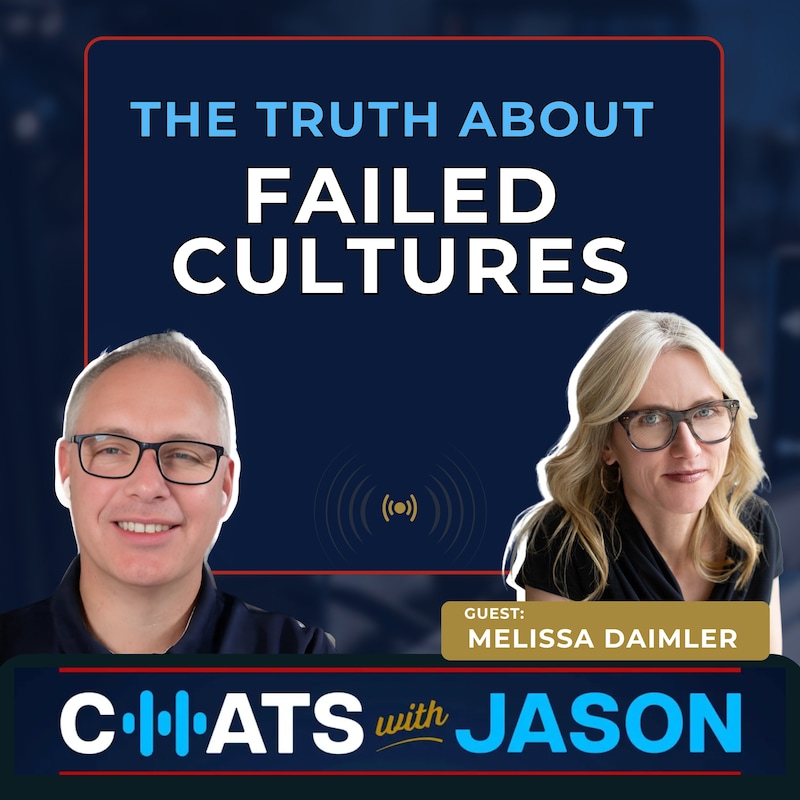
Melissa Daimler: ReCulturing
[:Jason S. Bradshaw: What if the culture you think you have isn't the culture your people are actually living? Mostly just talk about culture, like it's a plaque on the wall, a thing they have. But today's guest says that culture is something you do, and if you don't design it, it designs you.
Jason S. Bradshaw: Melissa Daimler has helped shape the culture behind some of the world's most influential companies, Adobe, during its SaaS revolution. Twitter, during its hyper growth era. WeWork during one of the most turbulent chapters in corporate history and most recently at Udemy, where she has led transformation of learning, talent and culture in the age of AI. She's the author of ReCulturing, a book that has become the blueprint for leaders who want to build cultures that actually work.
performance, not just pretty [:So today we are diving into the truth most leaders avoid. Culture isn't an aspiration, it's an operating system. And every decision either strengthens it or weakens it. This is gonna be a powerful one.
I'm Jason S. Bradshaw and this is Chats with Jason.
Melissa, welcome to the show.
Melissa Daimler: Thanks, Jason. It's great to hear your overview of culture.
Jason S. Bradshaw: So Melissa, take us back. What moment in your early career made you realize that culture isn't a vibe? It's a system.
Melissa Daimler: I first realized that it's part of the system when I was at Adobe, so this takes me back... I've been in tech for over 20 years now, and at Adobe I learned a lot about the connection between culture and strategy, and even the purpose of the company.
ho's now the SVP and Head of [:So at Adobe we didn't just realize that as part of the system, we operationalized it. And so when the company did go through a massive transformation to become more of a SaaS company, we had to not just look at our business, we had to look at how we were running our business, and that's culture.
rship skills, to how we made [:Ever since then have really looked at culture as a set of practices and processes and behaviors that if leveraged well and connected to the strategy, it can be a huge differentiator for your business.
Jason S. Bradshaw: Makes a lot of sense. I'm wondering whether there's a belief about culture that you held early in your career that now you go... no, that's not right and you've changed your belief.
e to have. So that is what I [:And what I was lucky enough to experience again early on is, wow, this is much bigger than just happy hour.
So I, very early on was able to shift those beliefs. It's unbelievable to me today that people still don't leverage culture, as strategically as I think they should.
Jason S. Bradshaw: I'm sure we'll get into that a little bit deeper. I'm wondering though, you know, you've said before that culture efforts fail because values never become behaviors. What's the biggest mistake leaders make when they're you know, so called fix the culture?
el set on. What do you think [:So I think that's the mistake that a lot of companies make is they think that we're done once we have that list. And I think that is just the beginning because a true culture work and what I talk about with [00:06:00] reCulturing is that I always give the example of innovation. I'm in Silicon Valley and we talk a lot about innovation, but innovation for one company could mean something very different for another company. And so let's talk about what good looks like in each of those.
One company I worked with, at the stage they were in, they actually wanted to slow some ideas down because they were realizing they were spending way too much money on some of of the ideas that weren't fully baked. And so they created this behavior of asking each other why we need to do that now.
you were to see people being [:So I think it's just really important to what I call codify culture into those behaviors, and then you can actually do something with them. You can then bake those into some of the core processes that you're already doing. So interviewing and hiring, onboarding, developing people, rewarding having some consistent approaches to giving coaching and feedback around the dreaded performance review process. To me, the question that I always ask to, when people want to kind of codify their culture is, are you looking at this as one more thing to do? Or is this ultimately something that you think is going to help your business and your strategy be more effective? And so if it's the latter, then yes, we will work together and I think it'll be much more successful.
e more that the work doesn't [:Melissa Daimler: So I define culture as... first of all, it's a verb. It's something we do. It's not something we have, and it's a system of what I call behaviors, processes, and practices that are connected to the larger organizational system. It's not a one and done thing. Like I've been in companies, I think at Adobe, we didn't call it reculturing at the time, but we recultured three times because there were major inflection points, turning points.
we want to drive and design? [:Jason S. Bradshaw: So let's just say I'm a senior leader, new to a business, and I'm wanting to understand what its real culture is not what's on the posters. Where should I look first and why is it never as simple as just reading that so-called company values?
ment in an organization. And [:So I always start if it's a company that already has values I might start with [00:11:00] saying, let's look at those values. How do those show up for you? What does that mean to you? And mostly it has a very different meaning to senior leaders. And I talked to a number of employees and in these cultural audits too, and that's always fascinating and surprising to the CEO and the senior leadership team because they thought they were super what those values were.
Jason S. Bradshaw: Yeah, and often super clear isn't actually replicated in their behaviors. They feel they've communicated something, but then they haven't walked the the talk, so to speak. You've worked with some phenomenal brands. You were with Twitter during its hyper growth stage, and obviously that organization has transformed a little bit, in recent years. In that hyper growth phase, how did you build systems that could keep up with that growth without breaking people?
Yeah, I do say that I was at [:So I think we were able to keep the core values but the behaviors shifted over time. And so we made sure to codify those. And even at the end, the last year, we were able to create even feedback loops and feedback mechanisms based on those core behaviors and the skills that employees needed to develop. I think there are moments, very simple moments in any company that you can reinforce the culture. Like I said we had a lot of all team meetings and we, at every meeting, we had a value that was represented and we made sure to reinforce that in the different presentations that people did. Examples of what teams, really exemplified each of the [00:14:00] values. So, there's pretty simple but powerful ways to reinforce culture, again, not as an add-on, but is just part work .
Jason S. Bradshaw: Yeah, I love that it's about the way we work, what we do as opposed to making it an individual's responsibility for the whole company.
Talk about about diversity, you've gone from Adobe transforming into a SaaS company and doing acquisitions. Twitter through, its growth and glory day, shall we say. And WeWork, which, there's even a movie about some of those turbulence times at WeWork. What does culture look like in a crisis? can you have a culture in a crisis?
ulture really is. And if you [:I think when I was there, we weren't quite in crisis mode. We were still in the preventative mode. We saw what was coming but we were able to do an exercise around the values. We started to codify them. We built some of the first management development programs around the world. But, I was just there a year, so it was definitely harder to shift the meaning of culture from... you saw the movie, I don't know if you read the book, but there were tequila shots happening on Monday evenings and summer camps with thousands of employees coming together over three days. And I think the thing I learned there and try to emphasize is, one of the pieces of culture is practices. [00:16:00] Practices And Practices change over time. They're dependent on how big you're getting. When WeWork first started, they had these beautiful gatherings every year with employees in the backyard I think of one of the founder's homes and volleyball, barbecue, everything you can think of at a summer camp. But as you evolve, when you're 5,000 people like having a summer camp we may wanna think differently about what that practice should look like and how to make that safe for every employee. And I think one of the challenges was the need to keep the practices the exact same way at 5,000 versus 50 or So I think what leads to crisis is the inability to reflect and talk through how we need to change as we're scaling and growing as a company.
d a great reminder that what [:You like a challenge and, AI is certainly throwing up challenges for almost everyone these days.
I know your work at Udemy, led you to ReCulturing during that AI shift for them as a company. And I'm wondering. what did AI force you to rethink about culture, and learning and leadership at large?
ies are still dealing with in:So I think one of the things, we did at Udemy in the beginning, was just what a lot of companies are doing [00:18:00] now, is just let's do a level set and make sure everybody understands and has AI fluency. Do you know what a good prompt looks like? But beyond that, we made sure that we created discussion in the teams. We had a team dialogue and questions for teams to discuss around. Hey, I just took this online course, but here are some of the things I learned. Here are some of the prompts I used. What are some ways that we can think differently about how we're working in our function or our team that AI might be able to augment or automate. And over the last year I know my team, I left earlier this year, but did a lot of work in partnership with the technology teams. So I think the companies that are getting this right are partnering, have a true partnership between the people team and the technology team, because they [00:19:00] know that it's not one or the other. It's not just a change leadership rollout and a culture rollout. It's not just a tech rollout, but it's integrated strategy that we have to do together. I still I lot of companies are getting it wrong. I think it's such a missed opportunity.
ut in any case, we will work [:Jason S. Bradshaw: Makes a lot of sense and I agree that it's the tool itself is just that, it's a tool, but if we don't lead with authenticity and and just show up around what our intentions are, it makes it difficult for [00:21:00] people to actually know how they should act, let alone anything else.
Don't wanna be all doomsday on AI, where do you see culture and learning evolving next as AI becomes embedded into everyday workflow?
Melissa Daimler: Yeah, I'm actually really excited about AI. I think there's huge opportunities and I think a lot of companies are getting it right. I was just talking to somebody at Visa this week. And they're, they've been doing this for three years - the right way. And looking at, what do we wanna measure? How do we wanna increase? Is it speed? Is it efficiency? Is it lowering effort? How do we encourage people to really be innovative and think differently? How do we give them the skills?
I get super excited about the coaching opportunities we have with AI and that is a huge component I think to exemplify culture.
ou have, your core language, [:Jason S. Bradshaw: Absolutely. I also love that it allows someone to take personal accountability for themselves and not have to wait for the manager to give them feedback which, you could argue has always existed, but yeah, sure, people can be personally accountable, but you don't know what you don't know. You've got blind spots, everyone does, and AI definitely can help us see those. I just want to reinforce to listeners that culture, as you say, is what we do. It's how we do it. And we have cultures in every part of our life. They show up for all of us.
ulturing or reculturing as a [:Melissa Daimler: Yeah. I do encourage in the book, and I talk about this a lot. I think everybody at every level, in every function across an organization, is accountable for culture. And so if you are an individual contributor listening and you have values, but you're not really clear, you know how they show up, I would ask the questions. If teamwork is a value to make sure that I'm not surprised at my performance review. What does good teamwork look like to you? If we were having a review at the end of the year and you were acknowledging me for being a good team player, what would some of those behaviors be?
y book around, really strong [:Jason S. Bradshaw: Yeah, makes a lot of sense.
ore relevant today than ever [:Melissa Daimler: Oh man. I think it's the last chapter actually. It's the chapter on on personal culture. I think I've actually gotten feedback and questions about why didn't you that first, but, I think it's a really nice entry into what organizational culture is because if I understand it as a leader and how it can make such a difference for me and leading a team, I have more access and understanding to how impactful that could be at an organizational level.
Jason S. Bradshaw: Makes a lot of sense. So you've heard it here, the author herself is saying, you can read the last chapter first, only if you promise to go back to the very first chapter and, complete book.
Melissa, it's been a delight having you on the show.
s been fun, went fast. Thank [:So whether your strategy is changing, your team is growing, or your world feels like it's shifting faster than you can lead.
Remember this. Culture isn't what you have. Culture is what you do. And when you design it with intention, everything else aligns.
I'm Jason S. Bradshaw reminding you to transform the experience to transform your business and the world around you.


