Shownotes
In this paradigm-shifting episode, Scott Ritzheimer shares why rejecting "foolish consistency" unlocks founder greatness across all stages. If you struggle with rigid processes killing innovation or chasing shiny objects derailing vision, you won't want to miss it.
You will discover:
- Why foolish consistency is the hobgoblin stifling your breakthroughs
- What adaptive leadership separates great founders from the pack
- How continuity of vision beats rigid methods every time
This episode is ideal for for Founders, Owners, and CEOs in stages 1,2,3,4,5,6,7 of The Founder's Evolution. Not sure which stage you're in? Find out for free in less than 10 minutes at https://www.scalearchitects.com/founders/quiz
Scott helped start nearly 20,000 new businesses and nonprofits and with his business partner started led their multimillion-dollar business through an exceptional and extended growth phase (over 10 years of double-digit growth) all before he turned 35.He founded Scale Architects to help founders and CEOs identify and implement the one essential strategy they need right now to get them on the fast track to Predictable Success.
Want to learn more about Scott Ritzheimer's work at Scale Architects? Check out his website at https://www.scalearchitects.com/
Mentioned in this episode:
Take the Founder's Evolution Quiz Today
If you’re a Founder, business owner, or CEO who feels overworked by the business you lead and underwhelmed by the results, you’re doing it wrong. Succeeding as a founder all comes down to doing the right one or two things right now. Take the quiz today at foundersquiz.com, and in just ten questions, you can figure out what stage you are in, so you can focus on what is going to work and say goodbye to everything else.
Transcripts
Hello, hello and welcome. Welcome once again
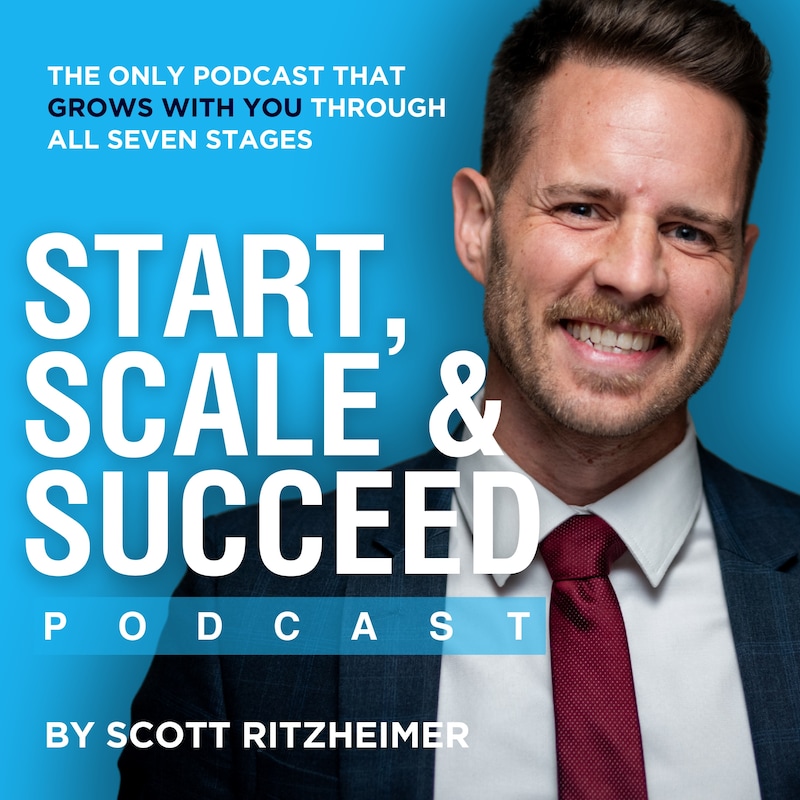
Scott Ritzheimer:to the Start scale and succeed podcast, the only podcast that
Scott Ritzheimer:grows with you through all seven stages of your journey as a
Scott Ritzheimer:founder, and today, we've got another solo episode for you on
Scott Ritzheimer:something that I think is a very interesting topic. I want to
Scott Ritzheimer:open up with one of my favorite quotes from the one and only.
Scott Ritzheimer:Ralph Waldo Emerson, this comes from self reliance, and I want
Scott Ritzheimer:to read it off to you. He says, A foolish consistency is the
Scott Ritzheimer:hobgoblin of little minds adored by little statesmen and
Scott Ritzheimer:philosophers and divines. With consistency, a great soul has
Scott Ritzheimer:simply nothing to do. He may as well concern himself with the
Scott Ritzheimer:shadow on the wall. Speak what you think now in hard words and
Scott Ritzheimer:tomorrow, speak what tomorrow thinks in hard words again,
Scott Ritzheimer:though it contradict everything you said today. Ah, so you shall
Scott Ritzheimer:be misunderstood. Is it so bad then to be misunderstood?
Scott Ritzheimer:Pythagoras was misunderstood Socrates and Jesus and Luther
Scott Ritzheimer:and Copernicus and Galileo and Newton and every pure and wise
Scott Ritzheimer:spirit that ever took flesh to be great is to be misunderstood.
Scott Ritzheimer:I love this quote. It's it's one that just always kind of lingers
Scott Ritzheimer:in the back of my mind, and I think it's one that describes
Scott Ritzheimer:founders and what founders do so well, founders see through that
Scott Ritzheimer:foolish consistency. They believe, from the very get go
Scott Ritzheimer:that there must be a better way. Founders help organizations
Scott Ritzheimer:avoid what we call a stage called treadmill for
Scott Ritzheimer:organizations, where form starts to edge out function. FaceTime
Scott Ritzheimer:is more important than getting things done. Checklists become
Scott Ritzheimer:more important than whatever they were there for in the first
Scott Ritzheimer:place. As a As humans, we kind of worship consistency. The
Scott Ritzheimer:World conspires toward it, and I believe that one of the biggest
Scott Ritzheimer:gifts that founders bring to the world is the opportunity to
Scott Ritzheimer:break from that consistency. But, but Emerson's quote doesn't
Scott Ritzheimer:say consistency is the hobgoblin of small minds, little minds. He
Scott Ritzheimer:says a foolish consistency. And one of the things that's really
Scott Ritzheimer:struck me, just to peel back the curtain a little bit on my world
Scott Ritzheimer:as I've been writing the full length version of the founder,
Scott Ritzheimer:the founders evolution book, which I hope will be coming out
Scott Ritzheimer:next year. One of the things that has been a huge challenge
Scott Ritzheimer:has been to maintain continuity from chapter to chapter. And I
Scott Ritzheimer:want to kind of unpack the difference between those two
Scott Ritzheimer:here in this episode, the difference between consistency
Scott Ritzheimer:what you have succeeded by destroying time and time again
Scott Ritzheimer:by thing, by saying hard words today and then saying what
Scott Ritzheimer:tomorrow thinks, even though it contradict everything you said
Scott Ritzheimer:today, that that railing against foolish consistency that has
Scott Ritzheimer:been such a big part of Your success as a founder must be
Scott Ritzheimer:harnessed by continuity. You see, especially once we get into
Scott Ritzheimer:stages three and four and five, and we start getting bigger and
Scott Ritzheimer:bigger enterprises around us, more and more people that we
Scott Ritzheimer:depend on and that depend on us. If you embrace that lack of
Scott Ritzheimer:consistency, that that desire for inconsistency that many of
Scott Ritzheimer:us founders have. I was talking with a client the other day.
Scott Ritzheimer:He's like, I drive to work a different way every time,
Scott Ritzheimer:because I need the variety of my life. It's such a founder thing
Scott Ritzheimer:to say, but we have to recognize the value of continuity. And I
Scott Ritzheimer:would say that if you understand continuity, you can maintain the
Scott Ritzheimer:inconsistency that you need to thrive and do your best work as
Scott Ritzheimer:a visionary, as a founder, while also providing your team with
Scott Ritzheimer:the momentum that they need to move forward. So here's the
Scott Ritzheimer:difference, consistency is doing the same thing, especially a
Scott Ritzheimer:foolish consistency is doing the same thing because you did it
Scott Ritzheimer:before. And we all face this right? There's this pressure to
Scott Ritzheimer:do it the same way, not only because of the natural inertia
Scott Ritzheimer:and momentum that it has, but because to do it a different way
Scott Ritzheimer:would be to admit that we were wrong, or at least it feels that
Scott Ritzheimer:way. And so we all face this pressure Now, earlier in your
Scott Ritzheimer:stages, there's a lot less pressure to do this, because
Scott Ritzheimer:let's face it, you didn't make all the decisions that you're
Scott Ritzheimer:challenging. You didn't design the industry the way that it is
Scott Ritzheimer:now. You didn't create the status quo. But those tables
Scott Ritzheimer:turn when we get into these later stages, in stage four and
Scott Ritzheimer:in stage five, and dare I say, into stages six and seven, that
Scott Ritzheimer:consistency is not consistency derived from what others did.
Scott Ritzheimer:It's consistency derived from what you did, and you now have a
Scott Ritzheimer:vested interest in protecting that consistency, because you're
Scott Ritzheimer:the one who made so many of those decisions. And if we're
Scott Ritzheimer:not careful, we can succumb to the little mindedness that
Scott Ritzheimer:Emerson's talking about. Here. So consistency, again, is doing
Scott Ritzheimer:things a certain way simply because we did them that way
Scott Ritzheimer:beforehand. It what happens when we overvalue consistency is we
Scott Ritzheimer:stop asking the question, why we we stop? We stop even we How do
Scott Ritzheimer:I say we stop even recognizing that we are making assumptions
Scott Ritzheimer:about the constraints on our business or our time and what we
Scott Ritzheimer:do, and we're not willing to challenge those assumed
Scott Ritzheimer:constraints because we don't even know that they exist
Scott Ritzheimer:anymore. And so founders do a really great job at this just by
Scott Ritzheimer:virtue of who they are and the way that they think I know for
Scott Ritzheimer:me I can't be consistent. It's just I wish I could. There would
Scott Ritzheimer:be so many ways that it would serve me so well in life, but it
Scott Ritzheimer:is so hard for me to be consistent at the same time, I
Scott Ritzheimer:do fight for continuity, and particularly in a team
Scott Ritzheimer:environment, what continuity is, is a recognition of what you're
Scott Ritzheimer:doing, right? It's a deep, probing insight into the things
Scott Ritzheimer:that are working, not just that they are working, but why they
Scott Ritzheimer:are working, and a recognition that inconsistency, for
Scott Ritzheimer:inconsistency's sake, is actually foolish consistency. If
Scott Ritzheimer:you believe that you need to be inconsistent just because you've
Scott Ritzheimer:been inconsistent before, that's the same problem that Emerson is
Scott Ritzheimer:tackling in this quote. And so continuity is the recognition
Scott Ritzheimer:that, hey, we have got some things right. There are some
Scott Ritzheimer:things that are working. You'll hear the saying you don't have
Scott Ritzheimer:to reinvent the wheel. Sure, you don't have to reinvent the wheel
Scott Ritzheimer:all the time, but sometimes you are. And continuity, I believe,
Scott Ritzheimer:is the skill of knowing when to reinvent the wheel and when to
Scott Ritzheimer:make it better. And so what we want to think about in terms of
Scott Ritzheimer:continuity is, hey, how can I not just do the things that
Scott Ritzheimer:we've done in the past, but how can I build on the success that
Scott Ritzheimer:we've had in the past? How can we take what's already working
Scott Ritzheimer:and make it better? How can we leverage the success we've had
Scott Ritzheimer:not to protect it, not to kind of circle the wagons around it,
Scott Ritzheimer:but to actually use the the capital there, in all its
Scott Ritzheimer:different forms, the human capital, the financial capital,
Scott Ritzheimer:the relational capital, the intellectual capital. How do we
Scott Ritzheimer:take all of these things that we have figured out? How do we take
Scott Ritzheimer:all the success that we had, and how do we actually put it to
Scott Ritzheimer:work to move us forward? How do we use our success to challenge
Scott Ritzheimer:the very basis of our success? And when you do that on a
Scott Ritzheimer:continuous basis, when you are constantly taking a critical
Scott Ritzheimer:look at why it is you do, what you do, what it is you're doing
Scott Ritzheimer:that's working and what isn't working, what used to work and
Scott Ritzheimer:what will no longer work, you're able to achieve a high degree of
Scott Ritzheimer:continuity. Now, the benefit of that is, let me talk about the
Scott Ritzheimer:flip side. If you don't do that, what happens is, I forget who it
Scott Ritzheimer:was. I think it might be. Wickman described this as
Scott Ritzheimer:organizational whiplash, but wow, I see this all the time.
Scott Ritzheimer:You're driving in a direction, you're taking your whole team
Scott Ritzheimer:with you, and then all of a sudden, you just yank the wheel
Scott Ritzheimer:because you see something shiny over to the right, and then as
Scott Ritzheimer:soon as you're about to get there, you yank the wheel to the
Scott Ritzheimer:other direction, because you see something shiny to the left. And
Scott Ritzheimer:when you're in the driver's seat, I mean, just imagine, like
Scott Ritzheimer:if you're in a car and someone's doing that, if you're the one
Scott Ritzheimer:doing it, you can anticipate it. You can lean into the turn. You
Scott Ritzheimer:are holding the wheel and you are putting your feet on the gas
Scott Ritzheimer:or brakes. You're in control. You can tolerate a far greater
Scott Ritzheimer:degree of chaos when you're in control than when you're in the
Scott Ritzheimer:passenger seat. And there's only one person who can have the
Scott Ritzheimer:wheel on your organization, which means that you have to
Scott Ritzheimer:think about what's happening for your passengers as well. And so
Scott Ritzheimer:imagine being in the passenger seat, so yanking the wheel back
Scott Ritzheimer:and forth, it's not a pleasant experience, and you're not going
Scott Ritzheimer:to do your best work in that environment, and your team won't
Scott Ritzheimer:do your team won't do their best work in that environment either.
Scott Ritzheimer:Now, just to throw a bone to those of you out there, yeah,
Scott Ritzheimer:there are times when you do need to yank the wheel. The whole
Scott Ritzheimer:foolish consistency thing doesn't mean you always keep
Scott Ritzheimer:driving in the same direction, sometimes as the visionary,
Scott Ritzheimer:sometimes as the founder, sometimes as a CEO, it's your
Scott Ritzheimer:job to make the really uncomfortable decision to yank
Scott Ritzheimer:the wheel, because you see trouble coming. And so there are
Scott Ritzheimer:times and occasions when yanking the wheel is necessary, but it's
Scott Ritzheimer:not all the time, and it's not in all occasions. So how do we
Scott Ritzheimer:know the difference? Well, we know the difference through
Scott Ritzheimer:continuity. We know the difference by again, looking at
Scott Ritzheimer:not just what works, but why it works, and how we can build on
Scott Ritzheimer:that, and what happens when you can maintain some continuity.
Scott Ritzheimer:And you'll see this. This is actually why vision, mission and
Scott Ritzheimer:values work so well. This is why big, long term, 510, 1550, year
Scott Ritzheimer:goals, why they're so. Effective is because they don't demand
Scott Ritzheimer:consistency, right? That's so far away that if we do something
Scott Ritzheimer:today and we do it different tomorrow, it doesn't matter at
Scott Ritzheimer:all. Those big, long term goals don't demand consistency, but
Scott Ritzheimer:they do demand continuity. And so here's my advice. I share
Scott Ritzheimer:this with the founders I work with all the time, especially
Scott Ritzheimer:stages four and five. And that is your job as the founder, your
Scott Ritzheimer:job as the CEO, your job as that visionary leader is to paint an
Scott Ritzheimer:ever clearer picture of a more beneficial horizon it. And
Scott Ritzheimer:that's that's continuity, right there, right? It's not
Scott Ritzheimer:consistency, right? We're not talking about taking every step
Scott Ritzheimer:the exact same way to get there, but we are talking about a
Scott Ritzheimer:continuity of direction, a continuous destination that's
Scott Ritzheimer:out in the horizon waiting for us and continuing to lead people
Scott Ritzheimer:there. So I want you to think about this as you're listening
Scott Ritzheimer:today, as you're going about your day. How good are you at
Scott Ritzheimer:fighting against that foolish consistency that has become the
Scott Ritzheimer:hobgoblin of little minds. Where has that helped you in the past?
Scott Ritzheimer:How have you succeeded because of your ability to push against
Scott Ritzheimer:the grain and go against the common wisdom in your space? And
Scott Ritzheimer:where is that causing you problems today, where has a
Scott Ritzheimer:desire for the desire to push against consistency actually
Scott Ritzheimer:caused you to unintentionally sacrifice continuity for you and
Scott Ritzheimer:your team. Where are you pulling your team away from your long
Scott Ritzheimer:term goals to chase some shiny object as a pull, as opposed to
Scott Ritzheimer:pulling them through the uncertainty toward those long
Scott Ritzheimer:term goals that you have for your team, Food for Thought for
Scott Ritzheimer:today. I hope this episode was helpful for you. These are a
Scott Ritzheimer:blast. I really enjoy getting to share with you guys directly. If
Scott Ritzheimer:episodes like this are helpful, please let us know. We'd love
Scott Ritzheimer:your feedback on it. If you have any questions, if there's
Scott Ritzheimer:anything we can do to help you, we'd be glad. You, we'd be glad
Scott Ritzheimer:to do that as well as you know your time and attention mean the
Scott Ritzheimer:world to us. So I hope you got your time's worth out of this
Scott Ritzheimer:conversation, and I cannot wait to see you next time. Take care.