Shownotes
What if stronger, smarter feet could lower injury risk, improve balance, and even support your mental well-being?
Michael talks with Dr. Jen Perez from Gait Happens about why foot health is foundational for overall health—whether you’re rehabbing, training, or just trying to feel steadier day to day. They unpack how footwear choices, toe mobility, and the nervous system (hello, breath!) influence balance, pain, and resilience—plus simple ways to start strengthening from the ground up.
- Understand the “neuro-musculoskeletal” connection: how stress, breath, and feet interact.
- Learn the 5-4-3: Lift–Spread–Reach toe drill, calf raises, barefoot time, and when to use toe spacers.
- Get smart on shoes: wide toe box, minimal necessary cushion, and how to transition safely (no “day-one marathon” in minimalist shoes!).
- Hear why foot strength matters for fall risk, confidence after injury, and athletic performance.
- Discover the deep front line: diaphragm ↔ pelvic floor ↔ arch ↔ big toe (and how humming/breathing helps it all work together).
Press play and treat your feet to a quick reset—then try 5–10 minutes of barefoot walking and 20 reps of Lift–Spread–Reach today. Stronger feet, steadier you.
Receive one of my FREE Pause Breathe Reflect Stickers via this link sticker.
Sign up for My RIPPLE EFFECT newsletter by clicking Ripple Effect or finding me on Substack.
We can also connect on LinkedIn.
Download the Pause Breathe Reflect App with Microdose EQ by clicking App on your smartphone.
Subscribe to be sure you don’t miss any of the micro-meditations, wellness tips, and guidance that I publish every Monday, Wednesday, and Friday at 7:11 am.
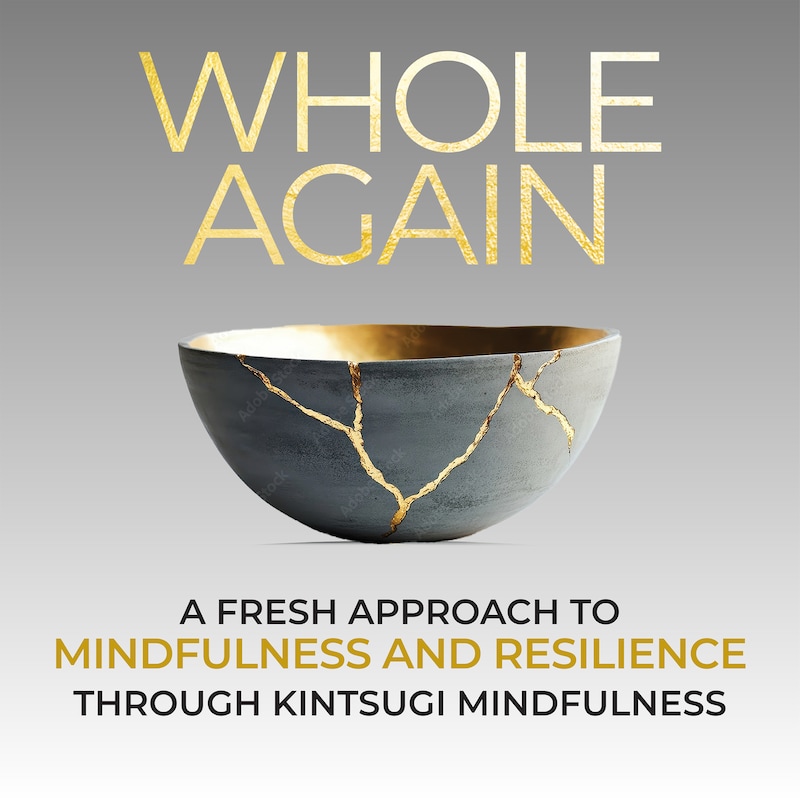
With Whole Again: A Fresh Approach to Healing, Growth & Resilience after Physical Trauma through Kintsugi Mindfulness, listeners explore resilience through personal stories of trauma, scars, and injury while learning to overcome PTSD, imposter syndrome, self-doubt, and perfectionism with self-compassion, self-love, and self-worth. Through insightful discussions on building resilience, fitness, and stress management, as well as mindfulness practices and digital wellness, the show offers practical tools such as breathwork, micro-dose meditation, grounding techniques, visualization, and daily affirmations for anxiety relief and stress reduction. Inspired by the art of kintsugi, the podcast embodies healing as a transformative process, encouraging a shift in perspective from worry and overwhelm to gratitude and personal growth. By exploring the mind-body connection, micro-dosing strategies for emotional well-being, and holistic approaches to self-care, this podcast empowers listeners to cultivate emotional resilience and live with greater balance and intention.
Transcripts
Hey there, it's Michael. Welcome to Whole Again, A show about helping us embrace life with mindfulness and resilience through the wisdom of cons. Sugi. Today we're gonna talk about Feet, baby. Now, if just the mention of feet makes you feel all gross inside, I feel you. I have a family member who is totally disgusted by feet.
In fact, I'm not even sure she wants to acknowledge her feet. She doesn't wanna look at anyone else's feet. So if you're in that camp, stay with me. Now, some of you might have thought we're talking about feet, Michael, like, where's this going? And we're not gonna go there either. We're not gonna go on either ends of the spectrum.
We're gonna talk about feet today because they're so essential to our overall health, whether or not you're recovering from something. That's why I'm bringing you one of our very special interviews with a very special human. Dr. Jen Perez from Gate Happens, and I just love the name of their company. It's so awesome.
Now, admittedly, as a young athlete, really leading up to my very first big accident that I call my last bad day, I spent zero time thinking about my feet except for what kind of really cool footwear I could put on my feet to look, you know? Cool. Yes. When it comes to athletics, I did think about function, but let's be honest, I was looking for the hottest kicks on the team.
That was my jam, but then I had my accident, and through that I developed nerve issues through my left leg, but more specifically in my left foot. My left big toe doesn't really want to listen to me. And for several years after my accident, it felt like fireworks were going off several times a day. On the bottom of my left foot, it was so painful.
So I started to pay more attention to my foot health, and I didn't do a 180. This was a slow step, if you will. Tiny little steps over time. That's our motto here. That's how we recover. That's how we begin to feel whole again. So over the course of several years. I started to pay more attention to the health of my feet, realizing how important they were, not only to my overall health, but my mental health and all my recoveries.
today than I was say back in:She's gonna share a lot of great wisdom on how we can get better with our feet, so we can feel grounded, more stable, which then leads to. Better overall health. So if you're ready, slide off your shoes and put your feet up and take a nice, healthy breath in and a slow releasing breath out and get to know Dr.
Jen Perez and a little bit more about your feet.
I'd love to get started here. How the heck did you land on feet as a profession? You know, you're, you're thinking about going into medicine. Mm-hmm. You know, I most likely, and there's so many different specialties, what compels someone. To go into feet right down at the ground and think about feet.
I mean, besides being weird, um, yeah.
Well '
cause 'cause a lot of people, you know, the, the, the foot people, you have a little foot fetish and then some people are just like gross, like skied out by the feet. Totally. Like I have an older daughter who's like, don't mention feet Dad to me. I'm just gonna Yeah. You know, get, she gets all squeamish.
Yeah, yeah,
absolutely. Yeah. So I, my background is I'm a chiropractor and I always knew I wanted to get into more of a sports chiropractic. Realm where it was really looking at movement and how we improve movement and impact life that way. But honestly, I wanted to specialize in shoulders and uh, so my kind of story was that I have multiple parents.
I have three different parents who all have foot things. So I knew the impact that it can have on your life. Um, but I still, I wanted to specialize in shoulders. I went to this course to learn how to use kinesiology tape, really hoping to learn how to use it with overhead athletes like throwers, like uh, baseball players, for example, but the teacher, the instructor.
Kept using feet as the example for everything. And at first I was just like, your daughter. I was like, no one cares about feet. No one wants to talk about feet. Just stop. Right? But the more the weekend went on, and the more examples that she gave of the. Impact that the foot has from a biomechanical perspective on the entire body and how we move and how it affects literally every step we take, it was like the curtains were drawn back.
I was like, why is nobody talking about the feet? From this biomechanical perspective, it's made of muscles and joints. Just like every other part of our body, and yet no one is having a conversation around mobility and strength for our feet. And that was kind of the turning point for me, where I started to dive deep into learning about it.
And eventually that instructor became my business partner. And that is Dr. Gordon Conley. So that is how we came together, um, to bring this education to the world because truly our mission is to help people move better from the ground up all over the world.
Very cool. I love that. I love that origin story.
That is pretty cool. So speaking of Dr. Connolly, on your Instagram page, there's, there's the pinned post. Mm-hmm. Right. You know, the one that like, that's the one everyone you should look at. And so there's, there's some good click bait here. Oh, totally. From her interview with, uh, Steven Bartlett on his podcast mm-hmm.
Around the toes and how the toes can predict. Whether or not you're gonna die young or not, I, I probably don't have that, right. Yeah, but do explain. Yeah. Because yeah. Inquiring minds want to know.
Yeah. They got a little creative with the wording. Let's, let's put it that way. Let so, well,
Steven's good with the clickbait.
I, I'll give him props on that. He, so it's like, it just hooks you right in. Yeah.
Yeah. So the reality of that conversation is around fall risk, because we know that falls are one of the highest risks of mortality in people over the age of. You could say 65, but honestly over 50. Right? Because especially once you get over a certain age, then you have a higher likelihood of fracture and hospitalization.
And this is where we start to see that mortality rise, where people aren't actually making it out of the hospital or they're back in the hospital within 30 days. So that's the, the reality of that conversation and where that kind of. Risk of dying conversation comes from, but where it relates to the foot is there's actually some really fascinating research looking at fall risk because it is something that's highly relevant and highly studied, and there's multiple different research papers looking at it in different ways.
And one of the My favorites looks at. Things from history of fall risk, blood pressure, strength of your quadriceps, so your big thigh muscles and foot strength. And so some, it's kind of across the board. Some of these things that are, are known to be risk factors for falls, but then foot strength was thrown in there and of everything else, the only two factors that could be isolated as increasing your risk factor for a fall.
As basically an individual risk factor, right? So not just paired with other things, but on its own was blood pressure. Foot strength, and those were the two factors that could be like identifiable on their own. And that was only one of the studies. There's other studies that also look at, okay, well we've talked about this with grip strength, right?
So forever people were saying your grip strength is an indicator of whether you're gonna die or not, right? But then they kind of came to the conclusion that that's also just an indicator of your overall fitness level. So is that the same for the foot and or is it really that your foot strength could prevent a fall?
That's where they then reverse the study to say, if we improve foot strength, does it decrease the fall risk? Like solely focusing on the foot, not just overall fitness level. And the answer was yes. So really having strong feet is actually going to bring that risk factor down, which is really incredible when you think about it.
Yeah, that's really wild. And and very specifically with my dad, he was in the hospital for a procedure. He got discharged, he went home. I was at home with him. He got up in the middle of the night. His blood pressure fell. Mm-hmm. Hypotension. Mm-hmm. He is a little wobbly to begin with. Sorry, dad, if you're listening, you are a little wobbly.
No judgment. So no judgment. Uh, like his feet are probably not all that strong. And he, he fell. Yeah. And then he spent the next three weeks in the hospital. Mm-hmm. And then he was able to get out. But I, but I've heard that before, like the whole risk factor if you fall. Above a certain age, you break a hip.
That's always the example. Given you break a hip, you're probably gonna end up in a rehab facility or or slash nursing home. And if you go there, then it's a downward slope that goes pretty quickly. Mm-hmm. So, and then Peter Atia, with all his work, he's not the only one, but around longevity and health span.
my, my rehab journey back in:Mm-hmm.
And you've already alluded to it. They talked about strength, they talked about power, they talked about mobility, and they also talked about balance.
Absolutely.
And I was like, okay, like those four. And after they explained it, I sort of got it. I, but the common denominators really with that are our feet. Mm-hmm. And, but I would love for you to comment on this. So if we have an injury, let's say we have a meniscus tear in the knee or ACL.
Mm-hmm.
Or maybe a joint replacement, hip or knee.
Mm-hmm.
So we focus so much on that particular area. I was just talking to someone. And their partner had an ACL tear. Mm-hmm. And it took her about a year to get back. And I know, like recovering as I have and people listening, sometimes the, the tendon or the, the muscle or the bone is healed and strong, but we don't necessarily feel like we can trust it, trust the repair, if you will.
Yeah. My, my theory, and you'll prove me wrong on this, Jen, is that. Part of the reason we don't really trust the repair, if you will, is that our feet are not strong. Like our, our, our, our, our feet. We haven't done anything with our feet. And I know even when I'm rehabbing now with my femur fracture, my fracture is solid.
There's a rod in there, there's screws. But putting so much emphasis into emphasis into my feet mm-hmm. That's when I get a little shaky. So, um. Prove, prove me wrong. Okay. Um, I'm open to it, but I I'd love for you to just comment on that, the whole trust factor after returning from an injury and the role that feet play in that.
Yeah, it's, it's such a great question because I think it's something that doesn't get addressed in. Healing an injury, um, very often. So you're absolutely right. So when we do have an acute injury, a very like traumatic injury if you will, so something like a fracture or where something went wrong. So we're not talking about the, like overtime, chronic overload kind of injury.
We're talking about like one traumatic incident kind of injury. You absolutely have to heal that tissue first, that it ha you have to heal the fracture before we can do anything else but. When it comes to the back end of that, we do need to get back into trusting that area in order to move efficiently and move properly, be able to load it properly.
But what we often end up doing is because we don't trust it, we offload to somewhere else. So for example, I have so many patients who come to me with, let's say, left foot pain, and they're like, Ugh. Most of the people that I see are more of. The chronic kind of pain. Um, but this is, I'm gonna kind of flip your question to like 10 years down the road, because most of them come to me 10 years later with left foot pain when they had a right knee injury.
And it's because Oh yeah. They've been trying to offload and not trust that right knee and over time we're gonna end up overloading the structures on the other side or vice versa. Right. It could be the same side, but because, you know, but maybe before, let me answer your. Your scenario with your femur.
Okay? So maybe before you didn't have a lot of foot strength or foot stability, but you were able to get away with it because you had a strong thigh and so you felt strong and stable and you were able to maneuver around it because humans are great compensators. If we can't get it from one place, we're gonna get it from somewhere else, but.
When we take that place away, that place that you used to have power and now you don't trust it, and now you have to utilize something like your calf, your lower leg, your foot, but that's not trained and as stable as it should be. That's when we start to feel those deficits and then it feels like everything is unstable because your foot can't make up for the femur like the way that your femur did for your foot before.
If that makes sense.
Yeah, it totally makes sense. And I've, through my whole athletic. Career often I've had conversations with folks, much like what you just said, it's the left foot that's bothering me, but it's really a right knee issue that started it. Mm-hmm. Or it could manifest as a left hip issue.
Totally. Sort of look on the opposite. It's not just the feet,
it's absolutely not. It's just,
but, but, but there's a whole, like there's a chain link. Mm-hmm. Right. It's all connected. And being a medication teacher along with everything else I do. I, I feel like I would be, um, it would be wrong if I didn't ask you that connection between like feet, um, breath.
Mind. Absolutely. You know, I, you know, we hear this on the internet a lot. Like, you know, the body and mind are connected and I'm like, not, not really. It's like one ecosystem, folks. It's like all together, what's happening in the mind is, yeah, yeah. We're feeling it in the body. What's happening in the body is, you know, percolating up into the mind.
Mm-hmm.
So. I would love for you to just talk a little bit further about that, that whole mind body
connection and and relevance to the feet. Connection
and, and breath and just with the feet. Yeah, absolutely.
So let me start with this. So when it comes to the musculoskeletal system, it's really the neuro musculoskeletal system.
And the reason that we have to say it that way is because our nervous system rules all. Right. Like if our nervous system thinks that we're in danger, it's going to do whatever it needs to make us safe. Right? And so when it comes to the feet, there's not an exception. And what I mean by that is something that I actually see a lot is people who have high arches, for example, and let me start by saying flat feet and high arches are not bad things.
Let's just get that outta the way. Okay. Okay. All right. Um, it's like saying that someone who's taller, someone who's short is a bad thing. That's not, it's not true unless you're trying to get something off the top shelf. Right. But that's my mom, by the way. Um,
yeah, yeah. Or you're trying to play center in the NBA.
Yeah. Being short, probably not a good thing. Probably not a deal, but you know, you know
exactly. There's
exceptions, right?
So, but when it comes to the foot, it's all about function over shape. So it's really about how strong and mobile you are. So that's my kind of like sidetrack there. But going back to those with high arches, so.
My big concern with those with high arches is can they move? Because oftentimes they're strong, not always, but oftentimes they're strong, but they're not very good at letting the foot pronate, letting the foot relax because the foot has to be able to move and change shape in order for us to shock, absorb.
So every time we take a step. The ground hits back, right? For every action, there's an equal and opposite reaction. So when we hit the ground, the ground hits us and we have to absorb that force. In order to do that, the foot has to be able to lower and spread to act as that first shock absorber. Now, sometimes people with higher arches aren't very good at letting go.
This is where I'm gonna drive it back to the nervous system because oftentimes those are the people that are very high stress, they're very type A, they're always in that sympathetic dominant mode where they're holding on. They're also the same patients that when I get them to stand up to just start our exam, we haven't done anything yet except for talk.
There's already sweat underneath their feet, right? So it's just lots of sympathetic tone. So you think about. The relationship between the mind and what the nervous system is doing. There's absolutely a physical reaction at the feet, which is then also going to determine how well the foot moves. So it's not just the, like the sweat aspect and the tone aspect.
It's also if I can't let those muscles react or let those muscles relax, then I'm not gonna shock absorb very well. And maybe now I end up with a stress fracture because. Shock has to go somewhere. So it really is this kind of trickle down effect of how well our nervous system is regulated and the effect that it has on our feet.
Yes, I can, I can so see that. And, you know, coming in to see you if someone has a problem, if they're Type A. Many of the Type A people I've met in my life don't like to be judged. Like there's something wrong with me.
Mm-hmm.
And so some of that sweat might be like, oh, she's gonna say something's wrong with me.
She said, something's wrong with my feet. And it's, yeah. Or I'm gonna say something wrong. Our
Yeah, totally.
Yeah. There's the story in our head gets going and it's, and then yeah, we don't, we feel mm-hmm. All tight. And that just all the shocks from each foot plant. Just goes through the body. I know going back to this femur break, you know, I had the femur break up near the hip, but my knee wasn't, I didn't have the right type of flexion in my knee.
Mm-hmm.
And that was all about the whole quadricep being guarded because it went through so much trauma.
Absolutely. And I
knew, I. Had to like really lean into my practice and meditation to like, to, you know, whisper to my quadricep like, you're safe. It's okay. You can relax. Yeah. And give it some time to like settle down and
mm-hmm.
I literally do the same thing with the feet. Yeah. It's so, it's so true. I, because I also have certain patients that, like, I have one for example, who I can just have him stand and close his eyes and put his hands on his belly. I, I like humming for a lot of reasons. Um, so I have him breathe and hum and try to down regulate, but while he's exhaling and humming, I want him to feel his feet sinking into the ground, right?
So that's kind of the, like, let's descend, let's get that whole nervous system down, but also let the feet physically relax at the same time other patients that I have. 'cause again, going back into that personality type, and this is not for everyone. I'm not judging, I'm not making like overarching statements, but it's something I commonly see is they're also the kind of patient that.
They came in with a big toe complaint, they better be leaving with a big toe exercise. If I give them breathing, they're gonna never come back and they're never gonna do it right? So I have to also tie it in. And one of the ways that it also ties in is in core control, because we, in order for our feet to have good control, we also need good control from the top down.
So the core, the hips, they all affect how our feet hit the ground. And so oftentimes, I'm also seeing a correlation. Like the core and pelvis, and this is how I tie it in with the breathing because I say for them, instead of doing a standing one where I'm really obviously working on the feet, I say, I want you to do this core exercise, but in order to give your oblique, and this is all true, by the way.
It's not, I'm not making it up just to make them do it, but in order to give your obliques time to kick on because oftentimes their core doesn't kick on very well. I say, I want you to slow down your exhale and hum in a low tone for as long as you can. And that way when you do that, you go, Hmm, you can actually start to feel the core kick on.
So there's these benefits beyond just the neurological right where we are. By humming in a low tone, we're gonna stimulate the parasympathetic nervous system from the core perspective, we're gonna get the obliques to kick on and get better. Core control, pelvic control from the top down. And then we also are able to tie that down to the bottom.
And, and also with that, the breath becomes deeper. Mm-hmm. And not as shallow as most of us. Breathe that way. Absolutely. It's all up here. Absolutely. It doesn't really get into our, into our ass. That deep belly breath. Mm-hmm. Like gets down in there, moves things around down there. Yeah. Or it opens some things up.
Yeah. It allows some things to fire, so.
Oh, absolutely. And you think about the diaphragm. So the diaphragm is our muscle that helps us breathe. Right. It's the one that actually contracts to breathe, bring our breath and. The diaphragm and the pelvic floor. So our pelvic floor is, if you imagine a trampoline made of muscles, that trampoline exists between your legs.
So it's really everything underneath you from your urethra, urethra to your anus. But it's made of muscles. And those muscles, just like all the other muscles, have to contract and relax and. By the way, this is for all genders. Yes. This isn't just women, right? So everybody has a pelvic floor and the diaphragm and the pelvic floor work together, like the top end and bottom end of a coat can.
That's how we actually regulate intraabdominal pressure of our core. And what's really cool about this is the diaphragm and the pelvic floor are part of a fascial line called the deep front line. This deep front line connects all of these muscles. Guess where else? It goes all the way down from our inner thigh to what's called our tibias posterior, which is a muscle on the inside of your shin all the way down to the arch of your foot and your big toe.
It's literally all part of the same deep front line. They all work together. So you'll find if you're able to control your big toe control, your arch control being like, let it relax and let it contract just like everything else. But all of it works together from the breath to the pelvic floor to the feet.
So cool. Like feet are becoming, as we talk further, Jen feet are becoming like the it part of the body, right? As people listen, I can feel it. Well,
I This is, you're, you're experiencing what I did eight years ago when I was in that course. When I went from why am I listening to something about feet to, oh my God, this is so absolutely interconnected to everything that we do.
Yeah. And like we talked about before we really started the recording, I was in that camp of like. It's the feet. Like, you know, it's just you, you get a good pair of kicks, you get a good pair of shoes. Like that's what the feet are for, you know, to show off like, you know, your new pair of sneakers. And I, until I really went through my whole recovery, I, it didn't connect.
Mm-hmm.
And then I was like, ah, I can see how this is all connected. And even as I've come out of this recovery, I was in the hospital for a bit. All the little muscles in the FET start atrophy. Mm-hmm. Weaken a little bit. 'cause I'm, I'm not really on them, especially my left one. And so now I've, now I'm in the process of working on my feet as I'm working on everything else.
Mm-hmm. And I, this gets me to the next question though. I just mentioned footwear. Mm-hmm. Like we here in at least the states. We love a good shoe. We love like sneakers, uh, boots, uh, high heels. You know, we, we cover our. Beautiful feet and footwear where we don't necessarily feel the ground. Mm-hmm.
You
know, it puts the foot in these wonky positions that seem to be unnatural.
So can you, can you talk about the role of footwear when it comes to our foot health?
Yeah. So. Lemme just start by saying, footwear absolutely is going to affect the function of our feet. So whether that's a shoe that actually re respects the shape of our foot and allows the foot to function how it was designed.
'cause like we've talked about, the foot is a very complex structure, so it needs to be. In the shape it was designed in, in order for all those structures to work properly. Or on the flip side of that, if we have a shoe that interferes with our function, so something like a high heel for example, where the higher the heel, the more pressure you're putting into your forefoot, the more tapered the toe, the more you're actually taking those toes out of alignment with their metatarsals.
So you're. Cramming them together, the muscles can't fire because they're not actually in the position they need to be in. So all of these things actually affect the function of our foot. And again, like we said, the foot's connected to everything else. So if the foot intrinsic muscles can't fire effectively, that's gonna affect our whole posterior chain 'cause they're part of that chain.
If our big toe can't fire effectively, that's gonna affect our whole deep front line, which is the line that we just talked about that goes up to the pelvic floor. So it's not just the foot. Then there's this other camp where there's footwear that we have been told for generations is healthy footwear that is now being reconsidered.
And some of the things that we're reconsidering are. How much cushion is needed, right? That's one place to start. And this is kind of, it's kind of a hard discussion because cushion is very variable based on your needs. So if you're someone that's in so much pain that you can barely get to the mailbox and you need that cushion to keep moving, by all means wear the cushion.
Right? But what I would. Encourage you to do is where the least amount of cushion necessary to complete the task. So rather than going above and beyond into something that feels like you're walking on a cloud, stay with something that gives you just enough cushion and here's why. So the more cushion underneath you.
The less what's called sensory acuity we have, so we aren't able to feel the ground. It's very obvious, right? If you're walking on a pillow, you can't feel the ground. Well, feeling the ground is how we know where we are in space. So it's kind of like trying to walk with a blindfold on, right? Like if you imagine trying to drive a car and there's fog over the windshield, you're not.
Necessarily gonna get where you're going very safely. And that's kind of what we're doing with our feet. We're trying to get them to move and function with this blindfold over them where they don't feel the ground effectively, but we expect them to function anyway. So that's the cushion side of things.
So again. Cushion is relative based on where you are, where your goals are, but try to stick with as much as needed, but as little as possible. But the big thing is most shoes, even the trainers that you think have been great shoes, have a. Tapered toe box and the tapered toe box. If you put your fingers on the sides of the front of your shoe, if your pink fingers are pointing at each other, it has a tapered toe box.
Another way to test this is if you take the insole, the flat, like factory insole that comes inside the shoe and you take it out and put your foot on there, and then you lift up your toes and you spread them out. If they spread, 'cause some of us have lost that ability, right? But if you, if you spread your toes out and put them back down, what you might find is that.
Your toes go over the edge of that insole, and what that's telling us is when your foot is inside that shoe, you're forced to bring your toes together, which again is going to affect the stability of the foot, the engagement of the muscles, and how well that foot is working when we're wearing those shoes.
I'll stop there.
Very, very interesting. Yeah. No, that's good. That's good information. So I was, for the longest time I. I, I wore shoes everywhere because I had some nerve damage in my left foot, and it would just, it would tingle. Sometimes it felt like fireworks, you know, I'd feel it throughout the whole leg.
And so, but slowly but surely, like I, I started, you know, moving towards. Um, shoes with less. Mm-hmm. Less cushion. Now, I went from sneakers that were really, um, you know, restricting, if you will. I, I, I moved to Crocs, which have a lot of cushioning, but my foot, foot was able to open up more. And then I started playing with walking barefoot a little bit more around the house, and then barefoot outside on the grass.
And then I've moved to, um, a pair of vivo. Foot footwear, which, um, I wear probably more regularly than any anything else. It took a while to get used to it. Right? Because, you know, at, at first I was like, I'm gonna put these on, I'm gonna go, I'm gonna go crazy. You know, that's the biggest wear a lot. And then the, like, two days later I was like, yeah, two days later I was like, oh, mama.
Like, I was like, I was like, uh, my, my feet were hurting, but I, I definitely have seen. The strengthen my foot, improve the spacing, my toes improve. Uh, just overall my foot health has improved by wearing these shoes. I have a, another brand, the same concept, but a different brand. So I, I swap them in and out, but I
like I.
I never, again, I never even considered like how footwear plays a role in our foot health. And I Can you comment on Yeah. Like these vivos that I'm wearing? Absolutely. Just, uh, the, the utility that they might have for someone who is considering doing something to improve their foot, uh, foot health.
Yeah. So the rule of thumb to think about with shoes is the more the shoe does for you, the less your foot has to do.
Right. So it's very simple, right? Sure. If it has all of this built in technology, so it has the support, it has the rigidity, it has the rocker, it has the cushion. The more things that are built into your shoe, the less your foot has to do. But the long in the long term, and that might feel really good in the beginning, right?
'cause your foot's on a vacation, but right.
Yeah. Yeah. It's the four seasons of shoes. It's pretty cool's. But like, let's learn from the movie
Wally. Right? Like, if we don't end up doing anything, like, like let's not go on vacation forever. Yeah. It's
not, that's not a good ending. Yeah. You know, you might, you might meet your eva, but like.
Exactly. It's, you
know, it doesn't, yeah, it doesn't, yeah, it's not a good ending. So
going into the vivos, so that's in a, uh, a category we would call minimalist shoes. So minimalist shoes have very, very little cushion. They're very flexible. There's no support. They have that nice wide toe box. So it's really there to protect your feet from the elements and give you that style that you were looking for, that you talked about before.
But it's not there to do the work for you. And the result of that is that your foot has to work harder, and the result of that is that it will get stronger. So the research will actually tell you that walking in minimalist shoes over eight weeks will strengthen your feet. Now the caveat to that is you have to build up slowly because just like when you're.
Going to the gym, right? If it's your first day back in a year, you're not going to go deadlift 400 pounds on rep one, right? Like, let's not jump in and run that marathon in minimalist shoes on day one, right? We have to build up the strength of the muscles in our feet in order to build up that tolerance.
So that's where I would start with that. Just like you said, even getting into a shoe, like you said, Crocs, right? Another one that I would say would be like ultra, so shoes that have a nice wide toe box that have a little bit more cushion can be a great starter step into more functional footwear, and then you can kind of step down and cushion.
You know, if instead you're like, I wanna just jump in and do the vivos, right? Or the Lankas or the Splays or the whatever. There's so many brands out there now, and by the way, these are not just athletic shoes. I was, I came prepared with a bunch of examples. One of them has a leopard print on it, right?
Yeah. So there's lots of fun shoes out there now, but if you wanna jump right into minimalist, you can do that. But what I would say is build up time. So start with five minutes, 10 minutes. Really let your feet get used to it, and then build up. The amount of time slowly and the intensity of the activity.
You know, I like to lift in barefoot shoes, but I run in shoe in my ultras that have a little bit more cushion to them because there's more force and impact going through the body, and that's okay. And some people like to do both in minimal issues, but it's all kind of part of the journey of like self discovery and some people won't.
It won't get to minimalist, and that's okay. That's where that the least amount of shoe possible conversation happens, and that's individual to the each person.
So your guidance is to be patient and it's being patient is
the hardest part. Yes, yes. We're
not good at that, Jen. We No, we, we, we want the quick fix.
We want the hack. We want it now. I know. You know, like Farah salt, like we wanna, now I know. Like we, so, uh, but yeah, I think that's a good, good guidance. So we'll end here.
Mm-hmm.
So you have. So many great resources on your website. You know, I, as I mentioned earlier, I have your bag of treats, if you will, foot health treats and exercises, foot treat, and, and you have other things going on.
You got something called Foot Fest that's coming up here in a few weeks, which is really sounds really cool. So I'm gonna point people to your website and to Instagram for other resources. But if you had to recommend maybe one or two. Simple exercises that someone could start doing right after they get done listening to this to help improve their foot health?
Yeah. What, what would you recommend?
Okay, so I'm gonna go from most accessible to more. Requirement essentially. So most accessible, walk barefoot, just like you said, start walking barefoot. Five minutes, 10 minutes. Especially if you're someone who wears shoes in the house, even, um, you know, try not wearing shoes in the house or try going out in the grass or somewhere that's soft because walking barefoot your feet have to do the work.
So that's where I would start. Um. If you need assistance with that or if you have bunions or hammer toes or things where it's painful. Even plantar fas osteopaths. I love the use of toe spacers, so using toe spacers is gonna help restore that space between our toes. It's gonna put our foot in that more functional position to engage the muscles and have more stability.
So that can be a great addition. Um. Then getting into something that's a little bit more like actual exercise. Number one, I love what's called the lift spread reach, so you can do it right now. You can literally just lift up all your toes, spread them out as wide as you can. Keep them as wide as you can keep them, and then lower them back down to the ground and.
And kind of hold that press into the ground for a second or two and then do that 20 times. So that's a really great way to spread the toes, to activate the four layers of muscles underneath the foot. Um, you know, pair that with some calf raises and then you got yourself a nice little plan there. Um, but we even have part of that little goodie bag that you were talking about.
We actually came out with a patented design for toe strengtheners, so you can add resistance to that lift spread reach. 'cause what we found was people need. To add load. That's how we build strength. And there wasn't really anything out there that targeted it, so that's why we decided to make one.
I think that's awesome.
So everyone watching baseball, playoffs, football, this, this, this fall, you have stuff to do, right? Like you can just like, you don't have to be on your phone. You can do and do some. Pro exercises knowing, and this stuff
isn't just for people who are working on fall risk, right? We actually have done, yeah, done everyone.
Yeah. And we, we've done inservices for some of those NFL teams and for some of those pro athlete teams. And so there's benefits from pain. To longevity, to athletic performance, to just overall health and wellness so that you can take that trip to Europe without having to worry about the foot pain stopping you, you know?
So it's, it's really something that impacts lives, which is why I care so much about it.
Yeah, I know. I love it. I love, uh, everything that you shared. Thank you for coming on the show and just, um, communicating your wisdom. I love the energy of what both of you are doing and you're really your whole staff, so I.
I hope this has educated people around what they can do about their feet. And uh, I would also recommend please wash them like wa washing the feet Yeah. Is a good thing, especially if you're walking barefoot.
Yes, absolutely. Well, thank, thank you so much for having me. I, I love talking about this stuff, so I appreciate you helping me get the word out.
Awesome, Jen. Thank you.
My hope is that you'll never look at your feet the same way ever again after Jen's wisdom, so much goodness, so many different ways our feet impact our overall health. As she shared, she talked about how it impacts our mental wellbeing. Also different ways to really practice better foot health. We even learned a bit more about footwear, and I'll put links to the shoes I now wear.
And I will say they're pretty cool. I mentioned up front that all I cared about before all this was how cool the shoes looked. Well, I will say the shoes I wear now, so many people ask me about them and they're like, where can I get them? And if you have that question too, I'll put the links in the show notes.
So there you have it. So many different ways our feet make an impact on our overall health and help us feel whole again. Also in the show notes, I will put ways that you can get in contact with Dr. Perez and learn more about her approach and the rest of the team at Gait happens. So you can take steps to improve your foot health so you can feel whole again.
Which is the mission here on this podcast. As always, thank you for being here, and thank you for being a member of our community. If you haven't yet signed up for our amazing text messages that offer you free support throughout the week, simply text whole again to 8 6 6 6 1 2 4 6 0 4, and I'll set you up.
And until our next episode, treat your feet right.
It'll help you put a beautiful ripple into the world.
And if you wish to learn more about creating beautiful ripples and how to prevent a bad moment from turning into a bad day, please visit my website, Michael O'Brien schiff.com. And sign up for my newsletter called The Ripple Effect, and join us each Monday, Wednesday, and Friday here at Whole Again, and discover how you can heal, grow, and become more resilient and celebrate our scars as golden symbols of strength and resilience.
Until then, remember, you can always come back to your breath. You've got this. And. We've got you.