Shownotes
📺 Watch the Video on Spotify, YouTube & Rumble
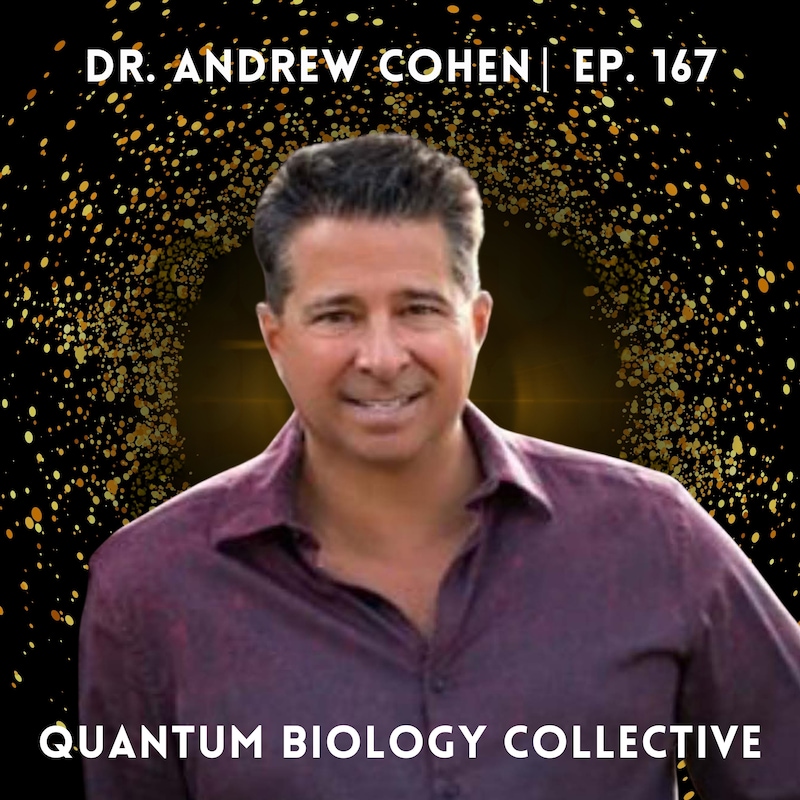
“The body, when it’s inflamed, does not want more oxygen. It wants to get rid of oxygen,” says Dr. Andrew Cohen, board-certified dentist and sleep medicine specialist, who joins the Quantum Biology Collective Podcast to expose a major blind spot in conventional approaches to sleep, chronic fatigue, and airway health. For decades, Dr. Cohen battled relentless exhaustion, sleep apnea, high blood pressure, and reflux—treating symptoms with top-tier interventions from laser surgery to jaw expansion devices, yet his problems persisted and even worsened.
Today, Dr. Cohen recounts the wake-up call that prompted him to overhaul his thinking: a radical shift away from the purely anatomical, toward mitochondrial health and bioenergetics. He explains how improving his light environment, blocking blue light, and reconnecting with natural sunlight rapidly reversed multiple chronic symptoms—including sleep apnea, hypertension, and lifelong fatigue—leading not just to restored function but to true wellbeing.
Dr. Cohen lays out why most dental and sleep practitioners are missing the metabolic roots of inflammation, why "fixing the anatomy" alone can backfire, and how metabolic and circadian interventions can unlock deeper healing than most realize. He shares striking real-world outcomes for himself and patients, the overlooked dangers of blue light, and actionable strategies anyone can use to improve energy and sleep.
Tune in to this episode of the Quantum Biology Collective Podcast to learn why most snoring and sleep issues are not just airway problems—how fixing your light environment could transform your health, and why Dr. Cohen thinks every sleep practitioner must finally integrate quantum biology into their practice.
5 Key Takeaways
- See the sunrise daily—anchor your circadian rhythm and ignite your body’s natural healing systems.
- Get outside and absorb natural sunlight whenever possible—even brief exposure boosts mitochondrial function and reduces inflammation.
- Ditch blue light at night—wear blue light blocking glasses and minimize screen use to protect deep sleep and repair.
- Track your own data—use tools like a continuous glucose monitor and snore lab app to discover patterns between lifestyle, food, and sleep quality.
- Challenge the status quo—ask practitioners about root causes, not just anatomy; holistic approaches integrating light, energy, and environment can solve what procedures alone cannot.
Memorable Quotes
"If you just fix anatomy and someone has a metabolic issue, you have the potential of making them worse. The body, when it's inflamed, does not want more oxygen—it wants to get rid of oxygen."
"In order for a patient to have true skin in the game, they have to understand all of their options. We have an anatomic box, we have a metabolic box, and we can work on them both together or separately—but I don’t think just looking at anatomy and ignoring the metabolic is enough."
"If you get the proper light signals, your brain starts making dopamine and serotonin on its own. You don’t need an external stimulus; you’re making it naturally. That’s what’s so crushing to me, seeing kids with anxiety, depression, and learning disorders when so much of this is tied to light."
Connect with Dr Andrew Cohen
Website: https://www.sleephealthypa.com/what-sets-us-apart/meet-the-doctor/
Facebook: https://www.facebook.com/profile.php?id=61555149623114
Instagram: https://www.instagram.com/andrewcohen_dmd/
Resources Mentioned
SPEAR Education (Advanced Dental Education Center) - https://www.speareducation.com/
Airway Health Solutions (Residency & resources for sleep disorder professionals) - https://airwayhealthsolutions.com/
SnoreLab (Snoring and sleep tracking app) - https://www.snorelab.com/
Connect with The Reverse Aging Club:
On Substack: reverseagingclub.substack.com
Visit The Reverse Aging Club: reverseaging.club
Join us for a weekly live hang out, Thursdays at 12noon ET https://zoom.us/meeting/register/j_07VPOWRbWYtZWbimO9bg
Institute of Applied Quantum Biology
RAC is a proud supporter of the non profit Institute of Applied Quantum Biology, a 501c3 dedicated to integrating quantum and circadian biology into health and wellness practice. Without ipublic support this science will take decades to become widely adopted.
Donate to launch JAQB: https://givebutter.com/AQBjournallaunch
You can join the FREE QBC online community here: https://qbcpod.com/freecommunity
The Institute of Applied Quantum Biology, a non profit organization translating the new science into practical application: https://www.iaqb.foundation/certification
Podcast website: reverseaging.club
Tools we use: https://qbcpod.com/products/
Recommended Products:
Lifewave phototherapy patches. Highly recommended for women 45+ or anyone with a condition or symptom they'd like to see shift. Start with x39.
Purchase retail: https://lifewave.com/qbcpodcast/store/products/40825027-6466-4cb8-92d3-dfc318d34a65
For more info from Meredith, fill out this form: https://qbcpod.com/patches/
Join Us On Social
Instagram: https://instagram.com/reverseagingclub
Facebook: https://www.facebook.com/QuantumHealthTV
Rumble: https://rumble.com/c/TheReverseAgingClubwithMeredithOke
X/Twitter: https://x.com/QBCPOD
IAQB Resources
Instagram: https://www.instagram.com/iaqb.ce
🎙️🎙️🎙️
This podcast uses the following third-party services for analysis:
Podscribe - https://podscribe.com/privacy
Transcripts
Doctor Andrew Cohen, welcome to the QVC podcast.
Speaker:Thank you for having me. I am so excited to be here. Okay. I'm excited
Speaker:to be here, too, because you have one of those stories where you started to
Speaker:tell it to me, and I was like, what? So let's
Speaker:just start there. So we're going to rewind. I'm
Speaker:going to set the stage. You are a practice. You have a
Speaker:thriving dental practice. You're busy, you have
Speaker:kids. Everything's good. And your health starts to take a
Speaker:turn. Starts with chronic fatigue and then mild sleep apnea. And because
Speaker:you're in the dental world, you have access to all the best experts.
Speaker:So you're like, I can deal with this. Because clearly, I'm connected.
Speaker:I know all the people, I know all the things. What happened?
Speaker:Okay. So I'm going to actually go a little bit back, even just a touch
Speaker:more. Okay. Because I'm a big why guy, and
Speaker:my story really starts with why. So
Speaker:my best friend who I went to dental school with,
Speaker:and we practiced a quarter of a mile from each other,
Speaker:he came to my house, he. In
Speaker:2007, and he told me that he
Speaker:was just diagnosed with multiple myeloma. And it was,
Speaker:like, crushing. We were 34 years old. We were just starting to have
Speaker:kids. We vacationed together, we played golf together. We were our
Speaker:sounding boards in dentistry. And he actually. I was
Speaker:really about to quit dentistry. I was,
Speaker:like, 38, and I just. I didn't have a voice.
Speaker:I felt like every time I was telling a patient that they needed to do
Speaker:something, they were questioning me. And I was really lost, and I
Speaker:just really depressed and burnt out. And he begged me to go
Speaker:to a continuing education center in Arizona called SPEAR Education.
Speaker:And he literally dragged me there. And within five minutes of being there,
Speaker:I was like, I knew that this was my education home, and it
Speaker:changed everything for me. I fell in love with dentistry. Could you
Speaker:just say what it was about that program that was different from
Speaker:what you'd previously? Yeah. They helped me find my
Speaker:ability to talk to patients. And that's where I
Speaker:learned co discovery. And literally, on the
Speaker:flight home from Arizona, I revamped my entire
Speaker:practice on the plane, and I implemented it that Monday morning,
Speaker:and I haven't looked back. And now my
Speaker:whole makeup and the whole foundation of both my
Speaker:dental and my sleep practice is. Let me explain the
Speaker:etiology to you. And if you understand the why,
Speaker:then the how and the what becomes easier to
Speaker:follow through. Amazing. So this program,
Speaker:this beer program was for
Speaker:dentists or medical professionals? Dentists no, it's an
Speaker:advanced dental education center. So
Speaker:it's where dentists. If there's a couple in the country, there's
Speaker:Spear, there's a place called Coy's and Pankey and Dawson.
Speaker:Unbelievable. If you want to learn advanced
Speaker:both dental skill and running a business
Speaker:and patient communication, you really need. You just don't learn
Speaker:enough in dental school. You have to get that extra education. And it's one of
Speaker:the top places. So they gave you a training and a framework
Speaker:to relate and communicate with your patients. And that's
Speaker:what transformed everything. Yeah. And as you've seen, like
Speaker:firsthand, so good. I like jump at it and
Speaker:I like dove headfirst. So. Yes, you are. You're a keen
Speaker:learner. Yes, keen learner, Dr. Andy. Awesome. Okay,
Speaker:so fast forward a couple years. He was really struggling with his
Speaker:treatment. He was on a lot of medications and trouble sleeping.
Speaker:And, you know, we were really trying to enjoy as much time as we could
Speaker:together. And so we would share a room. One it was
Speaker:because we wanted to make sure we made it to class together,
Speaker:so. But my snoring had really become a problem and I was
Speaker:afraid that I was going to keep them up. So I made myself a snoring
Speaker:appliance and I woke up the next morning and I was like,
Speaker:oh my God, that's what it's like like to sleep. And I
Speaker:just like recently I was at a Cirque du Soleil show in Vegas and I
Speaker:fell asleep in Cirque du Soleil. That's how tired I was all the time. So
Speaker:it turns out my first patient was a board certified sleep
Speaker:pulmonologist. Okay, so just to recap, so you were sharing a
Speaker:room with your friend who was unwell. You were worried you would keep him up.
Speaker:So you're like, I'll just create a device for myself to stop
Speaker:myself from snoring. Yeah. And it worked. And you were
Speaker:like, oh, this is what it feels like to be well rested. Yeah, I had
Speaker:no clue. And then my first. We don't know what we don't know, like normal.
Speaker:I mean, like our normal is our normal. I just thought, you know, I
Speaker:young kids and I worked a lot, like crazy hours, and
Speaker:I just thought I was tired. And my first patient today was a
Speaker:sleep physician and he said, let's get you sleep tested. And I had mild sleep
Speaker:apnea. So I treated myself with an appliance
Speaker:that brought my jaw forward. And when you bring your jaw forward, your tongue
Speaker:comes with it and it opens up my airway. And like, I was great for
Speaker:a couple of years. My wife is happy cause I wasn't snoring anymore.
Speaker:But then like a couple years later, I started to snore again.
Speaker:And now my blood pressure was going up and I was gaining weight
Speaker:and like nothing really had changed and I didn't understand it.
Speaker:So I, like, I dove into sleep medicine, ultimately
Speaker:becoming board certified in 2019. And
Speaker:I was going along this. At first when I started, I was like an
Speaker:appliance dentist. I would make an appliance. And then I started learning at
Speaker:SPEAR education, where I was faculty too, that
Speaker:there was an anatomic component, you know. So what is it? I started learning about
Speaker:nasal breathing and expansion. So it tones
Speaker:and lifts the soft palate. Okay. So it
Speaker:opens up the airway. But it's not like a permanent fix.
Speaker:It's kind of like going to the gym for your soft ballot. Okay. And.
Speaker:But if you don't use it, you lose it. So you have to do touch
Speaker:ups. But it worked great. I mean, my VO2 max
Speaker:improved. During the day, I could work out. I mean, I could. I just felt
Speaker:like I could breathe easier. But then again, year
Speaker:goes by and now my blood pressure starts creeping up again.
Speaker:And they went from one medication to two medications and they said, oh,
Speaker:take another medication. It's fine. We got you managed. And that
Speaker:was like, it. I've had reflux my entire life. I was worried about being
Speaker:on protein pump inhibitor and what it was going to do to my kidneys and
Speaker:my bones, but I could not get off of it. What's a
Speaker:protein pump inhibitor for? For the reflux. Like,
Speaker:so it literally stops the production of acid in the stomach. Okay.
Speaker:And. But it has kidney and bone issues, like side effects
Speaker:to it. And I mean, I've been on it since I was in my 20s
Speaker:and if I missed a day, it was just so painful.
Speaker:Okay. So I just. So you're on the medication for the
Speaker:reflux, then they add blood pressure,
Speaker:then they add another blood pressure, and then there's like an annual
Speaker:laser treatment to open the airwaves. Yep. I just want to get a full
Speaker:picture of all the full picture interventions happening. And the
Speaker:reflux thing had been like. Sounds like most of your adult life.
Speaker:Yes. And I've been. And I was tired my whole life.
Speaker:Like, I. I was that person that would hit snooze 11
Speaker:times and all my roommates would want to kill me because I just
Speaker:kept hitting snooze every nine minutes. I couldn't get up. Yeah,
Speaker:I relate. Yeah. For now, it's 2022.
Speaker:I am wearing a bra strip, mouth tape,
Speaker:and appliance. I've done laser treatments, and
Speaker:I'm still snoring. I'm still feeling tired. I'm never feeling rested.
Speaker:So I decided to do maxillary expansion, where I
Speaker:literally separated and expanded my top jaw at 53 years
Speaker:old. What is. Okay, what does that look like in practice? Is.
Speaker:Is that a procedure or a device you put in your mouth?
Speaker:So I had eight implants
Speaker:inserted into the roof of my mouth like a kid would do,
Speaker:like a palatal expander. But when you're an adult, you need to
Speaker:anchor it with implants. And then I had to crank myself open
Speaker:until I separated. And I separated the day of
Speaker:Thanksgiving on my mother in law's couch. I heard it snap and it
Speaker:was. Oh, God. Oh, God. I'm sorry.
Speaker:That sounds awful. Yeah. I mean, it wasn't fun.
Speaker:It wasn't, you know, it wasn't really, like, painful. It just, you
Speaker:know, you lisp a lot. It's uncomfortable. But I had to fix
Speaker:myself, right? And everything that I had been told up to that
Speaker:point was the only way I could fix myself was fixing the anatomy.
Speaker:Okay? That is how we are trained. Fix
Speaker:the anatomy, fix the flow, and you will
Speaker:improve. Six days after I opened. I have never
Speaker:breathed so well in my life because I have a deviated
Speaker:septum. Okay. And when I started widening. Your
Speaker:maxilla is connected to the nasal bones, so they
Speaker:were widening too. Okay. I have not been
Speaker:congested or stuffy in a year and a half. I mean, that was like
Speaker:the single best thing. I can breathe all the time. So you might. So
Speaker:that you did that expansion and it was like
Speaker:new breath. Like, oh, my God. The breathing ways you could never
Speaker:have. You weren't able to breathe before. I thought I was fixed.
Speaker:I really thought I was fixed. And then the summer after,
Speaker:I had that taken out, six months later, now I'm in
Speaker:ortho to get my teeth aligned. I did a
Speaker:sleep study at a course that I was in in California to
Speaker:learn how to do a tongue tie release, which is really important to create
Speaker:a proper seal for nasal breathing. And they make you do sleep
Speaker:studies there to see how you're doing. And I went from mild to
Speaker:severe, and I was like, what? So you did
Speaker:this rather complex
Speaker:intervention to widen the anatomy of your jaw.
Speaker:Yes. Which did bring a lot of relief and did improve your
Speaker:breathing in many ways. Yes. But then you went and did a sleep study
Speaker:and your sleep was worse. Yes. Okay.
Speaker:Crushing, chronic Illness is so complex, isn't it?
Speaker:Like, it is not necessarily a straight line. Okay.
Speaker:So all of my colleagues told me, well,
Speaker:you know, that your jaws are both set back
Speaker:this way, so you need to now break both your jaws and move everything
Speaker:out. And I had to do something because I was
Speaker:desaturating below 90% for over an hour, which is
Speaker:like, what does that mean? So my oxygen levels
Speaker:were dropping into the 80s for over an hour while I
Speaker:slept. That makes you at a really
Speaker:high risk for stroke, heart attack, and
Speaker:there's. It's supposed to be, like, in the high 90s. Well, I mean, ideally, like,
Speaker:if you were to test it right now, you would be somewhere around 96, 97,
Speaker:98. Okay. So when you're in a hospital and you're wearing the pulse Ops on
Speaker:your finger, the bells aren't going off when you go below 94.
Speaker:But no, nurses come in. They don't come in until you go below 90.
Speaker:When you start going. Going below 90, they come into the room, they put
Speaker:oxygen on you. Like they're trying. Like, being below 90 is
Speaker:bad. And you are dropping below 90 every. Night for
Speaker:over an hour. Which is over an hour. Yeah. Which is
Speaker:terrible. I mean, you're talking about, like, high risk for cognitive
Speaker:decline, inflammatory issues. Like, bad.
Speaker:I had to do something. So from class,
Speaker:I called the number one oral surgeon in the entire country.
Speaker:His name is Mike Gunson in Santa Barbara. And I said,
Speaker:I'm in big trouble. And he said, and I scheduled for December 11th.
Speaker:And then I said to myself, well, maybe I can, you know, get myself a
Speaker:little bit healthier before I do the surgery, which will improve healing.
Speaker:And someone had mentioned about sugars, and that's kind of how I entered
Speaker:the circadian and quantum realm was
Speaker:I got a constant glucose monitor, and even though I wasn't diabetic
Speaker:or pre diabetic, my sugars would go out of range. So I
Speaker:started wearing a constant glucose monitor to just keep myself in
Speaker:range. And I started to see that I was doing
Speaker:better. But that's when I heard the podcast with
Speaker:Jack Cruz and Max Gohane, and I was like, whoa,
Speaker:I'm really missing the boat here. I'm doing exactly
Speaker:what healthcare is doing. We're looking at people from a macro
Speaker:standpoint, and we need to look at people from a micro standpoint,
Speaker:because the cellular issues that people are having,
Speaker:the energy issues, or in my case, the energy
Speaker:brownout that I was having, an exponential effect on all of
Speaker:my systems. Fatty spots on my liver,
Speaker:creeping high blood pressure Triglycerides that were high,
Speaker:sleep apnea, they're all inflammatory diseases. So
Speaker:about three months after I started. Okay, one quick
Speaker:sec. So when you listened to the podcast with Dr. Gulhane
Speaker:and Dr. Cruz, like, just summarize one more time,
Speaker:like, what the paradigm flip was for you, because so
Speaker:you were. You were like, macro to micro. Yeah, well, I mean,
Speaker:in transparency, I listen to that podcast, like, four times to start
Speaker:to understand it. Okay, well, yes, everyone does.
Speaker:That's, you know, I mean, that's part. Of the course
Speaker:cycles. And, you know, I learned it in dental school, but I just learned it
Speaker:till I could pass the test. I didn't really understand, you know, the
Speaker:implications of how your mitochondria is really the
Speaker:light water magnetism. And it was hearing that for the first
Speaker:time, for the second time. And lucky for me, my
Speaker:best friend in Las Vegas, his name is Doug Sanquist, who's also a
Speaker:dentist, he was about a year ahead of me in this journey
Speaker:and had been telling me, and he was an advocate for me, he says, andy,
Speaker:I really don't think you should do surgery. I really think you need to learn
Speaker:about Redox, and I think you need to learn about how to improve your energy
Speaker:system. And when I first heard him tell me about this,
Speaker:I mean, I thought he was nuts. And, you know, we joke about it now,
Speaker:and it was probably a month later, I'm like, wow. Like, I'm
Speaker:really, like, I feel better, you know? And it was the
Speaker:summer, so it was so easy for me to just spend more time outside.
Speaker:Okay, so you listened to this podcast. It flipped, and you were
Speaker:like, oh, maybe I start with my mitochondria instead of just
Speaker:doubling down on the anatomy. Correct. I didn't want to do the
Speaker:anatomy. Well, yeah, that sounds really awful.
Speaker:Yeah, I really didn't want to do it, but I felt like I had no
Speaker:choice. It was the only option that was given to me. Right, and so in
Speaker:the paradigm that you were working out of and that you're
Speaker:all of your colleagues work out of, it's an anatomical
Speaker:issue from beginning to end. That is what their
Speaker:working theory is. That's what they work from. And so you
Speaker:opened the aperture a little bit because you're like, I really don't want to break
Speaker:my jaw and have this surgery. And started to
Speaker:bring mitochondrial function and
Speaker:perhaps like, a bioelectric
Speaker:paradigm into the picture. Yep. Okay. And
Speaker:so then how. What did that do? Like, how did your behavior. Like, what did
Speaker:you start to do once you were like, okay, if this is True. I'm gonna
Speaker:try like, you just like going outside or like, what were your.
Speaker:Right, so. Well, I have a tendency, as you know, to jump
Speaker:all in. Yeah. But this is a hard area to jump
Speaker:all in on because it requires a lot of discipline.
Speaker:So I started with, you know, for me, the easiest thing to
Speaker:do, the easiest metric for me to check was a constant glucose monitor.
Speaker:And I started to make like really big changes. And then
Speaker:I started to see that I would have a night with
Speaker:no snoring. And then if I had like pasta or
Speaker:pizza, I would snore terribly. And I'm like, okay,
Speaker:so there's an inflammatory component here, the sugars, like. Cause
Speaker:I literally was tracking, was using the app snore lab
Speaker:and I was tracking when my sugar went
Speaker:up on my cgm and when I snored, they went
Speaker:up and down together. It was amazing. So. But then
Speaker:daylight savings happen. So in that first three months,
Speaker:I went from severe back to mild with just getting
Speaker:out into the sun during the day. I did not understand
Speaker:all the different spectrums of sun. I didn't understand red light at that point.
Speaker:And uva. I just started mitochondria doesn't care what you
Speaker:understand, it just cares. You're outside. Yeah, I
Speaker:wasn't blocking blue light at that point. I just kind of was CGM and
Speaker:getting outside really dark in uvb, which was great. I mean, I felt better
Speaker:when I was in UVB light. And then the sleep apnea went from severe to
Speaker:mild. Then daylight savings happened. And all of a sudden it was like I
Speaker:took a massive step backwards. That was my aha moment.
Speaker:Because what changed with daylight savings was my light.
Speaker:So everything else was the same, except now I was
Speaker:completely missing. All my signals were messed up. And I was
Speaker:talking to my friend Doug and Doug's like, I
Speaker:think you need to start getting more of these light signals into your
Speaker:system. And I did. I went all in on light and
Speaker:I started seeing the sunrise every day. So I would sit out in front
Speaker:of my office for 20 minutes every morning at sunrise.
Speaker:Then in between patients, I would, if I had like a five or ten minute
Speaker:break, I would walk outside during uva and then I would
Speaker:come home and I would eat my lunch outside. And you know,
Speaker:during uvb, I bought my first two pair of
Speaker:blue light blocking glasses. I bought a red light panel to
Speaker:help me use as an adjunct because I do believe that there's no
Speaker:replacing the sun. But sometimes, like, you know, right now it's what, 10 degrees where
Speaker:we live, going outside is kind of hard. So we have to, you
Speaker:know, see where can we meet our patients, where can I meet myself?
Speaker:And that's really what my focus is as I started working with
Speaker:patients back in April. Like, I want to meet my patients where they're at.
Speaker:I had blood work done in the beginning of January, and
Speaker:a lot of it wasn't all that great still. And
Speaker:I started asking them for specific tests, and they
Speaker:said, my physician, why do you want those? And I said, well, I
Speaker:wanna understand my inflammatory component. I wanna understand my
Speaker:leptin. And he's like, well, what would you do with that? And I said, well,
Speaker:I would get more red light and more sunlight and block more blue. And he
Speaker:laughed. And then three months later, I came back. My triglycerides went from
Speaker:170 to a hundred. My A1C went from
Speaker:5.7, 5.3. My vitamin D went from
Speaker:47 to 66. So. And
Speaker:now, a year and a half later, I have no apnea.
Speaker:0. I just tested it two weeks ago. I'm on no blood pressure
Speaker:medication. I am on no reflux medication.
Speaker:And I can't remember the last time I said, oh, my God, I have to
Speaker:take a nap. I mean, if I want to take a nap, I choose to.
Speaker:But before, it was like I had to schedule my whole day around the nap.
Speaker:I lost 40 pounds. I have put 10 back on since the winter,
Speaker:just because it's. I think, you know, my wiggle room, I think that's
Speaker:really the key, right? So my wiggle room with my anatomy
Speaker:is small because my anatomy is still off, right? It's still
Speaker:set back. But if I control all my factors, then my
Speaker:anatomy is not a component because I'm fixing my energy
Speaker:system, I'm reducing my inflammation. And I
Speaker:just said this to a patient that I had a consult with yesterday. Actually, excuse
Speaker:me, it wasn't a patient. I was speaking down at Temple University Hospital to the
Speaker:sleep fellows. I did a presentation for them explaining the dental
Speaker:components, the anatomy, how they need to look at their patients very
Speaker:simply to say, okay, is there an anatomic issue that could be contributing
Speaker:to this? And I said to them, I said, well, let me ask you a
Speaker:question. I said, if you twist your ankle, does your ankle get bigger or smaller?
Speaker:They said, bigger. I said, if you have heart disease, does your heart get bigger
Speaker:or smaller? Bigger. Someone who has type 2 diabetes, do they get bigger or
Speaker:smaller? Bigger. I go, why would the soft palate, why would the nose, why would
Speaker:the pharyngeal region act any different Tissue is tissue. If you're
Speaker:inflamed, it's going to get bigger. If it gets bigger, it's going to get closer
Speaker:together. You're going to snore, you're going to have sleep apnea, and then you're
Speaker:missing. The most important time for your body to heal
Speaker:and repair itself is sleep, because you're not getting into the proper levels of
Speaker:sleep to allow that to happen. So this never ending
Speaker:wheel that you're on, you're inflamed at night, you're inflamed during the day,
Speaker:your signals are getting messed up, your signals are messed up at night. So
Speaker:I open their eyes to make them understand that
Speaker:there's a lot of factors. And I've gotten a lot of
Speaker:pushback in the dental community because I'm coming at this
Speaker:and they think I'm trying to say, oh, the sun is going to fix
Speaker:all your problems. No, that's not what I'm saying. What
Speaker:I'm saying is that if you just fix
Speaker:anatomy and someone has a metabolic issue,
Speaker:you have the potential of making them worse. Because the body,
Speaker:when it's inflamed, does not want more oxygen. It
Speaker:wants to get rid of oxygen. Ho, ho, ho, ho. Okay.
Speaker:This is big. That is a big statement. Yeah. The
Speaker:body, when it's inflamed, does not want more
Speaker:oxygen. This would speak to people who have adverse
Speaker:reactions to hyperbaric oxygen treatment, which happens.
Speaker:A friend of mine had that happen with a family member.
Speaker:They were all excited. They thought this was gonna really help this
Speaker:person recover from a complex series of illnesses and
Speaker:surgeries. And he nearly died.
Speaker:So when you're opening people's airways and doing all of
Speaker:this anatomy, the thought is more oxygen is better.
Speaker:But if you, what you're saying is if you don't understand the metabolic piece,
Speaker:more oxygen is not necessarily better. Boom. So why would that
Speaker:be? One of the biggest reasons is when the body is inundated
Speaker:with inflammation. Blue light, non native EMF.
Speaker:Iron in its natural state of iron +2 goes to iron
Speaker:+3. And iron +3 can't carry oxygen in the
Speaker:body. So you become hypoxic. The body's trying to get rid of the
Speaker:oxygen, it needs more electrons. So we all
Speaker:know that free radicals, which is free oxygen,
Speaker:is what is a marker for cancer. So you know,
Speaker:or if you look at the definition of inflammation,
Speaker:it's fire. How do you make a fire flame,
Speaker:build, burn bigger? You add oxygen to it, you add
Speaker:fuel to it. So if the body is not
Speaker:reacting well, if apoptosis and tigathy are not working
Speaker:well, if we're not having enough energy to make
Speaker:melatonin to that gets your free radical,
Speaker:you are just making inflammation worse. So
Speaker:I think it's important component and what I'm trying
Speaker:to get across to the dental field or the
Speaker:sleep field is that these patients
Speaker:absolutely may need anatomic fixes.
Speaker:But, but let's see how much better they can get. If you fix
Speaker:root cause problem, which is inflammation.
Speaker:That's the etiology of every disease we have is based in
Speaker:inflammation. If you have someone that is on high blood
Speaker:pressure medication and their blood pressure is managed and you take them off
Speaker:the blood pressure medication, what happens to your blood pressure
Speaker:goes back up. Because you haven't fixed the etiology, you're managing their
Speaker:problem. If you want to try to resolve disease, you have
Speaker:to fix things at a foundational level. And that's why I
Speaker:was attracted and for the last year and a half
Speaker:been studying quantum and circadian biology because that's
Speaker:root cause issues. And the issues that you
Speaker:make on a micro level have an exponential
Speaker:effect on the body. And when I was presenting yesterday,
Speaker:I said, you, you remember when you were a kid and you took a microscope
Speaker:and you used to, you know, get the sunlight and you would burn
Speaker:blades of grass and they all laugh because they're like, yeah, we were
Speaker:doing like bugs and stuff. I'm like, look, I know, but I was trying to
Speaker:keep it, you know, on the download that we were just burning grass.
Speaker:And I said, well, that's the same effect that you can have
Speaker:when you get your energy system in your body working bright. It's
Speaker:exponential. You're focusing that energy into the body.
Speaker:So the body's processes are doing everything that they need
Speaker:to do to run effectively and efficiently. And that's I think,
Speaker:a critical piece to this puzzle. So
Speaker:it's not that metabolic will fix sleep apnea.
Speaker:Metabolic is an adjunct to some of the anatomic
Speaker:fixes that we can do. We need to be able to offer
Speaker:both, that's true informed consent. And that's my
Speaker:frustration with my colleagues, is that
Speaker:we're too procedure based. And in order for a patient
Speaker:to have true skin in the game, they have to understand
Speaker:all of their options out there. And that's my goal when I'm working
Speaker:with patients to say, look, we have two boxes that we can work with.
Speaker:We have an anatomic box, we have a metabolic box, and we can work
Speaker:on them both together we can work on one
Speaker:and then maybe switch to the other. But I don't
Speaker:think just looking at anatomy and
Speaker:ignoring the metabolic, we have to be able to at least
Speaker:inform our patients on how they can get their
Speaker:foundational energy system working better and make them understand
Speaker:how important that is. And, you know, sometimes it's as
Speaker:simple as making them understand that wearing sunglasses in the middle of the day is
Speaker:telling your brain it's nighttime, and using blue light at nighttime
Speaker:is telling your brain it's daytime. You're all of the signals that
Speaker:our body is supposed to be doing at those specific times
Speaker:are getting. They're in chaos. And when
Speaker:you first hear about this, it's very difficult to wrap
Speaker:your head around it. But then when you start to see the evidence, when you
Speaker:start to understand what we're really talking about, the change
Speaker:is profound. And I think I proved that in myself.
Speaker:Where, I mean, look, my trouble foods are the three Ps.
Speaker:Pizza, pasta, pretzels. Can't walk by it without eating it.
Speaker:Okay, well, it doesn't mean I can't not eat it. I eat it all the
Speaker:time. I just now know that if I eat it, 30 minutes later, I go
Speaker:out on a walk and I use up my sugar so it doesn't get stored
Speaker:as fat. So it's knowledge. And you
Speaker:know, how you can make simple changes in your life, but the simple
Speaker:changes take dedication to follow through. And that's
Speaker:the challenge. This is quite the journey you've
Speaker:been on, Andy. Like, truly. And then.
Speaker:And to already be out in front of your peers and in front of your
Speaker:colleagues educating on this and bringing that piece in.
Speaker:For somebody listening to this, where, let's say this is their first time
Speaker:coming in contact with this info. You know, talk to me about the
Speaker:sunglasses during the day and the blue light at night. And that's throwing my body
Speaker:into chaos and causing me to be inflamed, blamed, and causing
Speaker:me to potentially present as needing surgeries and all these other things,
Speaker:like, because of the light. Like, how is that so
Speaker:reorient me if I'm in a paradigm that just doesn't.
Speaker:Right. Well, it's like the current paradigm is just like light.
Speaker:So what? Like it's nothing? Like, it doesn't matter. Our paradigm
Speaker:is that our biology is programmed by light. So talk to me
Speaker:like I'm in that first category and it's how do you
Speaker:talk to your clients and your patients? Yeah, that's the challenge, isn't
Speaker:it? So, you know, when you start talking about light, it seems so
Speaker:insignificant. Yet we are creatures of energy
Speaker:and Light. And if we don't get that system working
Speaker:properly, we're doomed to fail. So what
Speaker:I try to do is I try to make
Speaker:analogies for patients so they can better understand when
Speaker:I'm talking about sunlight. I will tell them that red light
Speaker:or the sunrise, which anchors your circadian rhythm, it
Speaker:gives your. It's basically resetting all the clocks in our body.
Speaker:And at 8 o' clock in the morning, maybe our liver
Speaker:is supposed to work. At 9 o', clock, our pancreas is supposed to work. At
Speaker:10 o', clock, our heart is supposed to end. Every clock in our.
Speaker:Each organ has a specific time to run a specific
Speaker:function. And what we need to do is we need to turn the hands back
Speaker:of the clock and get it set up every day. So we're maximizing
Speaker:the process of when it's supposed to happen. Because if we miss it,
Speaker:then we've missed it for the day, and then we don't get the benefit of
Speaker:that function within our body or if it's going to
Speaker:work, it's competing with another
Speaker:bodily process. So now you're competing for energy.
Speaker:So it's kind of like trying to do two tasks at the same time.
Speaker:That's why it's really important to try to align your system every day. And
Speaker:sunrise does that. It anchors it. It tells your body,
Speaker:okay, it's time to get moving. Stop producing
Speaker:melatonin, stop producing cortisol. Let's go, let's
Speaker:conquer the day. And what I say to patients is sunrise
Speaker:is literally the keys to the car. UVA light,
Speaker:which is one hour after, is where all of our important amino
Speaker:acids are signaled to be made. That's the gas to the
Speaker:car. And UVB is the engine.
Speaker:Well, if you miss any of those signals, the car isn't running. And
Speaker:here's the key. Blue light at nighttime, after the sun
Speaker:goes down, is popping a hole in your tires. So you can have
Speaker:your gas, you can have the keys, your engine can be running well.
Speaker:But if you have flat tires, you're not going anywhere. And that's ultimately what
Speaker:blue light does. It breaks the
Speaker:metabolic signals in our body so we don't
Speaker:produce the necessary fuels to run our body
Speaker:properly. And there's a lot of science that goes involved in that. And
Speaker:depending on how much a patient or a, you know, a
Speaker:client or another doctor or colleague wants to hear about it,
Speaker:that I can start diving deep into that.
Speaker:Blue light interferes with. Blue light causes the
Speaker:calcium channels to stay open. And when a cell gets flooded with
Speaker:calcium, it makes Peroxy nitrite, which, you
Speaker:know, causes cellular damage and DNA damage and
Speaker:cognitive problems. And what does all that lead to?
Speaker:Inflammation. Point out that blue light. There are tons of
Speaker:studies about the incidence of blue light in breast and
Speaker:prostate cancer. Why is this not being talked about? Why
Speaker:are people getting sunburns during the day? Because they're not
Speaker:getting their exposure to the sun done properly.
Speaker:You know, most people think of melatonin. They think of, oh, that's going to help
Speaker:me fall asleep. And yes, that's true. The brain makes
Speaker:melatonin that gets deposited into our
Speaker:bloodstream at night to help us sleep. That only
Speaker:counts as 5% of our melatonin that our body makes.
Speaker:The other 95% of melatonin is made
Speaker:in our cells and in our mitochondria. And the purpose
Speaker:of that is it's an antioxidant. It actually seeks
Speaker:out excess oxygen which is free radical. It
Speaker:binds to it and it prevents inflammation and
Speaker:breakdown of the body. So how do we make more
Speaker:melatonin? We need UV light. Well, that goes against what all the
Speaker:dermatologists are telling us, that we need to avoid UV light. But
Speaker:then you look at when did skin cancer really start going up? And it was
Speaker:1980s. So what happened in the 1980s? We became
Speaker:inundated with technology. There are, there was a study that was
Speaker:just released, it's pre printed, so it hasn't been peer reviewed
Speaker:yet. And one of the contributing authors was a
Speaker:dermatologist. I think it's the first article that I've seen a dermatologist be
Speaker:associated with. They studied 419,000
Speaker:people and found that increased
Speaker:UV exposure decreased cardiovascular
Speaker:and non skin care mortality with no increase
Speaker:in skin cancer incidence. That's a pretty
Speaker:powerful study. So going outside caused
Speaker:incidences of all disease to go down.
Speaker:Yes. And did not raise skin cancer incidences.
Speaker:Correct. And that's it. That's the second study. There was a study in
Speaker:2014 called the All Cause Mortality Study
Speaker:that most of us have been using. This is why this
Speaker:second study is so exciting, because it's even on a bigger
Speaker:scale that has shown. They did a study of 29,000 people
Speaker:in the Scandinavian countries and they had less
Speaker:mortality when they were outside in the sun more. So we have to
Speaker:start asking. Glenn Jeffries is a prominent physicist.
Speaker:He does research. Yeah, he's a research scientist. Research scientist.
Speaker:And he just had an unbelievable study that came out about the benefits
Speaker:of red light and how it improves mitochondrial function when done in the
Speaker:morning. Doesn't have the same effect. In the afternoon. What does that tell
Speaker:us? It tells us that light signaling and the timing is
Speaker:so critical to better health. And it's when you first
Speaker:start, you know, when you start to hear these things and you, you start
Speaker:to see the breadcrumbs that are being laid out, you can really start
Speaker:to fact check all of this on your own. And
Speaker:we just need to have more people start to understand
Speaker:the implications of this. And why is it not
Speaker:being talked about? And I think it's not being talked about because the sun
Speaker:is free. It doesn't cost any money to go outside.
Speaker:Yep. I think big Pharma would rather us have
Speaker:Ozempic, which again is a drug that
Speaker:just manages a problem. It does not fix
Speaker:etiology. No, it does not. And I think
Speaker:you mentioned earlier when you bring, you brought up metabolic
Speaker:health and circadian and quantum biology to your colleagues and
Speaker:what you were saying was we need to look at the metabolic factor.
Speaker:And what they heard was what we do. You're saying what we
Speaker:do, it doesn't matter and we should get rid of it. And it's like
Speaker:that is the thinking that I hear every single time
Speaker:someone brings up light and whatever the person's area of
Speaker:focus is. If you say light is fundamental to human
Speaker:health, they hear. You're saying, my thing doesn't matter. You're saying
Speaker:food doesn't matter. You're saying exercise doesn't matter. You're saying
Speaker:like no one is saying that.
Speaker:No one is saying that. Right. It's an and. And, and
Speaker:I'm taking a lot of bullets from people that I really,
Speaker:really cared about and who were some of my mentors.
Speaker:And all they're hearing is, I'm saying, oh, blue light
Speaker:is if you block blue light, you're going to take away sleep apnea. And
Speaker:that's not what I'm saying at all. You know, what I'm saying is
Speaker:blue light's going to make your sleep apnea way worse. Blue light's going to
Speaker:cause inflammation. Non native EMF is going to cause
Speaker:inflammation. You know, it's, it's interesting. I have a friend, so
Speaker:I was visiting faculty at spear, so I would go and mentor
Speaker:other dentists from around the country. And one of them called me up
Speaker:and she had been sick for the better part of four years
Speaker:and she's been going to the Mayo Clinic in Minnesota
Speaker:and they have not been able to help her. I mean, it's one of the
Speaker:top out there. I can't tell you how many times I've heard that
Speaker:a version of that story. Oh, like, name the top
Speaker:clinic in the country in the US and they
Speaker:got nothing. So I'm talking to her, and I don't know
Speaker:anything about where she's from. All I know is that she's from
Speaker:North Dakota. And I said to her, I go, is there any
Speaker:chance that you live near a military institution? And she left.
Speaker:She almost dropped the phone. And she goes, I'm in the national
Speaker:reserve. I was transferred to North Dakota, and
Speaker:that's where the third arm of our nuclear defense is housed.
Speaker:So she's inundated with radar. So I instantly told her, I said, you got to
Speaker:get a tri fold meter and you got to see what's going on. There's
Speaker:not a safe place in her house except for one place, her basement, which is
Speaker:underground. If she goes outside in the middle of her yard, the
Speaker:electromagnetic forces in her area are nine times the safe
Speaker:dose. She has no opportunity to heal. And
Speaker:she literally called me. She's been doing so much better. She's been driving, like,
Speaker:you know, in the warmer weather. She's been driving, like, two and a half
Speaker:hours away from where she lives with her kids to, you know,
Speaker:get outside whenever she can. And she was doing well,
Speaker:but she realizes she has to move. Yeah. And
Speaker:she called me the other day, and she goes, what do you think? And I'm
Speaker:like, well, I kind of told you in the beginning, like, this is, you know,
Speaker:it can't be good. We talked about getting a building biologist, but where she lives,
Speaker:it's hard to get a building biologist out there. And, you know, if
Speaker:you can't make your sleeping environment as safe as possible,
Speaker:then you can't heal. And if
Speaker:that's why this is so connected to what I
Speaker:do. Yes. Because my field isn't. Is
Speaker:critical. I have to get patients to sleep
Speaker:because that's when they're going to heal. And if they're not getting proper
Speaker:sleep, then their body's not healing, and they're set up
Speaker:the next day to just rinse and repeat. Yes.
Speaker:It's all connected. It's all connected. The
Speaker:light in the morning is connected to your sleep that night is connected to.
Speaker:To all of the symptoms that you're experiencing
Speaker:that a person is experiencing. It's funny when you point things out. Well, it's
Speaker:not funny, but you know what I mean. Yes. When you point things out to
Speaker:people that are just so. Like, they never connected the dots. So when I
Speaker:tell people, have you gone down for, like, a beach vacation? And
Speaker:they're like, yeah, and I'm like, if you're in the sun all day, aren't you
Speaker:exhausted at night? And they're like, yeah, like, I just thought it was the
Speaker:sun. I'm like, well, it is the sun that you. You've been producing melatonin all
Speaker:day long. Like your body has gotten all the proper signals. And
Speaker:then it says, okay, I'm done for the day. Let's go to bed. Yeah. And
Speaker:then you wake up and you feel amazing and you're like, oh, it's because I'm
Speaker:on vacation. Right. And it's not. I mean, that's a component.
Speaker:Yes. You know, we get to live in a fantasy land for a week where
Speaker:we don't have any stress, but it goes. You know, maybe the
Speaker:reason why you feel amazing is because if you get the proper light signals,
Speaker:your brain starts making dopamine and serotonin on its own.
Speaker:And now you don't need to get an external stimuli from
Speaker:like an electronic or a food
Speaker:or whatever somebody's doing because you're making it naturally.
Speaker:And that's what is so crushing to me to
Speaker:see all the kids across the country battle
Speaker:anxiety and depression and have learning
Speaker:disorders when so much of this is tied
Speaker:to light. And the studies are all out there
Speaker:about how blue light contributes to depression. Yeah,
Speaker:there's the blue light studies showing that's true. And then
Speaker:there's the teenage health studies showing that
Speaker:being on your device is leading to all these terrible mental health
Speaker:outcomes. But they don't connect the dots. The
Speaker:conclusion on the kids mental health studies is, oh, they must be
Speaker:watching stuff that's making them sad or something. And
Speaker:it's like. Or it's the device itself. I don't, you
Speaker:know, I'm not going to disregard the idea that there's terrible content out there that
Speaker:is children. You know, that's not having a good effect. But
Speaker:you could be conjugating Latin on your phone. But if it's 10
Speaker:o' clock at night and the phone is on factory settings, you're still
Speaker:destroying your brain and your ability to function.
Speaker:And that's exactly when I mean that I meet my patient
Speaker:where they're at. Okay. If they're not going to not
Speaker:scroll on their phone before they go to bed, then the workaround
Speaker:is just wear blue light blocking glasses. Yeah, but we're the red
Speaker:ones, so we really block out and maybe lower the
Speaker:lux on the phone a little bit so it's not as bright. And I guarantee
Speaker:you if you're scrolling and you have blue light blocking glasses on
Speaker:45 minutes late, you're going to be tired because the blue light
Speaker:signals are not. You're gonna start producing melatonin. But
Speaker:if you just try to put a filter on a phone, that's not enough. You
Speaker:have to block the blue light. And it's. You know, they're being told, oh, I
Speaker:know I shouldn't do screen time, but they're not being told why.
Speaker:And that isolated frequency is so damaging
Speaker:to our metabolic health. Excuse me. Not frequency, wavelength. And it's.
Speaker:That's my job. I mean, I'm so excited. I have a platform.
Speaker:Next week, I'm speaking in Las Vegas. And, you know, the first
Speaker:half. Yeah, the first half of my talk is on anatomy, and
Speaker:the second half is all on metabolic and. Oh, Andrew, that
Speaker:is so good to hear. Is this like an industry
Speaker:conference? It is. It's called the Breathe and Thrive
Speaker:Symposium. So it's a lot of dentists who are treating
Speaker:kids, who are treating adults with sleep and airway issues
Speaker:and all the different. There's my functional therapists that are
Speaker:there, and it's an exciting time, but I also
Speaker:have to do it in a way where, you know, unfortunately,
Speaker:I don't. They. I need to present it in a way that. That they can
Speaker:hear it. Yeah. And so it's to
Speaker:start with telling a story, and then if they want to
Speaker:hear more, I think, you know, this. I'm making a mini
Speaker:residency for dentists and anyone in the dental field that's starting
Speaker:in April that dives deep into this so that they can
Speaker:learn how they can act as an advocate to their patients,
Speaker:give them strategies to help them start to overcome their metabolic health.
Speaker:And so they can, in conjunction with their anatomic
Speaker:procedures that these patients still need, we
Speaker:can now really try to get to the root of the problem. Fix
Speaker:foundational help. Yes. And it's tough sledding, but,
Speaker:you know, I'm. Yeah, people want this. I
Speaker:mean, you know, if there's anyone listening who's in this industry,
Speaker:there is a holistic dentist about an hour from me.
Speaker:And people drive from all over
Speaker:to go there because they don't want
Speaker:to go straight to throwing train track on their little children's mouths.
Speaker:They want something that takes in to account
Speaker:the entire child. Now, they don't have the light piece,
Speaker:but they have the anatomy, they have the breathing, they have the food, and they
Speaker:at least, you know, they're on the right track. And because they're using that word,
Speaker:holistic, they're open to widening their scope.
Speaker:And medical people, dental people, the
Speaker:Public wants this. I have lost
Speaker:count of the number of conversations I've had that start
Speaker:with exactly what your friend. My child had these
Speaker:symptoms. I had these symptoms. My parent had these symptoms. We went to every top
Speaker:clinic in the country. No one could help. And that because none of
Speaker:them asked, where do you live? What do you like? What?
Speaker:They don't even think in those terms. But I'm. There are so many
Speaker:people who want this. So anyone
Speaker:listening? If you're a dentist, if you know a dentist, send them to
Speaker:Andy's program, please. Your practice will explode
Speaker:like, the public is waiting. We're waiting.
Speaker:We are reached a turning point. And there's so much
Speaker:frustration out there. There's so much chronic illness,
Speaker:and there are so few answers. And it's interesting how you
Speaker:even just phrase that. So I can't tell how many times I
Speaker:went to the physician and I know everybody. I mean, I tell this story and
Speaker:patients laugh all the time where they said, you know, if you could just lose
Speaker:10 to 15 pounds, you would be so much better off. That is an
Speaker:absolute fact. Okay. You lose a little bit of weight, it's
Speaker:going to have a beneficial effect. But what happens when they finish that
Speaker:statement, okay, we'll see how you're doing in six months. How are they supposed
Speaker:to implement it on their own when they don't even understand what the problem
Speaker:is? They think that diet and exercise is going to get them there. They're
Speaker:like, okay, I guess I'm just eating broccoli and chicken breast for six months. And
Speaker:then it's not sustainable because that's not where the
Speaker:change happens. The change has to happen at
Speaker:leptin. Leptin is the most important thing that we need
Speaker:to fix in order to really bring about proper health
Speaker:to your system. Right. Which is start. Which means the change
Speaker:happens at light. Yeah. And let me just back that
Speaker:up just a hair and say it's not the most important thing.
Speaker:I don't want to sound dogmatic, and I tried to avoid making
Speaker:statements like the be all, end all, but that's an important
Speaker:piece to the puzzle. And diet and exercise is a little bit more
Speaker:downstream. Still important. Just like anatomy. Still important.
Speaker:But if I want to try to make a profound change,
Speaker:if I can get my light environment, both good light and
Speaker:bad light, if I can get my sleeping environment better,
Speaker:those have such profound impacts that the other things
Speaker:sometimes will take care of themselves. And that's awesome.
Speaker:It's great to watch that happen. One patient I was working with,
Speaker:she went from an hi in three months working
Speaker:with me from 7.1 to 6.1. And
Speaker:I know in three more months of working with her, I could get her down
Speaker:into the mid fives and then she won't have to take, you know,
Speaker:medication anymore. That's awesome. It's awesome. Yeah, I mean
Speaker:that's. I did a whole episode on the cholesterol
Speaker:medication situation, especially for women,
Speaker:middle aged women being prescribed that. I have so many
Speaker:totally healthy friends and they get their
Speaker:cholesterol measured and it's like, oh, it's up, better take this. And
Speaker:they're like, okay. And then you ask them and then they feel bad.
Speaker:They feel, not only that, do they take it. They also feel slightly guilty, like,
Speaker:oh, I must been, do I must be doing something wrong. My cholesterol is going
Speaker:up. Not as healthy. I'm not being as healthy as I thought I was.
Speaker:Right. Meanwhile, cholesterol is really important for brain health.
Speaker:Let's knock that down. And what's happened since statins
Speaker:became the number one prescribed medication in the world, or I should say the
Speaker:United States? I don't know if it's the world, but the United States and
Speaker:cognitive decline has exponentially
Speaker:increased. So, you know, we have to start connecting dots.
Speaker:And look, you know, I understand the struggle out there. My sister
Speaker:is head of internal medicine at Penn Medicine in Philly. And you
Speaker:know, this is like taboo subject. We don't, we, in order for
Speaker:family function to happen, we kind of have to leave our
Speaker:camps and leave them at the door because she has a very
Speaker:centralized approach. And I just try to
Speaker:chip away, chip away, chip away as much as I can and show them.
Speaker:And when people are ready to hear it, especially like you were talking
Speaker:about the average, you know, the patient, they want answers,
Speaker:right. They want to have to be dependent upon medication and just
Speaker:constantly feeling sick. Yeah. They don't want to take their 19 year old
Speaker:daughter to a world famous clinic and be told, yeah, it's
Speaker:probably just going to get worse and she's going to be in a wheelchair in
Speaker:10 years. But that's just what it is, is what it is.
Speaker:You hit on what I fight for and that's time. As Uncle Jack said,
Speaker:the greatest commodity in life is time. And I fight for time.
Speaker:Make your time, whatever we have, the most
Speaker:productive, the happiest, the best quality
Speaker:and the rest takes care of itself. And you gotta do a lot of
Speaker:the little things in order to make that happen. Yeah. And it, you know, as
Speaker:you said earlier, it's a big shift, you know, when we're new to it. And
Speaker:we all started with baby steps and we're like, oh, oh. That actually
Speaker:made a difference. Oh, okay. And we added a little more. We added a little
Speaker:more. And, you know, it's all good. That's. I was talking with
Speaker:someone recently. I'm like, you know, like, even a little bit of morning light is
Speaker:better than none. And they were like, yeah. It's not like having celiac disease
Speaker:where you have one, you put your finger in gluten and you're toast. It's
Speaker:not like that. Yeah. You know, it's like if you go. Outside when you wake
Speaker:up, you miss sunrise. Just go outside. You know, over time, you get into a
Speaker:different habit. Absolutely. I mean, look, when I drive home and
Speaker:it's 10 degrees, I blast the heat in my car and I open the sunroof
Speaker:and for that 20 minutes, I'm getting direct sunlight. And
Speaker:when you blast the heat, it's good. So, you know, I don't have to just,
Speaker:you know, sit outside, I walk the dog, stick
Speaker:your head out the window, crack the window. There's all these different things that you
Speaker:can do to get even a little light is better than
Speaker:no light. Yeah. Which is like the great good news. Right.
Speaker:It's like, oh, by the way, the thing that's gonna move the needle
Speaker:the most is free outside every day of your life,
Speaker:even when it's cloudy. Like, I can't think of better news than that.
Speaker:Right. It's easy. You just gotta walk outside, take your phone
Speaker:that you wanna scroll and check out Instagram and all that
Speaker:stuff, which, hey, look, I am guilty of doing that, but just
Speaker:do it outside. Yep. And then it's okay.
Speaker:I just want to circle back to one topic before we wrap up,
Speaker:which is snoring. So you
Speaker:mentioned that you started to notice a relationship between your blood sugar and
Speaker:whether you snored at night. Yes. Is there any. Is
Speaker:snoring ever normal or is snoring always
Speaker:a sign of something? Yeah, so I'm going to come
Speaker:at that. So there is a spectrum of sleep
Speaker:disorders. And at the most left would
Speaker:be like, insomnia, late onset
Speaker:insomnia. Then you would have benign snoring, where it's
Speaker:not causing a sleep disturbance per se, to
Speaker:systemic snoring, to urs, which is upper airway
Speaker:resistance syndrome, to sleep apnea, to like, you're not
Speaker:waking up in the morning. So there's a spectrum. And it
Speaker:goes back even further if you go to children,
Speaker:which would be your child, that's a tornado sleeper, where
Speaker:they wake up with their head at the bottom of the bed or they wet
Speaker:the bed past the age of four or you hear them grinding their teeth.
Speaker:I know up until 2017, I thought when
Speaker:a parent came to me and said, my kid is grinding their teeth, I'd say,
Speaker:don't worry, they'll grow out of it. Well, yeah, they grow out of it, but
Speaker:what have they grown into? So any child that makes
Speaker:noises at night, that's a sleep disorder. And
Speaker:yes, they get bigger. But how many nights of
Speaker:improper oxygens supplied to their brain is too many
Speaker:for your child? For me, it's one. Right. I want my child to be able
Speaker:to breathe properly. And this watchful waiting
Speaker:is not helping anything because they're just growing more into the
Speaker:problem. So when it comes to snoring, if you're snoring,
Speaker:download the app Snore Lab. If it's over 10,
Speaker:follow up, because the question would be, why are you
Speaker:snoring? And there has to be some inflammatory component
Speaker:where the snoring noise is made. When the soft tissue is too close together,
Speaker:the air becomes turbulent and it makes the snoring noise.
Speaker:Are you doing it because you can't breathe through your nose? Well, if you're not
Speaker:breathing through your nose, you don't filter the air, so you're getting more
Speaker:pollutants through your mouth. If you're a child and you're breathing through
Speaker:your mouth, you grow vertically. And when you grow vertically,
Speaker:the towel gets more narrow and then the soft tissue will droop.
Speaker:So there's a lot of cause and effect. The tongue is
Speaker:critical in growth and development for a kid. As an
Speaker:adult, once you've missed that window, your tongue
Speaker:can't make a proper seal. So you never do nasal breathing and you
Speaker:do mouth breathing. And then when you fall to sleep, where's your
Speaker:tongue go when you get on your back, goes in the back of your throat,
Speaker:can't breathe, you become more inflamed and this never ending
Speaker:cycle starts. So snoring, to try to
Speaker:answer your question without going off on too many tangents, which I
Speaker:tend to seem to do, snoring is a sign of a potential problem.
Speaker:Let's figure out if it's something that's benign or it's
Speaker:something that's causing an issue, and most people think,
Speaker:oh my God, if I go find out that I have a
Speaker:sleep issue, they're going to put me in that cpap. Well, no,
Speaker:that's not what I'm recommending. I literally had a woman that
Speaker:came to me that's been in a cpap. She just had a sleep
Speaker:study. And her sleep study showed that she had
Speaker:moderate sleep apnea. And when I did my examination on
Speaker:her, she couldn't breathe through her nose. And I told her, use
Speaker:intake breathing and a little medical mouth tape. And the last three nights she
Speaker:hasn't started at all. That was her fix. Nasal breathing and
Speaker:mouth tape. But she had been given CPAP for the
Speaker:last year and she feels awful on CPAP
Speaker:sometimes. The answer is the solution is simple
Speaker:if we know where to look. Correct. And that's what I
Speaker:hope to give more information, you know,
Speaker:starting in April. It's at Airway Health Solutions.
Speaker:The course just went live, so we're doing it
Speaker:on April 17th. Okay. And this is the dental
Speaker:residency. Yeah. Okay. So for all the
Speaker:dentists out there are the dentists. If you know a dentist, you have a dentist
Speaker:in your life. Say the link again for the dentist. It's at
Speaker:Airway Health Solution and it's a solution.
Speaker:Airway Health Solutions. And it's not. It's
Speaker:myofunctional therapists, speech therapists, sleep
Speaker:physicians, dentists. They really. Oh, wonderful. Okay. Oh, yeah.
Speaker:It's not just for dentists. It's anyone who is in the field
Speaker:of treating any type of sleep disorder. Okay.
Speaker:So sleep disorder residency. You want to bring this into your scope
Speaker:of practice. Excellent. Now, what if someone wants to
Speaker:work with you as a client? Where should they go? Boy, that's a good
Speaker:question. So you can reach me on Instagram. That's one place.
Speaker:Which is Andrew Cohen, dmd. You
Speaker:can reach me at my office website, which is
Speaker:sleephealthypa.com and there's
Speaker:all information to work with me and then I can reach out with you. And
Speaker:I have a whole separate platform that we do,
Speaker:zooms. I provide information and education on
Speaker:how I can help. Be an advocate for you to start
Speaker:walking down and getting answers through code
Speaker:diagnosis. Fantastic. Andrew, thank you so much for the work that you
Speaker:do. I also want to mention we're delighted to welcome Andrew onto the faculty
Speaker:at the Institute of. Of Applied Quantum Biology. He will be
Speaker:doing live calls going forward. And just, you
Speaker:know, it's so great to see you put your tremendous energy
Speaker:and intellect in this direction. It's so needed and you're going to make
Speaker:such an impact. And thank you. Oh, it's my pleasure.
Speaker:I was so looking forward to joining you. It was just
Speaker:a great time. We're going to have to. We'll probably do it again. It sounds
Speaker:good. Oh, yeah. For sure.
Speaker:This has been the Quantum Biology Collective podcast.
Speaker:To find a practitioner who practices from this point of view,
Speaker:visit our
Speaker: Speaker:if you are a practitioner, definitely take a look at the
Speaker:Applied Quantum Biology certification, a six week study
Speaker:of the science of the new human health paradigm and its
Speaker:practical application with your patients and clients. We
Speaker:also love to feature graduates of the program on this very
Speaker:podcast. Until next time, the QVC.




