Shownotes
Social Security Explained: What Every Retiree Needs to Know
Find out how the “Beyond Break Even” approach differs from simply choosing the age to claim Social Security benefits based on break-even calculations.
After years of resisting the idea of inviting financial planners onto the show, I’m making an exception for this important conversation.
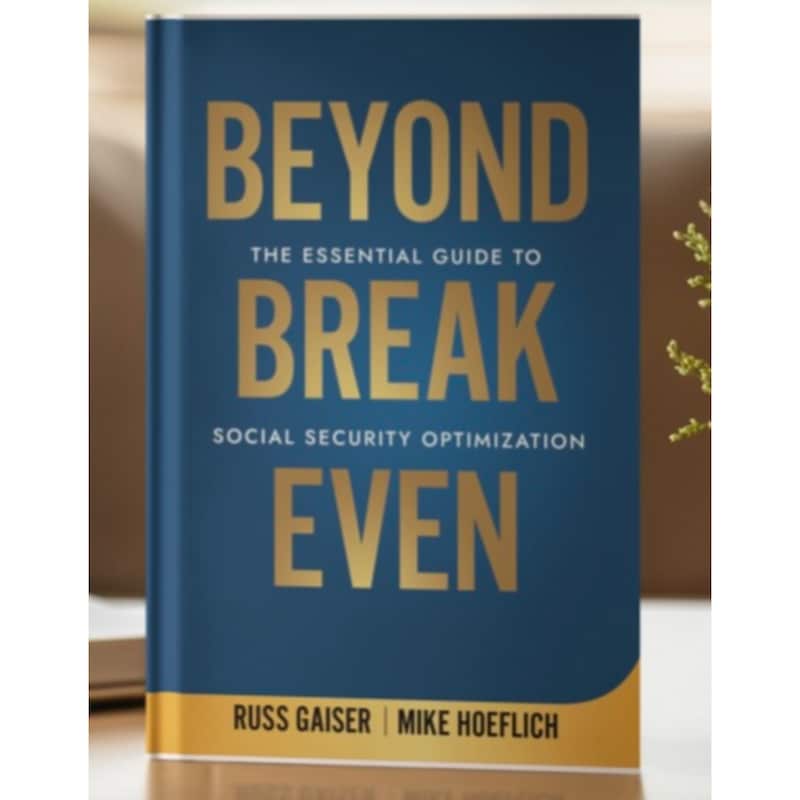
My guests, Russ Gaiser and Mike Hoeflich—co-authors of the bestselling book Beyond Break Even—are not your typical financial advisors. They specialize in Social Security claiming strategies and are passionate about helping people make informed decisions for a more secure and fulfilling retirement.
In this episode, we uncover the five essential pillars of Social Security optimization and debunk some enduring myths along the way.
Whether you’re years away from retirement or already planning your transition, you’ll learn why Social Security is much more than just a break-even calculation—and how intentional choices today can bring you peace of mind, increased wealth, and true freedom in your golden years.
Here are 3 key takeaways everyone approaching retirement should know about Social Security:
- Don't Make Social Security Decisions in a Vacuum: Optimizing your benefits goes far beyond simply deciding when to file. Consider how Social Security fits with your broader retirement plan, including taxes, other income sources, and long-term goals (12:45).
- Taxation on Social Security Isn't One-Size-Fits-All: About 90% of recipients pay no tax or minimal tax on their benefits, but your specific situation—other income, the timing of filing, and even your state of residence—matters (18:23).
- Coordination and Legacy Planning Are Critical: Social Security optimization isn't just about your monthly benefit—it's also about coordinating with your spouse's strategy and planning for survivor and legacy benefits, ensuring financial security for loved ones (32:31).
Moments
00:00 Rethinking retirement income strategies
05:09 Educator-turned-financial advisor journey
09:03 Meeting and teaming up with Russ
11:35 Social Security planning essentials
14:54 Building a cohesive vision
17:26 Understanding Social Security taxes
23:43 Understanding Social Security income limits
25:24 Understanding Social Security Limits
30:41 Importance of financial coordination
33:28 Understanding retirement benefit ages
37:14 Understanding spousal and survivor benefits
40:51 Concerns about retirement savings
44:29 Contact Russ and Mike
FAQ's
What are the five pillars of Social Security optimization discussed in this episode?
The five pillars of Social Security optimization discussed are timing, taxation, coordination, longevity, and legacy. These pillars guide individuals in making informed decisions about when and how to claim Social Security for maximum benefit.
How does working past age 70 affect your Social Security benefits?
Working past age 70 does not increase your Social Security benefits, as benefits stop growing at that point, and you cannot accrue additional delayed retirement credits. RUSS GAISER advises that you should always file for benefits by age 70, regardless of your employment status, to avoid missing out on payments.
Why do RUSS GAISER and MIKE HOEFLICH believe Social Security is secure for the future?
RUSS GAISER and MIKE HOEFLICH believe Social Security is secure because 80% of benefits are funded directly through the FICA payroll tax and Congress has consistently acted to prevent shortfalls. They explain that even if the trust fund runs dry, most benefits would still be payable, and legislative options are available to maintain funding.
Email me, Lisa Stockdale, anytime at [email protected]
Aging in Full Bloom with Lisa Stockdale is sponsored by HomeCaire. We believe every patient should get the personalized care they need, in the way they want it. Every caregiver should feel supported, valued, and motivated. We see each person as their own entity, with unique needs, desires, and skills. Our goal is to best support our family as they reach new milestones.
Follow the podcast on Apple Podcasts, Spotify, or your favorite podcast player. Android user? http://www.subscribeonandroid.com
Copyright 2026 Lisa Stockdale
Mentioned in this episode:
Thank you for listening to Aging in Full Bloom with Lisa Stockdale
Thanks for listening to Aging in Full Bloom with Lisa Stockdale, sponsored by HomeCaire of Ohio. We added an "i" to care because we care about the individual. That includes the individual caregiver and the individual client. From each caregiver's caseload to every client's care plan, we understand that individual preferences and priorities matter. People matter; we haven't lost sight of that here at HomeCaire of Ohio. If you or someone you know needs personal care at home, call 419-458-3000 to learn.
Transcripts
Listeners, welcome to Aging in Full Bloom. I'm your host, Lisa Stockdale, and you are not going to believe our topic today. For those of you who listen on a regular, you've heard me say a million times, I don't want to talk to no financial planners. And we've been doing this show for eight years. And before that it was live radio for five years. And I have never had financial planners on, but I'm gonna do it today. And the reason that I'm doing it is because these two gentlemen that I'm about to introduce to you focus on Social Security. And I'm pretty sure that at least half of the American population will become eligible for Social Security at some time.
Lisa [:So it's a topic that applies to everyone. And I'm also perfectly positive that Social Security is misunderstood, not understood, oversimplified, all that jazz. They have written a book called Beyond Break Even. It's the number one bestseller. And so let me introduce you to co authors Gus Geiser and Mike Hayflick. Hello, gentlemen. How are you today?
RUSS GAISER [:Doing great, Lisa. How are you?
Lisa [:I'm good. I bet you didn't know I've never had financial planners on, did you?
RUSS GAISER [:I did not. Well, I just found that out.
Lisa [:Here we go.
MIKE HOEFLICH [:Based on what we do, Lisa, we don't blame you because we encounter a lot of people who tell us of all the things that their financial advisors always failed to do for them, and. And we always say, that's just not right. They should be far better than that. So there's a lot of advisors I'm glad you wouldn't have on your podcast, but we're glad you chose us.
Lisa [:Well, I did choose you. And to your point, these fellows are likable. And I always say trust starts with like, I never trusted anybody that I didn't like. So I am comfortable calling them trusted advisors. Now, you have a bunch of initials behind both of your names. Mba. I think I know that one. Master of Business Administration.
Lisa [:And I think I saw a cfp, Right. Certified Financial Planner. I only know that because of a recent commercial. How about this? Csscs. What's that about?
RUSS GAISER [:Yeah, that designation is certified in Social Security claiming strategies. So Mike and I, you know, our firm, we're full service financial planners, but we focus and specialize in retirement income planning, but more specifically, strategies around how to drive your income or in optimize your Social Security benefits. And so we got that designation basically to become experts in that field, which is like everything we're so passionate about helping people around because it's so misunderstood. Like you said, there's terrible information around it.
MIKE HOEFLICH [:And Lisa, one of the things I think that many listeners might hear of, or at least even do themselves when they approach retirement. And by the way, you know, what our goal is, is to help people realize that they can retire and do it at the right time, but also not start retirement and then feel like they have to stop living, meaning that they won't have the funds necessary to continue their lifestyle as they wished to. But the whole notion of beyond break even, our book was the idea that you have to go far, far deeper than just simply saying, how much money will I get out of the trust fund? And when, at what point would I break even, given the various age choices I might make? So, for instance, if someone chose at the earliest moment, age 62, they might say, well, yeah, but how long does it take me if I don't choose at 62, how many years will it take before I break even? Meaning get the same amount of funds out of the system if they chose at age 65 or 66 or even the maximum age of 70. And I think that's such a simplistic way to decide your future on what we often call, you know, it's guaranteed income, inflation adjusted. It's highly, highly valuable type of income to have. And we just want people to take a more intentional approach. So that's really what drives us every single day, helping people make intentional and wise decisions that suit them and maybe their spouses and their families.
Lisa [:Yeah. And I hear what you're saying. There's a little more to it than going online and deciding at what age I should receive my Social Security. Yes. And that's probably what I might do if I wasn't privy to folks like you. Now, Russ, of you I have read your mission is to empower clients to make informed decisions that lead to peace of mind, increased wealth and freedom through retirement. Oh, yeah. We all want all three of those things, right? And Mike, of you, I have read that you are dedicated to helping others achieve their retirement dreams drive transitioning complex financial concepts into actionable strategies.
Lisa [:Tell me more. How do we do it?
MIKE HOEFLICH [:Yeah, I'll start. This is Mike, by the way. So I would start by saying I'm really an educator at heart and I've always enjoyed learning ever since I was a kid, wondering, what is this about knowing these things? What might it do for me? But now as a financial advisor, I really do drive most of what I do for people through an educational lens. And I think that's what Most people wish to do, even though they might be fearful of financial decision making. I think once you educate people enough, and I say this all the time, we work with so many smart people in different industries, different professions, and I just really, really get a charge out of helping people understand some of these things so they're empowered to make the right decisions. Because honestly, starting a retirement is already very stressful, stopping the full time employment and the full time salary that it might bring. And I really want people to realize that you have succeeded at such a high level. You should really be joyous about retirement.
MIKE HOEFLICH [:And I don't think you can be unless you really know how you're going to pay the bills. Lisa, every month. So that's really what drives me, the education behind all of it. And then obviously working side by side with people for hopefully many years to come.
Lisa [:So I have a few direct questions and then I want to hear about the five pillars of Social Security optimization. At what age do people typically retire in this country or is there a typical anymore?
RUSS GAISER [:Well, it's funny, it depends because it depends on how well people have saved and maybe how long, like if they have a different purpose outside of retirement. I have, we have clients that we meet with that it can retire but choose not to only because they haven't really figured out what they want to do. And I'm a big believer. And you have to have a purpose. You have to have something to retire to. You're not necessarily retiring from something, but yeah, you have to be, you have to be, you know, financially able to do so. But I'd say when we, when we wrote the book, we gave it to our top 100 clients to do who have been through our process and know us and to give us feedback. And they, you know, of course, we model our practice around helping people make informed Social Security claiming decisions as the cornerstone of their income plan.
RUSS GAISER [:But the clients were saying that they wanted the book probably as early as age 55 to start, start to prepare to retire. But for us, I'd say the average age is probably between. It's a range maybe between 60 and 64, when people are actually done working, not necessarily filing for their benefits necessarily. Those two things don't have to be connected.
Lisa [:Okay. And second, that's anecdotal though, right? Right. Second question. Do we know what percentage of Americans will be entitled to Social Security?
MIKE HOEFLICH [:Boy. Well, I'll tell you, there's a couple ways to get there. You could be fully insured, meaning on your own merits, on your own history, if you had 40 quarters of working at minimal amounts of income. You can earn a fully insured status on your own. But some people haven't worked at all. They may have stayed home. They may have done more of the child rearing. They may have just decided, I'm going to keep our house in order.
MIKE HOEFLICH [:And they might not have any insurance status at all, but they still do get benefits, even if, you know, married, maybe even through divorce and even as a widow. So it's hard to say how many people have earned it, but I know that many. I think it's over 100 million people now benefit from Social Security benefits, whether they're individuals, married folks, or even dependent children.
Lisa [:Okay, well, and I did not know that. So that's great information. And then I'm just curious, how did you two fellas come to know each other? Was it through work?
MIKE HOEFLICH [:It was through work. Actually. I had been doing this, I guess, when I met Russ probably five years ago. I think it was price six years, seven years or so that I was focusing my attention on people at the Social Security claiming level and guiding people that way. And I guess just like any good relationships, Lisa, Russ and I began talking, we began communicating. We started to know that we were aligned and how much we cared about taking good care of people. And honestly, it just went from there. And having a partner in this, I think we both agree, it really does make it fun.
MIKE HOEFLICH [:It gives it a more robust feel because you can share ideas with one another, and then just the activity warrants that we have to do this together. And we're finding more and more ways to kind of optimize our time and make our lives even easier so we can actually take care of more and more people.
Lisa [:Sure. And how long did the book take to write?
RUSS GAISER [:Oh, well, we had. It's funny. So we. We were trying to do it a very difficult way and tackle it.
Lisa [:Imagine that.
RUSS GAISER [:Fragmented together. So we knew that the subject matter we. Because we teach workshops about 25 a year. And so we know the subject matter that we wanted to touch on and how we wanted to write it and, you know, and the. The chapters and all that. But we're. We're very. We were very heavy in technical jargon, which, you know, many people can't relate to.
Lisa [:Right.
RUSS GAISER [:That was a challenge. And then actually just sitting down, having the time to do it. So we then found a good publisher who helped us get our thoughts out and our ideas out to get it written. So I'd say from the very beginning, it took probably about a year.
Lisa [:Okay.
RUSS GAISER [:To do that. And then, but, but really the, the work goes in while you're launching the book because it has to get in the hands of people to read, to get, to get buy in, to get excitement, you know, building marketing. So it hasn't ended. So if you want to count all that, you know, it's a year, it's been about.
MIKE HOEFLICH [:And counting.
RUSS GAISER [:Yeah, A year and a half now.
Lisa [:Okay.
RUSS GAISER [:And then rolling. Yeah. In perpetuity.
Lisa [:And in case anyone's forgotten, the book is titled Beyond Break Even and the focus is on optimizing your Social Security. So I saw somewhere that you talk about five pillars of Social Security optimization that actually works. What are they?
RUSS GAISER [:So there's five, of course, timing, taxation, coordination, longevity, and legacy. And really these are the pillars that people and they can be intertwined in some, some ways. But these are the things that really a Social Security claiming decision, a good one, focuses on. And the idea is the benefit should not ever be made. Like the decision of when to file made in a vacuum, meaning not coordinating it and pairing it and optimizing it with other benefits. And first you really need to know yourself. And you know, when we meet with people, a lot of what we do is we have to pull information out of people to really understand what is their retirement income goal, what are their needs, what are their values, you know, how long do they want to plan for retirement for? Is there two lives to cover? What are their grandkids and legacy, you know, kids, children and grandchildren, legacy goals, if any, what are their concerns maybe about long term care risks, just, you know, the whole gamut. And once we figure all that, what tax bracket are they in? You know, all of that savings locations, tax, tax diversification, what state do they live in? That depends.
RUSS GAISER [:That can change things. So, so once we pull all that out of, out of them, then we have to figure out, okay, the whole idea of when to file for Social Security really comes down to cost of your retirement and driving that to as low as possible. And I don't mean fees when I say cost, I mean what is the least amount of your own liquid savings that you've accumulated in your working years? What's the least amount you can use to reach your goals by having the correct Social Security claiming decision? And again, these five pillars kind of help us. It touches all five pillars so we can go through each of them and get a little bit deeper. If you want to. Want me to do that.
Lisa [:I do want you to do that, but I just want to sort of recap what you just said. So you first, you make people think. You make them answer questions and take deep dives into things that maybe. I mean, I have just. I'm just terrible at procrastinating. There's things, there's decisions I know I need to make, and I'm like, ah, I'll do it in six months. Six months doesn't ever come, you know, so you kind of have to get real with yourself. That's what I'm hearing.
Lisa [:And share information that, you know, you may be guarding, but you're sharing it with trusted advisors who aren't gonna publicize it on the Internet or anything like that. And so, yeah, I do want you to take me through the five pillars. Like, let's get into it.
RUSS GAISER [:I just want to say one more thing on the back of that. So our whole goal is to help people make informed decisions, not emotional ones. Right. Because we're just inundated with so much information and we are fiduciaries, and all that means is we're obligated to act in our clients best interest. So there's often more than one way to do something the right way, but it's got to be the right way for that person. And if we can come up with multiple options for them, we can present them in a way and educate them and then let them make the right decision for them, whatever financial tool out there it might be and how that looks for them and what the claiming decision might be. So, yeah.
Lisa [:Yeah.
MIKE HOEFLICH [:And I think I would add this to Lisa. You know, when you talk about everyone has so much stuff, we have so many things on our minds. I kind of think of those things as little jigsaw puzzle pieces. And what Russ and I envision is people coming in with all their pieces and putting them down on our desk. And we look at that and say, what? How are we going to build this puzzle so it actually looks like something beautiful, like it's meant to, and are we going to find the straight edges first? So we got to sort through these pieces, and hopefully there's no pieces missing. But that's our job, is to make sure there aren't. But then putting them all together right into some beautiful picture that they can then say, I get it. I see what's coming.
MIKE HOEFLICH [:I see what I built, because they built it. And now all we're doing is making sure they see it clearly. Right. So, yeah.
Lisa [:So it's interesting because I had an analogy that I was going to use in your intro, and I just went right past it, as I often do. But to me, Social Security. I compared it to a confusing, fun house maze, and we hope you come out happy.
MIKE HOEFLICH [:That's a great analogy. We might steal that from you.
Lisa [:You are welcome to steal it. Okay, so I like it.
RUSS GAISER [:These pillars.
MIKE HOEFLICH [:Yeah. So back to the pillars. Timing was first. Taxation is the next one that we'll talk about. Now, people often misinterpret how taxes work when it comes to Social Security income. But I want to. I wanted to say this to your audience first. It's not always about what you make.
MIKE HOEFLICH [:It's about what you keep. So when you think of income, how much of the income are you keeping? You know, week after week, month after month, year after year? And if you can keep more of your income, then you can have more flexibility in where that income goes. Right. And whether it's going to meet your income needs or just be excess income or maybe it's saved for legacy purposes. So when we think of taxability, we're all pretty certain that we will spend our money far better than almost every governmental entity out there. So let's do the best we can to keep more. One of the things that was in the news of late was the one big beautiful bill that was touted in Washington. Officially, it was HR1.
MIKE HOEFLICH [:And if you just listen to the headlines, you'd hear things like no tax on Social Security income. And Russ and I know that nothing changed as far as how Social Security is taxed, but some. Some other things did change that impacted people.
Lisa [:Okay.
MIKE HOEFLICH [:Yeah.
RUSS GAISER [:So the reality is about 91, 90 to 91% of people who are on Social Security won't pay taxes on it. But knowing how it's taxed is important to know. So the IRS uses a provisional income formula to figure out how much of your Social Security can be taxable as income, and that's anywhere between zero and up to 85% of your Social Security benefits can be taxable as income. And really that's dependent on how much other income you have. So, however, basically the way to think about it is the more heavily weighted your income plan is in Social Security, the more tax efficient it will be, which is a kind of a weird thing to think about, but that is true just based on how the provisional income formula works. So the only thing that was really changed was the standard deduction for seniors 65 and older, which was pretty significant. So that wipes out a lot of the. The taxability that would be due for anybody.
RUSS GAISER [:But it is important to understand how it's taxed and taxed for your specific situation. There's not really a blanket statement to address any one individual.
MIKE HOEFLICH [:Just to round that out, I would say if you do your own taxes every year, good for you. I. I find it too difficult to keep up with all the new, you know, new tax laws, and. And I allow someone to do those things for my wife and I. But if you do have a CPA or someone who prepares your taxes, you know, annually, it seems like we're always trying to win, right? We want to, like, pay the least amount we can. But what Russ and I do is say we can't look at just year by year. We have to look at the next couple decades, maybe, maybe three decades for a surviving spouse. Right.
MIKE HOEFLICH [:Because if you're married and one of you pass, we still want tax efficiency in your life. And knowing more about Social Security and claiming decisions can really be resoundingly important as far as taxability goes. So I think that would cover that second pillar taxation. Unless you have any other questions for us, Lisa?
Lisa [:I do have questions. So do I understand you saying that now when you turn 65, mostly your Social Security benefit is not gonna be taxed?
RUSS GAISER [:Well, that could be the case. So it depends on how much other income you have. And. And that could be variable because you might be drawing from a traditional IRA or a traditional 401K or a 403B in that given year. Like I said, this is wildly dependent on other factors, so it's hard to just say that's the case. What happens at 65, though, is there is a $6,000 increase of a standard deduction. And let me just. Let me just define what that means.
RUSS GAISER [:Your taxes work this way. You have your gross income that comes in, and then you have adjustments to gross income, potentially, usually for more for working people. Like, a traditional IRA contribution would be something that would adjust your adjusted gross income, and then you arrive at your adjusted gross income. Okay. And from there, you take either a standard deduction or an itemized deduction, and most people file the standard deduction. And once you subtract that out, then you arrive at taxable income, and that's what then goes through the brackets to figure out, okay, what's your actual tax liability? So that's what I mean by that. But, yeah, sorry, go ahead.
Lisa [:And what about the average American who's living on very little except for Social Security? Is it still taxable?
RUSS GAISER [:Great question. If that's your only income, it's not taxable at all.
Lisa [:Okay.
MIKE HOEFLICH [:And we'll often use wonderful calculators and financial software to help people understand that. We can, we can actually simulate. What other income might you have? Whether it's income working a part time job or interest and dividends or maybe pensions. How much other income might you have in an end with Social Security to still be tax free? You know, we can kind of arrive at what the thresholds are for people.
Lisa [:Is there any age at which you can, like there are some maniacs out here that never want to retire. They're going to work till they drop. Right. So let's say you're 75 and you're working a full time job making, you know, the same amount of money that, a good amount of money. Let's hope if you're 75, right. And, and you want to draw your Social Security, can you work? I guess you can work and draw Social Security at the same time. I'm hearing that.
RUSS GAISER [:Oh yeah, absolutely.
Lisa [:Is there ever an age that, which you won't be taxed or the age doesn't matter.
RUSS GAISER [:Age doesn't matter in terms of taxation. Okay, now you're touching on timing a little bit and I'll touch on this. You would never wait past age 70 to file your benefits. So if you're 75, I would have hoped you filed at 70. That's the max benefit amount and you would want to file regardless if you're working or not.
Lisa [:So that's the truth. We can take that to the bank. You need to file for Social Security by 70.
RUSS GAISER [:Yes. And they're not going to force you to. But you're losing out because your benefit's not growing anymore and that money is just sitting there waiting for someone to collect it. Okay, now back to your example of working. Back to timing. You can make as much money as you want without penalties of reduction of your benefit if you've achieved your full retirement age, which is tied to your year of birth. So Those born in 1960 or later, the full retirement age is 67. So if you're making, if you're, if you claim earlier than that though, you're subject to what's called the earnings limit test, which would reduce your benefit.
RUSS GAISER [:Could reduce it, you know, all of it. It could, you could get zero if you file, just depending on how bad, badly you break that rule.
Lisa [:Okay, so timing is very important.
MIKE HOEFLICH [:Yes, it's, it's important not to be caught off guard.
RUSS GAISER [:Right.
MIKE HOEFLICH [:Because most people, when they file for Social Security, they're going to count on that income and they're going to have something earmarked for it, maybe pay off debt, maybe help their, their children with student Loans, maybe pay off a home equity line of credit, or pay off their mortgage or even invest the money. But if you work and you're under your full retirement age, again based on your birth year, you might be surprised and unknowingly not realize that all the income you thought you were going to get, some of it's getting forfeited. But that all is only before full retirement age. Once you pass by your own full retirement age, you can work, make as much money as you'd like, and be claiming Social Security without forfeiture.
Lisa [:Okay, but I'm just going to say this out loud. Y' all better talk to an expert. Don't try to do this alone. This ain't that type of gig.
RUSS GAISER [:There's a lot going on.
Lisa [:Okay, so let's see. I had another question. What was it? Oh, is there a maximum amount of Social Security? Like, does it. Does it cap at some point for. For anyone or for everyone?
RUSS GAISER [:It does. Now, first of all, you know, how is it calculated? So in order to really hit the max, you have to. It's your highest 35 years of earnings. And it's funded just so, you know, through the FICA payroll tax. 6.2% is the Social Security FICA tax. And if you earn, there's like, there's a limit every year. So if you. To where you stop paying into the system, right, because you've made, you know, you've eclipsed the max.
RUSS GAISER [:And for this year, that's $184,500 of gross earnings. So if you make 200,000, you know, about 15,000 or so isn't going to be counted or go into Social Security, but you would have maxed that. And that's been going up through the years with inflation. So let's just assume that someone has maxed it for 35 years. The highest benefit value. I'm just going off memory from last year. I believe at full retirement age, the highest benefit amount was right at about 4,000amonth, at 67. And then if you were to wait till 70, that's about 5,000amonth.
RUSS GAISER [:That could be $60,000 a year in Social Security benefits, which is pretty significant. I mean, a lot of people have no pensions anymore. That's a significant type of pension if that's. You fall into that category.
Lisa [:Now, before we go through the pillars, I want to ask you another question. I'm sorry, I'm full of questions. Right. Do you think Social Security is secure?
RUSS GAISER [:Oh, that's a great question.
MIKE HOEFLICH [:We do. To just answer the question, we know that legislators are not often the best problem solvers. In fact, we're certain of that. They're politicians, not problem solvers. And when you talk about any of these massive programs like Medicaid, Medicare, the Social Security benefits, those are just such difficult things to talk about if you're in Washington, D.C. because the minute you say one of those words, there's all these assumptions and attacks upon you. Right. You don't even get to finish your sentence of what you meant to say.
MIKE HOEFLICH [:And people are already saying, did you hear that? Did you hear that? Everyone, they want to take away your benefits.
Lisa [:You are speaking truth, isn't it?
MIKE HOEFLICH [:And it's so frustrating to Russ and I because we try to dispel and get down to the reality of things and then help people make decisions based on reality. But we also know that over the years, the, the funds have run into trouble. Right. The funds themselves, the trust funds. But Congress, Washington have always acted. Do they act quickly? No, but they have always acted.
RUSS GAISER [:Yeah. And a couple things in regard to this. So I don't, you know, I don't know you have a wide variety of listeners and so there could be really nervous people and people that are just very optimistic. So I'll speak to kind of the whole array. Now, the Social Security trust fund funds, about 20% of the benefits payable, about 80% are funded through the FICA payroll tax. And the trust fund is set, if nothing is done, to basically run, drive somewhere around year 2033. Okay. So the clock's ticking there.
RUSS GAISER [:And if the trust fund runs dry then and they do nothing. So if we're in the, in the, we believe nothing will happen, that this is going to be broken, then 80% roughly of the benefits would be payable. So I always tell people you're worried about it and that you think that's going to happen. Would you rather have 80% of a bigger or a smaller number? Right. Like if you're, if you're rushing to file because you think that's the deal, well, you're going to lock into a permanently reduced benefit and only get 80% of that smaller number rather than maybe waiting back to my emotional versus informed decision making. Now that's one thing.
Lisa [:So that is so important. I mean, I'm amazed I did not know that. Now, now obviously I've been telling, I'm a procrastinator. I haven't been looking into this stuff and I know I should. But just to know that we pay 80%, we do that right as Americans. So that part is Secure. So whatever they could crash, those politicians would only be 20% if they decide to, to crash anything.
RUSS GAISER [:Well, get this too. Remember the, the FICA tax covers 80%. They have not raised the FICA tax percentage though for like 30, 30, 35 years somewhere around there. And, and, and, and remember I said the FICA tax is capped on earnings of 184,500. And so I've seen actuarial studies that have shown if that's just uncapped, like no matter how much you make you pay into Social Security, the benefit as it stands today would be funded for another like 60 to 70 years. So there's a lot of low hanging fruit that Congress knows is available, whether raising taxes, uncapping or maybe doing some, some of both. Right? Or maybe kicking the full retirement age down the road like they've done since the start of the system. 65 was full retirement age, now it's 67.
RUSS GAISER [:There's a lot of different things they can do and they will act only because it's our money, number one. Number two, there's far too many widows living on Social Security alone for our government who's supposed to be able to protect its citizens to take away and have sadly, widows starving in the street. I mean that, that might sound hyperbolic, but I think that's, I know some
Lisa [:of the, some of those people, so I hear you. I feel that. Okay, back, back to the pillars. Where were we?
MIKE HOEFLICH [:Yeah, that's, this is a great segue to the third one called coordination. We mentioned widows and people alone, going it alone. We think that the pillar of coordination really, really matters here. We think that really the full power of what we do when we say Social Security optimization is particularly relevant for people who are married or people who have gone through divorce and then whether married or divorced have become widows. We have a couple stats and this is from a Kiplinger's article. 80% of men die married, 80% of women die single. And if you are a person, a woman who was widowed and you were 65 or older, then we know that half of you out there will outlive that husband who passed away by about 15 years. And so it's so, so important that as Russ said earlier, you don't look at this in a vacuum for yourself.
MIKE HOEFLICH [:You don't look at just your own benefit, but you consider what your spouse has done and you might even consider what your divorced spouse had done. And there are qualifications, of course, for having either spousal benefits, extra benefits, while either your, your existing spouse is alive or your divorced spouse is alive. But then there are survivor benefits, which isn't extra, Lisa. It's a whole benefit that you might replace with. Maybe you replace the smaller, your own benefit with the much bigger benefit based on your married spouse who passed or the divorced spouse who passed. So coordination is so, so key not only while you're, you're living together and journeying together, but also especially to prepare for what if one person has passed.
RUSS GAISER [:Right. The thing we would, we want to basically prevent is emotional, quick claiming early and then, you know, too much reliance on their own saved earning, saved wealth. And then when a spouse passes away, the survivor having being stuck with a small benefit and little to any savings left. So we model that out for people. We have to, I know like a retirement is supposed to be exciting, right? We're planning to retire, but it's important to know that the spouse will be okay should a widow when a widowed situation happens. And so we take that very seriously.
Lisa [:Now when that does happen, and this happened in my own family, when my father died, my mother, like his benefit was bigger, so she took his right. But is there. How does age play into this?
MIKE HOEFLICH [:Well, we all have a full retirement age value or age. That's to get our own benefit at what I call the 100% level. If you delay, you get what are called delayed retirement credits and can get an even bigger benefit at age 70 or any month, to be honest, from full retirement age up to 70. Now, when you're widowed, they look at another age. It's called the widowful retirement age. And based on that, and based on what we know of the benefits of the people we're talking to, and we're not allowed to get that information from Social Security. We have to have people call SSA or go to a field office to get figures. But once we know that, we can then help people strategize and we can help people determine whether it makes sense to claim benefits on their own record, typically as early as age 62.
MIKE HOEFLICH [:That's under normal circumstances. Social Security disability cases clearly vary in that. But then is it best to take a benefit on your own record and then maybe switch to another benefit based on a, you know, the, the ex or the married person who, who had passed away? Or does it make sense to start on the other benefit and then switch back to your own as late as age 70? So there's so many strategies, Lisa, that we can go through with people and getting to know them. Obviously we have to know those figures. We can then help determine what Makes the most sense to them and not leave money, thousands of dollars perhaps, into that trust fund unknowingly or unnecessarily.
Lisa [:And how would you qualify for an ex spouse's benefits?
RUSS GAISER [:So a couple different things. An ex spouse who is still living. There's what's called spousal benefits. Okay. And that's how those benefits while married. We'll. We'll stick with that. First, if you're married, there can be a spousal benefit.
RUSS GAISER [:So I'll use the example of one of the spouses stayed home and didn't earn any earnings on their own record. Okay? So they don't even have an earnings record. Let's just say they can be entitled up to 50% of the other spouse, the higher earner, right? 50% of their full retirement age benefit if they file for that benefit at their own full retirement age. Okay? So let's just say they do that. They're married, right? And that's the scenario. Let's say. And now they were divorced. There are some rules around divorce.
RUSS GAISER [:You have to have been married for 10 years, divorced for at least two. Entitled. I'm going off memory here. Entitled for. Entitled to a benefit. Am I missing something, Mike?
MIKE HOEFLICH [:No, no, I think that's it.
RUSS GAISER [:And yeah, it still has that rule. Has to apply, like less than 50. And in the example I just gave you, it does. So that person who's divorced, because that if they never re. And you can't be remarried. So let's just say they never remarried. They're divorced. They need all the criteria.
RUSS GAISER [:They're working. And now at age 67, they're like, okay, we're gonna. I'm retiring. And maybe now that since they were working, there's. They just have a tiny. Of their own benefit. They're still eligible for that full 50% of the ex spouses. So they would be able to get that.
RUSS GAISER [:Now here's the thing. The game changes if that ex spouse has passed away. So if the ex spouse has passed away, the survivor has the option of a whole benefit, not just a spousal benefit. So I'll use the example. Now, this, this the lower earner. Let's just say they did qualify for a benefit, but it was much smaller. Let's just say it was. I don't know.
RUSS GAISER [:Let's just say it was 2000amonth, and the full retirement age of the person who passed value was double that 4,000. It was the max. Well, there's no spousal benefit, obviously, when they were living. So this person Maybe would have filed and thought they'd get nothing. And let's just say they didn't remarry after age 60 because that's a rule here. And find they find out the ex has passed, well, they could then be entitled to the ex's benefit and it would depend, I guess, at what age they were. But let's just say they were able to, they passed away, the ex didn't claim their benefit. They could choose to file at the widow's full retirement age and get the bigger benefit, essentially double the 4,000amonth benefit.
RUSS GAISER [:And I will tell you, we've helped, we've helped widows that didn't know this existed get benefits, $60,000 in some cases in back pay and future benefits that they had no idea that they were even entitled to. Oh my goodness, you will not get a letter in the mail from Social Security saying you don't say, breaking it down. Yeah, yeah, yeah.
MIKE HOEFLICH [:They're not going to be just, you know, freely saying, we want to give our, all this money away to people.
RUSS GAISER [:Yeah, an advisor on our team actually a couple of weeks ago, he's, he's newer and we were, he's training under us and he, he gave us a success story. He's like, feels so good. She had a thousand dollar benefit and he informed her of this rule. She went and got the numbers and now she has a three thousand dollar benefit. She tripled her benefit amount. Had no idea.
Lisa [:And that does change your quality of life, no doubt. So that is amazing. All right, where are we at? Are we on four?
MIKE HOEFLICH [:We're on, we're on four. And four would be longevity. And longevity is, is one of these things. You know, we'll often start our workshops and we'll talk about what risks do people face, especially as they age, especially when they've stopped working full time. Well, we always say inflation and taxes are risks, but longevity can exponentially make those other risks worse. Right. The longer we're here, the more risk you're taking on. And so longevity to us is something to plan for, not to be thinking, well, what if I pass away early? Then I might have missed out on more money I should have gotten.
MIKE HOEFLICH [:We say the bigger question is, but what if you live a long, long life or your surviving spouse does?
Lisa [:Right.
MIKE HOEFLICH [:We don't want you to go broke in retirement and we certainly don't want you to start retirement thinking you have to be cautious and conservative and that you have to say no to the offers of friends saying, hey, would you like to travel out west with me? For a week. And you're saying, no, I better not. I don't know. I don't know if my finances can survive that or warrant that. We want people to live in retirement, and so longevity is something we should plan for. We shouldn't be thinking, we may not be here, so we don't want to miss out.
Lisa [:And I hope that everyone listening to aging in full bloom is planning on longevity. If we've taught you nothing, I hope it's that. What's number five?
RUSS GAISER [:Five is legacy. So oftentimes we're told as Americans, right, we're doing, we're poor savers. We haven't saved enough. You know, we. We spend too much money. You know, you hear it all the time. And we were highly uneducated on finance.
Lisa [:Why are you describing me? That's rude.
MIKE HOEFLICH [:You knew a little about us. I guess we knew a little a bit about you.
Lisa [:I guess. You do.
MIKE HOEFLICH [:No.
RUSS GAISER [:All kidding aside, when surveyed, we show a statistic in our workshops. It's from the National Institute on Retirement Security. And when polled working households, American households, 77% of them felt as though they were not on pace to meet their savings targets for retirement. And I think that's probably because they have no idea how to retire and what it costs and how to actually figure that out. And so what we do, and therefore, you know, definitely aren't thinking of legacy. Right? They're worried about themselves and just getting through their own lives and their retirement however they can. But if planning well and knowing the numbers and understanding the best Social Security claiming decision, like I said earlier, in terms of cost of retirement, the money you don't need that you've saved, okay, for your income goals, if you fall into that category because you made a good choice on your Social Security claiming decision, is money. You're either free to spend or even resurrect the notion of leaving a legacy to your kids or your grandkids.
RUSS GAISER [:And we can help people understand that up front. And. And that's really important to us. And we go a lot deeper with the legacy. In our book beyondbreakevenbook.com the listeners can actually get a compliment, preliminary copy, electronic copy of it or audiobook by visiting there, or they can purchase one through there, but you get a free copy if you want.
MIKE HOEFLICH [:And.
RUSS GAISER [:And legacy, you know, we always will tell people, like, make sure you're okay in retirement. That's our goal. But if we can resurrect the notion of legacy, what might that look like for you and your family? And so, you know, we we, we in many times are able to, to resurrect that notion or even. Yeah. Talk about it and people. It changes people's lives for sure.
Lisa [:And I do think that's important to most of us. I mean, I'm in the studio with my production manager and we don't, we see each other once a month. The first thing we talk about is our children every single time. Right.
RUSS GAISER [:Of course.
Lisa [:And our children are grown, but. Well, they think they are at least. Anyway, that's a different topic.
MIKE HOEFLICH [:Right?
RUSS GAISER [:Yeah.
Lisa [:It is important to be able to leave a legacy that gives you peace of mind. I think that was in one of your mission statements. That's what peace of mind is, right. That when I leave this place, I will have taught you everything. And you're not, you're going to be okay financially? Yes, absolutely.
MIKE HOEFLICH [:For sure.
Lisa [:This is great. It has been a great conversation. I really appreciate y' all coming on and sharing all of this information with, with our listeners. Anything you want to leave us with?
MIKE HOEFLICH [:Well, first, thank you again, Lisa. This has been such a pleasure. Russ and I are admittedly the Social Security guys and nerdy in many respects when it comes to this topic. But I guess we could just leave you with where, where people might contact us if they do want to read our book. It's an easy read, a lot of real life stories. But yeah.
RUSS GAISER [:So the book, of course, beyondbreakevenbook.com Like I mentioned, they can check out our firm, Retirement Income Headquarters of America. We serve people all over the US Virtually physically, in person, where we're actually located in the Buffalo, New York and Jupiter, Florida location regions. But that's incomeplanhq.com our process, everything we're about is on there. And then for the book again, beyond break even book.
Lisa [:Perfect. Thank you so much, Russ and Mike. It has been delightful. You taught me a lot. So I'm assuming you, you've taught everyone that listens something at least great information. We always talk about the importance of planning. We have avoided this topic of financial planning for some time, but I do not regret our decision to have these two fellows on as guests today. Listen, nurse, till next time.
Lisa [:May the road rise to meet you. May the wind be forever at your back.




