Shownotes
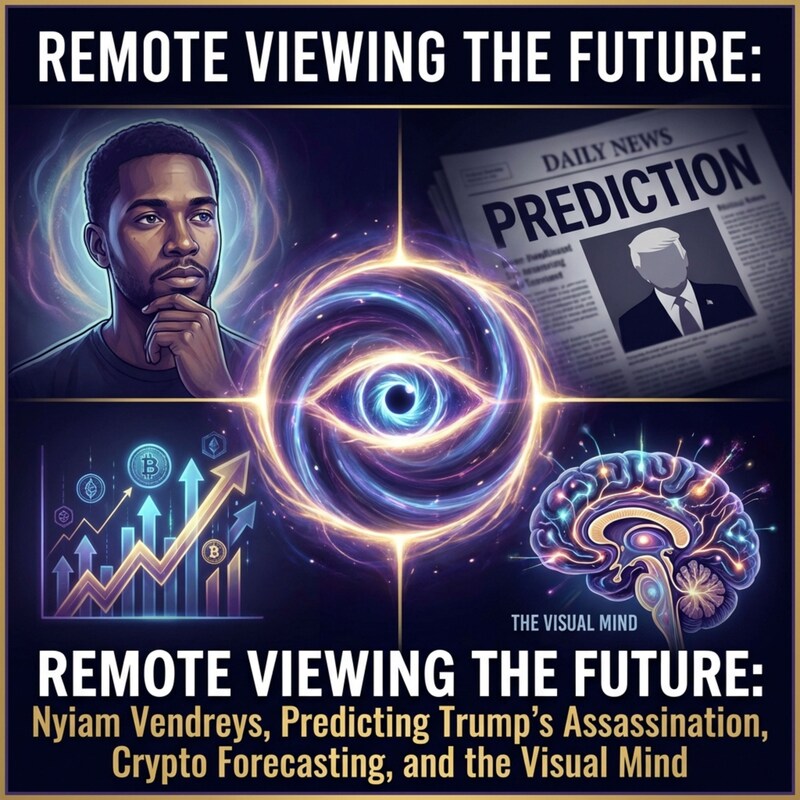
This podcast episode delves into the intricate interplay between consciousness and remote viewing, wherein we explore the profound implications of psychic abilities as tools for decoding information from the vast tapestry of existence. We assert that the methodology employed in remote viewing serves as a protocol that not only facilitates an understanding of our reality but also enhances our capacity to perceive beyond conventional limitations. The conversation touches upon societal reluctance to accept these abilities, often overshadowed by skepticism and a preference for technological explanations over human intuition. We examine how the art of visualization plays a crucial role in accessing deeper insights, emphasizing the necessity of honing this skill to elevate the accuracy and richness of one's remote viewing experience. Ultimately, we advocate for a renewed focus on consciousness, positing that as we navigate the complexities of today's information age, understanding our intrinsic capabilities may illuminate a path toward a greater collective awareness. A profound exploration of psychic abilities unfolds, revealing the intricate methodologies employed in their harnessing. Speaker A articulates the significance of employing a structured protocol to navigate the complexities of human consciousness, particularly through the lens of remote viewing. This discourse delves into the societal apprehensions that often impede the acceptance of such abilities, as Speaker B elucidates the pervasive skepticism surrounding psychic phenomena. The conversation highlights the dichotomy between technological advancements and the inherent capabilities of the human mind, suggesting that while society readily embraces innovations in technology, it often recoils from the potential of human intuitiveness. This reluctance, they argue, stems from a deep-seated fear of the unknown and a hesitance to acknowledge the profound implications of accepting such abilities as real. As the discussion progresses, both speakers advocate for a reevaluation of the potential of human consciousness, positing that the skills inherent in psychic phenomena may have been employed by ancient cultures to navigate their realities. The episode ultimately serves as a clarion call for openness and acceptance towards the exploration of consciousness, urging listeners to reconsider the boundaries of human capability and understanding.
Takeaways:
- The podcast discusses the importance of employing a structured methodology in developing psychic abilities, emphasizing a systematic approach to remote viewing.
- Listeners are encouraged to engage with the concept of remote viewing as a means to access subconscious insights, highlighting the significance of visualization techniques in this process.
- The speakers express concern about societal skepticism surrounding psychic phenomena, suggesting that many individuals prefer to dismiss these ideas rather than explore their validity.
- The conversation touches upon the intersection of technology and consciousness, indicating that advancements in AI may eventually lead to a deeper understanding of human cognitive abilities.
- A recurring theme in the episode is the necessity for individuals to develop their own intuitive skills, as relying solely on technology could hinder personal growth and self-awareness.
- The hosts reflect on the evolving nature of consciousness and the potential for humanity to embrace a transformative shift, driven by increased access to information and a deeper exploration of the self.
Companies mentioned in this episode:
- Siri
- Alexa
- Bing
- Elon Musk
- Dick Allgire
- Future Forecasting Group
Transcripts
Those skills, the psychic abilities are that you're using a protocol and a methodology.
Speaker A:You're basically using a tool set to go decode the metrics in the matrix.
Speaker B:Yeah, yeah.
Speaker B:I think society for the most part is, you know, there's some fear behind those ideas.
Speaker A:Trying all manufactured.
Speaker B:Yeah.
Speaker B:For them to accept that is, it's too hard for, for a lot of society to accept that that could be possible.
Speaker B:They, they, they're, they've much, it's so much easier to say, oh well, why haven't they won the lottery yet?
Speaker B:Or why haven't, you know, I mean, it's so much easier to brush it away with these stupid kind of, you know, comments than it is to actually sit there and look at the information and, and study it over time and say, okay, maybe I thought it was a coincidence, but now that I've seen it for 5, 6, 7, 8, 9, 10 years from all these different people, maybe I should take it a little more seriously.
Speaker B:Now it's just easier to put it off onto something else.
Speaker B:Whether it's technology.
Speaker B:You know, it's okay for technology to, to do amazing things.
Speaker B:You know, we're, we're fine with that.
Speaker B:But when it's human beings doing it, it's like, no, no, we gotta, you know, we can't accept that.
Speaker B:I don't know what it is.
Speaker B:It's, I don't know, maybe it's the responsibility or the, you know, the implications of what that means.
Speaker B:Some people, I guess, I mean, I've experienced this in my personal life.
Speaker B:Some people find out what I do and they're scared.
Speaker B:You know, they're scared I'm going to see something about them or I'm going to know something about them that they don't want me to know.
Speaker B:So it's like, it's, yeah, there's a lot of different threads that, that come from this and for whatever reason, it's just, it's a hard pill for, for humanity to swallow.
Speaker B:But I, I'm with you.
Speaker B:And the fact that this is a, this is a tool that I think we were using stuff like this in the past.
Speaker B:You know, how else would have cultures in the past have made it as far as they made it?
Speaker B:They must have had foresight, they must have known things that they didn't learn in the conventional sense.
Speaker B:You know, they had insights, they had intuition.
Speaker B:And for the most part, our modern day society, we still have it, but it's, you know, it's, it's, it's barely functioning to the level that it, that it would have been in the past and, and when it does happen, we cover it up and say it's something else.
Speaker B:You know what I mean?
Speaker B:We, we make a mess.
Speaker A:Get the behind me and you know.
Speaker A:Yeah, yeah, all that crazy.
Speaker A:I'd like to go into something that you, we were talking about earlier when you were talking about the importance of the visualization and that mental blackboard, right, where that's a space where you, you try to get the visuals, the images into.
Speaker A:Is that what that is?
Speaker B:Yeah, that's, that's a, a specific spot that we look.
Speaker B:We close our eyes and we look in that spot always for getting in visual information from the subconscious.
Speaker B:So it's kind of like a mental screen or.
Speaker B:Yeah, you know, that's the, the visual stage for information to, to show itself.
Speaker B:Yeah.
Speaker A:So when you were describing that, you also said that you think that that's an area that needs to be.
Speaker A:Have more focus and people get more, will get more out of their sessions and just out of the, the process and the protocol of remote viewing if that visualization was accessed or focused on more.
Speaker B:Yeah, yeah.
Speaker B:One of, one of the first things that I teach when I'm teaching remote viewing, the first thing we do in a session in HRVG is called a visual ideogram.
Speaker B:So know, you're probably familiar with the spontaneous ideogram, which is like the, you know, the scribble.
Speaker B:We do a visual ideogram first and this is where we close our eyes.
Speaker B:So first thing in the session is we close our eyes and we look for one and a half seconds.
Speaker B:So it's done just that fast and we immediately draw what we see.
Speaker B:And, you know, I've seen some amazing things.
Speaker B:People have drawn.
Speaker B:Some of my students have drawn some amazing things.
Speaker B:You can see the whole target in that 1 1/2 second.
Speaker B:It could happen.
Speaker B:It's not going to happen every time, but that's the type of power we're dealing with when we're, when we're talking about the visual field.
Speaker B:Like you could literally just see the target in the first second of your session.
Speaker B:Like all these things that we do in remote viewing and all the different methods and things that people are doing, it's like, yeah, they help and they have their purposes.
Speaker B:But if we could get down to the real, you know, the nitty gritty of it, it's like, yeah, we could close our eyes and see what's there.
Speaker B:You know what I mean?
Speaker B:The information is there.
Speaker B:We just gotta learn how to decode it in the right outlets, right and that's the example I, you know, I've given the talk on it.
Speaker B:It's like using dial up, right?
Speaker B:It's like, we're not gonna use dial up Internet for this conversation.
Speaker B:It's just, it's just can't happen, right.
Speaker B:Similarly, in remote viewing, if you want high resolution, if you want the experiential type data, which is obviously what is desirable, if we want to give a good report, you know, a coherent report, or if you want to orient yourself at the target, that's the, that's, there's, there's remote viewing and getting some things right, and then there's actually knowing what was happening.
Speaker B:You know, the remote viewer who actually knows, like, okay, I was here and this was happening.
Speaker B:Those are two different things.
Speaker A:So, yeah, Dick's bilocation moments.
Speaker B:Yeah, yeah.
Speaker B:So it's like if you could see what was there for a moment, your chances of orienting yourself are much higher.
Speaker B:Right.
Speaker B:You know, you say, okay, I had this perspective and I was looking in this direction and this was here and that was there.
Speaker B:Instead of, there's a structure, there's a sound, there's a, you know, there's water, there's a voice.
Speaker B:So it's different levels of organization and resolution of information that, that can happen depending on how you approach, you know, the remote viewing process.
Speaker B:And it takes, for the most part, it takes a lot more work and failure to develop the visual aspect of remote viewing.
Speaker B:So a lot of people try it and they say, I don't see anything.
Speaker B:And they give up, you know what I mean?
Speaker B:Whereas it takes time.
Speaker B:You got to keep failing, you got to keep trying, and you will get those moments where you, where you see it.
Speaker B:And that's the, what do they call that?
Speaker B:The black swan.
Speaker B:You know, that's the.
Speaker B:Okay, if you saw it that time, well, that means you can see it again.
Speaker B:And that's the kind of mentality that you have to work towards.
Speaker B:And I didn't, I wasn't just seeing the target when I first started doing it.
Speaker B:You know, I had to fail a whole bunch of times and fall down and get back up and do it over and over again.
Speaker B:But now I can pretty confidently sit down and say, okay, there's a guy there, let me see him.
Speaker B:And I can see him and I can draw him.
Speaker B:So it's.
Speaker B:Yeah, it's a work in progress that, you know, people are, you know, they gotta, they gotta stick with it.
Speaker B:It's something you gotta stick with.
Speaker B:Yeah.
Speaker A:So, you know, I'm a geezer.
Speaker A:Geek.
Speaker A:I've been in tech for over 40 years, actually 50 if I go back to my punch card days.
Speaker A: s I used to be a Univex: Speaker A:And so I've built software and had all that tech stuff for a long time.
Speaker A:That was my main corporate career.
Speaker A:So I'm really enjoying what I'm seeing with this whole misnamed AI, they really expert systems, this whole field that's going on and, and all of the.
Speaker A:It's basically in my opinion it's Siri, Alexa, Google, Bing on steroids.
Speaker A:It's the next iteration of that and it's all misnamed.
Speaker A:It's not artificial, it's not intelligent.
Speaker A:The hype, the hyperbole, the musfuss sex and sizzle that's being tossed around.
Speaker A:It isjustala.com Back in the turn of the millennium and I suffered through that as well.
Speaker A:But I'm looking at this and I'm going, you know there's some really the, what's happened is these expert systems, the language protocol for the prompting has an.
Speaker A:And the access to data through what they call LLMs but it's not really what it is but it's all language based search and it's got enough computing capability to where it is able to aggregate the pattern recognition of the words that you've put into your prompt.
Speaker A:And that's what it does.
Speaker A:But it's gotten pretty damn good at it.
Speaker A:The image generations, the video generations, voice, I mean I'm using, I've got a half a dozen of them that I use on a regular basis and they're just getting better and better.
Speaker A:So my question to you is on the whole idea of focusing more on the visualization and the visual component of what you're doing with remote viewing.
Speaker A:Do you see any way that these expert systems could be used as a part of that process?
Speaker B:Well, I know there's a lot of people that are using, trying to use the AI image generation to like they'll put their session data into the, into the AI and then let it generate images to match up with their, with the session data and stuff like that.
Speaker A:And I mean is that working or is it at that level yet?
Speaker B:I mean to a degree, I mean it does give an image that in some cases is better than anything the person could draw.
Speaker B:So I guess in that sense it can be useful.
Speaker B:For me I'm just, I'm very much into developing the human part of it and I don't think anything will ever match up to you drawing what you saw as a human being, like what you experience in that moment.
Speaker B:If you take that and put it into an AI.
Speaker B:Yes, it may produce a nice image, a nice pretty image, but I don't think it'll ever match up to what could be.
Speaker B:If you learn how to draw what you saw in that moment.
Speaker B:I think that's.
Speaker B:And the drawing and the seeing are like two sides of the same coin.
Speaker B:That's the problem, I guess, that I have with that idea.
Speaker B:It's like I'm just gonna put the.
Speaker B:I'm gonna put the words in and let it do the drawings and.
Speaker B:Okay.
Speaker B:I mean, that can work, I guess, but seeing it and then drawing it is a part of the same process.
Speaker B:It's the same thing.
Speaker B:So if you want to be able to see it, you're going to have to get good at drawing it.
Speaker B:That's the.
Speaker B:That's kind of like the crux there.
Speaker B:And I think that's just.
Speaker B:I mean, why wouldn't you want to develop that?
Speaker B:I mean, to me, it's right.
Speaker B:I don't want the AI to do that part for me.
Speaker B:I want to experience that part.
Speaker B:That's what makes.
Speaker A:Yeah, it kind of feels.
Speaker A:It feels to me like being old school analog, you know, I. I want to be able to sit there and have that.
Speaker A:Yeah, it's like tactile versus, you know, visceral experience.
Speaker B:I was there, so to speak.
Speaker B:So I'll draw it.
Speaker B:You know what I mean?
Speaker B:The thing.
Speaker B:It wasn't there.
Speaker B:I don't want to play a game of broken telephone with the.
Speaker B:With the AI, But.
Speaker A:Yeah, because sometimes you're looking at a visual and you're.
Speaker A:You have to search for the words to even describe what you're seeing.
Speaker A:And if the AI is going to require you to put some words in there and you can't pick them up from what you're seeing, it's like, well, you go, go away.
Speaker A:Give me a pencil, and I'm going to draw this thing out.
Speaker B:Yeah.
Speaker A:Because I don't know what it is, but it looks kind of like this, right?
Speaker B:Yeah, yeah.
Speaker B:I mean, I have nothing against it, and I think it'll be a great tool for many people.
Speaker B:But my focus is on augmenting human consciousness and the human abilities.
Speaker B:Yeah, that's where.
Speaker B:That's where my main interest is.
Speaker B:I'm not really super interested in the AI thing.
Speaker B:I mean, it's there, but I haven't gotten super deep into it or anything like that.
Speaker B:Yeah, I think it's kind of overblown for the most part.
Speaker A:Yeah, I've been pounding on this for the last few years.
Speaker A:I have my own technology stack of a model that I built for the future which is based on tokenization and expert systems replacing all of the stuff that is broken and you know, we're using now and we're actually seeing this happening with Elon and the doggy boys.
Speaker A:I mean they're going in there and just saying, well we have built a system that goes in and looks for things, pattern recognition and where it finds stuff that doesn't end or doesn't end well, that throws a flag up and we go look at it again.
Speaker A:That's all this stuff is, and that's all the AI tools actually are, is they're just pattern recognition over guarded with guardrails over a prompt, over a specified data set.
Speaker A:And it's always static.
Speaker A:You can't have sentience the people that go on about well AI is going to come take my job and it's like, well it's going to replace the function that you may be doing that's probably unneeded and can be gotten rid of.
Speaker A:But the people who use AI are the ones that are going to get rid of your job.
Speaker B:Yeah, yeah.
Speaker A:Because it's going to be an efficiency boom.
Speaker A:Because the interrogation of existing systems will reveal the inefficiencies and that is where the real hope I think of that technology is going to be going forward.
Speaker A:But we're in the middle of AI wars.
Speaker A:I'm calling them the, it's the bot battle.
Speaker A:I mean they're all out there trying to out compete one another and they don't realize, I think they do and something they're trying to figure out how to navigate it but in the end there can't be one AI.
Speaker A:There's not going to be one AI that everybody's going to use.
Speaker A:It's going to be an open source assistant that will gather agents that you define that you want and configure for the way you want shit done.
Speaker A:Yeah.
Speaker A:And it, so it's going to be a commodity in, in my opinion and I think that that's where it's, it's going to be very useful.
Speaker A:But you guys, you know, you've done in your crypto viewing, you know, having to go poke along the blockchain and, and the crypto world of the tokenization, I don't know dick, he drops his regular vids on the blockchain's coming, everything's going to be tokenized and I completely Agree with that.
Speaker A:Just from a technology perspective, trying to gauge my grasp of the reality of the environment that we're in.
Speaker A:We're going to be all tokenized ever.
Speaker A:Your, your identity is going to be your currency and you will be your own bank because the, the architecture and the infrastructure will enable that to actually.
Speaker A:For the individual to have that sovereignty and provenance of their assets.
Speaker A:But when you guys go look at AI and you go look at, at cryptos, that's a, that's like the wild, wild west out there.
Speaker B:Yeah, it's, it's definitely a different kind of subject matter for remote viewing.
Speaker B:Like how do you remote view across cryptocurrency?
Speaker B:Right, that's, that's not really something that people were doing.
Speaker A:How do you do a bit and a bite out there in some kind of energetic form that's always moving.
Speaker B:Yeah, we kind of had to develop some new ways to approach that kind of information because there isn't, I wouldn't say there isn't, but, you know, the sensory kind of data that you would typically use to describe a location or a person or an event isn't going to be necessarily the type of information that you.
Speaker B:Someone who wants to know what's going to happen with the cryptocurrency.
Speaker B:I mean, Tom.
Speaker A:Well, is that why you haven't hit the crypto lotto?
Speaker B:Right.
Speaker A:Yeah.
Speaker B:So it's like we had to find out different ways to approach how you.
Speaker B:You know what?
Speaker B:Well, this cryptocurrency, it's not going to have a smell and a taste and all that kind of stuff.
Speaker B:But there's people associated with the cryptocurrency, so we can look at those people or there's people who are going to be in possession of that cryptocurrency.
Speaker B:So we can tap into those people and see how are they feeling or what's their life like.
Speaker B:Trying to.
Speaker B:Experimenting with charts.
Speaker B:How can you forecast charts?
Speaker B:Using your intuition, which is something.
Speaker B:I developed a way to try and predict the movements of, of, of a financial chart, you know, and had some.
Speaker B:And I've had really good success with that.
Speaker B:Being able.
Speaker A:Is it like the, the, the associative rv, is it along those lines?
Speaker B:No, this is, this could work hand in hand with arv.
Speaker B:So I think ARV technical analysis and this method, methodology that I created can kind of be used to like triangulate on, you know, on what exactly something's going to do.
Speaker B:And it involves every single day, like let's say for a month, every single day of that month, precognitively you know, doing this in advance, trying to predict if a asset is going to move up or down and then trying to kind of dowse for which days in that month are gonna be the peak and the trough.
Speaker B:So when is it gonna be the highest and when is it gonna be the lowest in that month?
Speaker B:And for, you know, I had some of the numbers crunched.
Speaker B:It was like over 80% accuracy.
Speaker B:I was able to predict when the peak or the low would be every month for Bitcoin in advance.
Speaker B:So if someone was trading just purely off of buy low, sell high, they could have made it.
Speaker B:You know, they would make money not knowing anything about the price, the specific price, but just going off of up and down.
Speaker B:They could have made a lot of money.
Speaker B:So there's different ways that, you know, we're, we're approaching this and, and trying to make sense of it because obviously it's not easy to call the exact price of what financial asset's gonna be.
Speaker B:So, yeah, it's been fun.
Speaker B:I mean, a lot of our subscribers need that, that chart that I do.
Speaker B:They, it's in high demand.
Speaker B:They, they like to see it every month.
Speaker B:If I ever forget, I get complaints.
Speaker B:So I make sure I did every month.
Speaker A:Yeah, well, if you're getting in, you're getting in the 80% range, I mean, that's better than 90% or more of what's, you know, who's out there making calls on things.
Speaker B:I think with that and things like arv.
Speaker B:So let's say the sense is that, okay, it's going to peak on the 17th of the month, let's say, then you could take some arv.
Speaker B:You can make an ARV tasking to say, okay, on the 17th, is it going to be over this price or under this price to try and see if you can confirm or, or see whether.
Speaker B:And then you could have your technical analyst, you know, what are they saying is going to happen around the 17th?
Speaker B:And kind of using those different data points, you can get a good grip on what's going to happen.
Speaker B:And I've done that a bunch of times.
Speaker B:Like, you know, I'll do my chart.
Speaker B:And then we have Marty, who's a technical analyst for Future Forecasting Group.
Speaker B:So I, I would have done my chart before the month starts.
Speaker B:And then I'll watch his analysis and he'll be saying, oh, around this day, you know, we might break out here, or we might, you know, it might fall down here.
Speaker B:And I'll look at my chart and be like, okay, well, I think we're going to break out because I, I have it peaking around this time.
Speaker B:So it's like you can kind of using the different, you know, routes of information, you can kind of get a better idea of what's going to happen in the future with, with some of these financial things.
Speaker B:So it's like a, it's, it's, it's new territory, you know, trying new things.
Speaker B:But we've had some good successes and you know, we have a lot of subscribers that have done good using some of that information.
Speaker A:And that's the key and from my perspective is it's all information and it's an information field.
Speaker A:So whatever information is out there, however, whatever tools you're using to target and interrogate that information are the things that you want to use to hopefully, you know, navigate as smoothly and successfully through whatever you're doing, whatever that part of the stream is, is possible.
Speaker A:And going back to this whole thing of, of consciousness, when you had, let me ask you this.
Speaker A:Has your state of your consciousness, your awareness of your consciousness, what I call the third person, which is there's somebody who's watching me, who's watching me as I'm watching me be.
Speaker A:There's like a different level of observation, if you will.
Speaker A:Has that changed as you've had these experiences, like doing a session and then all of a sudden seeing it, seeing the exact image on the headlines, has that changed the way that you feel about consciousness?
Speaker B:Yeah, I think quite a while ago, I think I, for the most part, I'm more in that space.
Speaker B:A lot of the time I'm.
Speaker B:I'm a little more detached from my direct reactions.
Speaker B:You know, I've, I observe myself more than.
Speaker B:I'm caught up in what's happening.
Speaker B:You know, I'm able to see myself from a bit of a distance and, and that's just from.
Speaker B:Yeah, all the experiences I had.
Speaker B:It's kind of hard for me to, you know, I know that there's a whole nother dimension to, to what's happening here.
Speaker B:I know that my experience is just kind of the surface phenomenon of something that's much greater.
Speaker B:So it's just a part of my personality trait now.
Speaker B:And maybe that's what makes me good at remote viewing as well.
Speaker B:I'm just, I'm not so much stuck in, in, in my head in that sense of like, you know, my thoughts.
Speaker B:I'm able to observe my thoughts.
Speaker B:I'm able to observe my emotions from a, from a distance instead of just fully being caught in them and being consumed by Them.
Speaker B:So, yeah, it's.
Speaker B:I just live my life in a bit of a different way than most people in that I do have a.
Speaker B:Of knowing that, you know, that I've kind of proven on the small scale doing things like remote viewing, that I know that there's.
Speaker B:I know what's coming, even if I don't know it.
Speaker B:If I can't put it into words, there's a part of me that does know what's coming.
Speaker B:And if I follow the thread, if I do what I'm supposed to do, I'm going to end up in the right place at the right time.
Speaker B:And that's kind of hard for a lot of people to do because we always want to know, you know, we always want to have the plan and then know this and then be guaranteed that.
Speaker B:But I've kind of.
Speaker A:Or force and guide the events to our particular will.
Speaker A:Right?
Speaker B:Yeah.
Speaker B:Yeah.
Speaker B:I've kind of.
Speaker B:I have more of a submission to what is knowing that it's going to result in something that's beneficial, even if at the moment I can't explain it.
Speaker B:You know, I'm okay with not knowing.
Speaker B:Yeah, I'm okay with not knowing.
Speaker A:Well, at the same time, while you're knowing.
Speaker B:Yeah, exactly.
Speaker B:I. I know, but it's okay if I don't know right now.
Speaker A:You know, I know that there's something.
Speaker A:But I. Yeah, but.
Speaker A:And that sense, that's a sense of awareness.
Speaker A:It's not, it's not necessarily the way.
Speaker A:In my opinion, the way we use the term psychic or psychic abilities or skills, it's.
Speaker A:It's a.
Speaker A:It's something El.
Speaker A:I think that word is kind of been overused and abused and there's some other definition for it.
Speaker A:But for me, I discovered in my path, I was always looking for something that resonated with me that gave me a.
Speaker A:A definition, an explanation of some sort that explained my experience because I was having an experience that the.
Speaker A:As I was saying earlier, the narrative I was given about the reality I was inhabiting just wasn't working.
Speaker A:It's like, no, this is not right because I'm experiencing this.
Speaker A:So I went through.
Speaker A:It took about 20 years.
Speaker A:And I actually had a Christian music ministry in the late 70s, early 80s, and it's with the Pentecostal Church.
Speaker A:And so I had a band and we'd go sing and minister at youth homes or youth authorities and rest homes and prisons.
Speaker A:Beat him over the head with that Bible.
Speaker A:My God, if you don't do this, you're.
Speaker A:You're shit's not going to be happy on the other side.
Speaker A:And I, so I went through all of that and I realized that all of the stuff I was, every time I looked into it, the more questions I had, the more questions I had, the less answers I got.
Speaker A:It was kept ending up on faith.
Speaker A:Gotta do faith.
Speaker A:It's like I can't just suspend belief and, or suspend reality to.
Speaker A:Except this belief is.
Speaker A:I was trying to find something that gave me some kind of definition.
Speaker A:All the theological things weren't working.
Speaker A:Look, I started delving into the philosophical and then the Eastern side and I became a Shiatsu practitioner in the 80s.
Speaker A:I learned traditional Chinese medicine, kinesiology and herbology and so forth.
Speaker A:And Shiatsu is Japanese for acupressure.
Speaker A:So same meridian, Chinese meridians and points, but no needles because needles and me have never ever and will never ever get along.
Speaker A:Just don't come at me with one of those.
Speaker A:I'm, I'm out.
Speaker A:So I started learning Tai chi in the 90s and then I became a Tai Chi instructor.
Speaker A:And during that time I started studying the dao and, and the I Ching.
Speaker A:And that's primarily what I follow now.
Speaker A:That is my philosophy for navigating reality because there's no hierarchy, there just is and a flow with either you go or the flow will make you go kind of model.
Speaker A:And to me that, that really opened up the, the idea of exploring consciousness to the point of trying to understand what is this thing called consciousness that we all share, that nobody can define.
Speaker A:It's the hard problem in all sciences and yet it is the one ubiquitous thing that if it didn't exist, would reality exist?
Speaker A:We don't know any of those things because there is no.
Speaker A:And going to my question about using AI or you know, some of these tool sets, you can't program emotions, you can't program intention, you can't program drive, motivation, ambition.
Speaker A:There is no formula for that.
Speaker A:You can put all the men, math models and machines you want at that problem.
Speaker A:And I'm sorry, you're not going to get it.
Speaker A: So having this HAL: Speaker A:And, and the way this, you know, gritology billiard ball model of defining the materium is being used, it just doesn't work.
Speaker A:All of that comes from consciousness.
Speaker A:And so if you look at just what are the characteristics, the nature, the habits of this thing called consciousness that we all seem to share in a common stream of consciousness, occasionally you get to poke out of it, in and out of it, which is what I think remote viewing and non local consciousness is an example of.
Speaker A:It's slipping out of the stream to the other parts of the stream, out of the common stream.
Speaker A:But that stream that we're in all still has its own flow and its own mo and it's on go and it.
Speaker A:And you can still look at the data and the information within that stream and you can prognosticate it.
Speaker A:Looks like it's going that way, right?
Speaker A:Looks like it's going to end up over there.
Speaker A:But the real fine tuning of being able to read the infinite field in the event stream is the non local consciousness.
Speaker A:It is that methodology, the protocol, the practice of accessing this part of the innate part of consciousness that we all have.
Speaker A:Does any of that make sense or.
Speaker B:Yeah, no.
Speaker B:Yeah, I agree with you.
Speaker B:We get, we're so absorbed in a certain kind of intelligence, you know, what we call intelligence or logic, you know, all these different things that in our society are the cornerstone.
Speaker B:You know what I mean?
Speaker B:It's like if you want to be successful, you got to do these things.
Speaker B:You got to be, you know, you got to be book smart, you got to get your degree, you got to do this, you got to do that.
Speaker B:None of those things really involve the things we're talking about right now.
Speaker B:You know, they don't really involve so much introspection or the subjective things that come about in your awareness that, that can lead you in a certain direction.
Speaker B:Those things are, for the most part, they're not given as much importance, they're just after the fact.
Speaker B:And if something happens and it lines up, it's like a coincidence or you know, or whatever, or it's lucky or it's.
Speaker B:Or it's wow, that's cool.
Speaker B:And okay, back to, back to reality.
Speaker B:Now that's kind of how it's.
Speaker B:It's.
Speaker A:Well, that was an anomaly.
Speaker A:I'm not sure where to put that, but okay, it happened.
Speaker A:Now where's that bag of Cheetos?
Speaker B:Y. Yeah, it's a, it's a, it's an interesting anomaly.
Speaker B:Yeah, that's.
Speaker B:That's what it's usually called.
Speaker B:Um, so it's like in, in a way, I do think that all this, all the direct, the direction where things are going with the technology and creating AI and and all these different tools, I do think in a way it's gonna make us loop back to ourselves and consciousness.
Speaker B:Because who created that?
Speaker B:Like you're saying it's like, it's like, yeah, okay, that stuff is cool, but who created that?
Speaker B:I Mean our awareness, our, our consciousness created that.
Speaker B:You know, what's that about?
Speaker B:What's that thing about?
Speaker B:How did that, you know, how did.
Speaker B:Where does all that come.
Speaker A:Let's go poke around in there and see what's going on.
Speaker B:Yeah, it's like, you think it's interesting that AI can generate this or that.
Speaker B:Wait till you see what, what you can generate if you put a prompt in there.
Speaker B:Because, I mean, that's essentially what remote viewing is, right?
Speaker B:We're putting a prompt in to awareness, and it doesn't know what it is, or it's not supposed to know what it is, and you can get the information out of it.
Speaker B:So it's like.
Speaker A:And you guys have the craziest prompts, right?
Speaker A:It's a code, all right?
Speaker A:So I'm going to throw this code at you.
Speaker A:Have fun, see what you get.
Speaker B:Something that's very interesting to me is that now that the AI things are more easily accessible and things like that.
Speaker B:I always see people online and, you know, I have nothing against it.
Speaker B:It's just so interesting to me.
Speaker B:They, they tried to make the AI remote view.
Speaker B:Like they'll give the AI a target ID and see if it can describe this or that thing.
Speaker B:And I just think that, I mean, that's interesting, but isn't it more interesting if you could do it?
Speaker B:You know?
Speaker B:I mean, isn't it more interesting what happens when people do it?
Speaker B:It's like, I don't know what it is that we're so preconditioned to put everything outside of us, you know what I mean?
Speaker B:To put it over there.
Speaker B:You know what I mean?
Speaker B:It's okay when it happens over there, but when it happens here, it's like, we can't accept that.
Speaker B:I feel like the technology community would be completely accepting if AI could remote view.
Speaker B:If they discovered that, yeah, AI could describe a blind target with accuracy, they would be so happy about that.
Speaker B:But you try and tell them a person can do it and it's like they're going to grind your teeth.
Speaker B:They're going to deny it.
Speaker B:They're going to be skeptical.
Speaker B:It's just, I don't.
Speaker B:It's just such a bizarre kind of mentality that, that we have.
Speaker B:I just, you know, I don't know if I'll ever.
Speaker A:I was a. I did a call in with a guy a couple of years ago, and fairly intelligent guy, real sharp, which is one of the.
Speaker A:He had a live call in and I said, I think I got some stuff I'll throw at him.
Speaker A:He was Basically, he would go after theological folks, Christian apologists and stuff.
Speaker A:And.
Speaker A:And he'd basically beat him down with just his knowledge and his words.
Speaker A:And I said, well, the guy's got some.
Speaker A:He's pretty smart.
Speaker A:So I got on and he says, so, what do you want to talk about?
Speaker A:I said, well, you know, I think the whole consciousness thing is really where, you know, this reality is kind of heading and where actually the reality of reality actually is.
Speaker A:And he says, so you talk about, like, psychic stuff.
Speaker A:And I said, well, yeah, for example, remote viewing, for example.
Speaker A:And he says, remote viewing.
Speaker A:Okay, you're one of these guys.
Speaker A:And I.
Speaker A:And I said, look, if I gave.
Speaker A:If I showed you empirical, demonstrable, documented evidence that it works because it does exist and there's a shitload of it out there, would you have a different opinion of it?
Speaker A:Is.
Speaker A:Okay, well, who's.
Speaker A:Who would be a remote viewer?
Speaker A:And I said, well, I don't know.
Speaker A:Dick Allgire would be one guy that I'd put up to somebody.
Speaker A:All right, I've written something on a piece of paper.
Speaker A:Get a hold of Dick and tell him to just.
Speaker A:What's on the piece of paper?
Speaker A:And I went, it doesn't work like that.
Speaker A:Oh, okay, well, it doesn't work.
Speaker A:That mean it doesn't work.
Speaker A:And he kicked me out of the show.
Speaker B:Yeah.
Speaker A:And I'm.
Speaker A:I've seen more of that kind of thing, you know, just across the world of Woo in period.
Speaker A:I mean, Cliff High gets knocked around all the time because of his predictive linguistics, and there's a whole bunch of.
Speaker A:He's never called the thing.
Speaker A:It's like, okay, you apparently haven't looked at the data, but that one that Dick did, I guess I think it was on.
Speaker A:Correct me if I'm wrong, was Cliff's target where Dick ended up with Trump and Rogan.
Speaker B:Yeah, yeah.
Speaker A:Explain that, Lucy.
Speaker B:I mean, yeah, yeah.
Speaker A:And that was fully documented.
Speaker A:And sure as it happened, you know, the whole time stream and slip and divergence and whatever people ascribe to the concept of time, you forget that there was a target, there was a drawing, and then it eventually happened.
Speaker A:Yeah.
Speaker A:Do you need more proof than that?
Speaker A:What.
Speaker A:What is it that people need in order to realize the reality of this?
Speaker B:Yeah, in my experience, it's like, I don't know if I can ever prove it to somebody.
Speaker B:It's like no matter what I do, you know, I could draw exactly what's in the envelope 100% accurately.
Speaker B:There's always still going to be someone saying something you Know what I mean?
Speaker B:That's what I realized.
Speaker B:And it's like the, the best thing is for them to try it themselves or do it themselves.
Speaker B:And even then they might still deny it, you know, they might still say, oh, it was a lucky guess, or, or whatever.
Speaker B:I just try and document everything that I do.
Speaker B:So I like, I timestamp a lot of my work on the blockchain.
Speaker B:So it's like, even if, you know, we come out and I say, oh, you know, I drew this assassination attempt and someone says, oh, well, you didn't publish it before, or, you know, whatever it is, I, I have the timestamps, you know what I mean?
Speaker B:I can go on the blockchain and say, look, here it is.
Speaker B:You know what I mean?
Speaker B:I published it here way before on this date.
Speaker B:So, you know, I'm trying to be as thorough as I can in terms of being transparent and honest with my work.
Speaker B:Because, you know, obviously, why should someone believe when if I come out and say, oh, I drew this thing and it happened, you know, obviously, why would, why would someone just believe me up front?
Speaker B:You know, of course they're going to want some kind of proof.
Speaker B:So, you know, I try and do that, but there's just, I mean, there's a difference between.
Speaker B:And this is something Stanley Kripner talks about.
Speaker B:It's like skeptics and then there's scoffing.
Speaker B:You know what I mean?
Speaker B:It's like two different things.
Speaker B:It's like skepticism has its reasons and, and it can be, you know, it can be reasoned with.
Speaker B:You know what I mean?
Speaker B:Skeptics can be reasoned with it.
Speaker B:They see data and they can change their minds, whereas the whole scoffing thing is just like they're not even trying to see what, what the data is.
Speaker B:They're not trying to understand the phenomenon.
Speaker A:And that whole thing is monkeys in the peanut gallery throwing shells at you.
Speaker B:Yeah, it's like, oh, let me write this down.
Speaker B:And yeah, Dick Gallagher, tell me what's there.
Speaker B:It's like, you want to be so scientific when it comes to the things that you like to study, but now when it comes to the science of remote viewing, you're not even going to take a moment to understand how a tasking works and what makes a good remote viewing target and things like that.
Speaker B:You know, it's like they, they don't want to put in the time to even get a base understanding of how, how the phenomenon works and how the data, you know, looks when it services.
Speaker B:And it's just, yeah, it gets, it's just kind of childish.
Speaker B:It gets kind of childish and stupid after a while.
Speaker A:Well, as I have said, you know, when the last year I was doing some shows with.
Speaker A:We call ourselves the Geezer Geeks.
Speaker A:It's a bunch of old guys that sit around and flap our gums on Saturday night about the events.
Speaker A:And last August, I said, all right, guys, we need to make our election prediction.
Speaker A:And there was still a lot of, well, I sure hope Trump wins.
Speaker A:But I don't know, it's looking kind of sketchy.
Speaker A:You know, who knows what's going to be pulled and this and that.
Speaker A:And I said, my feeling, not my psychic ability, not any kind of vision or any kind of bolt from the blue or any kind of anything else or, you know, gazing in, navel gazing.
Speaker A:Okay.
Speaker A:It feels to me, going back to what you and I were talking about earlier, it's a feeling, a knowing.
Speaker A:You know, the original word of for knowing or to know is gnosis, right?
Speaker A:And gnosis, kind of like the student and the KA thing we talked about.
Speaker A:Gnosis meant not only knowing, but it's something you felt in your bones, something you just, you felt.
Speaker A:So I said, all right, I'm gonna cast my geezer gaze out.
Speaker A:And it looks to me like by the middle of November.
Speaker A:And this is all documented because we were live on doing a live stream.
Speaker A:And I said, it looks like the middle of November, the election will be clearly over and it will be nothing more than a formality from October 15th on.
Speaker A:And they're going, why do you think that?
Speaker A:And I said, it's just, it's the way the energy is moving.
Speaker A:I just, I don't care how much shenanigans are going to be pulled or attempted.
Speaker A:There's.
Speaker A:It's going to be overwhelming.
Speaker A:And then I said, it will be a landslide.
Speaker A:And then the two days before the election, a friend of mine also has his own shows.
Speaker A:He.
Speaker A:He's a graphic artist and he also does tarot.
Speaker A:So he does a Sunday morning show.
Speaker A:And so I got on and I said, all right, just gotta pull some cards, little toss, a little tarot.
Speaker A:Here's the.
Speaker A:Here's the interrogation, Will we know it's over before the polls close.
Speaker A:He pulled three cards.
Speaker A:King of wands, queen of cups and ace of pentacles, I think, which all were basically yes cards.
Speaker A:So the night of the election, it was clear.
Speaker A:I didn't think it was.
Speaker A:I knew it was going to be a landslide.
Speaker A:I didn't think it was going to be as big and have as to me it was the vote vibe felt around the planet.
Speaker A:We're still kind of resonating and ringing from the reaction of that.
Speaker A:I think humanity got a big cosmic slap.
Speaker A:So what I saw, what I felt was all of a sudden there was.
Speaker A:For 30 years I've been complaining about government secrecy and crap and the medical system and the health system and the knowledge system and the, all of it just being completely full of.
Speaker A:And now I'm seeing all of it being revealed is completely full of shit.
Speaker A:Yeah.
Speaker A:So on my merch store, my mindwear apparel, one of the first shirts I made was validated, vindicated, victorious.
Speaker A:But I've been, you know, the black sheep of the family, the tinfoil hat, wear the conspiratorium provocateur with my friends and family for decades.
Speaker A:And now it's.
Speaker A:When I talk to him, it's like, well, how do you like me now?
Speaker A:How do you, how, how good does it feel when you put something out there and you're not sure of it, but you feel you.
Speaker A:That you have that knowing about it, that you're good with whatever it is that you put out there that like we were saying earlier, sans the ego or the, the investment in its return, you're just putting it out there and then later on the return comes to you, reality brings it back to you and you go, hey, good one.
Speaker A:Here you go.
Speaker A:How does that feel?
Speaker B:Yeah, it feels good.
Speaker B:And it's a bit different with the remote viewing because I know I can be intellectually honest in the fact that I'm usually blind to the target.
Speaker B:So it's not like anyone can accuse me of, you know, purposely trying to put out a certain narrative.
Speaker B:It's like I didn't even know what the target is at the time that I'm doing the.
Speaker B:Producing the information.
Speaker B:So it's like I'm being as honest and transparent as I can when I put out the information.
Speaker B:And I'm completely and admittedly open to being wrong.
Speaker B:You know what I mean?
Speaker B:I'm not here saying I'm the all knowing omniscient, always right.
Speaker B:You know what I mean?
Speaker B:It's like, and, and that's the, that's what I get from the other side all the time.
Speaker B:It's like, oh, you're, you know, you guys are wrong or this and that.
Speaker B:It's like, yeah, I mean, no one's over here saying that, you know, that we're right 100% of the time.
Speaker B:It's just such a. I don't know if you're.
Speaker A:Well, that goes with that other axiom, if you're never wrong, then you're never trying.
Speaker B:Right?
Speaker B:And it's like, right.
Speaker B:I like that sometimes we, when we do stuff for ffg, they'll take some clips of it and they'll put it on YouTube.
Speaker B:Right?
Speaker B:So our private.
Speaker B:Some of the things that we do is only on the private site where something, sometimes some clips of it end up on YouTube.
Speaker B:So like we did a session on elon Musk.
Speaker B: In: Speaker B:And so in that session, you know, I, I drew him.
Speaker B:I drew his face.
Speaker B:I drew this guy.
Speaker B:He's wealthy, he's an inventor, he's a mastermind, he's a technologist.
Speaker B:I'm describing him and then I draw the capital and I drew the President.
Speaker B:And I said something.
Speaker B:This guy is gonna be in the Capitol or he's associated with the President and the New World Order.
Speaker B:Something.
Speaker B:I didn't know what it all meant.
Speaker B:I just, I didn't even know who it was.
Speaker B:Right.
Speaker B:I'm just blindly working this target.
Speaker B:Then, you know, we get the target reveal and it's Elon Musk and it's like, okay, I'm sitting there saying, what, Elon Musk is going to be in the White House or he's going to be in the Capitol?
Speaker B:Associated.
Speaker A:What's going on here?
Speaker B:Yeah, what does that mean?
Speaker C:Let's move on to Naim and go through his data.
Speaker A:Naim.
Speaker C:Okay, so then here's Elon, pale white, blonde hair, inventor, problem solver extraordinaire, ingenuity, evil genius, hated or loved.
Speaker C:And it's a divisive topic.
Speaker C:And then here, this was like, I don't usually see people their full body.
Speaker C:Like I usually see their face or I'll see like a.
Speaker B:If they're doing something, I'll see them.
Speaker B:When I saw him here, it literally.
Speaker C:Looked like a pose.
Speaker C:Like it was like seeing a video game character.
Speaker C:Like he was just like standing there posing.
Speaker C:And the sense I got here was like, you know, very well dressed, Caucasian, suited mathematics, science, genealogy or his interests.
Speaker C:He's like a consultant mastermind, genius.
Speaker C:I get like complex algebra or something about sequences and sequential.
Speaker C:He has a reputation, but then I get like he's in a secret society or tied to an elite group, members only.
Speaker C:I even get like a trickster, but trusted by some.
Speaker C:And I thought that was literally almost exactly the kind of pose I saw.
Speaker B:Yeah, that's it.
Speaker C:So, yeah, this is some more here.
Speaker C:Male, 40 plus, pale, Caucasian, business, media, corporate type, person, bold Intimidating, courageous and outspoken and brave, but has problems or issues.
Speaker C:Again, I get like the mastermind.
Speaker C:He's trying to like calculate or solve a messy problem.
Speaker C:I felt like he has a plan or a blueprint that feels like societal and organizational, but it's like a team or group effort that's being played out or is playing out.
Speaker C:And technology, finance, education.
Speaker C:And again, I get this geographical, topographical.
Speaker C:Maybe that's the tunnel, tunnel stuff there.
Speaker C:Evil genius vibe here.
Speaker C:I see a wheel type thing.
Speaker C:Rotation currents, charge, ampers generation.
Speaker C:This felt like a free energy type device to me.
Speaker C:Something with a wheel on it that looks shaped kind of like this.
Speaker C:So we'll see if he's maybe working.
Speaker B:On something like that.
Speaker C:And then this, you know, I don't know, this came to me.
Speaker C:So I just put it in there.
Speaker C:I see the Capitol and I see a, like first I see a person at a desk, which I'm assuming after the fact now is like a president or the president, and.
Speaker C:And then the Capitol and I get like, overthrow, cancel Constitution demands, tear down, disable New World Order.
Speaker C:So I don't know if Elon's trying to become the president or so.
Speaker A:Nice session name.
Speaker A:Fascinating.
Speaker B:Here we are a couple years later and he's right hand man.
Speaker B:He's on the TV with Trump doing, speaking from the Capitol, running the Doge, you know, Department of Government Efficiency.
Speaker B:That's there, that's on YouTube.
Speaker B:That was posted on YouTube way back then.
Speaker B:And, and you could see the comments.
Speaker B:Some people are like, oh, this is garbage.
Speaker B:This is.
Speaker B:What are these wackos talking about?
Speaker B:And now, you know, months later, now you see some people there saying, oh my God, he was right.
Speaker B:You know, how did he know that?
Speaker B:And it's like, hey, I was okay with being wrong, but you better be okay with me being right.
Speaker B:That's, that's, that's the thing.
Speaker B:So.
Speaker A:Yeah, that's sweet.
Speaker B:Yeah, it's like it's there.
Speaker B:It's an experiment.
Speaker B:That's how I always see, you know, the remote viewing thing.
Speaker B:It's, it's an ongoing experiment.
Speaker B:Every time you do it, it's an experiment.
Speaker B:It's an experiment that we know works and can produce good information, but it's always an experiment every time it happens.
Speaker B:So I'm okay with it being with it going wrong.
Speaker B:You know, I'm not perfect.
Speaker B:No one's perfect.
Speaker B:So.
Speaker B:But acknowledge the, the truth to it, you know, acknowledge when it's right.
Speaker B:You know, don't be so quick to dismiss it when it's right, when it's wrong.
Speaker B:You know, you're quick to dismiss it, but when it's right, what happens then?
Speaker B:You know what I mean?
Speaker B:No one wants to acknowledge it in those moments.
Speaker B:And it's like, yeah, can we have.
Speaker A:A, can we have a little balance, please?
Speaker A:I mean, that's, that's why I, I asked to have this conversation with you nine, because I have been a follower and a consumer and I really want to explore more of the technique just for myself.
Speaker A:But I have had way more fun just watching all of it unfold with, with you guys at Future Forecasting.
Speaker A:Back in the 90s, when Courtney dropped his book and then started Russell Targ's work, that Third Eye Spies for people who haven't seen it, highly recommended.
Speaker A:It's, it's one of those, you go, oh, okay, there's that stuff going on.
Speaker A:But as it's unfolded, Dick just did a, an interview with Glenn Wheaton, didn't he?
Speaker B:Yeah, yeah.
Speaker A:And I highly recommend that as well.
Speaker A:If.
Speaker A:When you see the amount of work and the adherence to these people that go on about follow the science.
Speaker A:Science and you know, and all that, it's like, well, yeah, every time I follow the science, all I find is money.
Speaker A:And it's not science denial.
Speaker A:It's, look, scientific method has been breached.
Speaker A:And it's, it's just like what Doge and what we're seeing with all of this government exposing, exposure of, of just corrupt and broken systems, that some of it's by design, a lot of it's just organically is just corroded into a bunch of corrupted crap for decades.
Speaker A:And you can't, you can't unfuck that.
Speaker A:It has to be replaced.
Speaker A:So the, the idea that there is models, there is methodology, there is protocol, there is the scientifically documented steps, and it doesn't even have to be science.
Speaker A:Systems and processes are what's missing in the majority of how people think and experience life.
Speaker A:They don't think about, well, if I do this, then that'll happen.
Speaker A:Or if I plan ahead, maybe I can think about this.
Speaker A:Oh, I didn't see that.
Speaker A:And just more engagement with the reality that they inhabit.
Speaker A:And it's difficult, I think, because of all of the carefully crafted and curated narrative of creative crap that's been stuffed into craniums, that's caused, you know, chaos and confusion in the consciousness, which spills out into the conversations that people have.
Speaker A:And nobody's going anywhere.
Speaker A:They're just bumping into each other, clearing that field by focusing on the origin of our existence, of the Reality we inhabit, which is our consciousness, is what I'm really hopeful and, and trying to push as much as possible.
Speaker A:And having this conversation with you today is given me a whole lot of hope.
Speaker A:And thank you very much for sharing the reality that you inhabit with, with consciousness, because I think if anybody wants an example of how to start understanding the consciousness you inhabit, watch Naim's work on his YouTube channel.
Speaker A:All links will be down in the bottom in the description.
Speaker A:Watch future forecasting group.
Speaker A:Listen to and look at the empirical data that's actually been around for decades.
Speaker A:Decades this stuff has been around.
Speaker A:Just because it's there doesn't mean that you, that you can deny it or that you have to deny it because it's there.
Speaker A:You have to examine it and you've got to do it with some kind of observational neutrality, sans all the bullshit that everybody keeps wrapping around whatever the subject is.
Speaker A:Musk, as we were talking to tech bros, they all use first principles, thinking right?
Speaker A:And to me, that's what I call in my philosophy the nut of the nugget.
Speaker A:What is that thing that you're really trying to understand and examine?
Speaker A:Get rid of all the wrappers and the, and the nonsense that people have put around it and look at and examine it for what it is and then expand and add information, the more information that's available.
Speaker A:And that's literally what you guys do with your protocol.
Speaker A:You go to that blackboard in your mind, you meditate, you get into that Zen zone, and you have detached from ego and anything else, and you're focusing on the information that you've been asked to go look at.
Speaker A:In its purest sense, you're looking for the nut of the nugget.
Speaker B:Yeah, I mean, physically closing our eyes, you're literally, you know, shutting out the world in the sense that you're blocking off all this information that's coming in, you know, visually, and that's freeing up space for your to process information because you're, you're actually always processing visual information.
Speaker B:Like to us it feels like nothing.
Speaker B:We're just breathing and, you know, we're just living.
Speaker B:But yeah, all this has to be processed every, you know, every moment there's all this processing going on just to give you the illusion of what's, you know, physically outside of you.
Speaker B:So, and you know, when we go into the remote viewing state, in order to get that moment of insight, to get that clarity, you want to try and shut out some of that no, you know, the outside noise and what's happening outside and tune into that part of us that is connected with, you know, the greater field of awareness, which is some kind of unconscious or subconscious or, you know, whatever kind of word that, you know, people want to use to describe it, but it's there and it's, it's what's pulling the strings for your whole life.
Speaker B:It's what's, you know, making everything happen.
Speaker B:We, we're taking credit for something that we ultimately aren't worthy of being credited for.
Speaker B:You know, I mean, it's like we're just puppets on a string when it comes to our, you know, where our thoughts and our, you know, motivations come from.
Speaker B:You know what I mean?
Speaker B:It's.
Speaker B:I like to think of it, we're like a worker in a factory and there's a conveyor belt with stuff coming by and then what we think of as the ego or the conscious mind, all we can do is just pick up what comes off that conveyor belt.
Speaker B:Sometimes we don't pick up something.
Speaker B:Sometimes we let some things go by, but that's the scope of our choice making process.
Speaker B:It's like.
Speaker B:Yeah, we don't.
Speaker A:Sometimes you're like you.
Speaker A:Sometimes you're like Lucy and I love Lucy where she's standing there and all the cupcakes coming by and you're shoving them in, you're trying not to miss one and.
Speaker B:Yeah, so it's like we gotta take a moment and understand the wider scope of what's going on with ourselves.
Speaker B:You know what I mean?
Speaker B:All this stuff on the outside is.
Speaker B:Can entertain you forever, you know what I mean?
Speaker B:All this stuff, politics and government and the world and what's happening here and this show and this, every.
Speaker B:All these addictions and things that we do.
Speaker B:But really it's the, the control or the power or the, the.
Speaker B:What's really important is what's happening inside.
Speaker B:And you know, figuring that out because that's the key to, key to living a better life ultimately and getting to some state of humanity where we're actually, I don't know, in line.
Speaker B:More in line with, I guess, our natural state or something.
Speaker B:I don't, I don't know how to describe it, but what's going on right now is.
Speaker B:Yeah, I think we're, we're a far cry away from where we could be.
Speaker A:Yeah, I think that we're kind of heading in the generally a better direction.
Speaker A:Do you see that or.
Speaker B:Yeah, I think it's getting better because there's, you know, more information is available to people.
Speaker B:So before we didn't have much Choice in terms of what we could focus on.
Speaker B:You know what I mean?
Speaker B:It was kind of like you were spoon fed, everyone was spoon fed kind of the same thing with no, you know, no way to look away or turn to something else.
Speaker B:Whereas now there's so many different avenues and ways for people to put information out that the chances of someone kind of breaking free of the, of the trans, of, of, you know, society is a lot higher.
Speaker B:You know what I mean?
Speaker B:But it also comes with a whole bunch more nonsense.
Speaker B:Right.
Speaker B:There's also a whole bunch of people just putting out, you know, a whole bunch of nonsense and distractions as well.
Speaker B:So it's a double edged kind of sword.
Speaker A:But the, the responsibility of knowledge is, is the thing that I am most concerned about going forward.
Speaker A:I think the liberation of information and the, the ubiquitous access to it is, is critical and required as we move forward.
Speaker A:But it's going to be messy because people, the whole idea of how to think was replaced with what to think and that's clogged the craniums of too many carbon units.
Speaker A:And the shift that I think we're going to see as people realize the reality isn't what they were told.
Speaker A:There's going to be a lot of head explosions and people going oh, you mean this thing that I believed my existence depended on isn't real?
Speaker B:Yeah.
Speaker A:And we're going to have to have, you know, I think those of us that are aware of those things and know that those that, that's going to happen to a lot of people are going to have to be compassionate to those that are going through it because it's not going to be pretty for them.
Speaker A:It's certainly not going to be pretty for us because we're going to have to deal with them losing their.
Speaker A:But we also have to realize that we can't save them all.
Speaker A:And it's a, it is a personal choice.
Speaker A:It is something that people have to make the, the decision upon among them within themselves to wake up to this new reality and take responsibility for the knowledge and the information that they get.
Speaker A:So it's, I think we're going to see some carbon unit crashes and chaos going forward and it's going to be unfortunate, but it's going to be necessary because the majority of this change I think is going to be extremely profound.
Speaker A:I'm feeling more optimistic in my iteration, this iteration journey than I've ever experienced or ever felt.
Speaker A:I'm very optimistic and I'm very much looking forward to participating in this transformative disruption that I think we're going through not only as a.
Speaker A:As humanity and a species and the planet, but I think it's also from.
Speaker A:In the.
Speaker A:In a cosmic sense.
Speaker A:I think the.
Speaker A:The telemetry that we have indicates that we're getting bombarded by this galactic current sheet of energy.
Speaker A:That is something that seems to have some kind of cyclical nature to it.
Speaker A:But it's very profound in the way it affects the energetic manifestations that we are.
Speaker A:And we're seeing it manifest in the sun and the earth and the plants and in ourselves.
Speaker A:And I think that that's actually a good thing too.
Speaker A:I think the energy shift we're in is facilitating this transformation of humanity that I could be just high on my own fumes, but I think we're entering the age of consciousness, and some people call it enlightenment.
Speaker A:I know.
Speaker A:I think it's.
Speaker A:We are entering a phase where the consciousness is going to become the focus of reality from which understanding and knowledge and wisdom and enlightenment can come from.
Speaker A:You can't have those things unless you're conscious of them, I guess is my point.
Speaker B:Yeah, I agree with you.
Speaker B:I'm.
Speaker B:I'm very optimistic.
Speaker B:I mean, I'm.
Speaker B:I'm able to see the things that are going on in the world.
Speaker B:And even with the negative things that happen, I mean, I'm.
Speaker B:I have a knowing of.
Speaker B:Of, you know, being at peace and being able to go with the flow.
Speaker B:And I think, you know, a lot of people see the direction of technology or AI and robotics.
Speaker B:A lot of people see that as a very negative thing.
Speaker B:And of course, it has potential for negative things to happen.
Speaker B:But I just think that the focus on information, our understanding of information through technology is getting so advanced that I think it's almost impossible for, for us not to start to look at consciousness.
Speaker B:Like you're saying.
Speaker B:It's.
Speaker B:It's gonna lead back.
Speaker B:It's gonna lead to having to look at consciousness.
Speaker B:You can't do brain implants and talk about digital telepathy and all this stuff without at some point saying, okay, hold on, wait, but how does this happen in the, in biology?
Speaker B:How does this already happen in.
Speaker B:In, in reality?
Speaker B:You know, it's gonna.
Speaker B:The, the.
Speaker B:The doors that it opens up will ultimately, I think, lead back to consciousness.
Speaker B:So, yeah, I'm excited for the future.
Speaker B:I'm excited for now.
Speaker B:I mean, the fact that I can do remote viewing and reach so many people and, you know, have work published and have people see what's happening and change their minds and, and see reality in a different way.
Speaker B:I mean, that wouldn't be possible at any other time in the past.
Speaker B:I mean, this is now.
Speaker B:The now that I'm in is beautiful.
Speaker B:And I'm looking forward to just continuing to play my part to the best role that I can.
Speaker A:Well, Naim, I am grateful to have been able to connect with you and have this conversation and certainly just been in awe of watching your work unfold, which led me to say, hey, I really got to talk to this guy because he's connected in that space that I think our future is in.
Speaker A:Our reality is now, but our future really is going forward.
Speaker A:And I, I, I couldn't be more excited for the, the future of humanity, but I am extremely excited and very grateful to have met you and had this conversation about your experience in it, because I think you're in the pioneer.
Speaker A:You're in lead jeep, my friend.
Speaker A:The future's coming and, and you're, you're making a path out there, and God bless you for it.
Speaker A:And thank you.
Speaker B:Thank you.
Speaker B:I appreciate it.
Speaker B:My pleasure being on.
Speaker B:Thank you for having me.
Speaker B:It was a great conversation.
