Shownotes
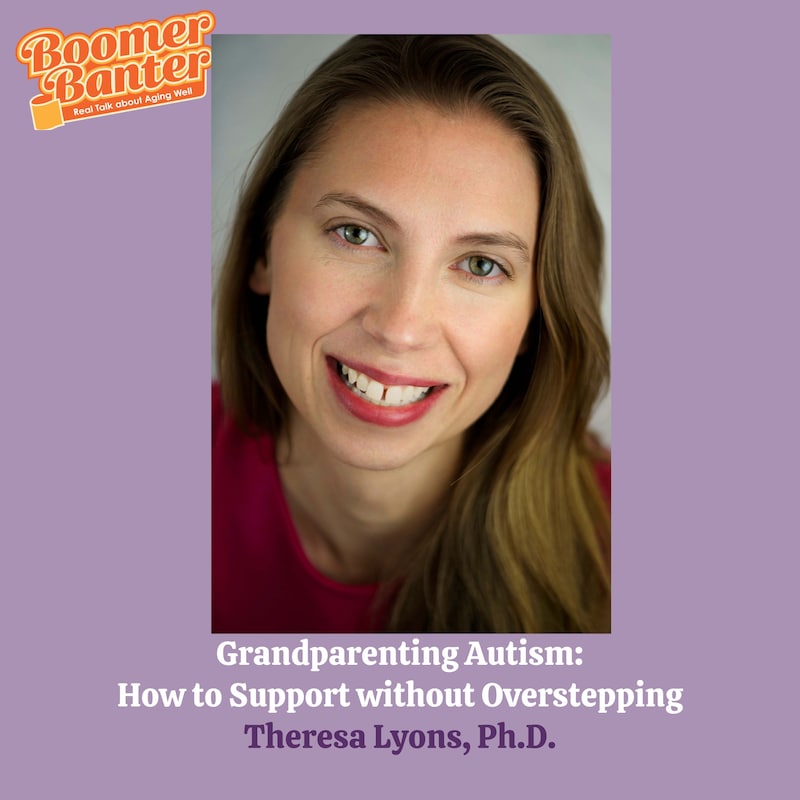
When a family faces the challenges of autism, every member can feel the weight of the world on their shoulders. In this heartfelt episode, Wendy Green and Theresa Lyons, Ph.D. discuss the crucial role grandparents play in supporting their grandchildren diagnosed with autism.
With a focus on communication and understanding, Theresa shares her journey as both a scientist and a parent, highlighting the emotional and practical hurdles families encounter. The episode emphasizes that grandparents should come from a place of curiosity rather than certainty—it's about asking the right questions, like how they can provide help without overstepping boundaries.
Theresa explains the importance of recognizing the spectrum of autism, detailing how different children exhibit diverse behaviors and needs. By offering insights into how grandparents can observe changes and share concerns effectively, the conversation provides tools for building stronger family connections.
Wendy and Theresa’s warm banter, filled with relatable anecdotes and practical advice, turns a daunting subject into a manageable conversation. They encourage listeners to embrace love and support as the guiding principles in navigating the complexities of autism within families.
Takeaways:
- Grandparents should approach conversations about autism with curiosity and compassion to foster better understanding.
- Understanding the spectrum of autism helps in knowing the diverse needs of grandchildren diagnosed with it.
- It's crucial for grandparents to learn about autism to effectively support their stressed adult children.
Links referenced in this episode:
- Email Theresa at: [email protected]
- Theresa Lyon's website awetism.net
- An additional resource: https://navigatingawetism.com/
Mentioned in this episode:
greenwoodcapital.com
Transcripts
Hello and welcome to Boomer Banter. We have real talk about aging well on this show, and my name is Wendy Green and I am your host.
And every week we talk about the challenges, the changes, and the possibilities that come with this season of life.
And if you're a grandparent or, you know, a grandparent whose grandchild has been diagnosed with autism, your first emotion may be confusion and maybe some sadness. And then you might start wondering, well, how can I help? How involved should I be? What if I am overstepping when I'm trying to help?
What do I need to understand that I just don't know yet? Today's conversation will be rooted in curiosity, not certainty. We're not here to tell anyone what they should do. We're here to ask better questions.
Questions like, and what roles can grandparents play that would truly be helpful and not hurtful or increase the tension? My guest today will be Teresa Lyons. She's a scientist, autism expert, and parent. How grandparents can become supportive partners.
Partners instead of silent bystanders or unintended sources of tension.
I know you love your grandchild and want to stay connected in a way that strengthens your family, and I hope you'll learn from this conversation and you'll share it with others who are traveling the same journey. And let's welcome Teresa to our stage. Hi, Teresa.
Theresa Lyons, Ph.D.:Hello. Thank you for having me here.
Wendy Green:Well, this is an important topic that I never even considered until you reached out to me and then I started sharing it with others. And I've heard from quite a few people that, oh, my grandchild has autism or, you know, so it's a bigger subject than I realized.
Theresa Lyons, Ph.D.:Yeah, it certainly is.
Wendy Green:Yeah. So I'm glad that you're here.
Maybe first, if you could, before we start talking all about the grandparent thing, if you could just share a bit about your background and what led you to this work.
Theresa Lyons, Ph.D.:Sure. Two words that can sum it up very quickly is my daughter.
So that is the only reason I started getting involved in autism and trying to understand it and really got entrenched in it is because my daughter was diagnosed with autism at three and a half. And I was in the healthcare industry. So I have a PhD in computational chemistry from Yale and my thesis was all about structure based drug design.
And I worked in the pharmaceutical industry in R and D and then as well as a medical strategist. So really on the business side. And then my daughter was diagnosed with autism and I asked great doctors. Okay, now what?
There really wasn't good options presented to.
Wendy Green:Me, so you decided to go ahead and start your own research?
Theresa Lyons, Ph.D.:Well, I started, I was like, all right, I, I know how to come up to speed on different therapeutic areas. As a medical strategist, I worked for a consulting company.
We would get hired to work on different projects in the pharmaceutical industry in a variety of different therapeutic areas. Right. So I had that skill of, okay, how do I come up to speed very quickly on the cutting edge research?
I knew what I needed to understand on the landscape of, okay, what are the therapeutics and, you know, which drug company is doing what. And with autism, it was, it was shocking how there was, there really was nothing. There just was nothing. And the diagnosis is made on observation.
Right. So you don't even have a lab test, a blood test, a urine test, a stool test, an mri.
You know, there's, there's nothing that gives you quality quantitative answers that, yes, this is autism. It's, it's all based on observation.
So missing developmental milestones, how the child is presenting, how they're interacting, how are they speaking, all. So it's, it's all observations. So it certainly gets very frustrating, especially to a chemist. Right, right.
Wendy Green:Show me the blood work.
Theresa Lyons, Ph.D.:Yeah. Like, I want to know on the microscopic level, what's, what's going on. Right.
So I, I took the time to, to go to PubMed, which is where scientific articles are. That's where scientists go to, to learn what the cutting edge research is, is going on and happening. And so that's really where I started.
And I started with the quality information, the true information that wasn't, you know, watered down or diluted or manipulated in any way.
Wendy Green:Right, right. So it was consumable by the rest of us, but you were able to. Yeah, so.
So we keep hearing about, you know, children diagnosed with autism on the spectrum. What does that mean, Teresa?
Theresa Lyons, Ph.D.:So on the spectrum is just a phrase that some parents say. I used to use that phrase on the spectrum because I hated the word autism.
So when my daughter was first diagnosed with it, it just meant everything was going to be so much more difficult. Right. So like just, just everything.
And it, that one word just would, would trigger me and I would get angry and upset and, you know, this is not, this is not the parenting journey I signed up for. This was not what was. I was expected. And, you know, there were problems with. Even my daughter, she wouldn't smile.
So, you know, at like 2, 3 years old as a mom, you walk into the room and your child doesn't smile at you. Yeah, that feels like massive failure. And I Didn't even know I could fail in that way. So it just. Yeah, it was very difficult.
So a lot of people have different ways to. To talk about autism. So on the spectrum is one phrase, ASD autism. There's. There's a variety of different ways of explaining it, but it is a spectrum.
So you have people who get diagnosed with autism that can speak and might have difficulty really, though, keeping a conversation. So that ebb and the flow, the back and forth, being able to talk about topics you might not really be interested in.
They might be able to dress themselves, maybe hold a job, certainly can walk across the street or whatnot.
And then on the other side of the spectrum, which is more profound autism, that's another phrase that's used a lot is maybe someone who doesn't speak at all, who can't dress themselves, maybe they have seizures, so they need, you know, supervision at all times. They might have extreme meltdowns and be violent in the sense of. Not that they're a bad person. And this.
A lot of times it comes from the brain just being overwhelmed and in that extreme, fight or flight. So you'll see people with autism and on all aspects of the spectrum, but many times with profound autism, you'll see these huge meltdowns.
And it's really when someone loses control of their body, so they might punch and bite and kick, you know, their parents or their grandparents or really anyone who's. Who's nearby. So that's the entire spectrum.
That's what makes it difficult, though, because when you say autism, it doesn't mean, you know, just one thing. Thing. It encompasses all of this.
Wendy Green:Yeah, yeah. And. And I think you so clearly described your initial response to wait a minute. This is the way it was supposed to be.
And why isn't she smiling at me? So, you know, you said at one point when we talked earlier that autism changes everything for a family.
So can you explain a little bit more about what you mean by that?
Theresa Lyons, Ph.D.:Oh, my goodness. Everything. It just. It felt like my world was like this, and then it. Everything went upside down. Right?
So you, you know, you have to start thinking about, okay, working, Right. In order to work, your child needs to be somewhere. Kids with autism, when they have different extreme behaviors or they're. They.
They don't sit still or, you know, they. They're not listening to and doing easily what they're told, or maybe they're eloping, they might be running off. Right?
So this is when teachers or daycares, they need to put more resources on that child. And a Lot of times there reaches a limit of what is doable. And then the parents are thinking, okay, now what? Where do I put my child? I need to work.
How do I work? Right. You might be getting calls from school, and then you're managing running home and addressing things at school while still trying to work.
So there are things that are changing. You know, diet changes. Right.
So you might start to notice your child behaves pretty poorly when they eat certain things, but yet they might become very picky, and that's all they eat. And then parents start to stress, oh, they're not getting enough nutrition. They're not. Right. So you start to accumulate all these chronic worries.
And then a lot of times, sleep is an issue. So 80% of kids with autism will experience some type of sleep problems. And when the child's not sleeping, no one is sleeping.
The parents, other siblings, dogs, you know, it doesn't matter. No one's sleeping. Right. And so then that makes things even more difficult.
Specifically with autism, there are two research publications that show when kids with autism don't sleep, their autism symptoms actually increase. So autism isn't static. There are a lot of different variables that can change it, Some for the good and some not so good.
And so then when a child isn't sleeping, guess what? The next day is more difficult. You might have.
Wendy Green:And you're tired, and so you're less patient and. Yeah.
Theresa Lyons, Ph.D.:Yes, yeah. Oh, yes. Oh, my goodness. You're less patient. You're probably not eating well as a parent. Right?
You're probably gonna start, okay, let me have some coffee. Let me get some sweets, right? So now your diet is not going well, and you just have all this stress.
Stress that starts to accumulate from just every direction that you could imagine.
Wendy Green:And meanwhile, as the grandparent, you know, I'm watching you, my daughter, going through all of this and struggling, and I'm, like, wanting to protect you and not knowing how and wanting to help make the child, you know, maybe I can take him, but maybe I can't if he's really diff, you know, so. So that's a real dilemma for the grandparents, too.
Theresa Lyons, Ph.D.:It is. Very much so a dilemma. So we can talk about PTSD diagnosis because we're starting to explain all the stress that comes along.
The scientific literature shows that parents whose children have autism and emotional dysregulation have an increase of getting a PTSD diagnosis from the child. And I don't say that in any kind of criticizing way, but it's from the situation.
And so it becomes a real issue because we talked about all those different avenues of stress, but the meltdowns are really traumatic for the person with autism, but they're also really traumatic for the parent or anyone who's witnessing. It could certainly be the grandparent as well.
And this trauma can just accumulate, and then you start feeling like you're walking on eggshells, and you look at your phone, and you kind of get a little jittery. Okay, when's the next call from school? When's the next problem that's going to come?
So it really can become a very difficult situation and not anyone being dramatic or anything along those lines.
Wendy Green:So how do you respond to a grandparent that says, you know, honey, you just look so tired, you look so stressed. What can I do to help? Let me. Let me take little Tommy and, you know, give you a break. And you're. You're going, but, mom, you don't understand.
You really can't. Right. And so we're adding to your stress. So how do you talk to grandparents about how to make that easier, better?
Theresa Lyons, Ph.D.:Well, grandparents do play a very important role. So we can first start with some of the science there.
So there was research done in:And so grandmothers, if they saw their grandchild frequently, the average age of a diagnosis was decreased because grandmothers start to notice things. And then they can start saying, you know, I have some concerns. And the same thing happened for grandfathers.
So there was five months of an earlier diagnosis for related to grandmother visiting and grandfather's involvement. It was four months. So pretty much the same.
So grandparents can start to see things differently because they might see their grandchild maybe once a week, once a month, and they can kind of see, like, they can kind of guess how their grandchild will be. Oh, the next time I see them, they should be talking even more. Like, you gone through the whole parenting journey once, right? So you kind of have a.
A good feel as to what things should look like. And so grandparents can really see those red flags. Maybe when parents.
They might be tired, the parents might have gone to a doctor, and the doctor's like, well, let's just wait and see, right?
And so if the grandparent is saying, hey, listen, I've got the similar concerns, that's what can really bring a lot of benefit to the grandchild, because you want them to get, you know, proper attention as soon as possible. So it's a good thing for grandparents to be involved. But it's. It's A delicate relationship. Right.
Because everyone has different relationships with their parents. And, and some, a grandparent could have that conversation and say, hey, listen, Johnny should be speaking a lot more.
How about, you know, we start getting him in front of a specialist or something like that? That conversation might go very well for some people and it might go very poorly in other situations. So it's always important.
Yeah, it's important to understand what, what kind of relationship do I have with my adult child?
Wendy Green:Yeah. And that's a fine line to walk, you know, because I mean, I, I guess the earlier you are diagnosed, the more you can do. Is that right?
Theresa Lyons, Ph.D.:Better? Yeah.
It's always, it's always good to, to get in front of things and the quicker you act on, on many things health related, the easier it is because the less overall you have to do.
Wendy Green:Yeah. And I know that parents, a lot of parents today are, are very well educated, you know, and boomer grandparents are also very well educated.
And so, you know, we tend to think, oh, like you said, we've been there, we've raised kids, you know, we have some knowledge. And my experience, and I don't have an autistic grandchild, but there's an autistic child on the other side of the family.
And I mentioned something to my son at one point, you know, I said, h. She's, she's got some behaviors, you know, and he said, mom, don't say anything, you know, and, and now it's come about, but it's like nobody wants to offend anybody, you know, and so you just don't know what to do and what to say.
Theresa Lyons, Ph.D.:Well, it's important to have those conversations though, and, and you can approach it in so many different ways. I, I liked how you, you started this example out as you, you notice your adult child is, is struggling. Right.
The, the grandchild might be a little bit more. And if you offer, okay, can I, can I take, can I take him for a while and give you a break? Sometimes the p. You won't be able to handle them.
You don't like if there's picky eating or if there's like rigidity, it might end up just being more stressful for everyone involved. Right.
So more stressful the child, especially if communication is difficult and they have certain routines that, that are comforting to them and maybe they don't know the grandparent that much. Right. So then they might be a little bit scared and then how do I talk when I can't talk?
And now I'm scared and all of this and then the, the mom or the dad, they're probably gonna still worry like, oh, no, this is not gonna be good. You know, like, just it. So a lot of times it.
It might be starting with having a conversation as to what would be helpful and, and having it be more open. Right. So this is a lot of times where the grandparent might let me really think about what I want to say.
Let me kind of like, write it down and let me. Let me practice it maybe once in my mind, because it's important. Right.
Because these kind of conversations can go sideways really quickly, especially if the adult child is tired. Right. Is irritable.
And when someone is in that fight or flight, they're going to get very defensive a lot quicker than, you know, if they were rested for, you know, the past six months. And, you know, things were going well at work. So there's a lot of external pressure on that adult child that the grandparent might not be aware of.
And so in the past, that conversation might have gone easily, but now you're dealing with a parent who is. Is really stressed. So picking a good time is important, too, these kinds of conversations.
You don't want it to be kind of, like, fast or even to feel pressure for the person to answer. So you can have the conversation a variety of different ways.
But one of the ways is really just saying, you know, I, I love you, and I see you raising Johnny as, as best you can, and it's very different from when I raised you. So I just want to say I, I can't even imagine what you're going through. So this way you're kind of like, taking that pressure of.
Off of, like, I did a good job. Why can't you do a good job parenting?
Wendy Green:Right. Right. Because that could be how it's being taken. You're right.
Theresa Lyons, Ph.D.:Definitely right. And you've got to remember this adult child is tired, is stressed. There's stuff coming at them in every direction.
They're just trying to survive, basically. And so just. Just acknowledging that this, this is very different than when I raised you. And I, you know, you could then just say something.
I. I want to help you.
Wendy Green:Yeah.
Theresa Lyons, Ph.D.:But I want you to tell me.
Wendy Green:Well, see, that's the, that's the trick, right? So when, you know, we've done several shows about when you. Someone has lost a spouse, you know, and you. And you go, well, you know, how can I help?
And. And you're like, putting that pressure back on that person instead of saying, can I bring you a meal? You know, can I help Clean your house.
Can I do something to. So in this situation where the child is tired and stressed and whatever, and now you say, how can I help?
Is it more likely that you're going to get a better response if you can come up with some ways you might help? Well, I know you must be tired. What if I hire somebody to clean your house for you next week? You know, would that be helpful?
Or, you know, what if I can help you get a tutor for little Johnny?
Or, you know, like, I mean, I don't even know what would be a good way to help, but would that be better than asking a tired, stressed out parent, how can I help?
Theresa Lyons, Ph.D.:It depends on the relationship you have with the person. And you could, if you're not even sure, like, honesty just really helps this whole process. So you might just say, listen, I want to help you.
I want to give you some suggestions, but I don't want you to feel like I think that's where you're failing. Right. Because then that someone could be like, wait, are you saying my house is dirty? Yeah, I need something to clean it.
You know, like, it can go like this is right, that chance of, of yes. You don't want. Right. I had a neighbor, one zoo, who made a comment about my, my house, and I was like, wait a second.
And then I was like, it's not really my priority right now. It wasn't atrocious. But then it was just like, wait, what do you mean? And then I started looking at them. I was like, oh, wow, great.
Another way I can be critical of myself. Oh, no.
Wendy Green:So maybe that's not a good suggestion.
Theresa Lyons, Ph.D.:But it could be to the right person. Right. Someone might be like, oh, yes, please. Right.
So is that delicate dance of I want to help you, but I, I, I don't want you to think that I want to help you because you're failing. I want to help you because I love you.
And I either, like, I have time, I can do XYZ if you would like or like if, if there's extra money in the budget, if you want, maybe I could somehow help out financially. What, what would help that way? Right.
So you can get specific if the person starts leaning into that conversation, but it certainly can go sideways very quickly if you start saying things you'll do.
Wendy Green:Yeah, yeah.
Theresa Lyons, Ph.D.:Because they're failing at certain things and they might get very sensitive about that. So, yeah, it is a conversation to have. Now, another thing. So we talk about research. I'm a researcher. I like all the information.
The other thing that grandparents can do is they can start to learn about autism. They can start to learn about how do I interact with my autistic grandchild and then they can interact with the child in a more confident way.
And then that might help the parents say, okay, how about you just stay in the house while I run errands? Right? So like, you don't, the, the responsibility isn't to like take the child away from the house. Right.
It might be easier for the child to stay in the house and the adult child go and run errands or, or go take a break, take a walk or go, go work out, right? Go meditate. There's so many things. Or go work. Right. So there are different ways for the grandparent to educate themselves on what autism is.
And okay, how can I interact with this child in a better way so that I could help my adult child? And so that could be something that gets offered, you know, hey, how about I do XYZ and learn this? And would that be helpful to you?
Or maybe it is just shuttling the child from different therapy appointments. Right.
Many kids with autism have speech therapy and occupational therapy and physical therapy and maybe horse therapy and maybe even, you know, different sports and stuff. So it could be offering that. And that usually is kind of an easy way to get into the conversation. Oh, got a comment?
Wendy Green:Yeah. Parents lived 100 miles away and had no idea how to relate. So, you know, when they would come to visit, it made it more difficult. Right. So how, yeah.
Theresa Lyons, Ph.D.:So were they open to relating? Did they want to learn how to relate the child? Or was this more of a, like, kind of contentious? If that person can comment again.
Wendy Green:Yeah, if she can comment again. Yeah. And you know, I wanted to talk about the science, so we'll, I'll wait for that.
But you're very clear about how the science has evolved, you know, and you've learned so much by looking at it. What do you wish that grandparents knew going into this, you know, when they're, then their grandchild is young?
Theresa Lyons, Ph.D.:Well, I think it's important for grandparents and parents to know the latest science on autism. And so one of the facts about autism is that it's not lifelong for Everybody.
So in:And that means they didn't need pt physical therapy or occupational therapy or additional supports at school, or they were able to speak, and they didn't need all the extra support that's associated with autism. So that's something that's really important for parents and grandparents to know at the start.
Wendy Green:Do you think. Do you think it's because they were misdiagnosed initially?
Theresa Lyons, Ph.D.:No, no, no, no. People are starting to understand autism a lot more. And, like, what is it? Right. Like, what was driving me in the beginning? What is it?
aughter was diagnosed back in:And back then, it was called an optimal outcome. And as information is understood and as different things are being done, that number is increasing.
And it's just because researchers are understanding more and more. We could certainly talk about cerebral folate deficiency. So that was.
Wendy Green:I do want to talk about that. Yes. She says no, they. They didn't know how to deal with it, and they didn't seem to be in. Want to know. Yeah.
Theresa Lyons, Ph.D.:They just ignored him.
So it might have been because they were uncomfortable, because if they're making the effort to come and visit you, they wanted to see you if they're from several hundred miles away. So it might have just been. They didn't know what to do, and it could be so awkward. Right. They. They might have expectations.
And we didn't even get into that, Wendy, yet about, like, expectations. Right. You as a mom, I had this expectation of, oh, we're gonna have all these different adventures and little tea parties and getting dressed up.
Wendy Green:Right, Exactly. I know to them, they're gonna be all excited about that, you know.
Theresa Lyons, Ph.D.:Yes. Yes. Yeah. And grandparents have that same kind of expectation. Yeah. So how do they. How do they grieve? How do they pivot? Right.
I don't know what kind of. Sometimes people do get very rigid in. In their expectations. And now what. What. What do I do? So when it sounds like your parents were.
They were putting in an effort, but it wasn't. It wasn't necessarily what you would have liked or you would have liked maybe something a little different.
Wendy Green:Yeah.
Theresa Lyons, Ph.D.:And that's when those convers. These are difficult conversations.
Wendy Green:Right.
Theresa Lyons, Ph.D.:So that's why I'm saying talk it out, plan it out. When. When someone is making an effort to try and be involved, even as little as they are.
Wendy Green:Right.
Theresa Lyons, Ph.D.:Maybe they were only visiting once or twice a year, which might be a lot for that grandparent Right. We don't know what's going on in their life and all of that. Yeah.
But you can always have some kind of conversation before they visit and say, hey, this is, this is what Johnny is doing in aba and he loves doing it and I think that's something that you can do. Or, you know, we really like taking drives and it would be great. I'll be in the front seat and you and dad can be in the back seat with, with Johnny.
And he really likes pointing out to trees or he likes talking about dinosaurs. Right. So you can start to craft like, safe ways for a grandparent who's just like, I don't know what to do.
And maybe this grandparent even saw an autism meltdown, which is traumatic. Right. So they might be like, I don't, I can't handle that child by myself. Right, Right. What if I get close to hug them and they bite me? Right.
Maybe they saw the kids fight the adult child. So there's, there's so many things with autism that can really make interacting difficult.
So having those conversations are, are just really important. And it might, there might be something that like, your heart really wants.
Like you might have expectation of how your parents were going to interact with your child. Right.
Like in your mind, you might have been like, oh, I can't wait during Christmas time because they're gonna go cut down the tree together and I'm gonna take pictures and you know, I'll be here making hot cocoa and I'll serve. So. So there might be this intergenerational expectations. Right. And then when that doesn't happen, it hurts even more.
Wendy Green:Yeah.
Theresa Lyons, Ph.D.:So this is where the, just the conversations of having those difficult conversations can, can really help.
Wendy Green:And you know, I, I mean, I, I appreciate the way you're describing this because even with grandchildren that don't have, you know, an illness or autism or, you know, any kind of disability, you still have to walk a fine line, you know, because parents are parents. Right?
Theresa Lyons, Ph.D.:Right.
Wendy Green:We all have our own way of parenting. And now you add on the addition of the stress of this diagnosis and what are you going to do?
And you're not sleeping and, and it becomes even more difficult. And on your website, autism.net and I, and I, I'm curious of why you spelled it this way. Awetism.net okay, so I already told you.
Theresa Lyons, Ph.D.:I hated the word autism. U T I S M. I would see that word, I would hear that word if I had to say that word.
It just, it just put all of that stress back on me and so as I learned the science and as my daughter started improving because we were addressing different health issues, I really got to see her character and how determined she was to get up and go to school every day and fail at like everything. She literally probably failed at just every conceivable thing. Right. But she still would get up and try, and she still had that optimism.
So I really saw it more as autism, as her body was failing her in so many ways and she still had the determination and the spirit to continue on.
So that's really how I see autism, because there's so much about the body that is not optimal, that really holds the child back, but yet they still have dreams, they still have ambitions, and they still get up and try and do things. So that's, that's why I spell it autism that way. A W E T I. Yeah.
Wendy Green:So you find the awe in it. Yes, yes. And. And it is interesting. I was talking to my partner about it. His grandson has very severe.
He does, you know, non verbal, grown up, but he cannot dress himself, you know, and took a long time for him to learn toileting and those kinds of things. But give him an iPad and he is like going to town with it.
You know, he knows where everything is, how to turn it on, how to turn it off, how to make it look louder, how to make it softer, how to find the games. So it's like there's so much we don't know about the brain and how it processes information.
Theresa Lyons, Ph.D.:Yeah. So what scientists are starting to really understand more now is with profound autism, a lot of times a diagnosis that's also made is dyspraxia.
So apraxia is more commonly heard. That's when kids have really difficulty speaking in the sense of moving their muscles. They want the way they want it to.
With dyspraxia, you have that motor planning issue with the entire body. So for. There's new research that used eye tracking software on people with profound autism who have learned how to use a letterboard to spell.
So what they're doing is they're using their shoulder, so they're using gross motor skills, which are easier to tap into, rather than fine motor skills or ultra fine motor skills. If you think about speech. Right. We're coordinating our lips, our jaw, our tongue, breathing.
There's so much that's going on, motor planning wise, that someone can have dyspraxia and just not have the ability to move their body the way they want. And then they get labeled as intellectually disabled because how are you going to test them otherwise.
Wendy Green:Right.
Theresa Lyons, Ph.D.:They can't speak, they can't write. It becomes very difficult. So there's research out there that is showing that kids with profound autism can speak and have great intelligence.
They're very smart. I interviewed one kid who, who learned this technique and it's not really a kid. He was in his 20s, maybe 23 or so.
It turns out that he is bilingual but can't speak verbally at all. Yes. He grew up in a household that was. There were two languages being spoken.
And then when he learned how to spell on the letterboard, he could spell in two languages.
Wendy Green:Oh my goodness. And have a conversation with you that way.
Theresa Lyons, Ph.D.:Yep. Yeah.
Wendy Green:You know, and that would be, I mean, I would think that would be part of the frustration if you can't speak and tell people what you're thinking, but you're able to think it.
Theresa Lyons, Ph.D.:Yes, yes, yes. Yeah. We're learning so much about autism and that's why understanding the cutting edge research. Right.
It normally takes 20 to 30 years for there to go research discovery to mainstream practice. You certainly as a parent or a grandparent, you don't want anyone waiting 20 to 30 years to, to really have this kind of information.
Wendy Green:Yeah. So you are very in tune also with dietary supplements needs. So talk to me about that a little bit more.
Theresa Lyons, Ph.D.:Anything healthcare related is, is definitely my, my interest just because of my background of being a copy check occupational chemist and being involved in drug discovery. So diet is super important.
We, we all know that, but many times, I don't know, we, we hope it's not as important because then we have to make changes and. Exactly. But diet is important. Right. So a lot of times you hear things about organic versus non organic.
And for some kids with autism, not all kids with autism, but for some kids with autism, they have issues with detoxification.
So for a kid who's having those kinds of issues, then eating organic is really important so that you're not putting additional burden on the body to detox different chemicals and pesticides. Things that in conventional food, that's not in organic food. So that is something that's really important.
Getting basic nutrients right from vegetables, from fruits, so that we have to be careful with fruits because certain gut infections can cause sugar cravings in kids.
And that gut infection doesn't care whether the sugar comes from a cookie or from, you know, mango or peach or something like that, orange juice, grape juice, all of those high, sugary, seemingly natural and healthy foods cause problems. So it's important to understand that. And that's the thing about autism, you can't just do the same thing for everybody.
Not everyone has these gut infections that make sugar a craving. They don't. So sugar isn't.
Obviously we don't want our kids eating lots of sugar, but for some kids with autism, it's extremely detrimental, and for others, it doesn't seem to make that too much of a difference. And that's the reason why. So there's a whole lot of this environment interplay that impacts a child with autism differently.
Wendy Green:And you said something about folate and I think I interrupted earlier when you were saying that.
Theresa Lyons, Ph.D.:Yeah, yep. Okay, so folate. So this all relates, relates perfectly, right? B vitamins, B9, vegetables. There we go.
earlier, late in the fall of:And what happens is speech gets impacted a lot. And that's a huge problem with autism. Right?
So you have 70% of kids with autism have these antibodies in their brain that are really impacting how the brain normally utilizes folate. So there's a prescription leucovorin and, and it uses just a different transport system rather than the way folate normally goes into the brain.
There's like a little side door. And so when kids are given folate in this form, folinic acid, then speech just starts to really explode. Right.
And the important thing for parents to know is that the kids have been learning all along.
So there are kids who were non speaking, they start taking leucovorin and you know, within maybe a few months, they might be able to be having conversations, even age appropriate conversations. Depends on their age, obviously, of course. But the important thing to know is that they didn't just all of a sudden start learning.
They've been learning all along. The only thing that changed was now they were able to accept, express it. So that's. Yes, and it's remarkable, Right.
And again, remarkable when you go back to the autism diagnosis though, right? The diagnosis is made on observation. So you're basically waiting for these problems to become so large that they're observable. Right.
And then there's really no plan as to. Okay, but what do we do? So, so now research is starting to show, okay, within autism there can be an autoimmune component to that. Right.
So now you can really start to get very granular about health. You can test. It's a blood test, and obviously not anyone's favorite to do on a child, but this is one of those blood tests that are really vital.
And you could find out whether your child has these antibodies. And if they do, then is really important to optimize leukovorin and you know what. What amount they need. It's usually dosed upon weight, Right.
It varies for every child. So there's always trial and error. And if. Go ahead.
Wendy Green:I was gonna say. And will your physician know this if you.
I mean, if I get you to tell me how to spell this and I put it in the show notes, will your physician know what lucavorin is?
Theresa Lyons, Ph.D.:So it is a hot topic. So many physicians are aware of it. Now you ask a fantastic question as to, okay, you're starting to understand there.
There really is a health component to autism, Right. So we got to stay on top of that. We need to go to different doctors, but which doctors? So a general pediatrician cannot make an autism diagnosis.
So usually you are not asking your general pediatrician anything that really specifically has to do with autism because they don't receive training in it. So that's a mistake a lot of parents make because for the most part, you probably trust your pediatrician, right.
And you see them as a source of knowledge.
And so sometimes parents go and they ask about this or something else, and the pediatrician's like, no, no, that's, you know, and it's just because that pediatrician isn't really well informed. So you really want to deal with different specialists. Now there are different neurologists, different developmental pediatricians.
They will know about it. Some physicians say that this approach is not evidence based. Right. And this is now where you start to get into controversy.
So just imagine your adult child dealing with everything and now trying to sort out all this medical stuff and navigate the health care system on top of it, right? So some doctors have learned about this, and they said there's not enough evidence.
And there have been five clinical trials that have been done looking at doing the frat test. If the frat is positive, prescribing leucovorin, increasing the dose. And then basically three months later, you can start to see some changes.
Now some doctors say, no, we are not doing. I'm not prescribing leukovorin at all. There's no evidence.
Now some parents get frustrated and they're like, okay, the first clinical trial was done like 20 years ago. Doctors have been doing this for a long time, and there's five clinical trials all throughout the world.
So some doctors will say, yes, of course, let's do the frat test. If it's positive, yeah, let's do the leucovorin. Other doctors will say, no, there's not evidence.
They want to see large clinical trials, maybe five more clinical trials of 1,000 kids in each one. And then they'll say it's evidence based. Right. So it really depends on who you're talking to.
It really also depends on that adult child, what kind of risk tolerance they have. Right. And the risk really is a blood test. So the risk is. Is on the lower side. But this is all the things that the adult child.
Wendy Green:Right?
Theresa Lyons, Ph.D.:Yes. So the grandparents might not see all of this stress, and it. You can't turn it off, right?
Wendy Green:Yeah.
Theresa Lyons, Ph.D.:So it's. It's a lot of stress. So much too much for the grandparent to. To have those conversations.
Sometimes it's even, you know, you have relationship with your. Your parent where they just, I don't know, they send you funny stuff, right?
Hey, mom, just, you know, twice a week, just send me something to laugh at. That's. That means so much to me right now. Right. And then, you know, the grandparents, like, sure, I can do that. Right.
Because there's no downside to that. You're not gonna get anything like that. So this gives context as to what the adult child is dealing with. And as the grandparent, you.
You love your child, like you said, you want to protect them. It's just trying to figure out what is meaningful and, and having that connection. It's really important to have that family connection.
However, it is just because it is an extremely stressful situation.
Wendy Green:Teresa, there's so much to learn.
Theresa Lyons, Ph.D.:I mean, there's so much.
Wendy Green:Oh, my gosh. And, and, you know, you had the advantage of being a medic in the medical field, being a health chemist, and, you know, knowing all of that.
And so for grandparents who are trying to do their best by their child and by their grandchild, it. It's. It's a challenge.
So, you know, what I'm taking away from this is that grandparents show up with curiosity, show up with compassion, and do some of your own learning. I'm going to share Theresa's website.
There's a lot of information there, but understand that your child, Your adult child is tired, stressed, probably over time dealing with ptsd. And if you can just be patient and respectful and loving, you're going to help in ways that you may not even understand.
So, Teresa, wow, thank you for bringing both some of the science. There's so much more. Yeah. And your heart to this conversation. It's really been a powerful learning for me and I hope for everybody else listening.
As I said, the one website that you have is autism.net a w e tism.net and you can also Teresa has very generously allowed us to email her if you have further questions. And that's lions L Y O n s at again, autism a w e tism.net so oh, wow, this is, this is a tough one.
And, and to everyone listening today, if this raised additional questions for you, please reach out, check out her website, check out other sites, share this with your friends who are dealing with this as grandparents or, or even if you have adult children that are dealing with this, let them know about the work that Teresa is doing and switching topics for just a moment.
It is February, and in February, I do try to, I mean, in February, as the month changes, I do try to recommend another podcast from our Agewise Collective group, which is the group of women podcasters talking to women over 50. And so I want to recommend a podcast called women over 50 work less, make more, do what you love.
Women over 50 entrepreneurs, work less, do more, make more, do what you love. And you can find it on Spotify, you can find it on Apple Podcasts. So I would really recommend that. And thank you for joining us on Boomer Banter.
Thank you, Teresa, for. Oh, yeah, this has been really an important conversation.
So my name is Wendy Green, and I'm reminding you that your best chapter might still be ahead of you. See you next week.
Theresa Lyons, Ph.D.:Sam.



