Shownotes
How do you run a global fashion marketplace serving 18 million active customers across 200 markets while keeping assortment fresh, fulfillment fast, and brand partnerships strong?
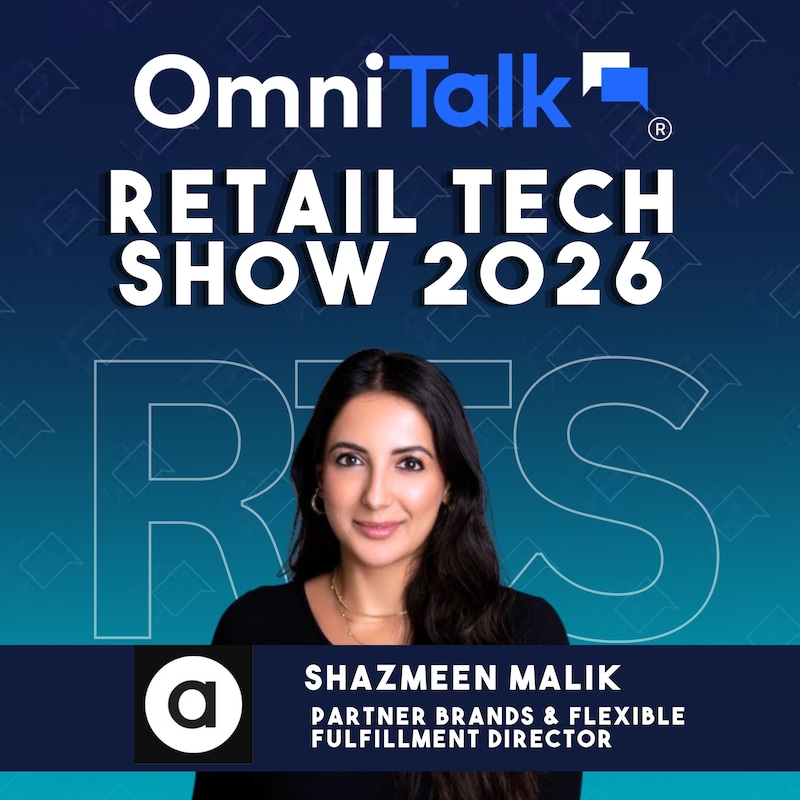
Live from Retail Technology Show 2026 in London, Chris Walton sits down with Shazmeen Malik, Partner Brands and Flexible Fulfillment Director at ASOS, to discuss how ASOS is evolving its marketplace model through smarter fulfillment, curated brand growth, and AI-powered merchandising.
Shazmeen explains how ASOS balances wholesale, partner-fulfilled, and ASOS Fulfillment Services models to better serve customers and brand partners around the world.
Key Topics Covered:
• How ASOS manages a global marketplace across 200 markets
• The three fulfillment models powering partner brand growth
• Why flexible fulfillment improves speed, localization, and choice
• How ASOS decides the right model for each brand partner
• Using fulfillment to localize assortments by market and region
• Why multi-brand retail is different from single-brand retail
• How AI will reshape buying and merchandising teams
• Why AI gives merchants more time for creativity and strategy
• How AI can improve product discovery and outfit building
Thank you to Vusion for supporting our coverage from Retail Technology Show 2026.
#RetailTechnologyShow #ASOS #FashionRetail #Marketplace #RetailInnovation #SupplyChain #OmniTalkRetail
This podcast uses the following third-party services for analysis:
Podcorn - https://podcorn.com/privacy
Transcripts
Hello, everyone.
Speaker A:Welcome back.
Speaker A:This is Omnitalk Retail.
Speaker A:I'm Chris Walton and I'm coming to you live from the Retail Technology show in London from the Vusion podcast studio.
Speaker A:And joining me now is Shazmeen Malik.
Speaker A:She is the brand's director of global buying, merchandising and flexible.
Speaker A:Whoa.
Speaker A:Flexible fulfillment.
Speaker A:Wow, that's hard to say.
Speaker A:Yes, it is.
Speaker A:We were joking about her title before we started, but flexible fulfillment is what I was trying to say at asos.
Speaker A:Shazmeen, welcome to omnitalk.
Speaker A:Thanks for joining us.
Speaker B:Thank you for having me.
Speaker B:Happy to be here.
Speaker A:Yeah.
Speaker A:Tell us about your background and also that role because that's a very interesting.
Speaker A:Very, very diverse responsibilities.
Speaker B:Yeah, it's a cool role, actually.
Speaker A:It's hard to say.
Speaker B:It is hard to say.
Speaker B:It is.
Speaker B:It's hard to do as well, I bet.
Speaker B:So I've been at ASOS about two years, so I lead our partner brands business.
Speaker A:Okay.
Speaker B:And I also lead our flexible fulfillment business, which consists of our partner fulfills model and our AFS model.
Speaker B:So essentially my role is to curate and manage our brand portfolio and get them to our customer in the most effective and optimized way possible using all of the fulfillment channels that we have.
Speaker A:Got it.
Speaker A:And there's a lot of nuance in that.
Speaker A:I imag, which we're going to probably get to as well.
Speaker A:So why'd you make the move?
Speaker A:So you've got a background, you're at Primark, Gap.
Speaker A:I was at Gap 2 back in the early 90s.
Speaker A:American Eagle.
Speaker A:What made you make the move to say, you know, asus?
Speaker A:Let's go there?
Speaker B:Yeah.
Speaker B:Well, I started my career here in the UK at Primark, like you mentioned, and then I spent about 15 years in New York City, Big Apple, where I worked at the Gap, American Eagle, Macy's, which is the first time I started working in a multi brand ecosystem, which was really, really exciting.
Speaker B:And then, you know, I just missed the British weather.
Speaker B:Guess I had to come home.
Speaker A:It's actually really nice here, right?
Speaker B:Gorgeous.
Speaker B:Yeah, it's.
Speaker B:Yeah.
Speaker B:You can't really joke about the weather at the moment.
Speaker B:No.
Speaker B:But seriously, the British fashion is so exciting and I think ASOS has so much credibility in fashion.
Speaker B:We have a highly engaged young customer, very wide range of customers as well.
Speaker B:It's a global platform, so it was just such an exciting role and I'm glad I did it.
Speaker B:It's been really, really fun.
Speaker A:Did anything surprise you as you took over?
Speaker B:Nothing really surprises me anymore after 20 years working in retail.
Speaker B:But there's some things that have excited me.
Speaker B:So I think looking at our brand portfolio, the influence we have in the branded space is super, super exciting.
Speaker B:We've got about 50 brands that we do either exclusive partnerships with exclusive product.
Speaker B:That's really exciting to do that kind of stuff.
Speaker B:And then we've completely transformed our brand portfolio.
Speaker B:About 20% of the brands that are live today on ASOS were acquired in the last 18 months.
Speaker B:So we've done a really, really good job of just diversifying our portfolio while at the same time strengthening our existing partnership.
Speaker B:So it's been exciting.
Speaker A:Yeah, I'm so curious, like, because, you know, when we talked about your background, I mean, most of those are just, you know, single branded retailers.
Speaker A:You know, that's particularly your experience.
Speaker A:And now you're going to a multi branded retailer.
Speaker A:What unique challenges does running a multi brand retailer present versus say, the single brand?
Speaker B:Yeah, yeah, it's a great question.
Speaker B:It's very different.
Speaker B:So yeah, most of my career was single brand and in a single brand you're optimizing one point of view and usually one kind of product aesthetic.
Speaker A:Okay, yeah, right, that's a good point.
Speaker B:Yeah.
Speaker B:And Macy's was the first time I worked in a multi brand environment.
Speaker B:But ASOS is quite different actually because we're Global, we've got 18 million active customers and we ship to 200 markets.
Speaker B:So you're managing a multi brand, multi channel, global ecosystem.
Speaker B:So it's a very different model.
Speaker B:And really the key there is finding ways to stay true to asos and who are what our DNA is and being really authentic to that.
Speaker B:But at the same time working with external partners and brands, being true to their authority and identity and showing that in a way that's really unique to asos.
Speaker B:And that's really the fun part.
Speaker A:Right, so let's go back then to the flexible fulfillment aspect of the job.
Speaker A:So the interesting thing about it you kind of touched on a little bit in the early part of this interview.
Speaker A:But you know, you guys, you all have two different fulfillment models.
Speaker A:Can you talk about what those models are?
Speaker B:Yeah, we actually have three in total.
Speaker B:If you include wholesale too.
Speaker A:Yeah, yeah, right.
Speaker B:So wholesale is our traditional buying model.
Speaker B:You know, most retailers operated in 100%, you know, a few years ago and now it's really evolved.
Speaker B:And today about 20% of our third party brand sales come from our flexible fulfillment channels.
Speaker B:So it's a new part of the business.
Speaker B:We've been scaling, scaling thoughtfully, but actually it's actually transpired to be quite aggressive in terms of the numbers.
Speaker B:And that's happened because of the benefits of the customer and our partners and just giving us more flexibility.
Speaker B:So partner fulfills is the model where the brand owns a stock and they manage the delivery and returns proposition.
Speaker B:So it works for partners that have good ecosystem in terms of logistics and are able to manage that.
Speaker B:Then we have ASOS Fulfillment Services, which is a relatively new model.
Speaker B:And that's where the brand owns the stock and the pricing, but we manage the fulfillment.
Speaker B:So we own the customer experience in terms of delivery, returns and that whole kind of customer proposition.
Speaker B:So that also works for different partners.
Speaker B:So Inditex, for example, one of our biggest partners, moved to this model about a year ago.
Speaker B:It's yielded really good results for them.
Speaker B:But on the flip side, we also have small brands that want to tap into our, you know, best in class supply chain operations and use us as well.
Speaker B:So it works both ways.
Speaker A:And how do you as an executive sort through what the right model is for each of the partners?
Speaker A:Like, how do you think through that?
Speaker A:Because that last one's pretty unique in a lot of ways.
Speaker B:Yeah, yeah.
Speaker B:I think the first step is we look at our portfolio.
Speaker B:Kind of agnostic of channel.
Speaker A:Okay.
Speaker B:So the first question is, is this brand, are these products relevant for our customers?
Speaker B:Yeah.
Speaker B:Do they tie back to what ESO stands for?
Speaker B:That's the first question.
Speaker B:Then we work with our partners to find the best route to market for them.
Speaker B:So we look at their capabilities.
Speaker B:What's going to help them really be effective, what's going to optimize our operations?
Speaker B:Sometimes it's a hybrid.
Speaker B:You know, a lot of our top strategic brands are actually on a wholesale plus a partner fulfills model that works really well because you can buy ahead of season in a wholesale model and then react in season or go wider in the assortment and test.
Speaker B:It also gives us access to backfill something sold out in a size we've purchased stock in.
Speaker B:We can tap into the brand stock and, you know, serve the customer better that way.
Speaker B:So it really is a nuanced approach,.
Speaker A:Partner by partner, partner by partner, based on what makes sense for them economically.
Speaker A:Does it vary by country at all?
Speaker A:Like, how do you think about that being such an international business?
Speaker B:Another great question.
Speaker B:Yeah, we're global, so there's a lot of benefits of flexible fulfillment in a global business.
Speaker B:So we operate marketplaces in the UK and Europe, which are our core markets, but also the US we're starting to scale more aggressively in the US now.
Speaker B:That's one of our faster growing Territories, actually.
Speaker B:And really the benefits of flexible fulfillment here are it enables localization so we can be even more nuanced in our assortment in those regions using flexible fulfillment.
Speaker B:So it could be localized brands that are more relevant, products that are more relevant for that region.
Speaker B:It could be weather patterns, it could be cultural events.
Speaker B:It just gives us more flexibility to serve the customer better.
Speaker A:So it does what it says.
Speaker A:The flexibility gives you flexibility to fulfill to the customers throughout the world, really, depending on what the locale is in which they want to interact with asos.
Speaker B:Yeah, exactly.
Speaker A:Right?
Speaker A:Yeah.
Speaker A:Makes sense.
Speaker A:All right.
Speaker A:It's easier said than done, as evidenced by, by my opening.
Speaker A:All right, so finally, let's close with this.
Speaker A:I've been asking this of everybody, so not gonna let you off the hook either.
Speaker A:How and where do you anticipate AI changing the role of the buyers and the merchandisers within your organization?
Speaker B:I think it's going to help our roles.
Speaker B:I think it's going to help our roles.
Speaker B:I think really it's going to change how much time we spend at each of the stages of the journey in buying and merchandising.
Speaker B:It's going to help us get data more effectively, be able to be more effective in the decisions we're making and open up hopefully more time for creative thinking, strategic thinking.
Speaker B:Fashion is deeply personal, so it requires a human touch.
Speaker B:And I think using AI effectively will give us more time to focus on that.
Speaker A:So your, your take on it is like, let's get, let's get back to the art of the merchant.
Speaker A:Give the, the, the merchant that, the true artist the time back in their job so they don't have to do the day to day mundane things that they don't really want to do.
Speaker B:Yeah.
Speaker B:And also just to be more effective in everything we do.
Speaker B:Right.
Speaker B:Those are, that's what I think AI is, is best useful for the customer.
Speaker B:It's a different proposition.
Speaker A:Right.
Speaker B:Because it's really about improving the customer experience for us.
Speaker B:Using AI to make discovery more personal, to help build the outfits with the AI stylist?
Speaker B:So I think it's different for the customer, but internally I think it's really about being more effective in how we operate.
Speaker A:Yeah.
Speaker A:Do you think you'd use it in the flexible fulfillment concept that we were talking about before too?
Speaker A:Like helping you determine, like what should we take, you know, versus model?
Speaker A:What should we take versus the second model?
Speaker B:Potentially nothing's off the table.
Speaker A:Yeah.
Speaker A:Right.
Speaker A:Okay.
Speaker A:All right, awesome.
Speaker A:Well, thank you so much for your time today.
Speaker B:Thank you.
Speaker A:You're on stage here in a few minutes, so I can't let this go too long, but appreciate your time.
Speaker A:Shazmeen Malik, the brand's director and flex of Flexible.
Speaker A:I'm just not even going to try it.
Speaker A:You've got a tough title, but she's the brand's director, global buying and merchandising and flexible fulfillment at AS Us.
Speaker A:Thanks so much for being with us.
Speaker A:Thanks to Vusion and the Retail Technology show for partnering with us on our coverage here.
Speaker A:And as always, be careful out there.