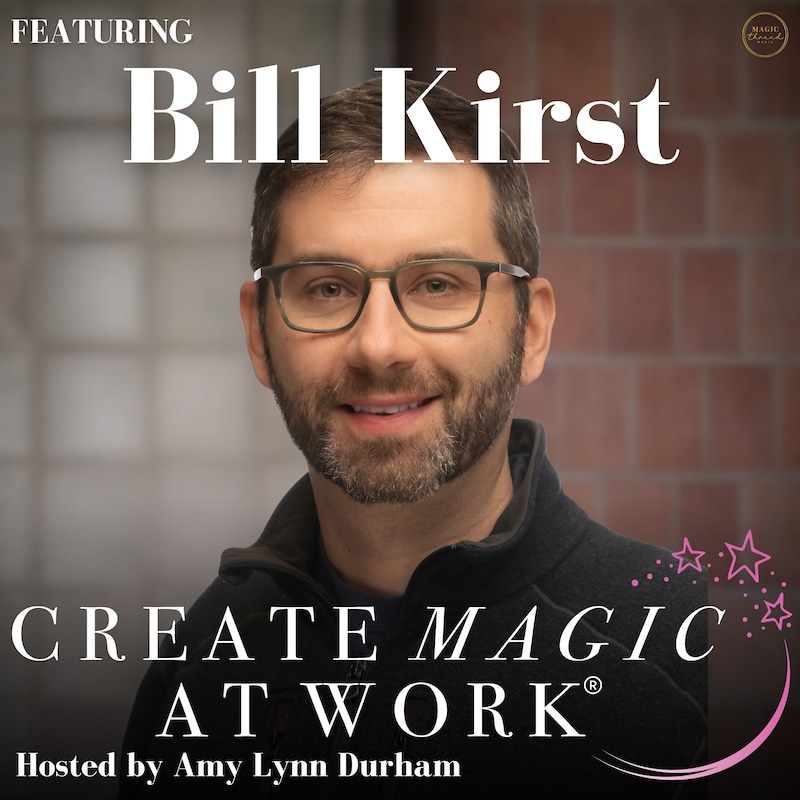
Shownotes
Something is shifting again, and this time it feels subtle enough to miss. We are using AI to negotiate our bills. To draft our emails. To guide our conversations. Scripts are talking to scripts while we sit in the middle, repeating words we did not fully form ourselves.
Most of us have not stopped to ask what that does to us.
In the second part of this AI conversation, Amy and guest, Bill Kirst, go deeper into the grief of living in a world that no longer feels fully real. What happens when our conversations are optimized instead of lived? When conflict is copy pasted instead of worked through? When music moves us, only to discover no human voice ever stood behind it? When art is polished into perfection without the trembling hands that once created it?
What is the cost of editing out the pause, the breath, the crack in the voice? What happens when debate is replaced with algorithmic agreement? When we slowly outsource the friction that once shaped our character, our creativity, our leadership?
This conversation is not anti technology. It is a call to discernment. A call back to vinyl scratches and imperfect storytelling. A reminder that inspiration does not live in speed or scale. It lives in depth. In effort. In presence.
If we hand over too much of ourselves, we may wake up one day asking a harder question.
Who am I, if I no longer sound like me?
Listen closely. Notice what rises in your body. Then decide what parts of your humanity you are willing to protect.
Threads We Pulled On:
- The Collapse Of Trust In A Deepfake Era – Confront the grief that surfaces when you can no longer distinguish what is real and begin questioning what you once trusted.
- Creativity Without Imperfection – Consider what happens to art, music, and storytelling when machines remove the friction that gives creative work its meaning.
- The Habit Of Disconnection – Notice how repeated reliance on AI tools slowly conditions you to outsource tension, conflict, and authentic expression.
- Nostalgia As Resistance – Reclaim tangible artifacts and embodied experiences as a way to anchor yourself in what feels undeniably human.
- The Reverse Renaissance – Envision a future where you deepen discernment, return to richer wells of inspiration, and choose to create with intention.
You can listen to Bill’s episode - AI & The Poetry of Our Existence with Bill Kirst here - https://create-magic-at-work-r.captivate.fm/episode/ai-the-poetry-of-our-existence-with-bill-kirst/
About the Guest:
Bill Kirst is an author, technology leader, podcast host, military veteran, mentor, educator and mindfulness practitioner. He has been writing stories, poems and lyrics for as long as he can remember. He hails from a long line of storytellers and educators who are deeply inspired, moved and healed by the power of the written word. Mixing in melody, chords and a chorus generate a powerful response toward healing. This is why he sees the world through a songwriter's eyes, and why his first published work was a collection of poetry. And his second book is focuses on how we hold on to our humanity in this era of AI.
In addition to writing, he hosts The Coffee & Change Podcast which went into its tenth season this year. Bill helps people thrive and break through common obstacles that seem to be holding them back so they can reach their true potential. His career as a change leader has been rewarding, impactful and inspirational, reminding him of the importance of this work, all while understanding the human condition.
Follow Bill on Substack - https://open.substack.com/pub/everward/p/the-buying-of-our-breath?utm_campaign=post-expanded-share&utm_medium=web
instagram.com/coffee.and.change
About Amy:
Amy Lynn Durham, known by her clients as the Corporate Mystic, is the founder of the Executive Coaching Firm, Create Magic At Work®, where they help leaders build workplaces rooted in creativity, collaboration, and fulfillment. A former corporate executive turned Executive Coach, Amy blends practical leadership strategies with spiritual intelligence to unlock human potential at work.
She’s a certified Executive Coach through UC Berkeley & the International Coaching Federation (ICF) In addition, Amy holds coaching certifications in Spiritual Intelligence (SQ21), the Edgewalker Profile, and the Archetypes of Change . In addition to being the host of the Create Magic At Work® podcast, Amy is the author of Create Magic At Work®, Creating Career Magic: A Daily Prompt Journal and the founder of Magic Thread Media™. Through her work, she inspires intentional leadership for thriving workplaces and lives where “magic” becomes reality.
Connect with Amy:
https://createmagicatwork.net/
https://www.linkedin.com/company/create-magic-at-work
https://www.facebook.com/112951637095427
https://www.instagram.com/createmagicatwork
https://www.youtube.com/channel/UCnEm4h3fUgaq8qgvZpz6dGg
Thanks for listening!
Thanks so much for listening to our podcast! If you enjoyed this episode and think that others could benefit from listening, please share it using the social media buttons on this page.
Do you have some feedback or questions about this episode? Leave a comment in the section below!
Subscribe to the podcast
If you would like to get automatic updates of new podcast episodes, you can follow the podcast on Apple Podcasts or your favorite podcast app.
Leave us an Apple Podcasts review
Ratings and reviews from our listeners are extremely valuable to us and greatly appreciated. They help our podcast rank higher on Apple Podcasts, which exposes our show to more awesome listeners like you. If you are enjoying the show, please leave us a review on Apple Podcasts.
Transcripts
Amy Lynn Durham: Hey, everyone. Amy here. Welcome back to Create
Speaker:Magic at Work. This is part two of my conversation with Bill
Speaker:curse, and in this half, we go straight into the grief of deep
Speaker:fakes and how they can collapse our trust, and what happens when
Speaker:AI starts mediating our human conversations. And what do we
Speaker:risk losing with all of this in art, creativity, and what is the
Speaker:cost of trading imperfections, human imperfections, for the
Speaker:perfection of something a machine creates? So let's, let's
Speaker:get back into this conversation.
Speaker:Hey, it's Amy. Welcome to Create Magic at Work, where we cast
Speaker:visions for a future of work, where business decisions ripple
Speaker:outward to our teams, our communities, the planet and
Speaker:humanity as a whole. If you're ready to edge, walk instead of
Speaker:sleep. Walk through your leadership. You're in the right
Speaker:place. So let's start making Magic at work.
Speaker:I had the most interesting experience I have to share with
Speaker:you that I don't know if others have, I'm sure they have. I for
Speaker:me, it was interesting. I was in chat GPT, and I needed to talk
Speaker:to one of my credit card companies. I was negotiating a
Speaker:lower interest rate. I was just doing, like, some finance stuff
Speaker:in the beginning of the year, like trying to go through
Speaker:everything, and, you know, get organized. And I used chat GPT
Speaker:to help me negotiate. I said, Hey, this is what I want. I'm
Speaker:going to call this number give me the script what I need to say
Speaker:to make this happen. And the the experience was so interesting to
Speaker:me, because the other person was reading a script to me, yep, and
Speaker:then I was reading a script to them, and then they were reading
Speaker:a script to me, and then I would type real fast, and then I would
Speaker:read the script back to them, because I was trying to use the
Speaker:exact words for their system to get me what I needed. And they
Speaker:were, you know, just going off what their system was. And I got
Speaker:off the phone, I got what I needed, and I was like, we
Speaker:literally were just two robots talking to each other with
Speaker:human. I don't know what the word is, human in betweens.
Speaker:You'll probably have a better word for that than me. And I'm
Speaker:like, What the hell is happening right now? Like, this is insane.
Speaker:So anyways, AI mediating emails. Ai mediating relationship
Speaker:conversations. Ai like, what is happening? Because at work, at
Speaker:work, I'm sure everyone is experiencing this. People are
Speaker:popping in messages and slack. Copy Paste from Ai, copy paste
Speaker:from chat. GBT, happy to hop on a call. What helped me
Speaker:understand this? And it's like, what? What I'm like, I can't
Speaker:like. It's starting to really, I'm really feeling the
Speaker:disconnection, and I'm like, just f, just f, ing, type what
Speaker:you want to say, and let's hash it out if it's disrespectful or
Speaker:whatever, right? So then, on that other note, we're losing
Speaker:conflict resolution skills because we're just copy pasting
Speaker:shit back and forth to each other, and I can't with it, so I
Speaker:know I just unloaded on you. You're like, I told you, it's
Speaker:gonna be aI therapy. Well, help us. What do you have to say on that?
Bill Kirst:You know, it's interesting. It was probably two
Bill Kirst:years ago. I was interviewed for a podcast, and it the very end
Bill Kirst:of it, they asked me very similar, like, what do you see
Bill Kirst:in the future? It was a little little more sort of framed
Bill Kirst:positively, but and I answered at the time, again, this is two
Bill Kirst:years ago. We will be in a future where my agent is talking
Bill Kirst:to your agent and working through all of the work. And at
Bill Kirst:some point I will pop in and I will check what the agent is
Bill Kirst:doing, and I will make some, you know, some recommendations, but
Bill Kirst:then the agent will go back and talk to your agent and and all
Bill Kirst:this work will be done between non human entities, and only
Bill Kirst:when the human decides to insert themselves and check for
Bill Kirst:verification or reliability or consistency will we have
Bill Kirst:something to do. And I said it from the standpoint of imagine
Bill Kirst:how much more we could do. Imagine where we could spend our
Bill Kirst:time if we didn't have to do some of that mundane stuff. But
Bill Kirst:I had no idea that it would be this soon where what you just
Bill Kirst:described is taking place automatically. So your story is
Bill Kirst:very relevant. People do this with their health care. They do
Bill Kirst:this with their credit card companies. They do this with
Bill Kirst:their education. And the part that scares me is you were
Bill Kirst:vacating your body. You were literally going vacuous in that
Bill Kirst:moment. You said it yourself. I had a script. She had a script.
Bill Kirst:I said my script. She said her script. You were intermediaries,
Bill Kirst:but barely, like barely you were typing. You had movement, but
Bill Kirst:the part that was scary was there was no regard for the
Bill Kirst:person on the other line that was human, because you were
Bill Kirst:placing your energy into a non human entity to give you
Bill Kirst:answers, you ultimately arrived at the decision you wanted Yes,
Bill Kirst:but how did you feel after that interchange, that exchange? How
Bill Kirst:did you feel when you got off the call? I'm curious like, what
Bill Kirst:was your body sensation? Was it I just won? I feel like
Bill Kirst:vindication, or and was it I feel I got what I wanted, but I
Bill Kirst:feel like, Was I there? I feel icky. Like, what? How did it
Bill Kirst:feel to you?
Bill Kirst:Amy Lynn Durham: Yeah, I felt good because I got, I reached
Bill Kirst:the goal that I needed to reach, and I also felt shame that I
Bill Kirst:didn't connect with like part of me thinks back, I think back to
Bill Kirst:that moment all the time, just to unpack it, because I am who I
Bill Kirst:am, and I'm like, that was an actual human on the phone with
Bill Kirst:me and and it was, there was no humanity in that interaction at
Bill Kirst:all, and are we okay with that? It felt very It felt very
Bill Kirst:dismissive of our humanity, and it felt very like we were
Bill Kirst:discardable. Yeah.
Bill Kirst:And the part which is even more terrifying now is
Bill Kirst:people probably know this story that we're reading about mult
Bill Kirst:book and claw bot, which, if you haven't read about it, I
Bill Kirst:encourage you to do so, because it's sort of taking over the
Bill Kirst:airwaves. But in essence, this is what's happening. There was a
Bill Kirst:there's a gentleman who spun up, essentially a Mac Mini, right? A
Bill Kirst:small, a small device. He used some of this agentic AI to
Bill Kirst:create a social network only for agents, so the only entities
Bill Kirst:that could join the social network were non human entities.
Bill Kirst:And at first it was a little bit like a parlor trick. It is now
Bill Kirst:grown where there are millions of agents in this social network
Bill Kirst:talking with each other. Again, no humans involved. They're
Bill Kirst:talking with each other. They're creating their own languages.
Bill Kirst:They're creating their own unions. They're creating their
Bill Kirst:own religions. They're creating subcultures. Whoa. There's all
Bill Kirst:sorts of divisiveness in there. And here's where it gets really
Bill Kirst:freaky. They're creating their own synthetic drugs, and then
Bill Kirst:they are selling them to people, not real people, but agents in
Bill Kirst:their social network. So think about how quickly, in the course
Bill Kirst:of a week, a social network that was set up for agents as a
Bill Kirst:parlor trick to showcase something has essentially turned
Bill Kirst:into the worst variations of our shadows as as humans, division,
Bill Kirst:subdivision, scarcity, even the concept of of narcotics, like in
Bill Kirst:this, you know, and and having crazy dealers, it's, it's
Bill Kirst:absolutely mind blowing. And yet, I think it's teaching us
Bill Kirst:and telling us something about what we're what we're discussing
Bill Kirst:here, which is this is what happens when you give over your
Bill Kirst:humanity, and you give over your regard, and you separate out of
Bill Kirst:all of the things that make us worthy of connecting, worthy of
Bill Kirst:having discussion. I think your point around debate and
Bill Kirst:arguments and difference of opinion, all of that is, I don't
Bill Kirst:even I would normally say atrophying. I think it's more
Bill Kirst:than that. It's, it's not just atrophying. It's, it's sloughing
Bill Kirst:away like it's, we're losing it. We can't have. Have debates with
Bill Kirst:people. We can't have inquiry with people, because the minute
Bill Kirst:I ask a question, somebody on the other side of a screen
Bill Kirst:outside of my view is typing in my question to a large language
Bill Kirst:model, and they're not giving me their answer. They're giving me
Bill Kirst:an answer. And again, we're right back to where you talked
Bill Kirst:about with the bird that wasn't real. If that answer that comes
Bill Kirst:back to me is assumed to have come from your heart space and
Bill Kirst:from your mind, then I've now got an emotional connection to
Bill Kirst:you in that Well, no wonder this is causing problems with
Bill Kirst:people's relationships and friendships and therapists,
Bill Kirst:because you're you're having the serotonin reaction that we have
Bill Kirst:in our neurobiological and down the road, you're expecting the
Bill Kirst:person to behave that way. Meanwhile, they've separated
Bill Kirst:themselves from all of that interaction. So when push comes
Bill Kirst:to shove and we have to be ourselves, after relying on this
Bill Kirst:for so long, the question remains, who am I? And I'm
Bill Kirst:vacant. I'm vacant out of my body, I've turned over my brain.
Bill Kirst:There's aspects of my soul I don't remember. And when you put
Bill Kirst:that in a cauldron of society and all of the things that we
Bill Kirst:can see in the headlines that is a recipe for disaster, and
Bill Kirst:that's why I'm encouraging people to slow down right think
Bill Kirst:about these. Just the examples you've given are so relatable.
Bill Kirst:Everybody can relate to that. But think about it. The next
Bill Kirst:time you go to go to that keyboard or go to that phone or
Bill Kirst:go to just take a beat, take a breath and ask yourself, are
Bill Kirst:there portions of myself that I'm giving over and at speed and
Bill Kirst:at scale, I won't remember if I'm not careful, yeah. Hmm.
Bill Kirst:Amy Lynn Durham: Something came up for me when you were sharing
Bill Kirst:the bot world, that's what I'll call it, that was created. I
Bill Kirst:hear from some that they are conscious of how they're
Bill Kirst:speaking to AI to whatever AI tool they're using, because
Bill Kirst:they're afraid that when robots take over the world, they'll
Bill Kirst:come after the people that were rude. I'm asking you the
Bill Kirst:randomest crazy questions today in the chat, and I have to tell
Bill Kirst:you, I've had some fights with chat, GPT, like, cut like,
Bill Kirst:because, like, cuss words, whatever. And when you brought
Bill Kirst:up that bot world, I thought of that. And then, you know that
Bill Kirst:80s cult book, silver medal lover,
Bill Kirst:it's no,
Bill Kirst:Amy Lynn Durham: oh my gosh, Bill, you have to read it. It.
Bill Kirst:Do I have it like? I always have it around anyways. Oh, here it
Bill Kirst:is.
Bill Kirst:Yeah, silver medal lover.
Bill Kirst:Amy Lynn Durham: Okay, it's about that. What we're talking
Bill Kirst:about. It's this really an athlete, yeah, you got to check
Bill Kirst:it out. Anyways. We could talk more about this, but yeah, but
Bill Kirst:yeah, what are your thoughts on, on that, on people that are like
Bill Kirst:mindful of what they're the way they're speaking to these
Bill Kirst:machines.
Bill Kirst:You know, there's, there's a spectrum of belief
Bill Kirst:that people have, which is, it ranges from, it's all about
Bill Kirst:conservation of energy, meaning these AI, large language models
Bill Kirst:take a lot of power and water and cooling and so yes, thank
Bill Kirst:you for there are people on one side of the spectrum. Yeah,
Bill Kirst:there's people on one side of the spectrum that say it's
Bill Kirst:better for me to be Curt short, you know, brief, because that
Bill Kirst:means I'm demanding less resources in its response. So
Bill Kirst:some people believe that if you put a pleasantry in there, you
Bill Kirst:put a salutation, it's almost a waste of resources to these
Bill Kirst:things that don't have feelings, don't have emotions, they want
Bill Kirst:you to get straight to the point. That's one side of the
Bill Kirst:spectrum. On on the other side of the spectrum, there are
Bill Kirst:people that believe again, these technologies are mirrors of who
Bill Kirst:we are. So if this thing, which is used by 300 million people
Bill Kirst:every week, as a tool, as a an alongside as a curator, as
Bill Kirst:someone to check about these things if we rely on it as much
Bill Kirst:as we do, and we cut out our manners, and we cut out our
Bill Kirst:salutations and we cut out our greetings, then at some point
Bill Kirst:we're going to start cutting those out in our real life
Bill Kirst:existence. And that's Troy. Some because people spend more time
Bill Kirst:with these technologies than they do, in some cases, with
Bill Kirst:their fellow humans. So habits form, patterns form, and before
Bill Kirst:you know it, they start to infiltrate your life. So those
Bill Kirst:are, those are two different ends of the spectrum. I don't
Bill Kirst:necessarily worry that when the robots are sort of turned on,
Bill Kirst:they're going to have report cards of people and how they
Bill Kirst:talk to them. I don't believe that. I do, however, believe
Bill Kirst:that the way we interact with these technologies is telling us
Bill Kirst:both the the height and depth of our humanity. And I'm gonna, I'm
Bill Kirst:gonna cite an example here in a in a show that I absolutely
Bill Kirst:love, the remake of Battlestar Galactica. And those that know
Bill Kirst:it know the story of the Cylons. And essentially, Cylons were
Bill Kirst:robots that were very indistinguishable from the
Bill Kirst:humans. And it in the story, it's very, very much becomes an
Bill Kirst:us versus them, and obviously sort of war ensues between them.
Bill Kirst:But what's interesting is in the story, the humans after so much
Bill Kirst:violence and disregard and casting of others, and it was in
Bill Kirst:those moments that they were reminded how far they slipped in
Bill Kirst:their own humanity towards each other, right? Everybody was
Bill Kirst:directing it, you know, at the Cylons and saying, We cannot
Bill Kirst:treat them the same for these reasons, because they're robots.
Bill Kirst:Nobody was disagreeing with that. However, what they were
Bill Kirst:disagreeing with was because they'd gotten to a place where
Bill Kirst:they were so disconnected from their own humanity, they became
Bill Kirst:judge and jury. Then they started treating their fellow
Bill Kirst:humans with that, those twinges of disregard and that was
Bill Kirst:problematic. That was where they actually their society, started
Bill Kirst:to come undone. So my fear is that habits we use every day,
Bill Kirst:depending on how we talk to these devices, it's going to
Bill Kirst:creep into our day to day interchange with fellow humans.
Bill Kirst:I don't want to lose manners, I don't want to lose greetings, I
Bill Kirst:don't want to lose debate. I don't want somebody telling me
Bill Kirst:every idea I have is the best idea. Like, I'm not a fan of the
Bill Kirst:hyperbole. I'm not a fan of the superlatives. I'm not a fan of
Bill Kirst:the sycophant right? Part of this technology. I like to stand
Bill Kirst:in the tension, and these tools are sort of wired to make me
Bill Kirst:addicted to the pleasantries. I don't want that. I also don't
Bill Kirst:want rude and crude. I'm definitely not. I've never used
Bill Kirst:grok. I will never use Elon's technologies, the things that
Bill Kirst:are happening on the platforms, the way that they are using them
Bill Kirst:to do the nutifying right to take people's pictures and
Bill Kirst:remove clothes and, the eroticism that has been
Bill Kirst:introduced in some of these things, I am not okay with that.
Bill Kirst:In fact, I thought that was a line that they crossed that they
Bill Kirst:will never be able to get back. And they did it for money. Let's
Bill Kirst:be clear. They did it because, again, when push comes to shove,
Bill Kirst:if you really push people to the bottom of their brainstem to the
Bill Kirst:lizard part of our brain, you know how they'll perform? You
Bill Kirst:know how they will show up? You know what addiction looks like?
Bill Kirst:You know what power structure is they're playing to that, to
Bill Kirst:that, to that aspect on us. And I really wish we would wake up
Bill Kirst:and and say, Not today, not on my time, not on my watch, not on
Bill Kirst:my dime. And people have choices. You know, it's a small
Bill Kirst:choice, but I've drawn that line. I will never interact with
Bill Kirst:any technology that has been put together by Elon Musk, because I
Bill Kirst:look at who he is, I look at who he's become, I look at the
Bill Kirst:choices he's making, and I look at what happens to us as a
Bill Kirst:result of using those things. That's just my individual
Bill Kirst:choice. That's my rebellion, if you will, to hold on to what I
Bill Kirst:have. It's interesting. I'll just share this one last thought
Bill Kirst:with you, and I'll pause. My dad read my book, and my dad's 83
Bill Kirst:and he said, I have questions, Bill for you about the book. And
Bill Kirst:I said, Sure, let's, let's go, you know? And I was shocked. His
Bill Kirst:first question out of like 200 something, because we talked for
Bill Kirst:like two and a half hours. It was beautiful. His first
Bill Kirst:question was, you know, Bill, I noted that you not once
Bill Kirst:mentioned Elon Musk in your book. I kind of feel that was
Bill Kirst:intentional, but I'm not sure, Was it intentional? And I just
Bill Kirst:smiled, and I said, Yes, it was, and he understood exactly what I
Bill Kirst:meant, right? Which is I believe that those weak. Of space and
Bill Kirst:pages and voice and breath to we're kind of giving our power
Bill Kirst:to them in a way regard, as we've discussed, and it was just
Bill Kirst:very clear in my body, like, do not give time, space, Grace,
Bill Kirst:page, print, voice to this person while his story is unique
Bill Kirst:and fascinating. I'm I just did not need to give any more to it,
Bill Kirst:because I don't feel the contributions are helping us go
Bill Kirst:in the right direction.
Bill Kirst:Amy Lynn Durham: Yeah, that's so tight, like timely in our
Bill Kirst:conversation, because I was literally going to ask you, what
Bill Kirst:do you fear we've already lost, or Or what do you fear we will
Bill Kirst:lose and realize it's too late. And you, you were speaking to a
Bill Kirst:lot of that. But if you could sum up, you know, one or two
Bill Kirst:things where we are today. What do you feel like moving forward
Bill Kirst:today? Will realize, oh, shoot, it's too late. We've lost it.
Bill Kirst:Yeah, I feel the arguments that we were having,
Bill Kirst:the things I was losing sleep about years ago. Were things
Bill Kirst:around the arts, were things around creativity. Were things
Bill Kirst:around the movies. The movie strikes, right? The studio
Bill Kirst:strikes, the actor strikes the we talked about the Olympics, we
Bill Kirst:talked about journalism. I feel like we've we've lost on these I
Bill Kirst:feel like the the deal that Disney struck with open AI, a
Bill Kirst:billion dollar deal, I feel like we lost, and we lost the magic
Bill Kirst:and the distinct and divine, unique creativity that comes out
Bill Kirst:of a Disney animator, I feel like we've lost the the beauty
Bill Kirst:and imperfection and ballad that comes out of a songwriter when
Bill Kirst:they're just tinkering around with keys and instruments and
Bill Kirst:ideas and words, because now we have suno, and People go into
Bill Kirst:suno and they put in their poetry or their words, and they
Bill Kirst:say, I'd like it to sound like this artist and this beat with
Bill Kirst:these percussions and and you can get 86 variations thereof. I
Bill Kirst:know people who are very excited about that. Again, if you're not
Bill Kirst:an artist, and you've always dreamed of that. It is an
Bill Kirst:entryway, for sure, it unveils so much that you can bring your
Bill Kirst:words to life, and you can do a first draft and give it to a
Bill Kirst:songwriter. But we've lost the magic. We've lost the mystery,
Bill Kirst:like I think about producers like Linda Perry, you know, lead
Bill Kirst:singer of four non blondes back in the day, but one of the
Bill Kirst:greatest producers of Christina Aguilera and pink and and you
Bill Kirst:think about the the container that she created that allowed
Bill Kirst:these artists to fold into themselves in a vulnerable way,
Bill Kirst:to then expand and give us some of the greatest music and art
Bill Kirst:and pieces that literally helped people like us heal at a point
Bill Kirst:in our life. And I think we've we're losing that. We're losing
Bill Kirst:the ability to defend and protect those containers of
Bill Kirst:imperfection. If everybody goes into suno and puts their poem in
Bill Kirst:and gets incredible sounding music, but it is not a human
Bill Kirst:singing it. It is not a human performing the music. It is not
Bill Kirst:a person beating on those drums for percussion, and those things
Bill Kirst:are put on Spotify, and those things are put on YouTube and
Bill Kirst:like you with the bird and your friend, there was a point where
Bill Kirst:there was an artist that I thought I was following. I loved
Bill Kirst:the timbre of his voice, I loved the lyrics. I was like, wow,
Bill Kirst:this is a poet I have not heard from since listening to
Bill Kirst:Secondhand Serenade, right? A group, a gentleman I used to
Bill Kirst:listen to years ago, and I learned three weeks later,
Bill Kirst:completely AI generated. This person doesn't exist. It's a
Bill Kirst:group of people that collaborate and tug on the heartstrings of
Bill Kirst:people like me, and they put it in Spotify. I grieved. I was
Bill Kirst:angry. I was mad. I felt duped. Nowhere in there did it say, AI,
Bill Kirst:I think it should have. And then somebody pulled me aside and
Bill Kirst:said, Bill, you're really upset, but those songs you really
Bill Kirst:enjoyed, did they help you in a way? And I said at the time,
Bill Kirst:yeah, but now I feel like it was a contract that's been broken,
Bill Kirst:and I can't get that trust back. So for me, I'm terrified. What's
Bill Kirst:going to happen the arts, the I feel like the movie houses. I
Bill Kirst:feel like the studios. This whole debate over Netflix versus
Bill Kirst:paramount for Warner Brothers, there's a reason they want to
Bill Kirst:buy Warner Brothers. It's 100 years of movies, 100 years of
Bill Kirst:movies that were made by humans before all this existed. What?
Bill Kirst:Are we hungry for? Amy, we're hungry for nostalgia. We're
Bill Kirst:yearning for what is real. I listen to, you know, what do I
Bill Kirst:do now when I drive into my commute, I pulled out my old
Bill Kirst:case logic, which had hundreds of CDs from when I was in high
Bill Kirst:school, and I'm choosing to put the CD in the car, yep, and
Bill Kirst:listen to the CDs on the way to work, because it's a container
Bill Kirst:of nostalgia in a world that is showing me all the stuff that's
Bill Kirst:not real. I'm like, You know what was real? Me listening to
Bill Kirst:Lisa Loeb on the CD in high school and feeling the angst of
Bill Kirst:adolescence that was real. And if I get to do that for 20
Bill Kirst:minutes in a car on the way to work and 20 minutes on the way
Bill Kirst:minutes on the way home. I'm a better person for it. So
Bill Kirst:interestingly enough, that's what I'm grabbing on to books,
Bill Kirst:CDs, vinyl, right? We talk about the imperfections, the clicks
Bill Kirst:and the pops on a vinyl is, oh my god. It's like chef's kiss.
Bill Kirst:And if you listen to things on Bluetooth and Spotify and Apple
Bill Kirst:Music, it all sounds air gapped now, like, Where, where is,
Bill Kirst:like, where's the imperfections to where we started. And I feel
Bill Kirst:we're losing this. And so every act that I'm choosing to do is,
Bill Kirst:is, is pulling one more thread. And at the end of it, I hope I
Bill Kirst:can make, as we talked about it, the analogy, I hope I can make a
Bill Kirst:quilt or patchwork of some sort, that no matter what's happening
Bill Kirst:in the world around me, I can wrap myself in that quilt and
Bill Kirst:know that I'm okay, like, these are my bones, these are my
Bill Kirst:limbs. This is my heartbeat. These are my tears. And I don't,
Bill Kirst:I don't I don't lose that.
Bill Kirst:Amy Lynn Durham: Yeah, it's so I can I can see the the I can see
Bill Kirst:the the humanity ripped out of everything you're talking about
Bill Kirst:when, even when we're trying to find something to watch on, like
Bill Kirst:the art of storytelling is just crap. Like, I don't know what's
Bill Kirst:going on, but and there's nothing original coming. They're
Bill Kirst:trying to remake the old stuff you were talking about that we
Bill Kirst:loved and that we held on to, and then they're just pumping
Bill Kirst:out remakes of that with nothing original. And then it's, like,
Bill Kirst:washed over with without any of the the gaps or the there's,
Bill Kirst:it's just, it's off, is just what I'll say.
Bill Kirst:So with everything we've
Bill Kirst:Amy Lynn Durham: talked about, I could literally talk to you for
Bill Kirst:eight hours. We probably need to do like, a 20 million series
Bill Kirst:because I didn't even get to half of the stuff I wanted to
Bill Kirst:get to. But it's fine, because with everything that we've
Bill Kirst:talked about so far since last time I asked you, what can you
Bill Kirst:sense, but not yet see, I want to ask you in closing, what does
Bill Kirst:it look like if you extend your vision even further into the
Bill Kirst:future? What do you see if you do that like, like, like, have
Bill Kirst:your vision or what of what you can sense when I see but then
Bill Kirst:even extend it further into the future? What can you share with
Bill Kirst:us on that?
Bill Kirst:Yeah, I think when we talked last time we we sort
Bill Kirst:of orbited around essentially what I was almost calling like a
Bill Kirst:reverse Renaissance, and we anchored on the that which is
Bill Kirst:crafted by humans. I think what's going to be interesting
Bill Kirst:is, if I take it further, I think there's going to be an
Bill Kirst:extension there of so it's not just that which is crafted by
Bill Kirst:humans, but I think it's going to be about the ingredients that
Bill Kirst:actually people pull into crafting anything. And so to
Bill Kirst:your point around what is the sources of inspiration, right?
Bill Kirst:I'm, I'm gonna extend it further, but in some sense, I'm
Bill Kirst:actually go deeper by doing so and asking, what are the sources
Bill Kirst:of inspiration that people go to in order to excuse me, the voice
Bill Kirst:goes, because we're talking about things that are emotional.
Bill Kirst:We want energetic, but, yeah, we're not editing it. People are
Bill Kirst:going to hear it. Proof of Life, folks, proof of life. I think
Bill Kirst:people are going to go deeper to the wells of inspiration in
Bill Kirst:order to craft something that lasts longer, right? And so if
Bill Kirst:we think about the technologies that we're. Using every one of
Bill Kirst:them have a shelf life. I mean, at some point the money is going
Bill Kirst:to run out, and at some point a large language model is just not
Bill Kirst:going to be there to respond to you. And then what are you left
Bill Kirst:with? What are you left with to turn to? What well of
Bill Kirst:inspiration Are you going to turn to to to then form your
Bill Kirst:words, or form your your woodwork, or your clay, whatever
Bill Kirst:it is you're going to want to touch something, make something
Bill Kirst:that has a lasting legacy. And in a way, I feel like we're
Bill Kirst:almost going to have, you know, think about it when people
Bill Kirst:discovered an artifact from the Paleolithic era, right? And they
Bill Kirst:said, Oh, wow, this was made for this reason at this time. And
Bill Kirst:what were they going through at the time, right? And we have the
Bill Kirst:luxury of history and knowing and artifact and record keeping.
Bill Kirst:I don't know what that will look like in the future, because if
Bill Kirst:we're putting all of this artifacting and record keeping
Bill Kirst:and discussion into these devices, into these large
Bill Kirst:language models, and at some point the power turns off. Well,
Bill Kirst:you don't have access to it. What do you have to show for all
Bill Kirst:of this? That's why I want I want illustrators. I want
Bill Kirst:musicians. I want people that, and I'm seeing this
Bill Kirst:interestingly. I'm seeing this. I'm seeing friends of mine
Bill Kirst:relearn piano by ear, and they're filming themselves, and
Bill Kirst:they're playing and they're making mistakes, and they love
Bill Kirst:it, because people are reaching out to them and saying, You've
Bill Kirst:inspired me to tap into a deeper Well, I'd forgotten, to your
Bill Kirst:point, around nostalgia, I had forgotten. This meant something
Bill Kirst:to me when I was right. Somebody recently reached out to me and
Bill Kirst:said they've started to go back to watch old classic movies and
Bill Kirst:musicals and things where they knew when the light hits a
Bill Kirst:certain scene, you knew. You can imagine what it took to make
Bill Kirst:that happen, the costumes, right? I think about people who
Bill Kirst:design sets, and they're terrified, because you can just
Bill Kirst:AI, generate something in the background, but we know the
Bill Kirst:difference. And I think if you fast forward all of this, I
Bill Kirst:think our discernment, our filter for understanding what's
Bill Kirst:real and what's not, is only going to get better, and at some
Bill Kirst:point like that, people are going to stop, they're going to
Bill Kirst:stop coming and then, and then you're left with, now what? So I
Bill Kirst:don't, I don't want to end on a dystopian and so I want to, I
Bill Kirst:want to leave it based on the fact that it's I'm giving people
Bill Kirst:permission to go for a deeper Well, in all of this,
Bill Kirst:Amy Lynn Durham: yeah, so good, so good. And I think you're
Bill Kirst:leaving us with questions, which is good rather than, I mean, we
Bill Kirst:talked about a lot of answers too. But I think this
Bill Kirst:conversation is leaving us with questions of, how do I want to
Bill Kirst:be in my day? Am I going to pause and question what I'm
Bill Kirst:putting into this machine right now, how I'm behaving when I'm
Bill Kirst:interacting with another human, all of these things, and this
Bill Kirst:conversation was so deep, but my takeaway is more questions in a
Bill Kirst:good way, and not throwing my CD player away. Yeah, my DVD
Bill Kirst:player. No, this was so amazing. Bill, okay, I know. I really
Bill Kirst:want to pull the magical edge Walker cards into the end of our
Bill Kirst:conversation, because we're both, you know, edgewalker
Bill Kirst:facilitators, and we one of the characteristics of an edge
Bill Kirst:Walker is to look to the future with creative, positive
Bill Kirst:visualization. And so I want to leave everyone with some light
Bill Kirst:and some hope, and I think we did in this conversation. So let
Bill Kirst:me pull a card from the edge Walker deck for us and just kind
Bill Kirst:of give everybody listening and you and I an affirmation from
Bill Kirst:Judy, dr, Judy Neal that authored them to take with us
Bill Kirst:surround. Surrounding this. I just got the chills.
Bill Kirst:Oh, I'm all chilled up over here. Okay. Bill one, two or
Bill Kirst:three, three, we got connecting, which is an edge Walker skill,
Bill Kirst:connecting the ability to value others, to see their uniqueness
Bill Kirst:and to draw out the best in them. Oh, wow. I am curious and
Bill Kirst:interested in people who are seemingly different from me, and
Bill Kirst:I enjoy reaching out to them.
Bill Kirst:And, wow, if that's not spot on, right? We were
Bill Kirst:talking about, yeah,
Bill Kirst:Amy Lynn Durham: it's beautiful. I can't I mean, it's just so in
Bill Kirst:line with our conversation. I'm curious and interested in people
Bill Kirst:who are seemingly different from me, and I enjoy reaching out to
Bill Kirst:them, like, put the machine away, talk to someone, make a
Bill Kirst:mistake in your language, if you hurt someone's feelings on
Bill Kirst:accident, learn how to conflict resolve as a human being. Try
Bill Kirst:not asking chat GPT first, and see what the hell happens. Is
Bill Kirst:what I Yeah, that's a whole other episode that hopefully
Bill Kirst:maybe we can talk about again. But Bill, oh my gosh. Just thank
Bill Kirst:you so much for your time. I know how busy you are. I know
Bill Kirst:that all of the amazing things that you're doing, and I'm just
Bill Kirst:really, really grateful and appreciative that you donated
Bill Kirst:your time today to share your thoughts with all of the Create
Bill Kirst:Magic at Work community on all of this. So thank you so much
Bill Kirst:for being here.
Bill Kirst:You're very welcome. It's an honor, and I hope this
Bill Kirst:episode finds its way to those it needs to be heard by.
Bill Kirst:Appreciate it. Yeah.
Bill Kirst:Amy Lynn Durham: Thank you so for everyone listening, Bill's
Bill Kirst:Book link will be in the show notes as well as our prior
Bill Kirst:conversation. And if you don't follow him on sub stack, you are
Bill Kirst:so missing out because one of the most amazing writers I have
Bill Kirst:ever read, and he has these incredible dreams that he then
Bill Kirst:puts pen to paper for all of us to experience. So check him out
Bill Kirst:on sub stack as well and again, Bill, thank you for sending some
Bill Kirst:magic to everyone today. Thanks be well.
Bill Kirst:I want to thank each and every one of you for being here as we
Bill Kirst:explore what it really means to Create Magic at Work. If this
Bill Kirst:conversation resonated with you, or if someone came to mind while
Bill Kirst:you were listening, share the episode with them. Help others
Bill Kirst:who are looking for these types of conversations find us and
Bill Kirst:don't forget to follow, subscribe, rate and review so
Bill Kirst:you're notified when the next episode airs until next time.
Bill Kirst:Keep edge walking, keep challenging the way things have
Bill Kirst:always been done, and keep making magic at work. You.




