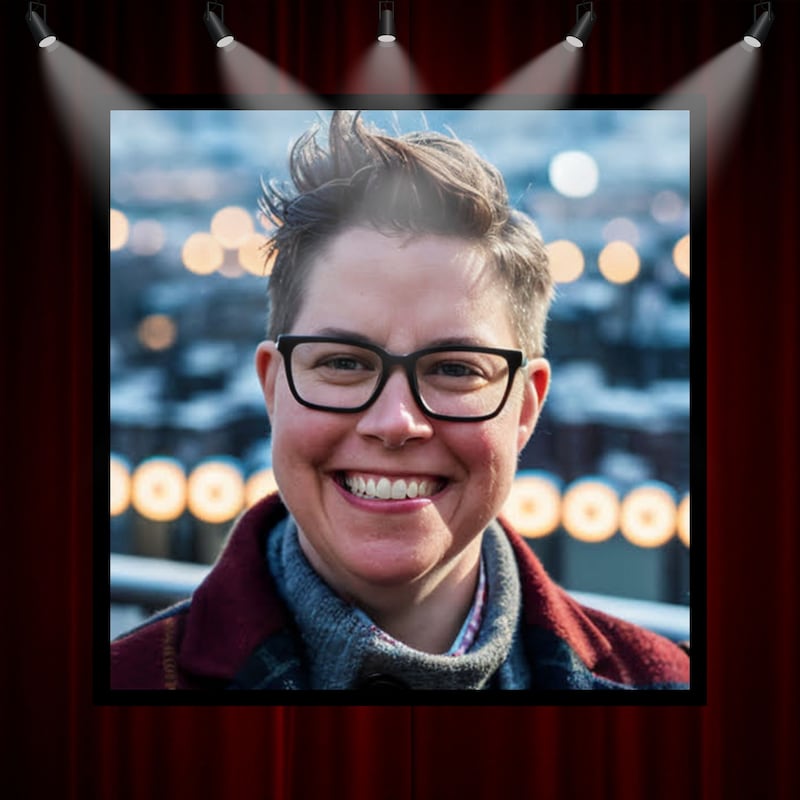
Shownotes
- Getting on Stage at 14: How being the youngest pro bass fisherman landed her on stages full of older men—and what she learned about belonging, confidence, and building trust.
- Navigating Bias and Naysayers: Real talk on handling skepticism (even hecklers!) as a teenage girl in a male-dominated world.
- Growing Into Your Voice: How lessons learned on the water translated into a career in facilitation, corporate training, and (yes) more speaking.
- Public Speaking Growth Mindset: Why reflecting after every gig—no matter your experience level—is key to mastery.
- Planned vs. Impromptu Speaking: Why the best speakers work just as hard on their ability to answer questions and think on their feet as they do prepping slides.
- Building a Brand Through Authenticity: How Speaker A balances high energy and realness—without trying to be “less” for anyone.
- Leveraging AI as Your Presentation Coach: The exact way Mickey uses AI tools (like ChatGPT and Claude) to analyze and improve her talks, with timestamped feedback!
- Getting Booked (and Saying “No” with Integrity): The role of networking, following up, and ethical offers in building a speaking career.
- Share Your First Stage Story – Are you ready to tell yours? Head over to myfirststagepodcast.com and connect with the show—I’d love to feature new voices.
- Connect with Dr. Mickey Fitch Collins – Dive deeper into human skills, upskilling opportunities, and learning resources atlearnit.com/mickey, or find Speaker A on LinkedIn for more professional insights and her own podcast, Learn It Lounge.
- Subscribe and Leave a Review – Liking the show? Hit subscribe, drop a rating wherever you listen, and let me know what you want more of (or who you want to hear next).
- Start or Grow Your Speaking Career – Don’t wait for permission—host a webinar, offer a lunch-and-learn, or send that proposal. Rejection isn’t the end; sometimes it’s the start of your best stage yet.
Transcripts
Welcome to my first stage, the podcast, where experienced public speakers share how they started getting booked on stages and how they've used them to grow their business. I am here with my guest, Dr. Mickey Finch Collins, a human skills facilitator at Learn IT who helps managers and teams build the practical workplace habits that make work better. She has been on stages since she was 14 years old, which is absolutely insane. So I'm going to get right into it, because I need to know how that happened, because at 14, if someone handed me a microphone, I would probably run out of the room faster than I do at 30. So welcome to the show. Thank you so much for being here.
Dr. Mickey Fitch-Collins [:Awesome. Thanks, Sara. Thanks for having me.
Sara Lohse [:And let's get into it. How did you get started? Because you were also, like, a famous bass fisherman woman.
Dr. Mickey Fitch-Collins [:Yes. Yeah. You nailed it. Yes. So. So I have. Yeah. I mean, I.
Dr. Mickey Fitch-Collins [:I appreciate you saying, like, you would have run from the room, but I have kind of a different sort of story. You know, what I was doing. I was kind of. That, like, one of these is not like the other sort of things of, like, what all of my friends were doing when they were 14, 15, 16, 17 was very different than I was doing on my evenings and weekends. So, yeah, you nailed that. I was at the time. So this is 30 years ago, but at the time, I was the youngest professional bass fisherman in the United States, which, if you're like, okay, bass fishing, like, let's. Let's back up.
Dr. Mickey Fitch-Collins [:Let's break. Break this down a little bit. You know, I'm not talking about, like, drowning worms under bobbers, you know, on a farm pond or anything like this. Like, if you turn on ESPN or, you know, sports centers, something like that, sometimes you'll see it. Now there's these tournaments and stuff, guys out there, and it's mostly men, mostly Southern, you know, mostly guys that are 30, 40, 50, 60 years old that have the support of lots of different companies and stuff, and they're out there doing tournaments. Kind of the biggest bag of five fish, you know, kind of heaviest, you know, weights that you can get. I got into this world of fishing. I started when I was a little toddler, but I got into the world of professional bass fishing because I just got connected to different people, and they were like, hey, like, you're really good fisherman, and you can talk about it.
Dr. Mickey Fitch-Collins [:Like, you like, t. Telling stories. You like, helping people get better, all of this sort of stuff. And so, yeah, so I'm 14 years old. I'm. I get recognized by all of these companies. At the height of my career, I could say at the height of my career, I was on the sponsorship role for 30 plus companies. I was getting a new boat every single year.
Dr. Mickey Fitch-Collins [:I was traveling all over the place. I had a very, like I said, very different high school years because I've worked traveling. Yeah, yeah, yeah, yeah. I'm traveling around, like, going to different places, doing seminars, doing TV shows. This was before the world of podcasts. I was doing radio shows and all this sort of stuff. And I was in the room with men that were two or three or four times my age. And here I am up on the stage, right.
Dr. Mickey Fitch-Collins [:Telling them what they're doing wrong and what they need to do to become better fishermen. So that was my first stage. Kind of a very. Not, you know, kind of, but a very different entry story than I think most people have to the world of public speaking.
Sara Lohse [:And I'm sure the men took that very well. Yeah, they're usually really open to, to criticism and comments, definitely from women. Yeah, I'm sure that was easy.
Dr. Mickey Fitch-Collins [:It was so. It was so interesting because I think, you know, like, as a teenager, I just didn't have a context of, like, gender dynamics and bias and like all of these things that, like, as a grown adult, I'm very aware of. I talk about all the time, professionals. But yeah, I mean, I'm in these rooms and, you know, with these, like, you know, curmudgeonly old guys that I've been fishing since, you know, blah, blah, blah, blah, blah. Right. And. But what was, I think endearing to them was like, here's this young kid who's getting up there, like, let's give her a shot, let's give her a chance. And then I think people realize, oh, you actually have some value to add.
Dr. Mickey Fitch-Collins [:Right. Like, that's the thing I tell people all the time with public speaking is the identity factors are super important. But what's most important is that you're bringing value to whoever you're talking to. And, and that translated really quickly. But there were definitely some people in the audiences that, you know, had a thing or two to say to me for sure.
Sara Lohse [:Oh, I'm sure. And you're 14 and you're like, how. How do I deal with this? Yeah, how did you deal with this?
Dr. Mickey Fitch-Collins [:Um, you know, I just kind of attacked it head on. I was like, you know, like, I'm going to get in these rooms. And, you know, I, I have been asked to be here. And so, like, that was the big thing was like, people want Me to be here. The folks that are organizing these. These events want me to be here. And so that's what I'm going to with. And because I was speaking about something that I'm super passionate about, fishing especially, kind of helping people improve, kind of this idea, this very early thread for me of teaching and learning, you know, I just kind of, you know, went headstrong into it, and I, you know, when I got the negative feedback or the naysayers or kind of the nitpicking sort of stuff, I.
Dr. Mickey Fitch-Collins [:You know, I was not familiar with the term growth mindset at that time. I don't know if anybody was talking about growth mindset yet. Right. But I really looked at it as a growth mindset sort of thing of, like, everything that people are telling me I can learn something from, and I probably could get better, and there probably is some form of truth in what that person's saying. And also, people are jerks. Right. Like, people are saying things because they're defensive or they're recognizing their own weakness or something. And so I just kind of took it in stride.
Sara Lohse [:I love that.
Dr. Mickey Fitch-Collins [:I.
Sara Lohse [:So when I was like, 27 or 28, I was at a conference as a speaker, and this woman looks me dead in the eye and says, what could I possibly learn from you at your age? Like, nothing. Because if that's your mindset, then there is nothing that I could possibly teach you, and I'm okay with that. That's on you.
Dr. Mickey Fitch-Collins [:Yeah, and you're absolutely right. I mean, it's on the individual learner of, like, what are they going to be open to?
Sara Lohse [:Yeah, yeah. Like, people could. I'm sure there was so much that they could learn from you when you were 14. There's so much that they can learn from you now. And me, when I was 27, 28, everything that I was there talking about, everything that I was teaching was from my personal experience, which you can't recreate that no matter what age you are. And I think that's like, I love what you said. It's not about the age. It's about the value that you're bringing.
Sara Lohse [:And being able to remember that is so important because it doesn't matter what age you are. Everybody has value to bring.
Dr. Mickey Fitch-Collins [:Absolutely.
Sara Lohse [:So now you are no longer 14.
Dr. Mickey Fitch-Collins [:Yes.
Sara Lohse [:I'm guessing I'm not going to turn out my age. I'm not good at guessing ages. I'm really bad at that game. But you are no longer 14, and you are still getting on stages. You're still speaking just. I'M assuming not about fish.
Dr. Mickey Fitch-Collins [:Yeah, exactly. Yeah, I talk about fishing for funsies now. But yeah, I am in my mid-40s now. And yeah, what I do, I work for an organization called Learn It. And my job, as I tell people my job is to help other people get better at their jobs. So what we do is we provide a lot of upskilling opportunities. Kind of we sit in this world of what is the human advantage in the age of AI. And so I teach workshops every single day to all sorts of different industries, all sorts of different folks, all across kind of the hierarchy, food chains of different organizations, things like critical thinking, things like problem solving, dealing with conflict, communication skills, certainly AI skills, but all of these sort of human skills that we need to have to better ourselves as individuals as well as better ourselves in the workplace.
Dr. Mickey Fitch-Collins [:And a lot of that for me, you know, yes, this is my work, but this is a call to passion, right? Like this is to me the culmination. This is my second professional career. I guess if you counted the fishing stuff in there, you could call it my third career. But it is such a wonderful opportunity because we're at a stage in our world, in our economy, in what we define as work, where everybody is really looking at their own skill sets and saying, like, how do I continue to improve and grow? And that's exactly the space that I love to be.
Sara Lohse [:I love that. And what are some of those skills that as a public speaker, people really need to focus on and hone?
Dr. Mickey Fitch-Collins [:Yeah, yeah. You know, I think the biggest one with public speaking is most people focus in on becoming a better planned public speaker, right? Like, oh, I have this presentation I'm going to give in two weeks or I'm going to present at this conference in a couple of months. That's the stuff that most people think about and they zone in on. And that's good stuff, right? Like, that's absolutely good stuff to focus in on. But the thing that I think most people fail to work on at all or enough is the impromptu speaking, right? Like the speaking on our feet, speaking on the cuff, like this type of conversation. Right. And the skill set associated with impromptu speaking, there's a couple of different pieces. Number one is how do you be succinct, right? How do you be short? Nobody's asking you to give your 45 minutes, you know, 17 bullet point answer to something.
Dr. Mickey Fitch-Collins [:How do you bring value in that conversation and then how do you do so in a way that projects confidence, right? Because it's a balance of competence and confidence and so that's the thing I always tell people is like, focus, focus your efforts. Not that you shouldn't focus on the pre planned presentation and how do I create the best slide deck and how do I make sure that I have this really great delivery and all this sort of stuff. But what impresses people the most is when we're in meetings, when we're at a coffee shop, when we're at a gathering of friends or neighbors and somebody can speak on their feet in a way that's really eloquent and, and makes a ton of sense, isn't rambling, isn't going on and on, you know, all of that sort of stuff. So focus on impromptu speaking skills.
Sara Lohse [:I love that. I think one of the things that I remember about one of my earlier stages that I was on was I was, I was speaking at this conference and I got interrupted very early by people that had questions. Yeah. And I was like, okay, like I'll just, I'll just start taking questions now and like just continue that way. And people even came up and told me how much more comfortable I looked once I started taking questions because I was like, still new to public speaking and I'm still not a fan of it, honestly, but I was terrified of it. And in my mind it's like I can stand here and give you my slides and read off of index cards and stuff, but that just means that I know how to memorize. But if you ask me questions and I'm able to answer them when without preparation, that's how I feel. Like I was able to prove that I knew what I was doing.
Sara Lohse [:Like I knew what I was talking about. So suddenly it's like I don't feel like I'm up here trying to prove myself. I already did that. So now like I can go on with like my presentation and I don't know something about that like impromptu piece of it was so helpful for me as the speaker.
Dr. Mickey Fitch-Collins [:Yeah. Well, there's something so genuine and vulnerable and you know, as humans, like we, we love seeing that in other people, Right. Because it helps us feel connected to that other person. But it also that that genuineness and that vulnerability also translates honesty, Right. If that person. And in those moments, right, we're like, we're figuring out does this person actually know what they're talking about? Like can they give examples? Do they have experience? Right. Like we're going through all this sort of stuff and essentially what it is, is it's a trust building inter transaction that we're having. And when we feel like, we're getting the real deal.
Dr. Mickey Fitch-Collins [:Like when we feel like we're getting the honest truth from somebody as opposed to like, yeah, like, here's my slide deck. And these pre, you know, pre prepared, wonderful sentences and all this sort of stuff. You know, anybody can do that stuff. Only some people can really do. The impromptu speaking that makes people go, oh, wow, right? Or ooh, I want to know more, or, ooh, I really want to go up and talk with her afterwards or something thing.
Sara Lohse [:Yeah, yeah, absolutely. Now, as an adult going on stages and everything, and you've clearly, you've had a lot of practice. You've been doing this basically your entire life. Are there times that you get off stage and think, like, there's things I should have done differently? And what are those kinds of things?
Dr. Mickey Fitch-Collins [:Oh, yeah, 100% of the time. And that's, that's the thing, and I'm, I'm sure you feel this way too, is like, if you ever get into those moments where you're not nervous and you're not reflective afterwards, like, you need to throw all the microphones away and never get on stage again. Right. Like, you just. That's the growth mindset piece. I, I actually spend some time after every single one of my kind of like, bigger sort of speaking engagements and I take some notes, like within the first two hours after that of like taking some notes down about things that I remember that I want to do differently, right. And like, and it's natural as human beings, we always go to like, oh, what? What didn't go well? What should I do differently? All that sort of stuff. But also making sure to take notes down of this is what really resonated with the audience.
Dr. Mickey Fitch-Collins [:People really reacted positively when I did this. I felt really good when I did this. For me, a lot of those things are, you know, I oscillate between doing a lot of virtual work. About 95% of the work that I do is virtual. So when I do get in person, I'm a big extrovert, as you can probably tell. So when I get in person with folks, I sometimes I might be a little bit too much for people, you know. And so I think a lot, a lot of my reflection is how do I use my body in the spaces? You know, how am I filling the spaces, how am I utilizing the physical spaces, how am I making sure that I'm not being too much for some of the people in the audience, but also staying true to kind of what my brand and my presence is. So that's one of the things right now, kind of at this stage in my life that I'm thinking a lot about is kind of like, how do I show up differently in those virtual spaces versus those in person spaces? Is one of the other things that I oftentimes think about, too, is my storytelling.
Dr. Mickey Fitch-Collins [:I love to tell stories, and I am at a place in life and career that I have a boatload of stories to go with most every single time. Talk about. Yeah, right, you, boatload. There you go.
Sara Lohse [:Yeah.
Dr. Mickey Fitch-Collins [:And. And I think about, you know, how I try to take in those cues from people in the audience, right? Those nonverbal cues. How well did this story resonate? How quickly was I able to tell the story and get to the point, you know, if it was a joke, did. Did the punchline land? Right? So those sort of things, I think about stories and how I can use stories in, like, you know, I'm. I'm speaking in a business context and how to help people improve their organizations and their teams and stuff. And so, like, are the stories that I'm presenting really landing with these particular audiences, or do I need to kind of mine my experiences for additional stories to make that better? So those are the two big things that I really focus in on is kind of the presentation presence, right. Of. I don't mean presence like gifts.
Dr. Mickey Fitch-Collins [:I mean, like, presence like how I'm showing up in spaces, and then also, how are my stories resonating with my audiences? But, yes, it's absolutely essential to have a reflection process. It's not enough. And this is the thing that I think is dangerous is it's not enough to just rely on the people that come up to you afterwards to say something or, you know, the satisfaction survey, smile sheet sort of thing that people, you know, what did you think of this speaker? You know, like, it's not enough for us to rely on that stuff, because that stuff's inherently biased.
Sara Lohse [:True. And from what you said before, like, you can show up and you can be a lot. And I think, in the words of the sage of our generation, Elise Myers, if I'm too much, go find less.
Dr. Mickey Fitch-Collins [:Yes, I love her. I love her. Oh, gosh. Yeah. Yeah. And I do think about that is like, you know, I. I have gotten that feedback from folks of, like, wow, like, Mickey, like, your energy and, you know, all this sort of stuff. And I'm like, yep.
Dr. Mickey Fitch-Collins [:And. And I am a transparent human being, right? Like, this is who I am, and this is how I show up. And if it doesn't work for you, like, I'm happy to find you somebody who's dry and rigid and kind of stoic in the way that they present. They can present the same information as me. That's not me though. And I'm not going to change to be a lesser form of who I am. So, yeah, if you don't like me, go find somebody else.
Sara Lohse [:Love it. Love it. And we hear we like you. So stay. Stay who you are right now. I love that. Is there anything because you said that some of the skills that you work on with people are like the AI skills.
Dr. Mickey Fitch-Collins [:Yeah.
Sara Lohse [:Is there anything like any specific, like AI tool, AI anything? Because I know we, we're on stage, we're speakers, we want to be authentic, we don't want to be AI created. And there's so much going on right now of like, is this even a real person? Are there some tools that you have used that have been helpful to help with, like anything stage related without overdoing it and becoming AI generated?
Dr. Mickey Fitch-Collins [:Yes, yes, absolutely. I'm so glad that you asked me that because that's one of the things that I think for anybody who's working, whether it's impromptu SPE or pre plans speaking, using AI as a presentation coach is so valuable. Right. You know, I have had the opportunity, I've had some speaking coaches, I've done some vocal coaching, like all this sort of stuff because this is the work that I do. But most people don't have access to a person like yourself or, you know, a coach to be able to help with that. And if they do, that's great. But we need to be able to continuously work on this. And so what I do, a couple of things that I would offer out to folks, a couple of different things that I do is when I am practicing, in fact, I have a big presentation that I'm going to be giving to a client in person at the, at the end of next month.
Dr. Mickey Fitch-Collins [:And so one of the things that I'm doing right now, and it's a pretty high stakes presentation, it's a pretty high stakes crowd that I'm with. So I really want to make sure that I'm nailing my content with, but also nailing the delivery. Okay, so one of the things that I am doing right now to begin the preparations, I have my slide deck. I know the things that I want to talk about. And so what I'm doing is, you know, at home in my office here is I am recording myself, video, audio and slides, doing that full recording. And I'm doing it multiple times over, like in different iterations, right? So like I did it two weeks ago and then I did it last week and I'm going to do it again this week. And what I'm doing with those recordings then is I am uploading it and using a couple of different tools, all the big name ones, you know, Claude, ChatGPT, all this sort of stuff. And what I'm doing is I'm prompting the tool to act as a, you know, a presentation coach for me.
Dr. Mickey Fitch-Collins [:And I want it to point out areas that I need to improve, whether it's my pronunciation, my speech rate, the examples that I'm giving, how quickly I'm moving slow, you know, all this sort of stuff. Basically I'm telling it to like rip me apart, right? And I'm asking it to give me time stamps so that I can go back in the recording of the video. And not just, you know, I don't want it to just be like, you did a good job of giving examples. I'm like, no, no, no, no, give me receipts, right? So at minute 1843, right, you, when you said, blah, blah, blah, you know, whatever it is. And so what I'm doing is I'm loading that in there and now that I have a few different recordings of myself doing it, I'm asking it to cross compare between recording number one and recording number three. What are you noticing at the. As the positive changes and the negative changes, right? And what's great about this is again, I'm able to do this whenever I want to do it, right? I'm able to get this feedback and I can engage in a conversation with the AI tool to be able to say, like, give me some more examples of what this is or what do you think I ought to do when, or whatever that is. And I love that because it's, you know, I mean, people talk about AI as a democratizer of learning and development, right? And this is a fantastic way for us to be able to use an AI tool to become better presenters.
Dr. Mickey Fitch-Collins [:So that's a great example from my own personal life of how I'm using AI as a presentation coach.
Sara Lohse [:I'm like amazed about just how much like work and effort that you put into these presentations. And meanwhile, I just. So I just got home yesterday from Vegas. I was there for a conference and I was speaking and I was creating my slides the night before I went on stage. And then even that day I was changing my slides during the talk, like during other people's talks, like I was changing slides based on what was like happening. And I Got up on stage and I had no idea was going to come out of my mouth. And I don't know what came out of my mouth because honestly, I black out a little bit when I'm on stage. But the fact that you spend all of this time and put all this effort into make sure that what you're doing is hitting is insane.
Sara Lohse [:A little bit, but in a good way.
Dr. Mickey Fitch-Collins [:Yeah, yeah. No, right? You're. No, you nailed it. You absolutely nailed it.
Sara Lohse [:It's like we definitely have two very different brains.
Dr. Mickey Fitch-Collins [:Yeah, well, I, to be clear, I also do what you do, right. Like, I also do, you know, these, these last minute iterations. Right. Like, there'll be something when I get to that client site and that morning or the night before or something like that, I'm gonna change something up, you know, whatever that is. And so I, I want to be very clear, like, it's not about like this rigidity of like, you must say it this way and you must do it this way. Two things can be true. And I think the thing about it is, like, I come back to again, that authenticity and the value. Like, those are the two things.
Dr. Mickey Fitch-Collins [:Yes. Do I have objectives for what I want people to take away from the presentation of the talk? Is there a few feeling I want people to have? Is there a call to action? Absolutely. How I get there, here's, you know, I mean, it's like a road trip, right? Like, here's the roads I think I'm going to take to get there. But like, it might, you know, I might like detour and take this like little country bumpkin road and you know, like, stop at this shop for a little while. And that's totally cool. Right? Like, so, I mean, two things can be true. I think, you know, you describing that, I'm like, we both could get up on a stage and give just an absolutely like, knockout, incredible presentation. And what's important is that I think the audience, again, whether or not they're looking at you or me and being like preparedness, blah, blah, blah, whatever.
Dr. Mickey Fitch-Collins [:The authenticity, the genuineness, the transparency. And again, the biggest thing is like, what value are you creating for your audience? Like, what's in it for them? And did you check that box? Right? Like, are people walking away being like, dang, I got some good stuff from that? That's what matters. That's okay.
Sara Lohse [:Counts 100.
Dr. Mickey Fitch-Collins [:But yeah, it is a little insane. You nailed it.
Sara Lohse [:And I, I mean that with all of the respect in the world. And yeah, I actually. So this past one that I did I, I was one of the last speakers of the event. And that was good and bad. Like, it's always hard to like go towards the end. And this was like a, a two day, very, like it was a small, very intimate event. So everyone basically stayed for the whole thing, which is good, especially because the last speaker absolutely killed it. And if anyone missed that, like, I feel bad for them.
Sara Lohse [:But one of the speakers that went on like two people ahead of me, it was Nick Hutchison. He created Book Thinkers and he is phenomenal. And he was talking about the power of video and why we need to be creating video in our social content. And I was talking about podcasting. And so much of what he said is exactly what I was gonna say because he does video video podcasts. The fundamentals are the same. So I just deleted half of my slides and just made a new slide for the first one that come up, put his headshot on it and just wrote what Nick said.
Dr. Mickey Fitch-Collins [:Yeah, yeah. And you know what that probably did in that moment is it immediately endeared the audience to you because, like, they're looking at you and saying, I'm not competing. And I'm not going to say no to this, but I'm going to add different types of value, I'm going to build upon this, or I'm going to give a little bit more detail on this. And like, I think, I mean, this is kind of my own, my own perspective and kind of hot take on things. But like, it. The more in, in context, whether it's, it's conferences, big conferences, small intimate events, whatever it is, the more continuity that you can see from speaker to speaker, the story that's becoming woven in those events and, and the less that people are competing with one another, right? Like there's just, there's, there's enough competition everywhere else in our life. If we can go to an event and be like, wow, these people are really collaborative one another. Everybody's really trying to build each other up.
Dr. Mickey Fitch-Collins [:Everybody's trying to help everybody else become better versions of themselves. Like, that's the type of events. We need more of those events. Like, we need more of those types of. Rather than like, yeah, you know that presentation earlier today by xyz? Yeah. That's all bunk. That's a bunch of junk. Don't pay any attention to that.
Dr. Mickey Fitch-Collins [:Rip out your notes, delete the file. Right? I'm going to tell you exactly how to do it. Right. Like that's, I mean, that is far too commonplace, I think, in what, what we have right now. So I love that you were super additive. And also, it comes back to the impromptu speaking piece, right? You had this idea of, like, here's all the stuff I'm going to talk about. And then it was like, scrap that. Let's do something different.
Dr. Mickey Fitch-Collins [:And that's awesome because, again, you provided value to your audience.
Sara Lohse [:It was funny because I just got him, like, so he already did the hard work for me. He. You are. You guys are all now 100 on board that y' all need video and you know exactly why. So let's just think about it as a podcast. I was, like, terrified going after him just because of how fantastic he did, so. But it was a lot of fun. Is there anything that.
Sara Lohse [:Because clearly you do all of this preparation before. When you get off stage, what do you do then? Like, is there anything that you do afterwards? I know you said that you, like, write some notes. Anything that, like, other people should be doing after they got off stage?
Dr. Mickey Fitch-Collins [:Yeah, yeah. I mean, definitely the debrief, you know, kind of reflection exercise. I think even the best public speakers get eager to be done, right? And. And the problem is, is when we're eager to be done, that we are trying to get away from that stage in that microphone as quickly as possible. You're missing some really important opportunities, right? So I think the reflection piece, and it doesn't have to be within the first two hours. I'm just thinking about our brain sometimes, like, you know, if you're moving on to other parts of an event or you're, you know, going out to dinner or something like that, your brain's gonna get filled up with other stuff, right? So that's why I think, like, the reflection piece is super important. The other thing that I think is incredibly important. And again, it's easy for me to say this as an extroverted individual.
Dr. Mickey Fitch-Collins [:I recognize that this is really hard for other folks, but is to take time to connect with your audience afterwards. If there are people that are lingering, like, my rule, it's kind of the. You know, you might have heard of this before, but, like, the Disney rule, like, with the Disney characters, their rule is that if a child comes up and hugs them is that they release when the child releases. Right? And when I first learned that, I was like, number one. That's amazing, right? Is that, like. I mean, and you see these videos all the time, right? Of, like, you know, Snow White's been hugging this kid for, like, 16 minutes, and it's like. Yep. Like, that's their rule, is, like, they let go and the child let go to me with public speaking is, I'm done with the audience when the audience is done with me.
Dr. Mickey Fitch-Collins [:Not because I'm, oh, I was paid for my 60 minutes and, you know, I'm out the door or whatever. Like, some people are like that. But to me, I'm like, you never know who's in that audience and what connections you're going to make, what business opportunities are going to connect. You know, if you're going to end up working for that person, that person's going to end up working for you. You know, they're going to be your next client, whatever it is. So I always kind of go the Disney route of like, connect with your audience afterwards. Get, you know, if. If you're up on a stage, get down on the floor, walk around the table, say hi to people.
Dr. Mickey Fitch-Collins [:You know, you could go the old school route of like, you know, handing out business cards or QR code, whatever it is, right? But connect with people and not just like, hey, do you have any questions? But do you have any feedback for me? Right? Like, is there anything that you could offer to me? Right? Because sometimes people like, oh, wow, like you, you're asking me. And they would give you some of that feedback. I have found that they're not going to spend time, like typing into some eval form that's going to go back to the conference and whatever. Oh, but I really liked when you did this. Oh, this was really good. You know, whatever that is. So I think connecting with your audience is a big thing. I mean, the other thing too is, I will be honest.
Dr. Mickey Fitch-Collins [:You know, one of the very first things that I'm doing when I get done speaking is like finding a cup of coffee, right? So, like, that's always my thing, is like, get a cup of coffee, sit down, roll up the sleeves, you know, talk to people, whatever that. And I think then recognizing, especially if it's. If it's in the context of an event or a conference or something, like, people now know your face. Like, maybe up until that point before, you were just another person there, but people now have seen you up on that stage and so recognize from that point forward, you and your brand are walking around everywhere in the rest of that event. And so I always just kind of keep that in mind, is like, I now. People now know me as the person who talked about xyz, so represent yourself as such.
Sara Lohse [:I love that. Is there anything because I. You speak, basically, it sounds like for a living, like, this is part of your job. Is there anything that you like, any advice or any tips for getting booked on that next stage for speakers?
Dr. Mickey Fitch-Collins [:Yeah, a couple of different things is, I think I, I feel. I kind of hesitate saying this because it feels so like Triton to say, but networking is super important, right? I, I. The number of jobs that I've gotten in my career are because of the relationships that I have with other people. The same thing can be said with speaking opportunities, podcasting, writing opportunities, all this sort of stuff. I always go the route of the worst thing somebody can say to you is no, right? And that's it, right? Like, you can ask them, like, I would like to present to this. You could respond to. I mean, if I had a dollar for every single call for proposals that I've, you know, put in a proposal for, and people have just said no, right? I mean, like, you just have to put yourself out there. So I think it's.
Dr. Mickey Fitch-Collins [:It's asking the question of, could I come speak at this event? I have this message, I have this value to deliver. Can I bring that? You know, and the worst thing that people can say to you is no, and then you move on. I think the other thing is to think about the connections that you have, right? And, like, okay, well, now that I know this person, now that I know you, okay, well, what does that look like? Like, like, what are opportunities where I could say, oh, well, maybe we could do this together, or we could do this together. I might need you for this. You might want me for this. You know, think about your network and who is in those spaces and places, and if you know somebody that has a connection or who has done something before, hey, what are, what are the things that would increase my odds of somebody saying yes to me to present at this event? Or how do you think I could best go about getting an invitation to prevent, you know, to. To be part of this, you know, dinner event or something like that, asking those questions, because, number one, what you're doing is you're putting your hand up and saying, hey, I'm interested. Hey, I want to do this.
Dr. Mickey Fitch-Collins [:I want to be, you know, I want a seat at the table. And in fact, I'm going to bring my own chair, right? But it also gives other people this. This sense of, like, oh, okay, well, let me bring you into the fold. It gets you in their solar system or, like, on their radar map of you're somebody that they should keep in mind in the future. So I think the biggest thing is to. To make the ask, to fill the proposal, to send the email, because, again, I Mean, no's suck, right? Like, the rejection sucks. It, it, it's very difficult when somebody's, you know, you're like, oh, it'd be so awesome to speak at this event. And then you get the like, thanks, no thanks email.
Dr. Mickey Fitch-Collins [:Okay, well, you know, you try next time. Or you say, hey, what was it about my proposal that didn't work, right? What, what didn't make sense for this audience? Audience, right? So I think that's the biggest thing. Lean into your network. And I think also one of the ways that I have gotten opportunities in the past too is when I go to different events and stuff and I started asking questions of the speaker, right? And, and not like in a. Let me poke holes in what you're talking about, but you start asking questions, right? And then all of a sudden people start looking like, who is that? Like, who's. Who's asking those questions over there? Or you go up and you talk to the presenter afterwards and you say, hey, like, this is who I am. And like, here's my thoughts that I have about this. Like, maybe we could work on something together.
Dr. Mickey Fitch-Collins [:You know, like, I've had stuff germinate from those sort of conversations and those sort of efforts. And again, I recognize that is much easier to do as an extroverted individual. But I think, you know, just thinking about each one of us has our own temperature or barometer of kind of like, what. What are some of those things that we could do? Maybe it's sending an email afterwards and saying, hey, I came to your talk last week about blah, blah, blah, and I'm wondering if maybe there's an opportunity that we could partner together or, you know, whatever that might look like.
Sara Lohse [:I actually did just this morning. I. I'm lucky enough to be good friends with the person who runs one of the conferences that I go to every year, and they just put out their call for speakers. So just this morning I texted him, like, hey, let me know what, like, if there's anything specific y' all are looking for from your speakers this year, like, is there a topic that you guys are really hoping someone covers that might be in my wheelhouse? So that way it's not me guessing, like, what are, what are they looking for? What can I submit that's going to get chosen? It's like, hey, what can I submit that's going to get chosen?
Dr. Mickey Fitch-Collins [:Yeah, yeah. I mean, when you know the people. And that's another great thing is when you go to these different events, there's always organizers, right? And those organizers, when they're at the events, they're like, thank goodness the event is here. Soon it's going to be over with. Right. But they're also already thinking about next year's or two years from now. Right. You know, if it's larger conferences, you probably that conference team for the next year or two years out is probably there just in observation and feedback mode.
Dr. Mickey Fitch-Collins [:Right. So connect with those folks. This is another, actually another great utilization for AI as well, and I will do this too, is have AI tools. You can prompt the tools, go out there, look at the agenda and the speaker and topic list from the last, you know, two to three years of events or, you know, five years of events. Maybe, you know, five years is kind of long in most industries. But what are the topics that people are talking about? What is nobody talking about in the last one to two years? What are the topics that are relevant to this audience that people aren't talking about and that oftentimes becomes kind of like the seeds, you know, to, to germinate of. Like, this might be a great proposal if I don't have a connection, like you said, if I have a direct connection, that's a great piece. You know, you know, if you know who's, who's going to be reviewing those proposals or like the types of topics.
Dr. Mickey Fitch-Collins [:Oh, we really want to get into this. Right? That's awesome. But you can also use an AI tool. It's kind of a mining tool as well.
Sara Lohse [:And I can only imagine how much you do for follow up if knowing everything that you do in prep. So is there any tips for either follow up or even like adding in a call to action, like turning the speaking event into something more? Like what, what do you do? What do you suggest?
Dr. Mickey Fitch-Collins [:Yeah, I, I never used to do this, but I always, I, well, I shouldn't say always. Almost always have some type of continuation sort of thing. Right. It's super easy these days to like have a QR code that redirects people back to just a nice soft basic landing page with maybe an additional, you know, whether you do coaching, hey, here's a 30 minutes, you know, free coaching thing. Here's an additional workshop, here's an ebook, you know, whatever it is in terms of content. And then what you're doing is you're getting those hooks. If you have an email list, you know, if you want to redirect people to your LinkedIn, if you, you know, whatever it is, that sort of stuff, to me that, that call to continue to engage. Right.
Dr. Mickey Fitch-Collins [:Is a big deal. And to me you know, every single time, you know, I do that, right? And I see like all the phones and the tablets go up, I'm like, okay, boom. Like, this is working. People respond to that sort of stuff because again, it's like we have this desire as human beings. If we like and we resonate with the topic, if we like and we resonate with the speaker, we want to continue to be in that energy and that relationship. And so if you give people a call to action, awesome. It also generates you a potential book of business. Right.
Dr. Mickey Fitch-Collins [:And so, I mean, if there's people, again, I think about it all the time of when I go into an audience, I'm like, if I get one or two business engagements from this, everything, you know, all of the effort and all of the expense, you know, time, money, you know, energy, whatever, that's totally paid for. Right. So I think definitely always have some type of call to action. The call to action shouldn't be, okay, great. Does anybody have any questions for me? Cool, thanks. Right. Like, that's part of your presentation. That's not like, that's not the end.
Dr. Mickey Fitch-Collins [:Like, the end is, let's keep it going. And here's the way to keep it going. So I would encourage everybody out there is like, what does that look like for you? You know, whether it's, you know, a personal touch point, it's a, it's a bonus thing, whatever. And I always tell people too, is like, you know, I've done things with like a QR code on the screen and it's like a, it's like a two hour, you know, QR code. It's not going to work if you don't do it right now. Right. So giving people urgency too. And then, you know, it's not one of these, like, oh, yeah, let me reconnect with that speaker from the conference last week.
Dr. Mickey Fitch-Collins [:You know, I want you to like, get on this right now.
Sara Lohse [:I love that. Yeah, A lot of people that were at this conference that I just got back from were doing things very timely. And it's like, I'm only taking one person. So make sure that you're scanning it or this, this offer ends after like midnight tonight and stuff. And I, firstly, I've never done that. Like, I. Someone came up to me and they're like, I really want to do your, like your program, but I also want to do this other program. I don't know if I can do them both.
Sara Lohse [:Like, how long does this offer last? But I'm just like, honestly, call me when you're Ready and tell me you were here and the event, I think, like, I'll still honor it. Is there, like, what's better to do? Like, am I doing it right? Am I doing it wrong? Now I'm just getting.
Dr. Mickey Fitch-Collins [:Yeah, I think, I think all of the above.
Sara Lohse [:Yeah.
Dr. Mickey Fitch-Collins [:You know, I mean, it's, it's really, I mean, you know, the, the age old concepts of supply and demand. Right. Urgency is what sits in the middle of that. And the question is, is do I want to create, like, if I'm creating urgency, what's the purpose? Because I don't want to create urgency just to make people panic. And I don't want, I mean, there, there are some people out there. I want people to panic and I want them to give me their money. That's not me. Right.
Dr. Mickey Fitch-Collins [:Like, I want people, if it's something like, you know, the scenario that you just put out there, somebody's weighing two options and they both have a cost to them and they're looking at like the time, money, impact sort of, you know, is this better? Is this better? I don't want somebody to just throw money at me and then be like, oh, shoot, that was not the best idea. This was not what I needed. This isn't going to serve me because then they're going to be in your program, they're going to be doing the thing and either they're not going to show up, they're going to show up unwillingly. They're going to show up and be like, this is a poor use of my time and money and my resources. And now all of a sudden that person is absolutely not into your brand anymore. They're not into your message anymore, you know, so if I'm creating urgency, it needs to be real urgency. Meaning, like I legitimately only have 10 spots, you know, and so you do need to act quickly or this starts next week. And so we need to get everybody on board because we have to do pre messaging sort of stuff.
Dr. Mickey Fitch-Collins [:If there's no need for urgency, don't make people panic. Like there's enough other stuff in the world that people are panicking about and legitimate panic, like legitimate concerns. You know, this, this, this world that we live in of Flash sale. Right. Like that's just because people want people to put their money into your pocket. I can get behind that. Right. I certainly, you know, I look at the stuff that shows up in my Gmail in box, you know, my personal email, and it's like, yep, I get Flash sale, that, that catches me pretty often, right?
Sara Lohse [:Yep.
Dr. Mickey Fitch-Collins [:But if you're creating urgency for no real purpose other than to take other people's money, I don't know about that.
Sara Lohse [:No, I love that I actually came out of the finance world and I am an accredited financial counselor and that comes with that fiduciary responsibility. And I, I actually carry that through with everything that I do. And I've. There's. It's been more than once where I've turned down business. Someone came to me very recently and they're like, I want to do your launch program, which is podcast launch, in five episodes. And we'll decide after those five episodes, like, if the show is performing and if we want to continue with the podcast. And I'm like, then no, because a podcast is not going to be performing in five episodes.
Sara Lohse [:And most of what you paid for is me spending the time building out the strategy and like the long term goals of it and all of this. And it's like, if you're spending this big upfront, like, investment just with the mindset of, like, I might quit after episode five, there's so many better things you can do with your money and I will not take it. Like, I need to know that even if it's not continuing to pay me to produce your show, like, I'll give you all your content and you could produce it yourself. I just need to know that, like, you're going to do that so that I know your money is being spent the right way.
Dr. Mickey Fitch-Collins [:And I love that. I mean, hearing you say that, I'm like, there's, there's a responsibility and an ethic to that that feels. I don't know, I mean, it can feel kind of rare these days, you know, and, and to me, like, if, if two, if two experiences are pretty much absolutely on par with one another and then you bring forward exactly what you just said, which is like, I have this fiduciary responsibility and this ethic and this ethos about the way that I do business. I am absolutely going that route. And I think most people would. Right. You know, so I mean, like, I love that because there's again, genuineness, honesty, transparency, not just, I'm here to make all sorts of money. Right.
Dr. Mickey Fitch-Collins [:I mean, who's. There's nobody out there that's like, yeah, you know, I don't care about making money. Right. I mean, people say that I'm like, false, false.
Sara Lohse [:Yeah. You can't pay your mortgage with good feelings.
Dr. Mickey Fitch-Collins [:Right.
Sara Lohse [:As much as I wish we could.
Dr. Mickey Fitch-Collins [:Yep, I got a lot of those. So, yeah, it's not Helping out?
Sara Lohse [:Yes. Is there any last, like, last piece of advice for people who want to be public speakers, want to get on bigger stages, better stages? Last piece of advice that I did not ask for.
Dr. Mickey Fitch-Collins [:I think the. The biggest piece of advice is you just got to put yourself in different spaces, right? Whether that is, you know, if you live in a small town and it's giving a presentation at like a Rotary Club or going in and. And talking to, you know, talk kids about your career, whatever it is, you got to start somewhere, right? You know, podcasting, public speaking, conferences, thinking about your industries, thinking about your interests, you know, gathering community groups. You just have to start somewhere, right? Everybody starts small and you do repeatable things over and over again, right? And that is going to be the stuff that manifests into those larger opportunities. So I would just say just get yourself out there.
Sara Lohse [:I love that. And I want to add one thing from something you said before when you were talking about, like sending in those applications to speak at conferences. And if you have a, like a topic you're really excited about and a presentation you've built out that you're really excited about, and you do get that. No, you can still do that presentation, make your own stage, turn that presentation into a webinar and invite the same type of audience that would be at that conference. Creating our own stages is so important, especially at the beginning of our speaking career, because we're not necessarily being handed stages from other people. And you have to make your own opportunities sometimes. So I just wanted to add in that little. No, that's my Snug it.
Dr. Mickey Fitch-Collins [:One of my. One of my greatest friends says, don't ask for a seat at the table. Bring your own chair. You know, And I'm like, yes.
Sara Lohse [:Yeah, I love that. So thank you so much for being here. This has been a lot of fun. I'm excited to have this episode out. And how can people find out more about you? Bass fishing, anything that you're doing? How can people get in touch?
Dr. Mickey Fitch-Collins [:For sure, there's two different things that I would offer to folks. I love LinkedIn and so I'd encourage folks to go ahead and get connected with me on LinkedIn. Mikki FitchCollins Again, you can search Miki on there and you'll probably find me, but definitely connect with me on LinkedIn. I am on there all the time. Send me a message, comment on stuff that I have out there. That would be awesome. The other thing that I would love to offer to folks too, speaking of calls to action, if you go to learnit.com forward/mickey so L, E, A, R, N I T.com forward slash M, I, C, K, E, Y. If you go there, you're going to see two different things.
Dr. Mickey Fitch-Collins [:Number one, I actually host a podcast as well. And so my podcast is going to be on there. Learn It Lounge. You can check that out. That's for learning and development folks. Human resource folks. You can check that out. The other thing is if what I described about the work that I do at Learned is interesting to you, if you're thinking about like, oh, these classes and workshops on upskilling sound really interesting, we have an offer on there that you can have 45 days for you and up to 20 people on your team or your organization to kind of check out our workshops.
Dr. Mickey Fitch-Collins [:And there's no strings attached or anything like that. It's an opportunity to kind of get inside and see a little bit of what we're, what we're about. So learnit.com Mickey I love it.
Sara Lohse [:Well, thank you guys so much for listening. Thank you, Miki, for being here and come back next week for another my first stage story.
Dr. Mickey Fitch-Collins [:Awesome. Thanks so much.

