Shownotes
What if five tiny words could shift your mindset, calm your nervous system, and keep you moving forward — even on the hardest recovery days?
In this episode of Whole Again, Michael O’Brien shares five short, powerful words that can change the conversation you have with yourself when no one else is listening. By swapping self-criticism for curiosity and grace, you’ll discover how small language tweaks can help your brain believe in possibility and keep you engaged in your healing journey.
- Learn how “yet” opens the door to possibility instead of closing it
- Replace invalidating “but” statements with “and” to honor your full experience
- Use “still,” “enough,” and “again” to reframe progress, self-worth, and persistence
Take a deep breath and learn how these five words can help you build resilience, shift your self-talk, and make your recovery feel lighter.
Receive my free text messages by texting Whole Again to 866-612-4604
Did you know that stickers are wonderful visual cues to help you create healthy habits? You can get one of my free Pause Breathe Reflect stickers by clicking sticker.
To discover more and sign up for My RIPPLE EFFECT newsletter by clicking Ripple Effect.
We can also connect on LinkedIn. or at [email protected]
Subscribe to be sure you don’t miss any of the micro-meditations, wellness tips, and guidance that I publish every Monday, Wednesday, and Friday at 7:11 am.
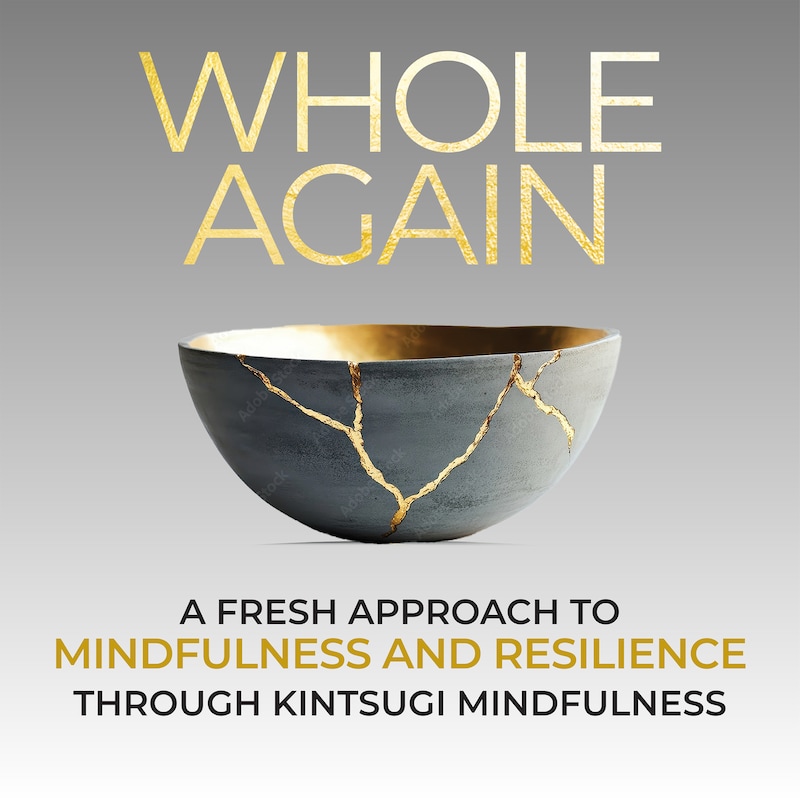
With Whole Again: A Fresh Approach to Healing, Growth & Resilience after Physical Trauma through Kintsugi Mindfulness, listeners explore resilience through personal stories of trauma, scars, and injury while learning to overcome PTSD, imposter syndrome, self-doubt, and perfectionism with self-compassion, self-love, and self-worth. Through insightful discussions on building resilience, resilience building, resilience and fitness, fitness and resilience, stress management, mindfulness practices, and digital wellness, the show offers practical tools like breathwork, micro-dose meditation, grounding techniques, visualization, and daily affirmations for anxiety relief and stress relief. Inspired by the art of kintsugi, the podcast embraces healing as a process of transformation, encouraging a shift in perspective from worry and being overwhelmed to gratitude and personal growth. By exploring the mind-body connection, micro-dosing strategies for emotional well-being, and holistic approaches to self-care, this podcast empowers listeners to cultivate emotional resilience and live with greater balance and intention.
Transcripts
In this episode, you'll discover five short words that can build greater resilience and help you recover.
Hey there, it's Michael. Welcome to Whole again. A show about helping survivors of physical injury and trauma reclaim their strength and resilience through the wisdom of kazuki. I'm glad you're here 'cause today we are going to address our self-talk. I want to share five key words with you. It can help you become more resilient and can help you in your recovery process.
And it's a great tie in to Friday's episode. That's a rebroadcast from last year with my favorite word nerd, Kristen Graham. But before we dive in and I share these words with you, I just wanna say thank you for being here. And thank you for being a fellow survivor and if you haven't yet signed up for those fantastic text messages I send, while there's still time, you can do it today.
All you have to do is send a text. You can say hi or hold again to 8 6 6 6 1 2 4 6 0 4. I'll say that one more time. 8 6 6 6 1 2 4 6 0 4. People share with me all the time. How did you know Michael? How did you know? That's what I needed to hear? And that's the aim with the text messages to give you support on your journey towards becoming whole again.
All right, let's dive in to this week's episode and those five key words that can help you become more resilient. I'm a big believer. It all comes down to how we talk to ourselves when no one else is listening. Our self-talk can either reinforce the pain we're going through in recovery, or it can help restore our power.
The words we use matter, they change worlds. They shape our world, they shape our recovery journey, and even small ones, they don't have to be big. Or sound funny, like one of my favorite words, kerfuffle. I just love saying kerfuffle. These small words matter more than we think, but as we go through recovery, heck, as we go through life, these small words sometimes can be placed in the corner, and we know that we never put baby in the corner.
Well shout out to all my Dirty Dancing fans out there. I discovered during my recovery that the brain believes what you say. And as we go through recovery, as we go through struggle, it's so easy for the conversation to sound like I should be further along. Why is this so tough? Why do I feel behind? Why am I so tired?
I'm not doing enough, I should be doing more All that. The brain starts to believe all of that. Those repeated stories on a loop, on repeat become our story, but there is hope. There's always hope because the brain is neuroplastic, meaning the big word, the brain can change. Small shifts in our language can lead to big improvements in how we see ourselves.
These conversations that we begin to have with ourselves with better language can help us build our resilience and can help improve our recovery. And one of my favorite words to change our self-talk, although it's not a big point, getter and scrabble is the word yet, and it comes out of the resilience 1 0 1 playbook.
So when you hear yourself say, I can't walk up the stairs without pain, or I don't feel like myself, or I haven't figured this out, all you need to do is add yet. Like this. I can't walk up the stairs yet. I don't feel like myself yet. I used yet throughout my whole recovery. In fact, I use it in other aspects of my life.
It's such a tiny word, but so powerful because it opens the door to possibility. It lets the brain know, Hey buddy, we ain't done yet. It helps us to keep pedaling. Alright, let's move to word number two, another one of my favorites because it's a top five list. They are all favorite words of mine. This one, again, not a big point.
Getter and Scrabble, it's the word. And for this week, when you go out and interact with people, pay attention to how often people use the word, but not BUTT, although you can track that too. But BUT, we use it all the time. I'm tired, but. I have to keep going. I'm grateful, but I'm struggling. But changes the whole conversation.
But when we replace, but with, and everything changes. There's a different energy to our self-talk. For example, I'm tired and I'm still doing my best. I'm grateful, and this is still hard. And allows two things to be true at the same time, and we humans, we have the ability to hold two thoughts at the same time.
It honors our full experience without invalidating either part of what we are going through. It's emotional honesty, which then leads to emotional resilience. Now let's move on to word number three, and as we know, three is the magic number. Let's talk about still, still is one of those great words that we can utilize when we feel like we're starting over, over and over again, or where we feel we might be in a plateau.
It sounds like this. I'm still showing up. I'm still learning how to trust my body. I'm still healing even if it's slow. And on a personal note, there is one aspect of my healing that has taken 13 years, and often people will say, you're still dealing with that. Which sounds a little judgy. Still can be a little judgy from time to time, but I try to respond in a way to say, yep, I'm still working on this.
This is still part of my healing. And yes, it's going slower than I desire, but we're still in it. The word still reminds our nervous system that progress doesn't have to be perfect. It continues our momentum with, as I like to say, grace, it says, I'm not failing. I'm just still in the process of healing.
All right, how are you doing? Let's move on to the last two. Here's number four. Enough, and this one hits close to home for so many of us. When you feel like you should be doing more or you didn't get everything done today, or you didn't have a gold medal day, heck you didn't even earn a silver or a bronze.
I did an episode on this very topic and I'll include that one in the show notes. It's a good one to help frame your day as far as what you wish to accomplish. Is such a powerful word because it honors how perfectly imperfect we all are and we all are. What I did today was enough. Who I am even in this moment is enough.
Enough is not about settling. Nope, it's not about giving up either. It's really about honoring who we are. As humans, humans going through something, going through recovery. Perfection is never the goal because who gets to decide what perfect is. This is about having the presence to see how amazing we are at any given moment that we are enough.
And here is the last one. Number five. The word is again. As in, I'm trying again. I forgot to rest, so I'll try again. I lost my temper and I'm returning to my breath again. My mind went somewhere else again, but I'm coming back into this moment again. You can play with again and make it lighthearted. It says that we're not quitting again.
Another word that says we're still in it. These are all words that help us build resilience, again, gives you permission to reenter the process. So we'll have moments when we take a different path and we can always come back. As I say in a lot of my meditations, you can always begin again. You can always come back to your breath again.
We can reboot without any shame. We all do it. We all need a moment to control alt, delete, and do a hard reset. We can give ourselves permission to be a beginner as many times as it takes. Until we get more comfortable in whatever we happen to be pursuing. And there you have it, five key words that can shift the conversation you're having with yourself and can lead to greater resilience and more healing yet and still enough.
And again, these are not magic words as I mentioned upfront. You're probably not gonna win Scrabble if you play them, but they could be really beneficial if you're playing, say, Bananagrams. But these small words can be so powerful in changing our self-talk. They can help make tiny little shifts in our language that can retrain our brain so it feels safe again, so we can become whole again.
They turn criticism. Into curiosity. Curiosity. They create a space for more grace, and I think we all could use a bit more grace this week. Pick one of the five and see if you can weave that word into your vocabulary, into your self-Talk with a bit more frequency. And then let me know how that changes things for you.
Let me know how your nervous system feels with some new language, a new way of looking at things.
And as always, thank you for being here. And thank you for being a fellow survivor. And remember, if you'd like to receive my free text messages, I send out. To help you shift your self-talk, all you need to do is say hi to 8 6 6 6 1 2 4 6 0 4. I'll set you up
and if you wish to learn more about creating beautiful ripples and how to prevent a bad moment from turning into a bad day, please visit my website, Michael O'Brien schiff.com. And sign up for my newsletter called The Ripple Effect, and join us each Monday, Wednesday, and Friday here at Whole Again, and discover how you can heal, grow, and become more resilient and celebrate our scars as golden symbols of strength and resilience.
Until then, remember, you can always come back to your breath. You've got this. And. We've got you.