Shownotes
In this week’s Wildlife Matters Podcast, we will be telling the story of the Badger in The Winter’s Tale and in Wildlife Matters Investigates as the Hunting Act turns 18, The Severn amendments that would strengthen the Hunting Act and bring about an enforceable ban on hunting wild animals with packs of dogs in England and Wales
Plus, we investigate avian influenza or Bird Flu in Nature News and find time to enjoy a Mindful Moment, relax and enjoy the sounds of wildlife.
Takeaways:
- The Hunting Act was introduced to protect wildlife in England and Wales, yet illegal hunting persists.
- Recent updates on avian influenza show concerning spread to mammals, raising public health concerns.
- The need to strengthen the Hunting Act is urgent to prevent ongoing illegal activities.
- Trail hunting has been exploited as a loophole, undermining the intent of the Hunting Act.
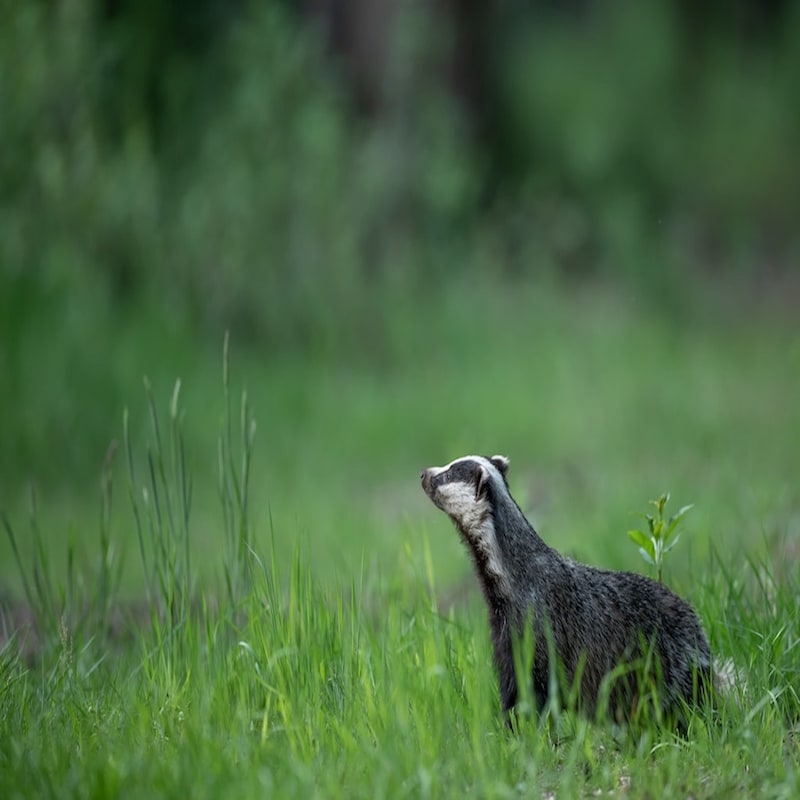
- Badgers are social animals that care for their young in complex family structures.
- Wildlife Matters aims to address the enforcement issues regarding the Hunting Act for better protection.
Links referenced in this episode:
Companies mentioned in this episode:
- BBC
- World Health Organization
- Countryside Alliance
- Master of Foxhounds Association
- Vanderbilt University
- Tufts University
Transcripts
Hello and welcome to the Wildlife Matters podcast, and a special warm welcome to all our new listeners.
Nigel Palmer:Every episode of the podcast at the moment is attracting more and more downloads, and we'd like to know that you're really welcome in the wildlife matters community.
Nigel Palmer:In today's Wildlife Matters podcast in wildlife Matters investigates, we will be looking at how to strengthen the hunting act and back the ban.
Nigel Palmer:And also we're going to be taking a look into the story of the badger with our story of the winter's tale.
Nigel Palmer:All that is coming up along with nature news mindful moments.
Nigel Palmer:This is where you can get your wildlife and nature fixed for the week.
Nigel Palmer:Grab a cup of tea, get yourself comfy, and then sit down for half hour of fun on this week's wildlife Matters podcast.
Nigel Palmer:With me, Nigel Palmer.
Nigel Palmer:This week's Wildlife Matters Nature News we're going to be looking at the worrying updates that have come out about avian influenza, or bird flu, having spread to mammals.
Nigel Palmer:And it's the information came out via the BBC and said that the virus that causes avian flu has killed approximately 208 million birds worldwide, with at least 200 now recorded cases in mammals.
Nigel Palmer:Here in the UK, there will be more targeted surveillance and testing of animals and humans exposed to the virus.
Nigel Palmer:The UK's health security agency advised that avian flu is primarily a bird disease, but experts around the world are investigating, investigating the possibility of it spreading to other species.
Nigel Palmer:The virus has now been found in a variety of mammals around the world, including bears in America and mink in Spain, as well as dolphins and seals.
Nigel Palmer:The UK's aPha, or animal and plant health agency tested 66 mammals, including seals, and discovered that nine otters and I foxes tested positive for the highly pathogenic avian influenza HP AI h five n one.
Nigel Palmer:Public health officials warned that the mutation in mammals may spread to humans, but the risk to the public is currently stated as very low.
Nigel Palmer:The cases have been discovered in Durham, Cheshire and Cornwall, in Paris and Wales, and in Scotland, in the Shetland Islands, the Inner Hebrides, and in five, these mammals are thought to have fed on dead or sick wild birds, and that's how they've become infected with the virus.
Nigel Palmer:The animals had a virus mutation that made it easier to infect mammals, but it is claimed there was no evidence of transmission between mammals.
Nigel Palmer:The animal plant health agency also stated that widespread infection in Great Britain's mammals was extremely unlikely.
Nigel Palmer: utbreak began back in October: Nigel Palmer:Yes, it's been going on that long.
Nigel Palmer:There have been five confirmed human cases of h five n one virus including one in the United Kingdom and one death in China.
Nigel Palmer:In fact, last month, a nine year old girl in Ecuador was found to be infected with avian influenza, according to the World Health Organization, or WHO.
Nigel Palmer:Nearly 870 cases now of human infection with the h five m one avian influenza virus have been reported from 21 countries over the last 20 years, and 457 of these were in fact fatal, according to the report.
Nigel Palmer:The virus has not acquired the ability for sustained transmission among humans, and thus the likelihood of human to human transmission is this low.
Nigel Palmer:The threat posed by the virus spreading is very concerning, according to Doctor Wenqing Sang, the head of WHO's global influenza program, and the risk has been increasing over the years, as evidenced by numbers of outbreaks in animals and infections in humans.
Nigel Palmer: the outbreak began in October: Nigel Palmer:Almost 15 million domestic birds, including poultry, have died as a result of the disease, and an additional 193 million birds have been culled.
Nigel Palmer:The new strain places bird flu in uncharted territory, according to Wendy Perrier, a virologist at Tufts University in Massachusetts.
Nigel Palmer:Researchers have warned that unless precautions are taken, the disease could spread among humans.
Nigel Palmer:Efforts to keep the new strain from spreading beyond the farm appear to have been vigorous, comprehensive, and, to date, successful, according to infectious disease specialist William Schaffner of the Vanderbilt University in Nashville, Tennessee.
Nigel Palmer:Pereira believes that because the variant contains genetic material from gall flu, at least some of its genetic changes occurred in gulls prior to entering the mink farm.
Nigel Palmer:This means that a strain with those mutations is still likely to exist in the bird population.
Nigel Palmer:However, the outlook for human populations remains positive.
Nigel Palmer:If the new does begin to infect people, health officials will almost certainly be able to produce a vaccine quickly.
Nigel Palmer:Does any of this sound all too familiar?
Nigel Palmer:And the antiviral drug Tamiflu can reduce the severity of the disease?
Nigel Palmer:The potential risk to wild animals is, of course, even greater.
Nigel Palmer:Bird flu has consistently caused high levels of sickness and death among wild birds and mammals over the past year, and how the new variant will affect that trend still remains to be seen.
Nigel Palmer:This is really concerning pieces news and I'm sure that you can all draw your own comparisons to recent experiences, and I do think we do need to take these things far more seriously when we're at these early stages, and perhaps then we can stop this becoming the next global epidemic.
Nigel Palmer:That's been this week's wildlife Matters Nature news.
Nigel Palmer:And welcome back on this week's wildlife matters investigates as it approaches its 18th birthday.
Nigel Palmer:We are going to be looking at how we believe you can strengthen the hunting act to stop illegal hunting and trail hunting in England and Wales.
Nigel Palmer:I mean, have you ever asked yourself this question, why do people hunt animals today?
Nigel Palmer:But what I don't understand in particular is why some people choose to hunt foxes.
Nigel Palmer:I mean, they don't hunt them for food or fur and they use no part of the fox at all.
Nigel Palmer:I mean, maybe that's because the fox has generally been torn apart by the pack of hounds that these hunters use.
Nigel Palmer:Just what is their purpose and reason?
Nigel Palmer:I genuinely cannot give you a credible answer.
Nigel Palmer:There is, as far as I can see, no reason to hunt a fox, a hare or indeed any other wild animal.
Nigel Palmer:So why, 18 years after the hunting of wild mammals with packs of dogs was made illegal in England and Wales by the Hunting act, are there still hunt packs, raising hounds and riding through the country on horseback with up to 40 loose hounds intent on killing wildlife?
Nigel Palmer:Again, I can't give you a credible answer.
Nigel Palmer:To me, along with over 85% of the british public, fox hunting makes no sense at all.
Nigel Palmer:Yet still it continues, and wildlife matters is going to investigate to try to tell you why.
Nigel Palmer: K parliament back in November: Nigel Palmer:Scotland had already led the way two years previous with their Protection of Wild Mammals act.
Nigel Palmer:The Hunting act was passed stop the hunting of wild mammals with packs of dogs.
Nigel Palmer:The wild animal species most commonly hunted in the UK were foxes with deer, hare, otter and mink.
Nigel Palmer:The hunting act was a landmark moment in the UK's history of animal protection and it is undoubtedly a popular act with the british public, who consistently oppose any hunting with packs of dog.
Nigel Palmer:The hunts and their supporters have made a number of attempts to repeal or amend the law and spent huge sums of money in court as they attempted to overturn the Hunting act.
Nigel Palmer:The leading pro hunt organizations, the Countryside alliance, and the master of the Foxhounds association.
Nigel Palmer:It's often been claimed that the Hunting act was not a good law, but it has led to a number of hunters being prosecuted.
Nigel Palmer:A person guilty of an offence under the Hunting act is liable on summary conviction to an unlimited fine at the discretion of the judges.
Nigel Palmer:The provisions of the law state a penalty not exceeding level five on the standard scale.
Nigel Palmer:However, level five currently has no upper limit.
Nigel Palmer:In our opinion, there have been far too many allegations of illegal hunting that have not been properly investigated and far too many illegal hunters have got away with it without being punished.
Nigel Palmer:And this means to us there is an enforcement problem with the hunting act.
Nigel Palmer:Much of the confusion has been around the exemptions within the hunting act.
Nigel Palmer:These exclusions were so the hunting act had no effect on activities which parliament did not intend to prohibit.
Nigel Palmer:The hunts have capitalized on the use of these exemptions when they are caught hunting.
Nigel Palmer:As an example, stag hunts used the research and observation exemption that was designed for researchers.
Nigel Palmer:And fox hunts have carried birds of prey in order to claim that they can use the falcone exemption, which was designed for falconers.
Nigel Palmer: ich did not even exist before: Nigel Palmer:So let's take a look at trail hunting.
Nigel Palmer:Well, it is based upon the traditional sport of drag hunting.
Nigel Palmer:Now, drag hunting is not covered by the hunting act, and this is because a true drag hunt follows a pre laid scent trail or a human runner, and that's known as clean boot hunting, and they use bloodhounds.
Nigel Palmer:Trail hunting has no heritage or tradition.
Nigel Palmer: It has only existed since: Nigel Palmer:It was the bloodhunter's completely new introduction that claims to mimic traditional hunting by following a scent trail which has been laid in areas where foxes are likely to be.
Nigel Palmer:Those laying the trail, if indeed one was laid, are not meant to tell those controlling the hounds where the scent has been laid.
Nigel Palmer:So if the hounds end up following a live animal scent, the hunt can claim they did not know.
Nigel Palmer:Well, to me and to many of you, it's clear that the hunters are showing an intent to hunt fox.
Nigel Palmer:They have a pack of hounds and are wearing hunting pinks.
Nigel Palmer:I mean, try walking into a bank with a mask over your face and holding a plastic gun, and then claim you were only exercising your right and that people just do not understand your ways anymore.
Nigel Palmer:Note here, please do not try this because you'll probably get arrested by the police.
Nigel Palmer:Yeah, those same police forces allow huntsde to continue throughout the country without taking action.
Nigel Palmer:I mean, why?
Nigel Palmer:There have been literally thousands of hunt monitoring reports from hunt monitors and hunt sad groups covering the majority of hunts throughout England and Wales since the hunting act was enacted.
Nigel Palmer:In over 96% of these, the hunt monitors have reported that no trail was laid before the hunt, and those that were observed by hunt monitors were not done in accordance with the hunt's claims.
Nigel Palmer:It has always been clear that the hounds do not follow the trails that the hunts may have laid and most commonly head off in the completely opposite direction.
Nigel Palmer:Many hunt sad groups have video recordings of hunts acting in contravention of the hunting act by actively hunting foxes with their hounds.
Nigel Palmer:On too many occasions, the hunters concerned have avoided prosecution by claiming the kill was an accident and beyond their control.
Nigel Palmer:And worse.
Nigel Palmer:Only a very small number of cases ever reached the courts, with the police actively stating that wildlife protection was not one of their key priorities.
Nigel Palmer:What's very clear and obvious to many of us is that the hunts are completely incapable of monitoring their own actions and believe themselves to be either an exception to or indeed above the law.
Nigel Palmer:Not so surprising when they continually seem to get away with killing foxes.
Nigel Palmer:I have personally been kicked, punched and hit with a riding crop and have my vehicle tires slashed, windows broken, and twice been run over by a horse.
Nigel Palmer:Tragically, I've seen far worse injuries and attacks on fellow savs and seen the police literally turn a blind eye to these actions on far too many occasions.
Nigel Palmer:This is why I believe that after 18 years, now is the time to strengthen the Hunting act.
Nigel Palmer:And we can do that by making just seven key amendments to ensure that wild animals are protected in the way the Hunting act intended.
Nigel Palmer:The british government needs to dramatically improve the enforcement of the Hunting act and add the following seven clauses.
Nigel Palmer:The first would be hunting with intent, an introduction of reversed to the burden of proof in exempt hunting cases.
Nigel Palmer:But by introducing the clause, the hunter will be required to prove they were not hunting, rather than the current situation where witnesses have to prove the hunt were actively hunting.
Nigel Palmer:Hunts would need to prove that they have followed all the conditions stipulated by the hunting act relevant to the of exempt hunting they claim to be doing.
Nigel Palmer:This is not unprecedented.
Nigel Palmer:A reversal of the burden of proof for exempt hunting was one of the recommendations made by Lord Bonamy in his review of the scottish hunting legislation.
Nigel Palmer:The second would be the addition of a reckless clause that would stop hunters from using the false alibi of trail hunting.
Nigel Palmer:Trail hunting is merely a smokescreen for illegal hunting.
Nigel Palmer: s were exposed back in August: Nigel Palmer:Of their directors, Mark Hankinson was successfully prosecuted.
Nigel Palmer:However, other directors, employees and consultants of the master of the Foxhounds association have still not been prosecuted.
Nigel Palmer:Despite overwhelming evidence against them.
Nigel Palmer:They clearly cannot be trusted to control their own behavior.
Nigel Palmer:Therefore, for the safety of the public and the protection of wild animals, specifically boxes, but to include all wild or and domestic animals, the best way to counteract trail hunting is to include a reckless provision in the Hunting act.
Nigel Palmer:This would mean hunters could be prosecuted not only when it can be proven that they intended to hunt wild mammals with dogs, but also when it can be proven they were reckless by not preventing their dogs from actively pursuing, harming or killing another animal.
Nigel Palmer:The third clause would be the use of dogs below ground being prohibited.
Nigel Palmer:This is where some of the worst cruelty in hunting takes place, not only to wild foxes pursued underground without a chance of escape from hounds, but also to the terrier dogs that are sent underground to either flush them out or hold them at bay.
Nigel Palmer:It is clear that there is no legitimate purpose for terrier men at a drag or clean boot hunt.
Nigel Palmer:Therefore, the role of or people acting as terrier men would be liable to have committed an offence under the Hunting act.
Nigel Palmer:The fourth clause would be a removal of observation and research exemptions, because these have been systematically abused by stag hunts.
Nigel Palmer:There are three stag hunts still hunting in England.
Nigel Palmer:These stag hunts have relied on this exemption to survive and to continue the terror that they subject on stags every single year.
Nigel Palmer:It's not acceptable to the british public.
Nigel Palmer:The staghuns first tried the flushing to guns exemption, then the rescuing of an injured mammal exemption, but both failed in court and they were successfully prosecuted for abusing these exemptions.
Nigel Palmer:Sadly, since then they tried the research and observation exemption and since they, where no prosecutions have progressed with its exemption, has been used as a defence.
Nigel Palmer:Stag hunts have never published any data from their research in the 18 years since the Hunting act came into force.
Nigel Palmer:There is no credible research or evidence of it and therefore this exemption should be removed.
Nigel Palmer:The fifth stage would be an application of vicarious liability to cover the employers and landowners of those in breach of the Hunting act.
Nigel Palmer:Introducing a vicarious liability clause into the Hunting act would enable those who facilitate illegal hunting to be prosecuted.
Nigel Palmer:This would include hunt masters, hunt members and a landowner who authorized the hunt on the land without authorization.
Nigel Palmer:You see, hunting is already illegal.
Nigel Palmer:Many of the prosecutions under the Hunting act have been hunt staff or paid employees or contractors of the hunt who are charged and subsequently prosecuted, whilst those who were actually hunting are not prosecuted.
Nigel Palmer:This needs to change and the vicarious liability is a very efficient way of achieving that change.
Nigel Palmer:The 6th amendment would be an extension of the available time to charge suspects with breaching the Hunting act, because at present, a defendant must be charged within six months of committing an offence under the Hunting act.
Nigel Palmer:And in practice, that means the police simply do not have the resources and time to secure a charge, meaning that illegal hunting is going unpunished.
Nigel Palmer:And this surely is contrary to the intention of the act in the first place, which was to protect wild animals from being hunted and the 7th addition to the Hunting act would be that sentencing powers should be increased.
Nigel Palmer:The sentencing powers available to judges under the Hunting act are restricted to fines only.
Nigel Palmer:Wildlife matters believe this undermines the Hunting act in the eyes of the offenders who have admitted to flouting the law.
Nigel Palmer: foxhounds webinar from August: Nigel Palmer:I mean, what sort of people are they?
Nigel Palmer:We believe that bringing the hunter act in line with other animal protection laws in the UK would mean it would carry a maximum penalty of six months imprisonment, and we believe that that would be a far bigger deterrent to those who currently go hunting.
Nigel Palmer:These seven amendments would bring an effective deterrent to hunt masters, hunt members and staff.
Nigel Palmer:It would also be a truly reckless landowner that would allow hunts to use their land for the pursuit of wild animals.
Nigel Palmer:The above clauses would also make it clear to the police that hunts were actively hunting a wild mammal.
Nigel Palmer:If they could not prove they had taken all the required precautions, these amendments could effectively end the tyranny and terror that the blood hunters have inflicted on our wildlife and through our countryside and rural communities for centuries now.
Nigel Palmer:Wildlife matters is happy to work with any group or ngo that support these amendments and believe we need to take action urgently to ensure the british government ensures the protection of wild animals, and in fact, all animals and the safety of the public who are currently at risk of abuse and even injury from the hunts as they attempt to continue with their illegal activity of hunting and killing wild animals with their packs of dogs.
Nigel Palmer:This has been wildlife matters investigates.
Nigel Palmer:Look into how the Hunting act can be strengthened as it approaches its 18th birthday.
Nigel Palmer:Do come back and join us for the next wildlife matters investigation.
Nigel Palmer:Soon now on the wildlife Matters podcast, it's time to sit back, kick your shoes off and just enjoy a mindful moment in nature.
Nigel Palmer:And let's see if you can recognize this week's guest animal, perhaps one of the most distinctive sound in nature.
Nigel Palmer:Of course, I'm sure many of you guessed the common frog was this week's guest on mindful moments.
Nigel Palmer:It's a winter's tale, the story of the badger.
Nigel Palmer:So imagine yourself now.
Nigel Palmer:It's so quiet and peaceful.
Nigel Palmer:It's tranquil, it's just blissful.
Nigel Palmer:And there's a kind of magic in the air.
Nigel Palmer:What a truly magnificent view.
Nigel Palmer:And it's a breathtaking taking scene.
Nigel Palmer:This is the first in a series of blogs about this iconic mammal, Melis Melis, better known to most of you as the badger.
Nigel Palmer:So lets take a look at what badgers are doing in the british mid winter.
Nigel Palmer:A badgers home is called a set.
Nigel Palmer:These are often found in woodlands, on field edges and sometimes in larger gardens in urban areas.
Nigel Palmer:Badger sets can be found in parks and often in green spaces.
Nigel Palmer:Badgers live in social groups of five to maybe six adults.
Nigel Palmer:There is usually a higher number of females in the group.
Nigel Palmer:It's believed that this helps to counteract the higher mortality of males through roadkill and fighting.
Nigel Palmer:Only some of these females, known as sows, will breed each year.
Nigel Palmer:These are the older or more dominant sows, whilst the smaller or younger sows, often with visible scars on their rumps from biting.
Nigel Palmer:Predominance within the group will be subordinate to the breeding sows.
Nigel Palmer:If a subordinate sow does breed, the dominant female will often kill her cubs and leave them outside the set.
Nigel Palmer:In winter, badgers spend more time underground in their sets.
Nigel Palmer:They don't hibernate, but they will lie low and sleep for extended periods of time.
Nigel Palmer:They do emerge to forage in mild weather, generally being more active further south, and if they are regularly fed by people, load breeding takes place in early spring and again in late summer.
Nigel Palmer:Badgers, like some other mammals, use delayed implantation.
Nigel Palmer:The mating occurs either inside or close to the entrance of the set.
Nigel Palmer:Interestingly, a female vagum may mate with more than one male and have a litter of mixed parentage.
Nigel Palmer:This helps with the genetic diversity within the group and can lead to variations in colour.
Nigel Palmer:Sows can ovulate a second time and mate again whilst already carrying blastocysts from an earlier mating, and still start the pregnancy at the same time to produce a single litter of cubs.
Nigel Palmer:This remarkable ability is called superfetation.
Nigel Palmer:Bladder cysts, the fertilized eggs are implanted on or around the winter solstice, that is the 21 December each year.
Nigel Palmer:Each bladder cyst is a tiny of cells that becomes an embryo, and this takes around seven to eight weeks to develop into a baby badger.
Nigel Palmer:Despite females badgers eating less and living off their fat reserves through winter, this is the time they will give birth to their cubs.
Nigel Palmer:The cubs are born helpless and blind.
Nigel Palmer:Newborn badger cubs are around 12 cm or 5.5 inches long, with a very light covering of silvery grey fur, and they might weigh between, say 75 and about 130 grams.
Nigel Palmer:This fur is a little darker on the legs and sometimes there are faint stripes clearly visible on the face.
Nigel Palmer:Sows will generally have two or three cubs, collectively known as a litter.
Nigel Palmer:The newborn cub cubs will stay underground with their mothers and family groups for around eight to ten weeks.
Nigel Palmer:It is often possible to tell whether a sow has cubs as her teats are prominent.
Nigel Palmer:Between February and the end of May, the cubs have a silky grey fur with a very fluffy look.
Nigel Palmer:It's so adorable.
Nigel Palmer:Both adults and cubs will remain extremely cautious and not venture very far, far from their set.
Nigel Palmer:The aim is for the cubs to start venturing above ground in April or perhaps early May, when invertebrate food is plentiful and they have as much time as possible to put on fat to prepare them for their own first winter.
Nigel Palmer:Most cubs are born in a specially modified nursing chamber within the set, which is usually close to the entrance.
Nigel Palmer:This will have good airflow and a dense pile of bedding that is moved in by the pregnant sow prior to her giving birth.
Nigel Palmer:Sometimes a subordinate sow may make a nursing chamber in a smaller set, or even use just straw, hay or bracken, whatever she can find, but always away from the attention of the dominant pregnant sow.
Nigel Palmer:In the main set, the cups are born with a their eyes closed.
Nigel Palmer:They develop their first teeth at around four weeks and their eyes will begin to open at maybe five weeks old.
Nigel Palmer:Even then, they can't see well for a few more weeks.
Nigel Palmer:The cubs may now show hints of their two dark eye stripes in their otherwise thin, silky fur, but by the time they leave the set, they will have developed full adult coloration.
Nigel Palmer:They also behave exactly as adults do when threatened, facing the enemy with lowered heads and fluffed up coats.
Nigel Palmer:This displays remarkable confidence for their size, suggesting that the stripes may well be a warning to other animals.
Nigel Palmer:When the cubs are around six to maybe seven weeks, they will leave the nursery chamber and begin exploring within the set at around eight weeks with up to the set entrances.
Nigel Palmer:Watching a set in late April and early May is the best time to see the cub's first foray above the ground, but do keep an eye on the entrance because they will probably remain in it or at least nearby.
Nigel Palmer:As well as staying extremely close to their mother, she will herd them below ground at the first sign of danger and even drag a cub to safety by the scruff of its neck if need be.
Nigel Palmer:Sows will suckle their young for about twelve weeks, normally until around the end of May, and after this, the weaning starts and the sow will allow the cubs to suckle less, forcing the cubs to start finding their own food.
Nigel Palmer:And that is where we will break because we'll move on to a second episode where we cover badgers in springtime.
Nigel Palmer:But this has been the first in a short series where we will be looking at the lives of badgers throughout the year here on the Wildlife Matters podcast.
Nigel Palmer:I really hope you enjoyed that story of the badger the winters to if you're enjoying the Wildlife Matters podcast, we'd love to hear from you.
Nigel Palmer:Why not give us some feedback?
Nigel Palmer:You can contact us via our social media platforms.
Nigel Palmer:You'll find wildlife Matters organization on Facebook, Twitter and Instagram.
Nigel Palmer:Or you can just drop us an email.
Nigel Palmer:Our email address is hello at wildlife matters.org.
Nigel Palmer:next time on the Wildlife Matters podcast, we are going to be on a little walk out in the countryside and finding six plants that you can find in your midwinter here in the UK.
Nigel Palmer:And wildlife Matters investigates is going to be looking into the disgusting trade that is stealing wild cetaceans, dolphins and orcas from the wild for a life in captivity.
Nigel Palmer:And we're going to be digging into that one, plus all our normal features.
Nigel Palmer:But until next time, thank you for listening.
Nigel Palmer:Thank you for your time.
Nigel Palmer:Welcome to our ever growing community.
Nigel Palmer:This is me, Nigel Palmer, your host, wildlife matters, signing out.
