Shownotes
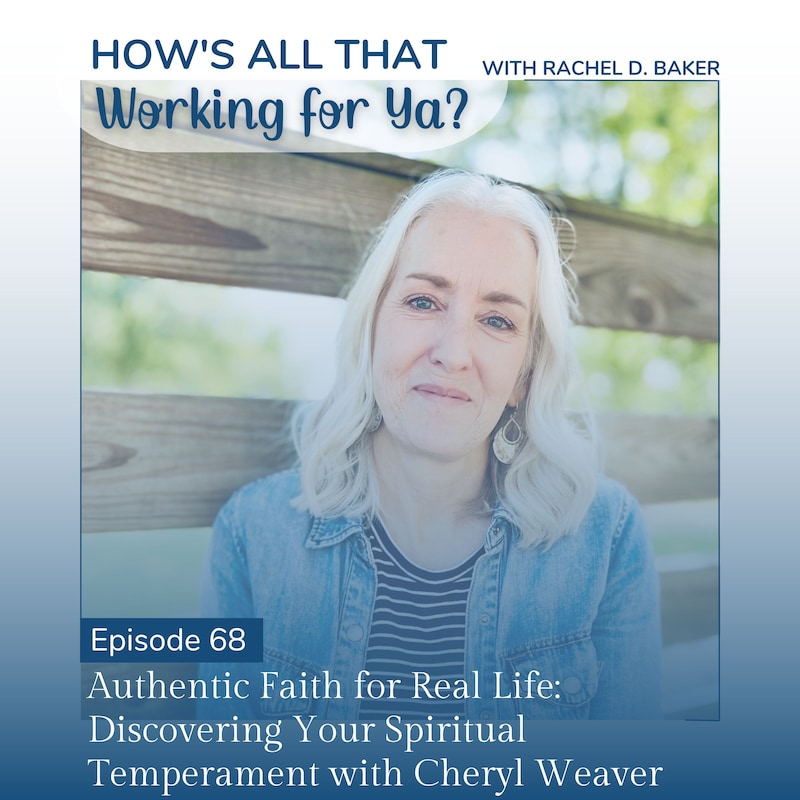
If you've ever felt like your quiet time is a bit of a snooze fest or wondered why traditional methods of spirituality don’t quite resonate, you’re definitely not alone! In this final episode of our 3-part series with Cheryl Weaver, we’ll talk about how embracing our individual “spiritual personalities” (aka temperaments) can lead to a more vibrant, authentic faith experience. Cheryl shares her journey of discovering her own spiritual style and the freedom that comes from recognizing that there isn’t just one “right” way to connect with God.
Episode Highlights
- How spiritual temperaments can transform our relationship with God, making it more personal and authentic.
- Understanding your unique spiritual temperament is key to connecting with God in ways that resonate with you.
- Diverse ways of worshiping God should be celebrated, not shamed or compared.
- Practical tools and encouragement to help listeners explore their distinct paths to spiritual fulfillment.
- The importance of body awareness in spiritual practices, linking physical experiences with divine connection.
Resources Mentioned
- Sacred Pathways: Nine Ways to Connect with God by Gary Thomas
- What's Your God Language?: Connecting with God through Your Unique Spiritual Temperament by Myra Perrine
- Cedar Rock Ministries
Related Episodes / You Might Also Like
- EP 25 - Enneagram Basics & Resources
- EP 38 - Embracing Authenticity: How's All That Working for Ya?
- EP 45 - Finding Your Natural Prayer Style with Janet McHenry
- EP 47 - How to Study the Bible with Liz Cobo
- EP 66 - Faith-Based Body Awareness for Overwhelmed Women with Cheryl Weaver
- EP 67 - Spiritual Direction 101: How to Tune In and Trust God’s Lead with Cheryl Weaver
Connect with Cheryl
- Email: [email protected]
Connect with Rachel
- Website: racheldbaker.com
- Instagram: @rachel.d.baker
- Email: [email protected]
It means so much to me that you are part of this community! I never recommend anything to you that I don't truly love and believe is worthwhile. Some of the links I share are affiliate links, and I will earn a tiny commission if you go through them to make a purchase. It's no extra cost to you, and buying through the links I share is one small way you can support this ministry and our podcast.
Mentioned in this episode:
FREE Printable Permission Slips
If you’ve been feeling like you need a minute to catch your breath, hear from God, and remember who you are outside of all the chaos... this is for you. It’s a Printable Permission Slip. Yes, an actual fill-in-the-blank reminder that you are allowed to rest, reflect, and realign with what really matters. When you download it, you’ll get four designs of beautiful, fill-in-the-blank permission slips and 20 permission slip ideas to get you started. You don’t need the world’s permission to step into your purpose - but sometimes it helps to see it in writing.
This podcast uses the following third-party services for analysis:
OP3 - https://op3.dev/privacy
Transcripts
You're listening to the podcast where we ask, how's all that working for you?
Speaker A:Because sometimes all you need to change your life is a moment of reflection.
Speaker A:In this space, we are done with sugarcoating and we embrace keeping it real.
Speaker A:I'm your host, Rachel D. Baker, guiding you on this journey to create some breathing room, set healthy boundaries, and reclaim your time guilt free.
Speaker A:This is real talk with a bit of sass and we are always seeking the truth in God's word.
Speaker A:Today we are wrapping up an incredible three part series with my friend Sheryl Weaver.
Speaker A:If you have not heard the previous two episodes, you're going to want to check those out.
Speaker A:But in case you haven't yet, I want you to know that Cheryl holds her Bachelor's in Education from Harding University.
Speaker A:She is a trauma informed yoga instructor, and she serves as a certified spiritual director and retreat facilitator with Cedar Rock Ministries.
Speaker A:She brings such a beautiful blend of biblical wisdom and compassion and practical insight.
Speaker A:And y', all, it has been such a gift to have her on here.
Speaker A:So if you haven't listened to those first two episodes in this series, go ahead, add them to your queue.
Speaker A:They are linked in the show notes.
Speaker A:In the first one, we talked about body awareness and what it is, why it matters, how learning to listen to your body can be a deeply spiritual practice.
Speaker A:In the second episode, we explored spiritual discernment, spiritual direction, how you can begin to notice and respond to the voice of God in your everyday life.
Speaker A:Both conversations were full of encouragement and practical tools and the links for those are in the show notes if you need them today.
Speaker A:Oh, I'm so excited for this one, I can't even tell you.
Speaker A:We are digging into spiritual temperaments.
Speaker A:What even is that?
Speaker A:What are they?
Speaker A:How they shape the way we experience God and how embracing your own unique design can lead to a more authentic and life giving faith.
Speaker A:So if your quiet time has felt a little stale or if you've ever wondered why doesn't this way of connecting with God work for me?
Speaker A:Am I doing it wrong?
Speaker A:What's wrong with me?
Speaker A:Listen, you are gonna love this conversation.
Speaker A:I'm pumped.
Speaker A:Let's jump in.
Speaker A:Cheryl, are you ready for this?
Speaker B:Yes.
Speaker B:Thank you again for having me.
Speaker B:This is one of my favorite things to talk about right now.
Speaker A:I know.
Speaker A:I.
Speaker A:We kind of chatted a little before I hit the record button.
Speaker A:We're both like, we love this.
Speaker A:It's so good.
Speaker A:So spiritual temperaments again, could be a completely foreign vocabulary term for people.
Speaker A:So let's start with the basics like we like to do.
Speaker A:What are spiritual temperaments?
Speaker A:And how do they help us connect with God in more personal and meaningful ways?
Speaker B:I have loved over the last several years digging into the uniqueness of people and how we are all created so differently.
Speaker B:And even in my marriage of 34 years, like, opening my eyes to the ways that my husband and I process life differently.
Speaker B:Always known that we were different, but just, like, how could he have even experienced this thing this way when I experienced it this way?
Speaker B:So all these, like, you know, opening my eyes up just to the.
Speaker B:Those differences in the way we live our life.
Speaker B:When I heard about spiritual temperaments, it is basically just the way we best relate to God, namely, the most natural or meaningful approach.
Speaker B:So following our passions, what are the things that we're passionate about, just embracing those.
Speaker A:I love that it's so.
Speaker A:It's a personal thing.
Speaker A:And, you know, when we talk about temperaments, typically, we're talking about people's, you know, personality traits.
Speaker A:You know, are you typically, like, a happier person, a more angry person?
Speaker A:Are like, what's your natural disposition?
Speaker A:And so in this context, spiritual temperaments, it's more about how we, as we are individually created, connect with God and have that relationship with him, Right?
Speaker B:Yes.
Speaker A:And so what initially kind of drew you to this?
Speaker A:How has it impacted your personal relationship with God?
Speaker A:I'd love to hear the.
Speaker A:A personal story that goes along with this.
Speaker B:Yeah.
Speaker B:So after I finished three years of walking with my cohort through School of Spiritual Direction and a year of peer supervision afterwards, we decided we wanted to meet up again for a reunion and a continuing education weekend.
Speaker B:And one of the guys in my cohort suggested we invite someone that he was familiar with to come and teach us about spiritual temperaments.
Speaker B:And my ears kind of perked up.
Speaker B:And so that is what we dove into over the weekend.
Speaker B:And I. I just was so encouraged, namely because I realized how much shame was associated with ways that I naturally connect with God.
Speaker B:And they weren't ways that were typically expressed in my church where I was raised.
Speaker B:And so there was just a lot of freedom that I felt now to.
Speaker B:To be able to claim that, oh, this is the way I was unique, uniquely created to experience God.
Speaker B:And this is.
Speaker B:This is good.
Speaker B:Yeah, it was.
Speaker B:And it was so great to sit, you know, with all of the other people and see each person talk about their unique temperaments.
Speaker B:So, yeah, that's how I first heard about it.
Speaker A:Love that.
Speaker A:Okay, so for somebody who is hearing about all of this for the first time, and they're thinking hold up, wait.
Speaker A:I didn't know there were different ways to experience God, which for a lot of people, like there is this way.
Speaker A:This is the path.
Speaker A:This is how you are raised in church.
Speaker A:Or you've only ever heard of one way.
Speaker A:Right.
Speaker A:If somebody's listening and thinking that what's one little small step that maybe she could take to begin exploring her spiritual temperament.
Speaker A:And I really, I feel like we kind of need to talk a little bit about maybe what some different ones are as well.
Speaker A:Right.
Speaker A:So what are some different spiritual temperaments, different ways people can connect with God, and what's a little step we could take in the direction of finding ours?
Speaker B:Well, I. I mean, I'll give you my personal experience.
Speaker B:There are nine that we explored in our time together.
Speaker B:And those nine are written about in Gary Thomas's book Sacred Pathways.
Speaker B:This is an older book that I was not familiar with.
Speaker B:And then also what's yous God Language by Dr. Myra Perrine.
Speaker B:The nine that are listed in those two books is a.
Speaker B:It's a great starting point.
Speaker B:The ones that were my top were the naturalist.
Speaker B:So someone who loves God through experiencing him outdoors, which so many of us experience, you know, that peace and quiet of going out and experiencing God in nature.
Speaker B:I remember, you know, the first time I read the scripture that talks about that in Romans of ever since the creation of the world, God's unseen qualities and divine nature have been clearly seen in what is created.
Speaker B:So that men are without excuse.
Speaker B:I mean, I just, wow, you know, that God speaks to us through nature.
Speaker B:That would.
Speaker B:That really connected with me.
Speaker B:Another one of mine is the sensate.
Speaker B:And this one was one that things started to make sense to me.
Speaker B:So a sensate is loving God through the senses, through.
Speaker B:Through sight and smell and sound and taste.
Speaker B:And you know, my friends have joked around with me for years about sitting around a table with me and enjoying a meal.
Speaker B:I love me some good food.
Speaker B:And it is a sacred experience for me to sit around a table with people and experience the different tastes and textures of a really well created meal.
Speaker B:And you know, people would say, have you ever gone out to eat with Cheryl?
Speaker B:Like, just as a joke, you know, a joke.
Speaker B:And.
Speaker B:And it started to kind of bring a little bit of shame up.
Speaker B:Like, you mean, not everybody gets this excited about, you know, food and the taste of it and like experiencing that wow, that God could even create so many different vegetables and fruits and flavors and things like that.
Speaker B:So to connect and be like, oh, that makes sense.
Speaker B:And then with music, with sound, you Know, connecting with God through music and beautiful things.
Speaker B:And not just, you know, nature, of course, is beautiful, but going and seeing a piece of architecture and like, oh, this is.
Speaker B:Is so beautiful.
Speaker B:This work of art that somebody created.
Speaker B:So that was a really great thing for me to put language to.
Speaker B:Oh, that's it.
Speaker B:I experience God through my senses.
Speaker A:I love that.
Speaker A:That moment of freedom.
Speaker A:I think yes, is so important because we do.
Speaker A:We tend to hear, like, this is the way to connect.
Speaker A:You get up early and you sit in your chair with your Bible and your journal, and it needs to be quiet, you know, and it's this length of time.
Speaker A:And, you know, we've talked a lot of times in on this podcast about, like, that may not be your vibe.
Speaker A:And I think this is just a beautiful way to take it a step further and say, maybe this is why this.
Speaker A:That's not your place, that's not your way.
Speaker A:That's not the path that you most deeply can connect with God.
Speaker A:And there are other ways to do it.
Speaker B:And if it is.
Speaker B:If it is, like, there's, you know, the contemplative is loving God through just adoration, just being still and loving God.
Speaker B:The intellectual loving God through the mind.
Speaker B:So learning.
Speaker B:Learning things, you know, diving into scripture.
Speaker B:And so it's just.
Speaker B:It's so beautiful to see that there's a place and we need each other.
Speaker B:Right?
Speaker B:We need each other.
Speaker B:We need to be able to experience God, and there's an invitation there for growth in the ones that aren't natural to us.
Speaker B:So you don't hear me say that you find where you are, camp out there, and that's it.
Speaker B:But to, you know, find the invitation, the ones that weren't as well developed in me, like activist activism, going out and loving God through confrontation with evil, I mean, I'm running the opposite direction.
Speaker B:I do not want to be, you know, but to know that there are people who.
Speaker B:That is when they feel the most alive, the most connected with God, is when they are injustice working toward justice.
Speaker B:And so it's just a really beautiful, beautiful thing.
Speaker A:Yeah.
Speaker A:One body, many parts, right?
Speaker A:We can't all be the mouth, we can't all be the eyes.
Speaker A:That's just another beautiful description of that scripture, I think.
Speaker A:Oh, that's so good.
Speaker A:Okay.
Speaker A:We've kind of already touched on.
Speaker A:I had another question.
Speaker A:We're just, like, flowing with it all, though, because I think we do often hear pressure to connect with God in certain ways.
Speaker A:Right.
Speaker A:And for those, like you said, for those who may be more like intellectual or Contemplative, maybe they do, like, the quiet time and the scripture study, and that is their most connected.
Speaker A:I think we talk a lot about how, like, well, maybe you don't have to do that.
Speaker A:Well, then is there shame around that?
Speaker A:That's how I do like to do it.
Speaker A:We compare so much to others.
Speaker A:And I think one of the biggest things about this series, this conversation we've had over three episodes, is identifying and resting in our uniqueness.
Speaker A:My unique uniqueness, as God created me, his creation, for purpose.
Speaker A:And it's okay if it's different from somebody else's.
Speaker A:I think that's a big piece of what we're talking about.
Speaker B:Not only is it okay, but it's worth celebrating.
Speaker A:Yes.
Speaker A:Oh, that's so good.
Speaker A:Listen, let's have a party.
Speaker B:Yes.
Speaker B:Let's celebrate those.
Speaker A:Yeah.
Speaker A:I'm here for it.
Speaker A:So understanding my spiritual temperament is gonna help free me from that pressure, help me connect more authentically.
Speaker A:Right.
Speaker A:You mentioned music.
Speaker A:Listen, if I am by myself at home in the car, I can turn on some praise music, and I might look like the craziest person, but I am in it.
Speaker A:I am praising.
Speaker A:I might be crying.
Speaker A:I might be laughing, dancing.
Speaker A:But music is one for me that really connects me with God.
Speaker A:Whereas other people I know, you know, when I talk about, you know, singing, and they're like, I love that for you.
Speaker A:So knowing that that's just part of who God made me to be, that.
Speaker A:That is a freeing thing.
Speaker A:So I would love you.
Speaker A:You've talked about yours.
Speaker A:Is there.
Speaker A:You know, we don't need names or specifics or anything, but is there maybe in that group that you were with or in a client that you've worked with?
Speaker A:Can you think of a moment or a time when discovering the spiritual temperament, what that is for someone where it really created a breakthrough or deepened their journey of faith?
Speaker A:Is there anything in particular that stands out to you?
Speaker B:I mean, I've seen it happen over and over again.
Speaker B:As far as a deepening, I will give an example.
Speaker B:You know, I know where we grow up and the faith traditions that we, you know, experience growing up play a big role.
Speaker A:Yeah.
Speaker B:And so, you know, in my personal experience, the intellectual side was very elevated.
Speaker B:And so, you know, you.
Speaker B:You grow by learning more about God.
Speaker B:And, you know, we talked last week a little bit about not just how God seems to you, but knowing about God.
Speaker B:And so when I realized that my.
Speaker B:One of my temperaments was an enthusiast and that is loving God through mystery and celebration, well, that can kind of seem like the mystery doesn't really play well all the time with the knowing and the certainty and the intellectual.
Speaker B:Like, this is the way it is.
Speaker A:Yes.
Speaker B:So when I discovered that, for me personally, knowing that enthusiasm like that, a huge thing of shame for me growing up, it's like I would get really excited about something and excited about celebrating the goodness of God.
Speaker B:And then it's like, but wait a minute, this is going to be too much for people.
Speaker B:And then a friend of mine who I was talking about, about this with, she was raised in a faith tradition where enthusiasm was very celebrated.
Speaker B:It was, you know, this was something you did every Sunday when you got together.
Speaker B:There was great expression of enthusiasm.
Speaker B:And she is not.
Speaker B:That's not one of hers.
Speaker B:And so she grew up thinking, something's wrong with me because I am not.
Speaker B:This doesn't feel comfortable to me.
Speaker B:I don't want to.
Speaker B:Want to jump up and down and, you know, so I think it's just.
Speaker B:Yeah.
Speaker B:Using that as a compare and contrast.
Speaker B:Just that it really can be freeing to realize that your unique temperament is something to discover.
Speaker B:And there's an invitation to also discover some of the others that you might not even know.
Speaker A:Yes.
Speaker B:Are yours.
Speaker A:Yes.
Speaker A:And you've mentioned a couple today that I wouldn't have even thought, like, that is a way of worshiping, connecting with God.
Speaker A:And I.
Speaker A:It's encouraging to me to hear those called out.
Speaker A:And so definitely we're going to link the books in the show notes because I think this kind of goes along with.
Speaker A:We've talked before on the podcast with Janet McHenry.
Speaker A:She talks about prayer personalities and different ways we can pray and connect with God that way and intercede for others that way.
Speaker A:That I think is.
Speaker A:Goes well with this.
Speaker A:The Enneagram.
Speaker A:I know we've talked about.
Speaker A:We're kind of nerds about the Enneagram and just how God created us individually and what that looks like.
Speaker A:So if anyone listening is interested in the, you know, love languages, it all speaks to these concepts of like, you are uniquely created.
Speaker A:And it was intentional.
Speaker A:There's no shame around it.
Speaker A:There's no need for guilt.
Speaker A:And it does make sense to have grown up in a certain culture or family or church where it didn't quite fit you and what you had.
Speaker A:And I. I'm gonna go ahead and call out, which this was not on the agenda, but I'm gonna call it out because we've talked about it a little bit.
Speaker A:Yoga.
Speaker A:You're a certified registered yoga instructor, trauma informed.
Speaker A:And I know in a lot of Christian Circles, churches, people look at yoga as if it is straight from the devil or it is some other religion.
Speaker A:And you and I have talked before about how it is, it's a way that we connect with.
Speaker A:Can you speak to that just from your personal experience?
Speaker A:Because I think it matters.
Speaker B:Well, just personally, the very first time that I went to a yoga class and ended up in a posture called child's pose and it's just basically a kneeling posture, I wept.
Speaker B:And in that moment it was a surrendered prayer to the Lord and it was a very intimate moment.
Speaker B:I experienced Jesus, God the Father, Holy Spirit, Trinity in a way that I'd never experienced before.
Speaker B:And it was surprising to me because I'd known, I'd heard different things.
Speaker B:And so that began a journey, decade of journey.
Speaker B:Next year I'll celebrate my 10 year anniversary of being a yoga instructor.
Speaker B:But you know, even in this last year, realizing that I'm a sensate, that that is my, one of my top ones that be.
Speaker B:That made so much sense to me that through the senses, like through touch and the, the feeling of being in my body and knowing that different postures and moving and experiencing things like rigidity and fluidity and resistance and balance and flexibility and all of these things that I'm experiencing in my body are things that I'm also learning about and experiencing with God in my spiritual life, that I can't disconnect them all.
Speaker B:So for me, you know, we live, we move, we breathe, we have our being in God.
Speaker B:God created this body.
Speaker B:God created me as an image bearer.
Speaker B:And so that, that is my personal experience with yoga.
Speaker B:Now I'm not here to defend because I don't think that's my job, but I'm here to, you know, maybe invite someone who might, you know, not have experienced that.
Speaker B:So it's, you know, you, I can't tell you what's right for you, but for me, this has been a seriously rich journey of experiencing intimacy with God through that yoga.
Speaker B:The word yoga just means to unite breath, body and I, you know, I think breath, body, heart, all, all of that together.
Speaker B:Mind, body, spirit.
Speaker B:That's just what the word yoga means.
Speaker A:Yeah.
Speaker B:Isn't that what God, you know, is inviting us to be whole?
Speaker A:Yeah, I think that's so good.
Speaker A:And I just, I wanted to allow you the opportunity to share that too.
Speaker A:Just because I like that's one example, I think of ways that we have found, can find to connect with God and to call it out and say this is one way.
Speaker A:And some people feel that it's not a way.
Speaker A:But maybe it's not for them.
Speaker A:Maybe that's not theirs.
Speaker A:And they, you know, we can look in and they can call out theirs, and maybe that's not ours.
Speaker A:And it's all fine.
Speaker A:It's all good.
Speaker B:Yeah.
Speaker A:So I appreciate you sharing that.
Speaker A:Thank you.
Speaker A:We're gonna wind down because we've already said we could talk about this forever.
Speaker A:This month.
Speaker A:All of this month, we've talked about body awareness.
Speaker A:We've talked about spiritual direction and discernment, and now these spiritual temperaments.
Speaker A:How do you see all of these working together?
Speaker A:And you've kind of touched on this, but ever all of it working together to create space for deeper healing and closeness with God.
Speaker B:Ooh.
Speaker B:I mean, that's my journey, right?
Speaker B:That's my journey of God inviting me into different spaces, learning.
Speaker B:And I would say for me, curiosity has played a huge role in discovering more about myself, discovering more about the character of God.
Speaker B:I don't know if this is the answer that you're looking for, but I do believe that it all works together.
Speaker B:I mean, I don't separate spiritual and secular.
Speaker B:I think everything is sacred.
Speaker B:God is so good, and we have so many things to be grateful for.
Speaker B:And so, you know, just like I mentioned even before, sitting down to a meal with friends and tasting beautiful food together and talking about it and celebrating God's goodness and abundance, taking a walk around my neighborhood and moving my body one foot in front of the other, and talking with God in those moments of walking, even in the moments of frustration and pain, I think as people were so quick to run away from those things, but to pause and to acknowledge that even in pain and grief, God is there and there's an invitation there.
Speaker B:Even in the things that we, you know, I don't.
Speaker B:I don't like negative, positive.
Speaker B:I don't like that language so much because even things that we may deem as negative, you know, something is painful.
Speaker B:There's a reason it's painful.
Speaker B:So what's the invitation?
Speaker B:What's the invitation from God there?
Speaker A:I love that so much.
Speaker A:I think one of the most encouraging things as I talk with you and any conversations we've had, I'm always so encouraged of your.
Speaker A:You constantly try.
Speaker A:There's an effort to intentionally have an awareness of God in it.
Speaker A:And I hope, as people have listened to these episodes, I hope, ladies, you're not hearing this constant positive, like, toxic positivity of, like, everything is, you know, sunshine and rainbows and unicorns, because that's absolutely, absolutely not.
Speaker A:And I Don't think that's.
Speaker A:That has been what has been conveyed here, but just an awareness that God is in every aspect of life.
Speaker A:There's always that invitation, like you said, to connect with him.
Speaker A:But also, I think you have developed through practice, the ability to pause.
Speaker A:Girl, pause.
Speaker A:We just need, like, I need shirts that just say pause on them.
Speaker A:I think, because that is the biggest thing I think we struggle with right now is when we're running and going and busy.
Speaker A:And I know you in all that.
Speaker A:You are yoga instructor and working with Cedar Rock Ministries, and you've got a family, and there's a lot going on.
Speaker A:You're busy.
Speaker A:It's not that you're not busy, but that this aspect of living is a priority.
Speaker B:Yeah.
Speaker B:And that sometimes means subtracting things, sometimes that means in creating space.
Speaker B:I mean, you talk about breathing room.
Speaker B:Like, breathing room sometimes is in the calendar.
Speaker B:Sometimes it's like, what do you have to do to create the margin so that you can slow down when we pack it so full?
Speaker A:Yeah.
Speaker A:The ability to say, no, I actually don't have space for that because if I put that thing on this day, I won't have room to breathe.
Speaker A:I won't have time to pause.
Speaker A:That's a difficult thing for a lot of.
Speaker A:Of women to do, I think really hard.
Speaker A:So.
Speaker A:And it is a practice.
Speaker A:I think that's important to know that it's a practice.
Speaker B:Yes.
Speaker A:And ebbs and flows.
Speaker A:So, so good.
Speaker A:Okay, last thing is for the woman who's been listening to this series realizing she is craving something more in her relationship with God.
Speaker A:There's just something else.
Speaker A:The, you know, a next step.
Speaker A:What would you say to her right now?
Speaker B:Pause, pause, pause.
Speaker B:And ask.
Speaker B:What.
Speaker B:What invitations do you sense from God in this?
Speaker B:What can you imagine God is inviting you into?
Speaker B:I trust the Holy Spirit, when we ask, will provide if we create the space to listen.
Speaker B:Yes, it can come.
Speaker B:You know, that breathing room can come in a lot of different forms, a lot of different ways.
Speaker B:And I'm not going to sit here and prescribe a path or a way.
Speaker B:But I think that if you take the time to discover and be curious, there's a lot of grace and a lot of beauty to be discovered in you, in God, and in others.
Speaker A:Ooh.
Speaker A:Okay, listen.
Speaker A:That's a wonderful way to wrap us up.
Speaker A:Cheryl, thank you for wrapping up this series with such wisdom and grace.
Speaker A:The way that you have helped us explore how we connect with God through our bodies, through discernment, and now through our spiritual temperaments has been Such a gift.
Speaker A:I think I'm thankful.
Speaker A:Ladies, if you've been listening to this series and something inside you has stirred that longing for more peace, more clarity, more of God Himself, I want you to know you are not alone.
Speaker A:You do not have to overhaul your entire life.
Speaker A:Just keep taking those small steps.
Speaker A:Breathe, pay attention and trust that God is already pursuing you in ways that fit how he uniquely created you.
Speaker A:And I've got Cheryl over here like praise, hands in the air.
Speaker A:She's with me.
Speaker A:Maybe it's time to stop trying to fit into someone else's version of faith and start embracing the way that you connect with God best.
Speaker A:And that might be through nature or music, solitude, serving others.
Speaker A:However he wired you, it's not wrong, it's beautiful, it's intentional.
Speaker A:And as we wrap up this three part series with Cheryl, I hope you are walking away with more breathing room in your day and in your soul.
Speaker A:I hope you feel seen and invited, deeply loved by God who made you on purpose and for a purpose.
Speaker A:If something from this episode or from the series with Cheryl spoke to you, come share it with me please in my DMs on Instagram.
Speaker A:Shoot me an email.
Speaker A:I would love to hear how God is working in your life right now.
Speaker A:And be sure you're checking all the links in the show notes.
Speaker A:You can connect with Cheryl there.
Speaker A:Find all the resources we've talked about and until next time, keep creating space for what matters.
Speaker A:And don't forget to thank him for the sacred, beautiful way that he made you.
