Shownotes
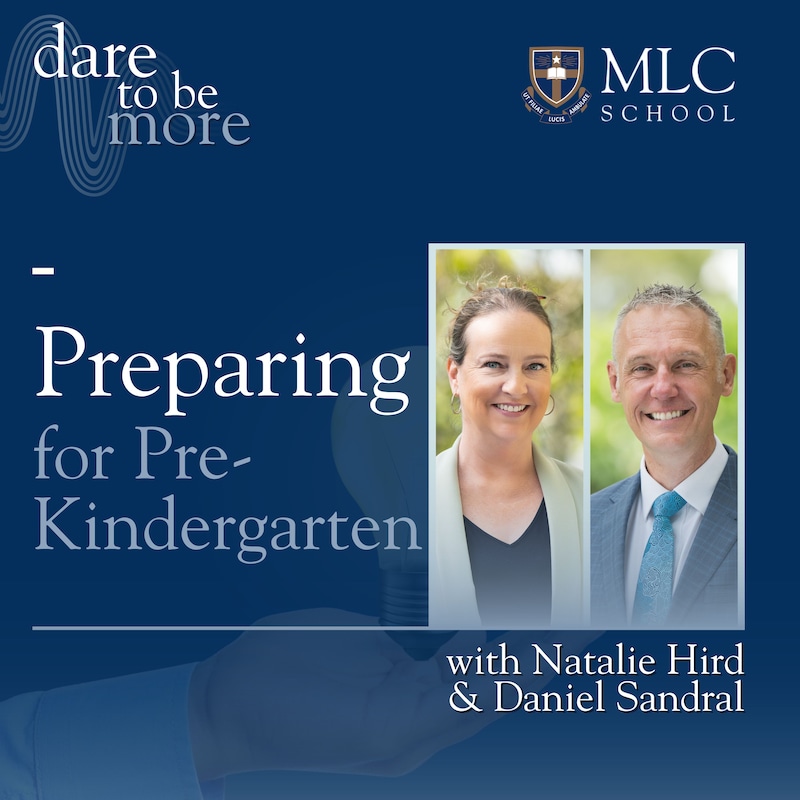
In this episode of 'dare to be more', host Anthony Perl speaks with Daniel Sandral, Head of Junior School, and Natalie Hird, Deputy Head of Junior School for Operations, about preparing young girls for the important milestone of starting Pre-Kindergarten at MLC School.
Daniel emphasises that the early years of learning are absolutely foundational for schooling right through to Year 12 and beyond, explaining how his role ensures every girl in Pre-K has the very best learning environment possible. He describes how MLC School reaches out to families about two years before girls commence, creating opportunities to get to know parents and their daughters whilst discussing what to expect and how to prepare.
Natalie explains the significant advantages of having Pre-Kindergarten on the School campus, particularly for preparing girls for Kindergarten. She describes how girls become familiar with the spaces, routines, teachers, and even the Kindergarten classrooms themselves, making the transition much smoother for both students and parents.
The conversation addresses common parent concerns about preparation, with Daniel reassuring families that it's not a competition and every child is different. He shares practical advice including ensuring girls can toilet themselves, carry their own bags, and open lunchboxes, whilst emphasising that the best preparation is simply doing what parents already do well - taking children to playgrounds, letting them play in sandpits and baths, and most importantly, reading books together.
Natalie discusses the importance of early learning centre experience, noting that girls who have attended childcare or preschool generally find the transition easier, particularly around separation from parents. She emphasises the value of oral language development through everyday activities like cooking, gardening, and shopping, alongside fine motor skill development and social-emotional growth through play dates.
Daniel shares insights about siblings' influence, explaining that whilst girls with older siblings may be more familiar with the School, every child's experience is unique and MLC School's strong orientation program ensures all girls have opportunities to visit and spend time at the School before commencing.
The episode addresses parent preparation, with Natalie emphasising the importance of consistent routines, particularly around drop-off and pick-up, and resisting the urge to return for 'one more goodbye'. She acknowledges that the first day can be more challenging for parents than children.
Daniel discusses supporting families where English is not the first language, explaining how all children come with rich language foundations and how MLC School's unique language program supports girls in becoming proficient English speakers whilst encouraging families to maintain their cultural languages at home.
The conversation concludes with reflections on 'dare to be more' - Natalie describing the joy of watching girls who started in Pre-K now thriving in upper primary, having truly lived the School's philosophy, whilst Daniel shares a touching story about a Pre-K student who challenged him about the lack of a swing in the new playground, demonstrating how even the youngest students embody the spirit of respectfully challenging themselves and others to be more.
About MLC School: MLC School is a leading independent girls' school in Sydney, committed to empowering young women through academic excellence, character development, and innovative education. Our mission is to inspire girls to dare to be more.
Connect With Us:
- Website: mlcsyd.nsw.edu.au
- Instagram: @mlcsydney
- Facebook: @MLCSchoolSydney
- LinkedIn: MLC School
Co-host: Anthony Perl
Produced by: 'Podcasts Done for You'
Transcripts
Well everyone, and welcome to another episode of Dare to Be More,
2
:and today we are going to delve into the
subject of preparing for pre-kindergarten.
3
:And I'm delighted to have
Natalie and Daniel with me today.
4
:Welcome to you both.
5
:Natalie Hirdnat: Thanks.
6
:Daniel Sandral: Pleasure to be here.
7
:Anthony Perl: Well, look, what we need
to do at the start of the episode is
8
:allow you both to introduce yourselves.
9
:So, Daniel, Why don't you kick things off.
10
:Daniel Sandral: Oh, thank you very much.
11
:My name is Daniel Sandal, and I'm the head
of the junior school here at MLC School.
12
:Anthony Perl: And Natalie, what about you?
13
:Natalie Hirdnat: Yep.
14
:Natalie Herd and I have been a deputy in
the junior school at MLC School Force.
15
:Around six or so years, and currently the
deputy op operations in the junior school.
16
:Anthony Perl: Fantastic.
17
:Well.
18
:Very important role because it's
kind of the formation, isn't it?
19
:It's where it all begins in
the pre-kindergarten area.
20
:So I, I guess, just to kick things
off, Daniel, why don't you just
21
:tell me a little bit more about what
your role is in that side of things?
22
:, Daniel Sandral: Look, thank you.
23
:And I think you said it really
well where it all kicks off.
24
:I think before I even
say where my role is.
25
:I think it's just pivotal to know that.
26
:The early years of learning, and
particularly those very early
27
:developmental stages, are absolutely
foundational for, the, for schooling
28
:right up to year 12 and beyond.
29
:So my role as head is really to
ensure that every girl in our
30
:pre-kindergarten, as we call it
here at MLC School, pre-K , has the
31
:very, very best learning environment
possible and so obvious I work with.
32
:The staff, the parents, and the girls, to
ensure that very special place of early
33
:learning is the most vibrant, exciting,
challenging, and rewarding as possible.
34
:Anthony Perl: I would imagine that that
is, , a big thing, first of all to have
35
:the staff on site, isn't it, Natalie?
36
:I mean, for them to understand fully
what their role is because it's a
37
:really, difficult time for many parents.
38
:'cause they're letting go of young kids.
39
:Natalie Hirdnat: Yes, absolutely.
40
:Having a pre-kindergarten on
site has fantastic advantages
41
:for everybody involved.
42
:, Most importantly, of course for the girls.
43
:So, while pre-K is a really important
year in and of itself, there's a lot of
44
:development that happens in that year.
45
:Part of that year, of course, is preparing
them for kindergarten and making that
46
:transition a little bit smoother too.
47
:So having it on site makes
it much easier for the girls.
48
:They, are already familiar with , the
school itself, with the spaces, , even
49
:the kindergarten teachers, , the areas
where they're gonna play and learn,,
50
:ahead of time and some of the routines and
structures that, that will be expected.
51
:And for parents, it's obviously, makes
that transition much smoother too.
52
:So, yeah, very useful.
53
:Anthony Perl: And I, I gather
it, it all begins before, you
54
:know, that's the thing, isn't it?
55
:It's , particularly kids that young.
56
:to get them ready to go to the
pre-kindergarten in of itself
57
:is something to be aware of.
58
:So when does that process begin?
59
:And what does that look like?
60
:Daniel Sandral: look, . Parents,
, obviously reach out to us and inquire
61
:about our pre-K learning very early.
62
:For some of them, they
might even be newborns.
63
:, And.
64
:Parents, obviously are looking for
what is the right fit for their
65
:girl, even at that very early stage.
66
:And so part the process is obviously
making, , an enrollment form and
67
:putting that towards the school.
68
:But in terms of actual contact, we
reach out to those families about two
69
:years before they're due to commence.
70
:And that's where we get to know, , the
parents and importantly their little girl.
71
:And we sit down with them and
we have those conversations
72
:about, . What to expect in pre-K
and what to prepare, for pre-K.
73
:So it starts as early as two years ahead.
74
:Anthony Perl: I, I mean it.
75
:So they're quite young
76
:Daniel Sandral: Hmm.
77
:Anthony Perl: happening, and so I
imagine it's quite hard for them
78
:parents to even grasp that properly
and, they might have enrolled, but
79
:it's another thing to be going.
80
:Imagining this child is probably
still, , pretty much a baby.
81
:, And then thinking, oh my goodness,
two years away, and they're doing,
82
:pre-K , is that, do you know, do
you find those obstacles when you
83
:reach out , of trying to take people
from that, , into that process?
84
:Daniel Sandral: Look, we do, , in a
sense that they've got lots of questions,
85
:but , it's really valuable to have
that, to meet 'em at that time because.
86
:They've got some decisions to make and for
some families they have enrolled their,
87
:, little girl into an early learning center.
88
:And for others they haven't at that stage.
89
:And there are questions around, , what
type of program would be best when
90
:they come to MLC school because
we offer a five day program.
91
:We , offer a three day program, and.
92
:Like what you insinuated.
93
:They're also, , wanting to know from
us, , what do I do to prepare and how can
94
:I help my daughter get ready for pre-K?
95
:So that initial meeting in advance,
, it's very valuable and fruitful.
96
:Anthony Perl: Is there a sense of feeling
that they need to achieve certain goals
97
:before they get into the pre-kindergarten
or , is, just getting there is enough
98
:and everything happens from there.
99
:Daniel Sandral: Look,
every family's different.
100
:Every child's different.
101
:And, but what I would say is
that it's not a competition.
102
:It's about just.
103
:Being there for your daughter and
supporting her as she transitions
104
:through different milestones.
105
:, And people do often ask us, look, what can
I do to prepare my daughter, , for pre-K?
106
:And look, there are certain,
, physiological things that we do
107
:require , of the girls when they come
to join us, for example, are they able
108
:to toilet themselves, for example?
109
:We encourage them to be
able to carry their own bag.
110
:I mean, where three, they may not be
able to do that, but certainly when
111
:they're coming towards us, we're
hoping they're doing those sorts of.
112
:Little tasks that they can do.
113
:, Even opening up their own lunchbox
can be a little bit challenge.
114
:So there's conversations that we may not
have at interview but have later on when
115
:we have a parent information center.
116
:They're the sorts of
things we're talking about.
117
:What sort of lunchbox,
those sorts of things.
118
:But the advice I give to parents
when they ask about how do I prepare?
119
:I say, do all the things that you're
doing well as a parent already.
120
:. Taking them out to the
playground and let them play.
121
:Let them climb.
122
:Let them play in the sandpit, let them
play in the bath, , with cups, et cetera.
123
:And most importantly,
, read books to them.
124
:Join your local library.
125
:There are beautiful picture
books that they could borrow.
126
:Read to them and talk to 'em about
the stories that they've read.
127
:Anthony Perl: And Natalie, I imagine that.
128
:Education, , is something that parents
may feel a little bit like, oh, what,
129
:you know, how much does my kid need to
be, at what level do they need to be
130
:at before they even start this process?
131
:, Is that a question that
you get fairly regularly?
132
:And, and how do you respond?
133
:Natalie Hirdnat: Yeah, I think,
particularly, I guess maybe for an eldest
134
:child, for first time parents, they can be
a bit, anxious about how much they should
135
:or shouldn't be preparing their girls and.
136
:know, as Daniel said before, it's
about meeting them where they're at.
137
:, Every child is different and, we're pretty
adept , at, , working that out pretty
138
:early on and being able to cater for
the girls wherever they come to us at.
139
:You know, Daniel mentioned reading.
140
:I think that love of literature
, and reading is really important.
141
:And, to be doing lots of that
is fantastic Preparation.
142
:Lots and lots of oral language
development in terms of
143
:talking to, to, you know, your.
144
:Kids about whatever you are doing and if
that's cooking a meal or if that's doing
145
:some gardening, or if that's shopping, or
if that's making a list or so many ways
146
:you can just do all of that incidental
kind of learning to be helping them out.
147
:But, beyond the early literacy
and numeracy, find motor skill
148
:development is really important.
149
:And social and emotional
development's important.
150
:Lots of play date.
151
:So where they get to, take turns
and, , they might have to wait.
152
:They might win, they might lose.
153
:They might be, you know, on the team they
want and their game might not get picked.
154
:And all of those, , things that they
develop, learning behaviors, a really
155
:helpful way to support from home.
156
:, Anthony Perl: And what about
that difference, you know,
157
:between whether someone's.
158
:Gone to an early learning center
before versus someone who's not had
159
:that opportunity, , and therefore
perhaps not been left without mom or
160
:dad, , for any extended period of time.
161
:, How important is it to, , advise
them on what to do to get
162
:prepared from that point of view?
163
:, Natalie Hirdnat: Look, from our
perspective, it's always much easier
164
:for those girls who have attended,
, another educational setting, some
165
:kind of childcare or preschool.,
166
:There, there's no doubt about that,
that an even, a short burst before
167
:joining a pre-kindergarten program
is so beneficial for the girls.
168
:, They have had some experiences.
169
:You say leaving mom and dad for.
170
:know, periods of time.
171
:, Perhaps they've been through that
separation anxiety and that can really
172
:help if they're sort of through that phase
when they get to us, , for the most part.
173
:, Anthony Perl: I was gonna ask as
well, Daniel, , I imagine there's a
174
:big difference between kids who have.
175
:siblings that have already been through
the process and those that don't, and the.
176
:The obvious thing is to say, , they're
more informed as they come through.
177
:But I imagine there's also a little
bit of, , you know, parents tend
178
:to get a little bit more liberal
as they have more children.
179
:I certainly know the case that, , the
first child that you have, the minute
180
:they're sick, you're racing off to
the hospital and by the time , you're
181
:at the second, or if you have more
children, , yeah, it'll be fine.
182
:So how does that play out
in terms of, kids being
183
:prepared , for , pre-kindergarten.
184
:Daniel Sandral: Oh, it's a great question.
185
:And, w when we do bring on a new cohort
of parents and children, we often get
186
:some of the more experienced parents,
for a better word, to talk to the new
187
:parents, , about their experiences
of their child entering pre-K.
188
:And look certainly for those that
may have, an older sibling that's
189
:gone to school, and that's really
not all, not not all of our students.
190
:, A lot of our girls, , it's, they may
be an only child, or they may be the
191
:elders, but for those that have got
older siblings, they've often visited the
192
:school, , and they've seen the school.
193
:So , they might be a little bit
more familiar with the school.
194
:So in terms of adjusting , and being here.
195
:For many of them, yes,, it is easier.
196
:Having said that, we have a really
strong orientation program, so for
197
:all our girls, we make sure that they
have those opportunities that, , when
198
:they commence that they're here at
the school and they're spent some
199
:time with their parents at the school.
200
:And then there's, that will
be followed by another session
201
:when here without their parents.
202
:, But as we mentioned before,
every child's different.
203
:And, for some children who do have
older siblings, but still come.
204
:Two pre-K, maybe that separation
is a little bit of a challenging
205
:experience for them at first.
206
:, That can still happen and that's okay.
207
:That's normal.
208
:, I certainly remember missing my mum
when I first started, , kindergarten.
209
:I've still got vivid memories of that
and I have siblings, but, , but having
210
:said that, we cater for that really well.
211
:. We know the developmental stages and
what's to be expected of children
212
:and parents really know their
particular daughter , really well.
213
:And so we work together and , we know,
, if there's a bit of a challenge, , what's
214
:normal and what's expected and that
there's something else we need to work on,
215
:, we'll work with the families to do that.
216
:Anthony Perl: I guess one thing that
we haven't talked about here is.
217
:The parents, , because , that's a
large part of it, isn't it, Natalie?
218
:I mean, the kids to some degree.
219
:You know, they're young.
220
:They don't know too much about what's
going to be in front of them, and they
221
:certainly don't have an understanding
of how long they're going to be in
222
:the school system, but parents do.
223
:So how do you prepare the parents?
224
:Natalie Hirdnat: Yeah.
225
:, I think that particularly, if it is your
first one to go off, it can be a, , a
226
:really anxious kind of period of time,
and we get that it's huge to hand over
227
:your child to somebody else for the,
for a period of time, a particularly if
228
:that hasn't happened a lot before, so,
it's really important for the parents
229
:to remember that kids can feed off that.
230
:So, to keep things, calm and,
and low key in some respects.
231
:, You want them to be excited to
come, but not worried to come.
232
:, And I think really important that you
have consistent routines, particularly I
233
:think around the drop off and the pickup
, you know, . That your daughter is really
234
:familiar with what that goodbye routine
is going to look like, and that you're
235
:really consistent about it, and really
resist that urge, I guess, to run back
236
:in and do one more final goodbye because
we all know they settle in a few minutes.
237
:So, , the, the faster you get that routine
in place and your daughter knows what
238
:to expect, the better it'll be for her.
239
:Anthony Perl: Yeah, I imagine you see
lots of parents, you know, fighting,
240
:wanting to come back in, , in the
gates , and have one more opportunity.
241
:I mean, that first day , is in many
respects a bigger day for the parent than
242
:it is for the child, isn't it, Daniel?
243
:Natalie Hirdnat: it is.
244
:Yeah.
245
:Yeah, you go.
246
:It's a tough moment to do that.
247
:Walk away.
248
:We understand that.
249
:Anthony Perl: One other area that I
wanted to touch on particularly is,
250
:parents that may be new to Australia,
or , English may be, a second language
251
:or even a third language for them.
252
:culturally getting used to that.
253
:How do you . Help them prepare in
that situation, both the parents and
254
:the child, because I, I gather you
have some children that may come into
255
:pre-kindergarten and may not have English.
256
:Daniel Sandral: Yeah, we do have
children that come to school, , with
257
:no English necessarily, but.
258
:All our children come to school
with rich language, whether that
259
:be in English or another language.
260
:They all come with literacy.
261
:They all come with
foundations, , of language.
262
:And in doing that, particularly
those who don't matter, have English
263
:as their first language sets up
really great success for them.
264
:To develop , this second language
or their third language in English.
265
:And that's something that we cater
for , really well here at MLC School
266
:, for those that are native English
speakers , or have a strong proficiency
267
:in English, we certainly have programs
where we continue to help 'em to
268
:strive, , in their old developments.
269
:And for those that don't, we have actually
a really unique, really rich language
270
:program here that , we have developed and
continue to develop that really sets them
271
:up for success, , to get onto that journey
of becoming a proficient English speaker.
272
:Because one of the things that we do
know as educators is that all language.
273
:It's a really strong foundation
underpinning for reading writing
274
:and other aspects of literacy.
275
:So it's why we place a really strong
emphasis on all language literacy
276
:development in our pre-K program.
277
:And I suppose that the real message
I want to get across to parents
278
:is not to be concerned about that.
279
:It's our job to help our girls flourish in
English, and we will do that, , and their
280
:job is to just continue to encourage their
literacy development at home, whether
281
:that be in English or another language.
282
:And what I would recommend is that for
those families who are bilingual, and
283
:we have many bilingual families in our
community, that when they speak to them in
284
:English, stay speaking to 'em in English.
285
:And when you speak to your child in
another language, perhaps , your first
286
:language, your, your cultural background
language, be true to that language.
287
:Don't mix them up.
288
:, It helps with their English
proficiency as they develop.
289
:Anthony Perl: Fantastic.
290
:Well, just to wrap things up, I
wanna frame this in the context
291
:of perhaps even telling a story,
, your favorite story that, around
292
:some children as they've been.
293
:Or even parents as they're getting
ready for, , for pre-K and talking about
294
:the whole concept of dare to be more.
295
:, Particularly , you know, you're seeing
those bright little young faces who
296
:are maybe a little bit scared, , and
how do you see that Dare to be more
297
:starting to play out with them, over a
period of time as you watch them grow?
298
:Uh, you know, Natalie, can
I ask you first on that?
299
:Natalie Hirdnat: Yeah, sure.
300
:well I mentioned right at the
start that I had been a deputy at
301
:MLC School for six or so years.
302
:So I'm at that point where, , I'm
sort of seeing that generation move
303
:through a junior school now and, . It's
to see where some of those girls are
304
:now sitting in year five and six have
come when I think about some of those
305
:hairy days, , in pre-kindergarten,
, in those first few days when they
306
:were settling into a new school.
307
:, And then to watch the over
the years, , just develop.
308
:, Their talents and their
interests, , to see them really
309
:becoming young women almost when
they come out of junior school.
310
:Um, I think dead to be more throughout
that journey because that is not
311
:just a tagline at MLC School.
312
:, We really live and breathe it
and we challenge ourselves and we
313
:challenge the girls to be more.
314
:And they certainly do.
315
:And , I'm at a lovely point now where
I, I see that first generation come
316
:through, , really having lived that.
317
:Anthony Perl: And what
about for you, Daniel?
318
:Daniel Sandral: Oh look, I concur
with Nat in, in that we live and brief
319
:dare to be more in so many ways, but
even pre-K in our pre-kindergarten.
320
:That becomes part of , their
DNA , here as students.
321
:And, , they also sometimes can even
challenge us as educators in the
322
:most respectful way, but help us to
become the best educators we can be.
323
:But a funny little story is, I
remember a few years ago, , we
324
:built a really beautiful,
engaging, , outdoor learning space
325
:and playground for our pre-K students.
326
:And I Spent a lot of time helping
with the design , and the thought,
327
:and I was immensely proud of it.
328
:And I still remember the day that
we opened it and our new pre-K
329
:students, , ran out and to play
and I was immensely proud of it.
330
:And I remember this one little girl came
up to me , and she still, a student in
331
:our junior school now, , upper primary,
and she said, but where's the swing?
332
:There was no, there is no swing.
333
:We don't have a swing.
334
:, But to me , it that little bit of
humor, but almost going that little
335
:bit extra, that little challenge
going, look, this is great.
336
:I've got this wonderful adventure
playground, but I wanna challenge myself a
337
:little bit more and have a swing as well.
338
:, And that just encapsulates
the look, the most gorgeous.
339
:Beautiful students that we
have here at this school.
340
:, They really, truly are delightful
, and they're respectful and they're
341
:intelligent and so capable, but they also
challenge , and they do it respectfully.
342
:And I love watching them grow up and
soon to leave our schools one day and to
343
:go out there and challenge the world in
which we live and make it a better place.
344
:And yeah, that's what even our little
pre-K girls are doing in their own way.
345
:Anthony Perl: Fantastic.
346
:Thank you so much, both of
you for being a part of this.
347
:I think anyone that's listening in as
a parent is going to feel just that
348
:little bit more comfortable about
what's ahead of them and, , that they're
349
:not alone in a journey that many.
350
:Have traveled and there'll be lots
of fun to have along the way, even
351
:if some of it's a little bit scary.
352
:Daniel Sandral: Absolutely no,
it's certainly a partnership.
353
:Anthony Perl: Thank you so
much for being a part of it.
354
:Natalie Hirdnat: Thank you.
355
:Daniel Sandral: Thank you.
