Shownotes
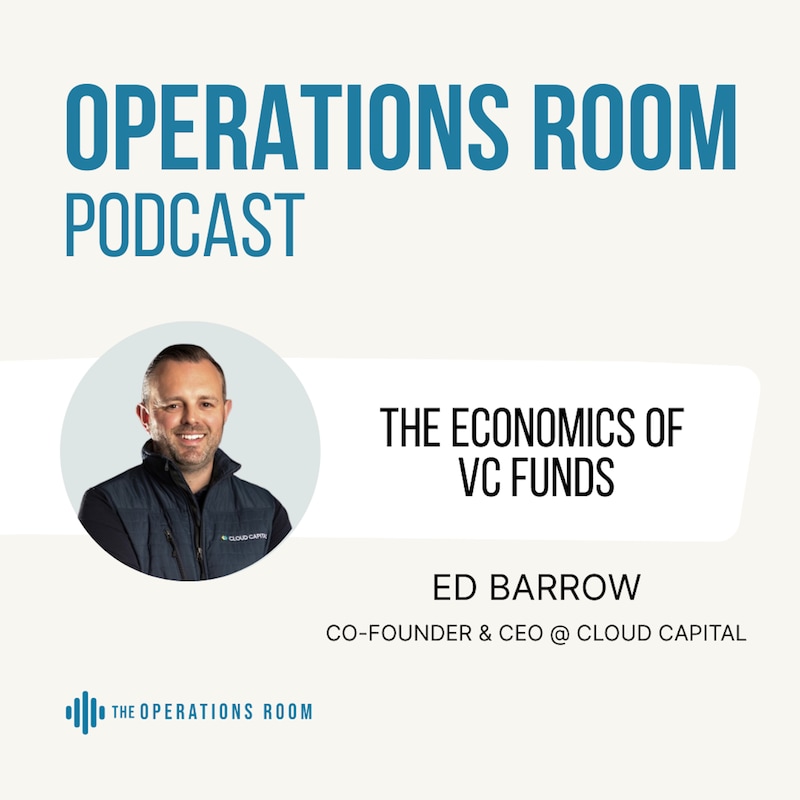
In this episode we discuss: The economics of VC funds. We are joined by Edward Barrow, Co-Founder & CEO @ Cloud Capital.
Love The Operations Room? Please support us by rating and reviewing it here.
We chat about the following with Edward Barrow:
- Why do so many fast-growing companies only realise cloud spend is a problem once it’s already out of control?
- What actually breaks when finance and engineering don’t share a common language around cloud costs?
- Is “visibility” into cloud spend enough, or does it create a false sense of control?
- How should operators think about financial risk when infrastructure spend is variable by design?
- What does good cloud cost governance look like without slowing teams down?
References
- https://www.linkedin.com/in/ebarrow/
- https://www.cloudcapital.co/
Biography
Ed has spent his career helping high-growth tech companies align strategy with execution — first in marketing tech, and now in cloud finance.
After co-founding Idio, an AI-driven platform used by global B2B brands, he led the business through rapid growth, M&A, and a successful exit to Episerver (now Optimizely). Post-acquisition, he helped shape global product and M&A strategy across multiple acquisitions and 400% growth.
Today, Ed is the co-founder and CEO of Cloud Capital, where he helps finance and engineering leaders forecast and optimize cloud spend — without taking on financial risk. The platform gives finance teams clarity and control while enabling engineering to move fast without waste. Ed and his team are building the cloud finance layer for the next generation of tech companies — turning cloud spend into a strategic advantage, not a liability.
To learn more about Beth and Brandon or to find out about sponsorship opportunities click here.
Summary
00:00–04:10 – Setting the scene: operator fatigue, reality after the “honeymoon phase,” and why this conversation matters now
06:05 – Ed Barrow’s background: from AI startup founder to cloud finance problem-solver
09:30 – The real problem with cloud spend: why “usage-based pricing” breaks traditional finance models
13:45 – Finance vs engineering: how misaligned incentives create hidden waste
18:20 – Why visibility alone doesn’t change behaviour (and what actually does)
22:50 – The risk operators don’t see: cloud spend as an uncapped financial liability
27:40 – Forecasting cloud costs without slowing teams down
32:10 – What good cloud governance looks like in high-growth companies
36:30 – Turning cloud spend into a strategic advantage, not just a cost-control exercise
This podcast uses the following third-party services for analysis:
Podcorn - https://podcorn.com/privacy
Transcripts
Hello everyone and welcome to
Speaker:another episode of the operations
Speaker:room a podcast for COOs.
Speaker:I am Brandon Mencinga joined by
Speaker:Bethany Ayers.
Speaker:How are you doing today?
Speaker:I am shattered.
Speaker:Shattered. Shattered!
Speaker:The honeymoon of being a CEO
Speaker:is over.
Speaker:I was ready for the weekend
Speaker:on Monday, and I don't know why
Speaker:I found the energy for the next four
Speaker:days.
Speaker:Okay, so the bubble has
Speaker:burst. How many weeks are you in
Speaker:right now?
Speaker:I'm saying six, but I actually have
Speaker:no idea.
Speaker:Yeah, it's all a blur.
Speaker:I went from knowing the exact number
Speaker:of days that I've been in to now,
Speaker:just like most of my life.
Speaker:I don't remember a world before
Speaker:this.
Speaker:Okay, so the honeymoon is over
Speaker:so that the reality of your
Speaker:situation and the reality of
Speaker:everyone's situation is now ever
Speaker:present as you head into next
Speaker:week.
Speaker:Yes. But it's also, it's
Speaker:amazing going from not
Speaker:really understanding cybersecurity,
Speaker:not really understand, like
Speaker:understanding high level
Speaker:what's needed and
Speaker:the words being used.
Speaker:And luckily the problem that we're
Speaker:solving is a problem that I can just
Speaker:understand having been an operator,
Speaker:which is basically in a nutshell,
Speaker:everything in our businesses is
Speaker:over permissioned.
Speaker:And then you throw AI on
Speaker:top and suddenly everybody can
Speaker:access the things
Speaker:that they have permissions to access
Speaker:even though they shouldn't and they
Speaker:never knew it because they can't
Speaker:find it on our horrible shared
Speaker:drives or buried in
Speaker:confluence or JIRA or whatever and
Speaker:with AI it all comes to the surface.
Speaker:So it's a very easy
Speaker:problem to understand as an operator
Speaker:but like what
Speaker:are the gaps, what are most
Speaker:important things to build, what's
Speaker:the order of it all, it's
Speaker:all just come clear.
Speaker:All the dominoes just
Speaker:clicked into place like I
Speaker:see where we have to go and what we
Speaker:have to do.
Speaker:That's amazing.
Speaker:I think in B2B verticalized markets
Speaker:like this, quite difficult sometimes
Speaker:to wrap your mind around things in
Speaker:short order, especially to come out
Speaker:the backside after six weeks and
Speaker:feel like you have a clear game
Speaker:plan of like what actually makes
Speaker:sense.
Speaker:I feel like I understand the gaps.
Speaker:I feel I understand priorities and
Speaker:what absolutely has to get done,
Speaker:but we also need to move quickly and
Speaker:speak to customers, speak to
Speaker:prospects, test the market,
Speaker:show prototypes and make sure
Speaker:that we're heading in the right
Speaker:direction and we need to do it
Speaker:really quickly.
Speaker:So we're moving into
Speaker:basically weekly company
Speaker:sprints, where on the Monday
Speaker:we say, what
Speaker:What campaign are we running?
Speaker:What deals are we progressing?
Speaker:What features or technical support
Speaker:do we need?
Speaker:What are we learning?
Speaker:And then we go off and do that.
Speaker:And then on the Friday, top of
Speaker:funnel, pipe generated,
Speaker:deals advanced, deals won, deals
Speaker:lost. And what have we learned?
Speaker:And therefore, what are we going to
Speaker:do next week?
Speaker:That's amazing.
Speaker:So the Monday morning, the Friday
Speaker:afternoon, sprint style,
Speaker:right across the entire company, the
Speaker:company is again, 25 people,
Speaker:something like that.
Speaker:So that sounds like a real drumbeat
Speaker:cadence of focus.
Speaker:It is, and I was like, I still need
Speaker:to speak to our engineering
Speaker:leaders after this to make sure that
Speaker:my idea works,
Speaker:because I was originally thinking
Speaker:about it specifically with
Speaker:GoToMarket, but then I was, like,
Speaker:we're only 25 people and we're so
Speaker:interconnected between the product
Speaker:and the market that I think
Speaker:engineering need
Speaker:to be involved, hear the
Speaker:conversations, understand the
Speaker:learnings.
Speaker:And also, there's always
Speaker:this thing, you don't want to
Speaker:distract engineering with that don't
Speaker:matter, but sometimes they're like,
Speaker:oh. I can do that.
Speaker:That's like three lines of code, and
Speaker:we need them to be able to be, oh,
Speaker:yeah, I can do that, and that's
Speaker:going to make your life so much
Speaker:easier. And then there's just a lot
Speaker:of friction in the business that's
Speaker:been surfaced.
Speaker:Our demo tenant has messy data,
Speaker:and you have to do a lot to prepare
Speaker:before a demo.
Speaker:And it's like, we just need a demo
Speaker:that is amazing every single time.
Speaker:We can't have that sales
Speaker:has to worry about free.
Speaker:Prepping it and and everybody needs
Speaker:their own and so somebody changes
Speaker:it, it doesn't mess up somebody else
Speaker:and there's a good thing and a bad
Speaker:thing about the fact that we're
Speaker:coming into Q4 because
Speaker:we can do a huge amount of work to
Speaker:prepare for an awesome
Speaker:start to 2026.
Speaker:We're in the headwinds
Speaker:of everybody's natural energy
Speaker:level.
Speaker:We're coming from autumn into
Speaker:winter. People start
Speaker:to want to hibernate.
Speaker:Our bodies are more tired.
Speaker:We have loads of energy in the
Speaker:summer.
Speaker:So I wish we were doing this
Speaker:in Q2,
Speaker:physical, body-wise.
Speaker:We're going to have to work
Speaker:against our energy.
Speaker:So you're right, there's a
Speaker:seasonality effect is there when
Speaker:you're sitting there in the spring
Speaker:heading into the summer.
Speaker:There's a real zeal and energy and
Speaker:kind of more light and more
Speaker:like a capacity and energy, I
Speaker:suppose, to your point.
Speaker:And then come September, October, it
Speaker:feels, it feels like a grind.
Speaker:And so I'm also thinking about
Speaker:how do I find my energy and
Speaker:then energize the team with
Speaker:the nights closing in.
Speaker:Yeah, so how do you do that?
Speaker:It's interesting, because as a
Speaker:personality type, as you know, I'm
Speaker:not a center of gravity
Speaker:when it comes to charisma.
Speaker:I'm trying to phrase it exactly.
Speaker:I kind of think about this sometimes
Speaker:coming to the office, like feeling
Speaker:energized, expressing that in some
Speaker:form. You know what I mean?
Speaker:Like giving some people a sense that
Speaker:Brandon's present and energized and
Speaker:focused on the job at hand.
Speaker:I struggle with the same thing.
Speaker:For me, it's gonna take a tremendous
Speaker:amount of energy and I'm gonna have
Speaker:to find it from somewhere.
Speaker:And then have my energy
Speaker:buoy the rest of the team.
Speaker:Like it's Friday, I wanted
Speaker:the week to finish on Monday.
Speaker:I don't know where that energy is
Speaker:going to come from, but I
Speaker:have to it.
Speaker:Right now it feels fairly
Speaker:impossible, but I'm sure in
Speaker:another couple of days, like
Speaker:I do tend right now to just.
Speaker:Collapse over the weekend.
Speaker:Like I'm not seeing friends a lot.
Speaker:I'm just resting.
Speaker:And also I've been sick pretty
Speaker:much for four weeks.
Speaker:Well, that's right. You had a cold
Speaker:last week, didn't you?
Speaker:So you're better, better-ish.
Speaker:Yeah, there's like a little bit
Speaker:going on, but enough to go
Speaker:back to the gym and, and exercise,
Speaker:but I am just trying
Speaker:to conserve some energy that way.
Speaker:Doing some meditation, I'm back
Speaker:doing my writing class and,
Speaker:although it's hard to find the time
Speaker:for it, it's helpful to
Speaker:process my thoughts with the
Speaker:discipline of it.
Speaker:And in the writing class, it
Speaker:launched last week and it was
Speaker:interesting. We have four people in
Speaker:it who are working on product.
Speaker:Rather than doing any sort of
Speaker:exercises, because they've graduated
Speaker:and they still come back and they
Speaker:work on the
Speaker:books they're writing and then they
Speaker:read excerpts and get feedback.
Speaker:And so Jules, our teacher was
Speaker:asking them, what specific feedback
Speaker:do you want so that we're
Speaker:a helpful group for their
Speaker:writing? And I basically said to
Speaker:the group, I normally like
Speaker:constructive feedback, I normally
Speaker:liked to learn and better my
Speaker:craft, but I'm not
Speaker:writing for you, I'm writing for me.
Speaker:And I'm in the class to just have
Speaker:some discipline to write, I just
Speaker:want you to tell me to keep going.
Speaker:I don't need any level of criticism
Speaker:or constructive feedback or how
Speaker:to do things better.
Speaker:I'm not in that space.
Speaker:No, mental.
Speaker:Capacity to process critique at
Speaker:this stage.
Speaker:No, but it's also really freed my
Speaker:writing because I am literally
Speaker:writing for myself and I'll just
Speaker:read a piece.
Speaker:I'm writing with no audience in
Speaker:mind, which is quite freeing.
Speaker:It's amazing.
Speaker:I remember when I was doing the
Speaker:acting stuff, we would
Speaker:always freak out before a show.
Speaker:Highly stressful.
Speaker:The butterflies are right in your
Speaker:throat and you're like, all right,
Speaker:50, 60 people is very intimidating
Speaker:but not very experienced.
Speaker:Our acting teacher at the time,
Speaker:he would take us through all these
Speaker:body movement exercises,
Speaker:breathing exercises to put us in the
Speaker:right state of mind, the right frame
Speaker:of mind. I've always taken that
Speaker:since then more in the yoga realm,
Speaker:which is if I'm feeling out It's
Speaker:stressed out, not feeling great, and
Speaker:I don't have a lot of time to
Speaker:re-energize myself or figure out how
Speaker:to get back to a
Speaker:regulated state as you characterize
Speaker:it. The yoga sessions are always
Speaker:good for if you have a good yoga
Speaker:session physically and
Speaker:there's some level like breathing
Speaker:exercises involved i can
Speaker:do wonders within an hour or
Speaker:an hour and a half to.
Speaker:Reset you and clear your mind and
Speaker:feel better basically by yourself
Speaker:your situation so outside of the
Speaker:spreads what else are you doing.
Speaker:Yeah. So we're doing the sprints.
Speaker:We have our, the company's never had
Speaker:OKRs.
Speaker:So we are introducing OKR, but it's
Speaker:very light touch because you know
Speaker:how I feel about them anyhow.
Speaker:But we have three.
Speaker:I won't bore you with what they are
Speaker:because it doesn't matter.
Speaker:Although one of them is become an AI
Speaker:first company.
Speaker:Oh, I love the sprint.
Speaker:AI first as an OKR.
Speaker:That is amazing.
Speaker:What are you doing on this front?
Speaker:So we have three
Speaker:key results.
Speaker:One is every employee
Speaker:has, now I'm hesitating
Speaker:here because I pushed that every
Speaker:employee should have five AI
Speaker:employees.
Speaker:The leadership team, we had an
Speaker:offsite this week. This was part of
Speaker:the clarity, was spending a day
Speaker:together, really hashing stuff out.
Speaker:The team had a bit of a freak out
Speaker:about five.
Speaker:We agreed to two, but when we launch
Speaker:on Monday, I'm gonna go back up to
Speaker:five because we're now.
Speaker:Bye!
Speaker:We've agreed now we're gonna agree
Speaker:to disagree.
Speaker:We're up on the number.
Speaker:Well, the reason why we're upping
Speaker:the number is also
Speaker:after the offsite, when we
Speaker:agree the OKRs, we were
Speaker:going to do on our company
Speaker:offsite a very traditional,
Speaker:here's a 15-month plan, here
Speaker:are OKR's, work on
Speaker:our companies values,
Speaker:let's do an escape room or, you
Speaker:know, something escape room-esque.
Speaker:And then after the
Speaker:offset, I realized we just
Speaker:have to move faster and people need
Speaker:to know things sooner.
Speaker:So I'm doing the
Speaker:OKRs on Monday,
Speaker:which means that we still have this
Speaker:off-site next week
Speaker:and I'm bringing in Charlie.
Speaker:The ExaGuess3.
Speaker:To train the team and
Speaker:another guy who's going to be a
Speaker:guest on the podcast coming up
Speaker:called Ryan Fuller.
Speaker:He's an engineer turned
Speaker:CTO turned CEO who
Speaker:had a very successful exit to
Speaker:Microsoft and then stayed in
Speaker:Microsoft for quite a few years.
Speaker:And so I'm going to have him train
Speaker:the engineers because I talked to
Speaker:him and he spent at least 15 minutes
Speaker:explaining to me why he doesn't know
Speaker:anything and he can't teach our
Speaker:engineers anything.
Speaker:And I was like, yeah, you're the
Speaker:person the engineers will want to
Speaker:listen to.
Speaker:Because you're not telling them
Speaker:anything. He's just like, I can just
Speaker:talk about what I've done.
Speaker:And I was like, that's all I'm
Speaker:looking for, just to open up minds
Speaker:and really understand new techniques
Speaker:and technologies out there.
Speaker:And so I figure if we're gonna do
Speaker:two days off site, which
Speaker:is AI training and team building,
Speaker:everybody can build their first
Speaker:five AI employees
Speaker:on those two days and
Speaker:or build three and understand what
Speaker:the next two are gonna come.
Speaker:So I don't think it's actually, I
Speaker:don't think two is a stretch and OKR
Speaker:should be a stretch.
Speaker:So we're gonna go for five.
Speaker:So that's our key result for
Speaker:becoming an AI first company.
Speaker:There's also two other, basically
Speaker:building out, I don't know what to
Speaker:call them, AI automation, smart
Speaker:automations.
Speaker:So there's something on the
Speaker:tech side where you can use
Speaker:linear with something,
Speaker:I can't remember if it's GitHub or
Speaker:Claude code or something, but
Speaker:basically linear and
Speaker:a coding thing can resolve
Speaker:and fix your bugs for you.
Speaker:And so we're going to experiment
Speaker:with that to just get rid of a lot
Speaker:of the bug fixing automated
Speaker:and see if it works.
Speaker:And then on the go-to-market side,
Speaker:do the 24-7
Speaker:SDR who's constantly scanning
Speaker:the market for people in market,
Speaker:scoring them, writing the emails,
Speaker:sending them out, sticking them in a
Speaker:cadence.
Speaker:We've actually already built that.
Speaker:So again, we might need to up the
Speaker:key results.
Speaker:We've bought Gitcargo.
Speaker:Our revops guy absolutely loves
Speaker:it and it's just building things
Speaker:overnight.
Speaker:Like it's really easy to use.
Speaker:I obviously have not used it, but
Speaker:like the feedback is it's amazing.
Speaker:So if anybody wants to have a little
Speaker:look there, yeah, I think it's
Speaker:actually called cargo, but the
Speaker:website is get cargo dot
Speaker:app maybe.
Speaker:And so internally we're calling it
Speaker:get cargo, but when I go on the
Speaker:website, it just says cargo.
Speaker:So I don't know.
Speaker:It's one of those where they
Speaker:couldn't get the URL clearly and
Speaker:now. It's whether or not their name
Speaker:is get cargo or cargo.
Speaker:Anyhow, going back, so we have three
Speaker:OKRs, one is being an AI first
Speaker:company. Those are the key results.
Speaker:And then we don't
Speaker:have any set values
Speaker:in the company. It just never
Speaker:happened. And so part of what we
Speaker:were going to do is we
Speaker:talked to Cameron Harrold about it,
Speaker:the mission to Mars, who are the
Speaker:people who are most have the values,
Speaker:blah, blah blah.
Speaker:And I spoke to the leadership team
Speaker:And I said, should we do that or
Speaker:should I just choose some values
Speaker:that. I think will get us through
Speaker:this. And it was interesting.
Speaker:The team just said, yeah, everybody
Speaker:just wants direction.
Speaker:They just want to know what to do,
Speaker:where we're going, just choose the
Speaker:values. I was like, cool, I
Speaker:can do that.
Speaker:So then thinking it through,
Speaker:not sleeping a lot, woke up at
Speaker:four in the morning, I think
Speaker:Wednesday night or
Speaker:Wednesday morning, whatever.
Speaker:And I was, like, ah, I know our
Speaker:value.
Speaker:We have one value.
Speaker:We can do hard things.
Speaker:Simple, very clear.
Speaker:Where does that come from?
Speaker:When I shared it with my husband,
Speaker:he's like, oh, but that book, I hate
Speaker:that book. And I was like, you don't
Speaker:read Glennon Doyle, what are you
Speaker:talking about?
Speaker:And he was talking about the Andrew
Speaker:Horowitz, the hard thing about hard
Speaker:things.
Speaker:But that wasn't where I came from
Speaker:for me.
Speaker:So Glennon Doyle, who wrote the book
Speaker:Untamed, has a podcast
Speaker:called We Can Do Hard Things.
Speaker:And that comes from
Speaker:when she was a primary school
Speaker:teacher, and it was a slogan in
Speaker:her room.
Speaker:Yeah, for all the young kiddies, I
Speaker:love that.
Speaker:I just think it probably
Speaker:encapsulates my
Speaker:being.
Speaker:Like I'm not afraid to have hard
Speaker:conversations.
Speaker:I'm Not afraid of being
Speaker:uncomfortable.
Speaker:I'm, not afraid of big challenges.
Speaker:Yeah, it's such a great way to sum
Speaker:it up. We can do hard things in
Speaker:particular, given your stage of
Speaker:company and what you're up against
Speaker:that feels like the singular thing
Speaker:to lead on and to reflect on
Speaker:as you work through the next three,
Speaker:six months, because you have a lot
Speaker:of hard things to do for that
Speaker:company to make it work.
Speaker:We know what we need to build great
Speaker:ideas and we just need to ship as
Speaker:quickly as possible get it out there
Speaker:get it tested.
Speaker:On a lighter note, I went to
Speaker:the CEO Roundtable dinner last
Speaker:night at the Zettler.
Speaker:It was amazingly close to my
Speaker:office. Literally, it was across the
Speaker:street, about a two-minute walk.
Speaker:It was one of those places where I
Speaker:walked by it a thousand times going
Speaker:for lunch.
Speaker:Never took a second glance.
Speaker:Went in there.
Speaker:And this place is awesome.
Speaker:They get totally vintage, 1930s,
Speaker:1940s style.
Speaker:And all I can think to myself is
Speaker:like, why do we go to this shitty
Speaker:pub around the corner for drinks
Speaker:after work on Friday sometimes.
Speaker:Why do not come to this very stylish
Speaker:nineteen thirties ask vintage place
Speaker:to have a drink and seems like such
Speaker:a better place to go is it twice
Speaker:the price yeah probably that's
Speaker:the answer.
Speaker:So the round table is fun so we
Speaker:had to as usual introduce
Speaker:ourselves but she added a plot twist
Speaker:to the introduction which is we had
Speaker:two talk about a story
Speaker:from each of us around what
Speaker:creates a good life and
Speaker:the lesson behind it.
Speaker:Oh my god.
Speaker:So I didn't realize this until I got
Speaker:there looking at the cue card in
Speaker:front of me.
Speaker:So instantly you're like, Oh fuck.
Speaker:It's like, what am I going to say?
Speaker:What is my story?
Speaker:And then she cut it into two halves,
Speaker:14 people, the first seven went,
Speaker:right? So all the stories for
Speaker:the most part, I might be slightly
Speaker:over exaggerating, but they were all
Speaker:like deadly, serious, you know,
Speaker:very serious consequences of family
Speaker:situations, this, that, and the
Speaker:other, and there's nothing wrong
Speaker:with that and you know they can be
Speaker:quite meaningful stories, but having
Speaker:seven of them back to back, like I'm
Speaker:like, oh my God, I feel just
Speaker:like I feel terrible about these
Speaker:people. So I went into this
Speaker:story around having fun
Speaker:experiences in the workplace.
Speaker:I gave this quick story.
Speaker:We had our Christmas party, this is
Speaker:back in 2014, 15,
Speaker:roughly a hundred people having
Speaker:dinner, at that point later in the
Speaker:evening, everyone was asking like,
Speaker:where are we going for the kind of
Speaker:like after drinks?
Speaker:I live two blocks away.
Speaker:I have a two bedroom flat.
Speaker:So this handful of people at my
Speaker:table, I'm like, yeah, we should go
Speaker:to my place.
Speaker:That'd be amazing.
Speaker:So next thing I know, The
Speaker:board gets out across the entire
Speaker:rest of the company.
Speaker:We all go to my flat, it's three
Speaker:floors up.
Speaker:Everyone traipses up the stairs.
Speaker:I'm leading the pack, get to the
Speaker:top, and in my head, I'm like, oh
Speaker:shit, my roommate.
Speaker:I walk in, knock on her door,
Speaker:like, hey, is it cool if I have a
Speaker:couple friends over?
Speaker:She's like, okay, yeah, that's fine.
Speaker:Everyone's in, floods the flat.
Speaker:I'm not even joking, two bedroom
Speaker:flat, 80 people, we had maybe,
Speaker:I want to say roughly half inside
Speaker:the actual flat itself, there's a
Speaker:rooftop with a ladder on the
Speaker:backside of my flat.
Speaker:It's not particularly well bolted
Speaker:in. All these drunk people like
Speaker:climbing up to the rooftop, which
Speaker:probably wasn't the safest thing to
Speaker:do. And then I could see
Speaker:once there was like, I don't know,
Speaker:let's say 40 people up there, I
Speaker:could the roof flexing,
Speaker:right? Because it's one of those
Speaker:older built buildings that I was
Speaker:like holy shit.
Speaker:So they all come pouring through
Speaker:your roommate's ceiling.
Speaker:Half of SwiftKey can be wiped out
Speaker:in one fell swoop because of my
Speaker:actions in this case.
Speaker:Later on in the evening, the chief
Speaker:marketing officer, it's always the
Speaker:marketing person, my roommate had
Speaker:a beautiful African horn.
Speaker:He grabs the horn, blows on
Speaker:it, and because it's an African
Speaker:horn, it was pretty fucking loud.
Speaker:Wake her up my roommates her
Speaker:horn she freaks out
Speaker:comes out so that point the party's
Speaker:over ever leaves fast
Speaker:forward ten years we had a swifty
Speaker:reunion and john and the founders
Speaker:of the company when they're giving
Speaker:their talk around the highlights of
Speaker:the swifty experience they brought
Speaker:this up as one of their highlights
Speaker:saying what amazing party was
Speaker:i was like yes.
Speaker:Fun experience, people remember,
Speaker:it was awesome, despite obviously
Speaker:pissing off my roommate.
Speaker:And it's like once in a while, you
Speaker:need to cut loose and have a good
Speaker:time with people.
Speaker:And fun is important as part of
Speaker:company experiences.
Speaker:It is, and the problem is you
Speaker:can't schedule fun and you can
Speaker:mandate fun.
Speaker:It just happens, and it's a
Speaker:special moment.
Speaker:Completely unpredictable.
Speaker:Yeah, that was definitely was not
Speaker:planned. I'll tell you that much
Speaker:Yeah, it's always the best thing
Speaker:because when you plan it,
Speaker:expectations are high.
Speaker:You force it and it's just almost
Speaker:like de facto isn't fun.
Speaker:Exactly, it's the manufactured force
Speaker:fund that we all do in companies.
Speaker:Yeah, the escape rooms versus the
Speaker:random party
Speaker:at somebody's house around the
Speaker:corner.
Speaker:So we've got a great topic for today
Speaker:which is the economics of VC funds.
Speaker:We have an amazing guest for this
Speaker:which is Edward Barrow.
Speaker:He's the co-founder and CEO of Cloud
Speaker:Capital and the former Notion
Speaker:Capital, a resident expert on
Speaker:financial strategy, M&A, and
Speaker:market mapping.
Speaker:That is a mouthful.
Speaker:So before we get to Ed, just
Speaker:wanted to ask you three questions
Speaker:on the economics of VC Funds.
Speaker:So he said that there
Speaker:are three important questions that a
Speaker:CEO should ask of existing
Speaker:investors.
Speaker:The three questions are, when did
Speaker:they raise the fund,
Speaker:meaning that if the fund is
Speaker:in its latter stages when they
Speaker:have invested, it means that they
Speaker:need to get a return on capital
Speaker:fairly soon, which means they're
Speaker:putting pressure on their
Speaker:portfolio to return cash
Speaker:sooner or later effectively.
Speaker:So that question of when did the
Speaker:raise the funds, where do you sit in
Speaker:that timeframe, that's an important
Speaker:question to ask to understand that.
Speaker:The second one was, what is the size
Speaker:of the fund? So the funds a hundred
Speaker:million pound.
Speaker:Fund and you're in a position where
Speaker:ultimately you can deliver a 300
Speaker:million exit for the company, which
Speaker:is possible, that is a fabulous
Speaker:return for a hundred million pound
Speaker:fund. If it is a three billion
Speaker:dollar fund from SoftBank,
Speaker:your chump change and your
Speaker:importance to that company may be
Speaker:a lot less in that case.
Speaker:So the size of the fund is useful.
Speaker:And then the third one, which I
Speaker:never really thought about is where
Speaker:do we rank in the one's performance,
Speaker:your ranking, which they do.
Speaker:Really means how much time and
Speaker:attention are they gonna pay to you
Speaker:as a potential bet that's gonna pay
Speaker:off.
Speaker:And again, going back to that notion
Speaker:of if you're later in the fund
Speaker:cycle and they're looking for
Speaker:liquidity and maybe you're not a top
Speaker:performer, but there's a realistic
Speaker:path to exit, there might be
Speaker:additional pressure put on you as a
Speaker:mid-tier performer to basically
Speaker:get the company sold or get some
Speaker:kind of liquidity event.
Speaker:So with those three questions for
Speaker:the CEO, what do you make of that?
Speaker:And what's your experience, I guess,
Speaker:in?
Speaker:Those kinds of questions and
Speaker:I guess your investigations that
Speaker:you've done.
Speaker:I'm trying to think of like what an
Speaker:interesting answer is other than
Speaker:it's very wise and he explains it
Speaker:very well.
Speaker:Yeah, it's a pretty clear
Speaker:three-question set, I think, isn't
Speaker:it?
Speaker:So Ed talked about secondaries
Speaker:becoming super common these days.
Speaker:What should CEOs know about
Speaker:this secondary situation?
Speaker:Because I think there's a couple red
Speaker:flags in my head around this in
Speaker:terms of your reality
Speaker:as a CEO and why this matters.
Speaker:That you can actually exercise your
Speaker:options as they vest,
Speaker:rather than you can vest them, but
Speaker:have to exercise in some other
Speaker:moment.
Speaker:So basically if there is a
Speaker:secondary, you can cash in
Speaker:some of the shares that you've
Speaker:earned, turn the options that
Speaker:are vested, exercise them,
Speaker:sell them in secondaries and take
Speaker:some cash.
Speaker:Exactly, because I think this idea
Speaker:that if there's not a lot of
Speaker:M&A's ability for
Speaker:VCs to get a return
Speaker:of capital based on exits
Speaker:that are actually happening,
Speaker:and that's dried up to a certain
Speaker:extent, the way they're actually
Speaker:getting liquidity is kind of
Speaker:like the secondary kind of side of
Speaker:things.
Speaker:So if you are an existing investor
Speaker:and you need to get capital
Speaker:know participating in a secondary
Speaker:sale to the new lead investors
Speaker:coming in as part of that package
Speaker:and I think the key question for.
Speaker:A CEO is just making sure that
Speaker:you can actually participate in the
Speaker:secondary itself.
Speaker:And I've had, two companies ago, a
Speaker:very clear experience where, for
Speaker:whatever reason, I still cannot
Speaker:understand to this day, in the
Speaker:articles of association and the
Speaker:resolutions, in what I don't
Speaker:quite know, the employee
Speaker:base with vested shares was unable
Speaker:to participate in the secondary sale
Speaker:itself.
Speaker:And they were caught out with that
Speaker:and they were surprised by that.
Speaker:That's not a good outcome.
Speaker:So I think this idea that.
Speaker:Very clearly joining an
Speaker:organization, can you participate in
Speaker:secondary sales, should they occur,
Speaker:is a very important question to ask
Speaker:because if secondaries are becoming
Speaker:super common these days, it's
Speaker:such a clear, more
Speaker:short-term duration possible way
Speaker:to get cash in the
Speaker:bank that could be fairly
Speaker:substantial depending on the
Speaker:valuation jump of the company
Speaker:instead of having to wait.
Speaker:I feel like in one of my investments
Speaker:right now, I'm gonna be waiting for
Speaker:what feels like a decade to get
Speaker:a payback.
Speaker:And it's also because there's
Speaker:a few ways for secondaries.
Speaker:Sometimes people come in and buy
Speaker:secondaries for your pence on
Speaker:the pound or pennies on the
Speaker:dollar to get into companies
Speaker:and, you know,
Speaker:like their current valuation, but it
Speaker:would still be an uplift for early
Speaker:investors based on what they
Speaker:invested.
Speaker:And they just buy some of the
Speaker:secondaries and they're not actually
Speaker:buying a majority stake in the
Speaker:business. But then you also have
Speaker:these deals.
Speaker:Where they get pushed as
Speaker:new investments.
Speaker:Look, blah, blah came in and
Speaker:invested an insane amount of money,
Speaker:but they're not actually
Speaker:VC investments.
Speaker:They're in effect buying
Speaker:80, 90%
Speaker:of the business for that investment.
Speaker:They are now really
Speaker:the owners, but it's not a
Speaker:total transaction.
Speaker:If you cancel your secondaries in
Speaker:that, you might never really see an
Speaker:exit.
Speaker:You know what's fascinating?
Speaker:So literally as of this week, this
Speaker:was kind of a big deal to me.
Speaker:Signal AI, my former company,
Speaker:basically completed a fundraising
Speaker:round with battery ventures.
Speaker:It was characterized not as a Series
Speaker:E, which is a venture round,
Speaker:but characterized as an equity round
Speaker:effectively. So they're
Speaker:repositioning from venture over to
Speaker:private equity effectively.
Speaker:And the investment was 165
Speaker:million US going into the company
Speaker:with a majority stake, Basically,
Speaker:which means that they now
Speaker:effectively own the company,
Speaker:and they're now prepping it, I
Speaker:think, for kind of a P2P swap
Speaker:at some later stage.
Speaker:Being a P kind of play now,
Speaker:it's probably another five years
Speaker:before there's going to be like an
Speaker:actual proper P2
Speaker:P sale at this point.
Speaker:I think what ended up happening,
Speaker:and I don't know this, but with
Speaker:that majority investment, to your
Speaker:point, I thing what they've done is
Speaker:probably cleared out some of the
Speaker:existing investors by purchasing
Speaker:their allocations with some of that
Speaker:165 million U.S.
Speaker:And unfortunately, for people like
Speaker:me, they haven't gone into the
Speaker:individuals, as it were, that hold
Speaker:shares in the company, angel
Speaker:investors and so on.
Speaker:I suspect they've actually just gone
Speaker:after some of the blocks allocated
Speaker:to some of these earlier investors
Speaker:that had more substantial blocks,
Speaker:but not other folks like myself.
Speaker:So to your point, at least in this
Speaker:kind of, I don't know, secondary
Speaker:situation, sometimes unclear what
Speaker:they're going to do, but at least,
Speaker:in this case, I'm not getting my
Speaker:payoff at least for another five
Speaker:years. Very frustrating.
Speaker:I'm sure all our listeners are
Speaker:crying for me right now.
Speaker:Last question I wanted to ask you
Speaker:would be simply the acceleration
Speaker:of vesting and
Speaker:how important this is because if the
Speaker:lead investor in your company is
Speaker:looking for a return in let's say
Speaker:two years and you've got a four
Speaker:year option grant cycle, you're not
Speaker:aware of this, then
Speaker:that can be problematic because at
Speaker:the end of the day, you want your
Speaker:four year options grant presumably
Speaker:to vest fully and if they're
Speaker:wanting to have the business exit
Speaker:within two years as an example.
Speaker:Then you might get jacked just in
Speaker:terms of like not getting your four
Speaker:but potentially getting half of
Speaker:that.
Speaker:Well, so I actually have an answer
Speaker:for this one, or a new piece of
Speaker:information I learned recently,
Speaker:is the UK are an
Speaker:anomaly when it comes to
Speaker:acceleration as an offer.
Speaker:In the US, it is
Speaker:pretty much considered bad
Speaker:practice and is almost
Speaker:never offered, and you have
Speaker:to negotiate hard
Speaker:to get acceleration.
Speaker:In the UK,
Speaker:something like 85% of companies
Speaker:used to offer acceleration,
Speaker:but with... Maybe u.s.
Speaker:Influence is dropped down to
Speaker:sixty something and it's
Speaker:trending down and
Speaker:in europe it's only
Speaker:thirty percent of companies are
Speaker:option plans that offer
Speaker:acceleration.
Speaker:So actually now is the
Speaker:time to negotiate it because
Speaker:it's going to come off the plate in
Speaker:the u.k. And it already pretty much
Speaker:is off in the u.s.
Speaker:Unless you push really hard and as
Speaker:an exact like ceos
Speaker:ceos.
Speaker:CROs are in a good position to
Speaker:negotiate individually for
Speaker:acceleration because they
Speaker:need to be motivated for the sale,
Speaker:but across standard
Speaker:packages, the
Speaker:acceleration is not the default in
Speaker:America at all, and in the
Speaker:UK, it's rapidly declining.
Speaker:There's no skin off the back of
Speaker:the company or the acquire
Speaker:really outside of like a bit
Speaker:of dilution i guess but yeah.
Speaker:Well, that's what it is.
Speaker:So like, who's going to pay for this
Speaker:acceleration?
Speaker:And it's the investors.
Speaker:And so now that the market's
Speaker:switched and they're like, why
Speaker:should we pay?
Speaker:People are lucky to have jobs.
Speaker:And then the other part
Speaker:is it
Speaker:makes you in some ways
Speaker:more expensive to
Speaker:buy for the acquirer
Speaker:because they have to invest to tie
Speaker:you in, in a way that it's easier
Speaker:to kind of like flip.
Speaker:Rest of your money into
Speaker:their shares in effect.
Speaker:Yeah, that's fascinating.
Speaker:So just to give the audience a bit
Speaker:of a broader perspective.
Speaker:So the idea essentially is
Speaker:if the company exits before
Speaker:your options fully vest
Speaker:that they accelerate whereby the
Speaker:entire four-year grant.
Speaker:Is fully vested as part of the
Speaker:acquisition itself for the exit
Speaker:event and the whole purpose of that
Speaker:is to tell the employer of the
Speaker:senior executive like look.
Speaker:You know we need to create value in
Speaker:the business as fast as humanly
Speaker:possible getting to an exit point
Speaker:earlier the later is better for
Speaker:everyone so you're incentivized to
Speaker:make that happen is as quickly as we
Speaker:possibly can and you don't have to
Speaker:sit there brandon and wait for
Speaker:four years for you to
Speaker:fully best to get your your your
Speaker:payout because at the end of the day
Speaker:what i don't want to the point
Speaker:doesn't want Is to be sitting there.
Speaker:Thinking themselves i don't want
Speaker:this company to exit in a year i
Speaker:don't want the next two years i
Speaker:wanna like not by my time
Speaker:to make sure.
Speaker:Angle my way to ensure the company
Speaker:kind of doesn't exist until like
Speaker:little bit later essentially and
Speaker:as a company i think you don't what
Speaker:that we want is people flat out
Speaker:value creating from day one
Speaker:as fast as they possibly can.
Speaker:Yeah, so as an exec negotiate
Speaker:it and look for it because more
Speaker:and more are going to default not
Speaker:have it.
Speaker:We will pause here and
Speaker:we will move on with Mr. Ed Barrow.
Speaker:What should COOs
Speaker:know or think about before
Speaker:they join the business?
Speaker:Well, I think it's actually really
Speaker:important to understand
Speaker:the cap table of any company
Speaker:that you're coming into,
Speaker:particularly in the COO position,
Speaker:you're going to have a fairly
Speaker:sizable responsibility around
Speaker:fundraising, around preparing the
Speaker:business to scale and ultimately to
Speaker:exit through any of those sort
Speaker:of different exit routes.
Speaker:And how the
Speaker:cap tables are structured, how
Speaker:people get their money back
Speaker:eventually at the end of this
Speaker:journey is incredibly important.
Speaker:And then behind that
Speaker:actually the different funds
Speaker:and the different motivations behind
Speaker:those. So I think a cap table,
Speaker:you can say, okay, you know, 20%
Speaker:belongs to this VC and 20% to this
Speaker:VCE.
Speaker:But actually, there's a huge
Speaker:difference in the motivations and
Speaker:requirements of different investors
Speaker:based on when they invested,
Speaker:how much they invested, the rights
Speaker:that they got, but then also
Speaker:where they are in their fund
Speaker:lifecycle. How large are they as
Speaker:a VC fund?
Speaker:How much have they raised?
Speaker:How much of they been able to return
Speaker:to their underlying investors?
Speaker:And where do you stack in
Speaker:the distribution of performance
Speaker:within that investment fund?
Speaker:So I think you start by
Speaker:needing to just understand who those
Speaker:investors are, but there's a good
Speaker:amount that is really valuable to
Speaker:know about their motivations in
Speaker:turn. If you can do that,
Speaker:then I think you can really start to
Speaker:understand how all the different
Speaker:parties align and
Speaker:what pressures you're going to
Speaker:face over the next three
Speaker:to five years as the business scales
Speaker:and you raise more capital, you look
Speaker:for exits.
Speaker:Who's going to be enthusiastic
Speaker:for an exit at
Speaker:$50 million, who's going be
Speaker:enthusiastic for an access at $500
Speaker:million, and who's gonna be
Speaker:enthusiastic to an exit of $5
Speaker:billion. And obviously, as
Speaker:you're scaling the business, it's
Speaker:really valuable to know that.
Speaker:Could you maybe just pull out, I
Speaker:think you just said it, but pull out
Speaker:the three or four questions that I
Speaker:should be asking the existing
Speaker:investors at some point, probably in
Speaker:subtle ways, I suspect, but to get
Speaker:to those answers that you just
Speaker:talked about, like what are like the
Speaker:key questions?
Speaker:And also the why behind them.
Speaker:So I think,
Speaker:as you maybe set back, venture
Speaker:capital, if you think about
Speaker:the basics of it, VCs are
Speaker:what you call capital allocators.
Speaker:So they raise money from underlying
Speaker:investors called LTs, limited
Speaker:partners.
Speaker:Those can be angels or
Speaker:institutional investors, pension
Speaker:funds, endowments.
Speaker:They go and raise that money and
Speaker:they, over the lifespan of a venture
Speaker:capital firm, they might raise
Speaker:multiple pots or funds.
Speaker:And their job is to go and invest
Speaker:that money into companies and then
Speaker:return that capital and ideally
Speaker:significantly more to those
Speaker:underlying LPs on an
Speaker:expected.
Speaker:Typically an expected 10-year
Speaker:lifespan.
Speaker:So what that looks like in practice
Speaker:is if a BC
Speaker:fund raised money from
Speaker:LPs, they might have raised $100
Speaker:million, let's say, in
Speaker:2020.
Speaker:They ultimately need to return,
Speaker:ideally, three to $500 billion,
Speaker:so three to five times return,
Speaker:by 2030.
Speaker:So they have a roughly 10-year cycle
Speaker:to invest capital,
Speaker:to allow those businesses to grow
Speaker:and support them on that journey,
Speaker:and then to return that capital.
Speaker:So it's valuable,
Speaker:first of all, to understand when
Speaker:they raised that money and when did
Speaker:they actually have their,
Speaker:what's it close that LP capital,
Speaker:because they will be at somewhere
Speaker:along that journey.
Speaker:So in the first three
Speaker:years, so in that scenario from
Speaker:2020 to 2023, they
Speaker:would have been deploying that
Speaker:capital fairly quickly, prudently,
Speaker:ideally, but fairly quickly to
Speaker:invest that money.
Speaker:They will have reserved some of that
Speaker:investment capital for what's
Speaker:called follow-on investments.
Speaker:So maybe half of the
Speaker:capital, 50 of that 100 million,
Speaker:would have being to deploy to
Speaker:initially enter new investments and
Speaker:then some capital reserve to
Speaker:participate in subsequent investment
Speaker:rounds.
Speaker:But as they're getting into year
Speaker:seven, year eight,
Speaker:so that's in a few years time, 2027,
Speaker:2028, they're going to start to
Speaker:think, okay, how can I start
Speaker:to return some of this money to
Speaker:my LPs?
Speaker:And as I said, by 2030,
Speaker:they are meant to
Speaker:returning all that capital and more.
Speaker:Often, and as is frequently
Speaker:happening in Europe, you can have
Speaker:several extension years.
Speaker:So funds can continue to operate
Speaker:into year 11 and
Speaker:year 12 with the approval of LPs.
Speaker:But what this obviously means is if
Speaker:you've got two different funds
Speaker:invested in your business,
Speaker:one that was a 2020
Speaker:vintage fund and one that
Speaker:was a 2017
Speaker:vintage fund.
Speaker:They're going to have
Speaker:different timelines.
Speaker:By now, your 2017
Speaker:fund, 2025, where
Speaker:we are now, that fund is going to be
Speaker:looking for returns already.
Speaker:Whereas the 2020 fund is
Speaker:quite happy to continue to see
Speaker:growth and performance before
Speaker:they start to drive liquidity.
Speaker:So, actually, any startup
Speaker:has, as I said, typically got
Speaker:multiple different investors.
Speaker:Often they have different fund
Speaker:vintage, the year
Speaker:that they raise the capital, and
Speaker:but just the timelines of when
Speaker:they're expecting to get capital
Speaker:back from you.
Speaker:Will be very different, and
Speaker:understanding and aligning that, I
Speaker:think, is very important.
Speaker:Another thing to mention, I think,
Speaker:Ed, for people who don't understand
Speaker:is the consequences
Speaker:of not having a successful
Speaker:return for the VC fund.
Speaker:Like, why do they care?
Speaker:What happens if they don't do it?
Speaker:Ultimately, a VC fund
Speaker:makes their money in two ways.
Speaker:One is on management
Speaker:fees. So if you raise a
Speaker:$100 million fund,
Speaker:typically you're
Speaker:allowed to take about 2% of the
Speaker:value of the fund each year
Speaker:during the life cycle of the funds
Speaker:as management fees, your fees
Speaker:for operating that fund.
Speaker:So a $10 million fund roughly
Speaker:generates about $10m in
Speaker:fees.
Speaker:Now, most VCs don't work for
Speaker:management fees. Most of them are
Speaker:looking for returns, and
Speaker:they make money.
Speaker:Obviously, when you sell your
Speaker:startup, and if
Speaker:that performs well, they will make
Speaker:some money. The way that works is
Speaker:they typically make 20%
Speaker:upside from every
Speaker:investment once they've returned the
Speaker:original capital. So again, if we're
Speaker:talking about a $100 million fund,
Speaker:they They make 20%.
Speaker:Once they've returned the first
Speaker:100 billion, often actually a
Speaker:little bit more.
Speaker:So they have to, you know, have
Speaker:reached what's called a hurdle.
Speaker:So it might be 110 million, 115
Speaker:million, and then they make their
Speaker:money.
Speaker:So first of all, they are
Speaker:looking to have successful
Speaker:performance because obviously they
Speaker:want to make money.
Speaker:No good VC is sat there
Speaker:simply making a living off
Speaker:the 2% management fees each year,
Speaker:they're looking to actually...
Speaker:Generate money for themselves and
Speaker:see that performance.
Speaker:The longer they have to wait for
Speaker:that capital, obviously, they
Speaker:are delaying gratification on
Speaker:that fund.
Speaker:I think the other point, which is
Speaker:really important, is obviously every
Speaker:VC or every successful VC is
Speaker:looking to raise their next fund.
Speaker:So a typical VC is
Speaker:raising a new investment fund every
Speaker:three years.
Speaker:Sometimes faster, particularly
Speaker:during COVID, people were raising
Speaker:very, very quickly, but typically
Speaker:kind of a three-year life cycle.
Speaker:So they will start to deploy
Speaker:investments from one fund
Speaker:in the first few years, but
Speaker:in order to raise their next fund,
Speaker:they really kind of need to return
Speaker:some money from the previous one.
Speaker:The ideal scenario for any VC
Speaker:is make a bunch of investments
Speaker:from fund one,
Speaker:see great performance out of that
Speaker:fund.
Speaker:Generate, have some great exits
Speaker:and great liquidity, have a
Speaker:big pot of cash ready to return to
Speaker:their LPs, and then be able
Speaker:to turn around to those LPs and say,
Speaker:actually, rather than
Speaker:me give you this money, would you
Speaker:love to deploy this into our next
Speaker:fund?
Speaker:And they recycle that capital into
Speaker:their next fund. And obviously,
Speaker:they're going to make more management
Speaker:fees and more performance fees off
Speaker:that fund. So actually...
Speaker:Their ability to be
Speaker:successful as a venture
Speaker:capital firm and their ability to
Speaker:raise more money is very much
Speaker:driven, not surprisingly,
Speaker:by exits and performance of
Speaker:previous funds.
Speaker:So there's obviously a timing to
Speaker:that if you're looking at
Speaker:your VCs and understanding when is
Speaker:their next fundraise and when
Speaker:would they ideally be able to turn
Speaker:the great valuation
Speaker:you've got on paper into reality.
Speaker:That's also a very useful data
Speaker:point to understand so that you can
Speaker:see how their motivations align.
Speaker:Are they doing really well raising
Speaker:this new fund or are they
Speaker:struggling?
Speaker:Would it be great if they had some
Speaker:capital to recycle into that
Speaker:new fund, or be able to demonstrate
Speaker:they can return capital so they can
Speaker:raise more money?
Speaker:So if one of the companies in the
Speaker:portfolio goes past the 10-year
Speaker:mark, and they just consider it like
Speaker:a write-off, it's just like,
Speaker:whatever. If they return some cash,
Speaker:normally fine.
Speaker:If they don't, fine.
Speaker:How do they view companies that seem
Speaker:to go on for some time?
Speaker:Particularly,
Speaker:Europe, the first
Speaker:serious VC funds
Speaker:started to scale up sort
Speaker:of 2010, 2012
Speaker:and so actually we're
Speaker:seeing a lot of funds you know now
Speaker:sort of sat in the position in
Speaker:Europe looking to return capital who
Speaker:have blown past that 10-year life
Speaker:cycle. In year 12,
Speaker:sometimes year 13,
Speaker:there's even years 14 and 15
Speaker:out there obviously.
Speaker:The motivations of the venture
Speaker:capital fund in that kind of 10 year
Speaker:plus environment really
Speaker:depends on the performance of the
Speaker:company.
Speaker:So if you are a
Speaker:star performer, if you're doing
Speaker:really, really well,
Speaker:then actually venture capital funds
Speaker:and the LPs underlying the
Speaker:funds are often quite
Speaker:motivated to roll the dice
Speaker:and to continue and see if
Speaker:day's further performance and
Speaker:further upside.
Speaker:So in that scenario.
Speaker:You can do what's
Speaker:called a continuity fund.
Speaker:So essentially you can carve out
Speaker:that investment from the fund and
Speaker:put it into a new separate
Speaker:pot, a new, separate
Speaker:vehicle.
Speaker:And essentially allow that
Speaker:investment to continue on.
Speaker:So we're seeing that now
Speaker:a fair amount with top-performing
Speaker:investments in a fund, the top one
Speaker:or two investments, where they
Speaker:might be now serious
Speaker:scale with the potential of an IPO
Speaker:or a very large exit
Speaker:in a few years' time.
Speaker:No one necessarily wants to
Speaker:get out just yet because of the
Speaker:potential upside from that.
Speaker:If you're not one of those star
Speaker:performers and the
Speaker:VC world really does work on
Speaker:a power law, so
Speaker:VC's economics mean that they
Speaker:are highly motivated by
Speaker:an investment that can return
Speaker:the value of the fund.
Speaker:If you are outside of that, if
Speaker:you're in that top cohort,
Speaker:if you are in the second quartile or
Speaker:third quartile, then
Speaker:they're going to look for liquidity.
Speaker:They're going say, okay, let's find
Speaker:some way to get money back.
Speaker:Obviously, one option is
Speaker:to encourage the company
Speaker:to look at exit opportunities.
Speaker:So you'll often have
Speaker:investors at a board meeting saying,
Speaker:let's think about our strategic
Speaker:options.
Speaker:When we're coming to a fundraise,
Speaker:let us explore other things than
Speaker:just raising another round of
Speaker:funding.
Speaker:Are there opportunities to sell the
Speaker:company? Are there opportunities
Speaker:to get what are called secondaries.
Speaker:The other option is that the
Speaker:VC Fund themselves can
Speaker:work with secondary investors.
Speaker:So there are specialist investors
Speaker:who will come in and
Speaker:buy out and invest them.
Speaker:So they can buy out a VC
Speaker:fund from a particular investment.
Speaker:They could buy out the VC fund from
Speaker:their entire portfolio.
Speaker:They can actually buy out just one
Speaker:underlying LP.
Speaker:So if there's one investor, one
Speaker:limited partner behind the VC funds
Speaker:that for whatever reason really
Speaker:needs all their money back, then
Speaker:someone can come in and step into
Speaker:their shoes.
Speaker:So there are ways to exit that
Speaker:without actually directly kind
Speaker:of evolving.
Speaker:Or requiring the company to do a lot
Speaker:of work, but they will definitely at
Speaker:that point be looking for
Speaker:exit routes for their
Speaker:stake at the very least.
Speaker:So if we go back to the
Speaker:questions that either
Speaker:coming in as a CEO or
Speaker:if you haven't asked the questions
Speaker:and now you're there, what are
Speaker:the ones to ask? So one is the
Speaker:timeline.
Speaker:Definitely on timeline.
Speaker:I think the other is actually
Speaker:what is the size of the funds that
Speaker:you invested from because
Speaker:that will help set some
Speaker:guidelines for what is expected.
Speaker:If it was a $100 million fund and
Speaker:they invested for 10% of the
Speaker:company, that 10% the
Speaker:company needs to ideally be worth
Speaker:$100 billion.
Speaker:So the company needs to be a billion
Speaker:dollar for that to be
Speaker:achieved if the funds were
Speaker:500 million.
Speaker:Or a billion-dollar fund, and
Speaker:there's obviously a lot of
Speaker:large-scale, particularly kind of
Speaker:multi-stage investors, that really
Speaker:changes just the absolute
Speaker:quantum that they would
Speaker:be looking to return.
Speaker:If they had invested, let's say they
Speaker:are one of these massive funds,
Speaker:so half a billion, billion, three
Speaker:billion, and they put 20
Speaker:million in, are they actually
Speaker:expecting their whole fund to be
Speaker:returned? I can't imagine they are.
Speaker:They are expecting a very
Speaker:sizable return even at that
Speaker:stage. I think it is important to
Speaker:understand specifically what
Speaker:pot you're being kind of funded
Speaker:out of because a large
Speaker:three billion dollar fund is
Speaker:actually typically kind of
Speaker:subdivided into different pots.
Speaker:But certainly if they are investing
Speaker:out of the flagship
Speaker:pot from your funds, they are
Speaker:going to be expecting very, sizable
Speaker:returns.
Speaker:Their support for you
Speaker:and frankly their attention to
Speaker:you as a portfolio company will
Speaker:in large part be determined
Speaker:by the likelihood that you're going
Speaker:to be able to deliver on that.
Speaker:We have got a lot of large-scale
Speaker:funds that invested
Speaker:with.
Speaker:Big expectations of
Speaker:very, very sizable returns, because
Speaker:obviously a $3 billion fund doesn't
Speaker:need to return $3.
Speaker:It needs to return 9
Speaker:to $15 billion in
Speaker:order to perform well.
Speaker:And so you can definitely start
Speaker:to think quite
Speaker:carefully about what is
Speaker:the reality of you as a portfolio
Speaker:company actually delivering on
Speaker:those expectations.
Speaker:I suppose if you're a smaller fund,
Speaker:those carries matter a lot to your
Speaker:point, but if it's a larger fund
Speaker:where it's $3 billion or something
Speaker:like that, your management fees
Speaker:are astronomical.
Speaker:So the balance of power between the
Speaker:carry influence versus the
Speaker:management flee influence, it seems
Speaker:to me that to Bethany's question and
Speaker:these massive billion dollar
Speaker:funds, the carry side of it is
Speaker:obviously very, very important, but
Speaker:the management fees are so high at
Speaker:that point that I can imagine there
Speaker:is a bit of a trade off in the
Speaker:mindset of the
Speaker:GPs.
Speaker:I think that's definitely
Speaker:something to be concerned about
Speaker:and I think it is valuable where
Speaker:possible to raise capital
Speaker:from investors who are really
Speaker:motivated to see the
Speaker:outcome that you're looking for
Speaker:and that you think you can deliver
Speaker:because if you are raising
Speaker:from a large fund and say
Speaker:you've raised from a multi-billion
Speaker:dollar multi-stage fund but they've
Speaker:only put one or two billion dollars
Speaker:in at an early stage into your
Speaker:business. You have to recognize
Speaker:that you are just not
Speaker:going to materially impact
Speaker:the economics in terms of that
Speaker:return.
Speaker:And maybe they are,
Speaker:as you said, more motivated by
Speaker:being able to invest
Speaker:money quickly, mark up
Speaker:those investments.
Speaker:To a new great
Speaker:valuation such
Speaker:that they can go and raise another
Speaker:bigger fund.
Speaker:And obviously, there are two very
Speaker:different ways of looking at the
Speaker:performance of an investment fund.
Speaker:One is the potential.
Speaker:Returns and what is the actual
Speaker:return. So there's a thing called
Speaker:TVPI, total value to
Speaker:paid in capital, but essentially
Speaker:that's the what's the on paper
Speaker:valuation of all of the investments
Speaker:that have been made.
Speaker:And then there is DPI, which
Speaker:is the how much money have we
Speaker:actually returned.
Speaker:Now, as a VC fund, you
Speaker:invest your money.
Speaker:When those portfolio companies then
Speaker:raise their next investment round,
Speaker:hopefully, and obviously, typically,
Speaker:that's at a higher valuation.
Speaker:Once that higher valuation comes in,
Speaker:you can, as a VC fund, mark up your
Speaker:investments. You can say, actually,
Speaker:this company and this investment I
Speaker:made is worth a lot more.
Speaker:And typically, it's off that
Speaker:potential value that you
Speaker:may well be raising your next fund
Speaker:as a VC.
Speaker:So we have a CEO asking
Speaker:questions of existing investors we
Speaker:got a duration time we have size of
Speaker:the fund what are the other key
Speaker:questions and why.
Speaker:Where do you rank
Speaker:in the performance of this fund?
Speaker:So when they are deploying capital,
Speaker:they're obviously deploying capital
Speaker:across multiple different companies.
Speaker:And to a degree, those
Speaker:companies are competing
Speaker:in
Speaker:that portfolio to deliver
Speaker:on the outcome that the VC is
Speaker:looking for.
Speaker:If you as a portfolio investment
Speaker:are viewed
Speaker:as one of the
Speaker:performers who are most likely to
Speaker:deliver.
Speaker:You know, the big return, then
Speaker:obviously you're going to get
Speaker:more attention and more
Speaker:support.
Speaker:But there are other motivations.
Speaker:Maybe you're a company in the
Speaker:portfolio that can see an exit
Speaker:sooner.
Speaker:That actually may be really
Speaker:beneficial as we've spoken about in
Speaker:terms of enabling them to support
Speaker:the next fundraise that they're
Speaker:doing.
Speaker:So once you understand
Speaker:what has already happened with this
Speaker:fund and all the portfolio
Speaker:companies.
Speaker:You might have a much
Speaker:better understanding of their
Speaker:motivations.
Speaker:Obviously that can be an awkward
Speaker:conversation.
Speaker:You might have walked in to a
Speaker:company that maybe isn't the top
Speaker:performer and
Speaker:you're maybe aware of that from the
Speaker:outside, but actually going
Speaker:and having that honest conversation
Speaker:may be something that you as a COO
Speaker:can have that maybe the founders can
Speaker:struggle a little bit to have that
Speaker:conversation with some of their best
Speaker:is.
Speaker:Understanding the reality of where
Speaker:the investors are at in their life
Speaker:cycle, in the returns they've
Speaker:generated and where you bank
Speaker:at that can be incredibly helpful
Speaker:for you to try and craft that
Speaker:path forward.
Speaker:And obviously, if you're
Speaker:demonstrating your alignment,
Speaker:they're going to be very, very happy
Speaker:too.
Speaker:And I think there's one more
Speaker:important question, and I'm always
Speaker:surprised at how few people
Speaker:understand the
Speaker:pref stack and what has to
Speaker:return before they see any
Speaker:money.
Speaker:Yes, I think it's very easy to look
Speaker:at a company and say, Oh, you've
Speaker:raised X amount of money.
Speaker:So you just need to give that
Speaker:back plus some percentage
Speaker:return and everyone's going to be
Speaker:happy.
Speaker:And it's really easy to get a cap
Speaker:table and go, Oh investors own
Speaker:40% of this company.
Speaker:Therefore, if we sell for X, they're
Speaker:going to get 40%.
Speaker:That is really not the case in
Speaker:99% of the time.
Speaker:The reality is that
Speaker:venture capital investors,
Speaker:particularly institutional
Speaker:investors, very often
Speaker:get additional rights when
Speaker:they invest.
Speaker:Some of those are basic.
Speaker:They get information rights,
Speaker:basically means they get
Speaker:to see the board pack or
Speaker:the periodic update that you send
Speaker:out. Others are consent rights.
Speaker:They get the approval, yes,
Speaker:no, on major things like
Speaker:fundraising or exits or
Speaker:even hiring and budgets and so on.
Speaker:But probably the most significant is
Speaker:liquidity rights or liquidity
Speaker:preference rights.
Speaker:So typically, when a VC invests,
Speaker:say they invest $10 million,
Speaker:typically they have a liquidity
Speaker:right that says...
Speaker:They will get back at least
Speaker:$10 million.
Speaker:So that's called a non-participating
Speaker:preference. That is,
Speaker:if they invested, let's
Speaker:say, 10 million for
Speaker:10% of the company, if you're
Speaker:exiting for 100
Speaker:million or more, they will be
Speaker:getting 10%. But actually, if you
Speaker:are exiting for less than 100
Speaker:million, i.e. That means their stake
Speaker:is worth less than the 10 million
Speaker:they put in, they get at
Speaker:least 10 million back.
Speaker:So they'll get that first 10 million
Speaker:off the top and then
Speaker:the rest will be distributed out and
Speaker:so that kind of sets a minimum
Speaker:bar for them and often
Speaker:you you know and most common
Speaker:now is to have a 1x
Speaker:non-participating so essentially
Speaker:whatever money they put in they get
Speaker:to return that first and
Speaker:they get that us as a minimum
Speaker:hurdle. That's very common, but
Speaker:there are all sorts of other
Speaker:structures.
Speaker:So some investors don't have a
Speaker:one-times return.
Speaker:They might have a one and a half or
Speaker:two times.
Speaker:Or you get to see what's called
Speaker:participating preference.
Speaker:So it's a, I don't get,
Speaker:you know, a minimum of 10 million.
Speaker:I definitely get 10 million and I
Speaker:get to participate pro
Speaker:rata in the rest.
Speaker:So that's almost like a double
Speaker:dip.
Speaker:Where, in essence, their initial
Speaker:investment acts a bit like debt.
Speaker:It sits on top of the cap table.
Speaker:It gets paid back to them first
Speaker:before anyone else gets to
Speaker:participate in the rest.
Speaker:And when you're thinking about
Speaker:planning for those
Speaker:strategic options and having those
Speaker:conversations, and certainly when
Speaker:you are then into negotiation
Speaker:on the deal, that can have a huge
Speaker:impact on who's really
Speaker:excited.
Speaker:To see that exit now
Speaker:and who of them would really prefer
Speaker:to roll with ice and go bigger.
Speaker:And it also makes secondaries that
Speaker:much more valuable.
Speaker:Why don't we talk about vesting
Speaker:and what you should be
Speaker:looking at in terms of your
Speaker:own options and the types of
Speaker:schemes you should be looking out.
Speaker:Well, I think, first
Speaker:of all, it's worth noting
Speaker:that most
Speaker:non-institutional investors
Speaker:don't have any of those
Speaker:liquidity rights.
Speaker:So if you've
Speaker:had any early-stage angel investors,
Speaker:often they don't have any of those
Speaker:things. But certainly management,
Speaker:founders, and
Speaker:option holders, employees, don't
Speaker:have those liquidity preference
Speaker:rights. And then in terms of
Speaker:vesting, obviously...
Speaker:Understanding the timelines and
Speaker:expectations of your investors
Speaker:is really important to understand.
Speaker:Obviously, in a number of scenarios,
Speaker:there's what's called an
Speaker:acceleration clause on your option
Speaker:investing. So that means that maybe
Speaker:you have a four-year investing cycle
Speaker:on your equity.
Speaker:But in the event of an exit or
Speaker:change of control, actually,
Speaker:that vesting schedule can get
Speaker:accelerated and you get the
Speaker:full equity.
Speaker:So it's definitely worth
Speaker:understanding if you're coming in
Speaker:with a five-year
Speaker:time. Then maybe you make sure
Speaker:that that is either aligned
Speaker:in terms of the vesting schedule
Speaker:overall or certainly that
Speaker:if they push
Speaker:for an exit sooner that you're
Speaker:going to see that acceleration and
Speaker:see your return.
Speaker:And then there's also,
Speaker:if your shares, hopefully
Speaker:they're time vesting, and nobody has
Speaker:a cliff anymore, like the market has
Speaker:definitely moved to time and
Speaker:they vest over time and you can
Speaker:exercise them, make sure
Speaker:that you can actually take part in
Speaker:any sort of secondary sale because
Speaker:that's a way to take money off the
Speaker:table.
Speaker:It is, I'm not sure of the
Speaker:statistic, but it's depressingly
Speaker:small percentages of
Speaker:employees actually exercise
Speaker:their share options, which is
Speaker:basically as your vesting
Speaker:schedule progresses, some of your
Speaker:options are no
Speaker:longer essentially options, they are
Speaker:in theory yours if you purchase
Speaker:them. And hopefully if your
Speaker:CFO has done a good job,
Speaker:the valuation of those options
Speaker:is kept as low as possible and it's
Speaker:possible to purchase those at a
Speaker:reasonable price.
Speaker:What that basically means is then
Speaker:they switch from options into
Speaker:actual shares.
Speaker:And then absolutely when it comes to
Speaker:the next funding round, then there
Speaker:might be secondaries
Speaker:or new investors
Speaker:coming in and buying equity from
Speaker:existing investors, then,
Speaker:there's an opportunity as a actual
Speaker:shareholder to participate in those.
Speaker:So as an operator,
Speaker:one of the increasingly likely
Speaker:options for you to get
Speaker:money back is through
Speaker:those secondary transactions.
Speaker:Those themselves are the app that
Speaker:exploded in the last few years.
Speaker:There's a lot more of these.
Speaker:Obviously we see sort of headline
Speaker:secondary transactions from
Speaker:people like OpenAI and Revolut.
Speaker:Very nice multiples and actually
Speaker:that is providing liquidity and
Speaker:value for a lot of employees, but
Speaker:it's actually happening across the
Speaker:board. So definitely, if you've got
Speaker:options that are
Speaker:vested at a reasonable share
Speaker:price that you can afford to
Speaker:buy, it makes a lot of sense
Speaker:to do so.
Speaker:Unfortunately, a lot employees
Speaker:either don't do that or
Speaker:don't exercise those when they
Speaker:leave. And if you don't exercise
Speaker:those and leave, then after,
Speaker:typically a 90 day.
Speaker:Window that equity returns to the
Speaker:company to give out to the next
Speaker:employee.
Speaker:So if you can, obviously there's an
Speaker:affordability to that, but if you
Speaker:believe in the
Speaker:upside of the business and the
Speaker:potential for secondaries or
Speaker:exits, then it's a really good
Speaker:investment.
Speaker:So a two-part question, just
Speaker:a bit of a tail end on the
Speaker:secondaries, is there a special
Speaker:reason why it's exploded in
Speaker:popularity as an actual thing now
Speaker:where secondaries is now happening
Speaker:across the board?
Speaker:The second question is,
Speaker:let's pretend I'm a CO
Speaker:just about to raise a Series
Speaker:B and we're gonna talk
Speaker:to investors.
Speaker:What are the questions I should be
Speaker:asking of these prospective VCs
Speaker:in terms of their funds and their
Speaker:fund economics?
Speaker:That is useful for me to understand
Speaker:as part of trying to figure out
Speaker:which VCs are the more attractive
Speaker:ones to us.
Speaker:So secondaries have exploded,
Speaker:I guess, in kind of two ways in
Speaker:the last few years.
Speaker:One way is there
Speaker:is more capital wanting to get into
Speaker:really hot AI startups than
Speaker:the AI startups actually want to
Speaker:raise. So if you're a
Speaker:shit hot AI company and you're
Speaker:going out to raise $100 million seed
Speaker:round, which is kind of average size
Speaker:for seed round with some of these
Speaker:things, maybe you've determined that
Speaker:you only want 100 million, just 100
Speaker:million. But there's 200 million on
Speaker:the table and
Speaker:people clamoring to get in, then
Speaker:actually one option is
Speaker:to actually sell second groups.
Speaker:And so we've seen a big uptick
Speaker:in secondaries in some of these big,
Speaker:very hot AI start-ups.
Speaker:Where there's more money chasing
Speaker:the company than the company
Speaker:actually wants to raise.
Speaker:Outside of that,
Speaker:actually, in the normal world,
Speaker:the secondary's explosion has really
Speaker:actually been driven by two
Speaker:factors. One is the lack
Speaker:of exit opportunities
Speaker:that has been, there
Speaker:was for quite some time a
Speaker:lull in the M&A markets
Speaker:and as I think we've all
Speaker:seen, there has been until
Speaker:relatively recently a very very
Speaker:quiet IPO market.
Speaker:So not much opportunity to
Speaker:exit in the traditional sense of the
Speaker:word.
Speaker:And at the same time, as we've
Speaker:spoken about, a lot of VC funds
Speaker:getting to the end of that 10-year
Speaker:life cycle, keen to get
Speaker:their money back, or maybe even
Speaker:earlier, as I said, if they're
Speaker:trying to raise their next fund.
Speaker:And so there's been a lot capital
Speaker:locked up in startups and
Speaker:locked up, in growth stage companies
Speaker:in particular, where investors
Speaker:are keen to getting their money back
Speaker:and maybe prepared to do
Speaker:a deal, to take a discount on
Speaker:the last share valuation.
Speaker:And so it's a great market
Speaker:if you're an investor who's
Speaker:prepared to buy existing
Speaker:equity from previous
Speaker:investors or employees
Speaker:or a combination of the two and you
Speaker:see great upside in a particular
Speaker:company or portfolio of
Speaker:companies. It's been a great
Speaker:investment opportunity.
Speaker:So we've seen a large growth
Speaker:in secondary investors,
Speaker:specialist investors or pots of
Speaker:money dedicated to this strategy in
Speaker:the last few years.
Speaker:And it's really because...
Speaker:We are, again, particularly
Speaker:here in Europe,
Speaker:seeing a wave of VC funds
Speaker:get towards the end of that
Speaker:lifecycle.
Speaker:The first proper generation
Speaker:of venture capital funds in Europe
Speaker:is now really at the end of that
Speaker:life cycle.
Speaker:That has driven demand
Speaker:for secondaries on that side and
Speaker:it's great that as an employee, you
Speaker:can participate in that wave.
Speaker:To your second question
Speaker:what should you do when talking to
Speaker:new investors?
Speaker:Actually, some of the questions are
Speaker:very similar.
Speaker:So if I have a conversation with
Speaker:a VC fund and they're making their
Speaker:five-minute pitch on who
Speaker:they are as a fund and why they're
Speaker:amazing and going to make you
Speaker:incredibly successful, a good
Speaker:question to ask is, what vintage
Speaker:is this fund? When did you raise
Speaker:this fund, how much did you raised,
Speaker:how much of that is being
Speaker:deployed into primary investments,
Speaker:into new investments versus follow
Speaker:on investments.
Speaker:How much of that fund have
Speaker:you already deployed?
Speaker:How much is left to
Speaker:deploy?
Speaker:What is your typical investment
Speaker:size?
Speaker:So if you've got a $100
Speaker:million fund and
Speaker:you're deploying half of that into
Speaker:primary investments,
Speaker:and your typical check size is $5
Speaker:million, then it's much
Speaker:clearer to understand how many
Speaker:investments there will be in the
Speaker:portfolio.
Speaker:How many of those they've already
Speaker:made and how many they've got yet to
Speaker:make. Maybe they've actually only
Speaker:got a couple of slots left
Speaker:in this fund that they want to
Speaker:deploy into.
Speaker:But if they're already five years
Speaker:into the funds, you have a pretty
Speaker:good idea that actually they're
Speaker:going to probably want some money
Speaker:back relatively soon.
Speaker:Typically, when you're raising
Speaker:capital, what they won't know
Speaker:is what's the
Speaker:stat rank of companies already in
Speaker:that fund.
Speaker:They're often, as should
Speaker:be, they're in the first few years
Speaker:of deployment.
Speaker:So they're focused on investing
Speaker:into those.
Speaker:They're not really sure who are
Speaker:going to be the runners and the
Speaker:riders just yet.
Speaker:But you can certainly understand
Speaker:that if you've got funds already
Speaker:on your cap table that are already
Speaker:in year five and year six,
Speaker:and you're bringing in a fund now
Speaker:that is right at the beginning of
Speaker:its life cycle, and with a much
Speaker:bigger fund size, you're
Speaker:going to have different motivations.
Speaker:So, Ed,
Speaker:final question is,
Speaker:if our listeners can only take
Speaker:one thing away from the conversation
Speaker:today, what is that?
Speaker:That your cap table
Speaker:and your group of investors is
Speaker:not as simple as it may appear.
Speaker:And if you actually want
Speaker:to have a productive relationship
Speaker:with those investors and want to get
Speaker:to a great outcome that everyone is
Speaker:aligned on, then it's worth having
Speaker:those conversations now with your
Speaker:existing investors, understand where
Speaker:they are in their journey, and have
Speaker:perhaps some empathy For the
Speaker:VCs on your cap table and
Speaker:their job and what they're, you
Speaker:know, tasked with doing.
Speaker:So if you can understand what is
Speaker:driving them and motivating them,
Speaker:then you're going to have a much,
Speaker:much easier time as an operator.
Speaker:Thank you Ed Barrow for joining us
Speaker:and please subscribe or
Speaker:leave us a comment and we will see
Speaker:you next week.



