Shownotes
Welcome to Where it's AT | the Architectural Technology Podcast
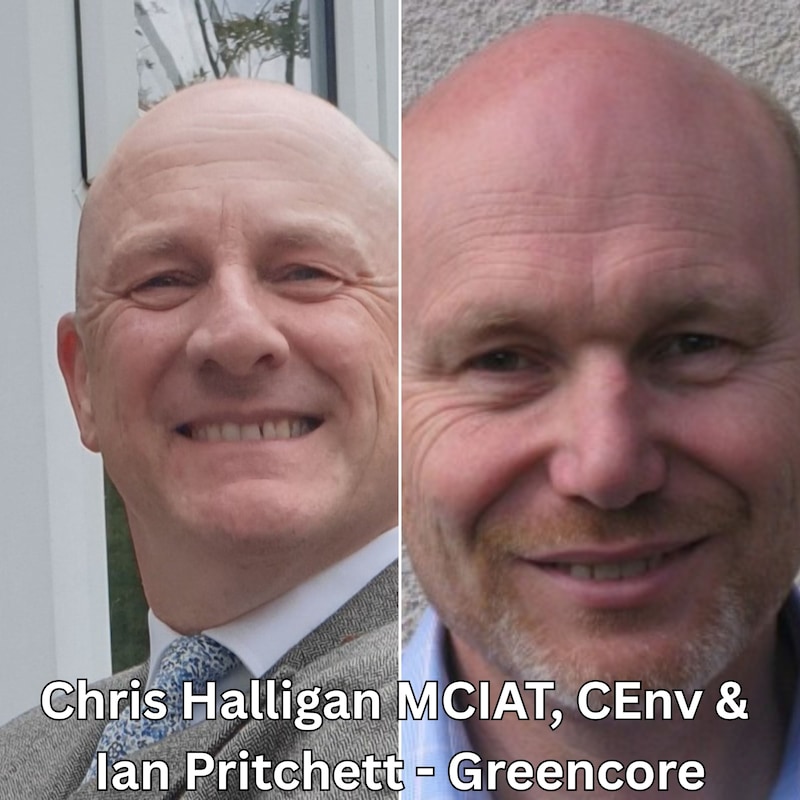
In this episode of 'Where it's AT' from CIAT, host Chris Halligan, a Chartered Architectural Technologist, is joined by Ian Pritchett, Innovation Director at Green Core Homes, to discuss the use of hemp in construction. They explore the historical context of hemp as a sustainable material, its benefits, the challenges of commercial application, and the development of prefabricated hempcrete panels. Ian shares insights on the material's thermal properties, breathability, and its potential to last for centuries as long as appropriate maintenance is performed. The episode also touches upon the commercial hurdles and insurance issues faced while trying to mainstream hemp-based construction.
Chris Halligan MCIAT, CEnv
Chartered Architectural Technologist (MCIAT) and Chartered Environmentalist (CEnv), with a career spanning over three decades, Chris has been involved with a wide range of architectural projects. This experience covers leading teams from inception to completion across a variety of sectors including residential, educational, commercial, leisure and institutional spheres. As well as being adept at the technical and functional resolution of buildings, Chris also specialises in Sustainable Design with a particular interest in the use and performance of building materials in respect to the environment. In this capacity he is an accomplished public speaker, presenter, guest lecturer, and advisor.
Ian Pritchett BSc(hons)
A physics graduate from Durham University. From 1987 to 2007 Ian was Managing Director of IJP Building Conservation Ltd, one of the leading conservation contractors in the UK. IJP specialise in the repair of all kinds of historic buildings including windmills and water mills. 2002 to 2013. Ian’s growing awareness of environmental issues and belief that traditional materials have an important role in the future of mainstream construction lead to the formation of Lime Technology Ltd. (in 2002), a company dedicated to pushing the use of traditional lime mortars into the new build market, as an ecological alternative to cement, by the innovative use of modern methods. 2013 to date. In 2013 Ian left Lime Technology and set up Greencore Construction Ltd, now rebranded as Greencore Homes Ltd. Ian is currently Innovation Director. Greencore is pioneering low and zero-carbon houses using its own Biond building system. This is a closed panel timber frame system insulated with Lime-Hemp and natural fibre insulation. In January 2022 M&G became a shareholder and Greencore plans to build 10,000 “better than zero-carbon” homes by 2035.
—
00:00 Introduction
00:35 Meet the Hosts: Chris Halligan MCIAT and Ian Pritchett
01:03 The History and Revival of Hemp in Construction
02:18 Modern Applications and Challenges of Hempcrete
07:04 Prefabrication: The Future of Hempcrete Construction
09:35 Sourcing and Material Composition
11:38 Thermal and Environmental Benefits of Hemp
18:34 Commercial vs. Residential Use of Hempcrete
20:43 Regulatory and Financial Hurdles
24:19 Sustainability and Longevity of Hempcrete Buildings
28:31 End of Life and Recyclability of Hemp Panels
29:34 Conclusion and Final Thoughts
—
Prefabrication solved hempcrete's commercial viability challenges
The shift from wet, on-site casting to factory-prefabricated panels was the breakthrough that made hempcrete practical for commercial construction. This eliminated weather-related delays and reduced production time from weeks to just 48 hours per panel, making it viable for projects with strict timelines and penalties.
Hempcrete offers superior thermal performance through phase change properties
The material's unique cellular structure allows moisture within the hemp to change between liquid and vapor states, absorbing and releasing energy. This creates a natural phase change effect that makes real-world thermal performance about twice as good as predicted models, while providing thermal inertia without traditional thermal mass.
Sustainability without compromise or premium costs
Hempcrete construction delivers better, healthier, more comfortable homes that use less energy and don't cost more to build than conventional methods. The material is fully recyclable (can be spread back on agricultural land), buildings last for centuries with proper maintenance, and the entire supply chain can be UK-based, making it a genuinely sustainable solution that doesn't require sacrificing quality or affordability.
—
Learn more about Greencore Homes
—
Know someone who could benefit from listening? Subscribe and share this episode with your network.
Know someone with a story to tell or a topic to explore? Email us at [email protected] to nominate a guest or a topic.
Want to learn more about Architectural Technology, how to progress your career, or how to work with a Chartered AT? Head to architecturaltechnology.com to find out more
—
Podcast recorded and edited by: Jon Clayton [Podcasting]
—
Disclaimer
The contents and views expressed by individuals in the Where it's AT podcast are their own, and do not necessarily represent the views of the companies they work for or the Host. This podcast is for informational purposes only and should not be considered as advice.
Transcripts
It's always seemed mad to me that, people designed for
Ian Pritchett:60 years because in the life of a residential house, it, it normally
Ian Pritchett:goes on for hundreds of years.
Ian Pritchett:It's no different with, a panelised hempcrete house.
Ian Pritchett:It will go on for centuries as long as certain things are done.
Adam Endacott:Welcome to Where it's AT.
Adam Endacott:The podcast from CIAT shining a spotlight on the future focused design
Adam Endacott:discipline of Architectural Technology.
Adam Endacott:Know someone who could benefit from listening.
Adam Endacott:Subscribe and share this episode with your network.
Adam Endacott:Chris Halligan MCIAT: Hello again.
Adam Endacott:Thank you for joining us today on, uh, where it's at.
Adam Endacott:I'm Chris Halligan, Chartered Architectural Technologist and
Adam Endacott:Chartered Environmentalist, currently chair of CIAT's Climate Society.
Adam Endacott:Check out my bio in the show notes for more info if you really want.
Adam Endacott:Very lucky to have a guest today as co-host of Ian Pritchett, who's the
Adam Endacott:innovation Director at Green Core Homes.
Adam Endacott:Welcome Ian.
Ian Pritchett:Thank you, Chris.
Ian Pritchett:Good to be here.
Ian Pritchett:Chris Halligan MCIAT: And today we're gonna be talking about hemp.
Ian Pritchett:I've got a longstanding interest in sustainable materials, uh, and the
Ian Pritchett:effects of building materials on the, on the environment, and, um.
Ian Pritchett:I've been interested in hemp for many decades.
Ian Pritchett:It's a fascinating organic.
Ian Pritchett:Material.
Ian Pritchett:And it's often touted as being one of the most sustainable or renewable.
Ian Pritchett:Now, one of the things that really have to bear in mind when we
Ian Pritchett:talk about sustainability is that the only truly things that only
Ian Pritchett:things that are truly sustainable are things that we can replace.
Ian Pritchett:And that brings us back all the time into organic materials, things that can
Ian Pritchett:be grown and hemp cells in that aspect.
Ian Pritchett:It's been around.
Ian Pritchett:Commercially for anything up to 10,000 years.
Ian Pritchett:The first paper was created in China in a hundred BC from hemp.
Ian Pritchett:Most of the British empire was won in hemp based clothing.
Ian Pritchett:And in recent decades, it's undergone something of a
Ian Pritchett:revival with the odd hiccup.
Ian Pritchett:I first encountered him probably.
Ian Pritchett:Nearly 20 years ago when hemp was first being used as a spray material.
Ian Pritchett:But things have moved on a bit there.
Ian Pritchett:And fortunately, Ian, who was with Green Core Homes knows more
Ian Pritchett:than I will ever do about hemp.
Ian Pritchett:Perhaps you'd like to give us a quick overview of, um, how hemp
Ian Pritchett:came to be reused in the building industry in modern times, Ian.
Ian Pritchett:Yeah.
Ian Pritchett:Thanks.
Ian Pritchett:Thanks Chris.
Ian Pritchett:It sounds as if you know an awful lot about hemp as well, so hemp.
Ian Pritchett:Really has been used in construction to my knowledge for about three or
Ian Pritchett:400 years in, in central Europe.
Ian Pritchett:And it's been used mixed with clay or lime to, to create a, a rigid installation
Ian Pritchett:material that was often used with a timber frame in places like Austria
Ian Pritchett:and Germany and, uh, central Europe.
Ian Pritchett:About 30 or 40 years ago, the.
Ian Pritchett:The French really started taking this forward, and they started developing new
Ian Pritchett:line based binders that could be mixed with hemp to create thick walls that were
Ian Pritchett:more like cob than the the wattle and DOB format of going between a timber frame.
Ian Pritchett:And I first came across it about 25 years ago when, uh, an
Ian Pritchett:architect called Ralph Carpenter.
Ian Pritchett:Was using it in Suffolk and I went to a few talks that Ralph was doing
Ian Pritchett:and was very inspired by his work.
Ian Pritchett:And at that time, my background was in the repair of historic buildings,
Ian Pritchett:so this was, uh, very close to the sort of materials I was used to using
Ian Pritchett:in, in his historic building repair.
Ian Pritchett:And.
Ian Pritchett:I liked the look of the material.
Ian Pritchett:It had a great feel about it.
Ian Pritchett:It had a great story and I got to know Ralph a bit better and we started working
Ian Pritchett:together and then doing some research with Bath University to see how we could
Ian Pritchett:really optimize the use of the material and, and the rest is history really.
Ian Pritchett:I've been hooked for the last 25 years.
Ian Pritchett:Chris Halligan MCIAT: So I do recall at that time the, the main way of use use
Ian Pritchett:of hemp was in the form of hempcrete.
Ian Pritchett:And it seemed to be used in, uh, residential developments in a spray
Ian Pritchett:application onto a timber frame.
Ian Pritchett:But I do believe that led to some problems with regard to the climate.
Ian Pritchett:Is that right?
Ian Pritchett:Well, when I first came across it, it was actually being used
Ian Pritchett:as a, a shuttered and cast material.
Ian Pritchett:So it was based around a timber frame with shuttering spaced away
Ian Pritchett:from the timber frame, and then the material was mixed and poured into the
Ian Pritchett:shuttering and likely tamped into place.
Ian Pritchett:As ever with building materials.
Ian Pritchett:People want to try and make it as fast and efficient as they possibly can, and
Ian Pritchett:there were a lot of people in France who were experimenting with mixing it
Ian Pritchett:and then putting it through some sort of spray machine to spray it against walls.
Ian Pritchett:And they were doing that mainly because they were lining the inside of stone
Ian Pritchett:farmhouses in Normandy and Brittany.
Ian Pritchett:But the technology allowed construction to be much faster.
Ian Pritchett:It.
Ian Pritchett:Theoretically meant you didn't need the shuttering if you could spray it in place.
Ian Pritchett:It's always been challenging to find methods of spraying it without the, the
Ian Pritchett:hemp itself clogging up the machine.
Ian Pritchett:Uh, the hemp often contains fiber, and fiber tends to wrap itself
Ian Pritchett:around the moving parts of machines.
Ian Pritchett:So, so it was quite difficult and some of the people, particularly in France,
Ian Pritchett:came up with some great ways of doing it.
Ian Pritchett:But the problem wasn't so much around.
Ian Pritchett:The fact that it was being sprayed, the problem was around the fact that it was a
Ian Pritchett:wet material being used on site and once.
Ian Pritchett:Hemp or hempcrete was dry.
Ian Pritchett:It was the most amazing material.
Ian Pritchett:Getting it dry could sometimes be a bit of a challenge if the
Ian Pritchett:weather wasn't on your side.
Ian Pritchett:So it lent itself very well to one-off self-build type projects.
Ian Pritchett:You know, the sort of things we all see on grand designs where somebody sets out.
Ian Pritchett:Thinking it's going to take six months and it takes a year to build their house,
Ian Pritchett:and everybody's still happy at the end.
Ian Pritchett:But when you try and translate that to the commercial world where you are
Ian Pritchett:trying to finish houses in sensible periods of time, and you are entering
Ian Pritchett:into contracts with time penalties involved with them it really led to
Ian Pritchett:some challenges over the winter and, uh, led us to look at new ways of using it.
Ian Pritchett:Chris Halligan MCIAT: Yeah, that's fascinating because you, you must have
Ian Pritchett:found some of the same issues that we were looking at, at, at the time.
Ian Pritchett:Um, roundabout 2005, 2010.
Ian Pritchett:We were looking at.
Ian Pritchett:Sustainable.
Ian Pritchett:It's what we consider to be sustainable materials for use on a commercial basis.
Ian Pritchett:But we found that most of the, the knowledge and the use was done almost
Ian Pritchett:on what a say was an enthusiast level.
Ian Pritchett:That is, it's one-offs, uh, self builders and it's great.
Ian Pritchett:And, but soon as you kind of hit the, the commercial sphere, the,
Ian Pritchett:there's so much more to consider.
Ian Pritchett:It doesn't always work.
Ian Pritchett:I do recall thinking at the time that the kind of the holy grail for all
Ian Pritchett:this would be to come up with some form of prefab prefabrication where
Ian Pritchett:panels could be created within a factory, which would take them outta
Ian Pritchett:the, of the, um, the outside climate, which was causing this kind of risk.
Ian Pritchett:And I believe that that's what you at Green Car have actually progressed to now.
Ian Pritchett:That's right.
Ian Pritchett:So my first encounters with Hempcrete were when I was at a company called
Ian Pritchett:Lyme Technology, and, uh, probably spent eight or 10 years working
Ian Pritchett:with hemp in, in that format.
Ian Pritchett:And we started off as.
Ian Pritchett:The enthusiastic people that you are describing.
Ian Pritchett:And, uh, it really came to a bit of a head, uh, about 2009, 2010.
Ian Pritchett:There was a, a bad winter and we were building 85 houses.
Ian Pritchett:On site at the same time with cast in situ Hempcrete in a wet process.
Ian Pritchett:But we also had a contract to to do the walls of a new Marks and Spencer's
Ian Pritchett:store at a place called Cheshire Oaks.
Ian Pritchett:And that came with a. Quite an onerous penalty for being late.
Ian Pritchett:Uh, as far as I remember, it was 169,000 pounds a week for finishing
Ian Pritchett:late which focused the mind rather.
Ian Pritchett:And we decided that rather than do something in a wet process on site,
Ian Pritchett:we'd prefabricated into panels.
Ian Pritchett:So that was really the, the first.
Ian Pritchett:Experience of prefabricating and drying panels and then taking the
Ian Pritchett:finished panels to site and, uh, the 85 houses that were going through a
Ian Pritchett:bad winter, uh, were all slowed down and, uh, caused all sort of frus, all
Ian Pritchett:sorts of frustrations as a result.
Ian Pritchett:The panels that went to the Marks and Spencer's store, everything went
Ian Pritchett:as perfectly as it could have done.
Ian Pritchett:And it became very obvious by the end of that, that the way forward
Ian Pritchett:was prefabrication and drying in a factory rather than doing it on site.
Ian Pritchett:And so for the last 15 years, that's exactly what I've been.
Ian Pritchett:And so we now make panels.
Ian Pritchett:Uh, so we make a, a structural closed panel, timber frame.
Ian Pritchett:We cast the hemp and lime into it, and we dry it in the factory.
Ian Pritchett:And, uh, over the last 10 or 15 years, that process has speeded up from something
Ian Pritchett:that took weeks to, to cast and dry to something that now takes hours to do.
Ian Pritchett:And, uh, you know, we have a turnaround of about 48 hours per panel now.
Ian Pritchett:Chris Halligan MCIAT: Excellent.
Ian Pritchett:Okay, so in terms of material then, um.
Ian Pritchett:Where does most of your, most of the hemp you use come from?
Ian Pritchett:Because I'm aware that in the past it was quite a common crop
Ian Pritchett:for farmers right across Europe and North America, but in recent
Ian Pritchett:centuries it's kind of died of death.
Ian Pritchett:Where does, where does your stuff mostly come from?
Ian Pritchett:Ours comes from, uh, the, the Lincolnshire Yorkshire area.
Ian Pritchett:So that, that sort of area around the Humber Esry, uh, a, a company
Ian Pritchett:called North Yorkshire Hemp sorry, it may be East Yorkshire Hemp.
Ian Pritchett:And
Ian Pritchett:Chris Halligan MCIAT: Yeah.
Ian Pritchett:Steady
Ian Pritchett:on.
Ian Pritchett:uh, got, got to get that right East East Yorkshire hemp.
Ian Pritchett:And, um.
Ian Pritchett:They grow hundreds of acres there and they actually process it themselves
Ian Pritchett:on their own farm processing level.
Ian Pritchett:But there are other companies now springing up as you mentioned at
Ian Pritchett:the beginning, it's getting more common for people to start looking
Ian Pritchett:at growing hemp and processing it.
Ian Pritchett:We are always confident that there are tens of thousands of
Ian Pritchett:tons being produced in Europe.
Ian Pritchett:So if we ever run short in the uk.
Ian Pritchett:It's fine, but we've never run short.
Ian Pritchett:There's always been sufficient grown here.
Ian Pritchett:Chris Halligan MCIAT: So what about other, um, other constituent materials that you
Ian Pritchett:might put in your prefabricated panels?
Ian Pritchett:Because I know when you first started looking at this, we had been mixed
Ian Pritchett:with lime and lime based mortars, but, um, um, what do you use,
Ian Pritchett:what, what is the actual mixing and curing process that you go through?
Ian Pritchett:Because we are putting it in a panel and it's not forming
Ian Pritchett:any sort of structural capacity.
Ian Pritchett:We've been able to develop some very simple low strength binders
Ian Pritchett:for it, which are based on hydrated lime that comes from Buxton.
Ian Pritchett:Chris Halligan MCIAT: All right.
Ian Pritchett:uh, incredibly simple, uh, lime and water.
Ian Pritchett:We do have a secret ingredient that, that catalyzes the reaction, but it's
Ian Pritchett:essentially lime and water and hemp.
Ian Pritchett:And, uh, it's all UK manufactured and
Ian Pritchett:Chris Halligan MCIAT: Fascinating and comes from Bookton and be
Ian Pritchett:delivered by rail as well rather than buses, which is quite nice.
Ian Pritchett:Trucks, which is quite nice.
Ian Pritchett:Yep.
Ian Pritchett:Chris Halligan MCIAT: Hemp and all, its, its varieties, um, I believe has certain
Ian Pritchett:environmental benefits for agriculture in that it's, um, it grows quite quick.
Ian Pritchett:It also, I believe, can reintroduce nitrogen to the soil, but in, in
Ian Pritchett:terms of its, uses a material.
Ian Pritchett:What are some of the benefits of using hemp, say, in terms of its thermal
Ian Pritchett:and, uh, breathability aspects?
Ian Pritchett:So hemp has a, a pretty unique cell structure which gives it
Ian Pritchett:some quite complex thermal properties.
Ian Pritchett:So it's a pretty good insulation material, and you mix it with lime, it becomes
Ian Pritchett:fireproof and it becomes, uh, mold resistant, vermin proof, and you've got
Ian Pritchett:a, a rigid insulation material, but.
Ian Pritchett:The thing that makes it so good from our point of view is that
Ian Pritchett:it's had, it's got what's called a natural phase change property.
Ian Pritchett:So within the cells of the hemp, there's a very small amount of
Ian Pritchett:moisture as there would be, you know, if you've got a, a timber table that
Ian Pritchett:will still have moisture in it, it maybe five, 7%, something like that.
Ian Pritchett:And it's the same with the hemp.
Ian Pritchett:It's got a very small amount of moisture in it, and that moisture
Ian Pritchett:is capable of changing from liquid.
Ian Pritchett:To vapor or back from vapor to liquid and that can absorb or release quite large
Ian Pritchett:amounts of energy when it does that.
Ian Pritchett:And so not all of the heat that goes through the wall of a house
Ian Pritchett:from the inside ends up coming up the outside because some of it
Ian Pritchett:gets stored in the hemp and lime.
Ian Pritchett:So we found that when we model the thermal performance of our
Ian Pritchett:houses the actual real thermal performance is about twice as good.
Ian Pritchett:The, um, as the predicted performance.
Ian Pritchett:So, uh, that's one of the main benefits.
Ian Pritchett:Thermally?
Ian Pritchett:Chris Halligan MCIAT: Okay.
Ian Pritchett:I, I, I wasn't aware of that.
Ian Pritchett:So is there.
Ian Pritchett:I guess being a phase change material, it can actually act as a
Ian Pritchett:substitute for thermal mass and if it's remitting the heat, what, what
Ian Pritchett:kind of time lag is involved in that?
Ian Pritchett:Has this been measured?
Ian Pritchett:Yes, it's, uh, it's.
Ian Pritchett:Typically, um, sort of 12 to 24 hour time lag, but it does depend
Ian Pritchett:on the time of the year and, and the atmospheric conditions around it.
Ian Pritchett:But, but what it essentially means, as you say, is it replaces thermal mass.
Ian Pritchett:It's not thermal mass.
Ian Pritchett:It's thermal inertia rather than thermal mass, but it still means
Ian Pritchett:the internal temperature changes very slowly, even if the external
Ian Pritchett:temperature is changing quite rapidly.
Ian Pritchett:So it means on days where you get quite.
Ian Pritchett:Big temperature swings between day and night.
Ian Pritchett:You don't see those coming through to the internal environment of a building.
Ian Pritchett:Chris Halligan MCIAT: Right.
Ian Pritchett:Okay.
Ian Pritchett:And is there any difference with, say, um, condensation?
Ian Pritchett:Are there any benefits in terms of its dew point or how it performs
Ian Pritchett:in, um, moist warm environments?
Ian Pritchett:Yes, it's a, a fully breathing wall, so it will
Ian Pritchett:allow moisture to pass through it, providing you've got the right
Ian Pritchett:finishes internally and externally.
Ian Pritchett:And obviously that's an important factor, but it also disperses
Ian Pritchett:moisture, so it's one of those.
Ian Pritchett:Materials that moisture never becomes concentrated in one place because
Ian Pritchett:it wick wicks it away and allows it to evaporate and, and, uh, dry.
Ian Pritchett:So it's very, very good at moisture buffering.
Ian Pritchett:And in fact in a former.
Ian Pritchett:Role at, uh, Lyme technology.
Ian Pritchett:We, we built buildings such as archives for museums because it could
Ian Pritchett:create very, very stable internal humidity and temperature, which
Ian Pritchett:was great for storing vulnerable things like papers and works of art.
Adam Endacott:Know someone with a story to tell or a topic to
Adam Endacott:explore email [email protected] to nominate a guest or a topic.
Adam Endacott:Chris Halligan MCIAT: Right.
Adam Endacott:Okay.
Adam Endacott:I mean, personally I find that fascinating.
Adam Endacott:I love the idea of buildings being living and breathing, and it seemed to be, um,
Adam Endacott:remember in the nineties and the turn of the century, there was a lot of people
Adam Endacott:kind of pursuing that line and then.
Adam Endacott:With the kind of concentration on air tightness, we seem to move away from that.
Adam Endacott:And um, one of the kind of comments that I hear a lot of the time
Adam Endacott:from lay people is that they can perceive quite airtight buildings
Adam Endacott:as, quote, living in a plastic bag.
Adam Endacott:But, um, you are offering something a little bit different,
Adam Endacott:a little bit more natural.
Ian Pritchett:We, we are, but I have to say we don't really use the hempcrete,
Ian Pritchett:uh, as a moisture buffering material in, in houses because you've got this
Ian Pritchett:balance between air tightness, energy performance, moisture control, and in
Ian Pritchett:fact, the first line of defense for control and humidity is your ventilation.
Ian Pritchett:The fabric of the building only really starts to come into play if you've got
Ian Pritchett:excessive moisture or your ventilation's not doing what it should be doing.
Ian Pritchett:So in our buildings, we always use mechanical ventilation and heat recovery.
Ian Pritchett:the breathability of the building is a secondary factor.
Ian Pritchett:Um, and, and we get that breathability by using a, a vapor permeable air
Ian Pritchett:tightness membrane inside the walls.
Ian Pritchett:So you're getting the, the best of both worlds because as you say,
Ian Pritchett:people perceive air tightness as creating a stuffy environment.
Ian Pritchett:Like wearing Gore-Tex clothes rather than plastic clothes, if you like.
Ian Pritchett:So the, the whole wall is breathing, but actually the, the moisture is really
Ian Pritchett:dealt with by the ventilation system and that means you get the best of both
Ian Pritchett:worlds in terms of energy performance.
Ian Pritchett:Chris Halligan MCIAT: Yeah, it, it, it's a balancing act, isn't it?
Ian Pritchett:So what about limits on use?
Ian Pritchett:Is, is there anywhere that you kind of shy away from, or, you know, how
Ian Pritchett:far can you push the use of hemp?
Ian Pritchett:I think there are different people in different parts of
Ian Pritchett:the world pushing it in different ways.
Ian Pritchett:So if you go back to that sort of in enthusiast group who are always keen to
Ian Pritchett:try and do something on the limit, they're using hec, creatine roofs, floors, walls.
Ian Pritchett:Pretty well all aspects of a building.
Ian Pritchett:We specifically use it in the external walls.
Ian Pritchett:It's simple, it's safe, it's repeatable, and it delivers passive
Ian Pritchett:house levels of thermal performance.
Ian Pritchett:Using it in something like a floor brings it into contact with moisture.
Ian Pritchett:It is an organic material.
Ian Pritchett:If those moisture levels go the wrong way, there's a risk of decay.
Ian Pritchett:So we, we steer away from that.
Ian Pritchett:Our business is about scaling up to deliver 10,000 better than net
Ian Pritchett:zero houses over the next 10 years.
Ian Pritchett:We don't want to be operating on, on the boundaries of, of,
Ian Pritchett:uh, the limits really, really.
Ian Pritchett:Chris Halligan MCIAT: Yeah.
Ian Pritchett:So obvi, obviously you are, you are almost fully concerned with
Ian Pritchett:the residential, uh, sector.
Ian Pritchett:has the commercial side moved forward at all?
Ian Pritchett:I know that we're both familiar with the marks and Spencer.
Ian Pritchett:Project and the prefabricated panels, and I think probably a lot of us hoped
Ian Pritchett:that was gonna be the start of something new, but it doesn't seem to have sort
Ian Pritchett:of taken off really in the commercial side as much as the residential.
Ian Pritchett:No, I think there's, there's great potential
Ian Pritchett:in, in the commercial side.
Ian Pritchett:One of the challenges for.
Ian Pritchett:People like us at Green Core getting involved in commercial projects is you
Ian Pritchett:end up as a very small subcontractor to a very large main contractor.
Ian Pritchett:So you might have a package of work that's.
Ian Pritchett:You know, half a million pounds, but it's a hundred million pound project.
Ian Pritchett:And uh, that means the contractual conditions can be very onerous for the
Ian Pritchett:scale of project you're delivering.
Ian Pritchett:And so it's not that it doesn't work technically, but commercially
Ian Pritchett:it's just more difficult when you're in the residential sector.
Ian Pritchett:And as we are, we.
Ian Pritchett:We acquire land, we build houses, we sell houses to housing
Ian Pritchett:associations and private individuals.
Ian Pritchett:It's all under our control and, and any risks are there for us to manage without
Ian Pritchett:having the contractual challenges of working with a big main contractor.
Ian Pritchett:Chris Halligan MCIAT: Yeah, the risk is sort of deviating from the subject.
Ian Pritchett:Um, it, it is become quite apparent to me in recent years that a lot of
Ian Pritchett:the kind of obstacles that we face to creating a sustainable environment
Ian Pritchett:don't rely on the technical side.
Ian Pritchett:It's more in the kind of way our entire economy works, really what
Ian Pritchett:we're expected to do from it.
Ian Pritchett:Yeah.
Ian Pritchett:yeah.
Ian Pritchett:Financial and contractual and,
Ian Pritchett:Chris Halligan MCIAT: Yeah.
Ian Pritchett:Risk.
Ian Pritchett:yeah, and legislation.
Ian Pritchett:Um, all of those things, you know, build building's challenging enough,
Ian Pritchett:but the other things that go round it are even more difficult at times.
Ian Pritchett:Chris Halligan MCIAT: Yeah.
Ian Pritchett:And, and the building industry is traditionally very conservative with
Ian Pritchett:a small C you know, it's, uh, anything different, you'll have another zero on
Ian Pritchett:the end of the cost plan, won't you?
Ian Pritchett:Yes.
Ian Pritchett:Yeah.
Ian Pritchett:Which sort of brings us to things like insurance and warranties
Ian Pritchett:and building regs and things.
Ian Pritchett:Chris Halligan MCIAT: So in terms of that then kind of in, in using hemp in,
Ian Pritchett:well I guess in the way you, you use it, is there anything which deviates
Ian Pritchett:massively from what we consider to be standard practice or standard
Ian Pritchett:legislation, any kind of hurdles that you've had to face in persuading people
Ian Pritchett:that this isn't witchcraft basically.
Ian Pritchett:It do, well, first of all, it doesn't differ wildly, but there
Ian Pritchett:are still hurdles to overcome, going back to the, the fact that some of these
Ian Pritchett:things can be financial and commercial.
Ian Pritchett:The global financial crisis in 2008 upset all the mortgage markets and
Ian Pritchett:the mortgage providers decided that they were uncomfortable with any
Ian Pritchett:forms of non-traditional construction.
Ian Pritchett:So they were really only comfortable providing mortgages
Ian Pritchett:to Mason reconstruction.
Ian Pritchett:That problem has been solved.
Ian Pritchett:You know, by about 2011, 2012 the RICS and various other parties, Lloyd's
Ian Pritchett:Register, came up with a scheme called Boas, the build Off Site Property
Ian Pritchett:Assurance scheme, which was a way of, registering and accrediting all forms
Ian Pritchett:of, of non-traditional construction.
Ian Pritchett:And it's backed by all the major mortgage lenders.
Ian Pritchett:So there haven't been any issues with getting mortgages on, on houses built
Ian Pritchett:out of hemp or other non-traditional materials for the last 10 or 15 years.
Ian Pritchett:And prior to the financial crisis there weren't any problems but That
Ian Pritchett:That financial crisis just unbalanced the market.
Ian Pritchett:In terms of building regs, we've always found building control to be
Ian Pritchett:very open-minded and enthusiastic about the sort of things that we do.
Ian Pritchett:Warranty providers are a little bit more challenging.
Ian Pritchett:They like to rely on things like BBA certificates and.
Ian Pritchett:Uh, British standards and so on.
Ian Pritchett:So there's a longer process to, to get warranty providers comfortable.
Ian Pritchett:But, um, that's, that's now essentially behind us.
Ian Pritchett:And, uh, insurance companies have always been relatively relaxed, uh,
Ian Pritchett:as long as things have got warranties and, uh, building regs sign off.
Ian Pritchett:So there were some obstacles, but they were sort of 10, 10 years ago.
Ian Pritchett:Chris Halligan MCIAT: Yeah, the the 2008 crash.
Ian Pritchett:I do, I do recall it.
Ian Pritchett:It just seemed to set the whole, it.
Ian Pritchett:The whole sphere of sustainability back a huge amount.
Ian Pritchett:And again, going back to our, our economy, it only takes a little bit of uncertainty
Ian Pritchett:and risk really to get people to, um, go, oh, I'm not going anywhere near that.
Ian Pritchett:We're probably both old enough to remember the, um, what happened with timber
Ian Pritchett:framing at the, in the early eighties.
Ian Pritchett:Um, now that died of death for a long time as a result of a television program.
Ian Pritchett:Exactly.
Ian Pritchett:And then the global financial crisis led to change of government.
Ian Pritchett:In 2010, austerity, the code for sustainable homes was scrapped.
Ian Pritchett:You know, there was essentially a lost decade in terms of
Ian Pritchett:sustainability, wasn't there?
Ian Pritchett:Um, and, and then it's come back on stream, and now it could go off.
Ian Pritchett:Off track again because of global conditions and geopolitical
Ian Pritchett:Chris Halligan MCIAT: it, yeah, it could do, but it's becoming more
Ian Pritchett:and more apparent to us that it, it some form of, uh, you know, it's
Ian Pritchett:a move towards more sustainable infrastructure and buildings and
Ian Pritchett:construction is, is desperately needed.
Ian Pritchett:You know, it's all it takes is a few giant floods and, uh, tsunami
Ian Pritchett:to get people to concentrate the
Ian Pritchett:Hmm.
Ian Pritchett:Yes.
Ian Pritchett:I think the, the other thing is.
Ian Pritchett:A lot of people feel that.
Ian Pritchett:To do something sustainable, you've got to be sacrificing something.
Ian Pritchett:A actually building houses in the way that we do out of, uh,
Ian Pritchett:prefabricated pan panels with hemp and lime in them produces better,
Ian Pritchett:healthier, more comfortable houses.
Ian Pritchett:They, they use less energy.
Ian Pritchett:Uh, they're healthier and really comfortable to live in.
Ian Pritchett:And they don't cost any more to build.
Ian Pritchett:So why wouldn't you do it?
Ian Pritchett:It, it's a bit of a no brainer.
Ian Pritchett:Chris Halligan MCIAT: So in terms of longevity and lifespan obviously you,
Ian Pritchett:you, you won't have got to the end of the life, hopefully any of your houses yet,
Ian Pritchett:but how long would you expect housing?
Ian Pritchett:You know, we, we normally design to say 60 years, but we fully expect
Ian Pritchett:our ability to last longer than that.
Ian Pritchett:Any thoughts about how hemp panels might last?
Ian Pritchett:Yes.
Ian Pritchett:So as you say, it's always seemed mad to me that, people designed for
Ian Pritchett:60 years because in the life of a residential house, it, it normally
Ian Pritchett:goes on for hundreds of years.
Ian Pritchett:It's no different with, a panelised hempcrete house.
Ian Pritchett:It will go on for centuries as long as certain things are done.
Ian Pritchett:So it's all about.
Ian Pritchett:Keeping water out through maintenance.
Ian Pritchett:So making sure gutters get cleared out.
Ian Pritchett:If a roof tile comes off, it gets replaced.
Ian Pritchett:External claddings are maintained providing you do that and
Ian Pritchett:there's no moisture present.
Ian Pritchett:All building materials, timber, hemp, and so on will, will last indefinitely.
Ian Pritchett:So I would expect our houses to be around for hundreds of years.
Ian Pritchett:Chris Halligan MCIAT: Have you encountered any?
Ian Pritchett:Workmanship issues in, in your projects that you've had to address and kind
Ian Pritchett:of have you learned by experience from one project to the next.
Ian Pritchett:Yes.
Ian Pritchett:If I go back 10 years, our business plan was to supply panels to other
Ian Pritchett:people who were going to erect them.
Ian Pritchett:But we have found that we've had to go further down the, the supply chain and
Ian Pritchett:do everything ourselves because, uh, we can't always rely on other people
Ian Pritchett:to do the rest of the build properly.
Ian Pritchett:So if you build a, a house on the basis that you're going
Ian Pritchett:to achieve an air tightness.
Ian Pritchett:Of less than one or in line with passive house standards, you've really got to
Ian Pritchett:take full control of that build, making sure that you are installing the windows,
Ian Pritchett:doing the air tightness and so on.
Ian Pritchett:And so we've come to the conclusion that to get it right, you either
Ian Pritchett:do it yourself or, and if it's not right, you know who's to blame.
Ian Pritchett:It's us.
Ian Pritchett:But.
Ian Pritchett:The whole construction industry relies on splitting things into very small
Ian Pritchett:packages to get the best possible price for them, and that leads to lots
Ian Pritchett:of gaps between processes and trades.
Ian Pritchett:Skills are very important, but care is also very important.
Ian Pritchett:So we.
Ian Pritchett:We work very, very closely with our subcontractors to
Ian Pritchett:provide support and training.
Ian Pritchett:We do regular air tightness tests all the way through the build process
Ian Pritchett:while people are learning so that they can see the impact of, of what
Ian Pritchett:they're doing on the air tightness.
Ian Pritchett:I.
Ian Pritchett:Chris Halligan MCIAT: I think, I think there's a lesson for the
Ian Pritchett:entire building industry there.
Ian Pritchett:Um, you're right about little packages being split up and, and often a lot of
Ian Pritchett:the problems I come into contact with, um, are ones of kind of supervision
Ian Pritchett:and education and that, and even kind of on the broader scale of, um,
Ian Pritchett:sustainability, uh, I feel quite strongly that every project needs a champion.
Ian Pritchett:To make sure the aspects of it tie together and, um, it seems like
Ian Pritchett:you've necessarily had to take on that role, uh, on a practical level.
Ian Pritchett:Yes.
Ian Pritchett:I think it's, it's one of those things, isn't it?
Ian Pritchett:That, uh, every time we've encountered a problem, we've thought, well,
Ian Pritchett:what's the best way to solve that?
Ian Pritchett:Actually, it's, it, it's for us to do it
Ian Pritchett:Chris Halligan MCIAT: Do it myself.
Ian Pritchett:um, yes, not me personally, but as a company, we, we
Ian Pritchett:Chris Halligan MCIAT: No, I think it's, yeah.
Ian Pritchett:Um, some of my friends and colleagues will be going, oh God, somebody
Ian Pritchett:else that thinks he does it himself.
Ian Pritchett:But anyway,
Ian Pritchett:Yes.
Ian Pritchett:Chris Halligan MCIAT: it was so in, in terms of kind of, um, the material
Ian Pritchett:itself and say end of life options and whether it's recyclable or what
Ian Pritchett:happens to it, what, what does happen at the end of the life of a hemp panel?
Ian Pritchett:Well, I suppose the first thing as we talked about is,
Ian Pritchett:is making sure the end of life is, is as far away as as possible the panels
Ian Pritchett:themselves can be reused in their entire.
Ian Pritchett:Form and, uh, we are now providing plot passports for our houses that that.
Ian Pritchett:Detail what the components are and how they can be reused.
Ian Pritchett:But in the worst possible case that it's not possible to reuse it, that
Ian Pritchett:mixture of hemp and lime could simply be broken up and just spread back onto
Ian Pritchett:agricultural land to, to improve the soil.
Ian Pritchett:It's an alkaline material.
Ian Pritchett:It.
Ian Pritchett:It, uh, it deals with acidity in soils and it gets organic material back into
Ian Pritchett:the soil, all, all at the same time.
Ian Pritchett:So ultimately it goes back into the agricultural cycle
Ian Pritchett:through spreading on the fields.
Ian Pritchett:Chris Halligan MCIAT: Excellent.
Ian Pritchett:Well, that brings us just about to the end of the episode.
Ian Pritchett:I hope you've all enjoyed it.
Ian Pritchett:I've learned a lot and I didn't think I would actually, because we had
Ian Pritchett:talked about this previously, but there's always something to know more
Ian Pritchett:about him 'cause it's a huge subject.
Ian Pritchett:A huge thank you to my co-host Ian.
Ian Pritchett:Um,
Ian Pritchett:Thank you, Chris.
Ian Pritchett:Chris Halligan MCIAT: enjoyed that.
Ian Pritchett:If anybody wants to know more about, hemp or, uh, it's used in construction
Ian Pritchett:or generally as a material I can thoroughly recommend, um, a small
Ian Pritchett:book called The Hemp Manifesto by Rowan Robinson which gives 101
Ian Pritchett:ways that hemp can save our world.
Ian Pritchett:It goes far beyond simply buildings, but, um, it's full of fascinating facts.
Ian Pritchett:So you've heard what Ian had to say and how wonderful a material it is.
Ian Pritchett:So, so our listeners get out there and, um.
Ian Pritchett:Start using it.
Ian Pritchett:I think that's all we can do.
Ian Pritchett:So thank you very much again, Ian.
Ian Pritchett:Thank you, Chris.
Ian Pritchett:It's a pleasure.
Adam Endacott:You've been listening to where it's at.
Adam Endacott:A huge thanks to our guests and to you for listening.
Adam Endacott:Want to learn more about architectural technology, how to progress your
Adam Endacott:career, or how to work with a chartered architectural technologist?
Adam Endacott:Head to architectural technology.com to find out more.
Adam Endacott:The contents and views expressed by individuals in the where it's at
Adam Endacott:podcasts are their own and do not necessarily represent the views of the
Adam Endacott:companies they work for or the host.
Adam Endacott:This podcast is for informational purposes only and should
Adam Endacott:not be considered as advice.




