Shownotes
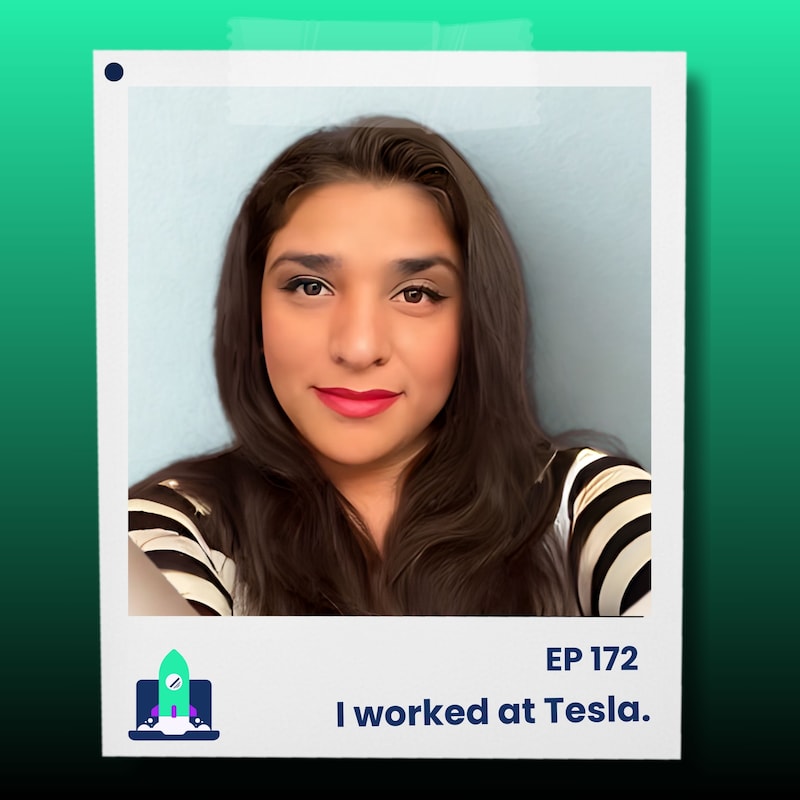
What does it take to land a data analyst job at Tesla, and what challenges await you once you're there? Join me as I interview Lily BL, a former Tesla data analyst, who reveals her exhilarating journey in the world of data at one of the world's most innovative companies.
💌 Join 10k+ aspiring data analysts & get my tips in your inbox weekly 👉 https://www.datacareerjumpstart.com/newsletter
🆘 Feeling stuck in your data journey? Come to my next free "How to Land Your First Data Job" training 👉 https://www.datacareerjumpstart.com/training
👩💻 Want to land a data job in less than 90 days? 👉 https://www.datacareerjumpstart.com/daa
👔 Ace The Interview with Confidence 👉 https://www.datacareerjumpstart.com/interviewsimulator
⌚ TIMESTAMPS
00:00 - Introduction
00:31 - Working on Data Projects at Tesla
01:45 - Was it challenging working at Tesla?
08:34 - Hiring Process and Employee Evaluation
11:56 - Tools and Technologies Used
13:38 - Lily Landing the Job at Tesla
15:42 - Advice for Aspiring Data Professionals
19:36 - How the Data Analytics Accelerator helped Lily
25:11 - Data Analyst Titles Matrix
29:50 - Linking Business Needs to Data Solutions
🔗 CONNECT WITH LILY BL
🤝 LinkedIn: https://www.linkedin.com/in/lilybl/
🔗 CONNECT WITH AVERY
🎥 YouTube Channel: https://www.youtube.com/@averysmith
🤝 LinkedIn: https://www.linkedin.com/in/averyjsmith/
📸 Instagram: https://instagram.com/datacareerjumpstart
🎵 TikTok: https://www.tiktok.com/@verydata
💻 Website: https://www.datacareerjumpstart.com/
Mentioned in this episode:
📰 Join 18k Other Analysts in My Newsletter
Get 1 weekly newsletter helping you take the next steps in your data career! Check it out: https://datacareerjumpstart.com/subscribe
Build Your Data Portfolio
We will build your data portfolio site for you for $1. All you need to do is go to MyDataFolio.com/build and enter your LinkedIn URL. Wait 30 seconds. And BOOM! You have a portfolio! Try it.
Transcripts
This is my Tesla, but I've never worked for Tesla.
2
:Luckily, one of my accelerator
students has Lily BL, and today I
3
:had the chance to interview her.
4
:I got to ask her what it was like to work
at such a unique, cool company, what it
5
:actually took to get her there, and what
advice she'd give to those of you watching
6
:who are interested in working at Tesla
or other really cool tech companies.
7
:So let's go ahead and
get into the episode.
8
:Lily, your career has taken you
to Tesla, pg and e, Intel, and
9
:now the city of San Francisco.
10
:But your first full-time
data job was at Tesla.
11
:What was it like working
on data projects at Tesla?
12
:Uh,
13
:Lily BL: it was nerve wracking
and exhilarating at the same time.
14
:I was not sure what to expect because
when I took the role on, it was blended
15
:between a couple of different areas.
16
:But as, uh, I worked more and
more like day after day, I could
17
:see what their data needs were.
18
:They had data in multiple systems for
multiple reasons, and it was just so
19
:much in volume that they couldn't keep
track of how to look at it concisely.
20
:They had to go through embedded
records to get an answer.
21
:So I think when I first got fired on,
the word on the street was she's like an
22
:admin assistant to the district manager.
23
:If you have administrative stuff
you can't do, just give it to her.
24
:Once the boss saw what I could do.
25
:It completely changed, and I
was monitoring everything for
26
:data flow to determine what
kind of visuals could be built.
27
:The scary part was like, I don't
know, and the exhilarating part
28
:was, but I can figure it out.
29
:Avery Smith: That's awesome.
30
:And I'm glad to hear that.
31
:Uh, an employer like that was, you
know, first off recognized your talents,
32
:but then second off was like, okay,
Lily, Lily can, uh, do this stuff.
33
:Let's give her some, some more tasks.
34
:Did you feel like what, what you were
doing, like was, was super cutting
35
:edge or did you feel like it was
more like regular, regular tasks?
36
:Like, um, did you feel like
challenged in what you were doing?
37
:Lily BL: I did feel challenged in
what I was doing because it had a
38
:lot of impact once it was completed.
39
:The technology and the how to itself
surprisingly was very basic, so it was
40
:continuously searching for the specific
thing that will fix this specific problem.
41
:And then gathering all the solutions
to say, Hey, this is how you can
42
:improve your data situation overall.
43
:Avery Smith: That's interesting.
44
:And, and correct me if I'm
wrong, uh, you know, Tesla is
45
:obviously a, a large company.
46
:I worked for ExxonMobil, a large
company at these large companies.
47
:You hear this phrase, I'd never
really heard it before, this word.
48
:Um, it's called disparate.
49
:Uh, and basically, or siloed, I
think is the other thing that they
50
:said a lot at Exxon that data is
siloed or that data is disparate.
51
:Basically, I think you kind of said
something similar where, you know,
52
:at these large companies there's a
lot of data, um, and there's a lot of
53
:systems, but the problem is this system
doesn't necessarily talk to this system
54
:and this data is kind of stuck here.
55
:And you know, this data, they only
enter it in an Excel, uh, database.
56
:So it doesn't really like
integrate with anything else.
57
:And so it sounds like your job was almost
like you were like data analyst glue.
58
:To try to tie in all these different
data sets from this different systems.
59
:Did I, did I get that wrong, or
is that kind of what you did?
60
:Lily BL: Yeah, you're
nailing it on the head.
61
:It was very interesting because
a large portion of the actual
62
:engineering work was done inside
of a software called Jira, which is
63
:meant for tracking, uh, the project.
64
:That's the data that was needed
to be reviewed and the company's
65
:decision was not to view it.
66
:Outside of that, I would run validations
in Excel to make sure the numbers it gave
67
:me were accurate to what I visualized,
and so I had to actually learn Jake to
68
:be able to put together what I needed
and I was limited by the visualizations
69
:preselected for project management.
70
:At the end of it, it was super cool
because I kind of created a grid.
71
:Um, it was like a large,
uh, standing rectangle.
72
:When you looked at it up and down.
73
:That was the information for the district.
74
:Managers.
75
:Managers.
76
:So each team and all of their staff.
77
:You could look at what they
did and when they did it, what
78
:was still pending Vertically.
79
:Each team had a, a call.
80
:When you looked at it horizontally,
those were all the KPIs my
81
:district manager had requested.
82
:So they were subject to some standards
and it was so cool because I didn't know
83
:how to do that till I was done with it.
84
:Um, and so then I was like,
yeah, this is what I wanted.
85
:Uh, but I needed some help from
the management team because to
86
:make sure the data had integrity,
I didn't set the conditions.
87
:So I did push for them to tell
me, this is how this is defined.
88
:This is the threshold
to, uh, determine this.
89
:And once I had them deliver to me,
uh, some definitions, I used those
90
:decisions to build out the, the
visual and they ended up loving it.
91
:'cause I was able to color code
it and I assimilated it to red
92
:light, green light, yellow light.
93
:So if it's marked green,
don't worry about it.
94
:You don't have to look.
95
:If it's yellow, you kind of
need to keep an eye on it.
96
:But if it's red, you need
to go in and investigate.
97
:That was just relative to the
data produced by the teams.
98
:Then there was the data produced
by the hardware and that
99
:those were different systems.
100
:So then in those systems, I took
that one to Excel and I was able to
101
:create a chart that had a threshold.
102
:So I had them, again, define
what the threshold was, and
103
:let's say it was like 10.
104
:Once you got 10 of these things,
the chart would go from being green.
105
:To now being red 'cause
it crossed the threshold.
106
:So the division manager could look
at all of these things at a glance
107
:and be like, oh, red is where I need
to be, and figure out what happened.
108
:Um, and then, uh, separate from that, I
was also, uh, building into Tableau, uh,
109
:master portfolio so that the division
manager could just look in there at
110
:all of the teams and all of the things
that were of interest to him because he
111
:would take that information back to the
meetings with the rest of management.
112
:They would decide what would come
next based on what was there.
113
:So like if a lot of equipment was
failing, they would say, Hey, your
114
:team is under producing because you
have 10 of these different kinds of
115
:machines and you're only putting out
like half of the results we expected.
116
:Or based on the analysis, half of
the machines were not available
117
:for one reason or another.
118
:So it's like, this is why our numbers
are lower than what's expected.
119
:Per what is available.
120
:Only half is available, which you
couldn't really tell any other
121
:way is they were kind of, uh.
122
:Digging constantly before we were
able to build the visuals, uh, to
123
:determine, uh, what was really going on.
124
:So it really facilitated
the manager to manage.
125
:And he was actually a really good manager,
so he knew where the weak points were.
126
:He just was not a data person or a data
analyst to be like, I need this, felt
127
:like this, and like that to get this.
128
:But he knew what he wanted, so it
was a perfect partnership because
129
:I could build it and he could tell
me if it worked or didn't work.
130
:Avery Smith: Lily, this is super cool.
131
:Thanks for sharing all of this.
132
:Um, I have so many places I, I want
to go based off what you just told me.
133
:Uh, the first was, I had never
heard of J Quill, but I had
134
:a chance to look it up here.
135
:So that's, that's Jira Query
Language or Jira, I don't know
136
:how to say that, but for those who
never heard of that, it's JIRA.
137
:Um, and it is owned by
Atlassian, I'm pretty sure.
138
:Um, and it is like a project management
software that a lot of, uh, software
139
:companies use to develop software.
140
:So you're, you were kind of
looking at project data, um,
141
:which is, which is really neat.
142
:Uh, and it sounds like you were working
like really close to these, you know,
143
:kind of higher up stakeholders who,
you know, they need a bird's eye view
144
:of what's going on in their business.
145
:It's, they kind of, like you said, have
like a gut feeling of this is, you know,
146
:maybe this part is struggling right
here and I have a feeling why, but I'm
147
:not exactly a hundred percent sure.
148
:What it sounds like is you tied up a
bunch of loose ends and you know, this,
149
:these disparate data sets, and you're
able to create a data visualization, uh,
150
:that helps these managers see, you know,
maybe what's struggling in the business,
151
:maybe what's doing good, um, what they
need to worry about and what they need
152
:to maybe put their, their focus on.
153
:Um, so it sounds like you were almost
giving them like supervision goggles to
154
:like look into their business and like
actually see is everything, is everything
155
:going the way it's supposed to go because.
156
:You know, as someone who runs a
business, I obviously do not run a
157
:business close to the scale of Tesla.
158
:Like one division of Tesla, I'm sure is
a hundred times bigger than my business.
159
:Uh, but even now I have, you know, Trevor
Maxwell helping me out with coaching.
160
:I have Isaac Ania who's
helping with my community.
161
:I have, uh, a podcast producer
and editor, and I don't know
162
:what's going on half the time.
163
:They're just awesome.
164
:Uh, employees doing a great job,
but I do wanna be like, okay.
165
:How do I get above the business and like
actually look down on it and see like,
166
:okay, what's going well and what's not.
167
:And it sounds like you were able
to do a bunch of analysis to kind
168
:of produce that for these managers.
169
:Lily BL: Yeah.
170
:And uh, one project, uh, that I was at
hair away from completing, 'cause I was
171
:missing one definition, uh, which I think,
uh, would have had a huge impact, is,
172
:um, I worked on their hiring process.
173
:So I would sit in on their
meetings and see how they went
174
:through their hiring processes and
would sit in on the interviews.
175
:And then I would also look at fubu.
176
:They had already hired because of the
way they, uh, did bonuses there, the
177
:managers had to divide a percentage of
bonus among all of the existing teammates.
178
:So I was able, based on watching
the data flow, um, I was able to
179
:determine what the standards were.
180
:They already knew that they had tiers.
181
:Like we have engineer 1, 2, 3, 4,
5, a lead, whatever, a, a manager.
182
:Then I was able to zero in on what
are the standards, uh, that this
183
:person needs to complete or being
knowledgeable in, in order to ascend
184
:to the following tier, which translates
to more money for the employee.
185
:And so then, um, we got, I got, I
reviewed everything and I set it
186
:up, but what was missing was the
metrics associated to each tier.
187
:And so I left it alone
to not push a project.
188
:Uh, and hack the pay be incorrect.
189
:At the very end of the, uh, contract,
the HR published the standards
190
:or the, the pay for each scale.
191
:So that was the missing piece I needed.
192
:But with that, it would've facilitated
all of the yearly reviews of the
193
:management team to enable or to
determine very quickly, oh, this person
194
:hit these projects and these projects
are labeled within this category.
195
:So while they were working as
an engineer too, their work.
196
:Function was actually an
engineer, four or five.
197
:So they qualified for the bonus
and potentially a promotion.
198
:Um, we were also very proactive there with
kind of working with the, um, employees
199
:being more, um, uh, how do you call it?
200
:Um.
201
:It's not affirmative, but it's being
more proactive about their findings
202
:and stressing their good works.
203
:So with so many people on the team, I
don't know every single thing you did,
204
:so take the initiative and tell me,
Hey, I completed these multiple things.
205
:That way it's fresh on my mind.
206
:So I didn't get to the see there.
207
:But after I would have completed
that project with the raids, my goal
208
:would've been to work with the team
one-on-one and have them pitch me.
209
:Their successes and then I
could categorize it for them.
210
:Like, okay, what you said
falls into this or into that.
211
:Do you agree or disagree?
212
:And then teach them how to make the
argument for their good works better.
213
:Um, it's delicate to do in business,
but it's like a negotiation.
214
:So you actually need to
practice it in order to get it.
215
:And this particular company was
open to that they wanted to hear.
216
:So, uh, that was like the
icing on the cake for me.
217
:We didn't get to finish it, but
it's something that would've
218
:been proactive for everybody.
219
:The company would've had a very,
well, a very articulate staff, which
220
:is needed for problem resolution.
221
:And then with the market as it was
constantly laying off and whatnot,
222
:this employee would have had the
skills sharpened to then go right
223
:into another position if they were
laid off and quickly get another role.
224
:Avery Smith: Hmm.
225
:Very cool.
226
:Um, while you're at Tesla, what
tools did you use the most?
227
:Lily BL: Um, I think I used Jira the
most and excel for the validation.
228
:Um, I got heavier into the
administrative side of, of the
229
:software because for Tableau and Jira
I was bringing in add-ins to make
230
:them more functional for analytics.
231
:Uh, so for companies, uh, you have to
connect the Tableau software to what,
232
:wherever your data is in the company.
233
:When you use Tableau as an
individual user, you just
234
:connect it to your worksheet.
235
:You can't connect it to something
else if you have it, but typically
236
:you just use a worksheet.
237
:So that was different.
238
:And it was a full host
of security clearances.
239
:Um, so I did a little bit of the
administrator stuff, but, uh, JIRA
240
:and Excel round my validations.
241
:Avery Smith: That's awesome.
242
:I think that's true.
243
:And, and you mentioned JQL.
244
:Is that kind of like SQL or
how, how are those related?
245
:Lily BL: Yeah, so it's very similar to
the commands in sql, so that's why I
246
:was able to learn it pretty quickly.
247
:Uh, but then, um, some
things are specific.
248
:It uses a lot of, uh, a lot
more keywords than you would
249
:expect, and they're different.
250
:Um, the software itself
does try to help you.
251
:Like it lets you click on buttons
and produces the code for you.
252
:Uh, to an extent, but then you
have to have modifications.
253
:So I would allow the software to allow
me to click to build some of the stuff,
254
:but then I would review it and determine,
oh, it still needs this functionality,
255
:or this, or this other group of people.
256
:And you would have to manually put that
into the existing code to make it function
257
:Avery Smith: super neat.
258
:So it's basically SQL for Jira, and
they try to make it a little bit easier
259
:for you to actually write the code.
260
:Um, okay.
261
:I'm actually not sure the
answer to this question.
262
:How did you get this job at Tesla?
263
:I remember you messaging me when
you got the job offer and you're
264
:like, Hey, these are the details.
265
:What do you think?
266
:Should I take this job or not?
267
:You know, it's one of the things I try
to do with my accelerator students, but
268
:I don't remember off the top of my head.
269
:This was a couple years ago now.
270
:Um, how you ended up landing this job?
271
:Lily BL: Yeah, I think it
was through networking.
272
:Um, at the time I was an instructor
for co-op and I had a cohort that
273
:I would teach in the evenings.
274
:One of my cohort students actually
got hired by them about a month or
275
:so before I helped them finalize his
work that they wanted him to see.
276
:So then about a month or so later, I got,
uh, contracted by a recruiter on LinkedIn.
277
:I checked with him.
278
:It ended up being the same
person that contracted him.
279
:So I think what happened is that I
popped up for her in association to him.
280
:But she never said that.
281
:But that's, that's what we
think the connection was.
282
:And so then she interviewed me.
283
:I actually was like number three or
four, because three or four other
284
:people had said yes and then backed out.
285
:And so then it was really easy
to consider, oh, you know what?
286
:I just won't take the job.
287
:You know, it just seems really hard.
288
:But I just kept saying, well,
if the, if the manager wants to
289
:interview me, I'll be available.
290
:If the position comes back open.
291
:So after that is how everybody
else, 'cause there was a lot
292
:of things that it required.
293
:And then I ended up not
doing most of those things.
294
:Uh, so I ended up, uh,
hanging in for the interview.
295
:And then in the, in the interview,
um, he asked me some questions that
296
:I think everybody else struggled
with and I answered very confidently,
297
:uh, because of the work that I
had done inside of your bootcamp.
298
:Avery Smith: That's,
that's awesome to hear.
299
:So, uh, what I was kind of hearing was.
300
:Basically you were, you were connected
to the, to a right person, someone
301
:kind of similar, one of your peers,
um, looking to inundate a job.
302
:Uh, and then you had a good
LinkedIn because the other thing
303
:is, uh, on, on LinkedIn, right?
304
:Like you don't get recommended if
you have kind of a crappy LinkedIn.
305
:So making sure your LinkedIn was
up to date with all the right
306
:keywords, all those projects you
had done inside the accelerator,
307
:I'm sure that helped, uh, as well.
308
:Yeah.
309
:You, you nailed the interview.
310
:Okay, that makes sense.
311
:So what advice would you give to someone.
312
:Who's listening right now who's like, wow,
I wanna be cool like Lilly and work for a
313
:cool company like Tesla in the data space.
314
:Like what advice would you give them?
315
:Lily BL: Um, I would recommend that they
kind of determine what part of the data
316
:portions they like to do, and then after
they figure out, oh, I like building
317
:the data structures, or the pipeline
or the visualizations, dive into that.
318
:I do get, uh, a lot of requests for
like, how can I kick off figuring
319
:out my data stuff and actually
recommend them to your free content?
320
:'cause I find it really helpful.
321
:I think you do a good job organizing.
322
:Okay.
323
:You gotta go get the data.
324
:Once you get the data,
you gotta clean the data.
325
:Well, once you clean the data, you gotta
figure out a quick way to deliver it.
326
:And also the visuals, how you
build your visuals is gonna kind of
327
:determine what you can say, um, as
the Bluff Fund, like right up front.
328
:I know these are things we do to build
the projects, but those directly translate
329
:into the interview and also into working
with, uh, people on site in the jobs.
330
:So if you can find a material that helps
you hone the skills you naturally want or
331
:like inside of your data, uh, career, it
will make it easier for you to get that
332
:and it will make you a natural to post it.
333
:'cause you'll actually
be excited about it.
334
:Like, oh, I had a hard time
learning this particular function
335
:in Excel, but I nailed it.
336
:Let me show you guys how I did it.
337
:You'll naturally be like, oh, we
had overtime with sql, but I figured
338
:this out and now I'm gonna post it.
339
:And people actually do look at it.
340
:They might not comment, they might
not like, but recruiters and also
341
:other people, uh, interested in data
will come and look at your projects
342
:because if you had an issue with
it, likely someone else did too.
343
:So if you're constantly posting your
projects and how you solve the problem.
344
:Uh, they will naturally gravitate to you.
345
:And one thing I always stress
is to try to frame my projects
346
:into a problem and a solution.
347
:So the purpose of this project
was to address this specific
348
:problem and here's the solution.
349
:Maybe they won't care for looking
at the problem, but maybe they're
350
:interested in just a solution.
351
:But that's interesting.
352
:They'll go back and look at the
problem and then read all of the work.
353
:Avery Smith: Interesting.
354
:So yeah, projects played a big
role for you, it sounds like, like
355
:you really believe in, in doing
projects and then posting them on
356
:places like LinkedIn to get noticed.
357
:Lily BL: Yeah.
358
:And in the interview for Tesla
specifically, uh, I think the
359
:question that sealed the deal for
me was that, uh, the bus had asked
360
:me what I would do in inside of sql.
361
:So he asked me just the general
stuff, like, you know, how would
362
:you get something to come up?
363
:What would you call the tables?
364
:And he goes, it was like
his, his secret question.
365
:It was supposed to catch me off guard.
366
:He says, what if there
isn't anything in there?
367
:Like you asked for it and it doesn't
give, like there's nothing in there.
368
:What seat we're going to do then.
369
:And we, I had done a module, uh,
to the bootcamp, uh, that you have.
370
:And I had picked the short data
set instead of the large data set.
371
:And because I picked the short data
set, my results were different.
372
:And in fact, missing.
373
:Mm.
374
:So I distinctly remember sitting
there for like, what, what happened?
375
:Did I do it wrong?
376
:Rewatching the video, redoing
the thing, and trying and trying
377
:until I got very frustrated.
378
:And then I realized, oh, I picked
a different data set than he did.
379
:So our results are probably not the same.
380
:They're likely missing from mine.
381
:So then I manually went in and checked,
and that was exactly what happened.
382
:So when this manager from Tesla asked me.
383
:I knew exactly what
happened when that occurs.
384
:And so I was like, you
get absolutely nothing.
385
:It's the most frustrating
thing in the world.
386
:Uh, but it's good because you
don't have to keep looking.
387
:There's absolutely nothing there.
388
:You, you're just gonna get a, and
because I was so confident about it,
389
:having sat in the frustration, he
laughed and then was like, I, I think
390
:that she will be able to figure out
whatever she doesn't know and what
391
:she does know will benefit us anyways.
392
:And I think that's what sealed the deal.
393
:So as you're working through the
projects and honing your skills.
394
:Think about what you experience.
395
:'cause that's what's gonna make
you shine in the interviews.
396
:Avery Smith: I, I love hearing that.
397
:I love hearing that the experiences
you had inside the accelerator
398
:program, uh, worked out well
for you in, in an interview.
399
:And it's interesting because, uh, I
obviously try to design the accelerator
400
:and we're constantly updating it so that
people have less and less problems, right?
401
:Like, we wanna try to make it as easy
for people to learn data as possible.
402
:But the silver lining is
when those problems happen.
403
:It puts you in a real life
scenario 'cause you're gonna have
404
:problems when you get on the job.
405
:And figuring out how to solve
those, figuring out what's
406
:going wrong, uh, is a skill.
407
:It's kind of a hard skill to teach.
408
:But it's a very valuable skill to have.
409
:So, uh, I love hearing that,
you know, a lot of data skills.
410
:I'm curious here what order you
learn them in, and if you have any
411
:tips for anyone who is learning
these different data skills?
412
:Because there's a lot, right?
413
:There's Power bi, there's Tableau,
there's Excel, there's sql, there's
414
:Python, there's R Like what order did
you learn those in, and what advice would
415
:you give to someone else learning those?
416
:Sure.
417
:Lily BL: Uh, I think the order I
learned them in was first Excel
418
:and the Microsoft Office Suite.
419
:Uh, I actually was certified through
them, um, to use Word in Excel.
420
:However, I didn't understand it
as much as I would over time.
421
:So then with the Excel basic knowledge,
I was able to navigate most data
422
:and then I realized everything's
trickling into information systems.
423
:So when I realized that I went back to
school and I got a degree that focused
424
:in information systems and there I was
introduced to, uh, data visualizations
425
:where we used a variety of tools.
426
:Uh, the one that stood out
the most to me was Tableau.
427
:So from there I joined an apprenticeship
where they used that tool.
428
:'cause it just was visually stunning.
429
:The rest of the stuff could get
the things done, including Excel,
430
:but they were kind of grainy.
431
:But with Tableau.
432
:You could just floor somebody
by just the visual alone.
433
:You wouldn't have to say anything.
434
:They'd just be looking at it for a while.
435
:So I was like, I'm really
interested in that.
436
:So I did that.
437
:And while I was in that program,
we also covered, uh, Python,
438
:uh, more basics and sql.
439
:And, uh, we also did, uh,
presentations, um, of the findings.
440
:After I had, uh, those things under my
belt, I discovered your bootcamps and
441
:then went back to square one with Excel.
442
:Was like, okay, this is how you use
Excel specifically for data analysis,
443
:not the other stuff I was doing.
444
:So it redefined, like, it really
sharpened what I knew how to do.
445
:And from there, uh, I went back into sql.
446
:A lot of the companies I worked for didn't
use SQL as intensively as I expected.
447
:So I was more so, uh,
using Tableau frequently.
448
:And then Power bi.
449
:Uh, power bi, um, is
like a full stop shop.
450
:For analytics because it allows
you to do the visual component.
451
:But to do that you need to
be able to pull in data.
452
:To pull in the data, you need
to understand like the, uh, the
453
:stakeholder request, and then also how
to clean the data and it uses Excel.
454
:So, um, the skills were the same
in all of the software you just
455
:clicked in a different spot.
456
:So throughout the software per uh.
457
:Phases or processes.
458
:What I was continuously
sharpening was what is the data
459
:process independent of the tool.
460
:So if I had to start all the way over,
the way that I would learn these in
461
:is Excel, uh, power bi and then uh,
Tableau and last sql, unless it you
462
:are company that you're targeting does,
is focused on sql, I would do Excel
463
:and then sql because if you understand
what you're doing in Excel, like, um.
464
:V lookup, a next lookup, an H lookup.
465
:They're essentially joining data.
466
:So if you know how to join the data in
Excel and you can articulate it, then
467
:you can look at any other software.
468
:Here's um, a sql, let me go
ahead and join data here.
469
:This is how I do the
joins in this software.
470
:Okay, now I have Tableau,
how do I do the joins here?
471
:And you are specifically honing your
skill for joining data, which is like
472
:the backbone for, uh, data analytics.
473
:And then that will parlay you
into engineering if you want.
474
:Uh, but I would go Excel first and
then whatever you learn in Excel,
475
:mirror it in whatever software
you can get your hands on next.
476
:I did have the cases sometimes
where I didn't have certain
477
:software, so I've had to wing it.
478
:Um, I did a lot of G docs and
the, all of the Gmail suite
479
:documentation when for some time I
couldn't afford the office software.
480
:So even if you can't get
the most premium thing.
481
:Do what is affordable, but focus on
the skill you're trying to sharpen
482
:and you'll be able to figure it out
even if you've never used it before.
483
:I
484
:Avery Smith: think that's a really cool,
uh, point there is like, you know, we use
485
:different software at different times,
but really a lot of them do similar stuff.
486
:They get data from places.
487
:You clean data with them, you do some
sort of aggregations or analysis or
488
:make some charts obviously, like SQL
doesn't really make a lot of charts.
489
:Like a pivot table in Excel is pretty
much just like a group buy in sql.
490
:Um, so there is a lot
of, uh, overlap there.
491
:So that makes a lot of sense.
492
:So Lily, when you were trying
to break into data, there's
493
:obviously a lot of data roles.
494
:Um, there's data analysts,
there's business analysts, there's
495
:operations research, which is
what I used to do at ExxonMobil.
496
:Um, and each one of those jobs,
uh, is kind of complicated.
497
:They, they're all data analyst roles, but.
498
:They have different domains,
they have different industries,
499
:they have different focuses.
500
:They may use different tools, they might
have different vocab and, and customers.
501
:So one of the things I really love, um,
that, uh, you sent me was like this matrix
502
:you made of a couple different, uh, data
analyst titles and what you'd be doing
503
:slash what tools you'd be using based
off of how experienced you you were.
504
:So tell me about this matrix you made.
505
:Why did you make it and, you
know, what does it do for you?
506
:Lily BL: So I wanted to share this,
uh, with you and, uh, potentially
507
:to anybody trying to break into data
or further career in data, because
508
:this is how I was able to do it.
509
:Uh, pretty much when you start
at the beginning, you don't
510
:have a bunch of experience.
511
:Um, in my case, I just knew Excel,
but not specific to analytics.
512
:So the way that you leverage, uh, the
tool I gave you is that you kind of.
513
:Set up your goals by a five year plan.
514
:And the reason why is because by the
fifth year of any profession, you're
515
:considered a professional 'cause
you've been in it for five years, you
516
:have enough working hours to do this.
517
:At a professional level,
you're not guessing anymore.
518
:You should know, uh,
concretely what you're doing.
519
:So, uh, depending on what kind
of analytics you wanna do,
520
:the matrix can kind of guide
you to where you would start.
521
:Let's use me for an example.
522
:I started with Excel and I
wanted to be a data analyst.
523
:My first data rules were
not titled Under Data.
524
:So what I did is that I said,
Hey boss, I know you want me to
525
:take care of these appointments.
526
:And it was clerical work, but it
was, uh, handling a lot of data.
527
:So I said, Hey, you have an
opportunity here, uh, to figure out
528
:why your patients are dwindling.
529
:So I took it upon myself to
offer a project so that I
530
:can gain the skills I needed.
531
:So in that project I recovered about half
a million dollars, uh, of lost payments
532
:because somebody clicked the wrong button.
533
:And there I secured my Excel experience.
534
:I secured, uh, the patients being
able to return the company, gaining
535
:the money, uh, that had originally
been lost because, uh, I used Excel.
536
:That's what I needed in order to begin
to say, Hey, I have six months work.
537
:With Excel, I have a
year's worth with office.
538
:Um, at the time it was very popular
to use the Microsoft Office Suite.
539
:Uh, let's say you secure the
the time you need with Excel.
540
:Now you can say, Hey, in Excel.
541
:I've also executed Pivot charts
and VLOOKUPs so I can join data.
542
:I'm ready to go onto the next thing.
543
:Hey, boss.
544
:Uh.
545
:We have a lot of data in
a lot of different places.
546
:We already are integrated with Microsoft,
so we can use Power BI to pulling
547
:all the data sets into one location.
548
:Uh, can I get some time to be able
to make that happen so that I can get
549
:you some support with your recording
and then you start figuring that out?
550
:You might, when you, when you do this,
you don't have necessarily somebody
551
:coaching you, so you need to rely
on the bootcamps or the knowledge
552
:you already have that gives you the
confidence that I can execute this.
553
:If you can't execute in the
software you're reaching for, don't
554
:nominate yourself to do the project.
555
:In there, you do it 'cause you
already know you have, you know
556
:how to use that software, but the
company's just not implementing it.
557
:So then you would jump into Power bi.
558
:Maybe not its most advanced things,
but just enough to get your feet wet
559
:so that you can figure out, this is
how I use it, this is what I like.
560
:Once you get in there,
you can be like, Hey boss.
561
:Uh.
562
:We're in here with the Power bi.
563
:We have these simple reports, but we have
a lot of stuff inside of SQL as well.
564
:I was wondering if you can get me access,
uh, to request permission to join them
565
:into the Power bi and that way I can
access more data and goes from there.
566
:Right.
567
:Well, one of the visualizations in
Power BI is a table, so you can actually
568
:organize and clean all of your data inside
of Power BI and then export that sheet.
569
:Put it into something
stunning like tablet like.
570
:It's hard because as you're working
on it, it's not inherently clear
571
:what you're doing, but that's how
you use the document I sent you.
572
:You look at the title you want,
what software or what knowledge do
573
:I have now and what can I reach for
based on my hidden skills that I
574
:can start to attribute to my career?
575
:And that's why you slowly grow it.
576
:Now, sometimes the companies will say,
no, we don't need any work in Power bi.
577
:We just want it done in Excel.
578
:For me that translated to, I need to
find another company because I really
579
:wanna grow more skills, uh, to get to
the next level because I have five years
580
:to make it to that professional status.
581
:And if I hit five years and I don't
have all the things in my tool belt,
582
:I gotta do more than five years.
583
:That's what I used to
get into the next thing.
584
:Um, also, if you don't wanna grow
your career, like you're happy with
585
:what you're doing, don't volunteer
the projects or the software.
586
:Um, hone on what you, or focus your
skills on honing what you already
587
:know and that will make you sharper
and sharper with what you have.
588
:Avery Smith: Well, I think that's one of
your skills is that you're really good at
589
:figuring out how to link business to data.
590
:Uh, and I think a lot of
business and operations people
591
:kind of struggle with that.
592
:Um, so it's really cool that you
were able to be like, Hey, I see this
593
:business need, uh, here's how analytics
could help us, uh, in this case.
594
:Um, and I think that, you know,
you've done that as well with building
595
:dashboards for, for stakeholders that
aren't necessarily, uh, data experts.
596
:Um, I guess how do you have like an eye
for where data can help these businesses
597
:and how do you, uh, help these maybe
non-technical, non-data folks be excited
598
:and interested and ready to, to help
with these data analytics projects?
599
:Lily BL: Well, that's such a,
that's such a good question.
600
:Um, because you kind of
have to actively listen.
601
:So, uh, it's almost like
speaking another language.
602
:Somebody can say, oh man, like in real,
a real life example, a boss that I had
603
:said, oh, I just want this inside of
Excel, and I'll be happy if we could
604
:just get it from where it is into Excel
so that I can analyze it, I'll be happy.
605
:So I got it done.
606
:After it was done, they were so
happy that they decided, I want,
607
:I wish everything can go in there.
608
:And I said, what?
609
:What you want, sir?
610
:Is a warehouse of data.
611
:Mm.
612
:So what he said is, I want everything
in there, or I want this in Excel.
613
:But what they're asking for
is an accumulation of data.
614
:They're asking for a pipeline.
615
:If you understand the data portion of
that, you can translate the regular
616
:English into what that looks like in data.
617
:And that's how you can determine
I can fix that or I can give you
618
:something to help you hit that goal.
619
:Or you can determine, oh, you know
what, that's just outside of my reach.
620
:'cause your Google and you have a bunch
of data, I can't handle that much stuff.
621
:Like I need servers, I need a
bunch of other stuff, but these
622
:portions I can handle for you.
623
:And that's how you determine I can
do this versus I can't do that.
624
:I should offer you this 'cause
I know I can execute that.
625
:Avery Smith: Lily, that is awesome.
626
:I think that is a superpower
that, that you have.
627
:Thank you so much for giving a glimpse
into what your career was like, telling
628
:us what it was like to work as a data
analyst at Tesla and give us some
629
:good, uh, advice and feedback for.
630
:Trying to learn these data skills and
trying to maneuver in our data careers.
631
:Is it okay if we put your, uh, LinkedIn
in the show notes down below and if people
632
:have questions they can reach out to you?
633
:Sure.
634
:Okay.
635
:Awesome.
636
:Lily, thank you so much
for coming on the podcast.
637
:It's so good to have you
and, uh, good to catch up.
638
:Lily BL: Thank you.
639
:Likewise.
