Shownotes
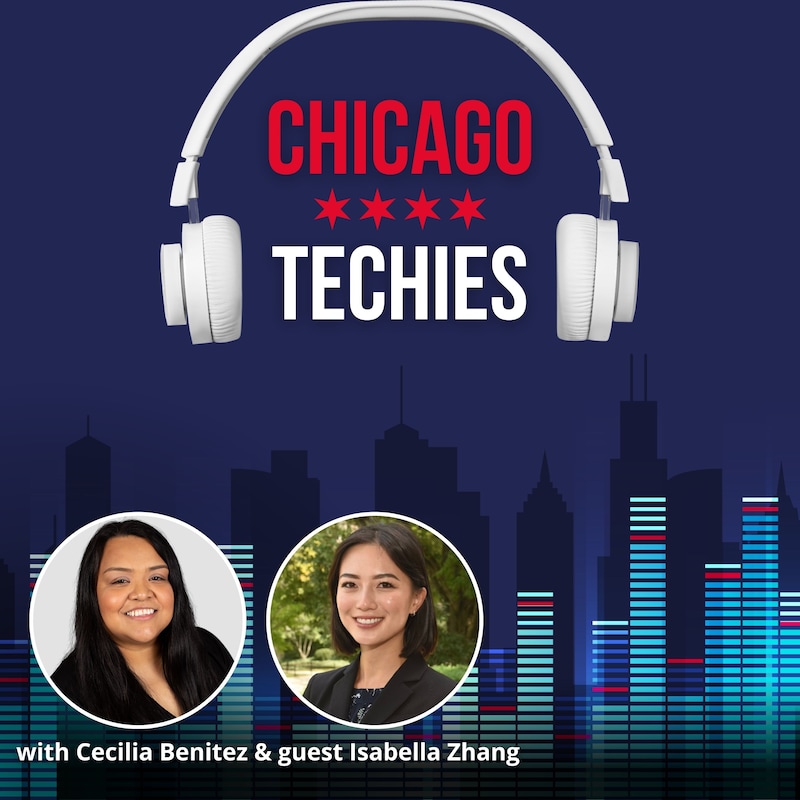
In this episode of Chicago Techies Podcast, I sat down with Isabella Zhang, founder & CEO of KNOWN, to talk about how she’s building technology to help women better understand their hormonal health.
We explored Bella’s journey as a founder and discussed why conversations around women’s health have too often been overlooked. Bella shared how KNOWN goes beyond cycle tracking, helping users better understand the connection between hormonal changes and overall well-being, while using scientific research and community feedback to shape the product.
Another theme that came up throughout our conversation was the power of community. Bella highlighted the growing network of female founders in Chicago and the importance of supporting one another as they build.
This episode is really about empowerment through better information, stronger communities, and technology that helps people better understand their health. If you're interested in women's health, startups, or hearing from founders building meaningful products, this conversation will definitely resonate.
Connect with Isabella:
Isabella’s Linkedin: https://www.linkedin.com/in/zhangisabella/
KNOWN website: https://www.knowncycle.com/
KNOWN LinkedIn: https://www.linkedin.com/company/known-cycle/
KNOWN Instagram: https://www.instagram.com/known_cycle/
KNOWN Apple Store: https://apps.apple.com/us/app/known-hormonal-health-tracker/id6760163656
Connect with Chicago Techies Podcast:
Website: https://chicagotechiespodcast.com
LinkedIn: https://www.linkedin.com/company/chicago-techies-podcast
Instagram: https://www.instagram.com/chicagotechies
Connect with Ceci:
LinkedIn: https://www.linkedin.com/in/cbenitez87/
Instagram: https://www.instagram.com/cbenitez_87
Transcripts
Hello.
Speaker B:Hello.
Speaker B:Welcome to season five of the Chicago Techies podcast.
Speaker B:The podcast that highlights the voices of Chicago techies and their experiences.
Speaker B:This season is all about Chicago talent, founders, operators, creatives and tech professionals who are building, growing, and making things happen across the city.
Speaker B:I'm your host, Cecilia Benitez.
Speaker B:Thanks for joining us.
Speaker B:Hey, Bella.
Speaker B:Thank you for joining me on this week's episode of the Chicago Techies podcast.
Speaker B:How are you?
Speaker A:I'm good, I'm good.
Speaker A:Thank you for having me.
Speaker B:Yeah, no, I'm glad to have you.
Speaker B:And I think I'm going through a catalog of all the people that come to one MC and then ask them to join me.
Speaker B:But I appreciate you making yourself available.
Speaker B:Let's start off by introducing yourself to our listeners.
Speaker B:So start with your name, your pronouns, where you're from, and then your role.
Speaker A:Awesome.
Speaker C:Sounds great.
Speaker C:Yes.
Speaker C:So my name is Bella Zhang.
Speaker C:My pronouns are she, her, and I was actually born in Australia, but I.
Speaker A:Grew up in the Bay area, California.
Speaker C:Spent a couple of years in New York City before moving here to lovely Chicago.
Speaker B:Do you, do you consider yourself a Nazi?
Speaker A:Unfortunately, I can't.
Speaker A:I feel like all of the Australians would come for me, but I do have dual citizens, so that is like the thing that I have a lot of pride in.
Speaker A:But yeah, unfortunately I, I honestly do not remember a lot about Chicago, I mean, about Australia.
Speaker A:Yeah, no worries.
Speaker B:Okay.
Speaker B:And then your current role.
Speaker C:Yes.
Speaker C:So currently am the founder and CEO of Known, which we affectionately like to call it the Strava four year cycle.
Speaker C:The reason why is because it gives gives you really detailed, intentional insights about your entire monthly cycle.
Speaker C:So not just like the few days on your period, which is what a lot of, like, you know, current period trackers consistently do.
Speaker C:But it also allows you to bring your close friends and your partner, if you choose to, along in the journey with you as well.
Speaker B:Yeah, I like that.
Speaker B:It's, I, I, I'm really curious to hear the story behind Known.
Speaker B:So what is your founder story?
Speaker B:Like, what made you want to build it in the first place?
Speaker C:Yeah, so I'll give you the, I'll.
Speaker A:Give you the medium length version because.
Speaker C:We have a little bit of time on this podcast.
Speaker C:But thinking back, I, I remember trying on a bra for the first time and that the material on my skin felt so, like, foreign uncomfortable.
Speaker C:I remember looking in the mirror and almost like mourning this loss of my childhood, which inherently, yes, it does, it does sound a little bit sad, but I think it's because I had been such tomboy for all of My life and unfortunately, coming from a culture that prioritized having sons over daughters, I always just rejected everything that was feminine.
Speaker C:So it was kind of this moment where I really started to see that I was transitioning in a sense of becoming a woman.
Speaker C:But at the same time I was.
Speaker A:Really struggling with that internally because it's.
Speaker C:Just not something that was very, hence the term, but it wasn't very known to me.
Speaker C:But eventually, over time, I started to get more into entrepreneurship.
Speaker C:And I'll be honest, it was kind of.
Speaker C:It was a little bit of a toxic environment.
Speaker C:It was intimidating.
Speaker A:I was still trying to understand what it was to really be a woman.
Speaker C:And to be proud of that.
Speaker C:But to make matters worse, I was also struggling to see a lot of other female founders, especially as I was, you know, moving into undergrad grad and really just trying to find my space in the entrepreneurship world.
Speaker C:After having a couple of pretty poor experiences, I kind of had to make a decision.
Speaker C:Was I going to, was I going to let you know these more negative entrepreneurship experiences weigh me down and was I going to run away from this space?
Speaker C:Because if I did that, I was going to be turning away one of my biggest childhood dreams, which was to build something of my own.
Speaker C:But if I didn't run away from this space, I knew that I was going to have to have thicker skin and I was going to have to fight for what it is that I wanted to build a lot.
Speaker C:And ultimately, even though I didn't start my current company Known immediately, I knew that entrepreneurship was not something that I was going to run away from.
Speaker C:And over the years, I finally stopped trying to push away or ignore the being a woman.
Speaker C:I started to realize that this, this.
Speaker A:Aspect of myself that I had always.
Speaker C:Tried to run away from was actually one of my strengths.
Speaker C:And that really came to life when I started to pay more attention to my body, understanding why some weeks I was feeling very high energy and other.
Speaker A:Weeks I like could not get out of bed.
Speaker C:And instead of being very confused about my cycle, it really sparked this passion of trying to understand more about the natural science backed aspects of how my hormones are impacted me.
Speaker C:So over time, known naturally came to life because it was something that I had been passionate about for years and finally was like, okay, if there's no.
Speaker A:Good product or tool that's currently out.
Speaker C:There, or at least one that I'm drawn to, like why don't I go ahead and try and start something things?
Speaker C:So that was a little bit more.
Speaker A:Long winded, but that was what made.
Speaker C:Me Be an entrepreneur and to start building out what this could be.
Speaker C:I love that you mentioned that it.
Speaker B:Was like a childhood dream to build something.
Speaker B:I think that speaks a lot to the people that are truly there from the start and want to build something, you know, that they're proud of.
Speaker B:I think that's really cool.
Speaker B:I love that.
Speaker B:That's.
Speaker B:That was kind of your passion from early on.
Speaker B:So you are still at the very early stages of building.
Speaker B:But I'm curious how you continue to validate this problem.
Speaker B:You know, as obviously there's a lot of women out there that we do need something like this.
Speaker B:I don't think that's something that is a given.
Speaker B:But how are you gathering this data?
Speaker B:How are you validating it?
Speaker B:How are you talking to your customers?
Speaker C:Yeah, so we spent a lot of our early time talking to everyone we could.
Speaker C:At this point, we've probably interviewed over 300 women.
Speaker C:Whether it literally be just walking around.
Speaker A:On the streets of Chicago and stopping women and interviewing them, or bothering all.
Speaker C:Of our FELLOW Classmates at UChicago, which is where I'm about to graduate from.
Speaker C:But we found a lot of very surprising insights early on.
Speaker C:Hormonal health is critical in the overall well being of how a woman or even how a man lives their life.
Speaker C:Yet over 60% of the women we surveyed don't track their cycle at all.
Speaker C:And if women were using some of our competitor apps like the typical, you know, the classic Clue or Flow, which are just the existing period tracking apps, they actually scored a lot lower in even understanding their bodies.
Speaker C:So we know that there's this gap here of people are sort of using period trackers because it's out of necessity, but they're not really loving their experience.
Speaker C:So a lot of women have started talking about how they don't have an easy way to identify the patterns and the symptoms that are happening to them throughout the entire month.
Speaker C:So that's why for our app that is now already launched on the App Store, there's another feature that we're starting to build out that allows you to see a detailed summary of the insights of your personal cycle.
Speaker C:So right when you open the app, you're able to be a little bit more proactive in what it is that you are understanding about your body as well as.
Speaker B:So are there any particular features already that have come out because of those conversations that you had with women that you're like, oh, actually we should build that for them?
Speaker C:Yeah, definitely.
Speaker C:So we spent months really perfecting the initial design of the product because we didn't want it to be so in your face and overwhelming.
Speaker C:Obviously, nothing wrong with pink at all,.
Speaker A:But we did notice that a lot.
Speaker C:Of period trackers tend to go with.
Speaker A:Like the bright pink, happy route.
Speaker A:And we're like, we just want something sleek and cool to use, you know,.
Speaker C:So even, you know, the intention behind how we built up our brand and the imagery is really designed for that.
Speaker C:You know, the modern woman who just wants that really helpful tool that will be with her every step of the way.
Speaker C:So something else that we also built is you can already compare your historical pattern side by side.
Speaker C:For example, if you're consistently lower energy during certain phases, you can see how that relates to your sleep quality or even how much caffeine you're taking in throughout the cycle.
Speaker C:And then what you can also do is because people are really curious to invite their partner along on the journey, you can also add your partner on the app so they can have access to see where you are in your monthly cycle too.
Speaker C:And they can get proactive reminders on.
Speaker A:How to best support you and how to be a good husband and girlfriend, boyfriend, etc.
Speaker A:So there's a lot of, there's a lot of fun, honestly, like, I just think it's a very entertaining app to use.
Speaker B:Yeah, I feel like that's education for both parties.
Speaker B:Yes.
Speaker A:Yeah, definitely.
Speaker B:For sure.
Speaker B:Like, one is like, oh, I should probably chill this month.
Speaker B:Yeah, this week.
Speaker B:But okay, so I, and I don't know if I, if I remember, I think from your presentation before, were you thinking of ways to integrate already with a lot of different applications out there, like the Apple Watch or like, you know, Garmin, all that?
Speaker B:How does that work?
Speaker C:Yeah, so currently we're already integrated with anything that flows into Apple Health, so we are going to expand on this a little bit more too.
Speaker C:But your sleep quality gets floated and then also your workouts.
Speaker C:The idea is to have both automated and some manual inputs for your daily logging.
Speaker C:And this is something else that we really want to stress.
Speaker C:This should be an app that you go back to on a daily basis because you're reporting your mood, your energy levels.
Speaker C:A lot of this stuff that is a little bit harder to only get from wearable data.
Speaker C:So we want to make sure that when you're looking back on your most recent period cycle, you can also see the information that's relevant not just to those couple of days when you were bleeding or getting your period, but to for the rest of the month.
Speaker C:There's so many interesting insights that you can already see.
Speaker A:For example, and maybe this is too tmi, but I track my bowel movements through the app.
Speaker C:So every day throughout the month, I am tracking if I am pooping or not.
Speaker C:And looking back on my most recent, most recent hormonal cycle, I was able to have the pattern pointed out to me that I really struggle to poop during my luteal phase, which is the week and a half right before you get your period.
Speaker C:And that is actually a very normal, consistent thing that happens to a lot of women.
Speaker C:So it's so much interesting insights that maybe you haven't necessarily seen for yourself or have it pointed out for yourself previously, but it allows you to be more proactive, essentially.
Speaker B:That's.
Speaker B:That is actually really interesting.
Speaker B:And I have heard that from friends, I mean, that, you know, some days are more constipated than normal and I'm just like.
Speaker B:And their diet didn't change or whatever.
Speaker B:I never really thought it could be correlated, but it might be.
Speaker C:Yes, it definitely can be.
Speaker B:I'm curious, are you working with researchers or like health professionals as well to kind of develop this process?
Speaker B:Because, yes, right now there's a lot of growing conversation about, you know, like, your health care, like your, your overall nutrition, like, how to optimize your workouts, like your energy, your mood.
Speaker B:And obviously I think a lot of that is connected to hormonal cycles for women especially.
Speaker B:So I'm curious, you know, how are you seeing the science and how you're implementing that in the app and you know who you're working with?
Speaker C:Yes.
Speaker C:The one thing I will say is sometimes it can feel like cycle syncing is a bit of a cult.
Speaker A:Like, I don't know why, but it's somehow got this like, cult, like behavior.
Speaker C:Because maybe it's starting to sound like, oh, you have to specifically do these, these, these things during every stage of your cycle.
Speaker C:But I genuinely do not think that that should be the takeaway of understanding your hormonal cycle.
Speaker C:I think what's more important is you as an individual need to take the time to understand what impacts you, because that is what's going to be the most helpful.
Speaker C:Some women report having barely any fluctuation in mood energy level symptoms throughout their entire month.
Speaker C:They go 30 days and they're like, okay, I feel pretty standard.
Speaker C:Like, I don't really notice any changes completely.
Speaker C:Fine, that's good to know for yourself.
Speaker C:Other women report having very correlated symptoms, energy levels, whatever that's happening throughout their month.
Speaker C:And it's more helpful for them to understand what's going on as a Result, the science backed piece is continuously being built out and we wanted our product to also be developed with science in mind.
Speaker C:So that's why we've built alongside OB GYNs, nutritionists, physical therapists, as well as PhDs in psychology.
Speaker C:Because a lot of the mental energy that happens behind understanding your cycle is also so fascinating.
Speaker C:So for example, somebody who's on our science advisory board, she's currently finishing up her PhD at UCSB and she has been doing the most fascinating studies on women throughout their entire month on how their estrogen is impacting their cognitive ability.
Speaker C:And historically what's been happening is in a lot of women health studies, they only will do analysis on a woman at one point in her cycle.
Speaker C:So for example, they'll only be analyzing her during her follicular phase or her menstrual phase, but they do not cover the entire month.
Speaker C:So the work that she's been doing has allowed people to see the changes over the entire month of the cycle.
Speaker B:Yeah, that really is fascinating.
Speaker B:And as you were just sharing that I remembered about, I had to go for my first mammogram recently and, and you know, I was, I was doing some research about them because I've never, obviously that's like a new thing for me.
Speaker B:And it's like we all have to get there eventually.
Speaker B:And they were in the research, they were saying that the best time to go get a mammogram is two weeks after your cycle because that way there's, your breasts are not as tender and you won't be as, it won't hurt as much as they're being pressed.
Speaker B:And to me I was like, wow, like we're, we're delicate flowers.
Speaker A:Right?
Speaker B:But we are.
Speaker B:But I do love that there's, there's more intentionality about the science behind everything now that we're learning and evolving and you know, putting research out there.
Speaker B:So to me that's, that's fascinating.
Speaker B:I really love that.
Speaker B:I also happen to get very like emotional like.
Speaker C:Yeah.
Speaker B:A week before my period comes to you.
Speaker A:Yes.
Speaker C:Which is completely validated, super normal.
Speaker C:And that's, that's the thing, right?
Speaker C:Like if women don't even have the opportunity to know their baseline.
Speaker B:Yeah.
Speaker C:It can be so easy to start doing self blame instead of this behavioral mindset where it's like, oh, I'm feeling very negative today.
Speaker C:There must be something wrong with me.
Speaker C:The intention is more about, I'm feeling very negative today.
Speaker C:Let's check in with where I am in my cycle.
Speaker C:It doesn't mean everything is related to your cycle, but at least to do that, check in that validation so you know what you.
Speaker C:Your typical baseline is and then you can make a decision from there.
Speaker C:But that's why I feel like it's so important to at least understand it for yourself.
Speaker A:Because I'm like, I totally.
Speaker A:If my boyfriend is like breathing too hard, like a week before my cycle, I'm like, oh my God, literally, like, leave me alone.
Speaker A:So, like, it's completely.
Speaker A:And I reckon we both recognize that maybe a little too much now, but like, we really recognize like what we're going do to through.
Speaker A:And I think that's kind of the.
Speaker C:Beauty of understanding your cycle 100%.
Speaker B:I really, I was really excited when you presented a one MC.
Speaker B:I was like, oh my God, this is really cool.
Speaker B:Like there are, you know, there are.
Speaker B:I use two different apps too.
Speaker B:Like Clue is one of them and the other one is.
Speaker B:I think it's just like a regular period tracker one out of the app.
Speaker B:But because for me, like, there was a period in time where when I, especially when I was trying to get.
Speaker B:Have babies for the first time.
Speaker B:Like, you know, you really need to monitor your psychological, to monitor your ovulation time and all of that.
Speaker B:And I feel like that's.
Speaker B:But that's not the only time that like, women really care for it.
Speaker B:I, we.
Speaker B:I have to, I now do it on a, on a monthly basis because even for your checkups at, at the doctor's office, they're always going to ask you the last time we mentioned your cycle.
Speaker B:And then there I am pulling up my phone because I never remember and.
Speaker B:But I feel like it's super helpful to just have it and then to be tracking like, how you're feeling and if you're bloated, if you're tired, if you're mood swings, energetic.
Speaker B:I think that really does help you understand your body so much better.
Speaker B:I was really excited to see you all working on this.
Speaker B:Something that is local.
Speaker A:Exactly.
Speaker C:And that's exactly why we also built the data export function in our app.
Speaker C:If you want to see all of your data, you.
Speaker C:You can literally just export it immediately.
Speaker C:And you can also bring it to your provider.
Speaker C:The next piece that we're working on directly with our OB GYN advisor is to figure out how to design a report that's even more structured in a way that you can just bring that to your provider the next time you see them.
Speaker C:And the top points that are Most important for OB GYNs to see are immediately already built into the app.
Speaker C:So that's something else that we see is another very specific, specific use case for known.
Speaker C:Because it's, the app is kind of honestly just the beginning.
Speaker C:Right.
Speaker C:Like it's a great way to have an entry point into understanding your cycle.
Speaker C:But we would absolutely want to expand into being that one stop shop for women's health.
Speaker C:So for example, you can start to get recommendations for known validated products that we truly stand behind and we think will improve your cycle.
Speaker C:But also we can start to flag and diagnose when larger health issues come up and either have our own known clinics where you would go to get checkups or we would recommend you speak to your own provider.
Speaker C:So there are a lot of growth opportunities here that we're very excited about.
Speaker B:Yeah, even education, like tips, like, you know, if somebody does self selected, they have pcos or they have like endometriosis or something related to their, their, their body, you know.
Speaker B:Yes.
Speaker B:You could also support with some of those like tips and tricks and maybe it's time for a next follow up or something along those lines that it's like go see an endocrinologist.
Speaker A:Exactly.
Speaker A:Yeah.
Speaker B:But yeah, it's, that's, that's really cool.
Speaker B:I'm excited to see how you guys continue to, to build and grow.
Speaker A:Yeah.
Speaker B:Let's talk money.
Speaker B:I'm actually really curious how you're building this.
Speaker B:I know that you mentioned, I think you did you win the new Venture challenge?
Speaker C:We were semi finalists for the new Venture challenge.
Speaker C:So yeah, I could talk a little bit more about that aspect too.
Speaker C:We have been bootstrapping up until earlier this year when we actually got our first investor check from Fit Star Funds.
Speaker C:And I will, I'll never forget the moment.
Speaker C:I was actually in Paris for the first time.
Speaker C:My boyfriend was running the marathon and we were just, you know, we turned it into a little vacation and I got the call while I was walking.
Speaker A:In the streets of Paris and love it.
Speaker C:You know what?
Speaker C:It's, it's not, it's not life changing money.
Speaker C:It's not, you know, like millions and millions of dollars.
Speaker C:But it meant so much to me because it is one of the first,.
Speaker B:Yeah.
Speaker C:One of the first, like more indicators like clear validation signs that we are really building intentionally here.
Speaker C:And the other thing that I'll be really honest about is whether we continue to get more funding or not.
Speaker C:We are continuing to build.
Speaker C:Like we maybe will be a little bit slower or we'll get more creative but we will always because we are so passionate about this idea.
Speaker C:Like it's Never going to stop us from continuing to build.
Speaker C:But yes.
Speaker C:So that was our first investor check that we got.
Speaker C:And then we also got accepted into to the summer accelerated with the Polsky center of Entrepreneurship, which comes with additional safe funding and like legal support, interns, et cetera.
Speaker C:So that's how we've been able to kick off our first round of investment and then we are going out to invest or to raise again for the next couple of months too.
Speaker B:Are you actively fundraising right now or are you going to wait a little bit?
Speaker C:Yes, so we have a couple of investor conversations that are already lined up for next week.
Speaker C:So we are starting to take those conversations now.
Speaker C:We didn't really want to rush into it too much just because we have a lot that is on our hands.
Speaker A:Right now and fundraising is truly like a full time job.
Speaker C:But we are taking those calls and we really do want to set ourselves up for the next couple of months.
Speaker C:So.
Speaker B:Yeah, yeah, no, I, I bet fundraising is challenging for everybody involved.
Speaker B:But you know, the what to your point about continuing to build, I feel like growing looks very, very much different in, in many ways.
Speaker B:Like you can keep growing with your community, with your engagement with partnerships.
Speaker B:So I'm, I'm curious, what does that growth look like for you right now?
Speaker A:Yeah.
Speaker C:So what is really fun about this is now that our product is already on the App Store, it gives us a chance to really focus on user growth because ultimately we will always be user feedback driven.
Speaker C:We do not want to build in a silo.
Speaker C:We want to be building because our users are telling us like, hey, this needs to be fixed immediately or I really want to see this happening next, like, can you build that?
Speaker C:And we've already gotten a lot of that feedback, which is really exciting.
Speaker A:But our to do lists are also very long, so definitely working through that.
Speaker C:But essentially having more users, more app downloads then translates into more specific user feedback, which we take either through our own backend analytics or through our one on one interviews.
Speaker A:We also do couple interviews, which is very entertaining.
Speaker A:So you bring both couples on board.
Speaker C:And then you ask them about their experience using the known app too.
Speaker C:So that is something that we're really focused on.
Speaker C:The other thing is really expanding the vision beyond just the app.
Speaker C:So that's another reason why we have been doing so many local Chicago events.
Speaker A:First of all, they're genuinely just really fun.
Speaker A:But second of all, they also allow.
Speaker C:Us to connect better with the broader Chicago community.
Speaker C:So for example, we did our first partnership with Studio Legree and we essentially invited more Women who were like in their follicular or just feeling more active and they also brought their partners along with them.
Speaker A:So some of the men were essentially trying legree for the first time and it was extremely entertaining.
Speaker C:So those are some ways in which we like to expand within the community.
Speaker C:Another thing that we did is we actually hosted our first annual women's showcase.
Speaker C:So that essentially looked like inviting other female founders that were based in Chicago.
Speaker C:A lot of them were cpg, but it was really cool to give them a platform to, you know, connect with the larger user base at UChicago booth.
Speaker C:And then that also allowed them to get more, you know, users and to have more interest in their products too.
Speaker C:So building the community piece is really crucial because it is a great way for us to stay more connected within Chicago, meet a lot of other founders, but also continue to set up our future, which is also opening up that partnership marketplace.
Speaker A:Yeah, that.
Speaker B:I mean you guys are growing really intentionally and you're really showing up to different things where you can find more, more of a user base.
Speaker B:What would you say is one of the biggest challenges right now as you're building in this particular space?
Speaker B:It is femtech, but not necessarily, I think one could argue it's just digital health tech in general.
Speaker B:So I'm curious if what has been your surprising things that you were learning as you grow?
Speaker C:Yeah, we have learned a lot in terms of.
Speaker C:There are.
Speaker C:There's a good problem here, right.
Speaker C:Which is that there are so many directions that you can go in.
Speaker C:But the other issue is you want to do it well.
Speaker C:And I think that can be hard, especially in the startup environment where if you try to tackle too much, it can also be your downfall.
Speaker C:And I'll give like one specific example for this.
Speaker C:And ultimately it turned out really well.
Speaker C:But we had tried launching our initial beta test earlier in February of this year and our team was working insane hours trying to get this out the door.
Speaker C:It was like the night before the launch and.
Speaker A:As these things always go, there were a million last minute bugs.
Speaker C:And issues and unforeseen circumstances and our entire team was just getting really stressed and ultimately we couldn't launch.
Speaker C:We didn't launch on that day.
Speaker C:And for me I had to go through a lot of like mental understanding of how do you separate yourself like me Bella as an individual versus me BELLA STARTUP FOUNDER and it really forces you to try and understand like how to not put your self worth into everything that you're building.
Speaker C:And that was a really difficult lesson to learn because if you do not learn how to discern that.
Speaker C:It's going to be very mentally challenging to continue to build in this space.
Speaker C:And, yeah, I thought that the whole team was going to quit.
Speaker C:I thought we were all just going.
Speaker A:To be like, all right, this is it.
Speaker A:We didn't launch, Close up shop.
Speaker A:Let's move on to the next thing.
Speaker C:But, like, the opposite happened.
Speaker C:You know, we.
Speaker C:We had some really good conversations, some really challenging but constructive one on ones, and ultimately everybody was closer as a result.
Speaker C:And we were like, we're so far from failing, we're actually going to try even harder.
Speaker B:Yeah.
Speaker A:And then we did end up launching.
Speaker A:You know what I mean?
Speaker A:So it's.
Speaker A:It's like you got to go through these.
Speaker A:These tough hurdles, and in the moment, yeah, maybe it feels like the world is gonna end, but I think that is honestly the challenging part of what.
Speaker C:Do you do in the situations where your worst fear comes true?
Speaker A:And then you're sitting there and you're like, okay, you pick up the pieces, you know, like, what.
Speaker C:What am I gonna do about this next?
Speaker C:Like, how do I move from here?
Speaker C:And the decisions that you choose to make in those moments, I think is what is going to make or break your company.
Speaker A:Yeah.
Speaker B:Thank you.
Speaker B:I appreciate the vulnerability.
Speaker B:I feel like that is one of the things that founders don't really talk much about, the mental component of.
Speaker B:In the journey of building and thinking that they might as well fail right there in that moment, but eventually they turn it around.
Speaker B:But I think that's just ups and downs all along the way, and I'm sure that takes a toll on people's, you know, mindset.
Speaker C:Yeah.
Speaker B:That we don't often talk about.
Speaker C:Yeah, absolutely.
Speaker C:There's so many, like.
Speaker A:I mean, people face failure left and right every day.
Speaker A:Right.
Speaker A:Especially in serta.
Speaker A:But, yeah, I think each time is.
Speaker C:Kind of just like an opportunity for you to learn more about yourself and you get to pick essentially how you respond to an outcome.
Speaker B:Yeah.
Speaker B:And I mean, I think one of those responses is a good.
Speaker B:A good network.
Speaker B:Right.
Speaker B:Surrounding yourself in your community.
Speaker B:I feel like in terms of that community and, you know, it's a good segue to talk about building known here in Chicago and how the community around you has received this endeavor for you.
Speaker B:How has it influenced you?
Speaker C:Yeah.
Speaker C:Oh, it's been life changing.
Speaker C:I mean, so for context, I applied to UChicago Booth because I wanted to start this company as well.
Speaker C:I had known that this was something that was a huge passion of mine.
Speaker C:I didn't quite know exactly what it would look like yet.
Speaker C:But my intention was to come to Chicago and to build.
Speaker C:And UChicago itself already has a really, really great ecosystem.
Speaker C:As I mentioned, I had done Polsky's new venture challenge, and that really forced us to build quickly, to fail quickly, and then to pivot.
Speaker A:Right.
Speaker C:And to figure out, what do you want to improve?
Speaker C:Like, what do you want to build differently this time?
Speaker C:So so many different iterations of our product was a result of having a bit of a time pressure, which was honestly really helpful, and then attending events.
Speaker A:Like one mc, the Menstrual meetup, which was so cute.
Speaker A:Like, it was essentially other female founders that were building in the women's health space.
Speaker C:Right.
Speaker A:Like, these are these local things that.
Speaker C:Will just keep you going.
Speaker C:And the more events that I attend in Chicago, the more I get really.
Speaker A:Excited because I'm even starting to recognize so many familiar faces now.
Speaker C:And that is what I think is the best part about Chicago.
Speaker C:You have a very intentional community.
Speaker C:And every time I have talked to another founder or I'm reconnecting with a founder, there is so much genuine warmth.
Speaker C:Like you really feel like people care to listen to what it is that you're building.
Speaker C:And there's a lot of just helpful back and forth conversations.
Speaker C:So I think finding a Chicago founder community has helped me so much.
Speaker A:Even if you're not in the same industry, there are infinite, like, relatable conversations that you can have.
Speaker C:Even something as simple as, okay, I want to launch a newsletter.
Speaker C:Like, what services are you guys using right now?
Speaker C:Like, that's an easy conversation that you can have with other folks.
Speaker C:So, yeah, building in Chicago has given us the chance to host so many of these local community events and also to meet a lot of other founders as well.
Speaker B:So, yeah, well, long term, how do you see the impact that you're hoping to create here with known in general or as far as society goes, how they talk about our hormonal health?
Speaker B:What's your dream for this product?
Speaker A:I love this question because the dream.
Speaker C:That I initially had is already starting to come true.
Speaker C:And it's just to have the everyday terminology of people knowing about women's hormonal cycles come to life.
Speaker C:And we already see this happening where people actively are saying, oh, I'm in follicular today.
Speaker C:I'm feeling X, Y, Z, or I'm.
Speaker A:In the dreaded luteal phase and, you know, nobody talks to me.
Speaker C:But just having these everyday terms really brought into normal societal conversation is such an important thing because it's shedding light.
Speaker A:On.
Speaker C:Something that a lot of people just previously had no concept about.
Speaker C:Like, even when I first started learning about hormonal cycle years ago, if I.
Speaker A:Were to say like luteal phase, I.
Speaker C:Don't think people would know at all what I'm talking about.
Speaker C:And of course, there's still a lot of people that are learning the terminology and they're learning about how this comes to life.
Speaker A:But now so many random people will immediately understand.
Speaker C:What you're talking about.
Speaker C:And this idea of cycle syncing has just gotten incredibly popular.
Speaker A:There's so many funny, like, memes on social media now of men trying to simulate what it is to be in the luteal phase or to be, you know, having the period, etc.
Speaker C:So I think the impact is to really bring the previously taboo aspects of women's health into the light.
Speaker C:A lot of women, I use this term, are like, quietly suffering.
Speaker C:Where when I tell people, for example, that I'm building a hormonal health company, they immediately are like, oh yeah, I've actually been dealing with this very intense.
Speaker A:Health issue for the past year.
Speaker C:And then they ex.
Speaker C:They describe their symptoms and they're like, oh, yeah, but it's okay.
Speaker C:Like, I'm just managing it.
Speaker C:And I'm always shocked.
Speaker C:Like, how are women just quietly going.
Speaker A:Through their life trying to manage these.
Speaker C:Aspects about their health and not really talking to their close friends about it?
Speaker C:So I really do want just more conversation and more of this to be, you know, brought to the forefront long term.
Speaker C:I want known to be the go to women's health space.
Speaker C:So whether you are understanding your own cycle and the everyday ways in which you're being impacted, I want you to be able to book a clinic with a known OB gyn.
Speaker C:If we flag a problem for you or if we're seeing some issues in your cycle, we want to escalate that for you so you can get end to end care to really live your best life.
Speaker C:That is something that we would absolutely go for.
Speaker C:And then if we can also be the guy go to place for you to find the latest and greatest women's health innovations, we would love to do that too.
Speaker C:So the known membership can really be fully inclusive of how to be the essential elevated woman, if you will.
Speaker C:And that's kind of our vision.
Speaker B:Yeah, well, I'm excited for you and I'm also generally just excited about the idea of women not feeling overlooked with our bodies in general and our health care.
Speaker B:Like, our health care sucks.
Speaker B:Like, our insurance prices right now are insane.
Speaker B:Like, everything that is out there that affects women is just not equally distributed.
Speaker B:Right.
Speaker C:Like, it's just absolutely not.
Speaker B:Yeah.
Speaker B:But I'm excited to see where, where you go with, with Known, and I look forward to seeing you grow.
Speaker B:But I guess on that note, what are your next big milestones that you're hoping to accomplish before the end of the year or next year?
Speaker A:Yeah.
Speaker C:So this might be a little bit lofty because right now we're at a couple hundred users, but we want to get to 100,000 downloads on the app because it leads to, as I had mentioned, more consistent user feedback, better direction, and really building with the user in mind.
Speaker C:So that's one of our biggest parts, milestones.
Speaker C:And then we also officially want to launch our known partnership where you can feel really supported in your journey of not just the educational piece of understanding your hormonal cycle, but where do you actually go from here and how do you, you know, live your best life according to Known?
Speaker C:So those are the two big monsters.
Speaker B:Yeah.
Speaker B:And to close us off, I. I'm curious if you have any advice for other either female founders or just founders in general that are looking to build maybe an in the healthcare space or just, you know, in spaces that haven't been traditionally received enough attention in the past or funding.
Speaker B:So what.
Speaker B:What advice do you have out for those people?
Speaker C:I have two pieces of advice.
Speaker C:The first piece of advice is don't get stuck on the idea.
Speaker C:I don't believe that there is any new, fully new idea out there anymore.
Speaker C:So if you're waiting for the perfect idea to come along, don't wait for that.
Speaker C:Just pick something that you're passionate about and start building.
Speaker C:You will iterate more times than you can count.
Speaker C:So you might as well just start somewhere and give yourself that chance.
Speaker C:Give yourself that opportunity to grow a little bit.
Speaker C:And you really do need to trust yourself in this process.
Speaker C:Ultimately it comes down to how much do you want to believe in this?
Speaker C:And nobody will be able to tell you that you have to, you know, shut it down or whatever.
Speaker C:Like that is fully on your own autonomy to control.
Speaker C:So if you're sitting on an idea, I really urge you to just start with something small.
Speaker C:My other piece of advice is a little bit more general.
Speaker C:I was listening to a talk, I believe it was, by a couple of Sequoia investors that had come to Uchicago to speak.
Speaker C:And he said three things and I.
Speaker A:It still stuck with me.
Speaker C:I think it's been over a year at this point that I listened to that talk.
Speaker C:First one, he said is absence of bad habits, which blew my mind because everyone always talks about how you have to build good habits, build good habits, but no bad habit will ever be able to be erased by a good habit.
Speaker C:So the first.
Speaker C:First thing you got to focus on is absence of bad habits.
Speaker C:Then the second one is build good habits.
Speaker C:The third one is surround yourself with good people.
Speaker C:And I have been really focused on implementing that in my own life.
Speaker C:Still working on it.
Speaker C:Obviously not perfect, but I think that has really, like, helped drive a lot of the decisions that I've made today.
Speaker B:Yeah, I love that advice.
Speaker B:It's great advice.
Speaker B:Believe in yourself and then habits, good habits, bad habits and good people for sure.
Speaker B:Thank you for that.
Speaker B:And for anyone that is listening that might want to follow up with your journey or just what you're.
Speaker B:What you're doing, how can they find you?
Speaker C:Yes, we are very active on Instagram, so you can find us at Known, Underscore Cycle, and you could honestly even just DM us there if you have feedback.
Speaker C:We are always looking for.
Speaker C:For more feedback.
Speaker C:And Known is also live on the App Store right now.
Speaker C:So if you are an iOS user, you can go ahead and download it immediately.
Speaker C:Android is coming soon in the summer.
Speaker A:We're focused on that too.
Speaker C:So thank you so much.
Speaker B:Another big milestone right there.
Speaker B:Yes.
Speaker B:And I'll make sure to include all of those links in the show Notes.
Speaker B:So if you want to share any other links, please feel free to send them in to me.
Speaker B:I'll put them on the show notes, but this has been very lovely.
Speaker B:Thank you so much for making the time to chat with me.
Speaker B:Wishing you the best of luck.
Speaker B:And I will also definitely send you some links for level of ventures that I think it might be a good fit for you to apply.
Speaker B:They're based in New York, but they have like over 50 other community funds that they work with that I think you should apply.
Speaker B:And I'll send you my credentials in there so they can actually see it.
Speaker B:And then if I look at.
Speaker B:I mean, I'll look through my network and see who else does femtech.
Speaker B:You might be a little too early right now, but eventually Chingon Adventures, I think, will be an interest, an interesting one.
Speaker A:We actually have a call with them next week.
Speaker B:There you go.
Speaker B:I mean, I'm just.
Speaker B:This is just my perception of maybe being too early, but I might be wrong.
Speaker B:You never know because they also do free revenue too.
Speaker B:So it's, you know, it's in this economy right now, a lot of investors are doing a lot of different things, a lot of different changes, but very excited for you.
Speaker B:Wishing you the best and thank you again for joining me.
Speaker A:Thank you.
Speaker A:Really appreciate it.
Speaker B:Yay.
Speaker A:Yay.
Speaker B:Thank you for listening to this week's episode of the Chicago Techies podcast.
Speaker B:If you enjoy listening, don't forget to subscribe, share, and leave a review on itunes.
Speaker B:Let's continue the conversation on social media.
Speaker B:We are Chicago Techies on all social media platforms.
Speaker B:Thank you again and we'll see you next time.