Shownotes
Episode Summary
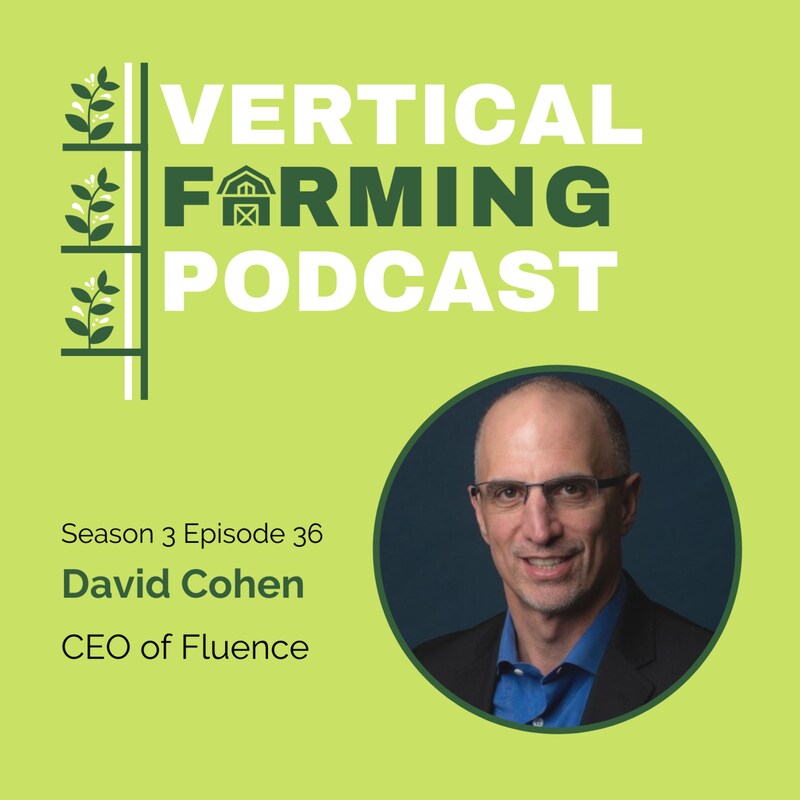
Join Harry Duran, host of Vertical Farming Podcast, as he welcomes to the show, CEO at Fluence, David Cohen. Fluence is a horticultural lighting company owned by OSRAM. They explore physiological plant development under various levels of photosynthetically active radiation and custom spectra compositions. Today, Harry and David talk about David’s eclectic background in the LED lighting industry and the circuitous route that led him to Fluence. David reflects on the learning curve he experienced transitioning into his role as CEO of Fluence, highlights from his earlier career and best practices for scaling quickly in the fast-paced industry of vertical farming.
Episode Sponsor
Key Takeaways
- 02:37 – Harry welcomes to the show David Cohen, who talks about his fervor for health and wellness, what leadership means to him and mentors who have impacted him
- 16:52 – David recalls highlights and lessons he learned during his time at Fraen
- 23:42 – David talks about how he got involved in the controlled environment agriculture market and the circuitous route that brought him to Fluence
- 28:45 – David reflects on the learning curve he experienced moving into his role at Fluence
- 37:02 – David provides best practices for scaling extremely quickly
- 42:25 – David discusses the pivoting he and his organization needed to do in the midst of the global pandemic
- 43:31 – David describes the current offerings that Fluence offers
- 47:51 – David talks about where he’s seeing the most innovation in the LED industry
- 51:04 – A tough question David has had to ask himself recently
- 55:23 – Harry thanks David for joining the show and let’s listeners know where they can learn more about Fluence and connect with David
Tweetable Quotes
“Failure is part of success as far as I view it. There’s no such thing as perfection.” (16:46)
Links Mentioned
Sponsor Info:
🎙️🎙️🎙️
Podcast Production and Marketing by FullCast: https://bit.ly/3sxZ34y
See omnystudio.com/listener for privacy information.
Mentioned in this episode:
2025 Precision Ag Report by iGrowNews
2025 Precision Ag Report by iGrowNews
Transcripts
$680 million poured into precision ag last year.
Speaker:Autonomous weeding robots dominated, and John Deere made 2 acquisitions in 3
Speaker:months. A food company, not an equipment maker, bought a
Speaker:robotics startup to protect its own supply chain. The deals are
Speaker:accelerating, the money is moving, and the winners are already separating from the
Speaker:pack. If you're investing, building, or buying in this space,
Speaker:you need the full picture before your competitors get it. The 2025
Speaker:Precision Agriculture Intelligence Report From iGrow News is now
Speaker:available. Get your copy today at
Speaker:igrownews.com/precision. If you are starting a vertical
Speaker:farm and don't know where to begin or which technology would suit your needs,
Speaker:then reach out to the experts at Cultivated. As indoor farm brokers, they
Speaker:help connect you to the right technology and ensure your project is successful.
Speaker:Best of all, their service is free because they work on behalf of their
Speaker:partners. Visit cultivated.com to learn more. And
Speaker:that's spelled C-U-L-T-I-V-A-T-D.com,
Speaker:or click the link in the show notes. Over all the different jobs I've had
Speaker:that, look, you do your best to always keep customers happy, but it's not always
Speaker:going to work out. There are times when customers are just going to be furious.
Speaker:That's a great opportunity to get closer to a customer. That's what he would always
Speaker:say to me. You know, don't be afraid of negativity and don't be
Speaker:afraid of, you know, aggression. You know, absorb it.
Speaker:and do something with it rather than let it intimidate you.
Speaker:Welcome to the Vertical Farming Podcast, weekly conversations
Speaker:with fascinating CEOs, founders, and agtech
Speaker:visionaries. Join us every week as we dive deep into the
Speaker:world of vertical farming. with your host, Harry Duran.
Speaker:Vertical Farming Podcast, Season 3. Welcome back. If this is your first time listening, you're
Speaker:in the right place. This is the show where we interview fascinating CEOs and founders
Speaker:of the leading vertical farming companies from around the world. I'm your
Speaker:host, Harry Duran. In case you missed last week's episode, we had a really
Speaker:fascinating conversation with Hiroki Koga. He's the
Speaker:co-founder and CEO at Oishi Berry, and they've been
Speaker:making a big splash in the vertical farming world, Recently,
Speaker:having recently come out of stealth mode. So lots of fascinating topics
Speaker:specifically around the strawberry
Speaker:and the intricacies with the prefectures in Japan, a
Speaker:whole bunch of things that are really fascinating that I didn't expect to
Speaker:learn during this episode, but I was really impressed
Speaker:with Hiroki's takeaways and how he ended up with
Speaker:Oishi. Fascinating stuff. This week I welcome to the show David
Speaker:Cohen. He is the CEO of Fluence by Osram. We
Speaker:talk a bit about David's eclectic background in the LED lighting
Speaker:industry and the circuitous route that led him to Fluence. David
Speaker:reflects on the learning curve he experienced, best practices for scaling
Speaker:extremely quickly, which is something that he's now a subject matter
Speaker:expert in, how Fluence was able to pivot to the things his
Speaker:organization needed to do in the midst of COVID And we learn a little bit
Speaker:more about Fluence and what's driving David's recent
Speaker:thoughts about innovation in the LED industry. Special thanks to our episode
Speaker:sponsor, Indoor AgCon. Whether you're starting up or scaling up, Indoor
Speaker:AgCon can help you grow your vertical farming business. Live
Speaker:and in person this year, the premier trade show and conference for vertical farming
Speaker:and controlled environment agriculture heads to Hilton Orlando, October 4th through
Speaker:5th. Explore an expo floor filled with new product
Speaker:resources and business solutions, attend idea-packed educational
Speaker:sessions led by top CEOs and thought leaders, and connect with peers at
Speaker:great networking events. Learn more and take advantage of early bird registration
Speaker:discounts at indoor.ag, and you can save an additional $100
Speaker:off registration with our promo code VFPOD2021,
Speaker:and we'll list that in the show notes as well. Don't forget to sign up
Speaker:for our weekly newsletter at verticalfarmingweekly.com. Each
Speaker:week, our team member Daniel is bringing you the latest and greatest in the world
Speaker:of vertical farming. We've got a new review in this week
Speaker:from Norway, and it's from Cam B88. And
Speaker:Cam says, a very interesting podcast, quality interviews, and
Speaker:understandable also for people like me with limited background knowledge about vertical
Speaker:farming. Thank you for your review titled Quality Work, Cam.
Speaker:I appreciate you taking the time to write one in and for being a
Speaker:listener of the show. Don't forget, if you'd like your review read
Speaker:out, head on over to ratethispodcast.com
Speaker:for I'd love to read yours out next. Okay,
Speaker:let's get into this conversation with David. So David Cohen, CEO of Fluence, thank you
Speaker:for joining me on the Vertical Farming Podcast. Yeah, my pleasure, Hari. Thanks for
Speaker:having me. So just to start the conversation, I'm curious what the best
Speaker:thing is that's happened to you this past week. To me personally?
Speaker:Yeah. I arrived at a
Speaker:beach house that my family and I are going to be at on the coast
Speaker:in New England for a month. It was spectacular. Yeah. So I
Speaker:got here and it was raining. raining and 40 degrees.
Speaker:And as soon as that ended, it's been beautiful and sunny every day.
Speaker:So as much as the work is intense, I can walk outside
Speaker:and put my feet in the sand and look at the waves and ground myself
Speaker:and then come back to the insanity. So that's probably the best thing that happened
Speaker:to me this week. Well, it's something I was going to ask you about earlier,
Speaker:so this might be a nice segue. One of the things that caught my eye
Speaker:when I was looking at one of the the bios was how some of the
Speaker:changes and decisions you've made later on in life were based
Speaker:on your deeply rooted fervor for health and wellness.
Speaker:And, you mentioned grounding, so I'm wondering what that journey to health and wellness
Speaker:has been like for you. Well, for me, it started
Speaker:probably almost 30 years ago. My
Speaker:father had a heart attack at a very, very young age
Speaker:right before he was 50. I was in my early 20s and I
Speaker:was always health-conscious,
Speaker:fitness. I played different athletics when I was in high school,
Speaker:but the doctors pulled my brother and I aside and
Speaker:let us know that unfortunately genetics was the overriding
Speaker:factor here and that if we wanted to try to
Speaker:avoid a similar situation, which resulted in a triple bypass and
Speaker:quite a bit bit of health stress that we should really start taking care of
Speaker:ourselves as much as we can. And that kind of started for me
Speaker:just regular moving activity and has graduated as
Speaker:I've gotten older to a lot of meditating, try to do
Speaker:yoga with my wife as much as I can, just centering stuff.
Speaker:And it's just a, like you say, it's a journey, you know, just constantly staying
Speaker:after it, making sure that, you know, there's nothing wrong with having a
Speaker:little fun every once in a while, but generally speaking, try to take as good
Speaker:care of myself as I can. to weather the, at least the
Speaker:pre-COVID traveling and flying. And, you
Speaker:know, there's a vertical farm or an indoor grow everywhere in every
Speaker:corner of the world that wants to talk to us. And, you know, I just
Speaker:find that being at my best physically and mentally is always an
Speaker:advantage. Do you notice, or people that are close to you be
Speaker:able to describe the difference between pre-awareness of wellness
Speaker:David and post-awareness of wellness David? Probably not, only because
Speaker:it's been so long that the people that knew me back then without
Speaker:really knowing anymore. But yeah, I
Speaker:just— people would overall describe me as pretty intense. And I'm
Speaker:one of those people that crack of dawn before the sun comes up, I like
Speaker:to have— get my hour of intensity in and sit and
Speaker:have a cup of coffee, gather my thoughts, and then attack the day. So it
Speaker:just happens to work very well for me. Does that come from
Speaker:just a function of how you were raised or just people, mentors along the way,
Speaker:that discipline, that early morning discipline? Probably along the way, you
Speaker:know, and just the way my life is kind of settled. I,
Speaker:you know, thinking back when I was young, there was no possible way you could
Speaker:get me out of bed at 5:00 AM. And, you know, I was the get
Speaker:out of work, go to the gym at 7 o'clock and, or play basketball or
Speaker:whatever with my friends. And now I just, I don't know,
Speaker:my eyes open and it's time to go. And, uh, I find that
Speaker:if I don't get that certain level of intensity in the, the
Speaker:kind of the built-up intensity that is going through
Speaker:with my thoughts and the things that I want to get done become
Speaker:harder to sort through than if I just take that hour and really
Speaker:bear down, you know, clear the— I don't know how to say it the
Speaker:best way, but— The cobwebs. Yeah, clear the waves and
Speaker:make it so, you know, just thinking and processing for me.
Speaker:It's strange. I find even on nights where I don't sleep very well, if I
Speaker:go and exercise, I get through the day, no problem. If I don't, I feel
Speaker:slow and sluggish all day. So It's just something that works for
Speaker:me. Different people, different things. And even if I can't go and exercise, I'll go
Speaker:for a walk, or I'll, I'll definitely try to breathe and
Speaker:meditate, even if it's for just a couple of minutes, just to get centered. And
Speaker:it, yeah, it seems like it would be something that you'd want to do, or
Speaker:that you've disciplined yourself to do in order to reset, or that
Speaker:Ctrl+Alt+Delete, I guess, to ensure— That's exactly what it is. That's a really good way
Speaker:to describe it, Ctrl+Alt+Delete. And I've just found that I've become more and more
Speaker:dependent over the years on it as my Working life becomes more
Speaker:intense and the magnitude of the decisions becomes
Speaker:more significant. I don't know about more intense, but the decisions I'm making today as
Speaker:professional are much different than the decisions in magnitude that I was making 20
Speaker:years ago. And I, like I said, for me, everybody's got
Speaker:what works for them, but for me, what works is clearing everything out first,
Speaker:you know, really trying to focus on breathing and
Speaker:getting through a workout. And then a cup of coffee and boom, I'm
Speaker:ready to go. Or 2 or 3 cups of coffee.
Speaker:Yeah, staggered throughout the day as well. What is your beverage of choice? Coffee
Speaker:and water. Black coffee. Okay. Yeah, that's it. Nothing too fancy.
Speaker:Well, we'll get into vodka, but me, you gotta get to know me better before
Speaker:I start declaring those details. That's fair.
Speaker:I'm wondering if you felt like this— you've always been someone that's driven. I
Speaker:noticed obviously there's a lot of education in your background,
Speaker:and even like the things that you were studying back then, did Did you always
Speaker:feel like even when you were in high school that like leadership and running your
Speaker:own company was something that you were destined for? I always felt like I wanted
Speaker:to do something that had a leadership component to it. I think
Speaker:when I was younger, it had to do more with
Speaker:status and accomplishment, you know, wanting to be
Speaker:in that type of position and not really understanding what
Speaker:leadership was and what responsibility and accountability really is.
Speaker:I think a lot of young, driven people want— they think they want
Speaker:something, but really understanding what it's about and why,
Speaker:I think, comes with a certain level of maturity. And as I got older,
Speaker:I'm still fascinated by leadership, but for different reasons than I was
Speaker:when I was younger. When I was younger, it was more about being that person,
Speaker:being in that role that I could always see. Wow, I want to have that
Speaker:job. I want to do what that person's doing. And I don't know when that
Speaker:changed, but over time it's more evolved into,
Speaker:I've seen and done so much. I've been very
Speaker:fortunate to live in Asia and work
Speaker:there and have raised a family there, spend 5, 6
Speaker:years in Europe. I feel a compelling
Speaker:urge a lot of times to pay that forward,
Speaker:you know, use that to help other people.
Speaker:Maybe have to experience a few less mistakes
Speaker:on the way just because of the experiences that I've had. So for me,
Speaker:leadership now is, is more about sharing
Speaker:everything that I've been fortunate enough to learn from great, great people over the years
Speaker:and hoping that maybe I can be one of those people in somebody's journey that
Speaker:helped them, you know, a little bit, save them some time, or open a door
Speaker:for them that they didn't know was open, which I've been really, really
Speaker:lucky over my career that I've had a number of people kind of just poke
Speaker:me on the shoulder and say, no, door's right over there. You just got to
Speaker:open that one. Speaking of that, can you think
Speaker:of a name or two or someone that's had a special relationship for you, either
Speaker:as a mentor or someone that you've learned from? Yeah, I've got
Speaker:a lot of great people, and I put all of those people in the same
Speaker:bucket, even people that I had really bad experiences with. Sometimes
Speaker:I've You know, in the middle of those experiences, I didn't really like it that
Speaker:much, but being able to reflect on my career, the
Speaker:people that gave me the hardest time helped me as much as the people that
Speaker:helped me. But I got a job right out of school
Speaker:with a company in Massachusetts, just outside of Boston. And I was
Speaker:extremely lucky that I was at that company for close to
Speaker:21 years. It was a very small family company.
Speaker:And I got in the door when it was just a couple of million dollars.
Speaker:It was a local contract manufacturer. And over the years, we
Speaker:just did a lot of things right, got lucky, grew it to $40,
Speaker:$50 million. And I kind of grew up my career at that
Speaker:company. And that entire time, I worked for a single person.
Speaker:I just spoke to him this morning. No way. I don't work there anymore. And
Speaker:we're still very, very good friends. The gentleman's name is Nick Scarfo. He
Speaker:hired me, and as he moved up, he brought me up. He eventually
Speaker:bought the company from the family. And what I learned from
Speaker:him was all of the pieces of me that I
Speaker:didn't have. He was just a notorious
Speaker:great street fighter is what I call it. There's people in business that
Speaker:just have an incredible amount of formal training skill, and there's people who are
Speaker:just really, really good in interactions and negotiations. Yeah. And I
Speaker:learned so much from him. that I still use to this day.
Speaker:And then there was another gentleman that I had a very short stint at a
Speaker:big global company called Future Electronics. I was heading
Speaker:up their lighting activity in Europe. We're based in London.
Speaker:And I had a mentor at Future. This gentleman's name was Dan Casey, and
Speaker:I still talk to him as well. And these people helped me, you know,
Speaker:almost every time that I could think that I was at a crossroads, I contacted
Speaker:one or two or 3 of the people in a network and say, hey, what
Speaker:do you think? You know, and they're just always there to help. So I feel
Speaker:like I'm really blessed to be able to have that type of influence in
Speaker:my career, and I would like nothing more than be able to pass that on
Speaker:to, you know, to somebody else. To me, that's more about leadership than being
Speaker:in charge, being the boss. You know, being the final say is what you want
Speaker:when you're younger, but then you realize as you get older, it's not really all
Speaker:about that. It's, you know, trying to get a group of people to execute on
Speaker:something that they have to fully buy into. Consensus. Exactly.
Speaker:Exactly. So I'm curious, as you were describing the
Speaker:relationship with those couple of folks that you worked with,
Speaker:I imagine they start to color how you look to pay it forward
Speaker:and have people look up to you and possibly ask
Speaker:you for mentorship or guidance. And I'm sure you think about those
Speaker:relationships that you've had And that colors your experience? Yeah, for sure.
Speaker:And it's interesting because in that particular case, those 2 gentlemen, they're just,
Speaker:they're polar opposites. The guy that I grew up under and learned for
Speaker:those 20 years was, you know, look, he went to college, he has a degree,
Speaker:really smart person, but he was very much a street smarts
Speaker:person reading situations and just learning to,
Speaker:you know, be a bit more combative at times, be a bit more confrontational. You
Speaker:know, I didn't know any of these things and I watched and learned a lot.
Speaker:From him. And then the other gentleman, Dan at Future, was just your
Speaker:steady as you go. Nothing flustered the guy. I mean, you
Speaker:could literally come to him and say, I mean, your house just exploded, what are
Speaker:you going to do? And okay, well, we got to solve this problem. Let's think
Speaker:about— one of those guys. For sure. And, you know, you need both of those,
Speaker:right? The first one was just like, forget it, you know, just chaos, mayhem,
Speaker:get in there and, you know, figure out how you win in a
Speaker:situation where everybody's confused. And he's the guy you want in the
Speaker:trenches with you. Yeah, it's a really valuable trait. And if you don't
Speaker:know how to seize opportunity in chaos,
Speaker:I don't know where you can learn that. There's no course that teaches you that.
Speaker:I learned that from somebody that was fantastic at it. You know, when I— when
Speaker:we saw things that I thought were bad, he would always say, no, no, this
Speaker:is a great opportunity. And I still use that line, you know, over all the
Speaker:different jobs I've had, that look, you do your best to always keep customers
Speaker:happy, but it's not always going to work out. There are times when customers are
Speaker:just going to be furious. That's a great opportunity to get closer to a
Speaker:customer. That's what he would always say to me. Don't be afraid of
Speaker:negativity and don't be afraid of aggression.
Speaker:Absorb it and do something with it rather than let it intimidate you,
Speaker:which was a fantastic lesson. Great advice. And then on the other side of it,
Speaker:the other guy, Dan, was just, he was very, very astute at reading the
Speaker:trade winds in big companies and understanding You know, it's going
Speaker:this way over here and this way over there, and you got to position yourself
Speaker:in a certain way to make sure that you can keep everything going.
Speaker:And, um, yeah, if there's a chance that I can help
Speaker:anybody along the way, I feel like it's my responsibility now.
Speaker:You know, I— those things came to me through a lot of good luck, through
Speaker:a lot of, you know, hard work, but you still are— when you have the
Speaker:opportunity to come across people that really help you, it's a great feeling. I had
Speaker:a similar relationship with someone and I worked in corporate for 20 years. I was
Speaker:at JPMorgan Chase and E-Trade and I called him my corporate godfather.
Speaker:He ended up being my boss in 5 different roles at 2 different companies.
Speaker:So I can definitely relate to it. I would say Dan Casey for me was
Speaker:exactly that person. And the other guy, Nick, was more like a
Speaker:trainer in a boxing match who would just throw water on your face,
Speaker:slap you on the top of the head, be like, it's all okay. I know
Speaker:you feel like you're about to die in this fight, but go get them. And
Speaker:you need a little bit of all of that. You have to understand how To
Speaker:manage adversity. You know, when everything's going good, it's actually not that hard.
Speaker:No, it's when it gets sticky and having confidence in yourself, being
Speaker:not afraid to make decisions, not afraid to make bad decisions, right?
Speaker:And how to keep people aligned behind what you're trying to do. And that's invaluable.
Speaker:You— I don't know that you can learn that in school. No, they don't teach
Speaker:that in school. No, no. And you got to be— can't be afraid to fail.
Speaker:And that's another thing that— that's a big one— that fear of failing, it's not
Speaker:You know, fail, go ahead, figure it out. You know, and having people that
Speaker:allow you to brush yourself off, do a little bit of
Speaker:self-reflecting and move on. That's a massive confidence builder that I
Speaker:found over my career. Yeah, I've sort of had to relearn some of that
Speaker:as I went. Because now, as an entrepreneur, this idea of failing fast
Speaker:and just getting up faster and just being like, okay, dusting yourself off and saying
Speaker:that didn't work. What's next? We're gonna try. Yeah, what's next? Failure is— it's a
Speaker:part of success is, in terms of how I view it, there's no such thing
Speaker:as perfection. So yeah, so changing gears a little bit,
Speaker:I'm interested for you to describe what it was like to be at Frane.
Speaker:Is it Frane? Frane? Frane, yeah, like F-R-A-N-E, pronounced like
Speaker:that. Yeah, at Frane in the 2000s when LEDs
Speaker:were just starting to pick up. And like, how do you prepare for something like
Speaker:that? And did you know like what was about to happen? It was
Speaker:crazy, and I'll work backwards. No, we had no idea.
Speaker:So we were in the middle of trying to expand globally our
Speaker:automotive footprint. So this was a company that made pieces
Speaker:for the dashboard of cars, typically the needles, the
Speaker:speedo, the gauge, tachometer. So these are small little light
Speaker:pipes. Over the years, the technology by the 2000s evolved that
Speaker:these little pieces of plastic sat on your dashboard and there was an
Speaker:LED light behind it, and that shined up through
Speaker:the piece of plastic. And when you're driving down the road, you know, you have
Speaker:to have— nobody knows this, but when you're dealing with Ford and Chrysler, you
Speaker:know, you've got 50 people standing around with a magnifying glass looking at this piece
Speaker:of plastic that costs like 18 cents. That's right. Trying to find, you know,
Speaker:microscopic defects. We had a really good relationship with the companies
Speaker:that made the LEDs for cars in the late '90s and early 2000s.
Speaker:We were getting ready to expand in Europe. We hired a team of people
Speaker:in Italy. And they were working very
Speaker:closely with Lumileds who had just
Speaker:invented or just released, I don't know if invented is the proper word,
Speaker:but the first high-powered LED. So it was like a $10 LED that
Speaker:they flew out to our facility and they showed it to us and said, look
Speaker:at this thing. And it was so bright, you know, it was this massive
Speaker:glowing piece of, you know, computer chip. And they said, we need to figure out
Speaker:a way how to take all of this light and put it in a spot.
Speaker:Can you help us? And that dragged us
Speaker:into LED. I mean, unprepared, no
Speaker:strategy, no plan, no 5-year vision. They just showed up and
Speaker:said, help us. We took it on. We invested a couple of
Speaker:million dollars and made tooling to make these pieces of
Speaker:plastic that went on top of these $8, $9 LEDs. Yeah.
Speaker:And instantaneously we became the optics company for high-powered
Speaker:LEDs. And the business went from, you know, a couple of hundred
Speaker:thousand dollars a year to tens of millions of dollars, which kind of
Speaker:shot us into a growth mode that the company had
Speaker:never really experienced before. That was the direct thing
Speaker:that sent me over to Asia to go find factories and find partners so
Speaker:we could scale this thing. And it really, I would say that
Speaker:was, I had already been working for 15, 16 years at the time,
Speaker:maybe a little bit less, but that was a springboard. You know, that got me
Speaker:into Asia and traveling around Europe and talking to
Speaker:people that industries that were growing like hyper fast.
Speaker:'Cause I was 20 years automotive. Automotive was, you know, 4 or 5%
Speaker:a year. You made the same amount of parts, they built the same amount of
Speaker:cars. It was very, very predictable. You had to be spot on with efficiency and
Speaker:quality. When you get over to the LED side and they started
Speaker:saying, okay, now we can make streetlights with LEDs and downlights and
Speaker:indoor lights and all this, it was— Yeah. as fast as you could possibly go.
Speaker:And that's where I cut my teeth on learning how to grow a company really,
Speaker:really fast. And I talk about failing fast, you know, you talk about making
Speaker:dozens of mistakes every day because you just don't know. Yeah, you
Speaker:just don't know. What are some of the highlights, or maybe a
Speaker:lowlight, that you remember? Yeah, I remember quite a few,
Speaker:quite a few that I don't talk about that much, but, you know, getting over
Speaker:to Asia and you know, trying to go by myself. The
Speaker:company sent me, my wife, and daughter, and cat, and
Speaker:said, go figure it out. Wow. I mean, there wasn't an infrastructure, there wasn't a
Speaker:company, there wasn't anything. I had to go get my own visa, you
Speaker:know, establish all these relationships, and
Speaker:establishing relationships with factories that knew who we were, that wanted to do
Speaker:business with us, but not understanding how to figure out if
Speaker:they were the right partner. We had to go so fast that we wound up
Speaker:investing in a bunch of different places just to see which one would work.
Speaker:And at one time, it seemed like they were all failing.
Speaker:And we were on the hook for massive
Speaker:deliveries and support. And there was a couple of month
Speaker:stretch there where I was literally sleeping on the floor in
Speaker:factories in China next to machines that were supposed to be making our parts.
Speaker:Wow. I'd just lay down on the ground. I was so tired. I'd just doze
Speaker:off. And then I'd wake up and catch the next part off the machine and
Speaker:look at it and make sure it was okay. And thinking to myself, boy, I
Speaker:went and got a master's degree to do this. And I had
Speaker:an MBA too at the time. So, but I mean, hey, you learn,
Speaker:you learn. And that was some of the most valuable lessons
Speaker:that I have ever learned in my life, for sure. Being on the ground there
Speaker:and dealing with that type of adversity, you know, 12-hour time
Speaker:difference. And yeah, yep. So that would be the thing that I remember
Speaker:the most, sleeping on the floor. That'll be something you
Speaker:definitely Don't forget. Did you have time to take in any of the culture? Because
Speaker:I— you mentioned a lot of countries that you did get to visit as a
Speaker:result of this. Yeah, yeah. Well, I'm lucky that I'm married to
Speaker:such a great person because she would not allow these things to turn into
Speaker:just all work. Like, you dragged us here and we're here to support you, but
Speaker:we are going to explore. So we spent a lot of time exploring
Speaker:Southeast Asia, all the different areas around there and the
Speaker:cultures. And then we were in Europe, we were in Italy,
Speaker:Netherlands and London. And yeah,
Speaker:very, very lucky. And talk about an amazing experience to
Speaker:raise a child in. Yeah, he was born— our daughter
Speaker:came with us to Hong Kong. She was 5, but my son was
Speaker:born there. Wow. Yeah, yeah. Born in Hong Kong.
Speaker:And then we moved directly when he was about a year old to Italy.
Speaker:He was a year there. We went back to the US for a very
Speaker:short stint and then we were back in the Netherlands. and then in London. So
Speaker:it was, yeah, culture, the experience, the children got
Speaker:to learn a lot of different things. You know, as with anything,
Speaker:a lot of great came of that, and there's things that I think my kids
Speaker:are going to be forever better for. Sure. But along with it, it was a
Speaker:lot of stress, you know, moving from country to country and starting your life
Speaker:again and finding the pharmacy and the doctors and the supermarket and figuring
Speaker:out the language and the money and The cars, and it's a lot of stress.
Speaker:I mean, people look at these things, oh, it must've been so glamorous. You lived
Speaker:in Italy and you lived in— yeah, it was wonderful. There's no doubt about it,
Speaker:but it was hard. Yeah, it was really hard, especially when in Italy,
Speaker:my son got the measles and we were in an emergency room
Speaker:in Italy and doctors— you talk about a TV show
Speaker:experience. So yeah, it was a lot of great things that
Speaker:we look back and laugh, but there's trials and tribulations, that's for sure.
Speaker:So now, as you're moving forward in your career, talk
Speaker:about when you're starting to have conversations with the team
Speaker:at Fluence and how you're starting to become aware also of what's happening
Speaker:in the controlled environment agriculture market. Yeah, so
Speaker:I would say towards the end of
Speaker:2017, I had come back to the United
Speaker:States and was hired by a big European lighting
Speaker:company that wanted to really blow out their
Speaker:US presence. They didn't have a strong presence there. So they hired me away.
Speaker:We moved back from Europe, took over this company, closed down
Speaker:some of its operations in the Northwest and moved into
Speaker:Texas and took advantage of a lot of economies of scale. And then
Speaker:suddenly I find out that this 100-year-old family
Speaker:company has fired the CEO. They're questioning all their strategy.
Speaker:Stay tuned. And then 2 weeks later, we got a call that said the US
Speaker:is closed. That's it. We're terminating every— I had just hired like, 25,
Speaker:30 people. First time in my life that I had ever found
Speaker:myself, very fortunately, out of a job and started
Speaker:kind of pinging my network and seeing, all right, what do I do here? What's
Speaker:going to happen? And one of the mentors
Speaker:that I didn't mention was working for an investment bank,
Speaker:helping them understand if this small little company in Texas
Speaker:was ready to be sold. That company was Fluence. I didn't know it at the
Speaker:time, and he called me and said, look, I'm not sure about this yet, but
Speaker:this might be something you want to take a look at. This is right up
Speaker:your alley. They're going to scale. They need somebody who's, you know, global
Speaker:experience. They've kind of hit the jackpot here with cannabis.
Speaker:They're really getting into controlled environment agriculture. I know you don't know anything
Speaker:about that, but you're an LED lighting guy. You know how to scale businesses. Go
Speaker:take a look. And that was the introduction to the founders.
Speaker:Fluence originally before they sold it to Osram. And I probably met with them
Speaker:3, 4, 5 times. I don't know, it could have been 10, but it seems
Speaker:like 3 or 4 times about joining and helping them.
Speaker:And they were at that point where they were very
Speaker:successful. They had grown the company, but they've got to that level where it was
Speaker:time to sell or raise money. You know, they just couldn't keep up,
Speaker:and they had decided that they wanted to sell. We couldn't reach an
Speaker:agreement on how I would participate in
Speaker:helping them get ready to sell. So I took a consulting
Speaker:job with another big European company for like 6
Speaker:months, and then they sold Fluence to Osram. I was
Speaker:kind of disconnected from them for a couple of months. I got a phone call,
Speaker:4th of July, right around there. It's the guy, hey, how
Speaker:you doing? Oh, I haven't heard from you in 4 or 5 months. What's going
Speaker:on? I sold the company to Osram. I gave them your resume and I told
Speaker:them that you should be the CEO, good
Speaker:luck. And he hung up. Like, okay. Half an
Speaker:hour later, the OSRAM guy called me. I interviewed
Speaker:and got the job. Wow. Yeah, really fortunate. I had known OSRAM and
Speaker:OSRAM at different levels of the organization had known me 'cause they'd been in lighting
Speaker:so long. It's kind of a small world, not horticulture lighting, but just LED
Speaker:lighting in general. And brought me in and, you
Speaker:know, the crazy ride started the middle of
Speaker:2018. Osram was intent
Speaker:on growing this business as fast as possible.
Speaker:And now that's what got my career started at Fluence. So really crazy.
Speaker:And learning photobiology and controlled growing
Speaker:and vegetables and cannabis on the fly. I mean, I was a streetlight guy
Speaker:and, you know, inside theater lighting and museum lights.
Speaker:My friend had done an optical project to light up the Mona Lisa. That was
Speaker:my biggest thing that I had ever done, standing in the Louvre. We built this
Speaker:optical system. But nothing like this, you know. Now going
Speaker:around into cannabis grows and tomato greenhouses and vertical
Speaker:farms. But at the end of the day, it's LED lighting.
Speaker:There's a definite science to it for sure when it comes to growing things
Speaker:and understanding that relationship. But scaling is scaling,
Speaker:you know. When you want to go from slow to fast, from small to big,
Speaker:from Texas to Canada to Europe to Asia, you need to
Speaker:follow kind of the same footprint. And I'm lucky that my experiences
Speaker:over the years were really well suited to help the company do what it wanted
Speaker:to do. So I imagine there were a lot of surprises along the way, not
Speaker:the least of which is how surprised were you at the size of the Mona
Speaker:Lisa compared to what you thought it looked like? Yeah, it was very surprising.
Speaker:Yeah, it was. You know what was really surprising is the amount
Speaker:of detail that the people who are in charge of
Speaker:these types of things that they pay attention to. So yeah, really, really
Speaker:seriously. You know, staring at a
Speaker:painting for 30, 40 minutes seems like a lifetime to me.
Speaker:Staring at a painting for 10 days straight is something
Speaker:totally different. And there are people who, that's what they do. Yeah, that's
Speaker:what they do. At that point, I imagine the Mona Lisa starts staring back at
Speaker:you. Yeah, it starts talking to you at that point. You start hallucinating.
Speaker:So you, it didn't seem like you were that fazed going into a
Speaker:new industry. Is there anything that stands out For you
Speaker:when you think about LED lights, you know, coming from entertainment
Speaker:streetlights and then the way it was being applied in the
Speaker:world of controlled environment agriculture? What were some of the things that were different about
Speaker:how those are handled or what the implementations would be like that stood out for
Speaker:you? Yeah, see, I had come from the world of
Speaker:lumens and output and brightness and intensity.
Speaker:Controlled environment agriculture is different. It's photons. With
Speaker:lighting, it's how do you get the most photons from the fixture to the plant?
Speaker:And then, how can you manipulate the delivery of
Speaker:photons in different spectras to get plants to
Speaker:perform differently? And, this was completely—
Speaker:foreign is beyond the way to describe it. I didn't understand it. I remember
Speaker:I got up in my first conference to speak and my biggest
Speaker:panic was remembering how to pronounce the difference between
Speaker:photoperiod and photoacclimation and all of these words
Speaker:that, oh, it's just for somebody like me, it's— I had
Speaker:never been involved. Yeah, of course. And learning the biology, the
Speaker:basic biology behind it, well, remembering it from college and
Speaker:trying to, you know, be able to have conversations with people in the space.
Speaker:But, you know, like anything else, what I found is that it
Speaker:was a very exciting industry. The people in it were
Speaker:not looking at it from a competitive standpoint. They were looking at it from a
Speaker:help the world standpoint. You know, they were really committed
Speaker:to doing something bigger than, you know, helping the
Speaker:greater good. And everything in my
Speaker:career up to this point had been transactional. You know, it was
Speaker:selling to somebody who wanted to buy our stuff and, you know, trying
Speaker:to get the best price and trying to get the best terms. And this has
Speaker:been, for me, just an incredible experience of just
Speaker:dealing with people. Now look, Growers want to grow, and there's an efficiency
Speaker:profitability aspect to it that's critically important. But
Speaker:generally speaking, when we're talking to a customer, that customer is
Speaker:switched on to, you know, growing things and helping
Speaker:people. And that's just a very, very different world than
Speaker:automotive and streetlights and museums and everything else. And it's just been a
Speaker:very, very refreshing change because all the other business
Speaker:stresses are still the same. You want to grow, you want to be efficient, you
Speaker:want to deliver, you want to make money, keep everybody happy. But
Speaker:when the, you know, the general undercurrent of the customers you're dealing with are either
Speaker:to, you know, help people who are sick medicinally, or,
Speaker:you know, or even recreationally want to enjoy cannabis,
Speaker:to food safety and delivering food, and, you know, then
Speaker:you get into the vertical farming and how you start to reduce the carbon footprint
Speaker:globally of things. It's just a very, very different situation, and it's been
Speaker:great. Opened my eyes to something that I actually didn't think existed in
Speaker:business. So it's been really nice. What's been a common thread in these
Speaker:conversations is the realization that we need more people in
Speaker:the space. Yeah. And you alluded to this idea of like not
Speaker:feeling competitive, rising tide lifts all boats. It's been— I feel like that theme has
Speaker:been persistent because I think the scale of the problem that we're trying to
Speaker:tackle here in terms of getting food to people that
Speaker:don't have immediate access to it, like we assume sometimes people do, and you think
Speaker:about food deserts and access to fresh food, It does become interesting to
Speaker:see that all these technologies, all these companies together
Speaker:are marching towards that somewhat same drum in terms of
Speaker:trying to do what's right and do something positive. Yeah, I agree
Speaker:with your statement at the beginning there that this is going to need a lot
Speaker:more talented people. I think the natural evolution
Speaker:of an industry that was somewhat small and
Speaker:niche to really move into the center stage in the short
Speaker:amount of time that it did, and you start to talk about— like, I never
Speaker:had heard of what a food does it was until I started to work at
Speaker:Fluence and understand the relationship between arable land and the
Speaker:population and how are we going to solve— these are not
Speaker:kick the can down the road issues. These are right now issues.
Speaker:And it needs a lot more great people. It really does. I think
Speaker:that the capital to affect this type of
Speaker:change globally is available, but you need really
Speaker:great people to step in and say, you know, I'm going to take a chance
Speaker:here. I want to do something that's right. I don't know if it's going to
Speaker:be successful or not, but we're going to go do it anyways. And that's just
Speaker:why I have just an enormous amount of respect for looking at people like Irving
Speaker:Fain at Bowery and people that started AeroFarms and Farm.One and
Speaker:everything. We're doing a lot of business with similar things in Singapore and
Speaker:companies in Japan. These are really committed to a cause here.
Speaker:And it takes— starts and ends with great people. You need somebody
Speaker:to take that charge and say, I'm going to do it. Yeah, I'm looking forward
Speaker:to speaking to David from AeroFarms in a couple of weeks. So it's going to
Speaker:be interesting to kind of continue to tease out that thread and see, you know,
Speaker:how everyone does start to work together. Given you were new to the industry,
Speaker:were you able to make it to conferences? Yeah, I did. I
Speaker:spent the first, yeah, first 2 years of working at Fluence, I was on
Speaker:the road constantly. I did something like 300,000 miles in
Speaker:2019, just an insane amount of travel. But I would go
Speaker:to every conference I could and soak up every piece of information I could from
Speaker:people that I felt were changing the world. And that
Speaker:starts with even small little growers that they didn't really
Speaker:think that they were changing the world, but in my view, I thought they were,
Speaker:to people that were, you know, like the AeroFarms, Dave from AeroFarms, or Irving
Speaker:from ARI, or any of these other, you know, big leaders that's,
Speaker:you know, look at the world and say, this is an opportunity to do something,
Speaker:and I want to make a change here. So it's been really fantastic. And
Speaker:when you think about the challenges you're facing, or initially you're
Speaker:doing the COO role at Fluence? Yeah. At first they brought me in to be
Speaker:the chief operating officer, and the belief was that there was just so much
Speaker:photobiology stuff that I had to learn.
Speaker:And one of the founders of Fluence, this gentleman named Nick Claes, absolutely
Speaker:brilliant, brilliant photobiologist, trained himself, not a
Speaker:formal biologist schooling. This was a lighting guy. And
Speaker:just made it his mission to understand the relationship between light
Speaker:and plants and life. And everybody
Speaker:believed, and myself included, that learning all of this, you know,
Speaker:deep-seated, you know, pun intended, industry knowledge was going to be
Speaker:critically important to succeed. At the end of the day, it wasn't as
Speaker:important as we all thought. It's very, very important, but,
Speaker:you know, it turned more into a scaling challenge. The
Speaker:market was pulling us. We didn't have to go out
Speaker:and convince and talk into and sell. It was, how
Speaker:do we answer 600 inquiries a day? And then tomorrow it's
Speaker:900 inquiries. And how do you get all these people
Speaker:answers and make them believers in what you're trying to
Speaker:do? And that type of scaling is really tough. It's really,
Speaker:really tough. You can't— it's like saying, I'm going to take a
Speaker:house that it takes 6 months to build and I'm going to build it in
Speaker:6 weeks. And I'm going to expect that when I open the front door, it
Speaker:doesn't fall off. And, you know, I turn the sink on and it's— the mud
Speaker:isn't running out of the faucet. And that's kind of what
Speaker:happens when you take a— at the end of the day, we're selling
Speaker:hardware. You know, you got to put stuff together. You have to take bits and
Speaker:bobs, and somebody's got to put it together. Somebody's got to test it. Somebody's got
Speaker:to ship it. And, you know, one day you try to make one, and then
Speaker:the next day you try to make 10, and then one day somebody says, I
Speaker:need you to make 10,000 today. That's been the hardest thing
Speaker:here, really, being kind of a victim of our own success,
Speaker:that the only way to realistically do this and do it
Speaker:perfectly was to slow down and be a lot more deliberate.
Speaker:But when the market is pulling, you can't slow down. They'll go to somebody else.
Speaker:And it was trial by fire, very, very lumpy. But
Speaker:going back to what I was trained and mentored in, that
Speaker:every one of these potentially negative experiences can be flipped into
Speaker:something very positive. That came true in almost every
Speaker:situation because there was a lot of challenges in going as fast as we went.
Speaker:I know it's something that would be impossible to encapsulate in a
Speaker:podcast episode, but when you think of the experience you've had
Speaker:scaling extremely fast, as you've alluded to several times,
Speaker:companies that find themselves in that position, and I imagine in this industry there,
Speaker:there may be others, and and companies that could be at that point that are
Speaker:listening. But how do you think about tackling a problem like that?
Speaker:Just at a really high level, like, what are the key things companies need to
Speaker:be thinking about to exponentially scale successfully? I would say
Speaker:it comes down to 2 things primarily. You need
Speaker:great people. And complete, you know,
Speaker:this is what everybody's going to say, you need great people. You cannot
Speaker:Do all of the things that you need to do yourself. And it has to
Speaker:be great people that you can trust. And the second thing is
Speaker:going along with that, with great people, is you need to give them a very
Speaker:clear picture of where you want to go. And then you need to get the
Speaker:hell out of the way and let them go and make
Speaker:sure that they feel like they can fail fast because
Speaker:the speed required to keep up with what's going on here.
Speaker:Almost demands rapid failure and rapid
Speaker:redos. Just no deliberate time
Speaker:allowance for really anything. Product development, customer
Speaker:strategy, distribution, global footprint of manufacturing, supply chain. You get
Speaker:on and on and on and on. Accounting system, finance, HR. Oh my God, how
Speaker:do we make sure that all these people we brought in— there were 75 people
Speaker:when I got here, now there's 250. When's the last time we did a review?
Speaker:Oh man, we forgot. We got to put a policy in to review all the
Speaker:employees. It's just It never ends. And I think that
Speaker:when you're embarking on something like that, understanding how
Speaker:important it is to have absolute superstars. And
Speaker:if you don't have them, you gotta act fast. And I would say
Speaker:that, you know, some of my learnings here were when you're
Speaker:going this fast, failing fast includes making decisions about people
Speaker:and then undoing those quickly. You know, I know the You know, the view
Speaker:of the world is, you know, measure twice, cut once when it comes to hiring.
Speaker:When you're going this fast, you can only do so much diligence. You got to
Speaker:get people in, you got to let them run and see, give them feedback.
Speaker:But if you come to the conclusion that you possibly have made a mistake,
Speaker:you got to undo that mistake very, very quickly. Because every day that is
Speaker:not addressed, it's exponentially getting worse. And I
Speaker:would say that that was one of the things that I learned that lesson the
Speaker:hard way. You know, oh, I just A little bit more, if they just can
Speaker:give them a chance. No, no, you actually can't. You know, we're going
Speaker:too fast to give you another chance. And so I would say,
Speaker:yeah, scaling and being crystal clear on— because when you're going this
Speaker:fast, it always comes back. What are we doing? Why are we doing this? Is
Speaker:this related to that? And then explaining to people, as opposed to
Speaker:managing what they're doing or directing what they're doing, really
Speaker:telling them, over there, that's where we want to go. You know, you guys got
Speaker:to figure out how to get there. And if you want my feedback, come back
Speaker:and tell me. But I'm just telling you, we got to get over there. We
Speaker:got to get over there in 2 weeks. And it sounds like that's something that
Speaker:comes up during the hiring process, right? You're like, you're about to board a roller
Speaker:coaster. Just be forewarned. Fair warning, right? If
Speaker:you have a heart condition, this is not— this is not a good ride for
Speaker:you. But yeah, yeah. And you get into all the
Speaker:classic business problems, like how do you make sure that you're
Speaker:bringing the right person on board? The last thing in the world you want to
Speaker:do is bring somebody on that isn't the right person and the team and the
Speaker:culture, and I get all that. But in this market, and it's
Speaker:that fast, and there's such a shortage of talent,
Speaker:of people that really understand the market, you've got to go outside
Speaker:the network, bring people in from the outside, and then just give them
Speaker:the authority and hold them accountable. It's tough, really tough. I
Speaker:get the sense that anyone who makes it through that process, you sort of become
Speaker:battle-tested and hardened, and even the cohesiveness as a team,
Speaker:everyone that can get you through a ride like that would seem to be really
Speaker:good for strengthening the culture of a company. It is like a
Speaker:family. No more like it than in any company
Speaker:I've ever been in. I mean, I've— I worked at a company for 20 years.
Speaker:I became very, very close with the people over that amount of time.
Speaker:These are people that I'm friends with, that I went to weddings and anniversaries and
Speaker:children's births and children's weddings. But what
Speaker:I went through at Fluence with this team of people that I now have, you
Speaker:know, what we went through in 16, 18 months is about 15
Speaker:years of someplace else. And it's,
Speaker:you know, there's, it's different leadership, it's different coaching, it's different
Speaker:mentoring. It's, yeah, it's just got to really make sure that you're
Speaker:attuned to what's going on with people. Because one thing you can count on,
Speaker:they're all overloaded. They don't have time. They're working 20-something hours a day. They're waking
Speaker:up in the middle of the night to go to the bathroom and they're checking
Speaker:their phones. They're committed. There's no question about work ethic and
Speaker:determination. But the other side of that is if you don't check in with them
Speaker:and a week goes by, a week in this world is like a year.
Speaker:in the world that I was working in before. And making the time,
Speaker:even though there's times when I just want to, you know, put it down and
Speaker:do something else— like, how are you doing? Is everything okay? Do you get what's
Speaker:going on? Rather than focusing on whatever the problems are, stepping
Speaker:back and letting people know that, look, I care about your well-being here. If you're
Speaker:not in a good place, talk to me about it, because I know that all
Speaker:these other things I'm counting on you to do, you're not going to get done
Speaker:if you don't feel like you understand what's happening. So I get the
Speaker:sense that that process that they went through in the scaling
Speaker:prepared you to some extent for what happened when COVID hit
Speaker:as a team. Yeah, yeah. And the pivot that we had to
Speaker:do was brutal. I mean, it was one day, how do we go
Speaker:from, you know, shipping $5 million a month to $10 million a
Speaker:month to how do we full stop, just stop,
Speaker:nobody wants anything, and what do we do for the next 2 months? A
Speaker:lot of fights, arguments, tears, screaming,
Speaker:yelling, but these types of things are good. They bring a team
Speaker:together and you get to understand really what's at the root of where
Speaker:people are at. And, you know, obviously the
Speaker:whole situation with COVID was— is just a tragedy globally,
Speaker:but what it allowed me to do, at
Speaker:least with the team at Fluence, is to really pull us that much closer
Speaker:together. You know, talking about twice-a-day calls, just check-ins.
Speaker:What are you seeing? What are we seeing? How do you see things? And that
Speaker:building that, those relationships and that trust was invaluable.
Speaker:So just to give an overview of Fluence for the benefit of the listener, can
Speaker:you describe what the current product offerings are? Sure. Yeah,
Speaker:we're a fully LED lighting system company. We have products
Speaker:that are suitable for greenhouses, top lights, Vertical
Speaker:grows, stacked grows for cannabis, stacked grows for vertical
Speaker:farming. There's 4 primary types of lights. There's
Speaker:a top light that is your typical greenhouse light that's way up above the
Speaker:plants. There's a multi-bar light that is
Speaker:in vertical grows. There's a vertical
Speaker:vegetable light that's very specific. And then we have a whole controls
Speaker:portfolio of communication protocols that the lights
Speaker:communicate with sensors inside the grow. and send all
Speaker:that data to a processing platform that helps the farmer or the grower
Speaker:understand what's going on in different parts of the grow. So we've really
Speaker:evolved over the last 3 or 4 years from probably
Speaker:99% cannabis to more like
Speaker:60/40, 60% cannabis, 40% commercial ag. We call
Speaker:commercial ag, which is anything that's not cannabis, vegetables, leafy greens, flowers
Speaker:even. And, you know, we're not losing in
Speaker:cannabis, the market is growing, it's so big, but I felt Like
Speaker:diversification was key and taking all of the science. The
Speaker:company was such a heavy science company when I got there, really
Speaker:cut its teeth on trying to understand how you
Speaker:validate certain types of light recipes with very
Speaker:specific types of cultivars of plants. And that
Speaker:attention to detail is really what separated Fluence in the early days
Speaker:from everybody else that was making a light. And it was very, very similar to
Speaker:my days at Frane. Going back to that discussion about optics, when LumiLEDs
Speaker:came to us and said we need something to capture all this light, you
Speaker:know, we came up with certain form factors. I'm talking about heights and
Speaker:diameters and attach points that are now the standard in
Speaker:the industry. You know, the 25.6 millimeter round optic is—
Speaker:we came up with that number for a very specific reason. Fast forward to
Speaker:Fluence, Fluence is the exact same thing. You know, the top light
Speaker:footprint, our spider, what we call it, which is a light with
Speaker:6, 8, whatever amount of bars. You know,
Speaker:imitation's the greatest form of flattery. These standards have been established and
Speaker:everybody that's coming out with lights now is coming out with this form
Speaker:factor. So, you know, what we're trying to do is make sure that we
Speaker:base everything that we do on research and science.
Speaker:And we want to be able to go to growers and say, you know, either
Speaker:talk to our customers or talk to our research partners. We're not going to try
Speaker:to sell you a bag of goods here. This is what we did to validate,
Speaker:you know, what we're telling you. And it's— so far it's worked.
Speaker:Is there a recent client win that you can think of where, you
Speaker:know, you partnered with them to really figure out a solution that would best fit
Speaker:their needs? Yeah, there's a few. I mean, it's not too recent.
Speaker:Our relationship with Bowery, uh, Shenandoah Farms, fantastic. It's
Speaker:been, you know, it's a lot of interaction and research and
Speaker:proving and trial and error. We've just
Speaker:validated a light recipe for cucumbers in Europe that
Speaker:is now the de facto recipe,
Speaker:and we're winning— these are massive, massive projects.
Speaker:I don't know about naming any of these specific partners necessarily,
Speaker:but— and we just won a big vertical farm project in
Speaker:Singapore, and I'm sure you're aware that's a hub of, you know, the kind
Speaker:of the source of funds for vertical farming. A lot of the big US firms
Speaker:are being backed by this Singapore sovereign fund, and they take food
Speaker:safety and security very, very serious there. So we've had some big wins over
Speaker:there as well. It's just nice to see, you know, what Osram wanted was to
Speaker:globalize the business. It was a very North American business. Um, it was a bit
Speaker:intimidating at first. I remember in my interview what they told me is, uh, you
Speaker:know, if we lose a job in Russia, we're gonna come and ask you why.
Speaker:And I was like, okay, I've never even been to Russia, and I don't even
Speaker:know what to tell you. But, you know, their view, and they were right, the
Speaker:world is moving fast. You got to put a team of people on the ground
Speaker:in these places and understand the dynamics of what's going on in these
Speaker:markets so we can quickly react and attack. And, you know, because
Speaker:we were backed by such a big, big multinational with a massive
Speaker:footprint around the world of salespeople and technical people and operational
Speaker:people, it was a lot easier than it was if we were just going at
Speaker:this alone. It would have been very, very difficult. Where are you seeing the most
Speaker:innovation happening in the LED space now? In terms of what? Just
Speaker:in terms of like, you know, because at some point there's limits to what you
Speaker:can do with the technology itself. Is it in the applications, or do you feel,
Speaker:you know, having been at the forefront of the, the
Speaker:growth in LED, are there opportunities there for new things that are— that
Speaker:you— Yeah, I think from an LED technology in itself,
Speaker:you know, it boils down to it's a diode. Sure. It's a computer
Speaker:chip that lights up. The Moore's Law kind of
Speaker:phenomenon around LEDs, it's getting to the end. Like, I'm
Speaker:not a scientist, I'm not a photon electron guy, but what
Speaker:I do know is that, you know, squeezing another 5 or 10% out
Speaker:of LEDs today is not like, you know, doubling every year for the last
Speaker:10 years. So you're getting to that point on performance that you're almost at the
Speaker:end of the line. The price is ridiculously low. You can't squeeze any more out
Speaker:of it. It's complete commodity. So what we see and
Speaker:what we feel, there's 2 kind of frontiers here that are
Speaker:ripe for some more exploration. Number one is figuring out
Speaker:how you can tailor a light recipe to a specific
Speaker:cultivar of a specific plant. Not every single tomato, not every single
Speaker:cannabis, but, you know, Merle's tomatoes. How can I
Speaker:genetically do something between tissue culture and lighting
Speaker:that can make it so that Merle's tomato plant will grow 20%
Speaker:more? And we're doing a lot of work in that kind of
Speaker:vein with cannabis strains, with lettuce cultivars, with
Speaker:tomatoes, with cucumbers. So there's a lot there. I mean, it takes a lot of
Speaker:research, and it takes even starting to get with companies like
Speaker:Bayer and Monsanto and Syngenta. You know, they're formulating
Speaker:seeds and working with these people to understand the applications. But
Speaker:then on the other side of it, there's the digitization of what's happening.
Speaker:So these lights are now turning into data receivers,
Speaker:and I could see a point in the future where the light may not be
Speaker:a transaction. The light may be a Trojan horse. Take the light, you don't have
Speaker:to pay for it, but process and assimilate data for you every
Speaker:month, and you give me $20 a month for every light
Speaker:that I'm telling you that this part of your grow is too hot, or there's
Speaker:not enough, you know, air movement over here, or, you know,
Speaker:whatever. using the light as more of a smart farming
Speaker:diagnostic tool, which isn't directly LED, but the fact
Speaker:that it's LED enables you to digitize the whole thing
Speaker:because now you have— it's solid-state electronics. So I would say we're
Speaker:not going to see that much, I don't think, innovation in terms of the
Speaker:pure LED light, like somebody come out with to say this is the light.
Speaker:But I think you're going to see a lot of great companies come out that
Speaker:have AI capabilities, sensor Data management
Speaker:capabilities, and then I think the relationship between strains
Speaker:and the recipes to maximize those strains, especially when you get into
Speaker:vertical farming too. Now we're talking about a Bowery or an
Speaker:AeroFarm. Think of how valuable it would be to them if together we were
Speaker:able to unlock something that allowed them to even get 5% more
Speaker:output. I mean, you've seen these facilities, 5% output more is— it goes
Speaker:right to the bottom line. Sure. So that's kind of what we're focusing on.
Speaker:Lots of exciting innovations. What would you say is a tough question you've had to
Speaker:ask yourself recently? I'm thinking, what's not a tough question?
Speaker:How can we do all this? I get that all the time. Why can't we
Speaker:just slow down and focus on one thing?
Speaker:And that's— when I'm done and retired from this,
Speaker:I will probably have a better answer than I have today.
Speaker:But it's, you know, this is very much, you gotta make hay when the sun
Speaker:shines, and this is a fast-going, faster
Speaker:industry. So I would say some of the more difficult questions I
Speaker:have is, you know, getting people to understand that, yeah, we have to
Speaker:actually do everything. I'm sorry, I get it. You can't be everything to
Speaker:everybody. I know all the clichés out there in business. You gotta focus.
Speaker:But in an industry, in a market like this, I think that
Speaker:if you're not prepared to pivot, to be flexible, and to adapt to what's happening,
Speaker:you're gonna have a really tough time. Yeah, it does feel like a once-in-a-lifetime moment
Speaker:for this industry, at least a significant wave. I feel that way.
Speaker:I felt like when I came in at AT in 2018 and was looking at
Speaker:the Canadian cannabis situation, I was just
Speaker:dumbstruck by what was going on and the trips that I would take up there
Speaker:and look at the magnitude of these greenhouses. Like, you're really going to
Speaker:grow that much cannabis? What in the world are you going to do with it
Speaker:all? Right? So that was my first kind of like, okay, wait a minute, they're
Speaker:going to need like 20,000 times more product than we can
Speaker:physically produce. How are we going to do this? To
Speaker:a vertical farm where it's, you're kind of like learning on the fly.
Speaker:There's no book, oh, this is how you set up a
Speaker:vertical farm and this is how you do it properly. And
Speaker:literally leaking fertigants and
Speaker:lights that are shorting and plants that aren't growing right. It's every day there
Speaker:was something that needed to be figured out. And just reminding the
Speaker:team, like, guys, we're in uncharted territory here. When the customer calls and says something's
Speaker:not working, go figure it out, you know. And that's like an occurrence every day,
Speaker:you know, because you don't have anybody that is going to leave
Speaker:the huge vertical farm down the street from Bowery and go grow to Bowery.
Speaker:You're going to go hire growers that probably have experience growing little teeny sections.
Speaker:Sure. And it was the same thing with cannabis when we went up to Canada,
Speaker:and even in the US now, You know, the growers, you know, great
Speaker:growers. I grew 10, 20 plants in my basement every year, and it was the
Speaker:best cannabis ever. Here you go, here's a greenhouse, here's 15,000 plants, you know,
Speaker:or here's a stacked 3-level grow where the temperature at the top is
Speaker:4 degrees different than the temperature at the bottom, and they just, they have no
Speaker:idea. So, and then when you put the lights in and the plants
Speaker:don't grow, guess what? Oh, it's got to be the light's fault, you know, so
Speaker:they call us. So then, you know, we became pretty
Speaker:good at figuring out how to sit with a grower and
Speaker:say, it's really the way you're running your system. And we're not pointing fingers
Speaker:here, but let us help. And that's where we kind of
Speaker:adopted this mantra of, you know, consultative selling. We wanna
Speaker:help you grow. You know, buy our lights, don't buy our lights, either way, we
Speaker:wanna come in there and help you grow. And this company has built a
Speaker:fantastic amount of goodwill with our customers that aren't
Speaker:customers, that never bought the light from us, but that we went in and helped
Speaker:them understand that it was too much water or not enough nutrients or not enough
Speaker:airflow. to let them know that all we care about is the customer succeeding.
Speaker:You know, you'll come around, you'll buy from us eventually, or you'll give us a
Speaker:shot eventually. But really what we're here to make sure is help to
Speaker:understand how people can grow smarter. You know, and that's our tagline. We
Speaker:live by it. And it sounds like just to bring it all full circle, this
Speaker:idea that you introduced earlier, this idea of building solid networks
Speaker:and relationships, pay yourself forward, trust.
Speaker:There's so much going on here and we've had our lumps. I mean, look, we
Speaker:ramped fast. We, you know,
Speaker:brought forward technology that was not fully
Speaker:supported by some of our suppliers because we didn't know what we didn't know
Speaker:and resulted in some problems at our customers. That was, you know, a
Speaker:few big hiccups that we had to go out and, you know, go
Speaker:say we're sorry and fix it. And that's tough. That's
Speaker:really, really tough if you've never had to do anything like that. But again, I'd
Speaker:go back to those are some of the best character-building,
Speaker:relationship-building events that you can encounter, but you have to
Speaker:embrace it and you have to, you know, you have to be all
Speaker:in and not be afraid. Yeah. Well, David, uh, definitely
Speaker:a wide-ranging conversation. I want to thank you for sharing a little bit of your
Speaker:backstory and— All right, this was great. I never had people ask me questions like
Speaker:this, so I got it all out. I feel great. I feel great. Therapy session
Speaker:complete. I can mention Nick Scarfo and Dan Casey in the same conversation. I'm having
Speaker:a good day. We'll make sure we tag them and we promote it on socials
Speaker:as well. But, uh, where's the best place for folks to just learn more? We
Speaker:can go to Fluence. Fluence.science, right? Yeah,
Speaker:Fluence.science on our website. It gives you everything that's going
Speaker:on. There's quite a bit of change coming. We're again going
Speaker:through another massive growth year. We're probably going to double again this
Speaker:year. And, you know, just keeping up with everything. We're at a
Speaker:number of big trade shows that the world's opening up again. So
Speaker:that's the best way to find us. Very good. Well, thanks again for your time,
Speaker:David, and hope we get to connect at an upcoming conference as well. Same
Speaker:here, Harry. Anytime. It was my pleasure. Thank you. Special thanks
Speaker:to David for coming on the show and sharing his story. As always, full show
Speaker:notes available at verticalfarmingpodcast.com. Thanks to our season 3 title
Speaker:sponsor, Cultivated. If you're looking for a vertical farm and don't know where to
Speaker:start or which technology would suit your needs, reach out to them today. Best of
Speaker:all, their service is free because they work on behalf of their partners. Learn
Speaker:more at cultivated.com, and that's spelled C-U-L-T-I-V-A-T-E-D.com.
Speaker:Just leave out the last Learn more about early bird registration discounts
Speaker:for Indoor AgCon at indoor.ag and save $100
Speaker:off registration with our promo code VFPOD2021.
Speaker:Podcast production and marketing provided by Fulcast. Sign up for our free podcast brainstorm
Speaker:at fulcast.co/vfp15
Speaker:and learn how a podcast may be helpful for your business. Don't forget to leave
Speaker:us that rating and a review at ratethispodcast.com/vfp.
Speaker:We'll be sure to read those out as we did during this intro. Tune in
Speaker:next week for my conversation with Thomas Oberlin of Fazenda
Speaker:Urbana. It's one of the first vertical farming companies in Brazil. It'll
Speaker:be nice to get some international flavor. So looking forward to that conversation. Until we
Speaker:meet again, here's to your health.
Speaker:Thanks for listening. To read the full show notes for this episode, which
Speaker:includes any links mentioned in the episode, as well as a full show transcription,
Speaker:Visit verticalfarmingpodcast.com. There, you can
Speaker:sign up for our email list to be notified when new episodes are
Speaker:published.
Speaker:$680 million poured into precision ag last year.
Speaker:Autonomous weeding robots dominated, and John Deere made 2 acquisitions in 3
Speaker:months. A food company, not an equipment maker, bought a
Speaker:robotics startup to protect its own supply chain. The deals are
Speaker:accelerating, the money is moving, and the winners are already separating from the pack.
Speaker:If you're investing, building, or buying in this space, you need the full
Speaker:picture before your competitors get it. The 2025 Precision
Speaker:Agriculture Intelligence Report from iGrow News is now available.
Speaker:Get your copy today at
Speaker:igrownews.com/precision.




