Shownotes
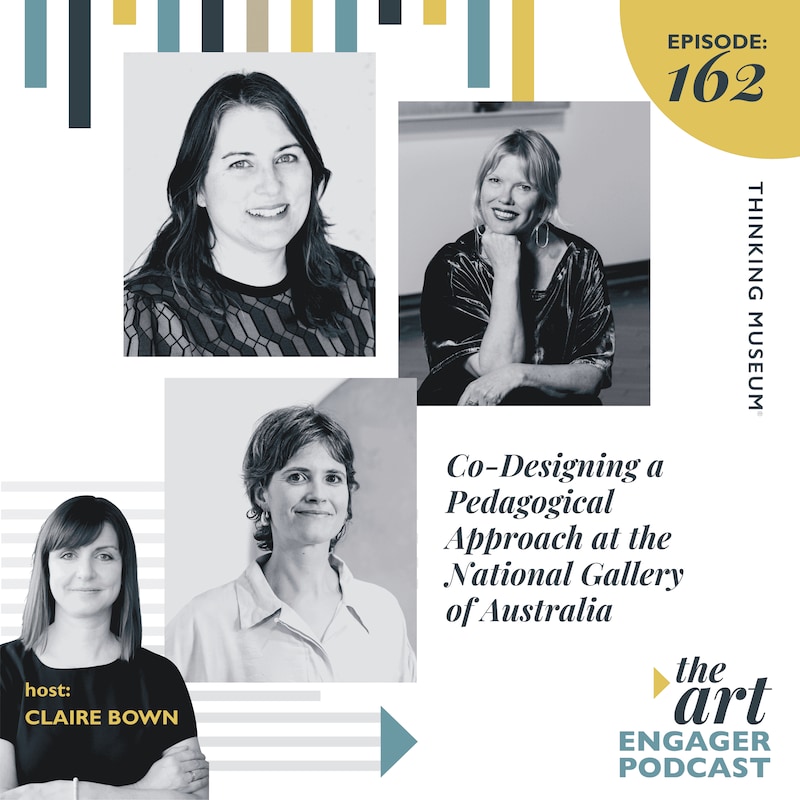
In this episode Claire Bown is joined by Georgia Close and Harriet Body from the National Gallery of Australia, alongside Naomi Zouwer from the University of Canberra, to explore how the gallery co-designed its Creative Learning approach.
The conversation traces an 18-month process of articulating a shared pedagogical framework shaped by national context, cultural responsibility, and First Nations-led principles. Rather than adopting an existing model, the team worked through workshops, observation, interviews and iterative “campaigns” to develop a cohesive, values-led approach.
A key commitment was centring the artist’s voice, placing artist intention in conversation with students’ existing knowledge. From this, the team developed a Creative Learning strategy planning tool that supports inquiry-led, multimodal, embodied and reflective practice.
Across the episode, they explore:
- How to develop a context-specific learning approach rather than importing a model
- What it means in practice to centre the artist’s voice
- How small, iterative “campaigns” can embed reflective practice in a team
- How multimodality and embodiment deepen engagement beyond discussion
- Why joy is understood as a serious pedagogical commitment
- What co-design and participatory action research look like inside a museum setting
This episode will resonate with anyone working in museums, galleries or cultural institutions who is thinking carefully about pedagogy, reflective practice, and how to articulate an approach that genuinely reflects their context and values.
The Art Engager is written and presented by Claire Bown. Editing is by Matt Jacobs and Claire Bown. Music by Richard Bown. Support on Patreon
Episode Links:
https://nga.gov.au/learn/our-creative-learning-approach/
The Creative Learning Project Digital Publication: https://nga.gov.au/media/dd/documents/NGA_The_Creative_Learning_Project_Digital_Publication.pdf
Zouwer, N. & Hamilton, O. (2026). The Creative Learning Project: Defining the National Gallery of Australia’s Creative Learning Approach. 10.13140/RG.2.2.35063.28324
Zouwer, N., Hamilton, O., Menser Hearn, N., & Ali, I. (2026). Using Practice-Based Methods to Co-create, Define, and Articulate a New Approach to Art Education in the National Gallery of Australia. Australian Journal of Education, 0(0). https://doi.org/10.1177/00049441261421257
Georgia Close, Head of Learning, National Gallery of Australia
Harriet Body, Creative Learning Convenor, National Gallery of Australia
Naomi Zouwer, artist, teacher, and researcher. Lecturer of Creative Arts Teacher Education and a researcher in the Centre of Advanced Education Studies (CASE) in the Faculty of Education at the University of Canberra.
Naomi’s website https://www.zouwer.com/
The Centre for Advanced Studies in Education (CASE)
https://www.canberra.edu.au/research/centres/case
Show Links:
✨ If you've enjoyed this episode, please consider supporting The Art Engager on Patreon: https://www.patreon.com/c/TheArtEngager
Or pick up a copy of my book, The Art Engager, for step-by-step guidance on creating meaningful, interactive guided experiences https://www.theartengager.com/
Buy it here on Amazon.com: https://tinyurl.com/buytheartengager
Transcripts
Hello and welcome to The Art Engager podcast with me, Claire Bown.
Claire Bown:I'm here to share techniques and tools to help you engage with your audience
Claire Bown:and bring art objects and ideas to life.
Claire Bown:So let's dive into this week's show.
Claire Bown:Hello and welcome back to The Art Engager podcast.
Claire Bown:I'm Claire Bown, and today we're exploring how the National Gallery of
Claire Bown:Australia co-designed its own creative learning approach shaped by its national
Claire Bown:context, its cultural responsibilities, and the values of its learning team.
Claire Bown:I am joined by Georgia Close and Harriet Body , both at the National
Claire Bown:Gallery of Australia and Naomi Zouwer from the University of Canberra.
Claire Bown:The Creative Learning project unfolded over a year and a half as
Claire Bown:a collaboration between the gallery and the University of Canberra.
Claire Bown:Through a co-design process involving the learning team and artist educators, the
Claire Bown:team worked to articulate a shared vision for learning, define the commitments
Claire Bown:that guide their work, and develop a creative learning approach supported by
Claire Bown:a set of creative learning strategies.
Claire Bown:In our conversation, we spend time with what that actually looked like
Claire Bown:in practice, the workshops, the long discussions about language, the time
Claire Bown:in what they describe as the 'messy squiggle', before clarity emerged, we talk
Claire Bown:about positioning artists, educators as co-researchers in shaping the approach
Claire Bown:and about the small iterative 'campaigns' that helped ideas to take root and to
Claire Bown:build shared language across the team.
Claire Bown:We also explore how the Art Through Culture, principles and
Claire Bown:First Nations led work, shaped the foundation of the project.
Claire Bown:Why centering the voice of the artist became a key strategy, and
Claire Bown:how multimodality embodied learning, play and reflection are woven
Claire Bown:into sessions and into practice.
Claire Bown:And throughout we return to the role of joy, not as an extra,
Claire Bown:but as part of the vision for relational and meaningful learning.
Claire Bown:I hope you enjoy our conversation as much as I did.
Claire Bown:Hello and welcome to The Art Engager Podcast.
Georgia Close:Hello.
Georgia Close:Hi.
Georgia Close:Hello.
Claire Bown:Now we have three guests here today.
Claire Bown:So I'd love for you to introduce yourselves one by one.
Claire Bown:Should we start with Georgia?
Georgia Close:Thanks, Claire.
Georgia Close:Um, my name's Georgia Close.
Georgia Close:My role is head of Learning here at the National Gallery of Australia.
Georgia Close:In our learning team, we, think about lifelong learning and our team
Georgia Close:is divided into sort of three broad areas of education, public programs
Georgia Close:and, and digital and outreach.
Claire Bown:And now, I'm gonna go to Harriet.
Claire Bown:Could you tell us who you are and what you do?
Harriet Body:I'm Harriet Body and I am the creative learning convener
Harriet Body:at the gallery, which means that I organize the development of creative
Harriet Body:learning pedagogy, with the team.
Harriet Body:And that means that, I see my role as really working in support of artist
Harriet Body:educators and supporting them with their professional practice and the ways
Harriet Body:that they do things on the floor and everything artist, educator related.
Harriet Body:I'm there to support them in their work.
Claire Bown:Brilliant.
Claire Bown:And last but not least, Naomi.
Naomi Zouwer:Oh, hi.
Naomi Zouwer:I'm Naomi Zouwer.
Naomi Zouwer:I'm used to going last with the Z name.
Naomi Zouwer:Um, I'm a practicing artist and a researcher and a lecturer in
Naomi Zouwer:creative arts teacher education at the University of Canberra.
Claire Bown:So welcome to the podcast.
Claire Bown:I invited you all here today to talk about the creative learning project
Claire Bown:at the National Gallery of Australia.
Claire Bown:Now, this kind of long term, project, it set out to really articulate this
Claire Bown:shared learning approach for the gallery.
Claire Bown:And I thought it would be wonderful to invite you here to talk about
Claire Bown:why this project felt necessary, how you went about doing it and
Claire Bown:what came outta the process as well.
Claire Bown:So let's start at the very beginning.
Claire Bown:How did the idea for the Creative Learning project come about?
Georgia Close:Well, thank you Claire.
Georgia Close:The lead up to the project really began a few years ago, uh, when we embarked
Georgia Close:on a project to create a framework for all learning at the National Gallery.
Georgia Close:And this work was really undertaken with a view to understanding what
Georgia Close:learning meant at the National Gallery, or what we understood by learning and
Georgia Close:what our responsibility was to, um, a national audience of lifelong learners.
Georgia Close:And so this work, which was led by Julia Mendel, our digital learning
Georgia Close:manager, and Leanne Waterhouse, our education manager, it generated a
Georgia Close:lot of discussion and thinking about our role as the National Gallery and
Georgia Close:the values that underpin our work.
Georgia Close:So a lot of this early work really informed the elements of our creative
Georgia Close:learning approach, but the creative learning project itself came about
Georgia Close:through a specific focus on the needs of our school audiences.
Georgia Close:Um, so we've always had a really strong education program.
Georgia Close:Each year we see about 50,000 or 60,000 students across our onsite,
Georgia Close:online and offsite programs.
Georgia Close:And we have a team of artist educators who work with us to deliver these programs.
Georgia Close:But until this project we didn't, have a unified approach to guide the
Georgia Close:experience of our learning programs.
Georgia Close:And so in the absence of a defined pedagogical approach or even set
Georgia Close:program frame frameworks, the content and experience of a school learning
Georgia Close:program was largely determined by the individual educator, which
Georgia Close:understandably resulted in varied and inconsistent experiences for schools.
Georgia Close:So it became clear that we needed to determine an approach to teaching and
Georgia Close:learning at the National Gallery so that we could provide clear guidelines
Georgia Close:for our staff, but also clear expectations for our school's audience.
Georgia Close:So we knew that we needed the following things.
Georgia Close:We needed program frameworks that linked to the Australian curriculum
Georgia Close:and that provided clear advice around learning outcomes, program content
Georgia Close:and selection of artisan works.
Georgia Close:We needed a defined pedagogical approach and also a shared language
Georgia Close:to guide the types of learning experiences we facilitate and how
Georgia Close:we engage with art and artists.
Georgia Close:We also knew that we wanted to make a shift in the team to thinking about
Georgia Close:what we do as creative learning and to bring more active engagement and space
Georgia Close:for student voice in our programs.
Georgia Close:We needed a robust approach that was informed by contemporary learning theory
Georgia Close:and practice because the approach will also inform our learning resources
Georgia Close:and our teacher professional learning.
Georgia Close:And I think really importantly, we needed our team to, um, understand
Georgia Close:the why of what we were doing.
Georgia Close:So we had over a couple of years, I guess, been talking to our dear
Georgia Close:colleague Naomi at the University of Canberra, and we'd been doing some
Georgia Close:work with her undergraduate teaching students already at the gallery.
Georgia Close:And so, um, as we'd been developing this relationship for some time, we knew that
Georgia Close:we had shared values around creative learning, and it seemed natural to,
Georgia Close:approach Naomi to do this work with us.
Georgia Close:And so we embarked on this 18 month collaborative process
Georgia Close:which Naomi will talk more about.
Georgia Close:But I think it's important to acknowledge that
Georgia Close:we weren't starting completely from scratch in this process.
Georgia Close:We had two really important components of the approach already in place,
Georgia Close:um, that provided really important foundations for this project.
Georgia Close:The first of these was our commitment to First Nations learning, which has been
Georgia Close:embedded in our programs through the gallery's Art Through Culture principles.
Georgia Close:So the Art Through Culture principles provide a culturally responsive and
Georgia Close:respectful framework for engaging with Aboriginal and Torres Strait Islander art.
Georgia Close:And these principles have been developed by First Nations educators at the gallery,
Georgia Close:including, former team members, Crystal Hurst and Shane Nelson and our current
Georgia Close:educators, Maggie Douglas and Noah Watson.
Georgia Close:So the art through cultural principles were really important.
Georgia Close:And the second really important element was our team of artist
Georgia Close:educators and learning facilitators.
Georgia Close:And these are creative practitioners who bring, skills and perspectives that
Georgia Close:shape the experience of our programs.
Claire Bown:A lot of reasons for starting this project together, but
Claire Bown:that through line, I'm seeing, that bringing consistency and clarity to
Claire Bown:an existing approach to teaching and learning across the gallery as well.
Claire Bown:And I think a very important aspect that will be, um,
Claire Bown:interesting for listeners as well.
Claire Bown:And this podcast is listened to people, in over 60 countries, but why was it
Claire Bown:important that this approach was developed specifically for the Australian context?
Naomi Zouwer:We know that there was a lot of approaches that already existed.
Naomi Zouwer:You know, there's visual learning strategies, object-based
Naomi Zouwer:learning, activity-based learning.
Naomi Zouwer:But a lot of these, approaches come from the Northern Hemisphere and we
Naomi Zouwer:realized that we needed to create something that was, you know, context
Naomi Zouwer:specific to the location in the southern hemisphere also in the nation's
Naomi Zouwer:capital, and as the National Gallery of Australia with the largest collection
Naomi Zouwer:of First Nations works in the world.
Naomi Zouwer:And also responsive to engage meaningfully with First Nations
Naomi Zouwer:people and culture of course, and the changing diverse student populations
Naomi Zouwer:that were coming through the doors.
Naomi Zouwer:So it was really important to stop and, and, uh, think about the National Gallery.
Naomi Zouwer:What was its remit and how could it best do it?
Naomi Zouwer:Also, as a leader, as the National Gallery of Australia it wanted to
Naomi Zouwer:lead the way in how we engage with young people in the art museum.
Claire Bown:And going back to that First Nations led work, which I know
Claire Bown:you've done in the past as well with the Art through Culture project.
Claire Bown:So how did the First Nations led work kind of shape this project
Claire Bown:right from the very start?
Naomi Zouwer:Well, I guess, um.
Naomi Zouwer:The key aspect of the archery culture was that it was a move away from colonial
Naomi Zouwer:interpretations of First Nations art.
Naomi Zouwer:So instead of applying those external frameworks or looking, coming at the
Naomi Zouwer:work through formal elements such as line and shape a big part of that was
Naomi Zouwer:starting with the artist intention, so the intentions of the work, and that
Naomi Zouwer:really impacted how the programs were being taught across all of the galleries.
Naomi Zouwer:So, I guess this positioning prioritizes really careful,
Naomi Zouwer:respectful and situated engagement.
Naomi Zouwer:And it requires more ongoing care and attention which results in
Naomi Zouwer:more meaningful engagement, I think, to the art and the ideas.
Naomi Zouwer:So you're looking more at the ideas of the work, the intention, rather than saying,
Naomi Zouwer:okay, well this is a great approach, let's just do this across the gallery.
Naomi Zouwer:It was really important to, to think about if we are looking at First
Naomi Zouwer:Nations work, we are always going through the artist's intentions.
Naomi Zouwer:Well, let's do this with everything, but let's be really careful and respectful and
Naomi Zouwer:go slowly and take our time to see how we can engage with works across the gallery.
Claire Bown:Yeah.
Claire Bown:So, thinking about the project itself and what was really unique about this
Claire Bown:project was that there were so many voices involved in kind of shaping it
Claire Bown:and coming together, this co-design that was very much a part of it.
Claire Bown:So can you talk a little bit about the kind of collaborative
Claire Bown:approach you took and why it was so important to work in this way
Claire Bown:to develop your specific approach?
Naomi Zouwer:Well, I guess, you know, as Georgia mentioned, this work had
Naomi Zouwer:already started, you know, a while ago, but it's very rare for galleries
Naomi Zouwer:to be able to say, we have some time.
Naomi Zouwer:Let's just stop and take stock of what we are doing and, make
Naomi Zouwer:a research project out of it.
Naomi Zouwer:So it was really lucky that they could do that.
Naomi Zouwer:So all this work had been happening.
Naomi Zouwer:They made space and time to pick it up again and, and sit with it.
Naomi Zouwer:And they'd been testing out the Art Through Culture principles on the floor,
Naomi Zouwer:and they could see how these were evolving really nicely as they were being tested.
Naomi Zouwer:So it wasn't a kind of make something then apply it, it was
Naomi Zouwer:kind of a very iterative process.
Naomi Zouwer:And it was really important to look around and see all of the skills and the
Naomi Zouwer:different experiences that the learning educators or the artist educators already
Naomi Zouwer:had in the team and what they were doing.
Naomi Zouwer:It was really important that everybody felt that they contributed
Naomi Zouwer:to the development of the approach.
Naomi Zouwer:I think so what we did was we used this participatory Action
Naomi Zouwer:Research, approach and co-design.
Naomi Zouwer:So everybody was on board.
Naomi Zouwer:It wasn't about a top down model, it was more about a bottom up.
Naomi Zouwer:So it started with a survey asking, artist educators what they did and
Naomi Zouwer:how they did it and why they did it.
Naomi Zouwer:Just to see where people were coming from and what they were doing.
Naomi Zouwer:And then once we knew the lay of the land and what, what was going
Naomi Zouwer:on, we also did some observations so we could see it in practice.
Naomi Zouwer:And then we did a lot of interviews and some of the interviews were
Naomi Zouwer:one-on-one and some were group interviews, uh, where people talked
Naomi Zouwer:about, what was important to them and.
Naomi Zouwer:How they brought their work to their own work to the gallery and what
Naomi Zouwer:they wanted to see, what kind of pedagogical approach they'd like.
Naomi Zouwer:So we spent a lot of time listening and looking, observing.
Naomi Zouwer:And then the next part of it was, the really important part,
Naomi Zouwer:I guess, we did six workshops, so there would be full day workshops.
Naomi Zouwer:And because the artist educators are artists and the researchers,
Naomi Zouwer:we are artists as well.
Naomi Zouwer:So we used art-based methods to kind of unpack pedagogical strategies and
Naomi Zouwer:different ways of approaching looking at artworks that were going beyond
Naomi Zouwer:you know, just drawing, looking at a work and drawing it, because we
Naomi Zouwer:found that was problematic when we started looking at the Art Through
Naomi Zouwer:Culture principles, in practice.
Naomi Zouwer:So, how can we move beyond things like drawing?
Naomi Zouwer:How can we bring in different things that they were already doing, that
Naomi Zouwer:were identified through those surveys and interviews and observations, and
Naomi Zouwer:then kind of, narrow it down to a few and then give it some kind of form.
Claire Bown:And in addition, so you had these six co-designed
Claire Bown:workshops, which were like full day workshops, with everybody involved.
Claire Bown:You also had practice-based 'campaigns' you called them in which you tested
Claire Bown:emerging strategies and ideas.
Claire Bown:Yeah.
Naomi Zouwer:So from the workshops, I should say that we didn't
Naomi Zouwer:decide, let's do six workshops.
Naomi Zouwer:In fact, I think we, we were gonna have four, but then we were like Georgia
Naomi Zouwer:was, maybe we need another workshop.
Naomi Zouwer:Maybe we need another workshop.
Naomi Zouwer:So we ended up with six because after each workshop we we realized that, oh, we
Naomi Zouwer:need another workshop that's specifically about something in particular.
Naomi Zouwer:So we were kind of responding to what the artist educated needed and what
Naomi Zouwer:we were seeing that was happening.
Naomi Zouwer:And before the workshops we'd give everyone readings or podcasts.
Naomi Zouwer:We gave them your podcast one time.
Naomi Zouwer:And so we were unpacking these kind of, uh, contemporary ideas on, on
Naomi Zouwer:art education in the museum, but also thinking through them in creative ways.
Naomi Zouwer:And through these workshops we'd also positioned the artist
Naomi Zouwer:educators as co-researchers.
Naomi Zouwer:And then the next step was for them to take these ideas and test them
Naomi Zouwer:on the floor like they had done with Art Through Culture principles.
Naomi Zouwer:They started testing different approaches on the floor and we call that 'campaigns'.
Naomi Zouwer:And in teaching language, it's probably called a teaching sprint.
Naomi Zouwer:But maybe Harriet could talk about the campaigns 'cause she really
Naomi Zouwer:managed the teams and decided which campaigns she would go with.
Harriet Body:Yeah, so the campaigns are a really important part of educator
Harriet Body:practice and they started out at the beginning when we were just in this
Harriet Body:really messy kind of squiggle phase.
Harriet Body:Naomi brought this idea of the research squiggle, which if
Harriet Body:you can imagine a big squiggle.
Harriet Body:And then outside of the squiggle there's a line that emerges out of the squiggle.
Harriet Body:And we kept saying to people, we are inside the really messy squiggle part
Harriet Body:and it's gonna untangle and we'll come out in this sort of long, straight
Harriet Body:line, or maybe a wavy line with a love heart in there somewhere as well.
Harriet Body:Um, and when we were in the squiggle, we were thinking of how do we try
Harriet Body:some of these new ideas that Naomi is bringing to us on the floor
Harriet Body:and reflect on them as a team.
Harriet Body:And so we try new things.
Harriet Body:We try embodiment.
Harriet Body:We ask people, why don't you go and try dancing with a group on the floor today?
Harriet Body:Or Why don't you try not drawing a work of art, but drawing the
Harriet Body:ideas behind the work of art?
Harriet Body:What does it mean to do play?
Harriet Body:What does play look like on the floor?
Harriet Body:So artist educators, were really going out on the floor
Harriet Body:in this squiggly time and just.
Harriet Body:Just testing things out and coming back and writing up on a shared whiteboard
Harriet Body:their reflections that we could then take the reflections and have meetings
Harriet Body:about and think about, you know, what the educators were discovering.
Harriet Body:Um, and that process of campaigns has been really wonderful because
Harriet Body:it's continued into just everyday practice now for educators.
Harriet Body:So every fortnight we have a different campaign, uh, where we say today
Harriet Body:we're thinking about how do we involve teachers when they come.
Harriet Body:And today we're thinking about what are the words that we say when we introduce
Harriet Body:a program and what does it look like if we reflect at the end of a program or,
Harriet Body:at the end of every strategy so there's always, educators also have a campaign
Harriet Body:suggestion box with a note on it that says, reflective practice is cool and
Harriet Body:people come and put their, um, and put there, the suggestions for campaigns.
Harriet Body:And so it started to become a really collaborative process that educators are
Harriet Body:saying, well, this is what I want to try.
Harriet Body:And every fortnight it changes, and they come and write their
Harriet Body:reflections on the whiteboard.
Harriet Body:So that's an example of what we did in the workshops and how it's
Harriet Body:continued, obviously into everyday practice for the artist educators.
Claire Bown:And it sounds like the artist educators have really gained
Claire Bown:a lot from this process, so from the project itself, but that it is carried on
Claire Bown:into their kind of practice since then.
Claire Bown:Um, so how do you think this process has supported their confidence,
Claire Bown:their professional identity?
Claire Bown:I mean, you mentioned a few things about, you know, having that reflective practice.
Claire Bown:What have you noticed that has changed?
Harriet Body:There's importantly, there's a cohesive, defined approach to what we
Harriet Body:do, which means that the artist educators have this, a sense of shared identity and
Harriet Body:a community of practice with each other.
Harriet Body:Whereas before, they may have been working more, there may have some informal
Harriet Body:reflections and chats with each other and ideas shared, but there wasn't a formal
Harriet Body:process to sharing ideas or for formal process, for even formulating ideas.
Harriet Body:So what the research allowed us to achieve was, a set of program
Harriet Body:frameworks, a strategy planning tool so that educators can, one educator
Harriet Body:talked about how he collaborates with our creative learning approach.
Harriet Body:Now, I think we'll talk about the tool a little bit later, but the
Harriet Body:team really gained a methodology for working and for collaborating
Harriet Body:and for this shared language.
Harriet Body:And working towards a common goal, which is ultimately about building
Harriet Body:empathy in students and facilitating joy for students and I think that
Harriet Body:kind of what educators gained is this understanding of the bigger why and the
Harriet Body:bigger purpose of what they're doing.
Harriet Body:And I think, um, it's really helped them to align their
Harriet Body:thoughts and their values together.
Harriet Body:Yeah.
Claire Bown:And it's so wonderful to hear.
Claire Bown:Absolutely music to my ears.
Claire Bown:If we go back to what you talked about, that kind of messy middle,
Claire Bown:that squiggle that you were talking about, that messiness, and then
Claire Bown:you were talking about the kind of strands that might emerge from that.
Claire Bown:So talk to me a little bit about, a point during the process that
Claire Bown:you felt like a shared approach was forming from the process.
Claire Bown:So, yeah.
Claire Bown:Can you talk to me a little bit about that?
Georgia Close:I think we began with initial ideas about the
Georgia Close:kind of pedagogical strategies that we wanted to play with.
Georgia Close:Um, and that formed the basis of the workshops.
Georgia Close:And then as we experienced the workshops together as a team and as Harriet led
Georgia Close:the campaigns, I guess the ideas from those workshops started to come into
Georgia Close:the language that the team were using.
Georgia Close:So, I'm doing an embodied strategy today, or I'm thinking
Georgia Close:about my inquiry questions.
Georgia Close:And so that kind of shared understanding really started to
Georgia Close:develop quite strongly there.
Georgia Close:But at the same time.
Georgia Close:We were thinking carefully about how the Art Through Culture principles
Georgia Close:were informing our creative learning strategies and really
Georgia Close:articulating how that was happening.
Georgia Close:And so the idea of centering the artist's voice in a creative learning strategy
Georgia Close:and connecting that to to existing knowledges that students bring with
Georgia Close:them is a really key part of how we define our creative learning strategies
Georgia Close:that is drawn, directly from the Art Through Culture principles that provide
Georgia Close:us a sort of culturally aware and culturally responsive framework to, uh,
Georgia Close:approaching our learning experiences.
Georgia Close:But then other moments came in, in the writing of the report, it was
Georgia Close:actually quite a, um, important moment where for the first time we
Georgia Close:had to pinpoint, like, define ideas written down, it feels quite final.
Georgia Close:And so there were moments there when we realized, oh, we weren't quite
Georgia Close:on the same page about particular ideas or particular language.
Georgia Close:And so a lot of conversation around, the right words that
Georgia Close:really communicated what we meant.
Georgia Close:Um, so that was a really interesting process of really
Georgia Close:defining defining the approach.
Georgia Close:And I think the other moment, really important moment for us was when Naomi
Georgia Close:asked us to, uh, communicate elements of the approach in the form of diagrams.
Georgia Close:And so Harriet mentioned our creative learning strategy, planning tool you
Georgia Close:know, just the process of sitting together to work out well, what are
Georgia Close:the elements that we need to articulate here and in what order and how do we
Georgia Close:describe the importance of connecting the artist's voice with the student
Georgia Close:knowledge to form a line of inquiry and have that as the starting point for how a
Georgia Close:creative learning strategy is developed.
Georgia Close:So those parts are really important, I think, in, in developing and
Georgia Close:understanding our shared approach.
Claire Bown:Yeah.
Claire Bown:And there seem to be um, really clear values from what you're saying that
Claire Bown:sit underneath all of this work.
Claire Bown:So can you talk a little bit about the values, the vision, the commitments that
Claire Bown:sit underneath developing this approach.
Georgia Close:Sure.
Georgia Close:Well, it's really interesting because we've jokingly said all along that we want
Georgia Close:our programs to help shape good humans.
Georgia Close:And then this project, and working with Naomi really asked us to
Georgia Close:think about what we meant by that.
Georgia Close:And was this even our responsibility as a national cultural institution?
Georgia Close:So under Naomi's guidance, we went to our guiding documents.
Georgia Close:So we went to the National Gallery Corporate Plan.
Georgia Close:We went to the National Cultural Framework.
Georgia Close:We went to the Embark Way Declaration for Education, which is the federal
Georgia Close:government's direction for education and lifelong learning and the
Georgia Close:Art Through Culture principles.
Georgia Close:And we found in those documents the support for what we understood
Georgia Close:making good humans to be.
Georgia Close:And so that is how we were able to, um, speak about our work in terms of promoting
Georgia Close:our responsibility to act with care and kindness for a sustainable and inclusive
Georgia Close:future, and thinking about how our work deepens understanding of ourselves
Georgia Close:and others and the importance of that.
Georgia Close:And so it was also really important to the team.
Georgia Close:Naomi mentioned earlier that there was space for joy and
Georgia Close:creativity as part of our vision.
Georgia Close:So it wasn't just about making good humans, it was also about being human.
Georgia Close:And I think it was important to articulate this in the vision, and
Georgia Close:Naomi was really the driver for us.
Georgia Close:She said, you must have a vision.
Georgia Close:And so it was really important to work that out because it, it justifies
Georgia Close:the decisions we make about the content and direction of our program.
Georgia Close:It guides our decision making and it helps us to understand what we do and also what
Georgia Close:we don't do in terms of our programming.
Harriet Body:I think that, the word joy was something really
Harriet Body:important to us to keep in there.
Harriet Body:And, and it was something that we thought really carefully about because maybe
Harriet Body:some work in the gallery that we're looking at may not be about joy at all.
Harriet Body:You know, that joy isn't always within an artist practice.
Harriet Body:And that's one that I've really sat on because I think we, we were able
Harriet Body:to think about joy as being more expansive than being in a happy
Harriet Body:state, you know, than that letting out our visitors be just happy.
Harriet Body:And that we saw that joy can come in quiet and profound ways, and through
Harriet Body:empathy and through expressing yourself and through being listened
Harriet Body:to and your opinions respected.
Harriet Body:Um, and so those sorts of pedagogical approaches into, um, inquiry-based
Harriet Body:learning and allowing students to bring their own knowledges really helped us
Harriet Body:to think about what do we mean by joy?
Harriet Body:And I personally, as for the values, I think joy is really valuable to me,
Harriet Body:and I think the ways that we came to those values was really important
Harriet Body:with, the diversity of, of our team.
Harriet Body:All of our, uh, artist educators come from a diverse range of ages and cultural
Harriet Body:backgrounds and ways of being and knowing in the world and art practices.
Harriet Body:And it was really important to get all of us together in the room to really
Harriet Body:talk about what is valuable to all of us individuals in the work that we do here.
Harriet Body:And our team is not just education in schools, although that's kind of our
Harriet Body:training ground, what we focused on at for the first stage of this project.
Harriet Body:But our team includes people who are working in adult public programs and
Harriet Body:access and disability inclusion programs and children and family programs.
Harriet Body:So to hear their perspectives of what their priorities are and
Harriet Body:how the values kind of fit in with them was really important.
Harriet Body:But also all of our artists, educators with all of their diverse
Harriet Body:ways of knowing the world and all of their diverse practices.
Harriet Body:We have poets and we have visual artists and dancers and people who work in
Harriet Body:human rights law and architects, and people who work in disability inclusion.
Harriet Body:And so just having that vast wealth of knowledge that also
Harriet Body:reflects the communities that we're working with and engaging with
Harriet Body:every day was really important.
Harriet Body:And I think the value statement and the vision statement that we got to there
Harriet Body:was so much that was put into that through so many voices and people, and
Harriet Body:I think we're all really proud of it.
Naomi Zouwer:And so I guess what they've produced is, you know, really
Naomi Zouwer:dynamic framework that encompasses a whole lot of ways of knowing and
Naomi Zouwer:being and looking and thinking.
Naomi Zouwer:And but they only have them for an hour.
Naomi Zouwer:As, you know, most museum educators will know.
Naomi Zouwer:And we, if you're having a good time, it's not about being frivolous.
Naomi Zouwer:You know, if you have fun, you, you can learn.
Naomi Zouwer:And if you have a good time at art museum, then you're more likely
Naomi Zouwer:to remember it and go back to it.
Naomi Zouwer:So that is really important for young people to see the National Gallery as
Naomi Zouwer:a place where joy can happen, you know, and they can make really good memories.
Naomi Zouwer:So, when the gallery has young people visiting, they often
Naomi Zouwer:come from all over Australia.
Naomi Zouwer:They have to come to Canberra, where the capitol to go to the
Naomi Zouwer:Parliament House, to the electoral Commission, to the War Memorial.
Naomi Zouwer:Um, they come to the National Gallery, they come to the Portrait Gallery, and
Naomi Zouwer:they're really exhausted because they're just going from one place to another.
Naomi Zouwer:And so it's really, you know, this is a chance for the
Naomi Zouwer:National Gallery to capture them.
Naomi Zouwer:And you're not gonna do that by them sitting in lines in front of a work
Naomi Zouwer:getting spoken to or at, you have to do it through listening to them and
Naomi Zouwer:working with them and yeah, seeing them and for them to be able to see
Naomi Zouwer:themselves in the gallery and in the work, and be able to relate to work.
Naomi Zouwer:It's all relational, everything that the gallery's been doing.
Naomi Zouwer:And that's sort of what it comes down to, I think.
Claire Bown:Yeah, and I, urge anyone listening to look at the links we put
Claire Bown:in the show notes, we'll link to the report, um, which has the vision statement
Claire Bown:and all of the commitments in it.
Claire Bown:So tell us about the strategies, the approach that you have.
Claire Bown:How do they support educators when they're in the gallery with school groups?
Harriet Body:We have developed a diagram which you'll share, that is our
Harriet Body:creative learning strategy planning tool.
Harriet Body:And that was the tool that I mentioned earlier, that one of our artist
Harriet Body:educators, Andrew Cox, talked about that.
Harriet Body:He loves it 'cause he can, he feels he can collaborate with this tool.
Harriet Body:And it's like a visual guide or representation of how a creative
Harriet Body:learning strategy can be built or how it is to think about it.
Harriet Body:We also have in our team, strategy templates that educators can fill out
Harriet Body:and they put in their line of inquiry and some suggested open-ended questions.
Harriet Body:And the quote, the voice of the artist, always going back to the quote.
Harriet Body:And what we really found was that the creative learning strategies
Harriet Body:and this planning tool was we were able to visualize how the artist's
Harriet Body:voice and the student knowledges can combine to make a line of inquiry.
Harriet Body:So rather than starting with the work art and thinking of some sort of activity, we
Harriet Body:were always imagining what we would assume the student might know about the world
Harriet Body:and how that relates to what the artist is trying to tell us about their world.
Harriet Body:And then the line of inquiry is combining those two things so that
Harriet Body:there's this discussion that happens and through some sort of multimodal
Harriet Body:active activity, which might be.
Harriet Body:Drawing, it might be writing, it might be discussion, it might be doing any
Harriet Body:manner of things, that conservation will let us do in the gallery.
Harriet Body:We're able to, this is where the artist educators creative practice comes in.
Harriet Body:That they develop these multimodal experiences that allow the students to
Harriet Body:bring their knowledges, not just through talking or writing, but through so many
Harriet Body:different ways that might be embodied.
Harriet Body:Or it might be through music, or it might be through dance, or it might be through,
Harriet Body:could indeed be through, through writing.
Harriet Body:And so that students who can bring their knowledges and connect
Harriet Body:with the world of the artists.
Harriet Body:And there's this important reflection part of each strategy where students
Harriet Body:can see the output, the experience that they've just had, and the learning
Harriet Body:happens where they see how that's connected to each other and the work of
Harriet Body:art and the world of the, of the artist.
Claire Bown:So could you take us through because we can't actually
Claire Bown:see that diagram, could you take us through the kind of the process that
Claire Bown:an artist educator might go through to create that line of inquiry and
Claire Bown:how it might work with the program?
Harriet Body:Sure.
Harriet Body:So we'll first start with a program framework.
Harriet Body:So we have, four programs that students can book into.
Harriet Body:Um, and each program has a framework, um, that tells us the ultimate learning goals.
Harriet Body:Those frameworks have what we call a guiding inquiry that
Harriet Body:we was talking about inquiry.
Harriet Body:So each framework has an ultimate learning goal.
Harriet Body:What are they gonna ultimately learn in a program at the National Gallery?
Harriet Body:So they start with their guiding inquiry, their program goal, and then they select a
Harriet Body:work of art that fits within that program.
Harriet Body:And they research and see what the artist says about their work of art.
Harriet Body:They, uh, find an artist quote.
Harriet Body:And so say there is, I always give this example, and this is a fictional work
Harriet Body:of art, but maybe I think I should make it one time, but it's about my examples
Harriet Body:about the work of art, about the sky.
Harriet Body:And the artist might say, I love the sky because it is really
Harriet Body:meaningful for me and it helps me understand my place in the world.
Harriet Body:So this is the artist quote.
Harriet Body:And then the artist educator can reasonably assume that a student knows
Harriet Body:all sorts of things about the sky.
Harriet Body:And so they say, okay, well our line of inquiry now is what can
Harriet Body:we gain through understanding our relationship to the sky, for example.
Harriet Body:So we've got this.
Harriet Body:Sky work.
Harriet Body:We've got the artists talking about why the sky's important to them, and we want
Harriet Body:to develop a multimodal creative learning strategy that's gonna help the students
Harriet Body:express why the sky's important to them.
Harriet Body:And so that might be through drawing or dancing or whatever it is.
Harriet Body:And then there's this reflection moment at the end where the artist educator will ask
Harriet Body:a question or posit something where the student can say, oh, well I now understand
Harriet Body:how my students understand the sky, how my peers understand the sky, how my teacher
Harriet Body:understands the sky, how I value the sky, and how this artist has taught me.
Harriet Body:And this educator understands the sky and how this artist and educators help me to
Harriet Body:understand how we all understand the sky in, in different and meaningful ways.
Harriet Body:So that's where the learning occurs, and that's what the diagram
Harriet Body:helps artist educators to achieve and to kind of stay on track in
Harriet Body:how to develop those strategies.
Claire Bown:Thank you for explaining that.
Claire Bown:And before we get onto the kind of key teaching strategies, I just wanna circle
Claire Bown:back to we've mentioned the idea of centering the artist's intention and
Claire Bown:starting with that, leading with that in every discussion, every conversation
Claire Bown:that you're having about an artwork.
Claire Bown:So this might come as a slightly different approach to anyone listening who might
Claire Bown:have, previously centered the participants might be person centered work, or it
Claire Bown:might be perhaps object centered work.
Claire Bown:So what does it mean to center the artist in a discussion?
Claire Bown:And I'll add on another question.
Claire Bown:What effect does that have on the participants?
Claire Bown:How do you then make room for the participant voices
Claire Bown:alongside that artist intention?
Harriet Body:It's really, really important for us within our context to
Harriet Body:center the voice of the artists because of our context within Australia and because
Harriet Body:of our art through culture principles.
Harriet Body:And so, Maggie Douglas and Noah Watson, who are our first Nations artist educators
Harriet Body:and, and Crystal Hurst who'd done the work before them, recognize that within
Harriet Body:First Nations learning pedagogies, we don't appropriate work, we don't draw work
Harriet Body:that we see and we don't put voices on top of the artists- so our own perceived
Harriet Body:understanding of the work and place that on top of the intention of the artist.
Harriet Body:And so that really developed when we were looking at Art Through Culture
Harriet Body:that really informed what we wanna do with the rest of our program.
Harriet Body:And how can we learn through this First Nation's pedagogical practices
Harriet Body:and implement it into the work that we are doing as well, so that we are
Harriet Body:working in a way that is aligned with First Nations ways of being and doing.
Harriet Body:And so, so for some institutions around the world, it would maybe
Harriet Body:look different in person centered, student centered approaches might
Harriet Body:be better for their context, but for our context, this is where we
Harriet Body:arrived and it's really important, important part of the work that we do.
Harriet Body:But what we want to do is really.
Harriet Body:Center the voice of the artist doesn't mean that we're not centering
Harriet Body:the voice of children as well.
Harriet Body:And what we're trying to do in our practice as artist educators is put
Harriet Body:the two voices in conversation that the artist says, I've done this
Harriet Body:thing and this is what I think.
Harriet Body:And then the students can respond to that and say, well, this is what I think,
Harriet Body:and this is made me think about this.
Harriet Body:Or, I've never heard of anything like that before, but I can
Harriet Body:imagine it to be this way.
Harriet Body:And so it's this conversational element rather than rather than
Harriet Body:ignoring the intention of the artist
Harriet Body:yeah, I think another really great thing that has been achieved through
Harriet Body:leading through the voice of the artist.
Harriet Body:And this is something that's really important to Leanne Waterhouse, our
Harriet Body:education manager, and she's brought this to my attention the other day and
Harriet Body:we talk about it a lot is how the leading with the artist voice also demystifies
Harriet Body:the artists and humanizes them.
Harriet Body:They're not this kind of exterior genius.
Harriet Body:And we encourage Artist Educators to use the artist's first name.
Harriet Body:You know, 'Penny made this picture of the sky'.
Harriet Body:And it's this equalizing of the experience of artists who might seem as someone who's
Harriet Body:has bigger ideas or more intellectual or, you know, bigger than, or better than, or
Harriet Body:smarter than or something, than a student.
Harriet Body:It is.
Harriet Body:And by doing this way of of centering the artist's voice, and
Harriet Body:focusing on conversation yeah.
Harriet Body:It's more of a humanizing kind of process.
Harriet Body:Yeah.
Naomi Zouwer:Yeah.
Naomi Zouwer:I think the other thing it does is it democratizes it the museum a bit.
Naomi Zouwer:It gives power back to the artists and it's not about looking at the
Naomi Zouwer:artwork through curator's eyes or an artist historian's eyes.
Naomi Zouwer:It's going straight back to the artist.
Naomi Zouwer:So it's giving the voice back to the artist.
Claire Bown:Yeah, absolutely.
Claire Bown:And leading on from that, I'd love to talk about some of the
Claire Bown:kind of teaching strategies you've mentioned, multimodality a few times.
Claire Bown:I'd love to talk a little bit about that, how that works in the gallery
Claire Bown:environment, perhaps what your artists, educators discovered when they did a
Claire Bown:campaign about using movement within programs all those sorts of things.
Claire Bown:Perhaps you can talk a little bit about the key strategies that you use.
Naomi Zouwer:We whittled it down to a few, and it's obviously inquiry led
Naomi Zouwer:and we've been talking about that.
Naomi Zouwer:And we are really talking about thinking with children, rather than for them.
Naomi Zouwer:And that's, you know, obviously relational and responsive.
Naomi Zouwer:We talk about noticing what children are interested in and, um, I was
Naomi Zouwer:listening to one of your earlier podcast, Claire, about inquiry and you
Naomi Zouwer:talked about that sort of uncertainty.
Naomi Zouwer:And a lot of people feel a bit scared to use inquiry because they
Naomi Zouwer:don't know where it's gonna go.
Naomi Zouwer:And I think that some of the strategies we've kind of come to really just work
Naomi Zouwer:really well with artists dispositions because that idea of risk taking and
Naomi Zouwer:uncertainty is part of how artists work.
Naomi Zouwer:So they're a little bit more comfortable with uncertainty
Naomi Zouwer:than maybe other people are.
Naomi Zouwer:So the inquiry is a big one.
Naomi Zouwer:And then thinking with and through materials is another.
Naomi Zouwer:So someone said to me that came to one of the workshops at the conference recently.
Naomi Zouwer:'Oh.
Naomi Zouwer:It's kind of coming at the work sideways', you know, and materials
Naomi Zouwer:, they can be tangible or intangible.
Naomi Zouwer:So they could be fabric or paper or pencils or objects, or they could,
Naomi Zouwer:it could be intangible, so it could be like sound and light and shadow.
Naomi Zouwer:So trying to think of different ways of entering work with materials is another.
Naomi Zouwer:And then we have embodied learning.
Naomi Zouwer:So this came about from wanting to, to get away from the stools and
Naomi Zouwer:sitting down and to be up and moving.
Naomi Zouwer:But it's not about big movements or it can be, but it can also be
Naomi Zouwer:about those little small movements.
Naomi Zouwer:So that kind of, when you're learning and using your body, it stays in you,
Naomi Zouwer:that becomes that tacit knowledge that you might pull out later on.
Naomi Zouwer:Um, you're more likely to remember something if you
Naomi Zouwer:do it alongside a movement.
Naomi Zouwer:Um, and this is interesting in the workshops because we had, uh, Anna
Naomi Zouwer:Johnson come in from the Canberra Youth Theater to do some work with us, and she
Naomi Zouwer:talked about gamifying the experience and showed the team a whole lot of
Naomi Zouwer:different strategies that, that she uses in the Canberra Youth Theater and how
Naomi Zouwer:they might be applied in the gallery.
Naomi Zouwer:And maybe Harriet can talk a bit more about that in a sec. 'Cause that
Naomi Zouwer:was a lot of fun and it kind of goes onto the next one, which is play.
Naomi Zouwer:So, you know, early years.
Naomi Zouwer:Educators know that play in the early years setting is work.
Naomi Zouwer:And then it becomes a little bit tricky as you go to primary school.
Naomi Zouwer:They see play as something that you do after school or in your lunch break.
Naomi Zouwer:But play is also another one of those things that artists do naturally.
Naomi Zouwer:They play and they make mistakes and they fail and they play and try again.
Naomi Zouwer:You know, and it's about that kind of, it's low stakes.
Naomi Zouwer:Failing, I guess.
Naomi Zouwer:And, um, and it's important, a very important part of the artist process.
Naomi Zouwer:So I guess when we are talking about looking at art, we're thinking about
Naomi Zouwer:creativity, we're thinking about creative processes, so there is those,
Naomi Zouwer:um, attributes like play, thinking with them through materials risk
Naomi Zouwer:taking, um, not knowing the outcome.
Naomi Zouwer:And that's kind of all mirrored through the strategies.
Naomi Zouwer:And then the final one is reflection.
Naomi Zouwer:And, um, that's that really important point where the students can
Naomi Zouwer:reflect on their own experiences and the work at the same time.
Harriet Body:Yeah, I mean, I think I'll just say that multimodality
Harriet Body:was really important to us because everyone learns in different ways.
Harriet Body:Mm-hmm.
Harriet Body:You know, it's an accessible approach where we can capture students
Harriet Body:who might learn through material.
Harriet Body:You know, that's their kind of preferred way of learning.
Harriet Body:Or they might learn best through acting, which isn't everybody's cup of tea.
Harriet Body:Or they might learn through maths and problem solving.
Harriet Body:So if we speak to our artist educators about putting your mind into the mind
Harriet Body:of the diversity of our students who come here and what are all the different
Harriet Body:ways that people learn and be, and think and, um, be in the world, but also if
Harriet Body:making a, a vocal response to something isn't within your comfort zone, but
Harriet Body:you've been felt safe enough to give it a go anyway, what a wonderful way
Harriet Body:to learn as well to push people safely out of their comfort zone a little bit.
Harriet Body:So these multimodal ways allow students to, to engage in, in risk
Harriet Body:taking and, and and also engage in ways that of learning that are really
Harriet Body:uh, important and cherished by them.
Harriet Body:I think one of the things that we have been thinking about now
Harriet Body:that we've got learning strategies and the individual works that we
Harriet Body:are looking at, under our belts.
Harriet Body:We're now starting to think about the larger program and how we tr how we
Harriet Body:move between works of art and how the entire experience is part of the program.
Harriet Body:And it's not just these individual creative learning strategies where
Harriet Body:you do a dance here and then you do writing here and then you do a poem
Harriet Body:there and then the program's finished.
Harriet Body:Because in an hour program we can only focus on three to four works of art.
Harriet Body:We are focusing on them, but we're actually seeing many, many more.
Harriet Body:So what are those moments of transition between strategies and between
Harriet Body:works of art, where we are really experiencing what we're looking at?
Harriet Body:Can we slow down?
Harriet Body:Is there an embodied, a lot of educators gamify it where they do like ' point
Harriet Body:at something that's interesting to you' or and this is our kind of next
Harriet Body:wave of understanding, like how do we really think about the whole experience
Harriet Body:as being part of the joy and the creativity and everything that our
Harriet Body:vision, um, wants us to think about?
Claire Bown:And I can imagine the artist, educators have a lot of fun, have a lot of
Harriet Body:yes,
Claire Bown:joy from designing these different teaching strategies that they
Claire Bown:use and playing with them and adopting that kind of experimental mindset as well.
Harriet Body:Yes, definitely.
Harriet Body:And I think the tricky thing about artists, educators, which I think a
Harriet Body:lot of your listeners will relate to, is that we don't get to develop these
Harriet Body:year long relationships with students.
Harriet Body:We see students most of the time for an hour, and then we never see them again.
Harriet Body:And so our community is each other.
Harriet Body:The community of an Artist Educator is the other Artist Educators.
Harriet Body:And this is where reflective practice is really important.
Harriet Body:We make art together, we do workshops together, because of our practices.
Harriet Body:And I, I'm an artist myself, so, and so is everyone.
Harriet Body:Leanne's an artist.
Harriet Body:And Julia as an artist, we're all artists on this team.
Harriet Body:And so when we are meeting and running these workshops, we are
Harriet Body:always making together and we are thinking really creatively about
Harriet Body:what does reflection look like?
Harriet Body:So how do we navigate that is a question that we ask and do
Harriet Body:together in community, I think.
Claire Bown:And speaking of learning and growing and reflective practice,
Claire Bown:I'd love to, to think about what you've learned from doing this work.
Claire Bown:Were there any surprises that came along the way?
Claire Bown:What did you learn about working collaboratively in this way together?
Georgia Close:Well I really learned the value of my colleagues.
Georgia Close:And that sounds silly because obviously I valued them already
Georgia Close:before we started this project.
Georgia Close:But what I learned along the way, um, was the importance of working with colleagues
Georgia Close:who are equally committed to thinking deeply about what we do and why we do
Georgia Close:it, and the importance of relationships in being able to do this kind of
Georgia Close:work and this kind of collaboration.
Georgia Close:So this approach is the result of hours of conversation where we
Georgia Close:might debate at length the meaning of individual words to find the
Georgia Close:right way to communicate our ideas.
Georgia Close:And so allowing the necessary time to have those conversations was really important.
Georgia Close:But also having the strong and trusting relationships where we're comfortable
Georgia Close:to disagree with each other, and to look at things from different perspectives.
Georgia Close:We couldn't have done that work if relationships weren't at the center.
Georgia Close:And that brings us back to the commitments that define how we work is
Georgia Close:centering relationships is at the start.
Georgia Close:And that's as equally important as with each other as it is with centering
Georgia Close:the relationships with our learners.
Naomi Zouwer:Yeah, I think relationships are key and if you
Naomi Zouwer:don't spend the time to develop the relationships, your collaboration
Naomi Zouwer:isn't gonna be as successful.
Naomi Zouwer:So I think, um, you have to make space and time and, um, sometimes
Naomi Zouwer:that might mean having a meeting that you feel like maybe you didn't
Naomi Zouwer:get something out of it, but you did because you spent time with that person.
Naomi Zouwer:And that's really important.
Naomi Zouwer:I, I think I would take forward the participatory action research
Naomi Zouwer:approach and the co-design.
Naomi Zouwer:I think listening to the voices from the ground up was really
Naomi Zouwer:important in this project to hear everyone's voices and kind of, um,
Naomi Zouwer:bring everybody along for the ride.
Naomi Zouwer:And though it can be really tricky when you're working with so many
Naomi Zouwer:different people I think, you learn so much from each other, so I feel
Naomi Zouwer:like it has, shaped and changed my teaching practice, for example.
Naomi Zouwer:So, I think at times we were sharing ideas and I'd take the, something I
Naomi Zouwer:picked up from the gallery and take it into my classroom at the university.
Naomi Zouwer:So, um, yeah, I love collaboration and it was really great working with these guys
Naomi Zouwer:and I learned so much and yeah, so going forward I would just, I would take them
Claire Bown:brilliant.
Claire Bown:And Harriet.
Harriet Body:I think what's been really revelatory for me, and I was
Harriet Body:talking to Leanne, our education manager about this the other day
Harriet Body:is to practice what we preach.
Harriet Body:You know, when we have presented this project, when we have workshops
Harriet Body:with our Artist Educators, we run them in the same way that we would
Harriet Body:run a creative learning strategy.
Harriet Body:And by that I mean, we think about the audiences and their multimodal
Harriet Body:ways of doing and being we, uh, often do creative activities.
Harriet Body:We think about what is the inquiry that we are doing here.
Harriet Body:And so I think that's been really, um, amazing for me in my practice
Harriet Body:or my role as someone who is supporting Artist Educators.
Harriet Body:And through supporting Artist Educators, I can lead through this lens of inquiry
Harriet Body:itself and thinking of multimodal ways that artists, educators might receive
Harriet Body:information that just isn't just me and Leanne standing and telling them
Harriet Body:what to do, but in the same manner that we do creative learning strategies,
Harriet Body:we draw together and we've made this quilt and we make sculptures out
Harriet Body:of wire and we, really think deeply about the practice of being an Artist
Harriet Body:Educators through these creative ways.
Harriet Body:And I think I'm just at the beginning of my journey of understanding
Harriet Body:how to work in that way.
Harriet Body:In the role that I'm in now as opposed to with students all the time.
Harriet Body:Although I still do get to see students, which I'm thrilled about.
Harriet Body:I make that a priority at least a couple of times a month.
Claire Bown:I love that it is, uh, has all these little ripples
Claire Bown:outwards as well, this project.
Claire Bown:Um, it's really lovely to see if anyone is listening and thinking
Claire Bown:that they might be keen to start this sort of a project within their own
Claire Bown:organization, within their own team.
Claire Bown:Where might people start?
Claire Bown:Do they, do you have a couple of small tips for people listening?
Naomi Zouwer:Yeah, we talked about this one before.
Naomi Zouwer:Where do you start?
Naomi Zouwer:And I guess it's knowing who you are and trying to figure out, what's your
Naomi Zouwer:context, which is where we started with, um, with this project, you know, yeah,
Naomi Zouwer:what's your remit and who's your audience?
Naomi Zouwer:And you don't have to collaborate with the university obviously, but it's a
Naomi Zouwer:really great opportunity and if you wanted to reach out to your local university,
Naomi Zouwer:they would probably be thrilled to do something like this with you.
Naomi Zouwer:So I think that's something people could think about.
Claire Bown:That's great.
Claire Bown:And we're gonna have to wrap up now, but I'd love to hear what's next
Claire Bown:for you and then maybe you can tell listeners a little bit more about
Claire Bown:where they can find out more about you and the Creative learning project.
Claire Bown:And of course we'll put all the notes in all the links in the show notes.
Claire Bown:So what's next?
Georgia Close:Well, I'm really excited to start working with our
Georgia Close:broader learning team to understand how the approach and the creative
Georgia Close:learning strategy planning tool might apply beyond our school's programs.
Georgia Close:So I'm already working closely with our kids and families convener to
Georgia Close:think about how the planning tool might support the development of
Georgia Close:in gallery resources for families.
Georgia Close:And we're also thinking about how it might support a framework for engagement spaces
Georgia Close:where we commission artists to create making spaces associated with exhibitions.
Georgia Close:So there's lots of really exciting opportunity, now that these
Georgia Close:tools are providing for us and supporting us to think deeply
Georgia Close:our approaches in other areas.
Georgia Close:So I'm really excited to, to keep carrying on that work and seeing
Georgia Close:what we can learn from that.
Naomi Zouwer:And we, we also talked about, evaluating the
Naomi Zouwer:impact of the creative learning approach and seeing Yeah.
Naomi Zouwer:Seeing how it's going, which would be great.
Harriet Body:And what's next for me is continuing working with the artist
Harriet Body:educators to embed this approach.
Harriet Body:And also I'm very excited about working on our early years program framework.
Harriet Body:Because through this project, we've developed all of our program frameworks
Harriet Body:for our upper primary and high school students who are our largest cohort.
Harriet Body:Um, but now I'll be spending the year thinking about different learning and
Harriet Body:teaching approaches for our early years.
Harriet Body:So preschool, you know, three year olds up to eight year olds in.
Harriet Body:And yeah, I've got lots of things in the pipeline figuring out that,
Harriet Body:which I'm very thrilled about.
Claire Bown:Fantastic.
Claire Bown:And who's gonna talk about where listeners can find out
Claire Bown:more about you and the project.
Harriet Body:You can find out more about us and the project on our website
Harriet Body:or just search our creative learning approach, when you go to the nga.gov
Harriet Body:au you'll reach a page that's very succinct, that tells you all about it
Harriet Body:in just a few words, but you can also download the research report as a PDF.
Harriet Body:And we'll get an easy reading one up there too soon.
Claire Bown:Yeah.
Claire Bown:And, uh, it's well worth the read.
Claire Bown:I'd recommend it to anyone listening.
Claire Bown:It's a really interesting read and a beautiful design as well.
Claire Bown:That just leaves me a couple of moments just to say thank you so much for
Claire Bown:coming on the Art Engager Podcast today.
Claire Bown:It's been a joy talking about this project with you.
Claire Bown:So thank you for participating.
Harriet Body:Thank, thank us.
Claire Bown:So a huge thank you to Georgia, Harriet, and Naomi for such a
Claire Bown:thoughtful and generous conversation.
Claire Bown:You can find links in the show notes to the National Gallery of Australia's
Claire Bown:creative Learning Approach webpage, the full Creative Learning Project
Claire Bown:publication, which is a great read and the related academic article in
Claire Bown:the Australian Journal of Education.
Claire Bown:If you've enjoyed this episode or if previous episodes of The Art Engager
Claire Bown:have supported your practice, please consider becoming a friend of the podcast
Claire Bown:or sharing the episode with a colleague.
Claire Bown:And if you're interested in thinking more deeply about designing guided
Claire Bown:experiences, you can buy my book, The Art Engager, reimagining Guided Experiences
Claire Bown:in Museums, wherever you buy your books.
Claire Bown:So thank you so much for listening, and I'll see you next time.
Claire Bown:Thank you for listening to The Art Engager podcast with me, Claire Bown.
Claire Bown:You can find more art engagement resources by visiting my website,
Claire Bown:thinking museum.com, and you can also find me on Instagram at Thinking
Claire Bown:Museum, where I regularly share tips and tools on how to bring art
Claire Bown:to life and engage your audience.
Claire Bown:If you've enjoyed this episode, please share with others and subscribe to the
Claire Bown:show on your podcast player of choice.
Claire Bown:Thank you so much for listening, and I'll see you next time.


