Shownotes
Adios Leni
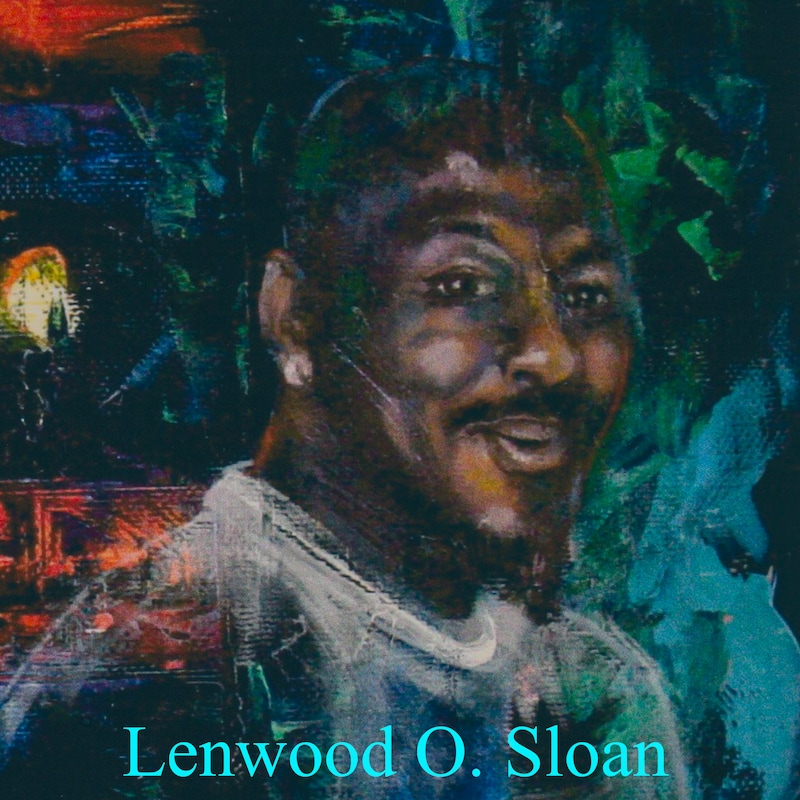
This isn’t a regular ART IS CHANGE episode. It’s a pause. A moment to mark the passing of Leni Sloan—artist, activist, catalytic troublemaker, and beloved friend.
In this special reflection, Bill Cleveland shares stories that trace Leni’s life across stages and communities—from a daring Bicentennial musical about minstrelsy, to decades of cultural work uncovering erased Black histories, to his role as a catalytic force inside institutions that needed shaking awake. This is a portrait not just of what Leni made, but how he moved through the world.
You’ll hear about a man who believed history lives in bodies, that culture breathes through people, and that the real work is connection—between past and present, pain and joy, the visible and the forgotten. It’s a meditation on art as lineage, memory, and moral practice, told with humor, tenderness, and deep respect.
Listen in as we honor Leni Sloan’s life, legacy, and enduring presence—and let his stories remind us why telling the whole truth, especially the hard parts, is how we stay human.
Other Episodes with Leni Sloan
Multiple early and foundational episodes of this podcast include extended conversations with Leni on art, history, humility, and social change.
- L. O. Sloan - Adventures of a Gunrunner for the Arts Part 1
- L. o. Sloan - Adventures of a Gunrunner for the Arts Part 2
- Building Blocks of Effective Art and Social Change Practice: W/ Leni Sloan, Barbara Shaffer Bacon, and Bill Cleveland
NOTABLE MENTIONS
People
Bill Cleveland: Founder of the Center for the Study of Art & Community and host of Change the Story / Change the World. Longtime collaborator and close friend of Leni Sloan, offering this remembrance.
Leni Sloan (Lenwood O. Sloan): Playwright, director, cultural strategist, and community arts leader whose work bridged history, performance, policy, and community storytelling for more than four decades.
Laurie Meadof: Friend and colleague and internationally recognized artist organizer who shared the news of Leni Sloan’s passing with Bill Cleveland.
Barbara Schaffer Bacon: National leader in arts-based civic practice and longtime collaborator with Leni Sloan, referenced in connection with recent podcast conversations.
Bert Williams: Groundbreaking African American performer whose life and legacy anchor Sloan’s musical play The Wake.
Katherine Dunham: Pioneering dancer, choreographer, and anthropologist referenced as part of the lineage of artists Leni now metaphorically joins “on the other stage.”
Productions, Works & Cultural Projects
The Wake (musical play): Leni Sloan’s U.S. Bicentennial-era musical exploring minstrelsy, race, and American identity through the imagined gathering of Bert Williams and fellow performers.
Vu Du Macbeth: The historic 1936 Federal Theatre Project production revived and transformed by Leni Sloan.
Organizations & Institutions
Center for the Study of Art & Community: Host organization for the podcast and long-term home of conversations about art, democracy, and community change.
National Endowment for the Arts (NEA): Federal arts agency where Leni Sloan worked and influenced national cultural policy.
California Arts Council: State arts agency connected to Sloan’s public-sector cultural leadership.
San Francisco Arts Commission: Municipal arts agency where Sloan contributed to public arts strategy and cultural equity efforts.
*****
Art Is CHANGE is a podcast that chronicles the power of art and community transformation, providing a platform for activist artists to share their experiences and gain the skills and strategies they need to thrive as agents of social change.
Through compelling conversations with artist activists, artivists, and cultural organizers, the podcast explores how art and activism intersect to fuel cultural transformation and drive meaningful change. Guests discuss the challenges and triumphs of community arts, socially engaged art, and creative placemaking, offering insights into artist mentorship, building credibility, and communicating impact.
Episodes delve into the realities of artist isolation, burnout, and funding for artists, while celebrating the role of artists in residence and creative leadership in shaping a more just and inclusive world. Whether you’re an emerging or established artist for social justice, this podcast offers inspiration, practical advice, and a sense of solidarity in the journey toward art and social change.
Transcripts
Hey there. Now, this isn't a regular episode, but it's something that needed to be here.
So we're rescheduling the second half of the big art story for next Wednesday. So here's why. The other day, the phone rang, and I don't know why, but I did not want to answer. But I did. And now I know.
It was my friend Laurie Meadoff, sharing the impossible news that my friend and brother, Leni Sloan, had passed. Now, some people are part of your life, you know, in chapters. You work, you drift, you circle back, you lose track, you find each other again.
And then there's others, the ones who never leave. Leni was one of those. A kind of soul companion that if you're lucky, you get one, maybe two.
Well, Leni was one of mine, but I know I'm not alone in that, because there are hundreds of Leni's sisters and brothers across the world who shared that same sense of family with the man. A lot of people will say that Leni was a genius or brilliant or a revolutionary talent, all of which is, of course, true.
But if you ask me what mattered most about Mr. Sloan, it wasn't just the brilliance. It was that he was a good man, a sweet man, a man who genuinely gave a damn. Not just in words, which he had a lot of, or in theory.
No, Leni did the work. And in doing that work, he was a singular force.
A curious, celebratory, adventurous, inventive, and deeply imaginative force for making a difference in the world. But actually, I don't think he could have helped being any of those things. And if. If you met him, you could tell that right off the bat.
You could see that the world for him was an endless bed of, I don't know, oysters. But I don't think he was ever hunting for pearls. Or if he was, the pearl he was seeking wasn't a bright, shiny object.
It was the real jewel, the story inside. Not just the obvious story. No. He wanted the roots and then the mycelium that connected those roots to all of the other roots.
I first met Sloan in the late:He came up from San Francisco with a piece he'd created for the U.S. bicentennial, a musical play called the Wake. Three black and three white, refined Jubilee minstrels on paper. People didn't quite know what to make of it. On stage, it was unforgettable.
Leni wasn't just the playwright. He was the producer, the director, the choreographer, the dramaturge, the music man, and the lead.
He had created and then willed that piece into existence because it told a complicated story about America that people just didn't fully understand, in some cases, didn't want to hear.
Now, it might be hard to imagine a show about minstrels as patriotic, but it was because it gave big life to the extraordinary human beings behind the degrading caricatures of. Of minstrelsy. The play centered on the wake of Bert Williams, a black man who was the greatest minstrel performer of his era.
On stage with five of his contemporaries, all dead, all ghosts, three black and three white, gathered to tell the painful and beautiful story of William's life and the complicated truth of. Of minstrelsy. Not the cartoon version, the hard, messy story. Leni understood something essential about this kind of history.
No, it isn't the dates or even the drama. It's people.
Gesture, stance, attitude, texture, emotion, and most importantly, what he called the fascia, the connective tissue, which is always the people at the center who animated the story and, as he liked to say, the souls who make culture a living, breathing thing.
From voodoo Macbeth to his decades of work in Pennsylvania uncovering buried and erased black histories, Leni brought forgotten stories back into the room. Not as lectures, not as PowerPoint slides, but as lived experiences with music and movement, with bodies, with sweat and breath.
But Leni wasn't just stage work.
For more than 40 years, Leni moved through the world as what he liked to call a catalytic agent, which is a very Leni way of saying that he helped things happen that needed a good and suitably troubling nudge. Sometimes he worked inside the system with one foot out, and other times outside with one foot in.
At the nea, the California Arts Council, the San Francisco Arts Commission, in New Orleans, in Pennsylvania and California, wherever there was a story that needed tending or a community that needed a little oxygen, or an institution that needed to be reminded why it existed in the first place, he was there, pushing and pulling.
Yeah, Leni, the catalytic agent, was a hurricane, stitching together things like cultural tourism and heritage, trails and story circles, underground railroad sites, Civil War commemorations, dance history and film festivals, all in service to shining a light on forgotten and abandoned chapters of African American history. Not as footnotes or separate addendums, but with every blessed thing connected to everything else.
The kind of work where you're part historian, part organizer, part translator, part diplomat, part trickster, part magician. Along the way, there were awards, you know, for innovation and leadership. And of course, the art. But that was never the point.
The point was always connections, weaving the public and the private, the strange and the familiar, the prominent and the obscure, and bringing artists into rooms where they hadn't been invited or even welcomed, and helping communities see and speak the truth for themselves. So when I launched this podcast, of course Leni was my first guest, and I asked him one question. Sloan, what are you up to?
Two and a half hours later, I had my first two episodes. When I asked him what his handle was, he said he was a gun runner for the arts with a little magic thrown in.
And then he quoted an old definition of magic as the manipulation of ordinary things in extraordinary ways. And that is what he did. He believed in positioning and repositioning and jokes to positioning, ideas, people, history, textures and flavors.
And till something catalytic happened. Sometimes something fresh and unexpected filled the air. Sometimes something got scorched.
But no matter what, when Leni Sloan was making gumbo, the ingredients came together in new and surprising ways. But those connections were never abstract points on a chart or a map.
They were the hearts and souls and stories that charged and animated all those communities that he embraced and made his own.
Now, more recently, when the world started tilting hard, pandemic politics, fear layered on fear, I went back to him and asked Sloan, how are we going to make sense of all this without getting overwhelmed?
He answered the way he always did, with hard truths, a ton of history, a lot of metaphors, and with that stubborn, generous optimism that never, ever felt naive.
Now, a few weeks ago, when he and I and Barbara Schaefer Bacon got together for our rent regular podcast conversation, he was fully charged, asking bold and audacious questions, still reminding us that the process matters as much or more than the century too late monument, that humility matters, that ideas come through us, not from us. Now, anyone who who knew Leni knows he believed that the hardest truths and the greatest joys are unavoidably joined at the hip.
That telling the whole story, especially the uncomfortable parts, is how we become free. So that phone rang, and the almost unbearable story of Leni's passing has come to stay.
I've had my tears and a thousand precious memories, and I know this. Sloan has not left the stage. And right now, he and Bert and Katherine Dunham and a lot of others are up there commiserating and swapping old stories.
And for those he has left behind, the spores of his exquisite magic are scattered everywhere.
Through his words, his plays and his stories, through his 4,000 mile smile and that big laugh that sometimes punctuated hard truths and most of all through the warmth, depth and generous spirit he shared so freely. I'll miss you brother. I'll miss you.
Thanks to our listeners for joining us to hear from my friend Linwood O. Sloan directly, I would direct you to our show Notes with links to three episodes featuring conversations with Leni and a link to our building blocks of effective community arts practice featuring Leni and Barbara Schaefer Bacon. Now I will leave you with a quintessential Leni moment.
Now I say quintessential because I think all at once it is profound, humble and fun with a wonderful little quirk contributed by way of an out of sync computer.
Community leadership class of: Leni Sloan:Generations from grandmother to child, parent to brother to sister Sang together at the cradle, in the parlor, in the factory, in the field, in the workplace, along the rails, in the stands of the homecoming gang, in the pulpit and the pews Even in the solitude of the wake we sang together.
Leni Sloan:Again.
Leni Sloan:I'm looking for some long time friends Affirmation Yes, I'm looking for some long time friends Life's a long and winding road Life's a long and winding road with some mighty hairy bends with some mighty hairy hands with some mighty hairy bands with some mighty echo Is a wonderful thing.
2, 3 Life's a long and winding road With mighty hairy bends, so I'm looking for some wine time friends and it's a pleasure to see you and a joy to see you smile as we travel on this road and we stop to rest a while.
Leni Sloan:So.
Leni Sloan:I'm looking for some friends.



