Shownotes
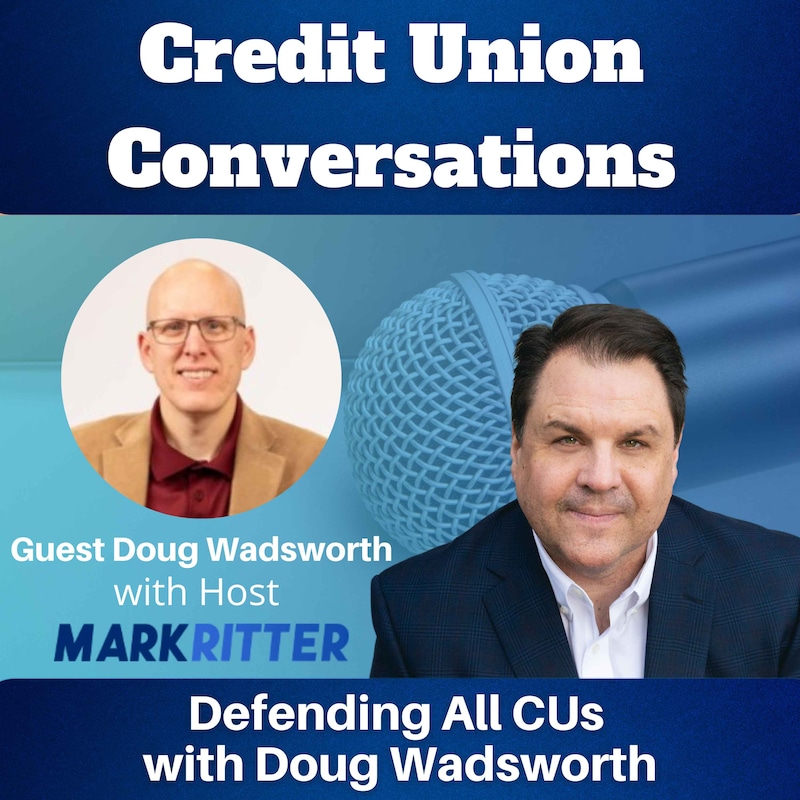
Community finance is under pressure. On this episode of Credit Union Conversation, Mark Ritter sits down with Doug Wadsworth to unpack the realities facing small credit unions, including expanding regulatory burdens, rising compliance costs, and growing competition among credit unions. They discuss why credit union advocacy matters, how the cooperative model must evolve, and what practical leadership looks like when serving members in an increasingly complex financial environment.
What You Will Learn in This Episode:
✅ How small credit unions manage increasing regulatory burden and mounting compliance costs during NCUA examinations
✅ Why credit union advocacy is essential to protecting the cooperative model and strengthening member impact
✅ How credit union competition from large financial institutions and FinTech competition is reshaping credit union strategy
Subscribe to Credit Union Conversations for the latest credit union trends and insights on loan volume and business lending! Connect with MBFS to boost your credit union’s growth today.
TIMESTAMPS:
00:00 Doug shares his journey into the credit union space and his introduction to small credit unions
06:25 The challenges of obtaining services, the weight of NCUA examinations, and the rising regulatory burden on small credit unions
17:18 Survey results reveal growing credit union competition from larger credit unions over smaller ones
21:04 Breaking down compliance costs, HMDA reporting, and NMLS registration
27:58 Advocacy efforts aimed at achieving regulatory relief for small credit unions
31:15 A vision for strengthening the cooperative model and sustaining community finance
KEY TAKEAWAYS:
💎 Small credit unions face a disproportionate regulatory burden that limits growth and operational flexibility
💎 Strong credit union advocacy can reduce unnecessary compliance costs and drive reform
💎 Preserving the cooperative model is essential as financial institutions increase competitive pressure
ABOUT THE GUEST:
Keep It Simple - Book by Doug Wadsworth
RESOURCES MENTIONED:
SEO KEYWORDS:
Credit Union Conversations, Mark Ritter, MBFS, Credit Unions, CUSO, Small Credit Unions, Regulatory Burden, Compliance Costs, Credit Union Competition, Credit Union Advocacy, Cooperative Model, Vendor Negotiation, Community Banking, Local Lending, Fintech Competition, Credit Union Strategy, HMDA Reporting, NMLS Registration
Transcripts
[00:00:28] I was at a larger credit union, what is a larger credit union, and our CEO was very much part of the credit union culture. And he told me that any credit union that wants to come in here and take anything outta here that they want, you help you do that and you help 'em out. And that's actually how I evolved into getting into the CUSO business.
[:[00:01:16] So joining me today is Doug Wadsworth of Tri-Cities Credit Union. Doug, thank you for joining me.
[:[00:01:27] Mark Ritter: Alright, so I think we could turn this into a Joe Rogan episode and sit here for about three or four hours, but I'm sure you're a busy guy and people would tune out after about 30 minutes.
[:[00:01:52] Doug Wadsworth: Yes, thank you. Mine's probably a little bit unusual.
[:[00:02:10] And I thought, you know, I oughta go to business school and learn something about business if we're gonna start an actual seafood processing business. So that's actually where I ended up going to business school up in Western Washington, in Bellingham. And I loved it. After I got married and had a kid, I ended up moving over to the world of finance and I got my first job at a small credit union.
[:[00:02:38] Mark Ritter: So when somebody mentioned something interesting, I always take this sideways, so I am of the generation when I went to college.
[:[00:03:12] Doug Wadsworth: Of course the TV show's gotta make it a little more exciting. But it can be, especially if you're crabbing or you're doing halibut or something, then you're up there in the winter. You know, you're out in the bearing sea or out in the middle of the gulf or whatnot. So it can be, but I grew up on primarily staining and it also often those jobs were what you call the slime line.
[:[00:03:43] I was on the commercial ving side, not the processing, but the industry changed about the time I got married, and that's what ended up pushing me to a finance career after I got my business degree. You couldn't make enough money. It used to be you could make, used to be, you could make enough money in the summer.
[:[00:04:01] Mark Ritter: The world is different.
[:[00:04:12] So I'm kind of a DIY person with credit unions as well.
[:[00:04:28] Doug Wadsworth: Yes.
[:[00:04:43] Doug Wadsworth: Yeah. For me it was great. Turned out I don't like too much structure and I like to be in charge and I like to do things myself. For a small credit union generalist type people, it's like a great fit. If you like wearing lots of hats and doing lots of different things and you can do things fast and you can do them yourself.
[:[00:05:06] Mark Ritter: I have had this conversations with others and I have said, I think a detriment in our business is where people used to get trained on everything and have that jack of all trades.
[:[00:05:37] Doug Wadsworth: Yes, I imagine so. Agreed.
[:[00:05:48] And I find shopping for services a nightmare. There's very few options and, and every time I talk to somebody in this business, what they want is to [00:06:00] provide services to a $10 billion in up credit union, and they all have the same name because it's the same sales process and you make a lot more money.
[:[00:06:25] Doug Wadsworth: It is challenging as a small institution. Generally the vendors, like for instance, often small credit unions will go to a conference where you get all the vendor partners with their booths and they wanna sell their product.
[:[00:06:54] Over the business partner or the vendor as far as negotiating, because we're so small, we just don't carry a lot of weight. [00:07:00] There's some groups like there's another CUSO called CU Unite that a friend of mine, Scott Pryor started and it's owned by a bunch of credit unions, and that's what they do is they try to get small credit union together so they have some leverage and they can negotiate as a group of small credit unions with vendors and relationships to try to negotiate better pricing.
[:[00:07:21] Mark Ritter: Yeah, we have something similar on the East coast called RK Go Big, where a few of my credit unions that I work with are involved, and it's essentially the back offices of the credit unions are all combined and collaborated into IT systems and accounting and compliance and all of those kind of, and then you get to run the front end of your credit union.
[:[00:07:46] Doug Wadsworth: Oh yeah. It's a fantastic thing to investigate and it can really help, I think, a lot of small credits.
[:[00:07:56] Doug Wadsworth: Yes.
[:[00:08:05] So as we set the table up for people.
[:[00:08:30] Our credit has been healthy and stable for many years. Very healthy and stable. And yet it's the exams are always often, even though the examiners are great and I like them, you know, they're good folks doing their best job, but the examination burden is huge. And they chose to do the burden like the second week of January, which is the busiest time of the entire year, and at a small credit union.
[:[00:09:10] And why? Because these big, large credit unions had recently merged small ones on, requested the small credit unions, uh, 'cause they had been struggling. And so I was asking questions, you know, what caused that? You know, what's happening? And one of the comments they made was they estimated this panel of large credit unions that in 10 years they would be half as many credit unions.
[:[00:09:49] At the same time, I was particularly frustrated with a number of regulations that had no bearing on small credit unions, things like. Cecil and Hamda or BSA, we take, we [00:10:00] spend a ton of time and money on it, or the NMLS and there's no value to our safety or soundness, no impact to us. Their regulations were designed for giant credit unions, but
[:[00:10:14] Doug Wadsworth: I know, right? Exactly. So, but they all cascaded onto small credits and so those were driving me crazy and I was like, that's it, I've had 'em, I'm gonna start reaching out to the NGA. The ombudsman and being like, this is ridiculous. Why are we being forced to do all these things? And then I reached out to some trade league type trade groups and I was like, what are you doing for small credit unions?
[:[00:10:49] And I'm gonna promote them and I'm gonna push for what small credit unions need. So, 'cause it didn't feel like it was being done well enough. Very, very little. And I'd been paying dues, you know, for [00:11:00] years and years and then like 20 years, I'm paying dues every year. And I had my head down, you know, in my small credit union shop.
[:[00:11:24] So I thought, well, I'm gonna do it myself. I guess there's where the DIY Alaska background comes from. So I started the little nonprofit organization, it's E-S-C-U-D, or skewed, or e skewed, but it stands for the Endangered Small Credit Union. Defense kind of patterned after the Endangered Species Act.
[:[00:12:04] And we make a difference that often nobody else can. And so I was like, man, we really make a difference. That's one reason I've been in the credit union industry for so long, and I don't wanna see small credit unions disappear. When I got my first credit union job at that whimper credit union in Port Townsend, Washington, the CEO offered me a job.
[:[00:12:36] And that's why I took the job. And so I've, I've loved it ever since. So, boy, I wonder, call kind of all over the place there, but you get an idea Yeah. Of the organization. I started and we've been trying to grow and get endorsements from other small credit unions and I worked free. My, my board of my credit union is like, go ahead, spend all the time you need, as long as the credit union's running well.
[:[00:13:18] Meaningful way. And on this journey, I've had some great support so far, like A CU America's Credit Unions. They've listened to me, they've partnered, they've reached out, they've actually modified some of their advocacy goals to help small credit unions more, which is fantastic. DCUC, same thing. The Defense Credit Union Council.
[:[00:13:56] And he said, yes, that's actually what got it on the list. So we've had [00:14:00] some victories. So I'm excited about that so far.
[:[00:14:22] Doug Wadsworth: Wow. Yeah,
[:[00:14:45] But I don't think, that's not my mission. We think everybody should be able to help their members. And in the examination process, I see pressures on small credit unions, and where I was [00:15:00] going with that is we will have credit examiners look at the exact same loan that's participated among credit unions, the exact same underwriting standards on the same examiner with wildly different pressures and opinions.
[:[00:15:40] 'cause I'd love for it to be in there. I'm looking at you at your survey results here. The pressure on the smaller credit union versus the larger credit union.
[:[00:16:04] That comes with getting older too. You know, the more you've done it, you kind of run outta patience for some of these things.
[:[00:16:12] Doug Wadsworth: But I was like, man, this over compliance thing is insane, like pressuring. Things that really aren't the examiners, then they bless their hearts, you know, they're doing the best they can.
[:[00:16:39] As long as they meet the basic requirement. That's probably fine, you know, and there's not a safety or sound in this risk. But instead we end up getting this pressure to over comply with the regulation, you know, at add a 30 page policy with a million procedural triggers that are gonna require other policies instead of allowing us to boil it down to a couple sentences and keep it really simple.
[:[00:17:14] Mark Ritter: We don't work for free.
[:[00:17:18] Mark Ritter: And in your survey, the one area that I winced at, 'cause I've talked with credit unions a little bit. Are there thoughts on competition?
[:[00:17:29] Mark Ritter: Now lemme give you my theory and philosophy.
[:[00:17:33] Mark Ritter: I always say credit unions have rivals much more than co. They have bigger rivalries, more than competitions, and what I mean with that is they see big, even small credit unions down their street, and that's what they're focusing on, what's their rate?
[:[00:18:14] Doug Wadsworth: Sure.
[:[00:18:16] Doug Wadsworth: So that's how I always saw it up until last year. And I was, matter of fact, in all my industry for almost 25 years now, it's like we're competing with big banks. We're not competing with credit unions. Maybe you have rivalries, you know? Yeah. And there's friendly coan petition, you know, between you and somebody else.
[:[00:18:49] I'm not exactly sure what it is, but it was a sense that I was starting to feel here in my community. 'cause there used to be nine credit unions in the Tri-Cities in the eighties. There was two big ones and there were seven little ones. [00:19:00] Yeah. Now there's the original two and there's me, I'm the only small one, and we have like three or four or five other giant credit unionism who have moved into our community from either, either outta the city or outta the state, which is just growing competitive pressure.
[:[00:19:24] Doug Wadsworth: So it's kind of changed, and this has just been accelerating over the last several years, I think, but I didn't really notice it just this last few years. So it is kind of a new reality.
[:[00:19:49] Almost all of them were under a hundred million assets. What was your primary competitor? Was the big credit unions and not the banks. I thought, whoa, whoa, this is, this is different. [00:20:00] And then it was FinTech and then it was banks last on the list. So, yeah, ki kind of different and, and that again, that's perception.
[:[00:20:22] I mean, that's you. You people have the freedom to choose what they want. We love credit unions in general, big or small. Hence I started this little organization. I thought, well, what can we do about it? We can at least help small credit unions to give back to their members, and it gets them some regulatory relief, which was the second biggest thing they rated, like, what's your biggest problem?
[:[00:20:49] Mark Ritter: Yeah, and I find it to be, now, luckily I'm in the business lending arena, so I always say my compliance rules are, if it feels good, do [00:21:00] it, but it is getting worse.
[:[00:21:18] Doug Wadsworth: The NMLS thing, the National Mortgage Lender Registry.
[:[00:21:33] Even the weird ones like deeds of trust, otherwise it went. An examiner comes, they write you up, and you get in all kinds of trouble and it has to be on every application and you can only talk to 'em about a mortgage if all your employees that talk to 'em have this special registration. And the website's a disaster.
[:[00:22:05] They listed it as number one, and then was the BSA was the Bank Secrecy Act. So they spent all this time and money. And it has no value to them, no value to their members. They could get rid of it tomorrow and nobody would even notice. The other one is like the, the whole A-L-M-N-E-V rate shock analysis that small credit unions have to do no value.
[:[00:22:50] And, and that's a hundred hours any small credit automatically by doing two dozen home equity, equity loans in a single mortgage. So that's another one. Get rid of it. No impact. Sorry.
[:[00:23:06] Doug Wadsworth: I know. I'm sure you're experiencing the same thing, aren't you?
[:[00:23:11] Doug Wadsworth: Yeah,
[:[00:23:13] Doug Wadsworth: Yeah, you're completely illogical. After that, it came down to things, the regulars just simply over compliance, pressure, and exhaustive examinations. A tiny, little teeny, tiny credit union.
[:[00:23:22] Doug Wadsworth: been run great for decades, never had any problems.
[:[00:23:43] So just a few years ago. Our auditor is like, Hey, where's your beneficial designation thing? And on your new account documents, we're like, what are you talking about? So we had to, there's this law we had to comply, we had to change all our new account documents and have special checklists and it was, you know, it took a bunch of time and money to [00:24:00] revise everything that we do.
[:[00:24:06] Mark Ritter: here.
[:[00:24:15] But kind of already spent all the time and money, you know, it's kind of like better late than never, I guess. And the chairman Hoffman actually had a little comment in there. He said that the department told him when he was trying to get it, discussing it, they claimed that it was not a burden. I was like, wow.
[:[00:24:42] Mark Ritter: I, I always like to say that the government regulators, if they aren't coming up with something to do, they have nothing to do and you don't need as many of them.
[:[00:25:12] Doug Wadsworth: That's right. You nailed it.
[:[00:25:17] Doug Wadsworth: Uhhuh.
[:[00:25:43] Doug Wadsworth: Like people, like what? People,
[:[00:26:04] Doug Wadsworth: Generally at a smaller credit union, there's gonna be a lack of business acumen in general, but I think that's been true forever. And there's always a percentage of small credit unions that are gonna struggle and they're gonna make bad strategic decisions and their board aren't managing well and the credit unions gonna lose money and go outta business eventually or get merged.
[:[00:26:22] Mark Ritter: If I had a, I'll call it a beef with smaller credit unions, and this is where we try to promote. There, there are some smaller credit unions that say, I'm gonna open my door and at the end of the day, assets are going to equal liability plus equity, and I'm running my credit union.
[:[00:26:40] Mark Ritter: And some of them struggle with business development and putting their name out in the community. They, they're just there at a desk and whoever walks in, they provide wonderful service. Yeah, but they're not providing proactive service.
[:[00:26:56] Mark Ritter: be around much
[:[00:26:57] Mark Ritter: And they won't be around much longer.
[:[00:27:02] Doug Wadsworth: I
[:[00:27:02] Mark Ritter: you know it. It's not the corner of the factory days where everybody new employee is gonna sign up for payroll and direct deposit at your credit union.
[:[00:27:14] Yeah. But not anymore. Your days are numbered. If that's the case, you really had to get your name out there. You gotta be relevant. You gotta figure out what your niche is. Yep.
[:[00:27:30] Yeah. I really think people like that. It's that, wow. You mean I can come in and talk to somebody when I need something? Wow. I'll take that.
[:[00:27:45] I said, Hey, how's it going? He's like. Wow. You know, and he knew I was the CEO of this little credit union, and he loved it. He was like, holy smoke. Because I can walk into the small credit union and the president's right here and he knows my name. There's a percentage of people that just love that.
[:[00:28:04] Doug Wadsworth: yep.
[:[00:28:05] Mark Ritter: easy. I know. Okay. Just
[:[00:28:07] Mark Ritter: If you ask somebody, are you for this and support this? Of course. Yeah. We would love that. Now I have been in enough large credit union board meetings and having enough large credit union friends where people would elbow me and say, oh geez, what the heck's he doing?
[:[00:28:43] Doug Wadsworth: So. I am learning. I'm new to advocacy. I'm a DIY person, so I've, I'm kind of been a, a bull in the China shop and I'm moving fast and I'm breaking things and so trying to, learning as I go and it's a mixed bag.
[:[00:29:12] But are like really quiet and they, they don't wanna raise their head above the tree line.
[:[00:29:19] Doug Wadsworth: of small credit unions are that way and, and partially the disruptors are always not a, people don't like disruptors. You know, you kind of mess things up and some of the things we're asking for aren't real popular in some circles, perhaps, because we're really trying to get small credit union priorities.
[:[00:29:53] Everybody's kind of looking out for number one,
[:[00:29:58] Doug Wadsworth: Exactly. And that's part of the thing. [00:30:00] But maybe we're not as popular as I'd like us to be and some places don't like it because, 'cause we're not too shy about calling some of those things out a little bit. We're like, you know, maybe there's some structural, structural issues here that need some attention because like we've got this one giant credit union.
[:[00:30:25] Mark Ritter: Yes.
[:[00:30:31] And things like that seems like they could use some attention to tweak some things. And so that's never real popular when you're trying to tweak things. The status quo and and following the money, you know, so it's a mixed bag. We're learning as we go, you know, we're trying to make friends and align ourselves where we can with anybody who's willing to step up and give small credit.
[:[00:30:52] Mark Ritter: Doug, I queued up one last question for you. You've been digging into this now for a year plus you can snap your fingers [00:31:00] and change anything instantly. What's that first thing that you're doing? That you can just say, bam, it's done. You got complete control over changing this industry.
[:[00:31:23] Mark Ritter: They already do it for business lending or for small credit unions. So why can't you do it for other things?
[:[00:31:42] I mean, in, in addition to, you know, being, knowing how to run a business is realizing. That you're a cooperative and really figuring out their niche and just really giving back to their members in radical, specially unique ways that will differentiate them. And, and I think those are the, those would be two keys to instant survival, snap my fingers [00:32:00] exempt, all these small credit unions regulations that don't matter.
[:[00:32:22] They're small, but often it's the only places that some of these members can get 'em. So
[:[00:32:30] Doug Wadsworth: You're welcome to find me on LinkedIn. You can send me an email [email protected]. That's TRI cu. I wrote a little book, it's just a handbook.
[:[00:32:52] Published a little book on Amazon if you're interested. If small credit unions are interested, it's called Keep It Simple. CEO, guess what it's about a [00:33:00] DIY kind of stuff.
[:[00:33:01] Doug Wadsworth: That's about, other than that, if small credit unions wanna speak up and endorse our little organization, that's helpful. 'cause the more official endorsements we get, it's free.
[:[00:33:25] Mark Ritter: Doug, this is Doug Wadsworth of Tri-City CU joining us today, and also the endangered small Credit Union Defense. We're a credit union, a hundred percent credit union owned CEQ cell. We serve credit unions of all sizes and I would love if MBFS can support you any which way we can.
[:[00:33:49] That's awesome.
[:[00:34:01] Doug Wadsworth: You too. Bye-bye.