Shownotes
Audio • Season 2 • Episode 8 • Season 2 Episode 8 - Part 2, The Lambeth Articles to Hampton Court. From York to Canterbury, by way of Sturton-le-Steeple.
© 20 26 The Rise of the Protestants., Author, Shaughan Holt.
The Common Era (CE/BCE) is a neutral alternative to BC/AD, used for the same calendar in academic and multicultural contexts.
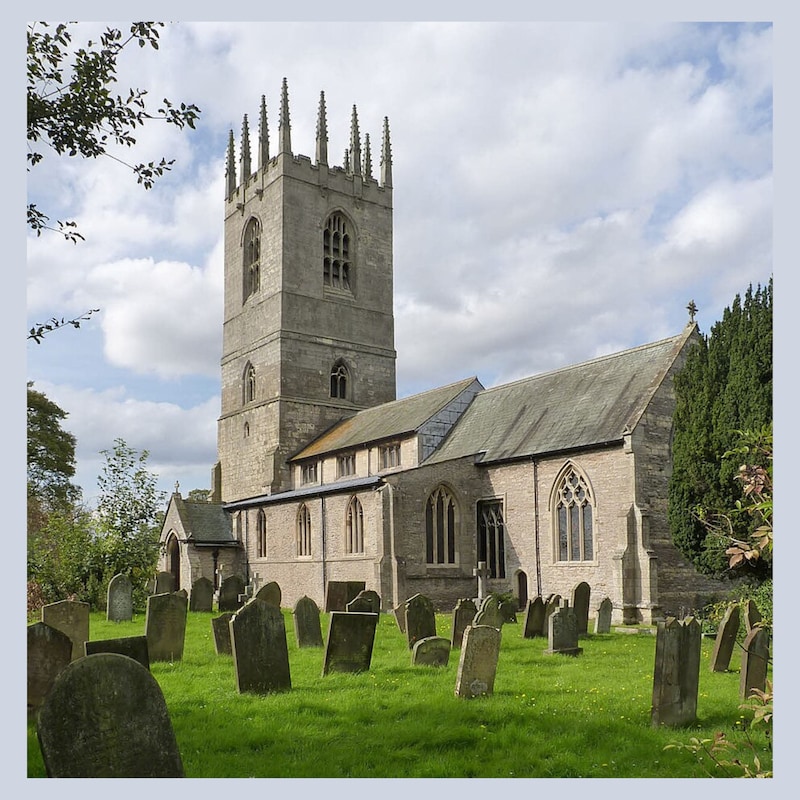
Artwork • St Peter and St Paul's Church, Sturton-le-Steeple.
St Peter and St Paul’s Church, Sturton-le-Steeple is a Grade II listed Church of England parish church near Retford, Nottinghamshire. Dating from the 12th century, it was rebuilt in 1902 after a fire. The church has six bells, medieval and later monuments, and is in the village where John Robinson, the “Pilgrim Pastor,” was born.
Music • Viral Dance. Medieval Dance. Hurdy-Gurdy, Organ & Drum. Andrey Vinogradov
Part 2 Episode Notes.
In 866 CE, Viking forces captured the Anglo-Saxon settlement of Eoforwic, transforming the former Roman fortress of Eboracum into the thriving city of Jórvík. This conquest marked the rise of Norse power in northern England and the establishment of the Danelaw, leaving a lasting impact on English religion, culture, law, and language. Over the centuries, York evolved into a major medieval city and religious centre, its name later inspiring the naming of New York. The city’s history reflects centuries of conquest, cultural fusion, and change that shaped Britain and beyond
In January 1604, king James I, convened a conference at Hampton Court Palace in response to the Millenary Petition, which called for further reform within the Church of England.
The meeting—delayed from November 1603 due to an outbreak of plague—brought together representatives of the established church and leading Puritan figures. Presiding over the bishops was Archbishop Whitgift, supported by eight senior clergy, including Richard Bancroft. Together, they stood firmly against most Puritan demands, setting the tone for James’s religious policy and signalling that, despite initial hopes, sweeping reform would not come easily.
© 20 26 The Rise of the Protestants., Author, Shaughan Holt.
"All rights reserved. No part of this podcast may be reproduced, translated, distributed, or transmitted in any form or by any means, including photocopying, recording, or other electronic or mechanical methods, without the prior written permission of the copyright holder, except in the case of brief quotations embodied in critical reviews and certain other non-commercial uses permitted by copyright law".
Requests regarding translation, licensing, or republication should be directed to: [email protected]
Your feedback matters,send me an email at [email protected], with any comments, suggestions, or criticisms. I read every message
Transcripts
© 20 26 The Rise of the Protestants., Author, Shaughan Holt.
"All rights reserved. No part of this podcast may be reproduced, translated, distributed, or transmitted in any form or by any means, including photocopying, recording, or other electronic or mechanical methods, without the prior written permission of the copyright holder, except in the case of brief quotations embodied in critical reviews and certain other non-commercial uses permitted by copyright law".
Requests regarding translation, licensing, or republication should be directed to: [email protected]
Your feedback matters, send me an email at [email protected], with any comments, suggestions, or criticisms. I read every message
Series 2.
Episode 8.
The Lambeth Articles to Hampton Court.
Part 2. From York to Canterbury, by way of Sturton-le-Steeple.
When the Angles and Saxons swept into Britain, Christianity faded into the background.
In response, Pope Gregory, launched a mission in the 590s, to rekindle the faith among the Anglo-Saxons.
Around 597 CE, Pope Gregory sent the monk Augustine, to Kent, a fertile kingdom in southern England.
Upon his arrival, Augustine won over King Ethelbert, a pagan monarch whose wife, Bertha of Frankia, remained steadfast in her Christian beliefs.
The Franks, a powerful Germanic people, swept across much of the Western Roman Empire in the 5th century.
They came to rule lands that today include northern France, Belgium, and western Germany.
The Frankish Kingdom, rose to become, the foremost Christian power in early medieval Western Europe, and the name of modern France, traces back to these influential people.
King Ethel-berts marriage to Bertha, demonstrated his openness to Christianity, making Kent a strategic starting point for Augustine’s mission.
After converting King Ethelbert, Augustine began building a church in Canterbury, which would start the revival of Christianity, in southern England.
In 865 CE, the Great Heathen Army of Vikings, sailed from Den mark in fast longships, crossing the North Sea, towards Britain’s north-eastern coast.
This was not a raid, but an invasion, and the Norse Sagas, tell us why.
Ragnar Lodbrok, a legendary Viking king, had been captured, while raiding Northumbria, and put to death by King Ælla, cast, it was said, into a pit of snakes.
Ragnar’s sons swore revenge, and three of them—Halfdan Ragnarsson, Ivar the Boneless, and Hubba, were named as leaders of the invading Viking Army.
After landing at Thetford in East Anglia, the Vikings set their sights on Eoforwic, a settlement destined to become the city of York.
Its strategic importance was long established.
As early as 71 CE, Roman legions had seized the site, naming it Eboracum, and making it their principal military base in northern Britain.
In November 866, the Vikings attacked, breaching Eoforwic’s defences and capturing the settlement.
In early 867, Northumbrian forces, attempted to recapture the settlement, but suffered a decisive defeat.
The deaths of rival Northumbrian kings, Ælla and Osberht, consolidated Viking control over the region.
Renamed Jórvík, and shielded by Roman walls, the settlement became a Norse stronghold and a centre of trade, law and belief.
Its fall, marked a turning point in English history, signalling the rise of Norse power in the north, and the beginning of the lasting fusion, of Viking and Anglo-Saxon cultures.
Centuries later, following their own conquest in 10 66, the Normans would give the citadel a new name: York.
Northern resistance to them was fierce, and their response brutal—executions, scorched earth, and the deliberate reshaping of the land through castles, flooding and control.
Yet, York endured.
By the twelfth century, it stood as England’s second city, its power, no longer just military, but also spiritual.
York Minster, is the largest Gothic church in England, and was built between the thirteenth and fifteenth centuries, while the city’s 2 and a half mile (4 km) defensive medieval walls, still stand to this day.
Throughout this period, York served as the seat of the Archbishop of York, one of the most powerful figures in the English Catholic Church.
Here, church and state authority, had changed its language, but not its purpose.
York’s journey, from pagan rituals to Christian cathedrals, from Viking chieftains to Norman monarchs, uncovers a profound thread in England’s tale, that is, : - Power endures, by reinventing faith.
Once faith became tied to loyalty, belief was no longer only personal; it determined who belonged, who was to be trusted, and who held authority.
Similarly, the history of Canterbury Cathedral, from Viking raids to the Norman Conquest, highlights England’s ongoing struggle, with faith, violence and authority.
St Augustine, had established the Cathedral around 597 CE, and for centuries, it served as the spiritual centre, of Saxon England.
Canterbury’s importance, in the ancient kingdom of Kent, made it a frequent target, for threats by land and sea.
Repeated Viking attacks, left a lasting impact on the city and its church.
The most haunting came in 10 11, when Danish raiders shattered the cathedral, and, after demanding ransom, executed Archbishop Alphege.
His martyrdom, revealed how fragile sacred authority could be, in a world, shaped by conquest.
After 10 66, everything would change.
William the Conqueror, secured Canterbury by force, raising a castle to dominate the city, and replacing the existing Saxon and Viking authorities, with Norman rule.
A year later, when a fire in 10 67, damaged the old cathedral, the new Norman archbishop, Lanfranc, seized his moment.
Lanfranc did not repair the past, he replaced it.
He ordered a complete rebuild, in the French Romanesque style, shifting the cathedral, slightly south, and modelling it on the Norman churches, he had known in France.
Broad naves, twin towers, strong transepts, and a tightly controlled choir, would reshape the previous site, into a statement of order, discipline and power.
This rebuilding, marked more, than just a simple change in architecture.
It signalled the transfer of authority, from Saxon, to Norman-rule, and from long-established tradition, to power being imposed, from the new rulers.
Canterbury, was to remain England’s spiritual centre, but now, faith was to be framed by conquest, and belief firmly bound, to obedience.
Canterbury Cathedral is generally considered the most important cathedral in England, both historically and ecclesiastically.
As the seat of the Archbishop of Canterbury, it is the Mother Church of the worldwide Anglican Communion.
While York Minster is arguably more significant, in terms of sheer size, and as a masterpiece of Gothic architecture, Canterbury, holds the primary position in English history and religious structure.
The year is 16 03.
Robert Cushman was baptised on 9 February 15 77, in Rolvenden Kent, in a church font still in use today.
The baptismal record from the Church of St. Mary the Virgin, covering 15 58 to 16 53, lists him as "Robart, son of Thomas Cutcheman and Ellen Hubbarde".
The next record of him appears in December 15 97, at St. George the Martyr Canterbury, where he was apprenticed to George Masters, a grocer and butcher, who had the exclusive rights to make tallow candles.
City records show, that Cushman began his apprenticeship at age 18.
During his apprenticeship, Robert Cushman lived in George Master’s house, in the parish of St. George the Martyr until at least 16 03.
After her first husband died, Ellen, Robert’s mother, had been married to Thomas Tilden.
Tilden was seen as a Puritan, and is credited with shaping Cushman's religious beliefs, which led Cushman to attend illegal religious gatherings, known as Conventicles.
In 16 03, while still apprenticed to George Masters, Cushman was believed to have helped distribute controversial religious writings in Canterbury, without permission.
He was accused of putting up signs on church doors that said, "Lord, have mercy on us".
City authorities told the sheriff to find and question those involved, calling their actions lewd and seditious.
Cushman was eventually identified, and because his answers were unsatisfactory, he was held in the city’s Westgate Prison for one night.
On 23 March 16 03, Archbishop Whitgift, granted John Smyth permission to preach in the Canterbury diocese, which encompassed the city of Lincoln.
At that time, Smyth was already regarded as a controversial figure in Lincoln.
Unsurprisingly, Bishop Chaderton of Lincoln, strongly objected to the Archbishop’s decision to appoint Smyth; however, his objection was overruled.
4 months later, on 26 July 16 03, Archbishop Whitgift revoked Smyth’s licence, and requested that the decision be widely publicised.
As a result, Smyth lost his livelihood.
He also received a warning, for preaching at West Burton village without permission.
At the same time, he was cited for working as a schoolteacher in North Clifton, about twelve miles from Lincoln, while falsely claiming to be a church curator.
Although John Smyth, believed that the church was not adhering to biblical principles, he chose to remain within the established church.
In 16 03, John Smyth published "The Bright Morning Star," a collection of sermons that aimed to interpret Psalm 22.
This psalm, known as "The Hind of the Dawn" or "My God, my God, why hast thou forsaken me", describes someone crying out to God for help against their enemies, and later expressing gratitude, for being saved.
In the same year, Thomas Helwys began conducting regular Puritan services at his residence, Broxtowe Hall.
These gatherings, attracted numerous attendees, and eventually established Broxtowe Hall as a centre for Puritan teachings.
Thomas Cartwright's interpretation of Puritanism, is widely regarded as the definitive representation of the movement, highlighting its distinct Presbyterian characteristics.
While Wycliffe Tyndale and Hooper, offered only brief and limited insights, into Puritan thought, Cartwright provides a broader and more distinctive perspective.
Thomas Cartwright, a leading English Puritan scholar, spent his final years in Warwick, where he died on 27 December 16 03.
He advocated for reform within the Church of England, believing that leaving the Church, was a serious mistake, and that efforts should focus on unity, rather than division.
The year is 16 04.
In January 16 04, King James I of England, convened a meeting at Hampton Court Palace, with representatives from the Church of England, and several prominent Puritans.
The conference, was initially scheduled for November 16 03 in London; however, it was postponed due to a plague outbreak.
The meeting was convened, in response to the Millenary Petition, which outlined several reform requests, from the Puritan community.
Archbishop Whitgift, led a delegation of eight bishops, including his protégé, Richard Bancroft, the Bishop of London.
This group was supported by seven deans, and two additional clergy members, all of whom opposed the Puritan demands.
King James, entrusted Richard Bancroft with representing the government's stance on religious issues.
At the first meeting on 14 January, the King spoke only with Archbishop Whitgift’s group.
King James had previously selected, representatives from the Puritan community, including John Rainolds, Laurence Chaderton, Thomas Sparke, and John Knewstubs, to advocate for Presbyterian beliefs.
It was not until 16 January, that the King finally met, with these representatives of the Puritan movement.
It was reported, that John Rainolds acted as their main spokesperson, while Knewstubs said very little.
Laurence Chaderton, was described as, "mute as a fish," whilst Sparke remained entirely silent.
However, this meeting ended badly, after Rainolds proposed the establishment of presbyteries in England.
Annoyed by their request, and seeing this as a direct challenge to his authority, King James, famously declared:
"If bishops were put out of power, I know what would become of my supremacy, No bishop, No King!".
If I want to live under a presbytery, I will return to Scotland.
Consequently the meeting was adjourned, much earlier than planned.
A few days later, on 18 January, the King, after meeting with Whitgift and the church's legal advisors, called in the Puritan representatives, to inform them of his decision.
James chose to retain the Book of Common Prayer, emphasising the significance of traditional practices, but explicitly stated that he would not introduce a preaching ministry.
However, he did agree to some changes, such as removing the mention of, "Baptism by Midwives", changing "absolution" to "remission of sins", and renaming "Confirmation", as "the laying on of hands", to separate it from its Catholic meaning.
However, James unexpectedly endorsed the Puritan proposal, for a new, authorised translation of the Bible.
Initially, Bishop Richard Bancroft greeted the Hampton Court Conference with a spirit of compromise, but over time, his stance hardened, and he stood resolutely against the Puritans.
At the conclusion of the conference, James I instructed the bishops, that the Puritans must conform to the Church of England, warning, "Else I will harry them out of the land, or do worse".
Ultimately, the bishops prevailed over the Puritans, effectively ending any immediate prospects for reform.
However, this imposition of strict conformity, would inadvertently create opportunities, for several notable historical figures.
Though considered ordinary by many, these individuals gathered in ways that made worship, deeply personal, and meaningful to them.
Motivated by a strong commitment to Scripture, they initially sought to renew the Church of England from within, choosing reform over absolute separation.
Richard Bancroft, served as the chief director of the King James Bible translation, playing a significant role in the project's development.
Initially, Bancroft had questioned the necessity of a new translation, however, following King James's endorsement, he became key to the project's success.
Bancroft managed six teams across Westminster, Oxford and Cambridge, making sure the project stayed on track.
His leadership, helped England’s top scholars work together, and encouraged strong teamwork.
Bancroft selected and approved all the translators, who came from different religious backgrounds.
The translation teams comprised Puritans, high churchmen, scholars of varying ages, academics, clergy, individuals from different socioeconomic backgrounds, urban and rural residents, and both widely travelled and locally rooted members.
Despite their diverse backgrounds, all the translators possessed strong academic credentials, demonstrated commitment to the project, and recognised its significance.
The translators approached their work with humility, motivated by a sense of duty, to both the monarch and a higher authority.
Bancroft established 15 rules, to help translators work together, and share responsibility for the final text.
He encouraged careful research, and suggested using the work of earlier translators, such as Tyndale, Wycliffe, Coverdale and Rogers, as a starting point.
Rather than impeding progress, Bancroft actively supported and encouraged the translation teams.
He also provided financial assistance, which helped translators overcome challenges more effectively.
Richard Bancroft exercised final authority, approving only fourteen changes, out of more than thirty thousand translated verses.
The King James Bible (KJB), stands as a cornerstone of English literature, shaping the faith and traditions of Anglicans, Baptists, Lutherans, Presbyterians and Mormons alike.
The enduring impact of the KJB, owes much to the unwavering dedication of King James I and Richard Bancroft, whose vision helped bring this monumental work to life.
In 16 04, Robert Cushman faced prosecution, for distributing libellous material, and for failing to attend services, at St. Andrew's parish church in Canterbury.
He was excommunicated on 16 January, for refusing to acknowledge his offence, and the church also expressed its concerns, regarding his perceived lack of moral and intellectual improvement.
Following his apology on 15 October, the charges against Cushman were dismissed.
However, on 12 November, he once again faced the threat of excommunication, due to his continuing defamatory conduct.
By 7 July 16 05, Cushman had been absolved of excommunication, and acquitted of all charges.
Even after all that had happened, Cushman still kept a surprising amount of influence in the town.
The village of Sturton, also known as Sturton-le-Steeple in Nottinghamshire, played a significant role in the English Separatist movement.
It was centrally located, among a cluster of villages where early Puritans lived, worshipped, and organised, during the late sixteenth and early seventeenth centuries.
Sturton is situated near Scrooby, Austerfield, and Gainsborough, locations closely associated with prominent Separatist figures, including William Brewster, Richard Clyfton, and John Robinson.
In defiance of the Church of England's authority, members of these congregations separated, and gathered in secret, holding clandestine meetings, in both modest homes and manor houses, throughout the countryside, to worship according to their own convictions.
Sturton was part of a rural, close-knit community that enabled the Separatist movement, to persist despite persecution, by both church and state authorities.
The village's location, was also significant.
Because Sturton and the surrounding villages, were relatively remote, these communities offered each other some protection from external interference, while still allowing Separatist groups to communicate.
Many people from this region, later risked their lives to travel to Holland, motivated by a desire for religious freedom.
Some among them, would eventually become the Pilgrims, who set sail on the Mayflower in 16 20.
In summary, Sturton's significance, lies not in a single dramatic event, but in its role as part of the community, that sustained the English Separatist movement during its formative, and most vulnerable years.
The future pastor of the "Pilgrim Fathers", John Christopher Robinson, resigned from his university fellowship at Cambridge, in February 16 04.
On 15 February, he married Bridget-Anne-White at St. Mary's Church, in Greasley Nottinghamshire.
The church is near Beauvale Priory, and close to the land her family called home, not far from Thomas Helwys’s residence at Broxtowe Hall.
Brigit's father, Alexander White, was a dedicated and committed puritan.
A prosperous yeoman, he owned over 150 acres of land, in and around, the village of Sturton in Nottinghamshire.
A yeoman was historically a free, landowning farmer in England, a class between gentry and peasants.
He owned 2 houses, 6 cottages, some large arable fields, various pastures and orchards, plus ownership in a working coal mine, an important, and valuable resource at the time.
His ownership of land and buildings, probably placed him in the top 5percent of the England population at the time.
Both John Robinson and John Smyth, the See-Baptist, were educated in Latin, English, and the Bible, in the vestry of the Church of St Peter and Paul's, in Sturton.
Following their marriage, John Robinson and Brigit, visited Brigit's sister Katherine.
Katherine had married George Leggatt in 15 96, and the couple had a daughter named Marie.
Sadly, tragedy struck, as later George passed away, forcing Katherine to face the world as a widow.
In 16 08, seeking refuge from religious persecution, the White and Robinson families made a daring escape to Amsterdam.
A year later, their journey would continue, as they settled in the bustling city, of Leiden Holland.
John Carver, was likely baptised in Great Bealings Suffolk, on 12 March 15 80.
He is believed to have been born into an old Sturton family, with roots stretching back to the reign of Henry VIII.
By 16 08, religious pressure in England, had pushed Carver to leave his homeland.
He travelled to Amsterdam with the Kent Separatists before eventually settling in the more tolerant city of Leiden.
Once there, he found both spiritual refuge, and a growing community of English dissenters.
Shortly after his arrival, Carver joined the French Walloon Church in 16 09, where his commitment and abilities, quickly earned him the position of deacon.
Sometime before 16 15, Carver married Katherine Leggatt, previously known as Katherine White, a leading and respected member of the English Separatist Church in Leiden.
Following their marriage, Carver left the Walloon Church and devoted himself fully to the Separatist cause, a decision that would ultimately place him at the heart of the Mayflower story.
In 16 20, John and Katherine Carver set sail aboard the Mayflower, embarking on a journey that would help shape the future of English settlement in North America.
Among the passengers, John Carver stood out as one of the expedition’s most capable organisers, playing a crucial role in planning and financing the voyage.
Although the group initially intended to settle in Virginia, storms and navigational challenges carried them north to Cape Cod.
There, at Plymouth Massachusetts, they established what became known as the Plymouth Colony.
John Carver’s influence did not end with the voyage itself.
He is widely credited with drafting the Mayflower Compact, a groundbreaking agreement that laid the foundations for self-government in the new colony.
Carver was the first to sign the document, and was later chosen as Plymouth’s first governor.
Behind this public leadership, lay a life marked by personal loss and quiet determination.
Carver married twice.
His first wife, Mary de Lannoy of L’Escluse France, shared his commitment to the French Walloon Church in Leiden.
Church records from Saint Pancras reveal, that they buried a child on 10 July 16 09.
Soon after this tragedy, Mary herself died, likely as a result of complications as a result of childbirth.
Carver later married Katherine White, a prominent member of the English Separatist Church in Leiden.
Their lives, too, were touched by loss.
On 11 November 16 17, Katherine, buried an infant child at St Pancras Church.
At the time, John Carver was in England, negotiating with the London Company, to secure permission and funding, for the Leiden congregation’s journey to the New World.
A man of considerable wealth and commitment, John Carver gave generously to the Leiden church, invested heavily in the joint stock company, and helped fund the Mayflower voyage itself.
His leadership, sacrifice, and vision placed him at the heart of one of the most significant migrations in early modern history.
The Hooglandse, or High-Land Kerk is a Gothic church in Leiden.
Its earliest parts date back to the last quarter of the fourteenth century.
Most of the current structure dates from the fifteenth century.
The brick church was dedicated to St. Pancras and today serves parishioners of the Protestant Church in the Netherlands.
The Domesday Book, records around twenty-five landowners, and a single manor in Sturton, likely situated on the present site of Manor Farm.
Even in the eleventh century, agriculture shaped both the landscape, and the lives of those who lived there.
For centuries, much of the surrounding land consisted of open fields, worked through strip farming, a system that defined rural life in the village.
This long-established way of farming, began to change dramatically in the early nineteenth century.
In 18 28, the introduction of new agricultural machinery, including threshing machines, transformed rural labour.
ing to the Swing Riots of the:At the same time, the process of land enclosure continued, bringing an end to communal land use and the traditional strip-farming system.
In its place emerged larger, privately owned farms designed for greater productivity, permanently altering the social and economic fabric of the countryside.
Much of what we know about Sturton’s early landholding comes from the Domesday Book itself—a manuscript recording the Great Survey of most of England, and parts of Wales, completed in 10 86 on the orders of William the Conqueror.
Originally known as Liber de Wintonia, or the “Book of Winchester,” it took its name from its storage in the royal treasury at Winchester, where it was kept for generations.
Sturton, was first recorded in the Domesday Book as, “Estretone”.
As the English language evolved, the village’s name gradually changed, yet its original meaning—“the homestead on the Roman road”—remained unchanged.
The name reveals, an early and important connection to Segelocum, a Roman settlement, situated at the crossing of the Lincoln to Doncaster road and the River Trent.
Once a large and thriving town, Segelocum may have been the most significant Roman settlement in Nottinghamshire.
Today, its former importance is recalled only by the small hamlet of Littleborough.
The modern name, Sturton le Steeple, was formally adopted in 18 23, almost certainly inspired by the village church tower.
Its unusual, twelve striking pinnacles, rise above the surrounding landscape, and can be seen for miles, serving as a landmark, in much the same way Roman roads once did.
