Shownotes
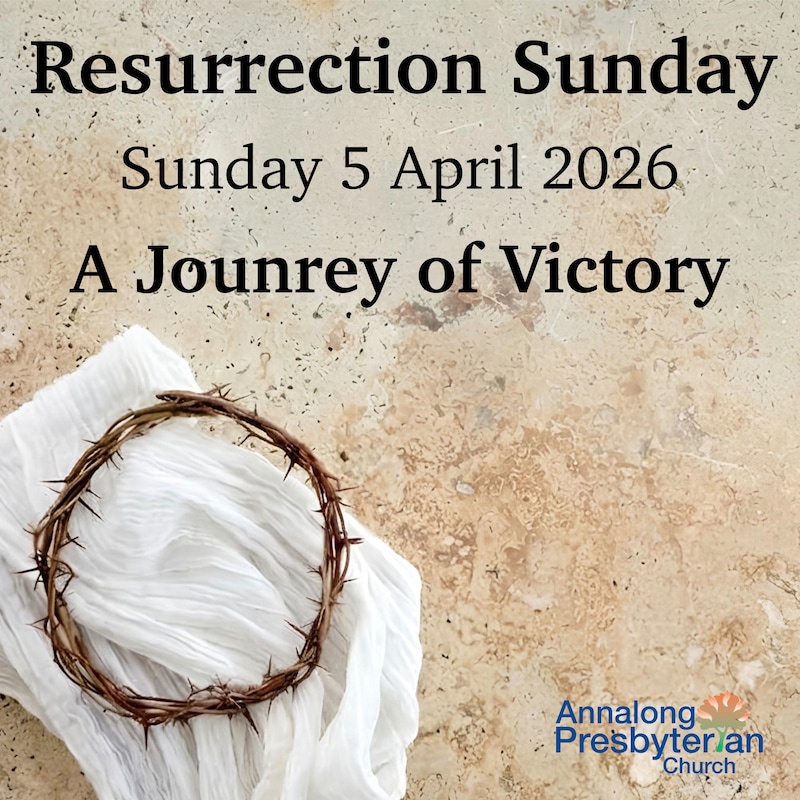
The resurrection of Jesus Christ constitutes the fulcrum of the Christian faith, as it signifies His triumph over death and the assurance of eternal life for believers. This sermon delves into the profound journey undertaken by the women who approached the tomb on that momentous Easter Sunday, initially burdened by the weight of their grief and expectation. As they arrived at the tomb, the unexpected sight of the rolled-away stone heralded a transformative truth that would forever alter their understanding of death and resurrection. We explore the significance of their encounter with the angelic messengers, who proclaimed the momentous news, "He is not here; He has risen," illuminating the truth of Jesus' victorious emergence from the grave. Consequently, this episode invites you to reflect upon the implications of the resurrection, challenging you to embrace the hope and assurance it offers in the face of mortality.
Takeaways:
- The resurrection of Jesus Christ marks a transformative moment in Christian faith, showcasing His supremacy over death and affirming the promise of eternal life for believers.
- The journey of the women to the tomb serves as a metaphor for the spiritual journey each individual must undertake in seeking truth and understanding the implications of the resurrection.
- Despite their initial confusion and fear, the women at the tomb become the first witnesses to the resurrection, highlighting the significance of their role in the early Christian community.
- The empty tomb not only signifies Jesus' victory over death but also invites each person to confront their own beliefs about life, death, and the hope found in Christ.
- The ritual observance of preparing Jesus' body reflects the depth of grief experienced by His followers, but the resurrection transforms that grief into joy and hope.
- Ultimately, the resurrection of Jesus is not merely a historical event but a vital truth that compels believers to share the good news of salvation and eternal life with others.
You can find more teaching from Annalong Presbyterian Church at www.annalongpc.org/sermons.
Transcripts
We are going to turn to God's word.
Speaker A:And on this Resurrection Sunday, we're thinking about journeys.
Speaker A:We often think Holy Week is the journey that Jesus makes, not only to Jerusalem, but through Jerusalem to the cross.
Speaker A:But actually what was accomplished through the cross and Resurrection Sunday is as much a journey as any other part of the story that leads us to Easter.
Speaker A:And I think for those of us who live here in this part of the world, we know what making journeys are like.
Speaker A:Because if you want to go anywhere, well, you have to turn to the left or to the right.
Speaker A:You head to Kilkeel, you head to Newcastle, and if you're really brave, you'll go over the mountains and you'll go through Hilltown and Rathfa Island.
Speaker A:But really, let's be honest, it's a nightmare.
Speaker A:I know people will travel and flock here and that's great, but they only have to do it once, spend a week and then disappear.
Speaker A:But for some of you, you do that every single day.
Speaker A:And it can get tiresome because we know that we all have a decision.
Speaker A:Much like the mission of last year, life at the crossroads.
Speaker A:Thought about, we live at a crossroads where you have to make a decision.
Speaker A:Are you going to go straight on are to you going, are you going to go right or are you going to go left to find out wherever you want to go?
Speaker A:Because there's very few roads in and out of Anna Long, but we know that that's the price we pay for living in such a beautiful part of the world.
Speaker A:Well, this morning a few folks made the journey to Ross Trevor.
Speaker A:And if you want to take the register, there they are.
Speaker A:And it was the presbytery dawn service and the journey began in darkness as most of us left before 6:00'.
Speaker A:Clock.
Speaker A:And by the time we made it to the shore front, because we couldn't go up to the big stone as we normally do, well, there was an inkling of light.
Speaker A:Well, perhaps this year more than any other year, there's more of an inkling.
Speaker A:And it was actually quite bright.
Speaker A:And once the service was over, we either made our way for breakfast in Rust Trevor church hall, or we made our way home to get ready to come out to worship this morning.
Speaker A:And so whether our journey is down the road or whether it's further away, there's always three stages to every journey.
Speaker A:Number one is getting there, the journey that you're taking to get there.
Speaker A:The second thing is being there.
Speaker A:There's a purpose for why you go, be it long or short.
Speaker A:And then thirdly, it's about leaving that journey home.
Speaker A:No matter how long each of these stages take, well, they have to go in that order.
Speaker A:Otherwise it's not a journey at all.
Speaker A:And the story of Resurrection Sunday is very much a story of.
Speaker A:Of a journey.
Speaker A:We see at least three women going to the garden tomb, spending time there, and then leaving.
Speaker A:And when they awoke on that first Easter Sunday morning, they had expected to do all of these things in one particular way.
Speaker A:Go to the garden tomb, do what they had to do in the preparation of the body, and then go home.
Speaker A:But it ended up being completely different.
Speaker A:Now, whenever you think of the week that Holy Week is, it is an unbelievable week in many respects.
Speaker A:But whenever we take it down to the human level of those who experienced it as it happened, it was truly an unbelievable week for Jesus family and his friends.
Speaker A:Not only has it been Passover, and that was a big thing in itself, it was the busiest and the biggest of the festivals the Jews celebrated in the year.
Speaker A:It was that annual celebration and pilgrimage of going up to Jerusalem, quite literally up to the city on a hill.
Speaker A: h, Psalms that are in the mid-: Speaker A:But the week leading up to that Sunday morning, it had been one of joy and celebration.
Speaker A:But as the days went on, that joy that they experienced became the depths of their sorrows.
Speaker A:Because Jesus, as we know, was welcomed into Jerusalem as a king on that Palm Sunday.
Speaker A:And he died a murderer's death just a few days later on Friday afternoon.
Speaker A:And amidst the fullness of emotions and the inability to comprehend what was going on and what had happened, it turns out on this Easter Sunday morning, the rituals and the rites of death still had to be observed.
Speaker A:And so the first day of the week began by Jewish time at sunset on Saturday, when the Sabbath officially ended.
Speaker A:This was now the time to go about and do your work and whatever business you needed to do.
Speaker A:And so the women had gone to buy the spices that they had needed and or that they would need to prepare the body.
Speaker A:Why had that not been done?
Speaker A:Because if you remember what happened on Good Friday, Jesus body had been taken down from the cross and it had to be buried quickly because it was the start of the Sabbath.
Speaker A:And so everything had to be done within just a matter of an hour or two.
Speaker A:And so the women had no opportunity to prepare the body as they normally would.
Speaker A:And so they've had to wait, now that the Sabbath is over, to go and prepare it.
Speaker A:So having bought all of those things that they needed, the spices and the herbs the night before.
Speaker A:They were ready to set out early on the Sunday morning.
Speaker A:And in his Gospel, John tells us that it was dark when they started their journey.
Speaker A:And by the time that they arrived at the garden tomb, well, it was early dawn.
Speaker A:Now, Luke, in the passage that we read, doesn't give us much detail of their conversation, but from Mark's perspective, he tells us that their conversation was a very practical one, because in chapter 16 and verse three, he says, and they asked each other, who will roll the stone away from the entrance of the tomb?
Speaker A:Well, that's a very practical question.
Speaker A:It was a question that really needed an answer because as we know of the accounts, on Good Friday Jesus was led in a new tomb and a stone had been rolled in front of it.
Speaker A:And so how were these women going to maneuver this stone?
Speaker A:Because of gravity?
Speaker A:They would have to push it uphill because it went into a little channel and sat in a groove.
Speaker A:So they knew what they were going to do.
Speaker A:They knew what they had to do to do it.
Speaker A:And their conversation, according to Mark was one as well.
Speaker A:How are we even going to get into the tomb?
Speaker A:But when they arrived at the tomb, they realized that the whole chat about the stone was pointless because as we read in Luke 24:2, they found the stone rolled away from the tomb.
Speaker A:It wasn't there.
Speaker A:Although their conversation had been important and meaningful to them with what they thought they were going to, it now was presented to them as meaningless because the stone wasn't there.
Speaker A:The biggest obstacle to what they needed to do was quite literally rolled away.
Speaker A:And this got their attention.
Speaker A:And they must have known something was up.
Speaker A:And it wasn't a joyful sense, it was a foreboding.
Speaker A:It was a sense that something's not right in a bad way.
Speaker A:And perhaps they thought the worst.
Speaker A:Perhaps they thought that the enemies of Jesus, those who had gone against him again and again and again, had taken his dead body to.
Speaker A:To dispose of it in an inappropriate way in their minds.
Speaker A:Perhaps they thought these enemies of Jesus thought that Jesus didn't deserve a proper burial, and so they did something with his body to continue the shame that they wanted to heap upon him.
Speaker A:Or maybe they thought that some others had come to make the same preparations that they had come to make.
Speaker A:Well, before they can contemplate which of these things had happened, all of a sudden before them, two men appear.
Speaker A:And did you hear how they were described?
Speaker A:They were bright like lightning.
Speaker A:This was not normal.
Speaker A:This was unusual.
Speaker A:Luke describes it for Us in verse four, while they were wondering about this, suddenly two men in clothes that gleamed like lightning stood beside them.
Speaker A:Now these two men appeared.
Speaker A:And as the mystery of the rolled away stone faded into their minds of what was important now, this new scene, these two new men, gleaming as bright as lightning, standing beside them, have their focus.
Speaker A:And they come with good news.
Speaker A:And so these women are the first to hear the good news of the Gospel.
Speaker A:And in an act of reverence and in an act of fear as well as an act of awe, the women bow down to the ground.
Speaker A:And although not called angels here in verse 4, the report given of these women later in verse 23 tells us that they describe them as angels.
Speaker A:Now, our modern culture has taught us to believe that seeing an angel is the most comforting thing that we can know.
Speaker A:But in reality, for God's people, when an angel appears, it is something to fear.
Speaker A:Angels would normally be bearers of news of judgment.
Speaker A:And so the women fall to the ground.
Speaker A:But the message they receive is not what they expect.
Speaker A:At the end of verse five, they are first asked the question.
Speaker A:And it is perhaps a pretty silly question to be asked in the minds of these women, because they are asked, why do you look for the living among the dead?
Speaker A:Now why wouldn't they be looking for a body in a tomb in a graveyard?
Speaker A:Jesus, after all, had been crucified two days before.
Speaker A:And to prove that he was truly dead, John tells us that when they came to Jesus and found that he was already dead, they did not break his legs.
Speaker A:Instead, one of the soldiers pierced Jesus side with a spear, bringing a sudden flow of blood and water.
Speaker A:And that's what John tells us in John 19.
Speaker A:And they did this to make double sure that in fact Jesus had died on the cross.
Speaker A:And in one respect it was another act of brutality.
Speaker A:And so, with a mix of blood and water being released, it was mostly that piercing the side upwards pierced the pericardium, which is the sac that that surrounds the heart.
Speaker A:But they will also have pierced the heart as well.
Speaker A:These were professionals in their jobs.
Speaker A:The Romans made sure Jesus was dead.
Speaker A:So why wouldn't these women go to a graveyard to look for the dead?
Speaker A:No one could have survived this piercing, never mind the crucifixion.
Speaker A:And so as the women hear this question from these two gleaming men, knowing the death that Jesus died, they hear these words that they will never Forget in verses 6 and 7.
Speaker A:He is not here.
Speaker A:He has risen.
Speaker A:Remember how he told you while he was still with you in Galilee, the Son of man must be delivered into the hands of sinful men, be crucified, and on the third day be raised again.
Speaker A:And so for these women, it's now starting to make sense, because verse 8 confirms that they did indeed remember those words as they were retold to them.
Speaker A:They probably didn't understand what Jesus was saying at the time.
Speaker A:But now, in the warm light of that spring morning on that first resurrection Sunday, it is as clear to them as the sun in the sky, the rolled away stone, the empty tomb and the promise Jesus made.
Speaker A:He wasn't dead, he was alive.
Speaker A:And the next moments aren't recorded for us in Luke's gospel, but we can be left in no shadow of doubt that this news was both something to be celebrated and something to be understood.
Speaker A:And with this, they now leave the tomb and they go and tell the disciples.
Speaker A:And what about the disciples?
Speaker A:Well, they don't believe them.
Speaker A:Like the women in those first moments at the tomb, what they're hearing is so incomprehensible that it can't be true.
Speaker A:They believe.
Speaker A:And Luke says that it seemed like nonsense to them.
Speaker A:But with Peter leading the way, they rush to the tomb.
Speaker A:And it's now Peter who confirms that it is indeed empty.
Speaker A:There is no body, but there is something.
Speaker A:And the strips of linen cloth remain.
Speaker A:You see, no one takes the time to steal a body and remove the linen strips.
Speaker A:No, they take it all.
Speaker A:So why would they even choose to leave strips cloth behind if Jesus hadn't risen from the dead?
Speaker A:And once again, like the women, Peter goes away, unable to understand everything that he has just seen and heard.
Speaker A:How could it be?
Speaker A:And like Peter, regardless of how many times you have read this story and how many Easters that you've lived through, is there anything more marvelous to hear than that death could not hold him because the Father would not allow his Holy One to see corruption?
Speaker A:And as that day continues, the scene moves from the morning hours and takes us to the Sunday afternoon and evening and the road to a mess.
Speaker A:And I love the account of that journey to Emmaus.
Speaker A:And we're going to be looking at that this evening whenever we come for evening worship.
Speaker A:But for now, let's think about what we learn from the first verses in Luke 24.
Speaker A:You know, people have read this story for centuries, and as people have read it, they've done two things with it.
Speaker A:They've either believed it or they've rejected it.
Speaker A:They've either believed that it is true or they've rejected it, saying that it is a lie.
Speaker A:They say it's A myth, they say, that no one comes back from death.
Speaker A:It's just not scientifically possible, they say.
Speaker A:But God's word tells us in Acts, chapter 2 and verse 24.
Speaker A:But God raised him from the dead, freeing him from the agony of death, because it was impossible for death to keep its hold on him.
Speaker A:You see, it was by no elements around him that Jesus rose from the dead.
Speaker A:It wasn't resuscitation that brought him back to life.
Speaker A:It was the act of God, who can do all things, that brought Jesus back from the dead.
Speaker A:Because to the grave, Jesus had to go.
Speaker A:Presbyterian pastor and commentator R.C.
Speaker A:Sproul says this death had no claim on him whatsoever.
Speaker A:Though he died for the sins of people, Jesus remained sinless, and corruption had no title to him.
Speaker A:Death had no title to him.
Speaker A:And so he got up and he walked out of the tomb.
Speaker A:Do we understand why Jesus couldn't remain dead?
Speaker A:He was perfect.
Speaker A:He didn't do anything wrong.
Speaker A:He was innocent on the cross as much as he was innocent in life.
Speaker A:And because of that innocence, he was the only one who could take the punishment we deserve for our sins because death could not hold him, because death could not charge him, because there was no sin within him.
Speaker A:How unlike us the Savior is, where sin entangles us and ensnares us day and daily.
Speaker A:And this is the amazing truth of resurrection.
Speaker A:Sunday.
Speaker A:Yes, Jesus is alive.
Speaker A:It took a group of women and some apostles to make a journey to the tomb, to spend some time there and to leave it to return home.
Speaker A:And what did they do when they did?
Speaker A:Well, just like the shepherds leaving the manger scene, they told everyone whom they saw.
Speaker A:And that message continues to this day that we still speak of the empty tomb because it is the truth the world needs to hear.
Speaker A:Just as they saw the empty tomb, so it changed their understanding.
Speaker A:And it also must change ours.
Speaker A:You see, what did change them, it turns out it wasn't looking at an angel that didn't change them.
Speaker A:It was what the angel said.
Speaker A:And it was in that little line that Luke records for us that Jesus had done and was about to do everything he had said.
Speaker A:You see, it turns out it was the very words of Jesus himself that caused them to believe and understand what was happening.
Speaker A:No work of Jesus, and certainly not his last and greatest, has been without accompanying words.
Speaker A:No event has been left unexplained.
Speaker A:The disciples know the words of Jesus and need to be reminded of them in that moment, as the disciples in every generation continue to tell the truth of the Savior.
Speaker A:Michael Wilcox A British commentator says the first step in the way of salvation is to begin to see that life does make sense.
Speaker A:And it is the teaching of Jesus which enables men and women to see this.
Speaker A:And that's what must draw us this day.
Speaker A:To believe in a resurrected Savior, we are to take him quite literally at his word.
Speaker A:We must remind ourselves of what Jesus said, how he is the fulfillment of the Old Testament prophecy and.
Speaker A:And when he declared himself the Messiah and Savior of the world, that is exactly who he is, as demonstrated not just on Calvary's cross, but in the empty tomb.
Speaker A:Now, you may not have made the journey to Rose Trevor this morning for the dawn service.
Speaker A:You may not have stayed a while and then come home again.
Speaker A:But there is no question that we are each invited on a journey to the tomb.
Speaker A:We may not walk to that garden where Christ was buried, but we must go as those women and disciples of old did, to see the stone rolled away, to see the grave clothes lying there and the body resurrected.
Speaker A:To hear the words of Jesus and know them to be true, and to walk away with full assurance that Jesus is alive and he has defeated death so that death will have no more hold on him and on his people.
Speaker A:See, Easter is truly amazing.
Speaker A:That's what the girls and boys are learning right now, just how amazing it is, because it demonstrates to us the amazing power of Christ who conquered death so that we could trust him with our mortal bodies and our immortal souls.
Speaker A:I wonder, will you today know this Resurrection Sunday as the day of your salvation in Christ because of what he has done for us and because of why we celebrate?
Speaker A:The journey to Christ and with Christ is to be lifelong, and it is the only journey that will see us into eternity in heaven.
Speaker A:Paul tells us in First Corinthians 15 and verses 55 to 57, as he quotes Hosea 13 and verse 14.
Speaker A:O death, where is your victory?
Speaker A:O death, where is your sting?
Speaker A:The sting of death is sin, and the power of sin is the law.
Speaker A:But thanks be to God who gives us the victory through our Lord Jesus Christ, Christ's journey for us to the cross, his resurrection from the grave, and his ascension into heaven pass.
Speaker A:Tell us what he has achieved for us.
Speaker A:So let me ask you this morning, which one of us doesn't want to be found in heaven?
Speaker A:Honestly, who doesn't want to be in heaven?
Speaker A:A place of great celebration, a place of great joy, and a place of eternal glory in the presence of the Father.
Speaker A:The only way that we can know we're in heaven will be in heaven.
Speaker A:Is to trust in Jesus.
Speaker A:Which one of us this day doesn't want that assurance of salvation?
Speaker A:Who would tell me that they're happy with the weight of this world and the sin that so easily entangles each and every one of us, that weighs us down, makes us grumpy, makes us sad, makes us weep.
Speaker A:Who doesn't want to get rid of that?
Speaker A:You see, there's no good works of our own that can ever change that.
Speaker A:It is only Jesus, our resurrected Savior, in whom we can know salvation, that wonderful promise and assurance that no matter what this life throws at us, there is a day coming when he will truly take us home.
Speaker A:And I dare you to tell me that you don't want that.
Speaker A:So when confronted with Christ, the journey to the empty tomb, to walk away and disregard it means you're telling me you don't want it.
Speaker A:It's telling me you're happy in the agony and the pain and the suffering of this world.
Speaker A:But to go to that tomb, to look upon the place where the body lay and the grave clothes now are to walk away with great celebration and assurance that Jesus is risen is the only way we can know this and why.
Speaker A:Well, we will declare its truth in our closing hymn this morning, which is called Resurrection Hymn.
Speaker A:See?
Speaker A:What a morning.
Speaker A:And when we do something, pay attention to the closing words.
Speaker A:And we are raised with Him.
Speaker A:And get this.
Speaker A:Death is dead, Love has won, Christ has conquered.
Speaker A:And what's the great promise for those today in Christ?
Speaker A:And we shall reign with him, for he lives.
Speaker A:Christ is risen from the dead.
Speaker A:Who doesn't want this?
Speaker A:Come to the Savior, each and every one.
Speaker A:Each of our weary hearts and souls need Him.
Speaker A:Do not.
Speaker A:Do not walk out through that door thinking you will be okay, because you won't.
Speaker A:It is only in Christ that we can know the burden of sin released and we can know joy forever.
Speaker A:Because death is dead and Christ went to the grave to prove it.
Speaker A:May you know this risen Savior today.
Speaker A:And may you know the victory over death and the grave, that it is yours because of Him.
Speaker A:It's not ours by right of birth, by right of culture or practice, or by our own assessment that we are good enough.
Speaker A:It can only be on profession of faith.
Speaker A:And like the women of old, it will be good news that will be for us for all eternity.
Speaker A:So on this resurrection Sunday, turn to the Savior.
Speaker A:Do not fear the grave, for he has overcome it so that we can be his forever.
Speaker A:Let us pray.
Speaker A:Our Father God, we thank you for this day of great celebration.
Speaker A:We thank you for what it means to know the Savior.
Speaker A:But how sad a day it is for those to reject him.
Speaker A:How sad a day to think that we'll be okay on our own.
Speaker A:For your Word has warned us time and again that we won't be.
Speaker A:It is only by what Christ has accomplished on the cross and through the empty tomb that we can know assurance of salvation, a hope that springs eternal, and a joy that lightens our step in this world.
Speaker A:Because we know that we are made for something better, and that better is present with you forever.
Speaker A:So speak to us by your Holy Spirit, move amongst us, encourage each of us and challenge us that indeed this day we will be right with Christ, and we will be right forever.
Speaker A:And we ask these things in Jesus name.
Speaker A:Amen.
Speaker A:Sam.
