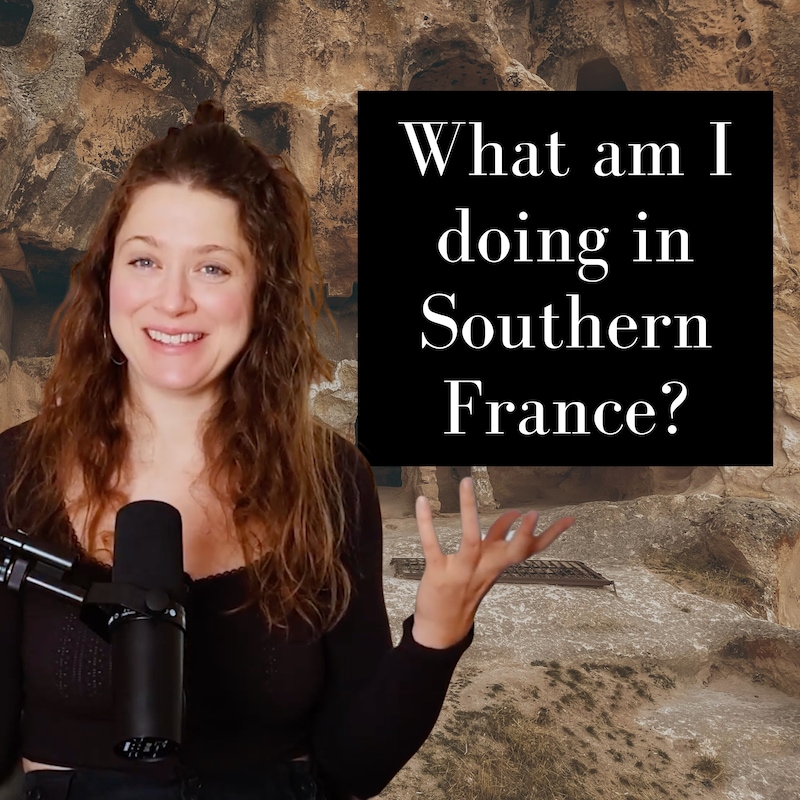
Transcripts
When we can understand the
ways in which our ancestors
Speaker:thought about themselves, about the
world, the way they experienced the world,
Speaker:the awareness in general
that they had access to,
Speaker:we reconnect with our potential as humans,
Speaker:and we reconnect with what's
possible for us in the future.
Speaker:So why don't you come
inside the caves with me.
Speaker:Hello and welcome back to
Remember Why You Are Here,
Speaker:a podcast for seekers and sensitives
where you can relax, receive,
Speaker:reconnect yourself,
Speaker:and remember the most important
thing of all - why you're here.
Speaker:I'm Asia Suler, author, earth intuitive,
Speaker:and very recently researcher who has
Speaker:skipped across the pond overseas
to research my next book.
Speaker:So if you've been following along
on the podcast or if you're over on
Speaker:my email list where I've been sharing
even more that I've been on sabbatical
Speaker:for the last several months
working on my next book. So in
Speaker:this very personal episode,
Speaker:I'm going to pull back the curtain
to reveal what I've been doing on my
Speaker:sabbatical, what this next
book is actually about,
Speaker:and I want to talk to you about this thing
that has been my special interest for
Speaker:the last six years,
Speaker:a time period that I truly
believe is here to guide us all,
Speaker:and that is the Upper Paleolithic.
Speaker:So have you ever had a dream come true,
Speaker:something you've been
wishing for, praying towards,
Speaker:putting on your altar, leaning
into dreaming about? Well,
Speaker:for me, this trip was a dream come true.
Speaker:I have been wanting to take
this trip to Southern France,
Speaker:to the Dordogne Valley,
Speaker:to visit these sites from
the Upper Paleolithic
Speaker:for six years. First the pandemic came in,
Speaker:and then I got pregnant
and I had my daughter,
Speaker:and I knew it was going to
take time before I was ready
Speaker:to take this trip,
Speaker:ready to be away from her.
This was the first time I had been
Speaker:away from my daughter for
longer than just a few days.
Speaker:So it was a really big deal for me.
Speaker:I just feel so blessed and honored
that this happened. Travel,
Speaker:especially solo travel,
especially pilgrimage,
Speaker:is really at the heart of who I am. It's
something that's so important to me.
Speaker:So getting to take this trip was just
absolutely unbelievably a dream come
Speaker:true,
Speaker:and it has really taken
me into the next phase of
Speaker:writing this next book. So in
this part of southern France,
Speaker:there is an unbelievable wealth of
archeological sites from this time period
Speaker:that we call the Upper Paleolithic.
Speaker:I was going there to visit these
caves, these painted caves,
Speaker:these caves that were anointed,
consecrated by our ancestors.
Speaker:For this next book,
Speaker:which I'm excited to talk
to you a little about,
Speaker:actually give you a little bit more about
what I am writing about. But first I
Speaker:want to ground us in what
is the Upper Paleolithic.
Speaker:If you're not familiar with that term,
Speaker:let's really dive in there
because it's so rich and
Speaker:so fascinating.
Speaker:And I really think once
we start connecting
Speaker:to those who I call the deep ancestors,
Speaker:it's almost like there's no going
back because we start to see ourselves
Speaker:differently. The Paleolithic as
a period of time is very vast.
Speaker:It goes from about 3 million years
ago until about 10,000 years ago.
Speaker:So that's a really big span of time,
Speaker:the specific period of time
that I have been studying,
Speaker:and that as at the heart of this
book is the Upper Paleolithic.
Speaker:So the Upper Paleolithic is a
timeframe from about 50,000 years ago
Speaker:to about 12 to 10,000 years ago.
Speaker:And this period of time is when we know
Speaker:humans,
Speaker:homosapiens spread around the world.
Left Africa
Speaker:went to literally every
corner of the globe.
Speaker:Homosapiens arrived in Europe
about 45,000 years ago,
Speaker:and when they arrived, they were
not alone. They, when they arrived,
Speaker:the continent was already inhabited
by Neanderthals and these humans had
Speaker:lived in Europe for hundreds
of thousands of years.
Speaker:So Europe at that time was
very different than Europe
Speaker:is now, because we were in the
midst of the last great ice age.
Speaker:So there were huge caps of ice that came
Speaker:really far down into
the consonant of Europe,
Speaker:and it made it so that it was really
the southern swath of Europe that
Speaker:was inhabitable,
Speaker:and that includes the
valleys of Southern France,
Speaker:and they would've looked
completely different than today.
Speaker:So this would've been cold step and tundra
Speaker:grasslands with huge herds
of animals, mammoths,
Speaker:reindeer, bison, aurochs, horses.
Speaker:Many of these beings
feature in the paintings in
Speaker:southern France in these caves, and I
want to talk about them in a little bit,
Speaker:but it's important to know
that the reason why there's
Speaker:such
Speaker:a dense accumulation of sites in
places like Southern France is because
Speaker:this is where the consonant itself was
inhabitable at that period of time.
Speaker:The humans who entered
Europe at that time,
Speaker:who around the world were
entirely modern humans.
Speaker:They were just like us.
We are the same in body,
Speaker:in nervous system, in brain, in soma,
Speaker:in imagination and creativity.
Speaker:And this is something that I
feel really passionate about
Speaker:talking about because so
many of us were handed such
Speaker:strong caricatures of what
it means to be a caveman
Speaker:growing up. And it's completely wrong.
Speaker:It's completely opposite
the reality of these
Speaker:incredibly sophisticated, intelligent,
Speaker:creative, innovated,
Speaker:frankly cosmopolitan people who spread
Speaker:throughout the world had the ability to
go to every single continent and bring
Speaker:with them just incredibly
intricate traditions
Speaker:of artistry, philosophy, adornment,
Speaker:ancestral wisdom, traditions that
likely stretched back millennia.
Speaker:So connecting with these deep ancestors
is actually incredibly potent and
Speaker:powerful for us. Now, they
have a lot to teach us now,
Speaker:and part of my passion for the last six
years has been learning about this time
Speaker:period and realizing that so much that I
had been handed about the deep past was
Speaker:completely wrong.
So we know that
Speaker:these deep ancestors were living
in hunting and gathering bands of
Speaker:about 20 to 40 people,
Speaker:but that they would also have times of
the year where they would meet up in
Speaker:really large groups, accumulations
of people for gatherings,
Speaker:for I imagine coming
together to flirt with one
Speaker:another and to make connections
and to trade and to trade
Speaker:ideas. We know that they had trade routes
that spread hundreds of miles to the
Speaker:coastlines,
Speaker:which at that time was much further out
than they are now because so much water
Speaker:in the world was locked up in those
glaciers that in order to receive,
Speaker:for example, seashells,
Speaker:which were a really popular trade
item at the time from the coast,
Speaker:we would've gone so much further in
order to be able to trade those items.
Speaker:So they had textiles,
Speaker:they had bead industry workshops,
Speaker:they had really sophisticated
painting tools, pigments,
Speaker:brushes,
Speaker:sponges for dobbing on the paint.
So I'm sharing
Speaker:all of this to just start to rewrite this
Speaker:really fossilized and
Speaker:frankly controlled narrative of
what our deep ancestors were like.
Speaker:A lot of what we're handed
this information when we
look at our deep ancestors
Speaker:is very much flavored by the colonial
Speaker:narrative that existed in European
Speaker:anthropology around the
turn of the last century.
Speaker:And so it's really important that we
start to unpack all of this and actually
Speaker:see just how profoundly intelligent,
Speaker:capable, creative, sophisticated
these deep ancestors are.
Speaker:We know they likely had larger brains
than us. They were taller than us,
Speaker:healthier than us.
Speaker:They had yet to develop all the
zoological diseases that we have now,
Speaker:and just like a tiny little example into
Speaker:the level of sophistication that they had,
Speaker:but also the level of leisure
time that they likely had.
Speaker:So this is something
that we guesstimate that
Speaker:likely they were only spending about
four hours of their day in subsistence
Speaker:activities and activities like gathering
food and preparing food and all of
Speaker:that. And so they had so much more
what we would call leisure time,
Speaker:but creativity, time, innovation
time. Here's just a little example.
Speaker:There is a really famous grave site
in Russia, the Sungir grave site,
Speaker:and there's a man and two
children buried there.
Speaker:There was so many beads in this grave
site. Thousands of beads each bead,
Speaker:each one of these beads that would've
likely been sewn onto their clothing took
Speaker:about 45 minutes to make.
If we think about that,
Speaker:the beads that were buried
with the two children,
Speaker:it would've taken around
3,500 hours to make that many
Speaker:beads. So this is just like
a portal into understanding
Speaker:this life way of our deep
ancestors, of our ancient ancestors.
Speaker:So I went to Southern France in
particular to visit the painted caves.
Speaker:If you've ever seen Werner Herzog's
film, cave of Forgotten Dreams,
Speaker:you're probably familiar with these caves,
Speaker:but there is an incredible
collection of caves,
Speaker:some of which are still open to
the public that feature paintings
Speaker:from this time period.
Speaker:So we're talking paintings from about
40,000 years ago to about 12,000
Speaker:years ago. So that's a
really vast period of time,
Speaker:and I want to bring your
attention, your awareness to that,
Speaker:that we're talking about a 30,000 year
Speaker:span of creating art
inside of these caves.
Speaker:And we're going to come back
to that in just a moment.
Speaker:But I want to talk for a second
about why these caves for me. Well,
Speaker:I had a vision six years
ago in a meditation
Speaker:where I actually came out of one of
these caves and was a little bit like,
Speaker:where am I? What's going on? This
wasn't even where I intended to go,
Speaker:and it sparked this huge passion in me for
Speaker:learning about these caves,
Speaker:learning about the art inside of these
caves who created them reading every book
Speaker:about the possible hypotheses of what
these different paintings represented or
Speaker:what they could mean.
Speaker:So the oldest known painted cave that
Speaker:has been discovered is
Chauvet Cave in France,
Speaker:and this is about 35 to 30,000 years old.
Speaker:So what's really interesting about Chauvet
is that up until its discovery in the
Speaker:nineties, the caves we
had discovered previously,
Speaker:like Lascaux for example,
Speaker:were much closer to the current day.
And so we had this assumption,
Speaker:which we tend to replicate a lot,
Speaker:this assumption that we evolved over
time and that we got more artistry,
Speaker:more skill, and that it was
sort of this upward projection.
Speaker:But when we found Chauvet,
this incredibly old cave,
Speaker:and we saw the intricate
Speaker:artistic skill inside this cave,
Speaker:it completely rewrote this whole
narrative about this trajectory of
Speaker:humanity just keeps evolving.
And we started out very basic,
Speaker:and now we're getting
more and more evolved.
Speaker:And actually what we're seeing is that
this intricate artwork that was created
Speaker:later on was just a continuation of
this tradition. And so in this way,
Speaker:everything's always moving in a cycle,
right? And it's good to question,
Speaker:to ask ourselves, is it that
we're continuing to evolve now?
Speaker:Or is it actually that
we're being asked to
Speaker:evolve and get in touch again
with the kind of intelligence,
Speaker:artistry and creativity
that we inhabited in the
Speaker:past? Are we more evolved
than our deep ancestors,
Speaker:or have we actually taken a step back
and there's a clarion call I feel
Speaker:inside of me now to reconnect
with these deep ancestors
Speaker:so that we can continue to evolve,
Speaker:but we can evolve in the way
perhaps humans were meant to evolve.
Speaker:We can remember that pathway. So what's
really interesting about these caves,
Speaker:and one of the reasons why they've been
so profoundly studied beyond the fact
Speaker:that they're exquisite and
absolutely stunning is because
Speaker:the artwork,
Speaker:the material from the
past has lasted so well.
Speaker:And this is something about the
archeological record. Things disappear.
Speaker:Things are lost, things get broken.
Speaker:What we know and what we can see is just
a tiny little sliver glimpse into the
Speaker:past that is completely based on
what survives thousands of years.
Speaker:So one of the things I do want to
point out here though is that there was
Speaker:a continuation in the artistic style,
Speaker:but also within the subject matter
during this entire timeframe,
Speaker:this 30,000 year timeframe.
So just to put this in perspective,
Speaker:Chauvet is as old compared
to Lascaux as Lascaux
Speaker:is to us today.
Speaker:So that right there is a
15,000 year time period.
Speaker:We're talking about more
than a thousand generations.
Speaker:We're creating art with
similar subject matter,
Speaker:similar animals, similar style.
Speaker:There were stylistic
conventions of the time.
Speaker:So we have to imagine that
whatever this culture,
Speaker:this belief system, this mythology was,
Speaker:and we'll never know for
sure what this mythology was,
Speaker:we can surmise at least
that as Gregory Curtis puts
Speaker:it in The Cave Painters,
Speaker:that it was so fulfilling and
profound that it lasted for more than
Speaker:20,000 years.
Speaker:We'd be hard pressed to find
anything within our culture,
Speaker:within our belief systems that have lasted
longer than maybe even just a handful
Speaker:of thousand years, let alone 20,000.
Speaker:So this is profoundly
interesting to me, right
Speaker:in a time where we feel so unfulfilled,
Speaker:many of us where we feel adrift,
Speaker:what was it that our deep
ancestors were attuned to,
Speaker:had the capability of seeing experiencing
Speaker:within themselves within the
world that was that fulfilling,
Speaker:that profound, that
anchoring, that meaningful,
Speaker:that an artistic tradition flourishing
out of that belief system lasted that
Speaker:long. So why don't you come
inside the caves with me?
Speaker:While I was in France,
Speaker:I got to visit seven different sites
at each one was completely different,
Speaker:but each one was also similar.
Speaker:Each one had similar themes,
Speaker:similar energy, but also
similar feeling to them.
Speaker:So all of these caves now have
doors set into their walls.
Speaker:One of the reasons why this particular
region and southern friends was so
Speaker:popular is that there are limestone
caves that make for really easy living.
Speaker:People at that time did
not live inside the caves.
Speaker:They lived in the rock shelters
on the outside of the caves.
Speaker:They lived in the south facing rock
shelters at the time. It was very cold.
Speaker:You would want the sunlight coming in.
Speaker:You'd want your fire at the mouth of
the rock shelter to be able to protect
Speaker:yourself and provide heat
because it was steppe tundra.
Speaker:You'd be able to be at the mouth
of this cave, this rock shelter,
Speaker:and look out over the entire
valley, which is a really cool,
Speaker:really thing to remember.
Speaker:This is the sight line that these
people had from their homes.
Speaker:We are pretty sure now that most of
these rock shelters were also elaborately
Speaker:decorated, but that has survived
because of weather and time.
Speaker:But what is deep inside
the caves has survived.
Speaker:So we know that these ancestors
Speaker:went very deep inside
these caves that they
Speaker:explored the length of a football
field down into the earth,
Speaker:and more that they went into these caves
and into some of the most difficult
Speaker:passages of these caves
with oil lamps that likely
Speaker:lasted around an hour and
a half, maybe two hours.
Speaker:These oil lamps were in their
simplest forms stone that had been
Speaker:carved out with animal fat and a wick,
Speaker:and they would carry the stone lamp
sometimes crawling on their bellies for a
Speaker:long time, deep, deep into these caves.
Speaker:So oftentimes they chose to create images
Speaker:in the deepest, darkest places.
Speaker:They chose to move beyond
the entryway deep into these
Speaker:caves.
And one of the most fascinating things
Speaker:I've found about being there in
person, because I've been researching,
Speaker:looking at pictures for so many
years now, but seeing it in person,
Speaker:you really understand that they
weren't creating these images
Speaker:like we create images now
where we have a blank canvas.
Speaker:They were co-creating
these images with the cave.
Speaker:So inside of these caves are
Speaker:incredibly,
Speaker:highly skilled depictions of bisons,
Speaker:horses, mammoths. There are aurochs,
Speaker:there are lions. Every once in a while,
Speaker:a caricature of a human.
Speaker:Humans were not very flushed out.
Speaker:They were not the center of this artistic
Speaker:tradition, which is an
interesting point unto itself.
Speaker:There are dots, there's symbols,
Speaker:there are spirals, there are hand prints.
Speaker:But what is interesting to me
is that the stars of the show
Speaker:are the animals by and large.
Speaker:And what they did is they looked
Speaker:for the ways in which these
animals were emerging from the cave
Speaker:walls. So rather than clearing
off a space that they could
Speaker:create themselves as
whoever the individual was,
Speaker:instead they looked for places in the cave
Speaker:walls and the drips of
minerals and the sheen of
Speaker:calcite that already
looked like an animal.
Speaker:And then at times, they drew the minimum,
Speaker:the minimum possible line
to just bring that shape
Speaker:out of the wall.
Speaker:And what's incredible is that you
often get one go at creating that line.
Speaker:And so these people must have practiced
for thousands of hours to be able
Speaker:to, with one stroke,
Speaker:so perfectly capture the exact form
Speaker:of a horse or the exact
outline of a buffalo.
Speaker:It's perfection is
astounding in many places.
Speaker:And they were masters at perspective.
Speaker:So they would draw things
specifically so that it could
Speaker:be seen in a particular way
from a particular angle.
Speaker:So at times they were aware of what
angle it was being looked at. They would
Speaker:create certain effects so that it would
look in proportion depending on where
Speaker:you were standing.
Speaker:They created distance and
depth with their artwork.
Speaker:They created techniques
like the trompe-l'œil effect
that we wouldn't see again
Speaker:until much later, until the explosion
of the Renaissance. In Europe,
Speaker:images were sometimes made to look
like they were coming out of a
Speaker:crack or they were rounding the
corner in a cave or that it looked
Speaker:different from one side versus another
that the face of an animal would
Speaker:transform. So from one angle it
would be a buffalo. And from another,
Speaker:it almost looks like a human profile.
Speaker:Artists would deliberately
abstract elements in the cave.
Speaker:So we know, and I mentioned this earlier,
Speaker:that humans were deliberately
abstracted, very much so on purpose,
Speaker:abstracted.
Speaker:There is no full depiction of a
human full realistic depiction of a
Speaker:human from head to toe anywhere within
these caves within this vast period of
Speaker:time. But they'd also deliberately
abstract things to have it look
Speaker:further in the distance, like your
eye wouldn't see as many details.
Speaker:So you deliberately
abstract part of an animal,
Speaker:set it behind another one so that you
can tell you're looking at a tableau.
Speaker:So there's this whole element here
inside the caves of interacting with
Speaker:the unseen and asking yourself
what is more important,
Speaker:what is seen versus what is hidden?
Speaker:Because once you go inside these caves
and you start to see the proliferation of
Speaker:these images,
Speaker:what they chose to bring out of the
stone to show you what they were
Speaker:seeing, you realize,
Speaker:you start to see animals everywhere.
Speaker:You start to see shapes and faces
absolutely everywhere you look.
Speaker:And so in this way, there
was this interaction,
Speaker:this playful interaction with the unseen.
Speaker:And this is something that I feel really
passionate about talking about because
Speaker:most of us, if we learned anything
about these caves growing up,
Speaker:it was that they were likely
some sort of hunting magic that
Speaker:was being performed.
And in most of this literature,
Speaker:talking about these caves as
hunting magic, as sympathetic magic,
Speaker:it's specifically proposed
that it was men inside of these
Speaker:caves making the images so that
they'd be successful in the hunts.
Speaker:But we know now that that is not true.
Speaker:So in certain time periods,
Speaker:some of the most depicted
animals, mammoths, horses, bison,
Speaker:were not the animals that people were
by and large eating during some of these
Speaker:time periods.
Speaker:90% of the bones that were
found in archeological
Speaker:digs are reindeer.
Speaker:People very easily were
subsiding off of reindeer.
Speaker:It was a super easeful life,
pretty sure about that. And yet,
Speaker:reindeer are actually not very commonly
depicted inside of these paintings.
Speaker:They're pretty rare. And so
Speaker:this whole idea that it was this one
specific purpose for the caves is
Speaker:completely incorrect.
Speaker:We also know through new research
that is actually able to measure
Speaker:hand and hand widths that the people
Speaker:inside these caves were
not predominantly men,
Speaker:but actually most of the hands that
we have measured are predominantly
Speaker:women,
Speaker:and that we know that there were
whole families going inside these
Speaker:caves that children created art,
Speaker:that baby's hands were
placed on the walls with
Speaker:careful outlines made of them.
So these places
Speaker:were actually much more communal,
Speaker:much more relational,
Speaker:much more egalitarian than
we had imagined before
Speaker:or than certain people
had imagined before.
Speaker:And also the depictions of
these animals inside the
Speaker:caves.
Speaker:What I want to express about it now after
having been there in person, is that
Speaker:the thing that touched me the most
is the depth of these animals'.
Speaker:Benevolence inside of
these animals' faces,
Speaker:they're drawn with such
sensitivity, such intelligence,
Speaker:such sentience. Each one
is their own character.
Speaker:Each single animal is their
complete own character.
Speaker:And instead of depicting
these animals as being
Speaker:struck down in a hunt, the thing that
we see over and over and over again,
Speaker:the most recurrent theme you
could say of these caves,
Speaker:our gentle meetings, gentle meetings,
Speaker:two animals or more, coming together,
Speaker:seeing one another
overlapping one another.
Speaker:This is another interesting
thing about the caves,
Speaker:is they didn't have the same conventions
around subject hood that we do.
Speaker:They weren't trying to just have
one image of one creature. In fact,
Speaker:it was clearly much more valued to see
Speaker:how they would overlap.
So there will be a horse on
Speaker:top of a bison, on top of an auroch,
Speaker:and they'd share certain lines
and other lines would branch out.
Speaker:And so it was actually way
more about the overlap,
Speaker:way more about the meeting, the singular,
Speaker:the individual,
Speaker:so much less important than
the meeting of these animals,
Speaker:the gentleness of
Speaker:a horse that is pregnant,
Speaker:a grave mare looking
out among her sisters,
Speaker:the tenderness of a male
reindeer licking the top
Speaker:of a female reindeer's head.
Speaker:So this completely rewrite
so much of what we're handed,
Speaker:this really like sketchy,
Speaker:incomplete,
Speaker:and inaccurate viewpoint that
were handed about our ancestors,
Speaker:what they created,
Speaker:what their mythology was based on
was so clearly something steeped
Speaker:in reverence for the sentience
of the living world of animals,
Speaker:of the individuality, of
characters, of these animals,
Speaker:of the sacredness, of gentle meetings.
Speaker:There's humor inside of these
caves. There's playfulness,
Speaker:and I'm here to report that
being inside the caves,
Speaker:we so often think that caves
are these scary places.
Speaker:They're dark and they're
dangerous and all of that.
Speaker:But my experience of
being inside these caves,
Speaker:especially times when we turned off
all the lights and we just sat there,
Speaker:it was wombic. I felt so held,
Speaker:I felt, I felt so
sheltered, I felt so seen.
Speaker:And so to me, walking through these caves,
Speaker:it actually was this experience of going
deeper into what felt like the hips of
Speaker:the earth, what really did feel like
this sheltering, welcoming, warm, womb
Speaker:space.
Speaker:And so I guess my invitation
in talking about this
Speaker:is to invite you deeper into
Speaker:your deep ancestors, into your past.
Speaker:And then to know that by
connecting with these deep ones,
Speaker:you're going into this place
that is not scary or fraught or
Speaker:so intensely different from you,
that it's difficult to connect,
Speaker:that it's actually going into
this more wombic like space,
Speaker:this space that is
sheltering, that is warm,
Speaker:that is inviting,
Speaker:that is filled with
benevolence and gentleness,
Speaker:and really this invitation
for gentle meetings.
Speaker:I'm feeling this very strongly as I'm
working on this book that there is a
Speaker:strong invitation
Speaker:back into a gentle meeting with
our own deep ancestors. And so
Speaker:this is what I've been working
on. This is what my book is about.
Speaker:My book is about the deep
ancestors, how they thought,
Speaker:thought about themselves, how
they thought about the world.
Speaker:It's about what I'm calling
paleolithic consciousness.
Speaker:How did these deep ancestors think?
Speaker:We know that the paleolithic
as a time period comprises 99%
Speaker:of human history.
Speaker:This is who we were for 99%
of our history and embody in
Speaker:Soma in brain and nervous system.
Speaker:We are exactly the same
as these deep ancestors.
Speaker:And so this call for me began about
six years ago, as I mentioned,
Speaker:to start understanding this time period
so I could start understanding the
Speaker:consciousness in whatever way I have
access to start understanding the
Speaker:consciousness of my own deep ancestors.
Speaker:And this is about understanding
the past for sure.
Speaker:It's about reconnecting
with these ancestors,
Speaker:these ancestors who I believe really
want to work with us. But it's also about
Speaker:the future.
Speaker:Because when we can understand
the ways in which our
Speaker:ancestors thought about
themselves, about the world,
Speaker:the way they experience the
world, the self-awareness,
Speaker:the awareness in general
that they had access to,
Speaker:we reconnect with our
potential as humans and
Speaker:we reconnect with what's
possible for us in the future.
Speaker:I've heard a lot of archeologists
say it's not a matter of
Speaker:if we will one day return to the
stone age, but a matter of when.
Speaker:That might be very far in the
future. It might not, who knows?
Speaker:But what I know is that for me,
Speaker:connecting with these deep ancestors
has opened up so many gateways,
Speaker:so many doorways for me has
opened up so many ways of
Speaker:thinking that I deeply need in my
own life to flourish. And what I see,
Speaker:the wisdom, the perspective, the
consciousness of our ancestors,
Speaker:what is being given to us,
Speaker:the messages that are coming through for
us now is it's like being given a lamp
Speaker:to move through whatever's to come,
Speaker:to move through whatever feels
dark or hidden before us.
Speaker:So this is what I've been working on.
Speaker:I imagine it might take me another
few years to be totally honest,
Speaker:to finish this book.
There's a lot I want to say.
Speaker:There's a lot I need to research.
Speaker:So it's feeling very tender
to talk about this book
Speaker:now and what it is that I'm creating,
Speaker:but it also feels so
life-giving to share this with
Speaker:you.
Speaker:I'm so grateful for all the ways in which
I've been supported on the sabbatical.
Speaker:I literally could not have done
this without all of your support.
Speaker:Every time you leave a rating,
every time you leave a review,
Speaker:every time you buy
something off the website,
Speaker:all of those things are just so profoundly
helpful for me in being able to do
Speaker:this. And I have so much
gratitude. Thank you, thank you,
Speaker:thank you for supporting me
in this. And I'm curious,
Speaker:as we are still in what
I consider so season,
Speaker:this season from the Celtic perspective
of connecting with the ancestors,
Speaker:I'm curious how this is landing with you,
Speaker:if it's stretching your understanding
of the time period in which you can
Speaker:connect with your ancestors in
which you can communicate with them.
Speaker:So if you want to share with me,
feel free to leave a comment here,
Speaker:or you can head on over to my website,
Speaker:asiasuler.com/remember
and leave me a voicemail.
Speaker:I love getting voice notes over there,
Speaker:and since I am so close now
to the end of my sabbatical,
Speaker:I'm excited to be diving back in there.
Speaker:I'm also going to be starting to create
new content for next year here on
Speaker:the podcast. If there's
something you want to suggest,
Speaker:something you're excited about,
please let me know about that.
Speaker:We are about to enter the holiday season.
Speaker:If you are feeling benefic and
would like to leave a review
Speaker:or some stars for this podcast, it helps
so much and it means so much to me.
Speaker:So thank you for listening.
Speaker:Thank you for being the
person that you are.
Speaker:This light coming from the deep past,
Speaker:you are one of the descendants
that your ancestors prayed for,
Speaker:and I'm so grateful that you're here.
I'm so grateful that we are doing this
Speaker:excavation together and this exploration
and this pilgrimage deeper into life.
Speaker:And may what I shared today. And may,
Speaker:what's opening for you within your
connections with your own deep ancestors,
Speaker:just lead you deeper into
the meaning of your own life,
Speaker:into the kind of fulfillment that
is awaiting you in this lifetime
Speaker:and into that deep remembering of
the most important thing of all
Speaker:why you're here.
