Shownotes
Episode Summary:
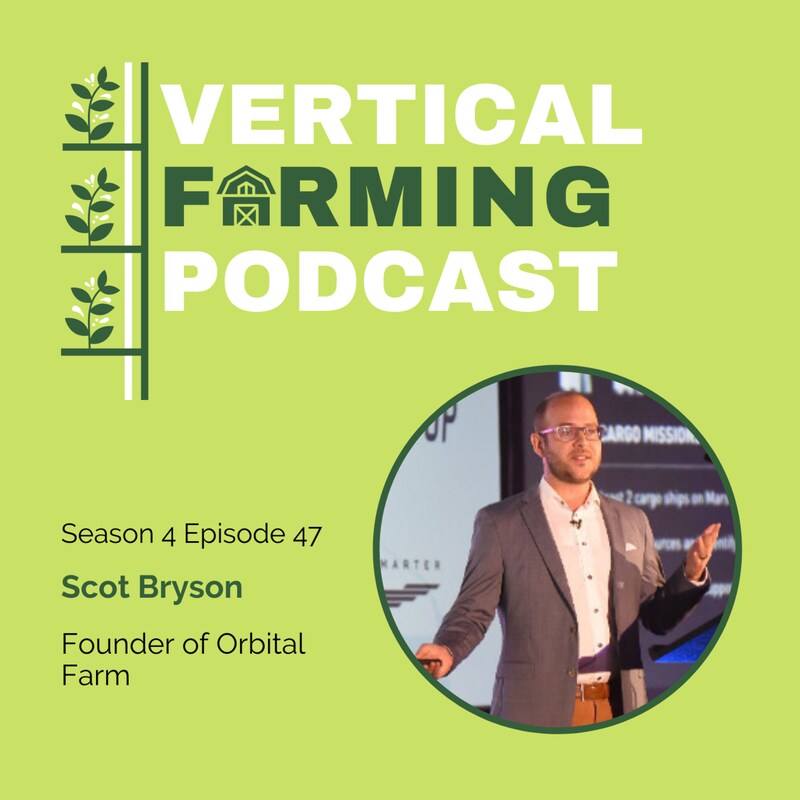
Join Harry Duran, host of Vertical Farming Podcast, as he welcomes to the show Scot Bryson, founder of Orbital Farm, a global agri tech company supplying fresh vegetables, fish, and vegan protein to local markets around the world. Scot has spent his life and career as a problem solver, from picking stones and baling hay in farm fields, to becoming an entrepreneur at 22 and building a multi-million dollar advertising agency over a decade.
Today, Harry and Scot dive deep into the fascinating and honorable work Scot is doing to address existential threats such as climate change and other massive issues like world hunger. Scot gets technical and talks about the process by which he builds a team and how he and his team are integrating advanced technologies in vertical farming. Finally, Scot shares his vision for the future of Orbital Farm, which will include building 200 circular mega projects around the planet to support and feed billions of people here on earth today, and spend the next 20 years prototyping and developing the technology to feed people in space in the future.
Episodes Sponsor:
Freight Farms – https://www.freightfarms.com/
Global Vertical Farming Show – https://verticalfarmingshow.com/
Cultivatd – https://cultivatd.com/
What We Covered:
03:42 – Harry welcomes to the show space farmer and founder of Orbital Farm, Scot Bryson, who joins the show to discuss his passion for problem solving everything from Climate Change to World Hunger
19:32 – Orbital Farm’s origin story
24:04 – Scot breaks down ‘daily protein’ in layman’s terms
28:02 – How Scot approaches the team building process
38:09 – The complexities of solving issues like hunger and homelessness
46:27 – Scot’s vision for the future of Orbital Farm and let’s listeners know where they can learn more about Orbital Farm and how to help
50:44 – Another critical piece of the vertical farming story
54:18 – Harry thanks Scot for joining the show and reiterates where listeners can go to learn more about Orbital Farms and connect with Scot
Tweetable Quotes:
“We have the same capacity and capability to get through these challenges and struggles. And that was really what I wanted to address and what kept me down this entrepreneurial pathway.” (06:49) (Scot)
“The way that we get through climate change is to look at wastestream sources as revenue streams. And if we can make that leap, if we can identify technologies, if we can enable capabilities to where wastestreams look like valuable resources, we can mobilize global capital to invest in the solutions that are needed to address the challenge at the pace and the scale required.” (08:39) (Scot)
“Really at the heart of what Orbital Farm is is we are a project development firm. We are integrating proven, existing technologies, and developing these business models and developing these project opportunities in different places that will come in a whole bunch of different forms. We have a very clear architecture, and that architecture is driven so that, in twenty years’ time, we want to have the ability to support hundreds of people living and working in space.” (15:42) (Scot)
“The attraction of people to a big vision - when I say two hundred facilities is enough to provide a billion people with food and end World Hunger - that’s an achievable goal in a short enough time frame to adjust the problem. That’s enough motivation for people to volunteer.” (29:13) (Scot)
“It’s gonna take a brilliant financial mind who has done significant work and raised significant capital for other purposes. And this [Orbital Farm] is a great opportunity to now come in and help lead that investment vehicle decision.” (49:01) (Scot)
Links Mentioned:
Scot’s LinkedIn – https://www.linkedin.com/in/scotbryson/?originalSubdomain=ca
Orbital Farm Website - https://orbital.farm/
Orbital Farm Email - [email protected]
Sponsor Info:
Cultivatd Website – https://cultivatd.com/
Cultivatd Instagram – https://www.instagram.com/cultivatdco/
Cultivatd’s Twitter – https://twitter.com/cultivatd
Cultivatd’s Facebook – https://www.facebook.com/cultivatd/
🎙️🎙️🎙️
Podcast Production & Marketing by FullCast
See omnystudio.com/listener for privacy information.
Mentioned in this episode:
2025 Precision Ag Report by iGrowNews
2025 Precision Ag Report by iGrowNews
Transcripts
$680 million poured into precision ag last year.
Speaker:Autonomous weeding robots dominated, and John Deere made 2 acquisitions in 3
Speaker:months. A food company, not an equipment maker, bought a
Speaker:robotics startup to protect its own supply chain. The deals are
Speaker:accelerating, the money is moving, and the winners are already separating from the
Speaker:pack. If you're investing, building, or buying in this space,
Speaker:you need the full picture before your competitors get it. The 2025
Speaker:Precision Agriculture Intelligence Report From iGrow News is now
Speaker:available. Get your copy today at
Speaker:igrownews.com/precision. If you are starting a vertical
Speaker:farm and don't know where to begin or which technology would suit your needs,
Speaker:then reach out to the experts at Cultivated. As indoor farm brokers, they
Speaker:help connect you to the right technology and ensure your project is successful.
Speaker:Best of all, their service is free because they work on behalf of their
Speaker:partners. Visit cultivated.com to learn more. And
Speaker:that's spelled C-U-L-T-I-V-A-T-D.com,
Speaker:or click the link in the show notes. Really at the heart of what Orbital
Speaker:Farm is, is we are a project development firm. We are
Speaker:integrating proven existing technologies and
Speaker:developing these business models and developing these project opportunities in
Speaker:different places that will come in a whole bunch of different forms. We have a
Speaker:very clear architecture, and that architecture is driven by
Speaker:this In 20 years' time, we want to have the ability to
Speaker:support hundreds of people living and working in space. The only way
Speaker:that you're going to be able to do that is to take a look at
Speaker:the waste streams and the resource streams that you're going to have available in that
Speaker:domain in the future and design an ecosystem that can be
Speaker:derived from that. That's your supply chain.
Speaker:Welcome to the Vertical Farming Podcast, weekly conversations
Speaker:with fascinating CEOs, founders, and agtech
Speaker:visionaries. Join us every week as we dive deep into the
Speaker:world of vertical farming with your host, Harry
Speaker:Duran. Vertical Farming Podcast, Season 4.
Speaker:Welcome back. If this is your first time listening, you're in the right place. It's
Speaker:the show where we interview fascinating CEOs and founders of the leading vertical farming
Speaker:companies from around the world. I'm your host, Harry Duran.
Speaker:And as we wrap up 2021, this is the
Speaker:last episode of the year and not of the
Speaker:season. So stay tuned for that coming right at your
Speaker:podcast player early January.
Speaker:I want to take a moment to thank all the listeners and all the
Speaker:supporters, all my sponsors, all the
Speaker:guests that I've had on the show. I would not
Speaker:have a podcast without all of you, and I am eternally
Speaker:grateful for your trust in me and your
Speaker:trust in the show and the value that you get and letting me know
Speaker:and sharing the story with other colleagues in the industry,
Speaker:other people that you come across in the industry. And I
Speaker:have to say, it's been really heartwarming, and I'm looking
Speaker:forward to kicking off 2022 in the same
Speaker:fashion. So make sure if you are enjoying the show to leave a rating
Speaker:or review at ratethispodcast.com/vmp
Speaker:so I can get to know the community a little bit more. If you missed
Speaker:last week's episode, Simon Deacon is the founder and CEO of Light
Speaker:Science Technologies. If you hadn't heard of him or heard of his
Speaker:company, they're passionate about delivering lighting science and research-proving
Speaker:plant monitoring solutions that help growers grow more with less.
Speaker:Simon's got a lot of experience in the LED space,
Speaker:and we talked in depth about his products and the research his company is doing
Speaker:and the future of LED technology and how
Speaker:Light Science differentiates themselves from the competition. We talk
Speaker:about the impact of supply chain issues— it's on everyone's mind nowadays—
Speaker:and how they're approaching customer relations through the lens of win-win partnerships. So make sure
Speaker:you check out that last episode. This week I get to speak to some Scott
Speaker:Bryson, space farmer and founder of Orbital Farm. Thank you for joining
Speaker:me on Vertical Farming Podcast. Thanks for having me. Great to
Speaker:be here. So, uh, we were chatting a bit in the
Speaker:green room and you said home is Toronto now? Yeah,
Speaker:I live up in Toronto and grew up in the country around here and
Speaker:moved to the city for university, started companies, haven't left. How long have
Speaker:you been either an entrepreneur or
Speaker:a founder, or how long has that gene been active in you?
Speaker:It's an interesting way to put it. The gene, I think, has been active since
Speaker:my great-grandfather. My great-grandfather wasn't an entrepreneur, but he
Speaker:was an inventor. He worked for a company called Hotpoint in the
Speaker:UK and contributed a lot of work into
Speaker:the heating element. So, you know, we've got the wax-sealed patents at
Speaker:home with the black spiral heating element on the top of
Speaker:everyone's stove. And so a lot of heating elements that are still in
Speaker:a lot of irons. GE bought the company, so it's, you know, own it.
Speaker:But certainly, that gene has definitely been— I feel like
Speaker:I'm part— that's somehow part of me. And I always just, even
Speaker:growing up, was figuring out how to put things together. I took
Speaker:apart and bought a couple different Arc 7s because I wanted to learn and
Speaker:understand how rotary engines functioned. And I just loved the concept of
Speaker:them. And never really thought I was going to be an entrepreneur, but
Speaker:started off while I was still in university, actually. Okay.
Speaker:you know, a whole opportunity in the how to tell stories in
Speaker:online space that no one really understood what to do. And so I
Speaker:created my first company in 2005, which is
Speaker:the same year YouTube was founded, to give a digital timestamp. I wish
Speaker:I'd created YouTube. You know, I ran that company for
Speaker:10 years and sold the company off to a holding group in the US.
Speaker:And I joined the holding group and their M&A team. And we
Speaker:helped them roll up another 19 different companies across North America.
Speaker:I got to work with a number of different investors and their portfolios of different
Speaker:customers and clients. I got to build another couple different companies
Speaker:within that holding group and also outside of that with other partners
Speaker:and really started down this journey about 5 and a half, 6
Speaker:years ago in 2015, 2016,
Speaker:when I really started to get a handle on what was going
Speaker:on with climate change, what was going on with the global hunger
Speaker:situation, And just the understanding of how
Speaker:investment functions and how globally we're just not
Speaker:making the progress that we need to meet the challenges that are in front of
Speaker:us. And, you know, just understanding that challenges
Speaker:that we're facing are really business model challenges.
Speaker:We have the capability of producing as much food as
Speaker:we want. We can do it anywhere we want. We can capture
Speaker:all the carbon dioxide that we want. We just need the right business model
Speaker:to make that function and the willpower to make that happen. I mean,
Speaker:we collectively as a society decided to end slavery and,
Speaker:well, for the most part, overt slavery maybe was a better way of
Speaker:putting it, but we have the same capacity and capability to
Speaker:get through these challenges and struggles. And that was really what I wanted to address.
Speaker:And I think, you know, kept me down this entrepreneurial pathway.
Speaker:I saw that you had some earlier experience with aquaponics as well.
Speaker:And so was this something where these
Speaker:technologies, for lack of a better term, were something that you were becoming aware
Speaker:of? Because I mean, some of the stuff like hydroponics, I mean, it's been around
Speaker:for a long time, you know, probably maybe even thousands of years,
Speaker:you know, if you— depending how far back you want to go. And this idea
Speaker:of ancient civilizations fascinates me as well. So if you look at
Speaker:some of the stuff that was done in places like Egypt and you're like, well,
Speaker:to try to recreate that now would be extremely challenging. And so
Speaker:that opens up another wormhole. But But I think it's in our consciousness, and I
Speaker:think we just forget sometimes. And it feels like we're going through another cycle of
Speaker:awakening and realization of what is happening on this planet
Speaker:and what our responsibilities are as stewards of this planet.
Speaker:And so can you talk a little bit about what was happening or what was
Speaker:bubbling up inside of you to make this more alive for you?
Speaker:Yeah, so, you know, aquaponics is a great example. You know, it's—
Speaker:I think from my understanding, it's 4,000 years old, and it was taking
Speaker:place in Central America, it was taking place in Asia, and it
Speaker:is a replication of what happens in nature. It is
Speaker:biological ecosystems and the reproduction of that. And it wasn't
Speaker:until the '70s that it really became scientifically formalized.
Speaker:And, you know, where we see aquaponics and aquaculture systems today
Speaker:really sort of was born out of a lot of that understanding.
Speaker:But the pathway for me was actually a stage
Speaker:even earlier than that, was in creating food products
Speaker:from waste streams. I figured that sort of my
Speaker:genesis moment really came from the
Speaker:way that we get through climate change is to look at waste stream sources
Speaker:as revenue streams. And if we can make that leap, if we can
Speaker:identify technologies, if we can enable the capabilities where
Speaker:waste streams look like valuable resources, we can mobilize
Speaker:global capital to invest in the solutions that are needed to
Speaker:address the challenge at the pace and the scale that's required. That's the general thesis.
Speaker:And so I started with CO2, you know, how can we look at
Speaker:CO2 as this component? And I came across this technology that
Speaker:NASA had created and worked on in the late '60s.
Speaker:Late '60s is when this work was really taking off. And they were looking
Speaker:at the situation where, well, we've got this, you know, if we want to do
Speaker:a mission longer than a year and, you know, we can't bring cows and
Speaker:chickens and pigs with us, how are we going to have a protein source for
Speaker:us? And what does Earth's ecosystem function and do? How—
Speaker:where are protein sources derived from? How is this created? And
Speaker:they looked into soil microbes,
Speaker:and these organisms are single-cell organisms that consume sort of
Speaker:the base level of materials that are available. And, you know,
Speaker:that's CO2, that's oxygen, that's hydrogen, it's ammonia.
Speaker:They live in water. And these are some of the earliest organisms that
Speaker:thrived on this planet. And these organisms
Speaker:consume CO2. And so when I came across this, this was just
Speaker:completely eye-opening. Wow, here's a solution that is
Speaker:utilization of a waste stream source that is causing climate change
Speaker:challenges and solving a protein challenge problem
Speaker:with a natural process that already exists. And NASA
Speaker:has already done a lot of the heavy lifting into this so long ago.
Speaker:Now, you know, there's so many reasons that that now hasn't been proliferated,
Speaker:but it's largely been a funding problem. The funding— NASA's
Speaker:funding changed from supporting human habitation in space in
Speaker:the early '70s, where that made up more than 50% of their
Speaker:budget, and all that money was then funneled into building shuttle
Speaker:program. And all of the work and progress and
Speaker:huge amounts of progress that was made into these organisms really was lost.
Speaker:People retired, the companies that did the work and developed the
Speaker:prototypes all completely pivoted in different directions. I
Speaker:talked to them and they have no knowledge and no corporate
Speaker:capabilities within those sectors any longer. So that was really
Speaker:a big eye-opening moment for me. And I joined and started
Speaker:helping one of the companies that was commercializing it. They started off in the
Speaker:biofuel sector. They developed the organisms to be able to
Speaker:produce polymers and biostimulants and
Speaker:proteins and oils. To replace palm oil, to replace
Speaker:other oils for other purposes within the fuel sector or
Speaker:ingredient sector. And it was just mind-blowing to
Speaker:have this powerful tool that has a flexibility of
Speaker:inputs, that has a flexibility of outputs, that is a natural process.
Speaker:Like, its waste product ends up being water. And so, you know,
Speaker:it's really what you look for when you're trying to do systems thinking,
Speaker:when you're trying to do large-scale change, is you look for elegant
Speaker:solutions. And elegant solutions is a nice way of saying
Speaker:things just fit in a serendipitous way. But
Speaker:nature finds elegant solutions because of millions
Speaker:of optimizations and billions and trillions of optimizations over time.
Speaker:And that's how elegant solutions develop. And those are the things that as
Speaker:a species, as a society, that's what we really need to
Speaker:begin to embrace. And so that's, yeah, that's what we started
Speaker:doing and taking a look at aquaponic systems, It's a very long departure from
Speaker:the question of aquaponics, but it's all related because it's
Speaker:about thinking about cycles and it's about thinking about waste
Speaker:as resources. And that's what aquaponics really is. It is the waste
Speaker:from fish becomes the input components for
Speaker:the fertilizer components for your plants and plant growth systems.
Speaker:And when you look at an aquaponics system, what drives the economic of
Speaker:that, economics of those systems? Well, it's energy, it's an
Speaker:availability of water to start, but, you know, you can get to points where that
Speaker:water can be recycled. It's the energy and the water and the feed to be
Speaker:able to feed the fish, and that enables your plants to
Speaker:thrive. And so that's a really big gap today
Speaker:in how you're going to develop sustainable food systems for
Speaker:aquaculture systems. And that really, you know, these single-cell organisms
Speaker:are perfectly adapted for that. They are the basic building blocks.
Speaker:and amino acids that are exactly tailored for fish
Speaker:because that's the basis of the ecosystem in the aquatic sector. What was
Speaker:interesting is this concept of the waste stream as
Speaker:not as an energy source, which it can be, but I think the slight
Speaker:distinction of it as a revenue stream is interesting because I
Speaker:feel what it does, and you might be able to speak to this a little
Speaker:bit, is I think when people realize they can build a business out of it,
Speaker:you sort of get a lot of the brightest minds and investment dollars come in.
Speaker:And, you know, it would be nice to think that everyone would just do things
Speaker:altruistically in this world, but sometimes
Speaker:the driver of making a business out of it can lead
Speaker:to positive results, especially when you have a lot of
Speaker:investment dollars. Because some of this is investment and money intensive because
Speaker:you need— you sort of need to catch up to nature, to your point, because
Speaker:it's had the millions of years of iterations and
Speaker:We don't have the luxury of that cycle of time. So I think it's interesting
Speaker:to see how that's becoming awake for folks
Speaker:who, like yourself, who have the experience, who have the
Speaker:passion, and who see this as one of the most pressing needs of our
Speaker:time. Yeah, I mean, I think you've raised a lot of really important points.
Speaker:Philanthropy, altruistic things
Speaker:should be able to solve these challenges, but we have
Speaker:almost a billion people that don't have enough food to eat tonight. And that number
Speaker:has increased from last year by like 120 million
Speaker:people. I mean, Canada's 37 million people
Speaker:alone. I mean, the scale at which the
Speaker:problems are proliferating today is vast. And
Speaker:vertical farming technologies offer capability to be able to address some of
Speaker:this, but it doesn't address those 120 million
Speaker:people we just talked about right now. It's
Speaker:completely focused into leafy greens and high-value
Speaker:products and extremely luxury type of food products.
Speaker:And it doesn't really address the bigger challenges and deeper problems.
Speaker:It certainly has a major impact from a climate perspective, from a logistics perspective, from
Speaker:helping to produce local jobs and resource streams. It's
Speaker:not focused on addressing how do you solve these bigger challenges. So it
Speaker:takes a focused effort to make that happen. It takes business models that are
Speaker:specifically geared at that. It takes investors that can
Speaker:get around return on the capital that they're investing in,
Speaker:so that the projects have to be designed from the core to address some of
Speaker:those challenges and problems. And so really at the heart of what
Speaker:Orbital Farm is, is we are a project development firm. We are
Speaker:integrating proven existing technologies and developing
Speaker:these business models and developing these project opportunities in different places
Speaker:that will come in a whole bunch of different forms. We have a very clear
Speaker:architecture, and that architecture is driven by this, you know, in 20
Speaker:years' time, We want to have the ability to support hundreds of
Speaker:people living and working in space. The only way that you're going to be able
Speaker:to do that is to take a look at the waste streams and the resource
Speaker:streams that you're going to have available in that domain in the future and
Speaker:design an ecosystem that can be derived from that. That's your supply chain. How do
Speaker:you build up the biomass? How do you build up your nitrogen? How do you
Speaker:build up your water supply systems? How do you build up your proteins and your
Speaker:carbohydrates and all of the different components that you need nutritionally? to
Speaker:support human habitation and life. And so you take those design
Speaker:constraints and you bring that today, and we've got to
Speaker:figure out how to integrate these systems. We've got to figure out how they operate
Speaker:at scale. We've got to figure out where they fail and they break and where,
Speaker:you know, 3 stages down, how the water
Speaker:filtration system out of an aquaponics system is affected by the
Speaker:bioreactor that has— that's capturing carbon dioxide from the
Speaker:astronauts. What if the acidification changes in some
Speaker:component and that has a downstream or accumulation effect, you know,
Speaker:3 or 4 stages down that takes 4 years to emerge
Speaker:before that actually happens? We see examples when you look into the
Speaker:International Space Station and their life support system. We see examples
Speaker:exactly like that. The higher concentration of CO2 in the atmosphere,
Speaker:the condenser for extracting the water out of the air had more
Speaker:acidity than they had planned, ended up causing a leak behind the walls
Speaker:years after. That was the determination, was because of the high
Speaker:CO2 levels that there were in the atmosphere, and that was what
Speaker:caused it. Didn't emerge till I think like 5 or 6 years after it had
Speaker:been built and were operating perfectly fine. But that
Speaker:situation happening on Mars would mean
Speaker:likely you've just now lost your entire colony. Mm-hmm. If your life
Speaker:support system collapses, they're all going to die. And so
Speaker:that's not an acceptable risk. And so what we need to do is we need
Speaker:to have the capability of building these large-scale systems, and we need to
Speaker:test everything. Who knows if algae systems, if a
Speaker:specific vertical farming system is good for these types of crops, if this aquaponics
Speaker:system growing these types of fishes is really good. What we need to do is
Speaker:we need to build a consistent, reliable dataset. We need to have many
Speaker:different iterations of these different systems, and we need that to be
Speaker:tested and operated for a 15 to 20 year timeframe.
Speaker:So not there. That was— Coverdi is one of the
Speaker:companies that can take CO2 and turn this into proteins and
Speaker:turn this into polymers and feeds. So that was really, you know, working
Speaker:alongside that team was incredibly eye-opening. You know, it was a
Speaker:brilliant team of 16 PhDs that, you know, I jumped in and was like,
Speaker:I don't know how I can help, but this is the technology that the world
Speaker:needs, not other technologies. So, you know, let me help you. And—
Speaker:Sure. I did. And so I, you know, I worked with them on this. And
Speaker:that was really the germination of this idea was that
Speaker:core technology is fantastic, but it can't
Speaker:operate in isolation. It needs renewable energy. It needs
Speaker:green hydrogen. It needs carbon capture systems. It needs feed mills,
Speaker:it needs centrifuges, it needs all of this upstream and downstream
Speaker:processes. And you need to be able to, when you're trying to deploy large
Speaker:industrial-scale projects like this, you need to have an understanding of that whole
Speaker:ecosystem. And there are very few people in the world that understand
Speaker:that. And that's really where the architecture of what we're
Speaker:trying to develop and deploy really came from and stemmed from.
Speaker:So can you talk a little bit or take a trip back a couple of
Speaker:years Talk to me about where you're at personally,
Speaker:what you're looking at, what you're consuming, or what you're working on.
Speaker:How does the idea for Orbital Farm start to
Speaker:germinate in someone like you with all this experience, with all this
Speaker:passion, with all these opportunities that you've had to work with some of these
Speaker:brilliant minds? And I'm just— I'm always curious about origin stories, just kind of like
Speaker:how it all starts to come together. Yeah, so it takes time.
Speaker:I've been— I was fortunate to be my own investor and have
Speaker:the patience and have the focused effort to be able to
Speaker:really learn at a very deep level each of these different
Speaker:components, from the energy, from the biotechnology, from the vertical farming
Speaker:systems, from automation systems, from water treatment, from aquaculture,
Speaker:from aquaponics. It's a PhD in itself.
Speaker:And so that has afforded me the capability to have this
Speaker:clear perspective on what to— how to— where to start. And the beginning
Speaker:phases of the company, what we focused on were to try to
Speaker:validate, could we develop commercially viable investable
Speaker:assets at industrial scales, you know, hundreds of millions
Speaker:of dollar assets? Could we develop these projects in different
Speaker:locations easily and, you know, with relative
Speaker:speed? And so we spent our time, you know, going
Speaker:to the northern part of the Netherlands, going and discussing with
Speaker:people in the Middle East and visiting Dubai and Abu Dhabi, visiting
Speaker:Bahrain, speaking to people in Egypt, speaking to
Speaker:customers in Japan and visiting Japan. We almost built a project for
Speaker:the Olympics right downtown Tokyo.
Speaker:And to mining companies alongside operations down
Speaker:in Namibia and Sub-Saharan Africa and alongside these
Speaker:other commercial industrial partners. And came up with
Speaker:truly hundreds of potential opportunities where these could be
Speaker:deployed if all the right mix was there. If the investor— if you had
Speaker:investor capital, if you had the right project flow, if you had the right engineering
Speaker:and feasibility studies completed, these are viable project locations.
Speaker:And that sort of said to us, okay, well, look, where we're going to execute
Speaker:first is really going to be important. And so another thing
Speaker:that's important to understand within, you know, the overall context of Orbital Farm and
Speaker:what we're trying to achieve is the scale And so
Speaker:biotechnology is an enabler for aquaculture
Speaker:systems. Aquaculture systems are enablers for
Speaker:controlled environment agriculture systems and vertical farming systems. And the
Speaker:ability to recycle nutrients, the ability to recycle water within
Speaker:these types of setups and systems are really enabling from an agriculture
Speaker:production standpoint. And so it's important to understand the
Speaker:scale of when you learn and understand about fermentation
Speaker:technologies. These normal businesses will produce
Speaker:somewhere in the 10,000 tonnes a year, upwards
Speaker:of 100,000 tonnes a year of a biomass product.
Speaker:100,000 tonnes of a product at, you know, 80%
Speaker:protein content, that's enough for 4.5 million people
Speaker:daily protein every day. And, you know, you're going to do a pro forma
Speaker:on a project for 30 years. So you build one
Speaker:asset, you can now support a country like Namibia
Speaker:of 2 million people. You can support double their population,
Speaker:which means they could— not that people are going to be consuming this stuff directly
Speaker:every single day for every meal, but the scale is important
Speaker:to understand. You now are looked at like a mining
Speaker:operation, as an extractive resource. You're extracting sunlight, you're
Speaker:extracting carbon dioxide. and you're producing
Speaker:significant portions of food products and enabling
Speaker:assets to be able to enable the controlled environment agriculture systems
Speaker:to proliferate in these places. So with this, back to the
Speaker:global hunger situation, 200 of these facilities
Speaker:is enough daily protein to support the billion people that don't have
Speaker:enough food to eat today. So that really aligned to our goal.
Speaker:So when, I think just for the benefit of listeners, sometimes when they hear like
Speaker:a term like a daily protein, like can you put it in like real world
Speaker:terms? Like what does that mean? What does that look like? Are we talking like
Speaker:basically tofu squares or does it, is it
Speaker:become something a bit more palatable? And I, I think as people think about this,
Speaker:is it Soylent Green? So people
Speaker:have these ideas and people have, you know, thanks to movies of these visions of
Speaker:what these can and probably shouldn't be. So I'm just curious
Speaker:how you do explain that sometimes for the layperson. Yeah, so
Speaker:what this actually physically looks like is a powder. They're single-cell
Speaker:organisms. You grow them in a— it looks like the facility looks like you walk
Speaker:into a brewery and the large stainless steel cylinders.
Speaker:And instead of having yeast produce alcohol, we have
Speaker:these single-cell organisms that are consuming these gases and they
Speaker:they themselves grow. And you can select those little single
Speaker:organisms to produce a bunch of oil if you grow them
Speaker:in the right way. You can have them just grow up a whole bunch of
Speaker:body mass, and that's the proteins. You can have them
Speaker:produce a bunch of polymers, so you could make a bio-based
Speaker:plastic. And so any of these combinations is really just about how
Speaker:you're growing them and the specific strain that you're going to select, just like a
Speaker:seed that you would normally select between, you know, different optimized for different
Speaker:environments. And so you, what you get out of this is
Speaker:sort of a flavorless,
Speaker:colorless-ish, lighter color type of powder. And
Speaker:that powder can then be made into whatever you want. That's really an ideal
Speaker:platform. You can blend this into flours and make a protein-enriched flour.
Speaker:Like I'm just doing some experiments at home in my bread maker and I'm
Speaker:putting 3.5, 4 scoops of whey protein into my bread.
Speaker:And I'm getting a sourdough-like texture in my bread.
Speaker:And that slice of bread, 2 slices of bread now,
Speaker:has almost 20 grams of protein in that. And
Speaker:so, daily, a person needs, an average adult needs 50 to
Speaker:60 grams per person per day. If you're working out and really trying to
Speaker:build up, that could be significantly more, but really, that's what the base
Speaker:requirements are. Get to a point where you can have a
Speaker:bread product, which is one of the most universal products on the planet,
Speaker:and you can provide the daily protein requirement for somebody for
Speaker:cents. And there's no animals. These organisms are
Speaker:vegan. You know, you can produce them anywhere on the planet. They're completely climate
Speaker:independent in terms of fluctuating and volatile climates. And so
Speaker:you can make them into burgers and sausages and just like the Beyond Beef burger
Speaker:and just like the Impossible Burger. they could use this protein
Speaker:source instead of pea protein, instead of soy proteins, and/or in
Speaker:aquaculture feeds, you know, instead of using soy or instead of using
Speaker:ground-up fish, which is completely unsustainable and collapses
Speaker:ecosystems in the ocean. This is really what those little fish
Speaker:are bioaccumulating anyways and what they're, you know, so you're
Speaker:sidestepping bioaccumulation of heavy metals and
Speaker:microplastics and all the crap that's in the ocean that
Speaker:we're we've put there and exist there. This is a great
Speaker:way. This is why you want to limit how much red tuna you're going to
Speaker:consume because it's not healthy for you, what's been bioaccumulated in
Speaker:that ecosystem. This is completely sidestepping that.
Speaker:Several different threads I'm looking to pull there. First of all, when's the
Speaker:cookbook coming out of recipes? That's probably
Speaker:got to be in the future somewhere. Because I think it's a practical
Speaker:application, right? Sometimes because people, they hear these concepts and, you know,
Speaker:they— thankfully for companies like Beyond Meat and Impossible are
Speaker:paving the way. My partner and I are pescatarian
Speaker:for the most part. She's better at it than I am. But having grown up
Speaker:eating meat, it's just there's something about the craving for protein. And I'm
Speaker:wondering if, you know, this solution like this addresses that, because I've tried
Speaker:Gardein, I've tried Impossible, I've tried All of them. And if you've grown up eating
Speaker:meat, the challenge is the texture, but there's other ways to cook it. I
Speaker:think that's to your point. Just stepping back a bit, I'm always curious,
Speaker:being an entrepreneur myself and having spoken to tons of
Speaker:CEOs and founders on the show, how do you think about
Speaker:compile— like pulling together, you know, the best and
Speaker:brightest minds? Because I imagine as you're thinking about Orbital
Speaker:and what this is gonna look like and how to get this started and off
Speaker:the ground, talk to me a little bit about How you think about building a
Speaker:team to build something like this? Yeah, the team part's really
Speaker:exciting. It's frankly been some of the best part of this work.
Speaker:When setting out on this, it was also thoughtful in the
Speaker:constructing of this architecture. And space is an important
Speaker:component to that as well. You know, when you think about how do
Speaker:you enable this vision, how do you enable this capability, if this is a
Speaker:business model challenge and this is a financing challenge, how do you enable
Speaker:solving this problem. And it needs to come from patient capital. It needs
Speaker:to come from some of the smartest and brightest engineering minds on the planet. Where
Speaker:do those exist? Where— if you are the smartest person in your high school,
Speaker:where do people go? Well, you say, you know, maybe they're going to go to
Speaker:be a brain surgeon, or maybe they're going to go be a rocket scientist.
Speaker:So— Or it used to be Google and Facebook before
Speaker:people have realized that they may not want to work for companies like that.
Speaker:But the aerospace sector has done an fantastic job of attracting some of
Speaker:the brightest minds on our planet. And the investors that are investing
Speaker:into the aerospace sector are also patient capital investors. You have to have long-term
Speaker:vision into these components and capabilities. And so the
Speaker:attraction of people to a big vision with,
Speaker:frankly, a realistic— I mean, when I say 200 facilities is
Speaker:enough to provide a billion people end hunger,
Speaker:that's an achievable goal in a short enough timeframe to address the
Speaker:problem. That's enough motivation for people to volunteer.
Speaker:I can't tell you the number of people that over the years of our business
Speaker:have volunteered their time, their resources, their connections and
Speaker:contacts to help further this. And it takes that level to
Speaker:execute this properly. These are incredibly different
Speaker:technologies that never typically touch or talk to each other. And so
Speaker:it has taken a team of 70
Speaker:different consultants and investors and advisors
Speaker:to be able to pull all of this stuff together and to really, you know,
Speaker:double-click deep into, okay, is this possible? This
Speaker:seems to look accurate. What are some of the limitations?
Speaker:What are the questions we need to ask? And teasing that all out. Now, we're
Speaker:not 70 full-time people at all right now, but we're
Speaker:working towards executing on our first project. And that's really where you start pulling
Speaker:people together. But The creating an inspirational
Speaker:message and mission is fundamental to
Speaker:enabling this future that we want to have. Like, I've got a
Speaker:2-year-old daughter. No, she's not even quite 2, but she's acting like she's 3. But,
Speaker:you know, the future I want her to live in, this is what I'm
Speaker:trying to create. And this is realistic. And this is possible. And this is
Speaker:investable. And this is— we just need to execute.
Speaker:And that's the setup, that capability
Speaker:attracts the right type of people that you want to work with. It attracts other
Speaker:entrepreneurs. And this is enabling to them as well in different
Speaker:countries and nations. When you want to build
Speaker:$200 to $500
Speaker:million projects, you can't do it alone. You can't build this
Speaker:from a central architecture. Yeah. You need to be an enabler. And
Speaker:as an early entrepreneur, I learned really early on that
Speaker:different management styles. And we first started out in our business and we hired a
Speaker:bunch of juniors and they would work under us and they would delegate tasks to
Speaker:them and train them. And it was great. And it was really motivating to be
Speaker:able to train people like that. But it wasn't until later that I
Speaker:came to realize that actually, if we hire the people that are way better
Speaker:than me, and so to do this task, I was able to delegate things
Speaker:so much faster and easier because I knew the faster I could get this out
Speaker:of my hands and into their hands, going to come back to me with something
Speaker:that was 10 times better than I could have done and 10 times better than
Speaker:I could have educated someone else to do. And so when you can build a
Speaker:team around some of the brightest and the best minds and be
Speaker:picky about, look, this is the type of person that we want, this is who
Speaker:we need, and ask for that to your network, you get some
Speaker:incredible people back from all over the planet. Yeah, I would
Speaker:imagine it's an opportunity that would be attractive
Speaker:to people who are are self-starters who
Speaker:constantly like to be challenged, who are problem
Speaker:solvers, who can work independently, don't
Speaker:need a lot of direction, but also can, you know, just some guidance on
Speaker:what the outcome needs to look like, but have some flexibility in terms of how
Speaker:they get there because it allows them to, you know, show their
Speaker:creativity or their problem-solving skills. I imagine it's a unique mix of
Speaker:folks that thrive in environments like that. And, you know, a lot of the people
Speaker:that come to us are, they're in their last stage of their career
Speaker:and they have worked for 20, 30 years in these
Speaker:areas and are specialists. And, you know, one of our advisors
Speaker:has spent his entire career in barley and has done some
Speaker:amazing experiments and done a whole bunch of fantastic
Speaker:things and, you know, is completely inspired by what we're trying to
Speaker:do. And same thing goes from an engineer who was an entrepreneur
Speaker:himself and had a business and sold it. And a robotics person, again, one
Speaker:of the top robotics arm companies, sold the company,
Speaker:finished his earnout, you know, really now wants to give
Speaker:back and do something meaningful and can bring this huge
Speaker:body of knowledge from their experience to the table. And then when
Speaker:you think about the other people that we're going to need to be the
Speaker:entrepreneurs to kick off these projects, it's going to
Speaker:need to be people that have already done these type of businesses, As well,
Speaker:what we're trying to do, to the question of how do you execute 200
Speaker:projects in a short timeframe, another model, and when we were
Speaker:designing the model, our business model that we wanted to
Speaker:replicate was the renewable energy sector and the
Speaker:what has enabled that scale-up. And what has enabled that scale-up has been
Speaker:advanced purchase agreements. These, you know, power purchase agreements
Speaker:were done and you go to a large corporation and they'll say, great,
Speaker:we want 100 megawatts of power. And then you can take that letter like, okay,
Speaker:great, GE wants 100 megawatts of power. I'm going to go to the bank and
Speaker:the bank's going to be like, great, I trust GE is going to fulfill on
Speaker:this. So here's a loan, Scott, you know, go build a 100-megawatt solar facility
Speaker:and boom. And now the project developer moves on to the next solar
Speaker:project and goes and gets a power purchase agreement from Samsung. And
Speaker:that model is repeated over and over and over. And that's not
Speaker:typically what we find in the food production industry. And
Speaker:what we're trying to be is that catalyst. And so what it's going to take
Speaker:is it's going to take entrepreneurs in every country to be able to
Speaker:pull together these advanced purchase agreements. And
Speaker:we're going to try to take that model and apply this into the food sector
Speaker:so that we can still deliver returns to investors, but
Speaker:the returns that the investors are going to make are on actually building the projects.
Speaker:And you're going to be able to deliver a high rate of return for an
Speaker:investor and they're going to get rewarded for actual construction and
Speaker:building of the project. And then you've got these assets that are
Speaker:predictable income, predictable outputs,
Speaker:predictable food production. And this is perfect for the bond market.
Speaker:And we're going to build and develop green bonds to be able to
Speaker:roll up these assets. And now this is applicable to sovereign wealth
Speaker:funds, the insurance companies, pension funds, where trillions of
Speaker:dollars are sitting waiting to be invested into
Speaker:projects that can tackle climate change, projects that can tackle the Sustainable Development
Speaker:Goals. There is so much money out there looking for a place to
Speaker:be. The problem is that there are not bankable, investable projects to be
Speaker:there. And that's at the core of what Orbital Farm is
Speaker:doing. We're designing and developing and building those investable
Speaker:assets that can be applicable to those biggest investors on the planet.
Speaker:Yeah, it sounds like you've given a lot of thought to pulling in sort of
Speaker:best-in-breed practices for all these different industries. You
Speaker:mentioned the bonds and the power purchase agreements. I guess the
Speaker:equivalent would be like a food purchase, a protein purchase agreement. Absolutely.
Speaker:As well. I mean, think of if you're a company, if you're a
Speaker:manufacturing company, let's just use oats for example, because it's
Speaker:what I can think of. This year, we had a heat dome over
Speaker:North America and the western side of North America
Speaker:experienced incredible drought, incredible amounts of heat.
Speaker:We saw a reduction in yields. Canada, by the
Speaker:way, is the largest oat producer on the planet. We're second only to the
Speaker:European Union, which is a whole bunch of countries. And we had
Speaker:a decline of almost 40% of yield,
Speaker:like 33%, I think, in Canada alone. Wow. But combined between North
Speaker:America, between Canada and the United States, I think it's like 43% or something along
Speaker:those lines decline. It's significant. And this has
Speaker:caused a huge price increase just since the summer in
Speaker:oats. And so what you're seeing is
Speaker:climate events and climate volatility is
Speaker:driving huge fluctuations in the
Speaker:agriculture sector. And we're just at the beginning of it. we're going to experience.
Speaker:And so, you know, even when you just start looking at the pricing
Speaker:volatility in leafy greens and tomatoes and many
Speaker:different crops, these are over 400% volatility. That's
Speaker:crazy. If you had 400% volatility in the stock market, you know how many
Speaker:people would be all over that, making billions of dollars off of
Speaker:that? Now, that's how stock market can make money, but the reality is
Speaker:that for the companies that are operating businesses that have these huge price
Speaker:fluctuations, That's really difficult to manage a business long-term.
Speaker:So what we offer to large manufacturers are an ability
Speaker:to lock in a price now before it gets really bad
Speaker:and lock in a price now for a very consistent timeframe.
Speaker:Our volatility is based on really the energy. And so we
Speaker:can lock in these long-term purchase agreements and this can offer that
Speaker:capability to clients and customers to be able to secure a
Speaker:supply chain for a long period of time. and move on to start building the
Speaker:next set of projects. That's at the core of what we're trying to enable.
Speaker:When we talk about this idea of feeding a starving
Speaker:population, this is not something that's new for
Speaker:folks to wrap their heads around. You know, I grew up in the '80s,
Speaker:and you would have organizations like Live Aid, you know, rice being delivered to
Speaker:Ethiopia. But then, like, it's this idea of the last mile supply
Speaker:chain, challenges. And, you know, it feels like the creation of
Speaker:the food wasn't the problem at that time. It wasn't one of the problems, but
Speaker:it was just the delivery of getting it in the hands of the people who
Speaker:actually need it. And I'm wondering, since you do have so many of these
Speaker:beautiful minds working on this project, if they're thinking about all these different phases of
Speaker:like, you know, getting the country on board is one aspect, but then getting the
Speaker:infrastructure with it— does— can it support like a distribution of this food?
Speaker:Can it support, you know, maybe even education of the population to
Speaker:like this as another source. And it feels like there's so many
Speaker:moving parts when it comes to problems like these. When you talk about, you know,
Speaker:hunger and homelessness, and it's just, you know, sometimes they're so big that
Speaker:people have a hard time wrapping their head around all the different moving parts. So,
Speaker:you know, it's an area of focus. You know, we haven't cracked the nut totally
Speaker:yet, but I feel really confident in the direction that we're going. The
Speaker:hunger has a number of different layers. Hunger generally,
Speaker:there's food insecurity, just generally in North America, in
Speaker:the developed world, where you're just not close enough to a retail store, that
Speaker:largely can be served by a lot of smaller-scale vertical farm
Speaker:systems. That has a great opportunity to address some
Speaker:of the regional distribution challenges and issues. In the developing
Speaker:world, a lot of hunger really at the end of the day is driven
Speaker:by because they don't have enough money. That's a big, big component of the
Speaker:reality of the situation. And They get into hunger
Speaker:situations not 24/7, not
Speaker:every day of the year. It's really between a 2 and a 4-month
Speaker:timeframe during dry seasons or wet seasons when they have an inability
Speaker:to be able to produce income and to be able to then afford some of
Speaker:that food, or their crops or their fields or their
Speaker:farm just isn't being able to be productive. And that really is a
Speaker:huge stress and drain. And so that gives really
Speaker:interesting opportunities because if you can think about a facility that, you know,
Speaker:2 to 4 months of the year that it needs to be focused in helping
Speaker:a local population, but then, you know, the rest of the year this could actually
Speaker:be used to export product to an international market, to
Speaker:one of these long-term offtake agreements. Now you can start to build
Speaker:really interesting business models that are designed where you're baking in,
Speaker:you know, covering those costs, providing maybe even food purchase
Speaker:agreements through or World Food Programme. The other layer of hunger
Speaker:here that you mentioned is also logistics and transportation and what we're feeling
Speaker:right now. It is a real and significant problem.
Speaker:We need to get off of this ability or this concept of aid
Speaker:being, you know, we're just going to produce this and ship over some bags of
Speaker:rice and soybeans. This is— these people aren't getting zero
Speaker:vegetables in their diet. These people are not really— I mean,
Speaker:they're kind of surviving, but not really. What we need to do
Speaker:is we need to have their ability to be able to produce food in their
Speaker:own home, in their own country. Like, that's what we need to enable.
Speaker:And in order to do that, you can't just provide a finished product. You need
Speaker:to provide a product that entrepreneurs there on the ground can add
Speaker:value to. And this is why centering a system and
Speaker:centering an Orbital Farm project around these biotechnology hubs that can
Speaker:produce hundreds of thousands of product in a market can get you to
Speaker:that to enable an entire industry to emerge of
Speaker:aquaponic systems and the training that can come from that, the ability
Speaker:to be able to then finance controlled or covered agriculture
Speaker:and greenhouses and hoop houses, and the ability to even start thinking in
Speaker:these ways that right now, just, it's not even a possibility
Speaker:to do that. So that's sort of how I think about these
Speaker:challenges and how we're pulling this all together. One
Speaker:other point that I guess I want to say just before the end is practically,
Speaker:where do we start? I've been talking about all these wonderful utopian
Speaker:perspectives. And the reality was that when we
Speaker:started looking at developing projects in all the places that I mentioned
Speaker:earlier, they're really remote. And if you want to
Speaker:build 200 projects, you're going to have to show that to
Speaker:at least 1,000 investors because you're not going to get yes on every single
Speaker:time. Definitely. And 1,000 is definitely on the absolutely
Speaker:lowest scale of what you're going to need to do to make that happen.
Speaker:And so if the first facility is 3 or 4 hours drive from an international
Speaker:airport, how many investors are you going to be able to convince to get on
Speaker:an airplane, go fly to this remote place, drive to that place, see the
Speaker:facility? How am I going to get 1,000, 2,000 investors through there?
Speaker:The place that emerged was New Mexico.
Speaker:And at Spaceport America. And Spaceport
Speaker:America is in the middle of a desert-ish. It's not,
Speaker:it's not, it's not a bunch of sand desert, but it's in the middle of
Speaker:nowhere. It gets well over 300 days of sunshine every
Speaker:year. It is incredibly water stressed.
Speaker:It's in a what's called an opportunity zone in the United States. It's the
Speaker:communities came together, self-taxed themselves to
Speaker:build a spaceport in their community because they wanted to attract
Speaker:business and industry there because they were suffering and their
Speaker:ability to be able to produce and develop really
Speaker:the very first spaceport on this planet is completely inspirational.
Speaker:27% of people in this county are currently living in poverty.
Speaker:Wow. This is a county of 10,000, not even 11,000 people.
Speaker:This is crazy. And so This is a location where—
Speaker:and New Mexico is the most food insecure state in the United States. This is
Speaker:a location where we can build and develop a project that we
Speaker:can provide food to a local community who frankly deserves it. It
Speaker:also is the place where 700, 800 people, I think now, have
Speaker:paid for their deposits to fly in Virgin Galactic. And if you've got
Speaker:$200,000 to $450,000 to drop on a 1.5-hour
Speaker:adventure to go into space, You likely have a few other
Speaker:hundred thousands or millions of dollars in your pocket. And you're going through a life-changing
Speaker:moment. You're there for 2 or 3 days. We're going to be able to provide
Speaker:you salads and smoothies and sushi. And we're going to give you a
Speaker:Disney-like experience for adults that is going to blow your
Speaker:mind. And your family and friends are there. And we can give
Speaker:you this luxury experience and demonstrate to you, this is how we change the
Speaker:world in a positive, reinforcing way. And you have an
Speaker:opportunity to Provide that purchase advance purchase agreement to be the
Speaker:catalyst. Choose where you want it located. Do you want to? You're from the Middle
Speaker:East. Great. You know there's a huge food security problem there. You're from
Speaker:India. Awesome. You know there's so many opportunities in there. You're
Speaker:just you're from California. Great. Look, these are all possibilities. Your
Speaker:corporations, your investments that you currently probably have, they probably have a
Speaker:carbon dioxide problem that we could turn into a usable
Speaker:product, a valuable product. You probably have a renewable energy opportunity or problem.
Speaker:and we can develop renewable energy project alongside our project and
Speaker:reduce our overall cost of energy for both of us. Co-developing these
Speaker:type of assets are perfect. You probably have a waste stream challenge that you're dealing
Speaker:with. We can gasify waste streams, we can reuse wastewater,
Speaker:we can extract nutrients from wastewater streams. So there's so many
Speaker:great opportunities for us to sit down and have that conversation with them. And
Speaker:this really becomes that catalyst project. And so we're focused right now on
Speaker:building a project there at Spaceport America. where we're going to build a
Speaker:microgrid to be able to power and support the whole facility. We're going to have
Speaker:electrolyzers to be able to produce hydrogen there. We're going to set up a carbon
Speaker:capture system and capture CO2 directly from the air. We're going to have
Speaker:greenhouses that are going to be in between our rows of the solar panels so
Speaker:we can demonstrate the production of food and energy and what that marriage really looks
Speaker:like. And we're going to demonstrate these technologies right there
Speaker:where there's an actual need and it's an investable opportunity.
Speaker:It is secured by a power purchase agreement for selling the energy, and we're
Speaker:looking for customers to buy food products and do food purchase agreements and
Speaker:hydrogen purchase agreements. And all these assets will build up to
Speaker:pulling this project and asset together to be the catalyst project for
Speaker:all of the others. Lots in there.
Speaker:I kind of wish we had another hour to go deeper, but it's funny because
Speaker:I had some questions I was going to ask you about the roadmap. I was
Speaker:going to ask if you had an ask, and You sort of very nicely bundled
Speaker:everything into that summary of what's happening in New Mexico. Very
Speaker:smart to sort of take advantage of that captive audience that's there already,
Speaker:that is probably at that point in their careers where they've accomplished
Speaker:what they want to accomplish and they're there for that experience. But also,
Speaker:there's a portion of them who do think about maybe legacy
Speaker:and what they want to contribute back. And so it's really exciting that you've been
Speaker:able to kind of think about all those things ahead of time. and have that
Speaker:happen, educate them as to what's happening in New Mexico.
Speaker:And then really maybe something that they might not even be aware of, or just,
Speaker:you know, it's something that's crossed their mind. But I think being able to paint
Speaker:the picture of what's possible and how their
Speaker:investment of time or money or resources can help do something
Speaker:that's actually for the benefit of the entire planet as well. Yep.
Speaker:Thanks, Harry. I appreciate that. I mean, it's sort of one of the situations where
Speaker:it's like, Why wouldn't you help with this if you have the means and
Speaker:capacity? Like, why not? That's what we've spent the time
Speaker:trying to figure out and trying to cut up all those arguments. And okay, how
Speaker:do we address this? Why not? Okay, we'll move on to that next challenge. And
Speaker:that's, that's the life of an entrepreneur anyways, you know, when you're developing,
Speaker:designing product that you work through that cycle. I guess, you know,
Speaker:one other thing that I'll say as well, just as from an ask
Speaker:perspective, Another key person that would be fantastic at this
Speaker:point would really be someone that has
Speaker:raised over $1 billion. What we want
Speaker:to do is we want to pull together
Speaker:and finance a large number of the projects from the
Speaker:concept phase to the bankable project phase. And
Speaker:we want to work in partnership with other companies that already have
Speaker:technologies We don't have patents on any of these systems. We are licensing of
Speaker:technologies and to integrate and deploy these. But what we
Speaker:want to do is we want to build a portfolio of investable options
Speaker:and potential projects. And what that takes is that takes a
Speaker:3 to 7 person team depending on the scale scope of that project.
Speaker:And it's going to take 2 to 3 years to pull that whole project together
Speaker:to get that to a fully bankable point where you've got the permits, you've got,
Speaker:you know, your 3 different levels of FEL studies, you
Speaker:validated the concept, and your offtake partners de-risked that project
Speaker:where you can go to a bank and say, you know, give us low-cost capital
Speaker:to be able to build this project and get construction financing to
Speaker:build the facility. It's going to take a brilliant
Speaker:financial mind who has done significant
Speaker:work and raised significant capital for other purposes, and this is a
Speaker:great opportunity to now come in and help lead that this
Speaker:investment vehicle decision. And so that would be my other ask, you
Speaker:know, if others know of other people, come visit our website
Speaker:orbital.farm and send us an email. We'd love to hear
Speaker:from, yeah, some people that this may be inspirational to.
Speaker:So the best place is for people to go to orbital.farm to learn more?
Speaker:Yeah, that's our website. And I think, yeah, you can read a little bit more
Speaker:about some of the activities that we're doing. some of the different initiatives
Speaker:and work that this takes us into. So there's space law components to this. There's
Speaker:a little bit more information into, yeah, the activities
Speaker:and the details. And yeah, that would be great. We'll make sure all those
Speaker:links that you mentioned are in the show notes. I get
Speaker:the sense that this is going to be a conversation that's going to get people
Speaker:excited and wanting to learn more, especially since it's a little bit different
Speaker:than other companies we've profiled on the podcast. The fact that you're—
Speaker:the vision seems to be— is bigger. And I think we do
Speaker:need big thinkers and big visions that I think at a time like this, I
Speaker:think it's— it really speaks to the importance of what we're trying
Speaker:to solve. And, you know, as many bright minds as we can get
Speaker:working on this, I think, um, they'll all be needed. And we'll probably
Speaker:need others more that we haven't even discovered yet just to kind
Speaker:of put their brainpower to this because it's a huge problem to solve. And it—
Speaker:but I think it's, it's It's exciting and promising to see what progress
Speaker:you've made and how you're thinking about solving it, which is truly inspiring. So
Speaker:I really appreciate you sharing your story, Scott. Thanks, Ari. I really, really appreciate
Speaker:that. The only other piece that I don't know if we really
Speaker:had a chance to really address was more into the actual greenhouse
Speaker:side and the vertical farming side of things. There's another
Speaker:really important piece to this story that what we want to be able to
Speaker:enable It is multiple different types of crops
Speaker:that can be grown within greenhouses and vertical farming systems. You know,
Speaker:when you're thinking about how do you build life support systems, how do you build
Speaker:food production systems for communities and for countries and, and for
Speaker:eventually space colonies, you've got to grow everything. So
Speaker:we've got to figure out how to grow bananas in greenhouses. We've got to
Speaker:figure out how to grow guava and how do you put fruiting trees
Speaker:into systems. This is amazing research to be done. Can we
Speaker:do that profitably compared to doing it on the ground? No, not likely.
Speaker:Not maybe in Antarctica. Yes, that's maybe profitable there.
Speaker:But the work still needs to be done. We still need to understand what the
Speaker:lighting recipes are, what the nutrient concentrations are, what is that
Speaker:specific tailored environment that is perfect for all of these different species of trees.
Speaker:And before something, you know, something happens and
Speaker:they become extinct or are— and have the
Speaker:farming knowledge gets lost. That's a huge fear
Speaker:that, you know, we've got a huge aging farming population and some of this
Speaker:knowledge is going to get lost. And as the climate changes and
Speaker:the ability to grow specific crops in these regions and areas, that farming
Speaker:knowledge is going to die. It's going to pass away with the farmers that live
Speaker:there. They're not going to completely migrate up to all the different zones where they're
Speaker:going to they're going to live. So, you know, how do we preserve that knowledge?
Speaker:These are, these are really important things that need to be addressed and
Speaker:why I think this also has an opportunity to be sort of like another
Speaker:international collaboration project like the International Space Station. That
Speaker:the ISS has been operating for 21 years and we've
Speaker:had, you know, nations that were during the Cold War be able to come
Speaker:together to build this important component and piece of technology
Speaker:and conduct research that is truly benefited everyone here on Earth significantly.
Speaker:And we have that same opportunity here with this, and that through
Speaker:vertical farming systems, through agriculture systems, through controlled
Speaker:environments, this is that next opportunity for people to
Speaker:get involved in. And then just lastly, you know, other areas
Speaker:in the vertical farming space that we're interested in are in plant growth
Speaker:for how plants can be used to produce plant-based vaccines, for
Speaker:example. Or other animal proteins, even with plants
Speaker:themselves. These are really, you know, developing multi-use
Speaker:capable type of assets and type of vertical farming systems.
Speaker:That's really what we need to have. You need that optionality to be able to
Speaker:produce a variety of different foods and crops. And you need a product
Speaker:that has high enough value. If you want to build a business model that can
Speaker:actually tackle and address hunger, you need a
Speaker:high-value product that can support financially the
Speaker:ability to do that. And as long as you don't have overly greedy
Speaker:investors that are holding the equity and making the decision not to
Speaker:take huge dividends out, you can build a business structure that can
Speaker:actually feed people. And so this really takes us into a whole variety of different
Speaker:types of products. We're not interested in cannabis, just for the, you know, that
Speaker:was something we avoided and it's really not part of our mission,
Speaker:although it is high value. But I think it, it completely distracts
Speaker:from what our core message is. So. And there's plenty of folks doing
Speaker:a lot of work in that space. They're going to be perfectly fine.
Speaker:I'm not, I have no issue. Yeah. Lots of
Speaker:ideas. Gets the wheels turning. And I feel like this is going to be a
Speaker:really inspiring episode for folks to listen to and to just think
Speaker:about ways to connect. So is contact
Speaker:information on the site as well if people want to connect with the team as
Speaker:well? Yeah, okay, I think it's [email protected] is
Speaker:the email that can— you can get at me. And, um, yeah,
Speaker:reach out and would love to discuss and come back on and
Speaker:talk a little more later. We'd be happy to continue the discussion. I
Speaker:appreciate you sharing your story, Scott. Thanks for having me. Thanks again to
Speaker:Cultivated for being a fantastic sponsor. If you're looking into a vertical
Speaker:farm and don't know where to start or which technology would suit your needs, make
Speaker:sure you reach Reach out to them today. The best part about it is that
Speaker:their service is free, and it's because they work on behalf of their partners.
Speaker:So head on over to cultivated.com, just leave off the last E.
Speaker:That's C-U-L-T-I-V-A-T-D.com. Fullcast production and
Speaker:marketing provided by Fullcast. Sign up for a free podcast brainstorm at
Speaker:fullcast.co/vfp15.
Speaker:Another reminder, if you're enjoying the show, please leave us a rating and a review
Speaker:at We'll be sure to read
Speaker:those out on future episodes. Until we meet again, here's to your health.
Speaker:Thanks for listening. To read the full show notes for this episode, which
Speaker:includes any links mentioned in the episode, as well as a full show
Speaker:transcription, visit verticalfarmingpodcast.com.
Speaker:There, you can sign up for our email list to be notified when new
Speaker:episodes are published.
Speaker:$680 million poured into precision ag last year.
Speaker:Autonomous weeding robots dominated. And John Deere made 2 acquisitions in 3
Speaker:months. A food company, not an equipment maker, bought a
Speaker:robotics startup to protect its own supply chain. The deals are
Speaker:accelerating, the money is moving, and the winners are already separating from the
Speaker:pack. If you're investing, building, or buying in this space,
Speaker:you need the full picture before your competitors get it. The 2025
Speaker:Precision Agriculture Intelligence Report from iGrow News is now
Speaker:available. Get your copy today at
Speaker:igrownews.com/precision.




