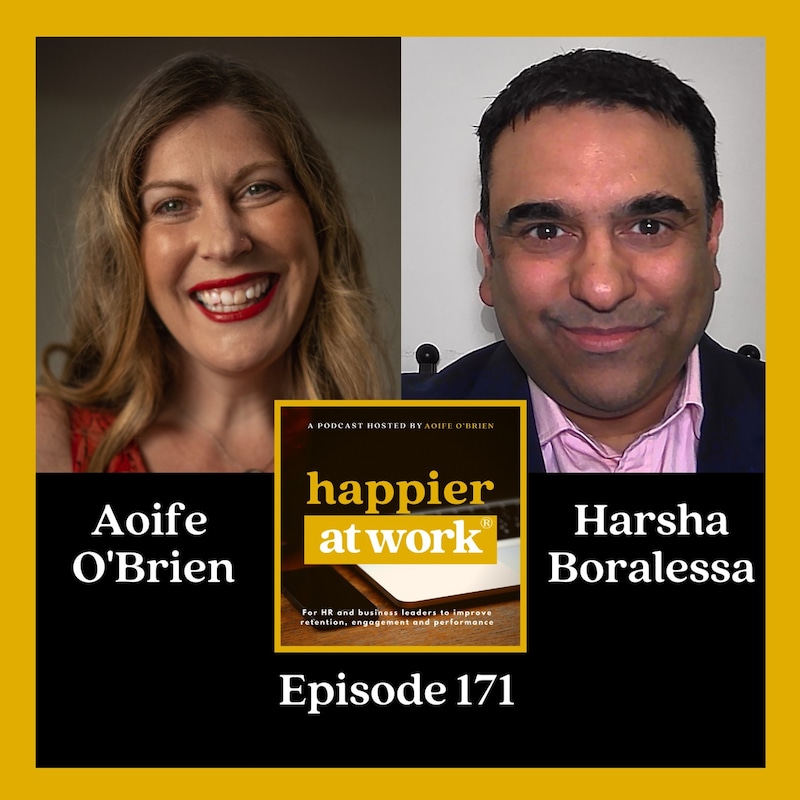
Shownotes
Do you want to be more proactive when it comes to managing your career?
My guest on the podcast this week is Harsha Boralessa of "Reframe & Reset Your Career" podcast, which was inspired by his passion for neuroscience and psychology. Harsha and I talk about how to be more strategic when it comes to managing your career. Harsha shares some practical steps you can take today to be happier at work.
The main points throughout this podcast include:
- Understanding the concept of career development and the importance of having a bias towards action
- Remaining loyal to your employer while simultaneously being open to possibilities
- Thinking about how you can stand out by asking yourself “how am I adding value to the organisation every day?”
- How your personal brand impacts on how people see you, and knowing what you stand for
- How to effectively manage perceived failure
Connect with Harsha Boralessa:
LinkedIn: https://www.linkedin.com/in/harsha-boralessa-cfa-aca-fct-62aa199/
Twitter: https://twitter.com/HarshaBoralessa
Instagram: https://www.instagram.com/harshaboralessa/
Reframe & Reset Your Career Podcast Links
Apple: cutt.ly/rrycapplepodcasts
Spotify: cutt.ly/rrycspotify
Google: cutt.ly/rrycgooglepodcasts
Reframe & Reset Your Career YouTube Channel Link
https://www.youtube.com/c/ReframeResetYourCareer
Resources:
Think Big by Grace Lordan
https://www.amazon.co.uk/Think-Big-Small-Steps-Future-ebook/dp/B08J69JSG5
SKILLDING
https://www.skillding.com/happier
Do you have any feedback or thoughts on this discussion? If so, please connect with Aoife via the links below and let her know. Aoife would love to hear from you!
Connect with Happier at Work host Aoife O’Brien:
Website: https://happieratwork.ie
LinkedIn: https://www.linkedin.com/in/aoifemobrien/
Twitter: https://twitter.com/HappierAtWorkHQ
Instagram: https://www.instagram.com/happieratwork.ie/
Facebook: https://www.facebook.com/happieratwork.ie
YouTube: https://www.youtube.com/channel/UCm0FKS19I5qSlFFmkx1YGqA
Transcripts
Harshaa, you're so welcome to the Happier at Work podcast. I know we had a brilliant conversation a few months ago and I've been excited to have this conversation on the podcast with you. Do you want to let people know a little bit about your background, who you are, and what brought you to where you are today?
Harsha Boralessa [:Well, 1st of all, thanks so much for inviting me on the show today. Yifah, really honored to be here. So I'm the founder and host of the reframe and reset your career podcast and YouTube channel. And this was inspired by my passion for neuroscience and psychology. And my aim with the podcast and YouTube channel is to really try and empower the listener and almost be a, a wingman or career coach to them and try and help them to take control of their career development and approach it in a more strategic way. prior to sort of starting down this journey, She worked for over 15 years in front office and advisory roles in Investment Banking and 2 of the big 4 accounting firms. I thought game for all 4 would have been a bit too much. So I just stuck with
Aoife O'Brien [:2. Yeah. Love us.
Harsha Boralessa [:Love us. and I'm I'm also a chartered accountant, a CFA charter holder, and I graduated from the London School of Economics. And one thing that sort of got me interested in sort of personal development was that I became interested in high performance development from a very young age through playing cricket for the Middlesex and Essex junior teams. And for those people who are not familiar with cricket, those are 2 of the top professional teams in England. So I played for them from the age of ten to nineteen, and I was actually paid to play in one match. So, technically, I'm a professional athlete
Aoife O'Brien [:with a
Harsha Boralessa [:very with a very short career. Yeah. It did. It didn't get well, but still it was it was one match.
Aoife O'Brien [:Love it. Brilliant. and I suppose it's worth sharing with listeners as well, Harsha, how we connected originally, because it's kind of a strange story. I think it was back in February that we're both announced as being part of, how do you describe it? Like, the Apple
Harsha Boralessa [:podcast, career moves?
Aoife O'Brien [:Yeah. Career moves podcasts. So I certainly checked the other day. My podcast is still there. It's, you know, slightly buried within a lot of stuff, but it has been there for almost 6 months now. so it reads lightly to have been featured in that. So in the career move section within Apple, it's in the browse section if you kind of look under career moves. And I'm pretty sure that's in UK and Ireland only. I'm not sure if it's in Europe. I'm not sure if for anyone who's listening in the States, if it would be there as well. I'm not entirely sure. But, certainly, UK and Ireland, it's there. but I think you had posted something. And then, you had been tagged by someone else, and then you tagged me in this post, and that's how we connected. We had a brilliant conversation. Then afterwards, and talked about doing something together. So I'm really excited for this conversation. something that you brought up there was about career development, and I suppose strategic career management. Do you want to talk to us a little bit about that? Because something I see a lot of is people are quite reactive to whatever is happening to them. they're seeking out opportunities in an organization or waiting to be offered promotions within the role that they're in rather than taking the reins and kind of taking really control of their career and what they want that to look like. Do you wanna kind of talk to us a little bit about the difference maybe of stepping up to to strategically manage your career.
Harsha Boralessa [:Yeah. And I think that that's a great question. And I think that is so important for so many people out there. And I think it's that difference between being passive and active and taking action. and I'm a big believer in taking action because I think people sometimes think too much and you stay in your head, which, look, clearly, you shouldn't be always making off the cuff, impulsive decisions, but I think not taking action is is not good. So I think in terms of careers, what you need to think is, okay, where do I want to be maybe in 3 years or 5 years or or even a year's time? and then almost reverse engineer and say, okay. To get to, say I'm a a a junior accountant. I want to be a senior accountant. like, what what what what is that person he or she doing? is he doing more managerial stuff? Is he doing more high level stuff? and therefore, how can I take on, those tasks and get that experience to move up to his or her position? and I think a a lot of jobs, you can actually almost look to the future and say, okay. This is what I aspire to to be or to to the role I want to get to. and then literally, reverse engineer and say, okay, these are the small steps I need to take to get to that better, situation. and it's funny. One of my podcast guests, I don't know if you've come across her, Doctor Grace Lordon. she's actually Irish and
Aoife O'Brien [:--
Harsha Boralessa [:No.
Aoife O'Brien [:--
Harsha Boralessa [:a professor at the London School of Economics. and her book is, a very well known book, called Think Big. And it's about, what and one of the things she espouses is taking these small depths. and it's very difficult to create change overnight. I so I can't go from, an accountant to being a financial director But what I can do is if I take a lot of small steps over over a period of time, there's that compounding effect and you'll approve and you'll get better. and you you never know where where life takes you. but I also think one other thing is that when you're on your journey, it's worthwhile keeping an eye o open for other opportunities because I think sometimes people really restrict themselves and actually don't look out and see what else is available. So I think clearly you have to have a path. You have to have it a goal where you want to get to. But if there's, an amazing opportunity which suddenly comes up, then why don't you take that And I think it's all about being strategic number 1, thinking about the future, taking this reverse engineer take these small steps, but also be open to new possibilities because that's especially I think in the world of work now, it's changing so much. It's a little bit like the wild west to some in certain industries. You don't really know what's happening. So I think instead of being drowned by the sea, almost try and surf the wave and use that momentum to almost drive you forward,
Aoife O'Brien [:Yeah. No. It's there's so much, I think, to to kind of unpack there. I love this idea of passive versus active, so it's about not thinking your way out of a problem, but but acting your way out of a problem. So taking action to figure out what might work or what might not work for you an example that I have from a conversation I had a number of years ago, I was doing like a free career coaching clinic type of thing for people who are looking for a new job. And this guy approached me and he said, well, you know, I want to do this thing, but what if it's a terrible mistake? What if I 2 years down the road, and it's just turned out to be a disaster. And I said, well, you know, you could stay where you are. And in 2 years' time, it's a disaster. And the time is gonna pass anyway and take that as a learning opportunity, you're not going to know in advance if something is the right move for you. until you actually make that move and figure it out for yourself. And there's always the opportunity to learn. It's not about, like, oh, I made a terrible mistake, and that my my career is over or those 2 years are kind of a write off. It's like taking what did I learn from that situation about what I like and what I don't like and maybe it's how I like to be managed or the kind of role I like to do. so, yeah, like, it's, for me, getting out of your head and and kind of taking action rather than just trying to plan your way out of it by thinking, at this idea of an aspirational role or understanding the gap between where you are now and where you want to be and how you can strategically take those steps. So Again, it kind of, an example that I have from an organization that I worked with, I mean, I left there. I I'm, like, many years ago was that now? A long time ago, but they did have very clear criteria around the competencies that were required at each level. And so as you progress, you need to have better strategic thinking, for example, and less, like, maybe when you get to that senior senior level, there was less reliance on some of the technical capabilities that were required in a lot of the more junior roles. So it's it's just kind of noticing that shift of, like, I need to be less focused on the technical side of the role, the kind of day to day role, and more focused maybe on client relationship building on strategic thinking on thinking of the bigger picture and how things in an organization interrelate or interact with each other. then there is this idea around the small steps and the pounding effect. Now I heard about that first a few years ago, but interestingly, Harsha, I'm hearing so much more about it recently. I feel like it's kind of really starting to to catch on. And it's, you know, again, maybe from a personal perspective, we often look at others and think they've had some sort of overnight success, and you don't realize all of the nos that people have had in whatever situation they're in. you don't realize everything that has gone into make whatever has happened, all of the small steps that they've taken, and then maybe one of the final small steps leads to a huge success, but actually all we see is this perceived overnight success. I'm wondering as well, about this idea that, like, if people aren't keeping their eye out for these possibilities or these opportunities, is it out of a sense of loyalty that they have 2 organizations. What do you think?
Harsha Boralessa [:I I think sometimes you're just too focused on the day to day, and the operational and just getting the job done to almost look up and see what's going on. so I didn't I mean, clearly, Look, I I don't think we're saying don't be loyal to your company. Clearly, you need to do that, but I also think that you need to be grown up in adults about the relationship you have with the company. Clearly, they're hiring you because you are going to produce more economic value then you're costing. And if you're not, then clearly, you're not gonna be there for very long, unfortunately. So I think you just have to be very realistic about the way the world is. And I and I don't think that that means that you should be worried every day about your job, but I think the the the set the the people I think who are going ahead are really thinking, how am I adding value every day? And and clearly, if you can quantify that, then it's very powerful. Now say if you're in a bank or professional services, organization, if you're a fear that you can say, well, I've helped contribute, to this, revenue stream or I've earned this amount of income in the year. So it's very easy to say, look, this is what I've earned. This is how I've contributed to it. So hopefully, either give me a a pay rise or promote me Whereas I think in some other jobs, it's it's more difficult to say how you've actually, added value. But I think there, what you can also do is try and see how you can stand out. So say if you've, written an article, maybe share that on LinkedIn or If you've learned something from your job, do a post or a a small video, obviously, clearly, you've got to run it past your company. you don't wanna be freestyling, but but but but clearly, I think
Aoife O'Brien [:-- It's like disclaimer. This is not a representation of our organization.
Harsha Boralessa [:Exactly. But but it's it's really interesting, I think, in a lot of these organizations, I I don't know if you, watch, ESPN, but I'm a big sports fan. and there, they had a big clear out of of their staff. I'm not, you know, it's just one of those things, unfortunately, there were some redundancies. But I think the interesting thing there is is that you have a lot of sort of on air talent who are actually creating their own brands almost separate to the company. So obviously, you have the platform which is ESPN, but then you have these other people creating their brands and platforms outside. And I think if you can it's it's very powerful to say if you work in media or in other industries, you can say to your either your employer or a new employer. So on LinkedIn, I have x number of followers or on Instagram, I have x number, then, I mean, clearly, you can't directly say pay me for each of my followers. but I do think that metric is very powerful. you can say to your boss, well, clearly, people know me in the industry, there's a respect for me. Maybe you've been on a a top 10 list of, you know, of 30 under 30, 40, 30, 40. Yeah. Whatever it is. mean, say for our podcast that because we're on Apple, career moves, it does give credibility and social proof to the podcast. So I think whenever there's a way of getting somebody else to, recognize you, it does give you greater credibility and I think bringing it back to the work situation. I think it's very much about trying to build your brand and really try and help people understand what it is, EFA or Harsha stands for because then even before they've met us, Hopefully, they'll get a a flavor of, you know, our work, what we like to do, what we're looking for, So I think that's very powerful.
Aoife O'Brien [:Yeah. I mean, there there's, again, there's loads I'd love to kinda dive into there with you. This this concept how am I adding value every day? Absolutely love that. I I wrote that down as kind of a a really powerful quote and takeaway because I think oftentimes where you know, in that transactional nature of work, we're looking for what work is doing for us rather than how we're adding value, but it also brought to mind the kinds of things that we think of when we think of work, we think of it in tasks rather than achievements all of the time. I'm seeing a lot of changes happening around that where people are saying rather than This is what my job entailed. It's these are the achievements that I was able to achieve or the achievements I achieved within the role that I had. but, you know, saying things, and and it's what it's the unique capabilities that you bring to a role? What are you doing differently that other people wouldn't do if they were in that same role? And really thinking about it in that way. And and I suppose that highlights what people's personal strengths are, gives them the opportunity to to kind of work to those strengths are you seeing a shift around that, around more of a focus on the achievements rather than the tasks, let's say?
Harsha Boralessa [:I I I think it's if you're the way I would look at it is say you are trying to you're getting into your appraisal. at the end of the year or you're trying to get a new job, and and you're updating your CV. I think if you can say I I've sort of brought in a a new client or I've generated this amount of revenue, then I think it's a much easier conversation to have with your boss or your new employer. Because rather than saying, okay, I can I I can do these skills, which clearly you need to be able to perform certain tasks. but I think if you can focus on your achievements, it's it's a bit more, I think, objective. And then you can say, look, this is what I've done. This is maybe the revenue I've earned, or these are the clients I've worked with, and I think it's a much more objective measure. and then it's easier, hopefully, for the employer to get compare you with other people as well when they're either because, you know, how it is in the review situation, there's only a finite amount of, income to be distributed amongst. The bonus
Aoife O'Brien [:the bonus part or the the salary increase part is is limited.
Harsha Boralessa [:Correct. Yeah. And and and I think also if you're, an employee going into your manager, you also have to be aware that clearly, look, he or she cannot primate everybody. They cannot give everybody a a a massive pay rise. So you you unfortunately, you're you're sort of fighting amongst, you know, a group of people. and what you want to do is make sure that when your manager is fighting for you, he or she can say, well, this is what Eifa or Harsha has done which is, completely different from other people. So I think that's a very, very powerful thing. And, actually, one comment somebody was telling me once is that Sometimes it's the people who are fight that the the employees who are almost being difficult and always talking about promotion and salary. they're the ones who get rewarded because sometimes they're just a real pain. So he just wants to give them something to
Aoife O'Brien [:-- What's the term? The the squeaky wheel gets the grease? So if you talk about it and complain about it enough, and I've so many examples of that, both in a business and and work context, as well as in my personal life. The people who kinda talk about the things, like, are the ones that that kinda get rewarded just to shut them up sometimes. You know, you've been talking about this enough. I'm gonna give you that promotion, but kind of one thing that I noted was about making your boss's job easier when they're talking about you. by providing them with that information and saying, here are the actual results that I've produced. And I know certainly in my early stage career, it was really to think about what those things might be. As I grew in my career, it became a little bit easier. I was managing very specific revenue amounts in a saturated kind of market and, and in a really competitive market as well and managed to grow by 1% which sounds like not very much money, but actually when you're talking in the millions, then it it turns out to be quite a bit of money. And that was compared to that other teams who were negative, you know. So, I think if you can put actual numbers on that, now you know, not everyone is client facing necessarily, but if you can relate what you do on a day to day basis to the impact that it has on the business, whether you're saving time, whether you're saving money, whether you're making money, whatever that might be, efficiencies that you've produced. So time is a huge thing at work, I think, especially in this day and age of back to back meetings and not having enough time to get your actual work done. Harsha, the other thing I wanted to come back was this concept personal brand, and I can totally see that from a, from a perspective of sports and people building their own personal brands. I'm seeing a lot more people, not necessarily on the back of their companies, but getting their names out there and being associated with that organization that they work with, and being really high profile on places like LinkedIn, mostly LinkedIn, actually, but I never thought about it from the perspective that you can kind of use the number of followers you have as leverage for commanding a higher salary or trying to negotiate a better title or whatever that might be. but it's a really interesting perspective, and I'm definitely seeing a lot more of, of people establishing their personal brands. Any thoughts around that or any ideas for to share around what people could do to build their personal brand or think about what that might look like for them.
Harsha Boralessa [:Well, I think start start thinking about it from the, the recipient's perspective. So if you're posting something, try and think how can I how can this add value to that, viewer or reader? Because clearly, they have a limited amount of time. And by looking at your article or your post or your video, they have committed something to that. and what you don't want to do is upset them that they take on something and they think, oh, this is a bit it's so great, basically. So I think start off from that perspective, think, okay, if I'm gonna produce something, think about the value that I'm adding. Now it doesn't have to be an original post. It could just be I'm sharing something. it could be, oh, I saw this great, podcast interview with Epho, Brian, and Harsha Bharatas. and you're sharing that. and then that that might add value to somebody. So, I think it's about trying to firstly look at look at who's gonna be consuming the content and try and add value to them, but also just get stuff out there. And I think at the beginning, it is hard to come up with original content. It's it's not easy. I would find if I if I didn't do the the podcast and have interviews, I would find it hard to come up with original content but because it's there, it's relatively easy. You can share your interviews or your videos. Yeah. But I think for people who are at at work, think about, okay, the industry I'm in, are there any interesting, views that you have maybe that are counter to the the the industry norms. And I'm not saying go completely wacky because, obviously, you don't want to destroy your credibility. Yeah. But I do think that it's the people who think counter intuitively. I find it's it's they're they're quite, almost prescient. They're looking into the future. because I think if you it's one of those things where if you do the same thing as everybody else, you'll just be within the pack. So I think it's it's really trying to think, okay, how can I stand out but in a an interesting sort of way and think almost a little bit counterintuitively, it's like with stock picking, if you're buying the same stocks as everybody else. You might as well just buy a a tracker fund. Why do you need to think slightly differently? And that's where you come up with a real magic ideas.
Aoife O'Brien [:I wanna put a caveat there and be like, this is not investment advice.
Harsha Boralessa [:Yeah. And of course. Yeah. Yeah. Of course. Of course. Yeah.
Aoife O'Brien [:I just thought I'd get that in there
Harsha Boralessa [:as well.
Aoife O'Brien [:now there's a few things I'd love to say about that. well, the first thing is about having the podcast Like, for me, it's to make it accessible and to make it practical for people. So when they listen, they're gonna do something differently as a result. And I don't expect people to go in and implement, like, 10 different changes or whatever, but it's right thinking one small thing that you can do differently. Going back to your earlier point about compound effect. So make one small change, and maybe you listen to the episode again and you make another change, or you take something different from it. I love the idea of thinking about it from the recipient's perspective, that people have invested their time. So it better be worth their while to read whatever it is you're saying. I think it is hard when you first get started. I think it's quite intimidating as well. you think that no one's gonna read your stuff. You think what do I have no one's gonna want to listen to me. Everyone has those fears, by the way. This is not just, like, exclusively to certain people have those fears. Everyone, if you're thinking that, if you're thinking that everyone or if you're thinking that you don't have anything important to say, everyone feels exactly that same way, I think, maybe it's not all the time, but they certainly feel that at times. So for me, I think one of the things to get started, like you say, so sharing stuff of giving your own perspective on, well, I read this, and this is what I took from myself, or I read this, and I actually, I don't agree with that point. I think maybe try this instead, or something like that. But then as you build up your confidence, you can start sharing a bit more of your own original stuff then as well. Like, I love it when people comment on my things and either they challenge what I've said or they'll add something else or a fresh perspective or something that I haven't thought of. And I think it's a way for everyone to learn and to to share and to grow as well. this idea then of having those views that are unique or that go against the norm, essentially, I'm seeing loads of that on LinkedIn, and they are, like, you know, he did a LinkedIn course a couple of years ago, and he very much encouraged that type of stuff. Like, it's obviously needs to be genuine. It can't be just like like you say, kind of wacky off the wall. Lose your credibility. It does need to be from a genuine place. So, like, this is something I do really believe. but I see this opportunity in the market where everyone's talking about this one thing, but actually have you considered that that might not be the right thing to do and you're doing something slightly differently but that lends itself to people having a unique voice and building a personal brand around that unique voice as well.
Harsha Boralessa [:And actually, the one thing I I just wanted to add was that say, for a lot of our listeners, they're looking for jobs or, they're finding it difficult to maybe move on. clearly they've submitting your CVs and maybe they're getting no no response or they're going for interviews and being rejected. And one thing I think is very important, which I learned from a a sporting perspective, is this whole idea of managing failure And I think, I mean, clearly, you don't want to get used to not doing well, but I think, say with, you know, interviews. you might only a all you need is one to go well. So it could be that you've gone for 20 or 30. but but you always have to keep saying to yourself, it could be that the 21st run or the 31st run or the 101st one. and the same with applying for jobs, it's almost like saying to yourself, bend reality. And, okay, things aren't going well, but all I need is one person to give me a job offer. All all I need is one interview to go well, and the rest of my life will change. And I found it's it's really sad because I remember when I I was, grad graduated from university, I spoke quite a while trying to get that first, a graduate training contract with an accounting firm. And, you know, I I thought I interviewed well, but I was struggling for for whatever reason. And then I I managed to get, a job with 1 of the big, big 4 accounting firms. And my interview was no better or worse than, the previous however many I had before. and I was no better or worse a candidate. It's just that sometimes things work out for you. and I'm a big believer in lock and serendipity. but it's one of those things where you almost have to give yourself those at bats or the chances, to, you know, if you're not applying and you're not interviewing, you have absolutely no chance of getting the job. So I think it's about reframing the whole thing and saying to yourself, okay, it's really a numbers game. it's like we're networking. You don't know how many people you have to meet for that, contact to actually turn into something. but I think if you have a mindset of, say, with networking, you're not doing it in a transactional way, you're just doing it in a fun way. and I suppose, say, for for the 2 of us when I was, writing that pace, attacking you, I didn't think, oh, Ethan's gonna have me on her cost.
Aoife O'Brien [:Yeah. Yeah. Yeah.
Harsha Boralessa [:I was just I was just trying to make sure that I've got everybody's name in.
Aoife O'Brien [:Yeah. It was, like, it was so inclusive. That's what I loved about it. It was, you tagged literally everyone who was who was part of that. I think there was, 20 in total -- Yeah. -- podcast that were included in that list. so I was delighted because I had no idea that I had been part of it. So yeah, Apple certainly didn't tell me. They might be listening now.
Harsha Boralessa [:Can you send me an ice cream?
Aoife O'Brien [:Yeah. Yeah. Absolutely. but that's so interesting. This idea of managing failure ties in with what we were talking about earlier as well about this, like, taking those small steps and not all of the steps are positive, not all of the steps will be perceived as a success, but actually, that's not what people see. People don't see the failures. People don't see the reject and people don't see the interviews see that you've been promoted, they see, you know, this is what people see, and there's a huge focus on that. And and, you know, I suppose the purpose of this is to share with people, like, There is loads of other stuff going on behind the scenes that you don't necessarily get to see about what happens with people. It's not an overnight success. It's not suddenly someone has just appeared out of nowhere, and there is a whole lot of stuff that's that's kind of going on behind the scenes, and some of that can include failure And it's really important to manage that mindset around failure as well. And, what what have I heard over the years, first attempt in learning and all of this kind of stuff I'm trying to take, the word failure out of my language, really great reframe on one of my previous podcasts guess. He calls it a setback rather than a failure. And I just think, isn't that so interesting? So failure kind of It assumes that there's either a successor or failure. So it's a binary outcome, successor or failure, a setback implies that you're on a journey, and this is just something that sets you back on your journey a little bit, and you maybe need to change direction. You might need to try something else, whatever it might be, but I'd love that reframe from a failure to a setback.
Harsha Boralessa [:Yeah. No. No. Definitely. And and and I think, yeah, it's it's sometimes it's it's a thing life doesn't make sense when you you're living it. It's only when you look back, you think, oh, wow. and I and actually, when I look back on the accounting firms that rejected me. Funny enough
Aoife O'Brien [:2
Harsha Boralessa [:of them gave me offers afterwards. Yeah. When when I was grad, I had had been, qualified as an accountant. and I actually worked at one of them. So so it's it's funny how these things and I I was no best for a worseer candidate. Yeah. And and and the really funny thing is with with the interview with the first one, Eva, there was just this massive piece of luck because, you know, it was one of those sort of, like, interview days where you have lunch and you do the interview, and then you have a assessment sort of thing.
Aoife O'Brien [:And but you think secretly are watching how you interact with other people.
Harsha Boralessa [:Totally. Yeah. And and the funny thing is that the, so I was I was eating my lunch, and I thought being interviewed by by somebody else. And the lady I was talking to her as a manager, was just having a normal chat because I don't think I'd I don't really need to impress her. I I can just talk. And then I started talking about some random subject, a classical music, and I know nothing about classical music, but I knew a little bit more than her.
Aoife O'Brien [:And she
Harsha Boralessa [:was really impressed. and then I thought nothing of it, and I went and went to sort of to the person who I thought was gonna be interviewing me. And then when I got to the interview room, I found out it was the lady who I was speaking to about classical music. weird, yeah, weird bit of luck serendipity, whatever. It's funny how these things work out.
Aoife O'Brien [:It is. It is. And I love, like, it was Steve Jobs described as when you you connect the dots when you're looking backwards, but you can't connect the dots when you're looking forwards. And I suppose bringing into a career management perspective and and what we've been talking about, you, like, rarely be in 5 years time, probably be in 10 years time. I I hope they've stopped asking that question in interviews because oftentimes we don't know. There could be a brand new role that no one's ever heard about that we're doing in 5 years' time. And maybe it's thinking about the next moves that you're going to make or the next 2 to 3 years that this is where I aspire to be and what is the gap to get there because you can't anticipate into the future what those dots are going to kind of take you. Maybe it's, again, luck and serendipity and and opens up and what presents itself for you for those opportunities? And and what would you say yes to and what would you say no to? And if you're like Richard Branson, say yes, and then figure out how to do it later.
Harsha Boralessa [:But but but I think it's also about talking to people and talking to as many people as possible. because you will definitely get not not just ideas, but I I just think by the idea of, talking to somebody you're articulating what's in your head. And actually, that's not a very easy thing to do. So say if you come up with a new idea, I I had this thing where they said, try and explain it to somebody else because if you can explain it to somebody else and then ask them to repeat it to you. That gives you a much better way of thinking, okay, does this make sense? and and say with your career, if you're talking about your aspirations to somebody, when you're saying, okay, I want to be, I don't know, working in a a tech giant, okay, how do you get there? you know, what are the skills you need? Because you can't suddenly go from, you know, doing YouTube videos to, working for a massive tech giant without obviously you have to get experience. So it's really just thinking about what are the moves you need to make to, progress. and and and actually just, speaking to people and sometimes this idea of speaking things into existence. Now I'm not I'm never sure how how accurate that is. But I do think that if you go deep into a a topic and you do really you learn about it and then talk about it to other people, then you're almost putting it out into the world that, okay, I'm I'm a pot these are the guests looking for, and then maybe it could be that that person you're speaking to is the right person, or he or she knows somebody who, who would be a great guest for you. Now there's a trivial example, but I think there are so many of those things that, you know, maybe you're working in a particular area of law or particular area of tech or whatever it is. I think it's just about increasing those number of of our bats, increasing those number of conversations,
Aoife O'Brien [:and
Harsha Boralessa [:I think increasing the chances that good things can happen to you. you just never know.
Aoife O'Brien [:Yeah. I love that idea of articulating what's in your head and asking someone then to repeat it back to you because I think it helps us to understand how we're communicating as people. I have a very clear idea in my head of what it is I want to when I explain it to other people, it comes out in a slightly different way every time I speak to someone different, which gives me kind of more enlightenment as around what it is that I really want. but I've never asked them to explain back to me to see how how they're receiving what I'm articulating. And I think that's that's actually a really interesting step that maybe people could take, even articulating what it is that you want in your career, what does that next move look like trying to understand how you're being perceived by other people. I think is is really important step for managing your career because oftentimes the intention that you have in your head is not necessarily the action that you take or it's not perceived in in the same way as you intended. And I love this. again, this comes from research that you, we judge other people by their actions, but we judge ourselves by our intentions, not our actions. So we don't judge other people by their intentions, but we judge ourselves by our intentions. So it's about kind of leveling the playing field around that. understanding more about what your intentions are. I another thing that occurred to me is that you might want to go from being a YouTuber to joining a tech giant, but you might change that goal along the way, and that's okay. You know, you might take steps towards that goal. Realize that it's not for you or you change direction or another opportunity comes up, it's okay too, if that happens. this idea of speaking things into existence, I think, yeah, verbalizing what it is that you're doing in any context helps. I think it helps when people understand what it is that you're trying to achieve and who they can connect you with because really at the end of the day, it's all about connection and, you know, working with other people and and things like that. Like, that's for me, what I what I live for is connecting and and collaborating with people.
Harsha Boralessa [:Yeah. No. And and I think if you think that people can't read people's minds. So you need to help
Aoife O'Brien [:them as
Harsha Boralessa [:much as yeah.
Aoife O'Brien [:Sometimes I feel like Instagram can't read my mind where the ads of the shows me, but that's another story for another day.
Harsha Boralessa [:Exactly. me. But so I think make it as easy as possible, for somebody else to help you. I mean, clearly, your opening gambit shouldn't be high if it could give me a job, or can you promote my podcast? But I I just think it's when you meet somebody new, there's a an American psychologist called Doctor. Robert Chardini, who wrote influence. Yeah.
Aoife O'Brien [:Yes.
Harsha Boralessa [:So he he talks about it on my list.
Aoife O'Brien [:I still haven't read it, but it is on my list.
Harsha Boralessa [:It it it it's it's a great book. but but essentially that he has these 6 principles. But, you know, he says when you meet somebody, try and find these commonalities. So if Did you go to, a particular university? Do you like a particular type of food? And then when you establish that link on this very trivial basis, it helps you to build that relationship. And it's it's always funny. I think if you can have that link, whatever it is, you know, we're we're quite tribal and we like people who like similar things to ourselves. You're almost giving them a bit more of a a chance, and you're you feel a bit warmer to them. So I think it's all about, you know, when people say, oh, I go to these, events and I can't meet anybody. I know, like, I'm I'm an introvert. I don't know about you, but -- Same. Yeah.
Aoife O'Brien [:Yeah. as well.
Harsha Boralessa [:Yeah. But but I've managed to create a persona where in that you can go and speak to people because you have to. Otherwise, you can't get on in the world. So you just go and and just try and be nice and, you know, listen, you know, ask ask questions because I think everybody has something interesting to say or an interesting fact It's but it's up to you to try and find that. You have to make the effort and you can't rely on them to almost give that to you. So I think when you're at, a a networking event or drinks party, yeah, just don't put too much pressure on yourself to say I'm trying to meet a couple of nice people. if I can connect with them on LinkedIn, that's great, but no big deal. because I think sometimes people think, okay. I've got to, you know, find my next, job or, meet my next part there or whatever it is. It's just too much pressure.
Aoife O'Brien [:Yeah. Yeah. Yeah. Luke, that's your earlier point, you know, show up and and have fun. Essentially, I'm here to have a bit of fun. but it's absolutely been brilliant chatting to you, and I can't believe how quickly the time has past, Harsha. the question I ask everyone who comes on the podcast, what does being happier at work mean to you?
Harsha Boralessa [:I think in the in the jobs that I've been where I've really enjoyed it, it's about 1, I think your boss and your team. you obviously have a good relationship with them. I mean, clearly, the the there is, respect. They but both ways, and they've created a safe environment but there's also accountability. You're given tasks. you know, what goals you have to hit. and clearly, if you don't hit them, that's not a good situation, but I think you're almost pushing yourself harder because you have that good relationship with your boss and your team and you don't want to let them down. Also, I think having a safe space where if things go wrong, you want people to flag them up to you immediately. So if I'm leading a team or I'm working with, people on the podcast who are helping with social media or whatever, all I say is, look, yeah, things will go wrong. That's just the way of the world, but just tell me as soon as you know, don't try and, you know, sweat on it too much. because it could be a very straightforward thing, which I could help you with. and I and sometimes I think people try to sit on things for too long And I I look. I'd be guilty of that as well. So I think as soon as there's a problem, just flagging up and hopefully, your boss or your teammates will be able to help you out with it.
Aoife O'Brien [:Brilliant. Love that. And if people want to connect with you, you know, give a shout out to the podcast or or what's the best way they can connect with you?
Harsha Boralessa [:Yeah. So I'm on, LinkedIn. I'm on Twitter. obviously, the podcast, reframe, and reset your career. it's on Apple Podcasts, Google, Spotify, you know, basically all the big brands. And I also have a a YouTube channel interesting enough also called reframe and reset your career. So, basically, it's re reframe and reset your career everywhere. But actually, what I what I'd really like to do is develop this into more, like, almost reframe and reset your life because I do think so many bits of career bleed into our personal development.
Aoife O'Brien [:Totally. And
Harsha Boralessa [:actually, you can take a lot of the same ideas and concepts from your career and put them into your personal relationships on vice versa. because because ultimately it's all about dealing with people. And I think really trying to understand what it what it is that other person is trying to get out get out of, not the relationship, but how can you help them with their life and make their life better? and I think looking at it from that perspective, it just makes it much easier with the relationship.
Aoife O'Brien [:Yeah. Yeah. Yeah. No. Love that. Love that approach. So thank you so much for your time today. I absolutely loved this chat, and we could probably talk about this for another couple of hours, but, I'm looking forward now to recording on your podcast as well. And, yeah, thank you so much for your time.
Harsha Boralessa [:My pleasure. And thank thanks so much, you for inviting me.






