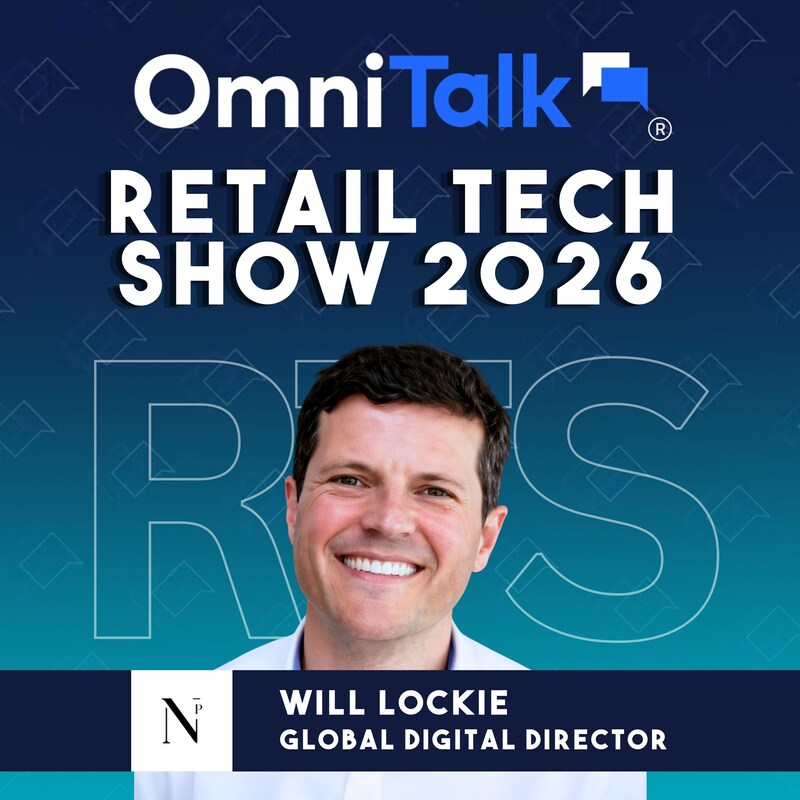
Shownotes
Luxury retail is not about faster conversion. It is about deeper connection.
At Retail Technology Show 2026 in London, Chris Walton sits down with Will Lockie, Global Digital Director at Noble Panacea, to explore how luxury brands approach digital differently, from storytelling and discovery to personalization and AI.
Will shares why high-consideration products require more investment in education and emotion, how brands should think about AI as a tool for real-time personalization, and why the future of retail lies in creating one-to-one relationships across both digital and physical environments.
He also explains what Western retailers can learn from China’s accelerated commerce model and why execution, not strategy, is where most brands fall short.
Key Topics Covered:
• Why luxury brands invest more in discovery and storytelling
• The role of education and emotion in high-consideration purchases
• Why execution matters more than strategy in digital retail
• How AI will enable real-time, personalized customer experiences
• The shift toward one-to-one relationships in retail
• What Western brands can learn from China’s commerce ecosystem
• Why marketplaces and mobile-first experiences dominate in China
• How brands should rethink their operating models for global markets
Thank you to Vusion for supporting Omni Talk Retail’s live coverage from Retail Technology Show 2026.
#RTS2026 #RetailTechnologyShow #OmniTalkRetail #LuxuryRetail #Ecommerce #DigitalTransformation #CustomerExperience #AIinRetail #RetailInnovation #Vusion
This podcast uses the following third-party services for analysis:
Podcorn - https://podcorn.com/privacy
Transcripts
Hello, everyone.
Speaker A:Welcome back.
Speaker A:It is Omnitalk Retail.
Speaker A:I am Chris Walton and we are coming to you live from the retail technology show in London from the Fusion podcast studio.
Speaker A:And joining me now is Will Locky.
Speaker A:Will is the global digital director of Noble Panacea.
Speaker A:Will, welcome to omnitalk and start us off by telling us about yourself and also about Noble Panacea.
Speaker B:Yeah, thank you very much.
Speaker B:It's great to be here.
Speaker B:It's great to be the show today.
Speaker B:Super busy and loads going on.
Speaker B:Yeah, there is, yeah, super brief about me yet.
Speaker B:Digital director at Noble Panacea.
Speaker B:We are a luxury skincare brand founded on pure science and technology.
Speaker B:Actually, the technology is super interesting because it's all based around nanotechnology.
Speaker A:Okay.
Speaker B:So, you know, the themes of the show today have all been about facing towards the future.
Speaker B:Right.
Speaker B:And we're quite aligned to that.
Speaker B:So that's super interesting for me.
Speaker B:Really briefly.
Speaker B:Wow.
Speaker B:Like 20 years in.
Speaker B:In commerce, retail, tech, product data and marketing.
Speaker B:I've kind of my career spanned pretty much I've sold pretty much most things.
Speaker A:You have?
Speaker A:Yeah, it's pretty.
Speaker A:It's pretty wild.
Speaker A:I mean, like, yeah, you've got Adidas, Diageo, Porsche, all on your background, right?
Speaker B:Yeah, I've worked agency side some of those brands.
Speaker B:I've worked client side.
Speaker B:The last few years in my career have been focused mainly on luxury brands and that's where I am now.
Speaker B:What I really enjoy about that side of things is the challenges that come with selling.
Speaker B:Basically goods that are more exclusive have a longer consideration cycle, they're harder to sell.
Speaker B:So it's more of a challenge, basically.
Speaker B:That's what I enjoy.
Speaker A:It gives you something else.
Speaker A:I think the other thing that's cool about it from.
Speaker A:It gives you something else to like work towards or speak to your customer about other than price too.
Speaker B:Right.
Speaker B:So, yeah, 100%.
Speaker B:So what is fascinating and kind of one of the things I've learned most is in my career lately is when you're selling, when you're selling products that have like high consideration that might engender high loyalty, you have to sort of go the extra mile when it comes to discovery, education, building, desire, emotion.
Speaker B:So all of the things that kind of like traditional retailers just go straight in for the sell, you have to focus on these things as well.
Speaker B:And that's like where I think it's really interesting in terms of storytelling and the amount of effort that luxury brands put towards the sort of the upper funnel of the traditional journey is super interesting.
Speaker A:Right?
Speaker A:Yeah, yeah, that's A really good point, too, because, you know, then that's why the margins are the way they are in luxury, because it costs more to do those types of things to get the products into the hands of people.
Speaker B:Yep, to a certain extent there's that.
Speaker B:But then it's also the other interesting challenge is sort of like the.
Speaker B:The price value sort of argument and how you as a brand, you know, express that.
Speaker B:And that's also interesting how that comes across in your storytelling, your brand.
Speaker B:So I've always really enjoyed that side of things, and I think that's why I'm more attracted to luxury brands.
Speaker A:Yeah, spoken like a true retailer.
Speaker A:Spoken like a true retailer.
Speaker A:All right, so I'm curious, with all that in your background, you know, you know, specifically, like, you're enjoying luxury, I'm curious, is there anything that, you know, moving across all these different types of product categories in your career has taught you that, say, if you had stayed specialized in one area, particularly you think you would have missed as you look back on your career?
Speaker B:I think what I've learned, I think this is an interesting topic because I think being curious around, like, what are the common ingredients?
Speaker B:Like, what you're basically saying is, is there a common set of ingredients or a common set of learnings throughout the career?
Speaker B:I think, yes, yes, there is.
Speaker B:There is, 100%.
Speaker B:Because, like, there are common challenges that all businesses and brands face.
Speaker B:We all face.
Speaker B:And that's why shows like this are great, because we will come together and talk about them and learn.
Speaker B:Right.
Speaker B:But I think that, yes, there is a common set of ingredients around common challenges.
Speaker B:But I think what's different is.
Speaker B:And where it becomes interesting is every business brand has a different story to tell, has a different sort of, like, nuance to that set of ingredients.
Speaker B:And it's often quite interesting and a challenge to figure out, okay, for a given brand, a given product in a given market, what are the specific things that are really going to sort of move the needle here?
Speaker B:Because it won't be the same as the last business that I worked in, for example.
Speaker A:Might not be the same as last year.
Speaker B:No, exactly.
Speaker B:And, yeah, and things move super, super quick.
Speaker B:Yeah, I probably say a yes, common set of ingredients, like, always.
Speaker B:Like a good principle I've always had is, like, really being brilliant at the basics.
Speaker B:And what I mean by that is, you know, like, does this business have, like, strong org setup?
Speaker B:Does it have strong trading, merchandising, strong product?
Speaker B:Does it have a good understanding of unit economics?
Speaker B:Does it have a strong brand that engenders Loyalty, does it have the content and storytelling?
Speaker B:There's a bunch of things that I think would fall into the common ingredients category.
Speaker B:But I often think, and often witness where it can, where work is most often required is in the execution because that's often where you see things.
Speaker B:Because you can have a great plans, you can have a great brand, a great story to tell, but if you don't execute it perfectly in the customer's eyes, you can lose them, you could lose trust, you could get something wrong in that moment.
Speaker B:And I think that's where it becomes interesting.
Speaker A:Do you think that's particularly more important in the digital space too?
Speaker A:In the digital sphere of retailing?
Speaker B:I actually think you get more leeway in the digital space, a little bit more forgiving because you can basically test and experiment so much quicker.
Speaker B:And that's the beauty of digital, is that we can endlessly test.
Speaker B:That's great.
Speaker B:That's harder to do in the physical retail environment, of course.
Speaker B:So I think you do get a bit more, you can move quicker, so you can test more, you can move quicker, which means you could give, you could give you a slightly different experience but only show it to a smaller percentage of your customers, therefore less risk.
Speaker B:So I think, yeah, that's one thing.
Speaker A:To think about, more leeway in the digital sphere for those reasons.
Speaker A:Yeah.
Speaker A:All right.
Speaker A:So you know, you got me thinking too.
Speaker A:So you know, AI, we're at this, we're at this retail conference as well.
Speaker A:Retail tech conference, talk of the town.
Speaker A:For sure.
Speaker A:You've described in the past luxury brands as potentially facing particularly challenges, particular challenges in the AI E commerce landscape.
Speaker A:For sure.
Speaker A:Noting that.
Speaker A:And I think you said something to the effect of.
Speaker A:As I was doing my research, brands should focus on audience led content that works across multiple challenges.
Speaker A:What does that exactly mean when you said that?
Speaker B:I think, I think that refers to, actually to the point I made earlier about like, think about like the discovery journey for a brand and think about high consideration purchases.
Speaker B:And what I've learned is that yes, the amount of effort that you put into that discovery education piece needs to be very high.
Speaker B:And I think that audience led means obviously putting out content that is relevant to your audience.
Speaker B:Right.
Speaker B:This is as simple as that.
Speaker B:Where I think it's going and where I think we like and hear people talking at the show and brands and technology providers.
Speaker B:Where I think it's going is updating in real time based on intent and a certain level of understanding about the customer and whether that's like in a physical store or in the Digital store.
Speaker B:We just simply have to do a better job of understanding that intent in real time and then adapting the experience or content based on that.
Speaker B:So, for example, I'll give you a really simple example.
Speaker B:You're a brand new visitor to a store, and whether that's an online storefront or a physical storefront, we don't know you.
Speaker B:Therefore, let's give you an experience which is a nice, easy introduction to the brand.
Speaker B:Here's some content.
Speaker B:This is who we are.
Speaker B:But if we recognize you and you've given us permission to adapt the experience, because who wouldn't like that to be have a more personalized experience, then we should be adapting in real time and give you content that's more relevant to you or an experience in the store that's more relevant to you, which is obviously going to be.
Speaker B:Welcome back, sir.
Speaker B:How are you?
Speaker B:Like, I can see you've been looking at this.
Speaker B:Would you like to try this?
Speaker B:How are you getting on with the last product?
Speaker B:So it's very, very simple, but we're not there yet and we should be.
Speaker A:Yeah.
Speaker A:So.
Speaker A:Well, I want to push on this topic a little bit more too.
Speaker A:So like, you know, and I've never had a chance to ask somebody this, but, you know, when you think about luxury, you know, and you think about the premium position that goes along with it and everything you're talking about in the sphere, like the content that's associated with it, the provenance of the products themselves as an example, does luxury get adversely affected by the fact that more and more consumers will be interacting with chatbots to discover what it is they want, or will they actually be the beneficiaries of that activity in the long run?
Speaker A:Because it has those things associated with it and tied to it already.
Speaker A:Like, what's your take on that?
Speaker B:Hmm, that's an interesting question.
Speaker B:I don't think, I don't think luxury as a broad category is going to be very different to others in the sense that everybody needs to understand this is now a discovery, mechanism or method for customers, regardless of a new way.
Speaker A:To educate yourself, find products.
Speaker B:Right, exactly.
Speaker B:So I don't think it necessarily will be treated any differently, but I do think there's a nuance in the depth and the experiences that you're going to provide.
Speaker B:That might sound a bit vague.
Speaker B:I mean, I'll give you a good example, like my best example at the moment that I saw recently, if you look at the new Brunello Cuccinelli website, fully adaptive immersive experience, which goes to you Know, it's endless, it's pageless, right.
Speaker B:Endless pages, endless discovery.
Speaker B:Right.
Speaker B:And I think that's a really nice example and I think good on them for giving that a go because it's really brave, right?
Speaker B:Really brave to do that, but it really gets across instantly.
Speaker B:A feeling about this brand has incredible heritage, amazing design, amazing provenance, to use your words and, and a great story to tell.
Speaker B:And I've only literally looked at the first page of the website and that's sort of like there what's happening is it sounds a bit fluffy and I was talking about this earlier, but there, the experience is becoming part of the product.
Speaker B:And that's where, particularly luxury brands, if you look at luxury hospitality, for example, that's a great area to investigate around this.
Speaker B:They go to enormous lengths to give you an amazing experience.
Speaker B:And I often think, well, what if like retailers who aren't necessarily in luxury hospitality, what if they took some cues from the lengths the luxury hotels and resorts go to, to provide you amazing service in real time?
Speaker A:Right?
Speaker B:Yes.
Speaker B:Yeah, that's an interesting topic.
Speaker A:Yeah, that's, that's really, yeah, you got me thinking too, is like, you know, you know, with, in the luxury space particularly, you know, where they have such affinity with their consumers.
Speaker A:You know, where do you, where do you invest your, you know, eggs in the AI basket, like you say, like in the example you gave, do you invest on it, you know, on your own website and your own apps to provide the same features and functionalities that you get through an LLM, let's say, and versus like going into the sphere of the LLM themselves and making sure that you're showing up there in the right way and you're doing research versus, you know, because then you're opening yourself up to competitive dynamics, right, in the search sphere.
Speaker A:But, you know, if you're, you know, on your own site and they're searching that way or they're talking to you in a new way, new language that the LLMs provide, that's a different experience.
Speaker A:And so you know, which of the, which of those two, you know, win out which of the two is the right way to invest?
Speaker A:Those are the types of questions I think, you know, that would be on my mind.
Speaker B:And I think about, I think on those two areas, right?
Speaker B:So the, there's one which is your point around researching in LLMs.
Speaker B:Right?
Speaker B:Okay.
Speaker B:The moment, all I see, you know, you see AEO answering, that's just SEO.
Speaker B:I'm sorry, I'm sorry.
Speaker B:Come on.
Speaker B:That's vendor talk.
Speaker B:It's just SEO.
Speaker B:It's always has been create good content that would engage with your audience.
Speaker B:Fine, do that.
Speaker B:Where I would invest more effort to.
Speaker B:Your second point is around figuring out how are we going to get this customer, whether it's in online or physical environment, give them a one to one personalized experience.
Speaker B:If I have the necessary permissions.
Speaker B:And there I think like in the physical environment, we're not too far away from the world where you check into a store, basically you check in, you give a bit like when you go on a website and you accept the cookie bottom box.
Speaker B:I give you permission to basically track me, track me endlessly, everywhere.
Speaker B:By the same token, I see a world where you check into the store.
Speaker B:Okay.
Speaker B:And then we know who you are, we know your history and maybe it's an earpiece, maybe it's a device.
Speaker B:The colleague will know more about you in order to give you a better experience.
Speaker B:It's fairly simple.
Speaker B:But we're still not quite yet.
Speaker A:We're getting closer.
Speaker B:We are getting closer.
Speaker B:There's a ton of clientelling.
Speaker B:That whole area is super interesting.
Speaker B:And I think once you've joined up sort of offline clientelling with online data, use agents basically to feed that data to the colleague in real time.
Speaker B:And that's the key part, real time based on signals intent, whether that's signals from online or your behavior in the store, that's where it's going.
Speaker B:And I think just adapting in real time your online experience, the offline experience and using agents to speed up and feed that information to the right person, that's where I see the wins.
Speaker B:Because what I know is as soon as you can get into a one to one conversation with a customer, that's where sort of the magic happens.
Speaker B:And I don't know, I mean my best example of that, what I've also learned in my career, I don't know if you've ever shopped in China, for example.
Speaker A:I was going to ask you about that next.
Speaker A:That was going to be my last question.
Speaker A:I wanted to get your perspective on that.
Speaker B:So when you go shopping in China, that's when you suddenly realize, you know what happens.
Speaker B:The journey's vastly shortened.
Speaker B:Everything's in app, right?
Speaker B:So straight to mobile.
Speaker B:You shop in a store in China, one scan, you're in the CRM, you've paid and now you're in a one to one WeChat with the sales assistant in the blink of an eye.
Speaker B:And so I think of that model and I think why aren't we there?
Speaker B:Why aren't we there yet?
Speaker B:Why aren't we there?
Speaker B:Yeah, and we probably are in some places, but I think that for me is a model because it's so fast, it's so consumer friendly.
Speaker B:Now a couple of things there like data privacy.
Speaker A:Right.
Speaker B:So it's different in China.
Speaker B:Right.
Speaker B:So you have to understand that so they, so they can speed it up.
Speaker B:But I still think as like a mental model for like just engaging directly one to one.
Speaker B:That's my sort of, sort of North Star experience that I think, well, that's what brands should be aiming to do because every sales assistant out there in physical retail land will tell you as soon as you can get a customer into a one to one trusted relationship, they'll stick with you if you can provide them the right service.
Speaker B:So I think that's interesting.
Speaker A:Yeah, yeah, we had Harrods saying the same thing, you know, on the customer service side.
Speaker B:So.
Speaker A:Okay, so you know, let me get you out of here on this then.
Speaker A:So I'm curious because, and it's just very unique for me because, you know, generally speaking I interview mostly US based retailers and oftentimes they don't have that much China experience.
Speaker B:Okay.
Speaker A:And so since you brought it up, I'm curious, is that your answer to, you know, what is the one thing that you think is most critical for brands going into China to understand or know to be successful?
Speaker A:Like what is that?
Speaker A:Is it that quickness of the relationship or is it something else?
Speaker B:I think the interesting thing is to mentally undo all your learning that you've had from the west because those rules do not apply in China and you have to basically go in with an open mindset of what I know does not apply here.
Speaker B:Therefore what I have to do is, is engage with the market, engage with the experts on the ground, people in the market and work the way that they do, which is completely different.
Speaker B:And it's that kind of adjustment.
Speaker B:The idea of building a website, getting a vendor to help build a website, then doing this and that's all gone, that doesn't exist.
Speaker B:Everything's on a marketplace.
Speaker B:Your e commerce agencies are helping you trade on marketplaces and that's where the effort goes on the online side of things, on the offline side of things, there is more similarities.
Speaker B:But the journey that I just described, everything in app, payments, in app, they've gone straight to mobile wallet.
Speaker B:So therefore at any given moment I know where you are, what you last bought, who you're chatting to.
Speaker B:There's again data privacy, hypercharged.
Speaker B:But I think, yeah, I think that's the most fascinating thing about that market is the consumer journey's massively shortened.
Speaker B:The way that you operate in that market is completely different to the West.
Speaker B:So you need to go and adapt your business model, whatever it is, your marketing, your operating model, whatever it is for that market.
Speaker A:Yeah.
Speaker A:Awesome.
Speaker A:Awesome.
Speaker A:Well, thank you.
Speaker A:Thank you very much.
Speaker B:It's a great conversation.
Speaker A:Yeah.
Speaker B:Very good.
Speaker B:Fun.
Speaker A:Just two guys chatting retail.
Speaker A:It's great.
Speaker A:That's why I love what I do.
Speaker A:So will Locky, the global digital director of Noble Panacea.
Speaker A:Thanks for joining us.
Speaker B:It's been a pleasure.
Speaker A:Yeah, thanks to the thanks to Vuzion and to the Retail Technology show for sponsoring our coverage of the conference all week long.
Speaker A:And behalf on on behalf of all of us at omnitalk, as always, be careful out there.