Shownotes
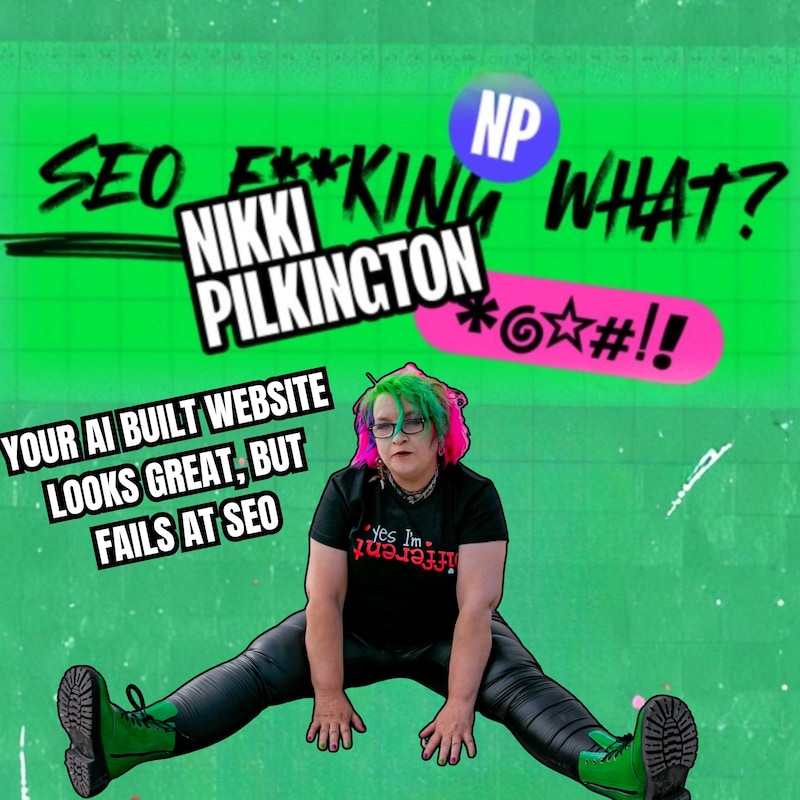
Hi, I’m Nikki Pilkington. My site is https://nikki-pilkington.com/ and in this episode of “SEO F**king What” (the third and final part of the AI Website series) I pull back the curtain on why so many AI-built websites may look perfect on the surface yet fail spectacularly when it comes to SEO.
Drawing on 30 years of search experience and a recent audit of five B2B AI-generated sites, I explore the hidden problems lurking in headings, meta titles, robots.txt, sitemaps, schema, site performance, and trust signals—issues that even non-AI sites can suffer from if you don’t know to look!
Whether you built your site with AI or not, this episode is packed with practical advice for anyone wanting to get found and make money online. Listen in to find out what’s really going wrong beneath the gloss and how you can fix it.
I cover these things, and more:
- Issues with homepage H1s
- Website SEO and sitemap issues
- Common schema issues on websites
- Identifying site publication issues
- Importance of a human SEO audit
Follow Nikki:
LinkedIn: https://www.linkedin.com/in/nikkipilkington/
Instagram: https://www.instagram.com/nikkipilkington/
Bluesky: https://bsky.app/profile/nikkipilkington.bsky.social
Transcripts
Your AI built website looks perfect, professional,
Speaker:fast, modern. Underneath all of that is
Speaker:sending Google and other search engines completely the wrong
Speaker:signals. Let me show you exactly where it's going wrong.
Speaker:This is SEO Fucking What? I'm Nicky, 30 years in
Speaker:SEO and I've seen a lot of things that look fine on the surface
Speaker:and are an absolute fucking mess underneath.
Speaker:I help small business owners and marketing directors get found on
Speaker:Google and other search engines and make money from their websites.
Speaker:Today is part three of our AI website series
Speaker:and this is the one where we get into the detail of what really
Speaker:goes wrong. I audited 5 AI built
Speaker:B2B websites in April 2026. Same
Speaker:methodology across all 5. And the problems I found
Speaker:consistent enough and specific enough that I think you
Speaker:need to hear them whether you used AI to build your site or not.
Speaker:Because some of this stuff, it's not just an AI problem, it's
Speaker:a. Nobody told me to check this problem. So let's get into
Speaker:it.
Speaker:First of all, the H1. The H1 in most
Speaker:of the sites was doing absolutely nothing for
Speaker:SEO. Every single site I audited,
Speaker:five out of five, not one exception.
Speaker:Your H1 is the single most important on
Speaker:page signal search engines use. To understand what
Speaker:a page is about, it should tell them what the page
Speaker:covers and who it's for. On every AI built
Speaker:site I looked at the homepage H1 was a
Speaker:brand statement or a piece of conversion copy, a
Speaker:strong line, a clever hook, something that sounds great when you
Speaker:read it out loud, but means absolutely fuck all to a
Speaker:search engine. And yes, that includes AI
Speaker:search. There was a leadership consultant whose
Speaker:H1 talked about transformation, a SaaS product with
Speaker:a witty one liner about why their competitors customers were losing
Speaker:deals. A freelancer whose H1 was a
Speaker:provocation designed to resonate emotionally with their
Speaker:target client. One site where the H1 was just
Speaker:a brand name, nothing else. And these are all
Speaker:reasonable creative choices. Some of them work
Speaker:really well as copy. None of them are
Speaker:search signals. The thing that makes this particularly
Speaker:annoying is that AI accepts whatever you give it
Speaker:without questioning whether it works for search. You
Speaker:bring Your brilliant tagline, AI puts it in the
Speaker:H1 and nobody flags that. It's invisible to search.
Speaker:A human SEO would push back. AI
Speaker:just builds, go and check yours right now.
Speaker:It's usually the line at the top of the page, the title of
Speaker:the page. If you're not sure, right click your homepage
Speaker:view Source search for H1. Is it something a
Speaker:potential customer would type into Google? If it's
Speaker:your slogan or tagline or clever words or something
Speaker:you thought of at 3 o' clock in the morning that you're particularly proud of,
Speaker:it isn't going to help you in search.
Speaker:And then the heading structures underneath the H1s were broken
Speaker:in four out of five sites. The problem isn't just what the
Speaker:headings say, it's what heading levels have been used and why
Speaker:the H2s jump into H4s. H4s appear
Speaker:in navigation menus before the H1 has even appeared in the
Speaker:document. H5s used for pricing tiers with no
Speaker:logical parent heading above them. Footer links coded as
Speaker:H3 tags. This happens because AI picks
Speaker:heading levels based on how things look rather than what they
Speaker:mean. It sees something that should look like a subheading,
Speaker:gives it a smaller font size, assigns it in H4 and
Speaker:moves on. Search engines don't read the visual
Speaker:output, they read the code. And when the code is saying
Speaker:that your navigation label is more important than your page content,
Speaker:that's a problem.
Speaker:And then we had meta titles, where meta
Speaker:title tags were used as a branding exercise, not a search
Speaker:signal. In four out of five sites,
Speaker:the meta title tag is what appears in Google search results as
Speaker:the clickable headline for your page. It's often the first thing
Speaker:a potential customer sees before they've visited your site.
Speaker:On four of these sites, it led with the brand name and followed it with
Speaker:a tagline that wouldn't match any realistic search
Speaker:query. Your meta title, sometimes called the
Speaker:SEO title, should tell someone scanning search results
Speaker:exactly what the page is and whether it's relevant to what they
Speaker:searched for. Getting it wrong doesn't just affect
Speaker:rankings, it affects whether someone who does find you
Speaker:decides to click. Nobody configured the
Speaker:robots text properly. Four out of five sites,
Speaker:two had no Roblox text at all. Two had one that was
Speaker:actively causing problems. One site had a
Speaker:conflict between Cloudflare managed directives blocking AI
Speaker:crawlers and manual rules trying to allow them.
Speaker:Except the Cloudflare section took precedence. So the
Speaker:manual rules were being overridden before they could take effect.
Speaker:The owner thought they fixed it. They hadn't. The site was
Speaker:still blocking ChatGPT, Flexity and others,
Speaker:and nobody knew. Another site's robot text
Speaker:had directives that search engines don't recognize as valid, which was
Speaker:flagging the file as malformed and dragging down the site's technical
Speaker:SEO score. One site that got this right
Speaker:went out of its way to explicitly permit AI crawlers,
Speaker:which was a deliberate and sensible choice given what the product does.
Speaker:That level of intentionality requires a human
Speaker:we then looked at the sitemap and the sitemap was either missing
Speaker:or full of pages that shouldn't be there. Two had
Speaker:no sitemap at all. On one site the sitemap was at a non
Speaker:standard URL that crawlers wouldn't find automatically,
Speaker:and the robot's text was pointing to a different sitemap URL
Speaker:that returned a 404. On another, every
Speaker:URL in the sitemap was showing a last modified date
Speaker:from years earlier, regardless of when the page was actually
Speaker:updated. And here's the one that comes up constantly on non
Speaker:AI sites too. Category and tag pages indexed
Speaker:and included in the sitemap. These are auto
Speaker:generated index pages with no unique content.
Speaker:They exist to organize posts in the content management system,
Speaker:not to rank for anything. Having them in Google's index
Speaker:creates unnecessary duplication and dilutes the crawl
Speaker:budget available for pages that matter. Your
Speaker:sitemap should be a curated list of the pages you want Google
Speaker:to find on most of these sites. It was a full
Speaker:inventory of everything the CMS had ever generated.
Speaker:The schema was broken or missing entirely on
Speaker:every site. 5 out of 5, and this one has some
Speaker:genuinely spectacular individual failures.
Speaker:One site had no structured data anywhere, not a single
Speaker:schema block across the entire site. One
Speaker:site had article schema on every blog post, which is right,
Speaker:except the schema had been written incorrectly.
Speaker:One site had article schema on every blog post, which is the right
Speaker:idea, except it had been written incorrectly.
Speaker:Google's rich results test confirmed it couldn't pass any of
Speaker:it. Every blog post on that site is ineligible for article
Speaker:rich results, not because the schema is missing, but because the
Speaker:implementation is broken in a way you'd never spot just by looking at
Speaker:the site. One site had software application
Speaker:schema on its homepage with the price field set to zero. The
Speaker:product isn't free, it has a monthly subscription. The schema
Speaker:was telling search engines the product costs nothing. Another
Speaker:site had article schema applied as a global template to
Speaker:every page, including the pricing page. So search
Speaker:engines were being told a page designed to convert paying customers was
Speaker:a piece of editorial content. The pattern
Speaker:is consistent. AI treats schema as something
Speaker:to attempt rather than something to get right. The
Speaker:intent is sometimes there. The understanding isn't.
Speaker:In all the sites I looked at, mobile performance was
Speaker:significantly worse than desktop. Desktop
Speaker:scores were generally okay. Mobile scores were a different story
Speaker:story render block in CSS third party scripts
Speaker:loading before they're needed. Images search at far larger
Speaker:dimensions than they're displayed at. One site that
Speaker:particularly stuck with me had a single waitlist signup
Speaker:form embedded on the homepage. That form was
Speaker:loading a full React application, a CSS framework,
Speaker:and a recaptcha integration on every page load
Speaker:whether or not the visitor ever scrolled to it. Moving that form
Speaker:to its own page or loading it lazily so it only fires when someone
Speaker:reaches it would fix the mobile score almost
Speaker:entirely. AI embedded the form. It
Speaker:didn't consider what the form was bringing with it.
Speaker:And then we have trust signals. Trust signals were present
Speaker:in the structure and only every site.
Speaker:Generic author bylines with no biography or credentials.
Speaker:Testimonials with no names, no company names, nothing
Speaker:verifiable Author avatars using the brand logo
Speaker:instead of a photo of an actual person. Privacy
Speaker:policies hosted on Google Docs Blog posts with no
Speaker:author information beyond a name and a date. Google's
Speaker:EEAT framework places increasing weight on being
Speaker:able to verify who created content and whether that person
Speaker:has genuine credentials. AI builds the
Speaker:container for trust signals, but it doesn't fill them with
Speaker:anything a skeptical prospect or Google could actually
Speaker:verify, because that's a human job.
Speaker:And on every one of these sites, nobody had done it.
Speaker:And then there were the one off findings. These are the
Speaker:ones that made me stop and reread my notes. One site had
Speaker:been built using an AI tool that generated three complete
Speaker:design directions for the client to choose from, which is a
Speaker:sensible idea. The problem is that when the chosen design
Speaker:went live, all three layouts went with it. Only one was
Speaker:visible to visitors. All three were in the HTML. So what
Speaker:looked to a visitor like a clean single page site looked to a search
Speaker:engine like a page with three identical H1s and the same
Speaker:content repeated three times on the same URL.
Speaker:Another site had both the WWW and the non
Speaker:www versions of every page live, live and
Speaker:accessible, with no redirect between them, no canonical
Speaker:tags, no idea which one was authoritative.
Speaker:That single structural issue was responsible for for the majority
Speaker:of the error count in the crawl. What looked like dozens of
Speaker:separate problems was one problem multiplying across
Speaker:every URL on the site. Another site
Speaker:had published over 100 blog posts, and the vast majority of them
Speaker:carried the same publication date. Dozens of posts on
Speaker:completely different topics, all dated the same day, all
Speaker:live, simultaneously. Search engines noticed that
Speaker:the site that drops a huge volume of content in one batch
Speaker:looks very different to a site that builds a content library
Speaker:steadily over time, particularly when the site is
Speaker:relatively new and hasn't yet established any authority.
Speaker:So that's what's going wrong? And I want to be clear. None of these
Speaker:things are things you'd spot just by looking at your site. They're
Speaker:invisible unless you know where to look, which is exactly
Speaker:the fucking problem. In a moment, I'll give you the
Speaker:practical steps to start checking your own site, whether it was AI built or
Speaker:not. First, a quick break.
Speaker:Here's what I want you to do. First of all, check your
Speaker:H1. View your source on your homepage, search for H1 and ask
Speaker:yourself honestly whether what's in there is something a potential customer would
Speaker:type into Google. If it's your tagline or something a bit
Speaker:vague, fix it. I'm sorry. I'm sorry you're proud
Speaker:of that tagline? I'm sorry it's the best line you've ever written. I'm
Speaker:sorry you want everyone to see it. Even if Google ranks you for
Speaker:it, no one's searching for it. Get rid of it. Put it somewhere
Speaker:else. Test your schema. Go to Google's rich results
Speaker:test, put in your URLs and see what comes back. If there are
Speaker:errors, they need fixing. If there's nothing there at all,
Speaker:schema is worth adding. Check your canonical tags.
Speaker:Use the SEO metaring one click browser extension. It'll show
Speaker:you those in seconds. The canonical tag on your homepage should point
Speaker:to the exact URL you want Google to treat as authoritative,
Speaker:including whether it has www or not, whether it has
Speaker:a trailing slash. If it's pointing somewhere else or is missing
Speaker:that needs sorting. Check your Cloudflare settings.
Speaker:If your site's on Cloudflare and was set up after July 25th,
Speaker:you may be blocking AI crawlers by default without knowing it.
Speaker:Go into the Cloudflare dashboard and check. Whether you want them
Speaker:blocked or not is your call, but it should be a decision you made,
Speaker:not a default you inherited. And then, I'm
Speaker:sorry, but get someone like me to look at your site properly. That's
Speaker:not because AI has done a fucking terrible job.
Speaker:Probably hasn't in lots of ways, but the things
Speaker:AI misses are specifically the things that are
Speaker:invisible without knowing where to look. A
Speaker:proper SEO audit will tell you what needs attention and in what
Speaker:order. AI built sites are getting better.
Speaker:The design output is already strong, the
Speaker:structural foundations are broadly solid, and some of the commercial
Speaker:content I saw was genuinely impressive.
Speaker:The gap is in the layer between the site works
Speaker:and the site is properly set up for search. And right
Speaker:now, closing that gap needs a human.
Speaker:So that's a wrap on the AI website series. I've always
Speaker:wanted to say. That's a wrap. If you've been listening to all three
Speaker:parts and you're now looking at your website slightly differently.
Speaker:Good. That was the point. Follow SEO
Speaker:fucking what? Wherever you're listening so you don't miss what's coming next.
Speaker:And if you want me to look at your site and tell you exactly what's
Speaker:going on underneath the surface, find me in the show notes.
Speaker:Until next time. Get found. Make money.
Speaker:Stop assuming your website is fine just because it looks
Speaker:fine.


