Shownotes
This conversation doesn’t sugarcoat anything. The auto industry is under real pressure, and leaders can’t afford denial or delay.
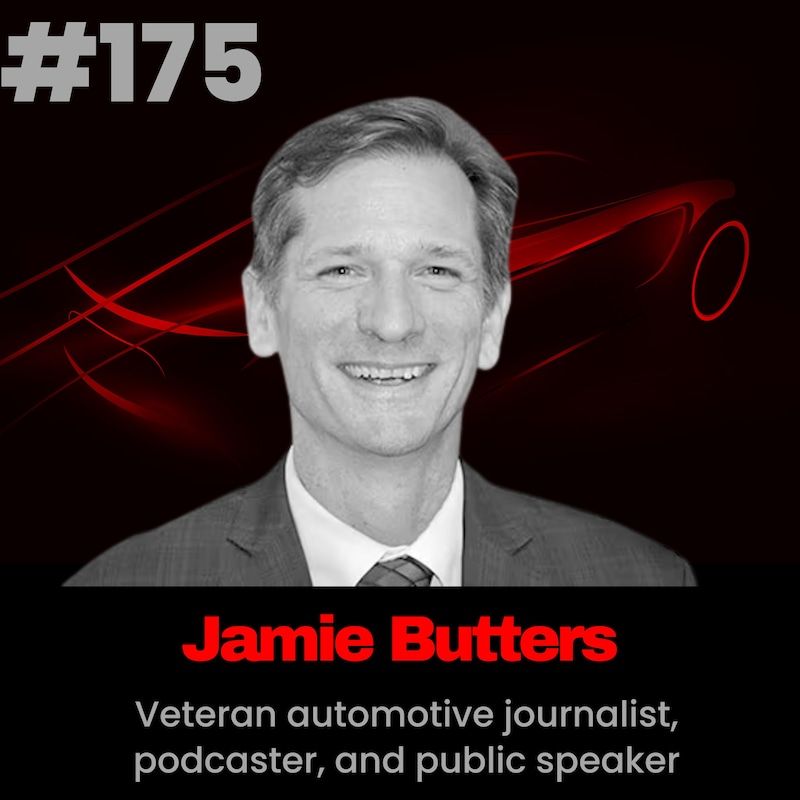
In this episode of the Automotive Leaders Podcast, Jan Griffiths sits down with Jamie Butters, now an independent journalist, speaker, emcee, and content creator who has spent decades reporting from every corner of the automotive ecosystem.
Jamie brings a clear, grounded view of where the industry stands at the start of 2026. China’s competitive advantage is no longer theoretical. Affordability is becoming an existential issue. Tariffs and geopolitics are injecting uncertainty that freezes investment. AI is everywhere, but leaders still struggle to separate real value from noise.
They unpack why legacy automotive culture slows decision-making, how bespoke thinking drives unnecessary cost, and why speed is now a leadership requirement, not a nice-to-have. The conversation also digs into Tesla’s influence on manufacturing thinking, the future of dealer AI tools, and what’s at stake as the UAW heads into a pivotal leadership year.
This episode is about reality. Not hype. Not fear. Just the hard truths automotive leaders need to face if they want to compete, adapt, and lead with courage.
Themes Discussed in this Episode
- Why China’s scale and speed threaten global incumbents
- How affordability became automotive’s silent crisis
- Where AI delivers value and where it quietly creates waste
- The cultural cost of bespoke thinking in legacy organizations
- Tariffs, uncertainty, and their chilling effect on investment
- What UAW leadership changes could mean for competitiveness
- Why speed of decision-making is now a core leadership skill
Watch the full video on YouTube - click here
This episode is sponsored by Lockton, click here to learn more
Featured Guest
Jamie Butters is an independent automotive journalist, speaker, emcee, and content creator. He previously served as Executive Editor and Chief Content Officer at Automotive News, Detroit bureau chief for The Wall Street Journal, and automotive editor at Bloomberg. Jamie is known for connecting the dots early, telling the truth plainly, and translating complex industry dynamics into language leaders can actually use.
About Your Host – Jan Griffiths
Jan Griffiths is a champion for culture transformation and the host of the Automotive Leaders Podcast. A former automotive executive with a rebellious spirit, Jan is known for challenging outdated norms and inspiring leaders to ditch command and control. She brings honesty, energy, and courage to every conversation, proving that authentic, human-centered leadership is the future of the automotive industry.
Mentioned in this Episode
Episode Highlights
[02:08] Jamie’s move to independence and why now is the right moment
[04:51] Why China’s competitive threat feels distant in Detroit but isn’t
[07:47] Affordability, regulation, and how the industry boxed itself in
[13:29] The hidden cost of bespoke thinking in the supply base
[17:20] Tesla’s influence on China’s manufacturing mindset
[18:30] Using AI where customers don’t see it but value it
[25:03] Tariffs, uncertainty, and frozen investment
[31:03] What’s at stake in the next UAW leadership cycle
[36:18] Why speed of decision-making defines modern leadership
Top Quotes
[05:24] Jamie: “It's a real challenge when you're competing with players in an economy that is not a capitalist market economy. They have different motivators; they have different factors that determine who survives. And so, it's a really asymmetric competition. ”
[08:24] Jamie: “ They really never made money on small cars. Being able to focus on the bigger ones, it's more profitable, it's less good for the environment, and it does make it harder for low to middle-income people to buy a new vehicle. ”
[14:54] Jan: “If you change the process but you’re still feeding it with legacy thinking, what have you really achieved?”
[18:50] Jamie: “You should focus where you have the most cost and where the consumer doesn’t really know or care how you get it done.”
[25:17] Jamie: “Just having those threats continue to come really paralyzes investment.”
[36:14] Jan: “Speed is everything. The way we make decisions, how we make decisions, the speed of those decisions.”
If this episode resonated, share it with a fellow automotive leader and subscribe to The Automotive Leaders Podcast, where we’re shaping the future of authentic leadership in the automotive industry.
This podcast episode is also available on YouTube. Check out our YouTube channel at Jangriffithsautomotiveleaders
Send us your feedback or questions — email Jan at [email protected].
Transcripts
[Transcript]
[:Stay true to yourself, be you, and lead with gravitas, the hallmark of authentic leadership. Let's dive in.
This episode is brought to you by Lockton. Rising benefit costs aren't inevitable for you or your employees when you break through the status quo. Independence matters, it means Lockton can bring you creative, tailored solutions that truly serve your business and your people. At Lockton, clients, associates, and communities come first, not margins and not mediocrity. Meet the moment with Lockton.
Today, we have a very special episode of the Automotive Leaders Podcast. We are thrilled to have in the studio with us Jamie Butters, and most of you will know Jamie. You will know him from his vast experience. He is a veteran automotive journalist. He is the kind of guy that connects the dots early for us in this industry and then tells the truth plainly. He has worked for Bloomberg, he has worked for the Wall Street Journal, and Automotive News. And now, you are..
[:[00:02:14] Jan Griffiths: That's great. Going independent. Now, I know what that feels like. It's a scary move, but also tremendously exciting.
[:[00:02:39] Jan Griffiths: Yeah, and I've seen you MC a lot. I know that you lead a lot of panel discussions, so there's many different avenues that you could really take this.
[:[00:03:22] Jan Griffiths: And you've gotta put yourself in the shoes of the audience. And that's something that I really like the way that you do that. And really, you've been doing that your entire career, whether you are speaking or whether you are writing, you are always thinking about the audience and what they need to know about the auto industry.
[:It goes back to basic communication theory. If I can't get the idea from my head into your head, I've failed as a communicator. So, you have to think about what does that person know? What are their expectations? What do they need to know and how can I explain it to them?
[:[00:04:51] Jamie Butters: It is a really pivotal time for the auto industry in the US, in North America, and globally. Obviously, you've got this whole China issue. And the China auto industry is very scary to Europe and the North America and the Japanese and Korean established automakers because they're so competitive, their products are really good, their costs are really low, but almost all Chinese automakers are losing money. They have a severely over capacitized market that they want to take care of by dumping their cars on the rest of the world. It's a real challenge when you're competing with players in an economy that is not a capitalist market economy. They have different motivators, they have different factors that determine who survives. And so, it's a really asymmetric competition. And one of the many, just for the one example to start with of the many threats that the industry is facing this 26.
[:[00:06:26] Jamie Butters: Absolutely, 100%. And it's one of those situations where, you know, Jim Farley can experience it, but getting it through the ranks of Ford Motor Company, of General Motors, of all these companies, it's really hard without some exposure.
I haven't been to China for several years. I don't always feel like it's a welcoming place for journalists, but when I've been to Latin America over the last several years, like you said, you see them everywhere, Costa Rica, in Argentina. You see them very preponderance, 'cause they're cheap, and they're mostly not electric cars. They're mostly not plug-in hybrids. They're cheap, dirty, little gas cars, but people can afford them, and that's what they drive.
[:[00:07:24] Jamie Butters: Yes, to be honest.
[:[00:07:47] Jamie Butters: We have done it before, but it was really forced by regulation. When you had a more traditional cafe, and I merely mean like pre-Obama cafe standards, then you needed a certain number of small cars. You needed to sell some small cars. And so, then you had cheap, affordable cars to compete with the Japanese mostly. And then, later, the Koreans.
Over time, that changed and you could just make fewer and fewer small ones as long as your big vehicles got a little more efficient each year. And that has skewed the outcome. It's lowered the overall efficiency. And it's been very beneficial to the industry, right? They really never made money on small cars. Being able to focus on the bigger ones, it's more profitable, it's less good for the environment, and it does make it harder for low to middle income people to buy a new vehicle. They were really seeing a paradigm shift where it's always been more focus on the top quartile, the top quintile, but it's really becoming a stronger emphasis.
But at the same time, vehicles are becoming more durable. They're more upgradable with over the year updates. There's a lot of well-meaning handwringing about the length of new car loans. And if you're talking about an average person, an average new car buyer, a luxury car buyer making 150 and buying a new car every three years, and then they wanna keep their payments below a thousand dollars or around a thousand, so they start stretching out their loan and they come back less often. Fine, but big picture, you're gonna see more people at the top buying the new cars, but then increasingly high quality vehicles in the used market. And so, the person who would've been buying an entry level Malibu is gonna be the second or third owner of maybe a nice Mercedes or a Tahoe, but they will have something that the software keeps getting upgraded. Even the hardware could get upgraded and improved, and they're just built to last so long.
One of the numbers I feel like gets misinterpreted, misunderstood the most is the average life of a vehicle. And of course, it always goes up. You change some, depending if we have a huge production gap or whatever, but the average life of vehicle gets to 12 years, 12.8. And then, people will talk about it that, oh, people are keeping their vehicles for 12 years. No, that's not it. What it really means is that 25 years ago, we started making cars that are running out now. So, everything that's been made since then is going to last at least 25 years, maybe longer, because they keep getting better at making cars. And so, they're gonna last long time. They couldn't cost a lot, but you can spread out those payments and you're going to have something more valuable at the end of your five or eight or 10 year loan.
[:[00:10:44] Jamie Butters: They'd sure love to, and and a lot of American consumers would like it too.
[:[00:10:48] Jamie Butters: I remember, talking to my nephew before the election, he is like, why won't Joe Biden let me buy a cheap Chinese car? I want a $10,000 car.
[:[00:10:55] Jamie Butters: I said, it wouldn't be 10,000 by the time it gets here and it gets our safety and all that, but it could be cheaper. But the safety concerns about privacy, about societal safety, I think, are legit. When you saw the way that China treated Tesla, not allowing their cars to use their full functions if they were near government property, and in China, there's a lot of government property, really, was like, why? Why would you do that? Unless that's what you're planning to do, right?
[:[00:11:24] Jamie Butters: And we know how much data there is, and we just had this battle over control of TikTok, but it's our cars and it's millions of cars. It's just a real challenge that needs to be worked out, whether it's a technological solution or some other safety solution. Market protections can work for a while, but they're eventually gonna break down, whether it's Trump inviting a Chinese automaker to build a factory here.
[:[00:11:49] Jamie Butters: Or it's just like overwhelming consumer demand for $20,000 small EVs or plugin hybrids.
[:[00:12:23] Jamie Butters: Like the Japanese did. Like the Koreans did. Like the Germans did.
[:[00:12:28] Jamie Butters: First of all, the president says a lot of things. Sometimes, they lead to action. And sometimes, he says them and then does the opposite, or says the opposite a few days later. You never know, but I think you're right. If they come in in one way or another, over time, they're going to bring their own suppliers that they know and trust.
And one of the things we alluded to just briefly in the conversation yesterday. One of the big advantages China has is basically everyone buys off the shelf parts. So you have this massive scale opportunity of such. You know, this giant market, whether it's 20 million or 30 million vehicles, they're all going to use the same seat heaters. They're all gonna use the same seating rails. A lot of just common parts are truly common, and as opposed to here, in all the other countries and not just beating up on the Detroit three, but they want everything bespoke from their tier ones. And that just adds cost and reduces scale. And it's a structural inefficiency for the traditional automakers.
[:Another example that I thought of was when Jim Farley announced that he had seen the light, basically, after he had driven the Xiaomi. And it was ecstatic, he talked about it publicly. And then, they talk about the new universal truck facility and the type of manufacturing design that they're changing. They're changing the assembly process and the design. So, okay. All of that's good. So you change the design, you change the way that you assemble the car. Great. But what about all the other decisions and all the other functions that go along with that?
As you know, my background is purchasing and supply chain, so I think I immediately go to purchasing. So if you change this process, now it's agile. Whatever agile really means to you, but okay. So it's agile, it's fast, it's efficient. Great. But then, if you are feeding it with a purchasing organization and a supplier organization, that's still stuck in legacy thinking, what have you achieved?
[:But it's the first time China did it, the China way, they still, they had to go slow. So, anyway, I think it's fair there's a learning process, and hopefully, they're sharing that learning and their new agile processes with their key suppliers in the hopes that will emanate throughout the industry, or at least throughout their own supply network. But it's, you're right, the challenge of culture change is not just for General Motors and Ford and Stellantis, it's for everybody throughout the industry.
[:The one thing that we know how to do in Legacy Auto Line is we know how to build cars, but they looked at it the other entirely different way. They started with a clean sheet of paper and they looked at it through the eyes of more of a technology. And more of a something that carries technology.
[:[00:17:19] Jan Griffiths: Absolutely, yes.
[:[00:17:31] Jan Griffiths: This episode is sponsored by UHY. Did you know suppliers now spend 157 hours on an average RFQ and still face the same roadblocks as 20 years ago? UHY and the Center for Automotive Research, break it all down in their new white paper. Get the insights and see what's really changed in 2025. Download your copy.
There's a link in the show notes.
Yeah. That's why I like listening to Terry Woychowski from Caresoft, because he comes from General Motors. He understands that legacy environment, but he's also worked on tearing down all the Chinese OEMs, and he has example after example. He'll talk about wire harnesses, how the Chinese have a wire harness that's much smaller in size and weight, and yet legacy, we still start from our old legacy way of thinking, but anyway, I guess we talked enough about that.
[:[00:18:56] Jan Griffiths: Exactly.
[:[00:18:59] Jan Griffiths: Yeah. Talking about Tesla. Wow. What about that announcement that came out this week? What do you think about that?
[:I mean, you saw it, you've heard it in the messaging before, and the investors, clearly the value of the stock is not based on their auto company especially in the current environment where sales are falling, lack of government support, especially the inability to sell credits, which was hugely important for Tesla's profitability and survival up to this point. And now, he's just pushing all his chips in and flipping the auto company over to AI. They're gonna do robots and robo taxis and create a world of everlasting abundance. They say.
[:[00:20:22] Jamie Butters: You're gonna stop in next quarter.
[:[00:20:23] Jamie Butters: Yeah.
[:[00:20:24] Jamie Butters: No.
[:[00:20:29] Jamie Butters: Yes. I mean, I would hope any supplier on those models is working on other things. They're pretty low volume models at this point. Yeah. Hopefully, that impact isn't so great, but you're right, that's very abrupt. And he also talked a lot about, as they go into these new businesses, especially humanoid robots. It's building a supply chain. And of course, the ability to ramp up is limited by whoever is the, what do you say, the least capable or the least lucky of the thousands of players, 'cause sometimes you have bad luck and sometimes you can overcome it, but whatever is your limiting factor, you've gotta have all the pieces.
[:[00:21:28] Jamie Butters: Yeah, I think there's some other questions. I chatted with Colin Langan from Wells Fargo, before we spoke, before the panels, and he was raising the question with all the intermingling of his companies. The Tesla investing in xAI and I guess Space X is investing in xAI too. And it's like, well, if xAI is the source of the brains and all the decision making and that's all the value of the robot, then what do you own as a Tesla shareholder? You're just a contract manufacturer?
[:[00:22:00] Jamie Butters: Welding, putting pieces together?
[:[00:22:02] Jamie Butters: or the other things? So now, there's been some speculation, oh, maybe they'll merge or merge all the companies or merge some of the companies. It's messy and I'm sure he'll try to find a way to engineer the maximum capital from the markets possible. And how that gets packaged up, but that is something worth watching.
[:[00:23:45] Jamie Butters: Maybe we'll work it out.
[:[00:24:22] Jamie Butters: I mean, I have thoughts about this year.
[:[00:24:25] Jamie Butters: Especially this year, because we have a trade truce with China. Trump and Xi negotiated the truce that kind of brought an end, we thought, to the Nexperia drama on those diodes and such. But the problem is, it was a one year truce, and we continue to see reports about export restrictions out of China. So I think we're gonna continue to see challenges there. They're supposed to meet in the spring, Trump and Xi, and maybe they'll have a grand bargain of some sort, or we'll see. Or maybe somebody gets offended by something and it goes south, but to your point, okay, we have a deal with Europe and the UK and then we slap, you know, threaten new tariffs and then back 'em off, threaten new tariffs against Canada, back 'em off, threaten new tariffs against Korea and back 'em off. You don't see the markets moving that much because they assume the taco thing, but just having those whipsaw, having those threats continue to come really paralyzes investment.
[:[00:25:22] Jamie Butters: And we've had announcements of investments, more announcements than investments, because you never feel like you're on solid ground and you can have enough clarity to really go forward. There are investments being made. I'm not trying to say it's dishonest or anything, but the plans that are announced are all contingent and they roll out over time and we'll see what actually comes of them all. There've been some wins, but we know, there's not been great job creation even though GDP's been strong and manufacturing jobs are down. Maybe these are hiccups, but adding tariffs and adding chaos are neither of those are good for manufacturing like stability.
[:[00:26:10] Jamie Butters: That is, I was just gonna say. Especially, 'cause with our closest partners, and it's been so important to the industry over these decades to have, as some call it, fortress North America. And the combination of skills and resources that Canada, the US and Mexico bring. And I've heard Paul Thomas has said, he thinks that Trump is more likely to do two bilateral deals rather than a trilateral deal. Trump has then said himself, he's thinking about that. We'll see. I do think it would be a real negative for the industry if they have to have two separate deals. They'll figure it out. Of course, they always do. The purchasing departments always figure stuff out, but it will be more expensive and less efficient.
[:[00:27:33] Jamie Butters: Yeah. And the relations with Canada have been so unusually tense.
[:[00:27:41] Jamie Butters: Whether it's the talking about getting Canada the 51st state, or just so much hostile rhetoric. It's been surprisingly, given all the border issues and how that really started his first campaign was very much about the border with Mexico. He's been really aggressive and abrasive with Canada, which is so bizarre for those of us in the auto industry, 'cause it's here in Detroit, especially Detroit and Windsor, are like two brothers. And they work together in parts and trucks and components, and vehicles go back and forth across our bridges and tunnels all the time. It's so strange being in Michigan, being here now for 25 years, to hear this kind of talk about Canada.
[:[00:28:33] Jamie Butters: We touched on it a little. I think, you know, it's still adapting to AI and figuring out the proper uses. Like you said, my experience has allowed me to have kinda uniquely broad perspectives. I've gotten to cover manufacturing on a lot of levels, but I've also, especially in these years at Automotive News, gotten to really get to know the retail world. And both sides of the value chain are grappling with how to use this and how to not let it screw things up. How to get a return on it, how to not fall behind. They're very competitive industries and it's a real challenge. I think, like we talked about more on the manufacturing side, I think dealers should try to take the same approach, use it where you can save money in ways that the customer doesn't notice.
But a recent study came out from Cox Automotive that should be a very hopeful thing for a lot of dealers. They found like 75% of consumers were pleased with their shopping experience. And it was 44%, I think, were happier than the last time they bought a car. And the ones who had the biggest difference in their process were those that used AI tools had a GPT type of a shopping assistant. As you know, right, when you're using one of those large language models things, you wanna give it a persona, right?
[:[00:29:45] Jamie Butters: And so you can have it be your neighbor or your uncle who's really into cars and it can advise you. People ask, because of what I do for a living, people in my life from before, from when I was a kid in Iowa, will ask me, what should I get? Or, and I always say what are you gonna use it for? What do you wanna spend? And all those things.
But you could have a bot that helps you think through the process, because a lot of people in the real world, in the non automotive world, they don't know what a crossover is. They don't know what a hybrid is. They think a hybrid is maybe a like a station wagon. It's a truck and it's a car.
[:[00:30:22] Jamie Butters: And so, when you can have the bot to help you think through, are you trying to buy a sports car? Are you trying to buy minivan? You're trying to drive the kids to school, or you're trying to have a fun car for the weekend or something big and rugged to tow a truck. And the people who they had it more, they liked their experience better and were happier.
We all know, a lot of people have bad experiences with car dealers and there's whole companies like Tesla and Carvana built in large part around consumer resistance to dealerships. So, this is an interesting thing to see emerge.
[:[00:31:03] Jamie Butters: It's an election year and this hasn't been a very public process in the past. It was very closed down. Now that there are more open elections, there isn't just the same one party rule putting up the slate that wins every year. It's gonna be really interesting to see how it plays out. Shawn Fain looked so powerful coming out of 2023.
[:[00:31:27] Jamie Butters: He had the automakers jumping and guessing. He extracted a whole lot of money out of them. Was ready to march through the South and organize all these plants, and it's really fallen short. It's been a, I dunno if I wanna quite say a disaster, but you know, they won one victory and that was at Chattanooga and they haven't been able to get a contract in over a year. And then, he had this dust up, internally. Now his Chief of Staff is out, his nemesis is back in as secretary treasurer. I don't know if she's gonna run against him. I don't know who's planning to run, but he looked like he had so much power. All the tools of incumbency. And maybe overreached a little and having that federal monitor there probably made the difference in him being able to just bully through whatever he wanted or be having someone to hold him accountable.
So then it comes down, is he gonna run again? Who's gonna run against him? What's that gonna look like? I think the nominations will be at the convention in June and they'll have the votes tallied by October, but it's a big year for the UAW in turn to figure out who their leader's gonna be.
[:[00:32:35] Jamie Butters: I think it's May 28th. And the good thing with that is, there's some symbolic stuff about mayday and all that, but I think there's two key elements to it: One is that you don't have the election and the negotiation right on top of each other.
[:[00:32:50] Jamie Butters: And since it is a more open election, you don't know who the president's gonna be, and it's important for whoever wins to have some time to put their team together, figure out their strategy, figure out their playbook before they jump into negotiations.
But the other thing, if your contract runs out in late September, it might be beautiful weather for a while, but it's gonna start to get cold. If your contract runs out and you go on strike in May, you have many months of good weather to be on the picket line before it gets really uncomfortable. Now, you're still gonna have economic pain if people aren't working, and of course, no one wants to see an eight month strike or anything like that, but it gives him more leverage by having that expire in the spring instead of in the fall.
I had a story, there was a former Ford executive who used to be in HR, one of the companies in Rochester, New York, and they would have their contracts expire on like Christmas Eve. Nobody wants to be out on strike on Christmas, and they want to get their bonus checks, they're signing bonus checks, let's just get everyone on board, 'cause you do not wanna be picketing in December and January in Buffalo or Rochester.
[:[00:34:47] Jamie Butters: It was also probably necessary on some levels because of the corruption of the previous leadership.
[:[00:34:54] Jamie Butters: You do not wanna look complicit, whether it's for political purposes, but even just have any hope of keeping the union together. You've gotta show we're not in their pockets, but that's the challenge. Folks in the industry want to be partners with labor, right? 'Cause they want to get more efficient and not waste time in a strike, in a battle. But there is the traditional model of what a unionist is supposed to do, right?
There to be in opposition to management, in opposition to shareholders, to get as much money or other value for the workers as they can, and not necessarily to think about the health of the partner on the other side. We know, the automakers, Ford especially, has worked over the decades to have better relations, to avoid strikes, to avoid work stoppages and to be partners, but Shawn Fain was having none of that. And I don't know if the culture, if the environment has changed enough to allow him to be a partner and not look like he's letting down his followers.
[:[00:36:42] Jamie Butters: Good luck with that.
[:[00:36:46] Jamie Butters: Yeah. Or maybe you offer them some Gravitas training in how they can.
[:[00:36:59] Jamie Butters: Just a last couple of thoughts. There may be a few tailwinds. We can always hope that maybe tax season will be beneficial to the industry. Maybe things can start to settle down, but I think, it really could be a bump a year. We're looking at the first contraction in a while. There's not a lot of new product out there. Maybe that's going to help everybody just get more efficient, if they can, things can settle down a little, but we're looking at DRAM, chip shortage.
[:[00:37:27] Jamie Butters: Or maybe not a shortage, shortage, but enough to get squeezed on prices, which is gonna squeeze the margins. We know the supply base is already under a lot of strain from stranded capital, but hopefully, maybe things will settle down a little and people can stop having to undo the bad investments from before, but it's still very turbulent.
The consumer seems really turling up right now, so I'm sure I'll go out to Las Vegas and the dealers will tell me everything's gonna be great, and they're gonna sell the heck out of everything on their lots. Capitalism doesn't work without a bunch of optimists who are determined to make the best of it. And we'll see how it does turn out. Maybe it will be a little better than we think. Maybe we can solidify the North America production base and really build on something.
[:[00:38:46] Jamie Butters: Absolutely. A bunch of tough cookies on both all ends of the value chain.
[:[00:38:59] Jamie Butters: Well, and inspirational leadership, for sure.
[:[00:39:05] Jamie Butters: My pleasure.
[:


