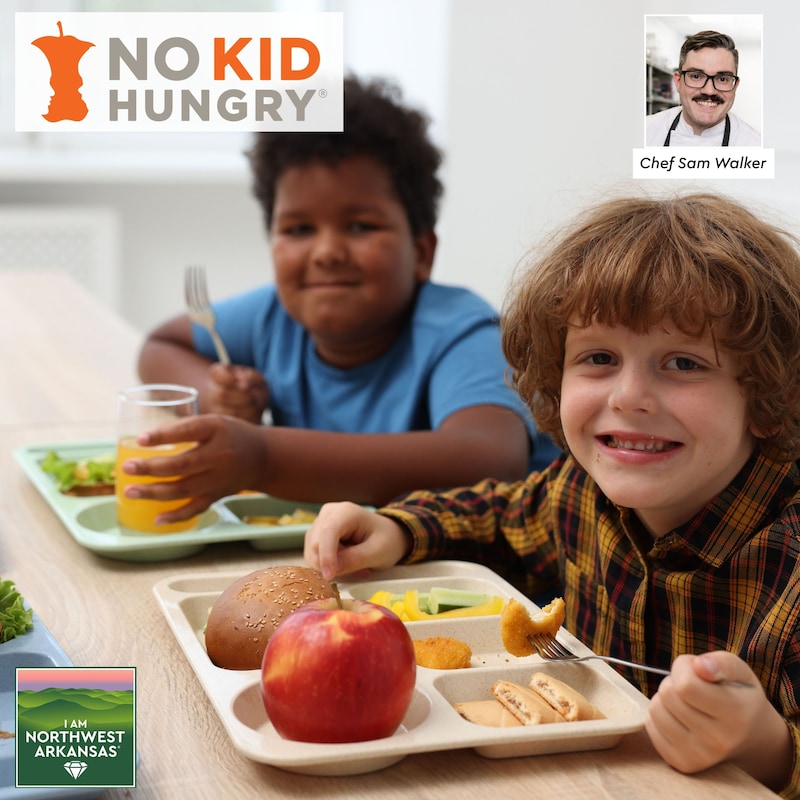
Shownotes
About the Show:
"It's not a lack of food problem. You know, our country has an abundance of food. It's getting that food to the people that need it."
– Chef Sam Walker
Hunger doesn't take a day off.
For millions of children across the United States—and right here in Arkansas—food insecurity is a daily reality that shapes everything from how well a child sleeps to how clearly they think in school to how much hope they carry into their future.
On this episode of I Am Northwest Arkansas®, host Randy Wilburn sits down with Chef Sam Walker, the chef and owner of Gaskins on Emma in downtown Springdale, to talk about one of the most urgent and quietly persistent challenges facing our communities: making sure every child has enough to eat.
Sam's journey from growing up in Little Rock to building a restaurant rooted in hospitality and belonging has given him a front-row seat to both the power of food and the pain of its absence—and he's decided to do something about it.
Chef Sam Walker is the kind of cook who understands that food is never just food.
It is connection, dignity, memory, and care—all served on a single plate.
In this conversation, Sam opens up about how his love for the culinary craft has always been inseparable from his love for people and why that philosophy has drawn him into the fight against childhood hunger in a deep and personal way.
From the growing culinary renaissance reshaping Springdale and Northwest Arkansas into a legitimate food destination to the national movement rallying chefs, communities, and everyday people around the No Kid Hungry campaign, this episode is a reminder that the most powerful thing a community can do is feed its children—and that the people leading that charge are often the ones standing behind the stove.
Key Takeaways:
- Community Through Food: Bringing people together around the table builds lasting connections and support for those in need.
- Tackling Food Insecurity: Northwest Arkansas faces real challenges, but people in the region are stepping up to help.
- Chef's Night for No Kid Hungry: The event features 20 chefs, aiming to raise $50,000 to ensure kids don’t go hungry.
- Springdale’s Culinary Boom: Springdale is now recognized as a hub for outstanding food, thanks to chefs and entrepreneurs committed to growth.
- Multiple Ways to Help: Whether you buy a ticket, sponsor, or donate, you can be a part of this movement to end child hunger.
All this and more on this episode of the I Am Northwest Arkansas® podcast.
Important Links and Mentions on the Show*
- Chef’s Night for No Kid Hungry – April 26 at the Jones Center, Springdale
- Chef Cycle No Kid Hungry: Learn more, donate, or sponsor rides and events Chef Cycle 2026
- Chef Sam Walker on Instagram
- Chef Sam Walker on LinkedIn
- Gaskins on Emma (Springdale’s food corridor anchor)
- Hive at Bentonville – Raised $80,000+ for No Kid Hungry
- Mentioned chefs from out of town: Ted Cizma (California), Vinnie Cimino (Ohio), Joe Flamm (Chicago), Rebecca Masson (Texas), Lambert Givens (Boston)
- Sponsor, donate, or attend via links in the show notes or by emailing [email protected] for direct info and connections
This episode is sponsored by*
*Note: some of the resources mentioned may be affiliate links. This means we get paid a commission (at no extra cost to you) if you use that link to make a purchase.
Connect more with I am Northwest Arkansas:
- Grab our Newsletter
- Email Us at [email protected]
- Connect With Our Facebook Page
- Connect With Us on Threads
- Connect With Our Instagram
- Connect With Our LinkedIn Page
- Join The Facebook Group
- Connect with our Fearless Host, Randy Wilburn on LinkedIn
Thank you for listening to this I am Northwest Arkansas podcast episode. We showcase businesses, culture, entrepreneurship, and life in the Ozarks.
Consider donating to our production team to keep this podcast running smoothly. Donate to I Am Northwest Arkansas
Mentioned in this episode:
Winetopia 2026
Winetopia 2026 Date: Friday, October 16th Time: 7-10pm Place: Stonebreaker Hotel on Markham hill Winetopia is Restore Humanity’s biggest annual fundraiser and brings together the very best of Northwest Arkansas (restaurants, artisans, small businesses, and (community members) to support our work. While the event raises essential funds for children in Kenya, its heartbeat is entirely local. There are over 100 local businesses who contribute auction items, regional chefs and beverage makers who showcase their craft, and the hundreds of residents gathering to celebrate community generosity. Winetopia strengthens local partnerships, elevates homegrown talent, and reinforces Northwest Arkansas's identity as a place where global compassion is fueled by local collaboration. Winetopia is a beautiful demonstration of how a united local community can create life-changing impact for children and families worldwide.
Transcripts
One of the things I love most about living in Northwest Arkansas is that
Speaker:you never have to look far to find someone who is
Speaker:doing something meaningful, someone who is using their gifts
Speaker:to make this region a better place for all of us.
Speaker:Today's guest is exactly that kind of person.
Speaker:Chef Sam Walker is a Little Rock native who has spent
Speaker:most of his life in kitchens. Not just cooking food, but.
Speaker:But building community around it. He's the chef behind
Speaker:Gaskins on Emma in downtown Springdale, one of
Speaker:the anchors in what has quietly become one of the most
Speaker:exciting food corridors in the entire state of
Speaker:Arkansas. But today, we're not just talking about
Speaker:what food can do and specifically, what
Speaker:happens when some of the most talented chefs in the country
Speaker:come together around a single mission. Making
Speaker:sure no kid goes hungry. On
Speaker:April 26, Chef Sam is helping lead
Speaker:Chef's night for no Kid Hungry, a five course
Speaker:dinner at the Jones center featuring 20 chefs,
Speaker:200 seats, and a goal of raising
Speaker:$50,000 for Share Our Strengths no
Speaker:Kid Hungry campaign. Last year's event raised
Speaker:just under $18,000 with only 76
Speaker:people. This year, they're going bigger,
Speaker:bolder, and more ambitious than ever before.
Speaker:I'm Randy Wilburn, and this is. I am Northwest
Speaker:Arkansas, where we tell the stories of the people, the
Speaker:places, and the ideas shaping this region.
Speaker:Chef Sam Walker, welcome to the show. Thanks
Speaker:so much for having me, brother. It's great to be here. I certainly want to
Speaker:give a shout out to Damara Baker, who is a dear friend of mine.
Speaker:And anytime that day, Mara says you need to meet this person or you might
Speaker:want to have this person on this show. I, you know, I'm always
Speaker:quick to take a meeting and to learn more, so I'm glad that she brought
Speaker:us together. So. So you grew up in Little Rock, and you
Speaker:described yourself as someone who has spent most of his life in
Speaker:kitchens. Yeah. Take me, take me back.
Speaker:And. And I want to know what was the earliest moment you knew
Speaker:that cooking was going to be your thing?
Speaker:Well, let's see. I. At the ripe age of 16, I found myself
Speaker:making King Caesar wraps and a tropical smoothie. You know, so
Speaker:I. It's just such a. An interesting industry. It's such a.
Speaker:So many different walks of life find themselves working together and people you
Speaker:would never find yourself talking to or hanging out with. You know, it's
Speaker:just a. It's just an interesting crew. It's an interesting industry.
Speaker:And, you know, I think from the get go, it was. I. I
Speaker:fell into it, but I think I. I couldn't see myself doing
Speaker:anything else. You know, it's a, it's very much so something that
Speaker:wasn't necessarily by design, but I'm glad it worked out the way it did.
Speaker:So. Yeah. And you, I mean, you mentioned
Speaker:that your mother wasn't actually a great cook, which I love
Speaker:that because that's not the usual culinary backstory.
Speaker:Right. I mean, what was it about the industry
Speaker:itself that pulled you in if it
Speaker:wasn't about recreating home cooking? I mean. Yeah,
Speaker:that's, that's the joke. I'll make sure my mom doesn't watch this one. You know,
Speaker:she, she's, she's great. She's incredible. But I grew up, you know, my, my
Speaker:family's from the south, right. So I've got a lot of family down in Louisiana.
Speaker:You know, my grandmother used to do some of the best fried chicken I've ever
Speaker:had in my life down in Shreveport. And, you know, those,
Speaker:those, those ties, you know, to just food and the community
Speaker:with the family around the table are special. And I think that
Speaker:I was fortunate enough pretty early to find myself in kitchens where
Speaker:you kind of had that same group. Right. We had the same feel
Speaker:of something bigger than just, you know, we're here for a paycheck. So it was,
Speaker:I was fortunate, pretty early to work for guys that were pushing me to see,
Speaker:you know, the value in what we were able to do on a day to
Speaker:day basis than just a clock in, clock out mentality. Right.
Speaker:So, yeah. Was there like, growing up, did you have a meal
Speaker:that you really gravitated towards more than anything else
Speaker:that really kind of set the standard for you when it came to thinking about
Speaker:good food? I would say that meal that I described from my
Speaker:grandmother is pretty important. And it wasn't just the fact that she made a
Speaker:killer fried chicken. It was that the entire family was,
Speaker:was coming to her house for that meal. And it was more
Speaker:that kind of community, and it was bigger than just the meal itself.
Speaker:So this thing stand out. And I've got, it's cool. I've got like a box
Speaker:at home full of my great grandmother's recipes and just like
Speaker:super simple Southern, you know, they were, they were all in Mississippi at the
Speaker:time, so like just really old school recipes that
Speaker:I've been able to kind of go through. And you could just feel the soul
Speaker:that's in those meals. You know, it's not, it's, it's just, it's the most basic
Speaker:stuff you could ever think of. Yeah, but for what those meals Mean,
Speaker:for their kids and now myself and now, you know, our family.
Speaker:That's special. It's special. It's something that's hard to recreate. That's what we always
Speaker:push for. Right. Is to keep that feeling going. Yeah. So it
Speaker:sounds like you got the concept or
Speaker:idea of hospitality, honestly, just through the
Speaker:coming together of your family. How has that
Speaker:translated into your role as a chef, specifically
Speaker:there at your restaurant? I think you find a lot of chefs these
Speaker:days that have something deeper under the surface
Speaker:where we're trying to take care of people. It's a selfless. You know, the service
Speaker:industry is to be selfless, to take care of others. And
Speaker:I think that that was instilled early. I grew up Southern Baptist. We
Speaker:spent a lot of time going to different food banks, doing a lot of outreach
Speaker:stuff with the church in that community. And I think some of that is probably
Speaker:the backbone of what's instilled in me, to take care of people, you know,
Speaker:and something you don't think about terribly often. But I think if I were to
Speaker:really dig deeper and think it through, that's probably part of it,
Speaker:is just I was. I've got great parents that, you know,
Speaker:hopefully raised me right to a degree. Right. That, you know, just take care of
Speaker:people, be a good person, take care of people. And that's
Speaker:this industry that I'm in. And the role that I'm in here at Gaskins is
Speaker:one where I can do that. You know, it's. It's a cool thing to
Speaker:translate it from. You know, this is just how you are as
Speaker:a person now. Let's just take care of as many people as possible. Right? Yeah.
Speaker:Well, and that's why we're here having this conversation in the first place. So
Speaker:you've built your home base in downtown Springdale at
Speaker:Gaskins on Emma, that corridor. And I. And I was telling you
Speaker:this the other day when we talked on the phone. That corridor has
Speaker:changed dramatically in the last few years. Like, amazing.
Speaker:I've been here 11 years now at the time of recording this, but,
Speaker:man, Emma has changed a lot.
Speaker:You've got Onyx. You have Casa alejo, rain
Speaker:bistro 16. What. What does it mean
Speaker:to be part of that culinary moment happening in
Speaker:Springdale right now? I'm sitting here looking at, you know,
Speaker:Emma Avenue right now, and it's. The growth is. Is incredible.
Speaker:It's. It's phenomenal. It's wild. You know, even we opened just
Speaker:coming up on two years, two years ago, and I
Speaker:was telling you the other day, It's. You were able to park anywhere you wanted.
Speaker:Pretty much, you know, you had street parking. Just walk right in. And it's. It's
Speaker:hard to find. And that's just a testament to
Speaker:the growth and how fast it's happening. We, we knew when we
Speaker:opened this place that we were a little early into this thing, but we. You
Speaker:could, you could see it all over the, you know, writing's pretty clear on the
Speaker:wall that this, this area is booming, so it's cool to be a part of
Speaker:it, you know. So you honestly see Springdale as
Speaker:a culinary hub now, right? Because, I mean, it wasn't when I first moved here.
Speaker:It was not that. Let's be very clear. And again, it's not. I'm
Speaker:not pointing fingers. I'm just calling it as I see it. You
Speaker:know, before, when I would go someplace to eat, if I wasn't eating in
Speaker:Fayetteville, I'd either eat up in Bentonville and then certainly
Speaker:Rogers. But now Springdale is on the menu, right? Springdale
Speaker:is on the menu. I sure don't see why not. You know,
Speaker:what's, what separates us from some of these other markets that maybe,
Speaker:you know, maybe the investment is there a little sooner, maybe people gravitated towards those
Speaker:areas a little quicker, but why not Springdale? You know, it's
Speaker:an incredible city. My wife and I, we got our first home here. We love
Speaker:it. You know, we spent time in Fayetteville, time in Bentonville. I love Springdale,
Speaker:you know, and I'm, obviously, I'm an Arkansas guy, so I love it
Speaker:all, but it's. It's a special. It's, you know, super blue collar. Like, it's just
Speaker:kind of like my kind of people. And why not bring something, you know, a
Speaker:little bit more to the table than maybe, maybe the area has seen. And I
Speaker:think it's just going to keep trending that direction. When I was growing up, we
Speaker:would. We would say, like, if. If we were talking about something that was really
Speaker:established, you would say, oh, that's. Whatever that is, has arrived.
Speaker:But then if you were talking about some. Something that was more aspirational or
Speaker:it was on the growth curve, right? You would say, oh, they're on the come
Speaker:up. And I always say Springdale is on the come up. Like, it's like,
Speaker:I have friends that have invested in Springdale, like you said, like, you own a
Speaker:house in Springdale. I have friends that have moved to Springdale and really
Speaker:have had nothing but good things to say. And I will say that the Business
Speaker:environment in Springdale is. Is pretty solid, especially
Speaker:for an entrepreneur that might be watching this or listening to this
Speaker:episode. And you know it. There is a lot of
Speaker:opportunity there in the city of Springdale. And this is a secret that
Speaker:I don't know that many people know. Springdale is huge. Like,
Speaker:it's really big. It's way bigger than you think. A lot of times people think,
Speaker:oh, well, you know, you go up 71 or you go across
Speaker:412 and you're like that. Springdale, Springdale. I mean, it. It
Speaker:ventures out. And so if you look on a map and look at the size
Speaker:of Springdale, there's a lot of opportunity for growth in that
Speaker:city. And so. And I love giving Springdale a shout out
Speaker:whenever I can. I've had so many different people that represent
Speaker:Spring Springdale for various causes on this
Speaker:podcast, and we always talk about what Springdale represents. I've
Speaker:had the Downtown alliance on. I mean, you name it, we. We've
Speaker:talked about the potential of Springdale. And so it's here to stay
Speaker:is what I'm saying. We're just happy to be a part. We say that all
Speaker:the time. We're just very proud to be here. And so just.
Speaker:Just play a small part. You know, it's all about kind of planting seeds. And,
Speaker:you know, once people catch on, then it's. Then it's just going to take off
Speaker:even further. So, you know, we're here for the ride. You know, here's the
Speaker:reason, one of the main reasons why we were coming together to talk, and it's
Speaker:about something, as I told you, how important food
Speaker:insecurity is a major issue in this country,
Speaker:in this state and in this region. Let's talk a
Speaker:little bit about the chef's night for no kid hungry. Can you tell me a
Speaker:little bit about this event and this program? How did
Speaker:this event come to be and. And what does it mean
Speaker:to you personally to be one of the people leading it?
Speaker:So, obviously, last year was our first year doing this event, and
Speaker:there's a. There's a bit of a learning curve, I think, to any event, any.
Speaker:Any event like this. And we have
Speaker:a lot of great people involved in the dinner last year, and we've kind of
Speaker:all come together this year and said, you know, why. Why not. Why not make
Speaker:this thing bigger? Why not build it and try to have an even bigger
Speaker:impact this year? And so this event specifically, you know,
Speaker:started as a. Do we do it here in the restaurant? Again, Obviously, downtown Springdale's
Speaker:got the street dinner that does very well. Some stuff like that. So we just
Speaker:started looking. Looking a little outside the box. Our. Our good
Speaker:friend down here, Mike Gilbert, He's. He's been a big part of this dinner and
Speaker:kind of mentioning some ideas. And we. We landed on the Jones center, and they
Speaker:obviously did a ton of great work in the area, so. Or partnering with
Speaker:those guys, and, you know, they're going to be hosting it in their space. So
Speaker:we have. We have way more bodies in the room. It's just. It's just more
Speaker:opportunity for a bigger impact, essentially. What were some of the initial
Speaker:reactions that you heard from the inaugural event
Speaker:of this last year from those people that attended?
Speaker:I mean, super well received. It's, you know, I was telling you the other day,
Speaker:it's not a hard. It's not a hard sell to come together to
Speaker:defeat kids. It's vital. It's super important. Next generation. What can we do to
Speaker:set them up for success and just take care of the people around us?
Speaker:So the event, very well received. It was small enough that it was definitely
Speaker:manageable. We had some incredible chefs on that one. We had
Speaker:Jason Paul from Heirloom. He was there. We had Will Mock down here. We had
Speaker:the guys from Rain. One of my mentors from Little Rock, Kobe Smith, was up
Speaker:in town for it. So we had a great crew, and we were basically
Speaker:just taking that whole crew. They're going to be on this next dinner. And we
Speaker:just kept growing it. Right, so now we've got some. Some national chefs that are
Speaker:coming in. We've got more. Total of 20 participating, right? 20
Speaker:chefs local and 5 from out of town. That's right. It's like herding
Speaker:cats, man. It's a challenge, right? We're all. We're all super busy, especially this. This
Speaker:day and age with food cost rising. And we're trying to manage businesses and.
Speaker:And. And staffs and make sure everybody's good and for everyone to. To.
Speaker:To take the time to come and do this, this is special. So, you know,
Speaker:we definitely want to share that with this area. You know, get all of northwest
Speaker:Arkansas involved in this thing and just make it as big as we can to
Speaker:have the biggest impact. So, so give us the list of names of chefs
Speaker:that will be here from out of town. Okay, so out of town,
Speaker:we've got Ted Sisma coming in from California.
Speaker:We've got Vinnie Simono out of Ohio. We have
Speaker:Joe Flam coming out of Chicago. Rebecca Massen coming out of
Speaker:Texas. And then we added Lambert Givens coming out of
Speaker:Boston. Oh, all right.
Speaker:I like that. Great crew, though. Yeah, yeah. What do you think that
Speaker:says about northwest Arkansas and
Speaker:about this? Cause that chefs at that
Speaker:level are willing to make the trip here?
Speaker:I will say this. I think I've been fortunate to get to know a lot
Speaker:of these chefs through Token Hungary, some organizations like this, where it's. You
Speaker:start getting to know these. These. These chefs, these people, and you hear
Speaker:a lot about this area, to be honest with you, and you're seeing more of
Speaker:those names pop up, being involved with things in northwest Arkansas and
Speaker:Arkansas as a whole. I think that people do know that there is a need
Speaker:here. You know, we leave the country in food insecurity.
Speaker:So you. You see a lot of times when they're going to the Capitol and
Speaker:they're. You know, they pulled myself, Chef Micah Klasky, up in Bentonville, they pulled us
Speaker:up to DC Last year just to talk to some of our representatives
Speaker:and see, you know, what we could do to try to mitigate some of the
Speaker:issues here with food insecurity in our state. And it's. It's. It's
Speaker:an issue. But you have a lot of those chefs that, again,
Speaker:know about what's going on in Arkansas. You know, it's. It's a. It's a
Speaker:growing market. It's a. It's an area that you're
Speaker:hearing about more because stuff like this is happening, you know,
Speaker:and. And it's cool to see the amount of people coming together
Speaker:to make that stuff happen here. You know, that's not like. It's not like a,
Speaker:oh, I'm just doing this dinner. It's. And it's. It's. There's an army of people
Speaker:trying to make these things happen, to have an actual change
Speaker:here. So, yeah, it gets traction. I mean, again, I said
Speaker:it earlier but last, and I want to. I want to applaud you. Last year's
Speaker:event raised just under $18,000 with. With only
Speaker:70. 76. And I'm saying only 76 people in attendance, because we
Speaker:want to blow that number out of the water this year. Sure. Okay. This year,
Speaker:you're going for $50,000 with 200 seats.
Speaker:That's a massive leap in ambition. I want. I'd love for you
Speaker:just to walk me and our audience through what it takes to scale
Speaker:something like this logistically,
Speaker:organizationally, and actually, more importantly,
Speaker:emotionally. It's obviously a challenge. Right.
Speaker:I've made that pretty clear. I've had to pull as many people into this thing
Speaker:as I can. I feel super fortunate to have been linked up with you.
Speaker:And it's been kind of that story with this whole thing is, how many
Speaker:people can I get involved? And,
Speaker:you know, it's something. It's a passion project for myself, but I feel like the
Speaker:more you talk about it and the more people you talk to about something like
Speaker:this, it becomes a passion project for other people. And that's what makes
Speaker:this possible. Right. It's just getting as many people involved as we can
Speaker:to bring it together. So logistically, it's
Speaker:come together very slowly. It's been a grind. But, you know, to get all
Speaker:the chefs on, the chefs have been incredible. Just willing with their
Speaker:time, with their resources. And what I've asked everyone to do is not
Speaker:easy. You know, it would have been way easier to say, I'm
Speaker:going to give you a second course. You're going to do a hot appetizer. Let
Speaker:me know what you're thinking. We'll get the food together. That's one thing, right?
Speaker:To say you're going to be on a team with four chefs, you know,
Speaker:four chefs total. Now all of you have to figure this stuff out.
Speaker:So we've been navigating that, and
Speaker:everyone's just been playing it very. It's been easier than it probably should
Speaker:be, you know, for me to get it all together, just because everyone's been
Speaker:so willing to just play. Play the role. And. And we all just make sure
Speaker:that it goes smoothly. And. Yeah, so it's. It's.
Speaker:Logistically, you know, it's got some curveballs in there, but it's been
Speaker:pretty good. So. Yeah, I know. And you mentioned a couple of the names
Speaker:of local chefs. I think you said Marty Schmidt, maybe Jeff. Marty's
Speaker:been on this podcast as Jason Paul, coming back for a second round. Jason
Speaker:Paul was on. He's going to be out of town for that night. So we
Speaker:got some other people in. So same crew. We got Will Monk, we've got that
Speaker:crew. We've got Elliot Hunt over at Atlas. We've
Speaker:got Hayne Begley out of. He's up in Bentonville doing some
Speaker:of that crew. Rob Nelson, some of those guys. I think it's definitely going
Speaker:to be worthwhile. I want to kind of unpack this part of it, because
Speaker:this is. This is the real crux of the matter, right? When
Speaker:we. We are in a time and a place where, let's just be
Speaker:honest, gas is expensive. There's a lot of things going on in the world
Speaker:when people sit down at a $250 per plate
Speaker:dinner. That's fundamentally about feeding children who
Speaker:don't have enough to eat. Obviously there's a kind of. And
Speaker:as. And the words I came up with was a beautiful tension in
Speaker:that. Right, sure. That's a nice way to put it. How do
Speaker:you hold both of those realities at the
Speaker:same time when trying to pull this event off? It's tough,
Speaker:right? It's tough. And, and like we were talking about the other day,
Speaker:there's probably more going on now than there was when we initially set
Speaker:out to do this. But what I come back to is,
Speaker:you know, and this is Ted Sisma, who's coming to the dinner. He talks
Speaker:about this. He always makes it as simple as possible. He's like, you know, when
Speaker:I'm going to bed at night, the thought of kids going to
Speaker:bed hungry bothers me, you know, and it's
Speaker:a, and it's a problem. So to know that there are kids that are going
Speaker:to bed every night hungry, they're not getting the rest they need. They're going to
Speaker:school. They're, they're, they're not nursed to a point
Speaker:where they can succeed in school. You know,
Speaker:you're, you're, you're off to a pretty rough start, and it's, it's going to be
Speaker:hard, you know, and that's something that we can, we
Speaker:can come together and fix. You know, it's a fixable problem. It's not a
Speaker:lack of food problem. You know, our country has an
Speaker:abundance of food. It's getting that food to the people that
Speaker:need it. And that's the programs, you know, that's like, is that, is that a
Speaker:steep ticket price? Is that a difficult sell?
Speaker:Potentially, of course. And I mean, I, I feel the economy
Speaker:and how tight things are as much as anybody also, you know, but that being
Speaker:said, to make some sacrifices to make a big change and make a
Speaker:difference that we're able to make, you know, I'm willing to take that risk
Speaker:and see, see if we can make it work. Right. So I think that there
Speaker:are other people out there that feel the same way. So. Yeah. What do they
Speaker:say? No, risk it. No biscuit, right? That's right. So you gotta
Speaker:risk it for the biscuits. So. Okay. Well, we, we certainly are going to
Speaker:encourage all of our listeners to that those that are in a position to participate.
Speaker:To participate. There'll be a number of ways to
Speaker:serve the needs of children that are food
Speaker:insecure. And for some people that can't actually
Speaker:go to this event. You told me that they could still give to the program.
Speaker:Sure. So, yeah. So we'll. And we'll make sure we put all that information
Speaker:in the show notes. But is there a website for this event?
Speaker:Yes. So we're actually doing this for Chef Cycle,
Speaker:which is an event put on through. No. Get hungry, Share our strength.
Speaker:And it's essentially every year, they go out, they ride, doing 200 miles. So I'll
Speaker:be going in June to ride 200 miles out in Oregon to raise
Speaker:awareness as much as raising funds. Right. So it's kind of like, what are these
Speaker:guys, these. These lunatics doing riding 200 miles in a couple days?
Speaker:But it also brings awareness. Right. So we'll be doing that.
Speaker:I'll pull this up pretty soon. And I'll get this wrong.
Speaker:I just want to make sure people know that there are multiple on ramps
Speaker:to the mission beyond just buying a ticket. So for sure. And
Speaker:this is. If you were to just look up Chef Cycle 2026, you'll find
Speaker:the page. You can donate straight to just their main
Speaker:cause on that page. You know, we've got a goal as a group of raising
Speaker:a million dollars. We're already over half of that. Wow.
Speaker:So by the time we get some of these dinners done, I saw yesterday,
Speaker:there's a group, they go by the wheels of time. They're spelled T,
Speaker:H Y M E. You know, Little Chef nodded. Sure. They're
Speaker:doing a 20 chef plus, you know, eight course dinner. They're. They're even
Speaker:more ambitious than us, more than likely, you know, but it's. Yeah. There's
Speaker:multiple events like this going on around the country for this. This
Speaker:main Chef cycle event, Dentonville at the Hive, they just
Speaker:had a very successful dinner. They've raised over $80,000 this year.
Speaker:Wow. Which is incredible. So super proud of those guys.
Speaker:And it's just. We're all just trying to do our part. Right. We're all just
Speaker:trying to. To do as much as we can collectively
Speaker:to have the biggest footprint possible here. Northwest Arkansas is. People
Speaker:want to support other people, whether they do it with their time,
Speaker:their talent, or the money that they have at their
Speaker:disposal. And so I encourage people to try to get
Speaker:involved. Now, if this ride that you're taking in June,
Speaker:is that the type of ride where you're looking for sponsors, or can people
Speaker:pay per mile as you go, or how does that work? If you were to
Speaker:go to my page, you could say, you know, I'm going to donate X amount
Speaker:per mile written, you know, and then. And you could just donate that amount,
Speaker:obviously everything through their website is, it's a tax write off. There's all
Speaker:the benefits to the, to the sponsors and the donors, but there's also,
Speaker:you know, end of the day, we're just trying to feed kids. So it's. Yeah,
Speaker:we still have room for sponsorship with our dinner. We still have room for sponsorship
Speaker:just for this kind of season, if you will. Sure. But
Speaker:yeah, there's still plenty of windows to get involved. They every little bit counts.
Speaker:You know, we talked about, it's, it's five bucks, it's ten bucks, it doesn't matter
Speaker:as long as we're, as long as we're chipping away at an issue
Speaker:here. Yeah, well, and I want to be clear for everybody involved that
Speaker:everybody that's listening to this, it doesn't end on April 26th.
Speaker:April 26th is one date on the horizon that will
Speaker:give you an opportunity to, to, to be involved, but it doesn't
Speaker:end at that date. So I want to wrap up just asking you this question.
Speaker:Beyond this event, what's the bigger vision? What does
Speaker:food equity, making sure every person in
Speaker:northwest Arkansas and especially every child has enough to eat. What
Speaker:does that look like in practice?
Speaker:You know, I, as far as
Speaker:my perspective, kind of things that have changed for me as I've gotten older and
Speaker:this, not to sound like morbid, but you know, this is a pretty
Speaker:short ride that we're on. Right. It's not like this is not a, you know
Speaker:what I mean? And it's, I'm not getting younger and I know
Speaker:that at the end, at the end of my
Speaker:time here, I want to know that we were able to help other people
Speaker:make impacts. So what does that look like? I think we're just going to keep
Speaker:trying to find windows. You know, I'm incredibly fortunate to
Speaker:work with an organization like no Get Hungry because they are just
Speaker:constantly giving you outlets to do
Speaker:those things right. And it's big to me to take those
Speaker:opportunities. You know, whatever platform we have here at Gaskins, we
Speaker:want to use it to do the most we can for the community. So,
Speaker:you know, as, as, as the years go on, hopefully that platform gets, gets
Speaker:bigger and bigger so that we can, we can do more and more. And I
Speaker:can only hope that some, somehow I can plan a seed with some younger cook
Speaker:coming up so that this just keeps going and we just keep the trend of,
Speaker:you know, let's be good people, let's take care of other people. You know,
Speaker:I firmly believe that we're here to love each other. Take care of
Speaker:each other. And that's, that's the goal, that's the mission. I think we just keep
Speaker:pushing for it. Yeah, I think of people like him and
Speaker:Jeremy Gothrop and others that have like
Speaker:lit a fire under young chefs. And one of my, one of my
Speaker:good friends is Chef Nate Walls. And, and I mean, Jeremy
Speaker:has been a tremendous mentor for him. And I mean, Nate's literally
Speaker:single handedly trying to feed all of Northwest Arkansas. Right. I
Speaker:mean, I mean, he should just wear a T shirt that says no
Speaker:kid left behind when it comes to eating a meal. Because I've been out with
Speaker:him and he was just at an event the other day with the Fayetteville Public
Speaker:Library where I work, and they were feet. They had a block party and they
Speaker:fed a couple hundred people. It doesn't seem like much,
Speaker:but. But it is and it does make a difference. Right? I mean,
Speaker:Nate knows guys. I just, I just, he just posted, reposted
Speaker:us talking about this d yesterday. You know, I love Nate. I love
Speaker:Jeremy also. I just got off the phone with him the other day talking about
Speaker:ways to benefit the community and, and, and you just have a lot
Speaker:of people with, with hearts in the right place, you know, and it's, and it's
Speaker:good to be around those people. It's like you always talk about, you know, you
Speaker:asked early on just about this, this industry and kind of how
Speaker:we get into it and all that. And you talk about finding your people like
Speaker:those, those are, I think all of us in that, you know, we kind of
Speaker:found our people and this is it. You know, it's. Try to make a difference,
Speaker:try to get more people involved and, and that's, that's what it's about.
Speaker:I mean, I, I think more for me personally as I
Speaker:got involved with Ozark natural foods and I understood
Speaker:the concept of what real good food means to
Speaker:individuals and that everybody should have access to it, not
Speaker:just people that can afford it. It just opened my eyes that
Speaker:there's so much more that we can be doing in our local communities to make
Speaker:sure that especially children, we got to start with them. Because if, I mean,
Speaker:there's so many studies that show that if kids don't have a full stomach when
Speaker:they get to school, if they don't get food in their stomach, it's hard for
Speaker:them to focus and concentrate. These little things can go a
Speaker:long way in ensuring that the next generation and then the generation
Speaker:after that is equipped to take on what needs to
Speaker:be, what needs to be done in our Society. So thank you so
Speaker:much for the hard work that you're doing. And remind us again
Speaker:of a website that people can go to if they want to book, book a
Speaker:ticket for this event on the 26th of April.
Speaker:Absolutely. So we have a link if you go through our socials. I'll tell you
Speaker:this, it's a little, we're trying to navigate this thing and make it easier.
Speaker:We plastering this out on Instagram, on, on Facebook
Speaker:and I will put it out in the show notes. So go to the show
Speaker:notes whether you're looking at it on your podcast device of
Speaker:choice or you're on our website@im northwest
Speaker:arkansas.com when you go to this particular episode, you'll see all the
Speaker:information there on how you can get involved, how you can buy a ticket. And
Speaker:worst case scenario, you can email
Speaker:[email protected] and I'll make sure
Speaker:I put you directly in touch with, with Chef Sam so that you can support
Speaker:his efforts and what we're doing to make sure that we, we leave
Speaker:no child left behind. Appreciate that. So, but, and I said
Speaker:left behind, but I mean no, no kid hunger. You got it. Chef Sam Walker,
Speaker:thank you for everything you poured into this conversation and
Speaker:more importantly, for everything you're pouring into this community through your
Speaker:cooking, your leadership and your commitment to making sure
Speaker:no child in Northwest Arkansas goes hungry. What I take
Speaker:away from this conversation personally is that something I think about
Speaker:a lot when I talk to people doing work like this. The table
Speaker:has always been more than a place to eat. It's where
Speaker:we tell our stories, where we welcome strangers, where we
Speaker:decide what kind of community we want to be.
Speaker:And they've been doing a study lately about longevity and what
Speaker:it takes. And it's not a pill, it's
Speaker:not a certain type of food. The one sure
Speaker:fire way to ensure that you, you have longevity
Speaker:is to have community, right? When people know that you
Speaker:care. I mean, some guy stopped me today earlier in the library, just said,
Speaker:hey, you look like somebody I need to meet. And he just introduced himself out
Speaker:of the blue. And I shook his hand and I smiled and I introduced myself
Speaker:and he told me his name. So many people walk around on a daily
Speaker:basis feeling unseen. I really want to encourage
Speaker:folks that you are seen, you need to be seen. And that especially
Speaker:programs like this make a big difference and put everybody on
Speaker:the radar that they do matter. The chef's night for no Kid
Speaker:Hungry happens on April 26 at the Jones center in
Speaker:Springdale. Five courses, 20
Speaker:chefs, 200 seats. A goal of
Speaker:$50,000 for Share Our Strengths no kid
Speaker:hungry campaign if you want to be a part of it. Whether
Speaker:you grab a ticket, make a donation or simply
Speaker:share this episode with someone who needs to hear it, you'll find
Speaker:the links in the show notes. Chef Sam Walker, thank you so
Speaker:much man for, for doing this and man, I'm going to do all I can
Speaker:in the next several days after this episode comes out to
Speaker:spread the word and to let folks know about this because we're going to get
Speaker:you. We're going to get to that $50,000. Randy, I appreciate you. Brad, thank you
Speaker:so much for doing this and for playing a part, man, I always appreciate it.
Speaker:Well, listen folks, I hope you enjoyed this episode of I Am Northwest
Speaker:Arkansas. That's all we have for today and I will see
Speaker:you next time with another brand new episode of
Speaker:I Am Northwest Arkansas. Peace.




