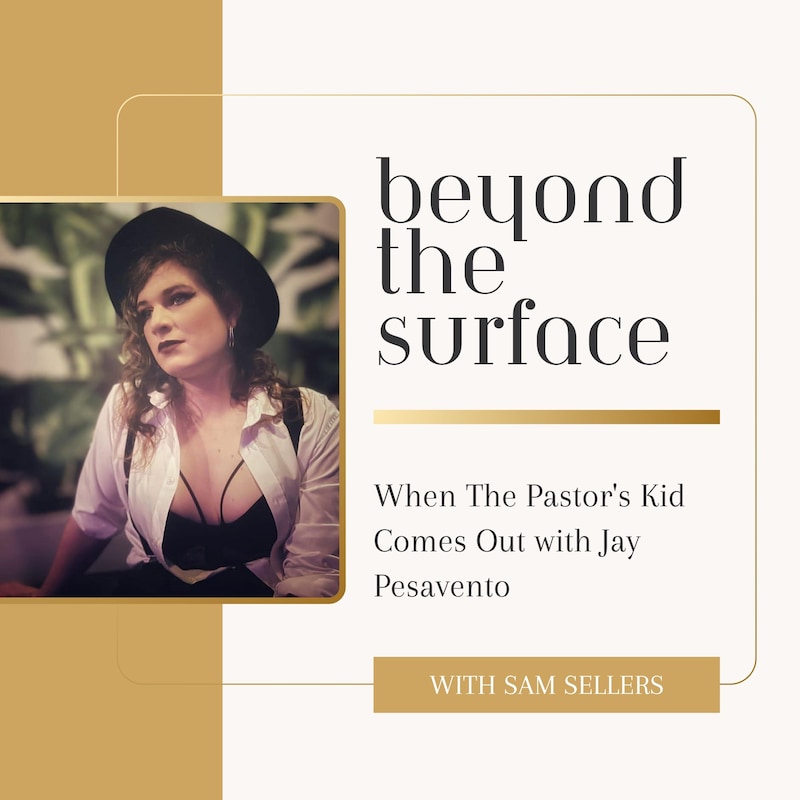
Shownotes
Jay (they/them) joins Sam to talk about growing up as a pastor's kid, navigating queerness and gender identity within a family deeply embedded in faith, and what it meant to wrestle with all of that while also surviving childhood leukemia. Jay is honest about the toll of living between personal truth and family expectation, and the work it takes to find your own voice when the people closest to you can't meet you there. It's a raw, grounded conversation about identity, religious trauma, and what it actually looks like to start living on your own terms.
Connect with Us
- Connect with Jay over on Facebook - https://www.facebook.com/jay.pesas
- You can find out more about Sam on her website - www.anchoredcounsellingservices.com.au
- To connect with Sam on Instagram - @anchoredcounsellingservices
- Want to contact with Sam about the podcast or therapy? Use this contact form.
- Also check out The Religious Trauma Collective
Transcripts
I would like to begin by acknowledging the traditional custodians of the land on which I live and work, the Gundagara land and people. I pay my respects to their elders, past, present and emerging, and extend that respect to all Aboriginal and Torres Strait Islander people.
I also want to acknowledge the traditional custodians of the lands on which you, our listeners, are joining us from today.
I recognize the deep connection that first nations people have to this land, their enduring culture, and their commitment to the preservation and care for their country. This land was never ceded and it always was and always will be Aboriginal land. Welcome to beyond the Surface.
This is a space for conversations that sit at the edges of faith, identity, power and recovery, especially for those of us who have been shaped so stretched or harmed by fundamental religion or high control systems. Some episodes are personal, some are reflective, some are educational or curious or quietly disruptive.
All of them are grounded in lived experience and a deep respect for the complexity of leaving, questioning and rebuilding meaning.
We will be talking about religious trauma, various forms of abuse, cult dynamics, queerness, and recovery, not in answers, but in honest conversations. In listening to these conversations, some parts might be heavy or activating for you.
Please take care of yourself while listening and feel free to pause or step away if you need to. I'm Sam and I'm really glad that you're here with us.
Sam:Welcome, Jay. Thanks for joining me.
Jay:Lovely to be here.
Sam:I am excited about this episode because people will know your mum because she has been on this podcast before and I didn't actually mention this to you beforehand. Your mum's episode just so happens to be my highest ranking and most popular episode of the last two years.
Jay:Good. Okay. So, you know, just a small bar to, you know, keep in the back of my mind.
Sam:Yeah. So she's, she's set the bar high. So if people don't recognize your mom is the beautiful Linda Pesavento. And it. Yes.
It was just everybody loved, loved that episode. And so I'm so grateful that you are joining me for this episode. And you mentioned it's your first podcast, so that's fun too.
Jay:Yeah, no, definitely. And hopefully, you know, it'll. If my first podcast episode can also be a highest rated one, you know, I'll certainly have that to.
To win over during family dinners.
Sam:Yes. Can we kick mum off the pedestal maybe? Oh, goodness.
Okay, now I know that, you know, I'm gonna start with like this big, broad, vague question that I. Everybody. So, Jay, where does your story start?
Jay:Yeah, so this has definitely got, you know, so Many different answers.
But I think that the, the, the cleanest one is definitely going pretty far back is when, when I was little, I forget the specific age it was around 5 I was diagnosed with leukemia which not, not the, the best thing to, you know, have to go through as a little kid. And that was definitely quite a tumultuous experience, you know, for the whole family.
You know, I, like, I talked to, you know, my mum before, you know, has obviously shared her experience with a lot of that side of her story before of just how much that racked with her faith. And you know, for me that wasn't even a question. I mean, I barely knew what was going on.
You know, like I knew I was sick but it was just like, oh, you know, this is just a really bad stomach bug.
You know, I had no sense of mortality or you know, what a life threatening chronic illness was or you know, the fact that there was anything going on.
I did experience, you know, some spiritual experiences that I'd say that have still stuck with me but even at that age like those sort of things are things that I didn't really comprehend until much, much later.
And then I think it was when I was 8 that, and you know, I still don't fully know what was going on in my head but I know that, you know, just mostly from being told that that was the first time that I had really been confronted with the fact. I think some family friends of ours, one of their young, young children passed away from, you know, from leukemia.
And that was the first time that I think I was at, you know, as a young kid confronted with, at this stage I was already in remission. We'd moved from Hong Kong. I had for the majority of my treatment, you know, we were now living back in Australia.
And that was the first point where I, yeah, was really confronted with the fact that like this could have killed me. And that actually ended in me on a couple of occasions trying to end my own life, which is not common for an eight year old, suffice to say.
Yeah, and so, and I think that those sort of two points, that really was the start of me, I think, challenging my expectations of faith, mortality, fate, you know, destiny and all these different things.
And I think for a long time, you know, I've been, and it's only up until in the last, I think year that I've actually come through this sort of internal sense that for a while I genuinely felt like I was meant, like cancer was meant to take me away.
You know, cancer was meant to get me and that the sort of rest of my life and every sort of bad thing that ever happened, you know, whether it was bad luck or bad decisions I'd made or just circumstances not going ideally, was all just up. This is just fate trying to course correct, you know.
Sam:Yeah.
Jay:And yeah, that's been something that I've struggled with for quite some time and has really with so many different, you know, I mean, I'm sure we'll get into the many facets of my experience of just of identity, queerness, neurospiciness, faith, spirituality, community and just all of these favorite words.
Sam:Jay.
Jay:Yeah. Hey look, I'm trying to hit the buzzword so we can get the view. Count up.
Sam:SEO is popping.
Jay:Exactly.
Sam:I don't want to assume that people have listened to your mum's episode. So like, and for you as a child it is very much a different experience than what it is for your mum as the parent in this scenario anyway.
But like as an 8 year old grappling with things that no 8 year old should be grappling with, like, let's just like be clear on that, like what was your understanding of the religious space that was being baked in around you that you were a part of within your family?
Jay:I mean, it's so hard to sort of reflect on those things because like we always, you know, you always look back on the past through the lens of today, right?
Sam:Yeah.
Jay:And so I, I still kind of look back at, you know, sort of the perspectives that I had and you know, we've honestly, like, even though it's like, you know, in my years old, got to give myself a little bit of, you know, cut, cut me a bit of the slack. But I'm like, damn, I was so, you know, willfully ignorant back then or I was so naive and it's like, yeah, I was a kid, like, come.
Sam:On, you're an eight year old kid. I would expect that.
Jay:Yeah.
But you know, I, I still, you know, and like, I think like consciously I, I do appreciate, I'm like, okay, you know, I'm not, I don't genuinely hold that sort of disdain towards my younger self. Definitely have in the past, but certainly not today. But even subconsciously there is still that little bit of like a come on.
Things would have been so much better if I, you know, as an eight year old had the, had the knowledge that I currently do, you know, nearly 20 years later. Yeah. And, but you know, we, we all wish that, but I think that I've totally lost the, the specific wording of your original Question?
Sam:Oh, it's fine. Most of the time I lose the wording of the question as soon as it's out of my mouth. So I basically was just going like what?
Like what do you remember about the religious space that you were being sort of like baked into at that time?
Jay:Yeah, like I, I definitely recall, you know, like Jesus and God and church was huge part of just our life. You know, my mum at the time was, you know, I mean, here's where the fact that, you know, I was eight years old makes things a little fuzzy.
But you know, I, we were heavily involved in church and then certainly, you know, to. During various points, my mum was a very key part of our local church.
You know, she was one of the senior pastors and not only a senior pastor, but just someone incredibly respected and revered within the community of the church.
And so by extension there was an expectation of, you know, placed on, I think particularly my sister and I of just sort of like, oh, like you are the children of Linda Pesavento and you know, and certainly from mama self, you know, this expectation to sort of participate and you know, some of that I admit, like in retrospect I'm like, okay, this was just a case of dads at work and you're responsible for us. Of course we've got to, you know, and it's your job to be working at church.
So of course we've got to go to, you know, morning church, afternoon church and then also evening church. And that's not a case of like how devotely Christian we are. It's because. It's because mum has to go to work and your boss's kid.
Yeah, so we just got to tag along. But certainly at the time I wasn't thinking about that. It was just like, ugh, why do we have to be so, you know, committed to this? And one of the.
But one of the biggest things that I can recall was just this expectation of like giving to the church. And I remember quite early on because I've always been quite a, like a techie kid and you know, good with a camera. And you know, we, we had a camera.
Well, I say it was a big camera set up, you know, with the projectors and so you could have the lyrics of the praise and worship going. And we actually had a couple cameras and so we had, you know, a switchboard to. So that one camera that was, you know, on the floor of the.
To get close ups and everything like that and then one that was at the back to get more static shots and you could switch between. So it was all glamorous and cool, you know, all in service of, of God.
Sam:The aesthetics have got to be good.
Jay:God loves those wipe transitions. You know, he's really important to him. The. But I was quite good at that stuff and so I, you know, naturally fell into a role there and that.
But like, you know, part of it was like, oh, look, you know, I enjoyed doing it and I was good at it. But there was definitely an expectation like, okay, but like, you are good at this and so you ought to provide your God given gifts back to God.
Right. And that was definitely something that was drilled in. Like, I won't say that.
Like, it was all like, oh, and this, you know, these strict expectations that, you know, plagued me. I mean, hell, I was a young kid to, you know, young teenager towards the end of getting to tell a bunch of people up to twice my age what to do.
Because you just got on the camera team volunteering today. Well, I've been doing it for four years and so I'm now technically your superior, which, you know, definitely gave me a bit of a power trip, which.
Sam:I look, I mean, any good, any good teenager is going to take that power trip and run with it, let's be fair, 100%.
Jay:Especially if it's, especially if it's in service for the Lord, like.
Sam:Yes.
Jay:I mean, what is religion if not, you know, power trips and service for the Lord?
Sam:Oh, goodness. I mean, like, as a teenager, I imagine you had far more awareness of like the, the type of religious space that you're in.
Did you see it as like, quite a fundamental space? Like, and what was your personal connection with the space that you're in?
Like, did you feel like, I mean, I'm gonna use like really like overtly churchy language for a moment. Did you feel like you had a relationship with God? I.
Jay:That is a difficult question because there is, I, I always think, felt as a kid like I had a relationship with God because I was told I had a relationship with God.
Sam:Interesting.
Sam:Yeah.
Jay:And so I just like it. Like, I was definitely, you know, when I was younger, in the sort of thick of.
Well, this is true because it's true, you know, and I've been told that this is the way that things are. And so that just must be the way things are. Even though the way that you describe it is not how I'm experiencing it, but ultimately it is true.
And so like, it just, it doesn't matter that we're experiencing two fundamentally different things. I just, I guess, you know, Something's up with me. Obviously, I'm. I'm the broken one.
I'm the wrong one, you know, because it's like, oh, did I have a relationship with God? It's like, well, yeah, of course I did. Ever talk to me?
Sam:Well, no.
Jay:You know, does God ever answer my prayers? No.
Does, you know, have I experienced God moving through my life and things that I'm like, oh, this is a clear sign of God, you know, doing his thing? Well, again, no, but, like. But he's God, so, you know, like, it's just.
Sam:It just is, right?
Jay:Yeah. And I think the other problem is, is because I'd had the experience of.
And I don't know if even consciously I was thinking about it like this at the time, but I can certainly rationalize it of just, I survived cancer, you know, not. Not. Not a lot of people do that.
And it's like, well, you know, like, what further proof do I need of God's will and power than the fact that he saved me? You know, I got to experience this miracle. And like, hey, let's be clear. It's. It was a big miracle.
So, you know, maybe my lifetime of miracles have been spent on this one big thing, you know?
Sam:Yeah. I mean, my instinct is to sort of go, like, did that almost get used gaslight yourself?
Like, I can't feel like this is not real because, like, how do I then rationalize? And this might have been like, later teens, early sort of is, I guess, ones who sort of like thinking about it more.
But was it like, I can't not be grateful for God in my life because, like, I survived cancer. How do I know that makes sense? Yeah.
Jay:And furthermore, because, you know, my mom ended up writing a whole book about, you know, her experience of my experience of cancer. And, you know, so much of that is about, you know, like, it's called Keep Walking.
You know, it's persistence and dealing with the faith crisis and all those things. And. But she also preached about it, and she, you know, referenced her book when she preached.
And, you know, people read the book in church, and it was, you know, it was a known quantity within church. And so, to a degree, I wasn't just Linda Pezavento's kid. I was also the Keep Walking kid.
Sam:Yeah, right.
Jay:You know, I was the kid that. That God saved from cancer.
And, you know, being in church where, you know, stories are shared through sermons that are so personal, I, as, you know, a young kid to, you know, like, early teen, would have people who.
I've got no clue who they are approaching me as if they know my entire story because it's like, well, you know, like, a big, big part of my story has been shared, but then that's also the only thing that they know about me. And so, I mean, there was a big period of time where I, like, really resented that part of me, that part of my story.
Like, I remember, like, feeling as, particularly in my teens, like, disdain towards people who, like, shared their, you know, story of, like, recovering through or living, know, some other terminal disease or, you know, chronic disease and. And stuff like that. Because I'm like, how dare you make this your identity? Because. And, you know, like, I.
And I'd never sort of at the time, you know, thought about it any deeper than that, or since then, I have. But, you know, it was basically just like, how dare you? Yeah, how.
How dare you do this thing that, like, I feel like has been so, like, has minimized my own experience because it's like, I feel like I'm so much more than this.
And, you know, but, like, the reality is, is because in those instances, those people are claiming their story, you know, they're the ones that are, like, being like, hey, like, this is a part of me, and I am owning this, whereas I'm not. Like, I'm. I mean, hell, I told you. You know, this is the first time I've done a podcast, you know, I am not the first one that got to tell my story.
Sam:Yeah, yeah. And that's the really tricky thing about telling kids stories, right, because you're not actually consenting to that.
And then in the space that you're in, you then get just reduced to being, like, the cancer kid, like, the survivor, and you lose the rest of your identity, and you just get reduced to that. And then, like you said, everybody knows. I call that, like, either, like, survivor or, like, testimony porn, almost.
Like, yeah, everybody just wants the story. Like, they just, like, churches love a good testimony. Love a good redemption.
Jay:Arc inspiration.
Sam:Yeah, absolutely.
So, like, to be essentially like a child, like a teenager, and to just be reduced to this one facet of your story, like, how do you then get to find all of the other parts of who you are when everybody else just keeps reducing you to being the cancer kid.
Jay:Yeah, exactly. And, you know, which. It's, like, on one level, as I said, you know, like, it's. It's a story that is mine that I didn't get to tell.
But then at the same time, it's.
And, you know, I still feel like that is, you know, to obviously you know, I have some ownership over, like, yeah, like, I was strong enough to beat it, but, you know, the doctors did a pretty good job. The, the, you know, the chemo all. Yeah, the radiotherapy and all those things, you know, I reckon helped a pretty substantive amount.
Yeah, just a little bit. But. But the point is, is like, you know, I certainly didn't even have that sort of, like, back back then.
I didn't take any ownership over that recovery at all. I was like, what? Like, what did I do? You know, it's like a. It's. I, you know, the doctors did a good chunk of it and the medication.
And then at that point, you know, like, well, I guess I got to make God kind of responsible for that as well. And it's like, well, you know, why am I. Like, this doesn't feel like my achievement, you know?
Sam:Yeah. I mean, it sounds like almost like you just got lost in that.
Like, it almost just like swallowed around you, and you just got lost in the sea of all of that. And so then, like, what was it like for you just. Even as a teenager to just start.
That's the most beautiful part of being a teenager, is to find different parts of who you are. And, like, what do I. Like, like, even just, like, basic parts of our identity. And so you're reduced to this.
What was it like for you to just explore other parts of your identity while everybody is still talking about your story?
Jay:Yeah, I mean, and that's where things get a bit of a roller coaster, honestly, because I.
So when I was growing up, when we first moved from Hong Kong, we moved to, like, literally less than, you know, maybe like a minute walk away from the school that we were going to. And it was a tiny school, you know, year, so, you know, k to year six and maybe a total of 60 people at its peak when I was there.
Sam:Yeah. That is tiny.
Jay:Yeah.
And so suffice to say, you couldn't, like, especially when you're much younger, you couldn't, you know, help being friends with people, you know, you couldn't trip over without being like, oh, I guess we're besties today. You know, it's.
Sam:Yeah.
Jay:Though I say that, like, I remember, like.
And again, I've got no idea what was going on in my head, but I remember early days of school, literally just trying to walk back home on several occasions, which, to be fair, was a very easy thing to do. It wasn't like I was walking, you know, gonna have to walk for an hour.
But, you know, there were several occasions where I Was like hiding during, you know, class time and then, you know, gonna try sneaking out and, and stuff like that. They caught me every single time. I was not the stealthy, you know, they were certainly not looking for an MI6 candidate in 8 year old me.
Sam:Yeah.
Jay:But the, eventually, you know, I did like make friends there, but again, like, you could sort of, couldn't help it.
But by the time that I moved schools and I moved to a Christian school that was actually attached to our church, so it was sort of partnered up with the church that we were going to at the time. And so very, very close knit.
Sam:Yeah.
Jay:And I went there at the start of middle school and so that, so I think, what, year five.
And then because I was going from such a tiny school to a, you know, certainly proportionally bigger school, I really struggled to like have friends, you know. And evidently what would later become a very clear, like it's because I was autistic as fuck, you know.
But you know, hindsight:And so of course in, you know, big school that, that is just decades of difference.
Sam:Yes.
Jay:And can't be hanging out with the senior college people as a, as a middle schooler. It's ridiculous.
Sam:Yeah.
Jay:I still remember getting into a fight over being allowed to play on the handball court because they were discriminating against the middle schoolers and saying like, nuh, it's high school and seniors only. And I remember getting into a bit of a tiff over that.
Sam:Yeah.
Jay:Suffice to say, like, I'm putting year seven and most of my days in the library. I became close with a couple of teachers who I'd just be like, okay, like let's just talk history.
Let's, let's just divulge, you know, let's discuss the Spartans over Lent time or the fall of the Roman Empire. Because what else am I going to do as a little kid that's got no social things going on?
But I did eventually sort of figure out like, I think it's like I, I overcame autism in the most autistic way possible where I recognize like, okay, none of this social stuff is making sense to me, but I'm going to make it make sense and I'm going to learn the rules.
I'm gonna you know, methodically study the human condition, you know, to the point that, like, by the time that I left school, I was, you know, incredibly well liked amongst people. I was, you know, a contender for student leader.
I still say that the only reason that I didn't get in is because of my more secular views, which, you know, is understandable for a Christian school. But. Well, I wouldn't even just say secular. I'd say particularly liberal, but not liberal.
It's always confusing with Australian political terminology when most of media is American.
Sam:Yeah.
Jay:You understand what I'm saying? The viewers understand what I'm saying. We're all on the same page. But I digress. But it was also quite difficult.
Just the whole notion that so much of the community that was at school was also the same. So there was a Lighthouse, which is. Can I use names? Can I name drop places?
Sam:Go for it.
Jay:Excellent. Okay, so Lighthouse, which was, you know, the church that was connected to the school directly.
And so there's a lot of crossover with, you know, people who go to the church sending their kids there, but then also another church, I think Gateway is what it was called. And so a lot of kids from Gateway also just happened to be at. At Cedars as well. And so there amongst the two churches, basically it was all just.
It was all church people. And so, you know, whether I. So any sort of extra activity, you know, it's like, okay, like, going to youth group was, you know, the.
The thing that you did on a Friday to hang out with all your. Your buds from school. And that was, of course, organized through church. And so, you know, there was just. It was very insular, you know, the.
The community there was. It was very. Just. Well, insular was the perfect word, I guess.
Sam:Yeah.
Jay:Yeah.
And so it really created a bit of an echo chamber of just not a lot of social diversity, which, of course, when I eventually found friends who were at school in my year who didn't go to church and, you know. Well, I mean, that was really the main thing is the fact that they didn't go to church. They weren't part of church families.
They didn't, you know, like, I. I immediately jumped to them.
And they were certainly the, you know, I'd say of the year, that the misfit group, you know, the majority of the people who would end up being queer in. In our year were in that group, whether they were queer out at the time or would post school come out. And so.
But then also just, you know, general nerds. And I'd say a concentration of neurospiciness, in all likelihood, the atypicals.
Sam:The atypical.
Jay:Exactly.
Sam:I mean, I am curious. Like, you said, you were in an echo chamber. Like, you were getting it from school, you were getting it from church, you were getting it from home.
Like, everywhere was very much that church, like, you know, fundamental religious echo chamber.
And so, like, even though you found this group of people, what was it in you that made it feel like it was okay to be friends with these kids and to believe things that were potentially more progressive than what the. Like, the information that you were getting fed either at home or at church? Because I'm like, you're a teenager.
What is making you think that you can think those things?
Jay:Well, I think that it's. So, like, the interesting thing is, like, my in into sort of those friends, first and foremost, was just. They were nerds.
And, you know, fortunately, the Bible doesn't have anything explicitly against, you know, liking Star Wars.
Sam:I mean, give them time, Jay. They'll find it.
Jay:Look, as long as they don't find it, they'll make it up, you know, as. As long as you're not sort of quote, unquote, idolizing it too much. You know, like. But the. So that was my sort of initial in.
But the thing that I think became more apparent, like, when you. I.
We eventually would sort of talk about more, I guess, politicized conversations, is just realizing how much of the opinions I held were just not my own.
Sam:Yeah.
Jay:And, like, that became clear to me, actually, quite.
Sam:That's huge. Really. Like, that's. I think, like, just understanding, like, cognitive development and indoctrination and all of those things.
The fact that as a teenager you were like, these are not my own is enormous.
Jay:Yeah. And like, I. I don't. Like, I've tried to reflect on sort of if there was. Because I do remember being. I mean, I literally, you know, I.
Because I talked to my mum just today and I joked about the fact that, you know, at one stage, you know, when I was a little kid, you know, I. I told some other kid that he was gonna burn in hell because he celebrated Halloween and. Yeah. You know, a normal child thing to say.
Sam:Yeah.
Jay:Which of course, like, presently I find so ludicrous because, I mean, it's the, you know, we're barely at the middle of the year, and I've got maybe 25 different Jack O' Lantern decor things around my. My place. I adore Halloween.
It's, you know, it's my Christmas, which is, you know, just a microcosm of, you know, kind of the way that my opinions have shifted. But certainly like there was a stage where, you know, as much as you can be as a child was in the Kool Aid.
And I guess it was sort of, maybe I know how much I really believed it, but like fake it till you make it sort of mentality of if I, you know, I mean the whole thing with Christianity is like, you know, you got to evangelize, you got to make sure that like, well, you don't think the way that I do. So I gotta make sure we're on the same page. Butto.
Sam:Yep, absolutely. Yeah. I mean that's the whole purpose, right? Is like that you can't actually think differently.
Which I think is why it's so wild to me that you actually like there was just even a part of you that went, no, I don't actually think that. That's what I think. I think that's like hella cool to be fair, actually, like as a teenager to be able to notice those things.
And so then what was it like for you think those things and to be like, actually no, I don't really agree with that. And then like go back home into the family, into, into the church that you were in thinking very differently about some of those things.
Jay:I think that like there were some things where I was like, okay, you know, like we have different opinions. It's like, oh, you like this sports team and I like this sports team. But oh, well, whatever.
But it very much became like, oh, this is, this is going to impact some things when I, you know, it was really, really hard when I, you know, knew like as an example, someone who was, who was gay in my year and I was like, I should think about that. And then like the second that I did, I was like, oh yeah, there is like just no difference for me.
Like, it wasn't even a, like at the time there were certainly other things that, you know, were. I think I won't say crisis of faith, but like, you know, certainly a little bit more thinking about.
But like I remember when I realized like I was pan was the fact that like I just thought about, I was like, oh, I actually just don't care about this at all. Like, it just doesn't sort of like the only reason I have cared is because I got told to care.
But now if I like really think about what, what is it that I think about this? I'm like, oh, it's interesting.
One of the things that came up, like just a conversation I had with my mum previously because we were talking about the, you know, my queer journey and stuff like that. And then I started sort of talking about neurodivergence and she was like, oh, you know, like, don't get off into that.
But I'm like, well, but for me personally, and I can't speak for, you know, every queer or neuro, you know, spicy person's experience, but for me, like, they are just so intrinsically linked because like the whole sort of shtick, especially with like autism is like, I don't get these social rules that are sort of all made up. What do you mean I can't wear a hat inside? Well, that, that doesn't make sense.
And for me that's just like, you know, you're a boy kisser or a girl kisser. Like, I don't know, just, it's why we, why are we drawing lines. Like, I just genuinely.
It, you know, it's so for me it's just genuinely like, is that person hot? Like, okay, well then, you know, like, let's. Good, away we go. And so.
But then obviously I recognize like, oh, I know that I don't care about this, but I'm very, very aware of what the broader church opinion on this is.
Sam:Yeah.
Jay:And then also specifically what my parents opinion on this is.
And it certainly is not, you know, yeah, you know, we don't give a fuck either, or at least at the time, you know, certainly we've come through, you know, a journey together.
But the thing that did sort of like I did wrestle with was about my gender and I don't know specifically, I think it was just more the implications of what that meant to me were, you know, severe, I guess, you know, for lack of a better word of, you know, like what that would, what it would require for me personally and you know, what, how difficult that would be to, you know, reconcile and work with and deal with and all these different things. But yeah, I remember that was one that like, that was certainly not a. I feel this way.
Sam:Okay.
Jay:Because I guess, you know, realizing I was pan, I could kind of just like stealth that and be like, I can enjoy people of all gender spectrums from afar and you know, like I did date but you know, like I dated within, you know, like at the time being amab, you know, just dating girls and sticking within the sort of heteronormative expectations which, you know, like, it's not like I was hiding, like, you know, like I was gay and I was hiding that and you know, being like, okay, I'm like, I still liked Girls.
So it was not like I was having to pretend on that front but with you know, gender it was this like, oh, if I like accept this, this is a bell I can't unring and I got to do something about it because it's not like I can just, I can't just, you know, like if I accept that, if I sort of acknowledge it because I remember even telling a therapist for the first time, which like I, you know, this was when I was 18, you know, on the eve of the HSC, I once again tried to take my own life and mum and dad came home and you know, we talked and it was like, should probably, probably talk to someone, a professional and you know, but then even talking to you know, a. I forget whether he was like a therapist or a, a psychologist or a psychiatrist but you know, one of the, you know, one of them, one of them. And even in you know, full kind of privacy and you know, this is just here for my benefit.
It took me so long to even like talk to him about what I was feeling because I knew that like, even if I knew like had sort of pretty acknowledged it in my head, the second I say it out loud, it's. It's out there. Yeah, yeah.
Sam:And so that was it in particular about your gender. Like do you feel like it was something like, like in terms of like church gender binary language that was playing into that?
Like what was it in particular that felt like really like wrestly with it?
Jay:I mean it was, it was a lot of things. I mean, so I non binary, you know, presently. But at the time, because I didn't have that language a I, I guess to sort of.
I will get to your actual question,.
Sam:But yeah, no, it's fine, go for it.
Jay:So like the way I remember specifically the sort of first time that I was like, huh, this is making me think about some things is because like as a kid I knew of like you know, transness insofar as like jokes that had been made. Like, I, I think my, my first experience of like anyone remotely trans is like Austin Powers or something like that.
And you know, where it's, you know, the joke of just like, oh, you know, that's not a woman, that's a man.
Like that sort of like was my representation which of course is not, you know, the, I think the most, it's not the most holistic representation, suffice to say. Yeah, but I remember being picked up by one of my relatives because mum and dad were away for some reason and I was just in the back of their car.
And there was like a Woman's weekly magazine or something.
I forget the specific brand, but, you know, that type of magazine and just being a kid, you know, I didn't have a phone at the time, and so I'm like, well, read this, I guess. And yeah, there was just an article about. Met a girl who had transitioned.
And that was just the first time that I had ever seen sort of like in a non jokey, in a very real someone who was, you know, closer to my age. I mean, she was at the time, you know, older than me, but, you know, still a younger girl who had transitioned.
And I was like, oh, this is like a real thing that, like, you know, and I read about just how like, it changed her life and all the feelings that she had and, you know, enough of them resonated with me and that I was like, okay, this is. I'm gonna. I'm gonna start thinking about some of this.
And, you know, then there were just, you know, and like, this was then years and years of me just mulling it over and considering things. And at the time, you know, I was like, okay, like, what would transitioning to being, you know, like, a woman be, like, for me?
And like, you know, to a degree, there was, you know, a lot of pressure of just like, oh, God, you know, like, there's doing all of the, you know, doing all of the procedures and hormones and stuff like that. Because certainly at the time, you know, like, I thought that, like, those were like, you had to do all those things, right?
Sam:Yeah.
Jay:And because, you know, like, I didn't have, you know, a nuanced perspective. I didn't know anyone up.
And like, it wasn't until the later years at school where there was actually someone who came out and was transitioning at school. But at that time, like, I was already sort of like, okay, I'm going through my own internal stuff. There was definitely the.
The medical side of things was daunting. There was the sort of just knowledge of, like, I know, what if I came out as.
As gay or pan, you know, which, you know, no, my parents wouldn't have at the time were like, you know, what even is that? But the. I mean, this was still at a time where like, like, there's still people being like, look, you can be gay, but, like, don't be bi.
Like, at least choose one of them.
Sam:Yeah, pick one or the other.
Jay:And so, like, I already knew that would have been a difficult conversation. Gender. I'm like, I. Like, I had only sort of Just been like coming to terms with like this being a real thing.
I know that this would be like a complete, you know, slap. Which to be fair, I was pretty correct when I eventually did come clean. And so ye.
Yeah, like, it just, I think it had a whole lot more expectation of like, I gotta do something about this. Whereas being, you know, like all these other things, it's like I can kind of just exist and do what I want.
And at, you know, some point there is, you know, like, I'm gonna move out and I can sort of do my own thing. And so, you know, if I go on dates with these particular people, like, you know, what's that really gonna matter?
I can sort of deal with that in my own time. And I don't know. Gender just.
It feels like I do, like I, I do feel like sort of my queerness outside of, you know, like gender as part of my identity. But like the gender is just so much more like circulating of identity that it just felt so like, okay, yeah, something needs to be done.
I can't just be like, okay, so I've said this and now everything just sort of. Let's act as normal.
Sam:Yeah, yeah, absolutely. Do you remember that conversation with your parents when you first told them?
Jay:Oh, well, I remember not having a conversation with my parents, but specifically only my mum. I waited until, I waited until dad was away from work. Yeah.
And it wasn't because I want to make clear, it's not because I like feared his reaction, you know, anything. I think it was mostly just I was definitely closer with mum at the time.
And also I didn't feel like I had the capacity to, like, you know, it's like, okay, I want to have a one on one conversation. I don't want it to feel like two against one, irrespective of, you know, who it was.
And just dad goes away to work and so, you know, it worked out that way. Yeah, yeah. No, I remember telling her that, like, hey, I want to talk to you. It's a big, big talk.
And I remember she told me like afterwards that she did sort of like was anticipating a I'm gay conversation. Which I'm like, okay, so you were like 33% correct.
Sam:A little bit.
Jay:Just, you know, like, you got, you got part of it. Yeah, she said, you know, like it was. I mean, I remember her being shot. Like, I remember her being shocked.
I don't remember much of a reaction at the time. Like the conversation itself I think could have gone as well. No, I certainly, like, there was no support in it, but it was not adversarial.
There wasn't. She didn't react.
So I think it was as neutral as you could possibly hope it to be in either direction, which is good, certainly better than sort of an adverse reaction. But I will say that the complexity came later down the road.
Sam:Yeah.
And like, what was it like for you to go into those conversations knowing that the likelihood of getting, like, positive support, affirmation immediately, which is what we hope for everybody in those conversations, was probably not going to happen because there.
Jay:Wasn't even a hope. Terrifying. It wasn't even a hope for me. Like, there was not an, an inkling of me that thought that I was going to get any modicum of support.
Sam:Yeah.
Jay:For me, it was genuinely just like, this is something that is like, I just need to get this out there. I just need to, like, things need to change, things need to happen. Movement needs to be made.
Because at that, like, at that point, you know, like I was talking to, you know, that psychologist because I, like, I tried to kill my, you know, things were dire and I recognized that, like, look, this is, you know, do or die at this point. And so I need to have this conversation, you know, and just be clear of, like, look, things.
I need things to change in some shape or form because if they just keep going in this trajectory, then, well, I know where this road leads.
Sam:Yeah.
Jay:But there was not a part of me that, like, felt like things are going to go my way if I don't fight for them.
Sam:Yeah.
Jay:That there was. Yeah.
I didn't feel like I was going to get the help that I needed unless I, you know, really, really advocated for myself and, you know, credit where credit is due. I, I think there was a lot of things that my parents did that I didn't fully appreciate at the time.
You know, they did a lot of research and found specific people for me to. Which I think was already a lot for them.
It's just, of course, it's so difficult, you know, when you're going through crisis, you know, and you see, like, you're getting help that you don't feel like is enough. It's hard to be grateful at the time for, like, them still doing something.
Sam:Yeah.
Jay:But, like, they certainly were.
But that isn't to say that there weren't a lot of heated discussions and, you know, straight up arguments and, you know, fights that got fairly emotional.
Sam:Yeah. Yeah.
What was that like in terms of, like, you know, it's such a vulnerable place for you to be in for yourself, but also in those conversations, sort of like watching your family, like mom, dad, sister, like deconstructing their own beliefs, their own fear based ideology around a lot of this stuff, like people can go and listen to your mum's episode to hear what that was like from her perspective. But what was it like for you?
Jay:I was frustrating. I mean, as I said, we already talked about how for me it was a very quick like, realization of, oh, these thoughts are not my own.
And so even, you know, as a kid, which, you know, I admit that, well, I say a kid, like we were having all these conversations when I was, you know, like 18, 19, which I guess, you know, in a relative sense is still a kid. The. Yeah.
Immense frustration because it was just for me, like I, I felt and you know, still feel that there are some things that, like, even if I didn't argue them as well as I might today, like, I'm saying all the right things. Why are you not just getting on board?
Like, why is it so difficult for you to just realize that, you know, like, why is it so difficult for you to just unlearn, you know, an entire adulthood worth of conditioning?
Sam:Yeah, yeah.
Jay:And you know, like, I say that obviously in jest now, but like, at the time, like, I genuinely was like, why is this so hard for you? Like, to me you sound like an idiot. This is ridiculous. Why are you holding on to these things that don't make sense?
Sam:Yep.
And I think that that's like, from my perspective, I go like, that's the most like typical human response in that moment when you are at the most like vulnerable and sort of like going through your own unraveling and learning and coming into yourself and like there's so much change happening internally that of course you're kind of like, hurry the up.
Like, basically, like, I think that that's, you know, and like you said, now you can look back on that differently, but at the time you actually don't have to because that's not your experience.
Jay:In the moment I remember, like, it just came back to mind a particular tidbit that was shared by all three of my, you know, family members at one point or another during, you know, heated arguments where they eventually would just say you just like arguing.
Which to me, like, frustrated me to no end because even like at that age, I recognize I'm like, you've just hit me with like an unwinnable prompt because, like, if I continue to try and advocate for myself, I'm just continuing to argue. Thus proving your point that I'm just in it. Because I like arguing.
I either agree that, yes, I do just like arguing, in which case, again, like, there's no sort of.
Of service being given to, you know, the point that I actually want to try and get across, or I say, no, I don't just like arguing, which of course is argumentative.
And so it was always a very difficult thing to navigate because, like, as much as I got frustrated, like, I can understand that from their perspective. They didn't say that as a gotcha. Well, I think sometimes they did, but, you know, there's nuance in everything.
But like, there was a genuine belief of just like, no, I don't want to bel. Like you are just trying to provoke is easier to reconcile than. Maybe you have a point.
Sam:Yeah, yeah. What was like, throughout all of this? Like, they're obviously like, doing their own sort of unpacking and unlearning and all of that sort of thing.
But at what point did you actually feel secure within your own gender throughout this process?
Jay:Oh, God.
I mean, the real answer is, is like, I don't even know if I feel completely secure even today, but like, not in a. I'm not sure, but just sort of the way that I feel, I know is so, like, I, I get very existential thinking about identity and how much it's shaped, but like, how much is internal, how much is external, how much of my dysphoria is, is, you know, completely socially based. You know, there are a lot of people that say it's innate and a lot of people that say that it's completely social.
You know, somewhere in the middle maybe is where the truth is. And.
Yeah, and so because of like, all of those things, I never know fully how secure I, it's like, like I just, I don't know how to feel secure in something that is so. I think still ever presently. I mean, you know, we having discussions about where people can go to the bathroom.
It's still ultimately not something that is like, okay, like we, we, we, we've got it settled and now it's all just everyone's own personal journey to, to figure out what their situation is.
It's like, no, we're still in the middle of, you know, global confusion over who's right on this and, and who, who's, you know, I mean, I wouldn't say confused. Like, I, you know, very much believe a particular thing, but like, like, you know, we haven't reached consensus is the point.
And so I guess for me personally, I, I find it hard to feel secure in my Identity when I, when I at the moment still feel like so much of my identity is externally, I won't say validated, but processed.
Um, and, and you know, so what those things mean is, yeah, like, hey, you know, like as I said, like I'm non binary and sometimes, you know, kind of err into gender fluidity. But you know, if I'm in queer spaces, 90% of people clock me as an enby straight away. I just have that amorphous vibe.
But outside of those environments, you know, I'm getting hemmed basically, you know, without question.
Maybe if I doll up, you know, a beard and really zhuzh into things, it's like, okay, if I'm going to the club or something like that, I'll get she heard on occasion. But I really gotta push into that. But certainly ain't no one they them ing me from, you know, just, just a default.
Sam:Yeah.
Jay:And so which like I've come to terms with. I'm certainly not as, you know, debilitatingly affected by it as I once was. But certainly in terms of just like the security aspect.
Yeah, it affects it.
Sam:Yeah, absolutely. What about in terms of like, think as, you know, over the years.
Because I know it's been about 10 years since you had that initial conversation with Mum, like, yeah, I only know that because she told me. But like, what has it been like? Or what was it like when you felt like you had like the affirmation from your family around your gender?
What was that like?
Jay:I can't, because it's been such a long, drawn out process. I can't think of a single moment where I was like, oh, yeah, we've come from the right to the left on this issue here.
I certainly would say that they have, but. So I guess I'll just sort of. I can't think of like a singular experience of just like, oh my God, wow.
But certainly like today I have such a better relationship with, you know, both my parents and my sister. I, you know, know that, you know, maybe she'll get an opportunity to do her own podcast episode. But like the arguments that we had.
Sam:We'll stop the whole pacifiento family.
Jay:Yeah, arguments that we had.
You know, even like I did argue with her, but like even just the arguments I had with, you know, mum and dad seriously, seriously affected her growing up and seriously aff our relationship. And so, but yeah, like that, you know, like that relationship has improved.
Things have improved between, you know, both mum and I and dad and I. I think mum and I are very, very similar. In a lot of ways. I mean, I don't know how much you have caught. Caught on, but we both, certainly, we love to talk.
We're both very emotional people and, you know, which I think is a virtue in many instances. But, but I definitely believe that, like, every aspect about everyone, good and bad, is just like, you know, two sides of the same coin.
And so as empathetic as we both can be, my goodness, do we get very emotionally involved in conversations which we very rarely back down, which can be much to the chagrin of those who have to witness those spats. But that, that's definitely improved.
And I have been able to have much more open conversations with both, you know, with all my family, close family, and yeah, so, like, it is well and truly improved.
Sam:Yeah. What about extended family?
What was it like navigating like extended family and, you know, telling other people in like, just the wider network that you're, you know, you're a pastor's kid, so, like, people know you as a pastor's kid. And so what was that like?
Jay:Here's where we get, I think, a little, little spicy. I, I, I think it's that there's definitely a bit of complexity with some of my family who are still quite involved in church.
Sam:Yeah.
Jay:Members more than others. And I think that especially has rung true with their politics. You know, some, a lot of my family, Lovely.
And you know, tend to keep the peace, whereas others, I would say, are very, very firmly. I'd even go so far as to say far right leaning, which is difficult.
You know, I won't name names, but there are certainly some members of my family that I just, for the sake.
Sam:Of my podcast, let's not name those names.
Jay:Yeah, but, like, that's what makes it difficult is that there are, there's such a spectrum there.
And yeah, so it's because, like, there are some members of my family who I know that, like, we disagree with some things, but, you know, it's sort of just like, okay, we're just not going to touch that subject at all. You know, for the most part, like, that tends to be fine.
You know, like, they, you know, I'm now consistently called by, you know, my current name, you know, which is good. The misgendering is pretty consistent across the board. But, you know, like, what, what can you do?
Um, and the, you know, as I said, there are just some conversations that you stay clear of.
But then there are other times where it just comes up and I can't help but be like, okay, I'm just Going to ignore it because, you know, if it's a. I'm. I'm typically only sort of, you know, in these gatherings, there's just like big family gatherings and. And don't really have that much backup.
So it's like, okay, let's just sort of survive this particular, you know, outing until it's over. And then I'll be like, oh, wow, okay. Just a fresh reminder of what, you know, particular perspectives are held.
And then, you know, another day will come across and, you know, some of them will be the most lovely people you've ever met. You know, people are nuanced and interesting and it's, you know, a difficult thing to. To grapple.
Sam:I mean, that must feel like emotional whiplash, though, like, to sort of.
Jay:God. Yeah.
Sam:Go between those things, like, and to put yourself in scenarios and gatherings where, you know, that, like, emotionally this is not necessarily the safest place for you.
Jay:Yeah, there have been. I think there are some events in particular.
You know, again, I won't go into specifics, but just particular interactions where I was like, oh, this actually feels particularly hostile towards me.
Sam:Yeah.
Jay:And that particular instance was difficult to deal with, especially because I was not in a very good headspace at the time. And so that was particularly impactful. And I think the difficult thing for me has been that community is such an important thing to me.
I mean, having been raised in church, it's like, it's the thing.
And now since, you know, having left church, it's like I've just been struggling for the remainder of my life to try and refine that sort of intensity that you just. I've never even, you know, in like, nerd spaces. You know, it's gotten close, but still not quite as.
Just intertwined as, you know, I mean, hell, like, I. I grew up in, you know, all, like 90 of the people I know from school are people who I know from church, who are people I know from youth group. And it's all sort of just like my entire social life is twisted around each other. It's like, how can you recreate that outside religion?
You really can't. I have joked so many times about, like, honestly, the. The thing I really need to do to get ahead in life is start a cult.
Sam:Yeah, no, we don't want to do that. But you're right.
Like, it is like, it's one of the things that we hear the most in terms of, like, people coming out of high control spaces or coming out of faith spaces is that in church you have ready made community. Like, inbuilt you believe the same thing.
Like, it doesn't really matter about anything else because that's what community is centered on in those spaces. And you're right, it's incredibly, incredibly hard, if not almost impossible, to replicate that coming out of it. So. Yeah, it's.
It's incredibly tricky coming out of those spaces.
Jay:Yeah, exactly. Which is why it's so difficult, you know, because, like, family is, you know, it's the community you're born with.
Sam:Yeah.
Jay:Which makes it so difficult when there's such a. Because, like, there's such a desperate.
It's like, for me, there's such a desperate yearning to make family work, which is why, you know, like, I tried so, you know, because I know a lot of people who grow up, you know, in religious families or even just, you know, politically separate families, and they just realize, like, okay, like, I just am going to, you know, like, I'm gonna go, no contact. It's not worth the effort. I'm just going, like, my parents disagree with me, and so I'm just gonna. I'm gonna do my own thing. And for me, I just.
I. I couldn't do that. Like, I just didn't want to have to grapple with, like, a moving forward without this. And.
But at the same time, like, found family is such an important thing to me.
And so it's this weird dichotomy between, like, recognizing, like, you know, family doesn't have to end in blood, but at the same time, really so desperately wanting to, like. Because I see, like, you know, some of my family and how close they are, like my extended family, and, you know, just like, I, I, I. I want that.
I yearn for that. I. But there. There, you know, are elements that I'm like, I just don't feel like, you know, and I've had, you know, intense conversations with.
Well, I wouldn't say intense, but I've had deeper conversations with, you know, some select family members, which has, I think, reinforced to me, like, okay, we are fundamentally not operating on the same wavelength here. And, you know, it's difficult to sort of, like, obviously, you know, catching up for Christmas. It's. It's lovely.
And, you know, that's for always good. But it's like, damn. I. It is difficult to sort of connect on a deeper level than sort of just meeting up, you know, every so often on the holidays.
Sam:Yeah. Yeah.
It gives you, like, a threshold that you are never really going to ever surpass because of that, which makes it, like, it's really hard, I think.
Only ever know that you are going to have sort of like surface level connection with people that you would love to have a deeper level of connection with. That's so hard. Yeah. In terms of like, like faith and spirituality, where does that all end with you today?
Jay:Oh, that is.
I was really hoping we were going to get to this question because I have gone through much like everything else, a roller coaster of, you know, I obviously was deep in the Kool Aid of Christianity and then came out of that and had a very, very deep, you know, sort of edgy atheist, a, you know, like, era. But I think I've experienced too much in my life that I can't fully explain that I'm like, this gotta be something going on. I don't know what.
And I think the thing that I've always struggled with is, okay, I believe that there is something beyond this. But so what is the morality of that?
Like, one of the reasons that I've struggled with, like, okay, is there, you know, an uppercase G God who is all knowing and all good. And it's like, I. I really like that I really struggle with. Because it's like there is a lot of things that aren't going too great.
And, you know, why are you like the whole concept of miracles, it's like, okay, so he is intervening sometimes, but not all the time, you know, like, I had cancer. It's like, okay, so, like, did my parents just pray hard enough?
But then, you know, little Susie and the clinic next door, like her parents, you know, like, oh, sorry kid, your friends didn't pray hard enough. So better luck next time, you know.
So that's something that I've really struggled with, which is why I think currently, you know, I guess technically it would be like agnostic, but just like, I feel very confident that there is something more. Like, I'm not like, oh, I don't know if there is something, or I don't know if there isn't.
I'm like, no, I like ghosts and ghosts and stuff like that. I'm like 100% there. There are spirits going out there. Yeah.
That they'd be flicking my lights sometimes and, you know, playing with the electrical outlets. It's a whole thing. Hell.
Sam:I.
Jay:But, you know, I mean, just to kind of like fully go back, I still have like a very vivid memory of just a dark, hooded figure that would just stand at the edge of my hospital bed when I had cancer. Answer. Which. Oh, yeah, right.
Sam:I mean, that sounds terrifying, to be fair.
Jay:Yeah. Not. Not fun. I. I remember being Quite upset by it at the time, but, you know, it makes for a fun ghost story.
Sam:Yeah, I imagine.
Sam:Goodness.
Jay:But as a kid, terrifying the. But yeah. So like, I definitely believe in something. I. I don't know necessarily what is going on.
You know, I do have like an appreciation for like the Greek pantheon.
And not to say that like, I specifically, you know, believe in that, but just that a sense of humanism in the way that they're portrayed of just like, yeah, look, Zeus. Zeus is all powerful and stuff like that, but he's a bit of an asshole sometimes. Honestly. Like he gets up to mischief.
You know, half of the world's problems, you know, explained by Greek mythology is just, just Zeus getting up to, you know, chicanery. Like that makes sense to me.
Sam:I wish I could ask more questions about that, but I don't know a single thing about Greek mythology, so I'm kind of tapping out of that part.
Jay:No, I wouldn't have. I. I don't have enough. I used to be. To be a big Greek mythology nut, but I don't have quite the backing for it.
Surface level stuff I still remember, but I don't think we could have an entire conversation on it.
Sam:Yeah, no fair. Okay.
I mean, before I get to like, what I usually end all of these episodes on, I feel like I can't not ask what it is like for you as like a gender diverse person in a world that is basically a bit of a shitstorm in terms of like trans and gender diverse rights.
Jay:Yeah, it's. It is definitely something to, you know, it's interesting to navigate.
It's one of those things where I, you know, fortunately for the most part, can still, like, I could stealth as. As mask, you know, so I can, yeah. Cis. Pass when I, when I really need to, you know, so there is that benefit. Don't, you know?
Like, that's not the, the best thing to.
Sam:I mean, the fact that you have to is like infuriating.
Jay:Yeah, it's a dichotomy. You know, like on one hand I'm like, I'm glad that I can, you know, hide this part of my identity, but it's, you know, it's like, oh, I'm so glad.
Like masking as an example. Like, I have gotten really good at masking when I need to. It's exhausting, but I'm really, really good at it.
So on one hand I'm like, I'm so glad that I can navigate social, you know, situations really effectively, but God, does it drain me.
Sam:Yeah.
Jay:And so you Know, you gotta, you take, take a little bit to get a little bit sometimes.
And you know, like, fortunately we don't have nearly as a divisive situation as, you know, other parts of the world at the moment though we are getting a bit of a trickle down effect it seems. And you know, every so often I read like, oh, okay, well, I thought we were better than that, but guess not. And so it's.
I, my sort of situation is just like, as is every other thing of just taking it day by day and be like, okay, like let's just take one more step to try and get to where we want to be.
Sam:Yeah, yeah, absolutely.
Sam:Okay.
Sam:I finished, I like to finish all of these episodes with some encouragement for people and.
Jay:Lovely.
Sam:I have started just like tailing, tailoring my question a little bit.
And so I would love to know what you would say to someone who is in a, who might even be another pastor's kid, who might just be in a stock standard Christian family, who is wrestling with their queerness or their gender and is like fucking terrified of that conversation. What would you say to them?
Jay:Oh, that's. Now see, this is where my autism is definitely coming out because I'm like, oh, there's like, well, you know, but like in this context I'd say this.
And in this context I'd say this. And. But I'd say first and foremost to be hopeful.
Sam:Yeah.
Jay:You know, to know that things can get better. You know, maybe talking to your parents will be the thing that, you know, maybe all it is going to require is a conversation.
Maybe it will require 50 conversations and you know, that'll suck a bit more but you know, you can get there.
Or maybe they're not going to move, but there are other people out there who can help you, who can support you, can love you, and, and you know, there are so many different ways that things can go and so many different circumstances people find themselves in and it's hard to predict all of those things and really figuring out how much you have control over the circumstances that, you know, you're, you're faced with. But they can get better. I know.
Like, it's one of the, it's the thing that I, if, if someone told me this as a kid, you know, it's like, oh God, you know, I would have hated hearing this. But like, it is about persist, you know, you, you've really gotta be like, you know, it's gonna work out.
Sam:Yeah.
Jay:You know?
Sam:Yeah. And that's why I love having these conversations because whilst, yes, if we heard what you just said in isolation. It might.
They might just like, you know, throw it in the bin, so to speak.
But in, you know, in conjunction with, you know, hearing your whole story and, you know, a bunch of other people's stories and, and like, we start to build a picture of, like, there is possibility here. And, you know, possibility is something so many people in those situations just need to have, irrespective of what that possibility is.
But just something that there is even is so powerful. Yeah. I am so grateful for you joining me. This has been a really beautiful conversation.
Jay:I'm so glad that I got to do it. Thank you for the opportunity.
Sam:It is always really beautiful when I get to like, you know, I've done that with, like, couples as well in terms of, like, both sides. But I love the parent child dynamic and I just. Yeah, it's been an absolute pleasure chatting with you, so thank you.
Jay:Likewise.
Sam:Effy,.
Sam:Thanks for listening to beyond the Surface. If this episode resonated, challenged you, or named something you've struggled to put words to do, I'm really glad you found your way here.
You'll find ways to connect, learn more, and explore further in the show. Notes. As always, you are good. You have always been good and your story matters always.
