Shownotes
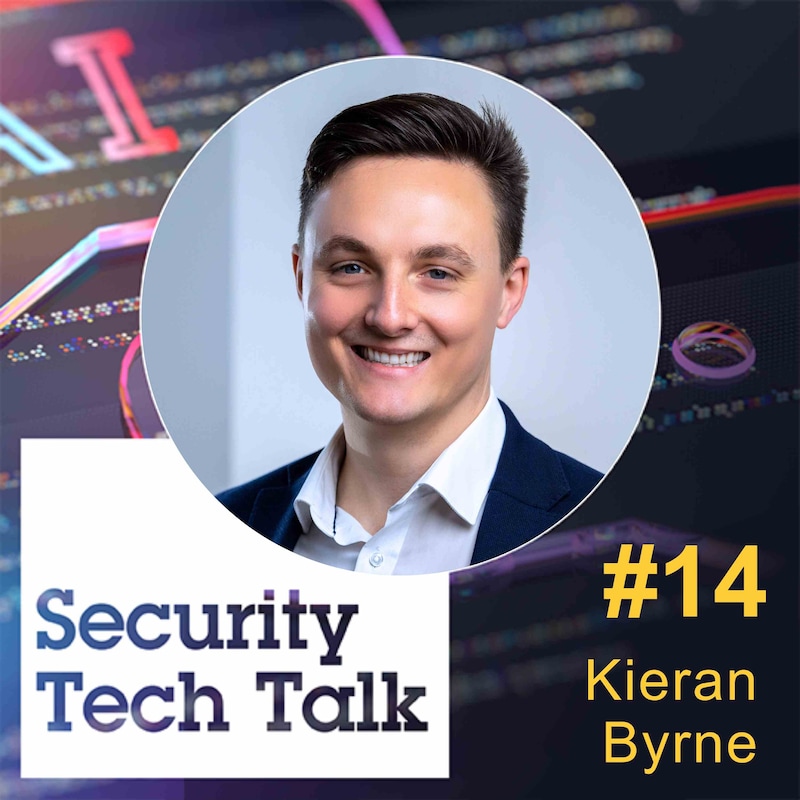
In this episode of Security Tech Talk, Steve is joined by Kieran Byrne, A&E Manager at Axis Communications, for a deep and practical conversation about sustainability, total cost of ownership, and the evolving legislative landscape shaping the security industry. Kieran and Steve discuss how sustainability has evolved beyond “green initiatives” into a broader commitment to ethics, human rights, and corporate responsibility — and how new European directives are making compliance a business-critical priority. Together, they unpack how smart building design, interoperability, and energy-conscious technology choices can help organizations meet their sustainability targets while reducing operational costs.
About Our Guest:
Kieran Byrne is a dedicated technologist specialising in IP-based solutions and innovations for security and video surveillance, focused on enhancing security and optimising business performance. Leading the Architecture & Engineering (A&E) Program for Axis Communications in the UK and Ireland, Kieran supports consultants and specifiers in developing world-leading security designs. He is also an active contributor to industry associations, including the UK and Ireland chapters of ASIS International.
Connect with Kieran on LinkedIn
Chapters
(0:00:00) – Introducing Sustainability in Security
Steve welcomes Kieran and sets the stage for a conversation on sustainability, total cost of ownership, and legislation driving change in the security and smart building sectors.
(0:05:00) – Beyond “Green”: What Sustainability Really Means
Kieran explains how sustainability extends beyond environmental issues to include ethics, human rights, and responsible sourcing — referencing key global examples like the Rana Plaza disaster.
(0:10:30) – Legislation, Compliance, and Accountability
The conversation dives into new regulatory frameworks like the Corporate Sustainability Due Diligence Directive (CS3D), emphasizing how compliance now affects entire supply chains and organizational accountability.
(0:20:45) – Energy Efficiency and Total Cost of Ownership
Using real-world examples, Kieran highlights how comparing device energy consumption can uncover massive long-term cost savings — supported by Axis’s new Total Cost of Ownership Calculator within Site Designer.
(0:38:00) – Education and Empowerment: Taking the Next Step
Kieran shares his reflections on personal learning, encouraging professionals to educate themselves on sustainability and take small, measurable actions that lead to meaningful industry change.
Resources
Learn more about the Corporate Sustainability Due Diligence Directive (CS3D)
Explore the BREEAM Building Certification Framework
Try the Axis Total Cost of Ownership Calculator in Site Designer
Read about EcoVadis Sustainability Ratings
Hear interviews with other guests mentioned in this episode:
Revolutionizing Smart Building Solutions: From Integration Challenges to AI-Driven Security with Dan Drogman from Smart Spaces
Legislation Meets Reality in Cybersecurity with Mike Gillespie from Advent IM
Sustainable Surveillance: The Role of Optimized Storage with BenYoxall from SecureLogiq
Meet your host Steve Kenny:
Steve has spent 14 years in the security sector undertaking various roles that have seen him take responsibility for key elements of mission critical, high profile projects across a number of different vertical markets. For the last several years, Steve has focused his attention on how technologies can best compliment day to day operations and specifically address operational issues by supporting the A&E consultant community across EMEA. Steve is a committee member for ASIS International focusing on Education for the security sector and the UK technology advisor for TINYg (Terrorist Information New York group).
Connect with Steve on LinkedIn
More about Axis Communications: Axis enables a smarter and safer world by improving security, safety, operational efficiency, and business intelligence. As a network technology company and industry leader, Axis offers video surveillance, access control, intercoms, and audio solutions. These are enhanced by intelligent analytics applications and supported by high-quality training.
Axis has around 5,000 dedicated employees in over 50 countries and collaborates with technology and system integration partners worldwide to deliver customer solutions. Axis was founded in 1984, and the headquarters are in Lund, Sweden.
Find out more about Axis Communications - Innovating for a smarter, safer world:
Transcripts
Intimidating, isn't it?
Steve Kenny (:Are you intimidated by a microphone?
Peter Dempsey (:Just start staring at me, you can't put it there like that.
Steve Kenny (:Hi and welcome to today's episode of Security Tech Talk. Today I'm delighted to be joined by an industry colleague of mine in Peter Dempsey with over 30 years experience in the security industry. 32 years, okay those extra two they all can't do they Peter. So 32 years in the security industry working for various technology companies and working for Axis for over 10 years. And what is great is more recently there's been a heavy focus on the data center market, which I think we'll all agree is probably one of the fastest growing, the most exciting segments, if we can even call it a segment, that the industry is seeing today. This is one area that I know Peter has been heavily involved in and has probably been at the forefront of many of the security discussions that we see with all of these the large hyperscale tech companies, the co-location, multi-tenant type sites. So there is no one better qualified to talk around security, the market as a whole, and everything that we see in terms of the data center market today. So Peter, thank you so much for taking the time to join us.
Peter Dempsey (:Thank you. Great to be here.
Steve Kenny (:So I'm going to kick off just to get like a general perspective of the data center market, because where we are today is fundamentally and very, very different to where the data center market was. I'm going to say three years ago, five. And like if we look back 10 years where you probably started working within the data center market, there's just no comparison.
Peter Dempsey (:No comparison. So when I started in this space, actively probably about five years ago, the traditional hyperscale accounts, these are the Microsoft, the ADOS and the Googles. We were talking about facilities, five megawatts, 10 megawatts, 20 megawatts. But now we're looking at campuses that are up to 100 megawatts. So put this into context, 100 megawatts would be equivalent to what power is required for Dublin City or small city of a million people. Wow. So that's where we're going well beyond that. So and also if you look at the traditional rack requirements. So generally we're in a rack. The CPU server requirements traditionally were 10 kilowatts, which would probably be equivalent to powering four average four bedroom houses. But now what we're seeing with the introduction of GPUs in the racks, that's that's gone up from 150 kilowatts to 600 kilowatts which is equivalent to 300 homes. The power of 300 homes in a rack, a rack alone.
Steve Kenny (:How many racks do we get in the average data centre?
Peter Dempsey (:You could have in a colo, you could have up to 60 racks per colo. And then the thing with this, this is all changing as well because the actual physical size of these racks is changing and evolving as well. Because there's so much power required in the racks, they're looking at different technologies to cool the racks. So you're looking at liquid cooling, immersive cooling, which basically means the fundamental rack physical size and shape is also altering as well.
But if you look at the digital infrastructure market in the next five years, it's expected to quadruple in size just to put some context in terms of where the market is going.
Steve Kenny (:When we say quadruple, what is the starting number?
Peter Dempsey (:So the current capacity that globally we see is 205 gigawatts. And over the next three or four years, there's 80 gigawatt of new capacity coming on stream. Now that 80 gigawatt capacity has basically been in the pipeline for the last year alone. Alone, just to give some context behind it. So the market is moving at an exponential rate.
Steve Kenny (:What's driving this? AI. So we've had discussions around sort cloud requirements and infrastructure, digital transformation, all of these exciting buzzwords that the industry is focused on today. The reality of it is life would not, I wouldn't go as far as saying life would not exist without data centers, but everything that level of interconnection is, is so heavily reliant on data center infrastructure.
Peter Dempsey (:Yeah, and we're only at the start. So really the watershed moment for this was around the introduction of ChatGPT in 2022. So that really showed the potential of AI. But now with the advent of generic AI, we're seeing model training moving to 90 % of global workloads and modeling, but that's all going to shift to inference, which 90 % inference by the year 2030. So at the moment, All the models are being trained. But as we move to an inference model, that's when they're making their own decisions. So we think around, obviously going well beyond ChatGPT 4.0, we think around autonomous vehicles, know, autonomous robots. We look at the announcement in Paris, the Tesla robot actually was showcased in Paris. So this is all being set up for the next three, four, five years and beyond but the capacity requirements is absolutely huge. And we're now here in terms of AI factories. So instead of data centers, we're here in AI factories.
Steve Kenny (:And to think that was something that was discussed in terms of investment collaboration opportunities when Donald Trump visited the Middle East and we're talking around the large AI campus in the world. And we're not talking several hundred millions worth of investment. We're talking tens of billions, if not trillions that is going into this space, which is both exciting and incredibly, I don't know, it's scary and the thought of the level of investment that is going into this is just obscene.
Peter Dempsey (:It is, and it's not just growth, it's a digital gold rush.
Steve Kenny (:A digital gold rush. And we spoke about that. I spoke about this to Turchis on a different podcast and we were talking around the Middle East and it being the next generation of the gold rush and the investment that we're seeing in all of these areas. Where does it stop? Now, if I look at it, and we've seen it publicized in sort of mainstream media in Ireland where they've sort of had to go, right? We need to press pause. We are literally going to run out of power. We cannot. We are going to compromise the citizens of our country by powering data centers.
Peter Dempsey (:Yeah, it's a number one challenge. Power is the number one challenge. Use New Orleans as an example. We have a monitorium in the country of new connections now to the grid until 2028. So what we're seeing in New Orleans is a complete pause in terms of new data centers going into New Orleans. And we're now starting to see a shift from the traditional, what we refer to as the Flapp D Markets. So the Flapp D Markets is Frankfurt, London, Amsterdam, Paris and Dublin. This is where all the traditional deployments of data centers was done from a hyperscale perspective, from a multi-tenant data center perspective. But now what's happening is that we're seeing the investments start to go to what we refer to as second tier countries. So a second tier country would be Poland, Spain, Madrid, Zaragoza, Milan, are some of the key countries that we're now seeing massive investment going into. And one key factor. And when we talk around power, we look at the Iberian Peninsula because power is so cheap. It's an obvious place to go. So we're starting to see a massive concentration of campuses.
Steve Kenny (:Is that what is driving those locations or is it the infrastructure capabilities and I'm mindful that underwater cables is something that people need to take into consideration. What are the considerations of picking a location?
Peter Dempsey (:So, to many of the points you just said, power is first and foremost, kind of get access to the power, kind of get cheap power, where the undersea water cables are being routed. So that's a big, big important point from the Spanish and Iberian Peninsula perspective. Accessibility to land is another. And also we talk around data sovereignty as well.
Steve Kenny (:Yeah, data sovereignty is massive, where we see it in the Middle East at the moment. And I know we've spoken about this because I've had to sort of reach out to you and ask questions in terms of some of the legal considerations around data sovereignty, where we had different companies in the UK saying we're going to be working in building data centers in the Middle East. And what we'll do is we're going to store the video surveillance in the UK and we're going to do this and we're going to do that. And you're like, no, Steve, is a no-no.
Peter Dempsey (:It has to be housed within the country. We had obviously the keynote speakers today in the panel today when AWS obviously commented exactly around this point that in terms they're setting up pubs, campuses, dotted all around the mayor. And then it will be up to that end customer to determine exactly where he wants that data stored. And he will have to sign off on that data. But what we are starting to see is what's being referred to as data center safe harbors or data center embassies within a specific country. So the same rules apply in terms of an embassy is now starting to happen with these data safe harbors as well. So we are starting to see them pop up as well in areas where there is cheap power. And we're starting to see that to happen in Spain or the tour part or tour to regions like Zurich. And it's starting to happen in South Africa as well. So it's an interesting concept.
Steve Kenny (:And I can't get my head around that. So I understand the concept of an embassy. And when obviously you have an embassy that land and that property, if it was a UK embassy in the Middle East, that actually is that piece of embassy is UK land that has been gifted. And you're saying it'll be something similar in terms of that country will gift a piece of land to a country and they will build a data center on it?
Peter Dempsey (:Yeah.Data Center Harbors, yeah. So it's a new concept. This is not mainstream, but it is definitely a concept that's out there at the moment.
Steve Kenny (:So have you just broken news on today's podcast? Fantastic. There are so many different talking points that we consider around the challenges. There's so many great opportunities. And if we look at specifics around artificial intelligence, you've just said what is creating this drive and this demand and the need for additional data centers and additional power is going to be the requirements that AI is driving.
Steve Kenny (:I saw at a conference in the UAE. So at the International Security Journals, Security and Leaders or Leaders and Security Conference, they actually had the head of CIRA speaking to an AI. It was basically an interactive session that it was having a conversation with artificial intelligence and it was talking around its capabilities, which was, it was mind blowing. They had a conversation. And it was talking around the fact that it might have taken 250 engineers three years to design from cradle to grave the Burj Khalifa. And this artificial intelligence, when asked questions, was saying, well, I have the most up-to-date building requirements. I know what the most up-to-date legal standards and regulations are in terms of building design. I am a mechanical engineer, electrical engineer, and a construction engineer all at the same time and I could design with the same level of detail and a greater level of accuracy the Burj Khalifa in less than a week and I will give you build accurate drawings for construction firms to walk away and build. And it's like I know what the threat and risk landscape is from the building. I know what the structural requirements are because of all of the land surveys that have been done. So something that was taking 250 people two to three years to do, AI claims that it could do it in a week.
Peter Dempsey (:It's a completely different world. It's a completely different world we're in now at the moment and the possibilities are just endless.
Steve Kenny (:And who was it that asked the question and said to AI, well, we know that today, based on the requirements in three to five years, the biggest challenge is going to be power. And AI answered it and said, I don't know the answer today, but AI will answer that and solve that problem for you. Now that is next level arrogance, what is just such a, such a crazy concept, isn't it? That artificial intelligence is going to solve the challenges created by artificial intelligence within data centers.
Peter Dempsey (:It's crazy and what's really interesting is the scale at which these facilities are being built down now is that we're already seeing designs that are being done now and once the designs are being issued they're potentially nearly already out of date.
Steve Kenny (:So Data Cloud 2024 can, last year, one of the number one challenges that people said that they were having to consider is the data center was being designed and they were looking at the cooling systems of site. And then all of a sudden brand new manufacturers were looking at late, like state of the art water cooled racks. So everyone had to press pause, not necessarily to consider that technology and evaluate it but because they had to redo the structural integrity and design of the data center, because that rack had trebled, it was four or five times heavier. everyone had to press pause because of a new water-cooled.
Peter Dempsey (:Absolutely,yeah. So it's they haven't got standards in place. There's so many different new technologies that are coming in. They haven't agreed on what the standard look like. So there's different companies trying different technologies around water cooling. Now air cooling is still obviously the most prevalent, but water cooling is coming more and more as we get these GPUs in the racks. What's really interesting is that the designs, as I said, they're that doing these designs now, generally it's going to take them three years to build from a greenfield site. And it's hardly probable that in three years time, what they've designed, it's just not going to work.
Steve Kenny (:That as a challenge isn't unique to the data center market. is construction. Full stop. What people are designing today, when it is out there being implemented, the technology designed has going to have been improved tenfold. Now let's get a view on the EMEA market at the moment, because obviously I'm mindful that that's where the vast majority of the listeners are. So we are starting to see many, many sort of areas pop up like you've referenced those sites in the likes of Spain, the likes in Italy. I have seen firsthand what is happening in the Middle East. So what is ultimately driving this?
Peter Dempsey (:AI is driving it.
Steve Kenny (:So everything, all roads lead to AI.
Peter Dempsey (:Everything is being driven by AI. Like if we look at the EMEA data center market at the moment. So at the moment the capacity in EMEA is 10 gigawatts of capacity. And then there's two and a half gigawatts under construction. But there's 20 gigawatts in the pipeline. Like you have to understand these numbers are completely off the charts. 20 gigawatts in the pipeline. Now that's across all markets. We hear announcements. We've heard announcements for the last two years. We've heard a massive investment announcements in the UK, in France, in Spain, in Italy, in Germany. And now we're hearing all this investment money going into UAE and Saudi. So, and it's all been driven, all been driven by AOI.
Steve Kenny (:That's incredible isn't it when you think of the investment in these areas.
Peter Dempsey (:Yeah, like I mentioned the second tier markets. So Berlin, Milan, Madrid, Zaragoza, Lisbon, and Zurich. So, and I mentioned about the Arbirian Peninsula and why the Arbirian Peninsula, cheap power. But Saudi and UAE, they want to be digital hubs, digital AI hubs. That's where a massive investment has gone in. And we've already seen some of the hyperscalers, Microsoft, AWS, and Google, start to build out campuses in there. Now you're probably going to take two or three years for that to materialize. It's going to be sort of similar in terms of what happened in Spain, but the scale is going to be 10 times bigger. Spain and Zaragoza has just literally taken off. It reminds me quite a bit about Ireland and where Ireland was five years ago. Ireland was front and center of all the investment that was coming in. But the thing that thing that basically pulled Ireland back was access to power on the grid. but what's happening in a lot of these countries, they're identifying that right from the outset.
Steve Kenny (:Right. Okay. they've seen what's happened in Ireland and they are essentially addressing that now.
Peter Dempsey (:Just in Ireland, it's happened in the Netherlands, there's been monitorings in the Netherlands for a number of years. It's happened somewhat in Germany as well. So most of the concentration has historically been in Frankfurt and there has been similar situations there. So they've looked at what's happened across the market when they're going into new merger markets and power is the number one. That's what they'll identify first. Then they look for land permits, regulations, access to underwater subsidy cables and take it from there.
Steve Kenny (:And then when I look at your engagement and who you probably speak to on a fairly regular basis, you've referenced the hyperscales and those large tech companies, your AWS, Google, Meta, et cetera, et, yet at the same time, we've got, I'm going to say hundreds, and it's probably not hundreds of those sort of colo-type data centers. What is…I'm very mindful that the vast majority of the industry will still require the colos to provide the infrastructure and the data center requirements. But am I also right in thinking that those hyperscale data centers are also heavy users of those environments?
Peter Dempsey (:So if you look at the hyperscalers, when they build a facility, they reference it as a class A facility. So this is a facility that they build themselves.
Steve Kenny (:And they, so they own and operate themselves?
Peter Dempsey (:Greenfield saw it all the way up. But the reality, what's happening in the market in the last, not just in the last year, two years, the last couple of years, is the demand is obviously increasing. It's not increasing at the rate we're seeing now, but it is steadily has been increasing year on year, probably 20, 25 % increase year on year. And they could not build these facilities quick enough. So what they then went to was lease providers. So this has been a model that they've always had, but what we've seen is we've seen a greater uptake on the amount of leases that they're taking. So what would happen in that scenario is that you'd have a lease provider who could be a Vantage, an Equinix, a Service One, a Telehouse. They'd build these facilities, they would be the landlord of these facilities and Microsoft will come in and say look we're going to be the anchor tenant, we're going to take absolutely everything. So we'd refer to that facility as a Class B facility and then there's a Class C facility whereby Equinix or Asaurus won't build a facility and the hyperscale will take an element of that facility so they wouldn't take it all they probably take a section of it and then the rest of it would be sold off to other enterprise and customers as well.
Steve Kenny (:So from a, I'm going to say a product approval type of a sort of scenario. I work for a Colo data center provider. If I know who we are targeting our space at, is it sort of advantageous to make sure that what is being installed at the base build or day one is compliant with whatever the hyperscale or whatever the approved supply list is of that provider or is it a, just going to stick stuff in and then we'll have to retrofit it if it doesn't comply. What's that?
Peter Dempsey (:Yeah I think we're, from an access perspective, we're in a really fortunate position. We've been working with these hyperscale accounts for 10 years and we would be the number one vendor of choice across most hyperscale accounts. So we are in the fortunate position. They do take that into consideration when they're fitting out some of these builds. We have seen in situations where the landlord would put in a security solution and they'd have to physically take it out. Like we've seen situations where we've had hundreds of cameras physically installed. not just cameras, access control platforms as well. And we've seen them installed and we've seen them taken out like weeks later. Because they have to conform to the standard that these hyperscale accounts have globally. So the consistency in terms of what they're deploying, how they're deploying it, is so important.
Steve Kenny (:Yeah, I know from our side and seeing the level of due diligence that these type of companies will do on our tech from penetration testing of the actual tech, looking at source code, et cetera, et cetera. Even doing site visits in our headquarters and our sites to make sure that we are physically secure because they are out of all of the organisations that we probably work with, are, I'm not going to say the most paranoid, but they are the most aware in terms of the risk to their organisation should there be a security breach.
Peter Dempsey (:Absolutely, I uptime, uptime, uptime. The cost of them not having eyes on a rack in a specific gray space or white space. When I talk around a gray space, I'm talking around where all the IT equipment, all the servers are stored. When I refer to the gray space, we're talking around all the mechanical, electrical equipment. It's imperative they've got eyes on that and they know that they can rely on us. The reliability of our products is second to none. They perform all the time. But to your point in terms of the testing,
It could take us six months to get a new product evaluated and tested with these companies. Going through all the relevant pen tests, network testing, absolutely everything. And what's made it even more critical now is with NIS2 coming in and classifying obviously data centers as critical infrastructure. It's now brought up another level and obviously the Critical Entity Resilience Act as well.
Steve Kenny (:Yeah which is arguably, and this is me taking my I love cyber security hat off, the Cyber Resilience Act, all of these I think they probably take it to the next level.
Peter Dempsey (:Yeah, they do. And we're seeing that in terms of engagements with the wider ecosystem of partners who are wrapped around these accounts. So we're seeing more conversations with the architects and engineers. We're seeing more conversations with the actual integrators who are doing these deployments as well. We're having a lot more questions being asked. And we have the hyperscale accounts talking to us around what our approach is from a NIST 2 perspective and also from a CEO perspective as well.
Steve Kenny (:Yeah, I think CER is probably going to be one of those frameworks and legal compliance that organizations are going to quickly have to read up on in terms of what is needed. I'm not saying that data centers need to be brought into critical infrastructure. It clearly is. Society is so heavily reliant on data centers being operational and working. But actually the maturity of these businesses, they've recognized that from day one. One comment that I've heard many times is when they talk around the cloud and they talk around data sensors and they always say, but it is just someone else's PC somewhere else. Yeah. Which is factually correct. Yeah. But actually what you're doing is you're relocating a PC from a reception desk on the front of a building that has no security into Fort Knox.
Peter Dempsey (:Yeah, and it is Fort Knox. It is Fort Knox. Our approach around security within the data center building, we base it on five different layers approach all the way into the rack. So we prioritize the outer perimeter with a whole host of different technology directly at the edge from thermal based technology, advanced AI analytics, advanced AI speaker horns. We take it into the second layer, which is on the building. We'd have advanced AI working on radar based technology. We'd have thermal cameras, autonomously talking to PTZ cameras to send out geo coordinates to track people around the perimeter. As said, we then talk to the fourth layer inside. Then we go into the mechanical and electrical area, admin area, all the way into gray space, white space, all the way into the rack. So the level of security is off the charts.
Steve Kenny (:I have seen at a trade show, so please correct me if it is science fiction and Hollywood rather than a reality, where people have actually put our pinhole cameras into the racks and put facial recognition on them. And then that is essentially what controls access to that specific rack.
Peter Dempsey (:Probably not to that extent. I think you're probably sold something out of trade show.
Steve Kenny (:It was an AXS device so I'm bored.
Peter Dempsey (:Yeah, yeah yeah like the capability to do that is obviously there probably not necessary to a pinhole camera device We probably need something a lot more higher higher resolution, but we are seeing more advancements inside the rack as well. We do talk around preventative maintenance inside the rack we talk around deploying thermometric cameras actually inside the rack itself for preventative maintenance so we're seeing this more and more but I think one big area for us is how we go beyond the traditional security piece and how we can identify efficiencies with existing hardware. So how we can push these devices harder. So we've got devices that have been deployed two, three years ago. We're now going back to these devices via firmware upgrades, which has given us greater capability to deploy more intelligent analytics directly at the edge. a couple of examples is that where you have a traditional camera looking at a generator or a rack, we deploy a specific analytic to identify fur and smoke. It's coming for the hits of sensors. We looked at other applications where with the introduction of more water into the white space, and deploying cameras with water pooling analytics built into the device itself. So we have water pooling. It generates an alarm, can push that alarm to a strobe, to an IP speaker horn or to the command and control center. So there's various different applications. We've looked at what is around tailgating. We've looked at the use of individuals wearing PPE gear or not wearing PPE gear. So it's just a way of getting additional value from the assets that are already deployed, how we can look at operational efficiencies. And we're creating so much data. There's so much data points being generated now.So we are starting conversations with the DCIM providers. So the DCIM provider in the data center is like the PSIM in our video world. So all the smart IOT devices, they're all fed into this DCIM platform. And now we're starting to look at to see how we can push our data into this platform as well. But also what we're looking at is some of the other smart IOT devices within a data center setting.
So we just classify our cameras as smart sensors. And we've done various trials now, for an example, with heat and humidity sensors, where we've taken the data directly from those sensors. We fed it into our cameras as a text overlay, and we were able to generate alarms directly inside the camera based on the data coming from the heat and humidity sensor. So as our devices all support MQTT built in, we've now opened up all these different smart sensors. How can we pull the data from them? Where's the value associate with that? So it's a really interesting space now where we're moving with this to see where we can add additional value layers.
Steve Kenny (:And I guess these now are a genuine value add. So one area that we got requested, and I know that you've been involved in, is the power requirement evaluation of our technology. But when you look at a data center and you're thinking this data center is the equivalent of Dublin city, I thought, and always thought that what our tech requires is it's so small and minuscule. in comparison to the requirements that no one would care. Yet people are literally analyzing every single device because even the smallest most incremental savings can have a big difference.
Peter Dempsey (:Absolutely. we're dealing with all these physical security professionals within these organizations. They have to report back up the food chain as well. You know, power across all the devices is so important. And because the fact we manufacture our own ship and because of the fact that we've got full control over it, all of the voices produce the least amount of power, least amount of bandwidth equals least amount of cooling, equals saving money. But when they're reporting and their power requirements. This is a real, real important factor for them as well. Very important. Even though it is quite small, it is still very important from those individuals within that company to report these back up accurately.
Steve Kenny (:So Peter, give me one sort of final takeaway that you would like to share with the audience today. What is your, I'm going to leave you with this, Steve.
Peter Dempsey (:So I believe it was at one point, which I said earlier on, this is not just growth, it's a digital gold rush.
Steve Kenny (:Thank you very much for sharing your time today. I think the conversation has been absolutely fantastic. And there is absolutely no doubt the opportunity that our industry will play in the evolution of data centers moving forward. And it is so exciting.
Peter Dempsey (:It's exciting.
Steve Kenny (:Thanks for tuning in to Security Tech Talk. If you've enjoyed today's episode, be sure to check out the other episodes for more insightful discussion and expert perspectives. Don't forget to subscribe so you never miss an episode. This podcast is brought to you by Axis Communications. Axis enables a smarter and safer world by creating solutions for improving security and business performance.



