Transcripts
Sonia Kampshoff: Welcome to Working with Languages. My name is Sonia Kampshoff. I'm your host and a multilingual digital marketing consultant. On this podcast, I talk to people like us who use their language skills in the work they do in the widest possible way. Together with my guests, I will discuss why languages are even more valuable in the age of AI and how we can all make languages a meaningful part of our career journey.
Let's dive in.
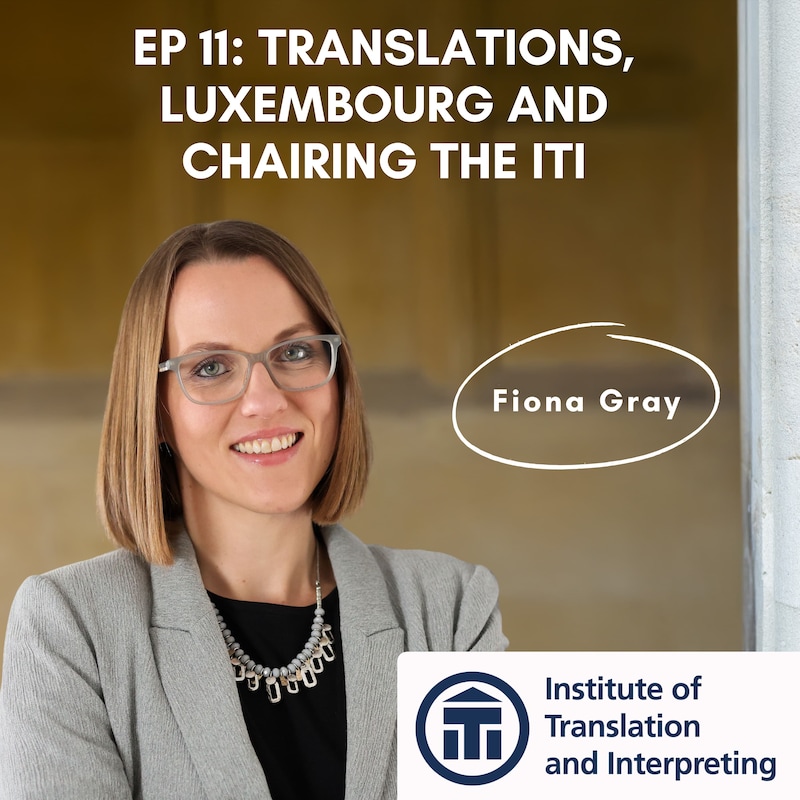
In today's conversation, I'm joined by Fiona Gray, a translator and the chair of the Institute of Translation and Interpreting. Pona talks to us about building an intentional career around languages, picking a niche that fits her embracing community and stepping into a leadership role. And I also love her favorite word and why she picked it.
Let's get into it.
Hello and welcome back to the podcast. My guest today is Fiona Gray, who is a translator and the chair of the UK Institute of Translation and Interpreting. Hello Fiona. Hi Sonia. Really nice to be here. Thank you so much for inviting me onto the podcast. It's lovely to have you here. As you probably know, I normally ask my guests a fun question.
Fiona Gray: Well, I think it's fun, at least at the beginning. So what's your favorite word or phrase in a language that you speak? I am just gonna say it is a fun question. All people who have learned another language. Um, so I'm agreeing with you there. And it's an interesting one because it actually got me thinking about back to kind of the earlier days of learning journal.
So that's my working language. I translate from German into English and. I'm gonna go with my favorite word, the German word, and it's Umgebung. And this might sound like a bit of an interesting choice for German speakers. It kind of means your surroundings, your surrounding area, the environment around you.
But the reason I like it is 'cause I remember specifically the exact moment that I realized I'd been pronouncing it wrong, but the whole time I'd lived in learning German, I'd been saying, um, and I was in Berlin doing an internship at a translation agency. And I can actually. I can picture myself sitting outside eating dinner and realizing I'd got it wrong, and it made me just think about two things.
One of how important it's to be immersed. The culture and the country where you're the language you're learning. So I appreciated that. And I also found it funny that I'd got it wrong, which was important to me because I have always been horrified to make mistakes when learning a language. And I remember that I found that funny and I wasn't worried and embarrassed and mortified. So I thought that was a good turning point in my language learning story.
Sonia Kampshoff: That's very, very positive.
Fiona Gray: Yeah, that's why, that's why I always remember that one.
Sonia Kampshoff: So, yeah. So did you just hear someone else saying it?
Fiona Gray: Yes, that's it. Yeah, it was out for dinner with some colleagues and I just, it was just a moment. I dunno if you've had this, when you just have a moment of realization, sometimes it happens, you know, in English as well. When you realize that a phrase has been, you've been saying your whole life isn't actually what it is, especially for me as a non-native English native speaker. You know there are so many words that are in English that are written one way and you think they're pronounced one way and they're not exactly.
Sonia Kampshoff: Oh yes, I can relate to that. So you speak German then where did you learn the languages and where did you grow up?
Fiona Gray: Yeah, so I, I mean, I grew up here in the UK, in Norfolk. Um, and I, I learned the language at school originally and I, well, I can remember being kind of 11 years old and going to a library and getting a German learning you for learning German for Children book and being fascinated by it.
And then I ended up studying. German at school and adding French the next year and studying them both to a level, um, and then going on to university and was so in love with learning languages that I hadn't really thought about what I'd like to do with the languages. I just wanted to learn more. So I went to Nottingham to university where I could learn Spanish from scratch.
So I did modern language studies and did the three languages at degree level. So that was, that was my main thought. How many languages can I learn? The thing that I love the most. Um, nice. Yeah. And that, and that is where it all started.
Sonia Kampshoff: Fiona Gray: Did you do a university exchange somewhere?
Fiona Gray: Yes. So as part of the course, it was a four year course and the third year was a year abroad. And this was interesting 'cause you had to divide it between the three. Oh, so people who, yeah, exactly. So not many people have had this experience, 'cause not that many universities actually offer the three language degree. Um, and so the people that studied French went to France for a year and did a placement and I had to kind of do a bit more logistic planning and getting it all to fit together.
So I did the internship that I spoke about before in Berlin, that translation agency for six months. And then I did a semester at university in Spain. And then I. Did summer at a very intensive language course in France and lived in Paris for just over a month. So that turned out not to really be long enough to get my French up to and to match the level of the people that had been there all year.
But it was overall brilliant year. Lots of opportunities. And it was interesting to kind of compare the different countries and cultures as well. So I did get that extra benefit.
Sonia Kampshoff: That's amazing. I think it's so positive that university really encourage you to go not only to one country, but to three different ones in the course of the year. So it's, it's wonderful.
Fiona Gray: Yes. Yeah, an amazing opportunity.
Sonia Kampshoff: Yeah, what did you do after uni?
Fiona Gray: So straight after the modern language studies degree, I did my master's and that was in literary translation, um, at the University East Anglia in Norwich. So I stayed, I was back to Norfolk then, so I stayed at home and kind of commuted into Norwich when I needed to go for seminars.
And this is when I focused just on German. So it was at this point that I kind of dropped French and Spanish, 'cause I just love German the most. And I knew that that was the language that I needed to, to take forward. And it just, I just understand it and it just, it fits with me and the culture fits with me.
So at this point I thought, I'm just gonna focus on that. So I did my literary translation masters just with a German focus. Um, there were people studying all different, all different languages on that course. Turkish Arabic, everything. So it wasn't kind of language specific, but my dissertation was translating a German novel and writing a commentary on that.
Sonia Kampshoff: So you translated a full novel for the, for the masters.
Fiona Gray: Well, it was the best part of a novel 'cause it was quite short, so yes. Yeah, it was a certain word count and then. A really big commentary explaining everything that you'd done and how you'd translated it. So I, I picked quite a short novel, so it was most of it, yeah, it was, which was quite an experience at the time because it was the first time, like that was, you know, the, the meatiest translation I'd ever done for sure by a long way. Yeah. And it was really good to have that opportunity to explore the choices and yeah, the choices of the author and and myself as the translator in the commentary.
Sonia Kampshoff: How did you pick the author in the novel?
Fiona Gray: That's, that is a good question. So it was a novel that was about the Holocaust actually. So, uh, I wanted to study that period of history. I wanted to bring that in, and it was about the, kind of the, the blurring of boundaries between fiction and nonfiction. Um, and actually I'd studied this novel as a module at Nottingham in a, I think it was a literature, a history module. It was something not to do with translation and I remembered it and I remembered that it hadn't been translated, and I thought, oh, actually it's a good shout. I have that book and it's, it's something really interesting. I'd love to explore. So that worked out. Yeah.
Sonia Kampshoff: Did you then finish the translation and did it get published or did you leave it at the dissertation?
Fiona Gray: No, I left it. I thought, I did consider applying for a PhD at that point, and then I decided to follow a different path. So, I don't know, maybe one day I'll go back to it. I think I, I kind of made the decision that I won't go into literary translation at that point. You know, it's not an easy field to get into, and I thought I would apply in-house translation jobs at translation agencies, and I still think maybe one day I'll go back to it. It's either that or write a novel myself. So I'm gonna, I'm gonna come back to it one day. This is my hope and dream.
Sonia Kampshoff: Brilliant. So did you then go on to work for translation agency?
ike a long time ago. This was:And I learned so much and I learned a lot from being in that commercial environment actually. Um, and. A lot of the skills that I still use now. Really what I did realize was that I missed that real creative aspect of the literary translation Masters 'cause it was quite a contrast to then go into patents, which doesn't allow much creativity in the translation process.
So after about a year and a half, I applied for a translator, an in-house translator role at a much smaller translation agency in Surrey. It's a family run business. And I got that job. So then I got my first translation job and used all the skills that I'd learned from proofreading to start being the translator, which was very exciting.
And a lot of the work there was marketing based, so it was a bit more creative getting back to what I think I'm good at and what I enjoy. Um. And actually the first project I worked on was a brochure for a luxury cruise company, which was just fun. Um, apart from the fact that I was nervous, that was my first translation project for my new employer.
But I really loved it and that is, that really did shape the work that I, that I went on to do when I went freelance to start my own business, which was about two and a half years after starting that in-house translation job. So I got lots of experience there, lots of feedback from the other translators who were amazing.
Um, and they know that I think they really, really helped me be where I am today. So yeah. And that's, and that's, yeah, that's really the work, really related to the work that I do now because I, I do really creative marketing and tourism work, so that stayed with me.
Sonia Kampshoff: You do specialize in Luxembourg as a, as a geography, right?
Fiona Gray: That's right, yes. Um, so really tourism, I, I love working in tourism. I gues it probably all started with that cruise ship brochure, you know, I think, I think I do, I do owe a lot to that project and that job. Yes. So I got, um, referred by a colleague of mine to a client based in Luxembourg. We worked on, I worked on a book, um, I worked on it with a colleague actually, so I did the translation and my, my lovely colleague did the proofreading of my translation.
We worked really closely together and it's gone on from there. So I've, I've kept working with that client and I've think I've done multiple projects for them this year, I've just been working on a hiking guide, which is all sort of 200, just over 200 hikes in Luxembourg across all the different regions.
Yeah. So all of the little description, and it's got photos and a map and it's an amazing publication. It's a, it's kind of a binder and you can take out the pages and there's a small plastic folder that you can put them in and take them on your, on your walk. So it's really practical, it's really clever and it was so much fun to work on.
I, I have, and it, I've been working on it for over a year, a really long time. Not solidly, but you know, in bits and pieces. So that's been a really great project and I, and that has really given me a love for Luxembourg. So the past three years I've been on holiday, we go on a big kind of European road trip camping holiday, me and my family, and we, the past three years, we've obviously gone to Germany.
And we popped into Austria and went into Switzerland. But every time I've been to Luxembourg and done a bit of exploring and followed some of those hikes, you know, spotting the things that I've translated about the places and the tourist attractions, uh, I love it. It brings, really brings it to life and a real strong sense of purpose. And so kind of belonging, I think. Very nice familiarity.
Sonia Kampshoff: Yeah. Really nice. It's such a beautiful part of the world and I think it's kind of underappreciated perhaps, people don't think of going on holiday there. It's a small country, isn't it? But, and I think maybe that's why it's underappreciated. But I've been there once and I was fascinated by its beauty and the um, the capital city and the nature and everything. So yeah, looking forward to going back myself.
Fiona Gray: Yeah, you're right. It is. The capital city is wonderful and the nature is just beautiful. The place we went last year was just the, and the hikes, and, you know, I've been translating about them, so I have a different perspective as well. But to actually go there and see it's, yeah. Beautiful, beautiful natural landscapes.
Sonia Kampshoff: So the guides, are these guides written in German first or are they, do they come, are they written first in other languages?
Fiona Gray: Um, so it depends. So I always translate from the German, so in the case of the, this hiking guide, it's trilingual. So the texts, uh, on every page are in German, French, and English.
Sonia Kampshoff: So you actually see the three languages on each page?
Fiona Gray: Exactly that. Yeah. So it's not always the case. I always do the translation from the German at whatever point that German has come about. But yeah, in this case it's, it's been a real collaborative process and yeah, it's really great team to be part of.
Sonia Kampshoff: Brilliant. Do you do any more tourism or travel guides, translation work?
Fiona Gray: Yeah, I do. I do all sorts of tourism. Yeah. Translation work. Yes. So, um, magazines, um, so I'm just thinking, I've just finished working on magazine articles.
I recently translated the website for a hotel chain that was really fun. So different pages for all the different hotels they have in the different cities. That's in Germany. Um, yeah, Swiss, there's a Swiss region that I translate the magazine for some, it's for ski regions. So yeah, lots of different things.
Um. I love all of the, all of the different aspects of tourism. Translation sounds very interesting. It probably makes you want to go on holiday a lot. Exactly that. Yeah. And the hotels, and it's, oh, if it's spa hotel, then I think, oh, I, I do think I need to go and try this out. Or food menus for, you know, lovely restaurants.
Or if I'm right. Sometimes in the magazines that I translate, there'll be kind of snippets about different hotels and then there'll be a page about different restaurants and you just think, oh, I just need to try them more. Yes, especially, especially if I do research into them and kind of go on their website and start looking at the pictures and if there's often lovely pictures in the magazines.
And then there'll be, you know, information about a special tour that you can go on and you know, oh, I love it. Yeah, and it's also fun to do the research for these sorts of projects as well, just say. I'm often jumping into the maps and find, you know, finding my way around a place.
Sonia Kampshoff: Is there any other type of translation that you do?
Fiona Gray: Uh, in the creative field?
Sonia Kampshoff: Yes.
Fiona Gray: So. What draws all my work together is this creative aspect. Um, but I also really enjoy working with brands and businesses that have kind of a distinctive tone of voice. So I like working on that side of things. Um, and yeah, so the other areas on my website, so I have travel and tourism section and I have premium, luxury and premium and lifestyle brands.
So yeah, all brands that need to have a strong tone of voice, um. They need to really speak to their customers in a specific way, in, in a way that sounds like them. I love finding them, that voice so they can sound like them in English to kind of tell the world or certainly a wider international audience what they do. Um, and, you know, help them shout about themselves and their products or their services in their voice.
Sonia Kampshoff: Very nice. You also with work with the Institute of Translation and Interpreting. Tell us more about that.
Fiona Gray: Yes. So, um, as you said, the Institute of Translation Interpreting is, is based here in the UK, um, and is the membership association for practicing translators and interpreters and language service providers.
business and go freelance in:So one year later, as soon as I had three years of experience, which is the requirement, I took the assessment to become a qualified member. And I just got more and more involved from there, started kind of getting involved as an active member. Um, we have ITI networks, which are either geographical networks, subject specific networks. Or language specific networks.
So they bring together translators working in a particular area of the UK or there's also an international network for members who don't live in the UK or say there's the German network, there's a network for people who work in sports translation. So there's some, there's something for everyone basically.
Um, and so I joined the network for the, for East Anglia where I live. Um, and uh, I became the coordinator ultimately a couple of years later. Um, and I was the coordinator for five years until earlier this year. So that got me really involved, lots of experience. And then I started to get more involved in, um, other ITI committees.
for election to the board in:So it's been a a few months now, but yeah, it's been a really important part of my career on many levels. So as a member and then as a board member and the skills and opportunities that's given me and I've just learned so much and it's been really important to me to be able to give back to session and be part of the community.
Ultimately, that is what it's meant to me as a member as well. It's kind of professional home for translators and interpreters, which is so important when you are working. Basically at home on your own as a freelancer, which we mostly do, and to have this group of people that just get it because it's really hard to explain to people who don't get it, who won't work Freelance and translation is something that not that many people know a lot about if they happen, had experience of it.
So to talk to other people who are freelancers and who are translators is so important and it's been really important to me to be a part of that. Absolutely. The community is very, I think, uh, not only for translators, but generally speaking as communities are so important, even more so when you're working from home or remotely.
On a regular basis, and I think this community of translators and interpreters also, you can ask questions about, you know, contract types and uh, fees and best practices and professional development as well. You know, everything that is going on, everything that is changing, and I think it's a very, very valuable resource.
That's right. Yeah. And I mean, like you say about professional development, we have our, ITI, there's so many courses and webinars and workshops that are offered to translators. So it's just so many opportunities to learn. And I think that when you're maybe thinking about going freelance, you might not even think about that.
The fact that actually if you were employed, your employer would probably provide training or offer training opportunities. And actually it's a big, big part of being freelance. A translator that actually is so important to keep your skills up to date and add to your skillset and keep being able to offer your clients, you know, the services that they want and need.
And also a really big part of it for us as translators is actually the marketing and business skills. And I mean, this probably applies to other freelancers as well, but that's such a big part of what we do. And a lot of translators don't necessarily, they're not necessarily comfortable selling themselves as translators, and it's so important and it has become increasingly important.
And so to be able to get advice on that, go to a webinar and learn about it. We've got on demand courses, for example, kind of foundations of marketing strategy and things like how to raise your rates, how to invoice, like really important skills that might not have been covered, say in some master's courses if people have done that or if people have come into translation from a different route.
So some people have different careers. Um, and then they change career, uh, to use their language skills, a translator, and they suddenly need to set up a business and do all these other things that aren't translation. And that's, it's quite, it's a lot for one thing, it's a lot to manage and it's a lot to think we need to wear all these different hats and be able to cope with all these different responsibilities and roles really, you know, you're your own marketing, marketing team, invoicing an accounts team, um, you've gotta deal with your clients. There's, there's so many things.
Sonia Kampshoff: So what would you say is the most popular course or webinar?
Fiona Gray: Ooh, that's a good question. So there, I think it probably varies, but at the moment we've been running a translation in AI course, which has been popular, this is run in partnership with the Center for Translation Studies at the University of Surrey. So they're presenting, um, they're presenting the material and this has been really popular and I think it's kind of easy to understand why, 'cause AI has meant that our profession has, has changed and is changing.
Um, it's kind of been the main topic of conversation, I suppose, for the past few years. There's so much hype, and I know we're not alone in this, this is affecting lots of industries, but in our world, AI has become a huge topic of conversation and it's, it's 'cause it's so uncertain, I guess, and it's a, it can be perceived as a threat.
Um, worried and have been worried and worried that AI will replace them. You know, there's this perception of AI will take our jobs and some people have left the profession and I'm sure it's the same in other professions as a result. And just the way that translators are working and need to work has, is changing.
So, yeah, I think a course that can actually kind of dispel myths and kind of break through the hype and provide the information and actually how to, you can use AI in your business, how it can be a useful tool and actually so you can understand how it works and how it will actually impact you. I think it's important to have that information.
Sonia Kampshoff: I think AI is changing many industries, but the translation industry is one of those, uh, that, um is heavily impacted and I think understanding how AI works, what the impact is and what can be done. But not only that, I think, you know, translators can un, you can help translators understand how to use AI to their advantage, for example, in the marketing part of the business.
And also understanding, you know, okay, if there's less need of that translation, that type of translation, where's more need now for something else or something. Or checking or different areas of translation. Even if you, if you think about all the, all the copy that is now being produced about describing AI and how it works and who can use it and how to use it, even that, you know, has to be translated.
So I think it's quite important to help people understand how, how the world is changing and how they can make the most out of it. How they can change together with the world.
Fiona Gray: Exactly. I agree. I think it is the case, isn't it? With, with lots of things in life that if you are afraid of something and then you learn about it and actually come to understand it, it's not so scary.
Absolutely. And yes, you're right about needing to adapt. I think this is a big skill that probably a lot of us need. We certainly need it in the translation world. Um, being able to, um. Being flexible and able to adapt and kind of keep track of what's changing and what does that mean for the business. Um, what do I need to do, you know?
What do I need to learn about? What skills do I need to pick up and develop? Where should I focus my energy and attention and time and money, um, which are all limited. Yeah, really important.
Sonia Kampshoff: Would you say that within the UK, from what you can see in terms of networks, is there a type of translation or a niche that is most popular or that people specialize in most often?
Fiona Gray: Oh, that's a really good question. I think, I don't think that there's two translators that do exactly the same thing. Uh, but so I think lots of people like how I've got different, three different strands to kind of my creative translations. I think people mix and match based on their experience and their knowledge and their skills.
But I think. I do see a trend for audio visual translation, so people doing subtitling. Uh, there's a lot of interest in that. And trying to think of our networks. There's recent, quite recently, one of the newer networks is the Sports Network and we have some real specialist sports translators in there. Um, and that, and they're really passionate about what they do 'cause it's obviously something that they, they really love, which is often the case for translators.
I suppose a lot of specialisms are based on what you love, which makes sense. But yeah, it seems to be another popular one. Interesting. So, uh, on sports or any specific sports? I think if you dive into the sports network, there's all sorts of sports and it'll depend on the languages, um, as well, and the cultures and the countries that people are working within the markets.
Sonia Kampshoff: So interesting. I never, I never really thought about sports as a niche, but of course there's, you know, texts, uh, you know, of a sort websites and printed material that need or can be translated.
Fiona Gray: Absolutely lots of football translations. And at the Olympics, I remember a colleague talking about going the Olympics to the Olympics and translating and interpreting there. So yeah, there's lots of, so many things that translated that you don't even realize.
Sonia Kampshoff: Wow, it's amazing. Fascinating. So the members of the ITI in the UK, are they, I'm assuming, and I'm saying, I'm assuming they're mostly native English speakers translating from a foreign language into English. Is that correct or would you say it's a mix?
Fiona Gray: It's a real mix. So about, yeah, about 20% of the members are not based in the UK. So quite, uh, quite a broad, um, member base really. And, and then yeah, it's a real mix of, of translators who live in the UK who translate so either from English into all sorts of languages or like you say into English.
It, it is a real mix. So I went to I to I French network event. I delivered a workshop there in June of this year. And so it was sort of the French, the French contingent, and it was a real mix of English into French and French into English. Actually, um, which was really interesting.
So we were translating, um, one of the workshops was about translating children's picture books and the person who was running the workshop brought in some picture books in, in both languages, and then people groups together and worked on how they would translate it either into English or into French, depending on which way they were working. So yeah, it's super interesting. Real mix.
Sonia Kampshoff: Very interesting. So you allow members also from outside the UK, what is the advantage if someone lives somewhere else of joining the ITI in the UK?
Fiona Gray: I think it's about your, it potentially is about your client base. So if you are working from English into a different language and you want to work with clients based in the UK. Then I think the, kind of, the recognition of being a member of ITI, because it's a professional 'cause it's a professional body, it gives you this kind of recognition, which you can tell, say to your clients and it's part, you know, the marketing, you know, I'm recognized by this body and I take my, um, professionalism seriously.
Um, and I've signed the code of conduct, uh, and I do my continuing professional development and keep learning to develop my skills and I. That's really important. And also if you're a qualified member of ITI, you are in the directory, which means that clients can search for you and they can search by language and they can search by specialism.
So they can say, I'm looking for a translator who translates from English into French, and I need them to translate my fashion website. And it'll bring up the list of all the people that are qualified and have are working in those fields. Um, so you have a profile that you need to keep updated, which is super important. So you know, it's all up to date and clients can find the right person. But yes, and then it's a great way to get inquiries and find work, actually.
Sonia Kampshoff: Brilliant.
Fiona Gray: So I think that would be a really big sell for, even if you weren't based in the UK but you wanted to work with UK based clients. Then I suppose keeping in touch with colleagues in the UK. think in, in our field a lot of, a lot of my work has come from referrals, word of mouth. So important to have a, have a good network around you and for people to know what you do and like guess the people that understand what you do.
And then if, say, if I, um, I translate from German to English, but someone might contact me about a translation into German, which has happened many a time and I value, having colleagues I know that work in the opposite I know I can refer, um, and then I can at be helpful to that person I don't, so.
Give them the name of someone I know and trust or refer 'em to the ITI directory and say, you know, you can search here and there's all these qualified translators just waiting to be found. And the directory, if you want to search the directory, that's open to everyone. Right.
Sonia Kampshoff: So they literally can be found by everyone, all the companies that need, um, their service.
Fiona Gray: Exactly that. Yeah. Just go onto the IT website iti.org.uk if anyone's looking for a translator right now. Yeah. And then there's different filters and you can go search on there.
Sonia Kampshoff: Brilliant. Yeah. Brilliant resource. I know that the ITI also engages with the Gober government when it comes to language affairs. Tell us more about that.
Fiona Gray: Yes, so recently our CEO, Sarah Robertson, um, gave evidence, um. So into the inquiry for, so it's public services interpreting. Um, so it's about the translation interpreting in the courts. Mm-hmm. Um, and how that works. So the big inquiry going on, and ITI has worked with other professional bodies in the UK, CIOL, Strat Institute of Linguists, for example, and the National Register of Public Service Interpreters and N-R-P-S-I to give evidence in court.
So it was oral evidence and also written evidence. Um, and that went into, into a report. Um, and it's still ongoing. So we continue to collaborate, um, and. And work with those other partners and we'll see what happens.
Sonia Kampshoff: Brilliant. So when it comes to court, so you mentioned that there's the verbal, uh, interpreting side of things, but there's also the, all the written documentation, evidence. What are the documents that are required in a court environment?
Fiona Gray: I don't have any experience of this myself because I have never translated any of anything. So yes, I'll have to, I would have to refer you to one of my think. Um, yeah, but I mean, you can imagine how important those documents are for during everyone has access, um, to the information they need in a court setting legal, financial, all sorts of really important documentation that's required so that court cases can proceed properly with everyone understanding everything.
Sonia Kampshoff: Yeah. And there's probably also a really high number of languages that can be involved in these kind of situations because it could, it could, uh, be about people from anywhere in the world.
Fiona Gray: Exactly. Yeah, exactly that. Very interesting. Yeah. It, yeah, and it, like I say, it's. It's a whole different field of translation, but I can't speak confidently about lots of colleagues.
Sonia Kampshoff: Yeah, I think it's very, very important that the ITI as an institution, a respected institution, has this link and this conversation and the dialogue with the, with the UK government advising on everything to do with languages and language services because the government will listen to what the institute says.
Fiona Gray: Yes, and I think we work when working with the other partners as well. Can give us an even stronger voice. So partnering with the Chartered Institute of Linguists, for example, um, we have, yeah, good relationship and can work together. Um, we also work with the Association of Translation Companies, um, ATC, so they represent translation companies, so the same as ITI, but, and we do have some corporate members who are translation companies as well, but they're a body specifically.
For the translation companies and yeah, we have, we work with them as well and have a strong working relationship so we can collaborate together and hopefully have a louder voice and achieve more.
Sonia Kampshoff: That is all super interesting and is, is there anything else that you want to say that I haven't asked you or covered?
Fiona Gray: I think on ITI was just gonna say, if anyone's listening and thinking about working with languages and thinking that they might like to find out more about becoming a translator or interpreter, I was just gonna point out that on the ITT website there is a starting out page. So if anyone is listening to the podcast because, 'cause they're thinking about it, um, there's lots of information and resources and information about universities and courses and it's kind of a page about internships and jobs board.
So there is all of this in one handy place on the website. So it would be worth looking and if anyone wants to get in touch and chat about working as a translator then I'll give you my LinkedIn details, Sonia, and I'm happy for anyone to connect and have a chat there.
Sonia Kampshoff: Brilliant. I'll put everything in the show notes, but I think it's, it's brilliant that on the ITI website, you have a place for people who want to get into their profession with resources and, uh, job opportunities and everything.
It, it sounds like. The website of the ITI is really a place where people can find so much information and find support and find help and, you know, find the community exactly that.
Fiona Gray: And it is such a supportive community as well. And you'll find that on LinkedIn as well, that this, the community of translators and interpreters is friendly and welcoming and generous. So yeah, I would recommend if you are interested in working with translation, if you’re working in translation, if you already do, um, but you don't feel like you have a network. Then yes, go onto the IT website, find some translators on LinkedIn and connect with them and send them a message. And yeah, it'll be really I think brilliant.
Sonia Kampshoff: It's been a wonderful con conversation. I've, I find it really all interesting. Thank you very much for coming on the podcast.
Fiona Gray: Thank you so much for inviting me. It's been a lovely chat.
Fiona is so passionate about languages and carved out a strong career around them. She's clear about her goals, like working only from German, the language that speaks. The most to her, and she's actively involved with EITI shaping the industry and helping out new and existing translators. Her passion shines throughout this conversation, and I hope it'll inspire others to get involved in the wider translation community.
If you enjoyed this episode, please give it a five star rating on Spotify, Apple Podcasts, and any other platform where you listen to your podcasts. And if you have a question, do let me know in the comments below.

