Shownotes
If you’ve been trying to conceive for over a year and want this level of detective work on your case, apply to work with me and my team here: drjanelevesque.com/application.
It takes about 5–7 minutes to complete. If we can help, we’ll invite you to a free Fertility Clarity Call with one of my team members. On that call, we’ll go through your story, see what’s been missed, and walk you through our simple 3‑step Clarify → Correct → Conceive process that’s helped over 70% of our clients finally bring home a healthy baby.
Episode Summary
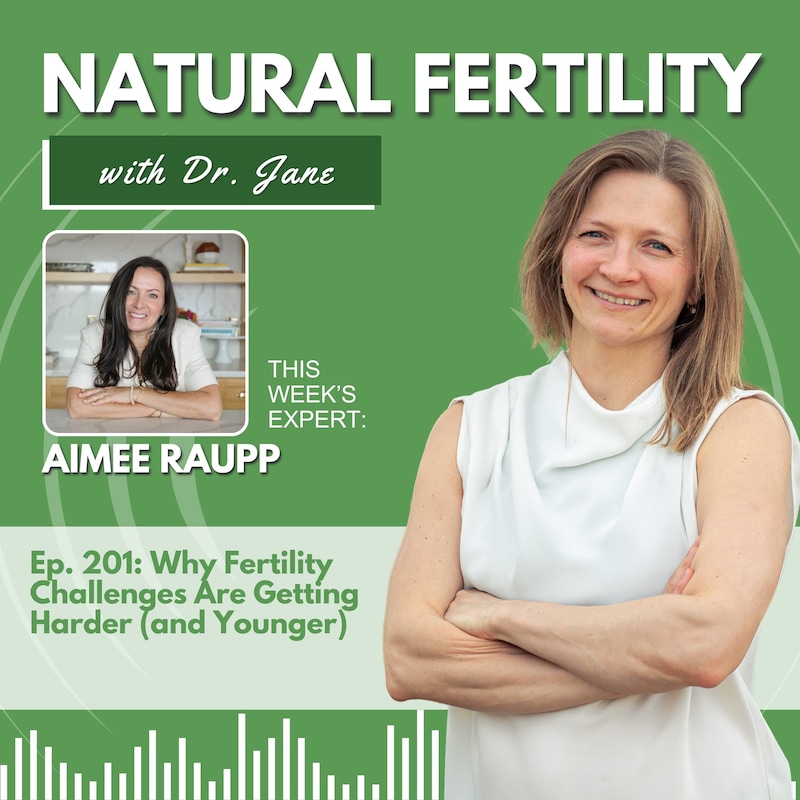
In this episode, I sit down with fertility expert Aimee Raupp to unpack what she’s seeing in practice after 21 years - more “younger” fertility cases, a bigger male-factor role, and a massive rise in immune and inflammatory drivers. We talk about why pregnancy is an immune process, how autoimmunity and chronic inflammation can block implantation, and why so many cases are mislabeled as “unexplained.” Aimee shares powerful stories of missed uterine diagnostics (fibroids, endometritis, endo) and why proper testing of the uterus, hormones, metabolism, and sperm can change everything.
We also cover what’s evolving in IVF (PGT accuracy, protocol intensity, low-stim approaches) and her updated book, Yes, You Can Get Pregnant, revised edition.
In this episode, you’ll learn:
- Practical steps women can take before trying to conceive
- The impact of age and lifestyle on fertility today versus a decade ago
- The importance of comprehensive diagnostics beyond hormones and traditional testing
- The role of environmental toxins, digital lifestyle, and circadian rhythm in reproductive health
- Deep dive into IVF protocols, genetic testing, and the limitations of current reproductive technologies
About Dr. Jane’s Practice
I’m a Naturopathic Doctor and Natural Fertility Expert. My team and I work 1:1 with couples who’ve been struggling with infertility for 1+ years to get to the root cause of their fertility issues so they can conceive and bring a healthy baby home, using advanced lab testing and personalized protocols.
Our mission is to make science-backed, natural fertility care the standard so more couples can build healthy, thriving families.
If you want this level of support on your own case, apply here: drjanelevesque.com/application
About my guest:
Aimee Raupp, MS, LAc, is a leading fertility expert, women’s health advocate, acupuncturist, and bestselling author dedicated to helping women improve egg quality, balance hormones, and optimize their ability to get and stay pregnant—naturally or with IVF.
She is the author of four books on fertility and women’s wellness, including Chill Out & Get Healthy (2009), Yes, You Can Get Pregnant (2014), Body Belief (2018), and The Egg Quality Diet (2021), a clinically proven 100-day fertility diet to reduce inflammation, enhance egg quality, and support conception.
With more than two decades of clinical experience, Aimee works with clients worldwide through virtual fertility coaching programs and also provides acupuncture and Chinese herbal medicine in her New York and Connecticut clinics.
Connect with my guest here:
Website: https://aimeeraupp.com/
Link to pre-order the book (to be released on March 28th): https://aimeeraupp.com/yycgp-book-ambassador-interest-list/
Instagram: @aimeeraupp
Tiktok: @aimeeraupfertility
Transcripts
Welcome to another episode of Natural Fertility with Dr. Jane. I of course am Dr. Jane, but today I'm joined by with Amy Ropp. You are a fertility expert that I have been following for a while. So I'm super stoked to have you on the podcast to share your wisdom with my audience.
Aimee E Raupp (:Well, thank you, Jane. Thank you so much for having me. I love doing this. So thank you.
Jane Levesque (:Yeah, how long have you been doing this for?
Aimee E Raupp (:I've been in clinical practice for 21 years as an acupuncturist and herbalist and I started writing books on women's health and my first book came out in 2010. And so I've been in this space of I think, know, really preaching from the rooftops, if you will, about the power we have over our health and our fertility for, you know, over over gosh, it's crazy, like 15, 16 years at this point.
Jane Levesque (:Yeah, one of the questions I ask my veterans, if you will, is like, what are you seeing in practice now that you didn't see 10 years ago? Or, you know, even when you first started?
Aimee E Raupp (:how young fertility challenges are impacting now. The male factor piece, you know, it just, seems like it's two things. It's like the dichotomy is really interesting. And this just came to me for the first time. One that my fertility clients, like my older fertility clients keep getting older, right? So like now it used to be like 44, 45, then it was like 46, 47 with their own eggs. Now we're at like 48.
I have a handful of 48 year olds doing it with their own eggs. So that's interesting that like we are, if you will, hacking the biology piece and extending fertility. think really, you now we can put a label on it, like really understanding how to maximize fertility in perimenopause. But the other side of the equation is the like I had a call this morning with she's 29 years old.
she's on her fourth failed IVF. They have to do IVF for male factor reasons, but why is she not getting pregnant? And we've already dug into it. There's an immunological factor going on that no one's looked at because A, I think she's so young and B, they're just kind of like, whatever you have time. But so women are getting younger and the bigger role of male factor, you know, I think that's obviously now we're seeing at 50 % of all cases. We've been talking about endometriosis for a really long time. Like back when I first started
doing this work, it used to be, we would say, 40 % of unexplained fertility challenges were endometriosis. Now that number is up to 50%. I think it's, and you probably think, I think it's more like 70%, but from what I see clinically and when we really dig in, and then we're seeing a lot of, we were seeing it a decade ago, but the autoimmune role in fertility challenges as well is just, think the...
what is it, 75 % increase of autoimmunity in women in their 30s and into their 40s and, you know, impacting women more than men. So, and that's all impacting fertility.
Jane Levesque (:Yeah, it's been a risk.
Jane Levesque (:Yeah. It's, what do you say to, well, we just have better diagnostics now, so we're diagnostic, diagnosing more versus it is actually just becoming more prevalent.
Aimee E Raupp (:Yeah, agreed. I mean, I think it's the same thing with with children's and learning disabilities and the spectrum disorders. You know it's the same thing.
Jane Levesque (:Yeah. Do you think though it is increasing?
Aimee E Raupp (:I think it's, like, how would I say it? I think it's impacting people younger than it used to. Maybe that's it. know, our genetic predispositions have always been there, right? And I think the lifestyle now is amplifying the expression at a younger age. But perhaps also, right? If like, you know, when I wrote Body Belief, which is my book really on autoimmunity, and I really took that dive after writing Yes, You Can Get Pregnant, because you see the correlation.
Jane Levesque (:Or are we just diagnosing it faster?
Jane Levesque (:Mm-hmm.
Aimee E Raupp (:so much in the data. even, you know, I wrote that book 12 years ago, 12 years ago, it was very clear in the data that unexplained fertility challenges had an autoimmune link or an inflammatory link at minimum. And when you dig into the autoimmune research, you see it's like, well, since the 80s, we've introduced over a hundred thousand chemicals into our environment. And then ever since then, it's just like gangbusters, you know, it's just gangbusters. All this glyphosate conversation. I love that we're having a public conversation about glyphosate right now. I mean, we've known about glyphosate. What?
Jane Levesque (:you
you
Aimee E Raupp (:over a decade. Yeah. So I do. think information and awareness are there more now than ever, thanks to Instagram and TikTok and all these. I just had a conversation with one of the influencers this morning and I feel emotional saying this. I said to her in all sincerity, I was like, thank you so much for sharing your story because you are, I said to her, I literally said this. I said, you are literally making babies every time you share a story because
Jane Levesque (:Yeah, since we started practicing for sure.
Aimee E Raupp (:You're sharing the classic story unexplained fertility challenges. IVF was the only answer. No, she has endometriosis and she has endometritis in her uterus. Yeah, I know I like literally cried like I sent her a voice memo this morning because because I was just like I and I'm not working with her like full disclosure or anything like that. Like obviously like her story is her story to share. I reached out to her because same thing. I've been following her and I was like, thank you like you're.
Jane Levesque (:Is it Ellie? I have been following her and I was like, yes!
Aimee E Raupp (:What you're doing for the community, like I know you know, because you're part of the community, but you actually have no idea, because she's validating. And also for us practitioners, it's like, how long have we been made to feel like we're making crap up? You know what I mean? Or that we're digging deeper, looking for problems when there are none to look for. You know, when you look deeper, you're just going to find more problems. It's like, well, that's the point.
Jane Levesque (:Yeah.
Aimee E Raupp (:Let's figure this out. This is not her age. You you can't you can't start blaming a 29 year old and tell her it's a right quality. You can't do that. It goes against every dogma that they've created too. So anyway, don't get me started. I do think diagnostics have gotten better. I do think the environment and lifestyle and all the things all the things right. I just revised. Yes, you can get pregnant. I think one of the biggest reflections I've had from when I wrote that book
came out in: Jane Levesque (:Yeah.
Aimee E Raupp (:And then I'm on my freaking Instagram and TikTok and I say freaking because it does. Sometimes it feels like I'm beholden to it because it's also part of my job. my goodness gracious. And what that's doing, we know it's impacting melatonin. We know it's impacting our air transmitters. We know it's impacting our hormones. So all of that, it's like, is it just amplifying the expression of the, know, disease or disharmony sooner?
Jane Levesque (:Totally.
Aimee E Raupp (:Or are we, yeah, are we just a more inflamed immunologically compromised, you know.
Jane Levesque (:Yeah, it's, I often say like, just feel zapped by the end of the day when I've had a lot, cause I literally feel zapped by the EMS. And then it's like, I just need to go outside and there'll be like minus 30 here. And I'm like, I don't care. I just need to get outside. And one of my patients, I laugh cause he's like, I'm just having a hard time sleep. What's the biohack? Like he's really into biohacking. And I just got into like, how many hours are you working? And it's like, oh, I'm on my laptop until 11.
Aimee E Raupp (:Yeah, totally.
Aimee E Raupp (:Yeah.
Aimee E Raupp (:Yeah.
Aimee E Raupp (:Yeah, no, no, no. Yeah, yeah.
Jane Levesque (:Cool. Can you just like get off the laptop at eight? And then he sends me a screenshot of his aura ring. He's like, that's the best sleep I've had in years. Just it doesn't have to be that complicated. You don't need another biohack. You can just turn off your laptop.
Aimee E Raupp (:Well, that's it. I mean, that's it. It doesn't have to be that complicated. And that's it. It's yeah. Well, and that's it. Like I was saying that to you before we started recording, like what was also pretty fascinating or awesome to witness when revising Yes, You Can Get Pregnant is like I have a whole chapter in that book again, 13 years ago, right? I talked about like the basics of fertility is getting back in touch with nature. Right. And so
That's cool. Now they have terms. Now we're saying circadian rhythm. Now we're saying nervous system. Now we're saying, you know, we're biohacking like HRV. Like we have all these terms for it now. Same stuff. So guys get to bed by 10 or 11. Limit your screen time. But now cool too of like, you know, I've changed out all the light bulbs in the house where amber lights across the board. have, you know, circadian lighting, if you will. Like now there's a term for that. You know, I'm using my pulsed device. I freaking love it. My Vegas nerve stimulate, like love it. You know, so there's it.
Jane Levesque (:Thank
Aimee E Raupp (:We're getting ahead of it on certain levels, but then it's also a lifestyle. It's just got and like COVID was a huge blessing for many of us and lifestyle shifted. But now I think we've all gone so far digital. You know, some people are right on the same with so much I say they don't even get outside during the day. They don't even go outside.
Jane Levesque (:Yeah, ever. You can get groceries delivered to your house. You can get like literally everything delivered. I am too,
Aimee E Raupp (:And I'm guilty of it. I can do it. There are days where I don't leave the house. I mean, I get outside with the dog. I try. I try to get outside for my morning sunlight. If not, I'm at least sitting in a well-lit room with a window open, even if it is zero degrees out, you know, where I'm just trying to get that natural light. But it's, yeah, the lifestyle is really catching up to us. And it's absolutely showing itself in fertility challenges.
Jane Levesque (:Yeah, I agree. mean, I have 25 year olds who've been struggling to conceive for two or three years and it's nuts. And they're pushed into IVF, of course. And then, you you see the clients on the other side who've been trying to conceive for 14 years and now it's your age. But it's like, it wasn't your age 14 years ago.
Aimee E Raupp (:It's not.
Aimee E Raupp (:without digging deeper.
Aimee E Raupp (:No, I mean, all the time, all the time. like, but let's go back eight years when she first came to you at 35. Come on now, people. I mean, I think also that too, think another thing that's changed is we really understand this fertile cliff now in a different way. It's not a cliff, it's a gradual decline, you know, and it's a slope, it's a slope, it's not a cliff. I want that out there more and more. There's some really great studies.
Jane Levesque (:Yes.
Aimee E Raupp (:The one I always quote is, he looked at 20,000 eggs, these are women undergoing IVF, so not embryos, and saw a slope-like decline in egg quality, but even women in their, I think a study went up to 44, even women in that 43, 44 brackets, still about 35 to 40 % of their eggs were chromosomally normal. And so that's not what's being told out there to women at all.
We need to scream that from the rooftops louder, you know, and really it's like, it's not like, I know the popular book, I think it says it starts with the egg. It is not just the egg. Like I so, even when that book came out, I appreciate the content of course. The title is, it triggers me. There's a new one out too, another one about the egg.
And it's like, it's so much pressure on women because it is not just about the egg and it is not just about your age. And the people out there spreading that information are doing a great disservice and putting a lot more pressure and stress on women. You know, we have to think about sperm. We have to think about the uterus. We have to think about the immune system. If we're not thinking about all four of those things, we are so missing the boat.
Jane Levesque (:Yeah, and they're all intertwined, you know, because if you have the immune system that's dysregulated, there's no way that the egg is going to be any quality. then if I look at, know, I work with couples, I've never seen a female that has a dysregulated immune system and the guy that's all fine. He says he's all fine, but he's actually holding on to so many infections. It's like, I just have this flaky scalp or I just have this itching over here. I just get this random rash and they just don't think anything of it. And then here she is, you know.
Aimee E Raupp (:100 %
Aimee E Raupp (:That's right.
Jane Levesque (:full blown autoimmune disease because obviously there's more of a genetic predisposition and yeah, I think it's just all connected and intertwined. There's a couple pieces that I wanna talk to you that I think are very intriguing. So the autoimmune component, first maybe let's break that down a little bit, cause I still think that most people don't really understand that pregnancy and fertilization is an immune process and why autoimmune disease and how many women are walking around with autoimmune disease and they don't know it.
And then I wanna talk about the IVF, the 48, the PRP, all of those, because I know that there's a lot of, I love those stories, because it's like when a 35 year old is told that she's too old and you're like, there's a 48 year old that just got pregnant naturally. You're not too old. Let's figure this out.
Aimee E Raupp (:And then you're like, well, you have 13 years ahead of you. Yeah.
Aimee E Raupp (:Yeah. And then it's so hard. I'm always careful with that conversation. mean, I know you are too of like, your timeline is your timeline and we respect that and we want to honor that as much as we can. it's also, think, I don't think, I think it's, what's the word I want to use? Like plausible or.
Jane Levesque (:Totally.
Aimee E Raupp (:like gentle hope to also remind you that women much older than you are doing this. And so you do have a window, even though you're being told you don't, you know. So yeah, I agree. So, autoimmunity, I mean, I think, I think the stats are it impacts 70 women, 75 % more than men. And it really comes on in women in their thirties is it. And so
When it comes to pregnancy, a big thing that like you said, no one realizes is there's an immune challenge when the body is designed to fight off anything foreign, right? So mosquito bite to an infection, right? We fight, fight, fight our killer cells, our TNF alpha, all those things just go in and take care of it. Pregnancy is very curious because for some reason we accept an embryo that's half not us.
And to this date, no one really understands that from an implantation immune perspective. There's low level understanding, but it's still kind of a very curious thing. Like, that's so interesting that we accept.
Jane Levesque (:But I do think that's probably why women are more predisposed to autoimmune conditions because they need to have this kind of flexibility where they need to accept a foreign DNA, you know? And then now if you have a foreign...
Aimee E Raupp (:And so, and then that itself can be a challenge. They might not be able to accept it, right? They might have these HLAs, that's a big one, the human leukocyte antigens, and we just reject, reject, reject. We either don't implant or we have continuous miscarriages. The other side of that is that pregnancy itself can trigger an autoimmune condition because of this, you know, up and down, this kind of roller coaster of an immune system or...
just the adaptability that is required of the female body to accept the embryo. And so even if you never carry that pregnancy to term, if you had a miscarriage, it can then trigger an autoimmune response. We also see Hashimoto's in a lot of women that'll come on postpartum. So then they're dealing with secondary fertility challenges. And so all autoimmunity is, it's not like I know many people like to say a hyperimmune system.
and you probably are similar, it's just dysregulated. It basically is confused. I would like to explain it as like the template has been jostled. And so now what was once considered normal is now like, hmm, I'm not so sure. And so it can attack its own organs. Like we know there's ovarian antibodies, right? There's obviously thyroid antibodies. There's all sorts of antibodies that the body can create and trigger this immune response. And then any
triggered immune response will relate in an extended immune response to anything else. So, you know, if you're the girl that gets a bug bite and then it breaks into these huge hives or these rashes, like to me, that's a huge clue from a fertility perspective. I'm thinking right away there's an immune system and right away you're not welcoming of foreign, anything foreign. So including that embryo and that sperm, right? Your x-ray and the sperm antibodies too. I know I forgot an antibody before when I was talking about antibodies. So
Autoimmunity, think I would like to venture to say is probably playing a role, I'd say at least 70 % of the cases, right? But then also inflammation can trigger autoimmunity as well. And I think all of our cases are dealing with some level of inflammation. It's almost like it's not the level of inflammation, it's your constitution and how much your body feels it can get away with is basically it. And whether or not it's shunting you into preservation mode, fight or flight mode,
Jane Levesque (:Yes.
Aimee E Raupp (:or you can still stay in this relax and reproduce mode. And that's like, that's our key, right? That's what we're always trying to figure out. Like, and everybody's different, but how do we get her body and his into this relax reproduce state so that it can be accepting that the immune system is more resilient and adaptable.
and allows the pregnancy to thrive. And so some of these things are harder to detect and find. Like I wish there was like a blanket blood test we can do. We'll look at things like inflammatory markers or ANA and sometimes we're running like ovarian antibodies and anti-sperm antibodies. Obviously we're always ruling out Hashimoto's in our cases, things like celiac or even non-celiac gluten intolerance. think that's gotten a big name too since the first version of, yes, you can get pregnant to this one. That's got a whole big section in the book now.
So it's, but it's also like the way I was trained from an Eastern medicine perspective is I'm really good at looking at all this, the symptom picture, the holistic picture of all the pieces and trying and kind of seeing the bodies in this fight or flight mode. mean, I think similar to you. And then, then of course we can use the labs and functional testing to really help understand like a lot of times right there are these low-lying infections that has triggered something, right? It could be mold. could be
You know, we see a lot of toxic load. We do.
Jane Levesque (:Or toxic load. I don't know if you test toxic load, but I'll test it sometimes and I'm like, what is happening in your body? Like, this is horrible. You know, like this is horrifying. I feel anxious looking at these results.
Aimee E Raupp (:Yeah, we do that toxic burden. It's scary. But also, though, what I think is interesting, because I'm newer to the functional medicine side of things. I kind of resisted it for a while, if I'm totally honest. Now I have a practitioner on my team. I should say resist, but for me and my brain, was like I have all the Western medicine stuff down and all the Eastern medicine. If I throw in something else, it's like, it going to be jumbled? But what I do find fascinating when we get those results is
three different women could have the same level of toxic load, the same level of an H. pylori infection, the same level of high zonulin, totally different presentations. One is just going about her day, hair, skin, nails perfect, bowel movements perfect, sleep perfect, egg qualities looking, do you what I mean? then so it's to me, Till, it's like a step back and my mentor who's a master herbalist that I've studied with for years,
always says, she uses Lyme disease as the example. She's like, the ticks aren't getting more aggressive. The Lyme isn't getting more aggressive. It's the constitution of the person who gets bit by the tick. So it's the same thing of like, it's still about this inherent constitution. And what can we, and that's what we do, right? We're working on that kind of that template, that base level to boost them so that then their body can say, okay, I can put this over here. I can reprioritize this. Like brain and ovaries can start communicating again, right? And for everyone,
Jane Levesque (:Yes.
Aimee E Raupp (:For one girl that's getting her to an eight on a scale of one to 10, another it's getting her to a two. It varies. So we're really looking at symptomology and function in the body to determine how impacted they are by these things.
Jane Levesque (:Yeah, I I love that you brought that up. I do think the genetics plays a role, not to excuse someone's behavior or whatever, there are people who, if they have an extra five to 10 pounds on them, they will have such an inflammatory cascade in their body from that extra five to 10 pounds. And then there's people who will carry 20 or 30 and they won't have that same.
Aimee E Raupp (:No.
Aimee E Raupp (:Mm-hmm.
Jane Levesque (:level of inflammatory cascade. Now, you know, we want to have an optimal healthy weight for pregnancy for both males and females, but it's how that person is carrying the weight, where they're carrying it is going to be, there's so many more pieces to it than that. And with functional testing, the eye-opening thing for me is always the presentation can be so different for each person, how they experience leaky gut. Like,
Aimee E Raupp (:Wow, she did.
Jane Levesque (:I've seen people have leaky gut and be like, have normal bowel movements, zero issues, but they'll have a rash on their body, you know? And it's like, okay, so you're showing it like this versus the other person has very typical IBS symptoms running to the bathroom, lots of urgency, lots of, or constipation, like, you know? So I do find them insightful, but you always have to look at the person sitting in front of you and treat the person, you know?
Aimee E Raupp (:Yeah, and you have to take the whole picture. mean, I'm constantly saying that to my team because I feel like we're always, you know, at the the core, I always want to hold on to like our Eastern medicine philosophies and like not get lost. And so it's like, well, but her TSH is this and her free T3 is this. I'm like, but if she's not symptomatic, we're gonna of course, we're still going to support the route. like
Jane Levesque (:Yes. Yes.
Aimee E Raupp (:But some girls are symptomatic of hyperthyroidism at 0.8 on their TSH and others can be 0.2 and they're perfectly fine. So I agree. And maybe that's why on the Western side of things they can get a little uppity about all of the details we are looking at because it's not black and white. Hashimoto's girl with a couple hundred level of antibodies doesn't mean full blown.
inflammation or inability to get pregnant, whereas someone else could have a load of 60 to 70 and it's impacting everything. So it is, the holistic picture is so important. And then also kind of seeing the cycles. I think all of it has like cyclical flares and really understanding that and the triggers and getting them to this, you
Jane Levesque (:us.
Aimee E Raupp (:place, let's talk homeostasis. That's what we're really trying to work on is returning the body to homeostasis. And then of course, you know, I am a detective and I want to look at everything. So I think every woman before she starts trying to conceive should have her uterus looked at and have the microbiome tested. I mean, it'd be the first thing I would do personally. First thing. I'd probably, you know, I would love everybody getting that 3D sono that's out there now. Let's rule out endometriosis. Let's make sure there's no adenomyosis.
Jane Levesque (:Totally. Yeah.
Aimee E Raupp (:do a microbiome test, let's get a hysteroscopy, then send them to IVF if we don't have, you know what I mean? Like, what is this? I mean, the IVF process, you need to have two to three miscarriages before they're going to do any deeper introspection. And some doctors won't still, because it's just a recommendation from the WHO.
Jane Levesque (:Yeah. How do you deal with being an alternative practitioner? And I'm sure you have some women who are getting pregnant through IVF or potentially, you know, right? Like using donor eggs or donor sperm. How do you deal with a conventional system?
Aimee E Raupp (:Alright.
Aimee E Raupp (:I always meet my girls where they're at is what I would say first. So if someone's really committed, committed maybe is the wrong word, believes that IVF is their only option and that they have to get a genetically normal embryo to transfer, I'll meet them there 100%. If someone is done trying with their own eggs or their partner's sperm or absolutely, you want to do donor? Totally, I just had a girl put a...
45 year old untested embryo into a surrogate that was strongly discouraged by everyone, of course. Surrogate's 20 weeks pregnant with a healthy baby girl. The embryo was not working inside of her because she had an HLA issue that no one wanted to rule out. Now she's pregnant with a donor embryo. The whole thing's fascinating. But so I'm flexible is what I would say. I always believe there's a possibility
the, if you will, old fashioned way, you know, when we maximize sperm health and uterine health and egg health and immunological health. And a lot of our girls get pregnant along the way to IVF or trying things or it takes a while to kind of convince them. Maybe we stop testing embryos, maybe we freeze at day three. I'm always encouraging second or third opinions with different doctors. I always work integratively.
you know, I do have women that come to me and they don't want to meet with a single doctor and they don't want to do any testing. Okay. But I'm probably the one who's also trying to convince them at minimum to do like the uterine microbiome testing or, you know, things like that. So we can at least understand what we're working with. So as to not waste time and to be as efficient as possible.
So yeah, mean, I'm not against IVF by any means. I think it's a beautiful technology, I think, and it's afforded a lot of people, beautiful families, but I also think everyone has to remember it hasn't been around that long. PGTA testing is new to the game. There's a lot of question of it's as accurate as we once thought it was. I was around long before AMH existed, long before PGTA existed. We were transferring day two, day three, highly fragmented embryos.
Aimee E Raupp (:and they were making babies, you know what I mean? like, I have a hard time subscribing to that extent of it. But again, if that's what is like in the heart of my client and her partner, if she's partnered, I'm down with it. And then I just try to, you know, I always am just trying to lead with, okay, this is what the data is showing us. This is, you know, this is what you can do. These are the options.
Jane Levesque (:Mm-hmm.
Aimee E Raupp (:I'm looking at protocols always because I think most IVF protocols are way too gangbusters. know, most women get much better results with half the medications. So is it their fault? you know, when we're reassessing an IVF that didn't work, I'm never blaming her. know, A, and B, probably not him, but he probably hasn't been as checked thoroughly as he should be. So we're doing a DNA frag or...
We're thinking about sperm health. always say, even if it looks good on paper, it could be better. So we're gonna work on his health too. And then have we looked at the uterus? What is the protocol? Can we adjust that? Why are we pushing to day five? at when did they die off? When did they stop not growing? What does that tell us? There's so much information we can gather from that and then tweak and go back to it if that's what we want.
Jane Levesque (:Work with the body, right? Do you think that the IVF clinics are pushing the PGT testing because that's what allows them to have the highest results because they're not looking at uterine health, they're not looking at like ovarian health, sperm health, immune health. So then they're like this, if we test and they're genetically normal, then that's quote unquote guaranteed to work as opposed to, you you were saying before PGT testing was around.
Aimee E Raupp (:sure.
Aimee E Raupp (:Yeah, it takes out some of the guessing. I think it removes another variable. But we have to remember, too, that I believe the current data shows that PGGA testing is about 70 % accurate. there's a good level of inaccuracy. Typically, euploids are always euploids, but aneuploids are not always aneuploids. And so you can retest. You could, I have my girls.
Meet with a geneticist, Megan Doyle. She's brilliant. I send everyone to her. She goes through their reports. She'll tell you which embryos could make healthy children and how and why, which ones to discard, which ones to keep. We have a hard rule. We don't throw out any embryos. Any girls that are working with me, no embryos. I was also kind of like high level taught. If there's pluses, meaning extra chromosomes, they're not probably gonna make healthy children, but the minuses should. Mosaics we always keep, but also...
I don't know, I don't totally trust the testing. So if you have embryos, keep them and if we get to that point, we transfer them. Another doctor has recently told me that if an embryo implants, there's a 40 % chance we take home a healthy baby, regardless of what the genetic testing told us. So I think to all that, there's just so much we don't know. think IVF doctors, it's how they're trained. I have no qualm with them to be honest. It's...
They're thinking about how many variables can I solve for so that I can get you there as quickly as possible? Where I do have qualms is they're not keen on extensive testing. There's just straight up some docs who will not do a hysteroscopy, who do not believe the uterine microbiome has an impact. And I'm like, I'm sorry, have you read it? Like what?
or who think if there's endometriosis, IVF is the solution. Again, have you read the data? Because it's clear women with IVF have poorer, women with endo have poorer IVF outcomes. And they, once endo is treated, they have better outcomes. So that, you know, that's where I get upset. But the other thing that we know is it can take a decade for clinical research to actually hit the clinics, you know, or data to hit the clinics. And so,
Jane Levesque (:Yeah, at least if not longer. then by the time with the speed that everything is coming out now with AI, it's like that's going to be outdated in five years. So then by the time you catch up to the 10 years, that's already outdated. And then, you know, you're
Aimee E Raupp (:And some of these girls, you're 47, you've missed your window. You don't have it. And that pisses me off. yeah, I mean, I think IVF is changing rapidly too. However, I do think it's in the best interest of many to avoid the large clinics who are like VC funded and...
Jane Levesque (:Yeah, you don't have five years.
Aimee E Raupp (:you're better off with the privately funded clinics where doctors can kind of do their own things because they're funding it themselves or they're personal friends with whoever it is.
Jane Levesque (:Yeah, my favorite is when they put all the women on the birth control so then they can time their cycle and then just... And like one of my clients I remember she's like, they told me to take DHEA, but I have high DHEA. Should I be not? And I'm like,
Aimee E Raupp (:That's the thing. don't DHEA test, don't guess. mean, it starts with the egg. She had to backtrack that in her book, but I mean, that was it. 75 milligrams of DHEA for every woman who reads this book. I'm like, well, you just did a shitload of damage to those eggs. Thank you very much. We test. We don't guess.
Jane Levesque (:Yeah. I've taken, I take like, obviously I want to try things on my own and five milligrams of DHEA. And for three days I was like, I can't. Like I was like, what? And I had low DHEA when I took it. So I was like, let me try this. Let me see how it works. And it was like, what? Like I broke up the five and I would just sprinkle under my tongue and that's it. And it was perfect. And I felt amazing. And it helped me get out of this kind of adrenal funk, if you will. But
Aimee E Raupp (:yeah.
Aimee E Raupp (:raging.
Yeah.
Jane Levesque (:75 milligrams and she's just growing hairs on her chin and you're like, my God.
Aimee E Raupp (:total.
And yeah, and also like we know DHA and testosterone are super important in helping with egg quality. But too much is gonna like in Chinese medicine, we would say they're too stimulating, they're gonna fry the eggs, you know, and so that's, that's problematic. And so, you know, I've gotten into it with with doctors about that. And I just I'm very firm. I'm like, listen, you can be mad at me all you want for saying what I want. But if you're not running a simple blood test on your patient, then shame on you.
Shame on you. should be running, you should test, don't guess. You test her FSH, know, her LH and her, you know, all her things, every freaking chance you get, and you remind her of those numbers all the time. Test the other things, they're important. Test her vitamin D, test her thyroid, test her DHEA. Don't, yeah, my God, the blood sugar thing, forget about it. I mean, the GLP-1s are, it's amazing what we're seeing as a side effect of managing insulin resistance. And I'm not saying everyone should rush to be on a GLP-1, but,
Jane Levesque (:That's for blood sugar.
Jane Levesque (:Yes.
Aimee E Raupp (:I'm pointing out that insulin resistance plays a massive role. So again, kind of back to what I was saying of like the things that changed in the first version of Yes, You Can't Get Pregnant Till Now. I always talked about blood sugar stability. I always talked about not skipping meals. I always talked about moving after meals. Now we have a term for it, Increasing insulin sensitivity or decreasing insulin resistance.
But we're also understanding now insulin resistance plays a massive role in mitochondrial function. Mitochondrial function plays a massive role in egg and sperm quality and in implantation. So, it's, you know, let's look at all these things instead of just, oh, she's not PCOS. She doesn't have insulin resistance. Like, what is that? What is that? Remember we used to be like lean type, thick type. That's what they would call it. Now they're changing the name of PCOS altogether, which I also think is great. But like,
Jane Levesque (:Yeah.
Jane Levesque (:you
Jane Levesque (:Yes.
Aimee E Raupp (:These metabolic disorders play a massive role in hormonal challenges and it's never looked at.
Jane Levesque (:Yep. I had a couple, five rounds of failed IVF and she literally did not have like a basic blood sugar panel or even like a full thyroid panel. just the TSH and they're like, we just want answers. And I just laughed like, and I left with them and I was like, since when are you coming to a holistic practitioner to get lab testing? Like when did that switch happen? I remember when I first started practicing, which was 11 years ago.
I would be like, you go to your doctor, you get the labs and then I'll like help review it from an optimal standpoint. And then over time, I was just like, I'm going to run because the doctors are not running the labs anymore. They used to. And then it was less markers and then less markers and then less markers. And then just turning people down and being like, you only need blood work every couple of years. What are you talking about? And it's like, okay, I'm going to start running these tests. So it's, there's been a big switch and I've kind of been shocked of like, if you're in the medical profession,
Aimee E Raupp (:Yes, Sam.
Jane Levesque (:like doesn't it make sense to do testing so then you know what the treatment is and it's like no we just treat anyways and that's how you know there's some corruption going on.
Aimee E Raupp (:Yeah, I think even Hashimoto's is a good example where it's like, well, it doesn't matter because your TSH is doing fine. So we wouldn't do anything with autoimmunity. But like from our side, very different. And I also think that's the benefit. I hosted a retreat. It was in May or sometime in 2025.
Jane Levesque (:There's lots we can do, yeah.
Aimee E Raupp (:And one of the girls at the retreat was like brand new to me. Some of the girls that came I had been coaching with or seen in the clinic or something. This girl I never met before, know, and we did this kind of round table and we go around and share. And she's got these like raging periods, you know, where she's like hemorrhaging and then like every third period she's in like so much pain she can't like leave the house. We've done multiple failed IUIs. You know, she's 40, she was 39 at the time. You know, of course being told.
donor eggs and IVF were her only option. And I was like, well, why did a hysteroscopy show or what is a transvaginal? She was like, I was like, do you have any reports? So anyway, we continue our care together. She decides to start working with me after the retreat. And she's working with an IVF clinic who I like, and I had actually recommended her to go to. And they wanna just push to IVF. And I said to the doctor who I have a relationship with, I said to her, was like, nope.
First things first, want a hysteroscopy on her. I want to understand what's going on with her uterus. And she was like, well, Amy, we wouldn't do that until transfer. I was like, no, we have to understand what's going on. Sure enough, she wakes up. They only do a diagnostic. They don't do the operative because they don't do that in the clinic. This clinic in particular, other clinics do. She wakes up and they were like, oh, yeah, you have this massive fibroid blocking the opening to your uterus. And then then we count countless, countless other fibroids. And there's a cyst on your ovary. And I was like, who was the?
professional that was doing these IUIs on her and didn't either A, point this out. We got reports because there was a question of like, were they there? No, they were there. No one ever pointed them out to her. Then it turns out, yeah, that's what we say to her. I said, her mother sent me this beautiful message. She's not pregnant yet, but she will be soon. She wound up having endometriosis. She had her fibroids removed. She had endometritis. I mean, the gamut. She had it all.
Jane Levesque (:Yeah. I was just doing my job. I was just putting the thing in the thing and that's it. Nobody asked me.
Aimee E Raupp (:no one was willing to diagnose any of it. And so I joke and I say, you had to go to a retreat run by an acupuncturist to find out that you needed a freaking like, sailing sonogram and a hysteroscopy. That blows my mind. I love myself. I love my job. I love what I do. That is not how the system should be run. That doesn't make any sense.
So you have to pay out of pocket for all these like extraneous, you know what I mean? Like we're awesome practitioners. I think we move the needle. I'm so proud of the work we're doing. Honestly, like I can get emotional about it. I'm so proud. But to me, it's also like, yeah, the bigger issue is the system. Like, why are we not diagnosing? Why are we not digging deeper and looking? These are basic things that we could help someone navigate and rule out. And one doctor actually said to her, if we take all these fibroids out, I why don't we just take the uterus out? I was like, OK.
Jane Levesque (:Out.
Aimee E Raupp (:not the person we need to be meeting with. There are, and I always say there are amazing surgeons out there that fertility preservation is their first choice. Like that is what they lead with. And that's who we work with. We do not work with the random OBGYN who is thinking that these fibroids,
Jane Levesque (:It's easier to just remove the uterus because I don't want to be in there fiddling with a fibroid.
Aimee E Raupp (:I can't wait till my phone stops auto correcting hysteroscopy to hysterectomy. Like I can't wait for hysteroscopy to be the word instead of hysterectomy. It drives me insane, but it always triggers me. It's so funny because I'm like, this is exactly what's wrong with our society. This right here, hysterectomy versus hysteroscopy.
Jane Levesque (:There you go. Just remove the organ. It's fine. Just remove it. And then all your problems will go away.
Aimee E Raupp (:And then, you know, get a surrogate. I'd love that one too. And listen, I'm not against it. I love surrogate. I like I cry every time I meet my girls. I always work with their surrogates too. I always thank them for doing God's work is what I say. You know, they're angels. They truly are. But I and I appreciate donor eggs and donor sperm. But I like my patients to be able to have all the information possible so they can make the decision that's best for their family in their timeline.
Jane Levesque (:Mm-hmm. Mm-hmm. Yes.
Aimee E Raupp (:Not you tell them that this is their only option. I don't think that's fair. It's very disempowering. And especially if you haven't collected all the information.
Jane Levesque (:Yep. Yeah. Well, you don't know. You don't know what you don't know. Let's talk about the 48 year olds, the 47 year olds, the what's being done right now, what's possible, how is it possible? And I want, I'd love for you to layer, like, how do you know when it is time to use a donor egg? How do you know when it is time to go to IVF? Because I think that there isn't clear guidelines, you know?
Aimee E Raupp (:Yeah. Sorry.
sorry.
Aimee E Raupp (:It's hard to gauge. So the women that I've been working with, but it's not for all of them, I have to be honest, but I'm thinking right now, my recent like 48 year olds, one went to donor egg and just had a healthy child. That story's interesting. She still had a good reserve. She was doing, she did ovarian PRP. We were doing retrievals. We had done a transfer, didn't take, she felt.
discouraged and she just kind of had this like wake up one day and she was like, you know what, I think I'm just gonna, I'm gonna go to donor. I won't take the pressure off myself. I always joke, I wasn't ready for that, but like I fully supported her readiness. But I shared this story because then she went and got a donor embryo or donor egg, partner sperm, she miscarried because no one did the due diligence on why she had had that miscarriage right before when she first started working with me at 47.
Jane Levesque (:Mm.
Aimee E Raupp (:Turns out she had a clotting factor issue and we'd already done a hysteroscopy, but she had some some other factors going on. So she needed an immune protocol to then hold that donor. So I bring that up because I don't believe it was age that was impacting her ability to get and stay pregnant. There was something else going on. No one looked into it, right? She had Hashimoto's. We knew that. But the.
Other cases were spontaneous pregnancies. Well, I've had one 48 year old made a genetically PGTA tested embryo, genetically normal embryo that a surrogate carry to term. She did use donor sperm. I do think about that. I think that the young sperm, healthy mitochondria in the sperm probably played a role in creating that embryo. And then I've had two spontaneous pregnancies in 48 year old women, more than two like.
Jane Levesque (:you.
Aimee E Raupp (:probably close to a dozen and 47 year old women. One notable, her AMH was 0.01 when she went for a naturopathological count at a clinic. The doctor said, good luck getting pregnant. You have like one egg left. And we just tweaked our things and it worked out for her and a handful of those. Natural conception. So I think the things I think about as a clinician, I wonder about like if there was a recent pregnancy and a loss, which
Jane Levesque (:And that was natural conception.
Aimee E Raupp (:Losses suck, I've been there. I'm not using the loss as a positive example, but it tells me something. It tells me that egg and sperm were able to meet, egg and sperm were able to implant, what else could be going on? And then especially if there's like, I have another one I'm working with. I mean, she's had, I think a total of 11 chemical pregnancies over the past five years. And of course everybody's blaming her egg quality. No, I got her the right team. And I mean, yes, now she's like 47.
But guess what? No, she's got a host of immunological stuff. She also had like uterine infections. I mean, all the things. So her doctor now is like, yeah, let's continue to try naturally because clearly, Egg and Sperm want to do their thing clearly. And I was taught, you know, I studied, I don't know if studied is the right word. I would consider him a mentor, Dr. Jeffrey Braverman. He's since passed away, but he was Braverman reproductive immunology and he studied with Alan Beers. But he would always say to me, nature isn't that stupid. It's not going to keep picking.
a bad egg or bad sperm and miscarrying. Like, sure, maybe in that age group, like the higher 40s, I would expect, you know, I think the stat is if you get pregnant, 50 % chance of live birth, right? So 50 % chance of miscarriage, 50 % chance of live birth. And maybe two miscarriages is egg quality, right? But not three, not three. And so maybe in our younger girls, one out of three, maybe in our older girls, two out of three. So I'm thinking about all that. Of course, looking at sperm.
present all the data. I say to them, how many months do we want to try like this? Then at what point do we want to consider IUI or IVF or is that completely off the table? You know, again, it's meeting them where they're at. You know, I have a call on Monday with one of my girls who is in her late 40s and she, you know, just sent me an email of like, what are our other options? I'm at this point now. And now mind you, when she first came to me, she had just had a pregnancy and miscarried. So to me, that's, you know, possibility.
Some of these other girls though that never had that pregnancy that showed me a possibility, then when we dug deeper into uterine health, typically there was an issue and we fixed that, then they got pregnant, which is also like, okay, they probably could have gotten pregnant three years ago, but no one looked. So I don't know, how do you know when it's time? mean, I think I always have this vision and what I do with all my clients is they'll be kind of like whiteboarded out, these are options, option A, B, and I'm gonna lay them all out and you...
Aimee E Raupp (:You are the decider of your faith though. When are you ready for this? I'm not going to push you. But then sometimes it is. It's that conversation of like,
Jane Levesque (:But I will also look at your data and I will tell you if it's realistic or not and you know.
Aimee E Raupp (:Yeah, it's like, you know, that's the thing though with me is like, if you have hope, I have hope with you. Like, that's just how I roll.
Jane Levesque (:I mean, I find I usually have more hope than my, I have 35 year olds who are like, I don't think I can get pregnant. And it's like, come on girl, where is it? Let me help you find that fire.
Aimee E Raupp (:Damn, devastated.
Yeah, those ones I'm like, we got. Same, same. Even like the mid 40s, I'm like, girlfriend, we got this. Like, we got this. However, does it take work? Yes. You know what I mean? Is it like fine tuning? Yes. Yeah. Are we gonna like really dig deep into investigations? We are. And you're not gonna ever regret that though. That's like, that's kind of what I've learned in like the longevity of my practice is like, I look back on certain cases that didn't get to the other side and I wouldn't.
Jane Levesque (:Yeah.
Are you gonna be a completely different person? Yes.
Aimee E Raupp (:Maybe I'd say I have regret. I wish I knew then what I know now and I would have made other recommendations. And so that's the thing for all you guys out there listening of like, think I think it's OK for you to seek counsel from multiple different experts out there to try to find and get to the root cause of this. And for some of you, you have more time than others. But like efficiency is really like the name of the game for me. So, yeah, I'm always like, hey, you know, there's no I always say like borrow a few cells from somebody else. There's no.
Jane Levesque (:Yes.
Jane Levesque (:Yes.
Aimee E Raupp (:You know, that's an emotional leap that people have to take, know, or surrogacy. Obviously those things all cost money, more money than they're anticipating. If they were to do IVF, it's you're going with a clinic who's going to do no stim to low stim, you know, like you do not need high stim medications. I don't care. I had one girl recently, I think she's 47. She's like high AMH, right? So anyway, we figured out a blood sugar issue with her. She's like a lean type. But
Jane Levesque (:Gleentide PCOS.
Aimee E Raupp (:I know I'm doing this. Anyway, but they would collect like 20 eggs in a retrieval. Nothing to blast this is nothing. So same sex couple. had them switch donor first. They did that. Then we started getting some more blasts. Then we dug deeper. We changed the medication protocol. They were blasting her with meds because of her high AMH. And I was like, no, you got to go low stem. Low stem like literally cut her meds by like 75 percent. The same amount of eggs retrieved. Fertilization rate went up to 80 percent.
Jane Levesque (:beautiful.
Aimee E Raupp (:And then we really worked on blood sugar, did some special things. Even at a then met form and she added that in or her fertility doctor, Ignell, okayed it. That was the round. So low dose, new sperm donor, blood sugar balance, two euploids and one low level mosaic. And she's now pregnant. I met her five, four years into this and couldn't get a blast to test. It's crazy. So now she's,
older and she just made two euploids, you know what I mean? And it was the metabolic thing I think was huge. And same thing, we were the ones who found it. I said, give me the last four years of like your CBC. I watched her fasting glucose just slowly go up. I watched her fasting, her A1C, same thing slowly go up. She's got, this girl couldn't be more of a biohacker. yeah.
Jane Levesque (:huge you.
Jane Levesque (:Pestid insulin, the HOMA just.
Aimee E Raupp (:Just like, but it was just a slow, slow, slow, slow, And, when I also, when she came to me, she was intermittent fasting. She was a big runner. I had her change all of that. And here we are. So I have a hard time believing that it all falls off a cliff somewhere because I've seen it so many times where there's so many other factors that come into play. So I don't know. know I'm screwing around long story answer to your question.
Jane Levesque (:No, you know, something that you brought up, because there's a couple of couples that I'm thinking about that I wasn't be able to help them, but
what I yet and it's like they still might come back because they were fairly young. But the point was that like those couples really pushed me to become the practitioner that I am today. And I always have so much gratitude for them. And I always make sure that it's like, hey, I hope you find the help that you need. And if I'm not able to help you, I'm that's okay. And I need you to go and get like, I want that fire inside of you that says I want a baby and I need to help people.
I need to find people who are going to help me have a baby instead of people who are going to make me feel bad about wanting a baby at whatever age or however many babies I've already had. Like you've had three and then people go, well, why do you want the fourth one? Cause I want a fourth baby. Like, let me have the fourth baby. know, anyways, we become different practitioners because of those cases that we weren't able to push through. And I, you know, there's a lot of gratitude for those couples who it's like that time wasn't wasted.
Aimee E Raupp (:Yeah, I agree.
Aimee E Raupp (:No, And I learned so much. Yeah. And for me too, can like name them if I wanted to, I won't obviously, but like those women are all still in my life. They went through menopause with me. I supported them through all these things. And I have had the, I would say luxury, it's gonna make me emotional, of expressing that to them and saying like, I still think about your case. And they...
Jane Levesque (:But there's always regret or sadness or whatever that comes up for you as a clinician.
Jane Levesque (:Yeah.
Jane Levesque (:Yes.
Aimee E Raupp (:They don't say that back to me. are like, Amy, you did everything you could with the knowledge you had. I was OK with, I'm OK. My life has turned out. And it's like, that's beautiful to see. And I agree. I learned so much. All my cases that, anyway, I always say I'm an expert. And unfortunately, I'm an expert in recurrent pregnancy loss. And that's because I had some really serious cases. And then I kind of watched.
who were they working with? I would have them like record their meetings with their doctor so I could hear what they were saying. Then I just would like reach out to the doctor and be like, hey, I have some questions. And then the doctor would share things with me. And then that's how I learned. Honestly, I would just pick brains, pick brains, pick brains. And I would sit and I would look at the protocols and try to understand it. And then, yeah, it's like you see it. And I said this actually to one of our girls when the GLP one started coming out and I was like, there's a certain doctor that a lot of us have worked with or referred to. And I was like,
And he's always been the Metformin helps with mitochondrial function. was like, you watch and see, he's going to start just talking about GLP-1s and endometriosis. And sure enough, it's like all over his social media now. Like he is hard on it. And he's just like, this is going to change the game. And it's not about weight loss, guys. You know, it's about metabolic function. But yeah, I mean, that stuff is, it's an honor to have been around that long and to witness so much. And yeah, you, you know.
Jane Levesque (:Yes.
Jane Levesque (:you
Aimee E Raupp (:Dr. Riverman said that to me once too, you always remember the ones who didn't help, but that's what drives you harder. And it is at the end of the day, gratitude. And I trust everyone's on the path they're meant to be on and I'm not the savior. I've done my work around that, of course. It's hard, it's hard. The ego gets very involved. I most of us that wind up in this field, it is that kind of helper mentality. And so it is that thing of like, I'm gonna give you all the tools, what you do with them is up to you.
Jane Levesque (:Totally.
Jane Levesque (:Yes, yes, that's hard for us.
Jane Levesque (:Yeah. Yeah. Why, why, why get into this space in the first place and like you're writing books and helping women.
Aimee E Raupp (:Oh, that's it. Why did I? I mean, I think ego at first, to be honest. I mean, I've done enough work. can just say that about myself. how I always tell the story is I'm a medical school dropout. And so I was total nerd and science nerd. And getting into Chinese medicine was like a big leap of faith. I had to believe in chi and believe in this energy medicine. And I was like, oh, god, this is... But it did, exactly.
Jane Levesque (:You
Jane Levesque (:How do you spell that? K-I.
Aimee E Raupp (:It spoke to me, it spoke to me, but when I got out there in like the field, you know, it was like looking at labs. When I started to see things shift based on like herbs and acupuncture and diet, I was like, damn, this is awesome. And so I always say the pregnancy girls, I got hooked because it was like, it either works or it doesn't. We either have a baby or we don't at the end. And so that kind of hooked me. But then also, I think just seeing the suffering behind closed doors.
Jane Levesque (:Mm-hmm.
Aimee E Raupp (:really motivated me because every single woman would come and be so worried that it wasn't going to work for them. They weren't going to have their baby. I was like, I wanted to just scream from the rooftops. I was like, no, there's so much we can look at. There's so much we can do. And so, yeah, I guess I got a little hooked. I mean, when I wrote, yes, you can get pregnant, that changed everything. was like people, I didn't have an online business. People were reaching out to me from all over the world. was Skype. We didn't have Zoom back then. It was Skype. You know, can you do a Skype console? I was like,
What do I charge? How do I do that? I don't know. Okay. And that's how it all like really for me. so, and then I just got more and more into it. and yeah, and I like to learn and I like to vitamin J, vitamin J, I love vitamin J. That's not mine. That's from Institute of functional medicine, one of the professors there, but I asked permission. said, yes.
Jane Levesque (:And now you're talking about vitamin J, and how important it is.
Aimee E Raupp (:But yeah, joy, I mean, I've been talking about that in Chinese medicine forever. Joy is the antidote to fear. Joy is the antidote. And so yeah, that's a big part of our work too. now I have a team, so that's why I said hour. But joy on the way to baby, not joy when we get to baby. And so a big part of our work is helping our clients light back up. They're really broken. And it's really hard to witness.
I also, I don't know why I'm feeling so emotional. When I get to see her on the other side, I always say the same thing. I'm like, it's so nice to meet you. I never knew you. I didn't know you. And it's so nice to see who you are in the world. And it's so good that you got, and also though they're never the same. And the journey breaks them, but changes them in beautiful ways too, right? It is this thing that's.
Jane Levesque (:Yeah. Yeah.
Aimee E Raupp (:truly magnificent to watch and be a part of. And it's an absolute honor. But yeah, we come at it every way. Yeah.
Jane Levesque (:I don't know about you, I actually, I actually do see the woman who she needs to become and I'm just helping her get there. And so when she gets there, I go like, I'm so glad you got here. You know, it's like, that's, that's who I've been trying to talk to. And it's like, I just had a client, she did a case study and like, God bless her soul when they come on the podcast, but she had a loss of 37 weeks. And so it's like, you know, when they send you,
Aimee E Raupp (:Yeah, totally. Yeah, wake her back up.
Aimee E Raupp (:the worst.
Jane Levesque (:a picture of that baby, you're just like, like it's waterworks, you know, it's, it's such a beauty. And you know that she had such a birth from that whole experience. So yeah.
Aimee E Raupp (:Totally.
Aimee E Raupp (:Yeah, I know those losses. I mean every loss sucks. Those late term losses are just the worst. Well, but yeah, I mean it's just yeah, go ahead.
Jane Levesque (:yeah. Talk to us about your book. The rewrite of the book. Where we can find it.
Aimee E Raupp (:Yeah, it's Yes, You Can't Get Pregnant, the revised edition came out late March, March 28th, 2026. And it's Yes, You Can't Get Pregnant Plus is what I would say. So I kept the bones of the original Yes, You Can't Get Pregnant and just kind of filled in.
Jane Levesque (:Yeah
Aimee E Raupp (:gaps with research and more research. I literally 10x'd my amount of citations in the book. Like my editor was like, these are going to have to live offline in a PDF because we can't fit them in the book. Tons of research. And then I have a whole new chapter on IVF. I have my seven rules of IVF. I have a whole new chapter on improving egg and sperm quality over the age of 35. I have a whole new chapter on ovarian rejuvenation techniques. And I did that with Dr. Zaheer Murhi of Rejuvenating Fertility Center. I talk about
peptides in there and all the latest, you know, mitochondrial biohacking tools and all those things. And I still, again, like keep the core, like vitamin J was in there back then, it's still in there, you know, all the, the lab, all of that. have, you know, the chapter on overcoming fertility challenges went from, think 17 pages to like 55 pages or something.
Jane Levesque (:Insulin resistance, thyroid.
Aimee E Raupp (:And my editor was like, where can we cut? I was like, we can't cut anything from this. This chapter does not get touched. no. was like, we actually have a bunch more interviews. Well, that's it. Like I have interviews of doctors that over the years that I've worked with. So I put those in the book. So I was like, I'll pull the interviews. They can live on the website that goes with the book because this content is not leaving the book. So because to me, it's the most important piece, you know.
Jane Levesque (:make it sections, but it will be one chapter.
Aimee E Raupp (:And I really dig in, I dig into all of it, leptin, insulin, circadian rhythm, nervous system, biohack, all the things, all the things, endometriosis, adenomyosis, chronic endometritis, everything. But then also there's always a holistic lens. It's like, this is what it is, this is how you can test for it, this is how you can treat it, these are the natural things you can do.
These are the questions to ask. so this kind of map for you to help you figure out what could be at the root and then how to get the proper testing.
Jane Levesque (:Yeah. I love it. Thank you. Thank you for doing God's work. I'm looking forward to connecting with you again in the near future. And tell everybody where they can find you, if they can follow you.
Aimee E Raupp (:Thank you. Thank you. You too.
Same, Jane. Thank you so much. really appreciated this conversation. Yeah, just my website has everything amyrapp.com and I'm pretty active on Instagram and TikTok. So you can follow me there too. That's right, the gram, the gram, I guess. Thank you, Jane.
Jane Levesque (:which is how we met. It's great seeing you. Yeah. Well, thank you Amy so much for being here. Like I said, I really appreciate the work that you're doing in the fertility space. It's
Aimee E Raupp (:Same.




