Shownotes
What does it take to survive an abusive childhood—and what does it really take to heal?
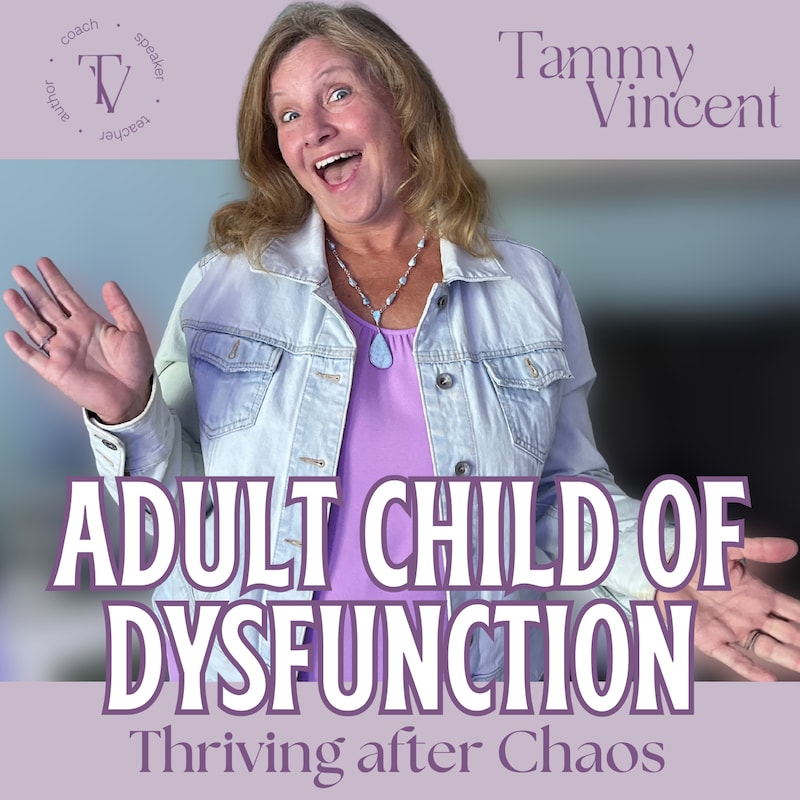
In this deeply moving episode of Adult Child of Dysfunction, Tammy Vincent sits down with bestselling memoirist Janice Erlbaum, author of Girlbomb: A Halfway Homeless Memoir, to explore the lasting impact of childhood trauma, domestic violence, homelessness, and the remarkable resilience of the human spirit.
At just fifteen years old, Janice made the heartbreaking decision to leave home to escape an abusive environment. What followed were years spent moving between shelters, group homes, addiction, unhealthy relationships, and the constant struggle to survive. Yet through therapy, writing, and an unwavering commitment to healing, she transformed her life and eventually returned to the very shelter where she'd once sought refuge—this time as a volunteer helping other young people.
Together, Tammy and Janice explore what healing really looks like after growing up in dysfunction and why telling your story can become one of the most powerful steps toward reclaiming your life.
In this episode you'll discover:
- Why Janice chose to leave home at just fifteen years old
- What "halfway homeless" really means
- The long-term effects of childhood trauma and domestic violence
- How therapy, EMDR, hypnotherapy, and other healing modalities supported her recovery
- Why writing your story can be both painful and profoundly healing
- What happened when she returned to volunteer at the shelter where she once lived
- How her parents responded after reading Girlbomb
- Advice for adult children of dysfunctional families who want to tell their own stories
If you've ever questioned your past, wondered whether healing is possible, or dreamed of sharing your own story, this conversation offers hope, honesty, and practical encouragement.
Healing doesn't erase your story.
It helps you reclaim it.
RESOURCES MENTIONED
Learn more about Janice Erlbaum
Website
(New official website)
https://instagram.com/janice.erlbaum
Grab Here Book Here:
https://www.amazon.com/Girlbomb-Halfway-Homeless-Janice-Erlbaum-ebook/dp/B000FCKPI0/ref
ABOUT JANICE
Janice Erlbaum is the bestselling author of Girlbomb: A Halfway Homeless Memoir, Have You Found Her, and several other books. Her memoir Girlbomb chronicles her teenage years surviving homelessness after leaving an abusive home and has remained in print for nearly twenty years, continuing to inspire readers around the world.
If today's conversation resonated with you and you're beginning to recognize how your childhood experiences may still be affecting your life today, I'd love to help.
As a trauma-informed coach, I help adult children of dysfunctional families understand their nervous system, rebuild self-trust, and move from survival mode into healing.
Schedule your complimentary Clarity & Calm Call today:
https://calendly.com/tammyvincent/clarity-and-calm-call
I'd love to connect with you.
Hey there, I’m so glad you’re here and tuning in! If this episode spoke to your heart, just know there’s even more support waiting for you.
Book Your Free Clarity and Calm Call: No Judgement, just a chat https://calendly.com/tammyvincent/clarity-and-calm-call
If you are curious about where you stand energetically, or just need a frequency boost, book your FREE biofrequency voice scan here: https://calendly.com/tammyvincent/complimentary-scan-demo if you want to take part in an amazing club, where you can get unlimited scans and free coaching every month, sign up here: $25 ($250 Value) Join For One Month Here https://workshops.tammyvincent.com/offers/JQz3QDrr/checkout
If you would like to ask a question, and hear the answer in a future episode, please leave your question here: https://www.speakpipe.com/Tammyvincentcoaching
Trials To Triumph: An Adult Child's Emotional Freedom Blueprint: Use code THRIVE25 for 75% off today. https://workshops.tammyvincent.com/offers/DSbcgrZZ/checkout
As an international inspirational speaker, NLP Practitioner, Trauma-Informed Coach, Neurofit Trainer, and Best-Selling Author, I bring both deep personal experience and professional training to the work I do. I believe in prevention, not just intervention — and use a body, mind, and spirit approach to guide others toward becoming the happiest, healthiest versions of themselves.
My holistic toolbox includes nervous system regulation, trauma-informed coaching, nutritional support, and natural healing strategies,
🔑 Start Your Healing Journey
Find ALL THE THINGS HERE: Anything that I have to offer is right here
✈️ Bonus for Travel Lovers!
Did you know I also offer access to an amazing travel savings program that can help you save up to 70% on hotels, resorts, cruises, and more? Let’s compare your next upcoming itinerary and see how much you could save.
👉 Try the Trip Check: https://calendly.com/tammyvincent/trip-check
📺 Subscribe to My YouTube Channel
👉 Adult Child of Dysfunction on YouTube
🌟 Book Me to Speak at Your Event
👉 Let’s connect: https://calendly.com/tammyvincent/speakers-event-chat
🫶 Let’s Connect
📩 Email: [email protected]
📱 Text: 513-280-3555
🌟 If this episode helped you, please share it with a friend, leave a review, and hit follow. Every share helps break generational cycles and brings healing into more lives.
Transcripts
Okay Hello everybody, and
welcome back to another episode
2
:of Adult Child of Dysfunction.
3
:Today we have with us Janice Erlbaum.
4
:She's the author of Girlbomb:
A Halfway Homeless Memoir, and
5
:several other books she's written.
6
:So welcome, Janice.
7
:How are you today?
8
:I'm great.
9
:Thank you.
10
:Thank you for having me.
11
:Oh, yeah.
12
:Absolutely my pre- pleasure.
13
:I read a little bit about you, and
what struck me right away was you
14
:said, "I was homeless as a teenager."
15
:And I was like, cha-ching, that's my girl.
16
:\ So we're just gonna jump right in, have
a conversation, kinda talk about all
17
:of your stuff, and then your books,
and all the good things in between.
18
:Sounds good.
19
:So talk about…
20
:Because I left my house at 16,
ended, or 17, about 16 and a
21
:half or so, ended up going back.
22
:But what led you to leaving
your house at 15 years old?
23
:, I was living with my mom at the time,
and, she was on her fourth husband.
24
:and this one was no good.
25
:I did not like this particular husband.
26
:I, had favorites and least favorites.
27
:but, he was unwell.
28
:he-- even as a 13-year-old when I
met him, 14-year-old, I could really
29
:tell this was somebody who, had a
deep streak of anger and, he was
30
:a real mystery to himself, Yeah.
31
:So he was very erratic, and sometimes
this would be expressed violently.
32
:There was a lot of yelling.
33
:There was a lot of, throwing objects.,
34
:so I refer to it as domestic violence.
35
:Yeah.
36
:though-- I personally wasn't hit.
37
:I decided to leave before that happened.
38
:I decided, I think I'm gonna
get out now, because I don't
39
:like the way this is going.
40
:And she had actually
separated from him briefly.
41
:and I told her, "Look, if you take
him back this time, I'm gonna leave."
42
:And she said, "No," I'm
not taking him back.
43
:I totally understand."
44
:we had gone through the thing
with the cops, and changing the
45
:locks, and the order of protection,
and then she took him back.
46
:So I left, that very night.
47
:As soon as she said he's coming
back, I picked up my book bag and,
48
:got on the subway and went to a
shelter in Times Square, New York.
49
:Oh, so you, you didn't
have anywhere to go.
50
:You were like, "I'm leaving regardless."
51
:yeah.
52
:I made one stop on the way to
the subway, which was to call my,
53
:at the time, best friend Karina,
and say, "Hey, I left home."
54
:And, she was like, "Wow,
that really sucks for you."
55
:So I was like, okay, not
going to Karina's house.
56
:… but yeah, no I didn't.
57
:my father, who was my mother's husband
number two- was also a guy who yelled a
58
:lot, who threw things, who, terrorized.
59
:But then when I got to the shelter, I felt
very much like I had no right to be there
60
:because I was slapped, but I was never
hit with a fist, other girls that I met
61
:living at Covenant House had experienced
so much more abuse than I had, and, I
62
:wondered sometimes, was I just weak?
63
:Should I have put up with it?
64
:But, it- I do feel like it
was the right decision for me.
65
:Even though it was a snap decision
I must have known that something was
66
:gonna happen soon, because I did have
this place, Covenant House, in mind
67
:that I had heard of, and I, I knew
there was a hotline that I could call.
68
:So yeah, it really was,
from one hour to the next.
69
:and I can say kudos to you, because I
talk about all the time how we just stop
70
:listening to our intuition, and if your
intuition told you as a 15-year-old, "I
71
:gotta get out," then you gotta get out.
72
:yeah.
73
:how many of those people in that home
that it got too escalated to the point
74
:where they were being beaten and- yeah
75
:and abused in every way, shape, or form.
76
:yeah.
77
:I'm sure they probably had some inklings
and some you gotta get out before
78
:that, but- yeah … sometimes we wait
until it's too late, .. oh, that's
79
:a tough one, though, because I can
understand the kind of that comparison
80
:trap of- yeah I didn't have it so bad.
81
:What am I doing?
82
:But I tell people, and I tell
them with everything, trauma
83
:does not have to be a big T.
84
:just it doesn't have to be that
physically being beaten down.
85
:I remember somebody asked me
one time, as a child, would I
86
:have rather been hit or ignored?
87
:And I said, "I'd rather
have been hit any time."
88
:Yeah.
89
:Because at least I knew I existed.
90
:yeah.
91
:So- That's a big one … yeah,
there's all kinds of levels.
92
:So how did you survive that?
93
:Like, how did you, how
long did you stay there?
94
:What- so I stayed at Covenant House,
which is, the largest provider of beds
95
:for homeless youth, in the world, I think.
96
:as one organization, they…
97
:I, s- state level government, federal
government does not really have,
98
:an allocation for homeless youth.
99
:Covenant House started as one guy letting
street kids sleep on his floor-… and is
100
:now in most countries around the world.
101
:And anyway, they, at the time, they were
allowing kids younger than 18 to stay.
102
:These days, if you're under
18, w- you're in foster care
103
:or you're home within 72 hours.
104
:But I was at Covenant
House for two months.
105
:then I was, in a group
home for about a year.
106
:and that was, a more stable
environment, but only by this much.
107
:yeah, I think, first of all, I survived
because I didn't spend a single night
108
:on the street, and what I've learned
is that spending even one night on the
109
:street vastly increases your chances
of ending up in systemic homelessness.
110
:especially for kids.
111
:even one night on the street tends to
lead to another night on the street.
112
:Yeah.
113
:And that's the way it goes.
114
:I feel extremely fortunate
that I went right to a shelter.
115
:And be- because I was the only
white girl there at the time,
116
:I got preferential treatment.
117
:this was the 1980s, and, there
w- there, there was more racism
118
:baked in to everyday life.
119
:I definitely received, special treatment.
120
:and I don't think I was fully aware
of it at the time, but I'll tell you,
121
:my roommates were fully aware of it.
122
:so that meant that I was, a
little bit protected, that, I got
123
:sent to a very nice group home.
124
:That I was able to stay in the public
high school where I was already enrolled.
125
:and even though it was an overcrowded
New York City public high school, there
126
:were some teachers there who cared.
127
:Yeah.
128
:They cared.
129
:And that makes all the difference.
130
:It made a huge difference, yeah.
131
:Yeah.
132
:just in terms of like I, I was in
the, theater program, because the
133
:teacher really worked to keep me in it.
134
:And, just in terms of keeping,
literally keeping me off the streets
135
:for a couple of hours after school.
136
:Yeah.
137
:that's the difference.
138
:The difference was that particular day I
spent three extra hours in the auditorium
139
:that I wasn't getting into trouble.
140
:Yep.
141
:So I think that, that really, the
special treatment that I got and,
142
:some really wonderful teachers
helped me get through that.
143
:when I look back about it now and
people always say to me, "What
144
:would you have done differently?"
145
:And I'm like, the only thing I
would have known to do differently
146
:is I would have told somebody
what was going on in my world.
147
:Right.
148
:Because I…
149
:That, that's really the only thing.
150
:So you going to a shelter,
it's okay, that, you are now…
151
:it's known what's going on in the world.
152
:you, there's no secrets.
153
:Yes.
154
:So you do have that opportunity
for someone to reach out and to
155
:support you, where I went and rented
a room from the dad of one of the
156
:boys I went to high school with.
157
:So I lived on the, his third
story and paid $80 a week while
158
:I was in high school for rent.
159
:Wow.
160
:That's so resourceful.
161
:But nobody ever questioned it.
162
:Nobody really ever even knew.
163
:So Different times, right?
164
:I mean- Different, totally.
165
:Yeah, totally different times.
166
:And I remember them calling my dad and
saying, "Tammy hasn't been in school
167
:for five days," and he's, and he had
two questions: what are her grades,
168
:which were great, and then sh- you
know, "I don't know where she lives.
169
:If you find out, let me know."
170
:Those were literally my
father's two questions.
171
:And it was…
172
:But because my grades were good,
he's "Just leave her alone.
173
:Let her graduate.
174
:She's been through a lot."
175
:he knew, He was, my dad was actually,
both of my parents were drinkers.
176
:Both of them were alcoholics.
177
:I always say my mom was like your more
volatile, abusive, neglectful, vicious,
178
:all kinds of mental health issues.
179
:my dad was just the one that wasn't
emotionally available to help me.
180
:Sounds Yeah.
181
:Yeah.
182
:he, and he told me when I was 13, he said,
"Tammy, we are doing irreparable damage
183
:to you, and I don't know how to help you."
184
:Oh, wow.
185
:And he sent me to one Alateen meeting.
186
:He did, and he was the alcoholic,
but it was never discussed
187
:that he was an alcoholic.
188
:It was all about my mom, But it,
it was just a crazy situation.
189
:But for the people out there listening,
if you know somebody, if you know a
190
:child that is going through that, try
to get them to just, to reach out,
191
:to speak up, because I wish I had.
192
:people ask me now, I was
the bad kid at school.
193
:I was the lazy one.
194
:I was the one that didn't wanna learn.
195
:And I think about it now, and
I'm like, I had 51 different
196
:teachers throughout my grades.
197
:Wow.
198
:No one ever asked me
why I slept on the desk.
199
:Because at that point in my life, at some
point in those s- 13 years or 12 years,
200
:I might have said because it's the only
place I sleep with both eyes closed.
201
:Right.
202
:And that might have been
like, ooh, red flag, but-
203
:Yeah … I don't even know then.
204
:They, like I said, it's different times.
205
:Yeah.
206
:And, my mom was a child psychiatrist.
207
:Yeah.
208
:So nobody would have ever questioned that.
209
:So I say, I was literally
manipulated by the absolute best.
210
:Yes.
211
:Yes.
212
:It's, boy, do we have a lot in common.
213
:I too was the bad girl at school, and
yet, like you, my grades were very good.
214
:'cause you had to be.
215
:Yeah.
216
:Probably 'cause you, I was afraid to
bring home grades that weren't good.
217
:Yeah.
218
:Yeah.
219
:And I was going to, again, an
underfunded New York City public
220
:school, it was easy to coast.
221
:It was- Yeah It, I liked to
read books, so that made high
222
:school somewhat easier for me.
223
:But,… yeah, I admired, I admi- I admire
what you did, and that was really what I
224
:had hoped for, was that I would, at 16 or
17, be able to have my own place, even if
225
:it was a room in somebody else's house.
226
:That's really what I wanted to do.
227
:but then, I was in the system.
228
:By going to Covenant House, I was, I
had become a ward of the state- briefly.
229
:And then the, group home was in
loco parentis, as they say, which
230
:is a phrase that I really like.
231
:Loco parentis, meaning in
place of the parents, but, also
232
:meaning your parents are loco.
233
:I love that.
234
:But, yeah, I know.
235
:it's, it's just perfect.
236
:so I really did want to become much more
independent, but I had sort of signed
237
:myself up now n- not to be that way.
238
:At the same time, I'm sure that
being independent at 16 was not easy.
239
:I mean, at least I ha- I, I fought against
the counselors and everybody at the group
240
:home, and I tried to break every rule and
manipulate everybody, but you know what?
241
:They were there to do things like tell me
to go to the frigging doctor, you know?
242
:Right.
243
:Go to the doctor.
244
:Right.
245
:That was…
246
:At least I had that, and, uh,
whereas you, you were really
247
:navigating all on your own.
248
:Yeah, and I feel like, , like you
said, one night on the streets
249
:homeless leads a teenager to so many
different things, being trafficked,
250
:having babies, getting into drugs.
251
:Like, there's all those other things.
252
:So I, I mean, I just kudos to you.
253
:I could just, I'll say it a
million times, kudos to you.
254
:Yeah.
255
:It does.
256
:Okay.
257
:Um, but talk about, you still,
you still had your run-in
258
:with all those other things.
259
:Yes.
260
:Oh, yeah, yeah, and I kept running
into them even after I was able
261
:to, uh, reconcile with my mom.
262
:She finally got rid of
husband number four.
263
:Uh, she was on psych
meds for a little while.
264
:She had sort of calmed down, and
as soon as I thought, "Okay, I
265
:can trust this," I went home.
266
:Um, but she was kind of out of it,
and I was suddenly had more freedom.
267
:So as soon as I was logistically
out of trouble, I put myself
268
:immediately in harm's way.
269
:Right.
270
:Just immediately like, "Let's
go to the hard drugs now."
271
:Right.
272
:"Let's, let's get serious
about self-destruction now."
273
:Um, and- That lasted
until I was about 24, 25.
274
:Um- So about seven or eight years?
275
:Yeah, yeah.
276
:Yeah.
277
:Like, real constant chaos, you
know, suicidal ideation, self-harm,
278
:addiction, like, co-dependence,
all the things, all the things.
279
:Um, and it re- it really was, uh, um…
280
:A- again, I was, I was home now.
281
:I had my own apartment by this point.
282
:I had a, a lock on my
door that was mine, right?
283
:Right.
284
:You know, every, every…
285
:Like, at the end of the book, it
ends with me moving into my own
286
:apartment and everything is great.
287
:Um, no.
288
:I, I, I had a home, but I had no center.
289
:Yeah.
290
:I had no sense of home.
291
:So the- I was gonna say, so no
sense of self, no sense of…
292
:I mean, you weren't, you never were a
kid, first of all, so you had to start-
293
:Right … like, you wish you probably
could have gone back and started that.
294
:Like, "Okay, let me
start over when I'm nine.
295
:Let me see if I can do this right."
296
:Uh-huh.
297
:Yeah.
298
:But it makes…
299
:I mean, a- and it's…
300
:Hopefully by now I, I, you s- I see
that you did all kinds of therapies.
301
:You did EMDR.
302
:Yes.
303
:You did- Yep … talk therapy.
304
:Yep, yep.
305
:Hypnotism.
306
:You know.
307
:Acupuncture, hypnotherapy,
which was life-changing for me.
308
:I mean, of course long-term talk therapy
was really the thing that did it.
309
:Like I said, I don't…
310
:Now that you've done all these
modalities and all these therapies- Yeah
311
:… obviously you understand why you did what
you did, and you turned to the drugs.
312
:And, and it's…
313
:I tell people it's not to be judged.
314
:It's not.
315
:It's what you can expect.
316
:I gave myself a word one
day, and it was so funny.
317
:I was on a podcast.
318
:You know how everything has an acronym?
319
:Like, there's EMDR- Yes, yes, yes
… and there's ACOD- Yep, yep … and
320
:there's all this stuff, right?
321
:So I was like, "I'm a POACDO."
322
:And someone's like- … "What
the hell is a POACDO?"
323
:I'm like, "I'm a product of a
completely dysfunctional upbringing.
324
:So I'm exactly…
325
:What you are looking at is exactly what
could be expected given my circumstances.
326
:Now, what I do with that
makes the difference."
327
:Yeah.
328
:And I, I tell people, and I try to…
329
:This is my big message, is it
might have designed me, like it
330
:might have made me how I'm look-
appearing, but it didn't define me.
331
:And only you can define.
332
:Like, only I can do that.
333
:Mm-hmm.
334
:Yeah.
335
:So yeah, it's gonna change the way
you show up in the world- Absolutely
336
:… until you become aware of every
single change that it made, and then
337
:you deal with them one at a time.
338
:But so talk about- Yeah,
I was like a chaos agent.
339
:I was just I was a- What?
340
:I was, I was just a chaos agent, you know?
341
:Mm-hmm.
342
:And I look back, and I, I see
not only the self-harm but
343
:the harm that I did to others.
344
:And, you know, when I go speak at
high schools or whatever, um, I'm
345
:asked, "Do you have any regrets?"
346
:And the kids want me to say,
"No, I have no regrets," because
347
:it made me who I am today.
348
:And it's like, yeah, I completely
regret all of the damage that I
349
:did to myself and to other people.
350
:If I had another chance, I wouldn't do it.
351
:Right.
352
:But at the same time, do I spend
my life beating myself up about it?
353
:Right.
354
:No, because then you haven't healed.
355
:Right.
356
:Right.
357
:You- Yeah … there's forgiveness
for the people that got you to the
358
:situation, and there's forgiveness
for yourself in how you reacted to the
359
:situation, even though you didn't…
360
:To me, like, I look at it, like,
people say to me, "Well," when I went
361
:through AA, let's say, and I went
through the 12 steps, and you get to
362
:that forgiveness and making amends.
363
:Yeah.
364
:And people were like, "Or, well,
who are you gonna make amends to?"
365
:And I was like, "Well, first of all,
I'm not making amends to the grocery
366
:store that I stole all the food out
of when I couldn't feed myself."
367
:Like, no, I'm not calling them
up and being like, "Okay, I stole
368
:food for five months because
my mother wasn't feeding me."
369
:Yeah.
370
:Like, th- there's certain things, but
yeah, that forgiveness for yourself
371
:has got to come at some point.
372
:Yeah, yeah.
373
:And you know, mid-50s,
I'm still working on it.
374
:Mm-hmm.
375
:I'm still really, really working on it.
376
:I'm still in, still in talk therapy.
377
:I mean, uh, and, and there's a lot
of privilege that comes with that.
378
:I mean, if I sat down and calculated
over the years how much money I have
379
:spent on talk therapy, um, I, I, there's
a reason why I haven't done that.
380
:It, there's a reason why
I haven't added it all up.
381
:Um, but boy, oh boy, is
life beautiful these days.
382
:I mean- Right … the epilogue of
the book just could not be happier.
383
:Um, from entering real therapy at 25,
meeting my now husband at 32, writing my
384
:first book at 34, you know, these things,
um, each of them was a new achievement,
385
:a new step in self-forgiveness.
386
:I mean, writing the book was very helpful
because there was a lot of stuff that
387
:I wanted to acknowledge that- Right
388
:I wanted to say, "I did
this, and I'm not bragging."
389
:I'm not bragging.
390
:No, but at the same time- But I, you
know … your story is helping other
391
:people because your story is showing
that you can do things, and then you can
392
:still move on and have a better life.
393
:I don't know how many people
I've interviewed for my podcast
394
:that spent years in prison for
just making bad mistakes from a,
395
:from reacting to a circumstance
that they had no control over.
396
:Right.
397
:So that's like, yeah, they m- you make
mistakes, but you can still continue
398
:to have a good life after that.
399
:Yes.
400
:And that's…
401
:And I love that you did it with writing,
because I think that is one of the most…
402
:Writing, podcasting, speaking- Yes
… first of all, it's a physical release.
403
:Yes.
404
:It's- Yes, it is … it's getting it out
of your body, and- Out of your body, yes.
405
:Exactly … out of your body.
406
:And I know, like, the EMDR and,
and all the hypnotherapy and all
407
:this stuff, it- it's all amazing.
408
:I know my big transformation started
coming when I started doing somatic
409
:exercises and became- Mm … a neuro fit
trainer to work with the nervous system.
410
:Mm-hmm.
411
:That was really when my big…
412
:'Cause I d- I, I still go to a talk
therapist, but it wasn't quite, like, I
413
:was like, "There's something missing."
414
:Yes, yes.
415
:And it wasn't until someone
told me one day, like, "Tammy,
416
:if you're mad, freaking shake.
417
:Just shake your body.
418
:Animals do it."
419
:And that was, like, the first introduction
I got to somatics and movement.
420
:Yeah.
421
:That, to, to this day, you know,
when, when all my clients, when they
422
:say, "Tammy, I woke up at 2:00 in
the morning," and I'm like, "And
423
:what did you start thinking about?"
424
:And they're, they would start telling
me, and I would listen to the spiral
425
:of- Yeah … how- Yeah … and
then I'm like, "Well, then…"
426
:G- And my comment is always, "Get
out of your mind and into your body."
427
:Yeah, yeah.
428
:And as soon as you start doing
that, like, that was m- made
429
:the biggest change for me.
430
:What would you say was the biggest, um…
431
:I know you said tran- the talk therapy
was really s- Yeah, yeah … incredible.
432
:Um, you know, I…
433
:It, it's interesting.
434
:I, I was not, um, connected
to myself somatically.
435
:It was all intellectual and
emotional, and I carried a lot
436
:of emotion here, um, trauma here.
437
:Uh, but, um, yeah, it was
all very, very intellectual.
438
:Uh, physically, one of the
things that really helped, both
439
:acupuncture and Rolfing, I had very
transformative experiences in an hour.
440
:In each case, um, uh, while
receiving the treatment, I had
441
:intense vasovagal reactions.
442
:Talk about shaking.
443
:Yeah.
444
:So much came out And it was…
445
:I had no idea that it was in there.
446
:So both of those were incredibly powerful.
447
:I mean, with acupuncture, I, uh,
experienced an intense sense of grief
448
:for all of the physical suffering
I had put my- put myself through.
449
:Right.
450
:You know, with drugs, with sex, in
all kinds of intimate scenarios,
451
:that I had let myself down, that I
had not protected myself, and I…
452
:This tremendous amount of grief
came up And was dispelled.
453
:Like, I had no idea.
454
:I, I had headaches.
455
:I thought I was gonna go in, maybe it
would help, maybe it wouldn't help.
456
:I had no idea that I was- Mm … gonna
walk out of there with a much better
457
:understanding of what I'd been carrying.
458
:I mean, so Rolfing almost,
almost the same thing.
459
:Yeah.
460
:You know?
461
:It was intense, intense- Explain
Rolfing to the audience if
462
:they've never heard of it.
463
:Um, Rolfing is, is a form of massage.
464
:It's a very intense massage.
465
:Rather than treating the muscles,
it treats the fascia, which
466
:attach the muscle to the bone.
467
:So, um, it can feel very painful, and
yet what it's doing is releasing all
468
:of this very, very, very tight, uh,
parts of your body, and what comes out
469
:is, is, is lifted, is out, is gone.
470
:Um, so it's not, it's not fun.
471
:It's not a massage.
472
:Right.
473
:But boy, oh, boy, just incredible.
474
:And, and EMDR too.
475
:Yeah.
476
:Uh, I had four sessions, and I
477
:felt better every time I left.
478
:I felt better.
479
:So I'm just so grateful
that these things exist.
480
:I'm, uh, and there's- You know- Yeah.
481
:Ugh.
482
:Yeah, there's so many modalities now.
483
:For those of you listening that have
never heard of EMDR, it's very, it
484
:seems like a very simple process, but
obviously there's trained practitioners
485
:that t- h- show you through the
process, but it's literally r- rapid
486
:eye movement desat- desensitiz- z- blah.
487
:Yeah.
488
:I can never say that.
489
:Me neither.
490
:Desensitization.
491
:But anyway, you're literally
looking back and forth.
492
:I've seen it done with
light, and I've seen…
493
:And, and it's just, it's
switching up your brain.
494
:It's moving, you know,
moving things through.
495
:But that was, uh, it, it was incredible.
496
:It definitely was an
incredible experience.
497
:And so f- the people out there listening,
you've now heard the Rolfing, you've heard
498
:the EMDR, you've heard the talk therapy,
you've heard the hypno- hypnotism.
499
:Yeah.
500
:There is so many different
modalities that explore.
501
:Yeah.
502
:I, I used to say I was, I was like a
crazy woman throwing shit at the wall,
503
:like spaghetti at the wall, and waiting-
Yeah … for something to stick, and
504
:it would fall off the wall, and I'd
go, "Oop, I don't like that one."
505
:Right.
506
:Right.
507
:Um, but you have to.
508
:Yeah.
509
:You have to.
510
:Yeah.
511
:Because- What, I, I mean, Janice and
I could get on this podcast right here
512
:and tell you, "Oh, this is gonna work."
513
:We don't know what's gonna work for you.
514
:Right.
515
:Everybody's different.
516
:Right, right.
517
:Yeah, yeah.
518
:I know.
519
:I wish, I honestly, I do, I
wish that I could guarantee some
520
:of the results that I've had.
521
:Um, but, uh, things that have worked
for other people didn't work for me.
522
:Cognitive behavioral
therapy didn't work for me.
523
:Um, you know, I was, uh, I, I fulfilled
all of the diagnostic criteria for
524
:borderline personality disorder,
which I didn't know at the time.
525
:I didn't know that there were
other people suffering the same
526
:self-loathing and self-sabotaging
syndrome that I was caught in.
527
:Um, and you know, I, I never heard
of the dialectical behavioral
528
:therapy that s- treats, that's
be- being used to treat BPD.
529
:So, um, yeah, modalities have been
invented Mm-hmm … s- in the, in the
530
:past 30, 40 years that- Yeah … uh,
could've been helpful at the time.
531
:Um, but, but- It's amazing.
532
:I should let you do…
533
:I have actually a, a, one of the newest,
well, not newest ones, newest to me,
534
:is a, an AO BioFrequency Voice Scan
that analyzes, like, 171,000 different
535
:frequency imbalances in your body,
and then sends you, like, balancing
536
:harmonics to kind of rebalance them.
537
:Wow.
538
:So it's very fun.
539
:It's, it's the entranceway into my
coaching because it's, I can ask
540
:you 40 questions and know exactly
what's going on in your body.
541
:Mm-hmm.
542
:But this is kind of like a tangible,
when you put it in and it runs a
543
:summary, it'll say like, "Oh, you're
holding onto this, and your adrenals
544
:are fatigued because of this."
545
:And it's not diagnostic, but
it's, it's an amazing tool.
546
:So it's kind of something I've
added on that people are like,
547
:"Well, how does it know?"
548
:And then they'll take lab work and
put it right up against this thing,
549
:and they're like- Yeah … "How?
550
:How?"
551
:Like, it matches my Quest Diagnostics
lab work to the T, but it's not- Yeah
552
:diagnostic.
553
:It's energetic.
554
:Yeah, yeah.
555
:And at the end of the day,
we're all energy, right?
556
:That's- Yeah … when you think of the,
the acupuncture and the, I love- Yeah
557
:… when people, you know, when you look at
the map of the body with all of- Yeah
558
:… the Chinese medicine, it's all connected,
and it's, it's all blocks and flows,
559
:and it's just opening that stuff up.
560
:So- Yeah … it's really interesting.
561
:Yeah.
562
:There are so many different, there
are so many different things to try.
563
:Um- Yeah … and, and look, sometimes
I've, I've had relief for a little while,
564
:and then that relief has gone away.
565
:Okay, I had some relief
for a little while.
566
:Right.
567
:How wonderful is that?
568
:Um, yeah.
569
:Yep.
570
:And then you can build on that.
571
:Um- Right.
572
:So tell me, I know you asked a question
bef- when, in the little intake thing
573
:that we did- Mm … for the podcast.
574
:What happened when you
went back to that shelter?
575
:'Cause I'm curious about this now.
576
:Yeah.
577
:As a volunteer going back as
someone not in the shelter, what-
578
:Mm … experience did you have?
579
:Well, um, I, as I was writing the book,
uh, I really wanted to get it right.
580
:And, um, Covenant H- I was
still living in New York.
581
:I was two subway stops away from
this place that had changed my life.
582
:And, um, so I decided to go back to
volunteer, and what I found was that,
583
:um, these were the daughters of the
girls that I lived with essentially.
584
:Mm.
585
:That absolutely nothing had changed.
586
:Same, same girls, same situations.
587
:Um, and the organization had gotten
somewhat better about serving their
588
:needs, but, um, yeah, I did not
find that much had changed at all.
589
:Um, the other thing that I found was that
I had gone back not so that I could be
590
:of use to others, but I had gone back to
heal myself, and I did so unconsciously.
591
:Mm-hmm.
592
:So, you know, I thought I was there
doing a lot of good, and what I didn't
593
:understand was how caught up I was in
my- My, my own past, my own present,
594
:my own nonsense, and, um, I wound
up getting very, very over-involved
595
:with one of the residents, uh,
because she reminded me of young me.
596
:Mm-hmm.
597
:And it's like, Janice, that's
not what you were there to do.
598
:You were there to do some
occupational artwork, you know?
599
:You're not there to look for
younger you and try to become
600
:a parental figure in her life.
601
:And as she's going from rehab to,
you know, hospital for various
602
:health issues and, uh, and then I'm
trying to become, uh, some kind of…
603
:I, I was asking, "Please
let me be your medical rep."
604
:Like, w- "Let me, let me help.
605
:You're constantly going
through these health things.
606
:Let me be the one who
helps you through this.
607
:Let me be the adult."
608
:Um, and through that process, I learned
that she had, um, Munchausen syndrome,
609
:and she had been faking all of the
illnesses and all the circumstances, uh,
610
:that she had supposedly been through.
611
:So that was a really, really great
lesson in knowing when you are doing
612
:something self-serving Volunteering
was meant to make me feel better, and
613
:so I was an irresponsible volunteer.
614
:Um, I mean, look, I did occupational art
therapy, uh, for many, many, many, many…
615
:I- for a year and a half every week.
616
:Um, that part was good.
617
:I'm glad I didn't do more
damage before learning I wasn't
618
:there for the right reasons.
619
:I wasn't fully healed.
620
:I was still writing the book.
621
:And that…
622
:Yes, and that is a very good point to
make because a lot of people, I tell
623
:people, you know, when they go to a
coach or they go to a therapist, and
624
:I've had people say, "I just, I got
the feeling that the therapist was
625
:getting more therapy by talking to me."
626
:I'm like, "Then find another
therapist," because many,
627
:many, many people get into…
628
:I mean, that's what I did.
629
:I got into coaching because I
wanted to help people not have to
630
:go through what I went through.
631
:Yes.
632
:Yeah.
633
:Yeah.
634
:But if you can't tell
your story without…
635
:I mean, there's a whole lot of, when
you're coaching or with a therapist,
636
:there's a lot of co-regulation going on.
637
:Yes.
638
:Yes.
639
:And if you can't co-regulate with
the person you're talking to and
640
:you're leaving them feeling more
anxious and distraught than before
641
:they came, you're not ready.
642
:Yeah.
643
:And there's nothing, there's
nothing wrong with that.
644
:I mean, I'm 57, and I'm just now
starting to coach, where I started
645
:my healing journey 30 years ago.
646
:But 15 years ago- Yeah … there was
so much electrical charge behind the
647
:stories I was telling, which means that
there would've been electrical charge
648
:bes- behind the stories I was hearing.
649
:Yes.
650
:Yeah.
651
:And that will affect the person
that you are trying to help.
652
:Totally.
653
:Totally.
654
:Yeah.
655
:So again, kudos to you- Thanks
656
:because some people don't see that.
657
:Like, I will liter- you know, and, uh,
that's why it's so important, I just
658
:mentioned this on the last podcast.
659
:Go…
660
:If you have to go to, you know, if
whether it's a coach, a therapist,
661
:whatever it is- It is your right.
662
:If it, you don't get that, you know,
you have to trust your instinct, and if
663
:you don't get that good, warm, lovable
feeling that you're safe, that your body
664
:is safe, and your mind is safe- Yeah
665
:get out and get another one.
666
:There's a million of us.
667
:Yes.
668
:Yeah.
669
:Right.
670
:There really is.
671
:Yeah.
672
:There's a lo- there's enough that you
can say, "I'm sorry, this isn't…
673
:Thank you for your time."
674
:Right.
675
:"This is not gonna work for me."
676
:Totally.
677
:And there's no shame in that.
678
:Yeah.
679
:You know, again, we're, when we grow
up in that kind of environment where
680
:these chronic people-pleasers give
everybody what they want, and I don't
681
:know how many people I hear say to me,
"Oh, I was with this therapist for a
682
:year, and I just felt bad leaving."
683
:Right.
684
:Right.
685
:The hell?
686
:You're there to heal you, not her.
687
:Right.
688
:Or him.
689
:Also, these are, these are professionals.
690
:Um, they are, they're, they're
not going to be personally
691
:hurt the way a friend would.
692
:No.
693
:They're not your parent.
694
:They're not gonna be angry at
you for doing something that
695
:they're very used to happening.
696
:They- Right … they, so-
And not only that, but not
697
:your circus, not your monkey.
698
:It's not your problem
what they're thinking.
699
:That goes back to why we're
in therapy to begin with.
700
:Right.
701
:But it's, it, you know, it's funny.
702
:I'm, I'm, I'm turning 57 next month,
and, um, you know, I look at you and
703
:I see a happy, healthy person, and I
try to present to the world as, you
704
:know, the best version of, of myself.
705
:And I look at some of the women
that I was in the group home with.
706
:You could not tell what
we've been through.
707
:I look at you and I say, "Well, you know,
there's a, there's a successful citizen
708
:of the world who's, you know, functional,
and, uh, and is doing good for others.
709
:Like, obviously she must have come
from a background that supported that."
710
:And I, I see my, my old cohort, and
they're, we're middle-aged ladies now.
711
:You can't tell.
712
:Right.
713
:You wouldn't know what we were up to.
714
:Yep.
715
:You can't see the suffering
because we were healed.
716
:'Cause yep, you did the work.
717
:Yeah.
718
:Did the work.
719
:Yes.
720
:So talk a little bit more about your book,
and then we're gonna, I want you to tell
721
:people where they can find it, where they
can work with you, if they wanna reach out
722
:to you directly, and all that good stuff.
723
:Great.
724
:Great.
725
:Um, so Girl Bomb now is 20 years old.
726
:Um, and, uh, I'm sort of- Talking
about it again because it never really
727
:went away, that I, I, over 20 years
I was still hearing from people who
728
:were discovering the book and finding
that it had meaning for them, and
729
:I'm so, uh, so happy about that.
730
:I'm just so happy that
731
:On, on one hand, I'm not happy
that it continues to be as relevant
732
:as it does, that again, a lot of
the problems, um, that were there
733
:in the 1980s are still baked in.
734
:I mean, gay kids and trans kids always
made up at least a third, if not
735
:40%, of the kids who were homeless.
736
:Same.
737
:It's the same.
738
:These kids get thrown
out by their families.
739
:Nothing … The only thing that's changed
is now there are a few other shelters, um,
740
:uh, like the Ali Forney Center, um, that
specifically serve these youth, whereas
741
:Covenant House, a faith-based organization
wasn't the best at understanding what
742
:gay kids needed, what trans kids needed.
743
:So that has changed, but, you
know, not enough has changed.
744
:Um, the book continues to be relevant.
745
:So in some ways I'm glad about
that, and in other ways, um, I
746
:wish it were like, "Wow, I can't
believe that used to happen."
747
:Yeah.
748
:It, but it just goes to show, and I
say it all the time, like people are
749
:like, "Well, what do you wanna do?"
750
:And I'm like, "I wanna get up on the
biggest mountain and just feed love and
751
:light into these people, and let them…"
752
:Like, doesn't…
753
:Your past is your past.
754
:Yep.
755
:So let's just embrace what happened,
find what we can learn from it, and
756
:let's find a way, find the tools, find
something to get, to move forward-
757
:Yeah … and to understand that like at
the end of the day we were all born these
758
:beautiful, divine, joyous creatures- Yes
759
:and then life lifed on us.
760
:Yeah.
761
:That's the best way to put it, right?
762
:Yep.
763
:Yeah.
764
:And, and it changed the way we look
at the world, but the world i- the,
765
:the, the good, the joy, the happy
is still out there for the taking.
766
:You just have to be
able to find the tools.
767
:Yes.
768
:But yeah, you're right.
769
:It's, suffering is not the '80s, the
'90s, the '70s- Right, right, right
770
:the '60s.
771
:Like it n- it's, it's universal.
772
:It's everywhere, and we just need
more tools, and we need more people
773
:like you out there writing books.
774
:I appreciate that.
775
:And, and, and, um, you were, you were
saying, uh, where people can find me.
776
:If, if you are interested in writing
your own memoir, whether it's book
777
:length or whether you wanna write three
pages, um, I am specifically always very
778
:supportive of people who want to write.
779
:Um, and I do do coaching, and
I do have a sliding scale.
780
:Um, so, uh, I can be
found at girlbomb.com,
781
:G-I-R-L-B-O-M-B.com.
782
:Um, and I'm on Instagram, sort of.
783
:Uh, so you can find me at
Instagram, at janice.earlbaum.
784
:And I will put all of those links in
the show notes so people, if you're
785
:driving or you're not being able to
pay attention to exactly the spelling
786
:and stuff, don't worry about that.
787
:Just go to the show notes.
788
:We'll have a little bit more about
Janice in there, and how to reach
789
:out to her and everything else.
790
:So, it, I mean, so many people
are listening to you, and
791
:they're like, "Wow, that's me.
792
:I've been there."
793
:Oh, if so, I, I'm, I'm
holding you in my heart.
794
:I love you.
795
:Aw.
796
:Nice.
797
:So if you had to leave the listeners
with one last piece of advice or words of
798
:wisdom or something tangible they can take
with them today, what would it be, Janice?
799
:It would be keep trying.
800
:Keep trying.
801
:Because- Without w- if you're, if
you're not going to change anything,
802
:then nothing is going to change.
803
:And you can start small.
804
:You can do one of these one-time things
like hypnotherapy or acupuncture or
805
:EMDR or Rolfing, and if you don't
find results from one, try another.
806
:That sometimes people look at healing
as like this giant Mount Everest that
807
:they're gonna have to get up, and it makes
it very, very hard to start climbing.
808
:But there are simple steps that you can
take, and one of them might work for you.
809
:Amen.
810
:Thank you so much.
811
:Thank you, Tammy.
812
:Yeah, no, it was super fun.
813
:It's really, really lovely.
814
:Thank you.
815
:And it, yeah, it's super fun.
816
:And I tell people it's the same thing.
817
:Like wake up in the morning and
just, "What do I need right now?
818
:What do I feel that I need right now?"
819
:Ask yourself that every morning.
820
:And then, what's one thing I can do
to make myself feel just 1% better?
821
:And sometimes if you ask yourself that,
you don't have to climb Mount Everest.
822
:Yeah.
823
:If you could feel 1% better, imagine that.
824
:You would change the world.
825
:Yes.
826
:If everybody f- woke up in the morning
and was like, "Okay, what do I need?
827
:What does Janice need?
828
:What does Tammy need?"
829
:Right.
830
:Like, what do we need?
831
:Yeah.
832
:And what can we do?
833
:Because I'm sure we can think
of something, but we don't.
834
:We wake up, we scroll on our phone,
we open up, start doom scrolling.
835
:Yeah.
836
:We immediately fill our minds
with negativity, the first
837
:thing we do in the morning.
838
:Yeah, yeah.
839
:And if I could give, like, a tip,
like, today, like, that would
840
:be it for me, is wake up- Yes
841
:and every…
842
:Start the day positive.
843
:Yes, yes, absolutely.
844
:Start it positive.
845
:That's a radical change, too.
846
:Yeah.
847
:Yeah.
848
:And guys, go get her, go get her book.
849
:I wanna read…
850
:I think I down- Is it…
851
:It's on Audible too, isn't it?
852
:Uh, no, there is no audiobook- No?
853
:… I'm sad to say, but, um, I
may be addressing that soon.
854
:Oh, you're gonna address that,
because that's what you're gonna do.
855
:Like, yes.
856
:Because I listen to everything on Audibo-
Audible, but maybe I d- I think I might…
857
:I don't know.
858
:That Girlbomb, it's so familiar, but I'm
gonna get it and put it to my list of
859
:700 books I gotta read, I promise you.
860
:Awesome.
861
:Thank you so much, Tammy.
862
:I will do the same.
863
:I'm very, very interested
in, uh, your books.
864
:Thank- Yeah, mine, I got banned
on Amazon, so mine's a dumb story.
865
:But, um, yeah.
866
:Yeah.
867
:My book is called Surviving
Alcoholic Parents, and it's
868
:mostly meant for teenagers.
869
:It's a guide, but we can
talk about that one later.
870
:Okay, great.
871
:But anyway, so yeah, so the name
of the book is Girlbomb: A Halfway
872
:Homeless Memoir, and sever- And like
I said, she's got several other books.
873
:Janice Erlbaum.
874
:Check her out.
875
:Go visit her.
876
:Go reach out to her.
877
:A wealth of knowledge and so much wisdom.
878
:And thank you so much.
879
:Thank you, Tammy.
880
:Love to you.
881
:Thanks.
882
:You're welcome.
883
:Great.
884
:And for everybody else out there
listening, you heard it again.
885
:Here's another story of hope and healing,
and just know that your past does not
886
:define you, and it doesn't matter how bad
things got, they can always get better.
887
:They can always get better, and with
a little self-compassion, a little
888
:self-love, and a little bit of work,
you can get there too, my friends.
889
:So you all have a blessed
week, and we will see you back




