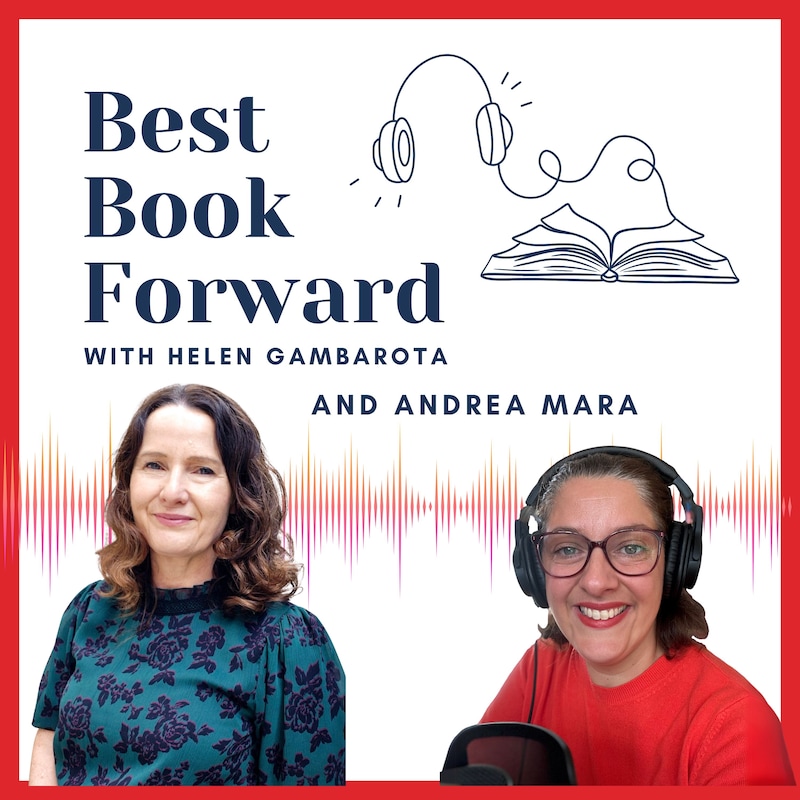
Shownotes
Andrea Mara on Such a Nice Girl: When Friendship and Motherhood Collide
In this episode bestselling author Andrea Mara joins me to talk about her gripping new thriller Such a Nice Girl, released today. We get into the story behind the book, which begins the morning after a glamorous wedding when two mothers wake to find their daughters missing. What follows is a tense and emotional unravelling of friendship, trust, and the quiet fears that sit beneath family life.
Andrea shares what inspired the novel and how she builds that sense of unease that keeps readers turning pages. We also talk about her writing process, the balance between character and plot and how much she loves to come up with great red herrings.
Of course, no episode of Best Book Forward is complete without book recommendations. Here are the books that have shaped Andrea. You’ll find links to buy below:
Books by Andrea:
Andrea’s Book Choices:
The Jackson Brodie Series by Kate Atkinson
The Chimney Sweeper Boy by Barbara Vine
Demon Copperhead by Barbara Kingsolver
Margot's Got Money Troubles by Rufi Thorpe
Other Books Mentioned
On Writing by Stephen King
Bird by Bird by Anne Lamott
Big Magic by Elizabeth Gilbert
Shrines of Gaiety by Kate Atkinson
Small Mercies by Denis Lehane
Long Bright River by Liz Moore
Tomorrow and Tomorrow and Tomorrow by Gabrielle Zevin
A Little Life by Hanya Yanagihara
I’ll be back next week with another author conversation, and I’d love for you to join me for that too.
In the meantime, if you’ve enjoyed this episode, please subscribe, rate, and review Best Book Forward, and don’t forget to tell your friends. It really helps new listeners discover the show.
See you tomorrow, and happy listening.
Listen & Subscribe Now:
https://best-book-forward.captivate.fm/listen
To stay in touch with Best Book Forward news please follow me on Instagram @bestbookforward or visit my website: https://bestbookforward.org/
Andrea Mara on Such a Nice Girl: When Friendship and Motherhood Collide
In this episode bestselling author Andrea Mara joins me to talk about her gripping new thriller Such a Nice Girl, released today. We get into the story behind the book, which begins the morning after a glamorous wedding when two mothers wake to find their daughters missing. What follows is a tense and emotional unravelling of friendship, trust, and the quiet fears that sit beneath family life.
Andrea shares what inspired the novel and how she builds that sense of unease that keeps readers turning pages. We also talk about her writing process, the balance between character and plot, and the journey to becoming a bestselling thriller author. It is a really fascinating look at how a story comes together and what drives her to keep writing darker, more complex narratives.
What we talk about:
- The inspiration behind Such a Nice Girl
- Why stories about motherhood and friendship resonate so deeply
- Building suspense through character and everyday fears
- Andrea’s writing process and how her ideas develop
- Her journey to becoming a bestselling author
Books that shaped Andrea
Of course, no episode of Best Book Forward is complete without book recommendations. Here are the books that have shaped Andrea. You’ll find links to buy below:
I’ll be back next week with another author conversation, and I’d love for you to join me for that too.
In the meantime, if you’ve enjoyed this episode, please subscribe, rate, and review Best Book Forward, and don’t forget to tell your friends. It really helps new listeners discover the show.
See you tomorrow, and happy listening.
Listen & Subscribe Now:
https://best-book-forward.captivate.fm/listen
To stay in touch with Best Book Forward news please follow me on Instagram @bestbookforward or visit my website: https://bestbookforward.org/
Transcripts
Welcome back to Best Book Forward.
Speaker A:I'm your host, Helen, and this is the podcast where I chat to authors about the books that have shaped their lives.
Speaker A:Think of it as a slightly bookish version of Desert Island Discs.
Speaker A:Today's guest is the brilliant Andrea Mara.
Speaker A:She's the number one best selling author whose thrillers have sold over a million copies.
Speaker A:You might already know her from All Her Fault, which was recently adapted for TV and became a huge hit.
Speaker A:Her last novel, it should have Been youn, was also winner of the Irish crime novel of the year.
Speaker A:Andrea joins me today to talk about her brand new book, Such a Nice Girl, which is out today and it is a gripping read.
Speaker A:I couldn't put this one down.
Speaker A:Such a Nice Girl kicks off the morning after a glamorous wedding when two best friends, friends wake up to discover their daughter's missing and things spiral very quickly from there.
Speaker A:Today we'll be chatting about the inspiration behind the book, keeping it completely spoiler free.
Speaker A:We'll chat about her characters and writing life and of course, the five books that have shaped her life.
Speaker A:So I think we should get straight into it and give Andrea a warm welcome to the show.
Speaker A:Andrea, hi.
Speaker A:Welcome.
Speaker A:Thank you so much for joining me today.
Speaker B:Thank you so much for having me.
Speaker A:I'm so excited to have you here.
Speaker A:So we're recording this at the end of March, but this episode is coming out on publication day, which is very exciting.
Speaker A:So your ninth novel, Such a Nice Girl will be out today.
Speaker A:So by the end of this episode, we want listeners running to go and grab a copy.
Speaker A:So would you like to start off then by telling everyone a little bit about what, what it's all about?
Speaker B:I will, yes.
Speaker B:So Such a Nice Girl.
Speaker B:It's about two mothers and their two adult daughters.
Speaker B:So the moms, Siobhan and Grace, they're best friends, have been best friends for 35 years.
Speaker B:And their two daughters are best friends too, or so they think.
Speaker B:And they're all at a big family wedding in this big luxury house with a swimming pool.
Speaker B:And when they wake up the next morning, they're all hungover and tired and they realize the two girls are missing.
Speaker B:And then it suddenly comes to be clear that one of the girls is trying to kill the other.
Speaker B:But they don't know which girl is the victim and which girl is the culprit.
Speaker B:But they have to find them.
Speaker B:They have to work together to find them without knowing who's trying to hurt who.
Speaker A:Such a great hook.
Speaker A:And we were just saying it's so hard to talk about this because I could literally go into every single detail, but I will not spoil this for anyone.
Speaker A:So we're going to sort of talk a little bit about characters and some of the themes and.
Speaker A:But the plot will be completely protected.
Speaker A:So yes, we'll be good.
Speaker A:So should we go back to the beginning then and just sort of.
Speaker A:I'd love to know, where did the idea for such a nice girl come from?
Speaker A:Was it a character or the sort of mothers or the wedding?
Speaker A:What came first for you?
Speaker B:It's actually.
Speaker B:It's about the horror of your child doing something and dealing with the other child's parents, especially if you're already friends with them.
Speaker B:So where it really came from was kind of that thing when your kids are small and they're in nursery and you get a little call over from the teacher, the minder, and they're like, there's been a little incident and your heart just plummets and you're like, oh no, oh no.
Speaker B:And they're like, and it was a biting incident.
Speaker B:Because of course it's always a biting incident.
Speaker B:And I used to always think, oh my God, like just subconsciously, please let my child be the one who was bitten.
Speaker B:Because it sounds so bad.
Speaker B:I have told my kids since that this is true, but it's just easy, easier if they get a little bite from another kid than if they're the biter.
Speaker B:And then you have to be that parent of the kid who's going around biting people.
Speaker B:So it's sort of the grown up version of that.
Speaker B:So, you know, and over the years, like all kids, you know, my kids have had falling out with other friends and then, you know, one minute you're friends with a mom at the school gate and then the next minute your kids aren't talking to each other.
Speaker B:So, you know, do you carry on being friends with them?
Speaker B:Do you refer to the little tiff your kids are having?
Speaker B:Do you gloss over it if you feel your child is the injured party?
Speaker B:Do you have to, you know, give them daggers as you're walking past and never speak to them again?
Speaker B:Do you have to be the grown up about it and just, you know, stay out of it?
Speaker B:So it's all those kind of things, but turned into a book that is, you know, for, for adults with crimes and murders and all the rest of it.
Speaker A:Bit beyond the biting.
Speaker B:Yeah, exactly.
Speaker A:Do you know, I always, when my two were at sort of primary school, school, and you do get that moment as you see the teacher and you think, oh, some, somebody's getting called and it's like, can you not just put a note in the child's pocket or something?
Speaker A:Because then you know that everyone's talking about it as well, which helps to build, like, oh, what they think.
Speaker B:Exactly.
Speaker B:So it's all of that.
Speaker B:The horror of that in a book.
Speaker A:Yeah.
Speaker A:So I think with children, their friendships as well, as you say, if they have fallings out.
Speaker A:But we also had the thing of some of our friends were picked by the children becoming friends with other kids.
Speaker A:So it's such an interesting sort of time of life, isn't it, when they're little of, like, who you're going to be friends with is sort of dictated by them a little bit.
Speaker A:But then they are also friends with other people because you're friends with their parents.
Speaker B:Yeah, yeah, exactly.
Speaker B:And it can all be transient.
Speaker B:Like, there are people that I spent a lot of time with years ago that I haven't seen since.
Speaker B:And that's fine.
Speaker B:It's just that there was a moment in time when our kids were in the same environment and we connected and got on well.
Speaker B:But then our kids moved on, so we just moved on too.
Speaker A:Yeah, we found that just now because they've gone to a secondary school and it's.
Speaker A:It's so different because we don't know any of their friends, parents now it's like, oh, don't know who you're with.
Speaker A:Which we'll come on too, of sort of like, as they grow.
Speaker A:Okay, so as you said, the story opens the morning after this wedding, which sounded very glamorous and very fun, and Siobhan, one of the mums, is waking up with a hangover.
Speaker A:And I just said to you, poor Siobhan, like, not what you need to wake up to this massive drama, but it's such a brilliant way to open a thriller because you have that sort of haziness of memories.
Speaker A:You're tired and sort of everything.
Speaker A:So could you sort of talk to us about that opening where the idea for the wedding came from?
Speaker B:Well, I think weddings are fun to write about.
Speaker B:Like, I love watching a show or reading a book that features a wedding.
Speaker B:Like, I always remember watching the Perfect Couple on TV and thinking, oh, great, a wedding.
Speaker B:Because you've gathered all of these people in one spot, literally everybody who's close to the bride and groom and families who haven't spoken for years.
Speaker B:And it's all glamorous and glitzy, but there's this undercurrent of past bitterness and whatever else might have happened.
Speaker B:And then you've got the the alcohol, of course, everybody's just drinking all day.
Speaker B:And then there's that.
Speaker B:That next morning feeling that lots of us would be familiar with when you've had a big night out and you wake up the next morning going, oh, God, let me.
Speaker B:Let me just piece it all together real quick so I make sure everything is fine.
Speaker B:And I think, you know, there's.
Speaker B:There is that thing for people who do drink, and obviously not everyone does.
Speaker B:I do have.
Speaker B:Have wine at the weekends and champagne at weddings and whatever.
Speaker B:But, like, there is that feeling sometimes when you're like a parent as well.
Speaker B:You're like, okay, there has to be a line somewhere where, you know, I'm at a party or I'm at a wedding, but I am in charge of my kids still, whatever age they are, whether they're small or teenagers.
Speaker B:And it's that kind of consciousness that's always there of kind of keeping it together as a parent when your kids are there too.
Speaker B:And in this book, the children are grown children, they're 24 years old.
Speaker B:But Siobhan still feels, throughout the book, she's like, oh, God, I wish maybe if I didn't have so much champagne last night, I could remember more about what happened and I'd know more about where the girls are now.
Speaker B:So it's probably a bit mean to dig at her that way, but I just thought it was an interesting thing to explore because it is something that would.
Speaker B:Would prey on my mind too if something similar happened.
Speaker A:And it is that sort of.
Speaker A:The haziness is so clever because even as a reader, then you're like, oh, hang on a second.
Speaker A:Is that.
Speaker A:Is that actually what's happened?
Speaker A:Because she.
Speaker A:I mean, she wakes up to missed calls from her daughter and then sort of goes to find her and the two girls are missing.
Speaker A:And I. I mean, I don't drink now, but I know I always used to have, like.
Speaker A:I used to call it my Alkanoia Wake up the room.
Speaker A:Like, right, what's.
Speaker A:What's happened?
Speaker A:Who said what?
Speaker A:But particularly at this wedding, there are lots of sort of relationships that are quite difficult and have a lot of history as well.
Speaker A:So as a reader, you're sort of.
Speaker A:You're in that haziness as well, because it's like you.
Speaker A:You've only got Siobhan sort of point of view to go from.
Speaker A:So it's a brilliant start and then it just races through.
Speaker A:It's just that, I mean, I didn't put it down when I started reading it.
Speaker A:It's so brilliant.
Speaker B:Thank You.
Speaker A:So I said to you, there's one sort of part in here that when I was reading, I was like, it's quite a horrifying thought that I hadn't really ever sort of considered before.
Speaker A:You say, what mother thinks her own daughter will do something terrible.
Speaker A:But every bad deed is carried out by a person who is once someone's child.
Speaker A:Which actually, when you sort of think about it and you think about things that have happened in the news as well, you know, you always sort of think about the victim of something that's terrible.
Speaker A:But actually, as you say, to be the parent of somebody who has done something terrible is, is pretty horrific.
Speaker A:But I'd love to sort of talk around that a little bit.
Speaker A:Sort of, you know, where were you looking at particular news stories that drew you to it?
Speaker A:Or was it just them sort of biting as kids?
Speaker B:It's probably a bit of both.
Speaker B:Like, I do think about that when you hear news stories, and obvious, quite rightly, there is a focus always on the victims and the victims families.
Speaker B:But I would be thinking there's also the parents of the perpetrator.
Speaker B:There's some awful stories in the news right now and there are families of the people who committed the murders who are learning about this.
Speaker B:And I often think, would they be defensive and go, oh, everyone's out to get him.
Speaker B:He definitely didn't do that.
Speaker B:Would they be in denial?
Speaker B:Would they know deep down it's probably true?
Speaker B:Would they disown their child?
Speaker B:Would they stand by their child?
Speaker B:And even just on a very, almost shallow level, but not really.
Speaker B:How do you go to the shops?
Speaker B:How do you do anything anymore if you're the parent of that guy who just murdered his girlfriend?
Speaker B:I mean, your life is never going to be the same again.
Speaker B:Surely you.
Speaker B:I mean, do you move house?
Speaker B:I don't know.
Speaker B:So it's all those kind of thoughts that wrapped together to cover that element of the book.
Speaker B:And it's, it's something that Siobhan is grappling with throughout the book.
Speaker B:It's like she's worrying that her daughter has done something, then she's feeling disloyal for having that worry.
Speaker B:Do you stick by your kids no matter what?
Speaker B:Do you have a blind belief that they can do no wrong?
Speaker B:I mean, that doesn't sound like a great, a great idea, but we are there to be their advocates and protectors.
Speaker B:So it's like, where is the line in that, in.
Speaker B:In how far you would go to stand up for them and to be absolutely certain that they would never do anything wrong.
Speaker A:And I guess for Siobhan and Grace, where it's also sort of quite difficult if you try to put yourself in their shoes.
Speaker A:Like if Rhae hasn't been the person to have done something awful, well, then that potentially means that she has been killed or really seriously hurt by her friend.
Speaker A:But if she's wishing that her daughter wouldn't do it, then she's wishing her best friend's daughter, who she's grown up with, is the one.
Speaker A:So it's like, it's just sort of torturous to have that sort of very close sort of friendship and to go through it.
Speaker A:It's really, really clever.
Speaker A:I was just thinking then as well, that sort of just reminded me a bit of adolescence.
Speaker A:You know the TV series when you were saying about the parents as well, that was such a good sort of look at, you know as well, wasn't it?
Speaker A:To the thing.
Speaker A:I think it's interesting that we're now starting to consider that side as well.
Speaker B:Yeah, exactly.
Speaker B:And I mean adolescents did such a good job of portraying that side.
Speaker B:But, but there are ever, every single story ever, whether it's fiction or real life, there is that side of it there.
Speaker B:Like we were just saying, there are the parents and siblings who are left behind going, oh my God, our lives are upside down because of what one member of the family did that they have nothing to do with, but they're going to have to live with it forever as well.
Speaker B:Not as bad as for the victim's family, but it's still there.
Speaker B:And I suppose it doesn't really, you know, understandably doesn't get a whole lot of coverage.
Speaker A:So for you as a mum yourself, how was it to sort of put yourself into Siobhan's shoes and sort of explore that?
Speaker A:I imagine it's quite difficult sort of get into that.
Speaker B:Well, I, I use writing books as free therapy really.
Speaker B:So I just get all my fears and I kind of scale them up to be about crime rather than just everyday teenage problems.
Speaker B:And I put them in a book and then I close the book and put it out on bookshelves for other people to deal with and I walk away and you know, start the next one.
Speaker B:So I don't find it difficult to do that.
Speaker B:It's more the opposite.
Speaker B:Like whatever fears I have now, I mean I, I don' 24 year old daughter, my kids are teens and I'm definitely not worried about any of them waking up the morning of a wedding and killing their bestie.
Speaker B:So we're okay.
Speaker B:But like of course I worry for my kids all the time when they're small.
Speaker B:I worried about, you know, them getting lost, going missing, that kind of thing as teenagers.
Speaker B:Oh my God.
Speaker B:You worry about what will be done to them, but what they could do to themselves, what they could do to other people.
Speaker B:There is so much more scope for worry now that they are teenagers.
Speaker B:So I, yeah, I just, I take all of that and put it into the book and get it out of my system.
Speaker B:So it's therapy rather than difficult to put myself in Siobhan's shoes.
Speaker A:And so then for me, as the reader who's just entering teens, I'm like, but you're okay.
Speaker B:Because these kids in the book, they're not teens, they're 24 year olds.
Speaker B:And no one would ever do what happens in this book.
Speaker B:So we're fine.
Speaker B:We're fine.
Speaker A:No, we're fine.
Speaker A:We're absolutely fine.
Speaker A:Okay, so one of the themes then is as we're talking about is the girl's relationship and as our kids grow, you know, when it's, you look back when they're little and you think it's so hard, and it is hard.
Speaker A:But then they grow up.
Speaker A:And then something that comes in this book is Siobhan and Grace start to ask their friends questions and they start to discover that the girls don't have the relationship that they thought they did, which I thought was really interesting and also terrifying as well.
Speaker A:So could you talk to us about that?
Speaker A:Because it's such a brilliant plot idea, but it's, it's so true, isn't it?
Speaker A:As our kids grow up, we don't really know who they are.
Speaker A:At a certain point, we'll, we'll sort of lose that connection a little bit.
Speaker A:Yeah.
Speaker B:And I think that what I find, and my friends would find the same, that this generation of kids and teens seem to be much more open with us than we were with our parents.
Speaker B:And they tell us everything and anything that's going on.
Speaker B:And as someone said to me, it's because they don't feel they have to ask permission.
Speaker B:They're just telling us, telling us what they're doing, which may be the case, but they.
Speaker B:I suppose that can also give us the illusion then that we do know everything, which, you know, we never know everything about anyone.
Speaker B:And quite rightly, of course, because they have to live their independent lives, they have things that they don't tell us.
Speaker B:And that's, that's good.
Speaker B:We, we do need some boundaries there.
Speaker B:And that's kind of what happens to Siobhan and Grace, they start to discover they don't know everything about their daughters.
Speaker B:And I guess, you know, because they had children at the same time who were both girls, and because they were best friends, they were like, oh, my God, this is so cute.
Speaker B:Our daughters will be best friends.
Speaker B:And then kind of just pushed them together and assumed everything would work out and are quite shocked to find that it's not exactly as rosy as they thought.
Speaker B:And that kind of a little bit.
Speaker B:The idea for that was sparked from a friend of mine who has a daughter the same age as my eldest.
Speaker B:And my friend said to me a few months ago, I did an event in her work and she, she said, knew the premise of this book.
Speaker B:And she was like, it's about R2, isn't it?
Speaker B:And I was like, no, it's not.
Speaker B:And then I thought about it and I was like, you know, to some extent it is because when they were born, we were taking photos of them together.
Speaker B:We were like, oh, my God, wouldn't it be so cute if they went to the same school and if they became best friends?
Speaker B:And then as it turns out, we live in different parts of Dublin, so they, they literally not met since they were like 2 years old.
Speaker B:But it did strike me over the years that if they had ended up in the same school, what if they hadn't got on, you know, the way kids are and kids don't.
Speaker B:Loads of kids don't get on with loads of kids.
Speaker B:And I was like, that would be really awkward for me and my friend.
Speaker B:And so that's kind of part of where that came from in the book as well.
Speaker A:And it is, it's so interesting because we've had it with our kids as well.
Speaker A:Like, so one decided they didn't want to be friends anymore with somebody who was a child of one of my friends, which made it really awkward because then I had to have that conversation of like, oh, they're just not getting on, but we can still be friends.
Speaker A:It feels very lonely,.
Speaker B:Very awkward.
Speaker A:Even when they're young, they are trying to sort of find their own little.
Speaker A:You can't sort of force them to be friends with anyone.
Speaker A:But in that situation with like, the two mums being best friends, I did feel for them when the secret started to come out as well.
Speaker A:Particularly some really big secrets where you think your hope as the mother would be that if something happened big and sort of in their life that they would come to you to share it as well.
Speaker A:So.
Speaker A:But we won't talk about that because that's spoiler territory.
Speaker A:Something I also loved about it as well is it is a thriller.
Speaker A:But these are people that you could imagine meeting.
Speaker A:Like Siobhan could easily be your best friend.
Speaker A:So yes, there is a very sort of glamorous wedding at the beginning and some of it, you know, I've certainly not been to a wedding like that.
Speaker A:But she feels very normal, which I think as a reading experience, it sort of makes it that little bit more sort of tense and uncomfortable because you start to think, oh, it could happen to somebody I know to a point as well, which is brilliant.
Speaker B:Oh, good.
Speaker B:I'm glad you found that because I am always trying to do that.
Speaker B:I do love a luxury setting and most of my books are set in south Dublin in kind of fictional versions of leafy parts of kind of wealthy areas of south Dublin.
Speaker B:But I do always want the characters to be relatable.
Speaker B:And while you can have fun with the side characters and the wider cast of characters and make them a little bit more caricatures from time to time, make them really bad or, you know, really just passive aggressive or whatever you want to do with the main characters, I always want them to be people that you can relate to and you could imagine being friends with.
Speaker B:So that's what I would hope with Siobhan in particular, that she's sort of a normal, reasonably cynical, reasonably self deprecating and self conscious, but not too self conscious person like so many of us are.
Speaker A:Yeah.
Speaker A:Talking about the other characters again, we won't go too much into them, but when you say like having a bit of fun with them, I have to say the bride, Emma.
Speaker A:It's Emma Rose.
Speaker A:Yes.
Speaker A:Some of her moments, like, particularly like when the, you know, they're having to close the theme down and she's like, she's having her day two wedding.
Speaker A:I did love that.
Speaker B:Poor Emma Rose.
Speaker B:She just wanted her day two wedding and the police would not let her do it.
Speaker A:I know, how rude, how rude to go missing at her wedding.
Speaker A:So I say this all the time, but I think I am probably a thriller writer's dream reader because I miss everything.
Speaker A:I would be a useless detective and I do it every time I'm reading for the podcast.
Speaker A:I'm like, right, I'm going to really concentrate and I'm looking out for your little red herrings.
Speaker A:I miss them all.
Speaker A:I actually thought I knew what was going to happen and I was completely wrong.
Speaker A:So when you're planning out your thrillers then how do you sort of balance plot and pacing and all these Red herrings that you catch me with.
Speaker A:How was the.
Speaker A:Is that something you do?
Speaker A:You plan it all sort of meticulously or does it sort of flow as you write?
Speaker B:So I do a certain amount of planning.
Speaker B:Like I would okay the idea with my editor first and I'd have maybe a four to six page word doc with a reasonably detailed outline.
Speaker B:And so that would have the bigger elements like what's the start off premise, what's the ending, the reveal, who did it and who are the main cast of characters and what's the journey.
Speaker B:But all the smaller red herrings tend to come up along the way.
Speaker B:And it's my favorite part of writing.
Speaker B:And you know, you're just kind of writing a scene and then you think oh, but if I put X, Y and Z into this scene, the eagle eyed reader will think, aha, that's a clue.
Speaker B:And you know, you, I think you can have proper big red herrings where you really are putting a set piece into the story which is absolutely designed to lead the reader in a certain direction.
Speaker B:And, and it does need to be explained and resolved and make perfect sense so that the reader is like, ah, I thought that was it.
Speaker B:I see why I was wrong about that.
Speaker B:And, and it was fair that it feels fair that you don't feel tricked as a reader.
Speaker B:But then you have what I would call pink herrings or light red herrings which are the really small subtle things that the.
Speaker B:They don't need to be explained.
Speaker B:It's just a book on a bookshelf that has a certain title or a piece of jewelry that's commented on or whatever.
Speaker B:Something that is very everyday and you don't have to come back and explain why that book was on the bookshelf because actually in the end it was just a book on a bookshelf.
Speaker B:It didn't mean anything.
Speaker B:I'm giving too much away now.
Speaker B:But this isn't in this book, I don't think so we're fine.
Speaker B:It's in other ones and I love those because I'll get DMs from people all the time going oh my God, I thought it was this, I thought it was that.
Speaker B:And it's.
Speaker B:That's what I really, really enjoy is coming up with those and dotting them in as I go along.
Speaker B:And then on the second draft I'll think of more or find a way to put one of them in, in a different point in, in the same book so that now the reader is like, oh, this definitely means something.
Speaker B:And yeah, as I think as Long as you're not tricking or coming with some reveal that seems to come out of nowhere.
Speaker B:I think readers do enjoy that kind of thing.
Speaker A:It's so funny, as you were talking then I could see your face light up and I was like, you.
Speaker A:I can imagine you typing like your red hair and be like, haha.
Speaker A:I'm gonna have to tell you afterwards.
Speaker A:The one that I thought I was like, I do.
Speaker A:I was all like, I know what's happened.
Speaker B:Oh, there's one of my books.
Speaker B:And I won't say which one, because if your listeners haven't read this one, it will be kind of a spoiler.
Speaker B:But there is one of my books that has like the biggest, most carefully placed red herring I have ever done.
Speaker B:And every time people get.
Speaker B:I even know the page number at this stage.
Speaker B:And people will post on stories on Instagram going, I have it figured out.
Speaker B:And then they'll DM me and go, oh my God, I was wrong.
Speaker B:And I was like, I know, I know you were because.
Speaker B:But I won't say which one it is.
Speaker A:So this is the first of your books that I've read and I was just.
Speaker A:I literally, when I finished, I was like, I had that feeling of like, what else, what else?
Speaker A:I'm like, I have to go and see which.
Speaker A:If I can work out which one that is.
Speaker A:So lots of, I think for thrillers, a lot of people are sort of looking for, you know, exciting hooks and, you know, clever twists now.
Speaker A:And a lot, if you look at reviews online, I think what you just said as well, about the sort of red herrings like you do want, I mean, I don't mind sort of at all when I get to the end, I'm like, oh, I got it wrong.
Speaker A:I actually quite like that, that I've been sort of led down.
Speaker A:As long as it's not so left field.
Speaker A:I'm like, wait, what?
Speaker A:That doesn't even make sense.
Speaker A:How much pressure do you feel now for hooks and twists for your next books?
Speaker A:Do you find it quite stressful or.
Speaker B:I don't.
Speaker B:I think I'm lucky in a lot of ways because.
Speaker B:So, you know, as.
Speaker B:As we were saying earlier, this is my ninth book.
Speaker B:So obviously with my publisher, we're always trying to build readership and become more established and build sales and all of that.
Speaker B:Of course we are.
Speaker B:But it is nice when you're a debut.
Speaker B:You've got to have a really fresh hook.
Speaker B:You've got to have something that the agent or editor that you're querying that you're submitting to has never seen before either a really fresh voice or a really to die for premise or an unreal twist.
Speaker B:But if it's your ninth book, yes, you want to have a good hook and you absolutely want to deliver a good satisfying ending and I do love a twist.
Speaker B:So always try and have a nice twist in there if I can.
Speaker B:But I don't feel the same pressure as I think I would if I was a debut starting out.
Speaker A:I actually feel quite sorry for people to try and start out now as well because I mean there are so many that you can pick and there are so many brilliant ones.
Speaker A:But I think when people start to.
Speaker A:To pick their thriller writers, as I say, when I finished yours I went straight to see what else you'd written.
Speaker A:I was like brilliant.
Speaker A:I've got more.
Speaker A:I think you sort of start to go into camps, don't you?
Speaker A:Of like these are the thriller writers that I love and you look forward to that.
Speaker A:Must be very hard to be coming out with a debut.
Speaker B:Oh yeah, yeah.
Speaker B:It really is and it's always been hard.
Speaker B:But I suppose there, there are more books ever now.
Speaker B:So I think it's with digital publishing, digital first publishing and indie publishing in some ways there are more channels than ever to get in but there are also more books than ever.
Speaker B:So once you get in, how do you get your book picked up?
Speaker B:How do you get the sell in into the bookshops and how do you get the readers to take your book off the shelf?
Speaker B:And that's where I think as a debut you've just got to have this really great original, fresh hook or voice or something.
Speaker A:Yeah.
Speaker A:So without giving your secrets away then when you're sort of.
Speaker A:You said like you're picking up from like your friends like having children the same age when you're sort of watching TV or out and about, are you always sort of looking for things like little snippets that you do you have like a file of things that you sort of store away for future.
Speaker B:Yeah, yeah, yes I do.
Speaker B:Yeah.
Speaker B:I have a word doc, a really big word doc.
Speaker B:I didn't know it's like 30 pages long at this stage and I just pop everything there and if I'm out and about and I don't have time to go to the word doc.
Speaker B:So like at the moment I've got notes on my WhatsApp, you know the way you can WhatsApp yourself.
Speaker B:That's so handy.
Speaker B:And I've got post its on my desk.
Speaker B:Just kind of scatterings of little Snippets that I need to gather together.
Speaker B:And some of them are really tiny things that would definitely not make a book.
Speaker B:Most of them are really tiny things that would not make a book.
Speaker B:But then when you have them all together on the document and you can scan through and see which ones would go with which.
Speaker B:So you're putting two or three things together and that's what you might get a book from.
Speaker A:Then I've had images of your phone.
Speaker A:Then if your phone was ever lost, somebody looking through and be like, what.
Speaker B:Is wrong with her?
Speaker A:Police.
Speaker B:Absolutely.
Speaker A:Okay, so can we go back then and just talk about your novel, All Her Fault, which was adapted to a TV show and it was the most streamed show in the US when it came out, which is amazing.
Speaker A:I'm gonna be watching it with my husband soon.
Speaker A:I'd love to know what that was like for you, seeing your work being brought to life on the screen.
Speaker A:How was that for you?
Speaker B:It was amazing.
Speaker B:Like, it was one of the best experiences of my life, really.
Speaker B:I loved it.
Speaker B:When, when I first signed the option, I was excited, but then I put it away because you don't know when you sign the option, you.
Speaker B:You don't know if any TV show will ever get made.
Speaker B:You're just saying, yes, please go and try and do something with that.
Speaker B:And then when we got the green light from Peacock, who, our NBC streamer in the us we don't have them here.
Speaker B:And they were, they were like, yes, go straight to an eight part series.
Speaker B:I mean, I screamed.
Speaker B:I couldn't believe this was actually happening.
Speaker B:And then when I heard Sarah Snook from Succession was taking the lead role of Marissa, screamed again.
Speaker B:Got to visit set in Melbourne during filming.
Speaker B:Watched that for a week.
Speaker B:Got to be an extra in it.
Speaker B:I mean, episode seven.
Speaker B:Yeah.
Speaker B:Got to hug Sarah Snook and had had cake and chats with Michael Pena.
Speaker B:Michael Pena.
Speaker B:I loved Michael Pena in Narcos.
Speaker B:We watched Narcos Mexico about 10 years ago.
Speaker B:Absolutely loved his character in that show.
Speaker B:And then to find myself 10 years later standing at this cake table chatting to him.
Speaker B:And he was like, could we get a photo together?
Speaker B:And he took out his phone.
Speaker B:I was like, sure.
Speaker B:Could you take one with my phone as well?
Speaker B:Not missing this opportunity.
Speaker B:So, yeah, it was amazing.
Speaker B:And then I got sent the first episode a few weeks before it came out, so I got to watch that.
Speaker B:And I mean, I had seen filming, I knew it was going to be good, but it was just this extra level then to see it actually, you know, on this link on my laptop when Wednesday afternoon while I was making dinner.
Speaker B:There it was.
Speaker B:And I loved it.
Speaker B:I love how it came out.
Speaker B:And you know, it is a bit.
Speaker B:Of course, you're always delighted to sign the option and you're delighted if it gets greenlit.
Speaker B:That's amazing.
Speaker B:But you don't really know how it's going to turn out and you might hate it and then you'll still have to pretend you like it because, you know, that's.
Speaker B:I mean, if you're Stephen King, you don't have to pretend you like it.
Speaker A:It.
Speaker B:But the rest of us, we really do need to.
Speaker B:But luckily it's really good.
Speaker B:So I didn't have to do any pretending.
Speaker A:I guess it must be weird when you see the casting because these characters would have lift.
Speaker A:Lived in your head for such a long time.
Speaker A:So that would be, I guess, the weird thing.
Speaker A:If they come up with something, you're like, oh, that's not at all.
Speaker A:Who would you have, once you've signed, do you have say on that or is it.
Speaker A:It's a completely different project.
Speaker A:It's up to them.
Speaker B:It's totally up to them.
Speaker B:So I mean, the funny thing is like, they could literally turn it into a sci fi movie if they want.
Speaker B:Wanted to.
Speaker B:They can do anything they want.
Speaker B:Yeah.
Speaker B:So, you know, usually your contract will say something like meaningful consultation.
Speaker B:So, you know, if you're an associate producer or certainly if you're an executive producer, there'd be a certain amount of, you know, I got to.
Speaker B:I met the production company and the screenwriter for lunch and we chatted a bit about what they were doing and they told me that they would be building in lots of extra storylines because the book, any given book, won't make eight episodes, eight hours of television.
Speaker B:So they have to put more in.
Speaker B:And they talked about some of the things they were putting in.
Speaker B:They sent me the script and I just said, I love it, it's great.
Speaker B:I wasn't going to be like, oh, I don't think you should be doing that.
Speaker B:But I did love it.
Speaker B:And when it came to the casting, to be honest, I was more.
Speaker B:I was caught up in the.
Speaker B:The starriness of the people who are cast.
Speaker B:So like I, you know, when they, when they said Sarah Snook, that was amazing.
Speaker B:Then Dakota Fanning, also amazing.
Speaker B:And then Michael Pena, Abby Elliott, who, if you've seen the bear, she plays Sugar, who's the sister in the bear, if people have seen that, Sophia Lillis, who's in it, the Stephen King adaptation.
Speaker B:And Just an amazing group of people cast to play these characters that I made up in my head.
Speaker B:So I never had a moment where I thought, oh, they don't look like they did in my head because I was, I'm very starry eyed.
Speaker B:And that's kind of what I was caught up in.
Speaker A:Amazing.
Speaker A:So I was saying earlier it feels like screen adaptations of books, particularly thrillers, are having a real moment.
Speaker A:There's been some incredible ones recently.
Speaker A:So with your experience from this and sort of going forward, do you think it's changed the way you approach writing your books now or.
Speaker B:I wouldn't say.
Speaker B:I wouldn't say it's changed how I approach writing them simply because the writing of the book is so damn hard that like, you just, you can only focus on.
Speaker B:So first coming up with the premise that my editor will like and then putting together an outline that, that my editor will say yes to.
Speaker B:And he's, he's very good editor.
Speaker B:And if I haven't got it all sort of nailed down in that outline, I'll be like, so I think I'm pretty there and I could start writing and he'll be like, I think we're nearly there.
Speaker B:And then I have to have to get the last few niggles sorted and then I start writing.
Speaker B:So I'm already, you know, to have come up with the idea to get the okay for my editor and then to write that whole first draft, which I find a very daunting part of, of the process that's sort of the huge work in itself.
Speaker B:So thinking about, would this be good for tv?
Speaker B:It sort of, it doesn't even come into it for me because it's just so hard in the first place.
Speaker B:But I would say when I was coming home, I got to go to the premiere in New York for all her fault.
Speaker B:And then I got to go to LA a few weeks after that to go to this summit for women in media and television and stuff.
Speaker B:It was amazing.
Speaker B:And I came home from that going, I really want to do this again.
Speaker B:I really hope one of my books gets adapted because this has been so much fun.
Speaker B:Then I just went back to writing what I needed to write.
Speaker B:And I mean, you could be halfway through a book and realize that because of the twist, you know, like let's say, for example, you've got one character who is masquerading as a second character for argument's sake.
Speaker B:In your book you can do that because the reader can only see what you're telling them in the writing, but on tv they're gonna have to be played by the same actor.
Speaker B:And even with clever disguises like the credits ruin it.
Speaker B:I don't know if you've ever noticed that, or if you're watching Amazon and you pause it, it will tell you who's on screen and what the.
Speaker B:Who the actors are.
Speaker B:So you can't disguise anybody anymore.
Speaker B:So, you know, there's.
Speaker B:If you were to stop and go, oh, no, I shouldn't write this book this way because it's not going to be suitable for tv.
Speaker B:I just think that would be a massive mistake.
Speaker B:You've got to write the best book you can possibly write.
Speaker B:And if TV is going to happen, it will happen.
Speaker B:And I think trying to skew your book so that it would suit TV people is probably not the best way to write the best book.
Speaker A:That's so interesting what you were just saying then about your first draft.
Speaker A:And you find it really difficult to sort of do.
Speaker A:Do you just.
Speaker A:Then just have to sort of grit your teeth and get through it?
Speaker A:So what do you do when you're getting stuck then?
Speaker A:Is it sort of.
Speaker A:Do you make notes, sort of come back to edit it in the second or.
Speaker B:Yeah, so I. I definitely grit my teeth and just get through it and I write really fast so that I can get it done and so that I can get the story down and see does the story work.
Speaker B:Because I don't want to get.
Speaker B:I don't want to spend six months on something and then realize that there's some major plot hole and that my ending isn't going to work.
Speaker B:So I would be trying to write a first draft in about two months, if I can.
Speaker B:Now, in the middle of that two months, if edits come back for a book that's coming out sooner, I've got to set aside that first draft and switch.
Speaker B:So it would rarely be two consecutive months, but I would be trying to write it in that kind of.
Speaker B:Of time period of 60 days, even if spread out over a longer time.
Speaker B:And then.
Speaker B:And by the end, some of the chapters would just be skeletal.
Speaker B:They would be dialogue and nothing else.
Speaker B:But I, you know, I can come back and describe the room later and add in.
Speaker B:She picks up her cup of tea and all that stuff.
Speaker B:But I just need to know, with the action and the dialogue, get to the end, does it work?
Speaker B:Does the story work?
Speaker B:Does the plot work?
Speaker B:And then I can take my time and spend months and months and months on the second, third and fourth tracks drafts before I would send it to my editor.
Speaker B:And yeah, I would be Making notes.
Speaker B:Like, I'm working on next year's book at the moment, and I have a notebook just beside me there that has kind of a list of maybe 25 things that have to go into this draft now.
Speaker B:Because I find if I go back each time to.
Speaker B:As soon as they come into my head, if I go back to put it in, it's just slowing me down.
Speaker B:So I just kind of make a note and then in the next run through, I'll try and get all those additional elements in.
Speaker A:I mean, I was really struck then when you were saying, because I hadn't sort of appreciated.
Speaker A:That is, if you're writing one book and then the edits come in for another, like, particularly if you're writing thrillers, that must be really difficult.
Speaker A:Sort of put the character and plot from one back in its box for a minute to sort of concentrate like the juggle.
Speaker A:Must be quite difficult for you.
Speaker B:Yeah.
Speaker B:And like, I suppose you can switch pretty easily between them.
Speaker B:Although I did find last summer I was writing next year's book in which the main.
Speaker B:Main character is called Ellen and a short story for an Amazon anthology in which the main character is called Elena.
Speaker B:And I don't know what I was thinking doing that.
Speaker B:So that was difficult.
Speaker B:But usually it's okay to.
Speaker B:To just fully switch out of one and into the other.
Speaker B:But what's difficult is the book that you put aside.
Speaker B:If you put a book aside for a month, say, to work on edits for the other book, when you come back to it, you just look at it and go, go, what.
Speaker B:What is this about?
Speaker B:So I would usually I. I would switch to typing in red at the end of wherever I've left off.
Speaker B:And I'd be like, okay, this is what's happening.
Speaker B:And kind of a note to myself to go.
Speaker B:You know, you.
Speaker B:You just need to do X, Y and Z.
Speaker B:And then you'll be at the end of the first draft and then go back or whatever it is.
Speaker B:And that really helps if I leave a note to myself, because it's almost like the edits coming back.
Speaker B:It gives you amnesia for the.
Speaker B:The previous draft.
Speaker B:You've just.
Speaker B:You forget everything you were working on.
Speaker B:So that's kind of tricky.
Speaker A:Oh, me and my menopausal brain would be terrible.
Speaker A:I'd be like, what?
Speaker A:I was just talking to Heidi Swain a couple of weeks ago, and she was saying when she's writing, she never finishes at the end of a chapter, she always makes a start.
Speaker A:When she's finishing for the day, she always makes A start on the next one as well.
Speaker A:So she sits down with something that's already started.
Speaker A:I thought that's really clever as well.
Speaker A:So sort of.
Speaker A:So she only has to read like the first sort of paragraph or so to remind her of where she's got to.
Speaker A:I was like, that's so clever.
Speaker B:Yeah, that is a good idea.
Speaker A:Okay, so such a nice girl is out today.
Speaker A:By the time this episode comes out, it is such a brilliant read also, I mean, somebody take me to that pool.
Speaker A:Probably not when everything was happening there.
Speaker A:Yeah, at the time.
Speaker A:It looks amazing.
Speaker A:So do make sure you grab a copy and enjoy.
Speaker A:So we're going to talk about the five books that you've picked, Andrea, but just before we do, just to let listeners know that all of books we talk about will be linked in the show notes with links to five, so they'll be nice and easy to find.
Speaker A:So how did you find picking your five?
Speaker A:Was it easy for you or.
Speaker B:I never find that easy because I'm always like.
Speaker B:I just, you know, yourself, you read so many good books over the years and it's really hard to pick five.
Speaker B:So they're a bit random really.
Speaker B:And they're all fiction.
Speaker B:I don't read a lot of non fiction because I really just read to escape.
Speaker B:And sometimes when I'm reading non fiction I feel like I'm in school and I'm supposed to be learning something from it.
Speaker B:So I mostly read fiction, fiction, fiction all the way.
Speaker B:And yeah, it's always hard to pick, but I tried.
Speaker A:It's a great list.
Speaker A:I've only read two of them, which I love, so I'm really interested to hear about the rest.
Speaker A:So should we start with book number one, then?
Speaker B:Yeah, and I hope I'm going to remember what I told you, but I think the first one was it by Stephen King.
Speaker B:And the reason that stands out for me is I remember reading it when I was about 13 or 14 and I still remember the feeling and like I've forgotten pretty much everything.
Speaker B:Everything I did yesterday, everything I did when I was 15, everything I did for my entire 20s, I don't know.
Speaker B:But I do remember the feeling of reading that book.
Speaker B:And I rem.
Speaker B:Like I would be cycling down to the library near my house and I would be looking in the drains for Pennywise the Clown and feeling like I was part of that gang of kids and just that hugely immersive feeling and that, that a book can do that, that it can pull you into its world, that you're so.
Speaker B:You're Thinking about it all day when you're not reading it.
Speaker B:And I. I bought a copy for my daughter last year when she was 15, because I almost wanted to see could it have the same effect on her?
Speaker B:And it did.
Speaker B:Like, she was so engrossed in it, and she.
Speaker B:She's a big reader, but at the same time, if she's not caught up in a book, she'll be like, ugh, this is a bit of a slog.
Speaker B:But with.
Speaker B:With it, she was, like, so immersed in it.
Speaker B:So it's lovely to see that it stood the test of time.
Speaker A:Okay.
Speaker A:I was really hoping that your story was going to be the little shove I needed.
Speaker A:So my son's 13, really hasn't found a love for reading at all.
Speaker A:And I keep sort of trying to find a book.
Speaker A:And I was like, I was.
Speaker A:I've never read a Stephen King, but I was like, I wonder whether that would be something that.
Speaker A:If we read it together.
Speaker A:So.
Speaker A:And I was wondering what sort of age.
Speaker A:So I was like, actually, I might give it a try, because I'm hoping once he, as you say, like, you know, if you're not reading something you're enjoying, he's finding all the books at school.
Speaker A:He's boring.
Speaker A:So I was like, actually, maybe if we go into something he does, like his sort of horror and things, so maybe I'll have to be the brave one.
Speaker B:Yeah, Good luck.
Speaker A:Yeah.
Speaker A:I haven't read Stephen King before.
Speaker A:He's been picked once before on the show, but it was his book on writing.
Speaker A:So it's the nonfiction.
Speaker B:Oh, I love that book as well.
Speaker B:And that's the very few nonfiction books I've read would be on writing by Stephen King and also Bird by Bird and Big Magic.
Speaker A:Oh, Big Magic.
Speaker A:Who's Big Magic?
Speaker B:Yeah.
Speaker B:Elizabeth Gilbert.
Speaker B:Yes.
Speaker B:Yes.
Speaker A:I haven't read it.
Speaker A:Somebody was just telling me about it the other day as well.
Speaker A:So.
Speaker A:Okay, perfect.
Speaker A:So that's book number one.
Speaker A:Let's hear about book number two.
Speaker A:Which is it?
Speaker A:Book number two or is it books?
Speaker B:Okay, that's a good hint to jog my memory.
Speaker B:So the Jackson Brodie series by Kate Atkinson.
Speaker B:So I can't remember which was the first one I read.
Speaker B:I just remember I was there on holidays with my husband about 20 years ago, and I must have picked it up in the airport.
Speaker B:And I remember loving it because it was like, I had read so many American Serial Killer books at that point.
Speaker B:Like, I was a big fan of Jeffrey Deaver.
Speaker B:Loved a real page turner, Harlan Coben.
Speaker B:Read lots of James Patterson's but suddenly I had this detective fiction.
Speaker B:But it was very character driven and, but still not, not losing out on story.
Speaker B:I mean, I'm all for character driven, but I still, I read to have a great story too.
Speaker B:If I'm reading crime and like, Kate Atkinson does it beautifully because her, her prose is beautiful, but not at the expense of the story.
Speaker B:Her characters are fascinating and I just absolutely love that series.
Speaker B:I don't think she's written one since Big sky, so you need another one.
Speaker A:I haven't read, I mean, I've read Shrines of Gaiety by Kate Atkinson, which I love, but I haven't read any of this series and people tell me all the time that I would love it.
Speaker A:It's like, you've got so many books.
Speaker A:I'm like, I know, yeah, I want to go back.
Speaker A:Do you have to read them in order?
Speaker A:Do you think you don't?
Speaker B:But in a way I would because there is, there, there is character development and he has a story, he has a personal story.
Speaker B:So I think it would be good to read it.
Speaker A:Okay, we'll have to go and have a look at that.
Speaker A:Okay, so.
Speaker A:So book number three or four or five or six.
Speaker A:Given that that was a series well, sneaked in,.
Speaker B:What did I pick as book number three?
Speaker B:Oh, I know, I know.
Speaker B:Barbara vine, right?
Speaker A:Yes.
Speaker B:Yeah.
Speaker A:Well done.
Speaker B:So, yeah, so I, this was kind of like another discovery, but when I was younger, and again, like I say, I'd been reading all these Jeffrey Deaver books, all these American Serial Killer books, and then I picked up the Chimney Sweeper's Boy by Barbara Fine, who is Ruth Randall in reality, writing her psychological suspense rather than her detective fiction.
Speaker B:And I loved it because, I mean, it's so twisty and so layered and, oh, it's like peeling an onion.
Speaker B:It's brilliant.
Speaker B:But I read loads more of her books then as well, and, and what I loved was that the books are all just ordinary people and then something would happen to turn their worlds upside down.
Speaker B:And if you've, you know, if you've read a lot of Agatha Christie and God, I went through a big Dick Francis stage with, with all these horse racing mysteries and, you know, a lot of, a lot of police and detectives.
Speaker B:And then I suddenly found these books that are just normal people and there's no police and detectives, but still strange things are happening.
Speaker B:And I just loved that you could do that in a book as well.
Speaker B:I hadn't seen that before.
Speaker B:And I suppose that was probably the strongest influence then on me when I many, many years later began writing myself.
Speaker B:Is that.
Speaker B:That's what my books are.
Speaker B:Just ordinary people and then extraordinary things happen to them.
Speaker B:They have to deal.
Speaker B:And I keep the police element as.
Speaker B:As low as possible because I don't have a very handy police bestie or husband.
Speaker B:So I have to.
Speaker B:To beg people to help me with the police research.
Speaker B:So I kind of keep that to a minimum.
Speaker B:But, yeah, Barbara.
Speaker B:Fine.
Speaker B:And especially the chimney sweepers.
Speaker B:Boy, I love that book.
Speaker A:I haven't read any of her books either.
Speaker A:I know.
Speaker B:And I think some of them are on audible now as audible.
Speaker B:Original channels, I think.
Speaker A:Okay.
Speaker A:Yeah, I do love an audiobook.
Speaker A:I'll have to.
Speaker A:Yeah, I have to go back and pick her up.
Speaker A:But she's also never been picked on this series either, so you're the first one to pick her.
Speaker A:So.
Speaker A:Brilliant.
Speaker A:Okay.
Speaker A:Book number four.
Speaker A:I loved this book.
Speaker B:Yeah.
Speaker B:So Demon Copperhead by Barbara King Solver.
Speaker B:So I listened to that on audio and I. I just think, for me, anyway, I just think an audiobook with a good narrator so enhances the experience, and it does, I think, make it more memorable than.
Speaker B:Because I.
Speaker B:If I think back to that book, I'm not just thinking about the story about Demon's character.
Speaker B:I'm hearing the voice clearly in my head when I think back on it.
Speaker B:And, yeah, I just loved that book.
Speaker B:Very caught up in it.
Speaker B:Cried and cried at certain points.
Speaker B:So if you've read it too, you know, and just, Just.
Speaker B:She's a master storyteller.
Speaker B:It's just one of those books.
Speaker B:Like, there's been other also amazing audiobooks that I've listened to over the last few years that I could have put in there.
Speaker B:Like, I loved Small Mercies by Dennis Lehan.
Speaker B:I remember listening to that around the same time.
Speaker B:And Long Bright river by Liz Moore.
Speaker B:Also love Tomorrow and Tomorrow and Tomorrow.
Speaker B:They were just really standout ones for me.
Speaker B:But I cited Demon was the top.
Speaker B:At the top.
Speaker B:Top of the top for.
Speaker B:For all of those.
Speaker A:Yeah, I did the same.
Speaker A:It was the first book of hers that I'd read, and I sort of did a mix of.
Speaker A:I had the physical copy and I had the audio as well.
Speaker A:And I remember I was listening to it when I was walking the dog and I was in town, and there was a part when he's at like a.
Speaker A:Like a petrol station or something terrible happens, and I had to sit on somebody's wall and just be there.
Speaker A:It's like I was.
Speaker A:And I was like, oh, my gosh.
Speaker A:I. I'm so into this story, I feel like it's so.
Speaker A:I mean, it's so sad.
Speaker A:Such a brilliant.
Speaker A:Actually, when I saw your list, I was like, I must go and read more of her books because, yeah, I was sort of forced into reading that one because I was like, oh, I think.
Speaker A:I don't know if I'm going to sort of get it.
Speaker A:It's quite a big book.
Speaker A:But I loved it, so have to go and discover more of hers.
Speaker B:Yeah.
Speaker B:And I know the scene you're talking about.
Speaker B:I cried at that scene.
Speaker B:And you just.
Speaker B:But I think one of the things I know for me, if someone tells me a book is really sad, I'm like, oh, no, I don't.
Speaker B:And what I think she does wonderfully is she brings you to a point where you're like, oh, no, this is so sad.
Speaker B:But then she lifts you back up and I can't do bleak.
Speaker B:Like, if someone tells me such and such a book is so sad, it'll break your heart.
Speaker B:It's really bleak.
Speaker B:And there's no happy ever after.
Speaker B:I'm just like, no, I can't do it.
Speaker B:Whereas with Demon, I think the light outweighs the dark.
Speaker B:So she'll bring you down and then back up and it, it's just flawless.
Speaker A:I think I'm the same because actually people always say to me, I haven't read A Little Life.
Speaker A:And they're like, oh.
Speaker A:And they're like, you have to.
Speaker A:And I was like, yeah.
Speaker A:People are like, oh, you'll never be as quite as traumatized.
Speaker A:I'm like, I'm okay.
Speaker A:I feel like I'm okay.
Speaker A:I don't mind bit of bleak, but you know, I do need, I can't just have do all the way through.
Speaker A:Like, yeah, we get, we get that when we turn the news on, don't we?
Speaker B:Yeah, exactly.
Speaker B:I'm exactly the same as you on that.
Speaker A:Yeah.
Speaker A:Okay, so let's hear about your fifth book choice then.
Speaker B:Yeah.
Speaker B:So I just picked my most recent audiobook because I loved it and I am now my sisters know this.
Speaker B:I'm prone to hyperbole.
Speaker B:I'm prone to messaging my sisters going, oh my God, I've just listened to the best book ever.
Speaker B:And they were like, but you said that last month about the last, last book you read.
Speaker B:But anyway, Margot's Got Money Troubles by Rufi Thorpe, which also I kind of figured it's nice to have a really up to date book in your favorite books because I think we all feel we have to go back to as I have Done.
Speaker B:You've got a book I read when I was 14 and one from my 20s, one from my 30s, you know, but it's nice to remember there are amazing, amazing, amazing books, future classics being written all the time.
Speaker B:I think Margot is a modern classic.
Speaker B:I think it's a. I just think it's wonderful.
Speaker B:I can't wait for the TV adaptation.
Speaker B:And did you.
Speaker B:Did you read it or listen to it?
Speaker A:I read it.
Speaker A:I didn't listen to it.
Speaker A:I read that one.
Speaker A:Yeah.
Speaker A:Love it.
Speaker B:Like Elle Fanning does the.
Speaker B:I feel close to Elle because I met Dakota, So they're sisters.
Speaker B:She and their voices are actually eerily similar, but Elle Fanning does the narration and she's going to play Margot in the TV adaptation.
Speaker B:So in my head, she just is Margot.
Speaker B:But, like, that book is just wonderful.
Speaker B:I was so caught up in her world and just rooting for her all the way, every single thing that happened.
Speaker B:So, yes, absolutely loved that.
Speaker A:That's great with a book, isn't it?
Speaker A:When you have a character that you're just rooting for.
Speaker A:I just love that.
Speaker A:I'm always like, it's so amazing.
Speaker A:This is a fictional being.
Speaker A:And I'm like, come on.
Speaker B:Long may that last.
Speaker B:I'd be so sad for us as a human race if we can't do that, root for our fictional characters.
Speaker A:Oh, that will never happen.
Speaker A:That will never happen.
Speaker A:I won't allow it.
Speaker A:Okay, so I know it's quite tough to get it down to five, Andrea, but if I said that you could only read one of those books again, and given that one's a series, I think you could do quite well out.
Speaker B:Yeah.
Speaker B:Because I think I'll either pick the series because it's a whole series, or if I was only allowed to pick one from the series, I'd probably go back and pick the Stephen King book because it's a thousand pages.
Speaker B:So it's going to keep me going a bit longer than the others.
Speaker A:See, that's the other thing that's put me off it.
Speaker A:I'm like, it's so silly.
Speaker A:I'm really.
Speaker A:I fear the big book.
Speaker B:Oh, so do I.
Speaker A:Do you?
Speaker B:Oh, my God.
Speaker B:I will only listen to them on audio.
Speaker B:I won't read a big book.
Speaker B:Like, I've got.
Speaker B:I've got all my books, some of my books behind me here, and I know I've got a Fredrik Backman here.
Speaker B:I think it's anxious people and it's just too big.
Speaker B:So I'm gonna have to get it on borrow box.
Speaker B:It's been sitting there for three years and it's too big.
Speaker B:So I'll listen to it if it's a big book, because then, you know, you.
Speaker B:If you love audiobooks, you don't want them to end, you just want them to keep going and going.
Speaker B:Whereas the same book in physical form just can feel intimidating, I think, and especially because the bigger the book, the smaller the print.
Speaker B:I can't see it.
Speaker B:So.
Speaker A:But then if.
Speaker A:Because I.
Speaker A:If I'm listening to an audio, I mean, I tend to have one audiobook and one physical copy that I'm reading of something else.
Speaker A:I can sort of juggle the two.
Speaker A:So it's a good way to go.
Speaker A:But it's so silly because some of the big books that I've.
Speaker A:I've loved and I'm like, I put them off for ever.
Speaker A:I have this thing when I pick up a big book that I start to worry about what I'm missing out on because I'm spending so much time, which is so silly.
Speaker A:But I'm like, what am I missing out on?
Speaker B:I get it.
Speaker B:Yeah.
Speaker B:No, so that's what we'll do.
Speaker B:We'll.
Speaker B:We'll get more audiobooks for our big bucks and we'll be fine.
Speaker A:I like that.
Speaker A:That's a great idea.
Speaker A:Andrea, it has been so lovely to chat to you today.
Speaker A:I've loved it.
Speaker A:Thank you so much.
Speaker B:Thank you.
Speaker B:I've loved it too.
Speaker B:It's so lovely to meet you and thanks for having me on.
Speaker A:It's been brilliant.
Speaker A:Thank you.
Speaker A:I loved that conversation with Andrea and I really hope that you've enjoyed it too.
Speaker A:Andrea's ninth novel, such a Nice Girl, is out today.
Speaker A:It is a brilliant read, one I would highly recommend.
Speaker A:So do treat yourself to a copy, as always.
Speaker A:All of the books we've talked about and actually we did sneak in.
Speaker A:Quite a few extras in this episode are all linked in the show notes with links to buy, so they're nice and easy for you to find.
Speaker A:If you're enjoying the show, I would be so grateful if you could take the time to rate, review, subscribe, and most importantly, tell your friends all about it.
Speaker A:I'll be back on Thursday chatting to another author and I really hope that you'll join me for that episode, Episode two.
Speaker A:In the meantime, thanks for listening and see you next week.



