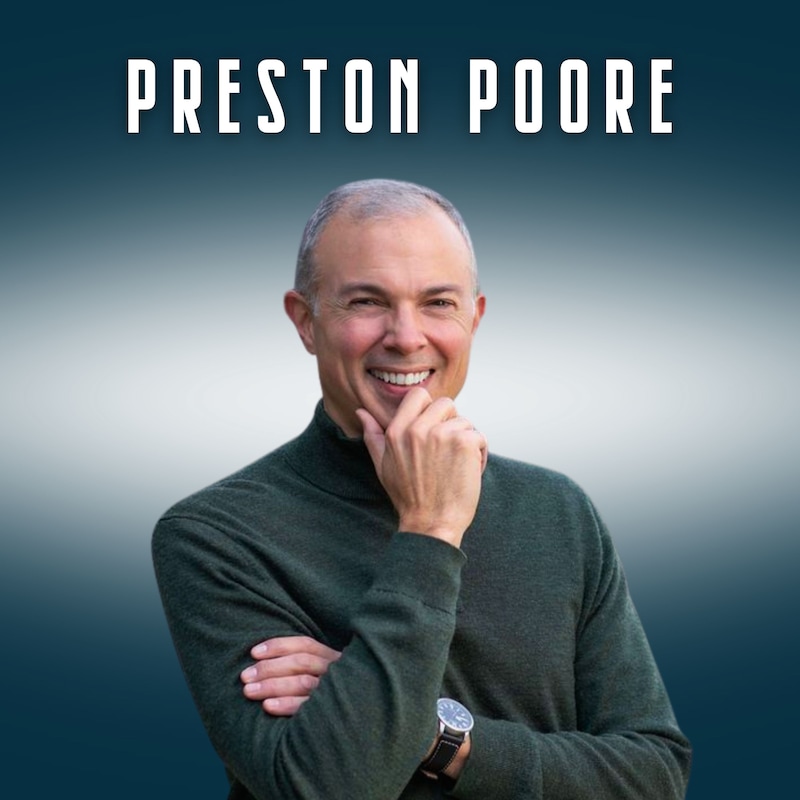
Shownotes
What truly makes a leader stand out—results or relationships? In this episode of Seek Go Create, Tim Winders sits down with Coca Cola alum Preston Poore, who shares his journey from chasing corporate performance to discovering the transformative power of leading with heart. Hear how hard-won lessons, workplace challenges, and spiritual growth shaped his approach to leadership, and why "how" matters even more than "what" you achieve. If you're seeking more meaning and impact in your work, tune in to uncover practical strategies for confident, people-centered leadership.
"People remember you for how you treated them, not just what you accomplished." - Preston Poore
Access all show and episode resources HERE
About Our Guest:
Preston Poore is a seasoned leadership trainer and author with over two decades of experience leading teams at Fortune 500 companies, including The Coca-Cola Company and Hershey Foods. Known for his results-driven approach and dedication to personal and professional growth, Preston helps leaders transform practical strategies into real-world impact. His expertise stems from a rich background in business management, sales, and corporate training, complemented by a deep commitment to values-based leadership. Preston is recognized for his ability to guide individuals toward confident leadership, integrating both personal development and organizational success.
Reasons to Listen:
Sure! Here are three compelling reasons to listen to this episode:
- Discover the powerful shift from prioritizing results to valuing people, and why Preston Poore believes how you lead matters more than what you do.
- Hear candid stories of transformation—including career stumbles, hard lessons, and moments of vulnerability that ultimately shaped Preston Poore's approach to leadership.
- Get actionable insights on bridging faith and work, as Tim Winders and Preston Poore unpack how authentic purpose and heart-centered leadership create lasting impact.
Episode Resources & Action Steps:
Resources Mentioned in the Episode:
- How is Greater Than What: Master the growth and leadership skill everyone else ignores: Written by Preston Poore, this book provides insights on leadership, focusing on the importance of "how" you lead versus simply "what" you accomplish. Available on Amazon, Kindle, and as an audiobook.
- Website: prestonpoore.com Preston Poore's personal website offers articles, resources, information about his books, and access to his leadership content.
- Podcast: P Cubed Hosted by Preston Poore, this podcast dives into leadership lessons and personal growth strategies.
Action Steps for Listeners:
- Reflect and Reset Your Leadership Priorities: Consider placing "how" you achieve results above just "what" you accomplish in your professional and personal life. Evaluate how you treat people and the impact you leave behind.
- Seek Feedback and Invest in Growth: Find a coach, mentor, or trusted advisor—like Preston Poore did during his corporate career—to help uncover blind spots in your leadership style and create a plan for personal development.
- Integrate Your Values into Your Work: Work towards closing the gap between your personal beliefs/faith and professional actions. Strive for authenticity by aligning your actions in the workplace with your core values and principles.
Key Lessons:
- How You Lead Matters More Than What You Do: Preston Poore and Tim Winders highlight the importance of focusing on the how rather than just the results. True leadership is measured by how you treat people, build culture, and develop trust—not just by achieving goals.
- Performance Alone Doesn’t Guarantee Success: Early in his career, Preston Poore prioritized performance over people, believing results would carry him forward. Through challenging experiences, he learned that a lack of people skills and relational leadership can put your career—and relationships—at risk.
- Personal Transformation Is a Journey, Not a Destination: The episode explores the idea that heart change and personal growth don’t happen overnight. Preston Poore shares his own journey of surrender, prayer, and self-reflection, illustrating that leadership transformation is a process filled with stops, starts, and ongoing learning.
- Faith and Work Shouldn’t Be Separate Worlds: Preston Poore talks candidly about the divide he once felt between his spiritual life and work life. Embracing a “whole person” approach—where values, faith, and professional actions align—is key to authentic leadership and fulfillment.
- Leadership is About Influence, Not Just Authority: The stories in the episode show that winning over others, teaching, and inspiring are at the core of effective leadership. Making a difference in someone’s life—helping them move from point A to point B—is ultimately what makes your heart sing.
Episode Highlights:
00:00 Introduction: From Selling Coke to Leadership Insights
00:35 Meet Preston Poor: Leadership Trainer and Transformation Expert
01:05 A Personal Connection: Hometown and Family Ties
01:59 Defining Identity: Who Are You?
06:01 Formative Years: From Colorado to Alabama
08:27 Career Beginnings: Banking and Early Lessons
13:11 The Influence of a Brilliant Father
17:51 Joining Coca-Cola: A Career Milestone
19:14 Lessons from Hershey: Hard Work and Tangible Results
21:24 Spiritual Journey: Balancing Faith and Career
24:12 Corporate Challenges: Performance vs. People
27:22 A Journey of Transformation
28:24 The Grinch Analogy and Heart Change
29:16 Sanctification and Personal Growth
30:15 Challenges and Realizations at Coca-Cola
34:34 The Turning Point: Executive Coaching
35:47 Leaving Coca-Cola and New Beginnings
38:46 Passion for Leadership and Training
54:01 Conclusion and Future Projects
Resources for Leaders from Tim Winders & SGC:
🎙 Unlock Leadership Excellence with Tim
- Transform your leadership and align your career with your deepest values. Schedule your Free Discovery Call now to explore how you can reach new heights in personal and professional growth. Limited slots available each month – Book your session today!
📚 Redefine Your Success with "Coach: A Story of Success Redefined"
- Challenge your perceptions and embark on a journey toward true fulfillment. Dive into transformative insights with "Coach: A Story of Success Redefined." This book will help you rethink what success means and how to achieve it on your terms. Don't miss out on this essential read—order your copy today!
Thank you for listening to Seek Go Create!
Our podcast is dedicated to empowering Christian leaders, entrepreneurs, and individuals looking to redefine success in their personal and professional lives. Through in-depth interviews, personal anecdotes, and expert advice, we offer valuable insights and actionable strategies for achieving your goals and living a life of purpose and fulfillment.
If you enjoyed this episode and found it helpful, we encourage you to subscribe to or follow Seek Go Create on your favorite podcast platform, including Apple Podcasts, and Spotify. By subscribing, you'll never miss an episode and can stay up-to-date on the latest insights and strategies for success.
Additionally, please share this episode or what you’ve learned today with your friends, family, and colleagues on your favorite social media platform. By sharing our podcast, you can help us reach more people who are looking to align their faith with their work and lead with purpose.
For more updates and episodes, visit our website or follow us on Facebook, Instagram, LinkedIn, X, TikTok and YouTube. We appreciate your support and look forward to helping you achieve your goals and create a life of purpose and fulfillment.
Now, you can tip us, buy us a coffee, or offer financial support. Contributions start at just $1, and if you leave a comment, you could be featured in a future episode!
Visit our Support page for more details.
Mentioned in this episode:
Leaders: The Fiction Book You Didn’t Know You Needed
This one’s for the leaders. If your shelf is full of strategy and productivity books, Tim Winders invites you to try something different. Coach: A Story of Success Redefined is leadership fiction that will challenge your thinking and stir your soul. Follow Cooper Travis on a journey that blends ambition with deeper purpose. Grab your copy today at TimWinders.com and discover a new way to lead.
A Final Challenge: Redefine Success with Coach
Before you sign off, here’s a powerful invitation from Tim: If you’ve been inspired by the stories on Seek Go Create, take the next step with his novel, Coach: A Story of Success Redefined. It’s a transformative journey that invites leaders to rethink success and align their lives with faith, purpose, and peace. Get your copy today at TimWinders.com.
Transcripts
my heart didn't sing when I was selling Coke.
Speaker:Zero.
Speaker:Great brand, loved it, loved working with it.
Speaker:My heart didn't sing when I was selling.
Speaker:Hershey's kisses.
Speaker:Hershey's Kisses are fantastic.
Speaker:They're wonderful.
Speaker:I enjoyed those things.
Speaker:But to have that individual, move from A to B, uh, have an insight that
Speaker:made a difference in their life, their career, their relationship, gosh,
Speaker:put me there, put me on
Speaker:the front
Speaker:line for
Speaker:that.
Speaker:I'm all in.
Speaker:Decades of leading Fortune 500 teams taught him one lesson.
Speaker:How you lead matters more than what you do.
Speaker:Preston Poor is a leadership trainer who helps leaders turn practical
Speaker:strategies into real transformation.
Speaker:We'll explore building confident leadership without shortcuts and turning
Speaker:hard won lessons into daily practices.
Speaker:This isn't just information, it's transformation.
Speaker:By the end, you'll see how shifting focus from tasks to people changes everything.
Speaker:Preston, welcome to Seek.
Speaker:Go create.
Speaker:Hey, Tim.
Speaker:Glad to be
Speaker:here.
Speaker:Thanks for having me.
Speaker:Glad you're here too.
Speaker:And as we hit record, we realized we're not far away from each other.
Speaker:We should have done this face to face.
Speaker:Yeah.
Speaker:stones throw away right here
Speaker:in Georgia.
Speaker:That's great.
Speaker:I know Marietta, Georgia.
Speaker:That's where I was born.
Speaker:Okay, well,
Speaker:I.
Speaker:great.
Speaker:So you're a
Speaker:native, there aren't many native Atlantans,
Speaker:Yeah.
Speaker:with you, very similar.
Speaker:I was born in Atlanta.
Speaker:My dad, I was born actually, at, Piedmont Hospital
Speaker:Hmm.
Speaker:down in,
Speaker:north Atlanta,
Speaker:many moons ago.
Speaker:Yeah, my wife was born down at Georgia Baptist, which I
Speaker:don't think it's that anymore.
Speaker:I think it's something else.
Speaker:yeah,
Speaker:anyway, yeah, I came home from the hospital the day JFK was shot.
Speaker:I don't remember it and I didn't have anything to do with it, I don't think.
Speaker:But,
Speaker:Hmm.
Speaker:so,
Speaker:might be coming out right
Speaker:So, but anyway, man, glad Yeah, Marietta, I spent some time
Speaker:there, still have relatives there.
Speaker:And, great spot, great spot here in the Atlanta area.
Speaker:So, Preston, the question I like to start with is kinda one of two things.
Speaker:I'll give you a choice.
Speaker:would you rather answer what do you do or who are you?
Speaker:Pick it and answer.
Speaker:There's not a right or wrong answer here.
Speaker:What if I don't like
Speaker:either one?
Speaker:Can we move
Speaker:Go ahead.
Speaker:Yeah, you could.
Speaker:Yeah.
Speaker:Alright, next question.
Speaker:What's your favorite ice cream?
Speaker:you know why I like, yeah, thanks.
Speaker:You know why I like this, Tim?
Speaker:great question to ask.
Speaker:because often when we introduce ourselves to other people or we're
Speaker:asking other people, we ask them about their job and people talk about that.
Speaker:I know you're probably Sure.
Speaker:I'm sure you're very familiar with that.
Speaker:And it hints the question on it.
Speaker:Who am I?
Speaker:am a guy that's married to a beautiful woman for almost 34 years.
Speaker:she went to the University of Alabama.
Speaker:I came to the southeast after being in Colorado for a number of years,
Speaker:looking for my Scarlet O'Hara.
Speaker:And believe it or not, I found her.
Speaker:Doesn't mean I'm Clark Gable or anything, but, uh, she is, uh, the Scarlet Era.
Speaker:Uh, I've got two great kids, a 31-year-old daughter that
Speaker:lives in Manhattan, New York.
Speaker:And, is married and has her first child.
Speaker:And my son Benton and his wife Emma, live here in the Atlanta market.
Speaker:So I'm first and foremost a family guy.
Speaker:I'm a faithful guy.
Speaker:I've been a believer since I was a young kid.
Speaker:That shapes, molds, everything that I do.
Speaker:My worldview, my behaviors, actually, I'm not great at behavior often, but I try.
Speaker:so those are the things I think that who I am.
Speaker:And, if you wanna talk values or personality traits or
Speaker:character, those types of things.
Speaker:But when I, when people ask me, and often too, it's kind of funny,
Speaker:Tim, I forget when I introduce myself, I forget my family.
Speaker:I bounce through and tick off all the things that I've done
Speaker:my resume and said, oh Yeah.
Speaker:I've got my wife and kids.
Speaker:We are in the Atlanta area.
Speaker:That's, that's, I need to put those up top.
Speaker:Yeah.
Speaker:and I don't know, you spent times in corporate, we're gonna talk about that,
Speaker:you know, with one of the largest, most well-known brands that, exist,
Speaker:especially for those in the Atlanta area.
Speaker:Coca-Cola is famous, but, it is kind of typical that we, and especially men, I'll
Speaker:say men more often than not, lean into the what you do and rattle off the titles and
Speaker:the accomplishments and things like that.
Speaker:And I know you've been through a journey to kind of move beyond that
Speaker:quite a bit, but why do you think it is that we migrate to that, what
Speaker:you do, description, title thing?
Speaker:Because I know you did that at one point too, right?
Speaker:Oh, easily.
Speaker:I think it's the path of least resistance.
Speaker:I think it's what you're taught and you model that behavior.
Speaker:how do you introduce yourself to somebody?
Speaker:How do you ask them when you're in a networking situation, what's
Speaker:the first question you ask them?
Speaker:Typically, what do you do?
Speaker:And, that's where we drive often their identity.
Speaker:Then we start to compare and say, okay, well then I, start to subconsciously
Speaker:think about economic status and, where do they live and all those things.
Speaker:and that, that's probably not the best place to start.
Speaker:but I think it's path of least resistance.
Speaker:I think it's a learned behavior and it's hard to adjust, but, I
Speaker:think that's the way most people
Speaker:handle it.
Speaker:I think it's like it's just everybody expects it.
Speaker:And, you know, when we answer something like you just did, because I forced
Speaker:you to do it by asking you a little bit of a different question, people
Speaker:will often kind of be perplexed because they're just not used to it.
Speaker:Yeah.
Speaker:I hate to say at times that I do wonder if we are just living sort of
Speaker:a, I hate to use the word superficial because I do think, I do think there's
Speaker:value to telling people what you do.
Speaker:I don't, I don't think that's a bad thing, but I really do
Speaker:enjoy learning about people at a deeper level and similar to you.
Speaker:I don't think I've always been that way.
Speaker:Hmm.
Speaker:early on in my career.
Speaker:Hard charger.
Speaker:Sounds like you were that way too.
Speaker:I'm about to ask you more details about that and probably were rewarded
Speaker:for some of that, you know, hard results driven type, mindset.
Speaker:tell me a little bit, you said you're born in Atlanta Tell me a little bit
Speaker:about, Preston, the growing up years, that kinda led into your, before
Speaker:you get to corporate, I just kinda wanna know a little bit about the
Speaker:foundational time so that we could kinda have fun with the journey here.
Speaker:the formative years, huh?
Speaker:Yeah.
Speaker:I
Speaker:lived in a middle class neighborhood growing up in Fort Collins, Colorado.
Speaker:my dad is a college professor and also an entrepreneur.
Speaker:We could talk a little bit about that too, like.
Speaker:Went to Georgia Tech, so I think you did too.
Speaker:Is that correct?
Speaker:Yeah, so a tech grad rambling wreck, and having a heck of a
Speaker:football team right now too.
Speaker:I grew up in Fort Collins, Colorado, and Colorado was a fantastic place to grow up.
Speaker:You think about all of the outdoor things that are there.
Speaker:I had skiing, I had the mountains, I had all that, and that was a lot of fun.
Speaker:I gave my life to the Lord when I was in eighth grade.
Speaker:And then, I had some wonderful mentors around me all the way through high school.
Speaker:in high school.
Speaker:I figured out that, I kind of wanted to figure out if I had a fomo, Tim,
Speaker:actually a fear of missing out.
Speaker:And, that's when I went to the University of Colorado my freshman year.
Speaker:And I talk about this a little bit in my book.
Speaker:I share kinda a little bit about my journey on this, but, my freshman
Speaker:year, university of Colorado was the number one party school in Playboy
Speaker:Magazine, which it had been for years.
Speaker:I partook and all, all of that, right?
Speaker:And everything.
Speaker:And, led to me doing some things and transferring back to Colorado
Speaker:State University because my dad said I'm not paying for that,
Speaker:which I don't blame him at all.
Speaker:And, graduated from CSU was a Sigma Chi, which is in the fraternity there
Speaker:at, at CSU in a national fraternity.
Speaker:And my lifestyle was very different, than my high school and younger years.
Speaker:And, when I. I remember a night when I got sick and, and threw up actually on
Speaker:my Bible and, yeah, hard to hear, but it's kind of funny 'cause I actually
Speaker:just leaned over on the bed and got sick and that actually, and it was
Speaker:in a cover, so it was okay still.
Speaker:Right.
Speaker:I had one of those covers and, That was a turning point for me.
Speaker:'cause I thought, uhoh, something's not right.
Speaker:There's some incongruence here that's not, not good.
Speaker:So I started doing this search on the inside and I basically fleed Fort
Speaker:Collins, left an ex-girlfriend, left the situation there, and went to Alabama.
Speaker:the reason I went to Alabama is because of my relatives lived there,
Speaker:my grandparents, my, my dad's, parents, cousins and stuff like that.
Speaker:So had a network, a base there.
Speaker:I started working in banking, believe it or not, I started
Speaker:as, I was what they call Tim.
Speaker:I dunno if you've heard of this before.
Speaker:I was a must hire and I must hires where two, guys meet in the country club.
Speaker:And one says to the other, I've got a goofy nephew that's in town.
Speaker:He needs a job.
Speaker:Can you help him?
Speaker:And I started at AM South Bank, an internal audit of all things.
Speaker:which is the only job I could find, and that was a miserable
Speaker:job, miserable experience.
Speaker:But actually, I met my wife at the bank a couple years, later and married her.
Speaker:So that's kind of, I'll leave it there for a minute, but that's
Speaker:kind of where my formative years.
Speaker:it was really great childhood love.
Speaker:My parents have a great, wonderful brother.
Speaker:But this journey that I went on was a kind of self-sabotaging, decisions
Speaker:that I made because of this fomo.
Speaker:And then realizing, that incongruence created a lot of, challenges
Speaker:inside of me, internal churn.
Speaker:And I had to go figure out what that meant.
Speaker:And that's why I left Colorado, to come to Alabama.
Speaker:And now we live in Georgia.
Speaker:So, that's a little bit of
Speaker:the journey.
Speaker:Our daughter's up in Colorado Springs.
Speaker:We spent some time up in Woodland Park, Colorado.
Speaker:That is
Speaker:Good.
Speaker:a beautiful, beautiful part of the country.
Speaker:And I, I, I do wanna chime in.
Speaker:I, I, Georgia Tech guy, but I married a Georgia girl
Speaker:Oh,
Speaker:and I will say this, that, I've got family from Mississippi.
Speaker:and if you want to find some absolutely beautiful women, Georgia,
Speaker:Alabama, Mississippi, those southern girls, they are quite impressive.
Speaker:We digress.
Speaker:That is not the topic here, but,
Speaker:well, you digressed a little bit.
Speaker:You're the one that threw up on the Bible, so come on, man.
Speaker:I love it.
Speaker:I'm with you.
Speaker:So, there's a couple things that I wanted to dig just a little bit more
Speaker:on the, the first was the, you say.
Speaker:University of Colorado, you know, number one party school, Playboy
Speaker:and all that kind of stuff.
Speaker:and you say it, it wasn't flippantly, but it also wasn't pridefully and
Speaker:it wasn't necessarily apologetic.
Speaker:What was the decision?
Speaker:I mean, you were in Fort Collins, so you were close.
Speaker:It was a great school.
Speaker:It's in a beautiful setting in Boulder there, but
Speaker:Yeah.
Speaker:do you recall what the decision process was for?
Speaker:Because for me, I was just down the road from Georgia Tech and I
Speaker:decided I wanted to be an engineer because the four out of the top five
Speaker:Yeah.
Speaker:jobs in 1982 were engineers.
Speaker:And I went, oh, I'm okay in math.
Speaker:And I went down there.
Speaker:That may not have been the best decision either, but what was your decision
Speaker:process to go to University of Colorado?
Speaker:Was it that party school or was there something else?
Speaker:It was, I think maybe to get away from home.
Speaker:I grew up in a college town.
Speaker:I didn't wanna be called a townie, if you will.
Speaker:if you go directly from high school in Fort Collins, just
Speaker:like Athens
Speaker:Yeah, yeah, yeah.
Speaker:Mm-hmm.
Speaker:you're, a
Speaker:townie.
Speaker:So I wanted to get away.
Speaker:that was the idea behind that.
Speaker:And I really didn't have any idea, Tim, what I wanted to do.
Speaker:I wish I had better direction.
Speaker:I went in as a psychology major.
Speaker:I think I changed my major four times in college.
Speaker:that's been a pattern in my life.
Speaker:And I hate to tell you, I still don't know what I wanna be when I
Speaker:grow up right
Speaker:mm.
Speaker:that.
Speaker:mm.
Speaker:but I very clearly
Speaker:remember my dad, working with me and saying, okay, I'm a college professor.
Speaker:We're paying for this as a family.
Speaker:If you to go down there, your first semester, you gotta,
Speaker:here's the story on this.
Speaker:You got a, you got a two point, I think it was 2.7.
Speaker:Something like that.
Speaker:Not good, right?
Speaker:Not a good start.
Speaker:And dad said, okay, let's do the math.
Speaker:I'll support you if you can get a average for the year, a 3.0.
Speaker:I said, okay, I can think I could do that.
Speaker:I just gotta get a three, three, do the math and I'll be fine.
Speaker:Well, as it turns out, I ended up getting a, 3.2 the second semester.
Speaker:So you're a Georgia Tech grad.
Speaker:You can probably do it.
Speaker:That doesn't equal three when you divide it by two, when you
Speaker:add those numbers together.
Speaker:So dad said, well, you, you made a commitment.
Speaker:I made a commitment.
Speaker:We had a deal.
Speaker:You're coming home.
Speaker:and believe it or not, I chose to live in my mom and dad's
Speaker:basement for those three years.
Speaker:because I didn't want to have to go work and do all the other things.
Speaker:I, I was just, there was some goofy things going on.
Speaker:But anyway, uh, but at the same time, I went back to Colorado State and got
Speaker:a business degree and finally figured out that I love business and I love the
Speaker:management side of it, the people side of it, and that's really what I did.
Speaker:But honestly, I still dunno what I wanna be.
Speaker:And I never said, Hey, this is a top four or five job that's out there.
Speaker:I never had that direction.
Speaker:and consider yourself, Tim, honestly, fortunate that you
Speaker:had that, maybe that worked
Speaker:out for you or not.
Speaker:No.
Speaker:full story, but
Speaker:It didn't,
Speaker:on that.
Speaker:No.
Speaker:I turned 62 yesterday and I'm still like going, huh, I
Speaker:wonder what I might do when I
Speaker:grow up or, you know, become something.
Speaker:I do think part of life is identifying things that you don't want to do
Speaker:sure.
Speaker:and, that's that gain some clarity.
Speaker:And also, you know, what's, what's interesting, there's one other
Speaker:thing I wanna mention here before we like jump fast forward to
Speaker:your career and things like that.
Speaker:I'm always intrigued and to me it's a bit of a dichotomy to have someone who's
Speaker:a college professor and an entrepreneur.
Speaker:Mm,
Speaker:tell me more about your father and maybe any, I don't like throwing our
Speaker:parents under the bus, but maybe any positive and or negative that may be
Speaker:there because he was professor and entrepreneur all wrapped up in one.
Speaker:Yeah.
Speaker:my dad and my family, we used to have a business called Numerica Corporation.
Speaker:dad is an applied mathematics PhD from Caltech.
Speaker:And an electrical engineer, so a brilliant man.
Speaker:And, he got some patents and discovered some things about
Speaker:how to track objects in the sky.
Speaker:fast forward 25 years, the company's, technology sat on the president or
Speaker:still sits, I think, on the president's desk in case of missile attack.
Speaker:And so we were, he created a fence.
Speaker:and then my brother jumped in to help him out and ran it, for a number of years.
Speaker:And so, dad was, and the thing was at CSU, he started all this
Speaker:as the, as a mathematician.
Speaker:He, he had some students and they decided to enter a contest to solve a problem,
Speaker:to get a grant, to get money for it.
Speaker:ended up getting best of breed from IBM all these years ago.
Speaker:I mean, he beat all these major organizations like, Northrop, Grumman,
Speaker:Lockheed Martin, everybody else.
Speaker:And, boom.
Speaker:After that, that was the tipping point for him.
Speaker:And things took off.
Speaker:And, we recently got out of the business last year, and, sold to an organization
Speaker:called Andre, is a major defense company in Orange County, California.
Speaker:But,
Speaker:Mm.
Speaker:Dead's.
Speaker:Brilliant.
Speaker:I learned a lot of things from my dad.
Speaker:He, he's probably one of the ones that taught me something very simple
Speaker:that is from the book, how is Greater Than What You mentioned in the intro.
Speaker:people are taught what to think, not how to think they're taught
Speaker:what to think, but not how to think.
Speaker:And that's so important today in the ai, right?
Speaker:They're, we've got a lot of what's out there.
Speaker:People don't have the critical thinking ability.
Speaker:They don't have the discernment.
Speaker:Dad was always big with me asking me about what I thought about something.
Speaker:so yeah, I love my dad.
Speaker:I look up to him.
Speaker:He's one of my heroes and amazing what he did as a college professor to
Speaker:transition into becoming an entrepreneur.
Speaker:that journey for him was just an incredible one to watch.
Speaker:Along with my family, my brother specifically, my wife worked at
Speaker:the company, my sister-in-law did.
Speaker:And, just a wonderful, American success story moving from Acorn to Oaktree,
Speaker:if you will.
Speaker:Yeah.
Speaker:And I'll say this, and if it's, there's nothing to it, don't worry about it,
Speaker:but darn, that's a pretty darn high bar to have someone as your father.
Speaker:I don't know if accomplished, accomplished, all that kind of stuff.
Speaker:did that have anything to do with your pursuit of things as you started
Speaker:moving into your career at all?
Speaker:Yeah, I think my dad always, I learned the value of hard work from him.
Speaker:Hmm.
Speaker:understood early
Speaker:on that, from his childhood that he was unique the way he thought
Speaker:in his intelligence level.
Speaker:he recognized that I wasn't the sharpest knife in the drawer right early on,
Speaker:but my dad helped me find things and excel in, and my mom did too.
Speaker:find things that I was good at that I enjoyed, that I did well at.
Speaker:but dad would always hammer me about, the hard work and leaning those in.
Speaker:And, I think I've taken that work ethic from him,
Speaker:Yeah.
Speaker:been good.
Speaker:and other times it's not been so good.
Speaker:But, that's where this driven, this excellence comes from.
Speaker:but I very much appreciate, all that hard work that he did.
Speaker:And then I transferred that ethic that, that value to me, that
Speaker:virtue, if you will.
Speaker:Right.
Speaker:And you brought it up a couple times, the how is greater than what book?
Speaker:I've got it here on my Kindle and we'll dive into that more.
Speaker:the thing that I think is important to unpack because you, at some point you
Speaker:landed in what we'll call corporate world.
Speaker:and it sounds as if from the reading in the book and some things that
Speaker:I've heard and studied on you, that there were a few epiphanies or.
Speaker:Catalytic events or transformations along the way.
Speaker:whatever we want to call it, we could throw some other words at it,
Speaker:probably, but, I'd love to know.
Speaker:I always love to know how people end up.
Speaker:So you were in banking and found you a beautiful Alabama girl, and then
Speaker:somewhere along the way you, merged into the Coca-Cola realm which,
Speaker:you know, Coca-Cola, for those that are around Atlanta is held high.
Speaker:It's held high in these parts.
Speaker:We'll just say it that way.
Speaker:So
Speaker:it could be, you're right.
Speaker:And there's some people that might still think there's a little bit of
Speaker:cocaine in that Coca-Cola possibly.
Speaker:So,
Speaker:Yes.
Speaker:about how did you land there?
Speaker:how'd you get that gig?
Speaker:we were, I was working at Hershey Foods at the time we were actually living
Speaker:right outside of Hershey, Pennsylvania.
Speaker:My wife Carla, is an only child from Alabama, and if you've ever spent time
Speaker:in the, Mid-Atlantic, I won't call it, I learned when I was up there.
Speaker:It's Mid-Atlantic, not northeast, but she really wanted to
Speaker:get back home and I did too.
Speaker:the job situation wasn't great at Hershey at the time.
Speaker:And man, I tell you what, divine providence I got
Speaker:connected with a headhunter.
Speaker:I still remember her name.
Speaker:Her name was Z, that was her first name.
Speaker:I won't give the last one.
Speaker:But she, helped me get connected with Coke.
Speaker:And I went through a, a rigorous interview process and they
Speaker:had an opening in Montgomery, Alabama working with Coca-Cola.
Speaker:And I was working for the Coca, I was being hired by the Coca-Cola
Speaker:company to call on and work with Coca-Cola Enterprises.
Speaker:At the time, they were the bottler and it was a turnaround market.
Speaker:it was really high share, but they had had a lot of problems
Speaker:and so they brought me into that.
Speaker:it gave us an opportunity to get back home.
Speaker:And so it was very, I tell you that it was one of the greatest, days of my life.
Speaker:I think Tim, when I got that phone call saying it was right before Christmas
Speaker:too, said, Hey, Preston, you made it through, love to have you and, when
Speaker:can we get you down to Montgomery?
Speaker:So that was 2001 is when I
Speaker:started with Koch.
Speaker:Wow.
Speaker:And how long had, had you been with Hershey?
Speaker:How long you been with them?
Speaker:almost six years with Hershey before
Speaker:that, so
Speaker:what is one thing, give, give me, a, just a learning point or two with
Speaker:your six years at Hershey that you took forward with you or something
Speaker:that you left behind and said, no, I'm not taking this with me at all.
Speaker:Yeah, there were a
Speaker:lot of both, man.
Speaker:Good.
Speaker:yeah, my early career at Hershey was wonderful, and what I loved about it,
Speaker:it may seem odd to people, but I was responsible for my first couple of years
Speaker:actually going into grocery stores, selling chocolate or pasta or something
Speaker:else to a grocery store manager, building displays, working the shelf, putting
Speaker:new items on the shelf, selling it.
Speaker:It was so fun.
Speaker:I got to call on headquarters, at the time there was an account called
Speaker:Bruno's, or even Piggly Wiggly, if you've heard of that before, or Mitchell
Speaker:Grocery, different independents.
Speaker:It was fun.
Speaker:what I loved about it is consumer products.
Speaker:everybody loved Hershey.
Speaker:I mean, if you love chocolate man, most people do.
Speaker:was so cool because I could go into all those stores on my routes month after
Speaker:month, develop relationships, but I could see them needle move by my efforts.
Speaker:it was amazing when I was the one that was responsible for doing a lot of this
Speaker:stuff in the market, selling in the displays, making sure they got out on
Speaker:the floor, making sure the new products were on there, I had fun doing that.
Speaker:As a matter of fact, our team won a President's Cup, which
Speaker:was the National Sales Award.
Speaker:actually won those twice at Hershey before I left.
Speaker:But that won, was just one of the most memorable two or
Speaker:three years I had with Hershey.
Speaker:And I learned the value of great management, great training,
Speaker:and then this idea of that, do whatever it takes to get it done.
Speaker:I didn't slough on the routes.
Speaker:I did what I needed to do, did more than that, and, we succeeded in it very well.
Speaker:And again, that's a hard work, ethic that I mentioned earlier that had on it.
Speaker:But it was just neat to have something tangible, to make happen,
Speaker:to see it move.
Speaker:my mouth waters a little bit when you bring up Hershey, actually, my wife does
Speaker:some work where we're doing work right now, and I went in her office and I guess
Speaker:stole would be the correct word here about a handful of Hershey kisses today.
Speaker:And that's mostly what I ate today.
Speaker:Great diet.
Speaker:truthfully, they're excellent.
Speaker:there's not much better than that.
Speaker:would you say that you were on a spiritual level where you, were you
Speaker:at a deep place during that time?
Speaker:Were you still just kinda moving along?
Speaker:What was your spiritual walk around that time before you
Speaker:came back to the Bible Belt?
Speaker:Yeah, no, thank you.
Speaker:it's interesting.
Speaker:Up in Hershey, Pennsylvania, they had one, evangelical Protestant church that, not
Speaker:just one, but the one that we connected with, and we had a, a small group there.
Speaker:I spent a lot of time thinking in church and going to church,
Speaker:investing time with that community group, and they were great people.
Speaker:But when it came to transitioning and transferring my faith into the
Speaker:workplace, I would venture to say that most people at work probably didn't
Speaker:know, was a believer unless I, you know, taught, told 'em right away.
Speaker:But they couldn't tell by my actions the way I treated people.
Speaker:It was dog eat dog when I got in there, or, you know, eating
Speaker:a candy bar and chasing that.
Speaker:Uh, the way I was working on an analogy but didn't pop out like I was hoping to.
Speaker:So we can cut that if you want to.
Speaker:Just kidding.
Speaker:Um, Yeah.
Speaker:so that's, that's kind of, that's, there was this, if you
Speaker:ask me about was it shallow.
Speaker:I think it was, it was a rich time in many ways from a spiritual perspective,
Speaker:but also very challenging because I was still, you remember, I, I told you early
Speaker:on I had this behavior that I had learned, while going to college and, and kind of
Speaker:what I would consider walking away and enjoying everything that, others might do.
Speaker:and then trying to get back into that.
Speaker:And so I've always had this challenge of being pulled back
Speaker:in and trying to move forward.
Speaker:and I would feel like now hopefully I'm not as close to that as I was.
Speaker:'cause it's been a journey, I don't know if that answers
Speaker:your question, Tim, but Yeah.
Speaker:That, that's what I, I guess I would really tell you that the SEC
Speaker:secular And the, sacred didn't really
Speaker:overlap.
Speaker:Yeah.
Speaker:to, link
Speaker:the two.
Speaker:And that's what I've worked really hard on over the
Speaker:past 10 years.
Speaker:Yeah.
Speaker:And the reason that I love you brought up.
Speaker:That is because I think I either read it in your book or I heard it on
Speaker:where you were on a podcast where I think as you moved into the Coca-Cola
Speaker:corporation, you were, you were hard charger, you were working hard.
Speaker:But it seems as if that divide.
Speaker:Still existed
Speaker:yeah.
Speaker:because, you were extremely, and I'm gonna say a couple things.
Speaker:I'm gonna let you respond because I think this is a journey that many
Speaker:of us and our listeners go through.
Speaker:So I think it's powerful to talk about going through it and learning while
Speaker:why, how is greater than what, and the importance of relationship over results
Speaker:or, anyway, we'll talk more about that.
Speaker:So you brought in hard work ethic, results driven.
Speaker:you kept your soft heartedness on Sundays, but then come
Speaker:Monday, you were going at it.
Speaker:Tell me more about that.
Speaker:I thought that.
Speaker:performance would get me in my career where I wanted to go.
Speaker:I tell people, I used to have a piece of paper in my cube that.
Speaker:had the word performance written over people.
Speaker:And so I considered and thought and said, okay, if I perform well deliver
Speaker:results regardless of the wake.
Speaker:And I saw people in the organization like this, right?
Speaker:I saw some role models that acted like that, that I would climb the corporate
Speaker:ladder and, the people didn't matter the collateral damage that I left behind.
Speaker:there's a story though, Tim, in the book that I kind of opened
Speaker:with, it's about Sunset Cinemas.
Speaker:It's a little outdoor movie theater that we started with in Coke.
Speaker:it was this idea of a, that I was coming into this marketplace
Speaker:that needed to be turned around.
Speaker:I have just come out of Hershey Foods where I had run a couple President's cups.
Speaker:I was a top performer.
Speaker:I got this huge new salary increase.
Speaker:And so I'm the man coming in.
Speaker:I'm not the leader of the market, but I'm the man, right?
Speaker:They're expecting big things.
Speaker:And, we put this little movie theater or outdoor movie theater idea together,
Speaker:and I put a great plan together.
Speaker:then I emailed it to the team.
Speaker:Things didn't go as we thought that they might.
Speaker:Like it rained.
Speaker:We were expecting 500 people, only 50 showed up.
Speaker:the wrong samples were there.
Speaker:And, and by the way, the movie we showed was Remember the Titans?
Speaker:Guess what competitor was actually on the scoreboard that was flashed
Speaker:on the movie screen a hundred
Speaker:thousand times.
Speaker:Not Coke.
Speaker:no, not
Speaker:Coke.
Speaker:it was Pepsi.
Speaker:And so I have all these going through my head.
Speaker:I'm thinking the team has let me down.
Speaker:what's wrong?
Speaker:I'm calling the media person at home.
Speaker:you know, at them saying, do your job.
Speaker:Then I had my VP call me over, and he's not directly my vp.
Speaker:I was actually working with him, but he was, the guy in charge calls
Speaker:me over I thought, you know what?
Speaker:I've moved to Montgomery.
Speaker:This is the tipping point.
Speaker:I had moved from Hershey to Montgomery for a career move, right?
Speaker:Got all this big salary to take my family back.
Speaker:It was a kind of a homecoming type thing.
Speaker:And I knew in that moment, the way I acted.
Speaker:Something was wrong and something was amiss, and my career was on the line.
Speaker:But when Rick, who was the vp, ended up being my mentor, great
Speaker:guy, he calls me over and he goes, and there was no yelling, Tim.
Speaker:was no lecture, just a quick little conversation, a low voice.
Speaker:And then he'll say a phrase to me that I never forget.
Speaker:It was Preston, it's not what you did, it's how you did it.
Speaker:And I knew in that moment that that challenge was pressed and poor.
Speaker:It wasn't the thing that happened at the Sunset Cinema of the plan went awry.
Speaker:It was how I reacted to it and how I reacted to the people.
Speaker:I think if you ask me what the tipping point of that was, it was a
Speaker:realization that if I didn't change, I was going to be changed, meaning
Speaker:that I was gonna be out of a job.
Speaker:because I remember Rick saying, I'm not sure you're the right guy for this job.
Speaker:I'm like, oh, well, crap, I better, I better figure some stuff out.
Speaker:And that was really the, catalyst for me, starting to consider, wait a second.
Speaker:These two circles I mentioned, the spiritual and the secular.
Speaker:why am I this way here?
Speaker:My, my family and my friends all think of me this way, but at work I've got
Speaker:some work friends, but they all think I'm a hard charger and I'm a jerk.
Speaker:Where's the difference?
Speaker:And that's really the start of the
Speaker:journey.
Speaker:Hmm.
Speaker:That's fascinating because, and I think that's one of the things that I
Speaker:kind of drew me in to read through the book and to, to have a conversation
Speaker:with you because, man, it sounds kind of familiar, Preston, I went
Speaker:to work for Bell South outta Georgia Tech, and I was known for season.
Speaker:I don't wanna call myself the hatchet man, but, there were two organizations
Speaker:that I was tasked with, getting rid of.
Speaker:And, and I, and I. I'm sorry to say that I, I was
Speaker:somewhat proud of that.
Speaker:You, you know what I mean?
Speaker:I mean, there were people involved and different things like that.
Speaker:And you know, one of 'em, they gave me six months to see what needed to be done.
Speaker:And I was pretty proud of the fact that within six weeks I had pretty much
Speaker:this organization dismantled and people were moved to other places or left the
Speaker:company and all that kind of stuff.
Speaker:And I,
Speaker:you know, this is what comes to mind.
Speaker:'cause I believe then you started on a journey and that's what I really want us
Speaker:to dig into here for the last, half hour that we've got to talk and that, I think
Speaker:it's what you laid out in your book, but this is the vision that I had when
Speaker:I was listening to something you said.
Speaker:And also when I think about myself in the old cartoon, the Grinch, the Grinch goes
Speaker:through this, transformation where they say his heart grew three sizes that day.
Speaker:and I do, for me, believe it was a heart
Speaker:issue
Speaker:Sure.
Speaker:that had a lot of spiritual aspects to it.
Speaker:But, it does that resonate with you?
Speaker:I mean, and especially, I'm sorry I wasn't calling you the Grinch, but uh,
Speaker:Oh, I'll take it.
Speaker:That's fine.
Speaker:That's good.
Speaker:The Jim Carrey.
Speaker:Grinch,
Speaker:thank you very much.
Speaker:His heart grew three sizes that day and all of a sudden he,
Speaker:anyway, talk to me about that.
Speaker:Yeah.
Speaker:I think there's this theological term.
Speaker:called sanctification and I found that, the Lord will put you in circumstances
Speaker:repetitively until he gets your attention.
Speaker:I kept bumping up against the same thing.
Speaker:honestly, heart change, but it wasn't my decision to say,
Speaker:okay, no, I'm gonna go change.
Speaker:It was like, wait a second, something's not right here.
Speaker:Something's not clicking.
Speaker:And I've done everything I possibly can in my power to perform, to do
Speaker:well, and something's not right.
Speaker:so I surrender to you and I need your help.
Speaker:I can't tell you a specific day, but I think it's that journey that I went
Speaker:on and that prayer and that submission where things started to change.
Speaker:And I think my heart grew maybe, one and a half size or two and a half size.
Speaker:I would love to tell you, I'd love to tell your listeners, Tim, that Sunset
Speaker:Cinema with that one tipping point, that everything was awesome after that.
Speaker:It wasn't, when you talk about a path, a journey, it was, I mean, I ran into other
Speaker:things where I had employees quitting on me when I became a people manager,
Speaker:and be called being called a jerk and people quitting on me and all that.
Speaker:And then even having 360 evaluations that were extremely negative at the Coca-Cola
Speaker:Company, over a four or five year span.
Speaker:it took time.
Speaker:I tell people, the way I use this is people normally don't look at this way,
Speaker:but I look at like Moses' career journey.
Speaker:Our hero, Moses in Exodus, in the first 40 years, he was the prince of Egypt.
Speaker:He was all that.
Speaker:Then he decided he wanted to go out and see what his people,
Speaker:the Hebrew people were doing.
Speaker:he said, wait a second.
Speaker:I think I'm gonna be the one to set these people free.
Speaker:He ends up killing somebody.
Speaker:The Pharaoh God was working through for Pharaoh, said, get the heck outta Dodge.
Speaker:Moses goes in the desert for 40 years.
Speaker:He's formed.
Speaker:He is shaped.
Speaker:He has to have been.
Speaker:He's, he's humbled in that, right?
Speaker:And then all of a sudden, is 80 years old about that, he is walking through and he
Speaker:sees this bush on fire and he turns and looks at it and God speaks to him and
Speaker:calls him in that moment to go do this.
Speaker:And over those last 40 years, he wasn't perfect, but he led Israel out
Speaker:of Egypt and into the Promised Land.
Speaker:that I am.
Speaker:Moses, but my career trajectory, those first 40 years, I thought I was all that.
Speaker:Or those, like Moses, there's an in-between part where God
Speaker:worked in me and through me.
Speaker:And then there's another part on the, the good news is, is that
Speaker:I overcame those things and I got to do some incredible stuff.
Speaker:I'm still doing incredible stuff, it's because of that.
Speaker:moment of surrender and I said, Lord, just change me.
Speaker:I need your help.
Speaker:And it's been a catalyst for an enzyme, if you will, for
Speaker:all the things that I'm doing
Speaker:right now.
Speaker:I'm always, and that's that story of Moses.
Speaker:That journey is fortunately, unfortunately, the story of
Speaker:a lot of, it's usually men.
Speaker:For some reason, women get this stuff better than men do.
Speaker:I hate to generalize, but you know what?
Speaker:they lead with heart more than we do.
Speaker:we try to
Speaker:do
Speaker:the results and task and things like that, but I am incredibly thankful that.
Speaker:It wasn't 40 years on the backside of the desert for me.
Speaker:How about you?
Speaker:Amen.
Speaker:I mean, he went through some growth and obviously, you know, his
Speaker:latter years were awesome, but 40 years, we have no concept of that.
Speaker:I'm sure we could talk about your process as you moved along.
Speaker:There were stops and starts.
Speaker:It sounded like that began with that, situation at
Speaker:Coca-Cola, at the movie theater.
Speaker:Were you ever, aware of being in a position where your job was really
Speaker:in jeopardy, that you could have lost the job because of the situation
Speaker:or the way you were projecting yourself, the way you were acting?
Speaker:Yeah, I mean, fast forward from, that Sunset Cinema circumstance,
Speaker:into, I think it was 2004, 2005, and Knoxville, Tennessee.
Speaker:So I got promoted, believe it or not, I was a top performer.
Speaker:and, and so they still recognized that and wanted to pull me up and
Speaker:they said, okay, and then we're gonna give you a couple people to manage.
Speaker:And I remember, sitting in a conference room, Tim, at the end of the year,
Speaker:about to do a, year end evaluation.
Speaker:And this individual that I had reporting to me, I was trying to shape and mold
Speaker:the individual to be just like Preston.
Speaker:knew what it took to succeed.
Speaker:You're gonna be just like me.
Speaker:the individual didn't have the same skillset, nor the same disposition,
Speaker:really didn't like me that much because of all those things.
Speaker:And I remember, sitting at that conference room, in the conference phone,
Speaker:and I pick up and I say, and before Tim, I could get a word in edgewise.
Speaker:On the phone immediately says, we don't have to do our review today.
Speaker:I quit Preston, you're a jerk, and hung up on me.
Speaker:That's the second person that's quit me, quit on me, and is in probably
Speaker:two months, believe it or not.
Speaker:So I try to head off the issue and I go down to my manager
Speaker:and, talk, go to her office.
Speaker:I shut the door and I tell her what happened.
Speaker:And, there was this long pregnant pause and then she goes,
Speaker:Preston, you're a top performer.
Speaker:We all know that, but your people skills stink.
Speaker:If you wanna rise in this organization, you wanna stay here,
Speaker:you have to go get that fixed.
Speaker:And I scratched my head a little bit and I said, how do I do that?
Speaker:She goes, I don't care.
Speaker:You just go figure it out.
Speaker:Well, that was another journey for me, recognizing that she looked me in
Speaker:the face and said, you, you get this, and you're a top performer, but if
Speaker:you don't fix these things, they're not gonna want you around much longer.
Speaker:And so that's another tipping point for me where I decided, oh, wait a second.
Speaker:And the good news is, is that the company supported me because I came
Speaker:back to her with a plan and said, okay, here's what I need to do.
Speaker:And I actually engaged an executive coach.
Speaker:Her name was Jennifer.
Speaker:She was fantastic.
Speaker:And, over six to eight weeks she worked with me to pull all these different
Speaker:things out of me, a plan and how to move forward, taught me what, or pulled outta
Speaker:me and showed me what my triggers were, I acted the way I did with certain people.
Speaker:and that was just a wonderful time and it was a really self-realization.
Speaker:All the while, Tim, was, praying.
Speaker:reading the Bible, leaning in and seeking God and all that.
Speaker:And so it was a, it was a, you know, it was an inward journey that
Speaker:I went on because of that, moment.
Speaker:So that was another moment that, that hit me, that, that you're like, okay,
Speaker:why do I keep running into this?
Speaker:And,
Speaker:some work to do.
Speaker:Right.
Speaker:So at some point, because you're not with Coca-Cola now, right?
Speaker:you left there and you're doing some things on your own.
Speaker:You got books and things like that.
Speaker:what was that situation leaving?
Speaker:And it sounds like you're doing your own thing now, right?
Speaker:Yeah, yeah.
Speaker:That's right?
Speaker:so yeah, 22 years at the Coca-Cola Company.
Speaker:had a great career.
Speaker:did a lot of great things.
Speaker:You know, at the end of my career, I ran into a, false allegation, because I have
Speaker:Mm
Speaker:desire to start this leadership training business, and I kind of
Speaker:tried to do it while I was still
Speaker:working at Koch.
Speaker:mm.
Speaker:people turned
Speaker:me in for saying that I was charging the company for some of the training
Speaker:that I was doing voluntarily.
Speaker:which was just false because you have to have a, you know, you have
Speaker:to have the managers agree to pay you, you have to have an invoice, a
Speaker:master service agreement, all these different things that Koch, you'd
Speaker:have to do to get away with that.
Speaker:None of that existed and never was there an intent behind it.
Speaker:But, I left Koch after 22 years, with, a feeling of don't let the door
Speaker:hit me in the butt on the way out.
Speaker:I just was done.
Speaker:I was.
Speaker:Hmm.
Speaker:And so, I'm
Speaker:not, it took me three years.
Speaker:I think I'm just now getting over it.
Speaker:not a pity story, but that was really hard when you dedicate your career 20 plus
Speaker:years, and then to be treated that way.
Speaker:on the end
Speaker:Mm-hmm.
Speaker:a lot about, uh,
Speaker:forgiveness, uh, to not be resentful, not to try to take
Speaker:revenge, uh, and to kinda let it go.
Speaker:And that was a journey for me at the end of my career.
Speaker:So I keep telling you, bumping into these things that God sticks me in,
Speaker:sticks me in these circumstances that he's doing something and my
Speaker:question's never why my question's.
Speaker:What do you
Speaker:want me to learn?
Speaker:Hmm.
Speaker:that's kind of, and it's funny.
Speaker:You go through all of these things and guess what happens?
Speaker:They end up
Speaker:in a book
Speaker:Yeah.
Speaker:the book is not,
Speaker:and the book's not derogatory toward Koch.
Speaker:It just shares my experiences on some of these things.
Speaker:the reason those things happen to me is that I feel like.
Speaker:Is they've given me the ability to say, okay, here's what I've learned from them,
Speaker:and I wanna help other people with those stories, those leadership lessons that I
Speaker:learned, those life lessons, if you will.
Speaker:And, you know, only if, if only a hundred people read the book and get
Speaker:a couple things at 'em and say, Yeah.
Speaker:that made a difference to me.
Speaker:I have to say, yeah, that's a, that's
Speaker:success.
Speaker:Hmm.
Speaker:So the interesting thing when people go through transitions
Speaker:like that, I agree with you.
Speaker:They sting in the moment, but three years out.
Speaker:My, it's probably enough time, sometimes it's even quicker than this, but Preston,
Speaker:I'm guessing that you're probably seeing a lot of reasons, possibly even divine,
Speaker:that you were moved out of that role and not just because you know, somebody,
Speaker:false allegation or anything like that,
Speaker:but that there was a bigger picture.
Speaker:when I say that, what starts coming to your mind?
Speaker:Obviously there's a book, we're about to dive into that even more, but what else?
Speaker:what are the things that never would've happened if you were
Speaker:still in a corporate environment?
Speaker:Well, I, let me answer it this way, if I can.
Speaker:Uh, was, is for me, is what makes my heart sing.
Speaker:What was I passionate about?
Speaker:Mm.
Speaker:at the
Speaker:Coca-Cola company, I probably wasn't the best at managing my career.
Speaker:But, what happens at Coke is you get put into these roles
Speaker:like, training and development.
Speaker:That's where they put the old horses to kind of go in the, barn and pass
Speaker:away kind of thing before you leave.
Speaker:And there were a number of us that had been put through like that, and I
Speaker:knew that's what was happening to me.
Speaker:And so I had lost my passion for Koch.
Speaker:I had a huge passion for driving sales and marketing and had a
Speaker:lot of fun in most of my career.
Speaker:but the end, it was my heart just wasn't singing anything there.
Speaker:And it was singing to help people, equip them develop.
Speaker:Now, funny I just said that I didn't like my training role that I was
Speaker:in, but I wasn't training people on what I wanted to help them with.
Speaker:I wanted to help them grow their leadership skills.
Speaker:I wanted to help people develop discipleship skills,
Speaker:and walk closer with the Lord.
Speaker:when I left at 55, it was clear to me what my calling was.
Speaker:I had this sense that I could go out and make a difference
Speaker:and have some fun with it.
Speaker:Now, I'm not light the world on fire, Tim.
Speaker:Honestly, I'm not.
Speaker:very niched.
Speaker:I'm selective in what I do who I engage.
Speaker:but that's okay.
Speaker:I'm retired.
Speaker:before we got on the podcast, we were on at six 30 tonight, right?
Speaker:To record this.
Speaker:I'm working on a board of directors for a nonprofit.
Speaker:I'm working on a three year strategic plan for them.
Speaker:I literally ran upstairs to get a shower in 20 minutes and get down
Speaker:here on the mic and camera in shape.
Speaker:I'm thinking, man.
Speaker:I'm retired.
Speaker:Is this what retired life's like?
Speaker:part of me just needs to rest a little bit.
Speaker:but I very much enjoy being in front of people, connecting with
Speaker:them, helping them, and sharing what I've learned and try to pull
Speaker:out of them their best, to do that.
Speaker:So I enjoy that.
Speaker:it seems like you
Speaker:do love to do that too, so
Speaker:Yeah, early in my career, I ended up in training with the
Speaker:Bell South Leadership Institute.
Speaker:And what you said unfortunately is accurate, that is where they either
Speaker:move people or people go there to just kinda like, I don't, it's not coast.
Speaker:but there were a lot of people at Bell South that said, man, this is what you do.
Speaker:That's not work.
Speaker:You know, you stand up in front of people and talk all day long, which,
Speaker:I would like to say it's hard.
Speaker:it's actually not.
Speaker:I enjoy it thoroughly but there is something there with people that are
Speaker:wired to share information, to help people go through transformation.
Speaker:And it sounds like that's where the Lord is moving you and you're still there.
Speaker:And, you know, I don't really even use the word retired much, but it
Speaker:sounds like that's the season that you're in, that includes books
Speaker:and training and things like that.
Speaker:Correct.
Speaker:Oh yeah, yeah, yeah.
Speaker:this past week I was up in New York and Manhattan speaking to the New Canaan
Speaker:Society, about how is greater than what.
Speaker:Then the next day I went across the river, into New Jersey, Bergen County,
Speaker:New Jersey, and spoke to their chapter over there, and it's this idea that I
Speaker:have a keynote around how is greater than what that resonates with people.
Speaker:It talks about this transformation we're talking about, and, it's a joy for me
Speaker:to get up there and share with them because it's not about me up there.
Speaker:I've realized after all these years, but it's about two things.
Speaker:It's about God, right, and working in me and through me, but it's also
Speaker:those people that are listening.
Speaker:One of the greatest joys I have is, during my keynotes that I deliver, I
Speaker:don't necessarily speak the whole time.
Speaker:I ask a couple questions, get them engaged, and the
Speaker:engagement's always great.
Speaker:then, I love the time afterwards when people come up and say,
Speaker:Hey, this resonated with me.
Speaker:Here's what's different.
Speaker:Are they ask a question?
Speaker:the, that's the real time for me, that makes my heart sing.
Speaker:And so, and then other things that I love is being in this and then getting
Speaker:notes from people that had read the book.
Speaker:Two or three.
Speaker:I, there's one guy that wrote me, I did a, actually, I did a leadership
Speaker:workshop for a company called Raise Coca-Cola in California a few years back.
Speaker:We went through some John Maxwell material, and one of
Speaker:'em was talking about integrity.
Speaker:And I got a LinkedIn message, I think it was last year, from
Speaker:one of the guys that was in that training three or four years ago.
Speaker:And he just reached out and said, I wanted to let you know how much of
Speaker:a difference that day, that topic, the way you covered things, made a
Speaker:difference in my life, in my career.
Speaker:And I appreciate that.
Speaker:And when you get a note like that and you're having a bad
Speaker:day, that's where you take those.
Speaker:You write 'em down, you print 'em out, and you stick 'em in a book.
Speaker:And so when you have a bad day, you can go look at all that stuff.
Speaker:But man, that, that made my heart sing, right?
Speaker:and I didn't, my heart didn't sing when I was selling Coke.
Speaker:Zero.
Speaker:Great brand, loved it, loved working with it.
Speaker:My heart didn't sing when I was selling.
Speaker:Hershey's kisses.
Speaker:Hershey's Kisses are fantastic.
Speaker:Like you just said.
Speaker:They're wonderful.
Speaker:I enjoyed those things.
Speaker:But to have that individual, move from A to B, uh, have an insight that
Speaker:made a difference in their life, their career, their relationship, gosh,
Speaker:put me there, put me on
Speaker:the front
Speaker:I'm all in.
Speaker:Well, it is the thing that I picked up on.
Speaker:you've really moved from transaction to transformation is really what it appears.
Speaker:And I love your phrase that you use here makes your heart sing.
Speaker:The phrase that I use is, it nourishes my soul,
Speaker:I
Speaker:which is probably the same thing.
Speaker:Sure,
Speaker:I want to go into how is greater than what, but this is not
Speaker:the first book you've written.
Speaker:Mm-hmm.
Speaker:And when I heard the title of the other one, I was.
Speaker:Incredibly intrigued.
Speaker:Hmm.
Speaker:And so I'd love for you to tell about that
Speaker:Sure.
Speaker:we're gonna finish, take the last bit of our 10, 15 minutes or whatever here and
Speaker:talk about how it's greater than what.
Speaker:So at first I thought it was discipline leader, but it's actually
Speaker:discipled leader.
Speaker:So tell me about it.
Speaker:Right On
Speaker:Yeah.
Speaker:I went
Speaker:through a program called Christian Leadership Concepts,
Speaker:in the late two thousands.
Speaker:it was a two year men's discipleship program actually
Speaker:on the board of it right now.
Speaker:what an honor to do that.
Speaker:when I got out of that program, I had a desire to communicate, write a book.
Speaker:I took some ideas from that, experience that I had and wrote
Speaker:this book called Disciple Leader.
Speaker:concept and idea is this, is that, how do you teach a biblical principle.
Speaker:And then tie it into what does it actually look like in the workplace?
Speaker:so that book has 10 chapters, about that.
Speaker:let me give you a quick example.
Speaker:the first chapter is Seek, that's the title of the chapter, and
Speaker:it's about decision making.
Speaker:so what I walk people through is the importance of the, uh, or I talk
Speaker:about the Bible, I talk about the Holy Spirit and the roles in our lives.
Speaker:I talk about the importance of having a daily quiet time
Speaker:and then this often missing.
Speaker:for believers is what I call in the book, is, divine input.
Speaker:when you're making a decision, are you asking God what his thoughts are?
Speaker:Are you search, searching the scriptures to try to understand that?
Speaker:lastly, Tim, what I do is I go and say, okay, now God gave you a noodle.
Speaker:He gave you a noggin.
Speaker:I need you to think.
Speaker:And so I walk people and give them a framework about make
Speaker:to make, these decisions.
Speaker:And it's called Deb Day.
Speaker:It's D-B-D-A-E.
Speaker:the first thing you do is define your decision.
Speaker:Then you brainstorm on it.
Speaker:Then you actually decide, then you move into acting on that decision.
Speaker:And then you evaluate or examine what your decision was.
Speaker:That's just chapter one.
Speaker:And so what I try to do is to take it from a business aspect and say, okay, those
Speaker:two things that we just talked about, the Venn diagram that's spiritual and
Speaker:the secular, how do those overlap and how do I help you live out your faith in the
Speaker:workplace?
Speaker:Hmm.
Speaker:That the, the reason that's good is because it's going back to
Speaker:addressing that issue that you talked about earlier, which is Sunday and
Speaker:Monday are diametrically opposed.
Speaker:They're you, you're just, you're, you're, you're, I hate to say schizophrenic.
Speaker:I don't want, I'm not calling you that, but that's what we are.
Speaker:It's like we're one thing on one day, and then the next day we all of a
Speaker:sudden transform into something else, and it's not a good transformation.
Speaker:here's the, the root cause of that.
Speaker:And I love to tell people this.
Speaker:Barna did a study and it talks about the number of Christians
Speaker:that have actually been discipled.
Speaker:That means somebody that's come
Speaker:along and taught them how to pray, how
Speaker:Zero.
Speaker:Well, the number's very generous.
Speaker:That one out of five.
Speaker:But how to pray, how to share your faith, how to read the Bible and the
Speaker:importance of being involved in community.
Speaker:If you don't have somebody that helps you understand those things and you
Speaker:start to grow in those immature, spiritually formation, how are you
Speaker:ever gonna show up any way at work?
Speaker:Right.
Speaker:or if you're at work and you don't have a role model that is living
Speaker:out their faith in the workplace, how do you see how to do that?
Speaker:And so what I try to do is to say, okay, wait a second.
Speaker:Let's start at the root cause and wanna try to bring you up to speed
Speaker:and teach you these things to help you draw closer to the Lord and let
Speaker:him work in you and through you.
Speaker:And then if you do that, God will use you as a redemptive
Speaker:influence in the workplace.
Speaker:You'll make things better.
Speaker:that's what I'm after in that.
Speaker:And I have a vision of reaching a million people by 2030 with disciple leader.
Speaker:we've got some ways we're gonna do that.
Speaker:very excited.
Speaker:Thank you for asking me.
Speaker:That's my baby.
Speaker:I love my book.
Speaker:How is Greater Than What, the new one I wrote, but that's my baby.
Speaker:Well, tell me, um, tell me what your, uh, I I always, as a writer myself, I'm always
Speaker:fascinated with what provokes someone, and I use that word very intentionally.
Speaker:What provokes someone to think that we've got this great idea that we
Speaker:can put in writing and put, you know, 20, 30, 40,000 words, whatever,
Speaker:and share it with the world.
Speaker:What was the catalyst for you?
Speaker:for that book
Speaker:or just for writing.
Speaker:Well, let's talk about how is greater than what, because that's
Speaker:what we're discussing here.
Speaker:sure.
Speaker:It's pretty simple for me.
Speaker:things can be better in the workplace.
Speaker:Employee engagement is low.
Speaker:people don't wanna get into leadership.
Speaker:I, shared a statistic when I was in Manhattan last week that only
Speaker:6% of individual contributors are interested in leadership.
Speaker:Another study came out two weeks ago and said that we're gonna have a shortfall of
Speaker:managers in 2032 of 3 million managers.
Speaker:That's because people don't wanna be managers, right?
Speaker:70% of managers are disengaged.
Speaker:So what happens if a manager's disengaged?
Speaker:the team is, right?
Speaker:So this idea of how is greater than what is that?
Speaker:results matter.
Speaker:The what is the results, right?
Speaker:But how you get there, how you treat people, how you bring them
Speaker:along more than what you accomplish.
Speaker:And Tim, you and I both know this, that results matter.
Speaker:You have to look at all the college football coaches right
Speaker:now that are getting axed.
Speaker:They're not, they're not, they're not producing results, right?
Speaker:And they're getting paid big dollars and they're people come
Speaker:along and say, you can't do it.
Speaker:You gotta produce results.
Speaker:But it's how you get those results, because people remember you for
Speaker:how you treated them over life, not necessarily what you did.
Speaker:People remember Preston Poor, probably hopefully in that second half of my
Speaker:career for the way I treated them.
Speaker:asked questions like, do you care for me?
Speaker:Can you help me?
Speaker:Do I trust you?
Speaker:And hopefully they said yes to those things they'll remember those things.
Speaker:They won't remember that we won an award or whatever for that might talk
Speaker:about it, but that wasn't the big thing.
Speaker:so those, that's the reason I wrote that because things can be better.
Speaker:And that's my mission through how it's greater than what is to try to
Speaker:be a redemptive influence and teach people that there's a better way.
Speaker:I love titles.
Speaker:You have a great title here.
Speaker:I'm gonna hold it up for those that are,
Speaker:this is on my Kindle
Speaker:Yeah.
Speaker:and it looks, I think it's a bright yellow
Speaker:right
Speaker:You could hold it up, hold it up for people on YouTube.
Speaker:How is Greater than White?
Speaker:That's a great title, but what I really love are subtitles.
Speaker:I look for subtitles.
Speaker:'cause I think that's where we often try to get a different, I don't know,
Speaker:maybe the real message, maybe publishers don't let us do certain things anyway.
Speaker:Master the growth and leadership skill.
Speaker:Everyone else ignores.
Speaker:Yeah.
Speaker:So everyone else ignores.
Speaker:And you know, this is, I, I'll ask this and we've only got a few minutes left
Speaker:here, but the thing that's, it sounds like both of us, early on in our career,
Speaker:we were hard chargers and could get some results, but yet we didn't have
Speaker:what we'll call the heart part of it.
Speaker:And then over time we've grown that heart, but I, I've known people
Speaker:that might have the heart, but yet they don't have the results.
Speaker:It does require
Speaker:both, correct.
Speaker:Yep, it does.
Speaker:So one key story for me at the Coca-Cola company, I, I, I share in the book
Speaker:I've been through, uh, at least at Koch, I've been through 11 reorgs.
Speaker:that's one reorg for every two years.
Speaker:I, tell people it's like being a member of Congress every two years
Speaker:you're up for reelection, right?
Speaker:Once you get reelected, then boom, you gotta campaign again and get that C
Speaker:capital before the next one happens.
Speaker:I remember Tim being in a conference room when I was a people manager and
Speaker:you had to go into the conference room.
Speaker:We were about to go through a reorg, and a lot of jobs are on the line, and
Speaker:you all have to go around and calibrate your associates and talk about things.
Speaker:And the thing I recognize is we went around, everybody
Speaker:had some type of results.
Speaker:Not everybody had the how.
Speaker:they weren't considered a leader that developed their people cared
Speaker:for them, built a culture, that people would wanna come work with
Speaker:them and do fantastic things.
Speaker:And that was the differentiator for me.
Speaker:You had to have both, right?
Speaker:Everybody had the results.
Speaker:if you didn't have results of Coke, you were exited pretty quick, right?
Speaker:But it's that differentiator when it came to those, rubber meet the
Speaker:road life decisions, if you will.
Speaker:when you're talk looking at people.
Speaker:And if they had the, how right?
Speaker:They normally stuck around 'cause they all had the what, the ones that
Speaker:didn't have the, how they were taken
Speaker:out.
Speaker:I think one of the things that came to me, I'll mention this and this
Speaker:might be, might be my last question.
Speaker:One of the things that I believe that does Preston, is it makes a team, a
Speaker:group, an organization, a company, a large organization, it makes them resilient.
Speaker:And people that recognize short term results or achieve those,
Speaker:typically they're not building something for a longer haul.
Speaker:And organizations that understand that,
Speaker:Yeah,
Speaker:just more resilient.
Speaker:And so if they understand this, how that it's involving people and results,
Speaker:then they could withstand the storms and the winds and the, they're built
Speaker:on a firm foundation Is that accurate?
Speaker:Oh, by all means.
Speaker:Yeah.
Speaker:I mean, if you have a manager that is browbeat you over results.
Speaker:And, you're not gonna wanna work with them at all.
Speaker:but if you have somebody and a team that builds a culture where you wanna be
Speaker:there, where you're marching with one goal together and you're accomplishing those
Speaker:things and doing great things together, why not give your all and be part of
Speaker:that?
Speaker:Hmm.
Speaker:side of that is if you're
Speaker:not, man, I know what it's like to be both engaged and disengaged.
Speaker:it's like you talked about earlier about learning some things from what not to do
Speaker:and then things that you, the good stuff.
Speaker:a lot of things not to do from bad managers that I was disengaged from.
Speaker:But yeah, I think wholeheartedly what you just said is, is
Speaker:right on.
Speaker:Hmm, that's good.
Speaker:So, Preston, tell, tell me, tell the audience who is this book for, and
Speaker:then kind of go right into where they could find it and all that type stuff.
Speaker:How is greater
Speaker:than what was written for
Speaker:I.
Speaker:leaders?
Speaker:this is another statistic to throw at you real quick.
Speaker:I, the study I found showed that people, managers are, promoted to
Speaker:people management roles when they're on average age of 30 years old.
Speaker:You know how old they are when they receive leadership training.
Speaker:There's a 10 year gap between the two.
Speaker:so what I'm trying to do is to get the millennials that are, I think
Speaker:right now, the youngest millennial is 20, what, 29, right around there.
Speaker:that sweet spot for me is to try to get the millennial, that is trying
Speaker:to figure out this people leadership, the people management thing, and
Speaker:challenge them about where to start.
Speaker:And starting with your identity, moving into your purpose and meaning.
Speaker:And I talk about calling and vision and mission and then ultimately
Speaker:significance, which is different than success, but points matter and I'm
Speaker:trying to get their attention on it.
Speaker:So if you're interested in reading about how is greater than what
Speaker:a few things you can do, one, you can go on Amazon, to buy it.
Speaker:It's sold all over, on all the, websites that are out there.
Speaker:you can listen to my podcast.
Speaker:It's called pq.
Speaker:You can check it out.
Speaker:So thank you for that cross promotion.
Speaker:it's also, it's interesting, I recorded the audio book for
Speaker:how is greater than what, I.
Speaker:Man, that was tough.
Speaker:So you did it.
Speaker:You pulled it off.
Speaker:41 hours for seven hours of, total recording.
Speaker:And I edited it too.
Speaker:So I did all that.
Speaker:it was really hard.
Speaker:but it's one of my, I really enjoy that.
Speaker:But it's available on Spotify.
Speaker:It's an audio book out there as well.
Speaker:So, check it out and you can go to my website.
Speaker:Lastly, I'll mention this, go to preston pour.com.
Speaker:That's preston, POR e.com.
Speaker:Yeah, very good.
Speaker:I've got your website pulled up here.
Speaker:You got some good stuff there.
Speaker:You got some articles and resources and things like that, so we'll
Speaker:include that down in the link.
Speaker:The book is how is Greater than What Master the Growth and Leadership
Speaker:Skill everyone else ignores.
Speaker:I'll hold it up on my Kindle one more time here just so.
Speaker:That's
Speaker:watching can get a glimpse of it.
Speaker:Man, I appreciate the conversation.
Speaker:Thanks for listening in here at Seek Go Create.
Speaker:It's been a great, great conversation.
Speaker:Make sure you check out all the Preston's stuff.
Speaker:We have new episodes here at Seek.
Speaker:Go create.
Speaker:Every Monday this is releasing, I think it's right around probably
Speaker:before Christmas, and so I'm hopeful everyone has a great holiday.
Speaker:If you're listening to it, then if you're listening to it over
Speaker:in the new year, that's awesome.
Speaker:But I gotta mention one thing that's coming up big.
Speaker:I have been working on a huge project.
Speaker:I'm not gonna announce it all here, but the first three months of 2026, I am
Speaker:going to be doing a project where I am going to be going through every book.
Speaker:Of the New Testament 27 books with some things that I have
Speaker:written as some immersive stories that introduce each book.
Speaker:And we are going to dive deep into the first century, which is where I've been
Speaker:hanging out for the last two years plus.
Speaker:And I'm excited to share this.
Speaker:we'll probably be doing about two or three episodes releasing per week.
Speaker:So those listening in, watch for that.
Speaker:It'll be on YouTube, it'll be here on the podcast platform.
Speaker:I'll probably do an intro episode to fill you in on all the details, but I just
Speaker:gotta promote it 'cause it's exciting.
Speaker:Preston, thanks again.
Speaker:Thanks for joining us listener.
Speaker:We'll see you next time on Seek Go Create.



