Shownotes
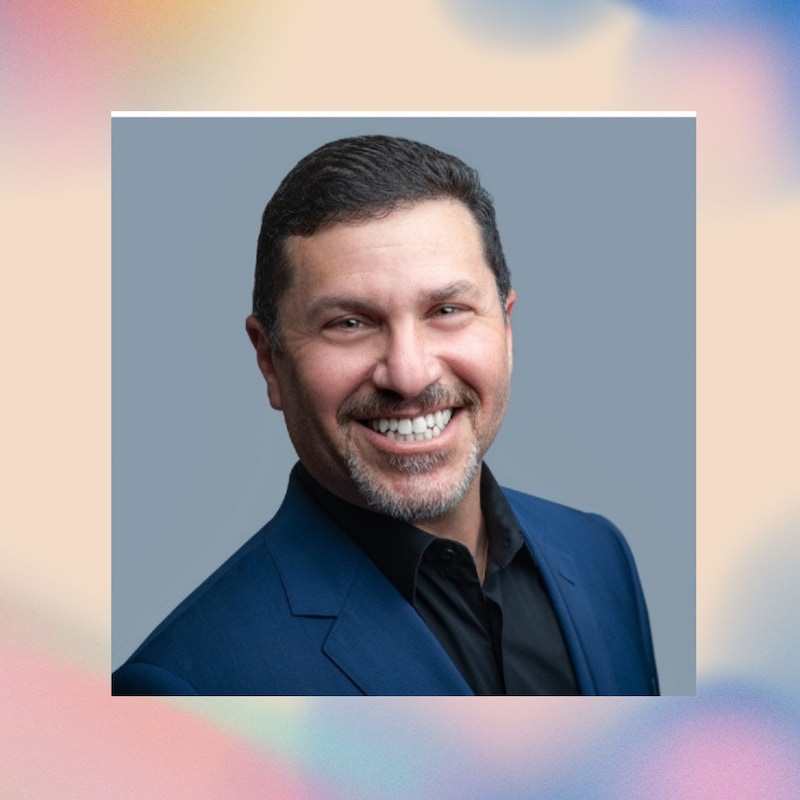
The salient point of our discussion centers on the transformative journey from being a high achiever to becoming a high-impact leader, as illuminated by our distinguished guest, Mark Silverman. Mark, a notable figure in both corporate and coaching realms, has successfully generated over 90 million in sales and has devoted over a decade to executive coaching, fostering clarity and purpose among leaders. Throughout our conversation, we delve into the mindset, habits, and strategies that underpin sustainable success and the essential elements that elevate one's leadership potential. We explore the nuances that differentiate high achievers from effective leaders, emphasizing the significance of interpersonal skills and the capacity to influence within organizational hierarchies. By addressing common leadership blind spots and advocating for a holistic approach to personal and professional development, we aim to equip our listeners with actionable insights that will enhance their leadership effectiveness.
The discourse presented in this episode illuminates the transformative journey of high achievers as they transition into impactful leaders. Our guest, Mark Silverman, a distinguished figure in executive coaching, articulates the nuanced distinctions between mere achievement and effective leadership. He asserts that while high achievers often excel in their individual pursuits, the requisite skills for leadership—such as influence, motivation, and inspiration—demand a different skill set altogether. Silverman emphasizes the importance of understanding that leadership is fundamentally about guiding others, fostering relationships, and harnessing the unique strengths of each team member. This conversation serves as a clarion call for listeners to reflect upon their own leadership practices and to recognize that true effectiveness lies not only in personal success but in elevating those around them to achieve collective goals.
Takeaways:
- In this episode, Mark Silverman elaborates on the pivotal importance of understanding that effective leadership requires significantly more time dedicated to interpersonal interactions than most individuals initially perceive.
- He emphasizes the necessity for leaders to confront their personal triggers, which can disrupt their professionalism and effectiveness when faced with challenges.
- Mark discusses how high achievers often struggle with the transition to effective leadership due to their reliance on personal accomplishments rather than developing people-oriented skills.
- The conversation highlights the critical need for leaders to foster relationships and understand the diverse motivations of their team members to inspire and guide them effectively.
- Mark also reflects on the dangers of burnout among leaders, suggesting that they must prioritize their well-being and personal lives over relentless ambition and work-related pressures.
- Lastly, the podcast underscores the holistic approach to success, advocating for a balance between professional achievements and personal fulfillment to prevent the detrimental effects of a singular focus.
Links referenced in this episode:
Transcripts
Welcome back to the show. I am your host, Keith Haney. Today's guest is someone who knows how to turn high achievers into high impact leaders.
Mark Silverman is a powerhouse in both the corporate and coaching worlds.
During his tenure in fast growing startups, he generated over 90 million in sales by bridging the gap between executives, tech leaders, stakeholders and to close out complex multimillion dollar deals. For over a decade, Mark has maintained a full roster of executive coaching clients, helping leaders rise with clarity and purpose.
He's the author of two transformational books, the Rising Leader Handbook, Turning high achievers into effective leaders and Only to twos only 10.2s. Confront your to do list, transform your life. He sold over 75,000 copies.
He also is the host of the Rising Leader podcast where it continues to challenge and inspire leaders across industries. Today we're diving into the mindset, habits and strategies that fuel sustainable success and how you can raise your own leadership potential.
We welcome Mark to the podcast.
Mark Silverman:Keith, thank you so much for having me. I appreciate you.
Dr. Keith Haney:It's good to have you on. I'm looking forward. This is going to be a great conversation. I look for some high impact abilities here.
It's going to take my leaders, my listeners, to the next level of leadership. So this is going to be great.
Mark Silverman:Let's hope I can deliver. I only come on podcast in order to get the introduction to feel good about myself.
Dr. Keith Haney:If not, we'll just cut it out. We'll never air it, but no, I'm just kidding. So Mark, I'm going to ask you my favorite question. What's the best piece of advice you've ever received?
Mark Silverman:Oh, you're going to be so disappointed. It was from Dennis Leary years ago and he basically said, put a helmet on and go to work.
He was talking about how weak we all are and he says, you know what, you just stop whining, just put an helmet on and go to work.
It was when I, I first became a salesman and way back when, you know, I was buffeted about by my feelings and my emotions and my fears and you know, like, oh like just things going on inside and it would stop me and it would just wreak havoc. And when he said put a helmet on and go to work, like that was just the medicine I need.
It's like Silverman, just buck up, get out there and do your thing. And I've listened to that forever. I think it's actually a little toxic, but it was what I needed at the time.
Dr. Keith Haney:But it's right though, I mean we have to some point.
I had another podcast guest on which I won't say what he said, but he just like it's make a decision was kind of, he had some other words in there, but he's just like, people get stuck and they won't make a decision. So you just gotta make a decision. You gotta put a helmet on, you gotta run out there and you gotta play. So I like that, that's really good advice.
I may have to change it. Say as Keith always said, so you helped generate over 90 million in sales.
What's the secret to closing high stakes complex deals in a fast paced environment?
Mark Silverman:So that's probably a several month long masterclass. But I will tell you the secret, which takes time to learn, is making sure your influencing skills are up and down the ladder.
What a lot of my colleagues missed were the people who were running the technology, the people who, and then the people who were managing the people running the technology and then going up to those middle managers who are lost in the shuffle, don't have any decision making power, but can influence the success or the failure of your implementation as well as being able to deal with the executives. Right.
So being able to have relationships and know what every single person is in the organization who touches your technology, you know, I was selling technology, your product, what, what their interest in, is it, you know, like what is a win for them? So that's what, that's what I was really, really good at.
Dr. Keith Haney:I'm always curious, I love coaching. I'm a coach myself. I've coached a lot of people. And I'm curious what led you to shift from corporate leadership to executive coaching?
Mark Silverman:So that was, that was kind of my second crash and burn in life.
My first crash and burn was when I was an alcoholic and a drug addict and you know, homeless and you know that, that's my short Jewish Tony Robbins story. But, but fast forward.
In my late 40s, I was, I was working so hard to outrun my past and to become successful, you know, so I went from this homeless guy to this guy living in a million dollar house and driving a sports car and wearing Hugo Boss suits and all that stuff.
And, and a lot of my childhood trauma and all the stuff that I never dealt with started to come out in my marriage and in my body and I started getting sick and all kinds of stuff and I fell apart and my marriage fell apart and my career fell apart and I never took a drink, I never took a drug or anything, but it just all fell apart. I was having panic attacks And I couldn't function properly at the time when I built myself back when I. When I.
When I, you know, after I was kind of depressed and suicidal for a while and, and kind of dug myself out of that hole, I started looking around me and I saw all my contemporaries who all made the same deal with the devil.
To be in the 1%, that we were all willing to sacrifice our health, our mental health, our relationships, as long as it meant that we were at a certain place in society. And, and it just happened over years. And I watched a friend of mine bought a Bentley and a couple months later died. A $250,000 car.
Right now, then his son was driving his $250,000 car. He didn't get to enjoy that. I just watched the havoc that was happening to people.
And I decided, once I built myself back and saw that there was a different way to be successful, that there was a holistic way to be successful, to have my mental health, to have my health, to have my family, to have my relationships, to have joy and fulfill at the same time. I was just kind of like an ex smoker, and I needed to teach people how to be successful without flushing the rest of your life down the toilet.
And that's how I became a coach.
Dr. Keith Haney:So the people you're describing, that 1 percenters, there's something. There are some factors in them, some inherent traits in them that you probably identify.
What are some of those things that, if you think, if you're not sure if you're one of those people that have those traits that you identified as you worked with those high achievers.
Mark Silverman:So their identity is in several things. Their identity is in how they look, or their identity is in their title, or their identity is in what they achieve. Right.
The identity is outside and that they feel like they can control something outside in order to feel safe inside. I have never met a billionaire who wasn't driven by some sort of pathology. I've never. I've never.
Like, when you become that successful, it usually isn't a healthy drive that gets you over the top in that way. And, you know, for me, I was driven by unhealthy child, you know, like childhood fears and traumas and all kinds of stuff. And that's cotton candy.
You can't. That's not fuel that you can stay on. So your body keeps the score of. When you're burning the candle at both ends.
You can run through your 30s and you can run through your 40s, and you think you're, you know, you think your body's holding on. You think your marriage is holding on.
You think everything's holding on while you're burning the candle at both ends and spending all your time and energy on chasing this thing. You know, you and I started this, this conversation saying, you know, it's all about the journey because there is no destination, right?
And, and the destination, the goalposts of the destination keep moving. For people who are success oriented, who are driven, they never get into the end zone.
And if they get into the end zone, they see another end zone immediately and you cannot sustain that.
Your body, eventually, your psyche eventually is going to rebel and it's going to show up either in health, in your relationship, or in your finances. One of those three things is going to give. And I've just seen it happen over and over again.
And my goal with my clients, I usually get them in their mid-30s is like, I'm the ghost of Christmas Future. I'm going to, you know, you've married your, your, you married the love of your life. You are not going to lose the love of your life.
If you're coaching with me, you are going to have date night, right? You're going to, you're going to have relationships with your children. You're going to have a fulfilled life.
Dr. Keith Haney:I love that. So I want to get into this because I ran, ran across your book, the Rising Leader Handbook.
You have high achievers turning them into effective leaders. And people would say, aren't those the same thing? So tell us between being a high achiever and effective leader, it's a Venn.
Mark Silverman:Diagram where, where high achieve, you know, like, like high, high achievers can be effective leaders. Right? Like, but they, not necessarily. That's a different skill set.
So when you're achieving, when you're good at something, it's, it's, it's what you hang your hat on again. You, you put your psyche, your worth, your comfort level.
If you're good at something, you're going to tend to want to stay being good at it as you move further and further, more senior in an organization, your job is less expertise and more people. So your new skill, every step up the ladder is more and more, how do you influence, how do you motivate? How do you inspire?
How do you help people to the goals of whatever the department, the organization, the company. And people forget that.
They think that because they're this good, other people go and emulate them and they don't understand that people are different. They're going to get, you know, I was in sales for you take five different salespeople, all who overachieve on their goal.
They all did it different ways. They all did it in an. In an innate way for their skill set.
So as you move up the ladder, you have to learn how to deal with people who are different than you. You have to deal with people who are competent and incompetent, and you have to give them both respect.
So it's your job to help them and coach them up or out. And that's hard for people.
Dr. Keith Haney:I love sports, so it makes me think of a sports analogy as you're describing this. I knew that watching Michael Jordan, he was a phenomenal basketball player. I'm not sure he was a great coach.
Mark Silverman:Right. But interesting about Michael Jordan. So the beginning of Michael Jordan's career, he was the top scorer in the NBA with no rings.
He goes off to the Olympics. He's now with a bunch of people who are at his caliber. And he learns teamwork. He brings that trust in the team back to the Chicago Bulls.
And now they transform the team from the Michael Jordan show. They put people around him now he's a, you know, he's the leader of a team now. They're unstoppable, right? So he was able to evolve in that way.
He was also able to evolve his skill set where he was Air Jordan at the beginning and then he was drive to the. And I know nothing about basketball. I just Michael Jordan specifically for my book, actually. And because he was kind of my hero.
When he won a championship with the flu, I was like, if he can win the championship with the flu, I can get out of bed and go to work. So, yeah, so. So, yeah, you're right.
Dr. Keith Haney:I love that you talk about it. And it's almost like you put a helmet on. Just got like an opening part there. He's like, so.
I also love talking about leadership blind spots because so many, as a leader, you have blind spots. And I remember one time as I was going through my leadership journey with some of the people on my staff, I kept asking, tell me my blind spots.
Because as a leader, you tend not to. Not to really be aware of them. So what are some common leadership blind spots that you see in high performers? And how do you help them overcome them?
Mark Silverman:The number one leadership blind spot is how much people time leadership takes. If you think it takes a lot of leadership time, triple that.
It's just you're going to be nauseous at the amount of time you need to spend coaching, correcting, inspiring, just listening to people just being There for people, holding people accountable, having tough conversations and having the tough conversations again and then having it again. You and I had a conversation before this about servant leadership versus transformational leadership.
And servant leaderships tend to just love their people and care about their people and don't want to smack them upside the head when it needs to happen in that, you know, of course, in a professional and loving way. But there's times when people have to be told, look, this is the way it is.
You know, you're going to work the weekend and this is going to be done on Monday. We all signed up for this and I'll be working right beside you, but this is what's going to happen. So that's one of the blind spots.
The other blind spots is again, that people are different. Everybody gets to the destination differently.
And that's hard for people to understand because again, these high achievers got there by being a certain way. Why aren't these people doing what I did and then getting them to see that you have to bring out their gifts? How are they going to get to the goal?
How are they naturally, rather than put, you know, put around peg in a square hole, how do you take their natural, natural gifts and point them towards the goal? And then the one, you know, the, the other one. Great. I'm going to, I'm going to lose my train of thought with my cold in my.
Let's just, let's, let's just leave it at that. How's that for. Oh, you know, actually I do, I do remember the last, the last blind spot is triggers. So I do personality testing.
It doesn't really matter what personality testing you do. I like to use Enneagram, which kind of helps with core motivations, core fears. Everybody has their core fear of what.
So an achiever has a fear of failure. I'm a helper. I have a fear of not providing value. An active controller has a fear of things being out of control.
Everybody has that trigger that makes them no longer be professional. And you can have emotional intelligence until you hit that trigger. And then all of a sudden you've lost yourself.
Knowing your triggers and knowing where you're going to fall into the pothole of unprofessionalism, of ineffect, you know, of being ineffective beforehand. And working on those is the biggest blind spot because we all have them and we all have that thing that makes us irrational.
Anybody who has a teenager knows that there are buttons to be pushed that make you no longer that loving, grounded, centered parent. It's whatever's expedient. So that's a huge one for people. And that's where the self development comes in.
The secret ingredient to all of this is leadership turns you into the person you could be.
Dr. Keith Haney:I love that I'm about to put that down as a quote of the day. So you break your book down into four key perspectives, and we're going to test your flu ability to handle.
Mark Silverman:I wrote the book A. I didn't write the book so I can answer the question.
Dr. Keith Haney:So it's leading up, leading across, leading your team, and leading you. So walk us through what each of those means and what's essential as you.
Mark Silverman:Talk about rising up. Good leadership. Sure. It starts with leading up, because that's how I get hired.
I generally don't get hired from HR or from my podcast or from, you know, I get hired from a CEO who has someone on their leadership team who's driving them crazy, either because they're a bull in a china closet or because they, you know, like, they're, they're, they're due for a promotion, but they're not speaking up. They're not, they're not taking, you know, they're not stepping into the role that they need to step into.
And they call me and say, mark, can you help mature this person?
They're invaluable to the organization, but I need them to have these mat skills, these leadership skills, again, high achiever into an effective leader. And leading up is the first way I get most bang for my buck.
My goal is to have a call from a CEO within a month going, what did you do with him or her? Like, how did that happen? And it's like, easy. I just stopped the bleeding.
So we teach you how to be a trusted advisor to the CEO or to whoever you're working for, learning what they're. In order to be a trusted advisor, you need to know what their values are. You need to know what their goals. You need to know what their triggers are.
You need to know how to help, right, so that you earn the right to, again, be a speaker of truth. You can't speak truth to a CEO if they don't believe that you have their back.
If you're, if you don't, if you, if you're speaking truth to a CEO but they don't trust you, you're just more noise coming at them. It's such a lonely job. So.
But if they feel like you're on their team and you have their best interest at heart and the organization's best interest at heart, then you can bring the difficult conversations to your CEO, then we do. Leading across leading is one thing. Leading on a team of other leaders is really tough.
I'm really good at taking charge and I'm really good at following. I am not great at being one of the crowd of leaders and making sure my. Raising my hand and making sure my agenda is heard.
I've learned that since, but that just wasn't my skill.
And what I noticed is the coopetition of a leadership team where everybody knows what the goals of the organization are, but they all have their own egos, they all have their own agendas, they all need their own resources, they all want to shine. So how do you help others? Other boats rise while not dimming your own boat.
We don't want to throw out your ambition, but we don't want your ambition to crush your relationships with everybody else again. And I ask my people, do you want to be promoted? And everybody's like, brown noser, I'm not going to follow. They didn't deserve the job.
Or do you want to be promoted? And everybody. Yeah, no, I wanted that job. But I will absolutely follow Keith up the ladder. I'll follow him to another organization, great person.
So that usually snaps them into that. And then it's leading your team, which is everything we always talk about in leadership. How do you get your team to row in the right direction?
How do you inspire them to reach the goals in a. In a manner that's consistent with the values of the organization and then leading yourself.
Now, the dirty little secret of my book, this is a spiritual book. This book is about growing as a person and growing spiritually.
And when I mean growing spiritually, I mean taking the automatic person that was built the first 20, 30 years of your life and growing out of that person, growing out of those automatic triggers, growing out of those automatic fears, and starting to go from a, from a, from a default life to a created life. And I use the relationships with the CEO, the relationships with the peers, the relationships with the people who work for you.
Everything that you have to confront in yourself in order to be effective in all those areas are the thing that's going to make you become who you could be. And that's no, that's no small task. You have to confront yourself over and over again if you want to grow as a leader in all those areas.
But, you know, it's really fun when you think of it. And for me, leadership, Leadership for leadership's sake is kind of boring to me. You know, it's just Kind of a buzzword.
But if you're using that to see who you could become, it's like, it's like being an Olympian. Like, can I really be someone who can influence? Can I really be someone who can transform people's lives?
Can I really reach those goals without destroying people?
Can I, you know, handle my triggers where I used to walk into, you know, if a client can walk into the boardroom and someone disagree with them vehemently and they don't crumble where they used to crumble, that's spiritual growth to me. Right. And that, that's exciting.
Dr. Keith Haney:I love that. As I'm listening, you describe these. I know there are people out there who are looking at this as a chart. Is this, is this a step chart?
Is this a circular process? Kind of. How would you define whack?
Mark Silverman:A molecule? Whoever walked, whoever comes across in the hall, is your next mold of whack. Like, is it a problem someone brings to you? Great.
How are you going to show up for that problem? You know, like, did you, did you have a win? Like, like everything. So again, it's, it's a, it's a little Buddhist in nature.
It's like, whatever, whatever comes across your path, serve that. So again, for me, it's usually I need to cool off the relationship with the CEO. So that's first.
Often there's so many leadership programs on how to lead your team that that's not usually the worst problem.
Like, my clients know their job, they know their business better than I'll ever know it, and they're okay at leading their people, but they're, they're usually button heads with the other leaders, and they're usually, you know, have some, some brown to make with their leader. So we work there first, and then after that, after all of that starts to settle down. Now, how do you trickle this down?
Like, how do I coach the leader, get them to a place and now how do they pass that on to their people is the question. Right. But. So that's kind of, that's the step chart. First we have to get them set, then we pass that on to their people.
Dr. Keith Haney:I love that. So you and I talked before, we got on about between servant leaders and transformational leaders.
And I would say the transformational leader tends to maybe more task oriented, but also with the organization and the people in mind, whereas the servant leader tends to be kind of, you said, caught up more in their emotions. If you're trying to help someone shift their mindset from the task to the greater organization, how do you Help them do that.
Become more self aware as a leader.
Mark Silverman:One thing is to, is for them to remember who, you know, like what their position is.
A lot of times when leaders move up through the ranks and then they're in the C suite or they're on the leadership team, they forget they're on the leadership team and they think that their team is their team. Right. So they'll come out of the leadership team and they'll say I fought for you or I fought for this, but nobody agreed with me.
And that just undermines the entire organization. Doesn't do your people any good anymore. Right.
Instead of, instead of disagreeing in the leadership team, taking whatever the decision collectively in the leader, even if you lost in the leadership team, and then disseminating that communication in a uniform fashion to your people. Right.
Because wanting to be friends with your people, wanting them to see them to see you as their champion, you know, at, when it's at odds with the leadership team is, is, is undermining not only the organization, but them as well.
Dr. Keith Haney:I like that.
One of the things we started talking about in this initial conversation was your journey from high achiever to having to basically restructure your entire life again. Part of your book deals with the burnout that high achievers are dealing with and their personal well being.
What advice do you have for leaders who are feeling they're on the edge of that burnout, the edge of that whole thing unraveling, the whole string falling apart and the pressure they're under? Sure.
Mark Silverman:So this is a generalization. And it's a generalization, I'll stand by. But I promise you, I do know it's a generalization.
So when women hit that pressure point, they, they generally go into adrenal fatigue.
So a woman who goes past the point of okayness, you know, trying to run the family, trying to run an organization, trying, trying to, trying to use testosterone that they don't have, you know, to be a, you know, to be a, you know, more masculine in the workplace, they tend to go into adrenal fatigue. And when, when a woman goes into adrenal fatigue, like she can't, she can't achieve her way out of it, they go down.
And that's usually a life changing moment for a high achieving woman. Men, when they go past that, tend to blow things up. Right.
So women go down, men tend to have affairs, buy a motorcycle, quit their jobs because they want to do their action or they do something, they blow shit up. So that I, So when you start to see that you Start to see that they're headed towards that first. You have to show them what they're headed for.
They have to see because, again, they're high achievers. I can work my way through this, right? I worked my way through everything up until now. I can work my way through this now.
And that's just not the case. It's so counterintuitive for men. You've got to go play golf. I'm like, I ask them. I ask my men all the time. When do you see your friends?
Do you see your friends before 40, before kids, you would hang out with your friends. You'd go play basketball, you'd go do things. After that, when you have kids and all that, everything has to be deliberate.
If you want to stay in shape, it has to be deliberate. If you want to have romance in your marriage, it has to be deliberate. If you want to have friends, it has to be deliberate.
So what are your relationships look like? What does your downtime look like? What does your play look like? Do you ever take time off? Do you exercise? So I do have a rule with my clients.
I'm 63, and most of my clients are in their 30s and 40s. And I'm like, if I'm in better shape than you, there's a problem. Come on, now. You're working hard, burning the candle at both ends.
You're in hotels with gyms. You're going to restaurants. But restaurants can certainly give you a piece of meat with two vegetables instead of French fries. You can do this.
And I generally help them take care of that because again, I'm the ghost of Christmas Future. I've seen too many of you have heart attacks. I've seen too many of you have affairs. I've seen too many of you not make it.
So let's nip this in the bud.
Dr. Keith Haney:So I love this. So what do you cover in your podcast? Your podcast has the same title, the Rising Leader. Tell us about your podcast.
Mark Silverman:So my podcast was. I've had three different podcasts. This one was me interviewing CEOs and senior leaders for a couple of years.
People I've worked with, people I've coached, and people I've wanted to get relationships with about their journey into leadership in these four focus areas. This year, I decided the world needed something else from me, and I just decided the world is turning upside down.
And no matter what side of the political spectrum you're on, you can't not be stressed. I don't know anybody who isn't in fight or flight right now. You just walk around and you can feel it. It permeates our national psyche.
And so I decided I wanted to use my podcast to help people learn how to find equilibrium while the world brings stress to them, whether it's in business, whether it's in, you know, on the news, whether it's in their own life.
So I started interviewing spiritual teachers that I really like and practical people and somatic people who can bring some semblance of a groundedness in the center of the storm for this past year. Because it just, for me, people, you know, again, we're kind of like the boiled frog.
We've just been living in this since 911 as it gets gotten hotter and hotter and hotter. And I'm watching people break and they don't see themselves.
Like, I don't know that people know that we're at the breaking point, personally, like in our bodies. We can't take this stress. We're not meant to know all this stuff going on. We're meant to know what's going on in our village.
Basically not everything going on in the world and people are stressed. So I've been trying to focus on that for this past year because I just. That seems to be my. When I pray about it, that's my highest and best use.
Dr. Keith Haney:That's admirable. You have some exercise in your book about self awareness and resilience.
What, what are some things you would, some tools maybe you've used in the past that may be helpful for the audience who are kind of feeling what you just described?
Mark Silverman:Sure. So exercise is, exercise is key. Move your body, downtime is key. You know, some kind of hobby, some kind of fun.
Make sure you have right relationships and friendships. Those are all the basics of, of a life. Right. Like I was just watching a, a video on a guy who moved, who's been living in Europe in last 13 years.
He says, you know, the difference between Europe and here is we work to live. And in the United States we live to work. And we forget that there's a life to be lived here, not just vacations to get to and get back from.
So that's a morning routine is key. Again, I'm not dogmatic about that.
And when I say a morning routine, I mean something for yourself where you take care of yourself, where you read if you want to read scripture, if you want to read New Age, you know, just something to fill your soul in the morning. And I start my clients out with a one minute meditation. Can you sit with your cup of coffee or your cup of Tea.
And just stare into space and breathe without your phone for 60 seconds. Just once a day. 60 seconds. Breathe. Feel what it's like to be alive because you're. I guarantee you, you're missing it. You're missing being alive.
So those are my suggestions.
Dr. Keith Haney:That was good. So I love to ask my guests this question. This is my other favorite question. What do you want your legacy to be?
Mark Silverman:That everybody who came in contact with me feels loved and seen.
Dr. Keith Haney:Oh, I love that. That's good. So on season six, we have a surprise question. I did not see this ahead of time.
You have to pick a number between one and six for your surprise question.
Mark Silverman:Seven came to mind. That doesn't work. Four.
Dr. Keith Haney:Four. All right. Where is the funniest place you ever fallen asleep?
Mark Silverman:Where is the funniest place I've ever fallen asleep? Oh, I spent. So when Wicked first came out with the original stars of Dina Menzel and Tristan Channelworth, I took my wife and two other friends.
I spent $1,500 a ticket, and we had center stage tickets to Wicked. And I hated that show so much, I fell asleep in the middle of Wicked.
Dr. Keith Haney:That was an expensive nap.
Mark Silverman:That was an expensive nap. I walked out of there going, what the hell was that?
Dr. Keith Haney:I love it. That's hilarious. So, Mark, as we wrap this up, what key takeaways you want to leave with the audience from our time together today?
Mark Silverman:Wow. Takeaways. If it's about leadership, leadership takes way more people time than anything. And if it's humanistic, I know you're driven. I love success.
I like nice shiny things. But we work to live, not live to work.
Dr. Keith Haney:So where can listeners find you, connect with you, and buy your books?
Mark Silverman:So. Markjsilverman.com Mark, the letter J silverman.com is where all my stuff is. I'm on all the socials, and you can get only tens for free. Only tens is.
Yeah, you go to my website. I sell the hard. I give the hard copy away or. Or electronic copy to anybody who wants it. It's been so good to me. I just want to give it to the world.
Dr. Keith Haney:Well, thank you, Mark. Thank you for taking time to share your insights and your experience today.
Your journey from corporate success to coaching impact is a masterclass in intentional leadership. And your books and your podcasts continue to empower leaders to rise with purpose to our listeners.
If you're ready to confront your to do list, elevate your leadership and simply get clear on what matters most. Check out Mark's books.
Only tens, the rising leader Handbook, and you can also tune into the Rising Leader podcast for weekly inspiration and strategy. In this episode sparked anything in you.
Share it with a fellow leader, subscribe, leave a review and keep us and keep those powerful conversations going until next time. Lead with clarity, act with intention, and rise to your potential.





