Shownotes
Are you struggling to get along with someone at work, no matter how hard you try?
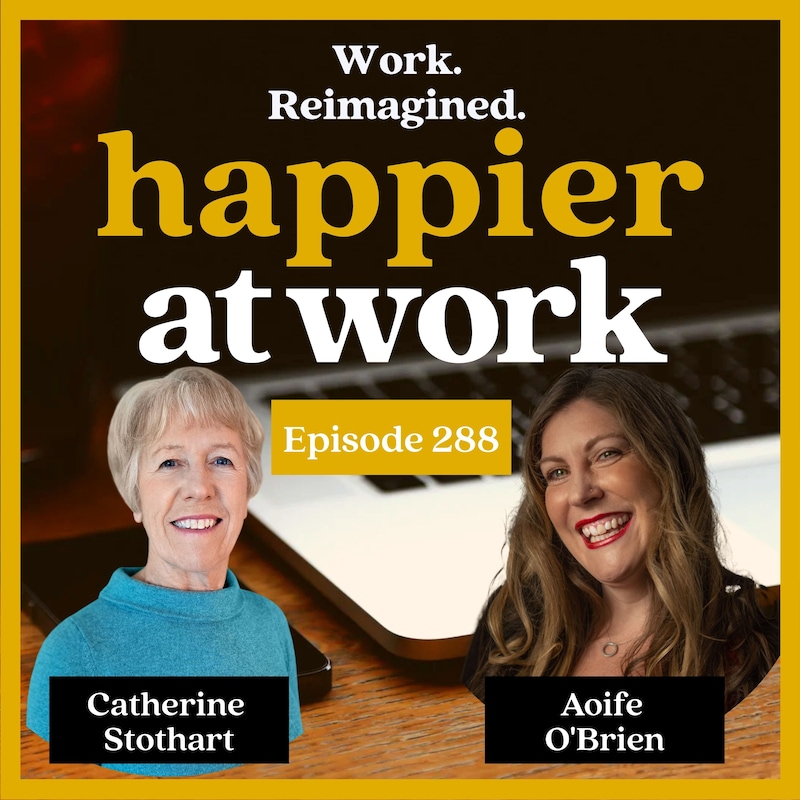
In this inspiring episode of the Happier at Work podcast, host Aoife O'Brien speaks with leadership coach and author Catherine Stothart about the art and science of getting along with just about anyone. Drawing from her extensive experience in leadership development with global organisations and her books on communication and motivation, Catherine shares practical strategies grounded in psychology for understanding yourself, appreciating the perspectives of others, and improving workplace relationships.
In This Episode, You’ll Discover:
- How self-awareness and understanding your own communication style can transform workplace relationships.
- The “intention vs. impact” dynamic: why we judge others based on impact and ourselves based on intention, and how this fuels misunderstandings.
- Tips for managers to support team members: regular check-ins, balancing autonomy, fostering connection, and using “do and review” conversations.
- Practical steps for “getting on with anyone”.
Related Topics Covered:
Purpose at Work, Personality Types, Relationships at Work
Connect with Aoife O’Brien | Host of Happier at Work®:
Connect with Catherine Stothart | Motivating Leadership Coach & Author of ‘How to Get On with Anyone’:
Related Episodes You’ll Love:
- Episode 174: The Role of Emotions in Workplace Dynmaics with Dr. Lola Gershfeld
- Episode 176: Practical Tips for Positive Work Relationships with Aoife O’Brien
About Happier at Work®
Happier at Work® is the podcast for business leaders who want to create meaningful, human-centric workplaces. Hosted by Aoife O’Brien, the show explores leadership, career clarity, imposter syndrome, workplace culture, and employee engagement — helping you and your team thrive.
If you enjoy podcasts like WorkLife with Adam Grant, The Happiness Lab, or Squiggly Careers, you’ll love Happier at Work®.
Join Aoife O’Brien for weekly insights on leadership, workplace culture, career clarity, imposter syndrome, and creating work that works for you.
Website: https://happieratwork.ie LinkedIn: https://www.linkedin.com/in/aoifemobrien/ YouTube: https://www.youtube.com/@HappierAtWorkHQ
Post Production by Amanda Fitzgerald.
Transcripts
Have you ever worked with someone who just rubs you up the wrong way? No matter how hard you try, you just can't seem to get along with them. Well, today's episode is absolutely for you. I know I've had that person and maybe I've even been that person. I'm your host, Aoife o'. Brien. This is the award winning Happier at Work podcast, the career and culture podcast for people first, leaders and teams. And today's guest brings so many insights all about how to get along with just about anyone. So it's about understanding ourselves, growing in self awareness, and also understanding other people and their behaviors and seeing things from their perspective.
Aoife O'Brien [:So tune in and let me know what you think of today's episode. Get involved in the conversation. Leave a comment below in your favorite podcast platform or don't forget to leave a rating or a review or, or join in the conversation over on LinkedIn. Catherine, you're so welcome to the Happier at Work podcast. I know we've had a couple of brief email conversations rather than actual conversations before this, and I'm so interested in your work, but I'd love to know a little bit about the history, like how did you get into doing what it is that you do and what really piqued your interest in the area?
Catherine Stothart [:Yeah, thanks Aoife. And it's lovely to be here by the way, and great to meet you in person or almost in person. So I'm a leadership coach. I work with Airbus. I've also in recent years worked with Google and Audi and other big companies, companies. I started my career in hr. So after university I started with Ford Motor Company in hr, then Mercury Communications, and then I went to icl, which became owned by Fujitsu, a company that most people have heard of these days. And it was when I was at ICL that I moved from mainstream HR into leadership development, which I think is where my main interests lie, where my talents lie, and, and so on.
Catherine Stothart [:So I was in leadership development in icl, then took a career break because of my husband's job. So we live in Cairo in Egypt for three years and then Brazil in Rio for two years. And I think that I was already interested in, in psychology and in behavior, but that got me even more interested, you know, what influences how we behave. So different cultures, obviously, national cultures, religion, your upbringing, all these things influence behavior. So I think those experiences of living abroad got me more interested. So then when we came back from Brazil, which was over 20 years ago now, I set up my own company. I also had two children, so you know, you're jug all the family stuff as well as the, the work stuff and used to do a lot of assessment at first, then qualified as a coach. I also did a master's degree in organizational behavior.
Catherine Stothart [:Built from there really. So what I mainly do now is coaching and also team building. I wrote my first book, how to get on with anyone in 2018. Well, it came out in 2018 and that book is about communication and about relationships and how to build better relationships with people at work or at home. And I think one of the prompts that made me write that, I think, yes, partly it was, you know, my life experience and living abroad and all those things, but also it was sort of just noticing differences, noticing conflict between me and my husband, for example, where he has a certain communication style, quite a directing style. I have a more informing style and that can lead to lots of misunderstandings. And I'd come across this model of behavior, a framework of behavior called interaction styles. Came across that in about 2012 I think started using, using it, trying it out with coaching clients, trying it out in team building workshops, and found that people got it really easily and could start applying it straight away.
Catherine Stothart [:And I thought this is just so good, so helpful to people in their lives at work and at home, that I wanted to share it more widely. And if you work in a big company and you're a manager, your company will pay for you to go and, you know, do all this self insight, self awareness stuff, learn how to lead and motivate others and all of that. But if you're not in a big company, you often don't get a lot, a lot of training or help. And I just thought this stuff was so valuable that I wanted to share it, which is what brought me to, to write the first book, how to get on with anyone. It's since last year in 2024, came out in a second edition with, with extra material, you know, a whole new chapter on leadership, whole new chapter on inclusion, and also lots of stuff on virtual communication. Because in the meantime, since the first edition, Covid had happened big.
Aoife O'Brien [:A big change happened in the world.
Catherine Stothart [:Yes, exactly. And everyone's working from home or hy. So that virtual communication side needed a bit more discussion, I think, and advice and guidance. So that's how I came to write that first book, based on really trying this stuff out with different groups of people. And then I think the second book, motivation, the ultimate guide to leading your team, that really came about because of COVID as in I had more time because suddenly you Know, I wasn't doing as much coaching or as much going out and delivering workshops and things. So I had the time and I thought, you know, understanding what motivates you, how you're motivated, what motivates you, how, if you're a manager, how to motivate other people is really, really important. And we don't discuss it enough. So many people are not happy at work, you know, they're unhappy in their jobs, they're not getting what they need from their colleagues or from their managers.
Catherine Stothart [:And again, it was an area that I'd, over the years gained a lot of, you know, knowledge, you know, academic knowledge partly, but experience in, in working with people. And again, I just wanted to share that more widely, share all the practical tools, you know, and tips and, and so on the practical stuff. I, I often see my role and the work that I do as turning the theory into practice. How do I actually do that? Yeah, you know, most managers have heard of Maslow, but you say, okay, who's heard of Maslow? They put their hands up. Okay, who can explain to me what self actualization means? Nobody puts their hands up.
Aoife O'Brien [:Yeah.
Catherine Stothart [:So it's trying to make things more doable and actionable.
Aoife O'Brien [:Yeah, it's interesting you say that, Catherine, because that's something I found when I was doing my master's as well. There was a time in particular that I remembered from before I became a people leader for the first time. And I was having management development training, which is unheard of. Like they're training people before they even become managers. And I think a lot of times these days people become managers. And I think 80% or something have never been trained in how to lead people. But this is back, you know, probably almost 20 years ago now when I was being trained in this stuff and we were taught about this thing called situational leadership. And I was like, wow, this is groundbreaking stuff.
Aoife O'Brien [:This is amazing. I couldn't believe it. And when I did the Masters, I found out that that stuff had come about in the 1990s. Like, I was like, how is it that we're still talking about situational leadership when it's more than 30 years old, that I thought it was really groundbreaking in the early 2000s. And how can we get this research or this information into the hands of the people who need it and how can they implement it in a practical way in their day to day roles? So that was kind of something that really struck me when I was doing the Masters. Like there was so much rich information out there, but it's not actually shared In a way that people who need it can really digest.
Catherine Stothart [:Yeah, I mean, that's. That is so true. In fact, in the introduction to one of my books, I've more or less written what you've just said.
Catherine Stothart [:You know, how can you turn all this fantastic stuff that's in academia. Yeah, it's practical. So managers, actually. Although I would say both my books are quite easy to read and they're very practical these days. People don't even want to read books.
Aoife O'Brien [:Yeah.
Catherine Stothart [:I think, you know, a podcast is great, and I love what you're doing with the Happier at Work podcast because, you know, people when they're driving home from work or something, can listen to this stuff and some of it will. Will go in. It'll be helpful. Yeah, it's. So turning all that theory, all that content into something that people actually do something about is what I'm trying to do. Really.
Aoife O'Brien [:Yeah. And I think maybe this is what today's podcast all about. And I know that you've listened to some of my previous podcast episodes talking about need satisfaction and motivation. And so I'd love to dive into that in a little bit of detail first, because there are so many other podcast episodes that touch on it. So we can kind of direct people back to those previous episodes, and then we can take maybe a deeper dive into how to get along with anyone, which I think everyone can relate to, and, you know, understanding how to get on with people, both in our personal and in our professional lives. And maybe what are the things that drive us demented and what can we do for ourselves to understand ourselves a little bit better around that?
Catherine Stothart [:That sounds great. Yeah, perfect.
Aoife O'Brien [:Brilliant. So on the knees you've listened to. I know there was one particular episode with Dr. Mark Fabian where we talked about this idea of self determination theory. And in the interest of not kind of getting too academic, y. Maybe we can touch on some of the elements of that and how it relates to your book on motivation. Like, how do you see self determination theory when it comes to motivation and people? Maybe it's a concept that's really misunderstood and we get the idea of the carrot and the stick and trying to motivate people by fear rather than by desire and the difference between moving towards from something or moving, you know, towards pleasure versus away from pain and things like that. Can you explain, in summary, what the.
Aoife O'Brien [:What the book touches on?
Catherine Stothart [:Yes. Okay. So I think in a way, my starting point for a manager is to say, rather than asking yourself, how can I get the most out of people? Because that's what we used to say to managers, that's what you got to think. How do you get the most out of people? Instead of that they need to think, how can I support people to perform at their best? So you're starting from a different point. And then if you know that we have these needs and I think the research of Ryan and Desi on self determination theory is, you know, it's well proved that we have these needs for autonomy, competence and relatedness. Some people use slightly different labels for those things. So how can I as a manager help people meet their needs for those things? So if you take competence as an example, okay, if we all have this need to feel that we're competent and respected for our skills and our talents and so on, what can I as a manager do? So one of the things if I'm a manager, I might want to do is, you know, have regular one to ones with people, sit down, have a chat. How are things going? What's, you know, what's the best thing that's happened this week? What hasn't gone so well this week? What could you do differently? You know, those sort of conversations that first of all showing that you care about them but are also helping them think through that you're giving them the time and the space to think through.
Catherine Stothart [:Yeah, actually perhaps I'm not so good just good at X or perhaps I could have done better on. Yeah, and you know, you, you discuss and, and help them. So. Yeah, how can you as a manager help people feel more competent? One of the other things I, I often advise people to do is I call it do and review. So whenever somebody's done something, maybe they've been in a meeting, they've had a customer call, they've made a presentation or written a report, sit down with them just for five minutes and you know, review it. Okay, you've done it, now let's review it. What went well, what didn't go so well? What would you do differently next time? And I, as your manager, I might advise you on what you might do differently next time as well. So it's a sort of that coaching approach to management.
Aoife O'Brien [:Yeah.
Catherine Stothart [:So, yeah. So thinking about, you know, those are the sorts of things you can do to build people's competence, recognizing there are individual differences. You know, you've mentioned situational leadership. So some people will need more support and regular chats with you than others. Some people almost need a daily chat. You know, some people might not want to have a conversation like this more than once a week or even once A month. So it's, you know, recognizing that that's competence, relatedness, which I tend to call connection rather than related. Yes, but, you know, that's our human need that we all share to have connections with other people, to feel that we belong, that we're liked, that people just respect us and want to spend time with us.
Catherine Stothart [:So that relatedness, what can managers do do for that? Well, I think this is really important, particularly in this time of hybrid working, that managers do spend some time to make those connections between them and the individuals, but also encouraging connections and friendships in the team. So, for example, if you're having meetings online, then open them early so people can have a chat before you get into the business of the meeting. If you've got bad news to impart, do it face to face if you possibly can. Yeah, you know, some organizations are one that are mainly have people working from home once a month. They get everyone into the office and have a team meeting. And, you know, all these different things you can do to enable people to. To meet those needs for connection and relatedness and then autonomy. Again, we're all different.
Catherine Stothart [:Some people will want more autonomy or freedom than others. But, you know, giving people a bit of choice about when they work or how they do their jobs or where they work and so on, delegating things to them that they have the skills to do and would like to do, you know, those are some of the ways you can meet people's need for autonomy.
Aoife O'Brien [:I think in, in the autonomy in particular, it's a tough one because it's getting that balance right between being a micromanager and you don't want to be a micromanager, but then relinquishing some of that control and letting people make mistakes and figure things out on their own, but with the knowledge that you're there to support them. But I think sometimes as individual individuals, you know, as in, as leaders, we might feel that we don't want to allow someone to fail or that we need to monitor in. We want to have more control than maybe what they would like us to have. So I think the individual differences in people's need for autonomy varies quite a bit from career stages and individual differences as well.
Catherine Stothart [:Yes. And I think as a manager you have to think, am I trying to control, you know, am I micromanaging to suit fit my needs or theirs?
Aoife O'Brien [:Yeah.
Catherine Stothart [:And often it's to fit yourself because you don't quite trust them and whatever, rather than helping them. So. But you have to do it by discussion, you know, sit down with somebody, would you like more control over this or would you like to take on that project? Or you know, how do you feel about this? Or do they just feel that they're being dumped on? Yeah, just giving them stuff that you don't want to do. So.
Aoife O'Brien [:Yeah.
Catherine Stothart [:You having that sensitivity with, with the individual?
Aoife O'Brien [:This is it on the connection piece, and that's a term that I like to use as well. The relatedness. Maybe it just sounds a bit academic. It's like who says relatedness in every day? You might say connection. But I like to talk about. And this is where we kind of debated about, like where should that actually sit. I like to extend it to be making connections between what I as an individual am working on on a day to day basis and what the team, the department or the organization is trying to achieve or the impact that I'm having. And seeing a link between those two things for me I think is really important.
Aoife O'Brien [:And it's, it's like I always say, if there's one thing that you take away, it's that it's making that explicit link between the importance of the work that you're doing and the outcomes that you're achieving to the people who are receiving your work or the impact that it's having. Any thoughts on where that might fit in with the model? Does it belong with connection? Is it something completely separate? Do people generally need to have that? Do you think? Like it's. It's because I know with the three needs for autonomy, relatedness and competence, they're universal needs, we all have those. But this kind of. Is this a separate thing? How would you kind of place that?
Catherine Stothart [:Yeah, I tend to think it's slightly separate. So rather than seeing it as part of connection, I see it as purpose.
Aoife O'Brien [:Yeah.
Catherine Stothart [:And you need that as well. And I don't think that completely comes out in self determination theory.
Aoife O'Brien [:Yeah.
Catherine Stothart [:Although the way I see it is that fulfilling my needs gives me a sense of purpose. So for me personally, you know, I have quite a high need for competence and that means I like to learn, I like to achieve things, I like to be do things as well as I possibly can. And that need, fulfilling that need is part of my sense of purpose in a way, if that makes sense.
Aoife O'Brien [:Yeah.
Catherine Stothart [:So, you know, I mean, I'm learning. So outside work, I'm learning Spanish at the moment. A few years ago I took up golf and I like, I enjoy that act of sort of learning and becoming more competent in those areas.
Aoife O'Brien [:Yeah.
Catherine Stothart [:So I think those activities then give me that sense of purpose and link with my need for competence. But I also think that we've got another type of purpose as well. Meeting your needs, that's the more sort of longer term enduring that goes through your life. But I think you have short term purposes as well. So, you know, a few years ago my purpose was to write a book and that, that's what got me up in the morning. That, you know, I was motivated, I wanted to get on and, and, you know, finish the book sort of thing. And I think at work, when you're part of a, a team, I think you need, I, I agree with you that you definitely need to feel that your job, the purpose of your job is something important. It matters whether you turn up and do it in the morning or, or if you don't turn up, you know.
Aoife O'Brien [:Yeah, it's.
Catherine Stothart [:So I have a sense of purpose in my work also. I can link that to the wider team. If I'm part of a team, what is our purpose as a team and where do I fit into that and how can I help? My colleagues are all perhaps doing slightly different things, but how can I help them meet their purposes as a team and then how does that fit into the wider organization? Null purpose, you know, so I really think that's important. And you know, there's lots of evidence that when people retire from work, they go back to work or they find other things that are a bit like work to give them that sense of purpose.
Aoife O'Brien [:Yeah.
Catherine Stothart [:And there's some neuroscientists that I quote sometimes that, you know, talk about, you know, having activities, you need to have stuff to do. But it's not just about being busy. It's about feeling that those things have some meaning and purpose.
Aoife O'Brien [:Yeah. That they're contributing to something beyond yourself, that they're in service of something kind of bigger. Yeah, yeah, yeah. I love that. I love that. I think, Catherine, we can come on to this idea. I love what you said about the interaction styles and I'd love to know a little bit more. Like, I don't.
Aoife O'Brien [:It's not a, it's not a model that I've ever heard of before, but I am curious about why some people get along better than other people. And like, as an individual, why is it that I like some people more than others or that some people just rub me up the wrong way?
Catherine Stothart [:Yeah. God, there's so much in those questions.
Aoife O'Brien [:Sorry, it's a big question.
Catherine Stothart [:Yes, yes. So, first of all, you know, we're all very different. And in my life, even as a youngster I found there'd be people who I'd start off thinking, oh, I don't like them. And then, you know, at school, for example, and then when you get to know them a bit better, you discover that you do like them. So I think that sort of was an underlying thing at the back of my mind, what the book is about. It's about four interaction stars, which I can explain if you'd like me to, but just leaving what those styles are aside for a moment, the basis of the book is knowing the difference between your intention when you're communicating and your impact. It's really about emotional intelligence. So it's about that gap.
Catherine Stothart [:So often we have a positive intention when we communicate. So with these four styles, each of them has. And it's all about communication. It's not about what you're doing when you buy stuff. It's all about when I'm with other people, when I'm interacting with other people, what am I doing, what is driving my behavior? So it's about being aware of what's driving your behavior, what's your intention, which may well be positive, but sometimes the way you come across can have a negative impact on the people that you're communicating with. And then you don't have the influence you want to have on them, you don't have the connection, the influence, the relationship with them. So it's about being aware of, firstly for yourself, that self awareness of, hang on, what's driving my behavior at the moment? How am I coming across? And is that the best way I can come across in order to meet, achieve my intention? But also for other people, if other people are annoying you or you're finding them irritating or whatever, it's trying to see beyond their immediate behavior that's annoying you to what is driving their behavior. So if I can give you an, I'll give you an example from, from Airbus, actually, because this, this is something that happens quite a lot.
Catherine Stothart [:There are some people who are, well, I call them mobilizers. So their drive is to get action, they want to get results, they want to get quick action. So for example, if you're manufacturing the wings of an Airbus aircraft and something goes wrong with the manufacturing process, you'll call in the engineers to come and fix. The people that are in the manufacturing side tend to be that sort of mobilizer. Come on, quick, you know, we've got to get this sorted, we've got to get production going again. The engineers tend to have a different personality style that I call navigator. They want to Go away and think about the problem. They want to come up with some potential solutions and evaluate them before you put any of them into, into action.
Catherine Stothart [:So the mobilizer people come across as sort of impatient and demanding and let's get on with it. And when can you get this done by the navigator? People come across as hey, whoa, slow down, hang on, we're not rush into this, I need to go away and think about this. And that causes a lot of conflict. But in fact they've both got positive intentions because clearly you want the manufacturing to get started and you want to get the right engineering solution to the problem. Yeah, but because of the, the way they're coming across, conflict escalates quickly. Whereas if they can both see, hang on, we've both got positive intentions and if they can both moderate their behavior a little bit, you know, the mobilizers to calm down a bit and the navigators to actually say, for example, I need to go away and think about this, I'll get back to you at five o' clock with an answer.
Aoife O'Brien [:Yeah.
Catherine Stothart [:And that keeps the others happy. But it's that sort of lack of explanation communication.
Aoife O'Brien [:It's the bit in the middle, it's the, this is what I want and I'm, this is how I'm going to make it happen. And then the others are doing what they do best in order to make, make what needs to happen happen. They're going away, they're not necessarily communicating back to say this is what I'm doing, which would communicate that they're actually taking action in their own way and then it's kind of creating this cycle. When you mentioned the idea of intention versus impact, like what sprang to my mind is this idea that we tend to judge other people by the impact that they have or their actions or their behavior and we judge ourselves by our intention because we know what our intention was. We don't necessarily, unless we're maybe scanning or very self aware, we don't necessarily know what that impact is of our intention. But we know the impact or the behaviors of other people on us and that's how we judge them.
Catherine Stothart [:Yes, absolutely. Yeah. You know, we, we let ourselves off really, you know, we, I, I might upset somebody and then it's like, oh well I didn't mean that, I didn't mean to do that. You know where. So we judge, as you said, other people by their impact and we respond to that. Whereas we let ourselves off and we judge ourselves by what we intended to do.
Aoife O'Brien [:Yeah.
Catherine Stothart [:Even though it's had a negative impact on the other person. I think that's a really important sort of self awareness point for all of us, really.
Aoife O'Brien [:Yeah, yeah, yeah. That we tend to kind of judge other people. And I suppose for me this communication layer is just, it's another layer in the. Okay, so we all have needs and different people have different levels of different needs and we have unique needs and what might frustrate one person would really light them up. We have different values that need to be upheld and behaviors that are expected. I think this communication piece and how we interact with each other is just another layer that maybe makes things a bit more complicated for human interactions. But also like, I mean, I love frameworks and things. I love being able to understand this stuff and simplifying it.
Catherine Stothart [:It.
Aoife O'Brien [:But it is just, it's another layer really, isn't it? Of level of understanding of us and how we relate to the world.
Catherine Stothart [:Yes, it is. And I think that layer is what we see most.
Aoife O'Brien [:Yeah.
Catherine Stothart [:At work it's how we communicate with each other, whether it's verbally or email, by the way, because emails can cause lots of problems too in our families, in our home lives or with our children. You know, it's again, the behavior, what we're saying, what we're doing. That's, that's. And that's the level that this interaction styles model is, is trying to get at this framework. It's trying to say even something simple like how we ask questions can annoy other people. So, you know, if you and I were, were going out, maybe I'm, you know, I'm waiting for you to be ready.
Aoife O'Brien [:Yeah.
Catherine Stothart [:If I have a directing style of communication, I might say to you, to you. Ifa, when are you going to be ready? If I have a more informing style, I might say, aoife, how long are you going to be? And it's just that difference.
Aoife O'Brien [:Yeah.
Catherine Stothart [:Style of how we ask questions or how we make statements that can lead other people to, you know, misinterpret what we really meant.
Aoife O'Brien [:Yes.
Catherine Stothart [:Or can lead them to react negatively.
Aoife O'Brien [:Yeah. I think it's really interesting and I'm also thinking that. So this is the surface level, for want of a better word, this is what we see in our interactions every day. But actually they could be fundamentally guided by our core values and by our needs. Because what I say is when our needs are not satisfied, that's, that's what causes frustration. And again, thinking of something else and what I know about various different personality profiling. Is there a difference between how I interact with people when I'm in a positive mood versus when I'm stressed. Like, is there something that changes fundamentally in how I interact with in those two situations?
Catherine Stothart [:Yes. And, and yes, I think there is. If you're interacting and you know, you have, as I said, this intention, you want to achieve something in this particular meeting or, or interaction, and that's not being honored as far as you're concerned or valued by the other person. Emotions start to take over. Rather than your rational brain, you react emotionally. So in the case of the mobilizer I was talking about, they're gonna become impatient and demanding because you're not valuing my need to get this brain problem sorted.
Aoife O'Brien [:Yes.
Catherine Stothart [:You know, the navigator is going to become possibly a bit pedantic and a bit tense.
Aoife O'Brien [:Yeah.
Catherine Stothart [:Because they know they want to have a plan. I want to think it through and don't want to get rushed and hurried. So. So, yeah, so. And the other two stars, just to give you a flavor of them, another one is Energizer. So they, they are driven by the need to involve people and get people bought in. So they're the perfect people to, you know, organize the Christmas party or to, or to lead a team in a call center. I mean, that doesn't mean you have to be that sort of person.
Catherine Stothart [:But what I'm saying is in certain situations you can adopt that style.
Aoife O'Brien [:Okay.
Catherine Stothart [:So, you know, my, my, my natural style is probably isn't Energizer, but if I'm hosting a party, then I will have that, you know, inclusive, engaging, persuasive, expressive style. If I'm at work and I'm making people redundant, I'm not going to be using that style. I'm going to be. Hang on. Right. We've got a plan. This is serious. You know, I'm going to be calm.
Catherine Stothart [:I'm going to have that more of the navigator sort of style.
Aoife O'Brien [:Yeah.
Catherine Stothart [:So, you know, these, there's lots of layers in these things and there's lots of things that lead us to behave in certain ways. Personality is one of them.
Aoife O'Brien [:Yeah.
Catherine Stothart [:And I, you know, and I love that field and I've always worked in that field and so on, but it's not the only thing. Yeah. And we can and do flex our behavior.
Aoife O'Brien [:Yeah.
Catherine Stothart [:And we do it without thinking often, but I think knowing about the interaction styles, framework or other similar frameworks just helps you make more conscious choices.
Aoife O'Brien [:Yeah, yeah.
Catherine Stothart [:It's that situational thing again. What's behavior is appropriate for this situation?
Aoife O'Brien [:What does this situation call for?
Catherine Stothart [:Yeah, what does this person need from yeah.
Aoife O'Brien [:What you're saying basically is we, we have all four of the styles. We have a dominant style that we use in our everyday interactions and then we can flex those styles depending on the context, depending on the situation and maybe even depending on the person. So you might be a bit more careful if you're speaking to someone more senior in the organization. As an example from what you're talking about and like the directing style and the kind of, the more energizer type of people, it sounds very like disc. Is it related to it in a way or. Yeah.
Catherine Stothart [:And there's also a model called Social Styles published by Bolton and Bolton which is also similar about your behavior when you're interacting.
Aoife O'Brien [:Yeah.
Catherine Stothart [:Something that people see as a downside of interaction stars is there is no questionnaire for it.
Aoife O'Brien [:I was going to ask how do people find out, do you just read like the different styles and then understand for yourself which is my dominating style, you know, which is my predominant or which is my preference?
Catherine Stothart [:Yeah, your sort of default, I sometimes call it your tension. Your default default style. Yes. Basically it was created by Linda Barrons. So technically it's known as Barron's Interaction Styles. She wrote her first book on it in about 2000, 2001, something like that. She had worked for many years in the field of personality type. The young, the stuff that's come out, you know, based the Myers Briggs type indicator insights, all these things are ultimately based on the work and ideas of, of young.
Catherine Stothart [:She looked at this, she looked at social styles, she looked at William Marston's book the Emotions of Normal People that came out I think in the 1920s, so we're talking 100 years ago and sort of synthesized all, all of this into this, this framework. She doesn't think you should have a questionnaire to assess. Yeah, in my book I do have some quizzes to help and different exercises to help you assess your style and those underlying preferences. And I have the descriptions and yeah, it's reading, trying things out, observing, learning by exploring it really. And there's lots of little videos on my website actually that, that with examples of the styles. But Linda doesn't believe that you should use, well, that you should solely use questionnaires because as you know, you know how you answer a questionnaire on a particular day is very influenced by what's just happened, what's on your mind, what's happened at work, work.
Catherine Stothart [:And however good and however well validated any questionnaire is, it's not going to cover every situation and every circumstances, how you interpret the words, the questions.
Aoife O'Brien [:Yeah.
Catherine Stothart [:All reduce the sort of validity and reliability of questionnaires. Yeah, that's true of any, you know, all. You know, all the big five questionnaires, the Neopi and all those are, you know, all subject to these problems, which is why it's fine to do a questionnaire, but then you really need a discussion with a qualified person to explore what does. How to. Yeah.
Aoife O'Brien [:Pick it apart.
Catherine Stothart [:Is this is how I came out in this question really me? Or actually am I a little bit different and was I a little bit infl. You know, you really need that. That one to one the new.
Aoife O'Brien [:The kind of thing with this.
Catherine Stothart [:Yeah, that's right.
Aoife O'Brien [:Come back to this idea of the introversion versus extroversion. And when you're talking about the directing style versus the informing style, is that a difference between introverts and extroverts? And the other question, and kind of what came to my mind, and there's a podcast episode that's at the time of recording. I've recorded it already, but it's about seeking permission and how maybe we default to these behaviors of seeking permission from other people, whether they're more senior or we're in people pleasing mode. Like, is that more the informing style versus the directing? Like, I just love to unpick that a little bit.
Catherine Stothart [:Okay, so the first bit of your question is directing and informing the same as introversion? Extroversion? No. Okay, so there are four styles. Two of them are introverted, two of them are extroverted, two, but not the same. Two are directing and two are informing. Okay, so when I was talking earlier about the Mobilizer and the Navigator, you know, the, the let's get it done quickly versus let's have a plan, let's take our time. They both have a directing style of communication.
Aoife O'Brien [:Okay.
Catherine Stothart [:But they're different on introversion and extroversion.
Aoife O'Brien [:Right.
Catherine Stothart [:So. So it's not the same. It's. It's like if you have four boxes, two introverts, two on the top of introverted, two on the bottom are extroverted, two on the right are directing, two on the left are informing. That makes sense.
Aoife O'Brien [:Yeah.
Catherine Stothart [:And again there's. Yeah, the people pleasing thing. Yeah. I think sometimes the, the people that naturally have the more informing style. So that would be energizers. And the one I call synthesizers, which I haven't mentioned so far, I think they can come across as people pleasing. You know, they are. That both those styles have a higher proportion of types or people within them that are concerned about harmony.
Catherine Stothart [:Getting on well with other people. So that need for harmony. Whereas the people with the more directing style, probably on average not all have a higher need for. Let's be task focused and let's get to the truth. So task versus people does align a little bit with directing and informing. Yeah, that makes sense. But things are never completely simple. There's always little differences and exceptions and so on.
Aoife O'Brien [:Yes, of course.
Catherine Stothart [:Which is why, which is why you have to take all these models with you have to take them lightly. You know, I sometimes say to people, if you go to London, you go on the tube, you look at your tube map on your phone these days the tube helps you get around. But that is not actually exactly how it is on the ground.
Aoife O'Brien [:Yes. I just read this. Was it yesterday or the day before, something that he said? Exactly that. Yeah.
Catherine Stothart [:So it's the same with interaction styles. They'll help you get around some of your relationships and particularly more self awareness, but it won't explain everything and cover every, you know, little thing that can, can happen or that people say.
Aoife O'Brien [:Yeah. If there was one thing that you could offer people about how to get on with anyone, like a first step, what would that first step look like?
Catherine Stothart [:I think the first step is assume they have a positive intention.
Aoife O'Brien [:Yeah, okay. Yeah, yeah.
Catherine Stothart [:You know, so even if somebody, you know, comes up to you and is annoyed, assume they have a positive intention. Second step is step is probably listening what is it they're actually saying and perhaps asking some of those open questions, you know, what's, what's made you think that or how, how you feeling about that or you know, what, what else has been going on? You know, those. So yeah, assume positive intention, listen, ask open questions and then look for where there are, where there's common ground.
Aoife O'Brien [:Yeah.
Catherine Stothart [:You know, and particularly if it's people in your family or people that you work with, you know, you're going to have to carry on, they're going to still be in your family and they're still going to be at work. So it's try. You don't want to have a big falling out with people, really.
Aoife O'Brien [:Yeah.
Catherine Stothart [:So it's trying to find that common ground.
Aoife O'Brien [:Yeah, yeah, I really, I really like that approach. So it's, it's kind of back on us. And I suppose another question I have around this is if we have a default questioning style style. So if we have the directing versus the informing question style or way of, of, you know, are you ready yet versus how long, how much longer do you think you'll be? Yeah, is There a way to become aware of what that is and maybe modify how. How we ask people questions.
Catherine Stothart [:Yeah. Probably as adults, most of us have learned to do a bit of a blend.
Aoife O'Brien [:Okay.
Catherine Stothart [:The directing and the informing. So one of the examples I use when I run workshops is if, you know, if you're chairing a meeting and you want somebody to write the minutes, if you naturally have a directing style, you'll probably say something like, aoife, can you write the minutes, please? You know, that's. That's very direct.
Aoife O'Brien [:You're writing the minutes today. It's not even a question. It's more.
Catherine Stothart [:It's not even a question. It's a statement. It's a command. My voice has gone down at the end of the sentence. If I naturally have a more informing style, I'll probably say something like, oh, it would be useful to have minutes of this meeting.
Aoife O'Brien [:Who. Who. No one puts their hand up.
Catherine Stothart [:Exactly. No one puts their hand up. So actually, you know, that blended style in the middle. Oh, be useful to have minutes. Ifa. Would you do it today, please? Yeah, it's probably, you know, and I think we learn that by osmosis, really.
Aoife O'Brien [:Yeah. Versus what hasn't worked.
Catherine Stothart [:What tends to happen first is you become a more stereotyped version of yourself.
Aoife O'Brien [:Oh, right. Okay. Yeah. It's just.
Catherine Stothart [:Yeah, it gets worse because it's. I don't know if you've come across the sdi, the strength deployment in.
Aoife O'Brien [:Yeah, that's why I'm thinking of. You go. Yeah.
Catherine Stothart [:You almost go stronger into it and then may. And then maybe do something different.
Aoife O'Brien [:Yeah.
Catherine Stothart [:So typically, you know, the navigator will avoid. So if you go back to the Thomas Kilman conflict inventory, you know, the navigator will avoid. The mobilizer will push and assert more and more. The energizer will probably look for a compromise, and the synthesizer will probably accommodate or look, you know, roll over or look like they're accommodating. Yeah. And some. I actually have the synthesizing style myself. And what I know is that sometimes I might just decide, I'm not going to bother arguing about this.
Aoife O'Brien [:Yeah.
Catherine Stothart [:But I'm not going to do it.
Aoife O'Brien [:Yes. Yeah, yeah, yeah. So you. So it's like look at, say, oh, yeah, yeah. Or you. Or maybe you won't say one thing or just give up, but you just won't do it.
Catherine Stothart [:Yeah, that's right. You know, I may have tried and I will try to persuade them, try to put in counter arguments, try to put my point across.
Catherine Stothart [:But ultimately, if I think, no, this is the wrong thing to do and I haven't been able to persuade them otherwise. I may just accommodate with or appear to accommodate, might just leave it.
Aoife O'Brien [:But I think it's important to do that because I think I maybe have a touch of that style as well. And. But it's important because the person who's asked you to do it is going to get even, even more pissed off basically, aren't they? If you're, if you're not doing it, but you haven't said no, I'm not doing. You haven't direct and said no, I'm not doing it.
Catherine Stothart [:Yeah, I mean, obviously if somebody specifically asked you to do something very specific, then yes, you have to say yes or no. But if it's more, oh, you know, more of a debate.
Aoife O'Brien [:Yeah, okay.
Catherine Stothart [:And you know, I think we should all use the Google Drive instead of Microsoft. Microsoft, you know, 365 that old. But I actually. What? Yeah, but I actually want to carry on doing my. Using my Microsoft. So I might carry on using my Microsoft stuff and just put the odd thing on the Google Drive.
Aoife O'Brien [:Yeah, okay.
Catherine Stothart [:I mean, I don't know if that's a good example or not, but yeah, it's those sorts of things really, where there is that, that bit of flexibility.
Aoife O'Brien [:Yeah, yeah, yeah. I think it's, it's, it's interesting, I think. And it, it, I think it was. Will hopefully help listeners to have a different perspective of whether it's conflict at work or how we communicate or if there's someone who particularly annoys you, that you'll have an more of an understanding of why that is and maybe why you're the annoying person to someone else as well.
Catherine Stothart [:Yeah, absolutely. And as I said, that introversion, extroversion thing is such a cause of conflict between people as well, or misunderstanding. Yeah, understanding, you know, and another quick example if we've got time. So extroverts, naturally, they're comfortable talking over each other. Introverts assume that you take it in turns in a conversation.
Aoife O'Brien [:Yeah.
Catherine Stothart [:So they patiently wait.
Aoife O'Brien [:Yeah. So I'm an introvert and I wait and there's no gap.
Catherine Stothart [:No.
Aoife O'Brien [:Or the conversation has moved on, it's been picked up by another extrovert and it's moved on to a different topic. And I'm like, wait, I haven't had my chance to say what I wanted to say about what we just talked about. And it seems bad to kind of to bring it up a while later. And something that you've said just has enlightened me just now. That they're happy speaking over each other, whereas I would not be happy speaking over someone else. You know, that's. I'm waiting for. And I've learned this over time.
Aoife O'Brien [:Probably the level of gap has reduced a lot over time because I've realized things move really quickly and I need to get in there. There's a tiny, tiny gap, and I'm like, get in and. And say what it is I want to say. But, yeah, like, that is, like, definitely an area of frustration when I was working in those bigger teams that I'm like, I don't have the opportunity to share what I think.
Catherine Stothart [:Yes. And the. Yes. And I'm exactly the same. But the interesting thing is the extroverts are thinking, what are they hiding? Why won't they say anything? You know, they're making up all this stuff about why they're not saying anything, but actually they're just not getting the chance to say, yeah, say something.
Aoife O'Brien [:No, there's no one handing them the mic to say no, Eva, what do you think? Or, you know, did you have anything to add? And I mean, aside from the fact that we're processing it all inside our heads, whereas they're processing it. Isn't this how it works, that they're processing as they speak? Speak. They're not thinking about what they're saying. They're. They're speaking and it's.
Catherine Stothart [:Yes, processing. They're working out. Yeah, they're working out what they think as they're speaking. Whereas people who are naturally more introverted and by the way, we're all a mixture. We all use some parts of our brain in the external world and some parts internally. We're all a mixture, but we tend to have a bias towards one world. And the introverts think first before they speak. But as you said, by the time they've worked out what they want to say, the conversations moved on.
Catherine Stothart [:I often find myself with friends saying, oh, you know, you were talking about such and such just now. And I sort of bring. But that must be so annoying for them that I'm bringing them back to something they think we've done that.
Aoife O'Brien [:Yeah, yeah, yeah, It's. It's. Well, it's a really good point because I. You again, thinking on the podcast, specifically.
Aoife O'Brien [:I'll take notes and I'll remember stuff and I'll process it in my head and I'll be like, oh, Catherine, remember that thing that you mentioned? I was. Want to come back to that now, but it's making me think that if there are extroverts on the podcast, which chances are like, let's say half of all of my guests have been extroverts, then they've moved on to a topic before I've had a chance to ask or follow up or process what they've said. And so I'll actually bring them back to something that they said earlier. Yes, yeah, yeah, yeah, I'm sure that happens.
Catherine Stothart [:But they might not mind because it might, you know, bringing them back, they might, you know, it gives them the chance to say a bit more about, about whatever it is.
Aoife O'Brien [:And for me it's, yeah, it's taken a deeper dive and it's my curiosity of like, well, we haven't touched on this aspect or can you explain that a little bit more or whatever it might be. Catherine, the question I ask everyone who comes on the podcast, what does being happier at work mean to you?
Catherine Stothart [:For me personally, it means having enough time to do the things that really energize me. So I love my work as a coach. I love designing team building workshops and running them, having enough time to do those or when I was writing the books I enjoy writing, you know, having enough time to do those things that energize me and not having too much of the stuff that drains me. So for me that's, you know, it going wrong or lots of admin or, you know, unexpected interruptions when you're in the middle of something really important.
Catherine Stothart [:So I think, I mean, those are me personally though generally, I would say to other people, be aware of what energizes you, what tasks or activities make you feel good.
Aoife O'Brien [:Yeah.
Catherine Stothart [:About yourself, you know, I'm enjoying this and I'm doing it well. I'm feeling great. And try and manage your work or your life to get enough time to do those things. Otherwise you'll feel so frustrated that you're not doing those if you're spending far too much of your time on the other things, the things that drain you. So that that's my basic. So I mean, every job has stuff that's annoying or, you know, that you don't like doing. So it's not about doing all the energizing stuff all the time, but it's having that balance, more of the energizing stuff and less of the draining stuff. And on self determination theory, you know, they talk about it leading to well being.
Catherine Stothart [:If you can meet those needs.
Aoife O'Brien [:Yeah.
Catherine Stothart [:And do more of what energizes you and less of what drains you. You have greater well being and happiness at work too.
Aoife O'Brien [:Yes. I love it. And if people want to connect with you, if they want to find out more about you, your books, what's the best way they can do that?
Catherine Stothart [:Well, I'm on LinkedIn, quite active on LinkedIn, so should be easy to find me there.
Catherine Stothart [:And my website, it's www.essenwood e double S for sugar en wood.co.uk. there's lots of information there about my books and about my other work and lots of little videos and downloadable resources and templates.
Catherine Stothart [:And stuff. Workbooks that accompany the books are completely free to download because I really do want to share some of this knowledge more widely because I do think it helps people feel happier in themselves and lead happier lives. So shouldn't be too hard to find me. And obviously my books are on Amazon and in all good bookshops.
Aoife O'Brien [:Brilliant. Thank you so much, Catherine. I really, really enjoyed the conversation today.
Catherine Stothart [:Me too. Thanks Aoife, for inviting me.
Aoife O'Brien [:That was Catherine Stothart talking all things how to get along with just about anyone. And I hope you've changed your mindset. You've started to see things from other people's perspective and understand yourself a little bit more. If you liked today's episode, don't forget to leave a rating or review on your favorite podcast platform. Get involved in the conversation over on LinkedIn. And if you want to get access to my key takeaways from today's conversation, don't forget to sign up for the private feed. It's free. To sign up, go to happieratwork, ie private dash feed.




