Shownotes
Episode Summary
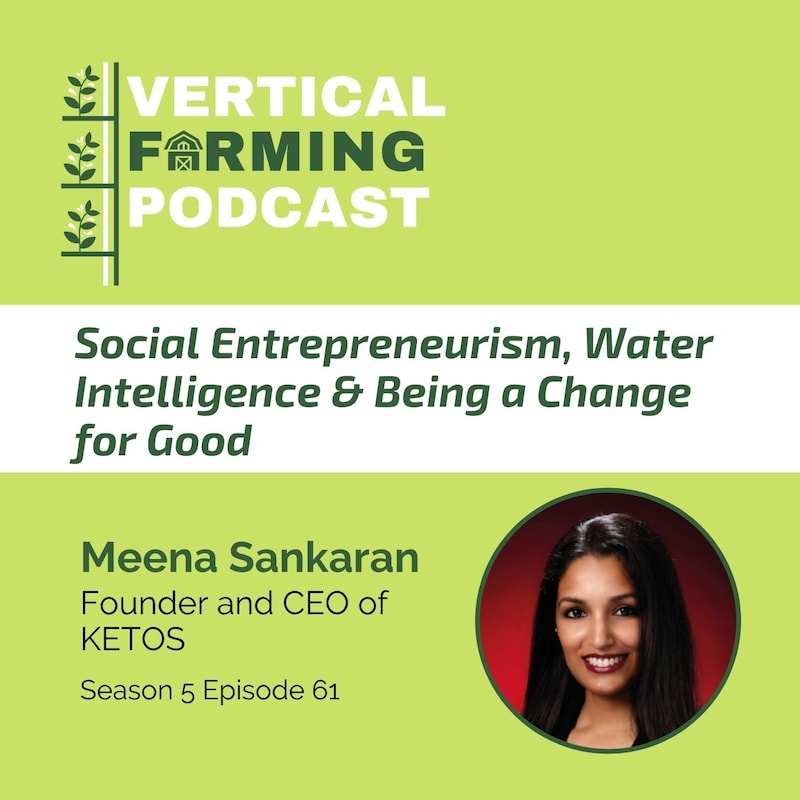
Founder and CEO of KETOS, Meena Sankaran joins the show to discuss her passion for leveraging disruptive technologies to make an impact as a social entrepreneur. KETOS is a vertically integrated water intelligence platform that is on a mission to transform how water operators measure, manage, and forecast water quality.
Today, Harry and Meena talk about Meena’s inspirational immigration story, launching W.IN.S (Women INner Strength), and her passion for doing good and solving existential problems.
Thanks to Our Sponsors
CEA Summit East - https://indoor.ag/cea-summit-east-2025/
Indoor AgCon - https://indoor.ag/
Key Takeaways
07:14 – Harry welcomes Founder and CEO of KETOS, Meena Sankaran, to discuss where she calls home, her experience with culture shock, and her hunger and fire to do better
17:19 – Meena reflects on her background in electrical engineering and the culture of entrepreneurism
25:26 – The concept of ‘Help and Let Help Live’
30:18 – The inspiration to launch Women INner Strength (W.IN.S)
33:49 – The origin story of KETOS and understanding water intelligence
48:26 – Challenges and wins for Meena and KETOS
57:14 – How Meena has grown as a leader and entrepreneur
59:02 – Harry thanks Meena for joining the show and Meena makes a specific ask of the audience
Tweetable Quotes
“I think for me [what called me to the States was] the drive to make my parents’ lives better, the hunger within me to collectively make the world a better place for India.” (11:32) (Meena)
“I would say the ideation process, to me, is the most intriguing part, because people have millions of ideas. An idea isn’t worth a penny unless you can execute on it.” (21:12) (Meena)
“I truly believe that women are such strong souls and you have so much inner strength that is untapped. And, if we are able to uplift each other, we would be unstoppable.” (32:19) (Meena)
“What I was doing was really thinking through my mind of what is it that I want to do? Which area do I really want to dive in? And that was getting narrower and narrower. And, it actually came back to my childhood because I looked at what areas are going to make an impact and I thought it had to be in the space of water, air or food. It had to be that important of a challenge in terms of serving the community and solving a real challenge that’s affecting the planet.” (34:25) (Meena)
“I believe that regardless of the outcome of where your startup ends up, it doesn’t matter, because what your experience and what your journey has been is so unique to you that no other job could have ever given you that experience.” (38:34) (Meena)
“It’s a humbling experience every step of the way, what you think you know versus what you think you don’t know. You don’t even know what you don’t know. That has been a humbling experience.” (57:26) (Meena)
Resources Mentioned
KETOS – https://ketos.co/
Meena’s Linkedin – https://www.linkedin.com/in/meenas/
Meena’s Twitter – https://twitter.com/Meena_Sankaran
W.IN.S (Women INner Strength) Facebook – https://www.facebook.com/groups/1580822015497755/
Visalur, India – https://en.wikipedia.org/wiki/Visalur
Sponsor Info
Cultivatd’s Website – https://cultivatd.com/
Cultivatd’s Instagram – https://www.instagram.com/cultivatdco/
Cultivatd’s Twitter – https://twitter.com/cultivatd
Cultivatd’s Facebook – https://www.facebook.com/cultivatd/
🎙️🎙️🎙️
Podcast Production and Marketing by FullCast
Discover the best podcast services in the world at The Podosphere: https://www.thepodosphere.com/
Mentioned in this episode:
2025 Precision Ag Report by iGrowNews
2025 Precision Ag Report by iGrowNews
Transcripts
$680 million poured into precision ag last year.
Speaker:Autonomous weeding robots dominated, and John Deere made 2 acquisitions in 3
Speaker:months. A food company, not an equipment maker, bought a
Speaker:robotics startup to protect its own supply chain. The deals are
Speaker:accelerating, the money is moving, and the winners are already separating from the
Speaker:pack. If you're investing, building, or buying in this space,
Speaker:you need the full picture before your competitors get it. The 2025
Speaker:Precision Agriculture Intelligence Report From iGrow News is now
Speaker:available. Get your copy today at
Speaker:igrownews.com/precision. If you are starting a vertical
Speaker:farm and don't know where to begin or which technology would suit your needs,
Speaker:then reach out to the experts at Cultivated. As indoor farm brokers, they
Speaker:help connect you to the right technology and ensure your project is successful.
Speaker:Best of all, their service is free because they work on behalf of their
Speaker:partners. Visit cultivated.com to learn more. And that's
Speaker:spelled C-U-L-T-I-V-A-T-D.com,
Speaker:or click the link in the show notes. I think was also why when I
Speaker:was working in several, you know, tech companies, I was missing that
Speaker:feeling of really helping in the society. So I started
Speaker:Prerna to Inspire, which, you know, Prerna in Sanskrit means
Speaker:inspiration. And the idea was
Speaker:really, you know, I came in as an immigrant by my choice,
Speaker:but a lot of refugees land up coming into the country without wanting to
Speaker:really be removed from their country, unfortunately. And
Speaker:so the idea for me was, you know, they
Speaker:need to feel a sense of empowerment and not
Speaker:a loss, because they already have lost so much when they come into a new
Speaker:country.
Speaker:Welcome to the Vertical Farming Podcast, weekly conversations
Speaker:with fascinating CEOs, founders, and agtech visionaries.
Speaker:Join us every week as we dive deep into the world of vertical
Speaker:farming with your host, Harry Duran.
Speaker:Vertical Farming Podcast, Season 5. Welcome back. First-time listeners, you
Speaker:are in the right place if you're looking for a show where we interview fascinating
Speaker:CEOs and founders from the leading vertical farming companies from around
Speaker:the world. I'm your host, Harry Duran. Last episode, I
Speaker:spoke to the CEO of Indoor AgCon, which I had the honor of
Speaker:attending in Las Vegas earlier this year. Brian Sullivan,
Speaker:he joined the show to share his years of experience in event management and what
Speaker:led him to acquire Indoor AgCon, which is one of the premier trade show
Speaker:and conferences for indoor vertical farming and CEA. In this
Speaker:episode, we discussed the highs and the lows of the events industry, and as you
Speaker:might imagine with what happened during the pandemic, it's a really
Speaker:challenging industry to be in. And Brian talks about the
Speaker:resilience he and his team showed throughout the course of COVID
Speaker:and the importance he places on problem solving And more importantly,
Speaker:fostering a familial-type culture among his team, which is really key
Speaker:to having them pull through that crisis. Really enjoyed the
Speaker:high-vibe conversation with Brian on this episode, and I know you will
Speaker:too. I'm really excited to bring you this week's episode. It's with
Speaker:Meena Shankaran. She's the founder and CEO of Kitos,
Speaker:and she joins the show to discuss her passion for leveraging disruptive
Speaker:technologies to make an impact as a social entrepreneur. If you're not
Speaker:familiar with Kitos, it's a vertically integrated water intelligence
Speaker:platform that's on a mission to transform how water operators measure,
Speaker:manage, and forecast water quality, which is something that's very
Speaker:critical for this audience. And we talk about
Speaker:her story, very inspirational immigration story,
Speaker:how she's launched the Women Inner Strength Project, her passion for doing
Speaker:good and solving existential problems really, really connected
Speaker:With Mina on this episode, and I think you'll feel
Speaker:the energy of this conversation, and it's really high vibe. And I'm just grateful
Speaker:that we were connected and I had the chance to share her story with you.
Speaker:If you haven't done so already, don't forget to sign up to the Vertical Farming
Speaker:Weekly newsletter. The URL is pretty easy,
Speaker:verticalfarmingweekly.com. Each week, Noah,
Speaker:our editor, brings you the latest and greatest in the world of vertical farming. You
Speaker:get updates on the latest podcast episodes, and we share some
Speaker:podcasts from our partner Kyle
Speaker:Barnett at CropTalk as well. VerticalFarmingWeekly.com.
Speaker:If you enjoyed this episode or past episodes, we're looking for new reviews. I'd love
Speaker:it if you leave one at
Speaker:RateThisPodcast.com/VFP. I love reading these out
Speaker:when I get these. They excite me so much, and it's a really high
Speaker:vibe moment of my day. So do that if you haven't done so already.
Speaker:Also, as a reminder to those that are listening that are in the marketing departments
Speaker:of companies looking for Partnership opportunities on a
Speaker:podcast like this one. Well, we have now opened up
Speaker:new sponsorship opportunities on an episode basis and
Speaker:season basis as we wrap up season 5. So if you're getting value from
Speaker:this podcast and you're a regular listener, then you already know
Speaker:how much I love my relationships with my sponsors. It's
Speaker:something that I prize and treasure and looking always to build long-term relationships.
Speaker:If you think that's a fit for you and your company, reach out to me
Speaker:directly, [email protected]. I'd love to have a
Speaker:chat. Okay, let's get into this conversation with Meena. So Meena
Speaker:Shankaran, founder and CEO of Kitos, thank you for joining me on the
Speaker:Vertical Farming Podcast. Thank you, Harry. I really appreciate you having
Speaker:me here. So where is home for you? Home, you know, growing
Speaker:up was Mumbai and in India.
Speaker:And, you know, my parents are originally from a southern part of
Speaker:India. And now home is really
Speaker:going back to the village my father grew up in. which made
Speaker:it into Google Maps a couple years ago. I tease him
Speaker:that we finally have buses that are going to stop at his village.
Speaker:And it's truly home. And the way you sort of
Speaker:asked me, where is home for you, triggered this reaction for me to
Speaker:share more than I would have usually shared because just, it goes
Speaker:back to the roots of your ancestors and where
Speaker:family's really from. And my family's finally going back
Speaker:to those roots after having lived in a city life or, you know, in
Speaker:Mumbai for 45+ years. So definitely
Speaker:something very top of mind this year. What is the name of the village? It's
Speaker:called Visalur. V-I-S-A-L-U-R.
Speaker:Okay. Yeah, it'll be fun to track it on Google Maps. I'll make
Speaker:sure to include a pin drop to that in the show notes. So if
Speaker:people are curious, they can. And have you been? Oh yes,
Speaker:absolutely. Since a child. But, you know, over the
Speaker:years, it's, as you can imagine, our, you know, farming is,
Speaker:has been a tough thing within countries like India. as more and more
Speaker:children are moving into urban cities. And so farming as a
Speaker:whole, and my ancestors and all of that come
Speaker:from actually farming and agriculture. It's all paddy and
Speaker:coconuts. And so I feel like I'm going back to my
Speaker:roots in so many different ways of being able to,
Speaker:you know, also expose and nurture and teach my child
Speaker:the importance of farming and rural living. And self-sustainability.
Speaker:So whether it's Mumbai or Vizag, what is your fondest
Speaker:memory of living there or growing up there? I think it's
Speaker:family. For me, being in Mumbai, I mean, you
Speaker:know, if you've been to India, you'll know it's so disparate. It's got a Ferrari
Speaker:and right next door you have a bullock cart and a cow crossing the street,
Speaker:right? So it's people who travel to India, you either absolutely
Speaker:love it or it's not for you. And so you have
Speaker:to have an appetite to really love that space. And I think for me,
Speaker:some of the fondest memories is just, you know, we came from a very modest
Speaker:family. My dad was a chemical factory worker as he grew up
Speaker:in the ranks. And, but what was unique was how the 4 of us
Speaker:operated as a unit and how he always
Speaker:encouraged his 2 girls. And it's very timely talking about
Speaker:father, you know, with Father's Day around the corner, but it was really
Speaker:about, you know, be independent and be a strong
Speaker:thinker, make your own decisions. And you know, focus on
Speaker:education. No one can take your education away from you.
Speaker:And really sort of, you know, helping us build our foundation. I feel
Speaker:like both my mom and dad, they've just done their entire
Speaker:life. If I could think of memories in India, it just feels
Speaker:like sacrifices, but beautiful memories that have now become
Speaker:the tools for my future. And when did you finally make it over to the
Speaker:States? Yeah, it was just under 20. So it was 19. Yeah. You know,
Speaker:it's interesting how between a lot of immigrants, I think most students
Speaker:finish their undergrad and then they come come here and do their grad school. And
Speaker:for me, what was really funny, Harry, was when I went to talk to my
Speaker:dad, that was potentially my first airplane. So never been on an
Speaker:airplane. So it was my first airplane. And my dad chuckled and said,
Speaker:well, you always wanted to go on the airplane. Here, you're going to go on
Speaker:the longest airplane all the way from Mumbai to
Speaker:US. And we went to the local library to sit down and
Speaker:look at the map and see where is Texas? What is this state?
Speaker:And it was, you know, it was just the joy of all
Speaker:of us discovering the land of opportunity. And,
Speaker:you know, if there's somebody who can say they're living the American dream and, you
Speaker:know, this country has provided so much for you to nurture and
Speaker:thrive, I would say I'm a perfect example of that. What do you think it
Speaker:was that was calling you to the States? I think for me, the
Speaker:drive to make my parents' life
Speaker:better. The hunger within me to
Speaker:collectively make the world a better place
Speaker:for India in the sense that coming outside the country
Speaker:to really build the capability of having the power of
Speaker:influence and independence from a financial standpoint to both
Speaker:uplift my family, but also be able to influence things
Speaker:in my childhood home or in my town and make things
Speaker:different. that I felt like I wouldn't have the opportunity to do that
Speaker:locally based on just how, you know, you've encountered society
Speaker:as a whole. But things are changing. I mean, that was 20 years ago and
Speaker:now, you know, it's incredible what you can see back home. But the drive
Speaker:inside me was just very strong to want to come
Speaker:and learn and grow. And part of that was
Speaker:really, you know, educate myself in terms of
Speaker:what all can I be doing? What can I innovate in? What could I
Speaker:build to make something better for someone else's life? And what am
Speaker:I contributing in this broader sense of purpose in the world?
Speaker:That's really inspiring. And do you have siblings? Did they take a similar
Speaker:route or did they follow your path? Yes, I do have a younger
Speaker:sister and she's an inspiration to me.
Speaker:And she's one of the very few rare Indian women
Speaker:who went through a lot of the civil services exams, which is
Speaker:very, very competitive and coveted in India. And, you know, she's
Speaker:a senior IPS officer, so works in the Indian Police Services
Speaker:and now currently working in the central government. So yeah, she's
Speaker:off to the races and doing amazing things and making her
Speaker:impact in the world quite differently than me. But I
Speaker:think our parents' investment in both of us through
Speaker:their entire life is hopefully at this point making them
Speaker:realize that they've made some good decisions. Sounds like you had a really good
Speaker:upbringing, so I'm sure your parents are proud of both of you. Oh,
Speaker:absolutely, Harry. I— the one thing I keep thinking about is if I can be
Speaker:at least 5% of the parents my parents were to me, I hope I can
Speaker:do that for my little one. I think we'll work it out, which would be
Speaker:great. That's why I try to get grandparent time as much as possible. You can't
Speaker:outsource that. Yeah, that's true. What was the biggest culture
Speaker:shock for you when you arrived here? Oh, it's so funny you
Speaker:asked. The other day somebody asked me this, and Harry, I
Speaker:don't know if you're aware of this. So I've lived in many states
Speaker:in the US, and it's all circled back where I have now relocated to
Speaker:Texas 5 months ago. And so I was living in California for the last
Speaker:11 to 12 years, and now I'm in a town that's in
Speaker:between Austin and San Antonio, New Braunfels. And so to
Speaker:me, one of the first things was just looking at infrastructure.
Speaker:So believe it or not, just coming in and looking at
Speaker:how wide and broad the roadway
Speaker:systems were. I mean, if you've gone to developing nations,
Speaker:you're looking at extremely narrow roads. So I think it's one of the
Speaker:first things that's just like a stark aha moment for me. Right. The
Speaker:second thing that was, you know, just a blessing, and I've
Speaker:been blessed by angels, I feel just all around, like every time I've
Speaker:been in need, someone's always been there to support me or help me. And And
Speaker:it's been miraculous to see that through my life's journey. And I can
Speaker:only hope that I paid forward, you know, meaningfully for others.
Speaker:But the second thing on the same day I had landed, within hours
Speaker:of landing, Perry, what was really amazing was just long
Speaker:story short, I know we have, we don't have that much time here today, but
Speaker:the person who was supposed to pick me up as a student from the university
Speaker:didn't show up. And it was, you know, you're all alone in a new
Speaker:country. It's a full time. You're figuring it out. Let's just
Speaker:say the police really helped me out. And I
Speaker:landed in the police car and it was my first time and last time.
Speaker:And it was an amazing experience because they were so
Speaker:helpful in making sure that I was okay and
Speaker:taking care of, you know, my transportation in
Speaker:terms of making sure I made it to where I needed to go and I
Speaker:was safe. And that is something I will never, ever forget
Speaker:because as a, as a woman, and at that point as a
Speaker:teenager traveling alone in a new country, the first thing that runs
Speaker:in your mind is security, safety before anything else. And to
Speaker:me, I know you asked what was a cultural shock, but to me it was
Speaker:less of a cultural shock, but more of, you know, how
Speaker:incredible are— that's not how my experience typically would be
Speaker:with police in another developing nation. It's not the first place I would run
Speaker:to. So it's, to me, that was just amazing to see how warm
Speaker:people were. What a great opportunity for
Speaker:you to have an experience with the police and the law enforcement
Speaker:here in the United States. And that your first experience was that of a
Speaker:welcoming nature and, you know, how you turn to
Speaker:authority figures in times of need and support and that they were there for
Speaker:you to serve that purpose as your first experience. Yeah. Must have
Speaker:been really good. No, it was very warm and it was just a
Speaker:surprise. I thought I would basically get some sort of
Speaker:directions and, you know, off you go. But the extra length
Speaker:that the officer went to was something I have never
Speaker:experienced, and I don't think I'll ever experience it in another country
Speaker:again. So you landed in Texas because that's where you
Speaker:studied, right? And then your travels have taken you to multiple states, as you mentioned.
Speaker:So For the benefit of the listener, we'll get to Ketos in a second, but
Speaker:I think I love the, just the origin story because I feel it adds context
Speaker:and it paints the picture. And I think it helps the listener
Speaker:understand, you know, how you ended up where you ended up. But I'm
Speaker:just curious, what brought you back to Texas? Actually, Ketos brought me back to
Speaker:Texas. It's really a Ketos journey and a very, like,
Speaker:clear Ketos derivative of where we are taking the company in the
Speaker:future. how sustainable we want to drive it. But one
Speaker:thing I want to mention, you know, as I landed in the country and, you
Speaker:know, education was everything, it was like 100% focus. And,
Speaker:you know, as immigrant students, when we come in, we're so hyper-focused on what we
Speaker:need to achieve. And I think that our, you
Speaker:know, my education and then later basically getting
Speaker:employment and being part of, you know, several
Speaker:companies and really challenging yourself and pushing yourself outside your
Speaker:comfort zone, I I think that fire inside me to do more and to do
Speaker:better was what kept me pushing. And so I think
Speaker:it's very easy to take one job and be very
Speaker:comfortable, or one role and feel comfortable. But I
Speaker:think I sort of really pushed myself in ways that, I
Speaker:mean, now when I think about it, I'm like, oh wow, I wonder if I
Speaker:would have, you know, do it the same way again or do it differently. Don't
Speaker:know. But definitely, you know, was a lot. higher
Speaker:risk taker if I, you know, sort of go back and think about my early
Speaker:years. So talk a little bit about what you came to study
Speaker:and then when you graduated, what fields you
Speaker:entered, and then you can choose to fast forward as quick as you'd
Speaker:like to get to Kidos. But I'm just curious, you know, about, about, you know,
Speaker:what you thought you were gonna work on when you got here and what you
Speaker:ended up working on as you started to move towards this path. I came to
Speaker:study electrical engineering. And I did graduate with electrical
Speaker:engineering degree. And my undergrad was electronics and
Speaker:communications engineering. So essentially studying around
Speaker:RF and satellite communication. And then through my
Speaker:electrical engineering degree was around signal processing. And
Speaker:my work led me into the world of networking. And this is,
Speaker:you know, data center infrastructure, enterprise tech, and pretty
Speaker:much 15 years of my career. From the time I
Speaker:worked in sort of varying companies like
Speaker:Countrywide Financial, which later got bought by Bank of America, to then
Speaker:going into, you know, smaller startups once I had moved to
Speaker:California. But in general, my entire 15 years was
Speaker:just all data center, really understanding, you know, hardware,
Speaker:understanding software, understanding big data, understanding,
Speaker:you know, how you take data and then make insights and working with so many
Speaker:financial companies. And pretty much around the globe because at
Speaker:that point I had also moved to Cisco and Cisco really, you know, was,
Speaker:was a blessing in terms of just the exposure it gave me in so many
Speaker:different roles under a single umbrella. And it certainly
Speaker:built my confidence. Underneath it all, Harry, I always knew
Speaker:I wanted to do something of my own. So that feeling
Speaker:never left me, but it was more of what is the right
Speaker:time? And the second part of it was also, what are you going
Speaker:to do? And so the idea formulation and the
Speaker:timing was always something building. And I think in parallel, a
Speaker:couple of things needed to happen. One, I wanted to make sure
Speaker:that my risk balance ratio of how I would
Speaker:calibrate that would be really thoughtful because I wanted to
Speaker:make sure my parents were taken care of, their retirement was taken care of.
Speaker:Then I had saved enough for, you know, potentially, can I
Speaker:even be my own pre-angel investor
Speaker:enough to bootstrap something and build something and then kind of, you know,
Speaker:dive in? So I'm not one of those millennial
Speaker:entrepreneurs who started the company right after grad school, which is fantastic.
Speaker:And, you know, the world is their oyster. I would say I had enough bruises
Speaker:and wounds to learn from, but which also built my confidence in
Speaker:wanting to start the company. And I would say the idea, the
Speaker:ideation process, Hari, to me is the most intriguing part
Speaker:because people have millions of ideas. Idea is worth a penny
Speaker:unless you can execute on it. And for me, what was very clear
Speaker:is, will the idea actually use the
Speaker:technology I've learned, leverage years of technology experience, but actually
Speaker:have, you know, towards an application that has an impact? Can it make a
Speaker:difference in the community? Can it collectively move us forward
Speaker:as a society? And to me,
Speaker:those things were very important. And those are the kind of questions I was asking
Speaker:myself. So I would actually go through an entire, you know, I've done
Speaker:workshops in some, in University of Berkeley and others where
Speaker:I actually have walked through like, here's the idea to business sort of, you know,
Speaker:transition. And that's very important because
Speaker:you have to, you know, sort of go through that process with extensive
Speaker:amount of research to know, you know, what is the idea that you're
Speaker:diving into. And it has to sit with you. It can't be you
Speaker:think about it today and then you quit your job tomorrow and then you just
Speaker:sort of dive in and do it out of impulse. It has to settle within
Speaker:you and it has to like really grow under your skin to know that
Speaker:60 days later you still feel as excited. Because
Speaker:if you're starting a company, you're the energy that
Speaker:everyone is glued around. And your entire company
Speaker:feeds off of your energy in terms of, you know, how you
Speaker:share the success, how you share the failures, how
Speaker:you communicate and work with them through the ups and downs, especially
Speaker:in the times that we are in right now to the pandemic that happened.
Speaker:And as we're coming out of the pandemic into another, into a recession and
Speaker:everything around that. So, I think founding a company, running a
Speaker:company is not something I took lightly. So I did put a lot of
Speaker:thought into, is this something that I really
Speaker:feel passionate about enough to go through the battle ahead?
Speaker:And I don't know how many people think about it, but I put a lot
Speaker:of thought into it. It sounds like it. Yeah. So talk about
Speaker:the culture of entrepreneurism and what,
Speaker:if any, you brought with you from India, how much of it
Speaker:exists there. Or how much of that mindset you
Speaker:learned here in the States. And obviously working in California, I'm sure
Speaker:there's— you had a front row seat to exactly what was
Speaker:possible. Yeah. So culture of entrepreneurism, at least in the circles
Speaker:that I grew up, was not something commonly talked about. And it was
Speaker:more something I felt like anyone can do anything.
Speaker:That philosophy really came to me in the United States, which was also
Speaker:one of the initial drivers for me to come here. Because it sort of was
Speaker:inbred, like, you can do anything here. You know, anyone can do anything here. I
Speaker:think that's even more of a powerful statement. And so
Speaker:if you have the chops and if you have the drive and you don't
Speaker:care about how many roadblocks you have and you're willing to go through
Speaker:that roller coaster, then no one can stop you. And I
Speaker:think I have truly believed in it. And I think that spirit in me is
Speaker:what sort of pushed me harder in the United States to do it.
Speaker:But here's the tricky, or not necessarily tricky,
Speaker:but the fun fact here. After all these years and thinking
Speaker:through, I also realized that my
Speaker:grandfather, my maternal grandfather, is someone who
Speaker:started one of the first printing press in India
Speaker:back in 1953 after Indian independence in 1947
Speaker:when he had absolutely minimal to no resources in his early
Speaker:independence days. And later he went on to
Speaker:establish 3 magazines, Motor India, style industrial
Speaker:herald that are still running successfully
Speaker:today with their sons and their grandsons and as a legacy.
Speaker:So I realized, wait a minute, there is some
Speaker:entrepreneurship. It's in the DNA. It's in there. It's somewhere there.
Speaker:So hopefully I have, you know, some good things
Speaker:that have come from my grandfather, but I never
Speaker:thought about it while growing up, or that was never a direct
Speaker:influence. It's more dawned on me, I would say,
Speaker:now in the last couple of years. One of the things you mentioned earlier was
Speaker:this idea of impact and how it
Speaker:drove the decisions you make and the direction and
Speaker:where you are now. Why is that important to you? My family always
Speaker:believed in, you know, help and let
Speaker:help live. Help. And that's always something my dad always said. So, you
Speaker:know, the generosity that I've seen from both my
Speaker:parents, even as a child, it was kind of ingrained in our DNA, even if
Speaker:we had 3 plates or 4 plates of food and we had
Speaker:3 plates and there was somebody hungry, the 4th plate of food would go for
Speaker:them. That was just how we grew up. And we didn't have many
Speaker:resources, but we always felt rich and wealthy in
Speaker:terms of the love and affection and the bonding and the
Speaker:support system we had. And most families, I believe, in this country can't say
Speaker:that they have that. And we were— a big part of our
Speaker:lifestyle also belonged to volunteering and we would
Speaker:You know, even today, post-retirement, my parents volunteer at the
Speaker:old age home, or they go and work with, you know,
Speaker:the senior citizens in nursing homes. And, you know, I have a
Speaker:couple of my aunts who've, you know, not been blessed
Speaker:with eyesight, and that's always kind of been pretty
Speaker:intense in the family. But the broad sense of all of this
Speaker:is, you know, giving, helping others. is
Speaker:something that is very important to me because I think it's
Speaker:almost how that derives joy for me.
Speaker:And that flows into my team as well. My team is like my family
Speaker:to me. For me, you know, making sure my team is motivated,
Speaker:thinking about what are the small things that matter to them. Are they feeling
Speaker:challenged in their career? Do they feel— are they appreciated and acknowledged in what
Speaker:they're doing? And are they having an environment that is
Speaker:supportive and enabling them to be the best version of who they can
Speaker:be? These are things that actually make me, you
Speaker:know, keep me awake and thinking about, do I have the right structures?
Speaker:Am I constantly adapting to continue that culture and continue that structure as
Speaker:we scale and not just remain, you know, that way in the first 20, but
Speaker:not necessarily the 100 when you get there? So I think
Speaker:that that's the common thread, Harry, as you go through, is of
Speaker:giving, is of helping, is of support, is of impact. And
Speaker:You know, life is beyond just what we do. We're just a
Speaker:speck of, you know, in our life that we leave here. And
Speaker:what we do for the people around us and how big of
Speaker:an impact and that orbit expands is what's going to be,
Speaker:you know, really valuable. You can't really carry anything much with us.
Speaker:Very well said. I'd like to give you the opportunity to share a little bit
Speaker:about Prerna, the organization you started. Yeah. Yeah, it's been a
Speaker:while since anybody asked me about Prerna, but like part of that I
Speaker:think was also why when I was working in several, you know, tech
Speaker:companies, I was missing that feeling of really
Speaker:helping in the society. So I started Prerna to Inspire,
Speaker:which, you know, Prerna in Sanskrit means inspiration. And
Speaker:the idea was really, you know, I came in as an
Speaker:immigrant by my choice. But a lot of refugees land up coming
Speaker:into the country without wanting to really be removed from their
Speaker:country, unfortunately. And so the
Speaker:idea for me was, you know, they need to feel
Speaker:a sense of empowerment and not a loss because they already have
Speaker:lost so much when they come into a new country. And just giving them a
Speaker:welfare check is— just doesn't cut it. And I really
Speaker:believe, you know, in teaching them how to fish versus just handing them over a
Speaker:fish philosophy. So Prerna's entire
Speaker:construct and structure has been to really
Speaker:empower refugees and just in general people in need so
Speaker:that they can lay a path for being sustainable as
Speaker:human beings. So, you know, whether it's learning English, whether it's
Speaker:teaching their kids English and their spouses English and making sure
Speaker:that they're able to find a job so that they can pay for themselves and
Speaker:grow and be able to afford and and have a stronger sense
Speaker:of identity of themselves coming and establishing themselves in a new country, which
Speaker:is so important for all these families. And so it's really a
Speaker:path about, you know, empowerment and being on the
Speaker:sidelines and watching that grow as a 100% volunteer
Speaker:organization. And having run that nonprofit for
Speaker:15 years is— I feel it's so much a part of my own life.
Speaker:It's like the refugees are my family members whenever I go there or
Speaker:eat lunch or, you know, break bread together. Yeah, and it's something that I
Speaker:imagine will serve as a, you know, almost like a little bit of your
Speaker:legacy that you've left behind. And I don't know that the drive to
Speaker:create something like that wouldn't have been possible without you having had the experience of
Speaker:coming here as well and understanding. So to that point,
Speaker:a natural segue would be Women's Inner Strength, which is another
Speaker:organization you started around the same time as KEDOS. Can you talk about the inspiration
Speaker:for that as well? Yeah, absolutely. There, you know, over the years, the
Speaker:other part that was a common theme was how many women were
Speaker:in engineering. As a student in engineering
Speaker:class, it was 1 or 2 girls in a class of 100, or
Speaker:even in, you know, departments where you're running sort of data
Speaker:center networking infrastructure in all these large companies. Women were mostly
Speaker:in marketing or sales, but if you
Speaker:noticed across them, or HR, but it was almost stereotypical how
Speaker:women had gotten classified or just how they had pursued different roles.
Speaker:But engineering was just slim. And I also felt that there
Speaker:were a lot of girls I was mentoring over the years and others
Speaker:who I had started mentoring, or I was sitting on different boards as
Speaker:advisors. But what quickly dawned on me is that women
Speaker:get tagged as based on who they are from their work perspective.
Speaker:So You start having these groups of women in law,
Speaker:women in medicine, women in engineering and tech. So
Speaker:it's something like, what if women decide to stay home
Speaker:and raise their family? That is an incredible commitment and a
Speaker:sacrifice to make, but it's also a beautiful choice if that's the right
Speaker:choice for them. But how are you really empowering
Speaker:women by separating and decoupling this identity of employee
Speaker:employment, but really focusing on who they are,
Speaker:what's the energy within them, and what is, you know,
Speaker:who is Harry truly for Harry to achieve his true
Speaker:potential, right? Yeah. And so with that intent to
Speaker:really bring women together and how can each of these women help
Speaker:each other, like how many women are really actively thinking about how can I
Speaker:help this other woman? So again, it was 100% volunteer
Speaker:organization and it was called Women Inner Strength.
Speaker:So that's why it's W-I-N-S. Yeah. And I truly
Speaker:believe that women are such strong souls and you have
Speaker:so much inner strength that is untapped. And if we are
Speaker:able to uplift each other, we'd be unstoppable. And part of
Speaker:the WINS group was, you know, bringing really incredible
Speaker:speakers every month, being able to share, have a
Speaker:topic of conversation. Meet for an hour or 2,
Speaker:which has been very difficult since COVID and last couple of years.
Speaker:But it certainly has sparked a movement in
Speaker:which I've noticed so many relationships just flourish and
Speaker:thrive outside of that room, which I already
Speaker:believe is a success and goal achieved. I didn't really
Speaker:need to, you know, have sort of crazy goals, at
Speaker:least at this point in time, for that organization. Hopefully when cycles—
Speaker:when my time and life cycles matter, I can do more with both. That makes
Speaker:sense. And I think what's interesting is what we're seeing
Speaker:overall is just the resurgence and the understanding
Speaker:of the importance of like the feminine energy and how for,
Speaker:you know, it hasn't been that way for the past couple thousand years. So I
Speaker:think it's about time that, um, you know, people are,
Speaker:are being awakened to the importance of restoring that balance.
Speaker:So I definitely applaud you for those efforts there as well. Thank you, Harry.
Speaker:You know, you just take a plunge, you dive in, and you realize
Speaker:that there are more people thinking like you and that want to be part of
Speaker:that versus— and you're not alone. Yeah, exactly.
Speaker:So talk to me about the origin story for ketos.
Speaker:Like, I'm curious about when, if it was one of those moments
Speaker:when you had those thoughts that just wouldn't go away and keep you up at
Speaker:night, and how that slowly started to— that seed
Speaker:started to become a bigger Yeah, you bet. I would say
Speaker:that starting maybe around 2012, 2011, around
Speaker:that time, you know, just the, it started brewing inside me that I was
Speaker:definitely wanting to start something on my own, but the timing wasn't right
Speaker:in terms of right for me and where I was in
Speaker:my career. And I was looking at transitions and, but I, what I was
Speaker:doing was really thinking through my mind of what is it that I want to
Speaker:do? Which area do I really want to dive in? And
Speaker:that was getting more and more narrower, Perry. And I
Speaker:think that's where, when I started thinking about my child— it actually came
Speaker:back to my childhood because I looked at, you know, when I thought about
Speaker:what is the areas of impact and it came down to going to make an
Speaker:impact either in the space of water, air, or food. It had
Speaker:to really be that important of a
Speaker:challenge in terms of serving the community and solving a real
Speaker:challenge that's affecting the planet. And then
Speaker:started narrowing. If I were to pick one, which one would I pick and
Speaker:why? And what did I feel the most connected to? And I started really
Speaker:feeling most connected to food, definitely, but
Speaker:also water extensively. And I think a couple of
Speaker:reasons why. One was growing up, you know, just like many, many
Speaker:communities in India, we got water from a tanker. Tanker would
Speaker:show up. you know, fill the water up. And I still remember just
Speaker:extensively how much stress was in my mom in terms of boiling the
Speaker:water, storing the water, and making sure we all— because we would get
Speaker:water for an hour and she would manage the entire day around that
Speaker:1-hour schedule of how she did it. She was just amazing, superwoman,
Speaker:and always doing everything with a smile till date. And I
Speaker:think that, you know, you start thinking about the struggles of water in
Speaker:developing nations and developed nations, and you think this is such a basic human right
Speaker:to drink safe water, but we still don't have in this day and age.
Speaker:And in spite of so much, you know, innovation and technology, I mean, we're
Speaker:talking about traveling to other planets and we still can't have,
Speaker:you know, clean, safe drinking water for every human being on this planet. Yeah. Right.
Speaker:So I think it just comes down to such basics. And part
Speaker:of the other reason for, you know, where water started
Speaker:triggering you know, additional connections for me and passion was
Speaker:I had probably almost close to 15
Speaker:waterborne illnesses, if not very close to that, by the time I was
Speaker:even 15. Wow. It was just amazing that I had
Speaker:survived sort of so many. But again, I'm
Speaker:not, you know, an anomaly. I'm sure there's a good
Speaker:percentage of people around that time who also experienced very
Speaker:similar things. And so For me, there was like, okay, what's the point of me
Speaker:knowing big data and knowing all this technology? Can we
Speaker:not even predict a water disease outbreak? Can— why do so
Speaker:many children have to die because of waterborne illnesses?
Speaker:And I got lucky that I survived, but so many don't. And
Speaker:so I think there was this need, like, if I'm really claiming myself to be
Speaker:an engineer and I've done all this work in technology, am I just going to
Speaker:keep making technology better for tech companies, or am I actually going to do
Speaker:something about it? And I received a lot of advice where
Speaker:people told me to be part of startups that are
Speaker:tech companies where I will become successful in 2 years and be a
Speaker:millionaire. And then I could take that money and then do
Speaker:philanthropic work. This was the common advice I got across everybody
Speaker:who would tell me, join startups, make your money, and then
Speaker:go do philanthropic work and help the people. But they never
Speaker:associated impact and helping people and
Speaker:solving ideas that actually drive, you know, the
Speaker:climate or the planet. And this is, of course, 7, 8 years ago.
Speaker:And actually making that as part of your core work. What if your
Speaker:purpose and what you really are passionate about becomes your
Speaker:main job? Then it's no longer a job. It doesn't feel like a
Speaker:job because then it's part of who you are. And it's— you're entirely
Speaker:aligning with all your energy and your focus and your passion. You're going to be
Speaker:so much more successful, even if the outcome is not what you
Speaker:planned, the experience alone of doing that for 3
Speaker:years or 5 years or 10 years is absolutely priceless. No one
Speaker:can put a value on that. And to me, that was worth the risk.
Speaker:And I believe that at the end of the day, regardless of
Speaker:where Kitos lands, or— and I feel like every startup founder should
Speaker:actually have this in their heart, that regardless of the
Speaker:outcome of where their startup lands up, It doesn't matter
Speaker:because what your experience and your journey has been is so
Speaker:unique to you that no other job could have
Speaker:ever given you that experience. And that experience is so
Speaker:priceless that eventually you'll end up with some
Speaker:job. Like, that's not the problem, but no one could ever give
Speaker:that time, you know, and experience to you ever again.
Speaker:So, you know, if anyone is ever thinking about it, oh, should I
Speaker:start this? I really want to start this idea. Just do it. Like, just
Speaker:jump in and do it. Do not, you know, sort of brood over it.
Speaker:Overthinking kills it. Yeah. You know, it's interesting. The word that comes to mind
Speaker:is mission when I hear you speak. And then also this
Speaker:aspect of, you know, being an entrepreneur myself, it's something that I learned because I
Speaker:was in corporate for, you know, 20-plus years. I had my 9-to-5, my security
Speaker:blanket, which is not a security blanket when you no longer have the job.
Speaker:But I did enter this world and, you know, it was quick.
Speaker:Learnings because I had to figure out, like, it was— I keep saying it's like
Speaker:Narnia. Like, I signed up for a mastermind and I was like, whoa, these 6-figure,
Speaker:7-figure business owners and they're creating these and starting these businesses. And this
Speaker:was just amazing that this was possible. Jim Rohn has a quote that
Speaker:I mention a lot. He says, you are the average of the 5 people you
Speaker:spend the most time with. And that really resonated. And I knew I needed
Speaker:to learn what this world was like. And some of my takeaways and some of
Speaker:my lessons learned are This idea of failure is not a bad thing. It's
Speaker:just one more thing that didn't work. And this idea of learning how to fail
Speaker:forward, fail fast, and just get back up. The
Speaker:first time you just land on your face and you sit there and you wallow
Speaker:and you're like, why did this happen? But then when you realize that it's part
Speaker:of the journey, you're just popping right back up and you're like, okay, that didn't
Speaker:work. That didn't work. That didn't work. What's next? What's next? What's next? And you
Speaker:build up this resiliency and this idea of taking imperfect action.
Speaker:And just momentum, right? This idea of moving forward, continuously moving forward
Speaker:is really where you see the progress. No, you couldn't have said it better. Like,
Speaker:I couldn't have said it better. You just said it perfectly. I think the
Speaker:aspect of just not having that pressure and looking at
Speaker:failure as just an outcome that didn't go as per your plan
Speaker:and just keep moving forward. And the key is making those decisions.
Speaker:Just keep continuing making decisions. You snooze, you lose.
Speaker:All of these terms are said for a reason. And I
Speaker:keep telling that to all my team as well, constantly make those
Speaker:decisions. Don't be afraid if they are a wrong decision. If they are, just
Speaker:learn from it. Let's fight back. Let's bounce back, but
Speaker:make the decision. And so, but it's been a
Speaker:beautiful journey, Harry, to have come to the
Speaker:decision that water is what I want to focus in. And then it
Speaker:sort of met multiple pieces because through water comes food
Speaker:safety, through water comes water safety. And you sort
Speaker:of address so many pathways through water that I could not
Speaker:feel more positive about the direction. And there is a
Speaker:longer story of the process of how I let the water idea
Speaker:sink in my head and then 3 months later decide
Speaker:to start the company, but we'll save that for another time.
Speaker:However, you know, founding the company in August of
Speaker:2015, the first couple years were really, really hard
Speaker:because it was just me and my laptop and trying to figure out a
Speaker:few contractors based on very sophisticated specialized
Speaker:skills that I needed to really, you know, solve a complex
Speaker:problem and for a precious resource like water. But I think
Speaker:fast forward to 2017, having a prototype, having
Speaker:a concept, And really being able to show that to the world.
Speaker:NASDAQ was our first break and could not have expected a better
Speaker:break. And I think that resulted in having our first seed
Speaker:round of funding and then being able to form a team. So when I look
Speaker:back, we're under just under 5 years, but it definitely feels like a couple
Speaker:of decades. So for the benefit of the listener, can you
Speaker:explain like the, the service that Ketos provides
Speaker:and the different industries that you're currently working in as well? Yeah,
Speaker:absolutely. I was hoping we'd eventually get to that because you were having so much
Speaker:fun talking about all the other fun things. But for cetos, you
Speaker:know, these cetos, by the way, it's nothing associated with your keto
Speaker:diet in case that's the first disclaimer.
Speaker:Cetos actually refers to orcas. The
Speaker:Greek word is cetaceous animals, so
Speaker:cetos. And I was quite jaded by
Speaker:the number of companies in the water sector that are either aqua or
Speaker:hydro. And I really wanted to sort
Speaker:of, you know, honor the orca, which is such a magnificent,
Speaker:you know, mammal in the ocean. And what better way to, you know,
Speaker:name a company that's really all about water and planet and
Speaker:people? And I felt like the trifecta was just beautifully honored with the orca.
Speaker:I love that. So that's why our logo has the the Orca, as well as
Speaker:the company name is Kitoz. Okay. And what we really focused on was
Speaker:giving you water intelligence because today, you know,
Speaker:we know so much about what we do. We know our
Speaker:steps, we know our food, we get every possible detail update
Speaker:on our app. However, it's shocking. We still don't know the quality of
Speaker:the water we drink, which is amazing to me compared to everything else that
Speaker:we know and we do. And Somehow we've just gotten
Speaker:comfortable with it. And we also believe that bottled
Speaker:water is safer than tap water when tap water in the
Speaker:United States is far more regulated than bottled water. And
Speaker:I think it's just the perception of what has been created. So I really wanted
Speaker:to see, well, how do we solve and really make a
Speaker:dent in the water quality monitoring and providing the analytics and the
Speaker:intelligence in a way that's like never done before? So the first thing was
Speaker:building a system that's capable of doing real-time
Speaker:water quality monitoring that's credible, that can be
Speaker:accurate as close to a lab and can actually serve
Speaker:the drinking water limits, the wastewater limits, and can work with
Speaker:different types of water like river water, produced water coming from oil and
Speaker:gas, the water that's needed for groundwater in farming,
Speaker:as well as all the nutrient circulation that's happening now with
Speaker:aquaponics and hydroponics and all indoor farming. So
Speaker:it was a breadth of, you know, what all types of water we need to
Speaker:deal with, because drinking water by itself is just a very small percentage.
Speaker:The industrial water, the agriculture water, and all the other sources of
Speaker:water are a lot higher percentage, and we have very little
Speaker:fresh water left in life. And so if we have to think about water, we
Speaker:have to think about it as one water, all the sources of water that really
Speaker:combine, you know, what we need to do so that this
Speaker:resource exists for our future generations. The idea
Speaker:about, you know, the number of cases happening with
Speaker:cancer and health risk all around the world is
Speaker:related to environmental issues and understanding how
Speaker:really your water around areas is impacted by,
Speaker:you know, are there Superfund sites? Are there decommissioned mining sites? How has
Speaker:climate change affected, you know, some of the deterioration of the water levels
Speaker:in the aquifer? Is the concentration changed in the water
Speaker:composition that's coming out of the groundwater well? Is that affecting your crops?
Speaker:Are you over-fertilizing now? Is that affecting the food that's coming on your
Speaker:table? And there's a variety of, you know, life
Speaker:cycle of how that water flows through the ecosystem that needs to be
Speaker:understood. Fracking comes to mind as well. Completely. And all of
Speaker:that is not going to happen by a human being driving
Speaker:around trying to pick a lab sample taking a sample and then sending it to
Speaker:a lab and finding out 10 days later, they're only going to do when
Speaker:someone complains. And if someone is complaining, is actually aware enough to be
Speaker:complaining, you're already way too late, right? Yeah. And so
Speaker:that's the part I really wanted to get ahead. And so today,
Speaker:H2O's, you know, I feel really blessed and grateful with all the
Speaker:prayers and lots and lots of years of effort that
Speaker:we are able to monitor. I think we've crossed over 13 billion gallons of
Speaker:water that we monitor. Have over 170
Speaker:million data points and, you know, in terms of, you know, insights that we
Speaker:have on our platform, but just like 4 years of deployment
Speaker:and learning that we can actually make a difference in
Speaker:providing real-time water intelligence to industries,
Speaker:mining, oil and gas companies, greenhouses, indoor ag
Speaker:farmers, open field farmers, city utilities, all of
Speaker:them being able to take day-to-day decisions at their
Speaker:fingertips by looking at data and helping them make
Speaker:much more actionable decisions. That's an amazing story. Thank
Speaker:you for sharing that. And it seems like something that, you know, sometimes you hear
Speaker:about a service or a business that started and you're wondering, why wasn't this
Speaker:done sooner because of the need? And I
Speaker:became aware of like the impact of water or its effect
Speaker:on just on the human body because when I got into health and wellness,
Speaker:like, you know, a couple years ago, about a decade ago, and started reading, following
Speaker:someone by the name of Gary Null. And he would talk about this idea of,
Speaker:like, even your shower filter. And I remember there's a company called Aquasana that makes
Speaker:a filter because we just don't realize how much of that water we
Speaker:absorb in our body. We don't think about it when we're taking a shower. And
Speaker:I was, I was just, like, so conscious of, like, well, I want to put
Speaker:this— I was trying to put it everywhere. And then I went down that rabbit
Speaker:hole of, like, the Berkey system and reverse osmosis, you start to
Speaker:figure out distilled, and it just becomes like at some point you
Speaker:research so much that it gets to be a bit confusing. So I'm wondering
Speaker:how you take all this information, because coming from a data science background, I'm
Speaker:sure there's no lack of data, data that you have at your fingertips. And
Speaker:so talk about some of maybe the challenge you have in taking this and making
Speaker:it actionable, and maybe either, you know, even some of the wins that some of
Speaker:your clients have had by working with you. Yeah, I think that the
Speaker:broad impact, Harry, will happen based on the scale of adoption,
Speaker:right? And today, you know, we have large B2B
Speaker:customers, so food processing companies, so your poultry,
Speaker:chicken, beef processing. I mean, the water that comes that's cleaned all
Speaker:the poultry and then coming out, you want to make sure that's treated so you
Speaker:can actually reuse. Water reuse is probably one of
Speaker:the biggest impacts we're able to have because we're recycling By recycling
Speaker:that water, we're tapping into less fresh water, which is again another win.
Speaker:So I look at that as a huge impact from a
Speaker:business-to-business standpoint. The second part is how do we help
Speaker:many of these large industrial companies and others when they're discharging the water? It's
Speaker:actually safe to discharge in the environment so that you're not affecting
Speaker:the fish, you're not affecting the sea life as well as, you know,
Speaker:any fauna, foliage, or even that environmental, real water that's
Speaker:coming into a stream for someone else to tap into. So I think
Speaker:that the impact is in different sources of where Aquitos is able to
Speaker:make a difference. Longer term, as I see this vision
Speaker:expanding, and also, you know, from a homeowner, for what
Speaker:you just described to me, for it to make sense to every single
Speaker:homeowner, it has to get permeated with all the cities.
Speaker:And, you know, there are some cities that are very foresighted, I would say, City
Speaker:of Las Vegas, believe it or not, Southern Nevada Water Authority is one of the
Speaker:most foresighted cities in the country. I mean, they're in the desert
Speaker:and they were one of the first to deploy us and they've been
Speaker:leveraging us for almost 4 years now, 3 and a half years. And they
Speaker:have been using it to monitor their groundwater well. And that
Speaker:way, by monitoring their groundwater and having it set next
Speaker:to some of their wells, it is so important that their
Speaker:customers don't have to complain and they don't have to react based on their
Speaker:customer complaining. They are proactive in understanding exactly what's
Speaker:happening with their water quality and being able to treat it and have
Speaker:predictively the intelligence needed to keep all their constituents
Speaker:safe. And so to me, that's what cities need
Speaker:to be doing. And we're seeing now that behavior in New Mexico.
Speaker:And so there are about 8 states that are more active than others, like
Speaker:Arizona is another one, Minnesota is another one. And I'm really proud of of,
Speaker:you know, the cities taking that initiative. And when you start looking
Speaker:at the private sector, you know, it's fantastic to see that
Speaker:in the food aspects of indoor farming where, you know,
Speaker:looking at how, you know, the taste, the quality, and
Speaker:the safety of the lettuce because people are investing in greens first in
Speaker:the indoor ag. So when I look at— Yeah. Herbs and kale and
Speaker:greens that we are impacting, I mean, if there's a facility where 15
Speaker:million lettuce heads are coming out per year. And if
Speaker:Kitos is monitoring that water going across all those 15 million lettuce
Speaker:heads, to me, that's a huge win. Yeah. Because I know that
Speaker:food is safe going into all those 15 million homes.
Speaker:And being able to do that in 100 facilities
Speaker:just makes that impact that much more significant when it comes to food
Speaker:safety. So I think, you know, the impact is so profound
Speaker:when you look at From a safety, from an
Speaker:environment perspective, to drinking water safety, to public health,
Speaker:to crop yield, to not overdosing on your
Speaker:fertilizers, not overdosing on your chemicals, and really helping you
Speaker:see what's optimal for your water. And I think that
Speaker:as you start seeing the scale, Harry, my goal is
Speaker:eventually you should be looking at an app and seeing who all are monitoring around
Speaker:you. Yeah. And that way, you just know if you go to the
Speaker:stadium or this theater, you just know that that system is already monitored. And
Speaker:you know that that's the water you're feeling comfortable enough and safe to drink it.
Speaker:And you can just fill up your bottle and drink it. Is that an app
Speaker:the team is working on? Working on it. No, I just—
Speaker:because as you were speaking, I was thinking about even just specifically
Speaker:related to indoor farming, you know, almost a badge that says
Speaker:this facility is, you know, keto certified. Yeah,
Speaker:you know, because you've done the due diligence of enabling the
Speaker:testing and whatever treatment needs to happen to ensure that
Speaker:that water, which makes its way into these leafy greens—
Speaker:and, you know, I don't know what the percentage of water content in lettuce is,
Speaker:but I think it's 80-90%. So just even thinking about how
Speaker:much goes not only into the growing, but it makes its way into
Speaker:the cellular composition of this, which eventually goes back
Speaker:into our bodies, it just makes sense. So that you would think about this as
Speaker:an important part of the chain and something that if you are really
Speaker:conscious of improving the quality of the produce you
Speaker:create and of the experience that your clients and your customers have when they,
Speaker:when they taste it and they ingest it, like, it seems like a
Speaker:no-brainer. And I'm sure more and more you're seeing more and more companies are waking
Speaker:up to this fact as well. Yeah. And it's also helping them reduce their own
Speaker:produce rejection rate, Harry, because imagine Imagine their
Speaker:customers purchasing like, you know, Whole Foods and Target. So
Speaker:if they have a bad batch because they just completely based it on
Speaker:empirical research data, I mean, that's directly affecting their operations. And
Speaker:this is not like your open field ag, right? Like you have tomatoes of
Speaker:all shapes and sizes that you're sending off here. Everything is about
Speaker:consistency. So their rejection rate could be pretty high if
Speaker:they don't do it exactly in the right type of science. And I think that's
Speaker:we're able to make quite a significant dent. But it's a joy. I
Speaker:think for me, the biggest joy every day is when I hear a customer success
Speaker:story. And I know that, okay, all these sleepless
Speaker:nights and, you know, years of working 24/7 as a
Speaker:team to, you know, make this vision possible and
Speaker:true is, is really worth the effort. When are
Speaker:you starting— is Quito starting to make its appearance in any of the indoor
Speaker:Conferences? Oh yeah, we were at Indoor AgCon, I
Speaker:think, earlier this year. Okay, I think that's where I saw you as well. Yeah,
Speaker:I was there. Yeah, we're also in another ag conference in New
Speaker:York, I believe, next week. Yeah, I'll be there. Yeah, awesome. So
Speaker:yeah, our team will certainly be there, so you should definitely connect.
Speaker:And, uh, no, I think that we are seeing really
Speaker:great traction with vertical farming customers who are
Speaker:Realizing that for the ROI that they have,
Speaker:this can be a massive tool for them both internally as well as externally.
Speaker:And I really hope that we continue to add meaningful
Speaker:value to their core operations. When did indoor
Speaker:ag vertical farming come on your radar? When did it start to
Speaker:seem more and more prevalent? I would say just last couple of
Speaker:years. It's really pretty recent. I mean, we started off really in the
Speaker:city utilities, as you would imagine. really working with the cities. And
Speaker:say our primary focus besides city was really industrial. So
Speaker:going into large industrial manufacturing plants, quite
Speaker:typical. I really wanted to help schools. I went to a
Speaker:lot of schools trying to, you know, get into the schools. But, and I
Speaker:still believe that a huge portion of the schools in this
Speaker:country are infected with lead toxicity. Yeah. But unfortunately,
Speaker:it's a very difficult pathway where, you know, school principals
Speaker:really wanna make it happen, but they will lean on their
Speaker:facilities people. And the facilities people truly believe,
Speaker:or at least that's what they would say, oh, there's no problem. We have no
Speaker:issues and we're fine. We'll do a check once a year.
Speaker:We don't need something, you know, in, in our palm and an
Speaker:app and actually telling us if the water is safe or not daily. We
Speaker:don't, we don't need that kind of infrastructure. And, and so, To me,
Speaker:it's amazing because we don't even sell the hardware. So there's
Speaker:no capital purchase. And my focus was all about
Speaker:affordability. So it is affordability and accessibility, not just the
Speaker:innovation and technology. So customers don't have to invest
Speaker:any capital budget, $0. They don't have to own it. They
Speaker:don't have to maintain it. They're not servicing it. So it takes away a ton
Speaker:of labor hours. And also for them, they can actually focus on
Speaker:what they do best. They're not technologists. Why try to make farmers
Speaker:and industrialists, industrial operators, technologists overnight? We're the
Speaker:technologists. Let that risk remain on us. Let us do what we're
Speaker:supposed to do best. And, you know, let them do what they're supposed to
Speaker:do best. And let's be the enablers. Sounds like you need
Speaker:to set up a booth at one of these facilities conferences where I
Speaker:always try to go back to the source of where the decisions
Speaker:are is happening. But that's really interesting. How— I mean, a
Speaker:couple more questions if you've got a couple more minutes as we, as we wrap
Speaker:up. How have you grown as a leader since starting the company? Yeah, I
Speaker:think that there's so many lessons here. I could write a
Speaker:book on just that, which is why I think a lot of people write their
Speaker:books. Yeah, I think it's, it's a humbling
Speaker:experience, you know, every step of the way,
Speaker:what you think you know versus what you think you don't know.
Speaker:You don't even know what you don't know. I think those pies are
Speaker:so skewed in terms of what you start off with, and that has
Speaker:been a very, very humbling experience and constantly adapting
Speaker:to that and learning from it. The second thing
Speaker:would be, you know, just for me, being a
Speaker:mother recently has also, I think, has challenged
Speaker:me to become a better leader. I have now a little one
Speaker:at toddler who's just turning 18 months this month.
Speaker:And it has been, you know, quite the journey last 2 years
Speaker:through COVID, through pregnancy while running the company and
Speaker:raising funds and, you know, keeping the company going.
Speaker:It's, that's also challenged me to think about how
Speaker:I prioritize my time. How can I be a better leader? What model am
Speaker:I setting for my team? You know, what is
Speaker:the right approach in terms of how you expand
Speaker:things. And some aha moments have been, I had never thought about
Speaker:paternity leave before, ever. And now
Speaker:more than the maternity leave, I think about the paternity leave. And, you know, the
Speaker:first thing I did was like, what are our policies? We need to— Yeah. You
Speaker:know, and so it wouldn't be fair to not mention
Speaker:motherhood also being a strong step in
Speaker:making me a better leader. That's very important and very well
Speaker:put. And, uh, yeah, I mean, I think all— everything
Speaker:that's happened leading up to this probably put you in the position to be the
Speaker:perfect person to lead this initiative, this company, this
Speaker:global effort to improve the quality of water. And I think based on,
Speaker:you know, your experience growing up, where you came from, it really
Speaker:just feels like it's coming back full circle. And the fact that you're able to
Speaker:give back and pay homage to to your family,
Speaker:your mentors along the way has been, I think it's a
Speaker:testament to knowing, like almost like having a true north and knowing where you were
Speaker:headed all along. And so I really appreciate all the work you've
Speaker:done so far. And I wanna thank you for taking the time to share your
Speaker:incredibly inspiring story with my audience. Oh, thank you,
Speaker:Harry. It was, you know, it just reminded me that there's an audience and it
Speaker:just sort of, you and me. You know, catching up and getting
Speaker:to share laughs and share a few stories. But thank you for taking me
Speaker:down the memory lane. You know, you don't often spend time
Speaker:doing that, and you're so focused on, you know, the next challenge you
Speaker:have to solve as a CEO 24/7. So really appreciate you
Speaker:taking the time and giving me this opportunity as well. Given that this audience is
Speaker:focused specifically on vertical farming and indoor agtech, is there an
Speaker:ask that you have of peers, colleagues, listeners in the
Speaker:space that you have the opportunity to do that now? Yeah, absolutely.
Speaker:I would encourage people who are thinking about your water
Speaker:quality needs, your water monitoring needs as your overall facility,
Speaker:a new grow site, really, you know, check Keetos out. We're at
Speaker:www.keetos.co. We are really
Speaker:able to add some meaningful value to indoor ag communities, and
Speaker:we've seen the direct impact in some of our farming
Speaker:customers very successfully, whether it's their nutrient
Speaker:concentration management or their reuse or being
Speaker:able to conserve millions of gallons of water per grow site. We're here to
Speaker:support you, and I think you won't be disappointed learning about what
Speaker:new technologies are out there to, to make a difference in your operations. Well,
Speaker:thanks again, and we'll make sure to have those links in the show notes. And
Speaker:if people want to connect They can find all that information on ketose.co,
Speaker:the website. Is that correct? Yes. Okay. Thanks again, Mina. I really
Speaker:appreciate it. Oh, absolutely. Awesome. Thanks again to Mina for coming on
Speaker:the show and sharing her story, some of which she has
Speaker:not shared publicly before. And I take that as
Speaker:a real testament to establishing a connection with her,
Speaker:but also just grateful that she felt she was in a safe space to share
Speaker:some stuff that she hasn't talked about before. So thank you, Meena,
Speaker:for doing that. Full show notes are available at
Speaker:verticalfarmingpodcast.com. We take great pains to make sure we
Speaker:detail this entire conversation with a recap, key
Speaker:takeaways, links and resources mentioned, and a couple of
Speaker:quotes if you want to share those on social. So please do that. Anything you
Speaker:can do to share this show far and wide is really helpful.
Speaker:And one ask for you this week is if you're getting value from this
Speaker:podcast, mention it to one friend, just one person in the
Speaker:industry who you think should be listening if they aren't already. Say, hey,
Speaker:have you heard about the Vertical Farming Podcast? Send them a link to a specific
Speaker:episode. Ask them what their favorite podcast player is and send them the link
Speaker:in their podcast player of choice. That's really the best way to ensure that they
Speaker:listen, follow, and subscribe. And I thank you and appreciate you
Speaker:for doing that. Speaking of appreciation,
Speaker:thanks Thanks to our season 5 title sponsor, Cultivatd. If you're looking into a vertical
Speaker:farm and don't know where to start or which technology would suit your needs, reach
Speaker:out to them today. Best of all, their service is free because they work on
Speaker:behalf of their partners. Learn more at cultivatd.com, and that's spelled
Speaker:C-U-L-T-I-V-A-T-D.com. Just leave out that
Speaker:last E. Podcast production and marketing provided by Fullcast. Learn more at
Speaker:fullcast.co if you're interested in learning how a podcast
Speaker:can be helpful for your business or brand. And as a reminder, if you're enjoying
Speaker:the show, leave us that rating and a review at
Speaker:ratethispodcast.com/vfp. We'll be sure to read
Speaker:that out on a future episode. Tune in next week for my conversation with Jamie
Speaker:Burrows, CEO of Vertical Future. That's going to be a great conversation.
Speaker:Until we meet again next week, here's to your health. Thanks for listening. To read
Speaker:the full show notes for this episode, which includes any links mentioned in
Speaker:the episode as well as a full show transcription, Visit
Speaker:verticalfarmingpodcast.com. There, you can sign
Speaker:up for our email list to be notified when new episodes are published.
Speaker:$680 million poured into precision ag last year.
Speaker:Autonomous weeding robots dominated, and John Deere made 2 acquisitions in 3
Speaker:months. A food company, not an equipment maker, bought a
Speaker:robotics startup to protect its own supply chain. The deals are
Speaker:accelerating, the money is moving, and the winners are already separating from the pack.
Speaker:If you're investing, building, or buying in this space, you need the full
Speaker:picture before your competitors get it. The 2025 Precision
Speaker:Agriculture Intelligence Report from iGrow News is now available.
Speaker:Get your copy today at
Speaker:igrownews.com/precision.




