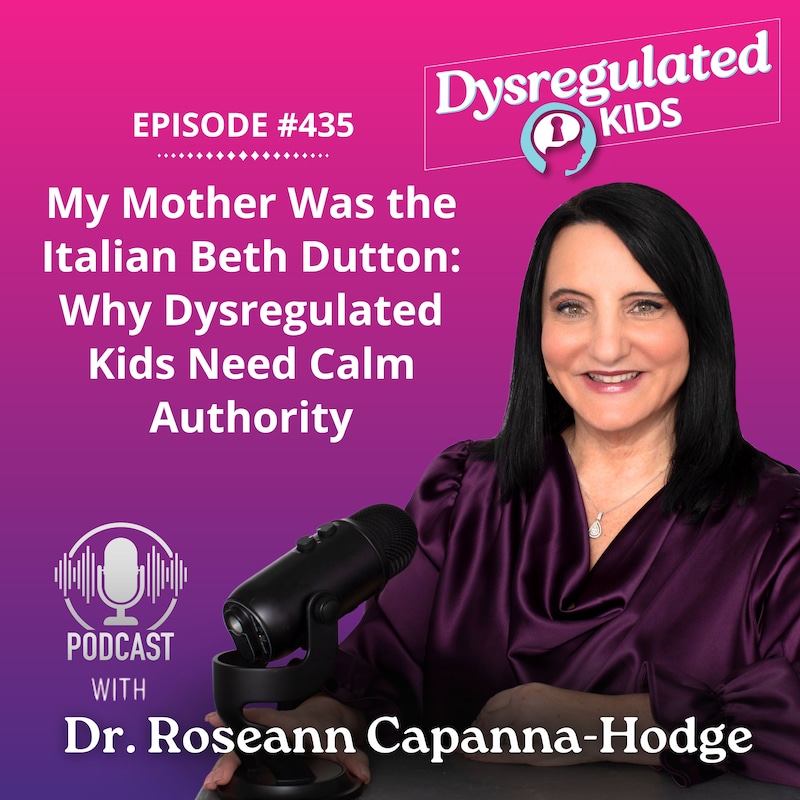
If you've ever wondered why dysregulated kids need calm authority, the answer starts with the parent who leads instead of reacts. In this episode, Dr. Roseann shares a powerful lesson from her mother and explains how Regulation First Parenting™ helps families build emotional safety, resilience, and lasting regulation.
If you've ever felt like you have to be louder, stricter, or more forceful to get your child to listen, you're not alone. But it's not bad parenting—it's a dysregulated brain.
In this episode, I share one of the greatest gifts my mother ever gave me: calm authority. Her steady leadership taught me that true strength isn't about control—it's about creating emotional safety.
You'll learn why behavior is communication, how your nervous system shapes your child's ability to regulate, and the simple mindset shift that can completely change difficult parenting moments. Let's calm the brain first.
Why Do Dysregulated Kids Need Calm Authority Instead of Punishment?
Many parents believe stronger consequences create better behavior. The truth is, dysregulated kids don't learn through fear—they learn through safety.
When your child is overwhelmed, their thinking brain goes offline. Your calm nervous system becomes the anchor that helps them return to regulation.
Key takeaways:
- Calm authority creates emotional safety.
- Leadership isn't permissiveness—it's steadiness.
- Your child borrows your regulation before they build their own.
Imagine your child screaming after school. Instead of matching their intensity, you pause, stay grounded, and guide them through the moment. That's Regulation First Parenting™ in action.
🗣️ “Your kid doesn't need your biggest reaction. They need to borrow your calm.”
— Dr. Roseann
Need help calming your own nervous system first?
Quick CALM gives you simple, science-backed strategies you can use in just minutes a day to regulate your stress and respond with confidence instead of reactivity.
How Can I Stay Calm When My Child Is Escalating?
You don't have to be perfectly calm every second. What matters is learning to pause before reacting.
I encourage parents to ask one powerful question:
"Am I about to lead this moment—or join the chaos?"
That brief pause changes everything.
Try this:
- Take a slow breath before speaking.
- Lower your voice instead of raising it.
- Focus on connection before correction.
- Respond instead of reacting.
It's gonna be OK. Every regulated response teaches your child's nervous system what safety feels like.
Want to stay calm when your child pushes every button?
Become a Dysregulation Insider VIP and get the FREE Regulation Rescue Kit—your step-by-step guide to stop oppositional behaviors without yelling or giving in.
Go to www.drroseann.com/newsletter and grab your kit today.
Does Staying Calm Mean Gentle Parenting or Letting My Child Walk All Over Me?
Absolutely not.
One of the biggest misconceptions is that calm parenting means being passive. Calm authority is leadership.
Just like the best bosses lead with confidence instead of chaos, great parents create clear boundaries while staying emotionally regulated.
Remember:
- Calm doesn't mean weak.
- Firm doesn't require yelling.
- Boundaries feel safest when they're predictable.
Your child needs a leader—not another overwhelmed nervous system.
How Does My Regulation Help My Child Build Emotional Resilience?
Children develop self-regulation through repeated experiences of co-regulation.
When you consistently model calm, your child learns:
- I am safe.
- Hard feelings can pass.
- I can handle challenges.
Those moments become the foundation for confidence, resilience, and emotional flexibility.
Why Doesn't Parenting Advice Work When I'm Already Dysregulated?
Many parents say, "I've tried everything."
Often, the missing piece isn't another parenting strategy—it's nervous system regulation.
You can't teach regulation while living in survival mode.
Let's calm the brain first. Everything else becomes easier from there.
Takeaway & What’s Next
You don't have to become a different parent overnight. Every small moment of regulation helps your child build lifelong emotional strength. You're not alone, and every calm response is an investment in your child's future.
Behavior is communication, and when you lead with calm authority instead of chaos, you help your child believe something powerful:
"I've got this."
Looking for expert guidance? Join the Regulated Child Summit and learn practical tools from leading experts to help your child thrive.
FAQs
Why do dysregulated kids need calm parents?
Children regulate through relationships. A calm parent helps their nervous system feel safe enough to learn, listen, and recover from stress.
Is calm authority the same as gentle parenting?
No. Calm authority combines empathy with clear boundaries and confident leadership without yelling or intimidation.
What should I do before responding to my child's meltdown?
Pause. Take a breath, regulate yourself first, then connect before correcting.
Can I help my child regulate if I struggle with anxiety?
Yes. Your own regulation skills can improve with practice. Small daily nervous system resets make a big difference.
Why does yelling make behavior worse?
Yelling signals danger to a child's nervous system, making regulation and problem-solving even harder.
Every child's journey is different.
That's why cookie-cutter solutions don't work.
Take the free Solution Matcher Quiz and get a customized path to support your child's emotional and behavioral needs—no guessing, no fluff.
Start today at www.drroseann.com/help